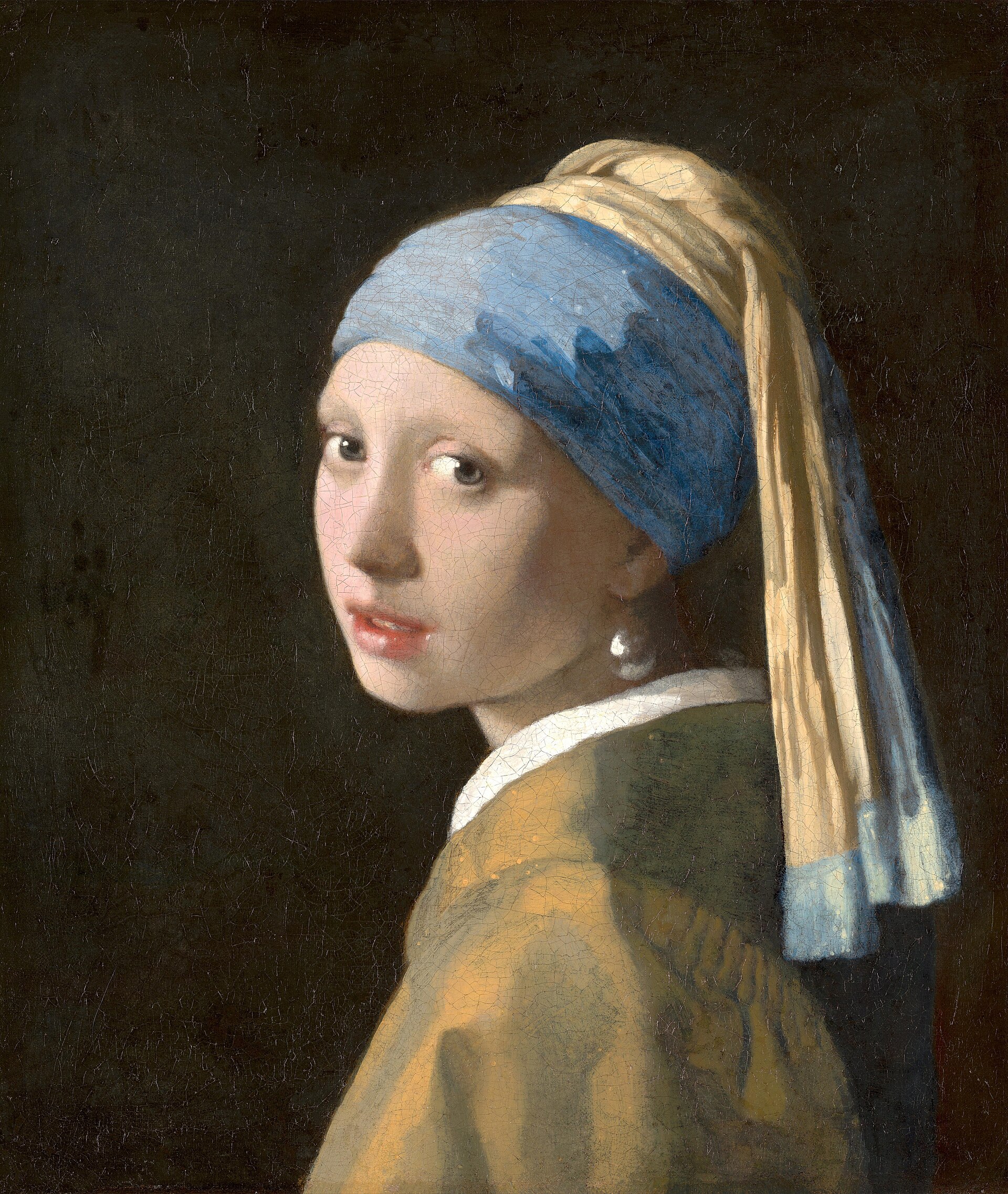
Girl with a Pearl Earring
c. 1665 · Oil on canvas
Mauritshuis
Dutch · 1632-1675
3 records in the archive · Last verified 15 September 2026 · 58 sources cited
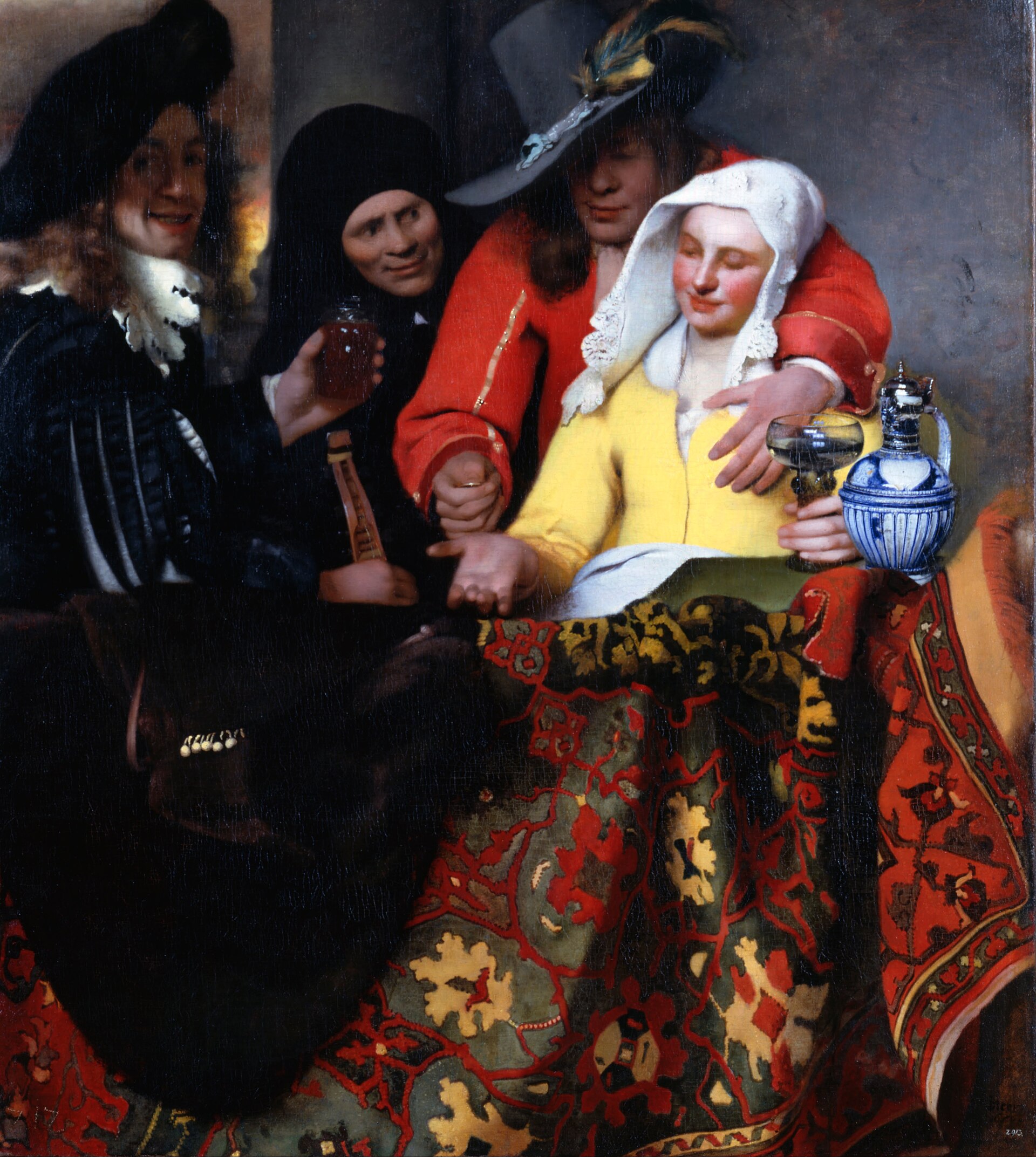
The Procuress, 1656, Gemaeldegalerie Alte Meister, Dresden. There is no securely identified portrait of Vermeer of any kind - no self-portrait, no documented likeness by a contemporary, no death mask, no description of his face. The man at the far left in a black beret, looking out of the picture, has been proposed as a self-portrait, and a resemblance has been claimed to the painter seen from behind in The Art of Painting. The identification is speculative and this record does not endorse it: it rests entirely on the figure's outward gaze and on the convention that a painter might insert himself at the edge of a company piece, with no document, no inscription and no independent likeness to test it against. Benjamin Binstock has proposed instead that the figure is Vermeer's brother-in-law Willem Bolnes. The honest position is that we do not know what Vermeer looked like.
Gemaeldegalerie Alte Meister, Staatliche Kunstsammlungen Dresden| Full name | Johannes Reijniersz. Vermeer, baptised Joannis; called in the nineteenth century Jan van der Meer van Delft |
|---|---|
| Worked as | Painter, Art dealer, Headman of the Guild of Saint Luke, Delft |
| Born | baptised 31 October 1632 · Delft, Dutch Republic |
| Died | buried 15 December 1675 · Delft, Oude Kerk |
| Nationality | Dutch |
| Movement | Dutch Golden Age; Delft School |
| In this archive | 3 records |
| Last verified | 15 September 2026 |
Johannes Vermeer painted perhaps forty pictures in a working life of twenty-two years, left no drawings, trained no documented pupil, signed fewer than half of the works that survive and dated only three of them. He died insolvent in December 1675 at forty-three, and the Chamber of Charity that called the next day to collect the customary levy of the deceased's best outer garment wrote three words in its book: niet te halen, nothing to be got.
The single most important thing to understand about him is that the number of his paintings is not a fact but a position. The English-language consensus is that thirty-four are firmly his. The Rijksmuseum's 2023 retrospective proceeded on a corpus of thirty-seven. The difference is exactly three pictures - Saint Praxedis, Young Woman Seated at a Virginal and Girl with a Flute - and the last of those is disputed right now, in public, between two of the largest museums in the world. In October 2022 the National Gallery of Art in Washington reattributed its own Girl with a Flute to the studio. Five weeks later the Rijksmuseum said it read the same data differently and hung the picture in Amsterdam as an autograph Vermeer. Neither has conceded.
Almost everything else that is said about him is inference stacked on a very small pile of documents. He is recorded as having said one thing in his life, and it was a judgement on somebody else's attributions.
c. 1665 · Oil on canvas
Mauritshuis
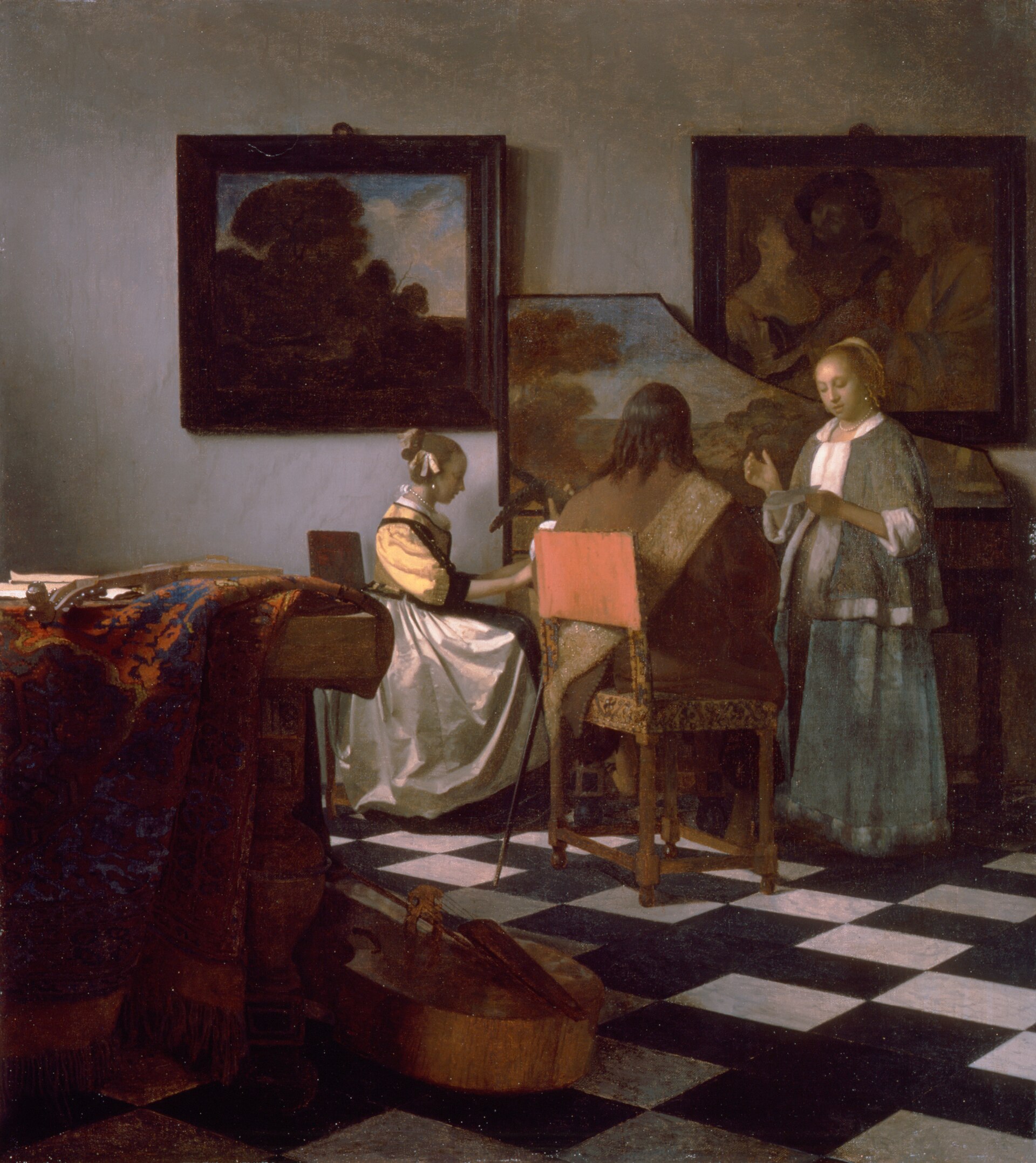
c. 1663-1666 · Oil on canvas
Unlocated. Stolen from the Isabella Stewart Gardner Museum...
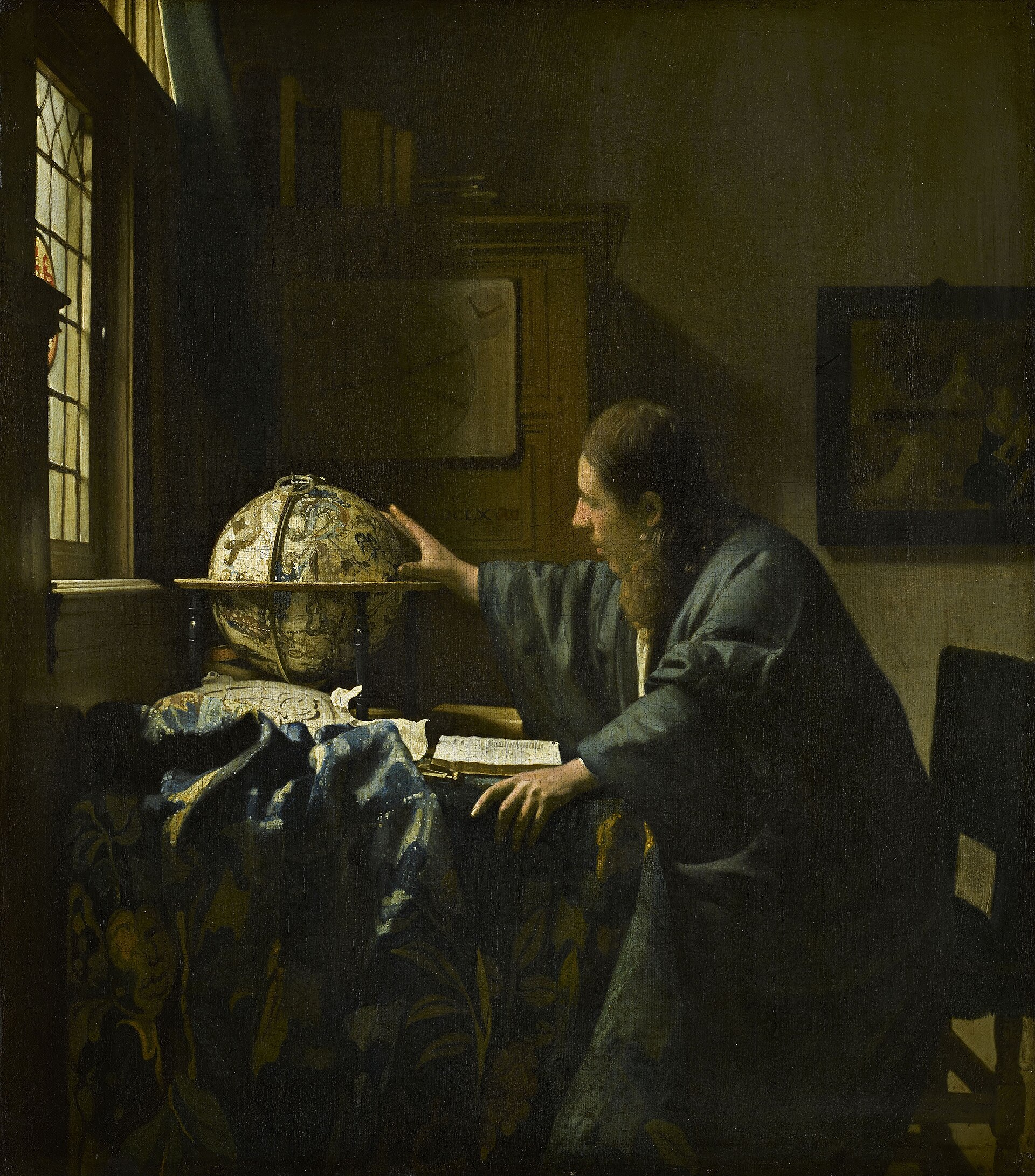
1668 · Oil on canvas
Musee du Louvre, Paris, Departement des Peintures.
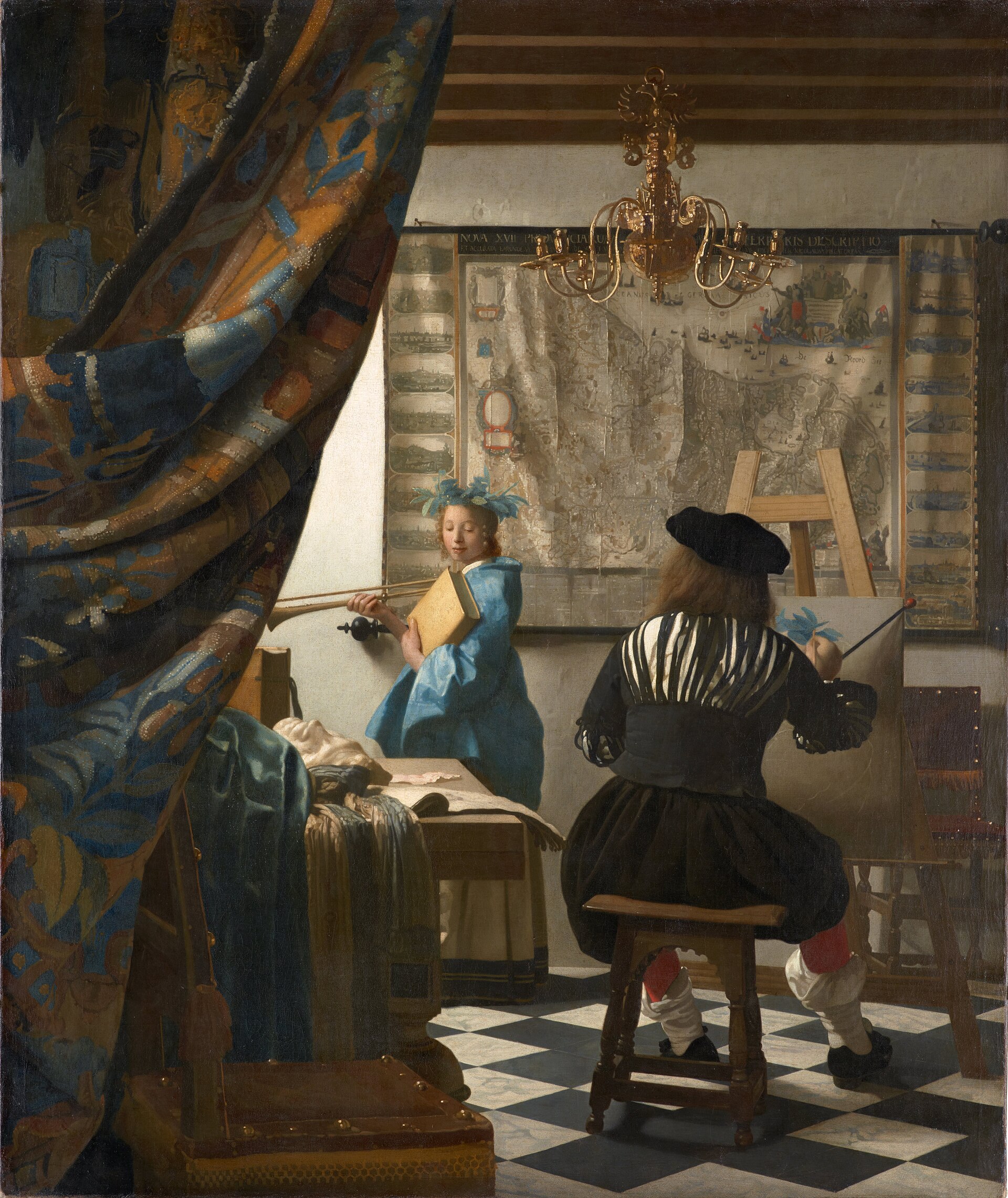
Baptised Joannis in the Nieuwe Kerk, Delft, on 31 October; father Reynier Jansz., mother Dingnum Balthasars. The register entry survives at folio 119v.10
His father, a caffa weaver turned innkeeper and art dealer, buys the inn Mechelen on the Delft market square, having previously rented one called The Flying Fox.19
Reynier Jansz. dies in October, leaving the inn and the picture-dealing business to his twenty-year-old son.9
Marriage banns registered on 4 and 5 April; the entries are crossed out and rewritten after Maria Thins objects to the terms. Vermeer marries Catharina Bolnes in a Catholic ceremony at Schipluiden and appears to convert.110
Admitted to the Delft Guild of Saint Luke on 29 December. The entry fee is waived and paid off over the following years.1
Signs a surety for his late father's debt before the notary Govert Rota on 14 December, styled seigneur. The disputed Saint Praxedis carries the date 1655.1026
Signs and dates The Procuress. Maria Thins lends him 300 guilders which he is not required to repay.122
On 30 November Johannes and Catharina acknowledge a debt of 200 guilders to Pieter van Ruijven - the document on which the entire patronage thesis rests.1045
Elected headman of the Guild of Saint Luke, not yet thirty. The average age at first election among earlier painter-headmen was forty-nine. Re-elected 1663, 1670 and 1671.9
On 3 August Balthasar de Monconys calls and finds no finished painting in the house. He is sent to the baker Hendrick van Buyten, who has one single-figure Vermeer for which he paid 600 livres. Monconys thinks the price absurd.1720
Maria de Knuijt, wife of Pieter van Ruijven, leaves Vermeer 500 guilders in her will - the only person outside her family named, and the legacy worded to exclude his wife.2045
Signs and dates The Astronomer. The Geographer follows, dated 1669. These, with The Procuress, are the only dated works in the accepted corpus.1
The rampjaar. France, Munster and Cologne invade; the Dutch art market collapses. Vermeer's last recorded sale of a painting falls in this year, and he leases Mechelen to an apothecary.118
Travels to The Hague with two other guild headmen to give an opinion on Italian paintings sold by Gerrit van Uylenburgh to the Elector of Brandenburg. They testify before a notary that the pictures are great pieces of rubbish and bad paintings. It is the only utterance of Vermeer that history records.18
On 21 July sells two bonds totalling 800 guilders, one of them in the name of Pieter van Ruijven's daughter Magdalena.18
On 20 July travels to Amsterdam and borrows 1,000 guilders from Jacob Rombouts against an obligation to which Maria Thins was entitled. Montias doubts her later account of the transaction.918
Buried on 15 December in the Oude Kerk, in a grave Maria Thins had bought, aged forty-three. Fourteen pallbearers; the bell tolled once. The next day the Chamber of Charity's collector records niet te halen - nothing to be got.91018
On 26 or 27 January Catharina pledges two paintings to the baker Hendrick van Buyten against a bread bill of 617 guilders 6 stuivers. She never redeems them.920
On 10 February twenty-six paintings - probably Vermeer's stock as a dealer, not his own work - pass to the Haarlem dealer Jan Coelenbier for 500 guilders, on account of the creditor Jannetje Stevens.1922
On 22 or 24 February Catharina transfers The Art of Painting to her mother in a notary's office in The Hague, five or seven days before the estate inventory.1942
On 29 February the estate is inventoried by a clerk of the Delft notary J. van Veen. The studio contains two easels, three palettes, six panels, ten canvases, three bundles of prints and a desk. No brushes, no pigments, no optical device.21
On 24 April Catharina petitions the High Court of Holland for relief from her husband's creditors. It is granted the same day.19
On 30 September the aldermen of Delft appoint Antony van Leeuwenhoek curator of the insolvent estate. The document is the first known mention of the two men together.1051
Leeuwenhoek recovers the twenty-six paintings from Coelenbier by lawsuit in February, impounds The Art of Painting over Maria Thins's protest, and holds the estate auction in the Guild of Saint Luke's hall on 15 March. No record of the sale survives.19
Twenty-one Vermeers are sold at the Oude Heeren Logement, Amsterdam, on 16 May from the Dissius estate, realising 1,503 guilders 10 stuivers in total. View of Delft takes 200 guilders, The Milkmaid 175, a tronie 17.1546
The Dutch state buys View of Delft from S. J. Stinstra of Amsterdam for 2,900 guilders for the Mauritshuis.43
Theophile Thore sees View of Delft in The Hague, cannot place it, and looks the name up in the catalogue.11
Gustav Friedrich Waagen recognises the Vienna Art of Painting, catalogued as a Pieter de Hooch, as a Vermeer.142
Thore, writing as W. Burger, publishes Van der Meer de Delft in three parts in the Gazette des Beaux-Arts on 1 October, 1 November and 1 December. He names Vermeer the Sphinx of Delft and assembles a corpus far larger than any that has survived scrutiny.11
Girl with a Pearl Earring is bought at auction in The Hague by Arnoldus Andries des Tombe for two guilders plus thirty cents buyer's premium. He bequeaths it to the Mauritshuis in 1902.44
Abraham Bredius publishes van Meegeren's Supper at Emmaus in the Burlington Magazine as the masterpiece of Johannes Vermeer of Delft. Dirk Hannema buys it for the Museum Boijmans for 520,000 guilders.2930
Van Meegeren is arrested on 29 May for collaboration and confesses to forgery as the lesser charge. He is tried on 29 October 1947, convicted on 12 November, and dies on 30 December.29
Michael Kitson, reviewing a Florentine Baroque exhibition at the Metropolitan Museum in the Burlington Magazine, proposes that the Saint Praxedis signed Meer 1655 is a genuine Vermeer.2627
Two Vermeers are stolen in one year and both recovered: The Guitar Player from Kenwood House in London, and Woman Writing a Letter with her Maid from the Beit collection at Russborough House in Ireland. The Beit picture is stolen a second time in 1986 and recovered again.2
The Concert is cut from its frame at the Isabella Stewart Gardner Museum, Boston, on 18 March. It has not been seen since.3335
Jorgen Wadum publishes the pin-and-string discovery: pinholes at the vanishing point in thirteen paintings, detectable on X-radiographs because the grounds contain lead white.47
Philip Steadman publishes Vermeer's Camera; David Hockney and Charles Falco publish Secret Knowledge. The two arguments are distinct and are routinely conflated.3637
Young Woman Seated at a Virginal sells at Sotheby's London on 7 July, lot 8, at 14.5 million pounds hammer and 16,245,600 pounds with premium - the first Vermeer at auction since 1921.2425
Saint Praxedis sells at Christie's London on 8 July, lot 39, at 5.5 million pounds hammer and 6,242,500 pounds with premium, below its low estimate. Lead isotope analysis had linked its lead white to Diana and her Nymphs.262728
Dresden completes a four-year restoration of Girl Reading a Letter at an Open Window, removing overpaint applied after Vermeer's death and uncovering a large painting of Cupid on the back wall.41
On 7 October the National Gallery of Art, Washington, reattributes Girl with a Flute to the studio of Vermeer. In November the Rijksmuseum announces it accepts the picture as autograph, together with Saint Praxedis and Young Woman Seated at a Virginal.568
The Rijksmuseum shows twenty-eight of the thirty-seven paintings it counts as Vermeer, 10 February to 4 June. 650,000 visitors from 113 nations attend over sixteen weeks - the most successful exhibition in the museum's history.34
There is no Vermeer market in any ordinary sense. All but two of the accepted paintings are in public collections or on long loan to them; one of the two exceptions is owned by a company and hangs in a Tokyo museum. Two have come to auction in the last century.
The pattern in both cases is identical and worth naming, because it is how the market handles contested attributions. A picture that scholarship has doubted for decades is sent to an auction house; the house funds a technical campaign that resolves the doubt in its favour; the picture sells for a figure the previous attribution could not have supported. Sotheby's did it in 2004 and Christie's in 2014. Neither buyer was buying a picture that had ever been in doubt as an object; both were buying a name that instruments had just restored to it.
The control experiment is available. In 2017 a version of the same Ficherelli composition as Saint Praxedis, without the Vermeer signature, made 350,508 euros in Vienna. The signature and the isotope report were worth about six million pounds.
| Date | Sale | Work | Result | Note |
|---|---|---|---|---|
| 16 May 1696 | Estate auction, Oude Heeren Logement, Amsterdam | Twenty-one paintings from the Dissius estate | Hammer 1,503 guilders 10 stuivers for all twenty-one With premium Not applicable Dutch guilders | The only lifetime-adjacent price series. View of Delft 200 guilders, The Milkmaid 175, Woman Holding a Balance 155, a tronie 17. For scale: a master carpenter earned about one guilder a day. In 1699 the Allegory of Faith brought 400 florins. |
| 1822 | Private sale to the Dutch state | View of Delft | Hammer 2,900 guilders With premium Not applicable Dutch guilders | Bought from S. J. Stinstra of Amsterdam for the Mauritshuis, twenty years before Thore saw it there. |
| 1881 | Auction, The Hague | Girl with a Pearl Earring | Hammer 2 guilders With premium 30 cents Dutch guilders | Bought by Arnoldus Andries des Tombe with the paint layers detaching. He bequeathed it to the Mauritshuis in 1902. The premium is separated here because the sources record it separately, and because it is the only Vermeer result where the buyer's premium is a matter of small change. |
| 7 July 2004 | Sotheby's, London (Old Master Paintings Part 1, sale L04031, lot 8) | Young Woman Seated at a Virginal | Hammer GBP 14,500,000 With premium GBP 16,245,600 with buyer's premium (about USD 30 million) GBP | Estimate GBP 3 million, set deliberately low because the attribution had been contested since the 1960s. Bid by George Gordon of Sotheby's for Steve Wynn against the dealer Robert Noortman in the room. The catalogue states it was the first Vermeer offered at auction since 1921 and the first sold by any means since 1955. The whole 63-lot session made GBP 29,966,400, so this lot was more than half of it. Sold on through Otto Naumann Ltd. in 2008 to Thomas Kaplan; now the Leiden Collection. Reported in dollars as USD 30 million, which is the premium-inclusive figure converted at the 2004 rate, not a separate result. |
| 8 July 2014 | Christie's, London (King Street, lot 39) | Saint Praxedis | Hammer GBP 5,500,000 With premium GBP 6,242,500 with buyer's premium (about USD 10.7 million) GBP | Estimate GBP 6-8 million; it sold below the low estimate on the hammer. From the estate of Barbara Piasecka Johnson, who had bought it in 1987 on Arthur Wheelock's recommendation. Now owned by Kufu Company Inc. and on long loan to the National Museum of Western Art, Tokyo. Gary Schwartz's later note gives the estimate as 600,000 to 800,000 pounds, which is an order-of-magnitude slip; the 6-8 million figure is corroborated by the trade press. |
| 17 October 2017 | Dorotheum, Vienna | Felice Ficherelli, Saint Praxedis (another version of the same composition, no Vermeer signature) | Hammer Not published in the sources consulted With premium EUR 350,508 EUR | Estimate EUR 150,000-200,000. Included as the control for the 2014 result: the same subject and design without the disputed signature and the isotope report. Gary Schwartz's conclusion: that signature was worth millions. |
Hammer is the price at which the bidding stopped; with premium adds the fee the house charges the buyer on top. Hammer price and buyer's premium in the glossary.
| Institution | City | Holdings | Note |
|---|---|---|---|
| Rijksmuseum | Amsterdam | 4 | The Milkmaid, The Little Street, Woman in Blue Reading a Letter, The Love Letter. Also the institution that now maintains the widest corpus, at thirty-seven, and that hangs Girl with a Flute as a Vermeer when it borrows it. |
| The Metropolitan Museum of Art | New York | 5, plus one catalogued imitation | Young Woman with a Water Pitcher (1889), A Maid Asleep (1913), Young Woman with a Lute (1900), Allegory of the Catholic Faith (1931), Study of a Young Woman (1979) - the largest single holding anywhere, and only two of them travelled to Amsterdam in 2023. The Met also holds A Young Woman Reading, accession 49.7.40 from the Jules Bache Collection, catalogued in its own database as Imitator of Johannes Vermeer and dated about 1925-27. |
| National Gallery of Art | Washington DC | 3 autograph, plus Girl with a Flute reclassified in 2022 | Woman Holding a Balance, A Lady Writing, Girl with the Red Hat. Girl with a Flute is no longer catalogued as by Vermeer here, which is the point of contention with the Rijksmuseum. |
| The Frick Collection | New York | 3 | Officer and Laughing Girl, Girl Interrupted at Her Music, Mistress and Maid. Three Vermeers in one private American collection, and the largest concentration outside a national museum. |
| Mauritshuis | The Hague | 3 | Girl with a Pearl Earring, View of Delft, Diana and her Nymphs. The site of Thore's 1842 encounter and of the 2018 Girl in the Spotlight technical campaign. |
| The National Gallery | London | 2 | A Young Woman Standing at a Virginal and A Young Woman Seated at a Virginal, painted on canvases from the same bolt. Both were once owned by Thore-Burger. |
| Musee du Louvre | Paris | 2 | The Lacemaker and The Astronomer. The Lacemaker's canvas comes from the same bolt as the Leiden Collection's Young Woman Seated at a Virginal. |
| Gemaeldegalerie, Staatliche Museen | Berlin | 2 | The Glass of Wine and Woman with a Pearl Necklace. The latter was bought by Thore-Burger from Henry Grevedon in June 1866, the month his articles began. |
| Gemaeldegalerie Alte Meister | Dresden | 2 | Girl Reading a Letter at an Open Window and The Procuress. The first was bought in 1742 as a Rembrandt and restored 2017-2021 to uncover the painted-over Cupid; the second is Vermeer's earliest dated genre picture and the one containing the figure sometimes read as a self-portrait. |
| Staedel Museum | Frankfurt am Main | 1 | The Geographer, signed and dated 1669 - one of only three dated works. |
| Kunsthistorisches Museum | Vienna | 1 | The Art of Painting, the picture Vermeer never sold and his widow tried to keep out of the estate. Bought by Count Rudolf Czernin in 1813 for fifty florins, sold to Adolf Hitler in 1940, recovered from the Altaussee salt mine in 1945, and the subject of Czernin family restitution claims rejected as recently as 2011. |
| Herzog Anton Ulrich-Museum | Braunschweig | 1 | The Girl with the Wine Glass. |
| National Gallery of Ireland | Dublin | 1 | Woman Writing a Letter with her Maid, from the Beit collection at Russborough House, and twice stolen from it before it was given to the nation. |
| National Galleries of Scotland | Edinburgh | 1 | Christ in the House of Martha and Mary, one of the earliest works and among the largest, from the history-painting phase that ended before he was thirty. |
| Kenwood House (English Heritage) | London | 1 | The Guitar Player, from the Iveagh Bequest. Stolen in 1974 and recovered. |
| The Royal Collection, Buckingham Palace | London | 1 | The Music Lesson. Did not travel to Amsterdam in 2023, and is the least often seen of the accepted works. |
| The Leiden Collection | New York | 1 | Young Woman Seated at a Virginal, the only mature Vermeer in private hands. Privately owned by Thomas Kaplan; lent regularly. |
| National Museum of Western Art | Tokyo | 1, on long-term loan | Saint Praxedis, owned by Kufu Company Inc. and on deposit since March 2015. The only Vermeer, if it is one, outside Europe and North America. |
| Isabella Stewart Gardner Museum | Boston | 1, stolen | The Concert, cut from its frame on 18 March 1990 and never recovered. The empty frame still hangs where the picture was. |
There is no authentication board for Vermeer, no catalogue raisonne with the standing of the Rembrandt Research Project, and no committee that rules. The number in circulation depends entirely on who is counting and in which year.
Albert Blankert's 1975 monograph accepted thirty-one. The figure settled at about thirty-four for most of the following half-century, and the English Wikipedia list still states that thirty-four are firmly attributed with question marks over three more. Jon Boone, writing for Essential Vermeer, puts it as thirty-four, perhaps thirty-five. The Leiden Collection says thirty-six. The Rijksmuseum's 2023 press material says thirty-seven.
Those numbers are not vague; they are precisely reconcilable. Thirty-four is the core. Add Saint Praxedis and you have thirty-five. Add Young Woman Seated at a Virginal and you have thirty-six. Add Girl with a Flute and you have thirty-seven. Those three, and only those three, are what the Rijksmuseum upgraded in November 2022 before its exhibition opened. Anyone quoting a single figure for the size of Vermeer's oeuvre without saying which of those three they have counted is not telling you enough to check.
The reason so few survive is not that many were lost. Montias's estimate for the total output is forty-four to fifty-four works. Vermeer painted perhaps two or three pictures a year in a market where a competent contemporary might produce a hundred. The corpus is small because the man was slow.
On 7 October 2022 the National Gallery of Art in Washington announced, at a press conference for its exhibition Vermeer's Secrets, that Girl with a Flute was not by Vermeer. The research team was Marjorie E. Wieseman, Alexandra Libby, E. Melanie Gifford and Dina Anchin, and they published it in the Journal of Historians of Netherlandish Art. The picture had been catalogued as attributed to Vermeer; it became studio of Vermeer.
Their argument is layer by layer and it is technical rather than connoisseurial. The oak panel carries a coarsely ground, brush-marked upper ground layer that would have interrupted the smooth surface Vermeer's finish requires. The order of grinding is inverted: Vermeer used coarse pigment in the underpaint and finer pigment in the final layers, while here the lead-tin yellow of the final paint is as coarse as the pigment in Vermeer's underpaint. The green earth particles are small and pale where Vermeer's are large, deep and blue-green. The pink strokes blocking in the face are, in the authors' words, lumpy and clumsily applied. Where Vermeer builds a greenish shadow by modulating colour and feathering the edge, this painter applies it flat and heavy so that it pools. Where Vermeer varies the angle of his strokes across a jacket, this painter puts down random dots of highlight. The team's conclusion is that the maker knew Vermeer's materials and his idiosyncratic methods intimately, and could not execute them.
That conclusion has a consequence larger than one picture. No document has ever surfaced showing that Vermeer had a workshop, a pupil, an apprentice or an assistant. If the Washington reading is right, the painting is the physical evidence of a studio that the archives do not record. The authors are careful about it: they write that they simply cannot know who painted the work, or under what circumstances, and that there is no archival evidence for any specific scenario.
Five weeks later the Rijksmuseum announced the opposite. Pieter Roelofs, its head of fine arts and co-curator of the retrospective, said the Washington findings were substantive but not indisputably right on all details, and that the picture would hang in Amsterdam as a Vermeer. He put the position in one sentence: it is being lent as a non-Vermeer, and we will hang it as a real Vermeer. That is what happened. Roelofs described the two institutions as having agreed to disagree.
Both museums are named, both positions are published, and neither has moved. A reader who finds a source giving a flat answer to whether Girl with a Flute is a Vermeer is reading one side of a live argument.
Saint Praxedis is a copy after a composition by the Florentine painter Felice Ficherelli, with a crucifix added that the Ferrara version does not have. It carries the signature Meer 1655 in a form Vermeer used on only three other pictures of the mid-1650s. It entered the literature in 1969, when it appeared in a Florentine Baroque exhibition at the Metropolitan Museum catalogued as Ficherelli, and Michael Kitson, reviewing the show in the Burlington Magazine that June, asked how a Vermeer signature could conceivably have got onto it.
Arthur Wheelock accepted Kitson's reasoning and on his recommendation Barbara Piasecka Johnson bought it in 1987. Two serious objections were raised against it. Jorgen Wadum, then chief restorer at the Mauritshuis, showed by physical examination that the picture is built up from back to front, which is not how a copyist works, and argued the brushwork is not Vermeer's; he thought it was Ficherelli's own prime version. Albert Blankert observed that copyists do not sign other men's compositions with their own name. Gary Schwartz adds a sociological reason for the resistance: the attribution had been enthusiastically endorsed by Dirk Hannema, the Boijmans director who bought van Meegeren's forgery, and nobody wanted to be in Hannema's camp.
What changed the balance was lead. Lead white carries isotopic signatures that distinguish northern from southern European ore. Testing by the Rijksmuseum and the Vrije Universiteit Amsterdam found the lead white in Saint Praxedis to be northern European, and the specific isotope mix to correspond to the lead white in Diana and her Nymphs in the Mauritshuis. The Rijksmuseum confirmed the attribution in 2022 and showed the picture in 2023.
If it is his, it is the only copy after another artist in Vermeer's corpus, and one of the very few overtly Catholic subjects he painted. Both facts cut both ways in the argument, which is why the argument has run for fifty-seven years.
On 16 May 1696 twenty-one paintings by Vermeer were sold in one afternoon at the Oude Heeren Logement in Amsterdam, out of the estate of the Delft printer Jacob Dissius. They had come to him through his wife Magdalena, daughter of Pieter van Ruijven and Maria de Knuijt. An inventory taken after Magdalena's death in 1682 records twenty Vermeers distributed through the house - eleven in the front room, four in the back room, one in the kitchen, two in a cellar room, two elsewhere.
The twenty-one lots realised 1,503 guilders and 10 stuivers in total. View of Delft took the highest price at 200 guilders, The Milkmaid 175, Woman Holding a Balance 155, and a tronie went for 17. In 1699 the Allegory of Faith brought 400 florins. To read those figures: a master carpenter in the Dutch Republic earned about a guilder a day and an unskilled labourer perhaps 300 guilders a year, so a picture at 100 to 200 guilders was several months of a skilled man's wages. Vermeer was expensive, but he was not Gerard Dou, whose Cloth Shop by van Mieris fetched 1,000 guilders new in 1660.
Then he disappeared. He had no pupils to carry the name, his pictures went into private houses rather than churches or town halls, and he signed inconsistently when he signed at all. Attributions drifted to Pieter de Hooch and to Rembrandt. Dresden bought Girl Reading a Letter at an Open Window in 1742 believing it to be a Rembrandt; by 1826 it was catalogued as de Hooch. The Vienna Art of Painting passed as a de Hooch until 1860. Count Rudolf Czernin had bought it in 1813 for fifty florins.
Etienne Joseph Theophile Thore, a republican critic exiled after 1848 and writing under the pseudonym W. Burger, saw View of Delft in The Hague around 1842 and could not place it. In his own account of the moment he wrote that he consulted the catalogue, found the name Jan van der Meer of Delft, and thought: amazing, here is someone of whom we know nothing in France, and who deserves to be known.
He spent roughly twenty years on it, travelling to Cologne, Brunswick, Berlin, Dresden, Pommersfelden and Vienna to see pictures, digging through Dutch archives, and buying: Woman with a Pearl Necklace from Henry Grevedon in June 1866, A Lady Seated at a Virginal in 1867 for two thousand francs. The result was three articles under the title Van der Meer de Delft in the Gazette des Beaux-Arts of 1 October, 1 November and 1 December 1866. He is the man who called Vermeer the Sphinx of Delft, and he meant it literally: he knew nothing of the marriage, and not even the date of the death.
He also assembled a corpus, and it was far too large. The figure usually given is sixty-six paintings; other accounts of the same three articles give seventy-three or seventy-four, some of the attributions resting on no more than a black-and-white photograph, a signature or hearsay. This record does not arbitrate between those figures because the sources consulted do not agree and the primary text has not been counted here. What is not in dispute is the direction of travel: from Thore's number, whichever it was, to Blankert's thirty-one a century later. Well over half of what he gathered has been taken away again.
That is the shape of the Vermeer problem in a sentence. The corpus was invented in 1866 and has been shrinking, with two brief expansions, ever since.
In April 1653 Vermeer married Catharina Bolnes. The banns were registered in Delft on 4 and 5 April; the entries were crossed out and rewritten because Catharina's mother, Maria Thins, objected to the terms. Thins was a Catholic woman of property from Gouda who had come out of a violent marriage with a settlement of 15,616 guilders. The ceremony took place not in Delft but at Schipluiden, a village outside it, which is what Catholics in the Republic did. Vermeer, baptised in the Protestant Nieuwe Kerk, appears to have converted.
The couple moved into Thins's house on the Oude Langendijk, in the quarter of Delft known as the Papenhoek, the Papists' Corner. Catholic worship was permitted in the Dutch Republic only if it was not visible, and the Jesuit mission station stood next door. Vermeer lived in that house for the rest of his life and painted in it. Of the children whose names are recorded, one was Ignatius.
The inventory taken after his death is the hard evidence for how the household actually practised. Among the contents of the great hall it lists an ebony crucifix, a painting representing the Mother of Christ in an oak frame, and one more painting of the Three Kings. Those are not readings of pictures; they are objects a notary's clerk wrote down.
What that does and does not license is worth stating plainly. It fixes what the Allegory of the Catholic Faith could have been commissioned for, and it makes the Catholic subject of Saint Praxedis less improbable than the sceptics found it. It does not license reading Catholicism into every interior. Most of what Vermeer painted is a woman in a room with light falling on her, and the honest description of most of them is exactly that.
The inventory of 29 February 1676 runs room by room through a house that Vermeer had lived in for about fifteen years, and reading it against the paintings produces one of the most useful findings available about how he worked.
Some of the pictures' furniture is there. Nine red-leather Spanish chairs are listed, and Spanish chairs with lion-head finials appear again and again in the paintings. So are the clothes: a yellow satin mantle with white fur trimming, and an old green mantle with white fur trimmings. That yellow fur-trimmed jacket is worn by the women in Mistress and Maid, A Lady Writing, Woman with a Pearl Necklace, The Love Letter and Young Woman with a Lute. It was a real garment hanging in a real cupboard on the Oude Langendijk, and five paintings are wearing it.
What is not there is everything expensive. No Turkish carpets. No marble flooring. No silver trays. No musical instruments at all - not a virginal, not a lute, not a guitar - in the house of the man who painted more music-making than any other Dutch artist. Those objects were found in the seventeenth century only in the wealthiest homes, and Vermeer's was not one.
Conversely, none of what the inventory does contain in quantity ever enters a picture. The house held cradles, beds, shabby furniture, twenty-one children's shirts, seventeen handkerchiefs, an iron armour with a helmet and a pike. Dutch homes were far more densely furnished than Dutch interior paintings suggest, and Vermeer's rooms are subtractions rather than records.
This is the documentary form of Walter Liedtke's argument that the oeuvre shows overwhelming evidence of pure invention and that rooms like these never existed in Delft. Vermeer did not paint what was in front of him. He built a room that contained a chair he owned, a coat his wife owned, and a virginal he did not have.
On 29 December 1653 Vermeer entered the Guild of Saint Luke; the admission fee was waived and he paid it off over the following years. In 1662 he was elected headman of the guild, presumably on Saint Luke's day in October. Montias worked out what that means: Vermeer was not yet thirty, and in a sample of eighteen painter-headmen elected before him whose birth dates are known, the average age at first election was forty-nine. He was re-elected in 1663, 1670 and 1671. Whatever Delft thought of the pictures, it thought a great deal of the man.
The patron question rests on very little. Montias identified Pieter van Ruijven, a wealthy Delft collector, as Vermeer's principal buyer, on the basis of a 200-guilder loan of 30 November 1657 and the descent of twenty Vermeers to van Ruijven's daughter. Arthur Wheelock rejects the thesis outright, pointing out that no document says Vermeer ever painted for van Ruijven and none confirms van Ruijven owned a Vermeer, and asking why the French diplomat Balthasar de Monconys, hunting a Vermeer in Delft in 1663, was sent to a baker rather than to van Ruijven. The Rijksmuseum's 2023 curators moved the emphasis again: they identify van Ruijven's wife Maria de Knuijt as the principal patron, on the strength of her will of 1665, in which she left Vermeer 500 guilders. He is the only person outside her family named in it, and the legacy is worded to exclude his wife.
The one contemporary price we have is unflattering to nobody but Monconys. Visiting on 3 August 1663 he found no finished picture in Vermeer's house at all, was sent on to the baker Hendrick van Buyten, and saw there a single-figure Vermeer for which the baker had paid 600 livres. Monconys thought the price absurd.
In 1672 France invaded, with simultaneous attacks from Munster and Cologne. The Dutch call it the rampjaar, the disaster year, and the contemporary formula for it was that the people were redeloos, the government radeloos and the country reddeloos - irrational, desperate, beyond saving. The art trade went with everything else. Jan Steen stopped painting and opened a brewery. Willem van de Velde and his son left for England. Vermeer's last recorded sale of a painting was that year.
He was already leveraging what he had. He leased the family inn, Mechelen, to an apothecary. In July 1673 he sold two bonds worth 800 guilders. On 20 July 1675 he travelled to Amsterdam and borrowed 1,000 guilders from Jacob Rombouts, secured on an obligation of 2,900 guilders held by the Orphan Chamber of Gouda to which Maria Thins was entitled - which is to say, on his mother-in-law's money. The only account of that transaction comes from Thins herself, fourteen months after his death, and Montias distrusts it, calling the behaviour out of character with the whole life of the artist and suggesting she may have distorted the story to reduce her own responsibility.
The same year brought the only words Vermeer is recorded to have spoken. In 1672 he travelled to The Hague with two other guild headmen to give an opinion on a group of Italian paintings that the dealer Gerrit van Uylenburgh had sold to Frederick William, Elector of Brandenburg. Uylenburgh had assembled some thirty-five painters to certify them; the Elector's agent Hendrick Fromantiou had assembled the doubters. Vermeer and his colleagues testified before a notary that the pictures were not only not outstanding Italian works but on the contrary great pieces of rubbish and bad paintings. It ruined Uylenburgh. The one thing history records the Sphinx of Delft saying is a demolition of somebody else's attributions.
Vermeer was buried on 15 December 1675 in a grave in the Oude Kerk that Maria Thins had bought. Fourteen pallbearers carried him and the bell was tolled once, which is an expensive funeral for a man with nothing; Bas van der Wulp of Erfgoed Delft, who found the entry, argues Thins paid. The Chamber of Charity's collector recorded niet te halen. Sources give the date of death as 13, 14 or 15 December and the burial as 15 or 16; the register entry itself is the 15th.
On 26 or 27 January 1676 Catharina appeared before the notary Gerard van Assendelft and transferred two paintings by her husband to Hendrick van Buyten, the baker, against a bread bill of 617 guilders and 6 stuivers - Montias's own published figure is 617 guilders and 17 stuivers, and the discrepancy is unresolved here. It was a pledge, not a sale: she could redeem the pictures by paying 50 guilders every first of May from 1677. A further 109 guilders 5 stuivers was outstanding for earlier deliveries, which is why van Buyten's total credit is reported as exceeding 726 guilders. She never redeemed them. The two are described as two figures, one of them sitting writing a letter, and a figure playing a cittern.
The widely repeated claim that twenty-six paintings were pledged to the baker is wrong on both counts. On 10 February 1676 twenty-six paintings went to Jan Coelenbier, a Haarlem painter and dealer, for 500 guilders, and he bought them for the account and in the name of Jannetje Stevens, a Delft shop-wares merchant to whom the household owed money and who in turn owed money to Coelenbier. He stored them in Haarlem as security. Erik de Visser identifies them as probably the greater part of Vermeer's stock as an art dealer - that is, paintings by other men. Catharina's own petition supports that reading: she said her husband had been left sitting with the paintings of other masters that he was dealing in. Wheelock treats them more ambiguously, as twenty-six paintings from Vermeer's estate. Nobody has shown that any of the twenty-six was by Vermeer.
On 24 April 1676 Catharina petitioned the High Court of Holland for relief from her husband's creditors and was granted it the same day. On 29 February a notary's clerk had already inventoried the house. The front room, which was the studio, contained: two Spanish chairs, a cane with an ivory knob, two painter's easels, three palettes, six panels, ten painter's canvases, three bundles of prints, a desk, and here and there some rummage not worthy of being itemised separately. There are no brushes, no pigments, no grinding stone and no optical device of any kind.
Two days before that inventory, on 22 or 24 February, Catharina had transferred The Art of Painting to her mother in a notary's office in The Hague. De Visser reads the timing as deliberate: the inventory was imminent, and the picture is not in it.
On 30 September 1676 the aldermen of Delft appointed Antony van Leeuwenhoek curator of the insolvent estate. He and Vermeer had been baptised in the same church days apart in 1632. He is the man who first saw bacteria.
It is very tempting, and almost universally done, to make this a friendship, and to seat Leeuwenhoek as the sitter in The Astronomer and The Geographer. Klaas van Berkel proposed the identification in 1996. Montias, who spent years in the Delft archives specifically looking, found nothing: no link of any kind between the two men, and no resemblance between the elegant, distinguished-looking scholars in the paintings and the coarse features of the known portraits of Leeuwenhoek. He also doubted that Leeuwenhoek was appointed because he was a friend of the family, noting that he had curated other Delft estates. The Mauritshuis states the position plainly: definitive proof of the possible relationship is yet to be found, and the curatorship is not evidence of it. Gary Schwartz notes that the appointment document is the first known mention of the two names together, nearly a year after Vermeer was dead.
Leeuwenhoek did not behave like a friend. He recovered the twenty-six paintings from Coelenbier by lawsuit in February 1677 and had them shipped from Haarlem. He treated the transfer of The Art of Painting to Maria Thins as an attempt to defraud the creditors and impounded the picture. On 12 March 1677 Thins, then eighty-four, had a notary draw up a formal insinuation reasserting her ownership; it was read to Leeuwenhoek on the 13th and he replied that the sale would proceed. The auction was held on 15 March 1677 in the Guild of Saint Luke's hall in Delft. No record of it survives. Thins was finally awarded preferential creditor status by a court sentence of 3 July 1679, four years after her son-in-law's death. Leeuwenhoek charged her sixty guilders.
Not a single drawing by Vermeer has survived, and none is recorded. That is the central fact of his technique and the reason so much else about it is argued over: there is no preparatory material to compare against the finished surface.
What the instruments show is consistent. The support is a plain-weave canvas of unusually regular, high-quality manufacture - notably better than the canvases Rembrandt used - with a small number of works, including Girl with a Flute and Girl with the Red Hat, on oak panel. Over that goes a light ground of one or two layers: lead white with chalk as an extender, tinted with earth colours and a little black, warm grey in A Lady Writing and buff in Woman Holding a Balance. There is no drawn underdrawing in the ordinary sense. Instead the National Gallery of Art team found evidence of white chalk notations and then a monochromatic brown painted sketch, and beneath The Art of Painting microscopy shows underdrawing in thin brown lines.
Then comes the part that identifies him. He blocks in broad zones of shadow and light in coloured underpaint - ochre, lead-tin yellow, lead white, ultramarine, black - using coarsely ground pigment, and adds copper-based drier, probably verdigris, generously to those lower layers so that they set fast and keep their texture. The final modelling layers use much more finely ground pigment. That order, coarse below and fine above, is the diagnostic: it is precisely the order that Girl with a Flute reverses.
He leaves reserves, blank areas kept clear so a feature can be dropped in later, visible in the architecture of The Little Street and View of Delft. And he finishes with the pointille, small thick dots and dabs of bright paint standing for the way light scatters on a textured or wet surface - on the boats and brickwork of View of Delft, on bread, on brass, on the rim of a jug. Martin Kemp reads these as a painterly shorthand, optical in origin but artificially contrived in application. They are not what a lens does; they are what Vermeer decided a lens implies.
For the perspective there is hard physical evidence, and it is not optical. Jorgen Wadum showed in 1995 that Vermeer drove a pin into the canvas at the central vanishing point and snapped a chalked string against the surface to lay in the orthogonals. Because his grounds contain lead white, the pinhole shows on an X-radiograph as a tiny dark spot. Thirteen paintings carry one: Officer and Laughing Girl, The Milkmaid, The Glass of Wine, The Music Lesson, The Astronomer, The Geographer, The Art of Painting, The Love Letter, Woman Holding a Balance, Lady Writing a Letter with her Maid, Allegory of Faith, A Lady Standing at the Virginal and A Lady Seated at the Virginal. The later RKD study Counting Vermeer raises the count to seventeen. In three of them the hole is visible to the naked eye. He also used a compass: the wine jug in The Procuress has a puncture at its centre and scratches in the paint following its contour.
Natural ultramarine is ground lapis lazuli, brought from Afghanistan, and in the seventeenth century it cost more than gold by weight. It is difficult to prepare, mills to a stringy paint that will not brush out evenly, and is among the darkest things on the palette. Most Dutch painters who could afford it used it economically, in thin glazes over an opaque underpainting, and reserved it for the blue things in the picture. Pieter de Hooch washed his back walls with smalt-toned white and kept the ultramarine for tiles and costume.
Vermeer put it everywhere, including where nobody can see it. It is in the shaded parts of white drapery, in ceramic jugs, in black marble floor tiles, in green foliage, in whitewashed walls, and in the shadows of the brilliant orange gown in The Glass of Wine. The National Gallery in London found it in The Music Lesson in the shadows of the man's flesh, mixed with red lake for the leaded lights and the tablecloth pattern, and - most extraordinary of all - mixed into the brown of the ceiling beams, apparently to hold the whole picture in one chromatic key.
This is not only aesthetics and it is not only expense. Melanie Gifford and Lisha Deming Glinsman put the commercial logic exactly: the use of ultramarine, even a little, was a wise investment that signalled a work of art produced for an exclusive market. Technical study of Dutch genre painting finds the top price bracket clustering around two traits, a very fine scale of brushwork and verifiable ultramarine. Vermeer had both, and he was buying lapis for ceiling beams while running an account at the baker's that he could not pay.
Joseph Pennell noticed in 1891 that the officer in the Frick's Officer and Laughing Girl has a head twice the width of the girl's, which is mathematically correct perspective and almost never what a seventeenth-century painter does, because painters compensate. In 1946 A. Hyatt Mayor described Vermeer's tones as blended as perfectly as the ground glass of a camera and his highlights as breaking up into globules of halation. In 1952 Lawrence Gowing wrote that it is likely Vermeer made use of the camera obscura.
Philip Steadman's Vermeer's Camera of 2001 is the serious form of the argument. Working backwards through inverse perspective, he reconstructed the room in ten of the interiors, identifying it by its leaded window panes and the floor tiles, and found that in six of them the visual pyramid struck on the back wall of the reconstructed room defines a rectangle the exact size of the canvas. His explanation is that Vermeer worked in a booth-type camera obscura with a lens at the viewpoint and the back wall as the screen, and that the projected images are the same sizes as the canvases because he traced them. That would also explain the absence of drawings: a traced projection makes preparatory drawing redundant.
David Hockney and Charles Falco published Secret Knowledge the same year, arguing optical aids across the whole of Western art since the early Renaissance. The two theses are routinely conflated and should not be. Steadman argues geometry about one painter; Hockney and Falco argue a general history from optical effects, and it is their version that has taken the heaviest fire.
The objections are worth stating properly. David Stork's analyses find that the images do not show the distortions curved mirrors or converging lenses would produce, and he adds the practical point that a camera obscura image is inverted and faint and very hard to copy. Walter Liedtke, the most sustained critic, does not deny that Vermeer responded to the device; he denies the devaluation of invention that follows from it, finds overwhelming evidence of pure invention in the oeuvre - rooms like these never existed in Delft - and notes that neither Vermeer's estate inventory nor, on Montias's survey of several hundred Delft inventories, any other house in the city records a drawing device at all. Wheelock, who once embraced the connection, now holds only that Vermeer must have admired certain effects of colour, light and focus in a camera obscura and then persistently departed from them. Thirteen years after Vermeer's death the Dutchman G. T. 's Gravensande wrote that the camera obscura's effect is striking, but false.
And there is Montias's flat archival negative, published in 1980 at the end of the largest documentary search anyone has made: no evidence crop up on the camera obscura or optics in connection with Vermeer. Tim Jenison's reconstruction in the 2013 film Tim's Vermeer demonstrated that a comparable picture can be produced with a lens and a mirror. Demonstrating that a method works is not evidence that it was used.
What survives all of this is Wadum's pin. The only hard, physical evidence of how Vermeer laid out a picture is a hole in the canvas and a chalked string - a technique any Delft architectural painter could have shown him, and one that trompe-l'oeil painters still use.
The Allegory of the Catholic Faith of about 1670 to 1672, now in the Metropolitan Museum, is the exception to almost everything else on this page. It is not a domestic scene admitting of readings; it is a set piece assembled out of a printed handbook, and the handbook is identifiable.
Cesare Ripa's Iconologia was translated into Dutch by Dirck Pietersz. Pers in 1644, and Vermeer worked from two of its entries, Fede (Geloof) and Fede Cattolica (Catholijck of algemeen Geloof). Ripa prescribes a figure dressed in white for light and purity and blue for heaven, with her hand on her breast and the world beneath her feet. Vermeer follows all of that literally, down to the terrestrial globe under the woman's foot. Where he departs is instructive: Ripa puts the chalice and the book in Faith's hands, and Vermeer sets them on a table instead, which as Wheelock observes gives the assemblage a Eucharistic character that the text does not have. The cornerstone crushing the serpent, and the apple beside it, carry the standard reading of Christ crushing the devil and of the original sin that required the sacrifice; the glass sphere hanging above has been traced to the Jesuit Willem Hesius's Emblemata sacra de fide, spe, charitate of 1636, where it stands for the mind's capacity to hold God. The Crucifixion on the back wall is a real painting by Jacob Jordaens.
The original owner is unknown. The Metropolitan's own view is that the picture was surely commissioned, probably by a patron who was learned as well as devout, and the candidates proposed are a Delft Catholic or the Jesuits of the city. That is the strongest statement about intention that can be made about any Vermeer, and it is still a probability rather than a document.
Critical opinion on whether it works is divided and always has been. Wheelock finds that the iconographic demands strained the credibility of Vermeer's realistic approach, and that the ecstatic pose and the crushed snake sit awkwardly in a Dutch room. Liedtke defends it by comparison with other Dutch allegorical painting of the period. What nobody disputes is what it is about.
Woman Holding a Balance in Washington was for a long time called Woman Weighing Gold, and sometimes Woman Weighing Pearls. A pearl necklace and a gold chain lie on the table with two open boxes; a Last Judgement hangs on the wall directly behind her head; and the reading followed straightforwardly - a vanitas, worldly treasure weighed under the eye of judgement.
Close examination established that the pans of the balance are empty. She is weighing nothing. The picture had been named for an act it does not perform, and the name had been carrying the interpretation.
Arthur K. Wheelock Jr., who made the point, drew the consequence: she is balancing rather than weighing, and the essential message is that one should conduct one's life with temperance and balanced judgment - the balance being an emblem of justice and of the final judgement, and denoting the woman's responsibility to weigh and balance her own actions. On the pearls he is deliberately careful. Pearls, he writes, carry meanings ranging from the purity of the Virgin to the vices of pride and arrogance; the woman does not appear tempted by them, her attitude is one of inner peace, and there is no psychological tension between her act and the picture behind her. That is a named scholar's argued reading, not a recovered intention.
The other elements resolve about as far. The mirror on the side wall has been read as a vanitas attribute, but most modern scholars, Edward Snow and Albert Blankert among them, take it for self-knowledge and truth; Ripa's Iconologia, which Vermeer demonstrably used elsewhere, makes the mirror an attribute of Prudence. The Last Judgement on the back wall has never been identified: no exact prototype has been found, and Pieter J. J. van Thiel's proposal of the late sixteenth-century Fleming Jacob de Backer rests on the unusual detail of Christ with both arms raised. Vermeer probably owned the picture, or held it in his dealer's stock. Montias proposed that the woman weighs unborn souls and stands for the Virgin. Her apparent pregnancy is invoked in support and disputed in reply as an ordinary feature of mid-1660s dress; the garment does not settle it, and the question is open.
What is worth carrying away is procedural. The vanitas reading was not built on evidence about what Vermeer intended. It was built on a title that described something the painting does not contain, and it survived for a century because nobody looked at the scales. Every claim about hidden meaning in Dutch genre painting is exposed to that failure, and this is its cleanest documented instance.
In September 1937 Abraham Bredius, the most authoritative Dutch art historian alive and the man who had done as much as anyone to build the modern Vermeer, published a note in the Burlington Magazine on a newly surfaced Supper at Emmaus. He called it a hitherto unknown painting by a great master, untouched, on the original canvas and without any restoration, just as it left the painter's studio, and he called it the masterpiece of Johannes Vermeer of Delft.
Dirk Hannema bought it for the Museum Boijmans in Rotterdam for 520,000 guilders, outbidding the Rijksmuseum. It was received as an event on the scale of the Night Watch. It had been painted the previous year by Han van Meegeren.
The method was chemical, not painterly. Van Meegeren worked over a genuine seventeenth-century canvas and bound his pigments in phenol formaldehyde resin - Bakelite and Albertol - then baked the picture, so that the paint film hardened as an aged film hardens and defeated the only forensic test of the period, which was to touch the surface with alcohol and a heated needle. He rolled the canvas to open a craquelure and worked India ink into the cracks to imitate centuries of dirt.
He was arrested on 29 May 1945, charged with collaboration for having sold a Vermeer to Hermann Goering - Christ with the Adulteress, traded through Alois Miedl in 1942 for 137 looted paintings - and confessed to forgery as the lesser charge. Between July and December 1945 he painted Jesus Among the Doctors under guard to prove he could. The scientific commission, led by Paul Coremans of the Royal Museums of Fine Arts of Belgium, identified the phenol formaldehyde resins, which did not exist in the seventeenth century, and found a bottle of the stuff in his studio. Later work found traces of cobalt blue - a nineteenth-century synthetic - contaminating his ultramarine, and in 1967 lead-210 dating at Carnegie Mellon closed the question absolutely.
The trial opened in Amsterdam on 29 October 1947. He was convicted on 12 November of forgery and fraud, sentenced to one year, and died on 30 December without serving it. His forgeries had earned between 5.5 and 7.5 million guilders.
Note carefully what actually failed. The pictures do not look like Vermeers to a modern eye. They passed because the leading connoisseur of the day wanted a religious early Vermeer to exist, and because van Meegeren had defeated the one chemical test then available. Every subsequent Vermeer attribution has been decided by instruments rather than by eye - lead isotopes for Saint Praxedis, thread counts for Young Woman Seated at a Virginal, pigment grinding for Girl with a Flute. Van Meegeren is the reason.
There is effectively no Vermeer market, and the numbers show why. Of the corpus, all but two are in public institutions or on long loan to them. One of those two, Young Woman Seated at a Virginal, is the only mature Vermeer in private hands. The other, Saint Praxedis, is owned by a company and hangs in Tokyo.
When Young Woman Seated at a Virginal came up at Sotheby's in London on 7 July 2004 as lot 8, the catalogue stated that it was the first Vermeer offered at auction since 1921 and the first sold by any means since 1955. The estimate was 3 million pounds, set deliberately low because the attribution had been contested for forty years. The Amsterdam dealer Robert Noortman bid from the front of the room against a telephone. It was knocked down at 14.5 million pounds hammer, 16,245,600 pounds with premium, to George Gordon of Sotheby's bidding for Steve Wynn. The whole 63-lot sale made 29,966,400 pounds, which means one small picture was more than half the session.
Alex Bell of Sotheby's gave the frankest possible reading of what that price was for: this is a very simple work, and if the painting had been larger, if it had contained more figures, if it had a window, it would have fetched considerably more. Wynn sold it on through Otto Naumann in 2008 to Thomas Kaplan, and it is now in the Leiden Collection.
The second data point is Saint Praxedis, Christie's London, 8 July 2014, lot 39, from the estate of Barbara Piasecka Johnson: estimate 6 to 8 million pounds, hammer 5.5 million, 6,242,500 pounds with premium. It sold under the low estimate, which is what a contested attribution looks like on the day.
The most instructive figure of all is the control. On 17 October 2017 a second version of Ficherelli's original composition - the same subject, the same design, no Vermeer signature - sold at the Dorotheum in Vienna for 350,508 euros. Gary Schwartz drew the conclusion in five words: that signature was worth millions.
In the early hours of 18 March 1990 two men in police uniform rang the intercom of the Isabella Stewart Gardner Museum in Boston and said they were responding to a disturbance. A guard broke protocol and let them in. Both guards were tied up in the basement. The thieves left at 2.45 in the morning with thirteen works, and among them was Vermeer's The Concert, cut from its frame.
Isabella Stewart Gardner had bought it at auction in Paris in 1892 for 5,000 dollars. It is now generally described as the most valuable stolen object in the world, with estimates around 250 million dollars, and the empty frames still hang in the museum where the pictures were.
The FBI announced on 18 March 2013 that it had identified the thieves as members of a criminal organisation based in the mid-Atlantic states and New England, and declined to name them on the ground that naming them would hinder the recovery of the art. It stated at the same time that it did not know where the works are; it believes with high confidence that they were moved to Connecticut and the Philadelphia area in the years after the theft and offered for sale there, and that the trail then goes cold. The statute of limitations on the theft itself expired after six years. The museum's board maintains a 10 million dollar reward for information leading to the recovery of all thirteen works, with a share available for any single work and a further 100,000 dollars for the Napoleonic eagle finial.
No arrest has been made and nothing has been recovered. It has been thirty-six years.
Painter; Art dealer; Headman of the Guild of Saint Luke, Delft. 1632-1675.
Born baptised 31 October 1632, Delft, Dutch Republic; died buried 15 December 1675, Delft, Oude Kerk.
Han van Meegeren, The Supper at Emmaus, 1936-37. Published by Abraham Bredius in the Burlington Magazine in September 1937 as a hitherto unknown painting by a great master, untouched, on the original canvas and without any restoration, just as it left the painter's studio - and as the masterpiece of Johannes Vermeer of Delft. Dirk Hannema bought it for the Museum Boijmans in Rotterdam for 520,000 guilders, outbidding the Rijksmuseum.
Rijksmuseum (Amsterdam); The Metropolitan Museum of Art (New York); National Gallery of Art (Washington DC); The Frick Collection (New York); Mauritshuis (The Hague); The National Gallery (London).
There is no Vermeer market in any ordinary sense. All but two of the accepted paintings are in public collections or on long loan to them; one of the two exceptions is owned by a company and hangs in a Tokyo museum.
Is Girl with a Flute by Vermeer? The National Gallery of Art says a studio associate; the Rijksmuseum says Vermeer.
A provenance line is written in a published notation that museums do not apply uniformly.
7 min read
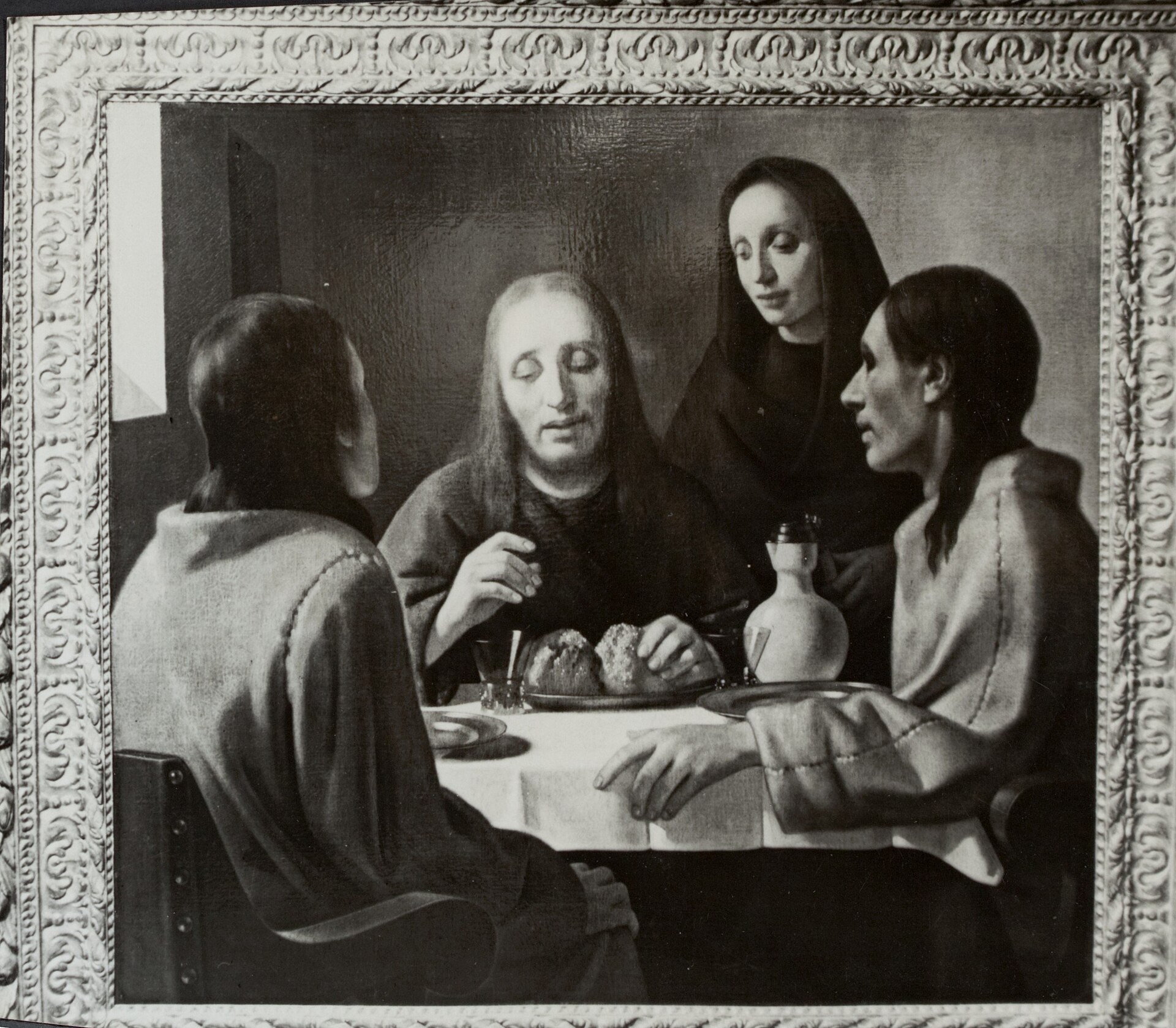
Han van Meegeren did not copy a Vermeer. He painted the missing evidence for a published scholarly hypothesis, and the...
8 min read
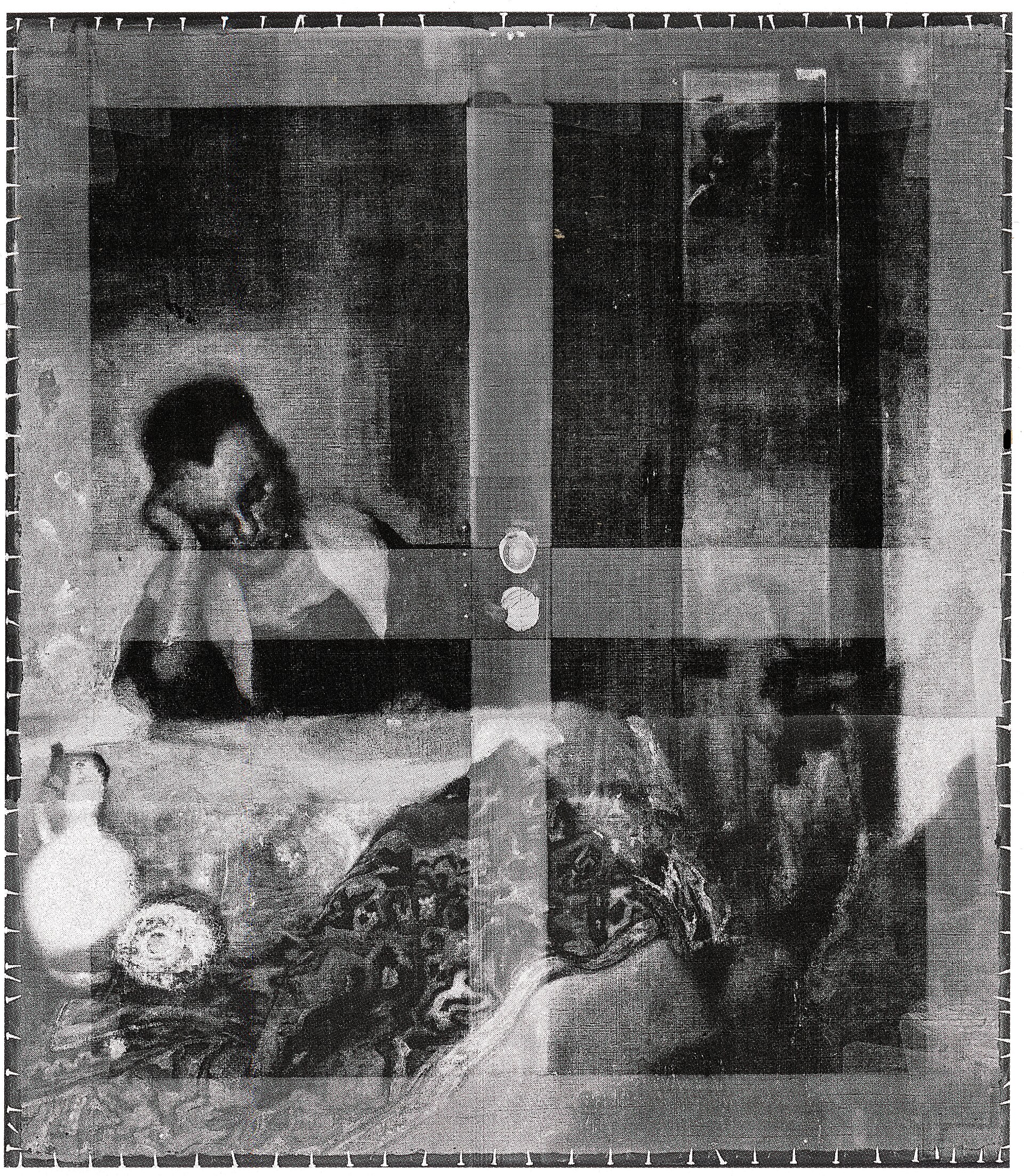
A radiograph is a density map of lead, not a picture of the layers beneath.
8 min read
When the same object returns to a saleroom the price series looks like an index of the object.
8 min read
One family name appears in nine records in this archive across seven object classes.
9 min read
Across the disputed objects in this archive, the instrument that delivered one to its claimant was almost never a judgment.
9 min read
Across 1,322 provenance events in this archive nineteen name a woman, and four of those give her no personal name at all.
11 min read
Of 187 auction results in this archive, 106 state a currency and they use sixteen different descriptions of it.
11 min read
Last verified 15 September 2026
One letter a week, on a Tuesday. What was researched, what a chain turned out to say, and what is closing in the exhibition calendar. No promotion, and nothing we cannot cite.
We send one email to confirm the address and keep nothing else. Every letter carries a one-click unsubscribe. How we handle your data.
