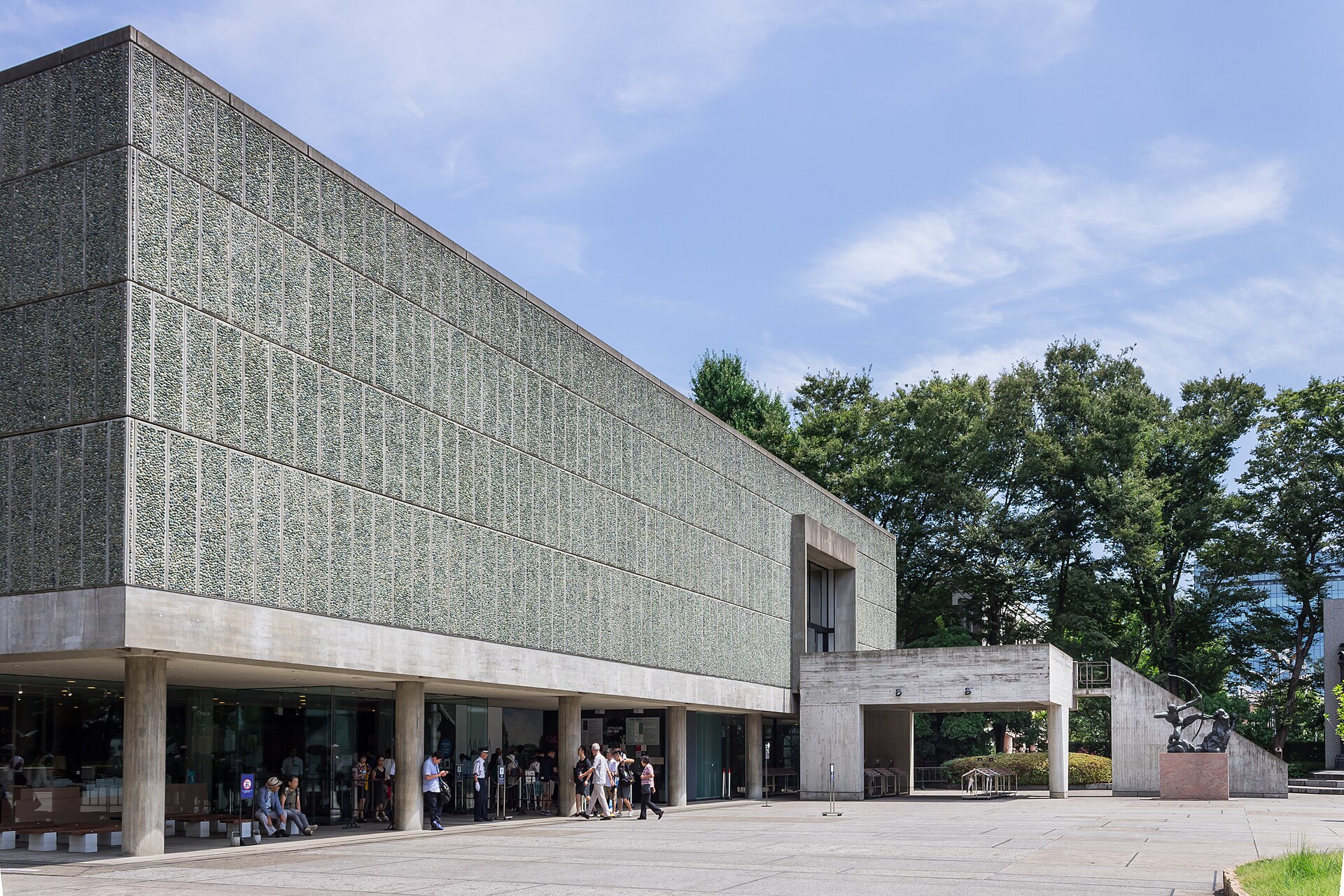
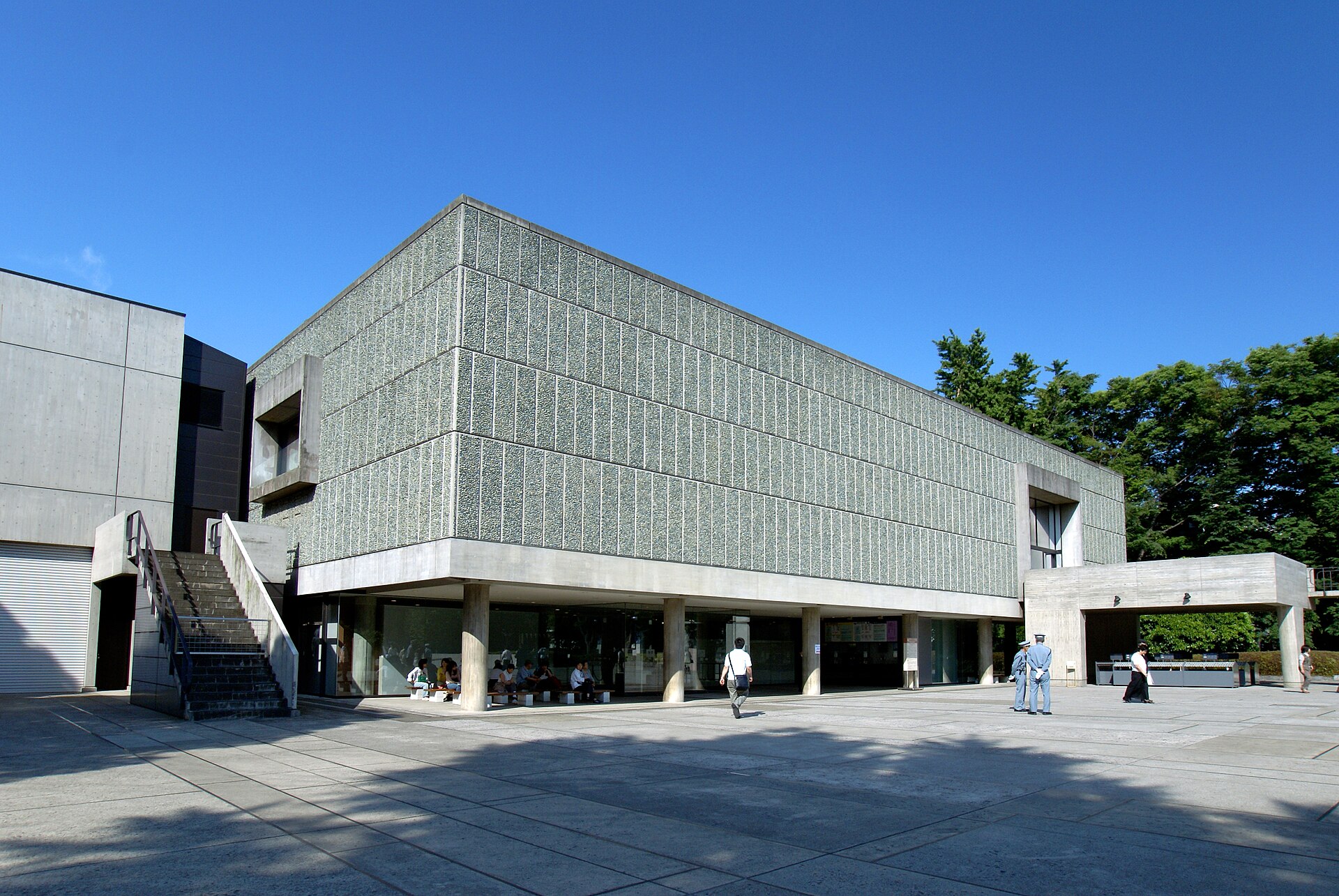
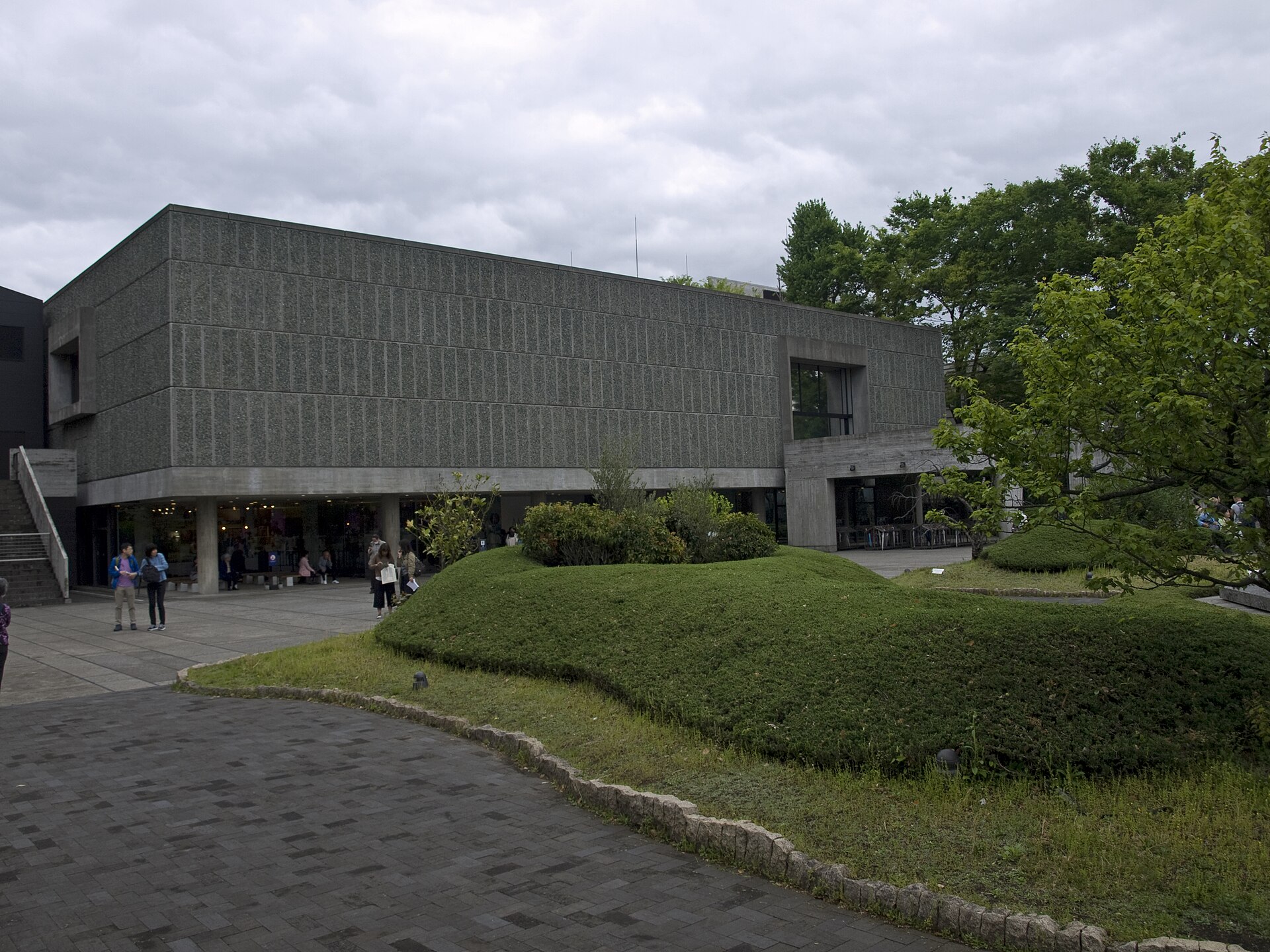
The Le Corbusier-designed Main Building, opened 1959, raised on pilotis above the forecourt.
Kakidai, CC BY-SA 4.0National Museum of Western Art
Museum · Kokuritsu Seiyo Bijutsukan · Founded 1959
Open, admission and hours confirmed 18 September 2026 · 22 sources
On this page 17 sections
ContentsClose
The museum's core strength is Kojiro Matsukata's own eye: French Impressionist and Post-Impressionist painting, and Auguste Rodin in depth rather than as a single celebrated cast, a Rodin holding unmatched outside France. Its Old Masters galleries are smaller and read as a supporting collection built up since 1959 rather than a Matsukata-era core, useful for tracing European painting from the Gothic period forward but not a destination collection on their own. What makes the museum distinctive is less any single masterpiece than the fact that a comprehensive Rodin bronze collection and a serious Impressionist collection share one address, both traceable to a single early-20th-century Japanese industrialist's decision to buy for the benefit of artists who would otherwise never see the originals.
| Local name | Kokuritsu Seiyo Bijutsukan |
|---|---|
| Kind | Museum |
| Founded | 1959 |
| City and country |  Tokyo, Japan Tokyo, Japan |
| Address | 7-7 Ueno-koen, Taito-ku, Tokyo 110-0007, Japan |
| Website | nmwa.go.jp/en |
| Status | Open, confirmed |
| Record last verified |
Visiting
- Hours
- Tue-Sun09:30 to 17:30Admission ends 30 minutes before closing.
- Fri-Sat09:30 to 20:00Extended hours.
- Closed
- Monday (if a Monday is a national holiday the museum stays open and closes the following weekday instead). 28 December to 1 January.
- Admission
- AdultJPY 500Permanent Collection Galleries. Group rate (20 or more) 400 yen.
- College studentJPY 250Permanent Collection Galleries. Group rate (20 or more) 200 yen.
- High-school age and under, 65 and over, visitors with disabilities and one companionFreeFree, with proof of age or a disability certificate.
Free entry: Second Sunday of each month, Permanent Collection Galleries only (the museum's own site calls this Kawasaki Free Sunday). 18 May, International Museum Day. 3 November, Culture Day- Do I need to book?
- No advance booking for same-day entry to the Permanent Collection Galleries; some education and family programs require registration.
- Address
- 7-7 Ueno-koen, Taito-ku, Tokyo 110-0007, Japan MapJR Yamanote Line 1 minute walk from Ueno Station, Park Exit
Keisei Line 7 minute walk from Keisei Ueno Station
Tokyo Metro Ginza or Hibiya Line 8 minute walk from Ueno Station - Website
- nmwa.go.jp/en
- Telephone
- +81 3 3828 5131
Before you go how long, access, photography, bags, eating, shop
- How long to allow
- One to two hours for the permanent collection; longer with a special exhibition.
- Access
- The route from JR Ueno Station's Park Exit is wheelchair accessible. Wheelchairs and baby strollers can be borrowed at the information desk, subject to availability. A multipurpose restroom with ostomate facilities is on the first floor of the Main Building, with further accessible restrooms in the New Wing basement and the Special Exhibition Wing basement. One companion of a visitor with a disability is admitted free on presentation of a disability certificate. Service dogs are permitted.
- Photography
- Still photography of the Permanent Collection Galleries is allowed without flash or a tripod. It is forbidden when galleries are crowded, forbidden for works on loan from other institutions, forbidden throughout the Special Exhibition Galleries, and forbidden on free-admission days.
- Eating
- Cafe Suiren, open during gallery hours and accessible without paying admission.
- Shop
- NMWA Museum Shop, accessible without paying admission, plus an online shop for items including exhibition catalogues and reproductions.
Prices and hours change. We take them from the institution's own pages and print the day we read them, and you can check the current position at the source we used. Confirm before you travel.
What is inside
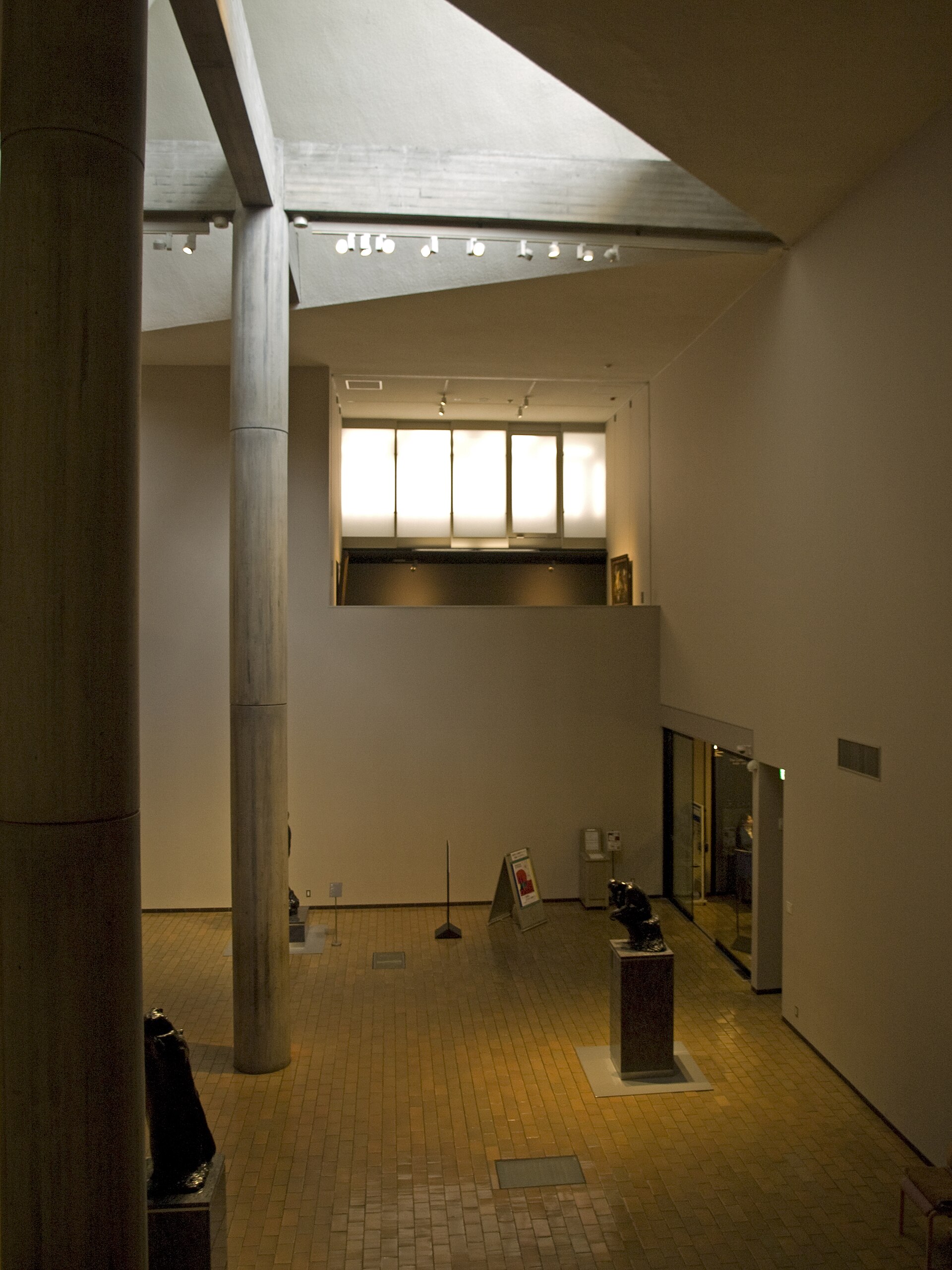
Photograph by Ymblanter · CC BY-SA 4.0 Main Building (Le Corbusier, 1959)
The museum's original galleries, entered through the double-height 19th Century Hall and following Le Corbusier's spiral circulation route. Holds the museum's late Gothic and Renaissance painting and its Flemish and Dutch Baroque holdings, including Rubens and Van Dyck, plus French painting and sculpture through the 18th century.
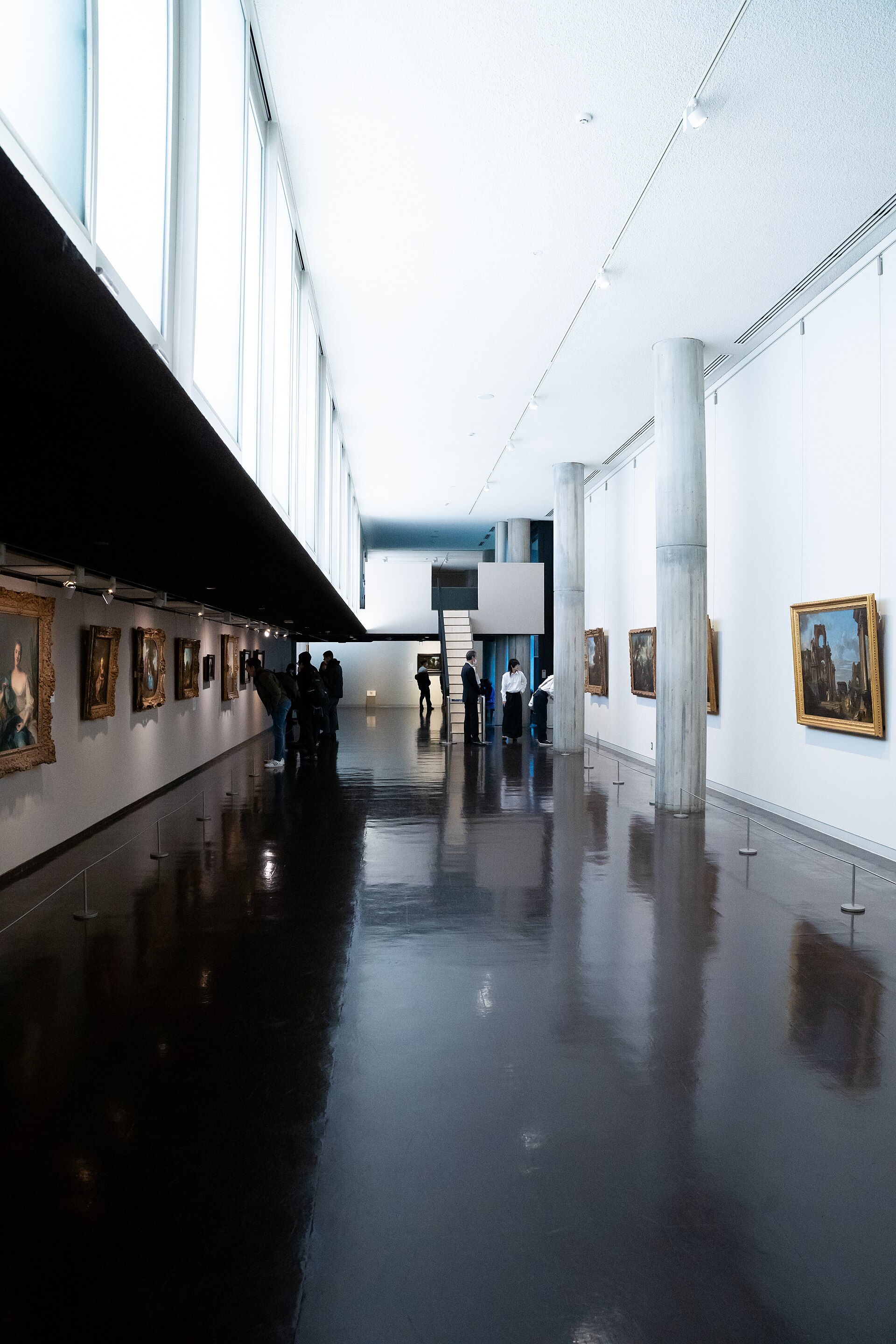
Photograph by Dick Thomas Johnson from Tokyo, Japan · CC BY 2.0 New Wing (Kunio Maekawa, 1979)
Added when the museum outgrew the Main Building, and designed by Maekawa to tie visually and structurally into Le Corbusier's original. Holds the core of the Matsukata Collection's 19th- and 20th-century French painting: Impressionist and Post-Impressionist work by Monet, Van Gogh, Renoir and their contemporaries.
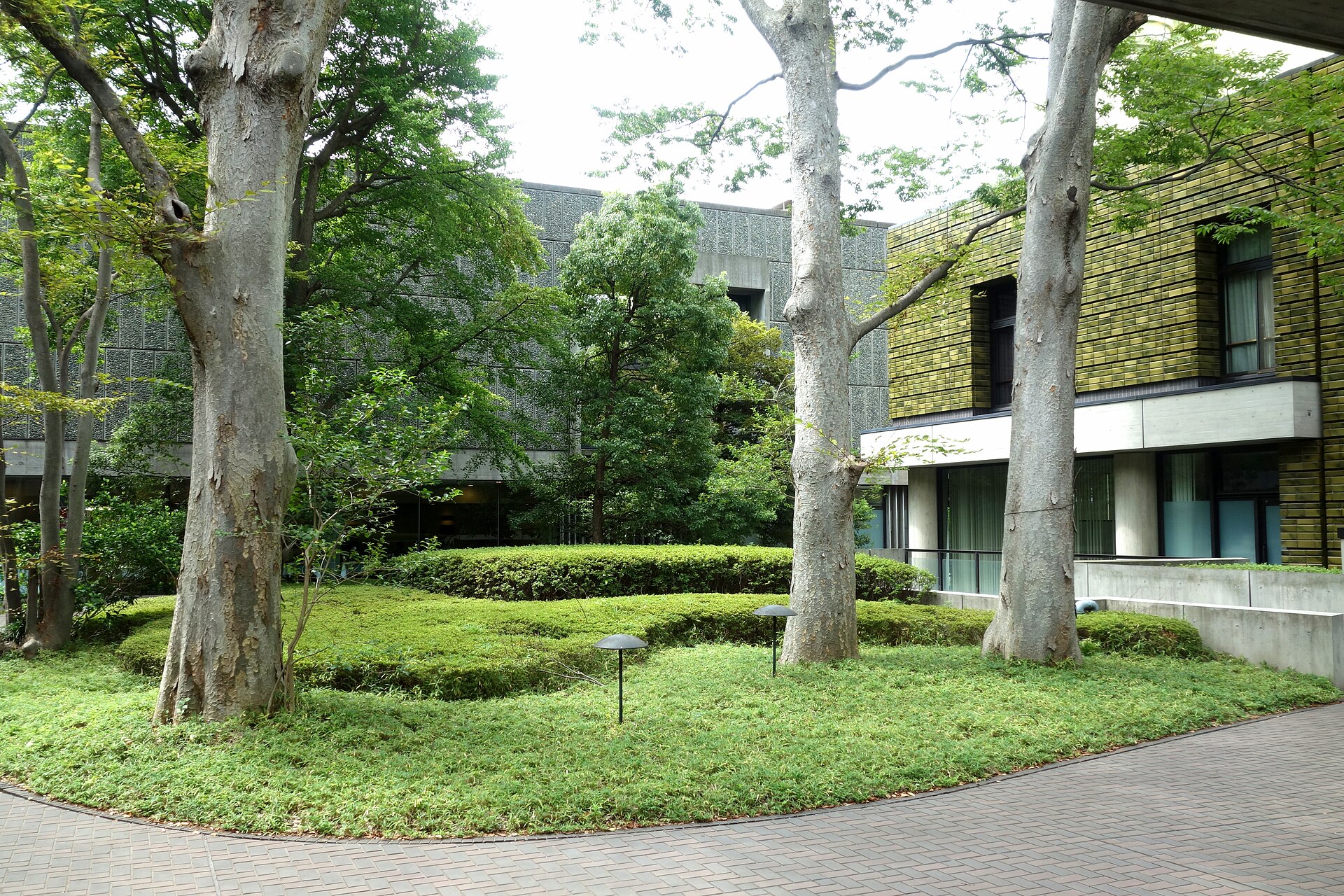
CC0 Central Courtyard
An open court between the Main Building and the New Wing, planted with zelkova and gingko trees, part of Maekawa's 1979 design linking his addition to the original building.
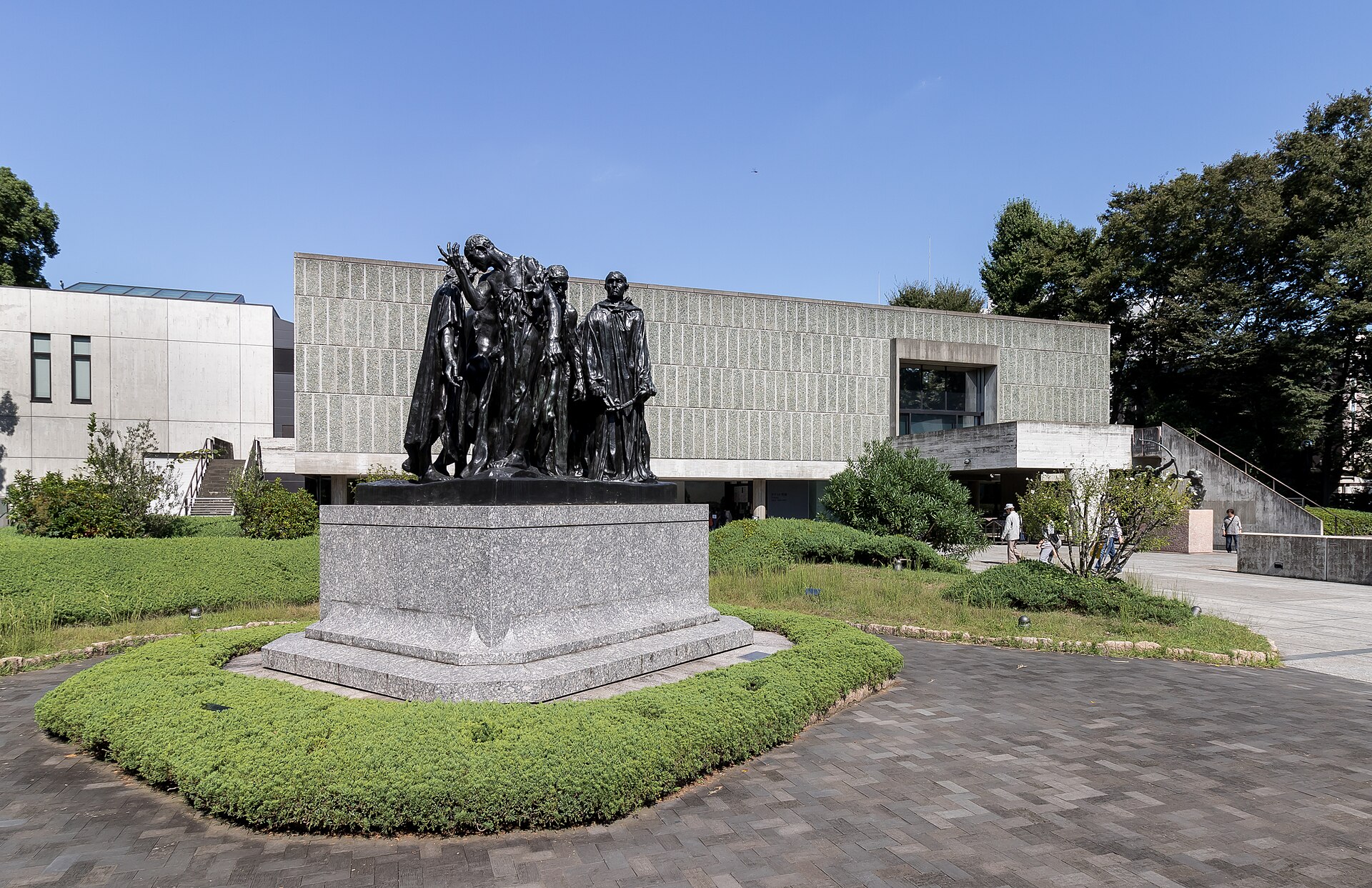
Photograph by Kakidai · CC BY-SA 4.0 Forecourt (sculpture garden)
The unticketed, freely accessible court in front of the Main Building, holding part of the museum's 58-piece Rodin bronze collection, including The Gates of Hell, The Thinker and a cast of The Burghers of Calais, laid out on Le Corbusier's Modulor proportions.
Special Exhibition Galleries (1997)
A dedicated wing for temporary loan exhibitions, roughly three a year, run separately from the permanent collection route and requiring a separate ticket.
What to see first
The Gates of Hell
Auguste RodinA final bronze cast, one of only seven in the world, of Rodin's unfinished portal for a Paris museum of decorative arts, dominated by The Thinker at its center. It stands in the forecourt, free to see without a ticket.10
Third Architectural Maquette for The Gates of Hell
Auguste RodinA colored plaster model from around 1881-82, inscribed by Rodin and given to Kojiro Matsukata by the Musee Rodin before 1926, showing the doors in an earlier state than the finished bronze on view outside.11
Water Lilies, Reflections of Weeping Willows
Claude MonetA nearly 4.25-metre canvas Matsukata bought directly from Monet in 1921, sequestered by France in 1944, rediscovered missing its upper portion in Louvre storage in 2016, and only returned to the museum by the Matsukata family in December 2017, fifty-eight years after the rest of the collection.14
Roses
Vincent van GoghPainted in the grounds of the Saint-Remy asylum in 1889 and bought by Matsukata from the dealer Paul Rosenberg in 1922; part of the founding 1959 gift.13
Saint Praxedis
Attributed to Johannes VermeerA 1655 canvas signed 'Meer 1655' whose attribution to Vermeer specialists have argued over for decades, some favoring Vermeer on technical grounds and others reading it as a copy after the Florentine painter Felice Ficherelli. On long-term deposit since 2014 and captioned as attributed, not autograph.12
Abundance (Abundantia)
Peter Paul RubensAn oil-on-panel study from around 1630, likely made as a design for a tapestry and originally paired with a companion panel of Justice now in a private collection.15
Mad Woman
Chaim SoutineA 1920 portrait of psychological intensity, painted with the violent distortion characteristic of Soutine's work, donated to the museum by Tai Hayashi in 1960.16
Exhibitions on now
- On now30 Jun 2026 to 11 Jan 2027Confirmed , 7 weeks ago
- Opening soon24 Oct 2026 to 21 Feb 2027Confirmed , 7 weeks ago
Past exhibitions here
- Closed30 Jun to 12 Oct 2026Confirmed · check before you travel
- Closed7 Jul to 23 Sep 2026Confirmed · check before you travel
- Closed22 Jul to 23 Sep 2026Confirmed · check before you travel
The building and what it was built to hold
The National Museum of Western Art stands just inside the southern edge of Ueno Park, and the building itself is generally the first thing a visitor is told about it. It is the only work by Le Corbusier in Japan and one of seventeen sites worldwide inscribed on the UNESCO World Heritage List in 2016 under "The Architectural Work of Le Corbusier, an Outstanding Contribution to the Modern Movement," a designation the building shares with the Villa Savoye outside Paris and the Unite d'Habitation in Marseille. Le Corbusier designed the Main Building from Paris and never supervised construction in person; three Japanese architects who had trained in his Paris atelier, Kunio Maekawa, Junzo Sakakura and Takamasa Yoshizaka, oversaw the work on his behalf. The building opened on 10 June 1959, raised on pilotis, its square plan meant to spiral outward in rings as the collection grew, a design Le Corbusier called a museum of unlimited growth. Only the innermost ring was ever built to that plan; Maekawa's own New Wing, added in 1979, extended the museum sideways instead. The museum was not built to house an idea. It was built to house one man's collection, and the collection came before the building did.
Kojiro Matsukata and a collection built twice
Kojiro Matsukata (1866-1950) was the third son of a Meiji-era prime minister and president of the Kawasaki Dockyard Company, the shipbuilder that became Kawasaki Heavy Industries. Wartime demand for ships during the First World War made him one of the wealthiest men in Japan, and from around 1916 he spent a large part of that fortune buying European art in London and Paris, guided in part by the British painter Frank Brangwyn. His holdings eventually ran to roughly 10,000 objects, including about 8,000 Japanese woodblock prints bought back from Western collections, alongside paintings, Rodin sculptures, furniture and tapestries. Matsukata's stated aim was not private collecting for its own sake: he wanted to build a public gallery in Japan so that young Japanese artists could study authentic European originals without traveling to Europe to see them, and he commissioned Brangwyn to help design a Sheer Pleasure Fine Arts Pavilion for the purpose. The 1927 financial crisis ended the plan before it began. Kawasaki Dockyard's bank collapsed, Matsukata resigned, and the works he had already brought to Japan were sold at auction to cover the losses. The European holdings he had left in storage abroad were what eventually became this museum, and they survived the 1927 crash only because they happened to be on the other side of the world when it hit.
What the war took and what France gave back
By the late 1930s the Matsukata collection was split across two cities. A London warehouse fire in 1939 destroyed an unrecorded number of works; no complete inventory of that loss survives on the museum's own site. Around 400 pieces stored in Paris fared better in the short term: the curator Leonce Benedite had kept them at the Musee Rodin, and they remained there through the German occupation. Toward the end of the Second World War the French government sequestered the Paris holdings as enemy property, and in 1951 the San Francisco Peace Treaty formally vested ownership in the French state. What followed was a negotiated return rather than a straightforward restitution: France agreed in 1953 to give back the majority of the roughly 400 works as a gesture of postwar friendship. The museum's own history pages say only that a majority came back and do not give a number or name what France kept. Japan Policy Forum, an English-language culture and policy site published under the Nippon Communications Foundation, puts a figure on it: seventeen works retained, naming Cezanne's Mont Sainte-Victoire and Gauguin's Still Life with Fan among them as paintings that remain in French national collections today. The National Museum of Western Art was built specifically to receive the returned pieces and opened with 370 of them in 1959.
Inside: from the Renaissance to the Rodin forecourt
The permanent collection today runs to roughly 5,500 works, from the 14th century through to the mid-20th, and only a fraction is on view at any time across the Main Building and New Wing. The route set out in the Main Building's 19th Century Hall and adjoining galleries covers late Gothic and Renaissance painting, Flemish and Dutch Baroque work by Rubens and Van Dyck, and French painting and sculpture through the 18th century. Maekawa's 1979 New Wing takes the story into the 19th and 20th centuries, where the Matsukata core of Impressionist and Post-Impressionist French painting, Monet, Van Gogh, Renoir and their contemporaries, is strongest. A dedicated Special Exhibition wing, added in 1997, runs roughly three loan shows a year separately from the permanent route. Outside, in the forecourt anyone can enter without a ticket, stand the museum's 58 Rodin bronzes: The Thinker, Rodin's Gates of Hell in its final cast, and a cast of The Burghers of Calais among them. Rodin gave Matsukata two early plaster maquettes of the Gates of Hell around 1920, before the finished bronze existed anywhere; those models are now part of the collection alongside the finished doors.
Two objects the collection nearly did not have
Two works in the current galleries show how unsettled this collection's history still is. Monet's Water Lilies, Reflections of Weeping Willows, a nearly 4.25-metre-wide canvas Matsukata bought directly from the artist in 1921, was among the works sequestered by France in 1944 and, unlike most of the Paris holdings, it did not come back in 1959. It resurfaced in storage at the Louvre in 2016, missing its upper portion, and was restored and formally transferred to the museum by the Matsukata family only in December 2017, fifty-eight years after the rest of the collection and just in time for the museum's sixtieth anniversary. Saint Praxedis, a 1655 canvas signed "Meer 1655" and on long-term deposit at the museum since 2014, carries an attribution to Johannes Vermeer that has divided specialists for decades: some scholars, including Arthur Wheelock at the National Gallery in Washington, have argued for Vermeer on technical grounds, while others read it as a copy after the Florentine painter Felice Ficherelli and doubt the signature. The museum labels it attributed to Johannes Vermeer rather than as an autograph work, which is the honest caption for a painting nobody has settled, and the label has not changed despite a 2023 Rijksmuseum exhibition that leaned toward accepting it.
Returning the forecourt to 1959
The building closed for eighteen months from October 2020 for what the museum described as facility maintenance, and reopened on 9 April 2022. The work went further than mechanical upgrades. When UNESCO reviewed the site for World Heritage listing in 2016, reviewers noted that decades of added planting and fencing around the forecourt had obscured Le Corbusier's original sightlines between the building and Ueno Park's garden path. The 2020-2022 project removed most of the accumulated planting on the southwest side, replaced solid fencing with transparent railing, and re-laid the forecourt's concrete paving to the divisions Le Corbusier's Modulor proportional system originally specified, rather than the mixed grid that had built up over sixty years of patchwork repairs. The museum's own account of the renovation frames it entirely as restoration rather than alteration, and no independent criticism of the tree removal has been found in the sources checked for this page; it is presented, consistently, as correcting drift from the original 1959 design rather than as a design change in its own right.
What the record does not close
The museum's public history is candid about the broad shape of the Matsukata story and thin on the specifics that would let a reader check it. Its own site does not name the seventeen works France retained in 1953; Japan Policy Forum is the one outside account checked for this page that names two of them. The museum's site also does not give a figure for what was lost in the 1939 London fire, and does not address the wartime shipbuilding profits that funded the original buying spree beyond noting that the First World War was good for the business. None of this amounts to concealment; it reads as an institutional history written for visitors rather than for provenance researchers, on an object type, paintings bought from artists and dealers in the 1910s and 1920s, where that gap matters less than it would for a single contested work today. The open question for a reader who wants the full chain is less what happened than which seventeen, and the museum's own site is not where that answer is published.
What visitors say
The aggregate visitor rating is strongly positive: Tripadvisor lists 4.4 out of 5 from 939 reviews, read 13 August 2026. No individual review text was read for this page - Fodor's and Frommers review pages both returned bot-block errors and could not be fetched - so what follows is limited to the aggregate score itself and the museum's own published offerings, not to reviewer-specific claims about what visitors say.
What is praised, what is criticised
- Praised: The Rodin forecourt (The Gates of Hell, The Thinker, The Burghers of Calais) is open and free to enter without a ticket to the paid galleries, per the museum's own general information page
- Praised: The Main Building is the only work by Le Corbusier in Japan and has been UNESCO World Heritage-listed since 2016, a status that functions as a draw independent of the paintings inside
- Criticised: Photography is forbidden throughout the Special Exhibition Galleries, on works on loan from other institutions, and on free-admission days, restrictions a visitor planning to photograph should know before arriving, per the museum's own FAQ
Ratings on other platforms
Tripadvisor: 4.4 from 939 ratings, read 13 August 2026
A platform average is a tertiary source: it moves, it is not audited, and we quote no visitor's words.
Questions about National Museum of Western Art
Where is National Museum of Western Art?
7-7 Ueno-koen, Taito-ku, Tokyo 110-0007, Japan.
How much does it cost to visit?
Adult: JPY 500; College student: JPY 250; High-school age and under, 65 and over, visitors with disabilities and one companion: free. As confirmed 18 September 2026.
When is it open?
Tue-Sun 09:30-17:30; Fri-Sat 09:30-20:00. Closed: Monday (if a Monday is a national holiday the museum stays open and closes the following weekday instead). 28 December to 1 January. As confirmed 18 September 2026.
How do you get there?
JR Yamanote Line: 1 minute walk from Ueno Station, Park Exit; Keisei Line: 7 minute walk from Keisei Ueno Station; Tokyo Metro Ginza or Hibiya Line: 8 minute walk from Ueno Station.
What should you see first?
The Gates of Hell (Auguste Rodin); Third Architectural Maquette for The Gates of Hell (Auguste Rodin); Water Lilies, Reflections of Weeping Willows (Claude Monet); Roses (Vincent van Gogh); Saint Praxedis (Attributed to Johannes Vermeer); Abundance (Abundantia) (Peter Paul Rubens).
What we could not confirm
- The identities of most of the roughly seventeen paintings France retained in 1953 are not published on the museum's own site; only Cezanne's Mont Sainte-Victoire and Gauguin's Still Life with Fan are named, by Japan Policy Forum, the one outside account checked for this page.
- No inventory of what was destroyed in the 1939 London warehouse fire has been found; the museum's own account does not quantify the loss.
- Saint Praxedis remains captioned attributed to Johannes Vermeer rather than as an autograph work; the attribution is not settled scholarship despite a 2023 Rijksmuseum exhibition leaning toward acceptance.
Images
Sources
- 1National Museum of Western Art, official English homepage (visit-hours banner, closure notices) nmwa.go.jp/en/
- 2National Museum of Western Art, General Information (hours, admission prices, free-admission days, cafe and shop) nmwa.go.jp/en/visit/
- 3National Museum of Western Art, Outline (founding date, UNESCO listing, New Wing and Special Exhibition Wing dates, 2001 institutional merger) nmwa.go.jp/en/about/
- 4National Museum of Western Art, Matsukata Collection (Kojiro Matsukata biography, WWII sequestration, postwar return) nmwa.go.jp/en/about/matsukata.html
- 5National Museum of Western Art, Architecture (Main Building design, New Wing) nmwa.go.jp/en/about/building.html
- 6National Museum of Western Art, FAQ (photography rules, wheelchair loan, disabled admission, cafe/shop access) nmwa.go.jp/en/visit/faqs.html
- 7National Museum of Western Art, Getting Here (train access and walking times) nmwa.go.jp/en/visit/map.html
- 8National Museum of Western Art, Accessibility nmwa.go.jp/en/visit/accessibility.html
- 9National Museum of Western Art, What's New archive (2020-2022 closure and 9 April 2022 reopening, other acquisitions and restitutions) nmwa.go.jp/en/information/whats-new.html
- 10National Museum of Western Art collection database, The Gates of Hell, Auguste Rodin, S.1959-0045 collection.nmwa.go.jp/en/S.1959-0045.html
- 11National Museum of Western Art collection database, Third Architectural Maquette for The Gates of Hell, Auguste Rodin, S.1959-0046 collection.nmwa.go.jp/en/S.1959-0046.html
- 12National Museum of Western Art collection database, Saint Praxedis, attributed to Johannes Vermeer, DEP.2014-0001 collection.nmwa.go.jp/en/DEP.2014-0001.html
- 13National Museum of Western Art collection database, Roses, Vincent van Gogh, P.1959-0193 collection.nmwa.go.jp/en/P.1959-0193.html
- 14National Museum of Western Art collection database, Water Lilies, Reflections of Weeping Willows, Claude Monet, P.2017-0004 collection.nmwa.go.jp/en/P.2017-0004.html
- 15National Museum of Western Art collection database, Abundance (Abundantia), Peter Paul Rubens, P.1978-0004 collection.nmwa.go.jp/en/P.1978-0004.html
- 16National Museum of Western Art collection database, Mad Woman, Chaim Soutine, P.1960-0001 collection.nmwa.go.jp/en/P.1960-0001.html
- 17UNESCO listing date, apprentice architects) en.wikipedia.org/wiki/National_Museum_of_Western_Art
- 18Tripadvisor, National Museum of Western Art attraction page (aggregate rating 4.4 of 5 from 939 reviews, read 13 August 2026; ) tripadvisor.com/Attraction_Review-g14134278-d479268-Reviews-National_Museum_of_Western_Art-Uenokoen_Taito_Tokyo_Tokyo_Prefecture_Kanto.html
- 19Wikimedia Commons file page, lead photograph licence and attribution commons.wikimedia.org/wiki/File:2018_National_Museum_of_Western_Art,_Tokyo.jpg
- 20kokosil Ueno, interview report on the museum's 2022 reopening and forecourt restoration home.ueno.kokosil.net/en/archives/63313
- 21ArchEyes, The National Museum of Western Art: Le Corbusier in Tokyo (Museum of Unlimited Growth concept, pilotis) archeyes.com/national-museum-western-art-tokyo-le-corbusier/
- 22Japan Policy Forum (Nippon Communications Foundation), 'A basic guide to the greatest Matsukata Collection in the world' (count and names of works France retained in 1953: seventeen, including Cezanne's Mont Sainte-Victoire and Gauguin's Still Life with Fan) japanpolicyforum.jp/culture/pt201909301527379776.html
