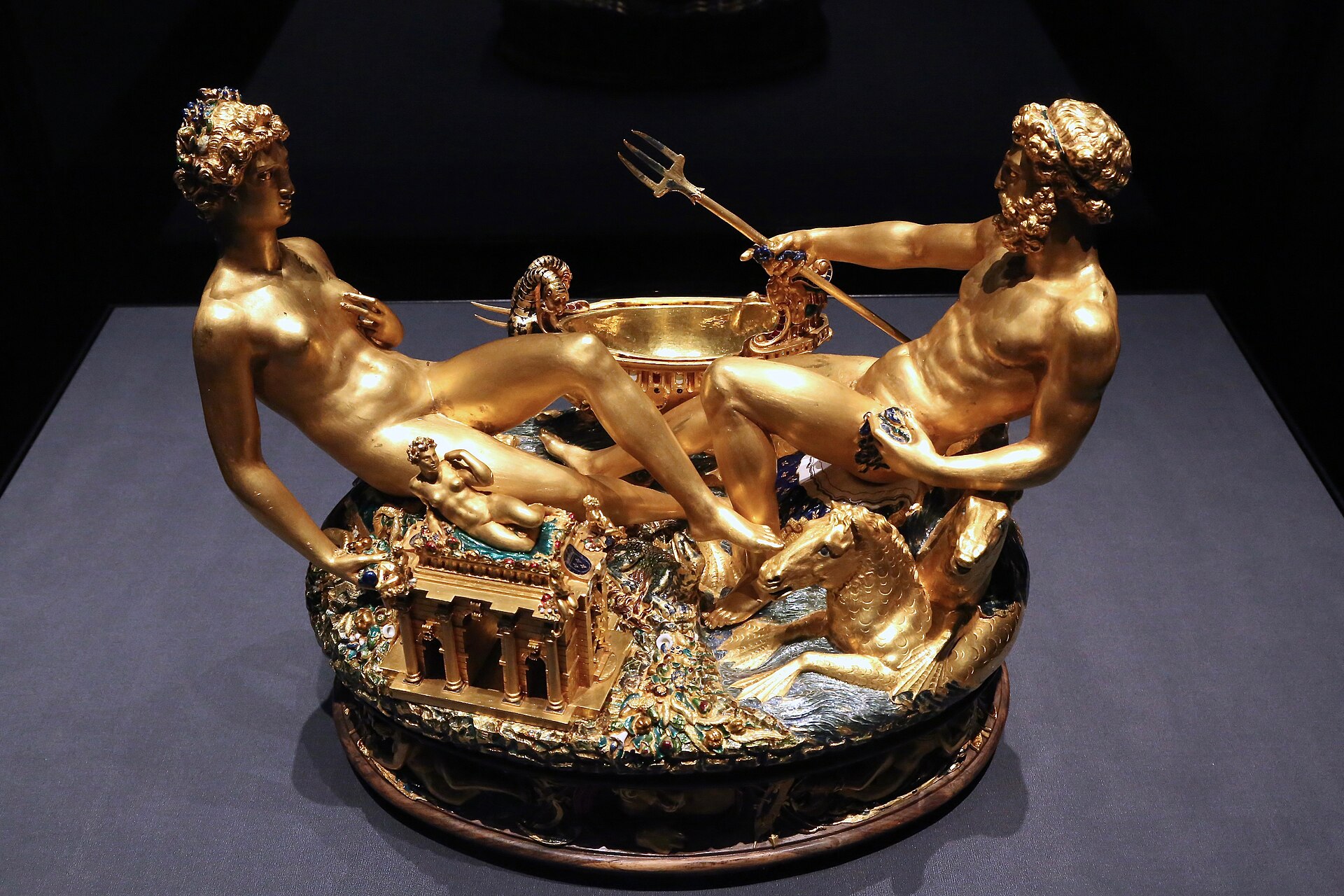
Saliera (Salt Cellar of Francis I)
1540-1543 · Gold
Kunsthistorisches Museum, Vienna, Kunstkammer
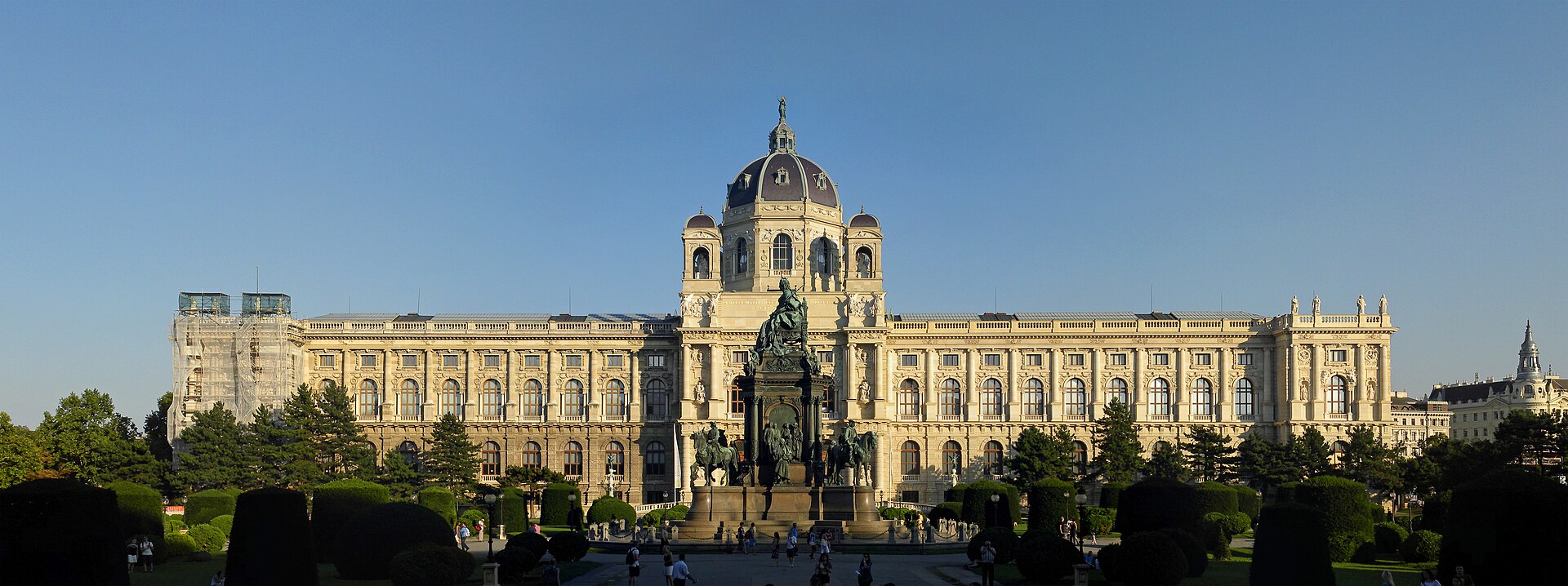
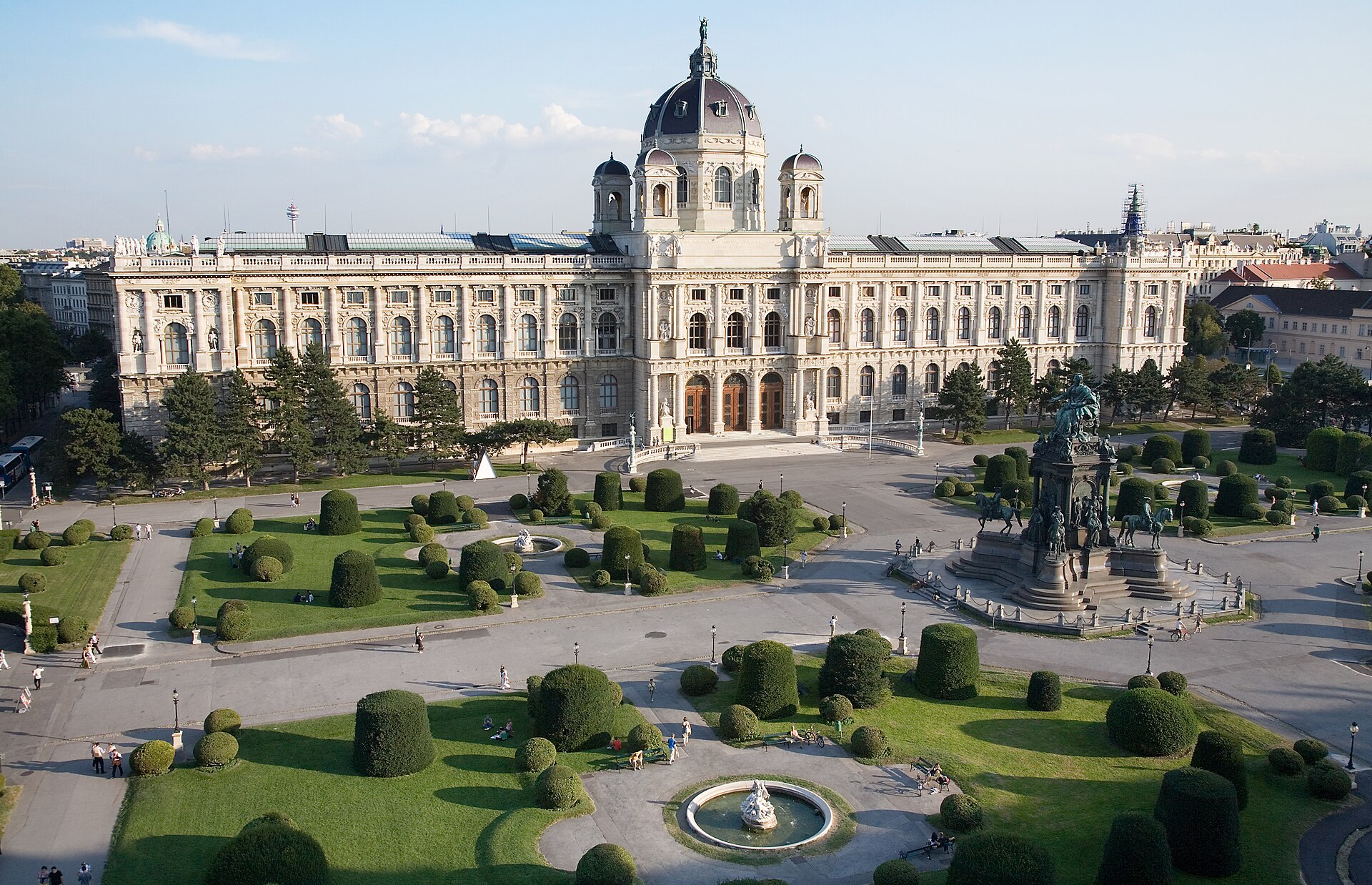
The Kunsthistorisches Museum on Maria-Theresien-Platz, seen across the Maria Theresa monument
Photograph by Haeferl, CC BY-SA 3.0 ATMuseum · Kunsthistorisches Museum Wien · Founded 1891
Open, admission and hours confirmed 9 September 2026 · 12 sources
The Kunsthistorisches Museum's defining strength is depth in a small number of areas rather than even coverage of art history: it holds the largest concentration of Pieter Bruegel the Elder paintings anywhere, a Kunstkammer that is less a decorative-arts sideline than the actual physical record of how the Habsburgs used curiosity cabinets to display power, and an Egyptian and Near Eastern Collection whose scale surprises visitors who came only for the Old Masters. Because almost everything on the walls arrived as part of one family's collecting habit over three centuries rather than through later museum-style acquisition, the picture gallery in particular reads as a coherent set of period tastes - Rudolf II's Prague mannerism, Leopold Wilhelm's Antwerp market buying, Maria Theresa's monastic altarpieces - rather than a survey assembled to fill gaps.
| Local name | Kunsthistorisches Museum Wien |
|---|---|
| Kind | Museum |
| Founded | Opened to the public 17 October 1891; the picture collection itself was displayed publicly from 1781 at the Upper Belvedere |
| City and country |  Vienna, Austria Vienna, Austria |
| Address | Maria-Theresien-Platz, 1010 Vienna, Austria |
| Website | khm.at |
| Status | Open, confirmed |
| Record last verified |
Prices and hours change. We take them from the institution's own pages and print the day we read them, and you can check the current position at the source we used. Confirm before you travel.
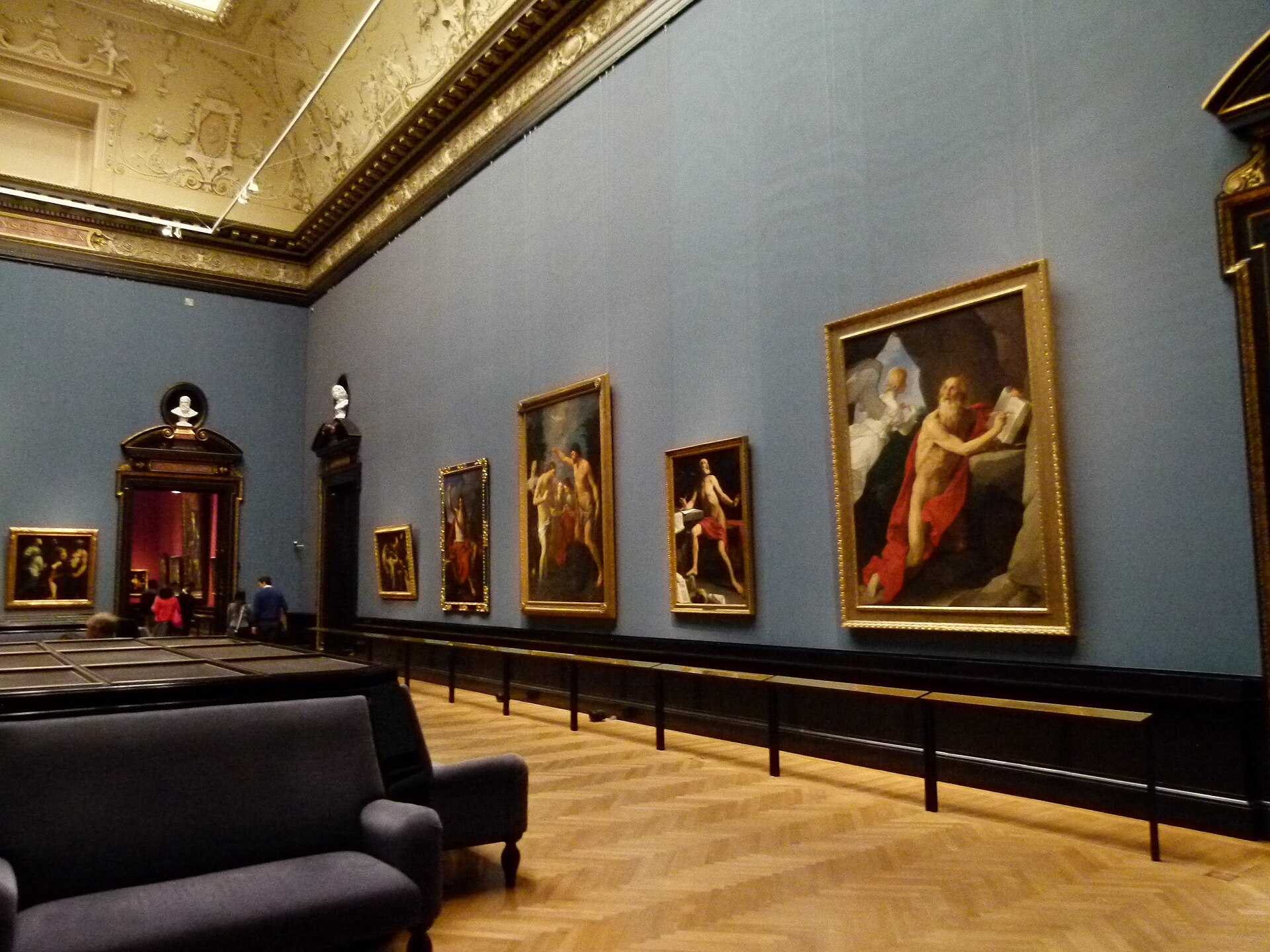
The core of the Habsburg painting collection: the largest holding of Pieter Bruegel the Elder anywhere, including the Tower of Babel, Hunters in the Snow and the Peasant Wedding; Raphael's Madonna of the Meadow; Vermeer's The Art of Painting; three Velazquez portraits of the young Infanta Margarita Teresa painted for her Vienna marriage negotiations; and rooms of Titian, Rubens, Durer, Rembrandt, Tintoretto, Veronese and the Bassano workshop
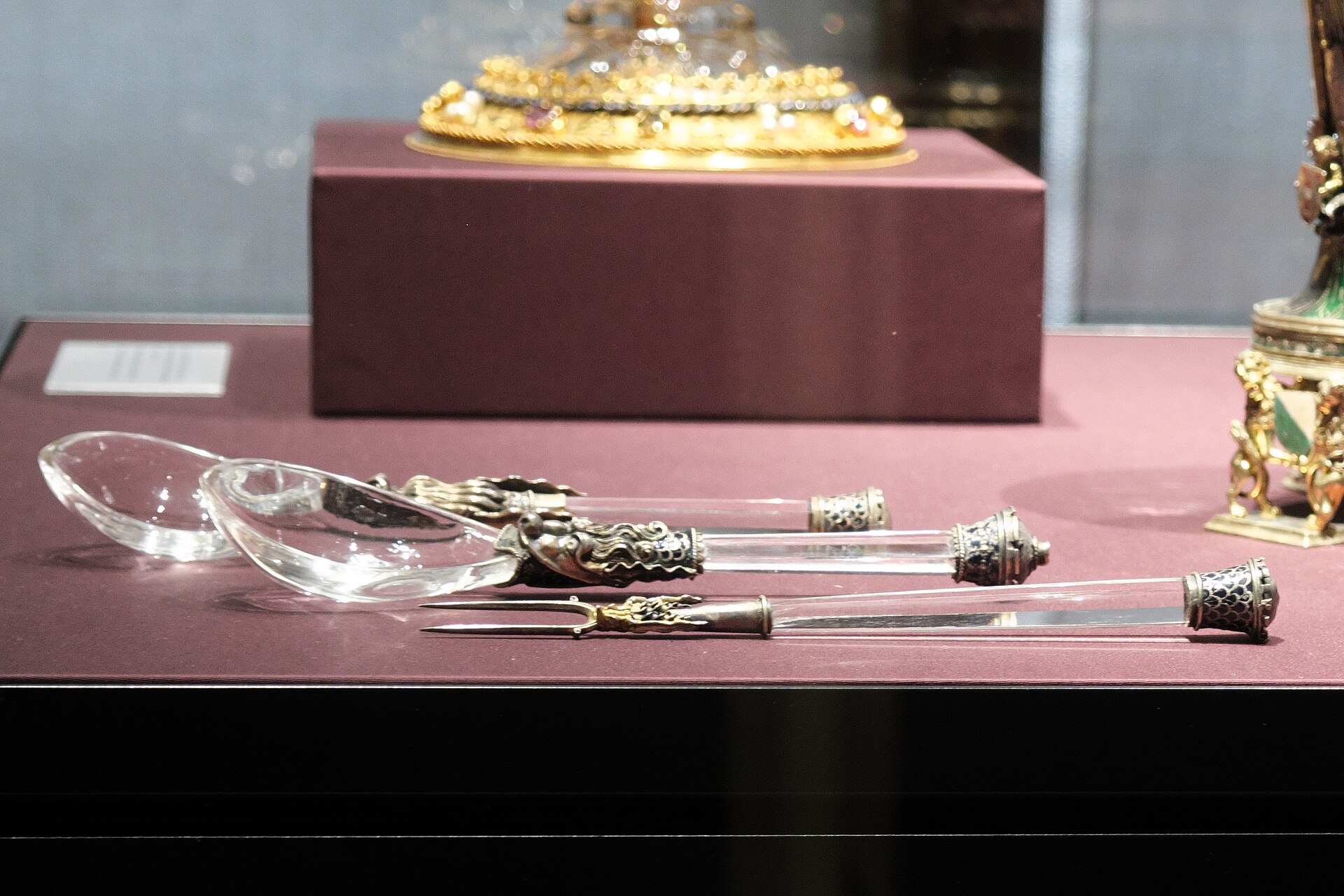
Around 2,200 objects from the late Middle Ages to the Baroque drawn from the Habsburgs' own princely collecting cabinets: Benvenuto Cellini's gold Saliera, automata including a ship-shaped clock that fires small cannon, a carved rhinoceros-horn cup, scientific instruments, and courtly objects worked from coral, ostrich egg and narwhal ivory
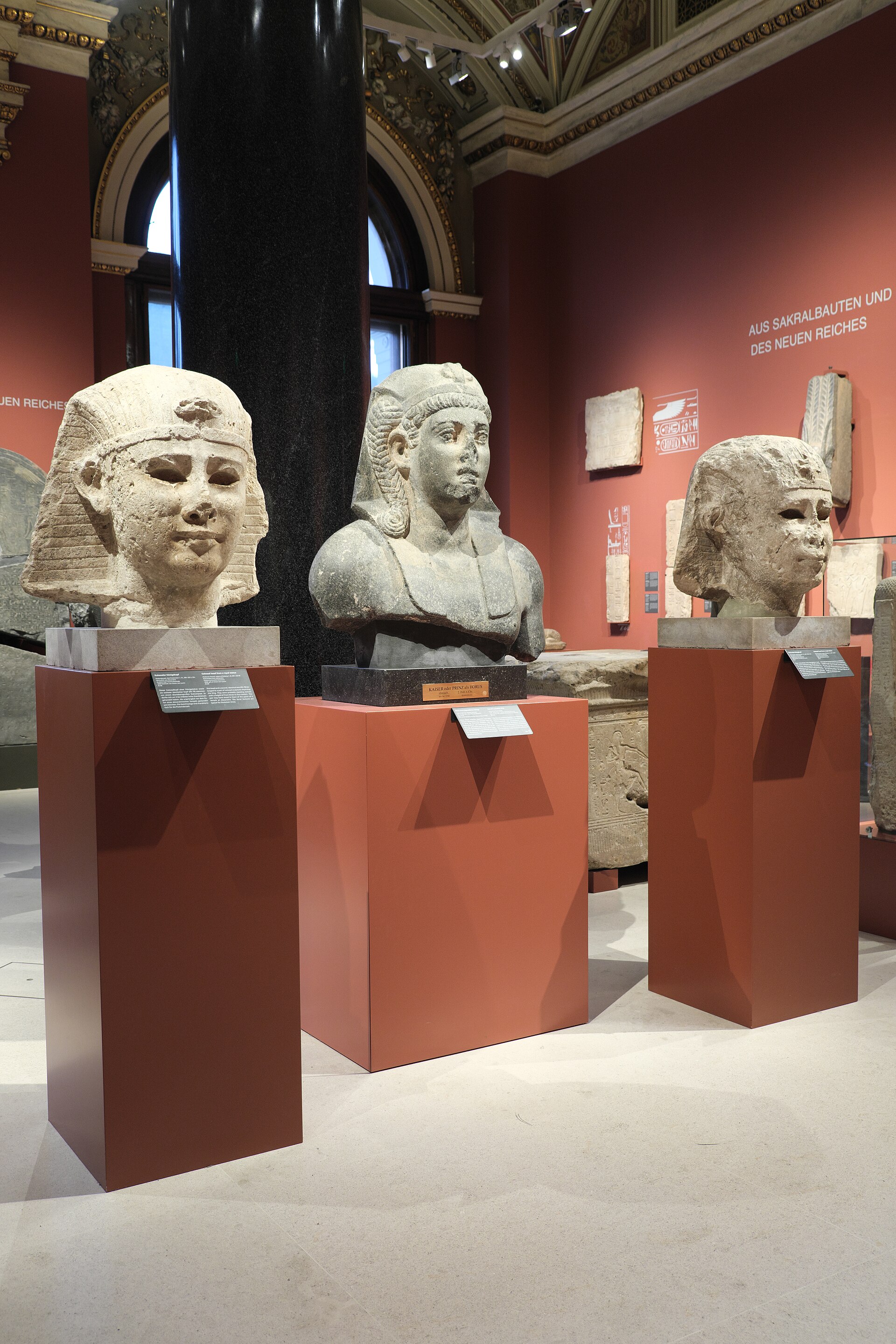
More than 17,000 objects across roughly 4,500 years, arranged by funerary cult, daily life, sculpture and writing. The largest room is lined with three genuine six-metre Ancient Egyptian columns, a gift to Franz Joseph I in 1869. Holdings include the Offering Chapel of Ka-ni-nisut, painted sarcophagi and coffins, animal mummies, Book of the Dead papyri, and the Reserve Head from Giza
Around 2,500 objects spanning roughly 3,000 years on the ground floor: the sardonyx cameo Gemma Augustea, the Migration Period Treasure of Nagyszentmiklos, the Brygos Skyphos and other painted vases, the bronze Senatus consultum de Bacchanalibus panel, and a sarcophagus carved with fighting Amazons
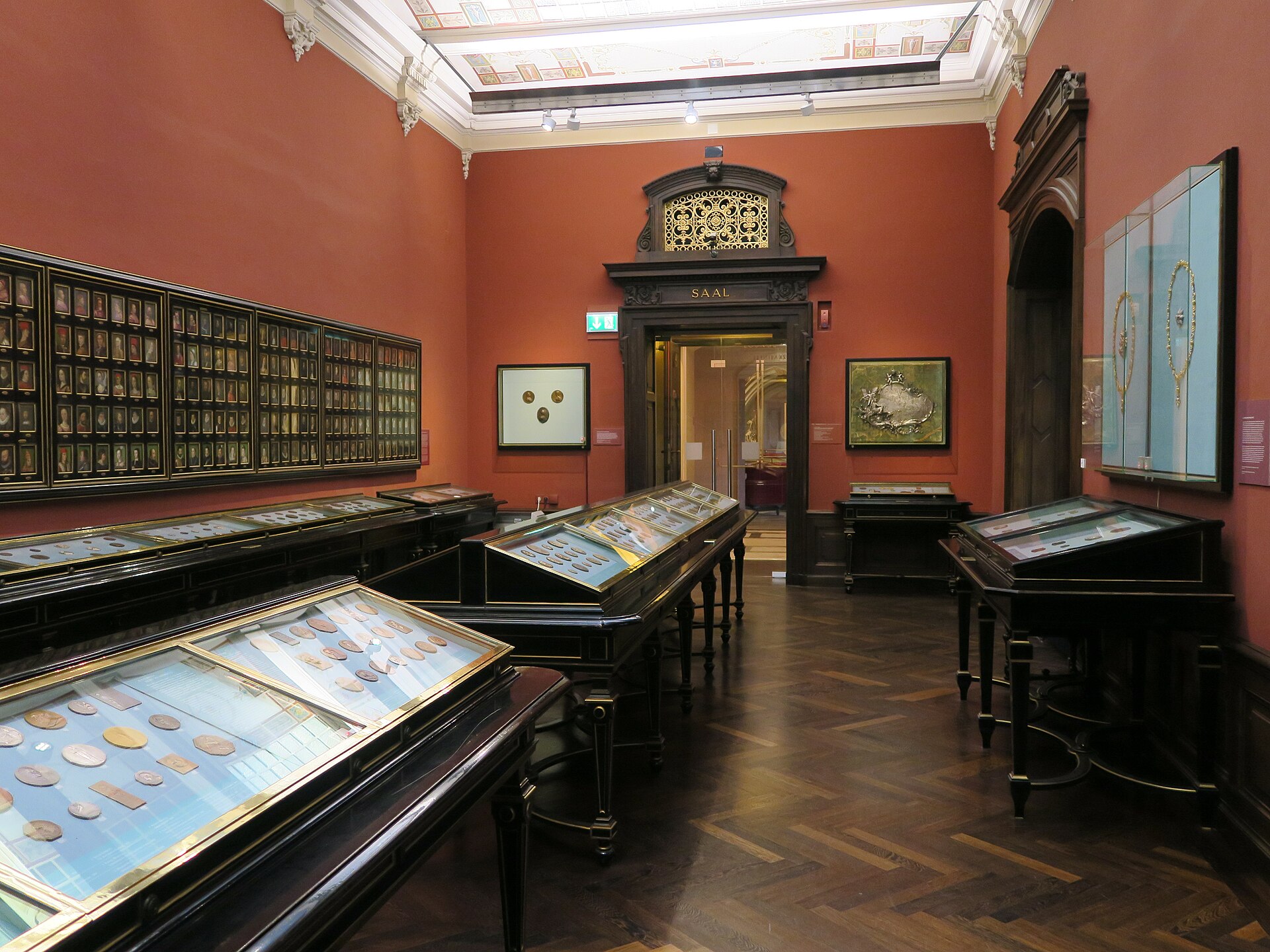
Over 600,000 coins, medals and banknotes, one of the largest such holdings in the world, with roughly 2,000 on view across three rooms: a history of the medal from around 1400, a history of coin and paper money from before the invention of coinage in the 7th century BC to the present, and a room for temporary numismatic shows. The oldest inventory of the cabinet dates to 1547-50, under Ferdinand I
The only work in gold that survives from Cellini's hand, made 1540-1543 for Francis I of France from designs first drawn up for Cardinal Ippolito d'Este; the figures of Neptune and Tellus turn a table salt cellar into an allegory of sea and earth. Stolen from the museum on 11 May 2003 and recovered on 21 January 2006 buried near Zwettl, Austria4
A monumental c.1563 panel rendered in encyclopaedic technical detail, showing construction methods of Bruegel's own century layered onto a biblical subject; one of twelve Bruegel panels in the gallery, the largest concentration of his work anywhere4
Painted 1565, widely treated as the defining winter landscape of European painting, built from a single low viewpoint that carries the eye from the returning hunters down into a frozen valley4
Painted around 1666-68, an allegory of painting itself, showing an artist at his easel with a model posed as Clio, the muse of history; Vermeer is said to have kept the picture rather than sell it4
One of three Velazquez portraits of the young Infanta in the gallery, painted 1659 and sent from Madrid to Vienna so her Habsburg relatives could see how their intended bride looked as the marriage negotiations proceeded4
Painted in 1506 for the Florentine patron Taddeo Taddei when Raphael was twenty-three, its pyramidal grouping of the Virgin, the Christ Child and the infant John the Baptist is a direct study of Leonardo's Florentine compositions; long known as the Madonna del Belvedere for its years in the imperial Belvedere gallery4
A two-layered sardonyx cameo of around 9-12 AD honouring the emperor Augustus, generally treated as the single most important surviving antique cameo in the museum's collection6
One of the small group of smooth limestone 'reserve heads' placed in Old Kingdom tombs, whose exact ritual purpose is still debated by Egyptologists; among the sculptural highlights of the Egyptian and Near Eastern Collection6
1540-1543 · Gold
Kunsthistorisches Museum, Vienna, Kunstkammer
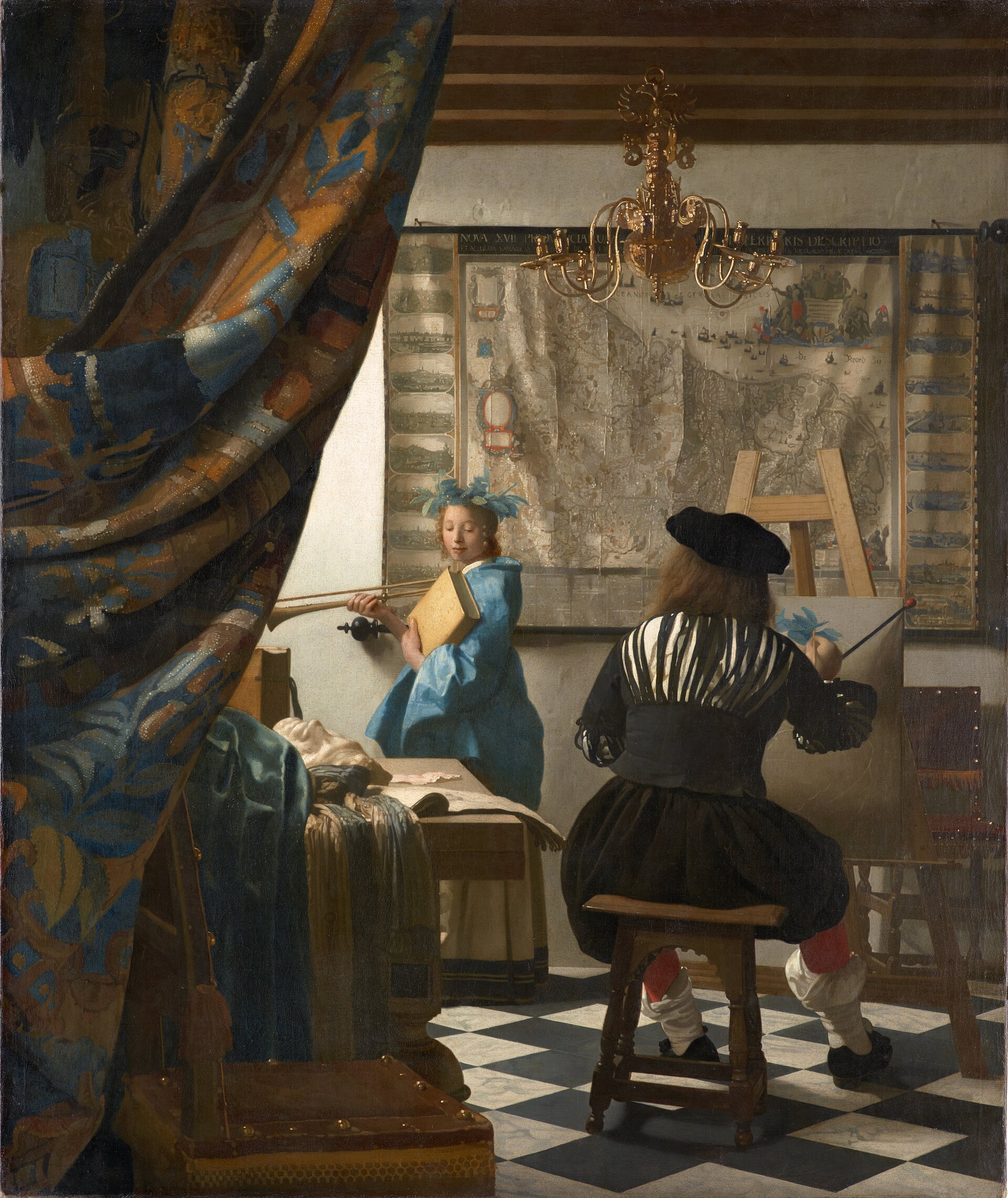
c. 1666-68 · Oil on canvas
Kunsthistorisches Museum Wien, Gemaeldegalerie
The Kunsthistorisches Museum stands on Maria-Theresien-Platz, facing an almost identical twin, the Naturhistorisches Museum, across a square laid out for exactly this pairing. Both were part of the Ringstrasse programme that replaced Vienna's demolished fortifications from 1857 onward with a ring of grand public buildings, and both were built to the same brief: a suitably imperial home for collections the Habsburgs had spent three centuries assembling privately, now made public. Construction ran from 1871 to 1891 under Gottfried Semper and Karl von Hasenauer, brought in as a working pair after Semper's initial solo design proposal did not survive court politics intact. Franz Joseph I opened the museum on 17 October 1891.
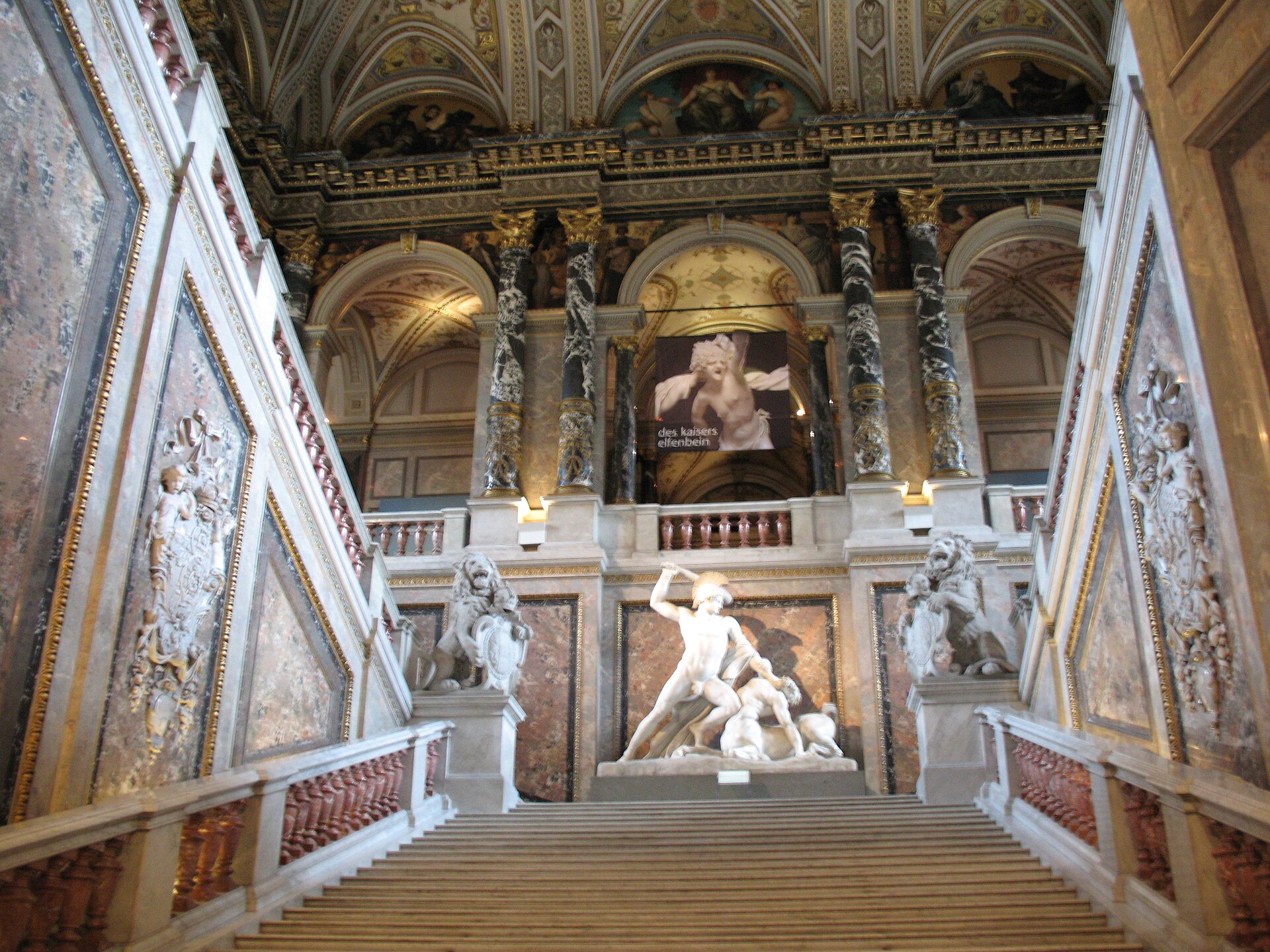
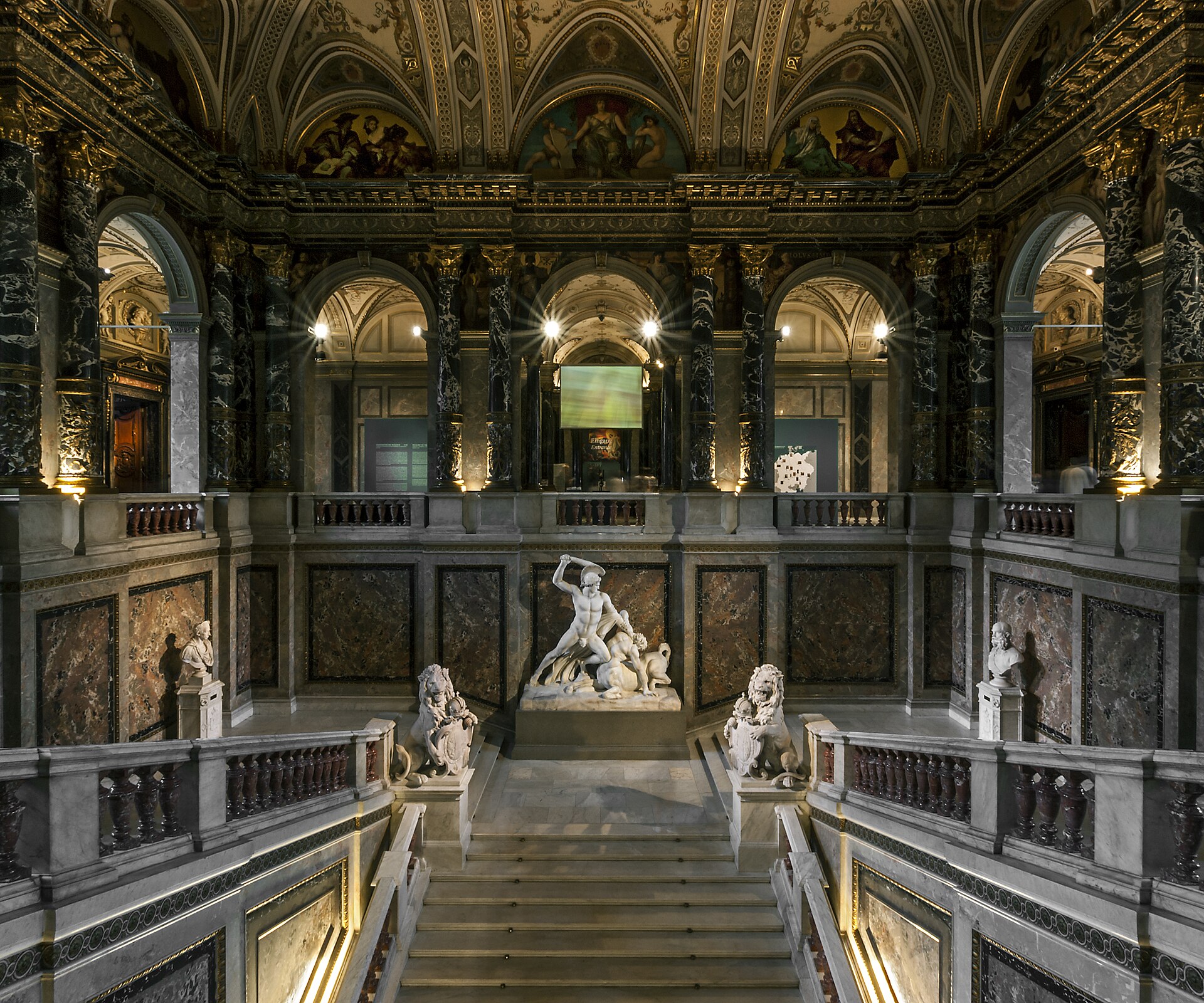
The building itself argues for its own importance in the collection it holds. Renaissance Revival sandstone facades carry an octagonal dome roughly 60 metres high, matched exactly by the Naturhistorisches Museum opposite. Inside, the entrance hall and grand staircase are treated as an artwork in their own right: marble, gilding and stucco surround a cycle of murals painted on the stair spandrels by Hans Makart, Mihaly Munkacsy, Franz Matsch and the young Gustav Klimt working alongside his brother Ernst, several years before Gustav Klimt's name meant anything outside Vienna. The museum's own galleries were designed room by room to match what they were built to hold, so the Egyptian and Near Eastern Collection's main hall is lined with three genuine six-metre ancient Egyptian columns, a gift to Franz Joseph in 1869, rather than a European approximation of Egyptian architecture.
The paintings the museum now shows were not assembled for the building; the building was built around paintings that already existed as a set. Archduke Ferdinand II of Tyrol built an armour and curiosity cabinet at Ambras Castle in the sixteenth century that supplies much of what is now the Kunstkammer. His nephew Rudolf II, ruling from Prague rather than Vienna, became by general agreement the most serious collector the family produced, buying and commissioning Durer, Arcimboldo and Bruegel and building nine rooms in his palace purely to hold paintings, a library and an art chamber inventoried between 1607 and 1611. Most of that Prague collection scattered when Swedish troops sacked the city in 1648, during the last year of the Thirty Years War.
The single largest infusion came afterward, from Archduke Leopold Wilhelm, governor of the Spanish Netherlands from 1647. Working the Antwerp and Brussels art markets during the political chaos of the English Civil War, he bought major pieces out of the Buckingham and Hamilton collections as they were broken up and, by his own later account, brought some 1,400 paintings back to Vienna with him in 1656. A large share of the Picture Gallery's Titians, Veroneses and Tintorettos trace to that one purchasing spree. Emperor Charles VI began consolidating the scattered Habsburg holdings into a single Vienna display at the Stallburg early in the eighteenth century, and Empress Maria Theresa completed that work, adding large altarpieces recovered from dissolved monasteries and moving the whole collection to the Upper Belvedere, where it opened to the public in 1781, a full 110 years before the present building existed. The move to the new Ringstrasse museum in 1891 was a change of address for an already-public, already-famous collection, not its creation.
On the night of 11 May 2003, with the building partly under scaffolding for renovation work, a lone intruder climbed the scaffolding, forced a window and took Cellini's Saliera from its case, the only work in gold that survives from the hand of the Florentine goldsmith. An alarm did sound, at 3:55 in the morning, but museum security had grown used to false alarms from the building work and did not investigate; the theft was not discovered until staff opened the galleries at 8:20 a.m. The Saliera stayed missing for two and a half years. It surfaced on 21 January 2006, recovered by police from a lead box buried in a forest near Zwettl, roughly 90 kilometres north of Vienna, after the museum had offered a reward of one million euros. The thief, Robert Mang, turned himself in once police released surveillance images that people who knew him recognised, and was sentenced to four years in prison. The Saliera is back on display in the Kunstkammer, now insured for an estimated sixty million dollars, and the case remains one of the most-cited art thefts of the period precisely because the object taken was, by any account, irreplaceable rather than merely valuable.
Austria passed its Kunstrueckgabegesetz, the federal law on the return of art, on 4 December 1998, requiring federal museums including the Kunsthistorisches Museum to identify and return objects that entered their collections during or because of Nazi rule. The museum's own account of the resulting work states that 1,018 objects have been returned across its collections since the law took effect: 669 from the Coin Cabinet, 170 from the Collection of Greek and Roman Antiquities, 44 from the Kunstkammer and 36 from the Imperial Armoury, decided case by case by an advisory board whose reasoned recommendations are published. The Jewish Vienna collector Richard Neumann is one of the individuals this research reached: the museum's advisory board records that his roughly 200-work collection was seized after the 1938 Anschluss as he fled first to Paris and then to Cuba; decades of pursuit by his heirs led to further restitutions from the museum's holdings in 2010, including paintings attributed to Maerten van Heemskerck.
Not every provenance question the museum faces is settled. In 2015, documents surfaced in the archive of the National Museum in Krakow alleging that Bruegel's The Fight Between Carnival and Lent, in the KHM's galleries, was the same painting taken from Krakow in 1939 by Charlotte von Wachter, wife of the city's Nazi-appointed governor. The museum's position is that its picture has been in the Habsburg collection since the seventeenth century and that the painting seized in Krakow was a different work; unusually for a restitution dispute, the argument is over whether the two paintings are even the same object, not simply who owned the object. The dispute has not been publicly resolved as of this record.
The museum is open Tuesday to Sunday, 10 a.m. to 6 p.m., with Thursday extended to 9 p.m., and closed on Mondays outside a published calendar of public-holiday exceptions on which it keeps its usual weekday hours. Since 8 September 2026 the museum's own site states that admission is available only during a reserved time slot, selected at the point of purchase online or at the desk and subject to availability; a ticket bought before that date remains valid for flexible entry during regular hours without a slot. That change sits on top of a museum that was already prone to peak-season queueing: reviewers consistently mention queueing, particularly for entry and cloakroom, and the museum's own FAQ is blunt that it does not provide luggage storage for anything beyond what fits in a locker, which matters for anyone arriving with luggage between hotel checkout and a flight. Step-free access runs through a dedicated side entrance at Burgring 5, with two lifts reaching every floor, the shop and the cafe, and a programme of tactile and audio-described tours for blind and low-vision visitors that goes further than most peer institutions offer.
Ticket pricing rewards buying ahead: an adult ticket bought online is two euros cheaper than the same ticket at the desk, and the museum's own combined tickets, bundling in the Imperial Treasury or the wider federal museum network, are usually the better value for anyone planning to see more than the one building. The Picture Gallery alone reasonably takes two to three hours; adding the Kunstkammer and the Egyptian and Near Eastern Collection is closer to a full day, and the museum's own guidance simply says duration depends on the visitor rather than pretending a single number covers everyone.
Visitors consistently describe the museum as a match for the Louvre or the Prado rather than a secondary stop, and rate the building itself, not only the collection, as part of the reason to go: the grand staircase, the domed central hall and the room decoration are called out almost as often as the paintings. The Bruegel rooms and the Egyptian and Near Eastern galleries draw particular praise. The most repeated complaints are about the cost of admission relative to other Vienna museums, confusion around online ticket vouchers at the entrance, and crowding and queueing in peak season.
TripAdvisor: 4.7 from 10,302 ratings, read 12 August 2026
A platform average is a tertiary source: it moves, it is not audited, and we quote no visitor's words.
Maria-Theresien-Platz, 1010 Vienna, Austria.
Adult: EUR 22; Reduced: EUR 19; Vienna City Card holders: EUR 23; Under 19: free; Habsburg Treasures combined ticket: EUR 32. As confirmed 9 September 2026.
Tue-Sun 10:00-18:00; Thu 10:00-21:00. Closed: Monday, except on a published list of public holidays when the museum opens on its usual weekday hours. As confirmed 9 September 2026.
U-Bahn: U2 Museumsquartier and U3 Volkstheater are both a short walk away; Tram: Tram D and tram lines 1 and 2 stop at Burgring, directly opposite the museum; Bus: Bus routes 2A and 57A serve the Burgring stop; Car: Only limited prepaid short-term street parking near the building; the nearest garage is under the MuseumsQuartier at Museumsplatz 1.
Saliera (Salt Cellar of Francis I) (Benvenuto Cellini); The Tower of Babel (Pieter Bruegel the Elder); Hunters in the Snow (Winter) (Pieter Bruegel the Elder); The Art of Painting (Johannes Vermeer); Infanta Margarita Teresa in a Blue Dress (Diego Velazquez); Madonna of the Meadow (Raphael).
One artwork and its story every Tuesday, with the picture: who owned it, what it made, and what closes soon in the exhibition calendar. No promotion, and nothing we cannot cite.
We send one email to confirm the address and keep nothing else. Every letter carries a one-click unsubscribe. How we handle your data.