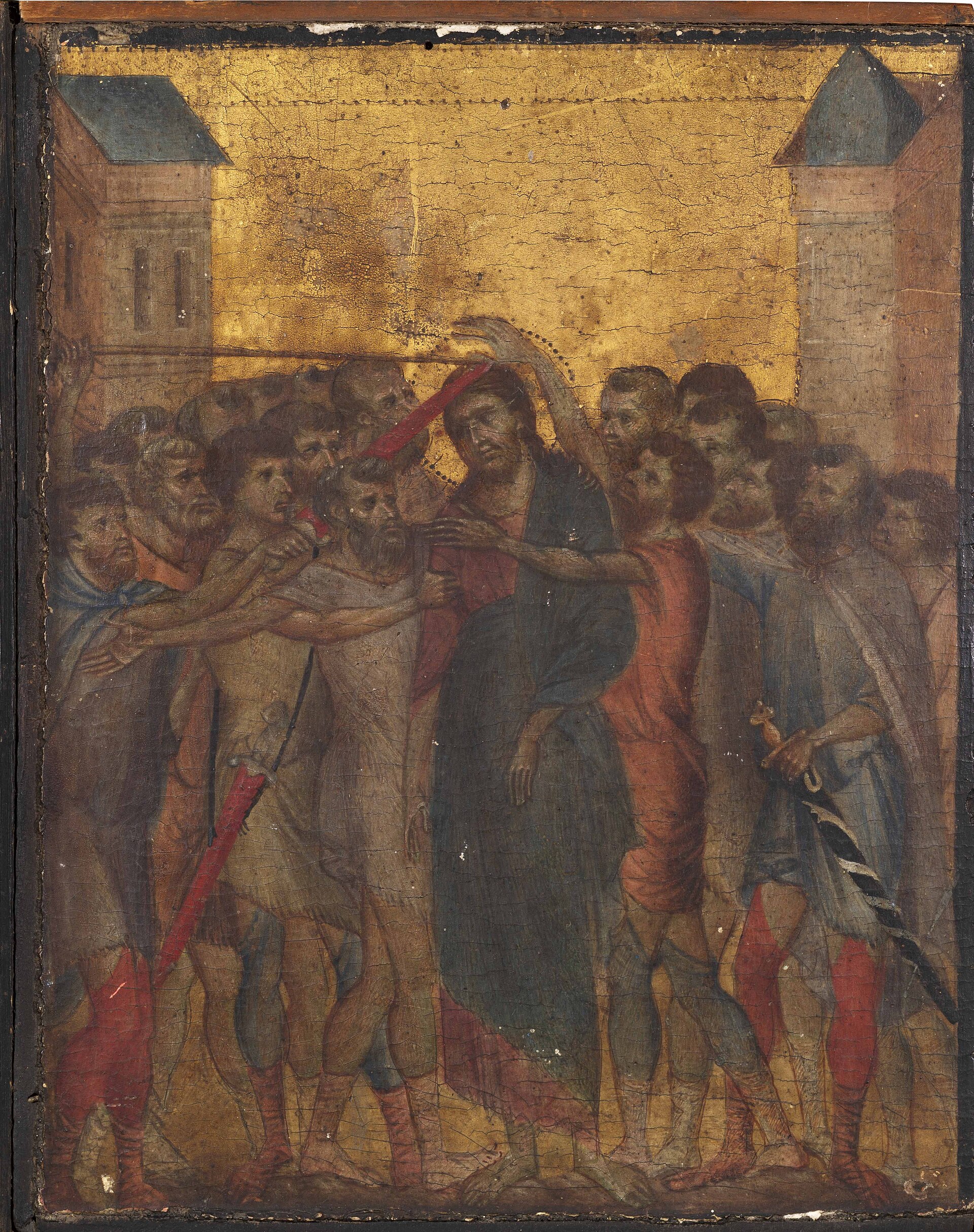
The Mocking of Christ
c. 1280 · Egg tempera and gold leaf on poplar panel
Musee du Louvre
Museum · Musée du Louvre · Founded 1793
Open, admission and hours confirmed 19 August 2026 · 33 sources
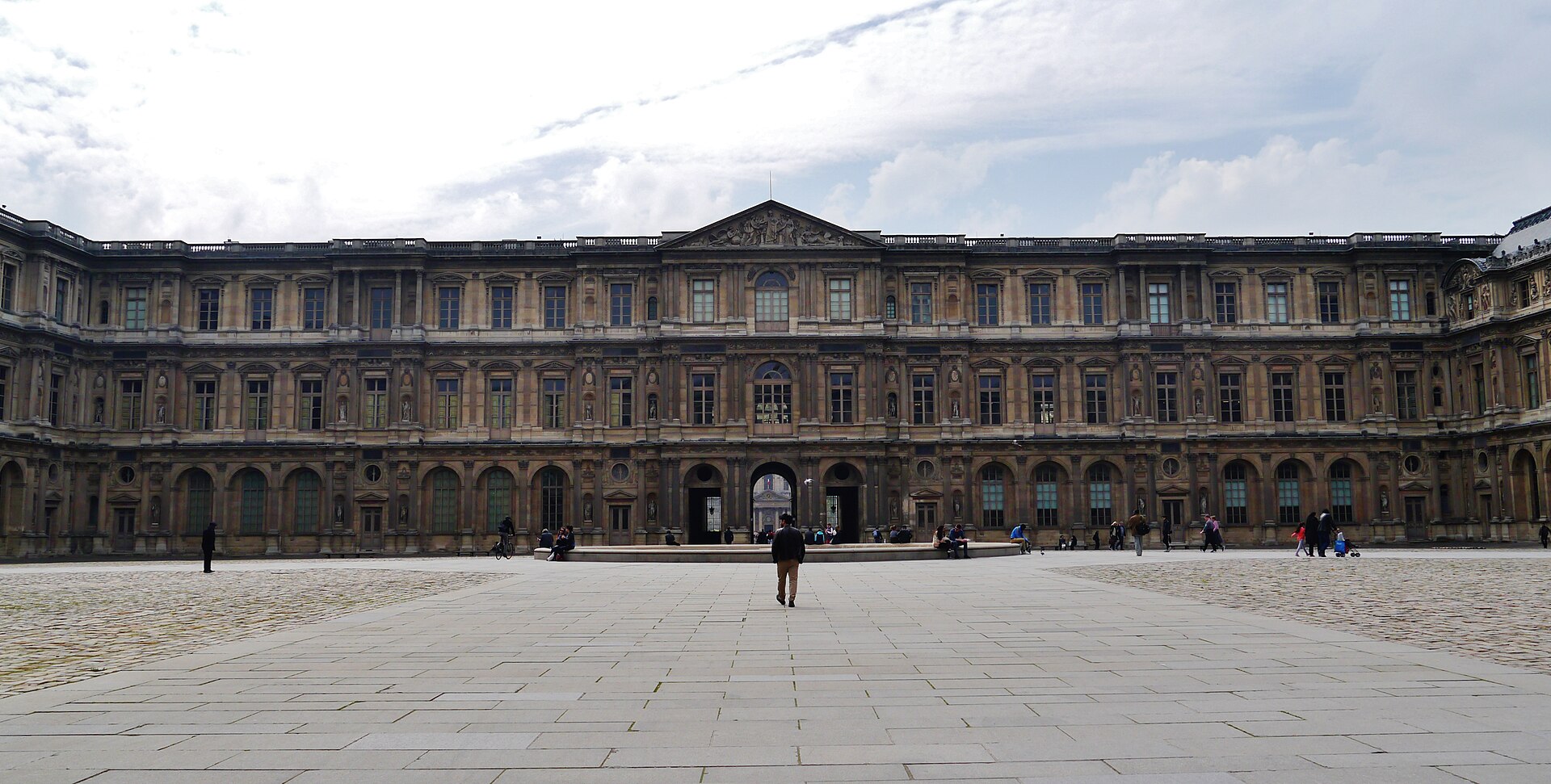
Encyclopaedic in the nineteenth-century sense: eight departments running from Mesopotamia and Egypt through Greece, Rome and Islam to European painting, sculpture, decorative arts and prints, in a palace that grew a new museum inside itself every time a regime changed. The museum puts 35,000 works on display across 13.5 km and catalogues more than 500,000 in a public database that states where each one currently is. The Italian painting is the deepest holding and the reason the Grande Galerie exists; the Assyrian rooms are the oldest of their kind anywhere; the Egyptian department was built around Champollion. What the collection is not is neutrally assembled. It began as the seized property of the crown, was swollen by Napoleon's requisitions and reduced again by the restitutions of 1815, and it still holds 1,752 works recovered from Germany after 1945 whose owners have not been established.
| Local name | Musée du Louvre |
|---|---|
| Kind | Museum |
| Founded | 1793 as a museum; the palace begins as a fortress of Philippe Auguste and was rebuilt from 1546 |
| City and country |  Paris, France Paris, France |
| Address | Rue de Rivoli, 75001 Paris, France |
| Website | louvre.fr/en |
| Status | Open, confirmed 19 August 2026 |
| Record last verified | 19 August 2026 |
Prices and hours change. We take them from the institution's own pages and print the day we read them, and you can check the current position at the source we used. Confirm before you travel.
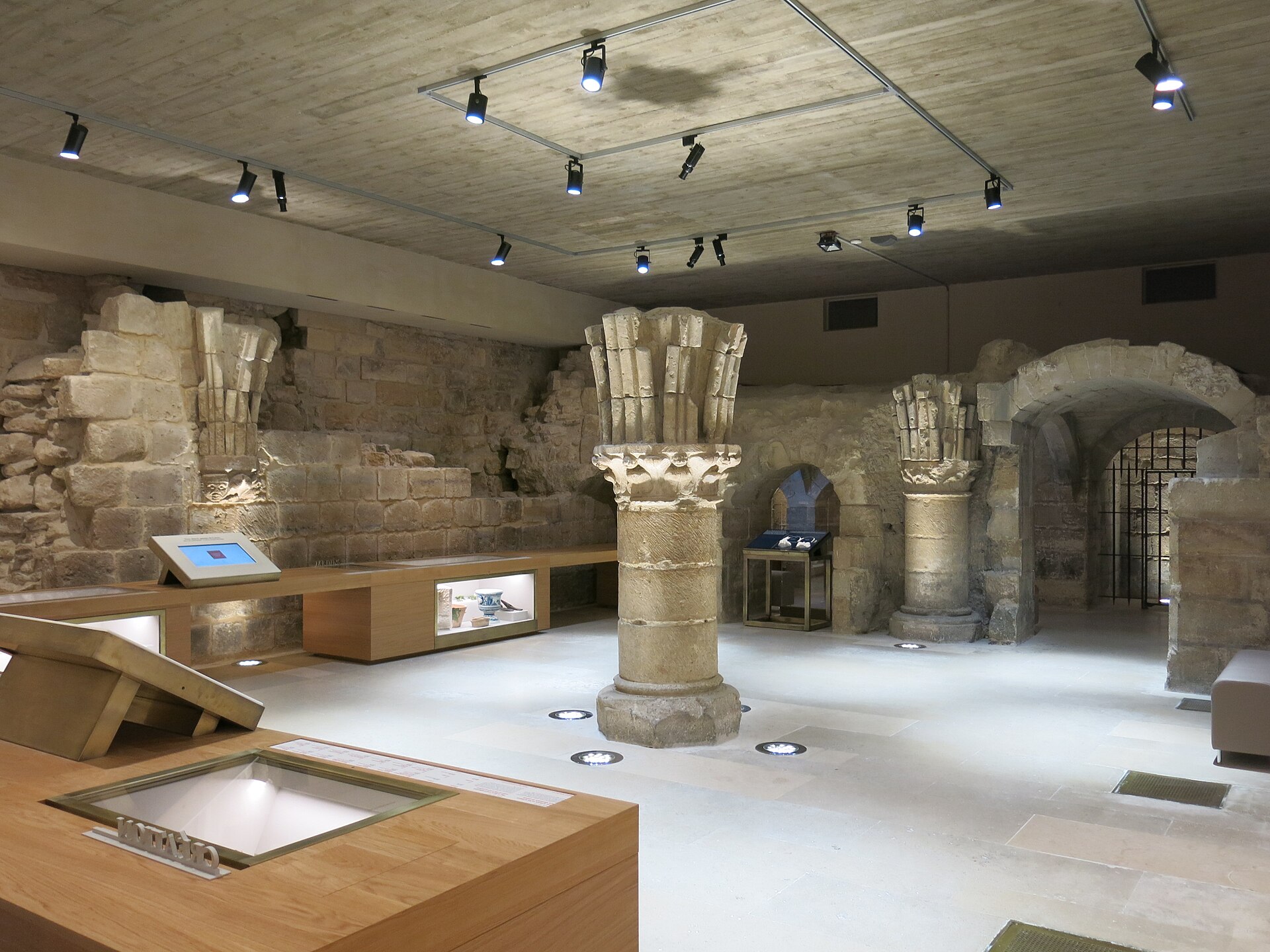
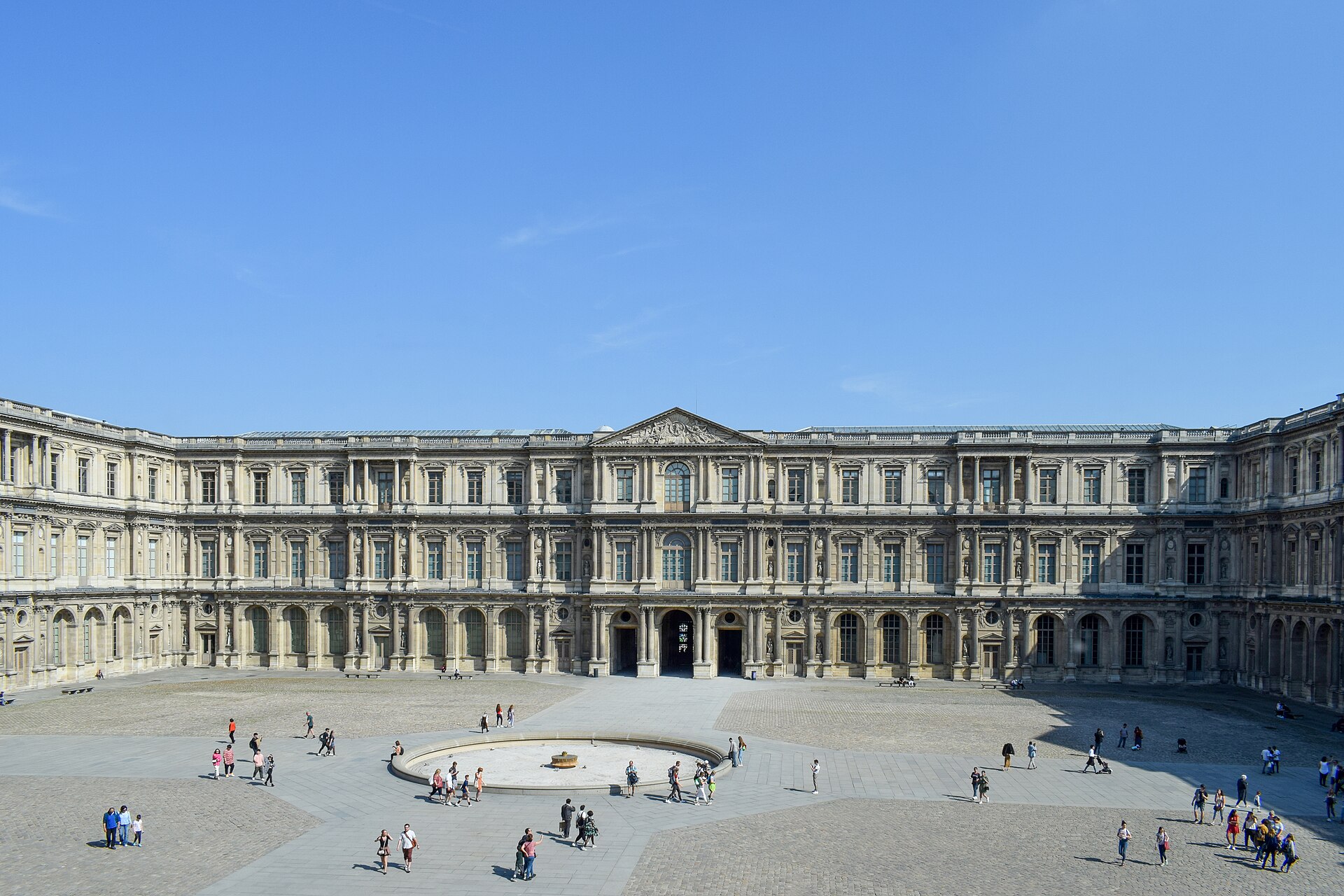
Under the Cour Carree survive the foundations of the fortress the palace began as, together with the Salle Saint-Louis, a vaulted medieval hall with stout columns and foliate capitals, relit and rearranged in 2016. Francois I ordered the medieval keep demolished in 1528; what is below ground is what escaped him. The museum lists this circuit as Medieval Louvre and History of the Louvre, Sully wing, level -1.
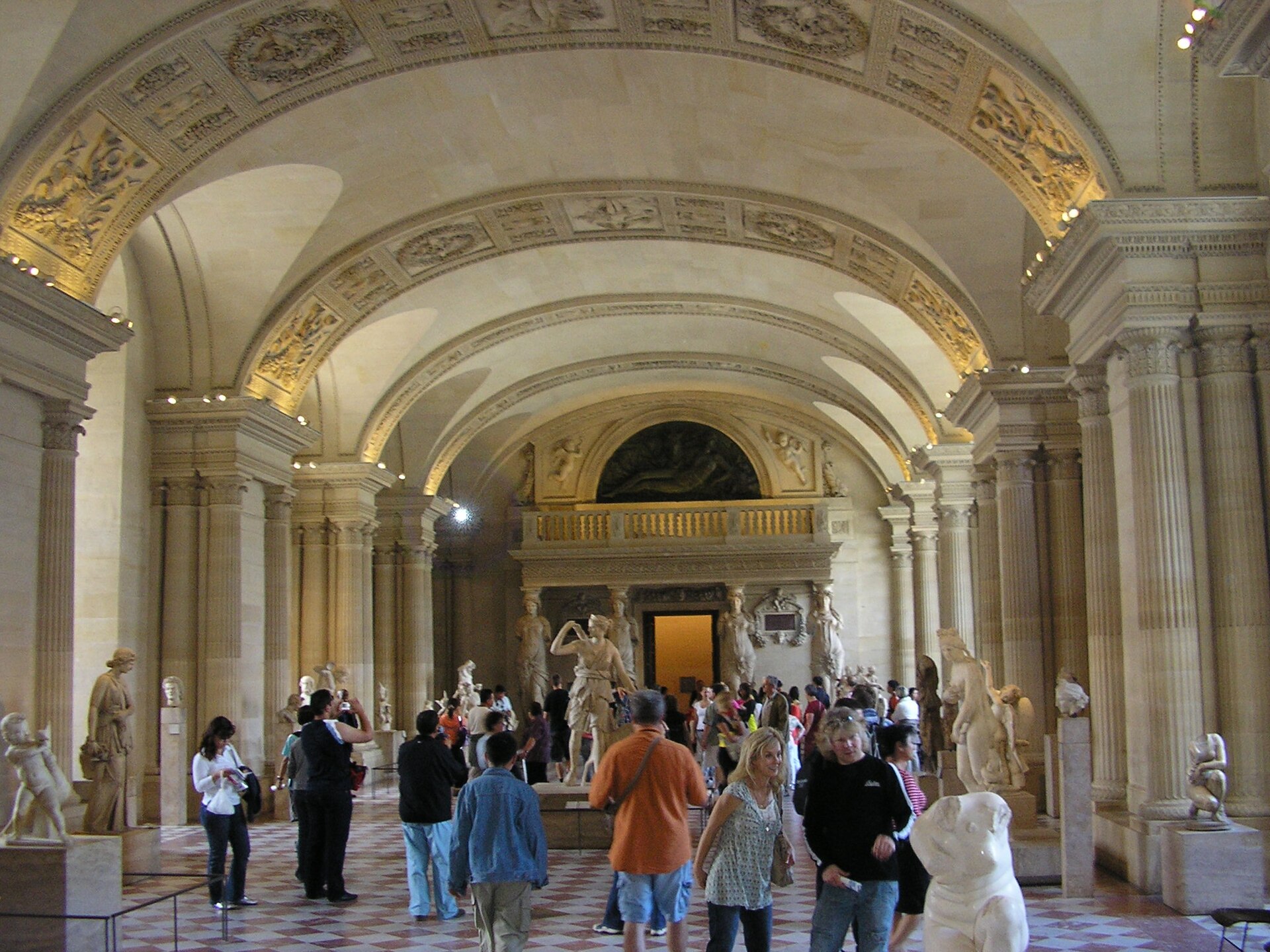
Room 348 in the Sully wing, level 0: the Renaissance ballroom begun for Francois I by Pierre Lescot in 1546 and finished under Henri II, named for the four sculpted female figures Jean Goujon carved in 1550 to carry the musicians' gallery. Antique sculpture has been shown here since 1692, when it became the Salle des Antiques. The funeral ceremony for Henri IV was held in this room in 1610, and Moliere first performed before Louis XIV here.
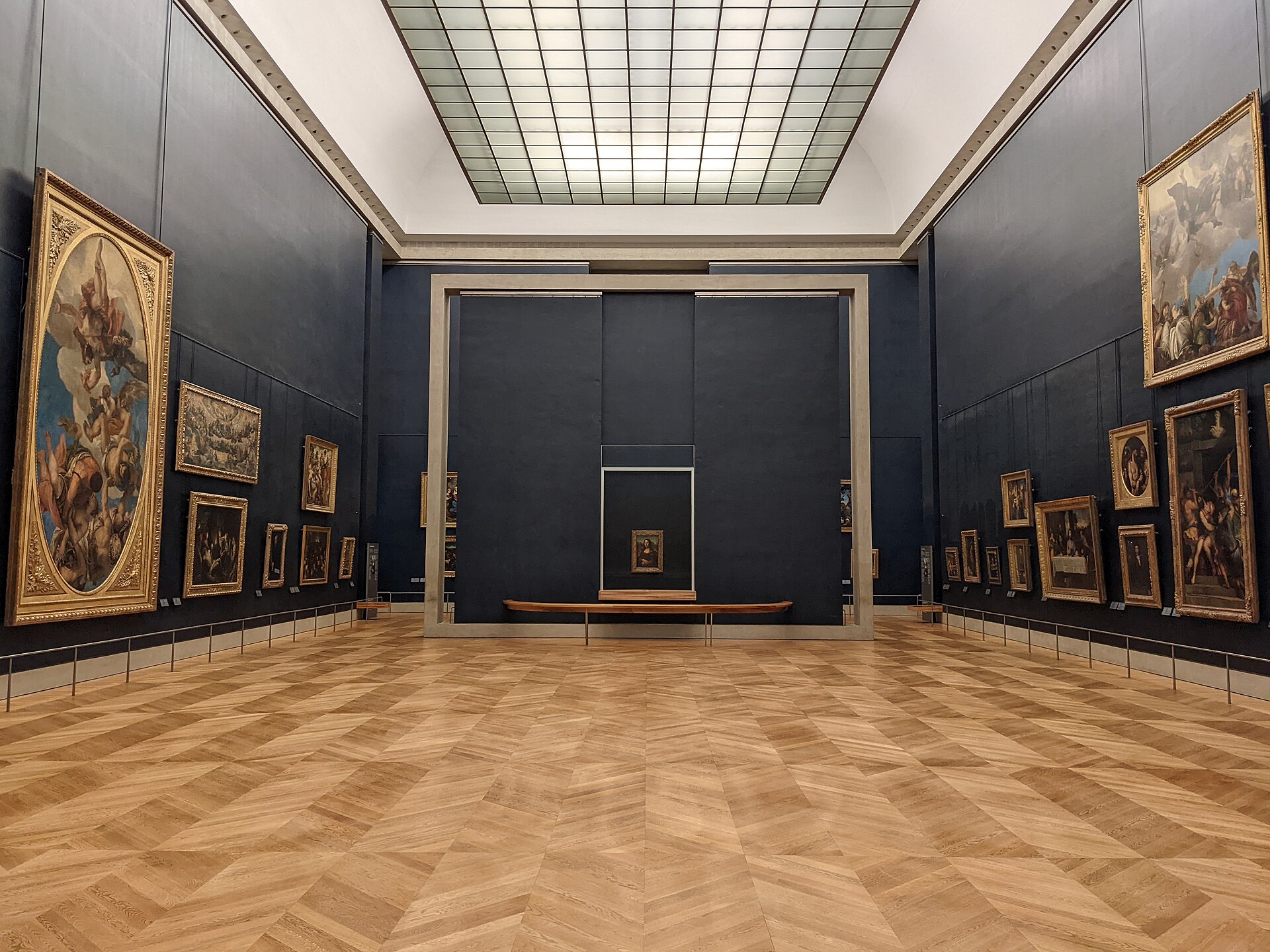
Room 711, level 1, and the largest room in the palace. Hector Lefuel built it between 1855 and 1857 as a chamber for the legislative sessions Napoleon III presided over; it became museum space after his fall in 1870, and Edmond Guillaume sealed the windows and put in a glass ceiling to light the pictures from above. The Mona Lisa has hung here since 1966 and has stood in a climate-controlled case in the centre of the room since 2005, because it is painted on a poplar panel that has warped and cracked. Veronese's Wedding Feast at Cana faces it across the floor, with Titian and Tintoretto around the walls. The walls were repainted a deep midnight blue in 2019.
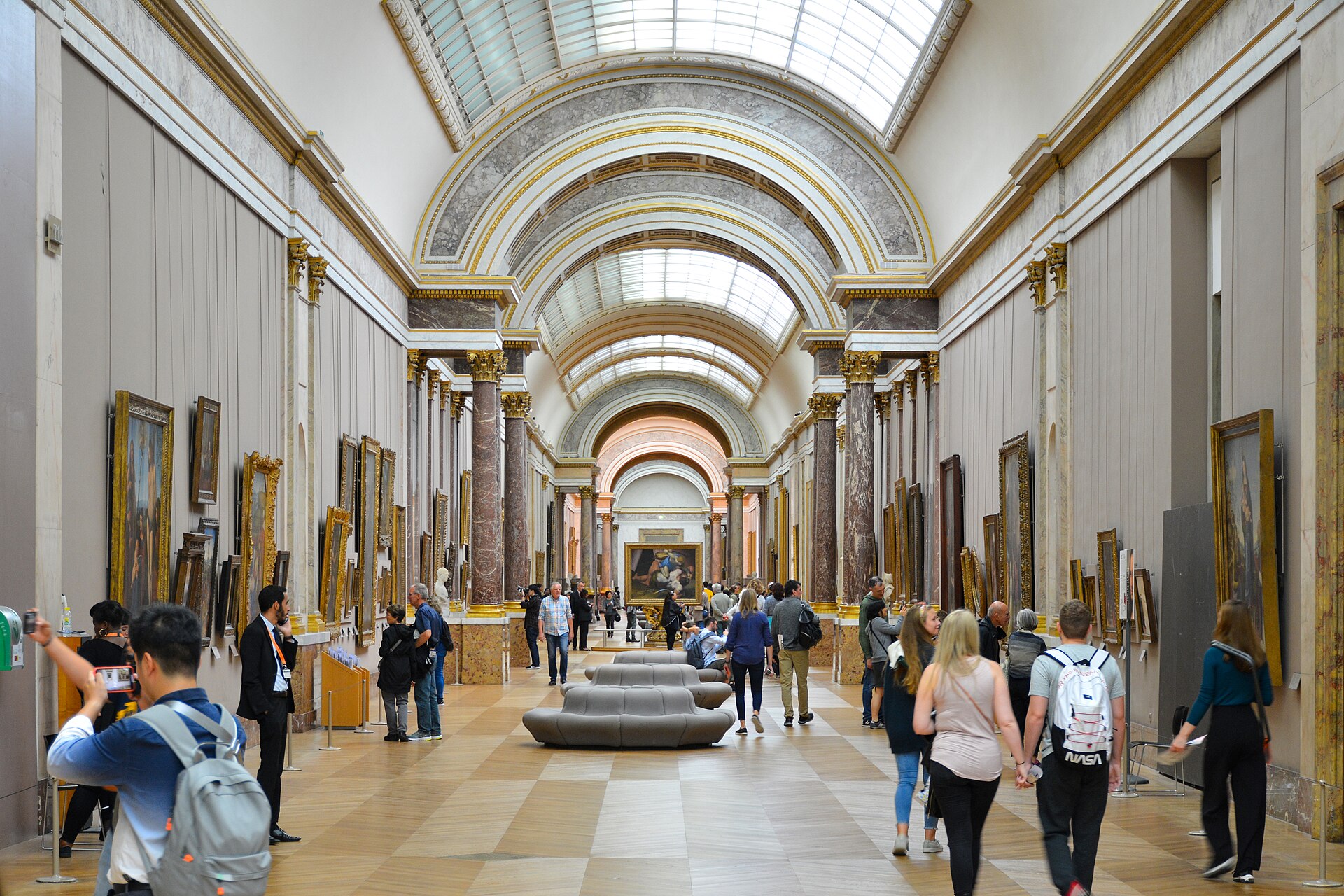
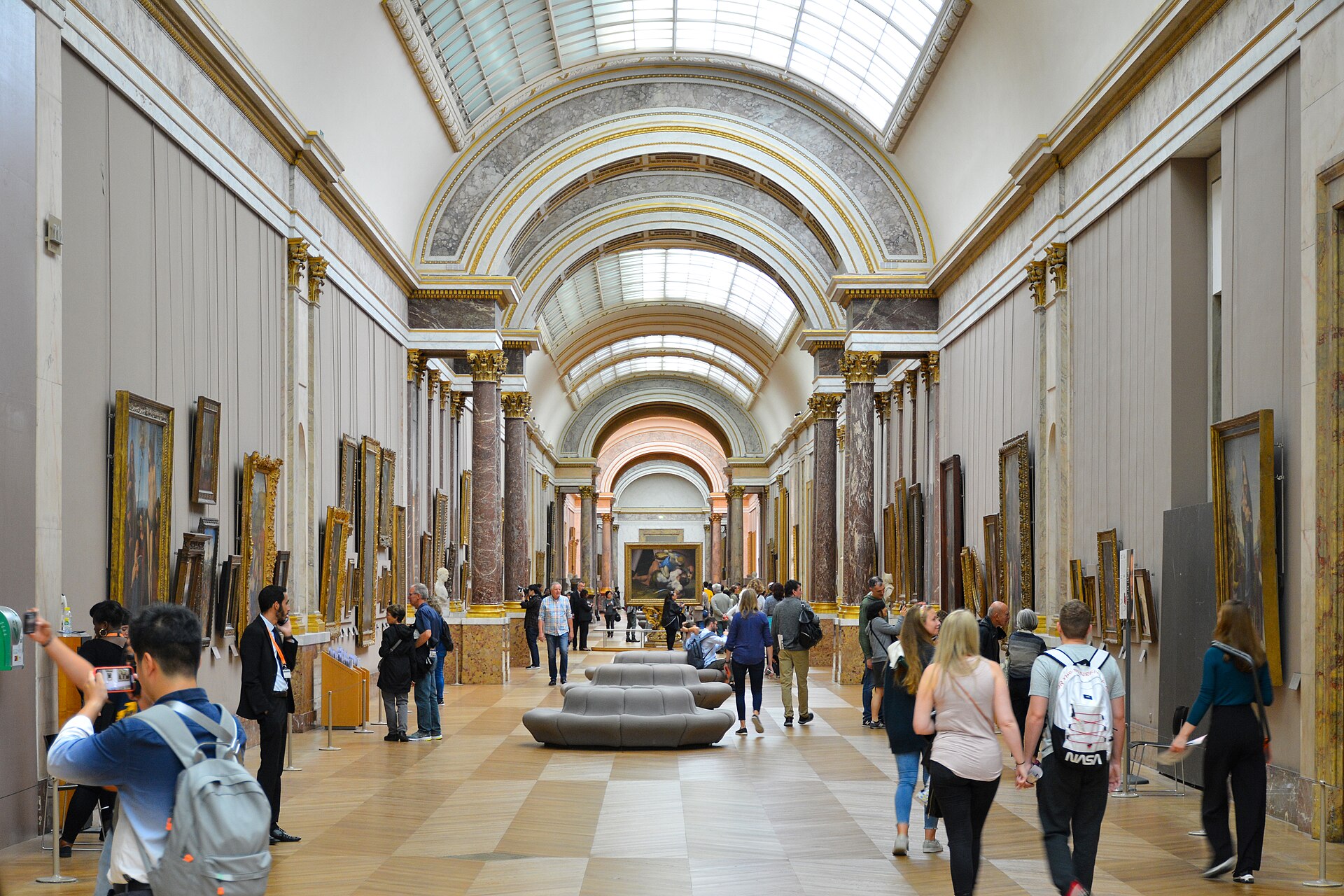
Room 710 in the Denon wing, level 1, and the museum's own emblem: a barrel-vaulted corridor of Italian painting hung one canvas after another as far as the eye can see. Henri IV began it in 1595 as the waterfront gallery of his Grand Design, a 460-metre run linking the Louvre to the vanished Tuileries palace, built largely by Louis Metezeau and Jacques Androuet du Cerceau and the longest of its kind in Europe at the time. Poussin was called in to decorate it in 1641 and never finished. It was among the first parts of the palace opened to the public when the Louvre became a museum.
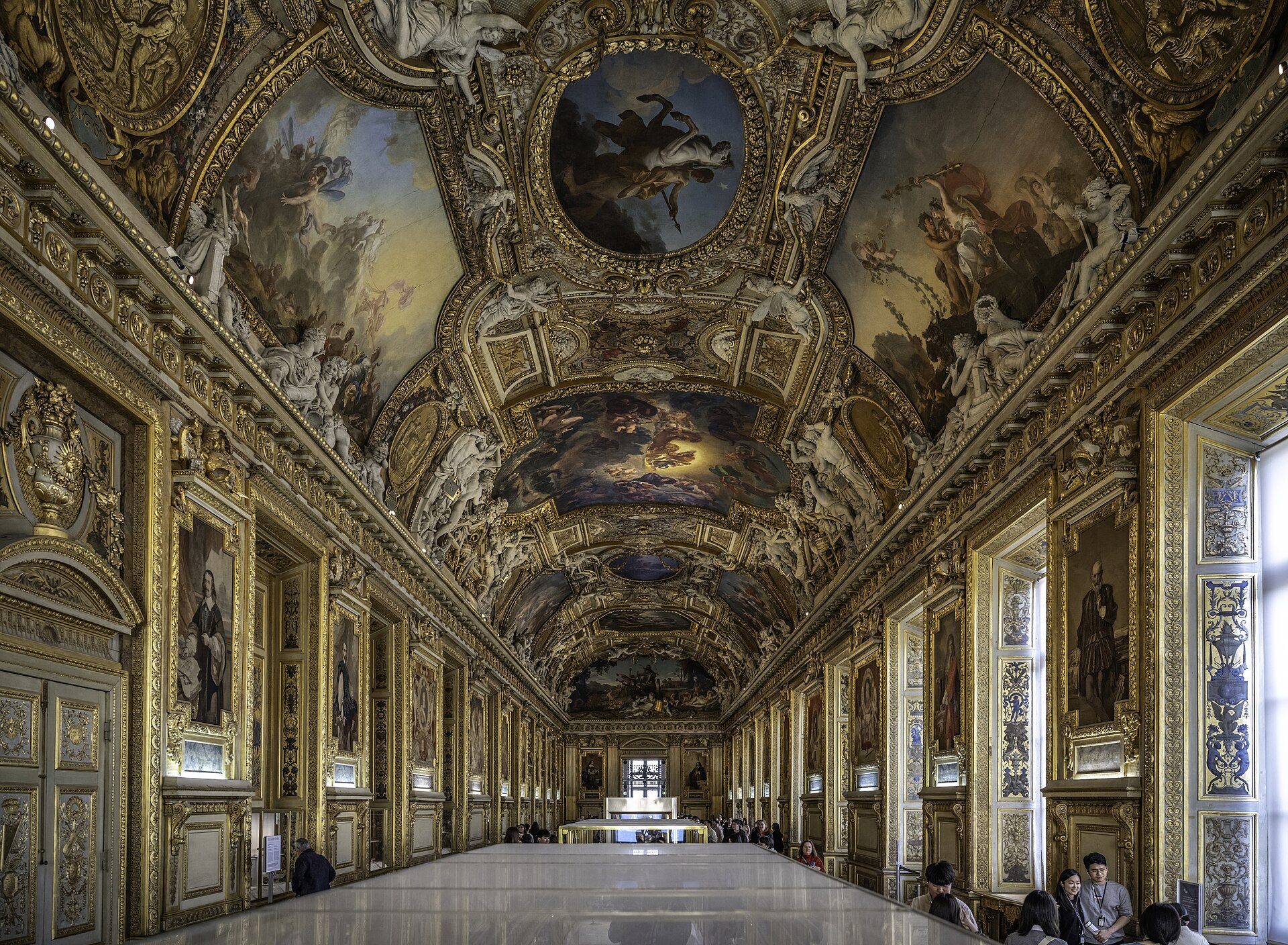
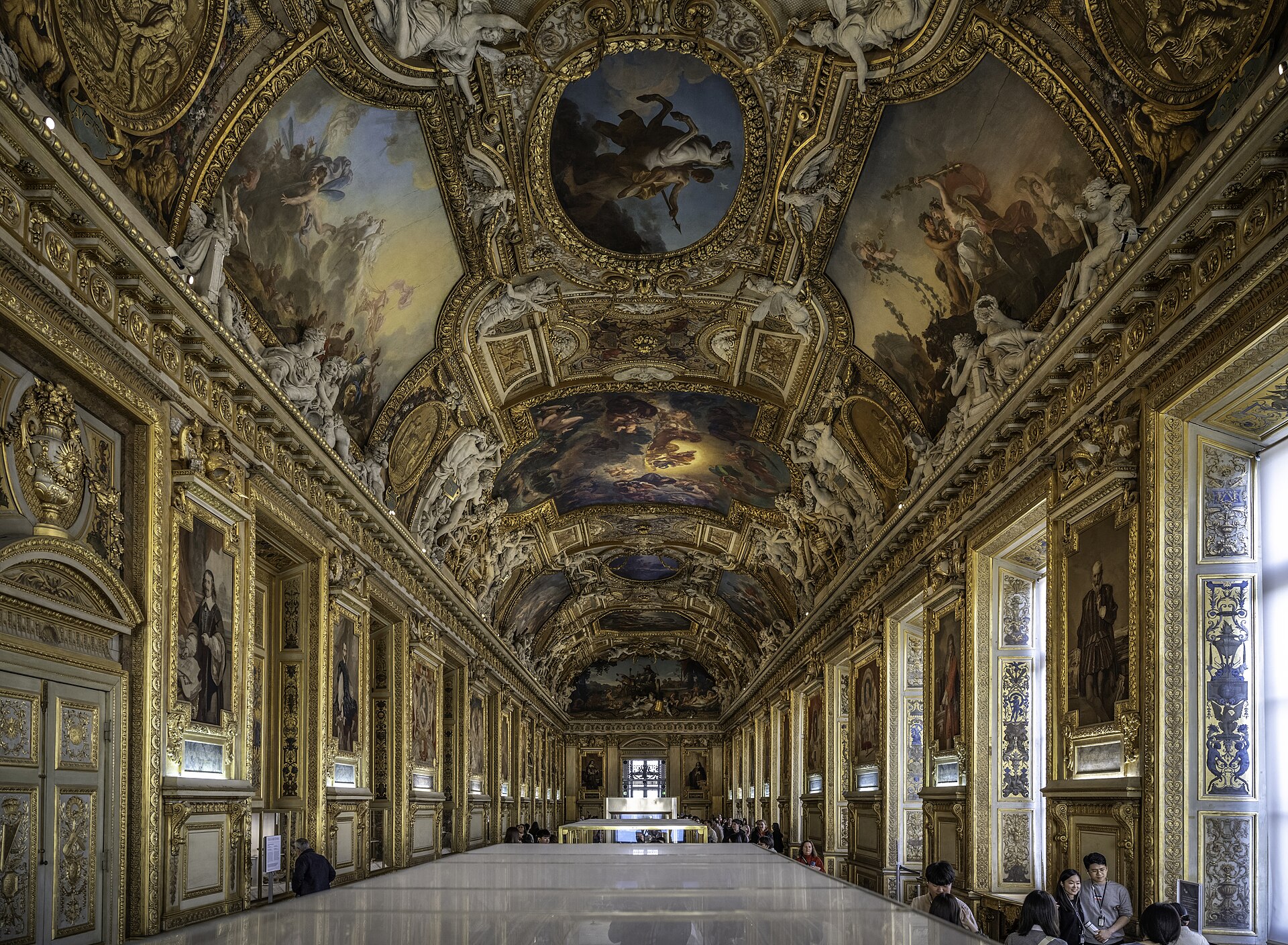
Denon wing, level 1. Louis XIV had it built to replace Henri IV's Petite Galerie after the fire of 6 February 1661, to a design by Louis Le Vau, and made it the first full statement of the sun emblem he had just adopted. Charles Le Brun laid out the decoration and covered the vault with Apollo driving his chariot from Dawn to Night; the gallery served as the workshop for what became the Hall of Mirrors at Versailles twenty years later. The scheme was only finished in 1850 under Felix Duban, when Delacroix supplied the 12-metre centrepiece, Apollo Slaying the Serpent Python. Twenty-eight portrait tapestries of the monarchs and artists who built the palace hang on the walls. This is the room the crown jewels were taken from in October 2025.
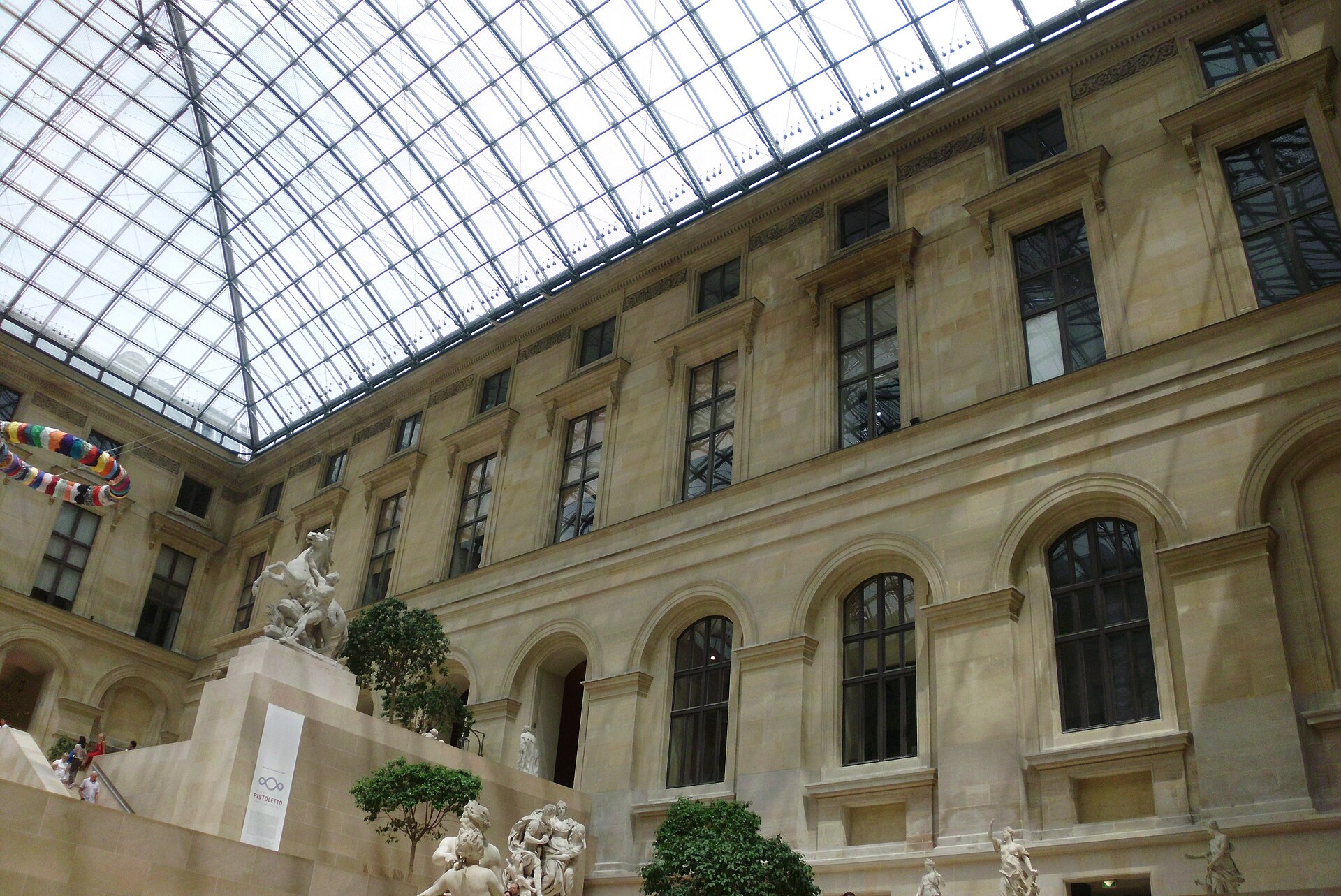
Room 102, level -1. An open courtyard of the old Ministry of Finance building, roofed in glass during the Grand Louvre works and terraced so that garden sculpture can be read from several heights. It holds what survives of the statuary from Louis XIV's leisure retreat at Marly, whose chateau and gardens are gone: river gods, water groups, and the Marly Horses at the top of the courtyard. Aluminium solar shading filters the light and sound and holds the temperature.
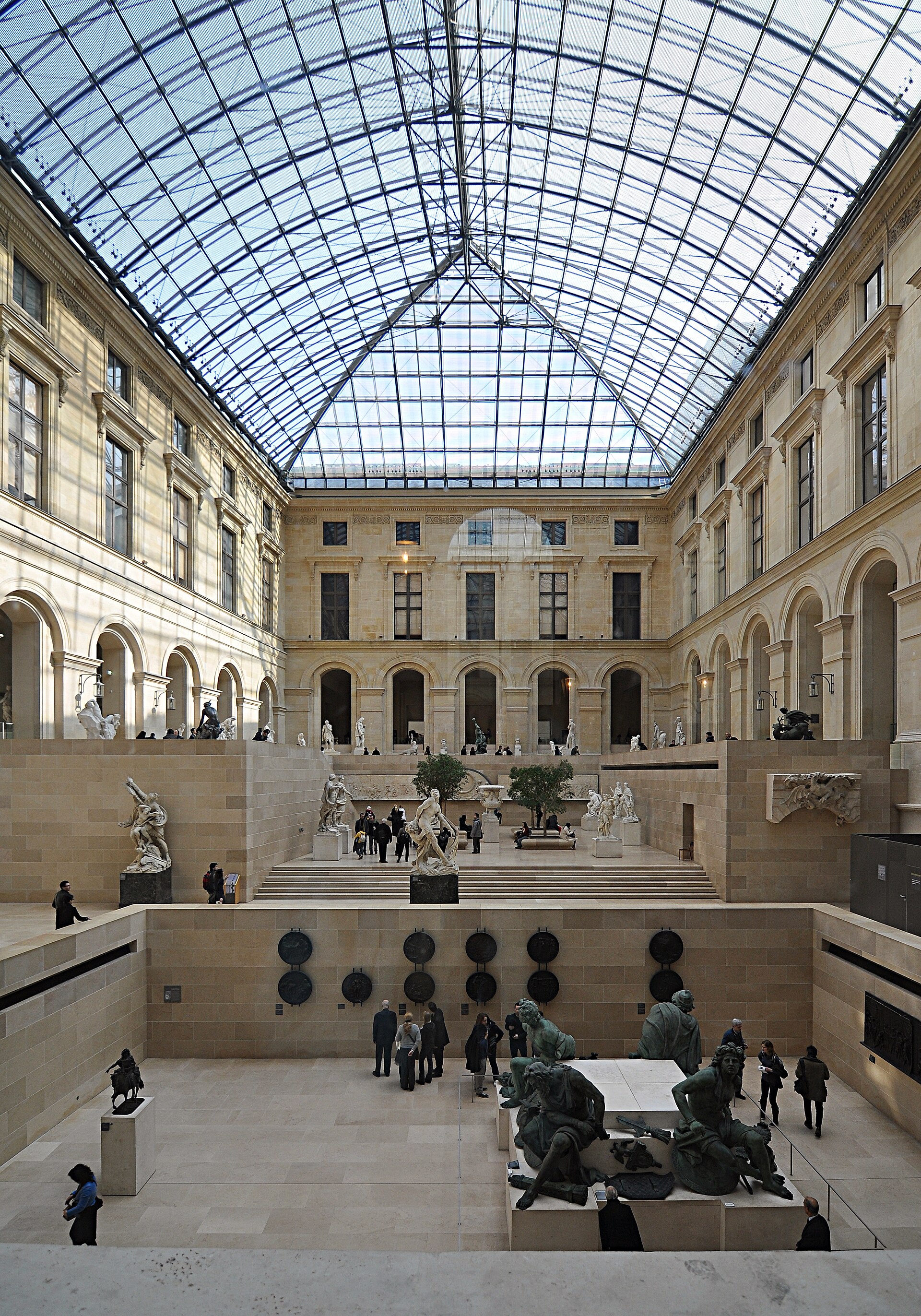
The second glazed courtyard in the Richelieu wing, named for Pierre Puget, the most important sculptor of the reign of Louis XIV, and holding his Perseus and Andromeda and his Milo of Crotona. Like the Cour Marly it is tiered under a glass vault, with bronzes and medallions on the lower level and marble groups on the terraces above.
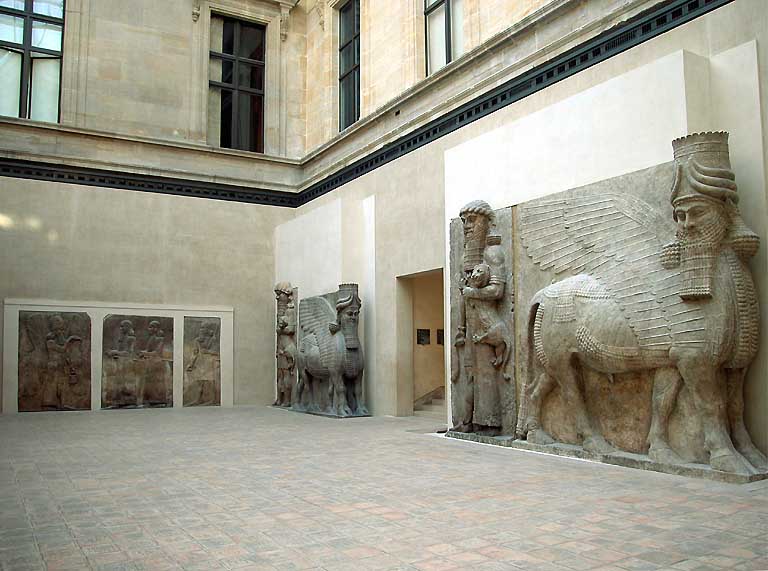
Room 229 in the Richelieu wing, level 0, hung with the carved slabs and the human-headed winged bulls from Dur-Sharrukin, the fortress of Sargon, the capital King Sargon II founded in about 713 BC in what is now northern Iraq and never finished. Paul Emile Botta, the French vice-consul in Mosul, excavated the site in 1843 and effectively founded Mesopotamian archaeology; his finds opened the world's first Assyrian museum, here, on 1 May 1847. Daylight comes through the courtyard's glass roof onto slabs that once stood in the open air.
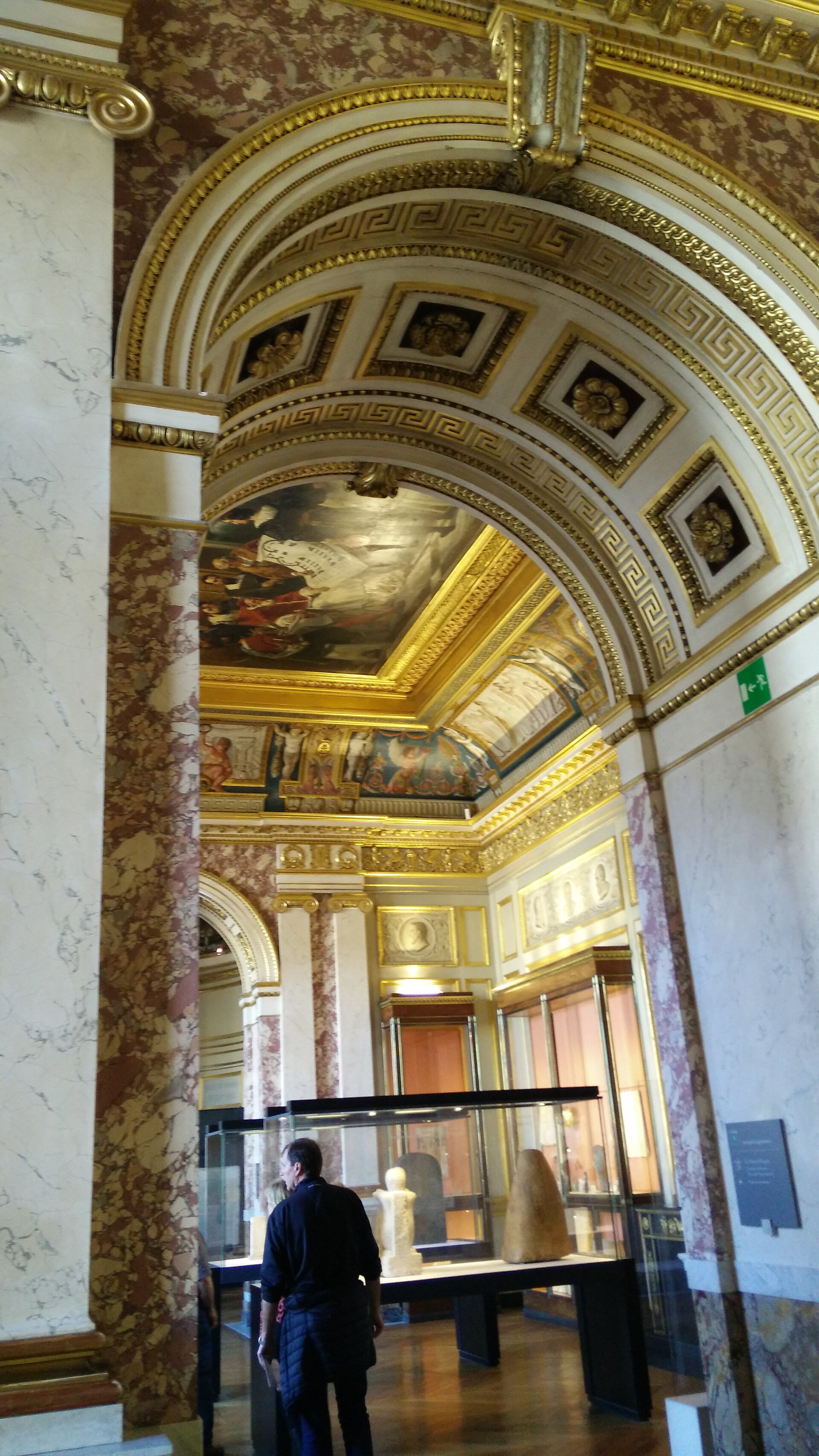
Room 637 in the Sully wing, level 1: a suite of gilded, painted state rooms opened as a museum in its own right on 15 December 1827 with Charles X present, and directed by Jean-Francois Champollion, who had cracked the hieroglyphs five years earlier at the age of 32 and had persuaded the king to buy an Egyptian collection. Antiquities now stand in cases under the painted vaults. The museum's Egyptian holdings run to a chronological circuit on level 1 and a thematic one on level 0.
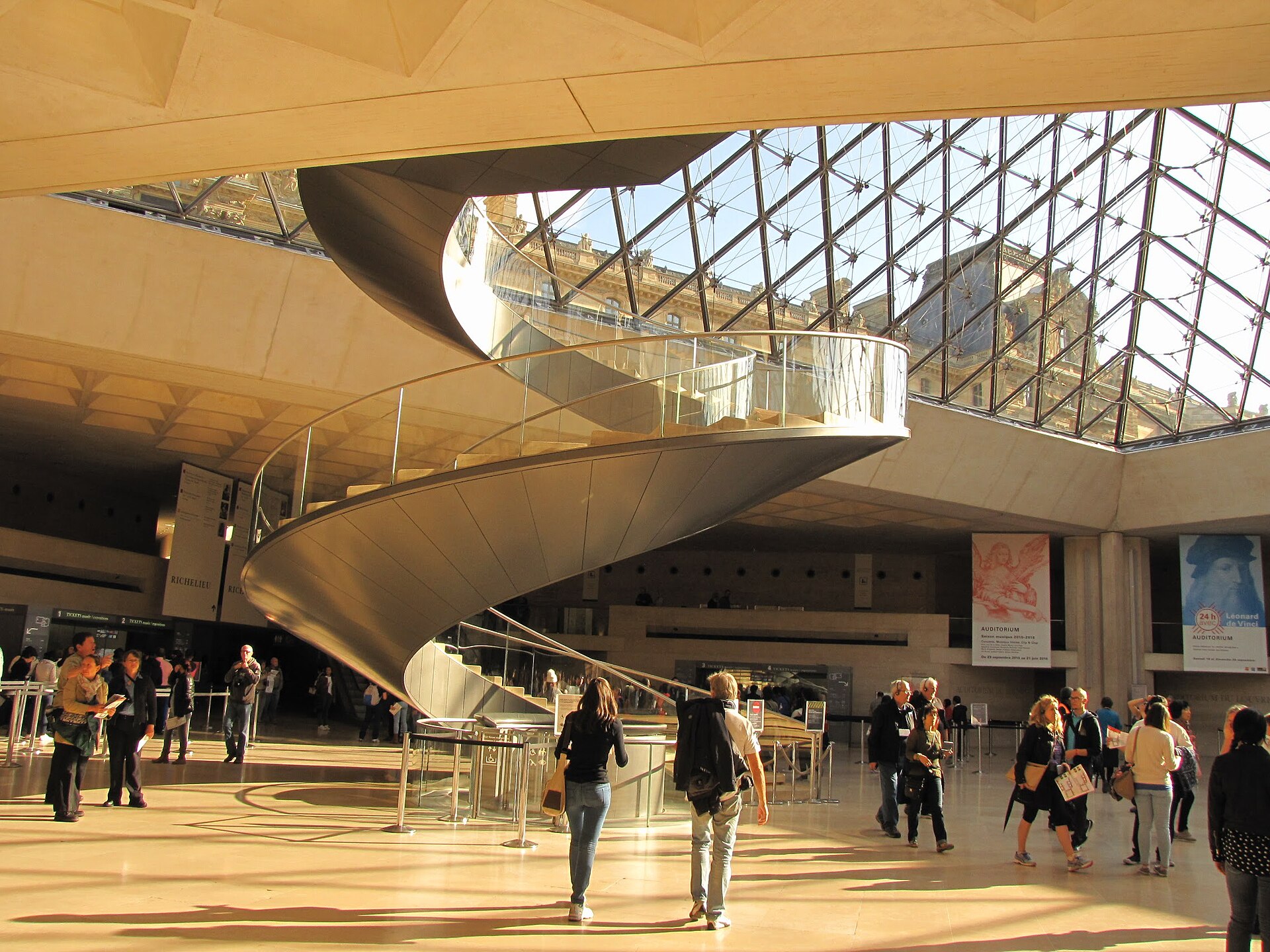
The underground lobby I. M. Pei drove beneath the Cour Napoleon so that one entrance could feed all three wings, reached down a helical staircase with the glass of the Pyramid overhead and the Richelieu, Denon and Sully accesses off it. Pei also designed the ticket hall, the auditorium, the cafes, the bookshops, the underground storerooms and the shopping arcade that links the museum to the metro. Laurence des Cars called this space noisy and very inhospitable, and said it behaves like a greenhouse in hot weather.
Room 708 in the Denon wing, level 1, between the Galerie d'Apollon and the Grande Galerie, rebuilt by Louis Le Vau after the 1661 fire and handed to the Royal Academy of Painting and Sculpture in 1692. Its exhibitions of living artists gave the word Salon to the world, ran annually from 1737 and twice a year from 1747, and produced art criticism as a trade: Diderot wrote about them, and a notice could make or unmake a painter. A glass roof was added in 1789, which made this one of the first exhibition rooms anywhere lit from above. This archive's Cimabue Maesta hangs here.
Two rooms among the renovated French and Northern European painting galleries are given to pictures recovered in Germany after 1945 and still held by the state pending restitution. Thirty-one paintings carrying the MNR mark hang there with wall texts explaining what the mark means, and a further 76 are distributed through the permanent collection, each with a note on where it came from.
The reason the queue exists, and the reason the museum is rebuilding its entrance. Francois I bought it from Leonardo in 1518, which is how it entered the royal collections the Louvre was founded on. It has been in room 711 since 1966 and in a sealed climate case since 2005, because the poplar panel has warped and split.7
The largest painting in the building at over 6 metres by nearly 10, with some 130 figures, and it hangs directly opposite the Mona Lisa. Most of the room has its back to it.7
The 12-metre centre of the Galerie d'Apollon vault, painted two centuries after Le Brun began the ceiling and described by the museum as a manifesto of French Romanticism. Since July 2026 it is most of what there is to see in that gallery.9
Found on Melos in 1820, bought at once by the Marquis de Riviere, given to Louis XVIII and passed to the Louvre in March 1821 - an acquisition made in the years just after France had handed back Napoleon's seizures. Her missing arms were deliberately never restored, and whether she is Aphrodite or Amphitrite is still argued.15
The colossal guardian figures from a capital abandoned unfinished after its founder died in battle in 705 BC and his body was never recovered. Botta's 1843 dig produced them and the discipline that studies them at the same time.11
Sculpture made for open air, now under glass because the open air was destroying it. The chateau they were made for no longer exists, which makes the courtyard a substitute for a lost place rather than a gallery.10
This archive's own record. Found in June 2019 beside a kitchen hotplate in Compiegne, sold at Senlis that October, blocked from export as a national treasure and bought by the Louvre in 2023 under the inventory RFML.PE.2023.33.1. The Louvre's own online record does not currently place it in a room.19
Full record in this archiveThe Louvre's long-held Cimabue, and the picture the 2023 acquisition was bought to stand beside. The museum's database gives its location as room 708, the Salon Carre, Denon wing level 1.20
This archive's other record here. A forged Scythian gold tiara the Louvre bought on 1 April 1896 for 200,000 gold francs and defended for seven years until its maker reproduced part of it in front of the examiners. The museum still catalogues it, under his name, as MNC 2135 and Bj 2357.21
Full record in this archiveThirty-one canvases hung together on Richelieu level 2 because the state does not own them outright and has not found who does. They are the clearest thing in the building about how a collection is actually assembled.18
Four caryatids carrying a musicians' gallery, copied from the Forum of Augustus, and the moment Renaissance architecture arrives in Paris. The room is the oldest interior a visitor walks through above ground.13
The one piece of the eight-minute October 2025 robbery that came back, because the thieves dropped it as they left. It is under restoration and is not on show; the other eight items are on INTERPOL's stolen works database.27
c. 1280 · Egg tempera and gold leaf on poplar panel
Musee du Louvre
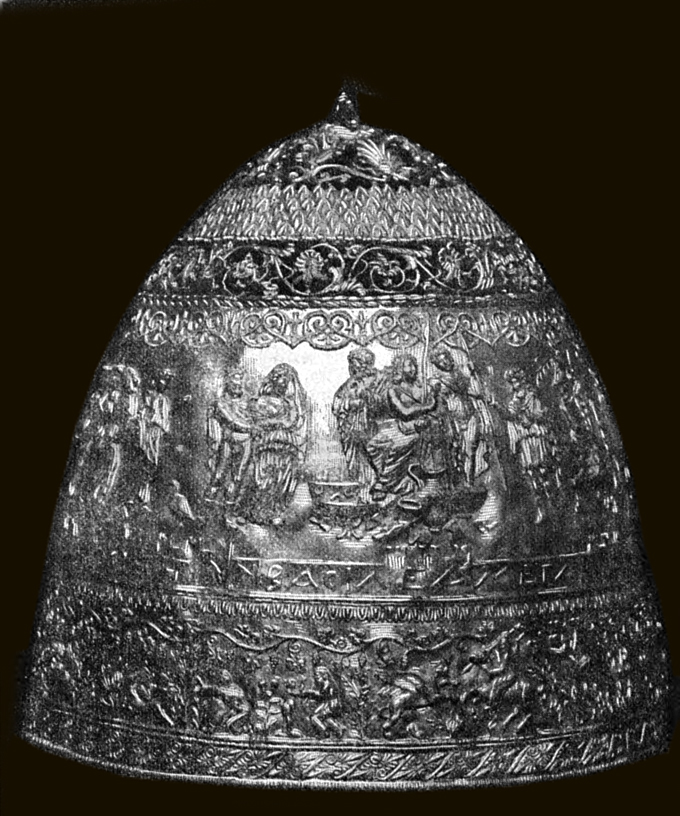
1894 to 1895, Odessa. Sold as third to second century BCE · Gold sheet
Musee du Louvre, Paris, Departement des Antiquites grecques...
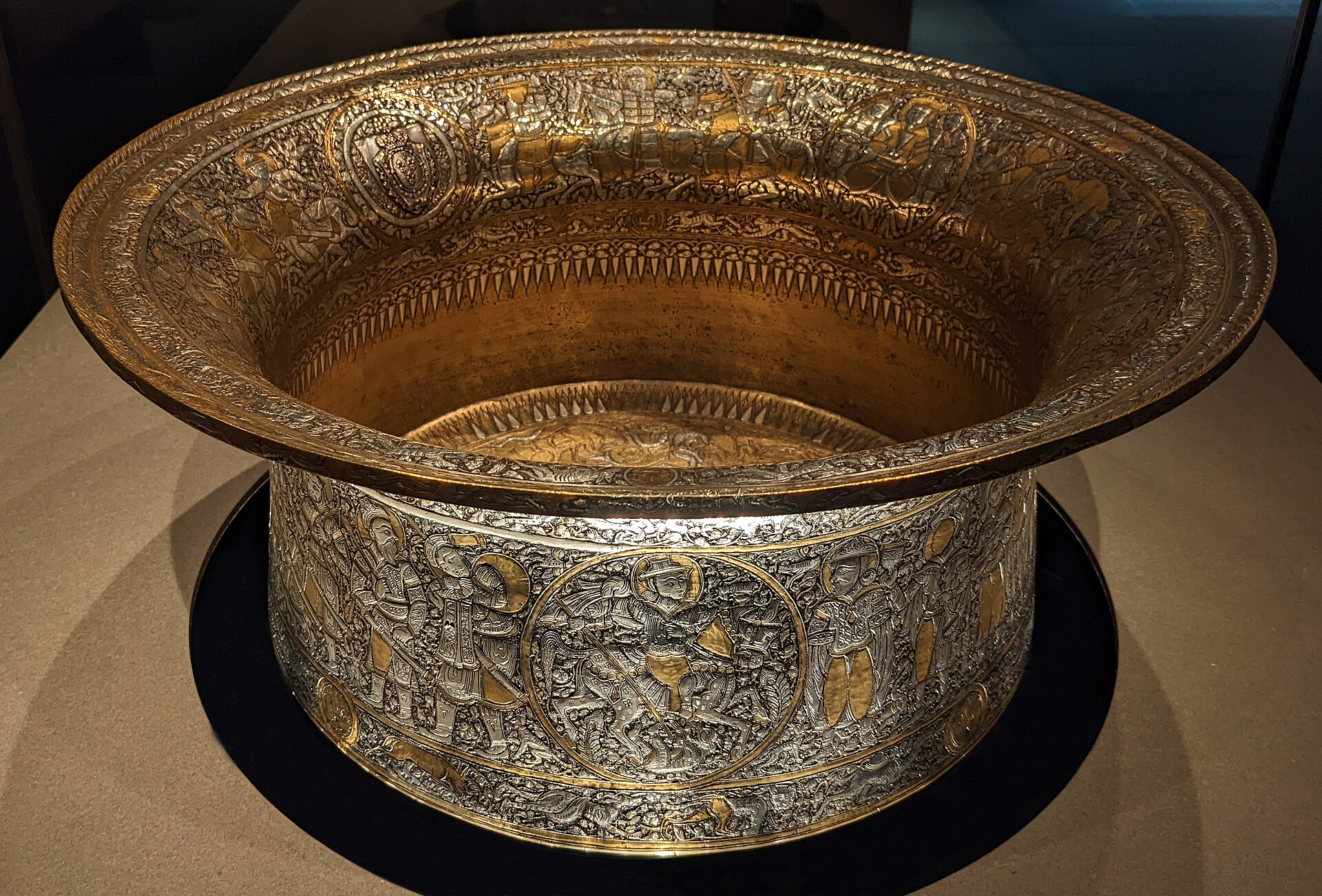
Mamluk Egypt or Syria, first half of the 14th century · Hammered brass
Musee du Louvre, Departement des Arts de l'Islam, Paris, Room...
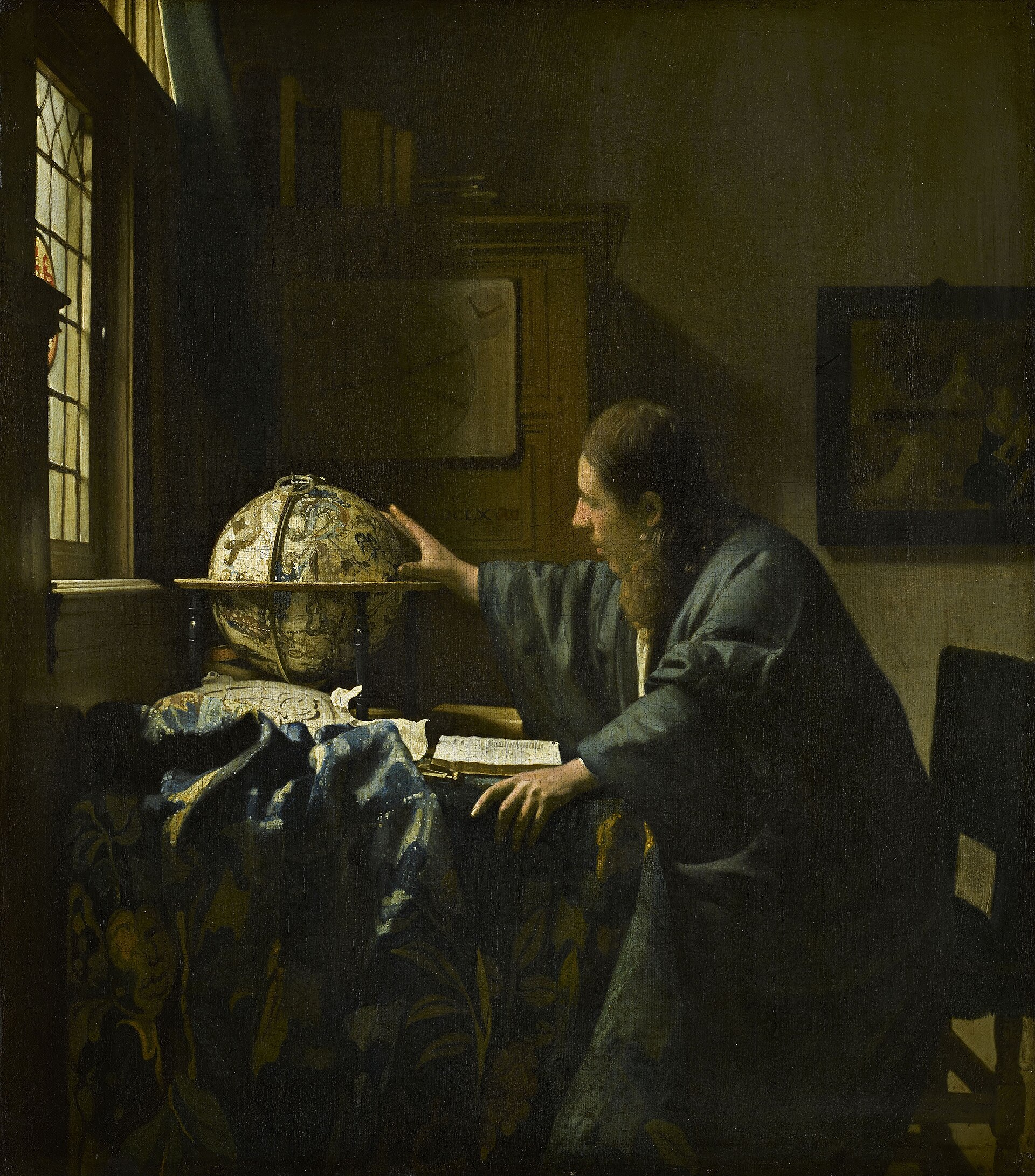
1668 · Oil on canvas
Musee du Louvre, Paris, Departement des Peintures.
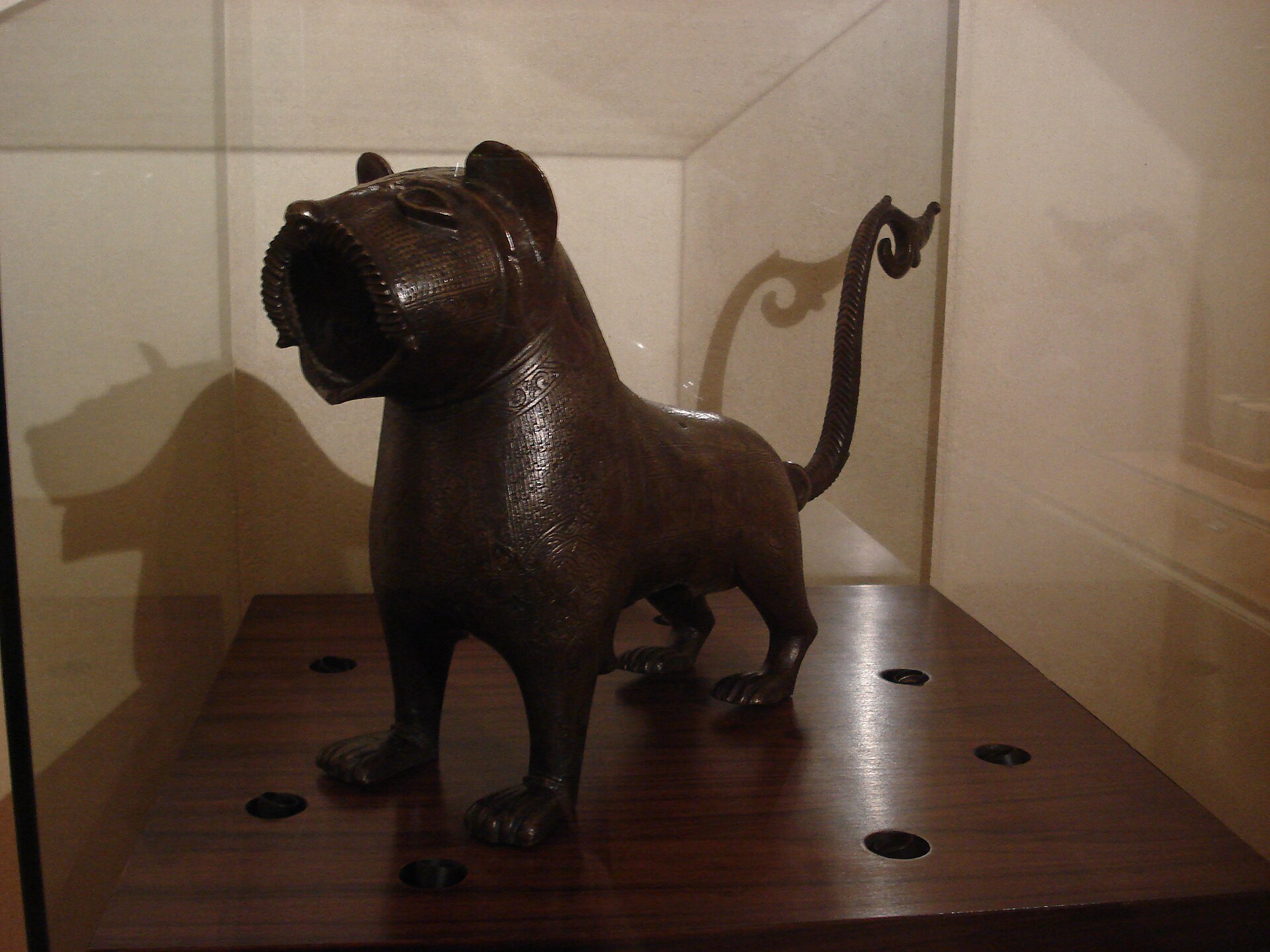
Late 10th - 11th century · Cast bronze
Musee du Louvre, Departement des Arts de l'Islam, Paris
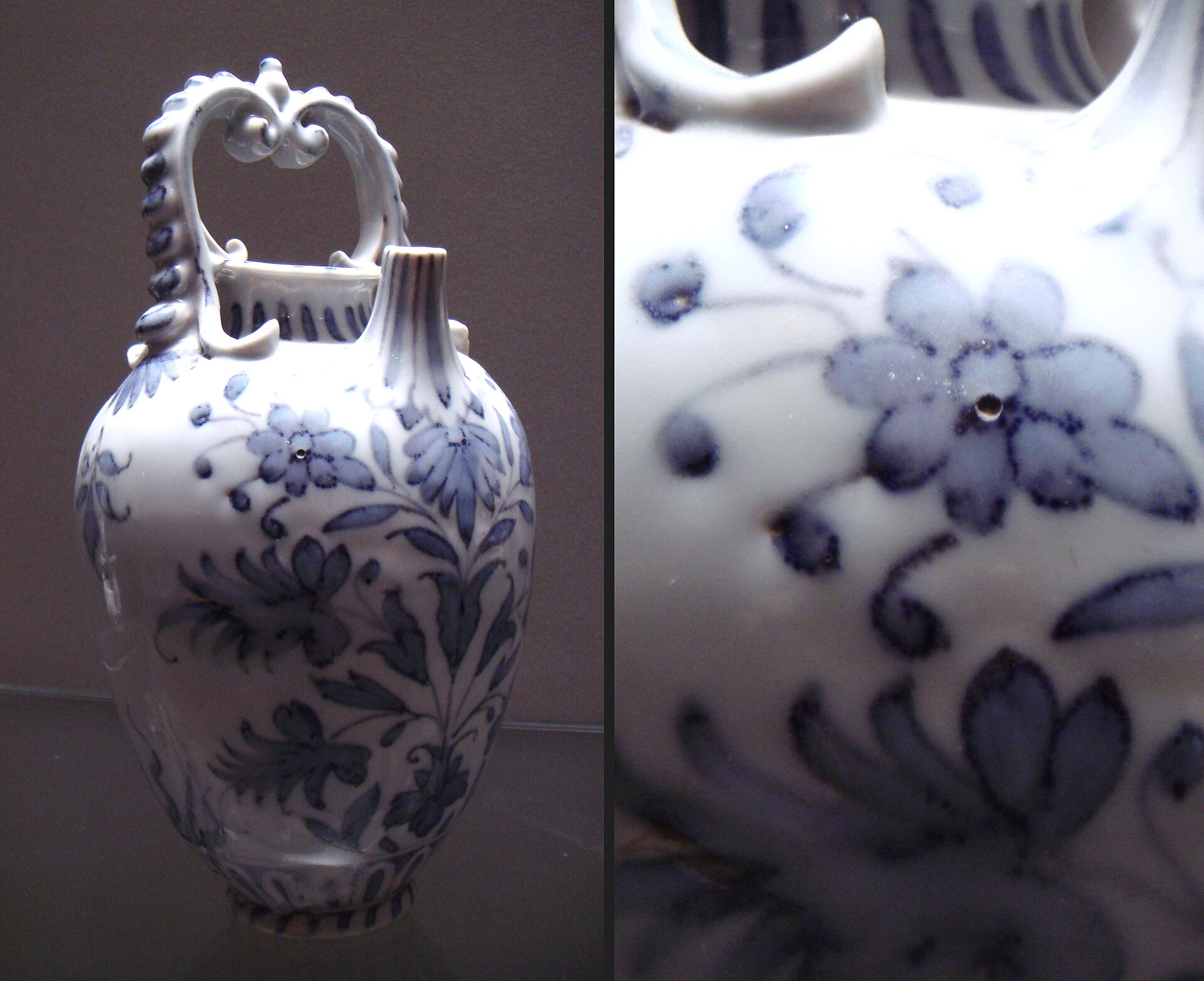
Louvre catalogue bracket 1585-1600 · Soft-paste
Musee du Louvre, Paris, Departement des Objets d'art du Moyen...
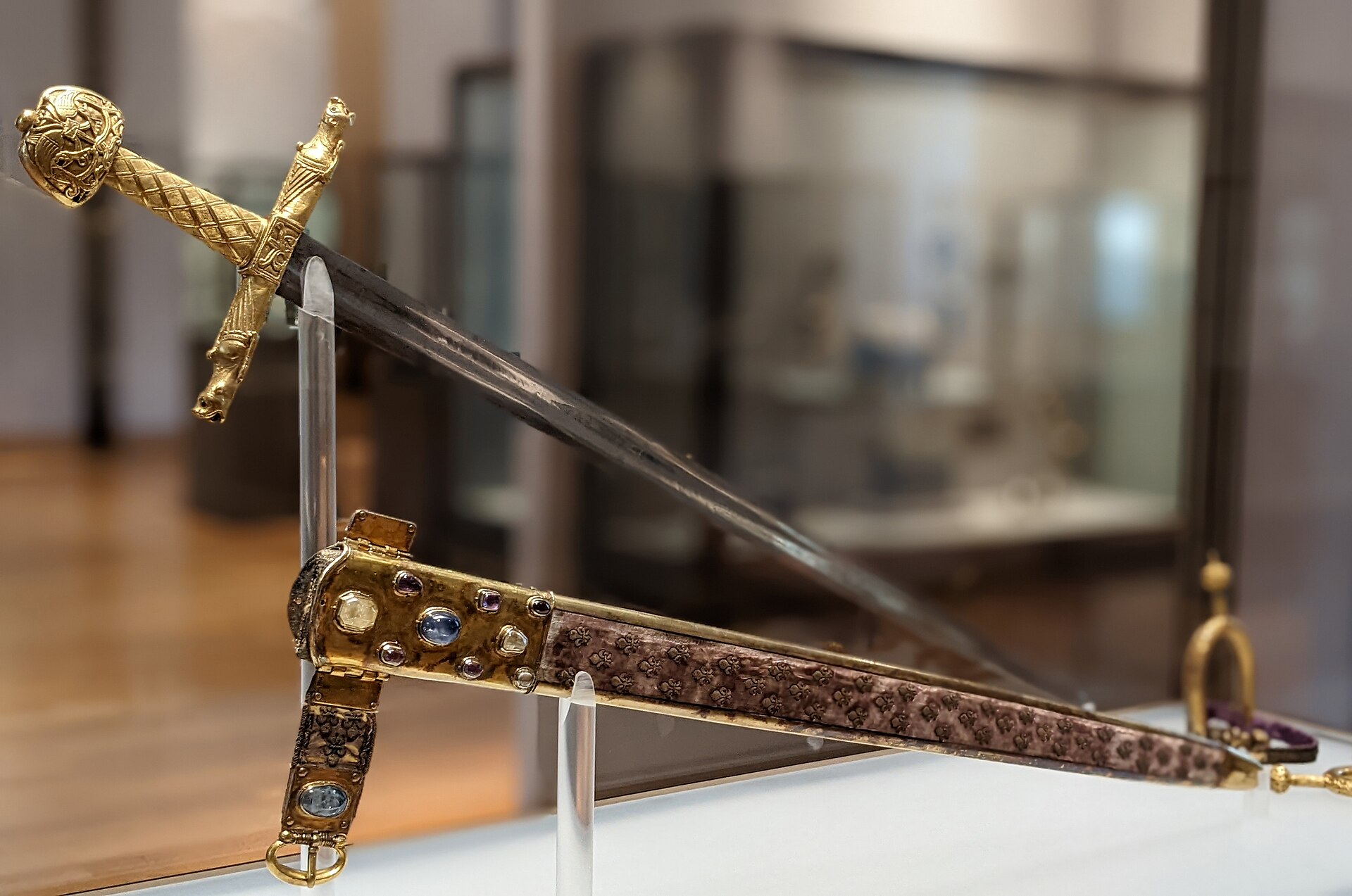
Composite, 10th to 19th century · Gold with filigree work
The Louvre is a building that kept being overtaken by its own occupants. It starts as a fortress on the edge of medieval Paris, and the base of it is still there: under the Cour Carree a visitor can walk through the excavated footings and the vaulted Salle Saint-Louis, relit in 2016, which is the oldest room in the institution and was buried for centuries. In 1528 Francois I had the medieval keep pulled down. He had already brought Leonardo da Vinci to France and wanted a Paris residence with the splendour of the Italian palaces he had seen, so in 1546 he appointed Pierre Lescot to rebuild. He died the following year and his son Henri II carried it through, which is why the Salle des Caryatides - a ballroom whose musicians' gallery rests on four figures Jean Goujon carved in 1550 after the Forum of Augustus - is the point at which Renaissance architecture reaches Paris.
Henri IV enlarged the ambition. From 1595 his Grand Design set out to join the Louvre to Catherine de Medici's Tuileries palace with an immense gallery along the river, 460 metres of it, built largely by Louis Metezeau and Jacques Androuet du Cerceau and the longest of its kind in Europe. Louis XIII played in it as a boy and, as king, called Poussin in to decorate it in 1641; the scheme was abandoned unfinished. Under Louis XIV the upper floor became a place to show the work of the Royal Academy of Painting and Sculpture, while the ground floor housed the lodgings and workshops of the artists the crown employed. When fire destroyed Henri IV's Petite Galerie on 6 February 1661, the twenty-three-year-old king had Louis Le Vau build a better one and made it the first full statement of the sun emblem he had just taken for himself. Charles Le Brun's ceiling in the Galerie d'Apollon was the rehearsal for the Hall of Mirrors at Versailles twenty years later.
Then the court left. Louis XIV moved permanently to Versailles in 1682 and the palace became, by default, a place where art was kept and shown. The Salon Carre went to the Academy in 1692; from 1737 its exhibitions of living artists were annual, from 1747 twice yearly, and they gave the word Salon to every art fair since. Diderot's notices on them invented art criticism as a trade. In 1789 the room was reglazed to light the pictures from above, one of the first exhibition spaces anywhere built for that. Four years later, with the monarchy gone, the royal collection was declared public property and opened as a museum. Wikidata dates the institution to 10 August 1793. The Grande Galerie was among the first stretches of the old palace the public walked into.
The new museum grew fastest when France was winning. Napoleon's campaigns fed it directly, and in 1807 the emperor bought the collection of his brother-in-law Prince Camille Borghese outright, commissioning Charles Percier and Pierre Fontaine to extend the Galerie des Antiques to hold it. The red marble decoration a visitor walks through on the way to the Venus de Milo is that expansion. Much of what filled these rooms was requisitioned from Italy, the Low Countries and the German states, and after Waterloo much of it went home: the restitutions of 1815 stripped out a large part of what the Musee Napoleon had displayed. That episode is squarely this archive's subject, and it cuts both ways. A museum can be built on spoils, and it can also be the place where spoils are given back under duress. The Louvre has been both, and it does not narrate the 1815 losses with anything like the enthusiasm it brings to the acquisitions.
What followed the restitutions was a scramble to refill the building by other means, and it is why the Louvre's identity is a stack of separate museums rather than one collection. The Venus de Milo was dug up on Melos in 1820, bought immediately by the Marquis de Riviere, the French ambassador, handed to Louis XVIII and passed to the Louvre in March 1821 - two years from a field to a plinth. In 1827 a whole new institution opened inside the palace: the Musee Charles X, inaugurated on 15 December with the king present, its Egyptian collection bought at the urging of Jean-Francois Champollion, who had deciphered the hieroglyphs five years earlier at 32 and was made its curator. Twenty years later came another. Paul Emile Botta, French vice-consul in Mosul, excavated Dur-Sharrukin in 1843, and his finds opened the world's first Assyrian museum here on 1 May 1847, bringing into existence the discipline of Near Eastern archaeology at the same moment as its objects.
Each of these arrived as a museum of its own, with its own director, its own rooms and its own logic, alongside the Galerie d'Angouleme for Renaissance sculpture and a Musee de la Marine. The Louvre never resolved them into a single scheme. It absorbed them, and the visitor still feels the seams.
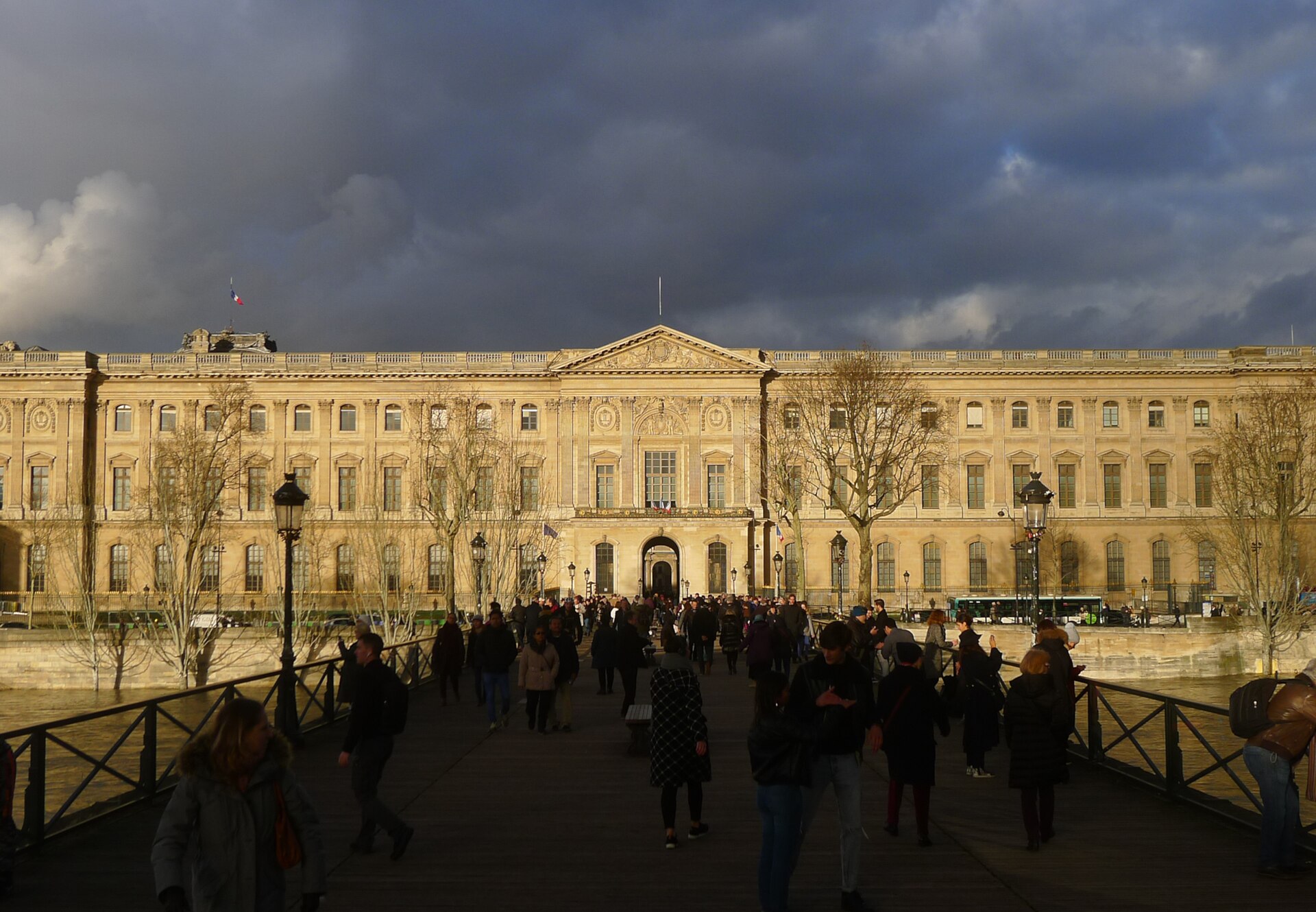
The palace and the museum are not the same thing, and the clearest proof is the Richelieu wing along the rue de Rivoli. It is the newest large addition, built under Napoleon III, and from 1871 until 1989 it was not a museum at all: the Ministry of Finance worked in it for more than a century. Only when the ministry moved to Bercy did the rooms become galleries, and they opened in 1993. Anyone matching a photograph of the Louvre to a date needs to know this, along with two other traps. Louvre Abu Dhabi is a separate museum operating under a licensing agreement, and Louvre-Lens is the satellite in the Pas-de-Calais; neither is this institution, and both are routinely captioned as though they were. The later French collections that visitors expect to find here - the Impressionists above all - are at the Musee d'Orsay and the Centre Pompidou, and image captions confuse the three constantly.
The transformation that made the modern museum was the Grand Louvre, commissioned by Francois Mitterrand in 1981. In July 1983 I. M. Pei, who had already extended the Museum of Fine Arts in Boston and the National Gallery of Art in Washington, was appointed. Where the Pyramid now stands there had been two nineteenth-century parks by Hector Lefuel and a car park. Pei's actual proposition was not the glass: it was a single underground lobby feeding all three wings, which reorganised how the building is entered and crossed. He also designed the new Richelieu galleries, the storerooms, the ticket hall, the auditorium, the cafes, the bookshops and the shopping arcade that connects the museum to the metro. The Pyramid drew heavy opposition on its proportions, and the museum's own account concedes the row rather than skating it.
The best of that work is in the two courtyards. The Cour Marly and the Cour Puget were open to the sky in the old ministry building; Pei and Michel Macary glazed them and terraced them, so that sculpture cut for gardens and public squares could be seen from several levels in daylight without the weather destroying it. Aluminium solar shading regulates light, sound and temperature. The Cour Marly holds what survives of the statuary from Louis XIV's retreat at Marly, whose chateau and gardens are gone entirely; the Marly Horses stand at the head of it. It is the one part of the modernisation that solved a conservation problem and an exhibition problem with the same move.
More than nine million people came in 2025, up from 8.7 million in 2024, which keeps the Louvre first in the world by a wide margin. The museum's own guidance to visitors is not to attempt the place: it puts the display at 35,000 works over 13.5 km and says to plan a route before arriving. A daily cap of 30,000 has been in force under Laurence des Cars. Timed slots are recommended year-round, including for people entitled to free entry, and from 1 July to 31 August 2026 a reservation is compulsory for everybody, even for a visitor who only wants the bookshop, with exemptions for Amis du Louvre and CLEF cardholders, patrons, disabled visitors and certified guides.
The pressure concentrates in one room. The Salle des Etats, room 711, is the largest in the palace, and since 1966 it has held the Mona Lisa, which since 2005 has stood alone in a climate-controlled case in the middle of the floor because the poplar panel has warped and cracked. The museum's group rules for that room are the most candid document it publishes about the problem: public speaking and group presentations are forbidden in room 711, and groups may not stand together along the sides of it. Groups are capped at twenty participants plus a leader, or six plus a leader for a small group. Veronese's Wedding Feast at Cana, the largest painting in the building at over six metres by nearly ten and holding some 130 figures, hangs directly opposite, and most of the room has its back to it.
Practicalities matter more here than at most museums, because more of them bite. The Louvre shuts all day on Tuesdays and on 1 January, 1 May and 25 December. Last entry is an hour before closing and rooms are cleared half an hour before. On Wednesdays and Fridays, the two late nights until 9 p.m., the Level 2 rooms do not open until 10:30 a.m. Any exit is final. And a meaningful share of the museum is shut at any time: on the schedule running from 21 July to 1 September 2026 the Islamic Art galleries are under renovation, the Galerie Campana is closed, and the Napoleon III Apartments and part of the French painting rooms are flagged as liable to close in hot weather, because not all the galleries are air conditioned. The museum keeps a telephone line for exactly this and tells visitors to ring it on the morning of their visit.
In January 2025 a confidential memo from the museum's president, Laurence des Cars, to the culture minister Rachida Dati leaked to the French press. It described a proliferation of damage in museum spaces, some of them in very poor condition; areas that were no longer watertight; temperature variations she called worrying and said were endangering the preservation of artworks; a lack of seating; catering well below international standards; and Pei's entrance hall as noisy and very inhospitable, behaving like a greenhouse on hot days. It is an unusually direct document for a museum director to have written about her own building, and it was not written for publication.
Macron's response was to hold a press conference in front of the Mona Lisa and announce a ten-year overhaul called the Louvre New Renaissance, costed at 700 to 800 million euros and to be funded almost entirely, he said, from the museum's own resources: ticket income and private philanthropy, on the model used for Notre-Dame. Two things were to fix the crowding. A new entrance would be cut under Perrault's eastern Colonnade by 2031, and the Mona Lisa would move to a dedicated space beneath the Cour Carree, reachable independently of the rest of the museum. Macron said it would carry a separate ticket; des Cars corrected him on France Inter on 2 February, saying every ticket would still admit visitors to the collections and exhibitions, with a supplement for the Mona Lisa. The target was twelve million visitors a year. Ticket prices for non-EU visitors would rise in 2026, and they did: since 14 January 2026 a non-EEA visitor pays 32.00 euros where an EEA visitor pays 22.00.
The unions rejected the whole plan. Their position was that the money should go on basic technical work, which they costed at up to 500 million euros, rather than on a new gallery, and they said so while striking. By the time The Art Newspaper reported the resignation in February 2026 the estimated cost of the Mona Lisa scheme was being given as 666 million euros, and other reporting had put the total as high as a billion. In February 2026 the new entrance and the separate Mona Lisa chamber were put on ice. They did not stay there. The ministry ran the shelved brief as an international competition it now called the Grande Colonnade, five shortlisted teams presented in May, and on 18 May 2026 the culture minister Catherine Pegard announced the winner: STUDIOS Architecture Paris and Selldorf Architects, with BASE Landscape Architecture on the grounds, at a reported cost of 666.6 million euros and an inauguration Macron has set for 2031. The brief itself is Macron's original one, little changed: two new underground entrances either side of the Colonnade, on the Seine side and the rue de Rivoli, feeding a dedicated route to the Mona Lisa. The museum's own announcement describes consultation with staff, the City of Paris and the state's heritage and security services as still under way. Christophe Leribault, the director who replaced des Cars, sat as the jury's vice-president; the jury also weighed proposals from Diller Scofidio + Renfro, Amanda Levete, Dubuisson Architecture with SANAA, and Sou Fujimoto. What the 666.6 million euro figure covers - the Colonnade phase alone, or the whole programme originally costed at 700 to 800 million - has not been stated.
On Monday 16 June 2025 the Louvre did not open. Gallery attendants, ticket agents and security staff, meeting for what should have been a routine internal briefing, refused to take their posts, and thousands of ticket-holders were left in unmoving lines under the Pyramid with no explanation. The museum's spokesperson told The Art Newspaper that the movement started spontaneously and lasted only a few hours; staff went to the auditorium, demanded that management answer them, three administrators came, and the museum opened at about half past two. A union representative said it was the second walkout that year. Elise Muller, general secretary of the Culture Sud union, said working conditions and infrastructure had seriously worsened over four years, that understaffing had become monstrous in every area dealing with the public, that the atmosphere had become catastrophic, and that for the first time in the museum's history staff felt they were not part of the same team as the leadership.
Four months later, on Sunday 19 October 2025 at half past nine in the morning, in daylight and during opening hours, four people took nine pieces of jewellery out of the Galerie d'Apollon. They were dressed as construction workers. They drove up a vehicle-mounted furniture lift, cut through the display cases and left on scooters. The whole thing took under eight minutes. Empress Eugenie's crown, made for the Universal Exhibition of 1855, was dropped as they fled and recovered from the scene, crushed; it is being restored. The other eight items, from the collections of Napoleon III and Eugenie, are on INTERPOL's Stolen Works of Art database and have not been found. Reporting valued them at about 88 million euros, or 102 million dollars. Suspects have been arrested and charged; the jewels have not come back.
What followed was worse than the theft. Official reports found considerable delays in maintaining the museum's infrastructure in favour of an event-driven policy, and that since des Cars arrived in May 2021 under 3 per cent of the budget had gone on safety planning against theft, fire and flood. She had offered her resignation to Dati the day after the robbery and been refused. Then came leaks in the galleries and in a library, rooms closed for cracking beams, and the discovery of a ticket fraud that had run for about a decade and may have cost 12 million dollars. In mid-December 2025 the staff began rolling strikes, the longest in the museum's history, and walked out again on 5 January 2026. A parliamentary committee denounced what its chair, Alexandre Portier, called a hyper presidency that had accumulated failures, and said that in any other country or establishment the list would long since have removed the director. Des Cars resigned on 24 February 2026. Macron called it an act of responsibility and appointed Christophe Leribault, the director of Versailles, the next day, with a brief to strengthen the safety and security of the building, the collections and the people and to restore a climate of trust. The Galerie d'Apollon reopened on 22 July 2026 as a seventeenth-century state gallery with no display cases and no jewels in it; the surviving crown jewels are to go somewhere more secure. The museum's own schedule of open rooms still lists the gallery as closed.
The Louvre has lost a famous picture before. On 21 August 1911 the Mona Lisa went missing, rewards were posted, and nothing was heard for over two years, until Vincenzo Peruggia - a glazier who had worked in the building - tried to sell it to a dealer in Italy, who called the police. The painting came back more famous than it left, which is the single most consequential fact about its position in the museum today: the crowd in room 711, the case, the cap and the abandoned plan to rehouse it all descend from a theft.
The more serious provenance question in the building is quieter and is on the wall. Between 1940 and 1945 roughly 100,000 objects were looted in France by the Nazis, mostly from Jewish families, or sold under duress and moved to Germany. The Commission de recuperation artistique, created in 1944 and active until 1949, brought more than 61,000 back; more than 45,000 went to their owners or direct heirs on the victims' own application. About 13,000 unclaimed items were sold off. The state kept 2,143, entered in special inventories marked MNR, for musees nationaux recuperation. The Louvre holds 1,752 of them, including 807 paintings, of which 296 are in the museum itself and the rest on long-term loan to museums around France. A working group under the culture ministry, with the compensation commission CIVS set up in 1999, researches which were spoliated and who owned them. For paintings, more than 50 have been returned since 1951. The complete catalogue was published in 2004 by Claude Lesne and Anne Roquebert.
The museum does not bury this. During the renovation of the French and Northern European painting rooms on Richelieu level 2 it gave two rooms to the MNR pictures, hung 31 of them together with texts explaining what the mark means, and put a further 76 through the permanent collection each with a note on where it came from. That is the right decision and it should be said plainly. It is also, unavoidably, an admission: these are works the institution displays while acknowledging it may not be entitled to keep them, and the proportion of the MNR pool that was actually looted remains unsettled because the provenance of most of it is still unclear. A collection that began as confiscated crown property, grew on Napoleon's requisitions, was cut back by the restitutions of 1815 and now holds 1,752 objects pending restitution is not a neutral host for the record. It is a party to it.
Two records in this archive give the Louvre as their current location, and they are an instructive pair: one of the highest-profile acquisitions of the last decade, and one of the most completely exposed forgeries in any national collection.
Cimabue's Mocking of Christ is the reference standard for this site. A panel the size of a sheet of writing paper, found in June 2019 hanging beside a kitchen hotplate in Compiegne and sold at Senlis on 27 October 2019, where the hammer fell at 19.5 million euros to the Alana Collection. France refused it an export certificate and classed it a national treasure, freezing it in the country for thirty months, and the Louvre completed the purchase only in 2023, entering it as RFML.PE.2023.33.1. The museum paid with income from the Louvre Abu Dhabi brand licence, a final million from the Societe des Amis du Louvre and a gift from two American patrons, and has never published the figure. Conservation between 2022 and 2024 then found that Christ's open eyes were a nineteenth-century repaint over a white blindfold, which means the scene is not the mocking by Pilate's soldiers that every account of the sale described but the earlier mocking before the high priest.
On two points we differ from the museum, and both are recorded in our own file. The Louvre's catalogue entry dates the national treasure classification to 20 November 2019. That is the date the Commission consultative des tresors nationaux gave its opinion, not the date of the instrument: the arrete refusing the certificate is dated 20 December 2019 and was published in the Journal officiel on 22 December. The INHA repeats the museum's wording. Our record follows the official text. Second, on where the panel is: it was first shown as a museum object from 22 January to 12 May 2025 in room 717, the Salle Rosa, on the first floor of the Denon wing, then lent to the Musee du Petit Palais in Avignon until 19 October 2025. Checked again on 4 August 2026, the Louvre's own database gives no current display room for it, and no reason. Compare the museum's other Cimabue, the Maesta, which the same database places precisely in room 708, the Salon Carre. So the honest statement is that this archive's Cimabue is at the Louvre and is not on view, and the museum does not say why.
One detail from that exhibition belongs with everything above. On Saturday 3 May 2025, nine days before the Cimabue show closed, a storm over central Paris drove water through the glazing above the Salle Rosa. Drops fell on the base of the Three Acolytes from the studio of Nicola Pisano, on loan from the Bargello, and landed about a metre from Duccio's Madonna of the Franciscans, lent from Siena. Four months earlier the museum's president had written to the minister that parts of the building were no longer watertight. The record and the complaint met in the same room.
The second object is the Tiara of Saitapharnes, a conical gold tiara covered in Trojan War scenes with an inscription recording that the council and citizens of Olbia offered it to the great and invincible King Saitapharnes. The Louvre bought it on 1 April 1896 for 200,000 gold francs and showed it as one of the finest surviving pieces of Greek goldsmiths' work. It had been made in Odessa a year or two earlier by Israel Rouchomovsky, commissioned by two dealers who told him it was a present for an archaeologist. Scholars condemned it in print in the year of purchase and the museum defended it for seven years, until in 1903 Rouchomovsky came to Paris, was disbelieved, was handed a sheet of gold and reproduced a section of his own work in front of the examiners. The museum still holds it and still catalogues it, as MNC 2135 and Bj 2357, under his name. Most exposed forgeries lose an attribution and gain nothing; this one gained the correct one, and the institution that was fooled is the institution that keeps the evidence. For an archive built on provenance that is the most useful object in the building.
We publish no visitor prose and cite no platform star average, so this is drawn from the museum's own statements, its published figures and named journalism. Two things are true at once. The Louvre is the most visited art museum in the world and stayed there through a year that would have sunk a smaller institution: more than nine million people in 2025, up on the 8.7 million of 2024, despite a theft, a decade-long ticket fraud, the longest strikes in its history and the resignation of its director. And the museum itself no longer pretends the visit works. Its own president wrote to the culture minister about damage across the galleries, rooms that are not watertight, temperature swings endangering the artworks, catering below international standards and an entrance hall that is noisy, inhospitable and behaves like a greenhouse. Staff walked out over crowding in June 2025 and struck through the winter. The building is capped at 30,000 visitors a day, reservations are compulsory this summer, and the one room everybody is walking towards forbids groups from speaking in it. What a visitor should take from this is practical: book, come on a Wednesday or Friday evening, check the room closures the same morning on the museum's telephone line, and accept that a fair number of departments will be shut.
Rue de Rivoli, 75001 Paris, France.
EEA visitor rate: EUR 22; Non-EEA visitor rate: EUR 32; Under 18: free; Under 26, EEA citizen or resident: free; Musee national Eugene-Delacroix, bought at that museum: EUR 9. As confirmed 19 August 2026.
Monday, Thursday, Saturday and Sunday 09:00-18:00; Wednesday and Friday 09:00-21:00; Cour Napoleon 07:30-22:00; Cour Carree 07:30-19:45. Closed: Tuesday, all day, every week. 1 January, 1 May and 25 December. As confirmed 19 August 2026.
Metro: Palais Royal - Musee du Louvre is the station for the Carrousel entrance at 99 rue de Rivoli; the museum reckons about ten minutes on foot from the metro to the Pyramid; On foot: Four ways in. The Pyramid in the Cour Napoleon is the main entrance; the Carrousel at 99 rue de Rivoli and the Porte des Lions on the Quai Francois Mitterrand open at peak times; the Passage Richelieu on rue de Rivoli is reserved for groups, cardholders and activity bookings; Bicycle: Bicycle parking in front of the Ecole du Louvre, near the Porte des Lions, and in front of 158 rue de Rivoli. Under the Vigipirate security measures all bags must be left open.
Mona Lisa (Leonardo da Vinci); The Wedding Feast at Cana (Veronese); Apollo Slaying the Serpent Python (Eugene Delacroix, 1850); Venus de Milo (Unknown Greek sculptor); The winged bulls of Sargon II (Assyrian sculptors, Dur-Sharrukin); The Marly Horses (For the park at Marly).
1 record in this archive names Musee du Louvre as the current location.
One artwork and its story every Tuesday, with the picture: who owned it, what it made, and what closes soon in the exhibition calendar. No promotion, and nothing we cannot cite.
We send one email to confirm the address and keep nothing else. Every letter carries a one-click unsubscribe. How we handle your data.