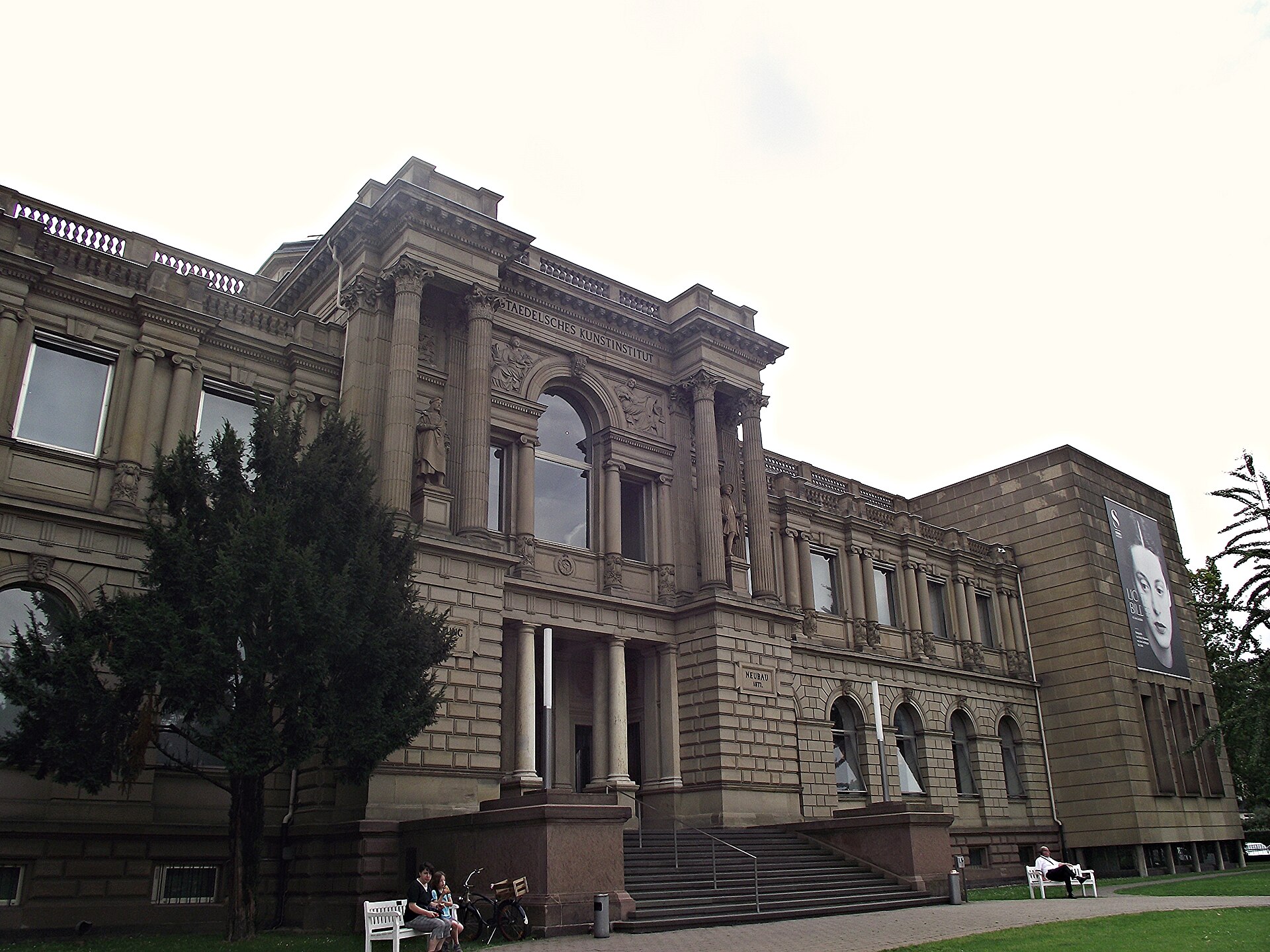
The nineteenth-century building on the Sachsenhausen bank, seen from across the River Main, with the central dome that survived the 1944 bombing raid.
Photograph by Fred Romero, Paris, CC BY 2.0, via Flickr and Wikimedia Commons · Photograph by Fred Romero from Paris, FranceStaedel Museum
Museum · Städel Museum · Founded 1815
Open, admission and hours confirmed 21 August 2026 · 16 sources
On this page 15 sections
ContentsClose
The Staedel presents itself as 700 years of European art under one roof, from the early fourteenth century to the present, and the claim is closer to literal than the usual museum boast: the founder's own core collection of Dutch, Flemish and German Old Masters still anchors the upper floor, and the museum has kept adding contemporary work into a purpose-built wing rather than letting the story stop in 1945. The strength is depth in northern European painting before 1800 and a modern and contemporary holding rebuilt, deliberately and partially, after the collection the museum had built by 1937 was torn apart by the Nazi confiscation of that year. It is not an encyclopaedic collection on the scale of a national museum; it is a civic foundation's collection, shaped by what one Frankfurt banker owned in 1815 and by what the Staedelscher Museums-Verein, a membership society, has been able to buy back or add since.
| Local name | Städel Museum |
|---|---|
| Kind | Museum |
| Founded | 1815 |
| City and country |  Frankfurt am Main, Germany Frankfurt am Main, Germany |
| Address | Schaumainkai 63, 60596 Frankfurt am Main, Germany |
| Website | staedelmuseum.de |
| Status | Open, confirmed |
| Record last verified |
Visiting
- Hours
- Tuesday, Wednesday, Friday, Saturday, Sunday10:00 to 18:00
- Thursday10:00 to 21:00
- MondayClosed
- Closed
- Monday. 24 December and 31 December each year.
- Admission
- AdultEUR 19Tuesday to Sunday
- ReducedEUR 17conditions set by the museum, not detailed on the public price list
- GroupEUR 17per person
- FamilyEUR 30
- Children under 12Freefree
- Staedelverein membersFreefree, membership society
- Tuesday SpecialEUR 10permanent collection and all special exhibitions, Tuesdays 3pm to 6pm only, not a general reduced rate
- Tickets
- staedelmuseum.de/en/visit The museum's own ticket page.
- Do I need to book?
- No. Timed tickets are not enforced; the museum sells tickets online as well as at the door
- Address
- Schaumainkai 63, 60596 Frankfurt am Main, Germany MapU-Bahn U1, U2, U3 and U8 to Schweizer Platz, a short walk south of the river
Tram Lines 15 and 16 to Otto-Hahn-Platz
Car No on-site car park; the museum names three public garages nearby (Walter-Kolb-Strasse, Willy-Brandt-Platz, Untermainanlage) - Website
- staedelmuseum.de
- Telephone
- +49 (0)69-605098-200
Before you go how long, access, photography, bags, eating, shop
- How long to allow
- Not stated by the museum in hours; the permanent display alone covers 700 years of European art across two upper levels plus the underground contemporary wing
- Access
- A lift serves the main entrance at Schaumainkai 63; wheelchairs, walking frames and canes can be borrowed on site; disabled parking is on Holbeinstrasse at the corner of Schaumainkai
- Photography
- Personal, non-flash photography is permitted in the permanent collection and special exhibitions unless a room says otherwise; tripods and selfie sticks are not allowed; commercial photography needs written permission in advance
- Bags
- Bags larger than A4 must go in the free cloakroom; food and drink are not allowed in the exhibition rooms
- Eating
- Cafe at the Staedel Museum, Tuesday to Sunday 11am to 6pm
- Shop
- Museum shop, Tuesday to Sunday 11am to 6pm
Prices and hours change. We take them from the institution's own pages and print the day we read them, and you can check the current position at the source we used. Confirm before you travel.
What is inside
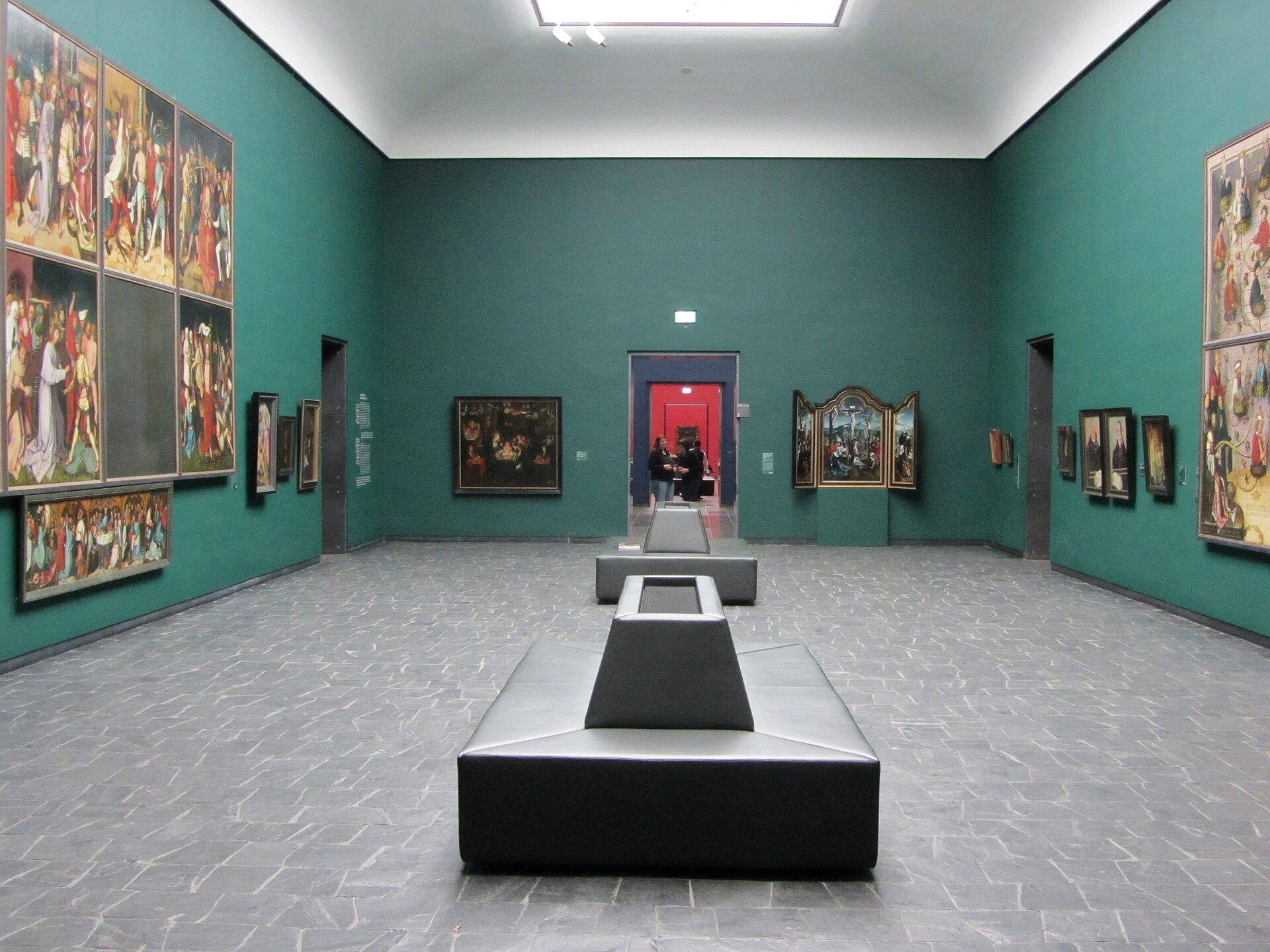
CC0 Old Masters, second upper level
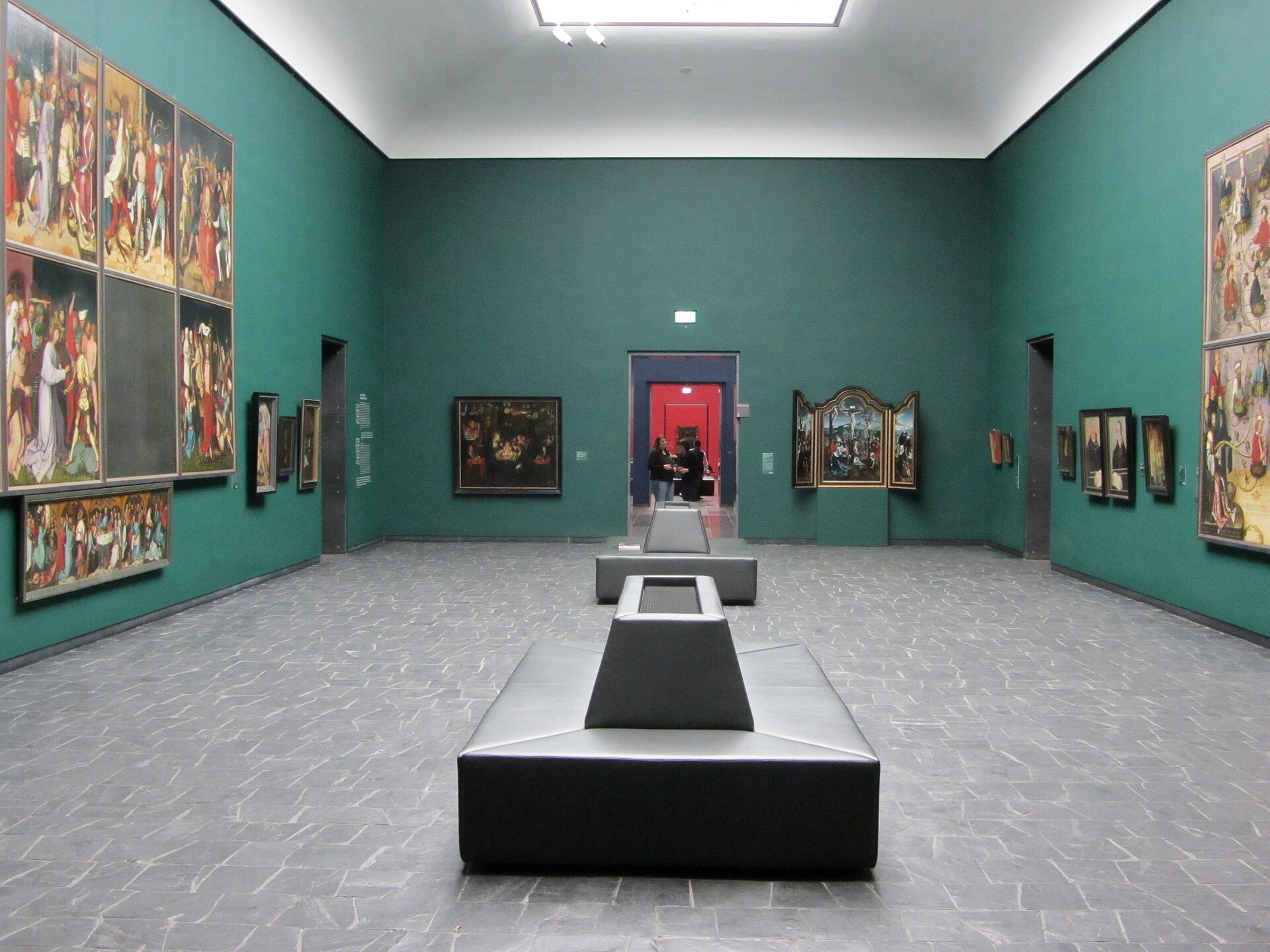
The early collection runs from the fourteenth century through the Baroque: Jan van Eyck's Lucca Madonna, Vermeer's Geographer, Rembrandt's Blinding of Samson, Lucas Cranach's Venus, and the German, Dutch and Flemish paintings that were the founder's own core holding before the museum existed.
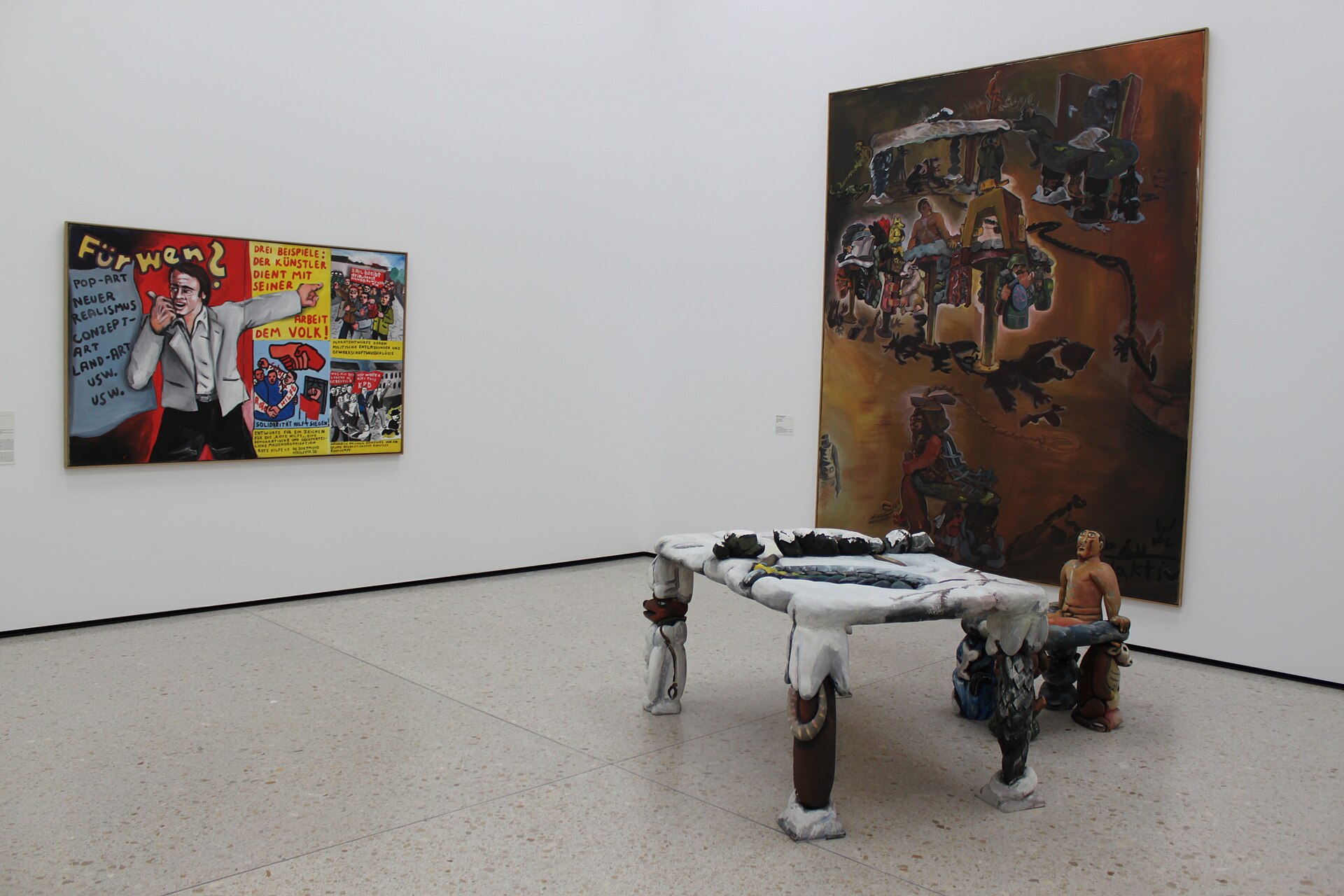
Photograph by Anagoria · CC BY 3.0 Modern Art, first upper level
Nineteenth and early twentieth-century painting, including Tischbein's Goethe in the Roman Campagna, Max Liebermann, Franz Marc's Dog Lying in the Snow and Picasso's Portrait of Fernande Olivier. This is also the department the 1937 confiscations tore into hardest, and several works shown here were bought back or given back after the war rather than held continuously since acquisition.
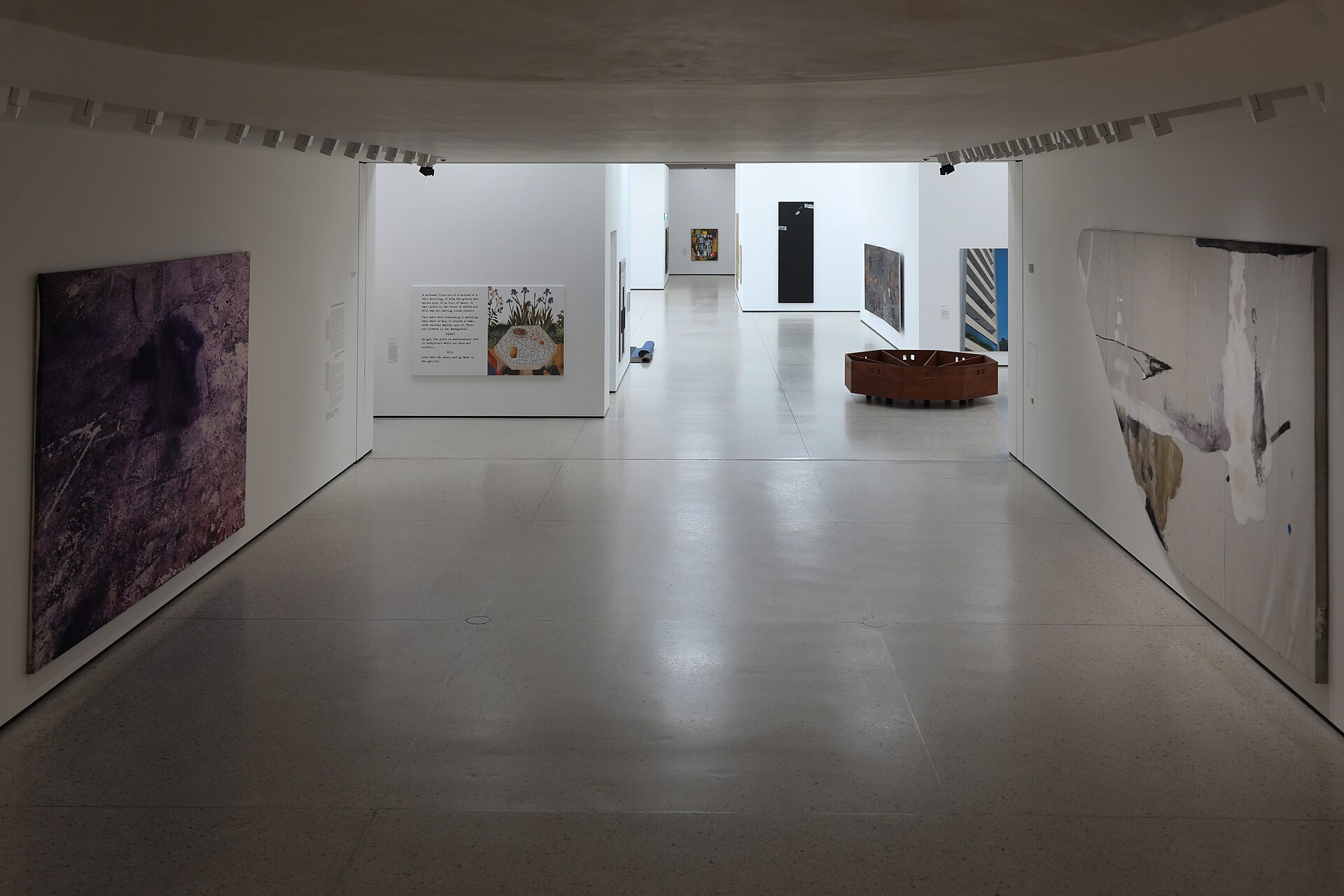
Photograph by Sailko · CC BY-SA 4.0 Contemporary Art, the Gartenhallen
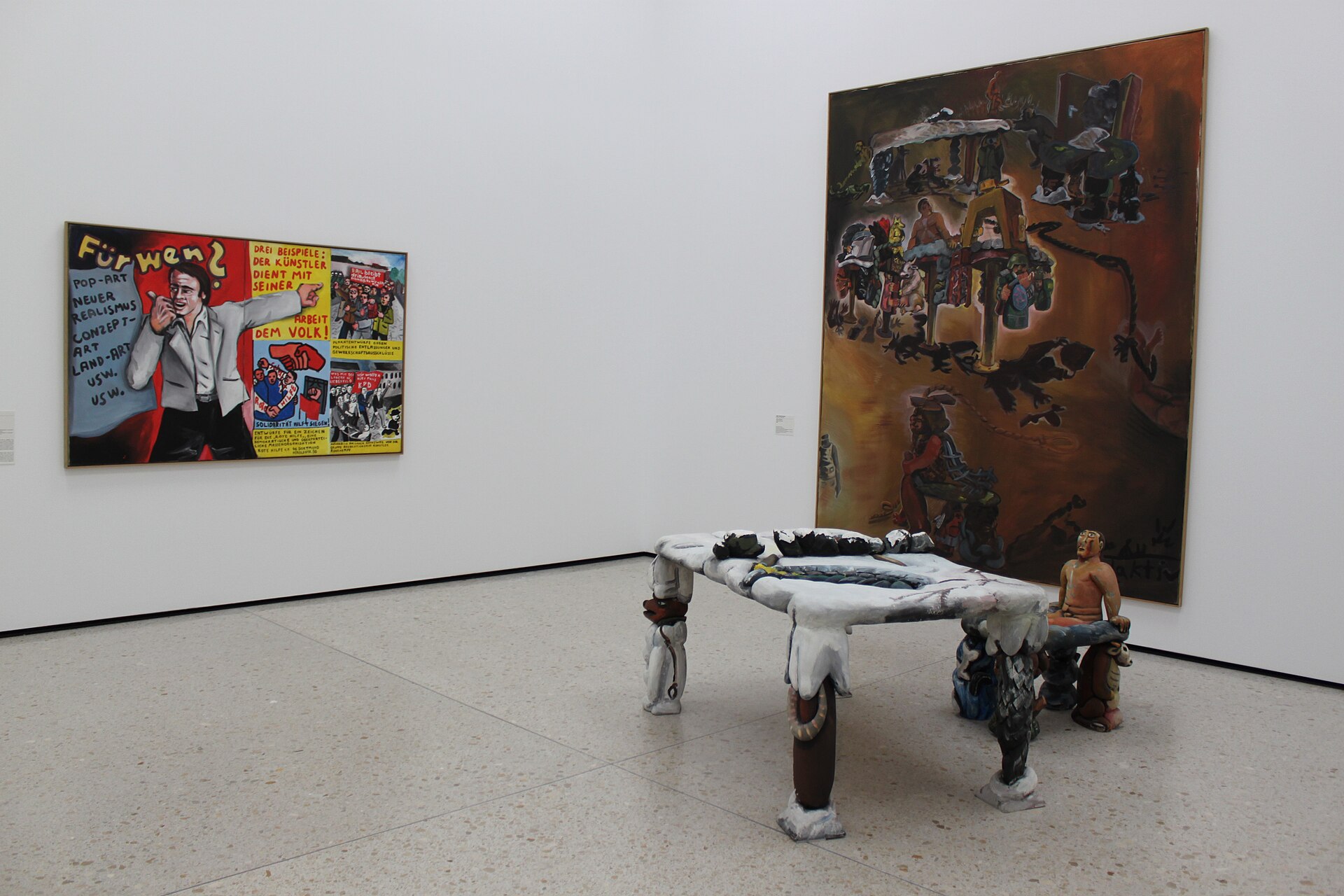
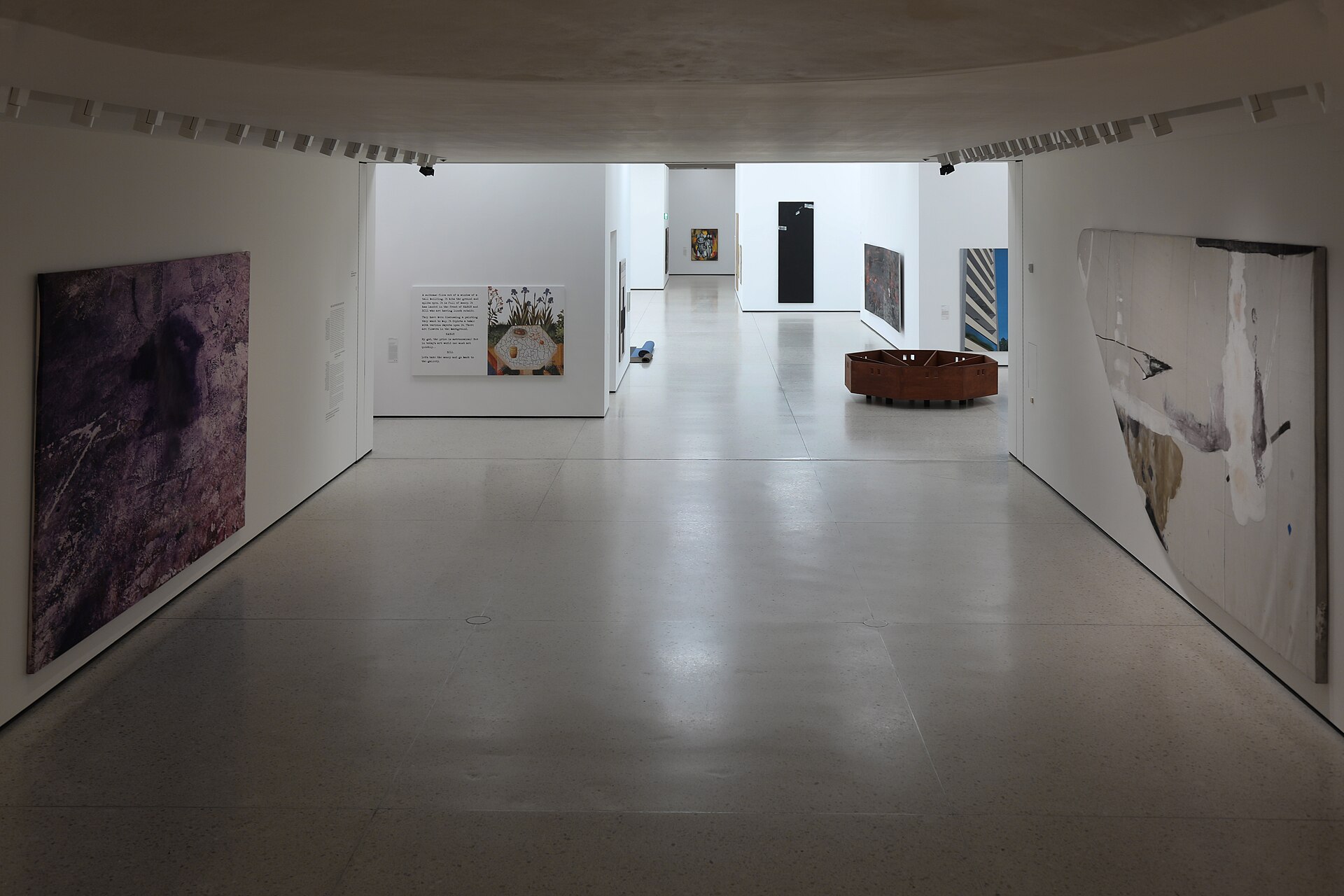
The underground wing opened in 2012, built for the collection since 1945 and partly funded by a citywide public subscription. It holds post-war and contemporary painting, sculpture and installation, presented in white cube galleries lit from a garden-level skylight rather than in the historicist rooms of the main building.
Department of Prints and Drawings
Two curatorial departments, works before 1800 and works after 1800, hold prints and drawings that are not permanently hung; the Study Room is open two afternoons a week by advance registration for anyone who wants to see specific sheets, including material connected to the Beschlagnahme of 1937.
Photography collection
A dedicated department under its own head of collection, built up since the 1980s and shown in rotating installations rather than as a fixed room; it is not one of the galleries a visitor can rely on seeing on any given day.
What to see first
The Geographer
Johannes Vermeer, 1669One of roughly three dozen accepted Vermeers, on display in Old Masters room 7 as of the museum's own listing. It is a pendant to the Astronomer, now in the Louvre, and one of the few Vermeers that carries both a signature and a date.8
Lucca Madonna
Jan van Eyck, c. 1437Bought in 1850 and on display in Old Masters room 5. The museum's own text on the work singles out the illusion of shared space between the viewer and the painted room, achieved through the reflection in the glass carafe.9
The Blinding of Samson
Rembrandt van Rijn, 1636Bought in 1905 for 336,000 marks, a sum the museum could not raise alone; eighty-five Frankfurt citizens covered the balance within days. Not currently on display, by the museum's own status field, which is itself worth knowing before a visitor plans a trip around it.10
Venus
Lucas Cranach the Elder, 1532A gift from Moritz von Gontard, chairman of the Staedel's governing administration, on the opening of the Schaumainkai building in 1878. Not currently on display.11
Goethe in the Roman Campagna
Johann Heinrich Wilhelm Tischbein, 1787The single image that has shaped the popular idea of Goethe more than any other, on display in Modern Art room 1. A gift of Baroness Adele von Rothschild in 1887.12
Dog Lying in the Snow
Franz Marc, c. 1911Bought in 1919, confiscated in the 1937 degenerate art campaign, and bought back for the collection in 1961: the one highlight on this list whose own museum label states the confiscation and the return as part of its acquisition history.13
Portrait of Fernande Olivier
Pablo Picasso, 1909A key Analytical Cubist portrait, bought in 1967 for the museum by the Staedelscher Museums-Verein, the membership society that has repeatedly stepped in to fund acquisitions the foundation could not make alone.14
Exhibitions on now
Past exhibitions here
A banker's bequest, not a state museum
The Staedel is not, and has never been, a state or municipal museum in the way the Stadtische Galerie housed inside it partly is. It exists because Johann Friedrich Staedel, a Frankfurt spice merchant and banker who had traded in indigo, pigments and lead bar before moving into banking, wrote a will. The final version, dated 15 March 1815, gave his house on the Rossmarkt, his collection of paintings, prints and drawings, and his fortune to a foundation bearing his name, with instructions that it be opened to the public immediately as a museum and an art school. He specified that the roughly 500 paintings he owned should be graded: the mediocre ones sold to fund better acquisitions, a founder's instruction the institution has effectively followed for two centuries since. Staedel died the following year, in 1816, having lived to see the foundation deed signed but not the museum built.
The distinction matters for how the Staedel is run and funded today. It remains a private foundation, sustained by the city and region's citizens, foundations and businesses rather than primarily by state budget, which is also why its ticket prices sit closer to those of an independently funded museum than to Germany's federally or state-backed institutions. The Staedelscher Museums-Verein, a membership society founded in 1899, still supplements acquisitions the foundation's own endowment cannot cover alone, and did so as recently as 1967 for the Picasso portrait of Fernande Olivier now on the walls.
1937: what was taken, and the arithmetic nobody quite agrees on
In 1933 the newly installed Nazi city government dismissed Georg Swarzenski, general director of Frankfurt's municipal museums and the man who had built the Staedel's modern holdings over three decades, because he was Jewish. He was permitted, for a time, to continue heading the privately governed Staedelsches Kunstinstitut itself, since the city could not simply remove a foundation director as it had removed a municipal one, but the expressionist and modern paintings he had assembled were moved into storage well before any formal confiscation began. Swarzenski fled to the United States in 1938.
The Degenerate Art action of 1937 then went through the Staedel in stages rather than in one sweep, and the sources do not converge on a single total. The museum's own current account states plainly that 77 paintings were labelled degenerate and confiscated. A more granular breakdown, drawn from the German-language Wikipedia article on the institute and citing the state seizure inventory, describes a first wave in July 1937 that removed close to 30 works from the municipal collection, a second and larger wave in August that took close to 50 paintings and around 600 works on paper, and a final wave in December that claimed five more modern works, on top of six paintings that had already been requisitioned as exhibition loans in 1936 and never returned. Add those together and the total is closer to 680 to 700 objects, the great majority of them prints and drawings rather than paintings, than to any single round number. The figure of roughly 500 sometimes quoted for the Staedel's Nazi-era losses does not match either the museum's own count of paintings or the more detailed wave-by-wave tally, and this page does not resolve the discrepancy; it is recorded as unresolved rather than smoothed into a single number.
What is certain is which paintings were shown where. In July 1937 a Reich Propaganda Ministry commission removed 25 works from the Staedel to select for the Entartete Kunst exhibition that opened in Munich that month; fifteen Staedel paintings were shown there, including Max Beckmann's Der Strand (Am Lido), a large beach scene the city itself had commissioned in the 1920s and that had already caused a public indecency complaint against the museum's director before the Nazi period. The exhibition toured more than ten cities and reached Frankfurt itself in the summer of 1939, installed in a villa on Bockenheimer Landstrasse that the city had itself appropriated from the Jewish collector Max von Goldschmidt-Rothschild in 1937. Der Strand has not been seen since; the museum states it is untraced. Vincent van Gogh's Portrait of Dr Gachet, also confiscated from the Staedel, was placed under Hermann Goering's personal control and sold abroad through the dealer Sepp Angerer for foreign currency; it left German and Staedel hands for good. Franz Marc's Dog Lying in the Snow is the rare case with a happy ending on the record: confiscated in 1937, it was bought back for the collection in 1961, and the museum's own catalogue entry states both the confiscation and the return rather than skipping to the acquisition date.
Restitution research at the Staedel is not a closed chapter. In May 2023, the New York State Department of Financial Services announced that the City of Frankfurt and the Staedelsches Kunstinstitut had restituted Fritz von Uhde's Portrait of Lady to the heirs of Gustav Ruedenberg, a Hanover collector who had bought the painting in 1916 and was forced to sell it to the City of Frankfurt in April 1937, under duress and well below market value, before being deported with his wife to Riga in 1941, where they were murdered. The museum's own provenance research, working independently alongside the New York Holocaust Claims Processing Office, confirmed the painting's ownership history and helped locate Ruedenberg's heirs. The claim was resolved eighty-six years after the forced sale, which is itself a measure of how long this kind of research takes even when an institution cooperates.
A building that closed in 1943 and reopened twenty years later
The museum moved into its present building on the Sachsenhausen bank of the Main in 1878, designed by Oskar Sommer, one of a wave of grand public buildings including Frankfurt's opera house and stock exchange. Under wartime pressure the collection went into external storage in 1939, the building itself closed in 1943, and it was hit by bombs in 1944. The postwar task, once the war ended, was threefold: retrieve the paintings from storage, return what had been unlawfully acquired to its rightful owners, and rebuild a partly destroyed building. The architect Johannes Krahn added two new corner wings to the river facade, and the museum reopened to the public on 9 November 1963, almost exactly twenty years after it had closed.
Two further expansions followed. In 1990 an extension by the Austrian architect Gustav Peichl, on the Holbeinstrasse side, gave the modern and contemporary holdings their own space and created the museum's first dedicated special-exhibition galleries. The larger change came in 2012, when the Gartenhallen, a 3,000 square metre underground wing by the Frankfurt firm schneider+schumacher, opened for the contemporary collection alone. The 52 million euro project split its funding between public sources and a private capital campaign, and the museum ran the private half as a genuinely public appeal rather than a major-donors-only drive: the slogan Frankfurt is building the new Staedel. Help build it. put a yellow builder's boot on everything from the Eintracht Frankfurt football club's kit to a local bakery's bread, and by the campaign's own published count, 30,000 people took part in one form or another, including 4,000 direct donors, against a target of 5 million euros in public giving that the campaign beat by eight per cent. The museum's own account frames the tactic as continuous with Staedel's 1815 foundation deed, which asked that his institute serve the city's citizens rather than a narrow elite; whether it in fact repeats that spirit or simply repackages it as a marketing campaign is a fair question this page does not try to settle either way.
What the Old Masters holding actually is, and what still shows the gap
The founder's own collecting habits in the eighteenth century concentrated on German and Dutch Baroque painting in oil and ranged far more widely across prints and drawings, where he explicitly set out to build a working overview of the whole history of the medium rather than a connoisseur's highlights reel. That asymmetry is still visible: the Department of Prints and Drawings, split into holdings before and after 1800, is large enough to need two curatorial heads and a twice-weekly study room by appointment, while the painting galleries on the upper two levels are what almost every visitor actually sees. Nineteenth-century purchases, including Van Eyck's Lucca Madonna in 1850 and Cranach's Venus as an 1878 gift, and a run of early-twentieth-century acquisitions culminating in the 1905 purchase of Rembrandt's Blinding of Samson, built a collection that by the 1930s had real depth in modern German and French painting under Swarzenski's direction.
The 1937 confiscations did not simply remove individual pictures; they removed a working curatorial programme, assembled over three decades, that the postwar museum then had to decide whether and how to rebuild. Some pieces, like the Marc, came back through purchase decades later. Others, like the Beckmann and the Van Gogh, are gone for good as far as the record shows. The museum's contemporary collecting since 2012, more than a thousand works added within a few years, reads differently once that history is in view: it is not simply growth, it is the institution choosing to keep building the twentieth and twenty-first century collection that the 1930s interrupted, on a new institutional footing and in a new wing built for the purpose.
Visiting in 2026: a private foundation's pricing, and what is currently closed
Because the Staedel is privately governed rather than state-subsidised in the way many major German museums are, its standard adult ticket, at 19 euros, sits above what a visitor might expect from a comparable state institution, and the museum's own Tuesday Special, a flat 10 euros for the permanent collection and every special exhibition between 3pm and 6pm on Tuesdays only, functions as an explicit acknowledgement that the standard price is a barrier for some visitors rather than a universal rate. Members of the Staedelverein, the museum's own support society, and children under 12 enter free at any time.
Two practical gaps are worth stating plainly rather than leaving a visitor to discover them on arrival. The Staedel Restaurant, a fixture of the building for more than 25 years, closed for renovation on 1 July 2025 and has no published reopening date; only the smaller cafe, open the same hours as the museum, currently serves food and drink on site. And the museum's own visit page lists specific dates through August and September 2026 on which parts of the building, including at least one day when the Old Masters galleries themselves are inaccessible until noon, are closed or restricted for private events. A visitor planning a trip around a specific gallery or a specific painting should check the museum's current notes rather than assume the building operates uniformly on any given day.
What visitors say
We publish no visitor review prose and cite no single review as representative, so what follows draws on the aggregate rating below and on what the museum's own current pages say about the state of a visit. Visitors consistently describe a collection that rewards the full 700-year walk-through rather than a highlights-only visit, and single out the underground Gartenhallen as a distinct architectural experience from the historicist main building. The most repeated practical complaints are about the entrance price relative to a two-to-three-hour visit and about congestion during blockbuster special exhibitions and the discounted Tuesday afternoon slot.
What is praised, what is criticised
- Praised: the depth of the Old Masters rooms, in particular the Netherlandish and German panel paintings assembled before the museum itself existed
- Praised: the Gartenhallen extension as an architectural space in its own right, distinct from the nineteenth-century building
- Praised: staff described repeatedly as helpful and well informed on the collection
- Praised: the free audio guide app covering collection highlights
- Criticised: the standard adult ticket at EUR 19 is called steep for a visit of a few hours, a complaint the museum implicitly answers by pricing a discounted Tuesday-afternoon slot at EUR 10
- Criticised: special exhibitions and the Tuesday Special routinely draw crowds that visitors say make the rooms hard to see properly
- Criticised: the Staedel Restaurant, part of the building for more than 25 years, has been closed for renovation since 1 July 2025 with no reopening date yet given; only the smaller cafe remains open on site
- Criticised: current building works mean parts of the collection are intermittently inaccessible: the museum's own visit page lists specific dates in 2026 when the Old Masters galleries and parts of a special exhibition are closed for events
Ratings on other platforms
Google: 4.6 from 12,839 ratings, read 7 August 2026
A platform average is a tertiary source: it moves, it is not audited, and we quote no visitor's words.
Questions about Staedel Museum
Where is Staedel Museum?
Schaumainkai 63, 60596 Frankfurt am Main, Germany.
How much does it cost to visit?
Adult: EUR 19; Reduced: EUR 17; Group: EUR 17; Family: EUR 30; Children under 12: free. As confirmed 21 August 2026.
When is it open?
Tuesday, Wednesday, Friday, Saturday, Sunday 10:00-18:00; Thursday 10:00-21:00; Monday closed. Closed: Monday. 24 December and 31 December each year. As confirmed 21 August 2026.
How do you get there?
U-Bahn: U1, U2, U3 and U8 to Schweizer Platz, a short walk south of the river; Tram: Lines 15 and 16 to Otto-Hahn-Platz; Car: No on-site car park; the museum names three public garages nearby (Walter-Kolb-Strasse, Willy-Brandt-Platz, Untermainanlage).
What should you see first?
The Geographer (Johannes Vermeer, 1669); Lucca Madonna (Jan van Eyck, c. 1437); The Blinding of Samson (Rembrandt van Rijn, 1636); Venus (Lucas Cranach the Elder, 1532); Goethe in the Roman Campagna (Johann Heinrich Wilhelm Tischbein, 1787); Dog Lying in the Snow (Franz Marc, c. 1911).
What we could not confirm
- The total number of works the Staedel lost to the 1937 Degenerate Art confiscations is stated inconsistently even across the museum's own and closely related sources: 77 paintings by the museum's current account, versus a wave-by-wave tally (citing the state seizure inventory) of roughly 85 paintings and 600-plus works on paper, a total nearer 680 to 700 objects. The commonly repeated figure of roughly 500 does not match either. This page has not resolved which count, if any, is the authoritative one.
- How many of the roughly 700 exhibits shown at the Frankfurt leg of the Entartete Kunst exhibition in 1939 came specifically from the Staedel's own former holdings, as opposed to other German museums' confiscated material shown in the same rooms, is stated by the museum's own history project to be unclear.
- Whether any further Staedel-linked restitution claims are currently active beyond the 2023 Ruedenberg settlement has not been confirmed from a source this page has read; the museum's provenance research department is continuing but its current caseload is not public.
- No reopening date has been published for the Staedel Restaurant, closed since 1 July 2025.
Images
Sources
- 1Staedel Museum, Your Visit: opening hours, ticket prices, how to get here, accessibility, current notes on restricted access and the closed Staedel Restaurant. Read 7 August 2026. staedelmuseum.de/en/visit
- 2Staedel Museum, Contact: telephone, visiting and mailing address, and the museum's own list of department heads including provenance research. Read 7 August 2026. staedelmuseum.de/en/contact
- 3Staedel Museum, The Staedel: founding by Johann Friedrich Staedel, the 1815 foundation deed, the museum's own history timeline 1815 to 2012 including the 1933-1945 section on National Socialism. Read 7 August 2026. staedelmuseum.de/en/the-staedel
- 4Iris Schmeisser (Staedel provenance researcher), 'Duesterer Sommer', Staedel Stories, 25 July 2019: the confiscation of Max Beckmann's Der Strand, the 1937 Reich Propaganda Ministry commission, the 1939 Entartete Kunst exhibition in Frankfurt, Georg Swarzenski's dismissal and flight. stories.staedelmuseum.de/de/duesterer-sommer-entartete-kunst-in-frankfurt
- 5German Wikipedia, 'Staedelsches Kunstinstitut', section on the Entartete Kunst confiscation, citing the wave-by-wave breakdown of works seized in 1936-1937. de.wikipedia.org/wiki/St%C3%A4delsches_Kunstinstitut
- 6New York State Department of Financial Services, press release: 'Superintendent Adrienne A. Harris Announces Restitution of 19th Century German Impressionist Painting to the Heirs of Gustav Ruedenberg', 4 May 2023, on the Fritz von Uhde 'Portrait of Lady' settlement with the City of Frankfurt and the Staedelsches Kunstinstitut. dfs.ny.gov/reports_and_publications/press_releases/pr202305041
- 7SOFII (Showcase of Fundraising Innovation and Inspiration), case study: 'The Staedel Museum, Frankfurt: inspiring a city to fundraise', on the 2009-2012 Gartenhallen capital campaign, its public-subscription arm and results. sofii.org/case-study/the-st%C3%A4del-museum-frankfurt-inspiring-a-city-to-fundraise
- 8Staedel Museum Digital Collection, 'The Geographer', Johannes Vermeer, 1669: acquisition, display location, curatorial text. sammlung.staedelmuseum.de/en/work/the-geographer
- 9Staedel Museum Digital Collection, 'Lucca Madonna', Jan van Eyck, c. 1437: acquisition, display location, curatorial text. sammlung.staedelmuseum.de/en/work/lucca-madonna
- 10Staedel Museum Digital Collection, 'The Blinding of Samson', Rembrandt van Rijn, 1636: acquisition history, current display status. sammlung.staedelmuseum.de/en/work/the-blinding-of-samson
- 11Staedel Museum Digital Collection, 'Venus', Lucas Cranach the Elder, 1532: acquisition, current display status. sammlung.staedelmuseum.de/en/work/venus
- 12Staedel Museum Digital Collection, 'Goethe in the Roman Campagna', Johann Heinrich Wilhelm Tischbein, 1787: acquisition, display location. sammlung.staedelmuseum.de/en/work/goethe-in-the-roman-campagna
- 13Staedel Museum Digital Collection, 'Dog Lying in the Snow', Franz Marc, c. 1911: acquisition, 1937 confiscation and 1961 repurchase, display location. sammlung.staedelmuseum.de/en/work/dog-lying-in-the-snow
- 14Staedel Museum Digital Collection, 'Portrait of Fernande Olivier', Pablo Picasso, 1909: acquisition by the Staedelscher Museums-Verein, display location. sammlung.staedelmuseum.de/en/work/portrait-of-fernande-olivier
- 15Wikidata, Q163804, Staedel Museum: identity, coordinates, instance-of. wikidata.org/wiki/Q163804
- 16Google Maps listing, Staedel Museum: aggregate rating 4.6 from 12,839 ratings. google.com/maps/search/Staedel+Museum+Frankfurt