The Exhibition Record a Multiple Cannot Have
Fifty-six of the 220 published records in this archive carry an exhibition history. Every map, every photograph, every printed book and every ceramic carries none, and a much larger collection shows the same gradient.
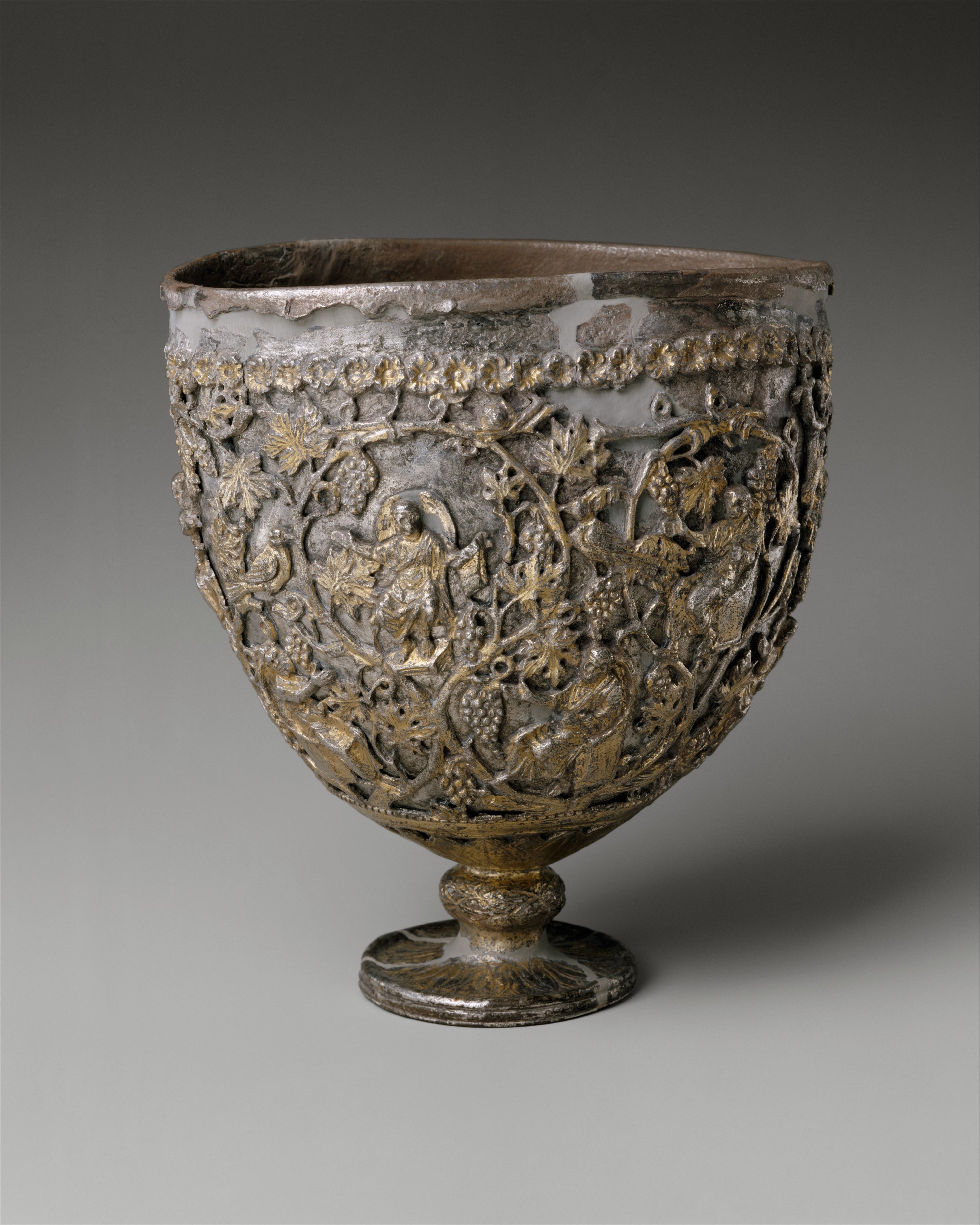
Records in this piece: The Antioch 'Chalice', Melencolia I, Under the Wave off Kanagawa (Kanagawa oki nami ura), also known as The Great Wave, from the series Thirty-Six Views of Mount Fuji, The Astronomer, Destitute pea pickers in California. Mother of seven children. Age thirty-two. Nipomo, California, Bust of Cardinal Scipione Borghese, first version
On this page 7 sections
ContentsClose
In short
- Of the 220 published records in this archive, 56 carry an exhibition history of any length. Four whole object classes carry none at all: every one of the 12 maps, every one of the 12 photographs, every one of the 7 printed books and every one of the 7 ceramics. One of the 13 prints has a line.
- The gap is not an artefact of our research. Sampling 250 records per classification from the Art Institute of Chicago's public collection API on 1 September 2026 returns an exhibition history on 73 per cent of paintings, 47 per cent of textiles, 35 per cent of sculpture, 20 per cent of photographs, 8 per cent of prints and 6 per cent of books.
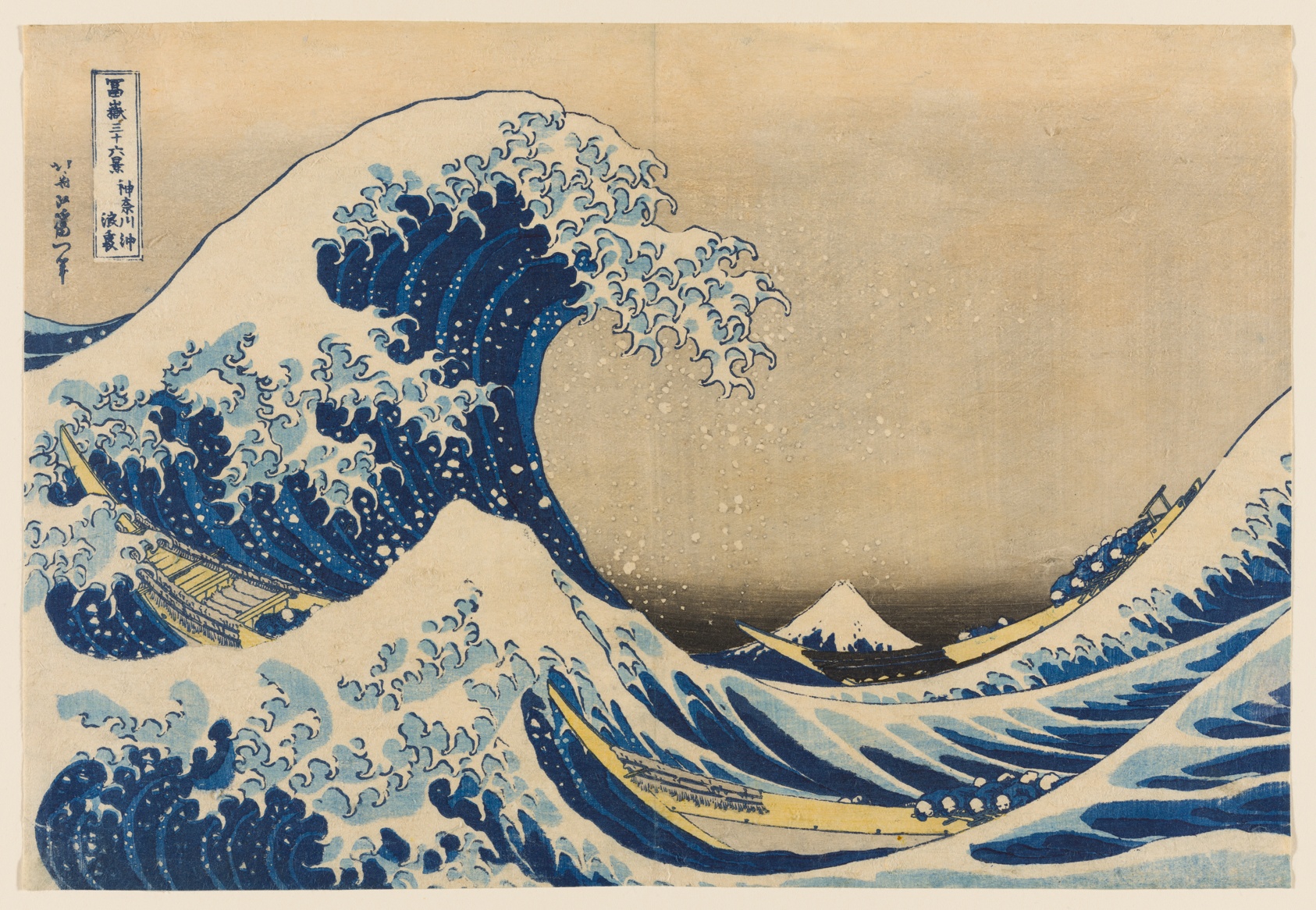
- The Art Institute holds three separate impressions of Hokusai's Under the Wave off Kanagawa, all in the Clarence Buckingham Collection, catalogued as 1925.3245, 1928.1086 and 1952.343. All three are given as 25.4 by 37.6 cm and all three carry an empty exhibition-history field. A show that borrowed the Great Wave from Chicago borrowed one of them, and the surviving record does not say which.
- Where an object is unique the exhibition line separates things nothing else can. The Galleria Borghese lists four exhibitions against its first Bernini bust of Scipione Borghese and seven against the second, which tells the two apart far more sharply than the eight millimetres of height between them.
- This matters because exhibition history is normally the cheapest identity evidence available: a loan puts a named object in a named city on a dated day. For a multiple that evidence does not exist, so the whole burden falls on provenance and on the physical sheet.
The exhibition record attaches to unique objects and slides off multiples
An exhibition history is a list of the occasions on which a museum lent or displayed a particular object under a named title, and it is one of the most useful lines in any record, because a loan places a specific thing in a specific building on a specific date. Provenance tells you who is said to have owned something. An exhibition entry tells you that a registrar packed it, a courier travelled with it, a catalogue printed it and several thousand people walked past it.
The difficulty is that the line is generated by the catalogue, not by the display. A loan exhibition produces a printed record because somebody has to write an entry for each object borrowed, and that entry names the object. Permanent display produces nothing. A print, a photograph, a printed book or a map is more likely than a painting to be shown in a rotation from the museum's own holdings, under a general heading, with no catalogue and no per-object entry at all.
And when a show of prints does have a catalogue, the entry usually describes the design rather than the sheet. It names the artist, the date of the block or the plate, the state, the dimensions of the image. It rarely names the impression, because for most curatorial purposes the impression is interchangeable with every other one. That convenience is exactly what destroys the evidence, because a record of what was shown that does not identify which copy was shown cannot afterwards be attached to a copy.
In this archive four whole object classes have no exhibition history at all
Fifty-six of the 220 published records in this archive carry an exhibition history, and the 180 exhibition entries between them are distributed very unevenly across object classes. The objects that collect exhibition lines are the ones that are unique, portable and famous enough to be asked for by name. The objects that collect none are the ones that exist in more than one copy.
What follows is our own corpus counted by object type, showing how many records of each type carry at least one exhibition entry. The reader should hold two cautions in mind. The corpus is not a random sample of the world's art, and a record with no exhibition entry means only that our research found none published, not that the object was never displayed. Even with both cautions applied, the ordering is hard to explain any other way.
| Object type | Published records | With an exhibition history |
|---|---|---|
| Antiquity | 14 | 6 |
| Silver | 12 | 5 |
| Textile | 13 | 5 |
| Sculpture | 16 | 6 |
| Painting | 29 | 10 |
| Manuscript | 13 | 4 |
| Glass | 10 | 3 |
| Arms and armour | 11 | 3 |
| Islamic metalwork | 12 | 2 |
| 13 | 1 | |
| Map | 12 | 0 |
| Photograph | 12 | 0 |
| Printed book | 7 | 0 |
| Ceramic | 7 | 0 |
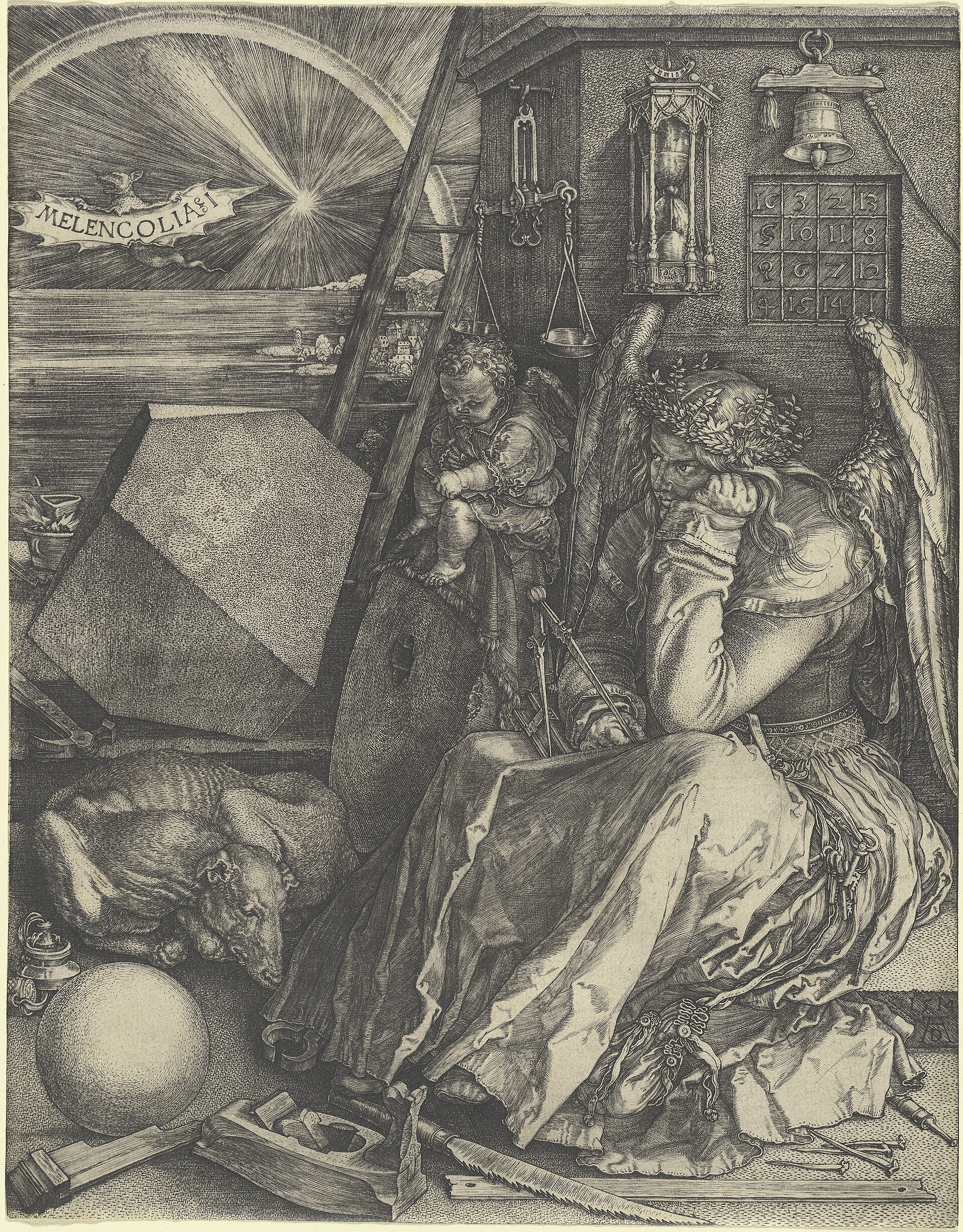
The bottom four rows are not obscure objects. They include the Waldseemuller world map of 1507, Durer's Melencolia I, Hokusai's Great Wave, Dorothea Lange's Migrant Mother and a Gutenberg Bible. These are among the most reproduced images in existence, and not one of them carries a published exhibition line in this archive.
A much larger collection shows the same gradient
The Art Institute of Chicago publishes an open collection API in which each artwork record carries an exhibition_history field, which makes the same question answerable against a body of material many times the size of ours. We sampled 250 records for each classification on 1 September 2026, drawn from five pages spread through the result set rather than from the top of it, and counted how many had anything in that field.
The ordering matched our own almost exactly, and the spread was wider than we expected.
| Classification | Records in that class | Share of the sample with an exhibition history |
|---|---|---|
| Painting | 1,800 | 73 per cent |
| Textile | 10,626 | 47 per cent |
| Sculpture | 975 | 35 per cent |
| Photograph | 6,810 | 20 per cent |
| 2,823 | 8 per cent | |
| Book | 3,061 | 6 per cent |
A print in Chicago is roughly nine times less likely to carry an exhibition history than a painting in the same building, and the museum's print holdings are larger than its painting holdings. Books are lower still. Whatever is happening here is not about how much material the institution owns, how well it is catalogued, or how often it goes on the wall. It is about whether the object is one of one.

Three sheets, one measurement, and no way to say which was shown
The Art Institute of Chicago holds three separate impressions of Under the Wave off Kanagawa, and its own catalogue gives all three the same dimensions. They are accessions 1925.3245, 1928.1086 and 1952.343, all in the Clarence Buckingham Collection, and each is recorded at 25.4 by 37.6 cm. The exhibition_history field is empty on all three.
Consider what that does to a researcher working backwards. Suppose a 1930s loan record, a photograph of an installation or a newspaper notice establishes that the Great Wave was lent by Chicago to a show in a particular year. The claim is true of the museum. It cannot be attached to an object, because the museum had at least two candidate sheets at that date and its record does not say which one travelled. The provenance of an individual impression cannot be advanced by the exhibition history of the design.
This is the general case for every multiple. Rembrandt's Hundred Guilder Print survives in individually catalogued impressions in Washington, Amsterdam and Tokyo, each with its own accession number and its own physical history of collector's marks, trimming and paper. An exhibition entry that reads simply The Hundred Guilder Print tells you about none of them.
Where the object is unique the exhibition line carries weight nothing else does
The same evidence that is unavailable for a multiple is decisive for a singleton, and the clearest case in this archive is a pair of objects that are almost impossible to tell apart by any other means. Bernini carved two marble busts of Cardinal Scipione Borghese in 1632, the second from a fresh block after a fault opened in the first. Both are in the Galleria Borghese, both are in Room 14, and the museum gives one at 77.2 cm and the other at 78 cm.
Eight millimetres is not a test. But the museum's own catalogue lists four exhibitions against inventory CCLXV, all of them in Rome between 1930 and 2018, and seven against inventory CCLXVI, including Paris in 1935, the J. Paul Getty Museum and the National Gallery of Canada in 2008 and the Bargello in 2009. The replacement has travelled and the original has largely stayed at home. Presented with an undated photograph of a Bernini Scipione Borghese in a foreign museum, the exhibition history narrows the possibilities faster than the measurement does.
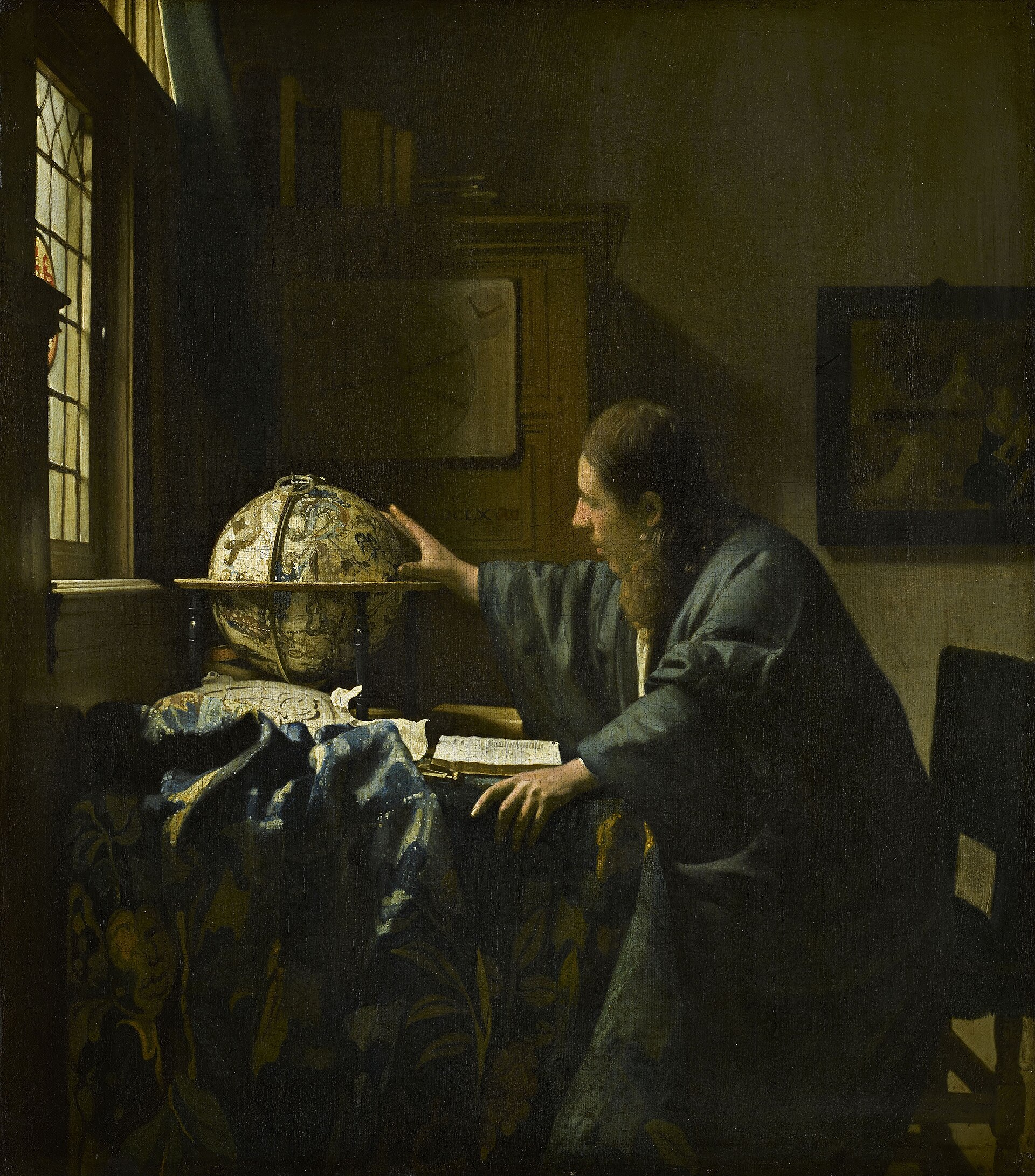
Vermeer's Astronomer is the other kind of case. It is one picture, it is signed and dated 1668, and its exhibition record is part of the evidence for one of the best documented seizures and restitutions in this archive. Nine exhibition entries sit in our record for it. None of that would be available if Vermeer had been a printmaker.
How to read a record whose exhibition history cannot exist
The practical rule is to treat an empty exhibition field as a statement about the class of object, not about the object. On a painting an empty field is worth a question, because paintings usually accumulate loans and a total absence may mean the picture has been unavailable, unattributed or in dispute. On a print or a photograph an empty field is the expected condition and carries almost no information.
The second rule is to stop asking the exhibition record to do identity work it cannot do for a multiple, and to move that weight onto the things that are genuinely particular to the sheet. Those are the collector's marks stamped on it, the trimming of its margins, its watermark, the state of the plate or block it was pulled from, and the accession number under which one institution has held it. Every one of those belongs to a physical object and none of them belongs to a design.
The third is to record what was actually found. When we write that an object has no exhibition history, we mean that we searched and published nothing turned up, and we would rather say that than leave a blank line that reads as an assertion. If a reader can point us to a catalogue entry that names one of these impressions, we would like to have it, and the record will say who supplied it.
Why this archive is free to read
We do this for everyone who loves art. The people who have studied it for years, and the people who just stopped to look. Iconotheca exists so that what we learn belongs to all of them.
Nobody pays us for this. No ads, no sponsors, no commercial interest. These works belong to all of us, and we would rather share them with as many people as we can than keep them to ourselves.
If it gave you something today, tell us to keep going. Follow us, leave a like, or write a positive comment. We read every one, and they are what keeps us going.
Questions
It is the list of exhibitions in which a particular object has been shown, normally giving the year, the venue and the title of the show. It is useful evidence because a loan places a specific object in a specific place on a dated day, which is why it is often used to support a provenance line.
Because the record is generated by loan catalogues, and a catalogue entry for a print usually describes the design rather than the individual sheet. Museums also show works on paper in rotations from their own holdings, which produce no catalogue and no per-object entry at all.
No. It means no exhibition entry has been published for that object. Dorothea Lange's Migrant Mother has been on display somewhere almost continuously since 1936 and the record for the Library of Congress negative carries no exhibition line.
Usually not. The Art Institute of Chicago holds three impressions of Hokusai's Under the Wave off Kanagawa, catalogued at the same dimensions, and its records carry no exhibition history for any of them, so a documented loan of the design cannot be attached to one sheet.
Sampling 250 records per classification from the Art Institute of Chicago's public API on 1 September 2026 returned an exhibition history on 73 per cent of paintings and 8 per cent of prints, with books lowest at 6 per cent.
Sources
- 1Art Institute of Chicago, public collection API, artworks search endpoint. Queried 1 September 2026 for the classification_title terms painting, textile, sculpture, photograph, print and book, sampling 250 records each across five pages, and counting non-empty exhibition_history fields. Also the source for the three impressions of Under the Wave off Kanagawa, accessions 1925.3245, 1928.1086 and 1952.343, all in the Clarence Buckingham Collection and all given as 25.4 by 37.6 cm with an empty exhibition_history. api.artic.edu/api/...
- 2Art Institute of Chicago, object page for Under the Wave off Kanagawa, accession 1928.1086, Clarence Buckingham Collection. artic.edu/artworks/...
- 3Metropolitan Museum of Art, collection API record for The Antioch Chalice, object 468346, accession 50.4, The Cloisters Collection, 1950. Read 1 September 2026 for the medium, the overall dimensions of 19.6 by 18 by 15.2 cm and the gallery number. collectionapi.metmuseum.org/public/...
- 4Galleria Borghese, online collection catalogue, entry for the Bust of Scipione Borghese, inventory CCLXV. Read 1 September 2026 for the height of 77.2 cm, the Carrara marble, Room 14 and the four listed exhibitions of 1930, 1998, 1999 and 2017 to 2018. collezionegalleriaborghese.it/en/...
- 5Galleria Borghese, online collection catalogue, entry for the Bust of Scipione Borghese, inventory CCLXVI. Read 1 September 2026 for the height of 78 cm, Room 14 and the exhibition list including Paris 1935, the J. Paul Getty Museum and the National Gallery of Canada in 2008 and the Museo Nazionale del Bargello in 2009. collezionegalleriaborghese.it/en/...
More in Museums and Exhibitions
The partThe complete object is a temporary arrangement
For a dispersed set, being complete is an event with a date and a duration. Twelve Renaissance tazze were whole and correct for two days in 2014, and...
When the Holder Is Not a Museum, the Accession Number Is Replaced by Law
Fourteen records here are held by a cathedral, a diocese, a cathedral works, a charitable trust or a monuments agency.
A Closing Date That Moves Both Ways, and Who Actually Moved It
Of 937 exhibitions tracked here, only 7 ever had a date move, and three of those flipped between the same two dates again and again.