The Record of an Object Nobody Can Produce
Four objects in this archive are unlocated. Every one still carries a live institutional record, and one of them still carries a national designation.
Records in this piece: The Concert, The Honjo Masamune, Vase with Viscaria, Breguet No. 160, the Marie-Antoinette, Salvator Mundi
On this page 8 sections
ContentsClose
In short
- Four published records in this archive describe objects that are unlocated: Vermeer's Concert, Van Gogh's Vase with Viscaria, the Honjo Masamune, and the Salvator Mundi, which no public record has placed anywhere since the sale of 15 November 2017.
- A catalogue entry survives the object and keeps working. It holds title, it feeds the theft registers, and it is the thing a later good faith purchaser will be measured against. The Gardner still lists all thirteen stolen works with their attributions, as a collection listing rather than an incident report.
- Japan's Agency for Cultural Affairs maintains a public register of nationally designated cultural properties whose whereabouts are unknown. The Honjo Masamune appears on it as an Important Cultural Property designated in 1939, and has been unlocated since January 1946.
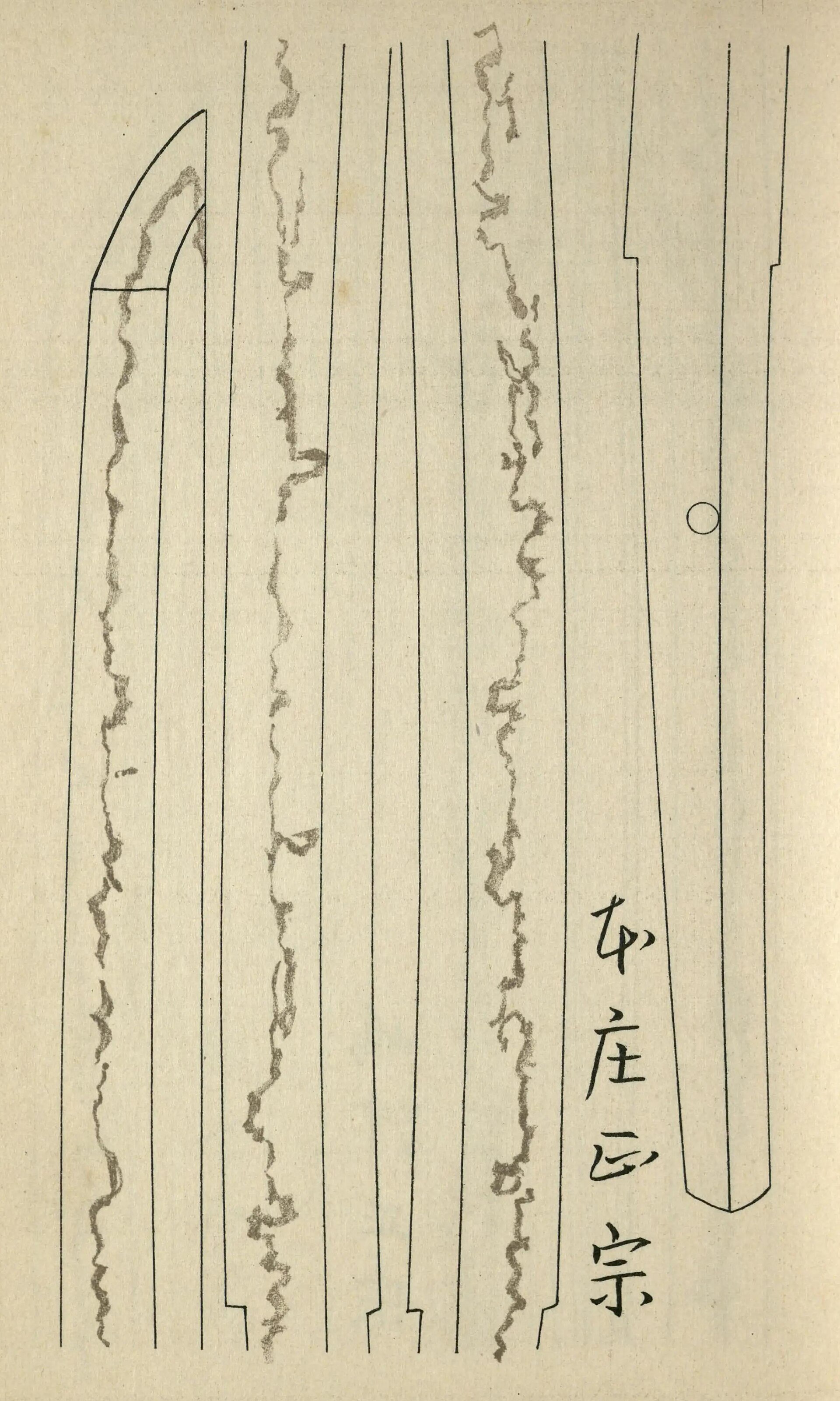
- The only image of the Honjo Masamune is an oshigata, a traced and rubbed record of the blade printed in 1928. No photograph of the sword is known, so the record of the object is older and more durable than any photograph of it ever was.
- Recovery, when it happens, tends not to look like police work. The Breguet Marie-Antoinette came back twenty-three years after the 1983 burglary through a deathbed confession, a lawyer acting for an anonymous woman, and a payment the museum made to get its own property back.
Four objects in this archive cannot be produced by anyone
Of 204 published records, four describe objects whose current location is unknown. Two were stolen and never recovered, one has been missing since the American occupation of Japan, and one was sold at auction for a widely reported sum and then disappeared from public view.
Every one of those four still has a working institutional record behind it. Vermeer's Concert carries a Gardner Museum inventory number, P21W27, and the Museum's legal title is undisturbed. The Honjo Masamune carries a Japanese national designation made in 1939. Van Gogh's Vase with Viscaria carries a catalogue number in the Van Gogh literature, F 324a and JH 1137. The Salvator Mundi carries an attribution argument and a sale record and nothing else.
This is the part that repays attention. The record is not a memorial. It is doing legal and practical work, and it will go on doing it for as long as the institution maintains it, which in at least one of these cases has now run to eighty years.
The Gardner keeps a catalogue of what it does not have
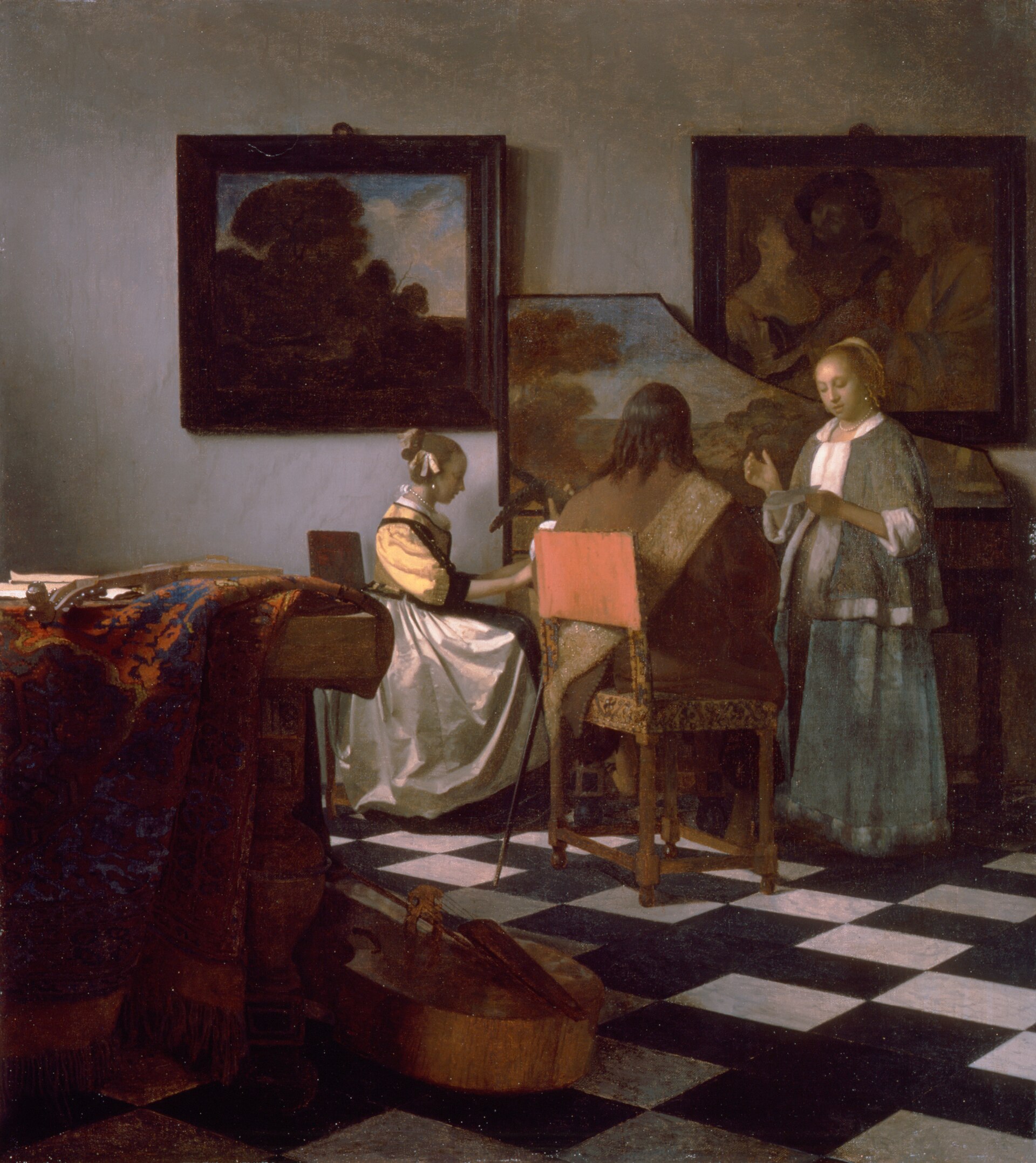
In the early hours of 18 March 1990, two men in police uniforms told the Gardner's night guard they were responding to a disturbance, and he let them in. They restrained both guards in the basement and spent the night in the galleries. Thirteen works left the building in two trips to a car, and the thieves were gone by 2.45 in the morning. The guards stayed handcuffed until police arrived at 8.15.
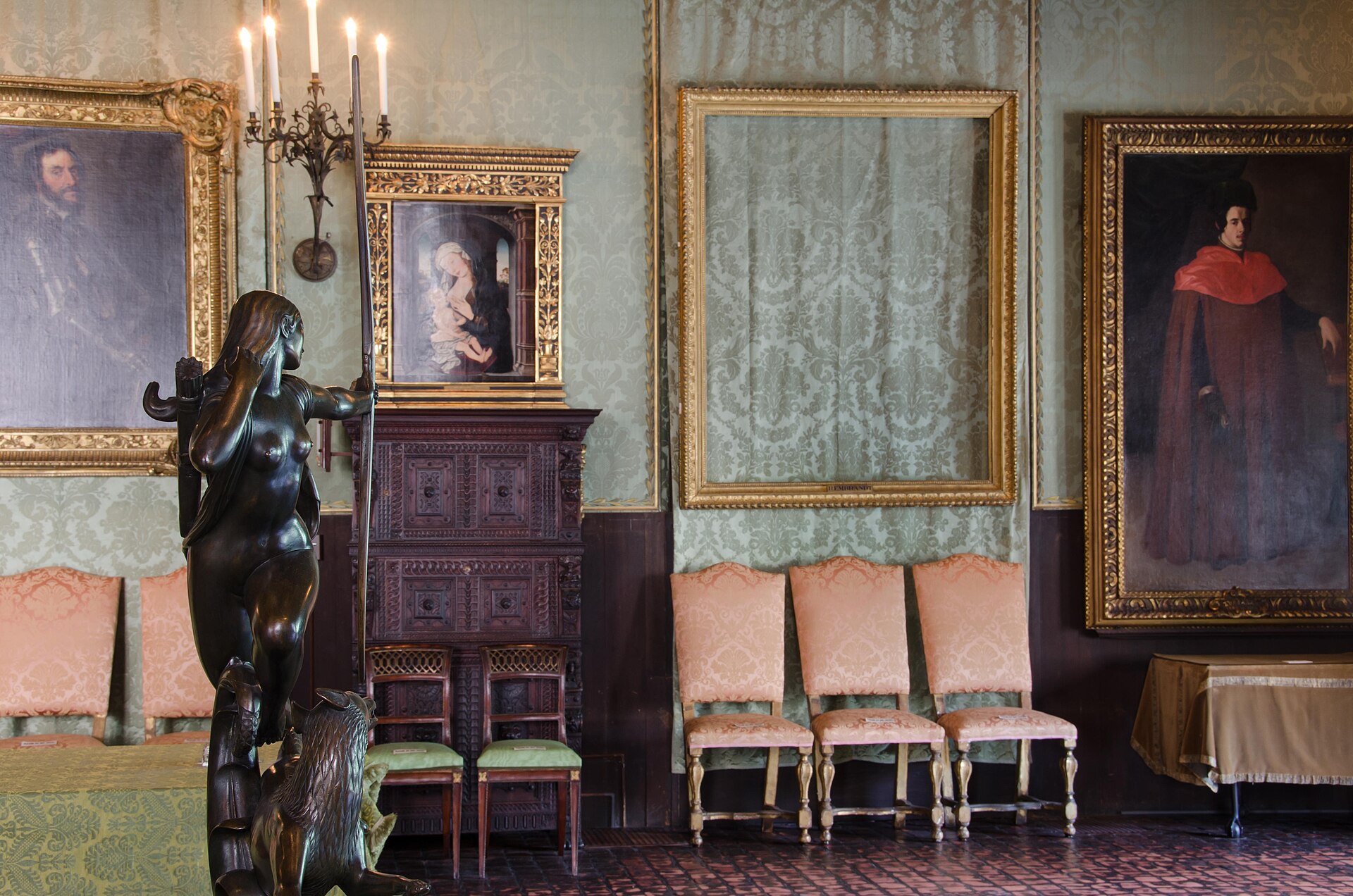
The Museum's own account of the theft is precise about how each object was taken, and the distinctions matter to conservators: two Rembrandts were cut from their frames, while the Vermeer and the Flinck were removed from theirs. A Chinese bronze gu was pulled off a table. Manet's Chez Tortoni went from the Blue Room downstairs, its frame left behind.
What the Museum publishes now is not an incident report. It is a list of thirteen works, each with its artist and title, presented exactly as a collection is presented: Vermeer's Concert, three Rembrandts, a Flinck, a Manet, five Degas works, the Chinese gu, and a Napoleonic eagle finial by Antoine-Denis Chaudet. A share of the reward is promised for information leading to the return of any individual work or group of works, and a further 100,000 dollars is offered specifically for the finial. The investigation is open.
A designation can outlive the object it designates
Japan's Agency for Cultural Affairs runs a public register of nationally designated cultural properties whose whereabouts are unknown, under a programme whose title translates as an appeal to recover everyone's cultural property. The Honjo Masamune sits on that register.
Its entry describes it as a sword, unsigned, attributed to Masamune, designated an Important Cultural Property in 1939. The field for theft and the year it occurred is empty, which is itself accurate: in December 1945 Tokugawa Iemasa took the sword, with other family blades, to the Mejiro police station in Tokyo under the occupation order to surrender all swords, and on 18 January 1946 the police handed them to an American sergeant whose name a Japanese officer wrote down phonetically in katakana. Nobody stole it. It was handed in, receipted to a name nobody has since been able to identify, and lost.
So the designation of 1939 is still live, eighty years after the last person to see the object handled it, and the state maintains a public page for a thing it cannot produce. The record and the object have come apart entirely, and only the record is still available for inspection.
The same museum lost the same painting twice
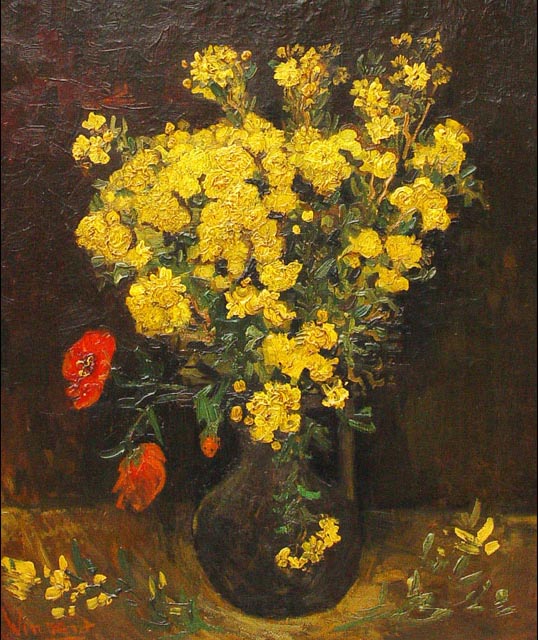
Van Gogh's Vase with Viscaria has been stolen twice from the Mohamed Mahmoud Khalil Museum in Cairo. The first theft is dated 1977 by some accounts and 1978 by others; the picture surfaced in Kuwait and came back, either two years or ten years later depending on which source you read, and the circumstances of that recovery were never fully explained. The second theft, on 21 August 2010, was simpler. A thief cut the canvas out of its frame during opening hours and walked out.
The following hours produced one of the more instructive episodes in this archive. The culture minister announced that the painting had been recovered at Cairo airport the same day, and withdrew the claim the next. That retraction is now part of the record, and it should be, because a recovery announcement that turns out to be wrong does real damage to the search that follows it.
The doubt about the first recovery cannot now be resolved either. It was suggested at the time that the painting had been copied while it was gone, and that what returned might be a copy. Settling that would have required a technical examination between the recovery and 2010, and there is no published record that one was ever made. The object is gone, and so is the chance to answer the question about it.
What is actually missing, and for how long
The four unlocated records differ in almost every respect except the blank in the location field.
| Object | Last located | How it went | Record still live |
|---|---|---|---|
| Vermeer, The Concert | 18 March 1990 | Stolen from the Gardner Museum | Museum inventory P21W27, title undisturbed |
| Van Gogh, Vase with Viscaria | 21 August 2010 | Cut from its frame in opening hours | Catalogue numbers F 324a, JH 1137 |
| The Honjo Masamune | January 1946 | Surrendered, then lost | Important Cultural Property, designated 1939 |
| Salvator Mundi | 15 November 2017 | Sold, then withdrawn from view | Sale record and a contested attribution |
The Salvator Mundi is the odd one, and worth separating out. Nothing unlawful is alleged. A private owner is entitled to keep a painting out of sight, and the panel is presumably somewhere perfectly ordinary. But from the point of view of anyone trying to study it, the practical position is identical to the other three: the object cannot be examined, and the last technical work anyone did on it is the last that will be done for the foreseeable future.
The counter-case took twenty-three years
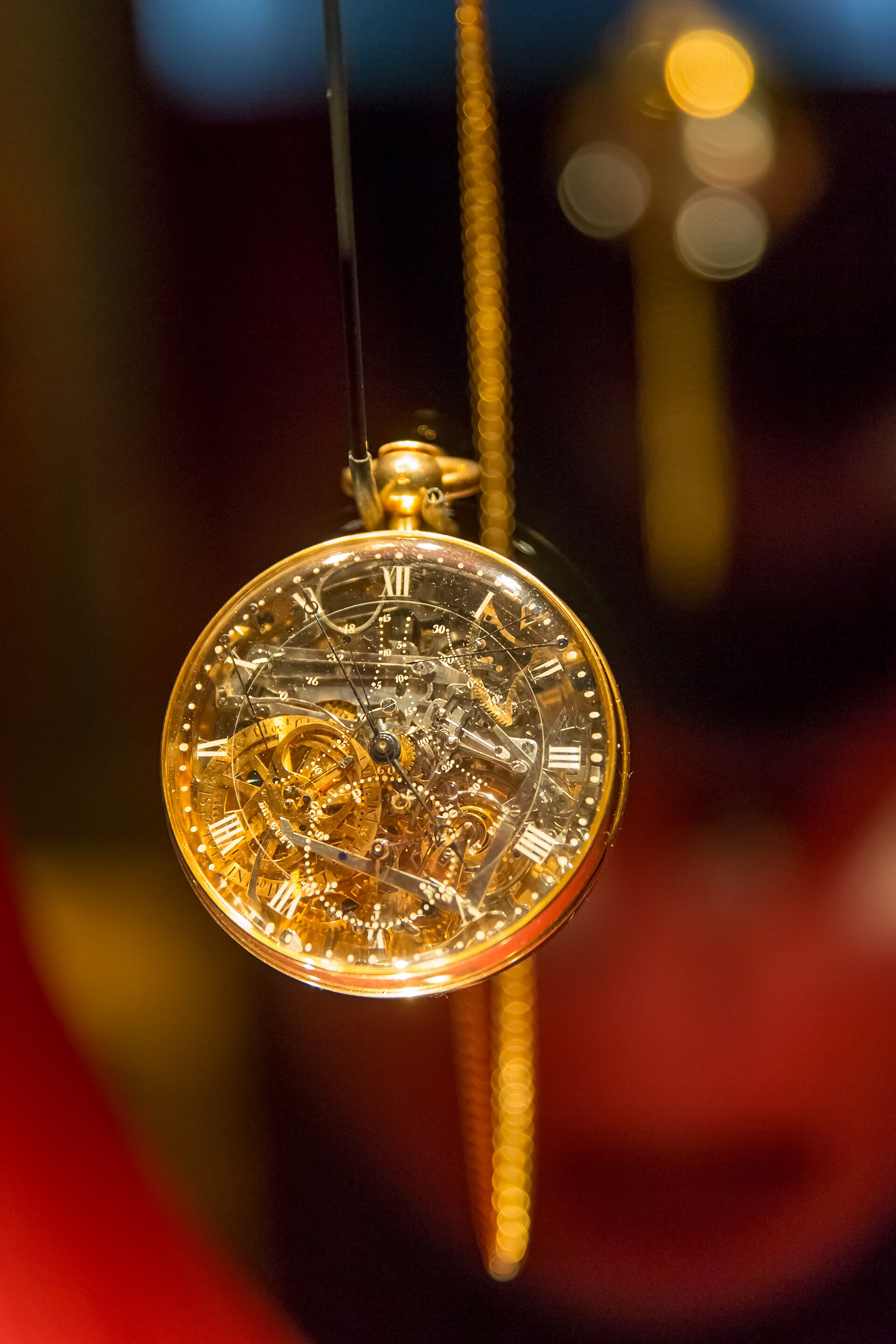
On the night of 15 to 16 April 1983 a single burglar, Naaman Diller, took 106 objects from the L. A. Mayer Institute in Jerusalem, including Breguet No. 160. It remains the largest theft of horology on record, and for twenty-three years the museum had nothing but its catalogue.
The recovery, which became public in late 2007 with the return to the museum placed in 2008, was not a police success. Diller was dead. The objects came back through a deathbed confession, a lawyer acting for an anonymous woman, and a payment by the museum, framed as a recovery rather than a ransom, with anonymity part of the arrangement. A further group of 43 watches and clocks was located in France afterwards. The commonly cited total is 96 of the 106 objects, which leaves ten still missing. Nobody was prosecuted for the burglary itself.
The lesson the museum world took from this is unglamorous and correct. What made the return possible was that the objects were individually catalogued and publicly identified, so that when someone finally wanted to give them back there was no ambiguity about what they were or whose they had been. The record was the mechanism.
Why the entry stays open
A museum that quietly deleted a stolen object from its catalogue would be doing three harmful things at once. It would weaken its own title, which in the Gardner's case is the only reason a future possessor cannot claim to have bought in good faith from someone entitled to sell. It would remove the object from the registers that a diligent buyer searches. And it would erase the scholarly record of a work that other objects are dated and attributed against.
So the entry stays open, and it acquires a peculiar status. Vermeer's Concert has an inventory number, a full catalogue entry, an established attribution and a documented condition history, and not one of those facts can now be checked against the thing itself. In this archive, a theft is recorded as an event in the provenance line, alongside purchases and bequests, because that is what it is: a transfer of possession, unlawful, but as real in the object's history as any sale.
Does that make the record less reliable? I would argue the opposite. The entry for a missing object is the one place where a catalogue cannot be corrected by looking, so everything in it has to stand on documents that were made while the object was still available. That is a harder standard than most records are held to, and it is the standard these four are stuck with permanently.
Why this archive is free to read
We do this for everyone who loves art. The people who have studied it for years, and the people who just stopped to look. Iconotheca exists so that what we learn belongs to all of them.
Nobody pays us for this. No ads, nothing for sale. These works belong to all of us, and we would rather share them with as many people as we can than keep them to ourselves.
If it gave you something today, tell us to keep going. Follow us, leave a like, or write a positive comment. We read every one, and they are what keeps us going.
Questions
Because the catalogue entry does legal and practical work. It preserves the museum's title, it supports listing on stolen art registers so a diligent buyer can find it, and it keeps the scholarly record available for works that are dated or attributed by comparison. Deleting the entry would weaken all three at once.
Thirteen, in the early hours of 18 March 1990. The Museum still lists all thirteen with their artists and titles, including Vermeer's Concert, three Rembrandts, a Flinck, a Manet, five works by Degas, a Chinese bronze gu and a Napoleonic eagle finial. The investigation remains open and a reward is offered.
Because Isabella Stewart Gardner's will forbids the trustees to change the arrangement of the museum. The empty frames are a consequence of a bequest condition rather than a curatorial decision, which is why they have stayed on the wall for more than three decades.
An oshigata is a traced and rubbed record of a sword blade, capturing its outline and the pattern of the temper line. No photograph of the Honjo Masamune is known, so the 1928 printing of an oshigata taken by the smith Tsuguhira is the closest thing to a picture of it. Three oshigata of this blade survive and they do not agree with one another.
It should. A theft is a transfer of possession and belongs in the chain alongside purchases, gifts and bequests. Recording it is what allows a later reader to see exactly where lawful title stops, which is the question a good faith purchase argument turns on.
Sources
- 1Isabella Stewart Gardner Museum, 'Isabella Stewart Gardner Museum Theft', the Museum's own account. Read for the sequence of 18 March 1990, the entry of two men in police uniforms, the restraint of both guards, the departure at 2.45 am and the arrival of police at 8.15 am, the distinction between works cut from frames and works removed from them, the list of the thirteen stolen works, the reward terms and the additional 100,000 dollars offered for the eagle finial. gardnermuseum.org/about/...
- 2Agency for Cultural Affairs, Japan, entry in the register of missing nationally designated cultural properties for a sword, unsigned, attributed to Masamune, recorded as an Important Cultural Property designated in 1939, with the theft field blank. bunka.go.jp/seisaku/...
- 3Agency for Cultural Affairs, Japan, index of the register of missing nationally designated cultural properties, for the scope and purpose of the register. bunka.go.jp/seisaku/...
- 4Martin Bailey, 'How a Van Gogh painting was stolen from a Cairo museum, not once but twice', The Art Newspaper, 21 May 2021, for the two thefts, the dating of the first to 1978 with a recovery two years later after the picture surfaced in Kuwait, and the circumstances of the 2010 theft. theartnewspaper.com/2021/...
- 5Essential Vermeer 5.0, catalogue entry for The Concert by Johannes Vermeer, for the dimensions, the unsigned canvas and the Gardner inventory number. essentialvermeer.com/catalogue/...
- 6Wikimedia Commons file page for the FBI photograph of the Dutch Room at the Isabella Stewart Gardner Museum, released under PD-USGov-FBI, used as the hero plate and read for the identification of the frames shown. commons.wikimedia.org/wiki/...

More in Museums and Exhibitions
The partThe complete object is a temporary arrangement
For a dispersed set, being complete is an event with a date and a duration. Twelve Renaissance tazze were whole and correct for two days in 2014, and...
When the Holder Is Not a Museum, the Accession Number Is Replaced by Law
Fourteen records here are held by a cathedral, a diocese, a cathedral works, a charitable trust or a monuments agency.
A Closing Date That Moves Both Ways, and Who Actually Moved It
Of 937 exhibitions tracked here, only 7 ever had a date move, and three of those flipped between the same two dates again and again.