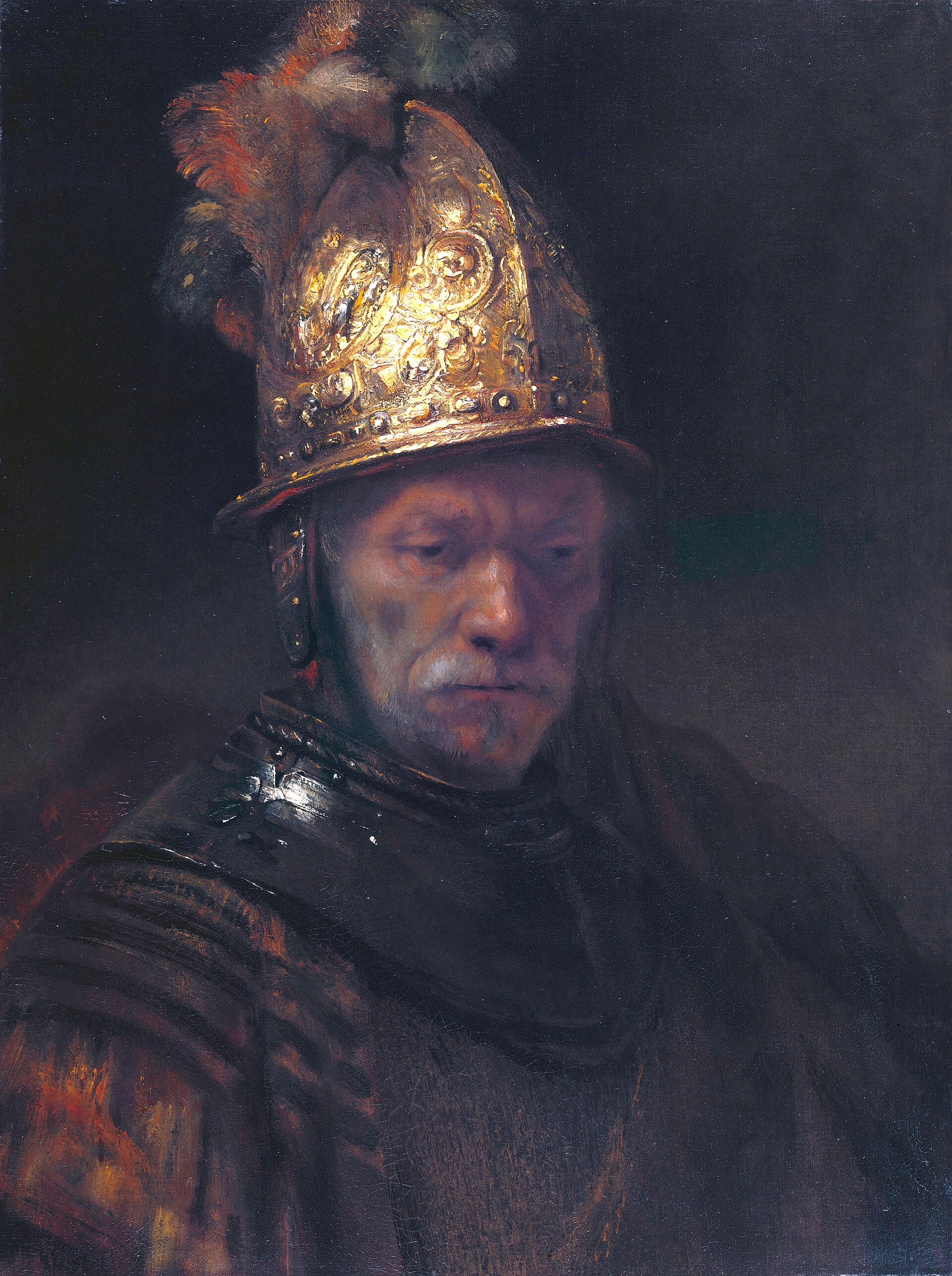
The Man with the Golden Helmet
About 1650 to 1655 · Oil on canvas
Gemaeldegalerie, Staatliche Museen zu Berlin, on deposit from...
Museum · Gemäldegalerie, Staatliche Museen zu Berlin · Founded 1830
Open, admission and hours confirmed 4 September 2026 · 22 sources
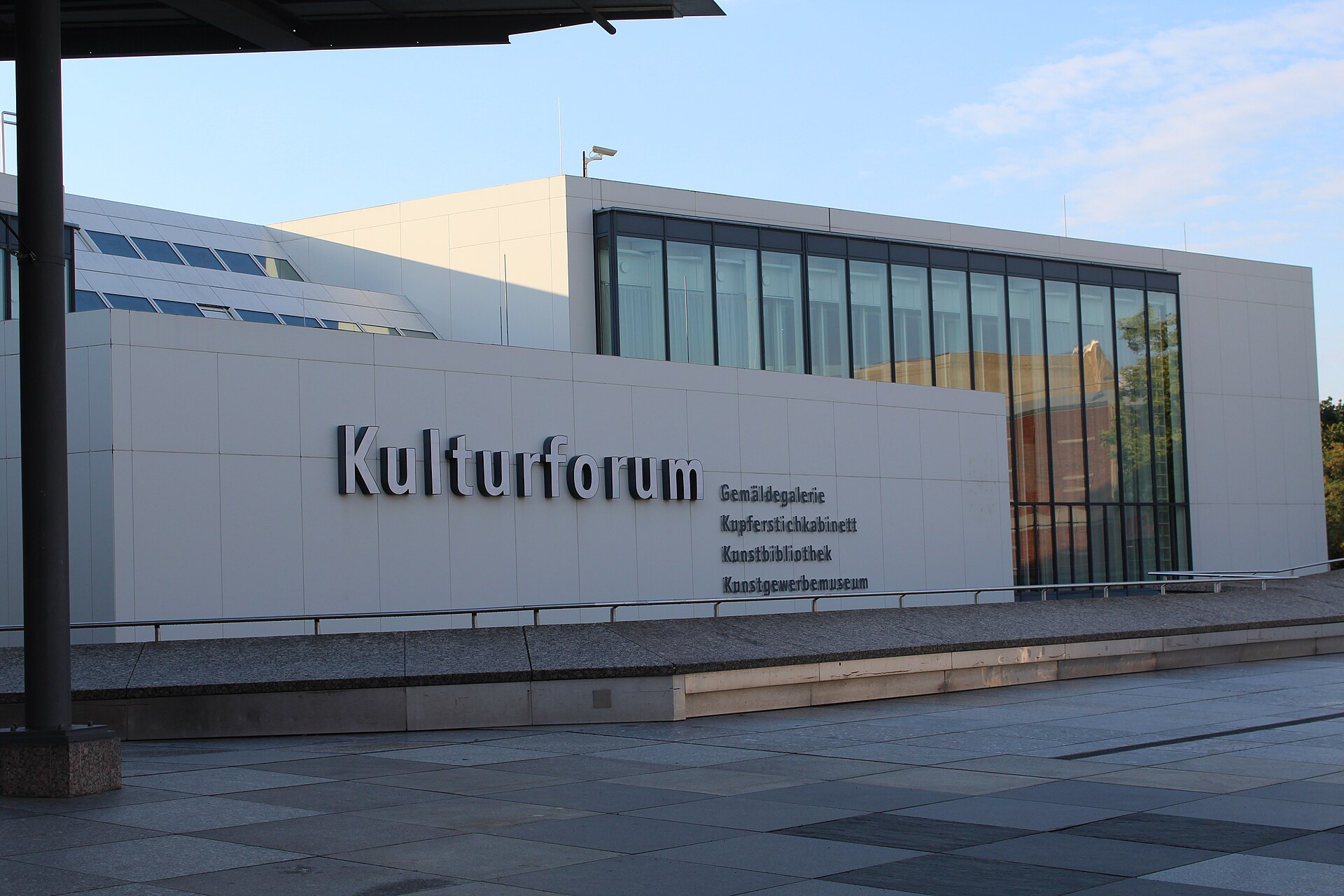
About 1,200 paintings on display, European, from the thirteenth century to the eighteenth, hung as nine departments in a single circuit of just under two kilometres. The museum names its core strengths as German and Italian painting of the thirteenth to sixteenth centuries and Netherlandish painting of the fifteenth and sixteenth, and the hang bears that out: the early Netherlandish sequence, with van Eyck, Rogier van der Weyden, Petrus Christus, Hugo van der Goes, Bosch, Bruegel and Gossart, is the reason specialists come, and the Italian trecento cabinets at the far end hold Giotto, Simone Martini and Masaccio. The seventeenth-century Dutch and Flemish department is the largest and holds 20 Rembrandts, two Vermeers, two Frans Halses and four Rubenses by the museum's own counts. The eighteenth century is thin by comparison, three cabinets for England, France and Germany together. This is not an encyclopaedic museum and it was never meant to be one: it was assembled from 1830 as a scholarly survey of the history of painting, and its value is that the survey is still legible room by room.
| Local name | Gemäldegalerie, Staatliche Museen zu Berlin |
|---|---|
| Kind | Museum |
| Founded | 1830 |
| City and country |  Berlin, Germany Berlin, Germany |
| Address | Johanna-und-Eduard-Arnhold-Platz / Matthaeikirchplatz, 10785 Berlin, Germany |
| Website | smb.museum/en/museums-institutions/gemaeldegalerie/home |
| Status | Open, confirmed 4 September 2026 |
| Record last verified | 10 August 2026 |
Prices and hours change. We take them from the institution's own pages and print the day we read them, and you can check the current position at the source we used. Confirm before you travel.
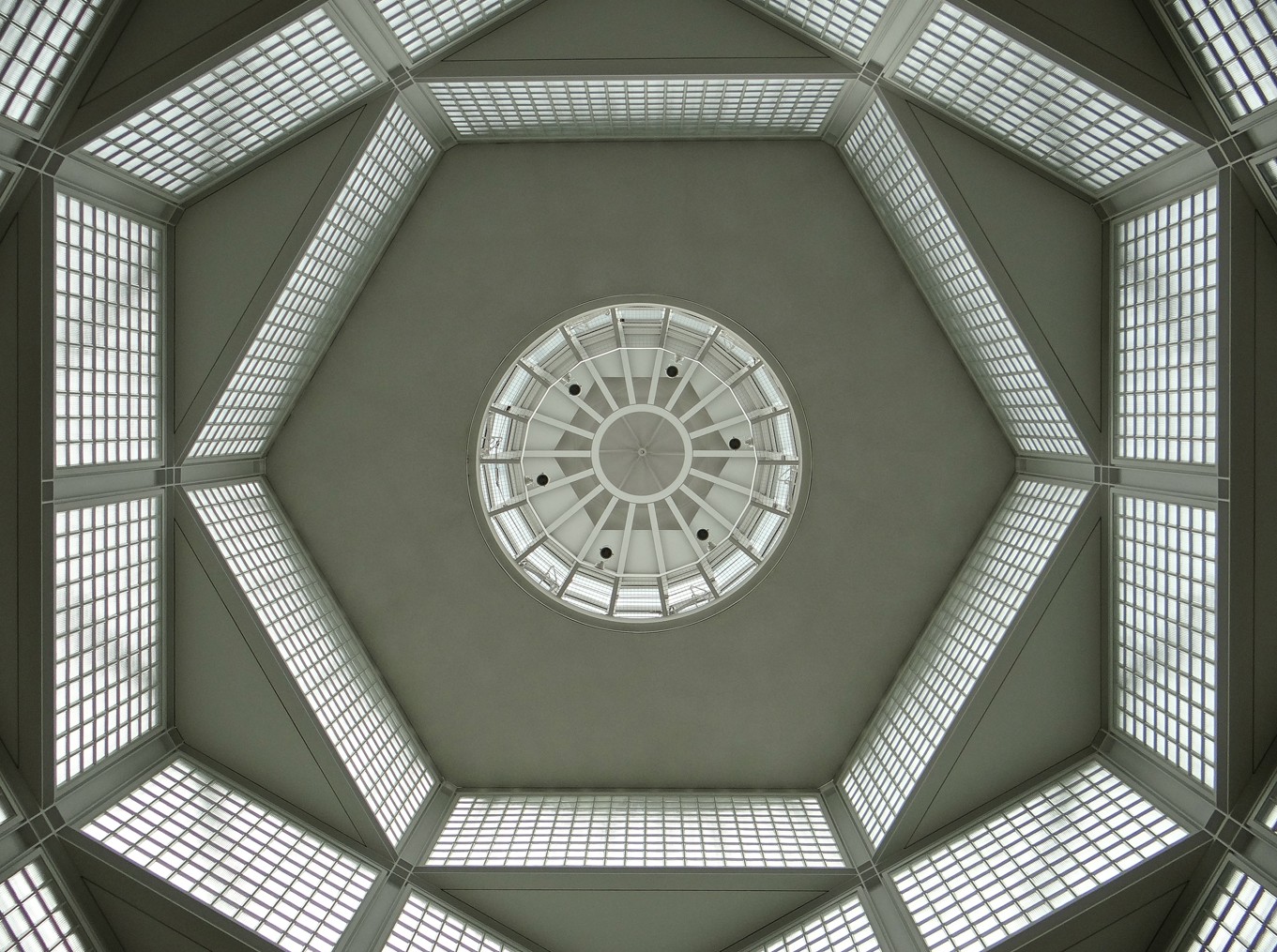
You come in off the piazza into a small polygonal hall lit from above through a coffered ring of glass blocks and a round oculus. It is the one piece of theatre Hilmer and Sattler allowed themselves and it does the work the exterior refuses to do: the building says nothing from outside and then hands you a ceiling. From here the plan opens into the Central Hall, and from the Central Hall into everything else.
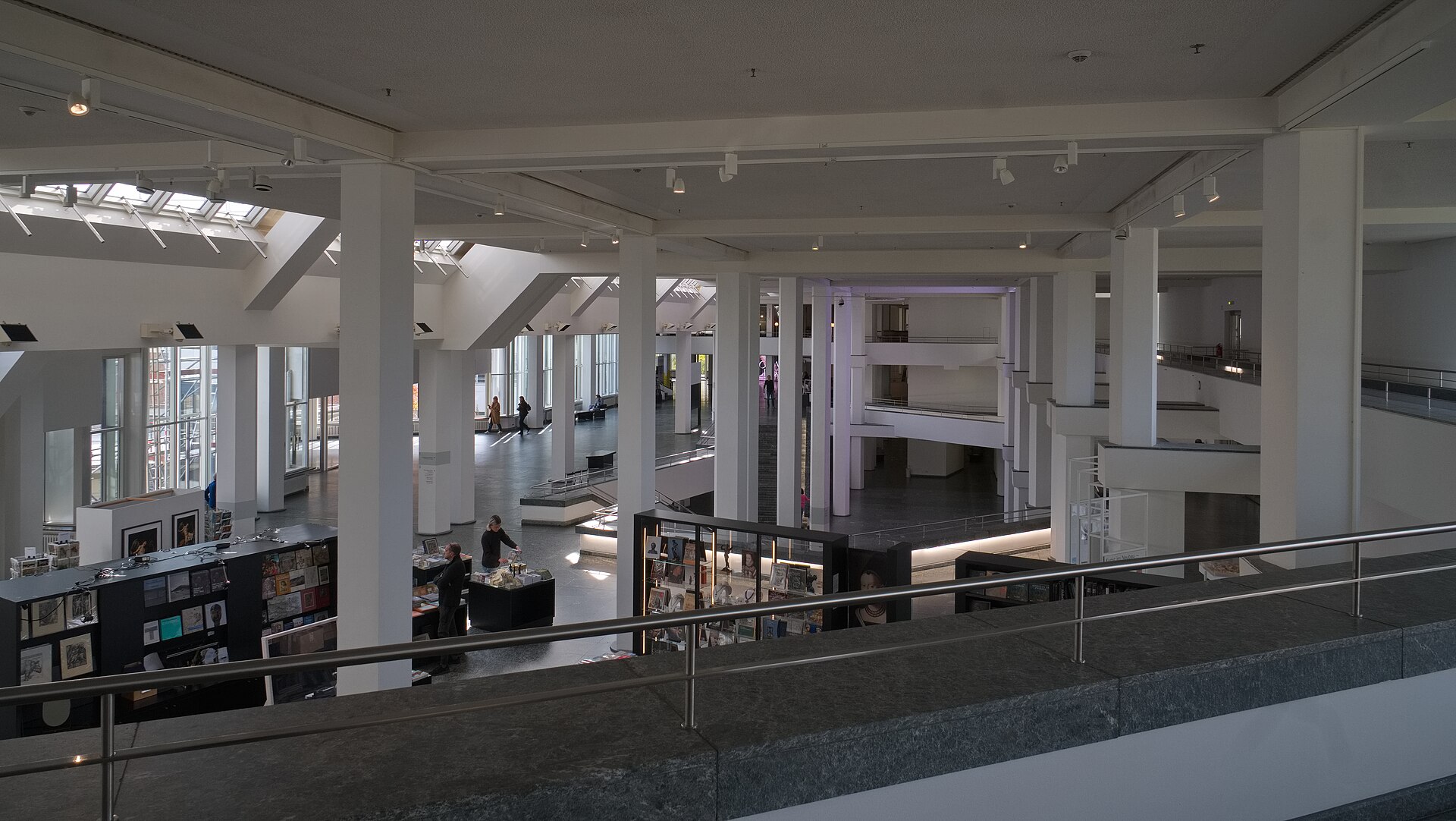
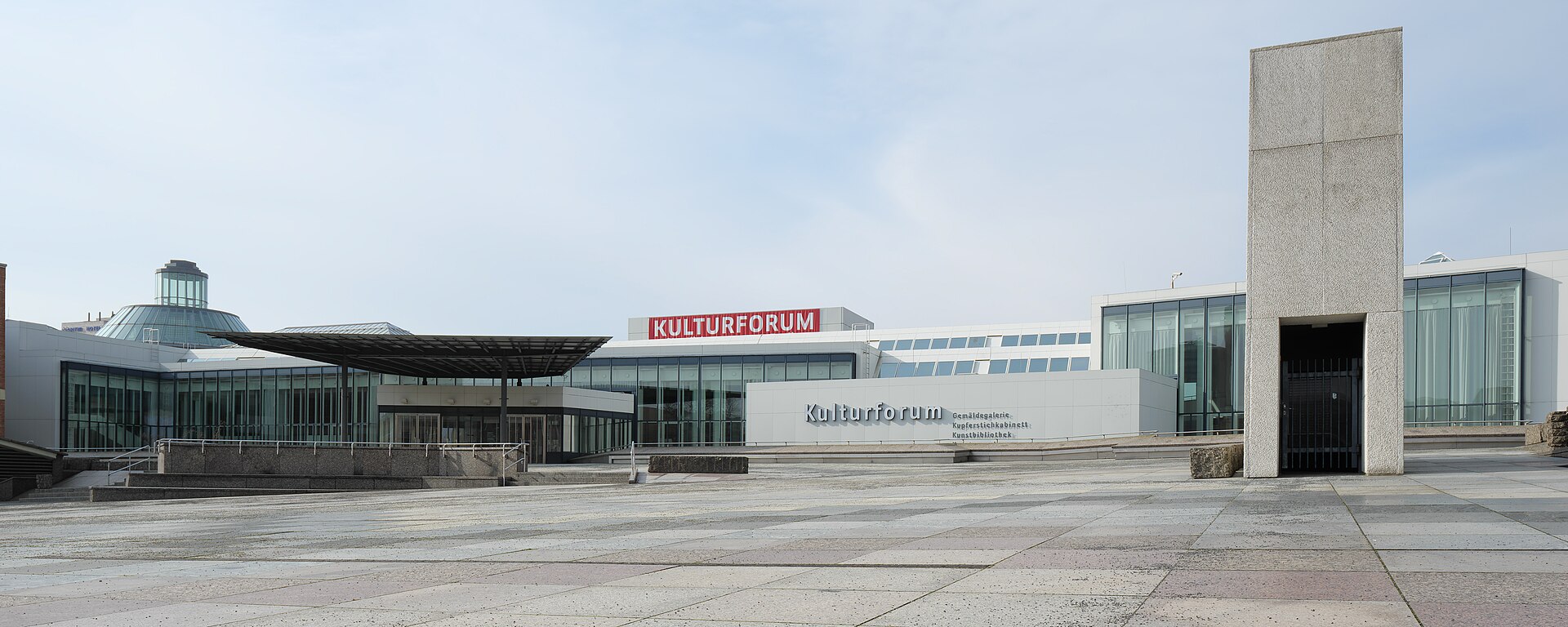
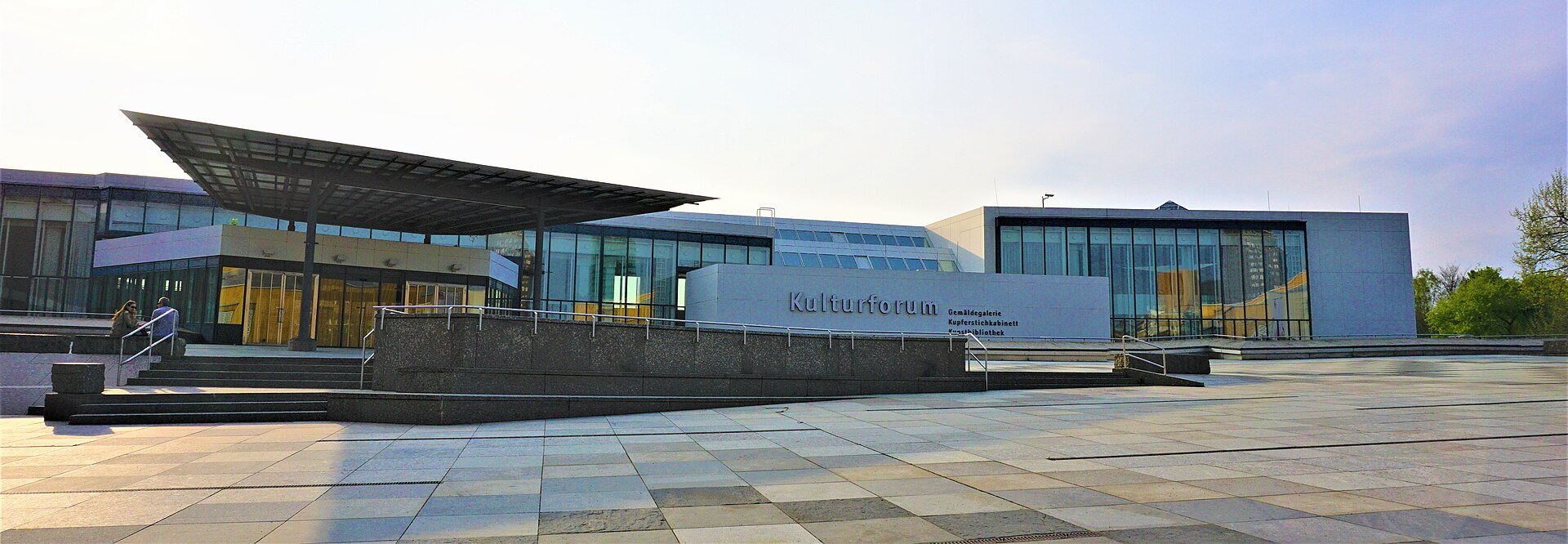
The Gemaeldegalerie does not have a building to itself. It shares the Kulturforum block with the Kupferstichkabinett, the Kunstbibliothek and the Kunstgewerbemuseum, and it shares their foyer: a multi-level concourse of white columns and rooflights with the Walther Koenig bookshop on the floor of it and the cafe on the upper level. The 22.00 EUR Kulturforum ticket admits to all of them, which is the practical argument for buying it rather than the 14.00 EUR collection ticket.
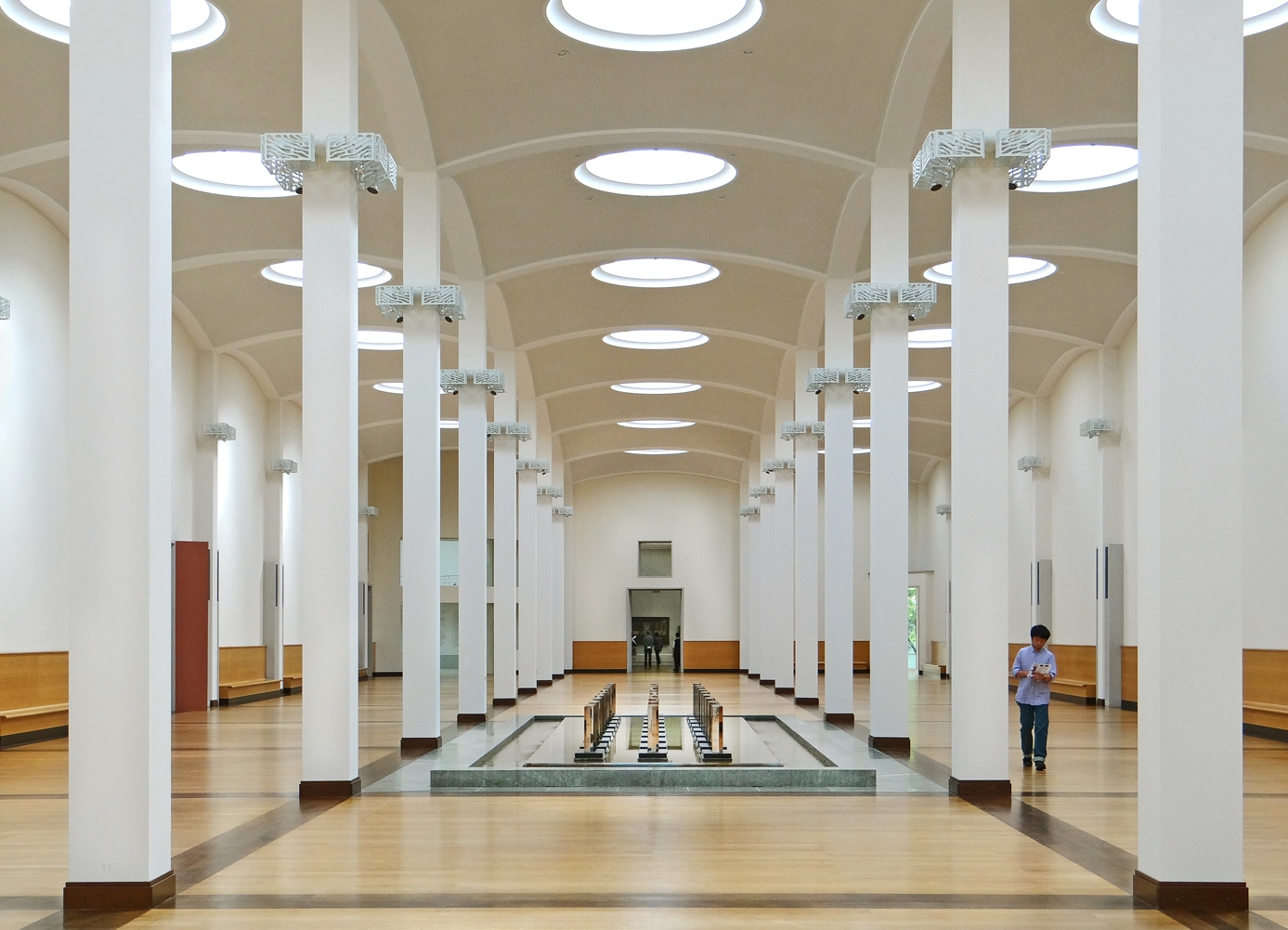
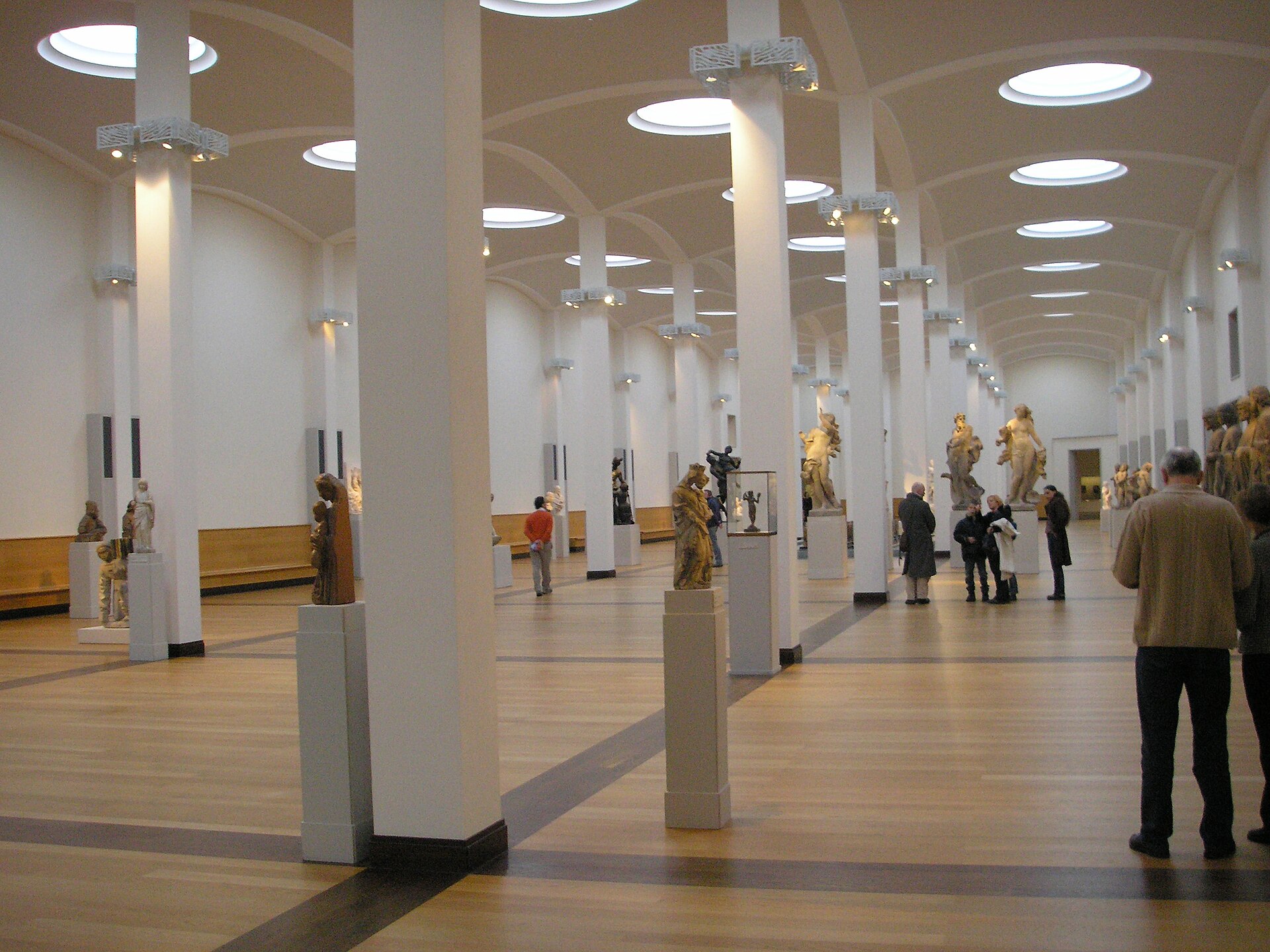
A vast top-lit hall running the length of the building, two rows of square columns carrying a shallow barrel vault pierced by circular skylights, with a low square water basin set into the floor at the centre holding a sculptural installation. The museum's own description is that the individual galleries are grouped around a light-filled central hall; the floor plan gives the hall itself over to special exhibitions. It is also, in practice, the room you cross between departments, and it is very large and very quiet.
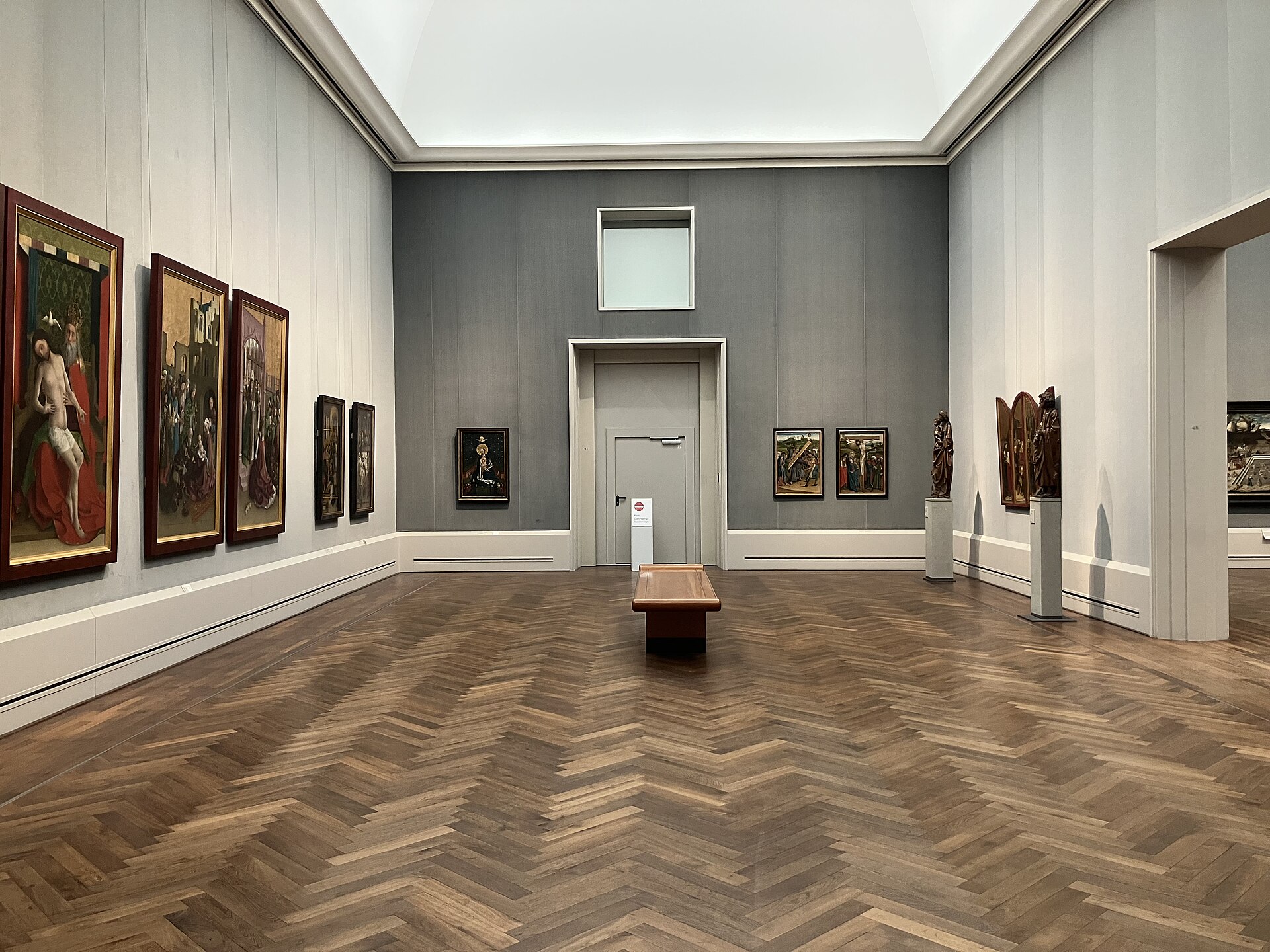
The circuit starts here, in top-lit halls hung on grey-blue fabric with carved wooden sculpture standing free on plinths between the panels. The museum's own list for the department runs from an anonymous Crucifixion retable from Soest of about 1240 through Schongauer, Duerer's Hieronymus Holzschuher of 1526 with its cover, Baldung, Altdorfer, Cranach's Fountain of Youth of 1546 and Holbein's merchant Georg Gisze of 1532.
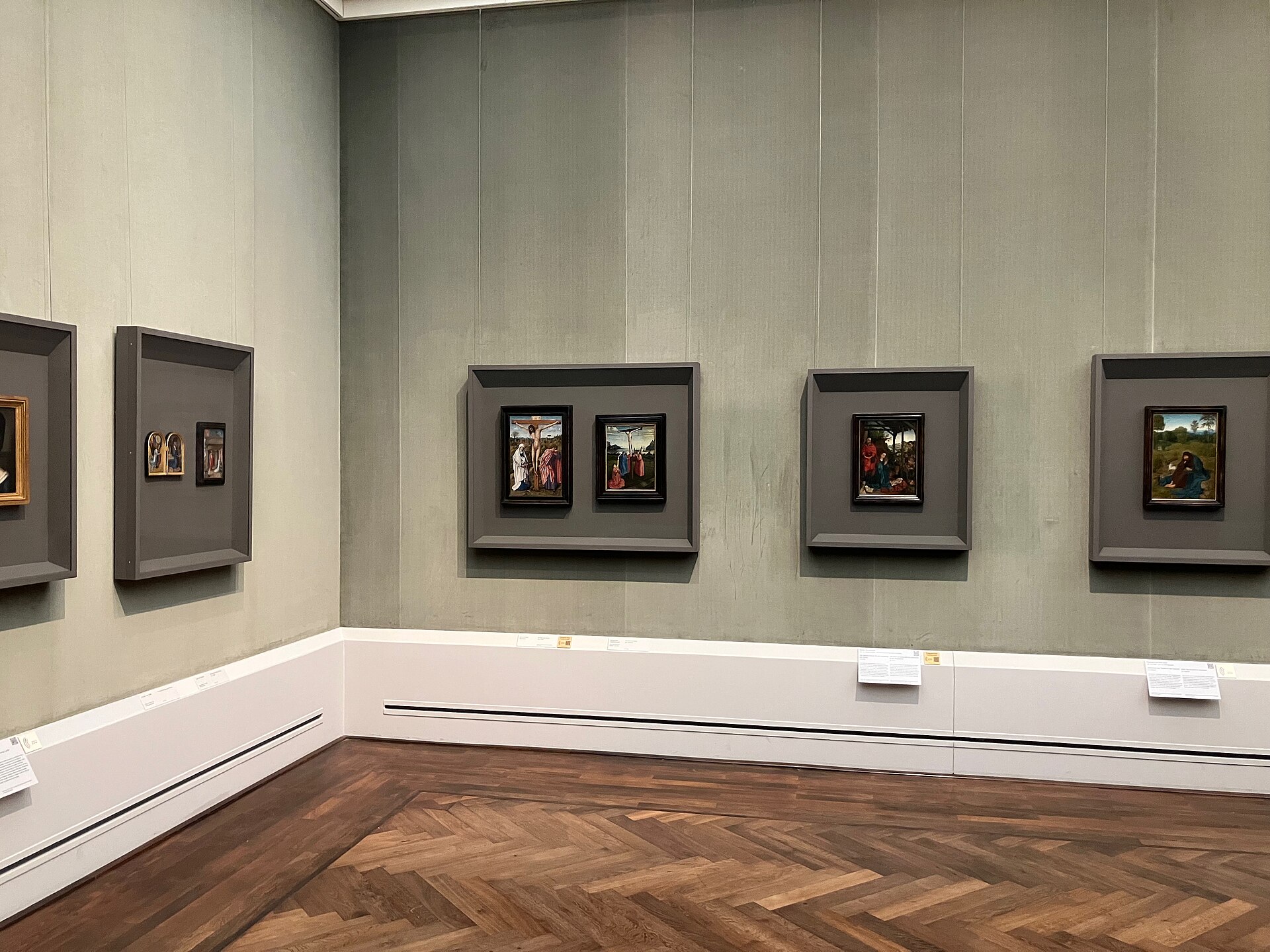
Small rooms off the halls, walls in sage-green fabric, the smallest devotional panels set into deep grey shadow boxes and glazed, several to a box. This is where the department's miniature end lives, and it is the part of the building that most rewards standing still: half of what is in these cases is the size of a book.
One room inside the painting circuit is not the Gemaeldegalerie's at all. The floor plan gives Cabinet 5 to the Kupferstichkabinett, the Museum of Prints and Drawings, which shares the Kulturforum building. Its holdings are light-sensitive, so what is on the wall changes; there is no permanent hang to describe.
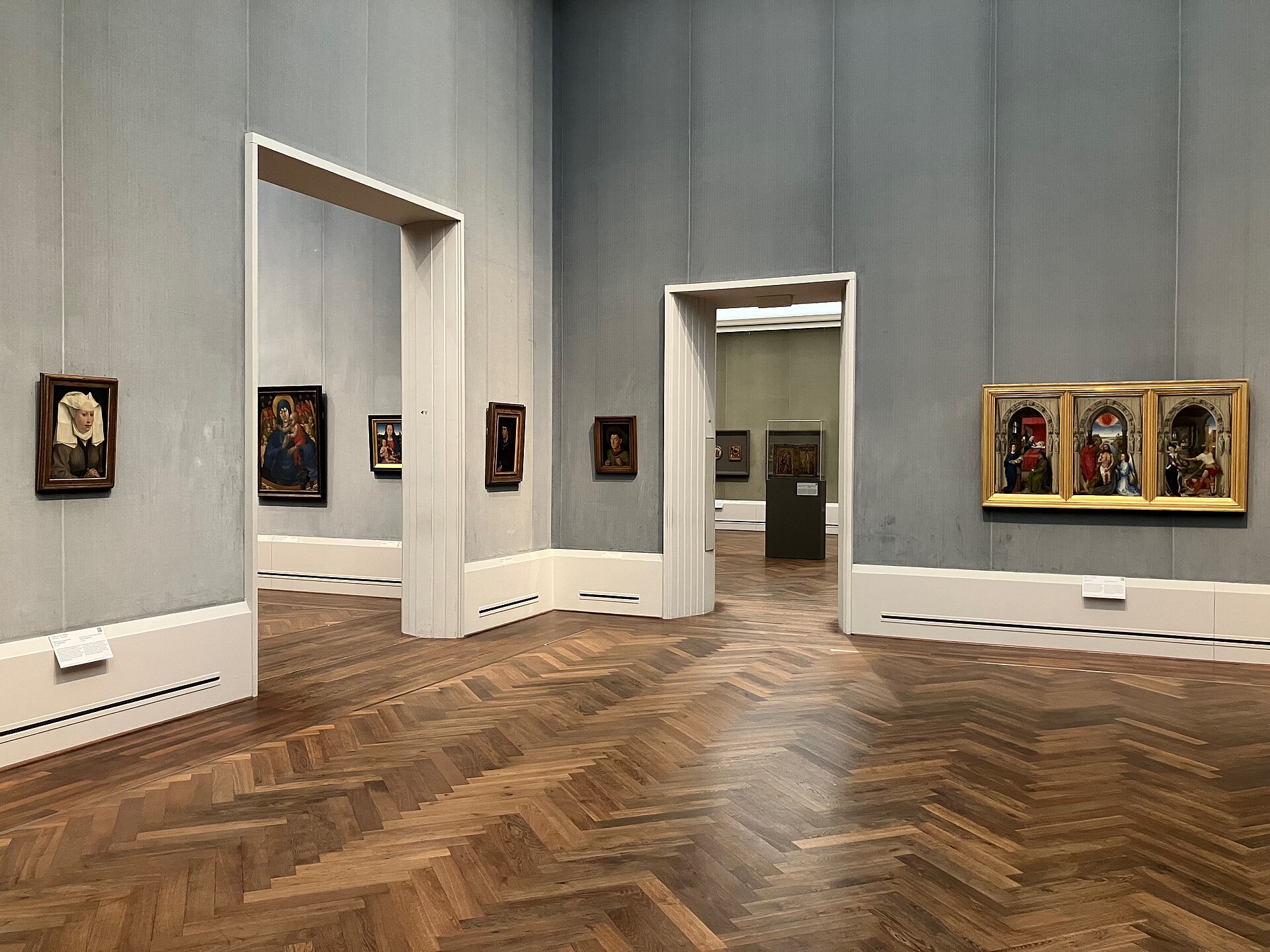
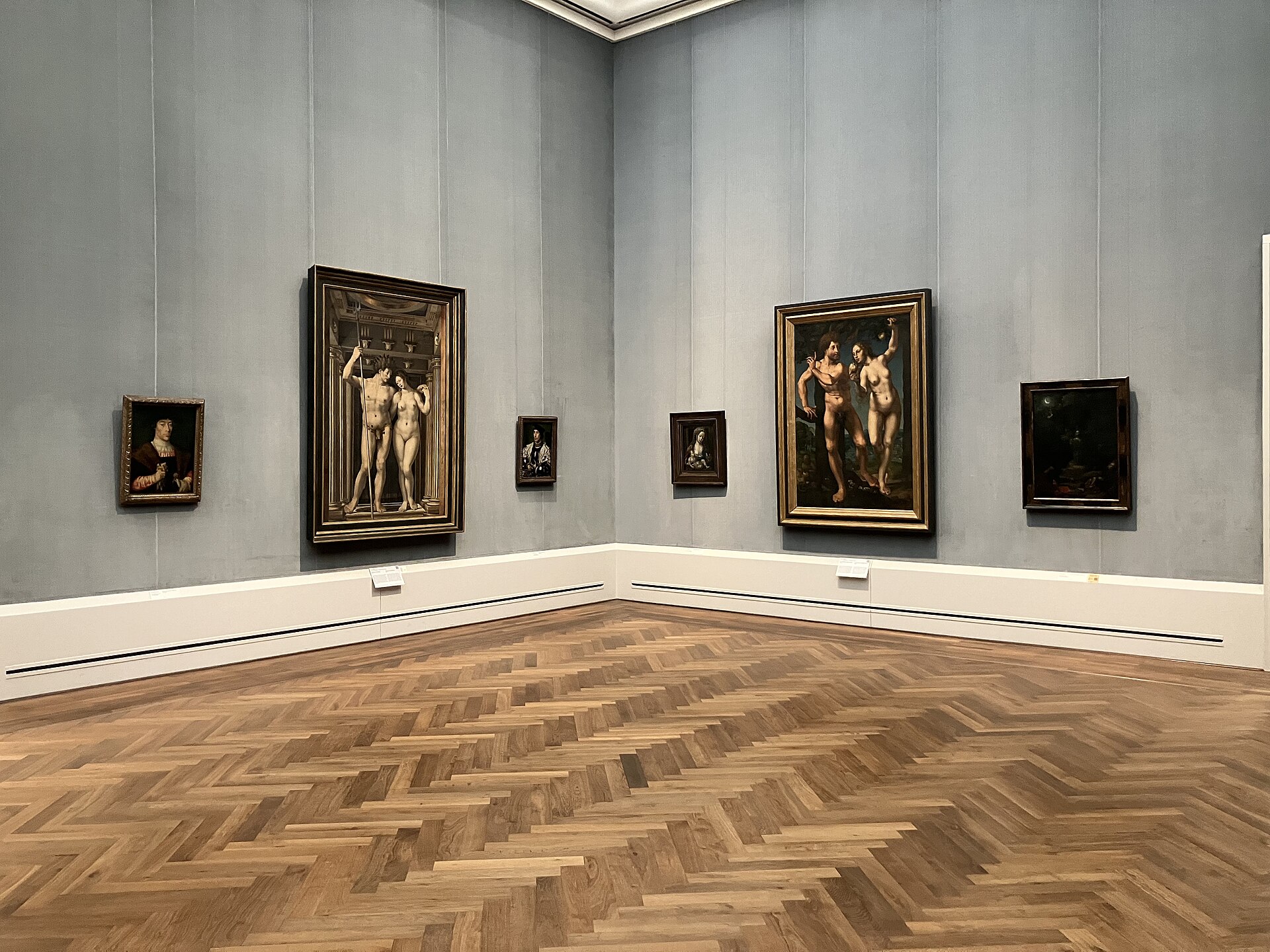
The strongest sequence in the building and the reason many specialists come. Van Eyck's Madonna in the Church of about 1437 to 1440, Rogier van der Weyden's young woman in a white headdress of about 1440, Petrus Christus's Portrait of a Young Lady of about 1470, Hugo van der Goes's Monforte Altarpiece of about 1470 to 1475, Geertgen tot Sint Jans, Gerard David, Bosch's John on Patmos, Bruegel's Two Chained Monkeys of 1562, Jan Gossart's Neptune and Amphitrite of 1516 and Anthonis Mor's Duchess Margaret of Parma of about 1562 are all on the museum's own list for this department.
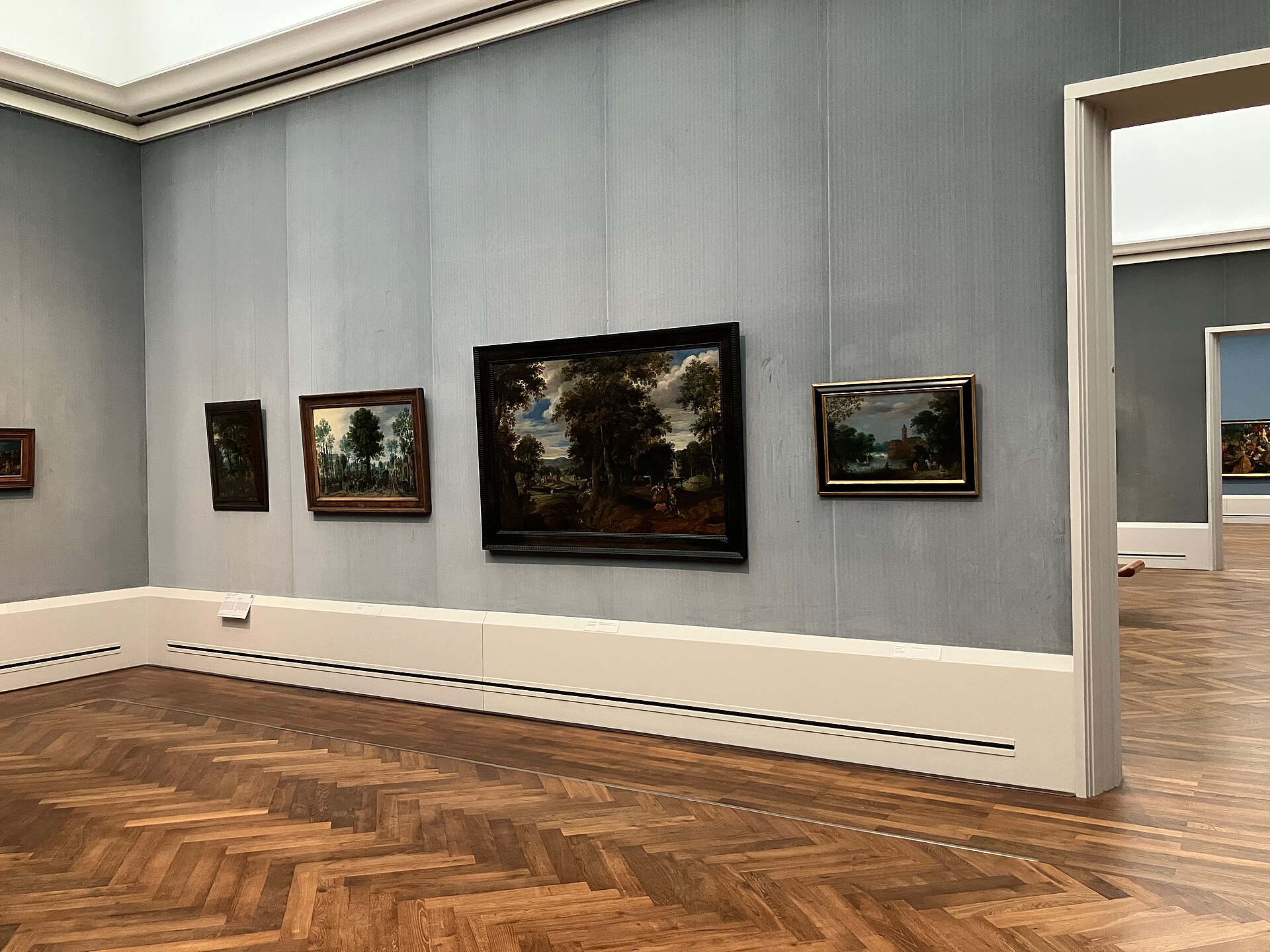
The largest department and the centre of the plan. The museum states that its Rembrandt gallery holds a leading place reflected in its central position, with 20 works by him, one of the largest and finest Rembrandt holdings anywhere. Around it: Frans Hals's Malle Babbe and his Catharina Hooft with her nurse, two Vermeers in the Young Lady with a Pearl Necklace and The Glass of Wine, Ter Borch, Gerrit Dou, Pieter Claesz, Ruisdael, Saenredam, ter Brugghen, and on the Flemish side four Rubenses including the Child with a Bird, van Dyck, Jordaens, Jan Brueghel, Brouwer, Teniers and Cornelis de Vos. This is also where The Man with the Golden Helmet hangs, the picture this archive holds a record of.
The smallest of the departments and the easiest to walk past. Watteau's French Comedy, Chardin's Draftsman, Gainsborough and Antoine Pesne sit here; Pesne is the Prussian court painter, which makes these three rooms the closest thing in the building to a local collection.
Caravaggio's Cupid as Victor of 1601 to 1602 is the picture people come to this end of the circuit for, and the floor plan marks its position. The Italian eighteenth century runs alongside it, with Canaletto's Grand Canal looking south-east to the Rialto of 1758 to 1762 and his Santa Maria della Salute.
The Venetian and central Italian sixteenth century, with Titian's Venus with an Organist of 1550 to 1552 and his Clarissa Strozzi at the age of two, which the floor plan marks by position, and Raphael among the painters the museum names for the collection as a whole.
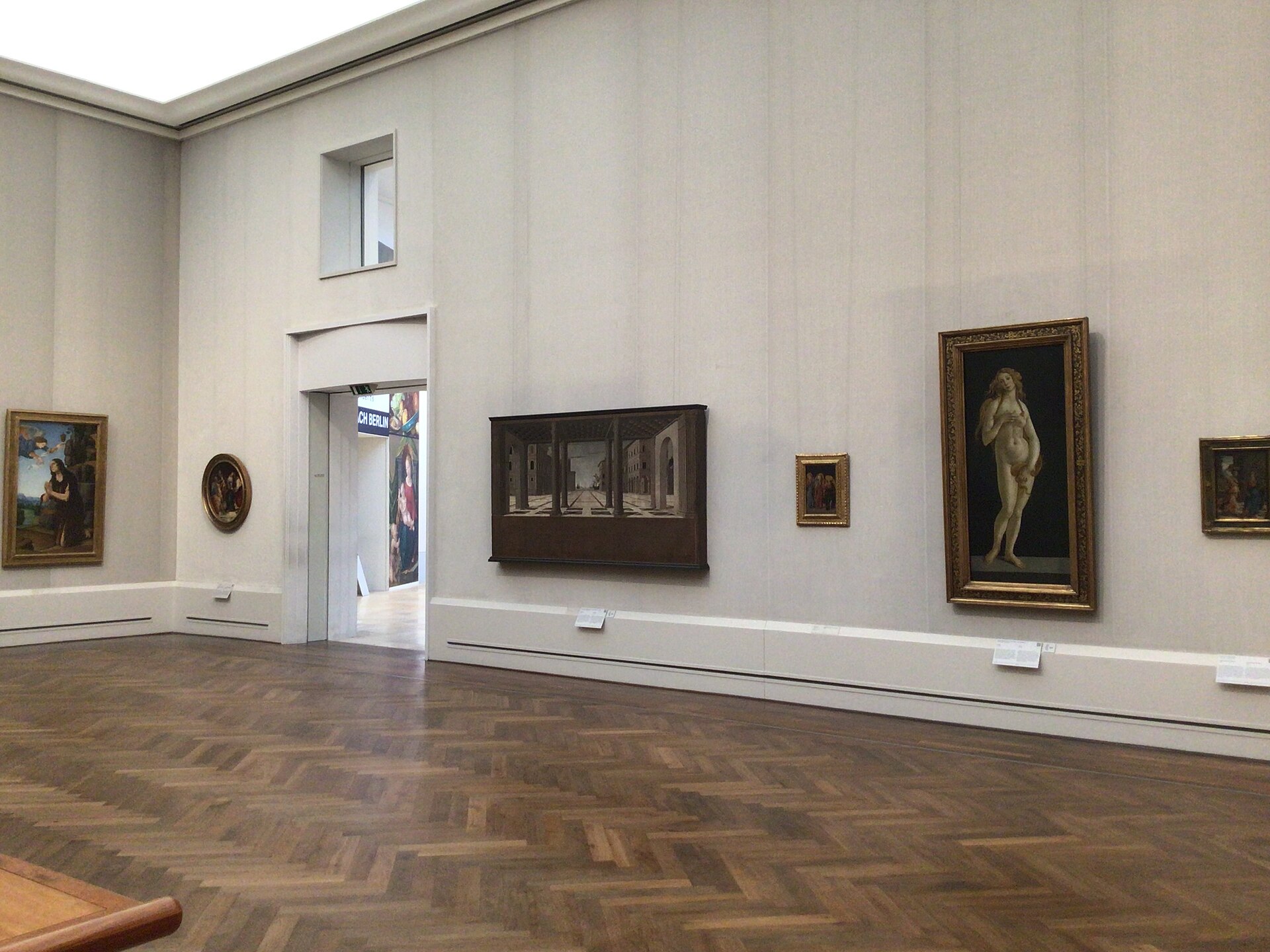
A tall pale hall at the far end of the circuit holding Botticelli's Venus of about 1490 and his Virgin and Child with Singing Angels, the Ideal City panel attributed to Francesco di Giorgio Martini of about 1490, Mantegna's Presentation at the Temple, Giovanni Bellini's Resurrection and Piero del Pollaiuolo's profile portrait of a young woman. Standing in one place here you can see a Botticelli nude and a perspective panel of an empty city that has been argued over for a century.
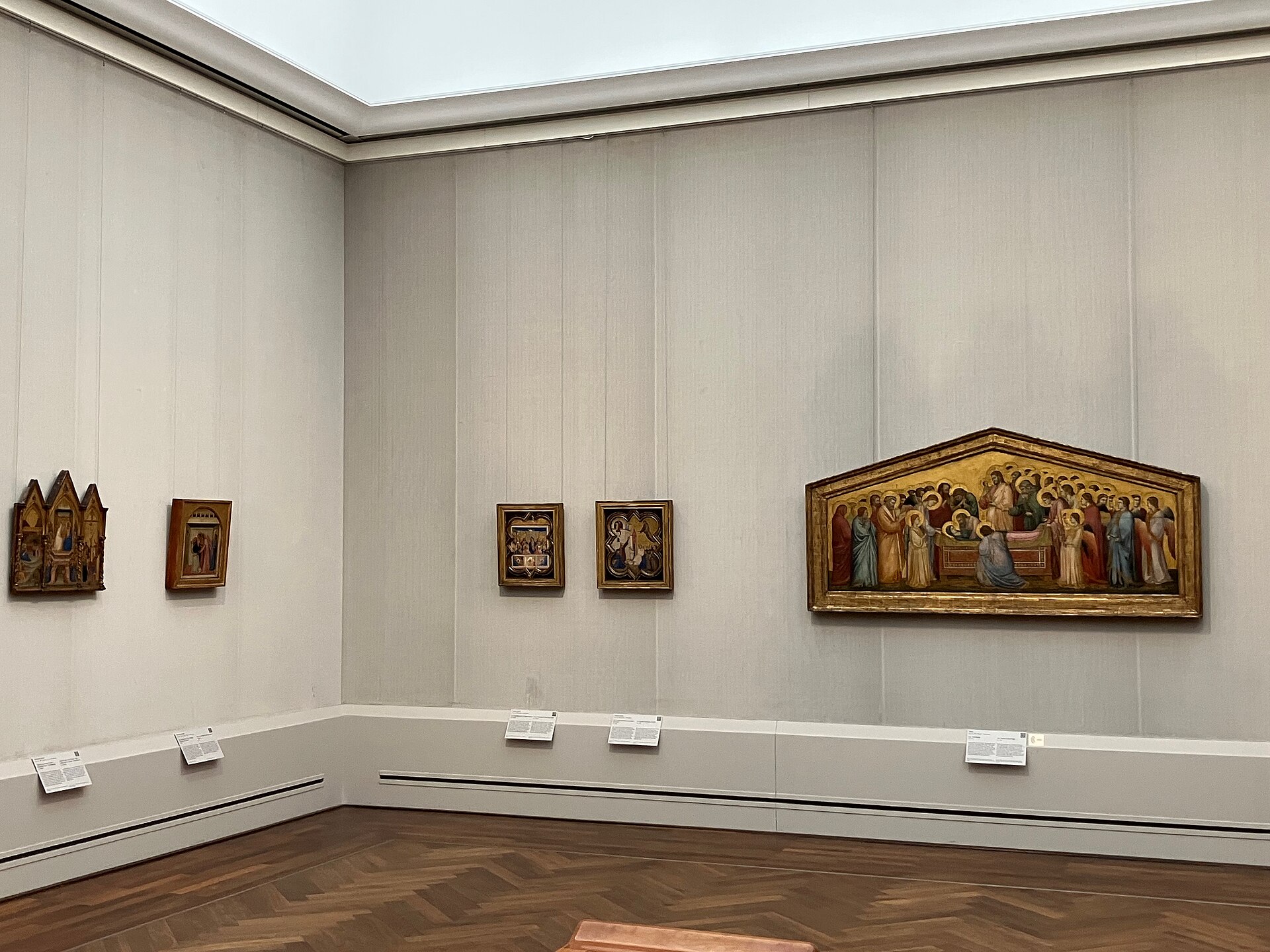
The trecento and early quattrocento, much of it in long glazed vitrines: gold-ground panels, gabled altar wings, small predella scenes hung a foot apart so the differences between workshops are legible. Giotto's Death of the Virgin of about 1310, which the museum also titles The Entombment of Mary and which belongs to the Kaiser Friedrich-Museums-Verein rather than to the state, is at this end, with Simone Martini's Entombment, Masaccio's birth tray of about 1423, Fra Filippo Lippi's Adoration in the Forest of 1459 and Gentile da Fabriano's enthroned Virgin.
Cabinet 33 is given to what the floor plan calls the Children's Realm, on the theme of the painter's workshop, and Cabinet 34 to miniature painting. They are inside the circuit rather than off in an education wing, which means a child is looking at how the pictures were made in the same walk as the pictures.
Marked on the museum's own floor plan as closed temporarily, with no reopening date given and no statement of what it holds. The plan also carries the words subject to changes, which is the honest position for any room list here: works go off for conservation and loan, and the museum keeps a separate Paintings on Tour page for what is currently not on display.
The reason this archive has a page for this museum. Bought for Berlin in 1897 as an autograph Rembrandt, doubted from the first day by Hofstede de Groot and Bredius, carried for most of a century on Wilhelm von Bode's authority, and in 1986 concluded by this museum, after technical examination, not to be by Rembrandt at all but by a painter of his circle. The museum withdrew an attribution and did not allege a forgery. No new name has been adopted and the label reads anonymous. It is inventory 811A and it belongs to the Kaiser Friedrich-Museums-Verein rather than to the state. A museum that publishes a conclusion against its own most reproduced picture is doing the thing this publication exists to record.20
Full record in this archiveThe museum's own headline picture for the Netherlandish department, and a panel small enough that most visitors are surprised by it. Berlin's fifteenth-century Netherlandish rooms are the sequence specialists travel for, and this is their anchor.19
One of the few Caravaggios in Germany and marked by position on the museum's own floor plan, which is how the institution signals what it expects you to look for. The collection page also lists it under the title Amor Vincit Omnia, dated 1602, so the museum itself is not consistent about the title or the year.6
One of two Vermeers here, with The Glass of Wine of 1658 to 1660. Two Vermeers in one department is rare, and both are in the Dutch seventeenth-century rooms rather than isolated as a set piece.15
Late Cranach at full scale, and one of the pictures the museum puts on its own highlights carousel. It sits in the German department that the museum names, with Italian painting of the same centuries, as a core strength of the collection.17
Marked by position on the floor plan and used by the museum as the illustration for its whole German department. A portrait of a Hanseatic merchant in London, painted by a German in England and hanging in Berlin, which is a provenance question dressed as a picture.6
In Hall XVIII at the far end of the circuit, on the same wall as the Ideal City panel. The museum also holds his Virgin and Child with Singing Angels and his Giuliano de' Medici, which makes Berlin a serious Botticelli address and not a one-picture stop.18
The oldest Italian picture the museum puts forward, and the one that shows how the collection was actually built: the museum's collection page credits it to the Kaiser Friedrich-Museums-Verein, the private patrons' society Bode founded in 1897, not to the state. The same page also calls it The Entombment of Mary, so the museum runs two English titles for it.18
Two life-size nudes in a classical niche, painted by a Netherlander who had been to Rome, and one of the pictures that makes Hall VI worth slowing down in. It is on the museum's own list for the department.19
A very large Adoration of the Magi, incomplete at the top where it was cut, and one of the few pictures by van der Goes anywhere. The museum lists it among its own Netherlandish highlights.19
Marked by position on the floor plan and first on the museum's Flemish list, ahead of the two Rubens saints. The museum's own dating, with a rework eleven years later, is the kind of two-stage date that provenance work has to carry rather than smooth over.16
Restituted by this museum to the heirs of the painter Hans Purrmann, who sold it to the Berlin museums in May 1937 at market value only because his persecution as a degenerate artist had taken his income. The heirs lent it back for ten years, so the picture on the wall is not the museum's. It is a fragment of a larger panel that showed Lot with his two daughters.12
The Gemaeldegalerie opened as a public institution in 1830, in Karl Friedrich Schinkel's Royal Museum on the Lustgarten, the building now called the Altes Museum. What it opened with was not bought for the public: the nucleus was the combined art collection of Friedrich Wilhelm of Brandenburg and Frederick the Great, assembled in the seventeenth and eighteenth centuries as princely property. What made the new institution different from a princely cabinet was its first director. Gustav Friedrich Waagen arranged and expanded the Berlin holdings according to systematic scholarly criteria rather than personal taste, and the museum's own account calls that genuinely innovative for its moment.
The distinction matters more than it sounds. A collection hung by taste is a record of one man's eye; a collection hung as a survey is an argument about the history of art, and it can be checked. Almost everything good and everything difficult about this museum follows from that decision of the 1830s. The survey principle is why there are 72 galleries rather than twenty, why the eighteenth century gets three cabinets and the fifteenth gets halls, and why a proposal to show a smaller and better selection reads here as an attack on the collection's reason for existing rather than as good curating.
The gallery's international standing was made by Wilhelm von Bode, director from 1890 to 1929. The museum credits his connoisseurship and his energy with a string of acquisitions that produced what it calls a near complete survey of European painting from the thirteenth century onwards. He also solved the funding problem by inventing a mechanism: in 1897 he founded the Kaiser Friedrich-Museums-Verein, a society of wealthy Prussian citizens who bought pictures for the state galleries. The Verein is still active and still owns things on these walls. Giotto's Death of the Virgin is credited to it on the museum's own collection page, and so is Schongauer's Nativity. In 1904 the swollen collection moved into a purpose-built home, the Kaiser Friedrich-Museum, now the Bode-Museum, conceived as a museum of Renaissance art in which painting and sculpture were shown together.
Bode's authority is also the reason this archive has a record of one of the pictures in the Dutch rooms. In 1897 the Verein bought The Man with the Golden Helmet as an autograph Rembrandt. The two most formidable Rembrandt scholars of the day, Cornelis Hofstede de Groot and Abraham Bredius, doubted it from the moment it arrived. Bode's endorsement carried the field, and the doubts dropped out of the literature for most of a century. A collection built by a director of great judgement inherits his misjudgements at the same rate, and a museum that has been right in public is institutionally worse placed to say later that it was wrong.
The museum's own account is blunt about the break. The Second World War ended what it calls a long and illustrious period of continuous development: the Kaiser Friedrich-Museum was badly damaged in the aerial bombardment, and over 400 large-scale works were lost. Those are not pictures in storage somewhere. The museum keeps a separate loss documentation for the Gemaeldegalerie, which is the honest institutional response to a hole that cannot be filled, and it is worth saying plainly that a survey collection with 400 large paintings burned out of it is a survey with gaps in the middle of it.
Then the city was divided and the collection was divided with it. From the Cold War until 1997 there were two Gemaeldegalerien: one in Berlin-Dahlem in the West, holding what the Burlington Magazine later described as the more significant part, and one in the Bode-Museum on the Museumsinsel in the East. Fifty years of separate hanging, separate cataloguing and separate scholarship on one collection. It was reunited and put on show at the Kulturforum in 1998. The collection has therefore been in one place, under one roof, for 28 years out of its 196, and that is the fact to hold on to before reading anything about where it should go next.
Design proposals were submitted to an architectural competition in 1986 and the contract went to Heinz Hilmer and Christoph Sattler the following year. The museum describes the result in its own words as having a distinctly Prussian austerity of expression, a simple building rising above a sloping piazzetta, with the individual galleries grouped around a light-filled central hall, and it says the plainness of the facade is deliberately reminiscent of Schinkel's Altes Museum. That is a claim of descent from the building the collection started in, made by a building put up 168 years later.
What it produces in use is a sequence with one surprise in it. The exterior gives nothing away and carries no name of its own; the lettering on the piazza wall says Kulturforum, and lists the Gemaeldegalerie first among the institutions behind it. You enter a small polygonal hall lit through a coffered ring of glass blocks and a round oculus, which is the one deliberately theatrical thing in the building. That opens into the Central Hall, an enormous top-lit space with two rows of square columns, a shallow vault pierced by circular skylights and a low water basin set into the floor holding a sculptural installation. The floor plan gives the hall to special exhibitions. Everything else is arranged around it, so the hall is also the room you keep crossing, and its scale is the most divisive thing about the building: it is either the calm centre the museum intended or a great deal of empty stone between you and the pictures.
In June 2012 the Budget Committee of the German Parliament allocated ten million euros to convert the fabric-lined galleries of this museum into space suited to modern art. The Burlington Magazine's editorial that October reported that the decision appeared to have caught the Stiftung Preussischer Kulturbesitz unawares, and that it was driven by two pressures: the Neue Nationalgalerie was to close for refurbishment in 2015, and 150 works of Surrealist and Abstract Expressionist art given to Berlin by Heiner and Ulla Pietzsch came with a condition that a significant part be permanently displayed in the context of the Neue Nationalgalerie's holdings. Under the plan the old masters would move into cramped shared accommodation in the Bode-Museum, alongside the sculpture collection in Bode's spirit, until new galleries could be built across the Kupfergraben. The editorial recorded that the date for those galleries had already slipped from beyond 2018 to not before 2022, that no feasibility study had been done, no architect appointed and no money raised, and that a brochure inviting sponsors had nonetheless been produced. It reported the affair being called a Kulturkampf between new art and old, Willibald Sauerlaender likening it to Swift's Battle of the Books, and the Stiftung's president suggesting a smaller temporary display might be superior since not every work was first rate, which art historians received as an insult to a collection built on depth.
What has happened since is that the twentieth century got its own building instead. A new museum, berlin modern, is under construction on the Kulturforum beside the Neue Nationalgalerie to a design by Herzog and de Meuron, with a groundbreaking in December 2019 and a foundation stone laid in February 2024, and the museum's own account of it describes a revised, more sustainable and more participatory scheme with free exhibition space and a street gallery. So the pressure that would have emptied these galleries has been built next door rather than resolved at their expense. The Gemaeldegalerie's own collection page nonetheless still states that plans are being devised to return the collection to the Museumsinsel, to show the paintings in dialogue with sculpture of the same period. That is the same idea the 2012 editorial argued against, still in the museum's own words, with no date and no building attached to it.
A museum is a party to provenance, not a neutral host, and the Gemaeldegalerie's own news pages are the best evidence of how it handles that. Two cases are published there in detail. In the first, the Stiftung restituted five works to the heirs of Heinrich Ueberall, a Berlin art and antiques dealer whose customers had included the German Foreign Office until 1933, who was forced to give up his business between 1936 and 1938, obtained a British visa in 1939 too late to use it, and died in the Sachsenhausen concentration camp in September 1939. His widow Rebekka took her own life in 1942 after receiving a deportation notice, destitute in a so-called Jewish apartment. Three of the five works came from this museum: Matthias Stom's Sarah Leading Hagar to Abraham of 1642 to 1650, a seventeenth-century copy after Bartholomeus van der Helst, and a still life by Frans Ykens. They had entered the collection through a 1935 purchase facilitated by the Dresdner Bank, part of a mixed lot of over 4,000 artworks the state of Prussia acquired from the bank, much of it held as loan collateral. The Stiftung has run a provenance project on that lot since the beginning of 2018 and states it had long suspected it contained works confiscated through persecution.
In the second, the museum restituted a fragment of a painting of Lot of about 1537 by Hans Baldung Grien to the heirs of the painter Hans Purrmann. Purrmann sold it to the Berlin museums in May 1937. The museum's own account concedes the crucial point rather than hiding behind it: the price he was paid matched the market value at the time, and he sold only because his persecution as a so-called degenerate artist had destroyed his livelihood. A fair price under those conditions is not a fair transaction. The heirs lent the fragment back for ten years, so the picture in the German galleries is on loan from the family it was taken from. Both cases are on the museum's site under its own name, and in both it identifies itself as a beneficiary of the persecution of Jews and of artists. That is a good deal more than most institutions of this rank put in writing.
Somewhere in the Dutch and Flemish rooms hangs a head of an old man in an iron gorget under an ornamental helmet loaded with gold paint so thick it stands off the canvas. For most of the twentieth century The Man with the Golden Helmet was among the most reproduced pictures in Germany, hanging as a print and in embroidery in a very large number of ordinary homes. It was bought for Berlin in 1897 as a Rembrandt. In 1986, after technical examination, this museum concluded that it is not by Rembrandt but by a painter of his circle.
The precision of that conclusion is the reason this archive treats the Gemaeldegalerie as a subject and not just a location. The museum withdrew an attribution. It did not find a forgery and has never suggested one; the curator who announced the result said in as many words that it is not a fake and remains a great and masterly work. No replacement name has been adopted, though Carel van den Pluym, Heyman Dullaert and Johann Ulrich Mayr have all been proposed, and the label reads anonymous. The examination that unmade the attribution also found that the canvas had been cut down on all sides and that large areas, chiefly in the face, had been filled in or painted over by restorers under an ochre varnish that gave the picture exactly the warm tone by which generations had recognised it as Rembrandtesque. A century of connoisseurship had been judging a surface that was substantially not the painter's. The picture is inventory 811A and it belongs to Bode's Kaiser Friedrich-Museums-Verein, not to the state, which means the society Bode founded to buy pictures still owns the one that cost him most.
The museum's own numbers are the planning tool: just under two kilometres, some 72 halls and cabinets, about 1,200 paintings, and nine departments. Nobody sees that properly in one visit and the ticket does not require you to. Day tickets admit at any time during opening hours on the date printed, they are sold at the counter as well as online up to four weeks ahead, and the museum's only advice is that booking online saves the queue. There is no timed entry to work around and no evening opening: Tuesday to Sunday, ten until six, closed Monday.
The honest strategy is to pick a department and finish it. The early Netherlandish halls, IV to VI, are the strongest thing here and take an hour properly. The Dutch and Flemish seventeenth century, halls VII to XI with cabinets 8 to 19 around them, is the largest and holds the Rembrandts, the two Vermeers and the picture this archive follows. Hall XVIII and the cabinets from 35 to 41 at the far end are the Italian thirteenth to fifteenth centuries and are the quietest rooms in the building on most days. At 14.00 EUR for the collection display, coming back twice costs less than one ticket to several better-known museums, and the 22.00 EUR Kulturforum ticket admits to the Kupferstichkabinett, the Kunstbibliothek and the Kunstgewerbemuseum in the same building. The Walther Koenig bookshop keeps the museum's hours and the cafe is on the upper level of the shared foyer. Cabinet 23 is closed, and what is currently away on loan or in conservation is listed on the museum's own Paintings on Tour page rather than guessed at on the wall.
We publish no visitor prose and cite no platform average, so what follows is built from the museum's own statements and from named published criticism. The museum's case for itself is depth: about 1,200 paintings over a circuit of just under two kilometres through some 72 halls and cabinets, arranged as a continuous survey of European painting from the thirteenth century to the eighteenth, with 20 Rembrandts in a gallery it says holds a leading position reflected in its central place in the plan. The price is low for what is behind the door, 14.00 EUR for the whole collection display and half that on concession. What is repeatedly said against it is not about the pictures. It is that the collection has spent three decades being told it is in the wrong building: it was split between two cities until 1997, opened at the Kulturforum in 1998, was nearly evicted from it in 2012 to make room for twentieth-century art, and the museum's own collection page still says plans are being devised to move it to the Museumsinsel. No date is given. A visitor who wants to know where these pictures will be in ten years cannot find out from the institution that holds them.
Johanna-und-Eduard-Arnhold-Platz / Matthaeikirchplatz, 10785 Berlin, Germany.
Gemaeldegalerie, paintings from the 13th to 18th century: EUR 14; Gemaeldegalerie, concession: EUR 7; Kulturforum, all exhibitions: EUR 22; Kulturforum, all exhibitions, concession: EUR 11; Annual pass, Staatliche Museen zu Berlin: EUR 25. As confirmed 4 September 2026.
Monday closed; Tuesday to Sunday 10:00-18:00. Closed: Monday. As confirmed 4 September 2026.
U-Bahn: Potsdamer Platz; S-Bahn: Potsdamer Platz; Bus: Potsdamer Bruecke, Potsdamer Platz Bhf / Vossstrasse, Kulturforum, Philharmonie; On foot: The visitor entrance is on the Kulturforum piazza between Johanna-und-Eduard-Arnhold-Platz and Matthaeikirchplatz, a short walk west of Potsdamer Platz and next door to the Kupferstichkabinett, the Kunstbibliothek, the Kunstgewerbemuseum and the Neue Nationalgalerie.
The Man with the Golden Helmet (Circle of Rembrandt van Rijn, about 1650 to 1655); The Madonna in the Church (Jan van Eyck, about 1437 to 1440); Cupid as Victor (Caravaggio, 1601 to 1602); Young Lady with a Pearl Necklace (Johannes Vermeer, about 1660 to 1665); The Fountain of Youth (Lucas Cranach the Elder, 1546); The merchant Georg Gisze (Hans Holbein the Younger, 1532).
One artwork and its story every Tuesday, with the picture: who owned it, what it made, and what closes soon in the exhibition calendar. No promotion, and nothing we cannot cite.
We send one email to confirm the address and keep nothing else. Every letter carries a one-click unsubscribe. How we handle your data.