The Object With No Price
Of 204 published records in this archive, 85 state that no price for the object exists. A sale that failed is the rarest of the reasons.
Records in this piece: The Portland Vase, The Aldobrandini Tazze, The Diana and Minerva Commode, The Riace Bronzes, The Hope Diamond, The Euphronios Krater, The Astronomer, Biblia Latina, the 42-line Bible: the Library of Congress copy
On this page 8 sections
ContentsClose
In short
- Of the 204 published records in this archive, 85 contain an explicit statement that no price for the object exists. That is 42 per cent, and it is a fact about the objects rather than a gap in the research.
- A sale that failed is the rarest of the reasons. Far more often the object was never offered at all, because it is inalienable state property, because it has moved only by inheritance, or because it changed hands by private treaty, where no hammer falls and nothing has to be published.
- The Diana and Minerva Commode has carried exactly one price in 253 years, and Thomas Chippendale wrote it. He invoiced Harewood 86 pounds on delivery in 1773, and the object has passed by inheritance ever since.
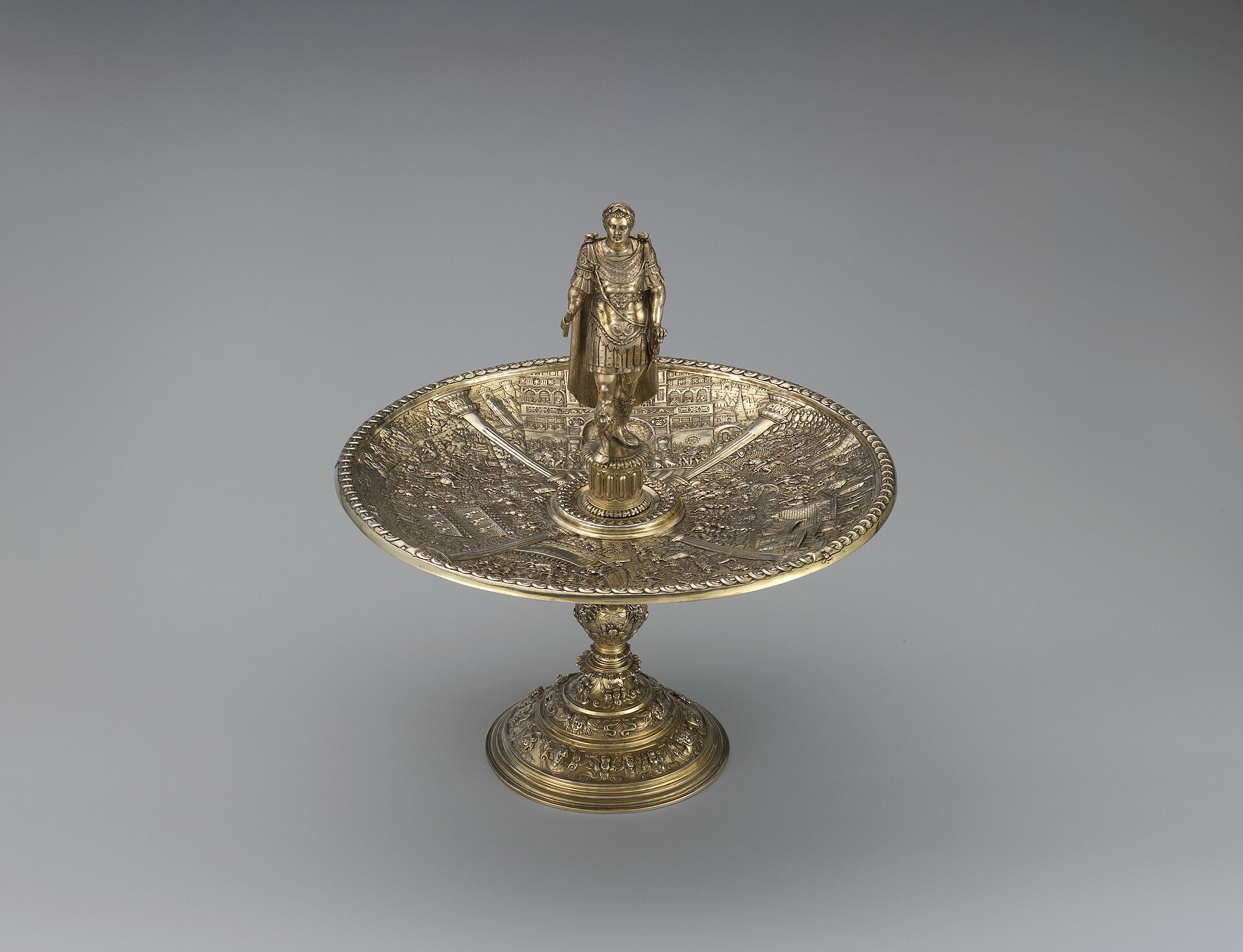
- A withdrawal destroys a price that was about to exist. The Nero and Augustus tazza was catalogued at Christie's in New York on 6 February 2025 at an estimate of 2 to 3 million dollars, then withdrawn and sold privately. No hammer, premium or buyer is public.
- Of 194 recorded transactions across the archive, 112 carry a hammer figure. The remaining 82 record a change of hands that happened at a price nobody printed.
Forty-two per cent of this archive reports no price
Eighty-five of the 204 published records in this archive contain a sentence saying that no price for the object exists. Sixty-one of them state that the object has never been offered or sold at auction at all. Eighty-seven carry no auction result of any kind.
Those sentences were not written as apologies. They were written because a record that reports a number has to be able to say where the number came from, and for a large part of what we catalogue there is no number to find. The temptation in that position is to reach for a proxy, an insurance figure, an inflation adjustment, a comparable sale of something similar. We do not, and the reason is that every one of those substitutes is an estimate wearing a historical fact's clothing.
What follows is a taxonomy. The absence of a price is not one condition, it is at least seven, and they carry different weight for a buyer, a valuer and a historian. Reading them as interchangeable is how a diligence file ends up treating a state-owned bronze and a picture that failed at auction as the same kind of unknown.
A sale that failed is the rarest reason, not the commonest
The Portland Vase was put on the open market exactly once in its documented history, and it did not sell. Between 1929 and 1932 the sixth Duke of Portland withdrew it from the British Museum, where it had been on loan, and offered it at Christie's in London. It failed to reach its reserve and went back to Bloomsbury, and the Museum did not own it outright until 1945.
Neither the reserve nor the highest bid was published, and neither has surfaced since. So the one occasion on which the market was asked what this object was worth produced no usable figure at all, and the record has to say so. That is a genuine gap rather than a stylistic one, and this archive lists it as an open question rather than rounding it away.
The interesting thing is how uncommon this shape is. Out of eighty-five records reporting no price, a documented failure at auction accounts for a handful. Most of the silence has nothing to do with a sale going wrong.
Withdrawal removes a price that was about to exist
A withdrawn lot is a price that was scheduled and then cancelled. The Nero and Augustus tazza was catalogued as the top lot of the Zilkha collection sale at Christie's in New York on 6 February 2025, at an estimate of 2,000,000 to 3,000,000 dollars, and it was withdrawn before the auction and sold privately. Buyer and price are undisclosed.
The estimate survives and the transaction does not, which is the worst of both conditions: there is a public number attached to the object that was never tested, and a real transfer of ownership that produced no public number at all. Anyone valuing the remaining eleven tazze now has an estimate to anchor on and no result to correct it with.
This is not a loophole. The right to withdraw is written into the contract everyone in the room has agreed to. Under the Uniform Commercial Code an auction is presumed to be with reserve unless the goods are explicitly put up without one, and in an auction with reserve the auctioneer may withdraw the goods at any time until completion of the sale is announced. Christie's own conditions of sale reserve to the house, in its absolute discretion, the right to withdraw or divide any lot, and define a reserve as the confidential amount below which it will not sell. The seller who pulls a lot at nine in the morning is exercising a right they bought, and the archive that wanted a number is simply out of luck.
Seven ways an object ends up with no price
The seven mechanisms below each produce the same blank in a catalogue and mean quite different things. The table sets each against an object in this archive and against whatever number does exist in its place.
| Mechanism | Object | What exists instead of a price |
|---|---|---|
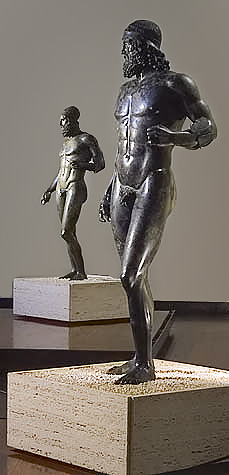
| Inalienable state property, never offered | The Riace Bronzes | Nothing. No state valuation is published |
| Passed only by inheritance | Diana and Minerva Commode | Chippendale's 1773 invoice, 86 pounds |
| Private treaty sale | The Euphronios krater | A single reported total, with no hammer or premium to separate |
| Tax settlement in place of a sale | Vermeer, The Astronomer | An agreed valuation, unpublished |
| Sold inside a larger lot | Gutenberg Bible, Vollbehr copy | An appropriation that also bought 3,000 other books |
| Withdrawn before the sale | Nero and Augustus tazza | An estimate of 2 to 3 million dollars, untested |
| Offered and failed the reserve | The Portland Vase | Neither the reserve nor the top bid was published |
Only the last row describes a market that looked at the object and declined. The other six describe a market that was never consulted, or a transaction structured so that the number stayed private. A valuer who treats those as equivalent is making a category error, and it is a costly one, because the six say nothing whatever about demand.
The commode that has only ever had an invoice
Thomas Chippendale invoiced Harewood 86 pounds for the Diana and Minerva Commode when he delivered it in 1773, and that is still the only price the object has ever carried. In 253 years it has changed hands solely by inheritance. It has not been offered, withdrawn, bought in or sold by private treaty, and the record says so in exactly those terms.
I find this the clarifying case, because the absence here is total and completely innocent. There is no hammer, no premium, no estimate and no private treaty figure, and nothing has gone missing from the file. The object simply never entered the market, and a maker's invoice from the year of delivery is a better documented fact about it than any modern figure could be.
Compare that with the Euphronios krater, where a real and very large sum changed hands in a private treaty purchase. There is no hammer and no premium to separate, and any inflation-adjusted figure quoted for it is a derived number rather than a historical one. The transaction happened; the price is simply not a public fact.
What the absence is actually evidence of
An absent price is evidence about ownership structure, not about value. That is the single most useful thing to take from the count.
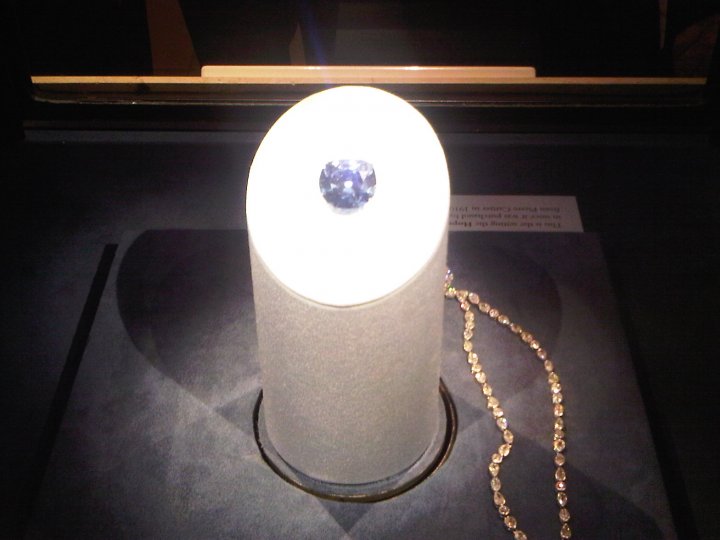
Objects with no price cluster heavily in three groups: state property under a patrimony regime, objects held continuously by one family or institution, and objects whose transfers were all private. Each of those is a statement about who has been able to sell, and none of them is a statement about what anyone would pay. The Hope Diamond has never been sold at public auction and is not for sale, and no reasonable person concludes from that that it is cheap.
The inverse also holds, and it is the trap on the other side. A record carrying a hammer price is not thereby a record carrying a value. Of the 194 recorded transactions in this archive, 112 carry a hammer figure, which means eighty-two documented changes of hands happened at a price nobody printed. A single result from 1861, or 1918, or 1994, is one buyer's decision on one afternoon, and it ages.
How to read a record that reports no price
Start by asking which of the seven mechanisms is in play, because the answer changes what you can do next. If the object is inalienable state property, no amount of research will produce a figure and none should be constructed. If it moved by private treaty, a number exists somewhere and is simply not public, which is a different research problem and occasionally a solvable one.
Then check what the record puts in the number's place. A maker's invoice, an appropriation, an insurance valuation and an estimate are all real documents, and all four are routinely quoted as though they were sale prices. They are not, and a record that labels them properly is doing the reader a service that a rounded headline figure never does.
Last, treat a stated absence as a finding rather than an omission. When this archive says that no price has been published, that sentence has been arrived at rather than defaulted to, and it is the honest end of a search. The alternative, which is common enough elsewhere, is a plausible figure with no document behind it, and once that figure is in circulation it is very hard to get it back out.
Why this archive is free to read
We do this for everyone who loves art. The people who have studied it for years, and the people who just stopped to look. Iconotheca exists so that what we learn belongs to all of them.
Nobody pays us for this. No ads, nothing for sale. These works belong to all of us, and we would rather share them with as many people as we can than keep them to ourselves.
If it gave you something today, tell us to keep going. Follow us, leave a like, or write a positive comment. We read every one, and they are what keeps us going.
Questions
Because most transfers of ownership in this field are not auctions. Objects move by inheritance, gift, bequest, private treaty sale, tax settlement and state vesting, and none of those mechanisms is obliged to publish a figure. In this archive, 85 of 204 published records state explicitly that no price exists.
It means the seller or the auction house has removed the lot before it is sold. Under the Uniform Commercial Code an auction is presumed to be with reserve, and in a sale with reserve the goods may be withdrawn at any time until the auctioneer announces completion. Christie's conditions reserve the same right, before or during the sale. A withdrawn lot leaves its published estimate behind but produces no result.
A withdrawn lot is removed before it is offered, so no bidding takes place. A bought-in lot is offered, fails to reach its reserve, and goes unsold back to the seller. Both end with no sale price, but a bought-in lot at least records that the market was asked and declined, which is information a withdrawal does not give you.
Not as a historical fact. An inflation adjustment is a derived number produced now, not a sum anyone paid then, and it should be labelled that way. The same applies to insurance valuations and to estimates, which are opinions formed before a sale rather than records of one.
No. An absent price is evidence about ownership structure rather than about value. Objects with no price cluster among state property, long-held family and institutional collections, and objects whose transfers were all private. The Hope Diamond has never been sold at public auction, and that tells you about the Smithsonian rather than about the stone.
Sources
- 1Legal Information Institute, Cornell Law School, Uniform Commercial Code section 2-328, Sale by Auction. Read for the presumption that an auction is with reserve, the auctioneer's power to withdraw the goods at any time until completion of the sale is announced, and the completion of a sale by the fall of the hammer. law.cornell.edu/ucc/...
- 2Harewood House Trust, object page for the Diana and Minerva Commode. The holding institution's own record, giving Thomas Chippendale as maker, 1773 as the date of delivery, the State Dressing Room as the room it was made for, and 86 pounds as the cost at delivery. harewood.org/object/...
- 3Metropolitan Museum of Art, collection API record for object 199659, the Vitellius Tazza, accession 45.60.58a-h. The holding museum's structured record for the tazza illustrated here. collectionapi.metmuseum.org/public/...
- 4Christie's, 'Inside the silver collection of Selim and Mary Zilkha', specialist feature for the sale of 6 February 2025 at which the Nero and Augustus tazza was catalogued as the top lot before being withdrawn. christies.com.cn/en/...
- 5Christie's Hong Kong Limited, Conditions of Sale, English text of 8 February 2022, read as the source PDF. Paragraph 2(a) reserves to Christie's the absolute discretion to withdraw or divide any lot, and the glossary defines a reserve as the confidential amount below which the house will not sell a lot. images.liveauctioneers.com/houses/...
- 6Milo Keynes, 'The Portland Vase: Sir William Hamilton, Josiah Wedgwood and the Darwins', Notes and Records of the Royal Society, for the vase's ownership under the Dukes of Portland, the loan to the British Museum and the Museum's eventual purchase. darwin-online.org.uk/converted/...
More in The Market
The partThe hammer is the one number most auction houses do not print
Of 232 auction results in this archive, 53 carry no hammer price published by the house that sold the object.
The Objects Whose Price Was Set by a Tax Bill and Not a Buyer
The Louvre did not buy the most famous Vermeer in France. It accepted it against a death duty, and the acquisition price is not withheld, it does not...
The House That Cannot Be Asked: Who Keeps the Price After the Sale
Half this archive's sale record sits with two firms you can still write to. The other half sits with houses that shut, and with bodies that were...