The Price Is in a Currency That No Longer Exists
Of 187 auction results in this archive, 106 state a currency and they use sixteen different descriptions of it. Guineas, livres tournois, Roman scudi and four ingots of silver do not convert.
Records in this piece: Juan de Pareja (ca. 1608-1670), The Taking of Christ, The Harvesters, The Fortune-Teller, The Diamond Sutra, The Musicians, The Portland Vase, Girl with a Pearl Earring, Fonthill Vase, La Princesse du pays de la porcelaine
On this page 8 sections
ContentsClose
In short
- Of 187 auction results across 111 published records in this archive, 106 state a currency, and those 106 use sixteen distinct descriptions of what the money was. They resolve to about ten units of account, including the livre tournois, the Roman scudo, the Dutch guilder and, on one object, silver by weight.
- The guinea was demonetised in the Great Recoinage of 1816 and London salerooms went on taking bids in it into the 1970s. The world record price for a painting set at Christie's on 27 November 1970 was struck in a unit of account that had not been a coin since before Waterloo.
- One Bruegel in this archive has a price in florins from 1594 and a price in francs from 1816. No published series connects the two, and nothing in the record supports an inflation adjustment between them.
- A French price recorded in 1949 is in old francs, which were revalued at one hundred to one on 1 January 1960. A figure of 7,500,000 francs from that sale is 75,000 francs in the currency of eleven years later, and a table that does not know this will rank the sale roughly a hundred places too high.
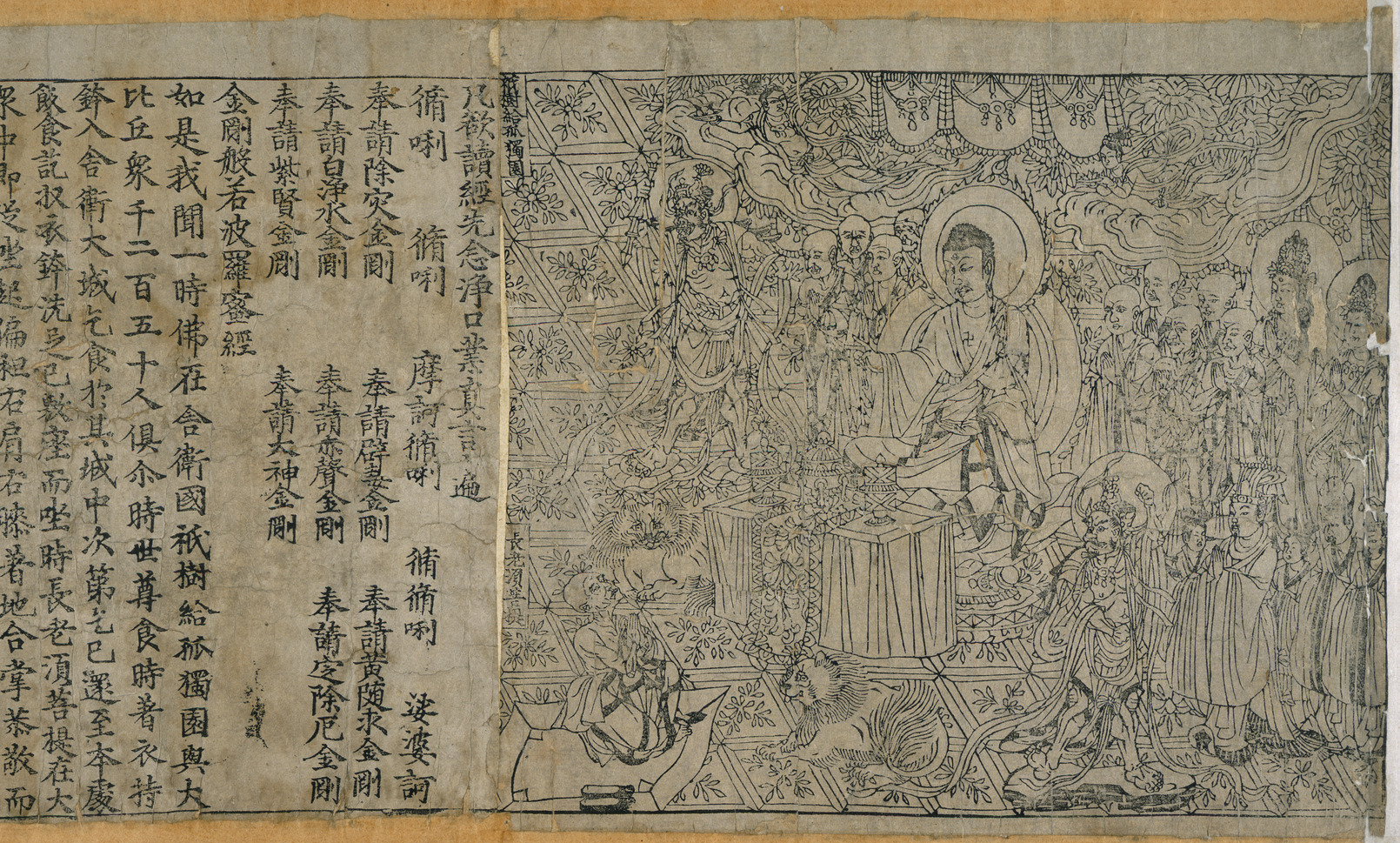
- Sometimes the consideration is not money at all. Aurel Stein recorded that he paid for fifty bundles of Chinese text rolls and five of Tibetan ones with four horse-shoes of silver, which he valued at about 500 rupees.
A price is a number and a unit, and the unit is usually gone
A recorded price has two halves, and the trade quotes only the first of them. Across the 187 auction results in the published records of this archive, 106 state what money the transaction was in, and those 106 rows use sixteen different descriptions of it.
Some of those descriptions are the same currency written twice, which is itself a finding: the corpus contains Dutch guilders and NLG, French francs and FRF, and four separate ways of saying pounds sterling because two of them specify that the bidding was in guineas. Collapsed to actual units of account, the corpus is holding about ten, and only four of them are money a reader can convert today.
| Unit of account | Earliest recorded here | Latest recorded here | Still current |
|---|---|---|---|
| Roman scudi | 1628, Giardino di Ripetta, Rome | 1628 | No |
| Livres tournois | 1650, Richelieu estate sale, Paris | 1650 | No |
| Dutch guilders | 1594, sale to the Antwerp City Council | 1940, Frederik Muller, Amsterdam | No |
| Pounds sterling, bid in guineas | 1786, Portland Museum sale | 1970, Christie's, London | Unit gone, currency current |
| French francs, old | 1816, Perignon, Paris | 1949, sale to Wildenstein | No, revalued 1960 |
| Silver by weight | 1907, Mogao caves, Dunhuang | 1907 | No |
| Pounds sterling, decimal | 1971 onward | 2024, Dreweatts | Yes |
| United States dollars | Twentieth century | 2024, Bonhams, New York | Yes |
Every league table of the most expensive works ever sold is a conversion, and the conversion is the argument rather than the data. The archive's own rule is to record the currency of the sale and to treat any conversion as derived and date-dependent, which is why the rows above exist at all.
The guinea stopped being a coin in 1816 and went on setting records until 1970
The guinea was fixed at twenty-one shillings from 1717, ceased regular production in 1813 and was demonetised in the Great Recoinage of 1816, when the gold sovereign replaced it. It then continued for more than a century and a half as a unit of account in which professional fees, horses, land and works of art were quoted, surviving decimalisation in 1971 by a couple of years.
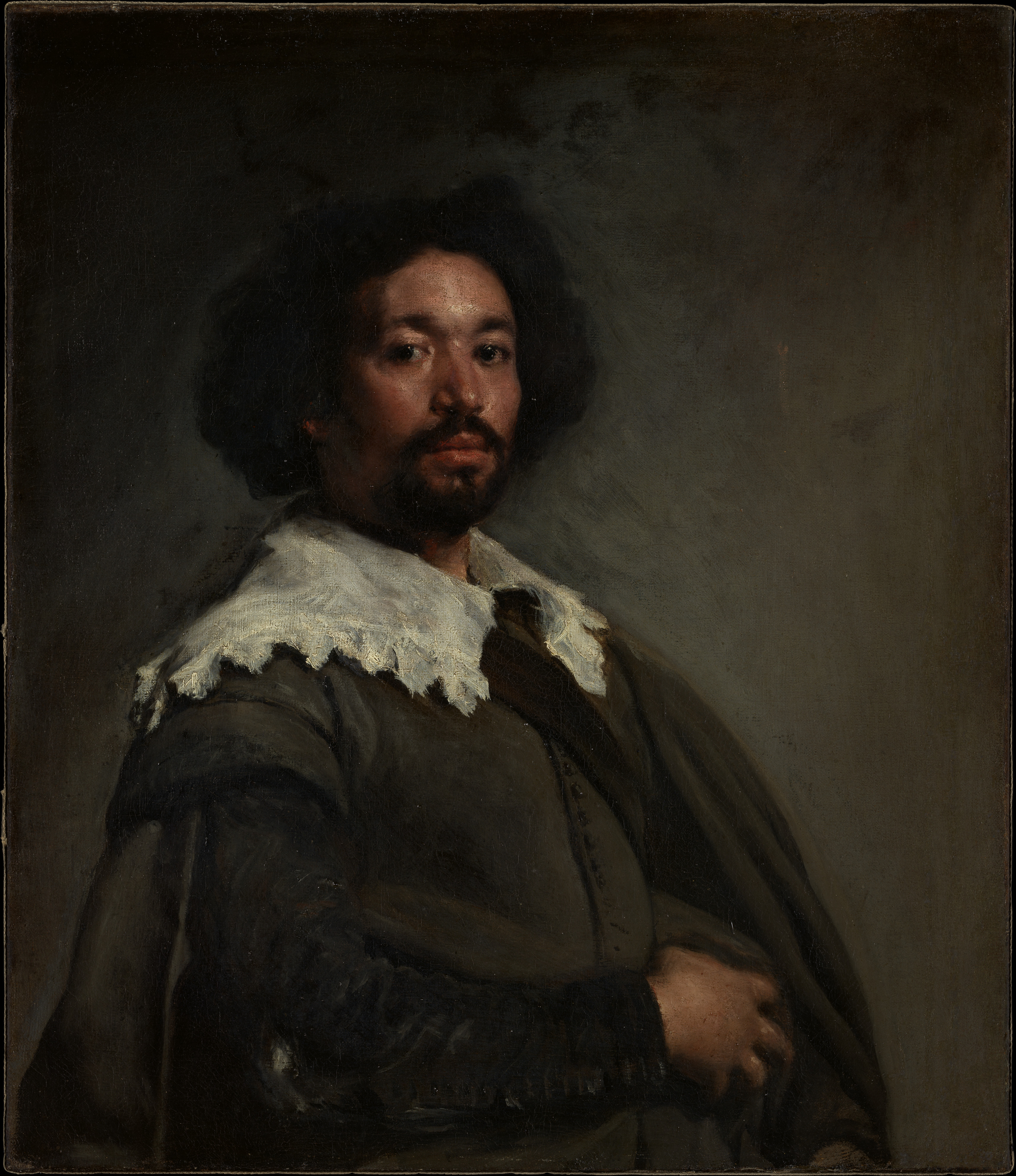
The consequence for this archive is a picture with two guinea prices 169 years apart. Velazquez's portrait of Juan de Pareja was sold at Christie's in 1801, catalogued as a portrait of a Moorish slave who became a great painter, for 39 guineas. It went to the Radnor family and stayed there. On 27 November 1970 Christie's sold it again, and the bidding was taken in guineas: 2,200,000 guineas, which is 2,310,000 pounds, the first painting to pass a million pounds at auction and the world record price for any painting at the time. Alec Wildenstein bought it for the Metropolitan Museum of Art.
Three things follow that a price series will not tell you. The 1801 figure and the 1970 figure are in the same unit, so they are genuinely comparable, which is rare in this corpus and is an accident of British saleroom conservatism. No buyer's premium was charged on either, because the modern premium was introduced in London in September 1975. And the dollar figure of 5,544,000 that circulated in 1970 is a conversion made at the exchange rate of that week, which is a fact about sterling in November 1970 and not a fact about the painting.
Eight guineas, then five, at the same auction house eleven months apart
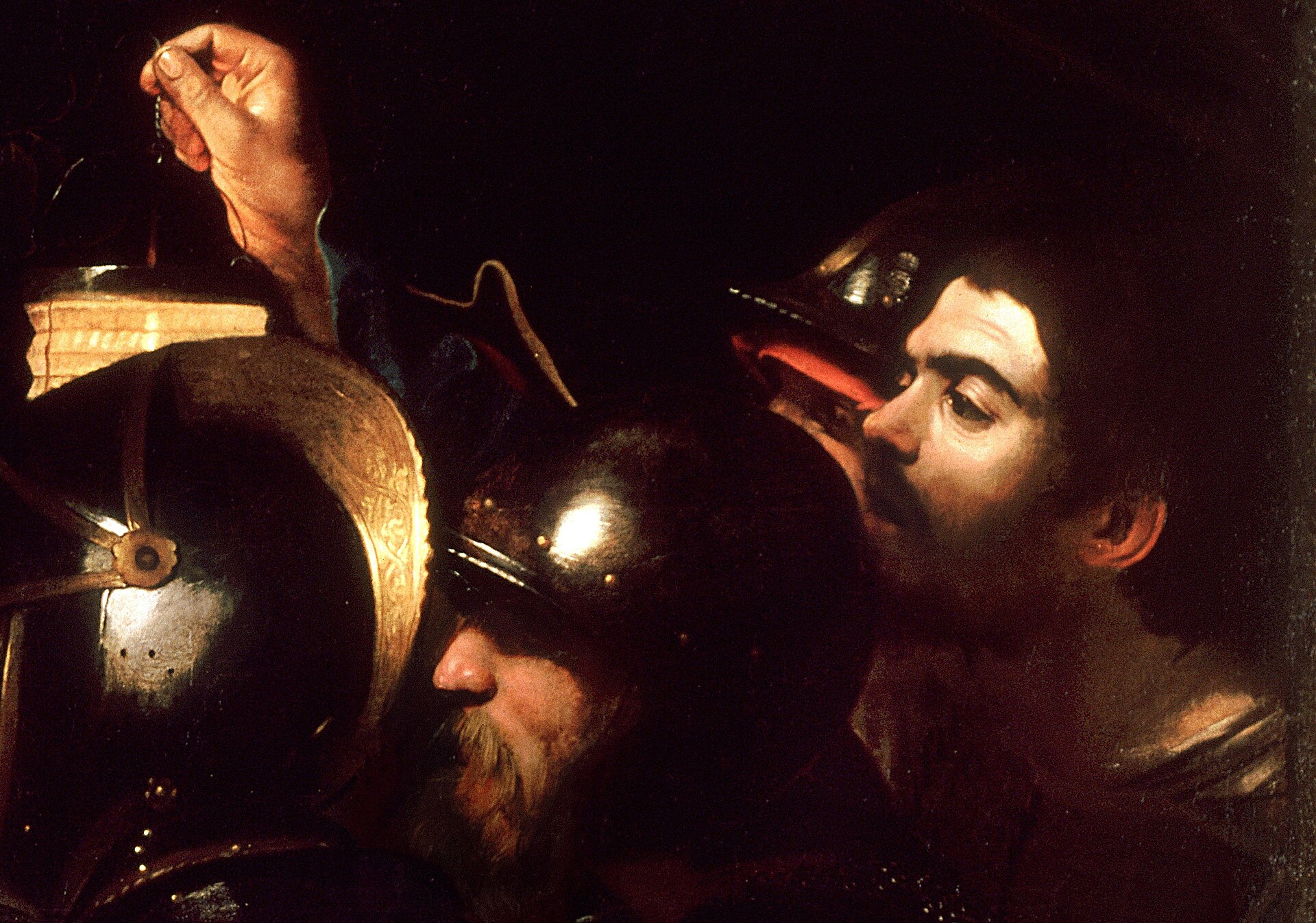
The guinea is also the unit in which this archive records the two cheapest sales of a major Caravaggio. The National Gallery of Ireland's own catalogue entry for The Taking of Christ gives the sales in its provenance: Dowell's, Edinburgh, 25 June 1921, lot 30, to John Kent Richardson for eight guineas; and Dowell's again, 3 May 1922, lot 480, to Major Charles Noel for five guineas.
Eight guineas is eight pounds and eight shillings, or 8.40 pounds decimal. Five guineas is 5.25 pounds. The picture lost three guineas in eleven months in the same room under the same wrong attribution, and the interest of the figure is not the smallness of it but the unit: an object catalogued as a seventeenth-century Dutch painting was priced in a coin that had been out of circulation for a century, because that is what the saleroom quoted in.
The same entry carries the commission price. The gallery records that Caravaggio made the picture for Marchese Ciriaco Mattei in 1602 for 125 scudi. Between the scudo of 1602 and the guinea of 1922 there is no exchange rate that any source in this record supports, and the two numbers cannot be put in the same column.
The same object priced in florins and then in francs
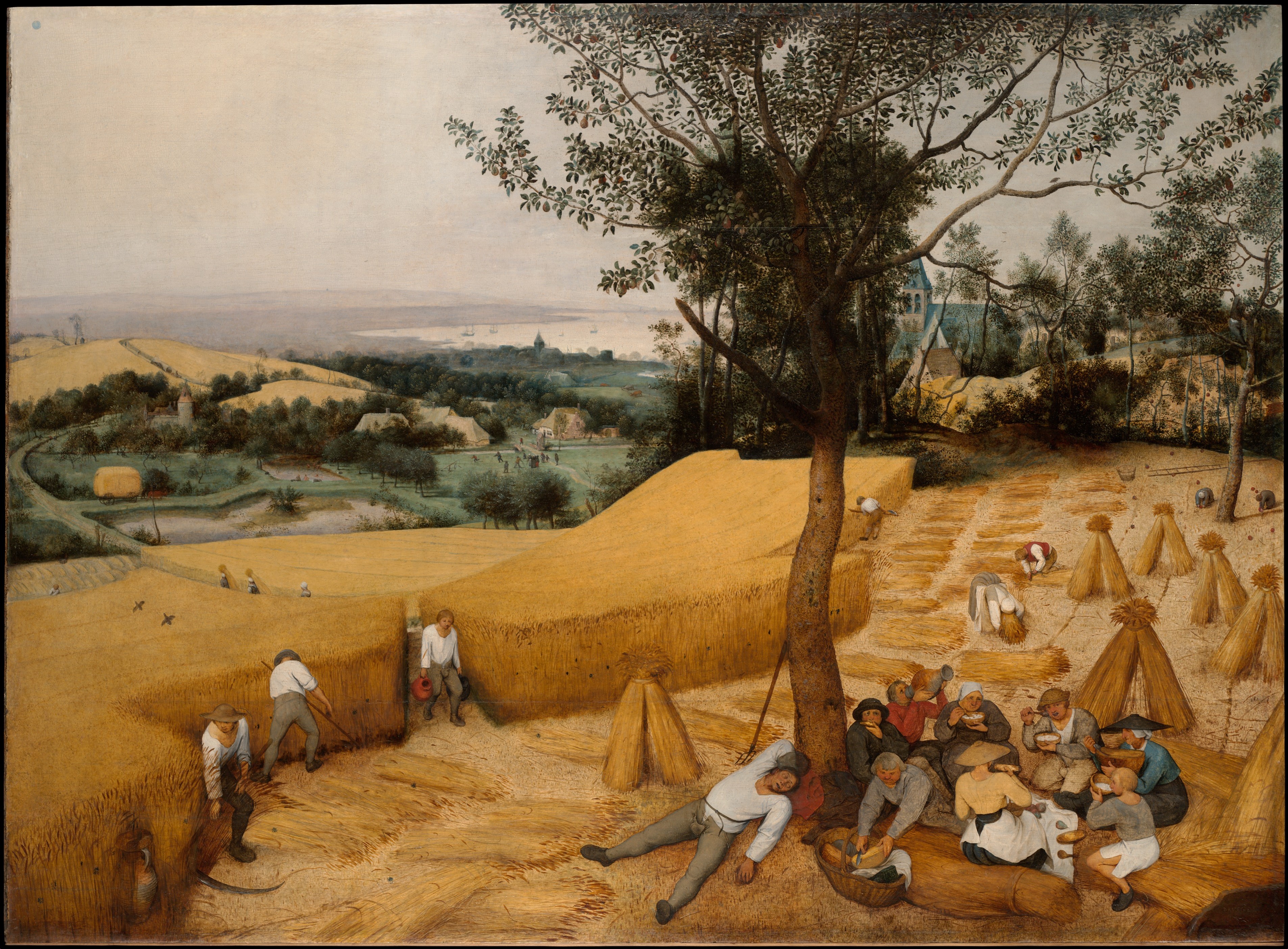
The Harvesters carries two recorded prices and they are 222 years and two currencies apart. The Metropolitan's published provenance gives the first as a sale by the Antwerp dealer Hane von Wijke in 1594, for 1,400 florins, to the Antwerp City Council, which bought the picture as a gift for Archduke Ernst, governor of the Netherlands.
The panel then went through the imperial collections at Prague and Vienna for two centuries, left them in 1809 with the comte Antoine-Francois Andreossy, and reappeared at the Perignon sale in Paris on 11 March 1816 as lot 1. It was catalogued as the work of a master of the old German school, a landscape of the greatest detail showing the labours of the harvest, measured in pouces, and dated 1546. It made 90.11 francs: ninety francs and eleven centimes.
The second figure is not a price for a Bruegel. It is a price for an anonymous German landscape misdated by nineteen years, and the currency change makes that hard to see. A conversion between 1,400 florins in 1594 and ninety francs in 1816 would produce a number, and the number would be describing a catalogue error rather than a market.
One object, three units, and a revaluation in the middle
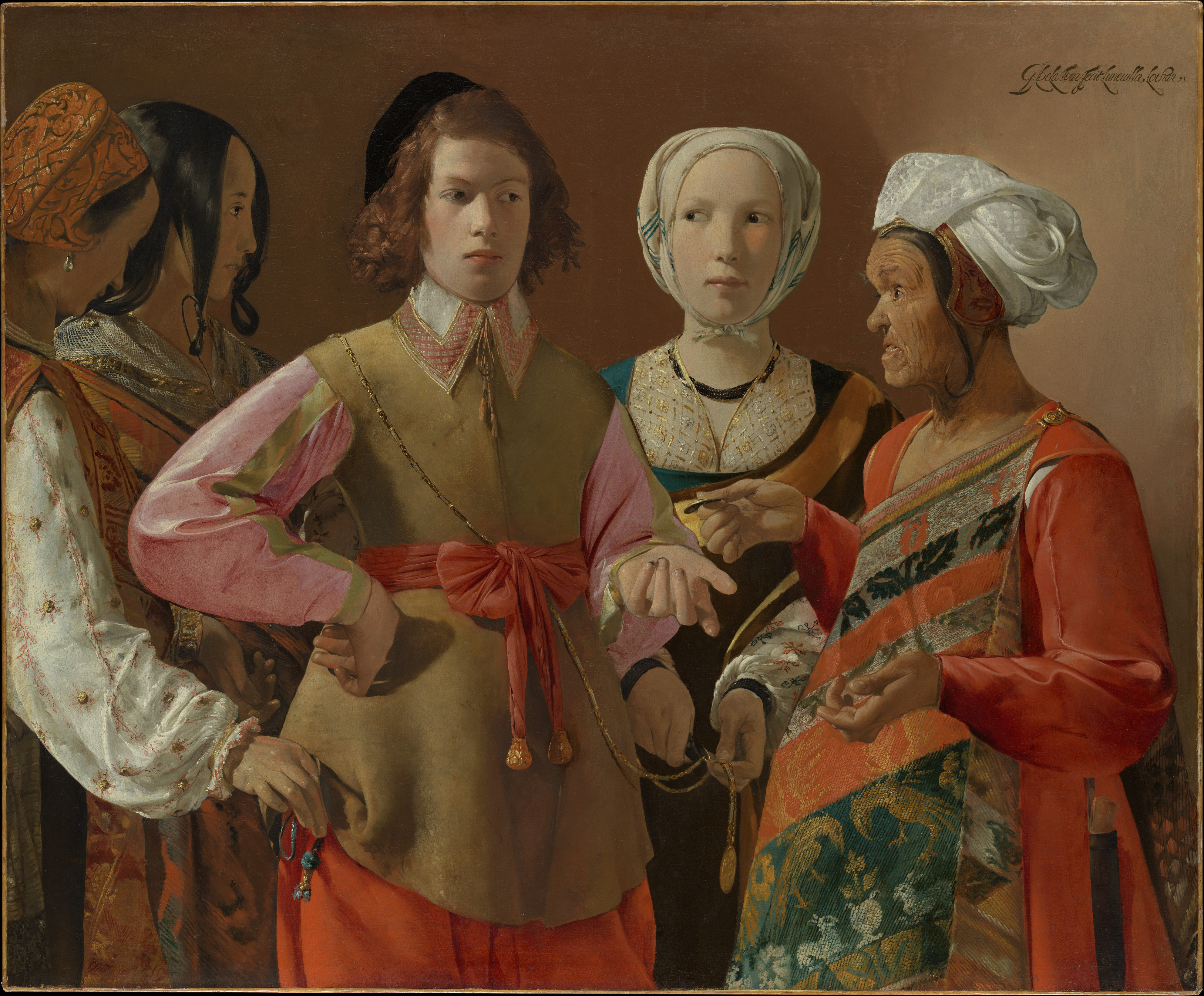
The Fortune-Teller has never been sold at public auction, and every figure attached to it comes from an inventory or a private treaty. That makes it the clearest case in the archive of what happens when a single object accumulates valuations in a currency that keeps being replaced.
The Metropolitan's provenance records a posthumous inventory of Jean-Baptiste de Bretagne in 1650, number 14, in which a large canvas of fortune-tellers described as an original by La Tour is valued at thirty livres, one of the highest valuations in an inventory that contained five La Tours. It records an 1879 inventory in which a large signed La Tour of the Bonaventure is valued at 250 francs. And it records the sale by the heirs of General de Gastines in 1949 to Wildenstein for 7,500,000 francs.
The trap is in the last figure. The 1949 sum is in old francs. On 1 January 1960 France introduced the new franc at a rate of one hundred old francs to one new one, so 7,500,000 francs of 1949 became 75,000 francs of 1960 without anything happening to the picture. A price series that carries the 1949 figure forward unadjusted overstates it by two orders of magnitude, and there is nothing in the number itself to warn you.
Sometimes the consideration is not money
The most extreme entry in this archive's currency field describes a payment that was not made in any currency. In the second volume of Ruins of Desert Cathay, published in 1912, Aurel Stein set down what he handed over at the Mogao caves in 1907 in his own words: for all these acquisitions four horse-shoes of silver, equal to about Rs.500, passed into the priest's hands; and when I surveyed the archaeological value of all I could carry away for this sum, I had good reason to claim it a bargain.
Two pages earlier he gives the rate he was working to. He records hinting at forty horse-shoes, about 5,000 rupees, and being resolved to give twice as much if he had to, whatever the excess over his sanctioned grant. Forty ingots to five thousand rupees puts one ingot at about 125 rupees, which makes his four-ingot figure internally consistent.
Three qualifications belong beside that number and this archive states all three. The sum bought fifty bundles of Chinese text rolls and five of Tibetan ones as well as everything Stein had already selected, so it is not a price for the Diamond Sutra scroll. The rupee valuation is Stein's own, made by the buyer. And no source consulted for the record states a sterling equivalent at the time. What is in the field is a weight of metal and a buyer's estimate of it, and treating that as a price is an act of interpretation, not of reading.
Where the unit survives but the arithmetic does not
Pre-decimal sterling is the quiet version of the same problem, because the currency did not die and the arithmetic did. This archive records the Fonthill vase selling at Christie, Manson and Woods in June 1882, in the Hamilton Palace dispersal, for 28 pounds and 7 shillings, which the record also states as 28.35 pounds because a shilling was a twentieth of a pound.
Whistler's Princesse du pays de la porcelaine sold at Christie's on 28 May 1892, lot 39 of the Leyland estate sale, for 420 guineas. The Portland Vase made 980 guineas at the sale of the Duchess Dowager of Portland's museum on 7 June 1786, lot 4155, bought by an agent for her son, and she had paid 1,800 guineas for it and three other antiquities two years earlier. Velazquez's Pareja made 40 pounds 19 shillings in 1801 according to the Metropolitan and 39 guineas according to Buchanan's account of 1824, which are the same sum written in two units.
None of these figures is wrong and none of them is difficult, but each of them requires the reader to know a conversion that is no longer taught. The error a modern table makes with pre-decimal sterling is not a failure of exchange rates; it is reading 28 pounds 7 shillings as 28.07.
What to do with a price whose currency is gone
The practical rule is to keep the number and the unit joined, and to refuse to make the conversion inside the record. This archive records the currency of every sale as a field of its own precisely because a hammer figure detached from its unit is not evidence of anything.
Three habits follow. Quote the figure in the words of the document, including the shillings, the centimes and the guineas, because the unit tells you which market you are in and often which decade the source was written in. State who made any conversion and when, as with Stein's own rupee valuation of his silver, since a conversion by the buyer is testimony rather than data. And when two prices for the same object are in different units, say so instead of interpolating, because the interpolation will look like a measurement to everybody who reads it afterwards.
The reason this matters beyond bookkeeping is that price series are used as evidence about objects. A repeat sale, a market index and a most-expensive-ever ranking are all built by putting figures in a column, and the column is only meaningful if the figures were in the same money. In this corpus they usually were not.
Questions
A guinea was fixed at twenty-one shillings from 1717, which is one pound and one shilling, or 1.05 pounds in decimal currency. So 39 guineas is 40 pounds and 19 shillings, and 2,200,000 guineas is 2,310,000 pounds.
The guinea ceased regular production in 1813 and was demonetised in the Great Recoinage of 1816, but it survived as a unit of account. Professional fees and the prices of land, horses, art and other luxury goods were quoted in guineas until a couple of years after decimalisation in 1971, and London salerooms took bids in guineas into the 1970s.
Only with a stated method and a stated date, and often not at all. A conversion needs a defensible chain from the original unit to the target one, and for units such as the Roman scudo, the livre tournois or a weight of silver no such chain exists in the sources. Where an intermediate revaluation intervenes, as with the French new franc of 1960, an unadjusted figure can be wrong by two orders of magnitude.
France introduced the new franc on 1 January 1960 at a rate of one hundred old francs to one new franc. A price recorded in francs before that date is in old francs, so a sale reported at 7,500,000 francs in 1949 corresponds to 75,000 new francs, and a price table that carries the raw figure forward will rank the sale far too high.
Keep the figure in the words of the source, including shillings, centimes or guineas, and record the unit as its own field rather than converting inside the entry. Where a conversion exists in a source, attribute it to whoever made it and give the date, because a conversion made by the buyer or by contemporary reporting is testimony about that moment and not a property of the object.
Sources
- 1Metropolitan Museum of Art, object record and published provenance for Pieter Bruegel the Elder, The Harvesters, accession 19.164. Read in full for the 1594 sale for fl 1,400 to the Antwerp City Council as a gift for Archduke Ernst and for the Perignon sale of 11 March 1816, lot 1, for Fr 90.11 with the catalogue description quoted. metmuseum.org/art/...
- 2Metropolitan Museum of Art, object record and published provenance for Georges de La Tour, The Fortune-Teller, accession 60.30. Read in full for the 1650 Bretagne inventory valuation of thirty livres, the 1879 valuation of 250 francs, and the 1949 sale by the heirs of General de Gastines to Wildenstein for Fr 7,500,000. metmuseum.org/art/...
- 3National Gallery of Ireland, online collection, The Taking of Christ, loan number L.14702. Read for the 1602 commission from Ciriaco Mattei for 125 scudi and for the Dowell's Edinburgh sales of 25 June 1921, lot 30, at eight guineas, and 3 May 1922, lot 480, at five guineas. onlinecollection.nationalgallery.ie/objects/...
- 4M. Aurel Stein, Ruins of Desert Cathay: Personal Narrative of Explorations in Central Asia and Westernmost China, volume II, 1912, chapter LXVI, pages 192-193. Full text read directly. The sentences about forty horse-shoes at about Rs.5000 and about the four horse-shoes of silver equal to about Rs.500 are quoted from Stein's own account. ia800500.us.archive.org/12/...
- 5Wikipedia, Guinea (coin). en.wikipedia.org/wiki/...
- 6Wikipedia, Portrait of Juan de Pareja. Corroborated against the Metropolitan's own accession data for 1971.86. en.wikipedia.org/wiki/...
- 7Metropolitan Museum of Art Collection API, object record 437869, Velazquez, Juan de Pareja, accession 1971.86, for the credit line, the accession year of 1971 and the medium and dimensions. collectionapi.metmuseum.org/public/...
- 8Milo Keynes, The Portland Vase: Sir William Hamilton, Josiah Wedgwood and the Darwins, Notes and Records of the Royal Society of London. Read for the 1784 purchase of the vase with three other antiquities for 1,800 guineas, and for lot 4155 on the final day of the Portland Museum sale producing 980 guineas, bought by an agent for the third Duke of Portland. darwin-online.org.uk/converted/...
- 9Iconotheca, records for velazquez-juan-de-pareja, caravaggio-the-taking-of-christ, bruegel-the-harvesters, georges-de-la-tour-the-fortune-teller, dunhuang-diamond-sutra-british-library, the-portland-vase, fonthill-vase-national-museum-ireland and whistler-la-princesse-du-pays-de-la-porcelaine-peacock-room. The counts of 187 auction results, 111 records and sixteen distinct currency descriptions were computed across the 184 published records of this archive. iconotheca.com/artworks
More in The Market
The partThe hammer is the one number most auction houses do not print
Of 232 auction results in this archive, 53 carry no hammer price published by the house that sold the object.
The Objects Whose Price Was Set by a Tax Bill and Not a Buyer
The Louvre did not buy the most famous Vermeer in France. It accepted it against a death duty, and the acquisition price is not withheld, it does not...
The House That Cannot Be Asked: Who Keeps the Price After the Sale
Half this archive's sale record sits with two firms you can still write to. The other half sits with houses that shut, and with bodies that were...