The Woman in the Provenance Line Is Usually Recorded as Her Husband
Across 1,322 provenance events in this archive nineteen name a woman, and four of those give her no personal name at all. The twentieth-century entries are worse than the seventeenth.
Records in this piece: Tea Caddy, Tray, The Musicians, The Fortune-Teller, ex "Kurtz" Violin, The Devonshire Hunting Tapestries, Girl with a Pearl Earring, The Portland Vase, The Taking of Christ, View from the Window at Le Gras
On this page 8 sections
ContentsClose
In short
- Of 1,322 provenance events in the 184 published records of this archive, nineteen carry an explicit marker that the owner was a woman. In four of the nineteen she has no personal name of her own anywhere in the entry.
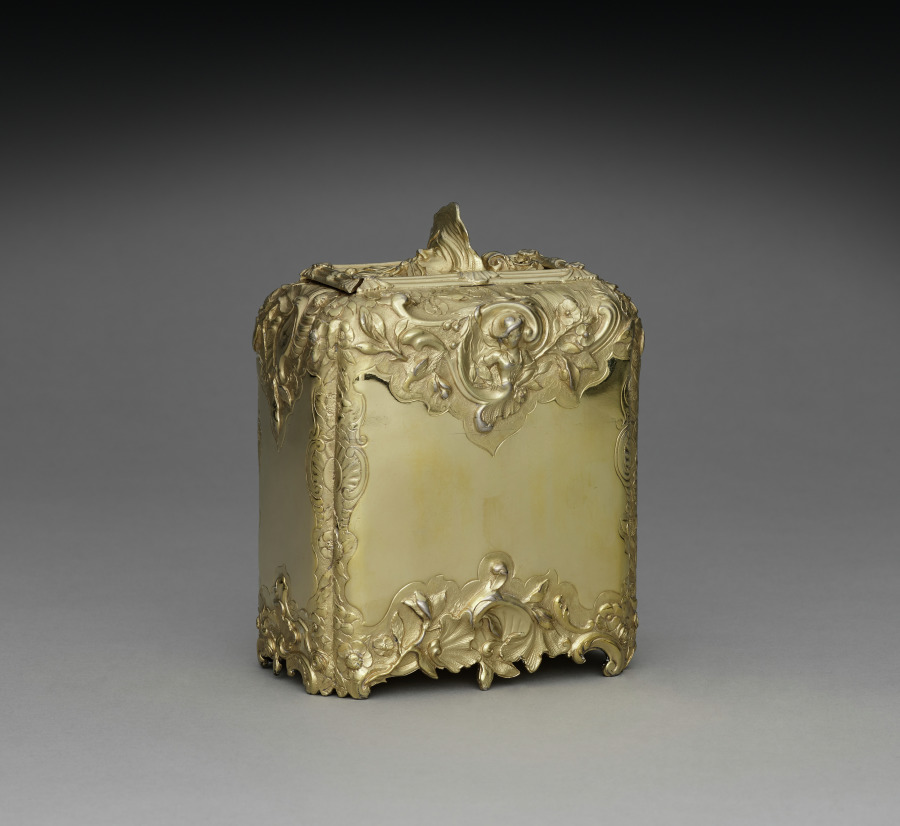
- The Cleveland Museum of Art publishes a Lamerie tea caddy under the credit line The Thomas S. Grasselli Memorial Collection and records its previous owner as Mrs. Thomas S. [Emilie Schmidt] Grasselli. Her own name survives only inside the museum's square brackets, and the date she acquired the object is recorded as a question mark.
- The seventeenth century records these women better than the twentieth. On one Caravaggio the Metropolitan names the duchesse d'Aiguillon in full for a 1650 purchase and a 1675 inventory, and names the woman who sold the same picture in 1947 only as Mrs. David Burns.
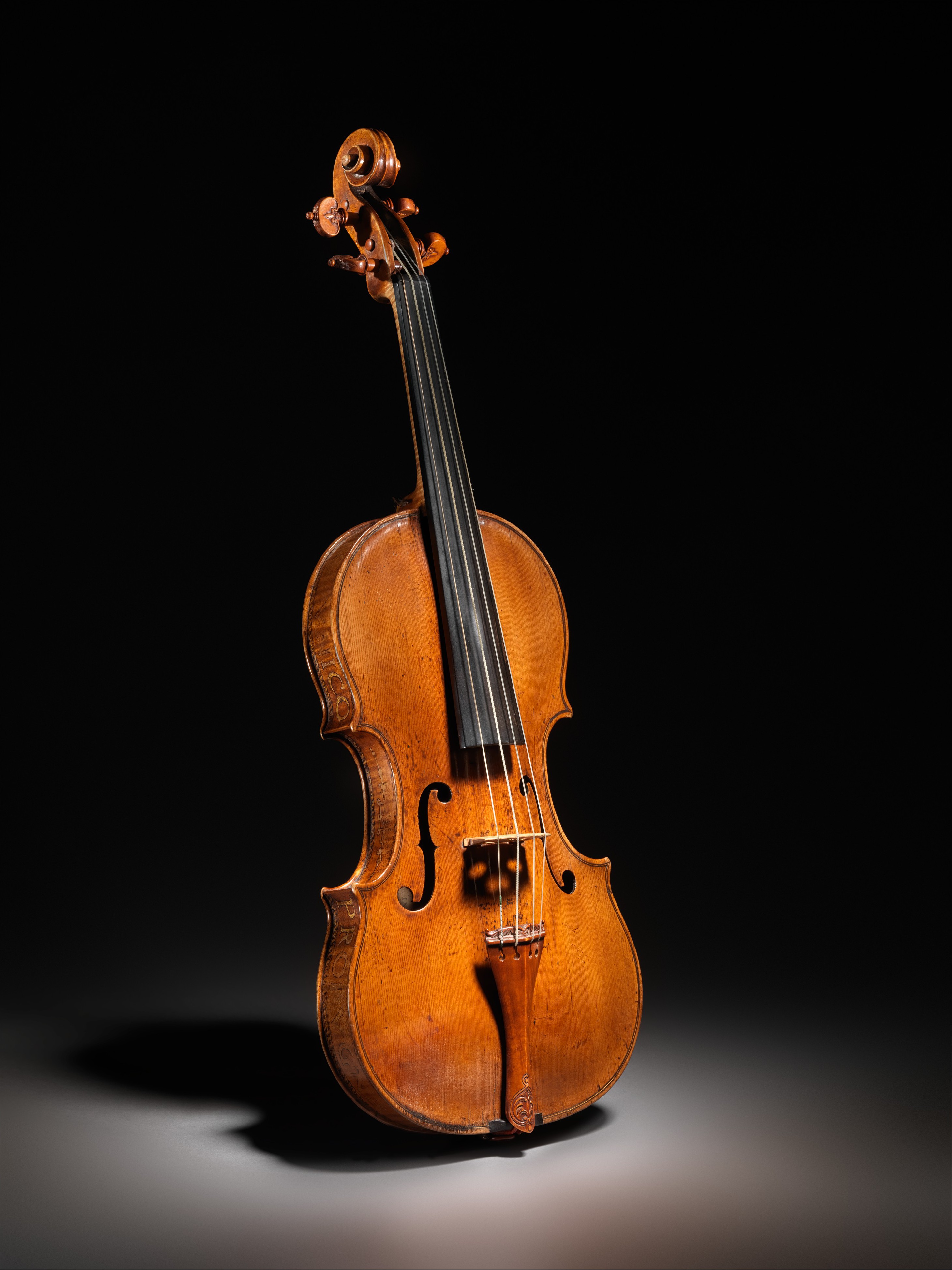
- The honorific carries a woman's marital status and nothing equivalent is recorded for the men beside her. In the Cozio Archive a twenty-seven-year ownership of an Andrea Amati violin is entered as Miss Hilda Barry, between W. E. Hill & Sons and Rudolph Wurlitzer Co.
- Where a woman does get her own name in these records she is usually titled, rich or professionally qualified: Bess of Hardwick, the Dowager Duchess of Portland, Dr Marie Lea-Wilson.
Nineteen events out of 1,322 name a woman
The published records of this archive contain 1,322 provenance events, and nineteen of them name an owner the record marks as a woman. Those nineteen fall across eighteen objects, out of 184 published records covering eighteen classes of material from paintings to violins to Islamic metalwork.
The test behind that number is crude on purpose, and it is worth stating so that the figure can be argued with. It counts an event as naming a woman only where the owner field carries an explicit marker: Mrs, Madame, Mme, Miss, Lady, Countess, Duchess, Baroness, Princess, Dame, Frau, Dowager, or the word widow. A woman recorded plainly by her forename and surname is not caught by it. Neither is a woman inside a family group, a household, a trust or a firm, and this corpus is full of those.
So nineteen is a floor and not a measurement. The useful thing is not the count but the shape of what the count catches, because the marker that makes a woman visible in a provenance line is almost always a marker of her relationship to a man. Of the nineteen, nine are a Mrs or Madame construction built on a husband's name, four describe the owner as somebody's widow, and two are a Miss. Four of the nineteen give her no personal name at all.
The credit line names her husband and so does the provenance
The Cleveland Museum of Art publishes its provenance through an open-access interface, which makes it possible to read exactly what the institution holds rather than what a label summarises. Four of its accession records for objects in this archive show the same pattern twice over, and the museum is not doing anything unusual: it is publishing, accurately, the only information it was given.
| Accession | Object | Credit line as published | Provenance as published |
|---|---|---|---|
| 1943.179 | Tea caddy, 1741-42 | The Thomas S. Grasselli Memorial Collection | Mrs. Thomas S. [Emilie Schmidt] Grasselli [1877-1953], Shaker Heights, OH, ?-1943 |
| 1943.179.a | Tea caddy, canister body | The Thomas S. Grasselli Memorial Collection | Mrs. Thomas S. [Emilie Schmidt] Grasselli [1877-1953], Shaker Heights, OH, ?-1943 |
| 1943.179.b | Tea caddy, lid | The Thomas S. Grasselli Memorial Collection | Mrs. Thomas S. [Emilie Schmidt] Grasselli [1877-1953], Shaker Heights, OH, ?-1943 |
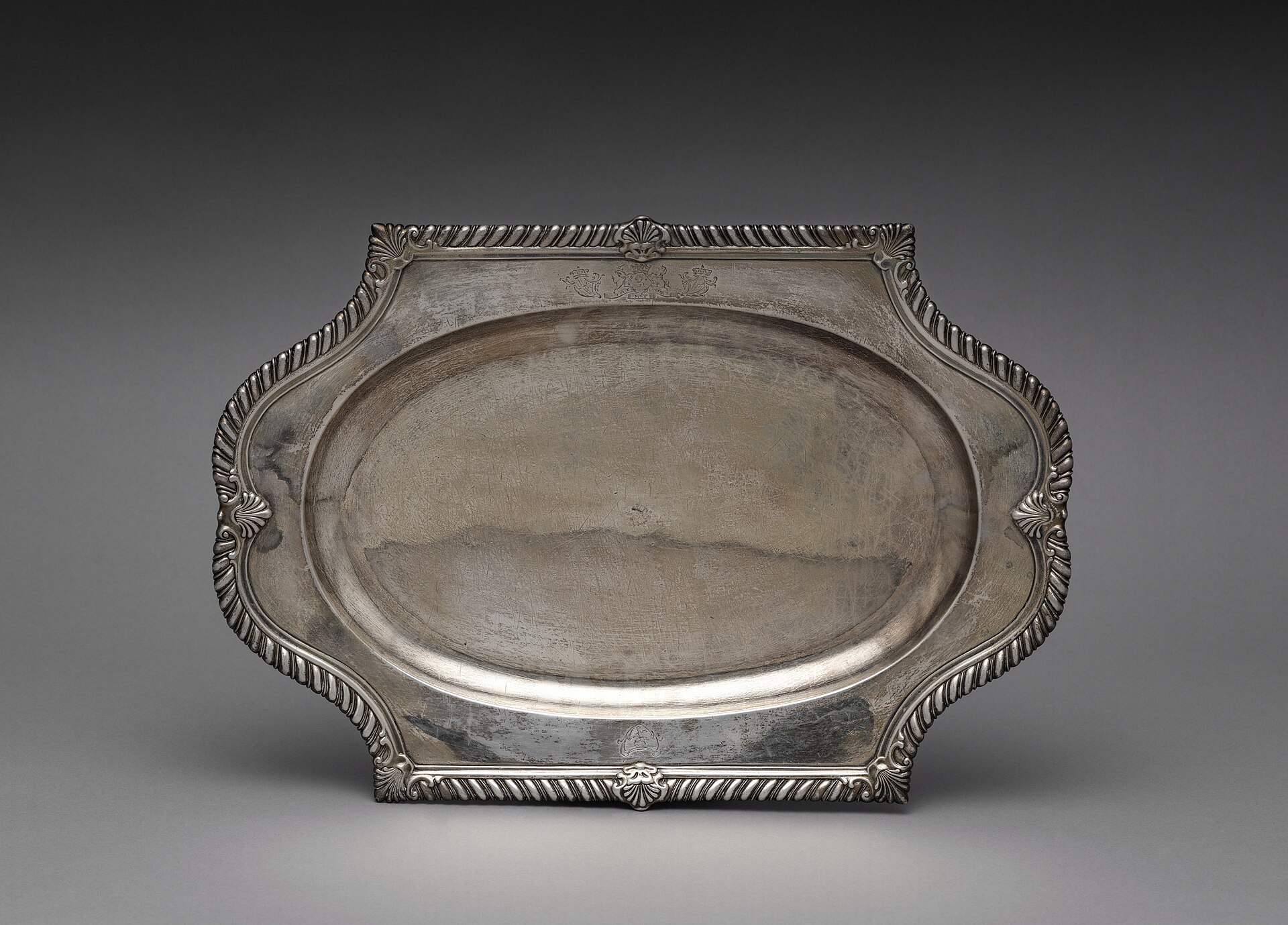
| 1941.601 | Tray, 1745-46 | Gift of Mrs. Otto Miller | No provenance recorded |
Read the Grasselli line closely, because every part of it is doing something. The credit line commemorates Thomas S. Grasselli, who died in 1942 and never gave the museum anything, since the gift was made in 1943 by his widow. The provenance names her as Mrs. Thomas S. Grasselli. Her own name, Emilie Schmidt, appears once, inside square brackets, which are the museum's editorial convention for information supplied by the cataloguer rather than by the source. Her dates, 1877 to 1953, are in brackets for the same reason. She outlived her husband by eleven years and the object by ten.
The date range is the other half of it. The museum records her ownership as running from a question mark to 1943. It knows precisely when she gave the caddy away and has no idea when she got it, which is the normal condition of an object that entered a household rather than a collection.
The tray is the same story with the evidence removed. Gift of Mrs. Otto Miller, 1941, and nothing else at all. There is no forename in the record, no dates, and no line above hers. A researcher approaching that tray has a surname, a city and a marriage, and no way into any index that would take them further.
A woman sold this Caravaggio and the record of her is her husband's name
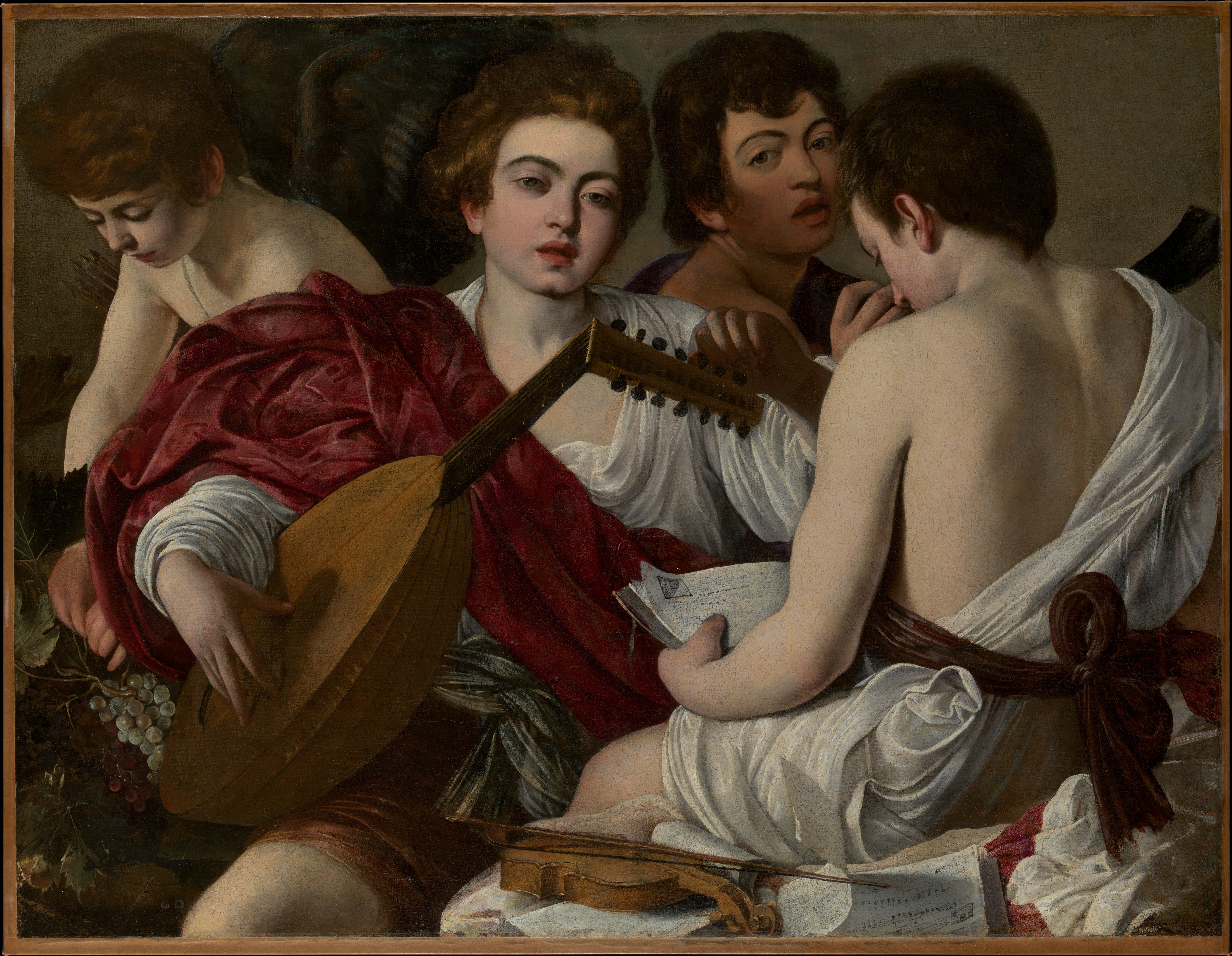
The Metropolitan Museum of Art's published provenance for Caravaggio's Musicians runs from the artist's first major patron in 1597 to the museum's purchase in 1952, and one link in it belongs to a woman who is not named. The entry reads, in the museum's own text, David Burns, Fernacre, Whitehaven, Cumberland, by the 1920s until his death in 1941, with an inventory of 1933 at number 846; then Mrs. David Burns, Fernacre, from 1941, sold shortly before her death in 1947 to Cookson.
What that line records is a person making decisions. She inherited a Caravaggio in 1941, in wartime, in Cumberland. She kept it for six years. She then sold it, to a dealer in Kendal, at a moment when she was near the end of her life, and the dealer sold it on for one hundred pounds to the surgeon captain who sold it to the Metropolitan five years later. Every one of those is an act of ownership.
The record of the person who performed them is the forename and surname of a man who had been dead since 1941. The museum is not being careless. It is reproducing the only form in which her name reached the file, because that is the form in which she signed, was invoiced and was written about.
The seventeenth century names her better than the twentieth
The same Metropolitan provenance that gives a twentieth-century owner no name at all gives a seventeenth-century one everything. Two links above Mrs. David Burns the entry reads: Cardinal Richelieu, until his death in 1642, his estate sale of 7 January to 8 February 1650, number 996, for 1,030 livres tournois to the duchesse d'Aiguillon; then his niece, Marie Wignerod de Pontcourlay, duchesse d'Aiguillon, le petit Luxembourg, Paris, 1650 until her death in 1675, with an inventory of 1675 at number 48.
She gets a forename, a family name, a married title, a Paris address, a purchase price, a date of death and an inventory number of her own. She bought the picture out of her uncle's estate as a private buyer at a public sale, and the archive can say what she paid for it. The woman who sold the same canvas 297 years later cannot be named.
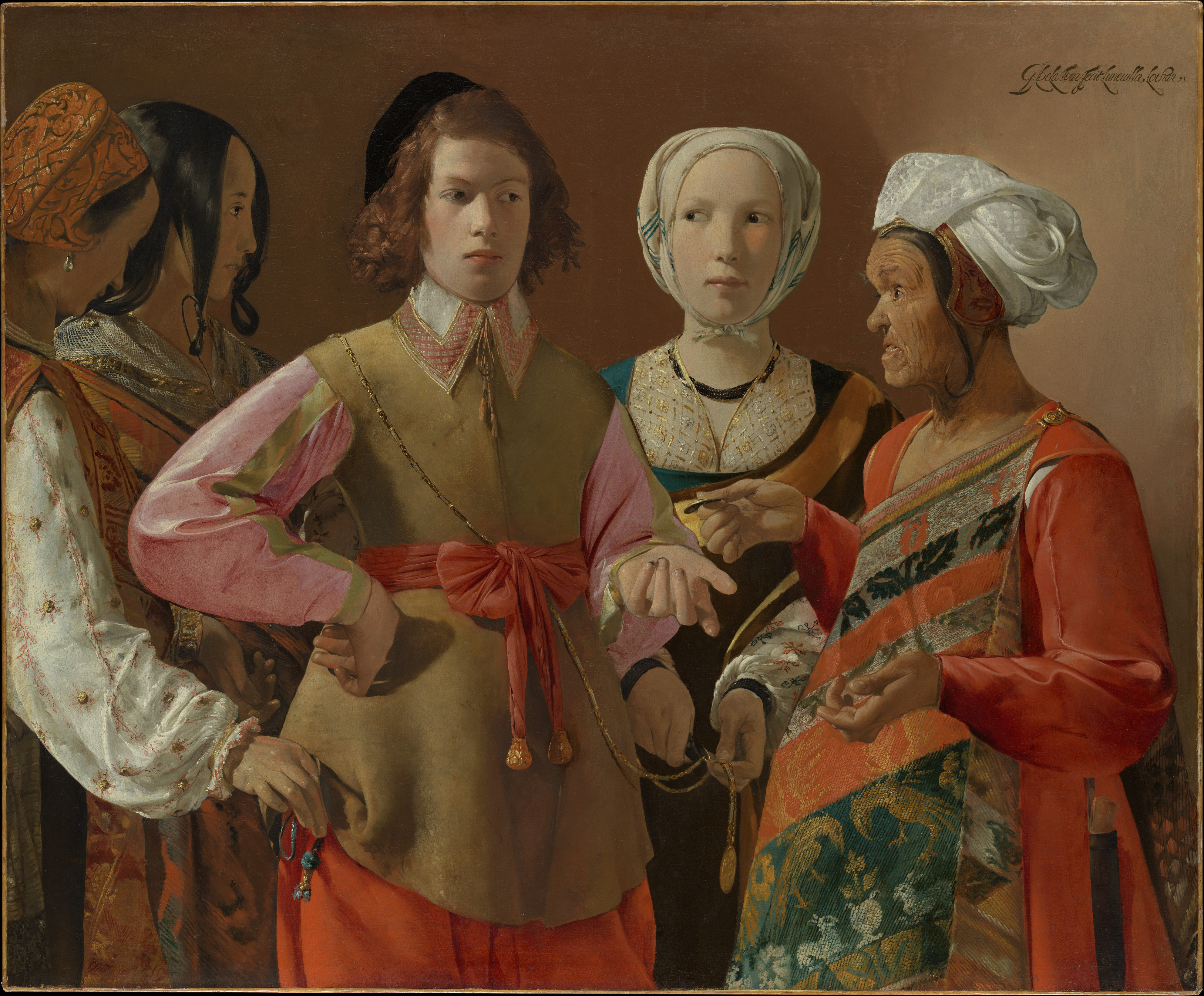
The Fortune-Teller shows the same inversion on a different object. The Metropolitan names Edouard Lemonnier de Loriere of the chateau de Moulin Vieux in full, gives his 1879 inventory and quotes its valuation, and then records the next forty-two years of the picture's history as his daughter, Mme de Gastines, chateau de la Denisiere, near Coulans, Sarthe, until 1921. She held it longer than any other private owner in the chain. The reason the older entries are better is that they are copied from probate inventories and notarial sale records, where a woman appears as a legal party in her own right, and the modern entries are copied from correspondence and dealers' books, where she appears as a household.
The honorific records the marriage, and only for the women
Two of the nineteen women in this corpus are recorded with a forename and a surname, and both are prefixed Miss. They appear in the Cozio Archive's ownership table for the ex Kurtz Amati, the archive that functions as the standard reference for the provenance of stringed instruments.
The table runs Oliphant, then Miss Irene Pellew, then Sir Louis Mallet until 1873, then a chain of dealers and collectors: Edward Withers, Michael Longridge, George Withers & Sons, George Soames, Edward Heron-Allen, Sidney Courtald, W. E. Hill & Sons until 1896, then Miss Hilda Barry from 1896 to 1923, then Rudolph Wurlitzer Co., Emil Herrmann, Dr. Steiner-Schweizer, Robert L. Dennison, Harry Wahl and Dr. Arved Kurtz.
These two women have their own names, so this is not the erasure of the Cleveland tray. It is something narrower and more persistent. Every entry in that table that concerns a woman states whether she was married, and no entry that concerns a man states anything of the kind. Sir Louis Mallet's title records his knighthood, Dr. Arved Kurtz's records a doctorate, and neither says whether either man had a wife. Hilda Barry owned this violin for twenty-seven years, longer than anyone else in the chain before the museum, and what the archive preserves alongside that fact is that she did not marry.
Rank and money buy a woman her own name
The women this archive can name are, with one exception, women who held a title, a fortune or a professional qualification. That is a finding about the records rather than about the women, and it is consistent across four centuries and four countries.
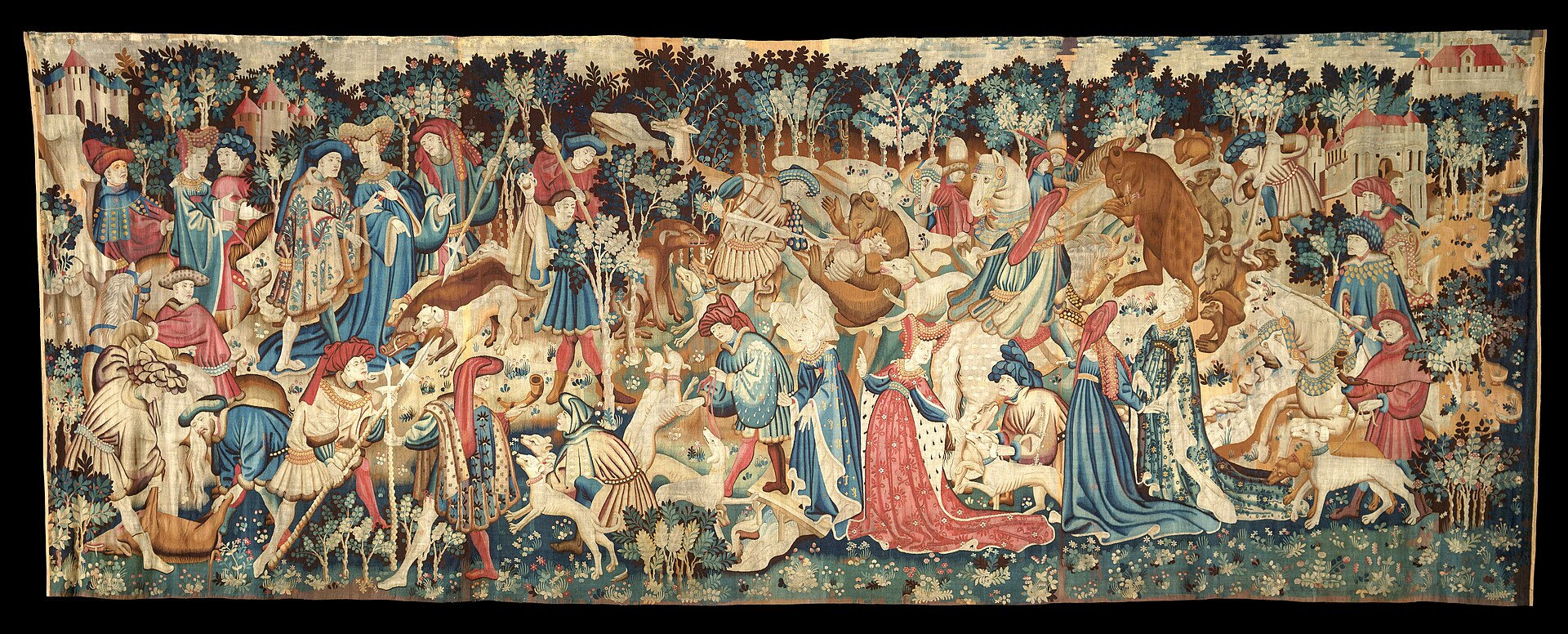
Elizabeth Talbot, Countess of Shrewsbury, is named in full wherever the Devonshire Hunting Tapestries are discussed, along with the house she built and furnished. Margaret Cavendish Bentinck, Dowager Duchess of Portland, bought the Roman cameo-glass vase that carries her family's name together with three other antiquities for 1,800 guineas in 1784, held it for about a year and died in July 1785, and her collection was then sold over thirty-eight sessions between 24 April and 7 June 1786. Dr Marie Lea-Wilson, who gave a Caravaggio to a Jesuit house in Dublin around 1930, is named on the National Gallery of Ireland's own credit line for it, with her doctorate, more than sixty years after the gift. Mrs Mary Georgiana Constance Nisbet Hamilton Ogilvy, who held that same Caravaggio until her death in 1920, is named in full because she held a Scottish estate.
What all four have in common is that they were recorded by an institution that had a separate reason to record them: a peerage, an auction catalogue, a medical register, a landed estate. Emilie Schmidt Grasselli, Hilda Barry and the woman known only as Mrs. David Burns had none of those, and the difference in the archive is total.
Sometimes the wife turns out to have been the buyer
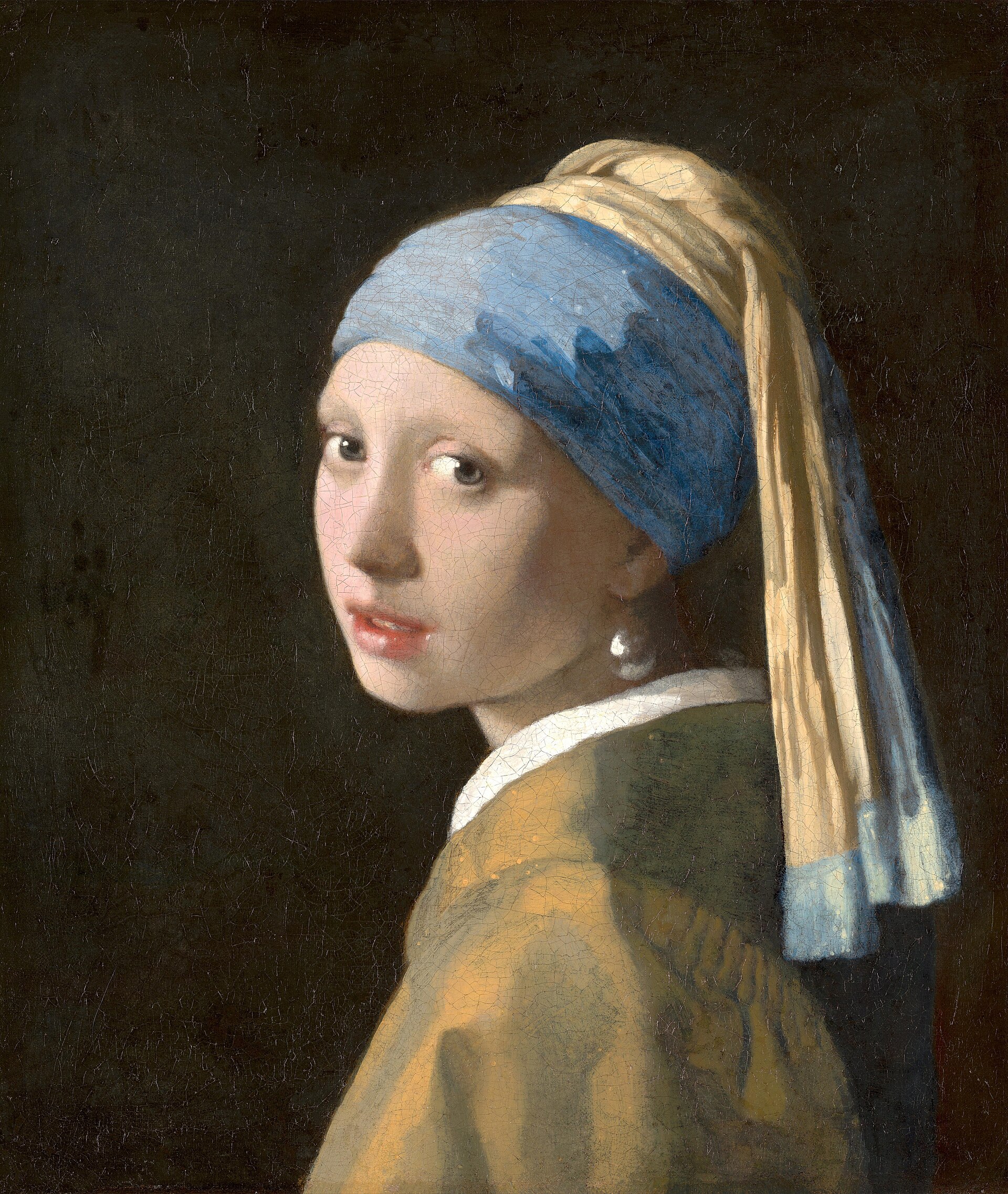
The strongest version of this problem is not that a woman is under-recorded but that the wrong person has been credited for centuries. Vermeer's principal patrons were a Delft couple, Pieter van Ruijven and his wife Maria de Knuijt, whose holding of the painter's work was eventually dispersed in the Dissius sale of 1696 and accounts for a large part of everything Vermeer is known to have made.
The patronage was assigned to van Ruijven for as long as the question was asked. In the catalogue of the Rijksmuseum's 2023 Vermeer exhibition the co-curator Pieter Roelofs argued that the collector was Maria de Knuijt, on the evidence of her own will, which left Vermeer 500 guilders and named him as the only beneficiary outside her family. A third-party bequest of that kind is close to unique in the Delft records. The catalogue's position is that at least twenty paintings, roughly half of the surviving oeuvre of thirty-seven, were bought by her.
Whether this specific canvas was among them is not established, and this archive does not treat it as established. The three tronies in the 1696 Dissius sale that have been associated with it, lots 38, 39 and 40, sold for 36, 17 and 17 guilders, and the painting cannot be securely assigned to any of them. What the case shows is not a fact about one picture but a default about all of them: where a married couple owned art, the historiography credited the husband, and it took the reading of a woman's will to test the assumption.
How to search for a woman recorded as her husband
A woman entered in a provenance line under a husband's name is not lost, but she cannot be found by searching for her. The Getty Provenance Index, dealer stock books and auction catalogues index the string that was written down, and the string that was written down is his.
Four moves recover her in practice. Search his name and read every hit for the years after his death, because that is the period in which the object was hers. Find the date of his death and treat it as the true start date of her ownership, which is what the Cleveland question mark is standing in for. Go to the probate inventory taken at that death, because an inventory is a legal document in which a widow appears as a party and is therefore the record most likely to carry her own name. And read the sale correspondence rather than the catalogue, because dealers wrote to the person who was actually selling.
Two habits are worth adopting in the writing as well. Record the courtesy title exactly as the source has it, since altering it destroys the evidence of how she was known, and add her own name beside it in brackets the moment you establish it, which is what Cleveland did for Emilie Schmidt Grasselli and what makes that entry better than the tray. A record that says Mrs. Otto Miller and stops has thrown away the only thread that leads anywhere.
Questions
Because that is usually the only form in which the name reached the file. Twentieth-century provenance is compiled from invoices, dealer correspondence, insurance schedules and gift paperwork, and in all of those a married woman was routinely addressed and recorded as Mrs plus her husband's forename and surname. The museum is reproducing its source rather than making an editorial choice.
Nineteen provenance events across eighteen objects, out of 1,322 events in 184 published records, carry an explicit marker that the owner was a woman. That is a floor rather than a measurement, because the test only catches titles such as Mrs, Madame, Miss, Lady or Countess and the word widow, and misses any woman recorded plainly by forename and surname or inside a family group.
The couple's holding was credited to Pieter van Ruijven for decades. In the catalogue of the Rijksmuseum's 2023 Vermeer exhibition, co-curator Pieter Roelofs argued that his wife Maria de Knuijt was the collector, citing her will, which left Vermeer 500 guilders and made him the only beneficiary outside her family, and put her purchases at around twenty paintings, about half the surviving oeuvre.
Search his name and read the entries dated after his death, since those are the years the object was hers. Then find the probate inventory taken at his death, because an inventory records a widow as a legal party and is the document most likely to carry her own forename and surname. Dealer correspondence is also better than the printed catalogue, because dealers wrote to whoever was actually selling.
No. A credit line records whom the museum chose to honour, which is often not the person who owned or gave the object. The Cleveland Museum of Art publishes a Lamerie tea caddy under the credit line The Thomas S. Grasselli Memorial Collection, and its own provenance field shows that the donor was his widow, Emilie Schmidt Grasselli, who gave it in 1943, the year after his death.
Sources
- 1Cleveland Museum of Art, Open Access API, artwork records for accession numbers 1943.179, 1943.179.a and 1943.179.b, Tea Caddy, Paul Jacques de Lamerie, 1741-42. Fetched directly; the credit line and the full provenance string, including the bracketed name Emilie Schmidt and the date range beginning with a question mark, are quoted verbatim from the museum's own data. openaccess-api.clevelandart.org/api/...
- 2Cleveland Museum of Art, Open Access API, artwork record for accession number 1941.601, Tray, Paul Jacques de Lamerie, 1745-46. Fetched directly. The credit line reads Gift of Mrs. Otto Miller and the provenance array is empty. openaccess-api.clevelandart.org/api/...
- 3Metropolitan Museum of Art, object record and published provenance for Caravaggio, The Musicians, accession 52.81. Read in full for the Richelieu estate sale of 1650, the duchesse d'Aiguillon's 1675 inventory, the entries for David Burns and Mrs. David Burns, and the 1947 sale to Cookson and Thwaytes. metmuseum.org/art/...
- 4Metropolitan Museum of Art, object record and published provenance for Georges de La Tour, The Fortune-Teller, accession 60.30. Read in full for the 1650 Bretagne inventory valuation, the 1879 Lemonnier de Loriere inventory, the entry for Mme de Gastines to 1921 and the 1949 sale to Wildenstein. metmuseum.org/art/...
- 5Tarisio, Cozio Archive, property record for Andrea Amati, Violin, Cremona, the Kurtz, Metropolitan, property ID 40073. The provenance table listing Miss Irene Pellew and Miss Hilda Barry, 1896-1923, alongside Sir Louis Mallet, Edward Heron-Allen, W. E. Hill & Sons and Dr. Arved Kurtz. tarisio.com/cozio-archive/...
- 6Metropolitan Museum of Art Collection API, object record 503517, ex Kurtz Violin, accession 1999.26, for the credit line Purchase, Robert Alonzo Lehman Bequest, 1999. collectionapi.metmuseum.org/public/...
- 7National Gallery of Ireland, online collection, The Taking of Christ, loan number L.14702. Read for the credit line naming Dr Marie Lea-Wilson and for the provenance entry naming Mrs Mary Georgiana Constance Nisbet Hamilton Ogilvy, died 1920. onlinecollection.nationalgallery.ie/objects/...
- 8Milo Keynes, The Portland Vase: Sir William Hamilton, Josiah Wedgwood and the Darwins, Notes and Records of the Royal Society of London. Read for the Duchess Dowager of Portland's purchase of the vase with three other antiquities for 1,800 guineas in 1784, her death in July 1785, and the sale of her collection in thirty-eight sessions between 24 April and 7 June 1786. darwin-online.org.uk/converted/...
- 9The Art Newspaper, Revealed: Vermeer's patron was, in fact, a woman and she bought half the artist's entire oeuvre, 7 February 2023. Reporting Pieter Roelofs's argument in the catalogue of the Rijksmuseum's 2023 Vermeer exhibition, including the 500-guilder bequest in Maria de Knuijt's will and the estimate of at least twenty paintings. theartnewspaper.com/2023/...
- 10Iconotheca, records for lamerie-tea-caddy-cleveland, lamerie-tray-cleveland, caravaggio-the-musicians, georges-de-la-tour-the-fortune-teller, amati-ex-kurtz-violin-met, devonshire-hunting-tapestries-va, girl-with-a-pearl-earring and the-portland-vase. The 1,322-event count and the nineteen-event figure were computed across the 184 published records of this archive. iconotheca.com/artworks
More in Collectors and Collections
The partThe credit line names the collector, and the accession number tells you what happened
Morgan died in March 1913, and the Metropolitan credits him with gifts made in 1917. The credit line names the collector.
The Longest Ownership Links Here Belong to Owners That Were Not People
The 28 longest institutional ownership links in this archive run 7,434 years between them. Three end in a completed sale.
The Name in the Buyer's Column Is Often an Employee
Across 126 years of sales in this archive the winning bidder is repeatedly not the owner.