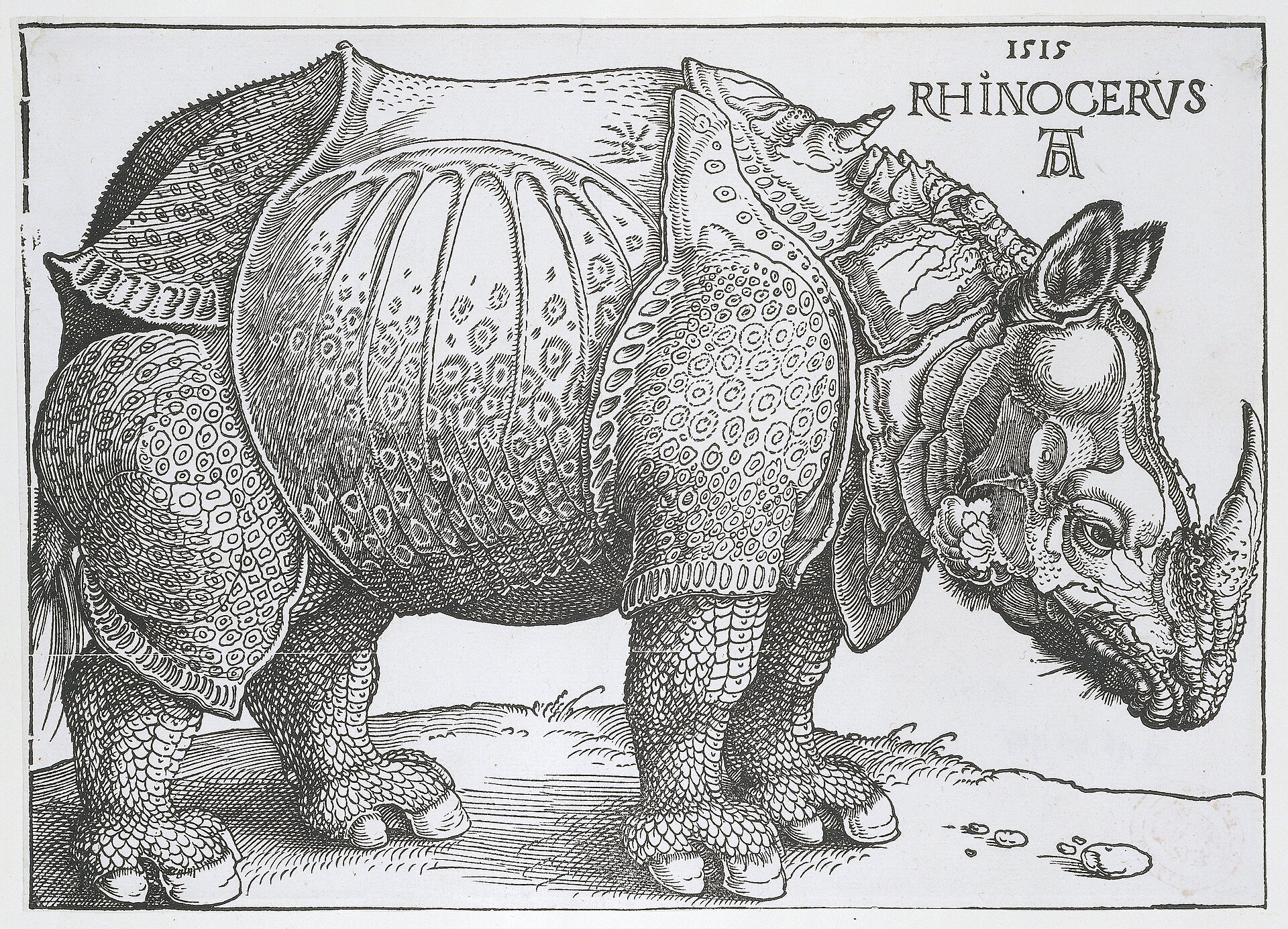
The Rhinoceros
1515 · Woodcut on paper
Rijksmuseum, Amsterdam
Museum · Rijksmuseum Amsterdam · Founded 1800
Open, admission and hours confirmed 7 September 2026 · 38 sources
The Rijksmuseum's core strength is its Dutch Golden Age holdings: 22 paintings by Rembrandt, which the museum describes as the largest such group in the world, and four paintings by Vermeer. Around these sit deep, less-visited collections most visitors never fully see: ship models and an armoury of historic weapons in the Special Collections and Navy Models holdings, a showpiece Delft flower pyramid from the court of William and Mary, and an Asian art collection spanning roughly 2000 BC to 2000 AD assembled from China, Japan, Indonesia, India, Vietnam and Thailand and housed since 2013 in a purpose-built pavilion. The Cuypers Library, the oldest and largest art-history research library in the Netherlands with around 450,000 items, underpins the museum's own scholarship on all of it.
| Local name | Rijksmuseum Amsterdam |
|---|---|
| Kind | Museum |
| Founded | 1800 as the Nationale Konst-Gallerij in The Hague; on this site since 1885 |
| City and country |  Amsterdam, Netherlands Amsterdam, Netherlands |
| Address | Museumstraat 1, 1071 XX Amsterdam, Netherlands |
| Website | rijksmuseum.nl/en |
| Status | Open, confirmed 7 September 2026 |
| Record last verified | 7 September 2026 |
Prices and hours change. We take them from the institution's own pages and print the day we read them, and you can check the current position at the source we used. Confirm before you travel.
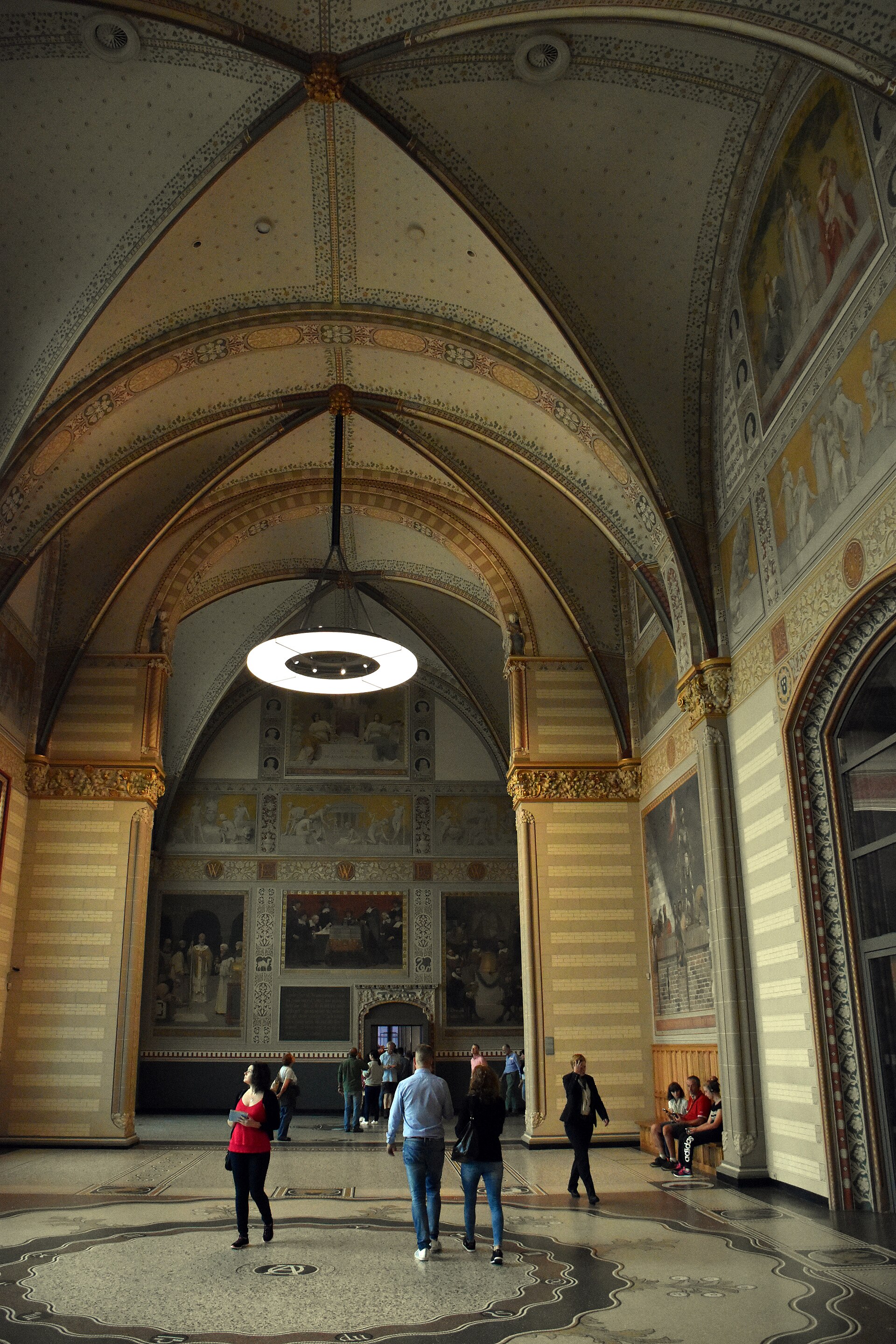
The vaulted, mosaic-and-terrazzo-floored hall at the top of the main staircase, painted throughout with Cuypers's own scheme of allegorical and historical murals; it opens directly onto the start of the Gallery of Honour and works as the ceremonial threshold to the one-way chronological route.
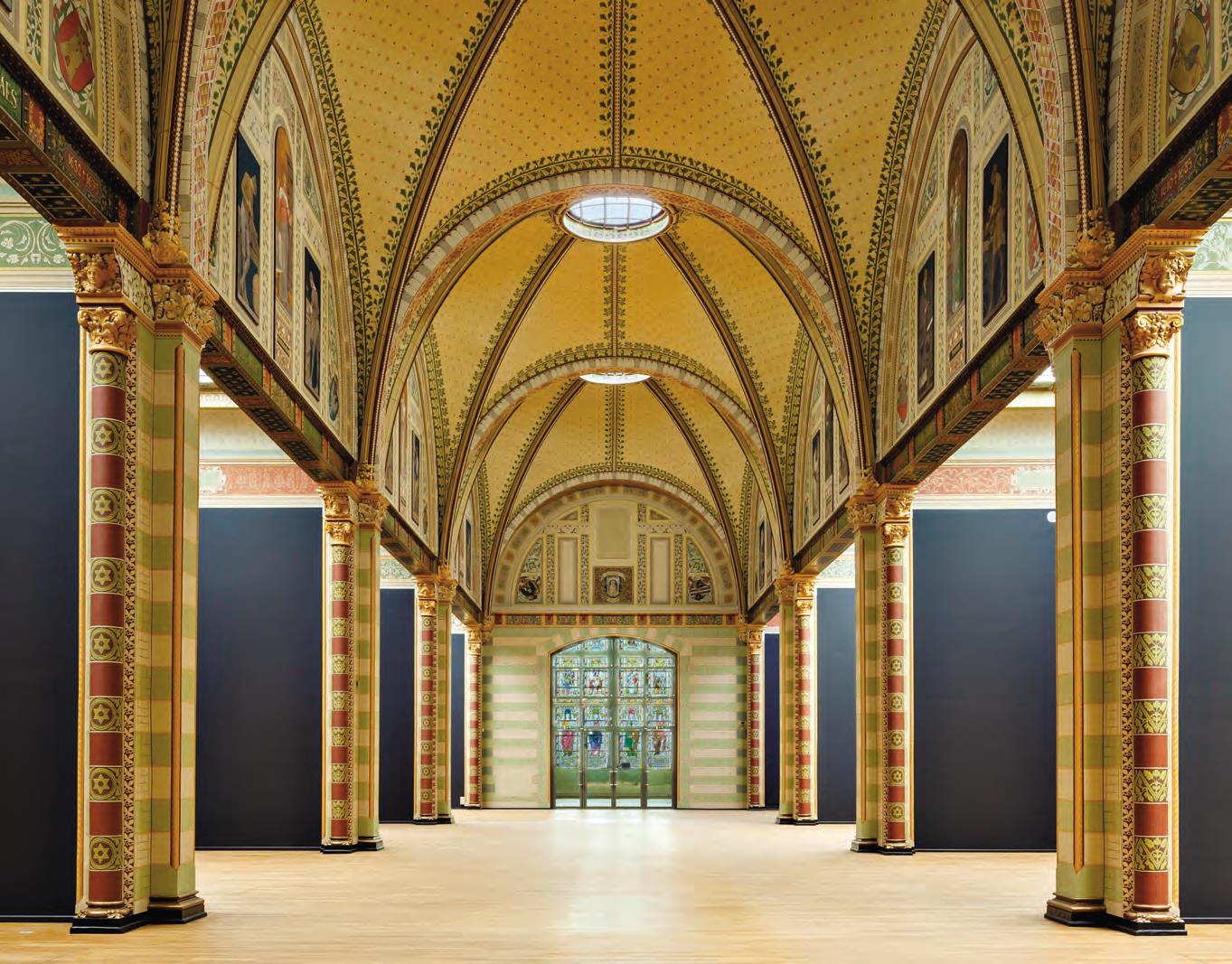
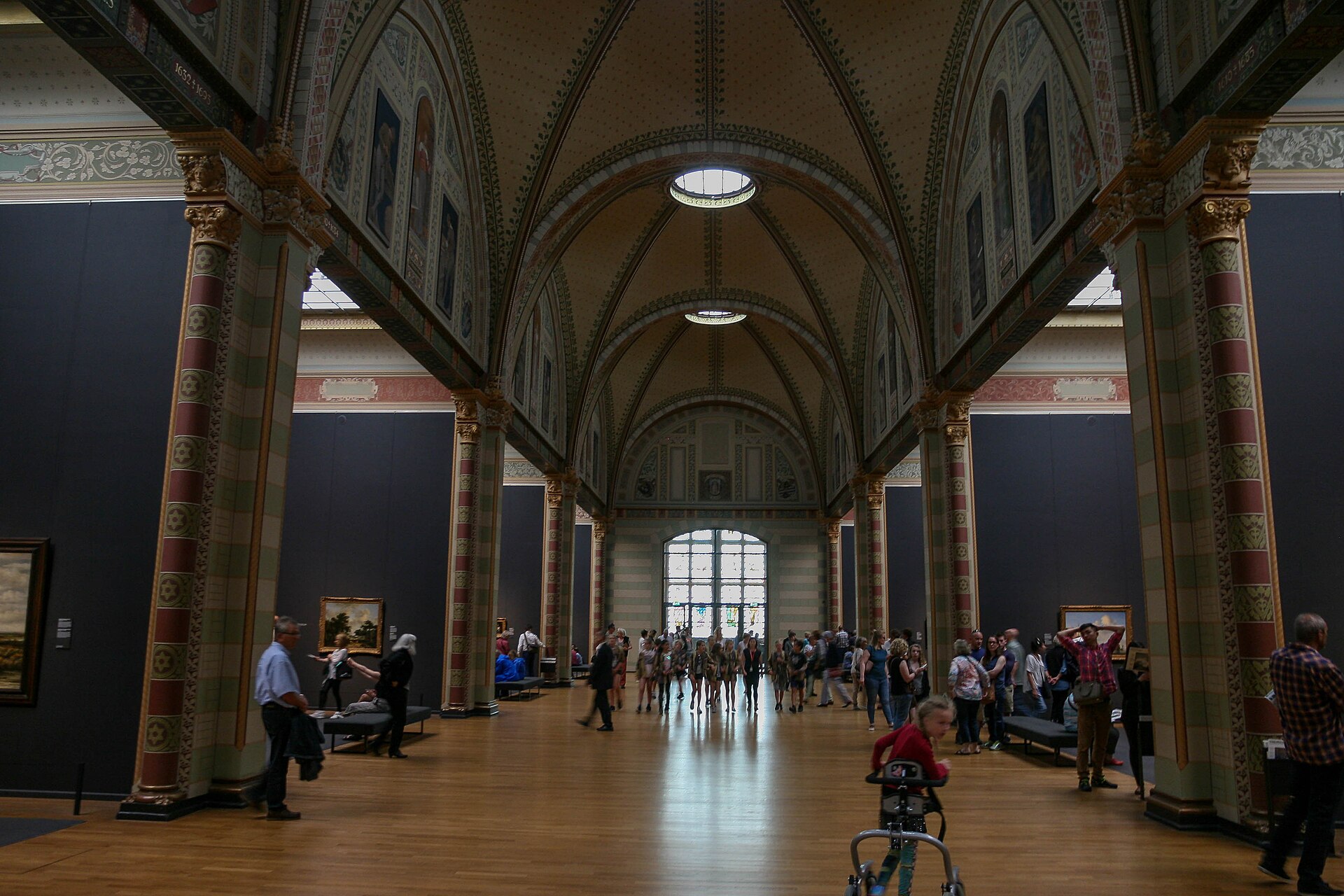
The single top-lit corridor on the second floor that concentrates the Golden Age holdings in one run, Vermeer's The Milkmaid, Frans Hals and a line of Rembrandts among them, leading to The Night Watch at its far end. Since March 2021 it has also carried work by three women painters, Judith Leyster, Gesina ter Borch and Rachel Ruysch, the first time women have hung there.
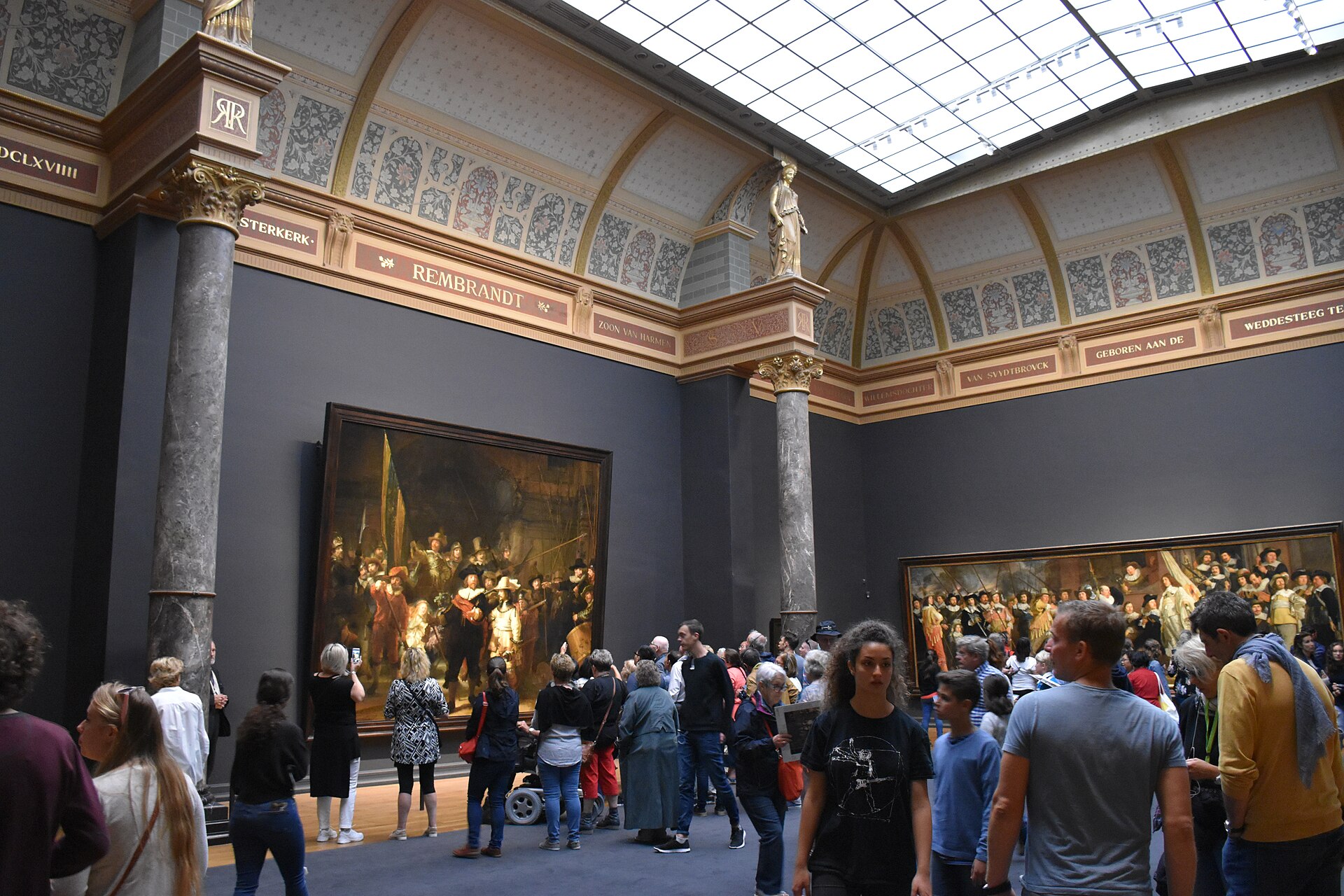
The purpose-built room at the end of the Gallery of Honour that has held The Night Watch since the 2013 reopening, now given over to Operation Night Watch, the glass-walled conservation studio built around the painting itself.
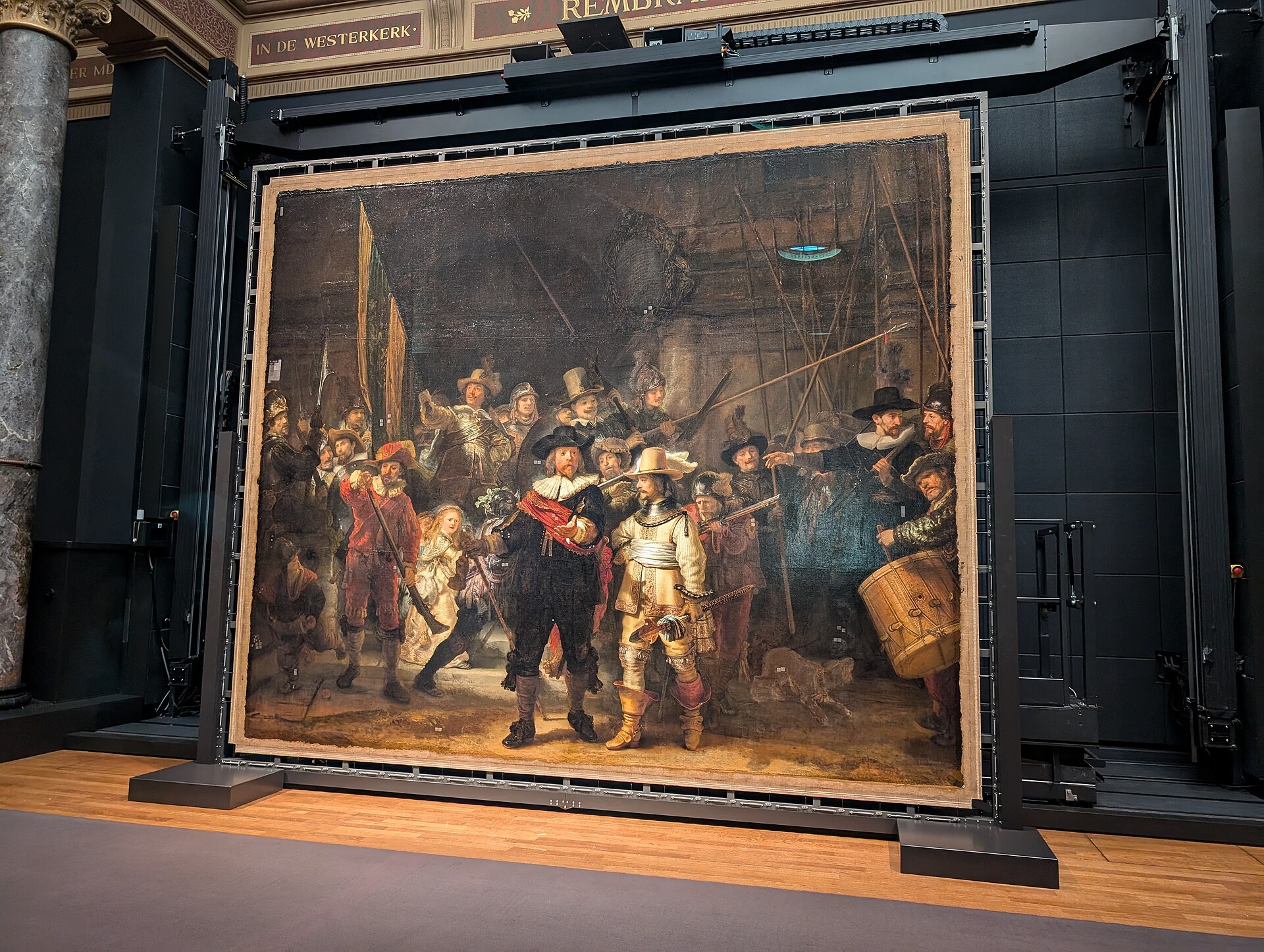
The museum's own name for the public study and treatment of The Night Watch running since 2019: imaging and pigment analysis have found a hidden preparatory sketch beneath the paint, made with a beige, chalk-rich paint the museum says had not been found in any other Rembrandt. The 1975 wooden stretcher was removed in 2022 and replaced with an aluminium one, and varnish removal began at the end of 2024, all visible to visitors through glass.
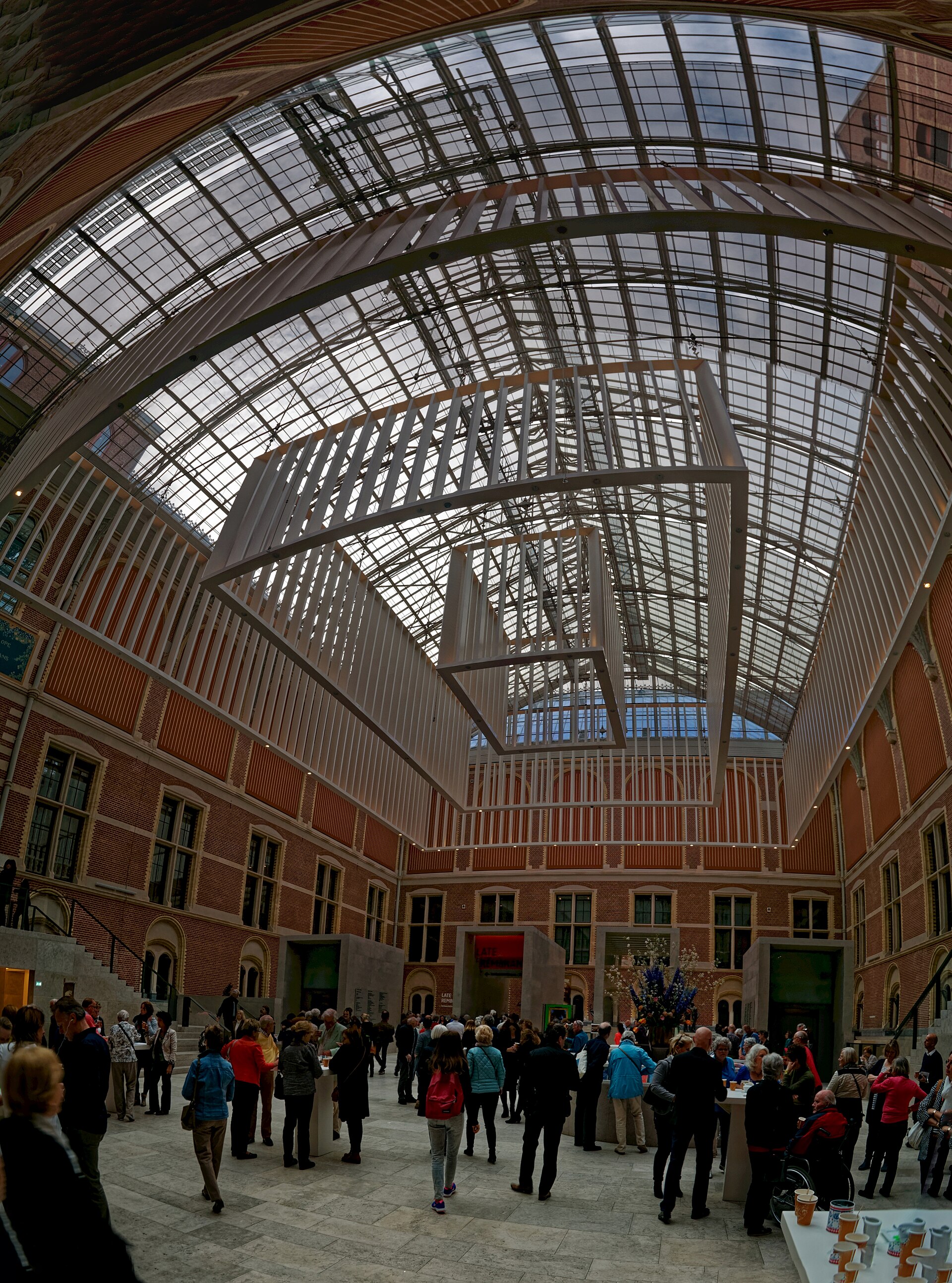
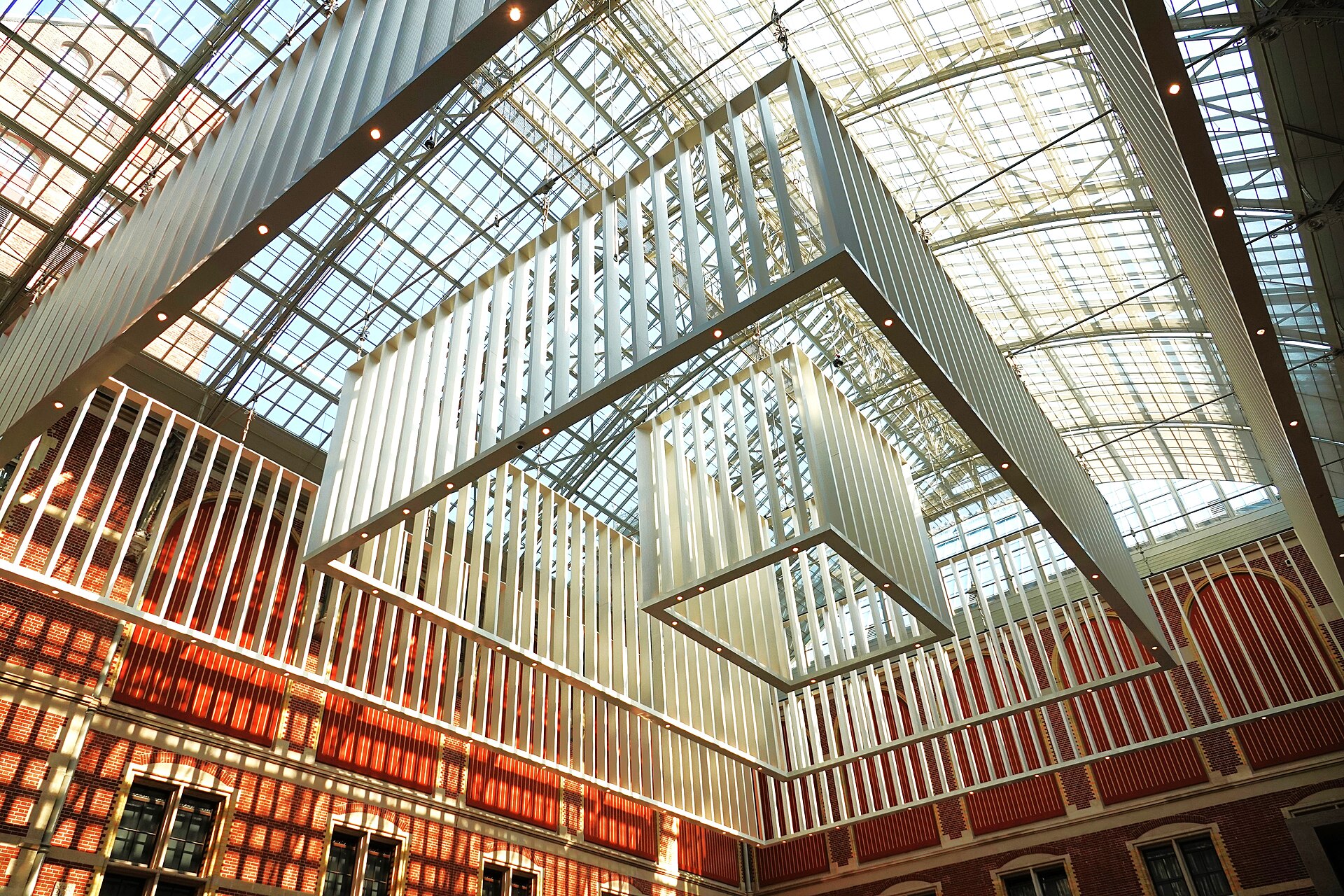
The glazed roof laid in 2013 over two courtyards Cuypers had left open, now the entrance hall from which every wing, including the half-sunken Asian Pavilion, is reached; built by the Spanish practice Cruz y Ortiz with the French designer Jean-Michel Wilmotte.
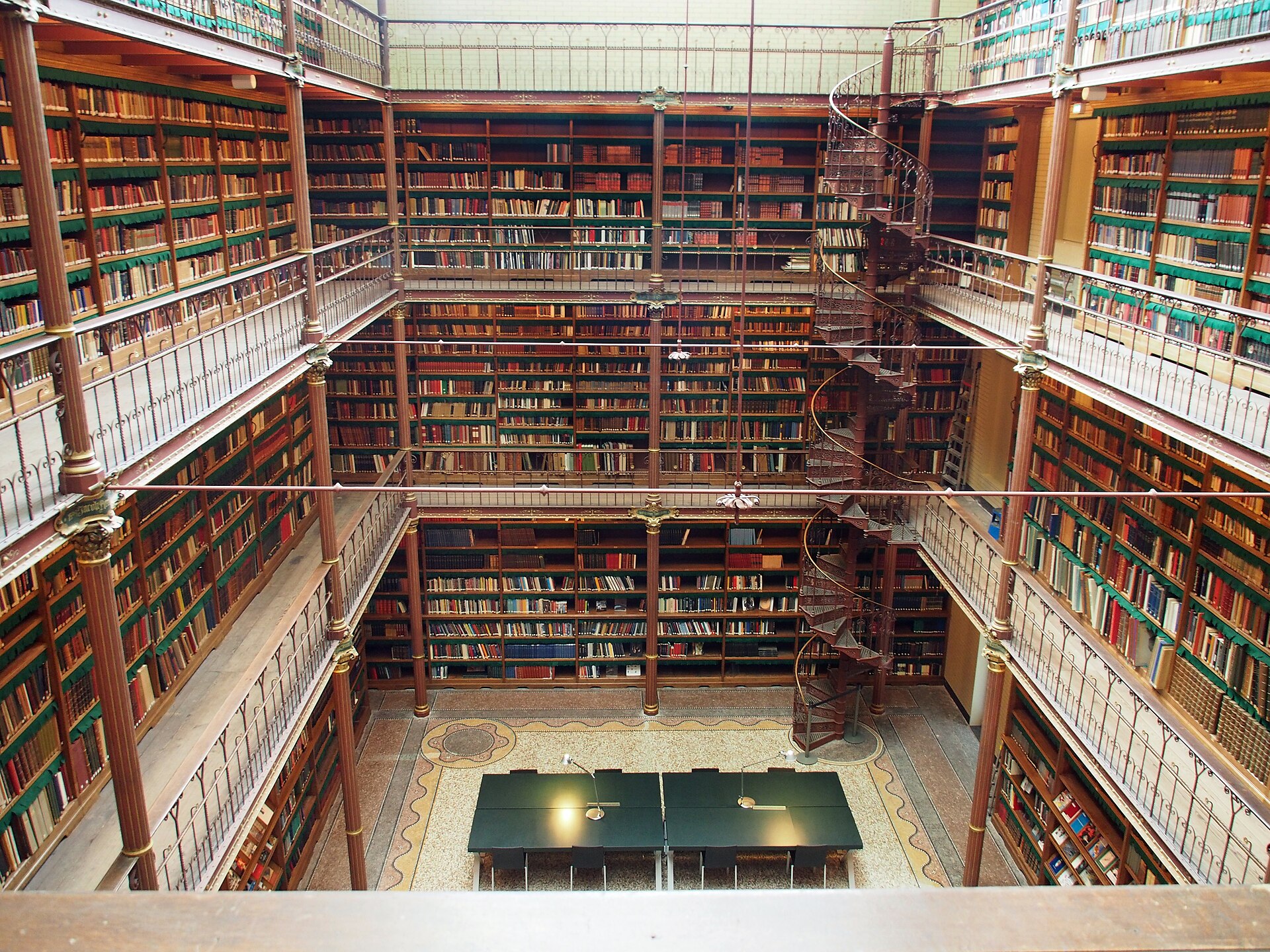
The oldest and largest art-history research library in the Netherlands, cast-iron galleries around a reading hall holding roughly 450,000 items collected since 1885. Visitors on the museum route can look down into it from a second-floor balcony without booking; using the collection itself requires an appointment.
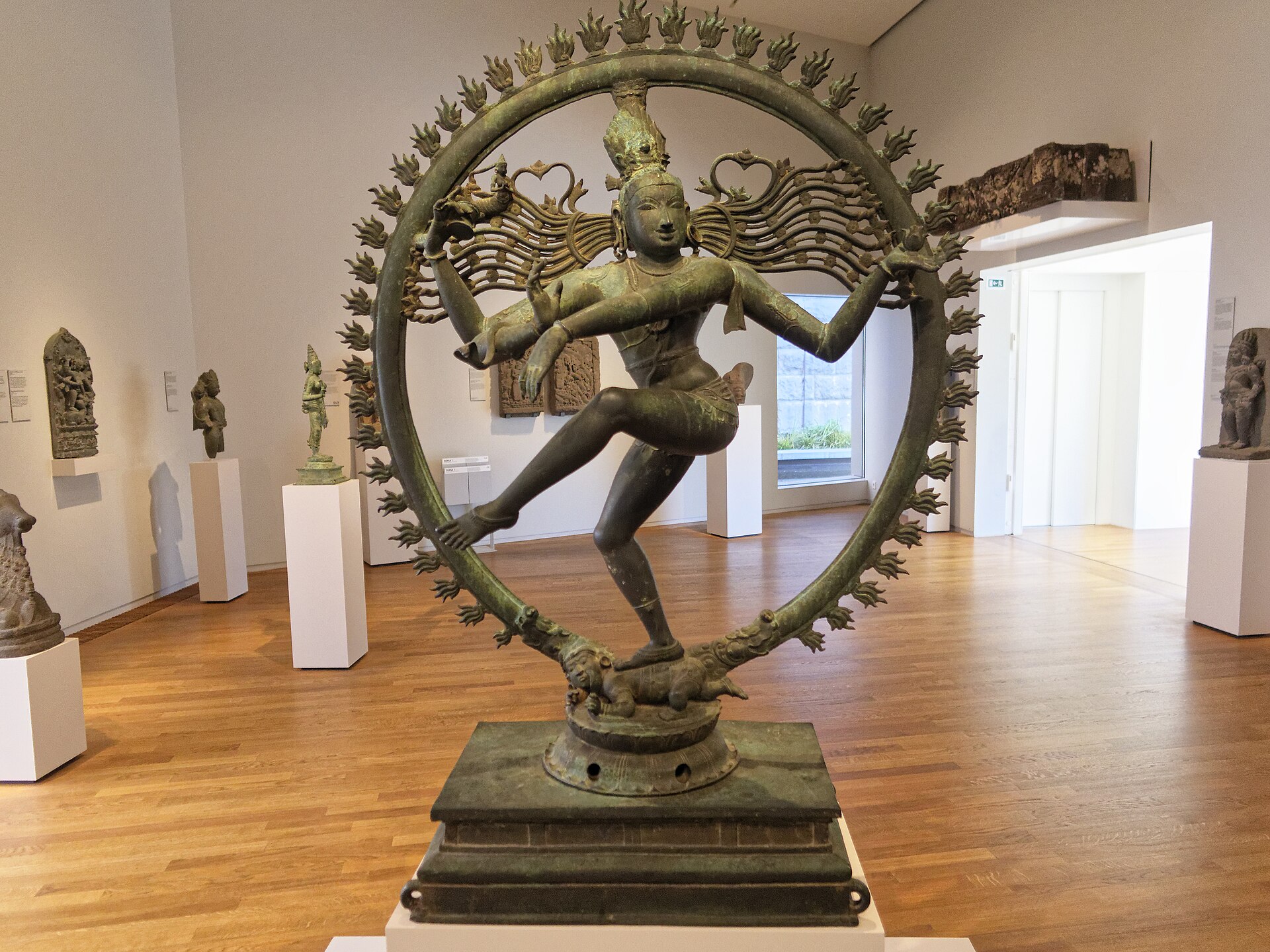
A half-sunken pavilion of Portuguese sandstone and glass, surrounded by water, added by Cruz y Ortiz in the 2013 renovation and reached from the Atrium. It holds art from China, Japan, Indonesia, India, Vietnam and Thailand made between about 2000 BC and 2000 AD, including a 153-centimetre Chola-period bronze of the dancing Shiva Nataraja on loan from the Royal Asian Art Society in the Netherlands.
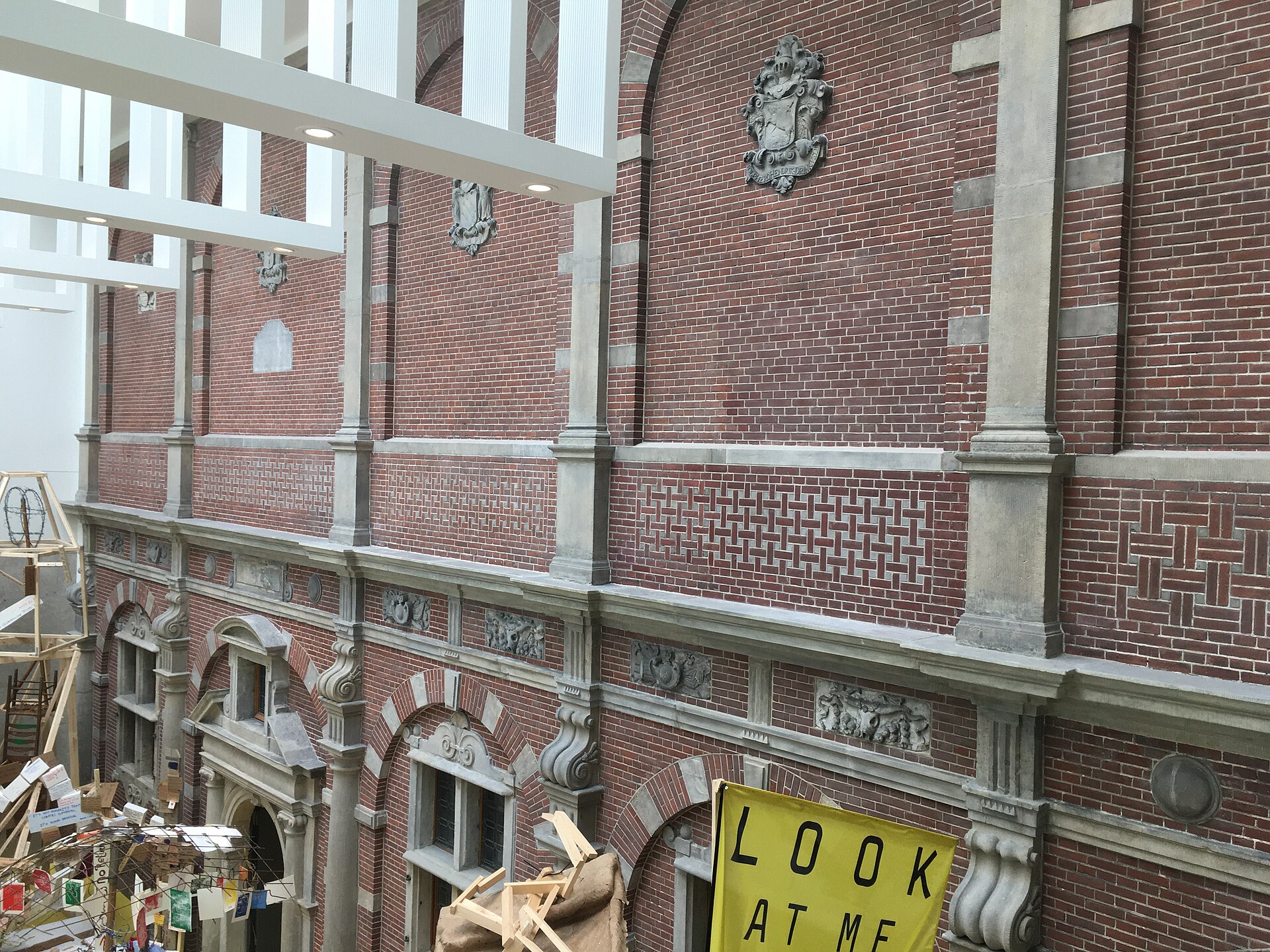
A group of Cuypers-era buildings raised in three phases between 1898 and 1916, once called the Fragments Building for the rescued architectural fragments built into its facades. It served as the museum's temporary home through the 2003-2013 closure, and reopened on 1 November 2014 as the dedicated large-exhibition wing, its own long-hidden courtyard reglazed by Cruz y Ortiz in the same idiom as the main Atrium.
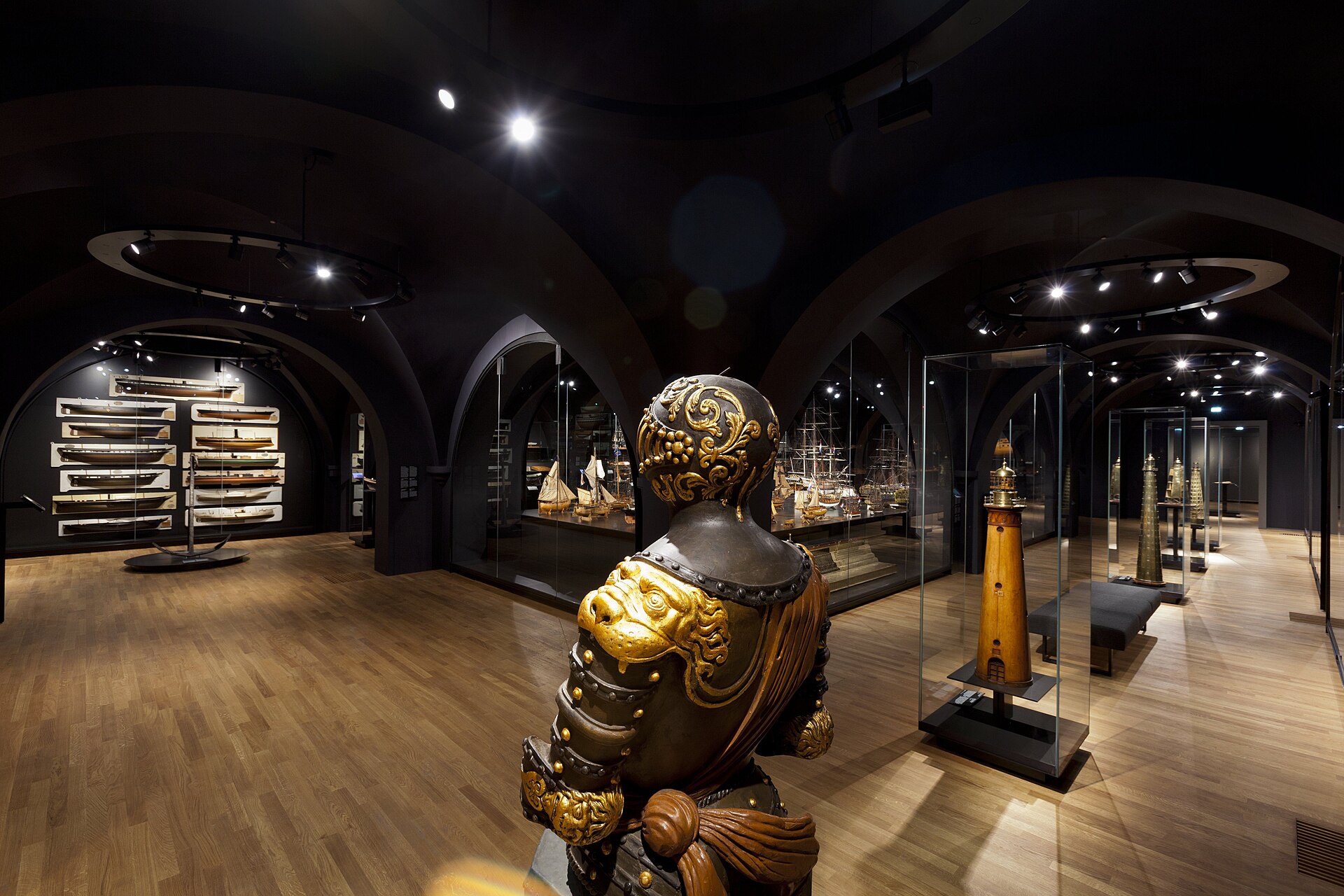
A ground-floor run of smaller, denser collections most visitors pass in minutes: miniature silverwork, historic musical instruments, fashion, magic lantern slides, glass, porcelain and an armoury of historic weapons, alongside a separate basement hall of Navy ship models and fittings.
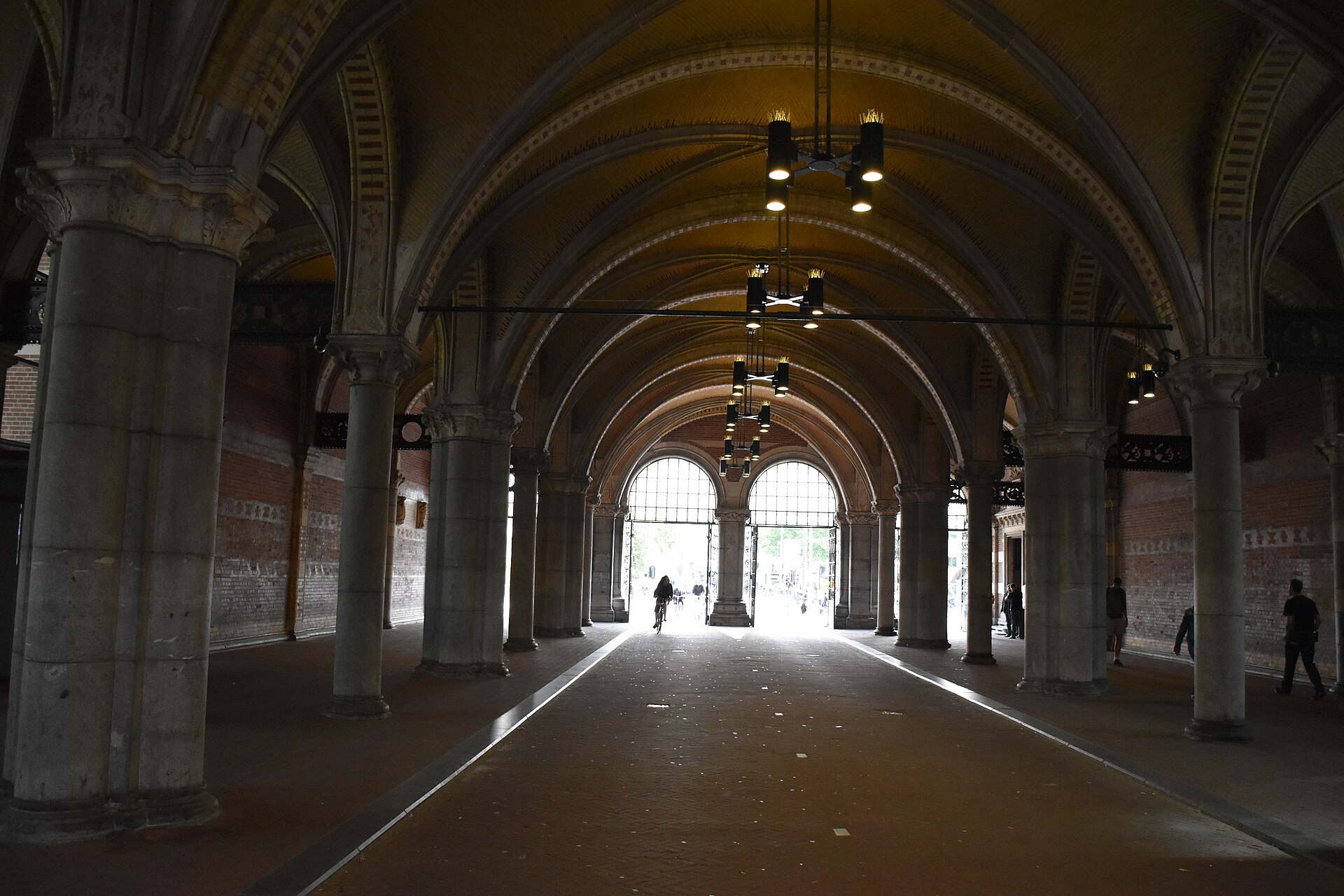
The vaulted public cycle-and-pedestrian route Cuypers was required to build through the ground floor to connect the old city to the new southern districts. It was disputed twice during the 2003-2013 renovation: a plan to put a new entrance where the bicycle path ran, opposed by the Cyclists' Union and a campaign group called Save the Passage, was dropped in favour of side-wall entrances by 2009; a second dispute followed around 2010, when the museum's own director argued cycling through the building would be unsafe, until a further study kept cyclists in. It reopened as originally planned, cyclists in the centre and pedestrians at the sides, on 13 May 2013.
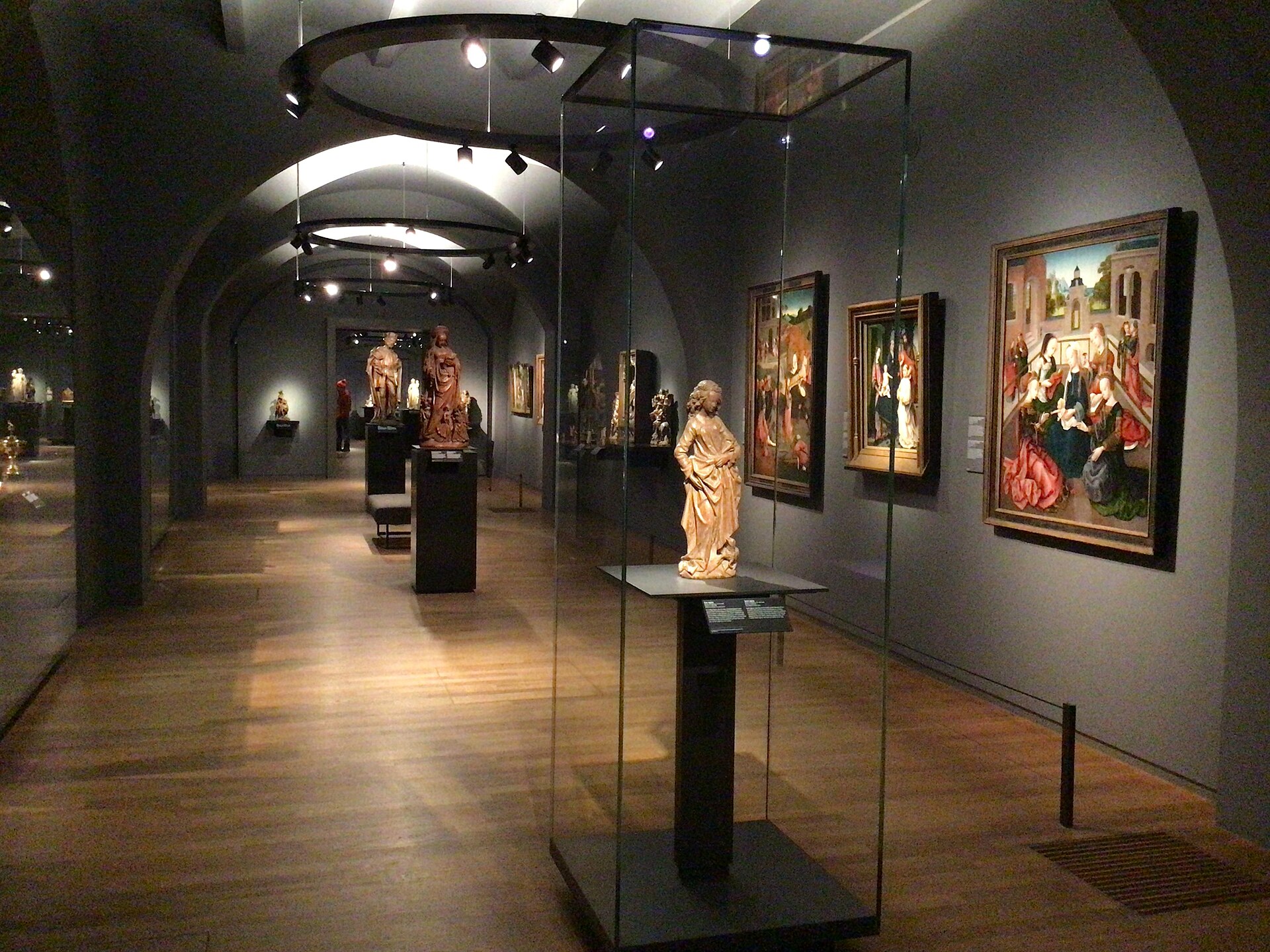
Lower-floor rooms covering roughly the 11th to the 16th century: polychrome wood sculpture, ivories, a decorated hunting horn, prayer nuts and early Netherlandish panel paintings in vaulted, low-lit rooms distinct from the top-lit galleries above.
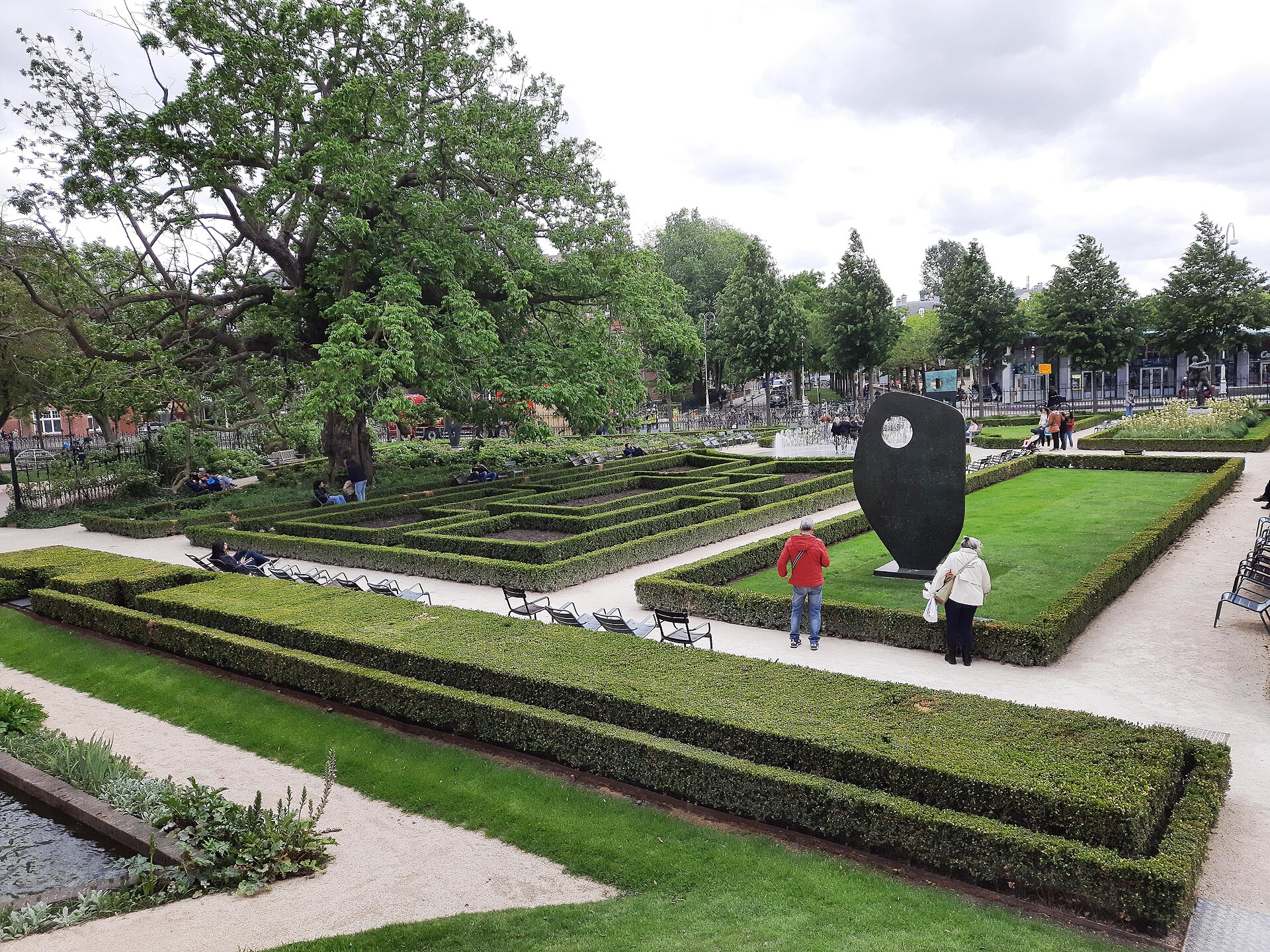
Cuypers's own design, begun in 1885 and completed in 1916 in four historicist styles, holding salvaged architectural fragments including gate structures from Deventer and Edam and a Caucasian wingnut tree planted in 1885. An annual free sculpture exhibition has run here since 2013 with support from the Don Quixote Foundation, and is due to expand in autumn 2026 into a permanent Foster and Partners-designed sculpture garden merging these grounds with the adjoining Carel Willinkplantsoen.
The largest and most famous of the militia group portraits in the Gallery of Honour, and the painting the museum's one-way route leads to; since 2019 it has also been the subject of Operation Night Watch, the glass-walled conservation project visible to visitors in its own gallery.4
One of the best-known embraces in painting and a late, loosely handled Rembrandt that the museum's own account of its hundred masterpieces singles out on those terms.4
A late self-portrait in which Rembrandt casts himself as the apostle, painted with the thick, worked paint surface the museum highlights as characteristic of his final years.4
One of four Vermeers in this museum's own collection, a plain domestic scene the museum credits with turning an everyday act into one of the stillest, most closely observed paintings in the building; bought in 1908 with support from the Vereniging Rembrandt.13
A cabinet of tortoiseshell and pewter fitted out over two decades with authentic miniature silver, glass, textiles and books, at a cost the museum says matched a real house on the Herengracht; among the most visited single objects outside the Gallery of Honour.14
A 156-centimetre, eleven-piece stacked Delftware showpiece made for the court of William and Mary, one of the museum's showpiece Delft flower pyramids.15
A 153-centimetre bronze of the dancing Shiva, bought in Paris in 1935 and on loan from the Royal Asian Art Society in the Netherlands since 1972; the largest and most prominent piece in the Asian Pavilion and one of the finest Chola bronzes outside India.16
1515 · Woodcut on paper
Rijksmuseum, Amsterdam
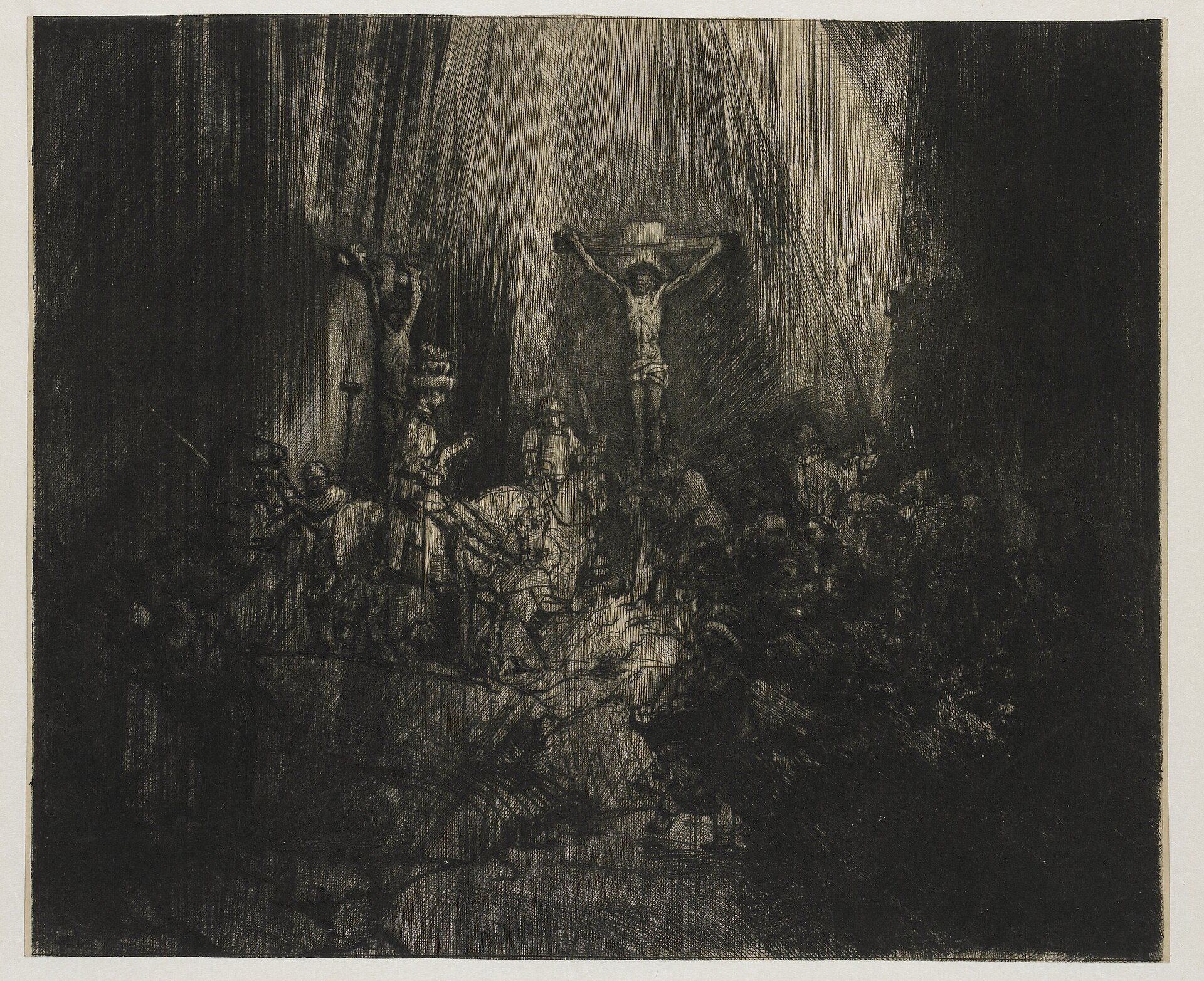
1653 for the plate's first three states · Drypoint
Rijksmuseum, Amsterdam
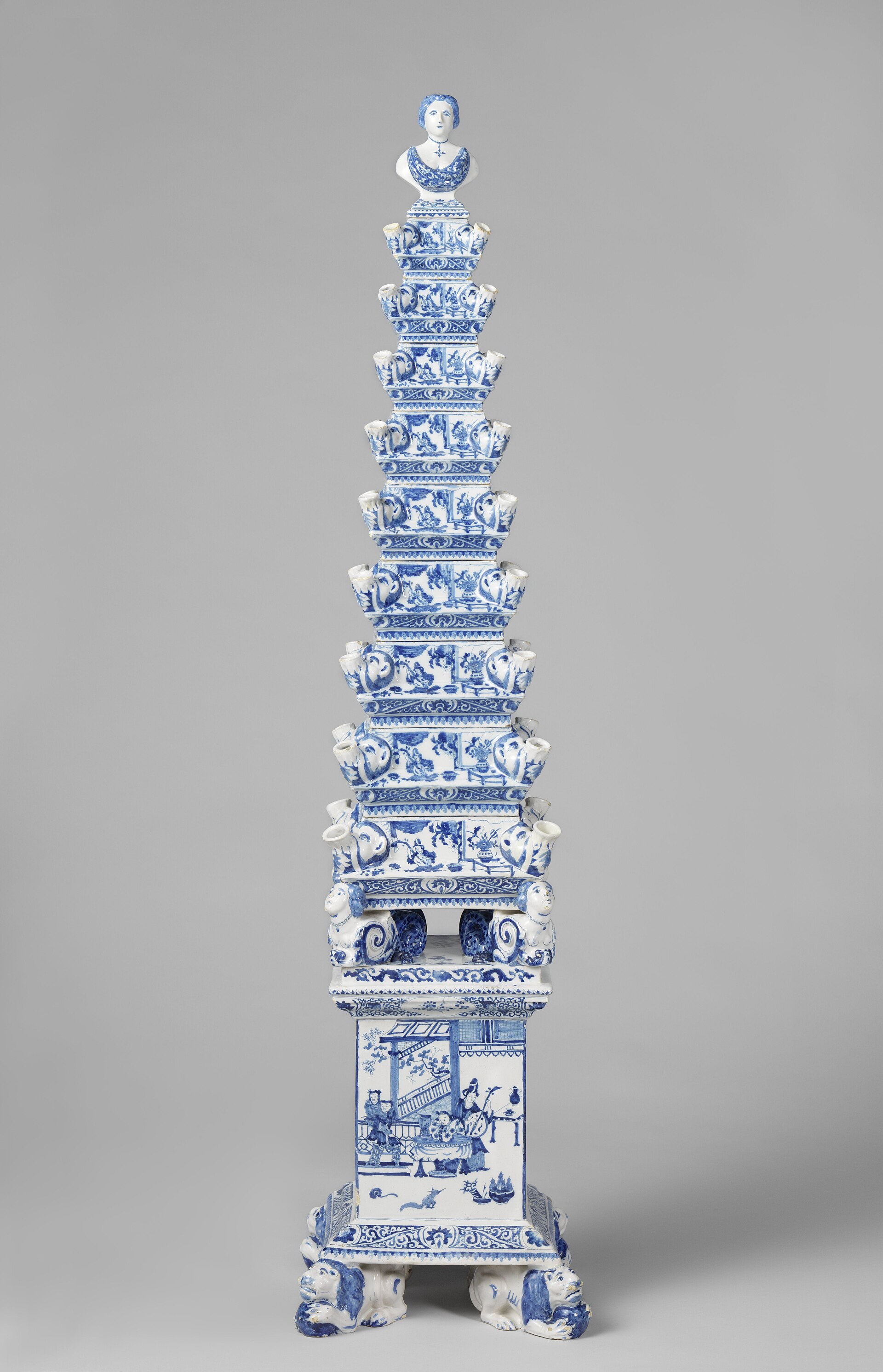
c. 1692 - c. 1700 · Faience
Rijksmuseum, Amsterdam
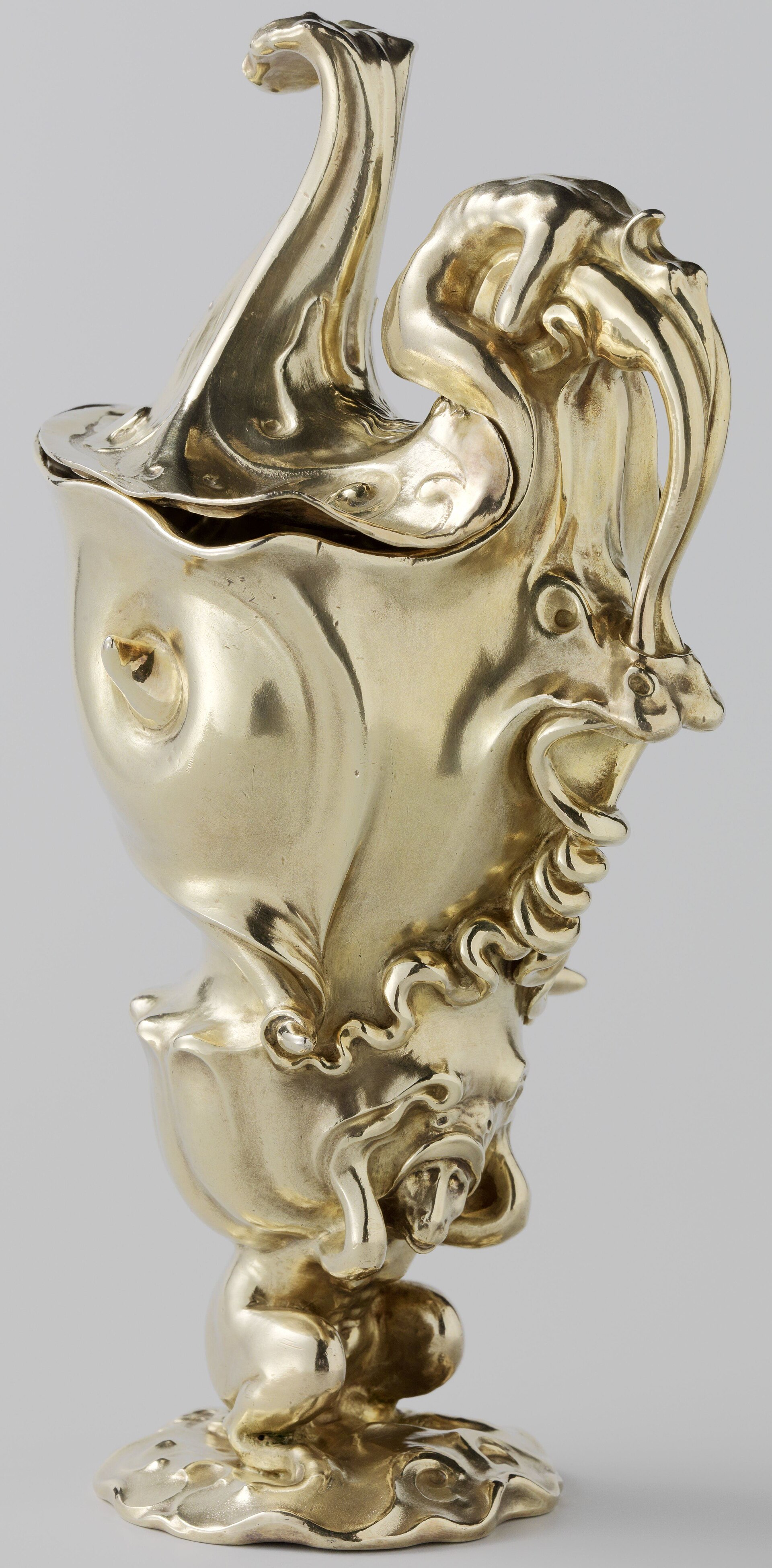
1614 · Silver
Rijksmuseum, Amsterdam
The Rijksmuseum began nowhere near Amsterdam. The government founded a national museum on 19 November 1798, following the French model set by the Louvre, and it opened on 31 May 1800 at Huis ten Bosch in The Hague with a little over 200 paintings and historical objects drawn from confiscated and princely collections. Under Louis Napoleon Bonaparte the collection moved to Amsterdam in 1808 and opened the following year on the top floor of the Royal Palace on Dam Square, already showing Rembrandt's The Night Watch. After Willem I became king in 1813 the museum, now called the Rijks Museum, or national museum, moved again, to the seventeenth-century Trippenhuis on the Kloveniersburgwal, where it stayed for six decades while parts of its holdings were dispersed to specialist institutions elsewhere in the country. It did not reach its present site, or its present building, until 1885.
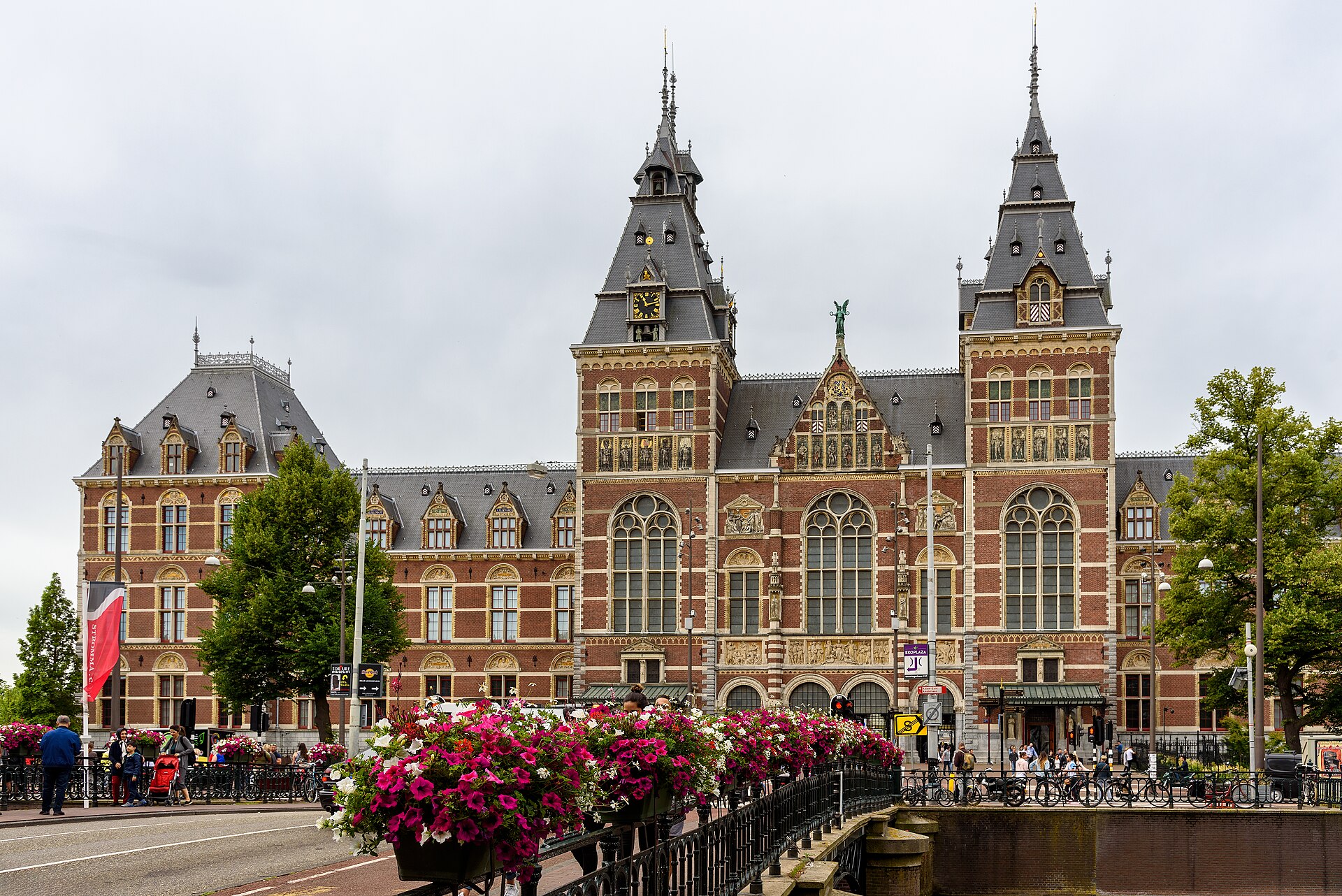
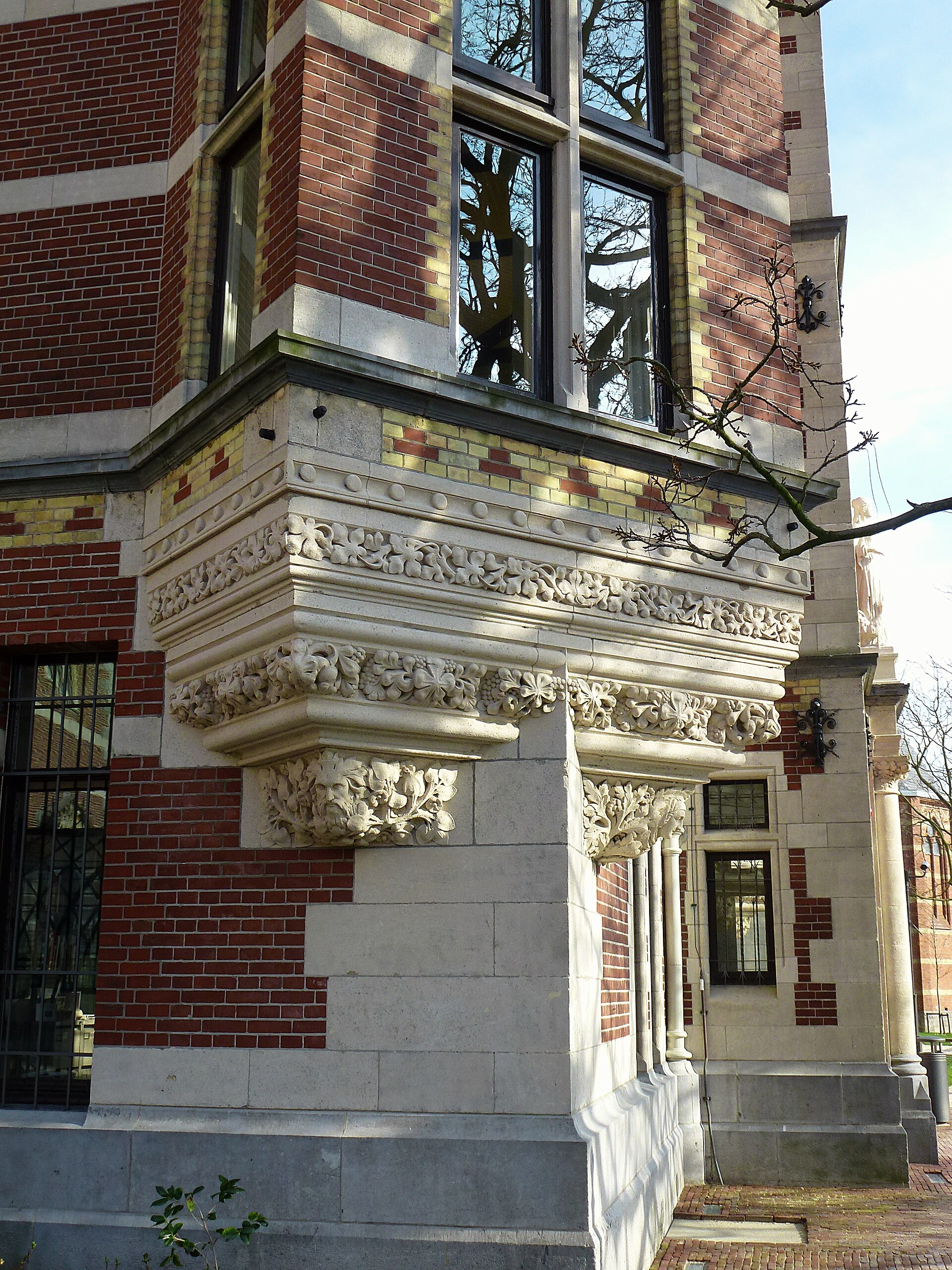
The architect Pierre Cuypers won the commission for the Museumplein building with a design mixing Gothic and Renaissance elements and, once it was approved, made it still more Gothic, stripping out Renaissance detailing the brief had wanted and adding vaulting, towers and stained glass closer to a church than a gallery. Construction ran from 1876 to 1885 on a foundation of some 8,000 driven piles. The result unsettled a mostly Protestant country: Cuypers's own religion and his church-like design drew years of public argument before the building even opened, and King Willem III is said to have disliked the architect and his design enough to skip the opening himself, sending members of the royal family in his place. Cuypers built the surrounding gardens too, in four historicist styles, and used them as an open-air museum for architectural fragments rescued from demolition elsewhere in the country, including gate structures from Deventer and Edam; a Caucasian wingnut tree he planted in 1885 still stands there. He also gave the ground floor of his building a public through-route for pedestrians and cyclists, a condition of the commission rather than his own idea, connecting the old city to the new southern districts. It very nearly did not survive the twenty-first-century renovation, and in two separate disputes: a plan around 2000 to 2009 to put a new entrance where the bicycle path ran, opposed by the Cyclists' Union and a campaign group called Save the Passage, was dropped in favour of side-wall entrances; a second dispute followed around 2010, when the museum's own director argued cycling through the building would be unsafe, until a further study kept cyclists in. The passage reopened to cyclists on 13 May 2013, a month after the museum itself.
The Rijksmuseum closed in 2003 for what became a ten-year renovation by the Spanish practice Cruz y Ortiz with the French designer Jean-Michel Wilmotte, and reopened on 13 April 2013 in a ceremony performed by Queen Beatrix days before her abdication. The single largest change was structural rather than decorative: Cuypers had left two open courtyards inside the building, and the architects excavated and glazed over both to create the Atrium, a single connected entrance hall from which every wing, including a new half-sunken Asian Pavilion of Portuguese stone and glass added alongside the main building, is now reached. Much of the renovation was in fact restoration, returning painted ceilings, wall stencilling and stained glass that earlier twentieth-century remodelling had covered or removed to something closer to Cuypers's own scheme. The Philips Wing, a group of Cuypers-era buildings from 1898 to 1916 once known as the Fragments Building for the fragments built into it, had served as the museum's temporary home throughout the closure and reopened separately as the dedicated large-exhibition wing on 1 November 2014, its own long-hidden courtyard reglazed by Cruz y Ortiz in the same idiom as the Atrium. The reopened museum drew heavy visitor numbers and warm architectural notice at the time; attendance has stayed at or above two million a year since, with 2.5 million visitors in 2024 and an average visitor rating, on the museum's own count, of 8.6 out of 10.
The collection's core is the run of seventeenth-century Dutch painting the Gallery of Honour lines up on the second floor: Vermeer's The Milkmaid, Frans Hals and a sequence of Rembrandts culminating, at the gallery's far end, in The Night Watch. The museum holds 22 paintings by Rembrandt, which it describes as the largest such group in the world, and four Vermeer paintings: The Milkmaid, The Little Street, Woman Reading a Letter and The Love Letter. Since March 2021 the Gallery of Honour has also carried work by three women painters, Judith Leyster's The Serenade, Gesina ter Borch's Memorial Portrait of Moses ter Borch, made with her brother Gerard, and Rachel Ruysch's Still Life with Flowers in a Glass Vase, the first time women have hung there; the museum's own announcement of the change said plainly that women had until then been missing from that gallery. The Night Watch itself has had its own dedicated room since 2013 and is now the site of Operation Night Watch, the museum's ongoing, publicly visible study and treatment of the painting: imaging and pigment analysis begun in 2019 have found a hidden preparatory sketch beneath the paint, made with a beige, chalk-rich paint the museum says had not been found in any other Rembrandt. Conservators removed the painting's 1975 wooden stretcher in 2022 and fitted an aluminium one in its place, and began removing the old varnish at the end of 2024, all of it visible to visitors through the glass chamber built around the painting.
Most of what the museum owns is not on a wall in the Gallery of Honour. Ship models and an armoury of historic weapons sit in the Special Collections and its separate basement Navy Models hall, alongside miniature silverwork, historic musical instruments, magic lantern slides, glass, porcelain and an annually rotating display from the costume collection. The Delftware holdings include flower pyramids, ceramic showpieces built in stacked, spouted tiers because Delft potters around 1700 could not fire one that tall in a single piece; the museum's tallest stands 156 centimetres and was made around 1692 to 1700 at the De Metaale Pot workshop under Lambertus van Eenhoorn. The Asian Pavilion, reached from the Atrium, holds art from China, Japan, Indonesia, India, Vietnam and Thailand made across roughly four thousand years, including a 153-centimetre Chola-period bronze of the dancing Shiva Nataraja, cast in Tamil Nadu around 1100 to 1200 and on long-term loan from the Royal Asian Art Society in the Netherlands since 1972. On the lower floor, rooms covering roughly 1100 to 1600 hold polychrome wood sculpture, ivories and early Netherlandish panel paintings; the Cuypers Library above, the oldest and largest art-history research library in the country with some 450,000 items, can be looked into from a second-floor balcony without booking, though using its collection requires an appointment.
The Rijksmuseum's holdings, and the wealth of the Dutch Golden Age they display, were built in part on a trading and colonial system that included slavery and armed conquest, and the museum has been working through that fact in public rather than setting it aside. In 2023, under a new government framework for handling colonial-era claims, the museum returned its first objects in a colonial context: six weapons seized by Dutch troops in the 1765 war against the Kingdom of Kandy, in what is now Sri Lanka, including a richly decorated ceremonial cannon that had for years been wrongly labelled as belonging to a Dutch admiral. They went back to the National Museum of Colombo the same year, part of a wider Dutch government return, announced the same year, of 478 objects of cultural significance to Indonesia and Sri Lanka combined. The museum's own restitution page, read on 6 August 2026, does not list any other colonial-context claim against its collection as pending. A separate and more contested reckoning played out from 2015 into 2016, when the museum's project to remove around twenty racially loaded terms, among them a Dutch slur for the Khoi people and the word negro, from roughly 220,000 online object titles and descriptions drew public criticism as historical censorship; the director of Tate in London said his own museum would not follow suit, and the Rijksmuseum's curators countered that no title was deleted, only relabelled, with the original wording, including titles the artists themselves had chosen, kept on record. The museum has also acknowledged a narrower but longer-running gap in its own galleries: its Gallery of Honour, the single most prominent run of paintings it owns, held no work by a woman artist until March 2021.
The museum opens every day of the year, nine until five, with a single ticket covering more than 8,000 objects on show across the museum; its own advice is that an hour covers the highlights route and a full day still would not cover everything, and that Tuesday and Wednesday, before 11:00 or after 15:30, are the quietest times to see the Gallery of Honour without a crowd in front of The Night Watch. A start time must be booked online by almost every visitor, Museumkaart holders included; only Friends of the museum and ICOM or ICOMOS pass holders may arrive without one; the museum's own FAQ says official tickets are available only online. The museum's own year-end release for 2025 puts attendance at over 2.3 million that year, down from the 2.5 million recorded in 2024, whose own account of the preceding ten years noted that only the 2019 Rembrandt anniversary and the 2023 Vermeer exhibition had drawn more visitors than 2024 did. The next major change to the site is not indoors: the Don Quixote Foundation is funding a 60 million euro sculpture garden, designed by Foster and Partners with the landscape architect Piet Blanckaert, that will convert three closed Amsterdam School pavilions and merge the museum's own grounds with the adjoining Carel Willinkplantsoen into a single free sculpture park holding work by Alberto Giacometti, Louise Bourgeois, Alexander Calder, Jean Arp, Roni Horn and Henry Moore. It was reported, as of this research, as planned to open in autumn 2026 pending permit approval.
Visitor commentary on the Rijksmuseum is close to unanimous that the concentration of Golden Age masterpieces, above all The Night Watch, and the restored nineteenth-century building itself are worth the ticket price and the planning a timed-entry visit requires; the recurring complaint is not about the collection but about getting a clear view of it, since the Gallery of Honour and the Night Watch gallery are the most crowded rooms in the building for most of its opening hours.
TripAdvisor: 4.6 from 48,490 ratings, read 6 August 2026
A platform average is a tertiary source: it moves, it is not audited, and we quote no visitor's words.
Museumstraat 1, 1071 XX Amsterdam, Netherlands.
Adult: EUR 25; 18 and under: free; Museumkaart, I Amsterdam City Card, Amsterdamse Stadspas, ICOM, Vereniging Rembrandt, KOG, VVAK, VriendenLoterij VIP-KAART: free; Friend of the Rijksmuseum: free; CJP or EYCA member: EUR 11.25. As confirmed 7 September 2026.
Monday to Sunday 09:00-17:00; Shop and The Cafe, daily 09:00-18:00; Gardens, daily 09:00-18:00. Closed: None. The museum states that it opens every day of the year, including all public holidays. RIJKS restaurant keeps its own days: lunch Wednesday to Sunday, dinner Tuesday to Sunday. As confirmed 7 September 2026.
Tram: Several tram lines stop close to the museum from Amsterdam Zuid, Centraal Station and Amsterdam Amstel. The museum does not list the numbers on its own directions page and refers visitors to the national public transport route planner or the information line on +31 900 9292; Metro: Line 52 from Amsterdam Zuid or Centraal Station to Vijzelgracht, then a walk of under ten minutes; Park and ride: From P+R ArenA, metro to Weesperplein then tram 7 to Spiegelgracht. From P+R Zeeburg, tram 26 to Rietlandpark then tram 7 to Spiegelgracht. The museum recommends these over driving into the centre because of parking charges and traffic; Car: Q-Park Museumplein underground car park at Van Baerlestraat 33b is the nearest. The access road to the museum itself is open to pedestrians and cyclists only.
The Night Watch (Rembrandt van Rijn, 1642); Isaac and Rebecca, known as The Jewish Bride (Rembrandt van Rijn); Self-Portrait as the Apostle Paul (Rembrandt van Rijn, 1661); The Milkmaid (Johannes Vermeer, c. 1660); Doll's House of Petronella Oortman (Amsterdam craftsmen, c. 1686-1710); Flower pyramid (De Metaale Pot workshop, Lambertus van Eenhoorn, c. 1692-1700).
One artwork and its story every Tuesday, with the picture: who owned it, what it made, and what closes soon in the exhibition calendar. No promotion, and nothing we cannot cite.
We send one email to confirm the address and keep nothing else. Every letter carries a one-click unsubscribe. How we handle your data.