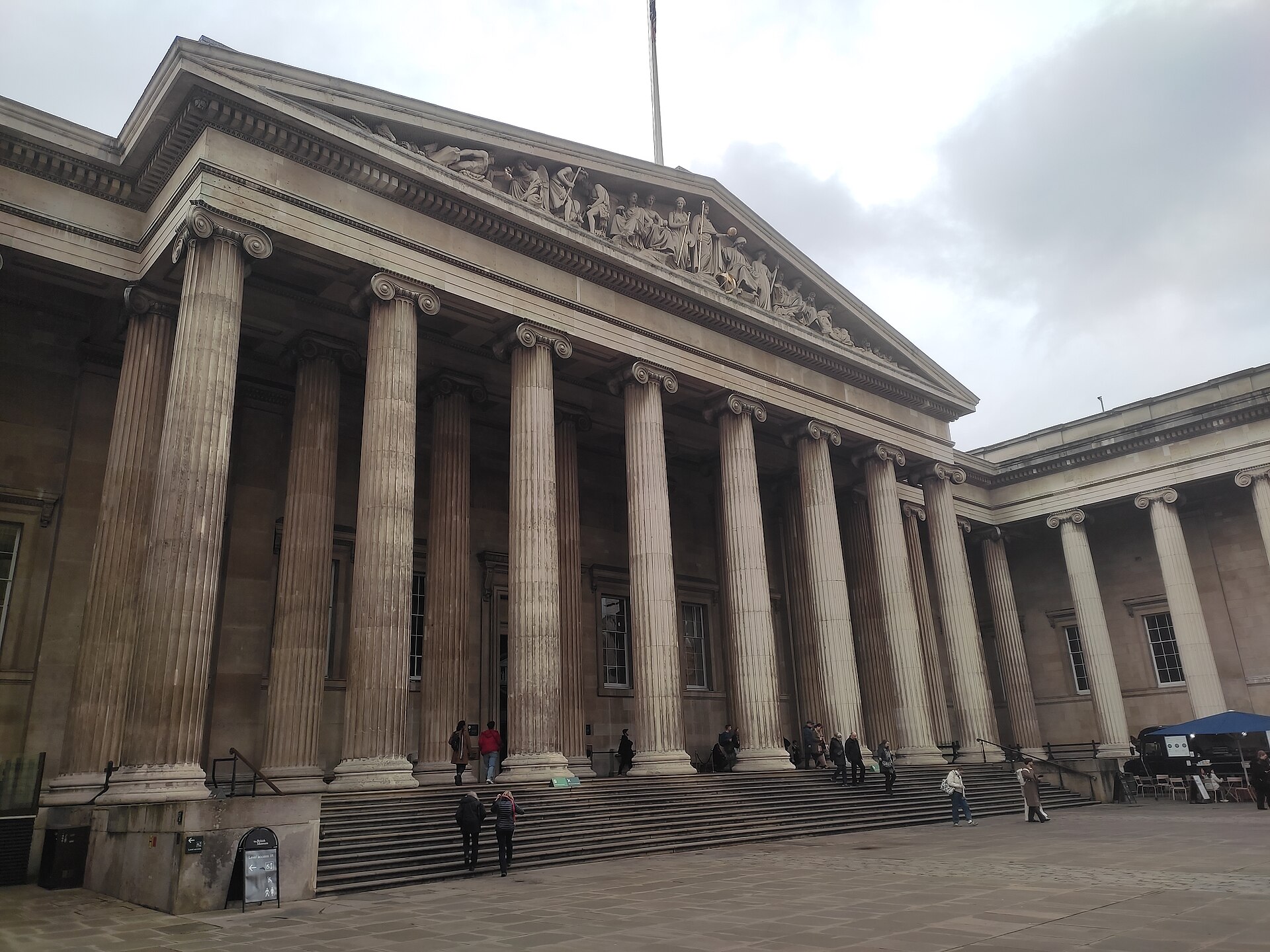
On this page 19 sectionsContentsCloseSmirke's Ionic portico and pediment seen from inside the Great Russell Street forecourt, with the east and west wings of the quadrangle running away on either side. Photograph by Interfase, CC BY-SA 4.0.Interfase, CC BY-SA 4.0, via Wikimedia Commons
About eight million objects covering two million years of human history, held by a body corporate that cannot easily give any of them away. The strength is comparative rather than national: Egypt, Mesopotamia, Greece and Rome, and the Islamic, Chinese, Japanese and South Asian collections sit in one building on one level, so a visitor can walk from Nineveh to Athens to Benin City in twenty minutes. That adjacency is the museum's own argument for itself, and it is also precisely what the restitution claims contest. Nothing here is encyclopaedic by accident: the collection was assembled through the same imperial networks that the museum now documents on its own contested objects pages.
The British Museum at a glance
Kind
Museum
Founded
1753 by Act of Parliament; opened to the public in 1759
City and country
London, United Kingdom
Address
Great Russell Street, Bloomsbury, London WC1B 3DG, United Kingdom
What it costs and when it is openConfirmed 30 August 2026
Hours
Daily10:00 to 17:00Last entry 16:45. Galleries begin clearing 10 minutes before they close.
Friday10:00 to 20:30Last entry 20:15.
Daily, the Great Court10:00 to 17:30Until 20:30 on Fridays, so the Great Court outlasts the galleries by half an hour.
Monday to Friday, Box Office10:00 to 16:50Excluding bank holidays. Ticket Desk 10:00 to 16:30.
Monday to Wednesday and Friday, library and archive10:00 to 17:00By appointment only, with two weeks' notice and a list of up to ten items.
Thursday, library and archive13:00 to 17:00By appointment only.
Closed
Closed 24 to 26 December. No late night opening on Good Friday, 26 March 2027. The museum states that it occasionally needs to close galleries at short notice and cannot always alert visitors in advance of their visit. The Round Reading Room is not open as a reading room: it houses the museum's archive, reached by appointment.
Admission
Permanent collection, all visitorsFreeFree. The museum advises booking a free timed ticket in advance; entry without one depends on capacity and queues for non-ticket holders are to be expected at busier times.
Free exhibitions and displaysFreeSeveral exhibitions carry no charge. In August 2026 these included Early Netherlandish drawings, John Constable views of nature, and Declaring independence USA 250.
MembersFreeMembers do not need to book for the permanent collection or for special exhibitions, and show a membership card at the door.
Korea, special exhibition, adultGBP 14From GBP 14 on the museum's early bird offer. 1 October 2026 to 31 January 2027, Room 35, the Joseph Hotung Great Court Gallery. Members free.
Around the world in 90 minutes, guided tourGBP 15Various dates.
Out-of-hours tour, an introduction to the British MuseumGBP 35Before the galleries open to the public.
Lecture, The first sparksGBP 104 September 2026.
Groups of 10 or more, self-ledFreeA group ticket must be booked. School groups book through the Box Office on +44 20 7323 8181.
Free entry: Every day. The permanent collection has been free since the museum opened, and the 1753 Act created what the museum describes as the world's first free national public museum.. Free entry does not mean unticketed: the museum asks visitors to book a free timed slot, and says entry without one depends on capacity.. Special exhibitions are ticketed. Several smaller exhibitions and displays are free.
No, but a free timed ticket is strongly advised. The museum says entry without a pre-booked ticket depends on capacity and that queues for non-ticket holders are to be expected at busier times, and asks visitors to arrive only at their booked time.
Address
Great Russell Street, Bloomsbury, London WC1B 3DG, United Kingdom Map
On foot Main entrance on Great Russell Street; a second entrance on Montague Place, London WC1E 7JW Public transport The museum directs visitors to the Transport for London journey planner and publishes separate notes for tube, bus, bicycle, car and taxi Luggage Wheeled cases are not permitted on the premises at any size; the museum points visitors to left luggage at Euston, King's Cross and Charing Cross
Before you go how long, access, photography, bags, eating, shop
How long to allow
The museum sells a guided tour billed as around the world in 90 minutes, which is a fair measure of the minimum. More than 50 galleries are open, so a first visit is an exercise in choosing what to miss.
Access
An easy access route is available for disabled visitors, Members, and visitors with buggies or children under five. Uniformed staff will assist where the entrance itself is a barrier. A large print guide and a British Sign Language guide handset cover part of the collection.
Photography
Hand-held flash photography and video recording are allowed in most galleries for private purposes, with signs marking where photography is restricted. Tripods, monopods and selfie sticks may not be used inside the building.
Bags
All bags may be searched. Nothing larger than 40cm by 40cm by 50cm or heavier than 8kg is allowed in, and wheeled cases are refused whatever their size. Folding bicycles, adult scooters, skateboards and musical instruments are not allowed on the premises. Pushchairs are permitted; fold-up buggies go in the cloakroom free of charge.
Eating
Court Cafes daily 10:00 to 17:00; the Great Court Restaurant 11:30 to 17:00 with a last sitting at 16:00; a pizzeria 11:00 to 16:00; a coffee lounge 10:30 to 16:30.
Shop
Bookshop, family shop and collections shop, all daily 10:00 to 17:00, plus an online shop.
Prices and hours change. We take them from the institution's own pages and print the day we read them, and you can check the current position at the source we used. Confirm before you travel.
What is inside
11 spaces, 4 photographed
Photograph by Txllxt TxllxT · CC BY-SA 4.0
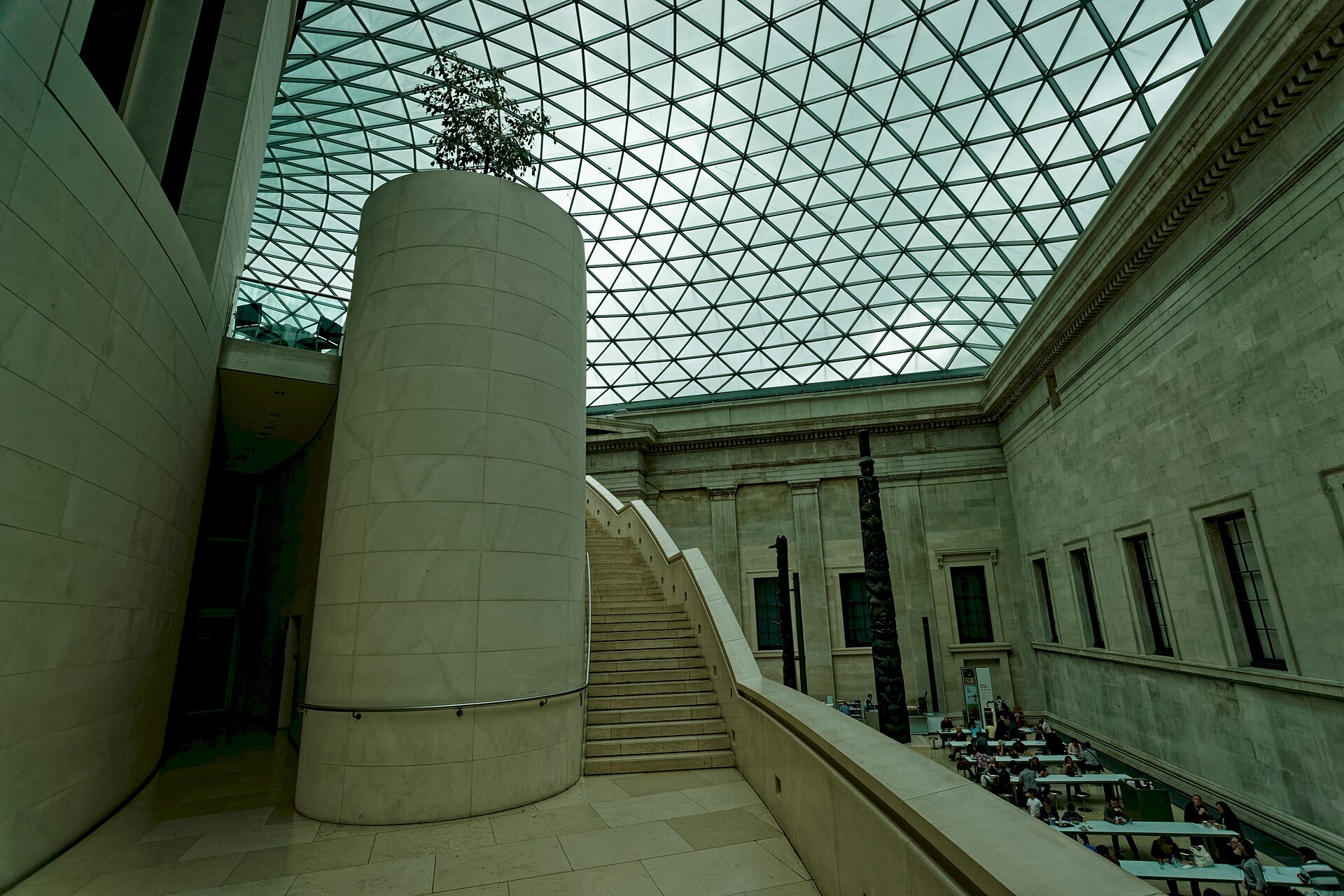
The Queen Elizabeth II Great Court
Two acres under a glass and steel roof, described by the museum as the largest covered public square in Europe, with the round Reading Room standing free in the middle of it. The Lion of Knidos, a quartzite head of Amenhotep III, a carved totem pole and an Ogam-inscribed memorial slab stand around the edges. It is free, open every day, and stays open half an hour after the galleries close.
Photograph by Pam Brophy · CC BY-SA 2.0
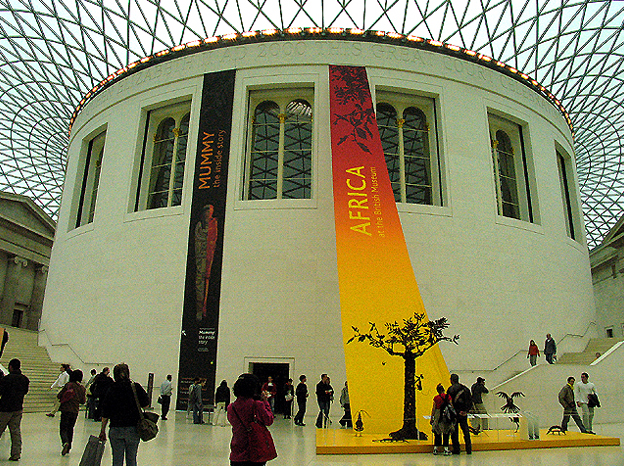
The Round Reading Room
Sydney Smirke's domed rotunda of 1857, 42.6 metres across, built in cast iron and concrete with a ceiling of papier-mache suspended on iron struts. Karl Marx, Bram Stoker and Arthur Conan Doyle held readers' tickets here, and Lenin signed in as Jacob Richter. Since the books went to St Pancras in 1997 it has served as an information centre and as exhibition space; it now holds the museum's archive, reached by appointment rather than walked into.
The Enlightenment Gallery, Room 1
The former King's Library, the first wing of Smirke's quadrangle to be built and the oldest room in the museum: 91 metres long, 12 metres high, 9 metres wide, with an ornate ceiling carried on cast-iron beams. It was built for George III's library of more than 65,000 books, and the books on the shelves today are on loan from the House of Commons library. The display sets out how eighteenth-century Europeans set about ordering the world, using Smirke's own cases.
Egyptian sculpture, Room 4
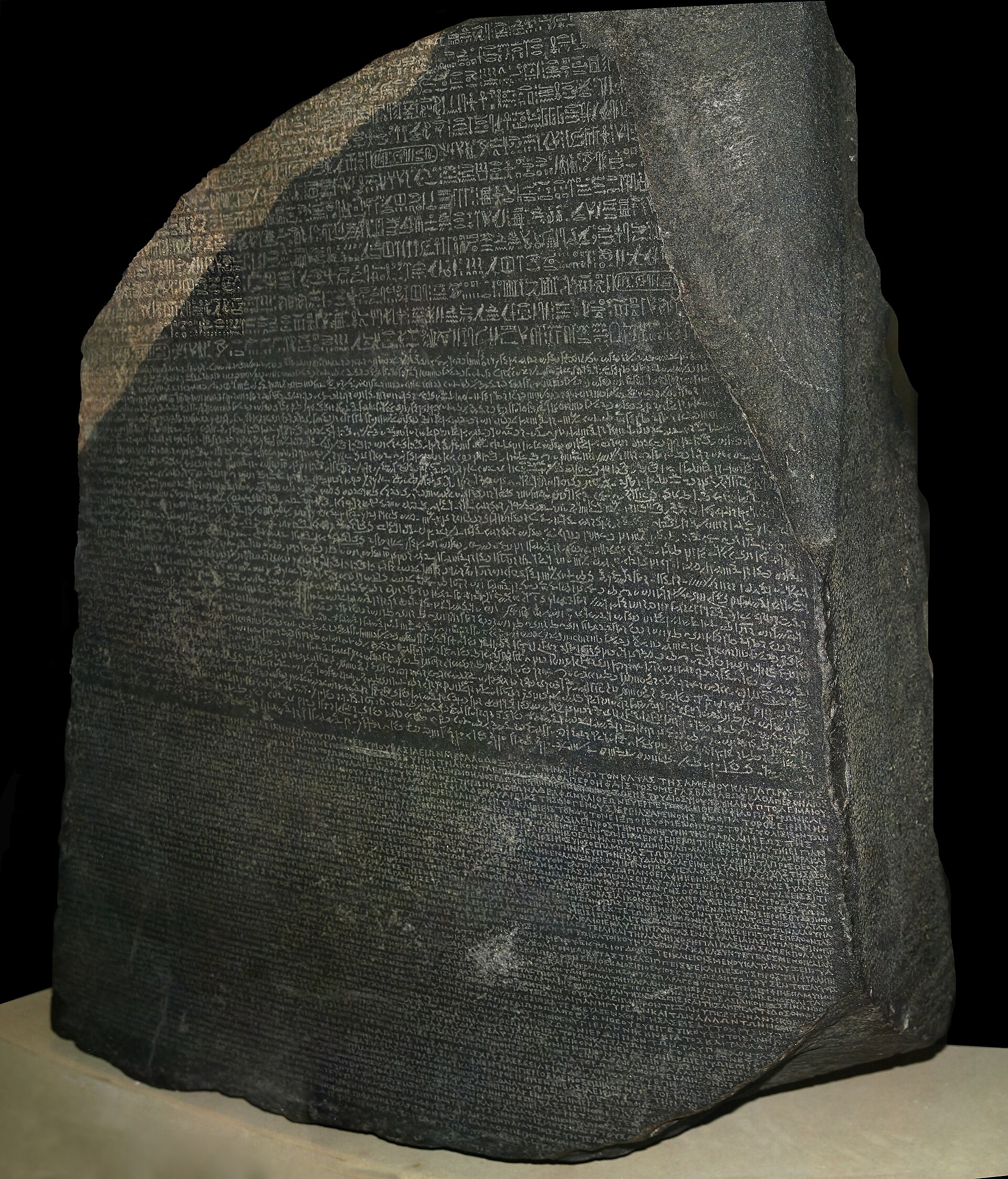
The monumental Egyptian gallery, and the room that holds the Rosetta Stone. Granite columns, colossal heads, false doors and inscribed architraves stand in the daylight from tall sash windows. It is the single most crowded room in the building on any ordinary weekday, and the museum runs a second Egyptian sequence upstairs for death and the afterlife.
Assyrian sculpture and the Balawat Gates, Room 6
The Assyrian transept, hung and stood with material from the palaces of northern Mesopotamia: colossal human-headed winged lions from Nimrud, stelae and statues, relief panels, and the Black Obelisk of Shalmaneser III standing on its own plinth in the centre island. The sequence continues through Nimrud, Nineveh and the lion hunts in the rooms beyond.
Photograph by APK · CC BY 4.0
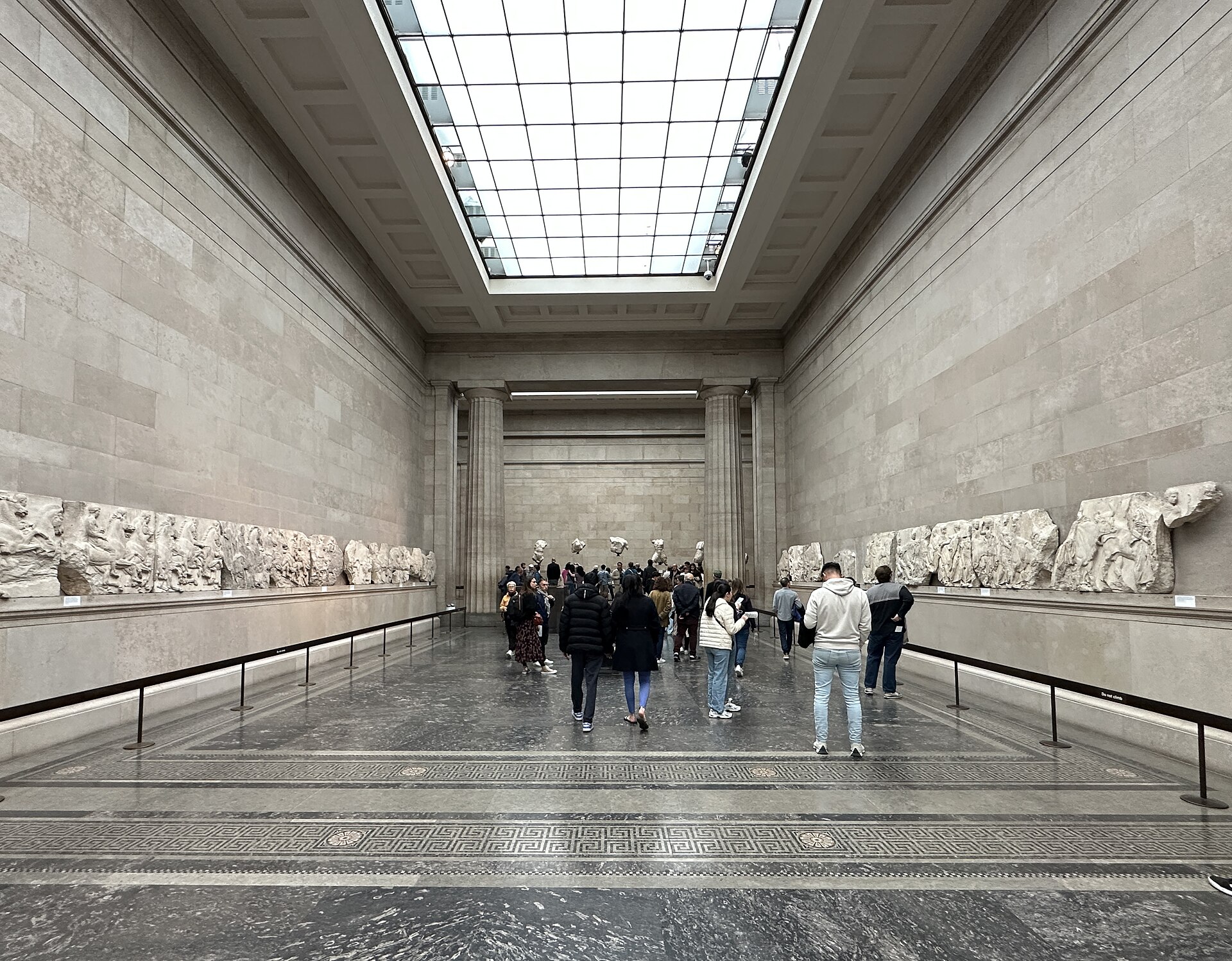
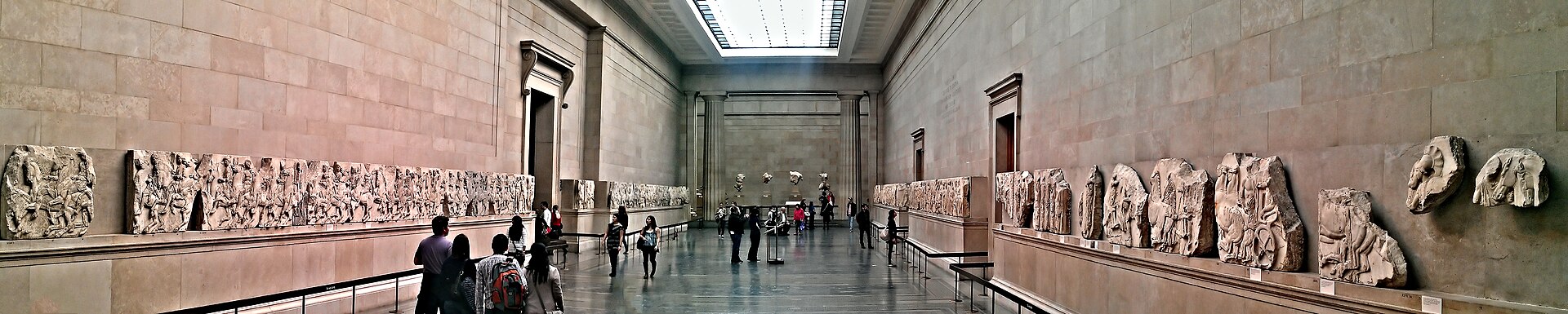
The Parthenon galleries, the Duveen Gallery, Room 18
A top-lit hall built to hold the sculptures Lord Elgin removed from the Acropolis: 15 metopes, 17 pedimental figures and 75 metres of the original frieze, run along both long walls at eye level with a Greek key border underfoot. The museum states that about half of the surviving Parthenon sculpture is here and about half in Athens. This is the most argued-over room in any museum in the world.
India: Amaravati, Room 33a, the Asahi Shimbun Gallery
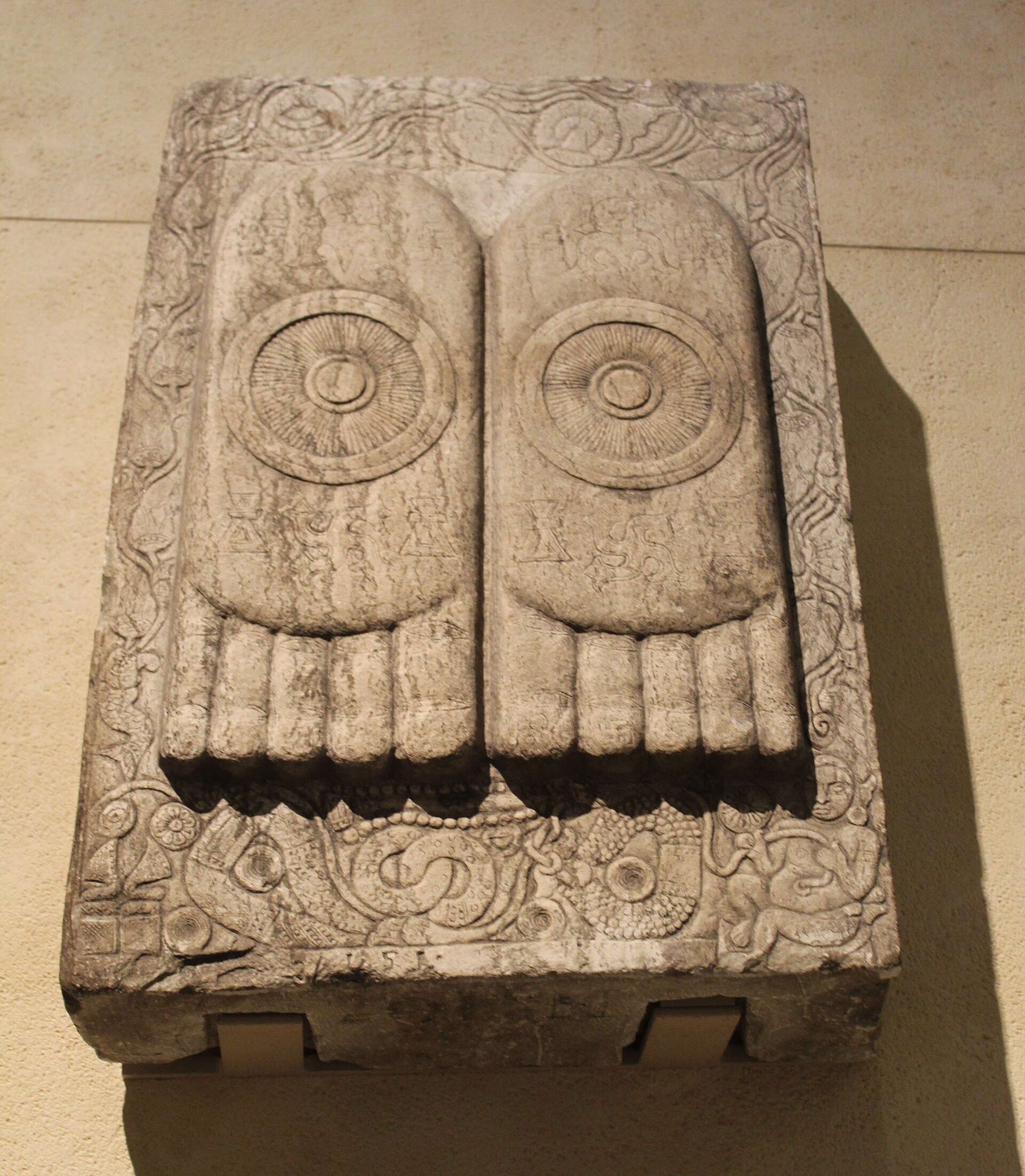
Limestone drum slabs, railing pillars and lotus medallions from the Great Shrine of Amaravati in Andhra Pradesh, founded around 200 BC and one of the oldest and largest Buddhist monuments in ancient India. The carvings show narrative scenes from the life of the Buddha, and the gallery adjoins the China and South Asia rooms. This archive holds a record of this collection.
Photograph by Michael Dibb · CC BY-SA 2.0
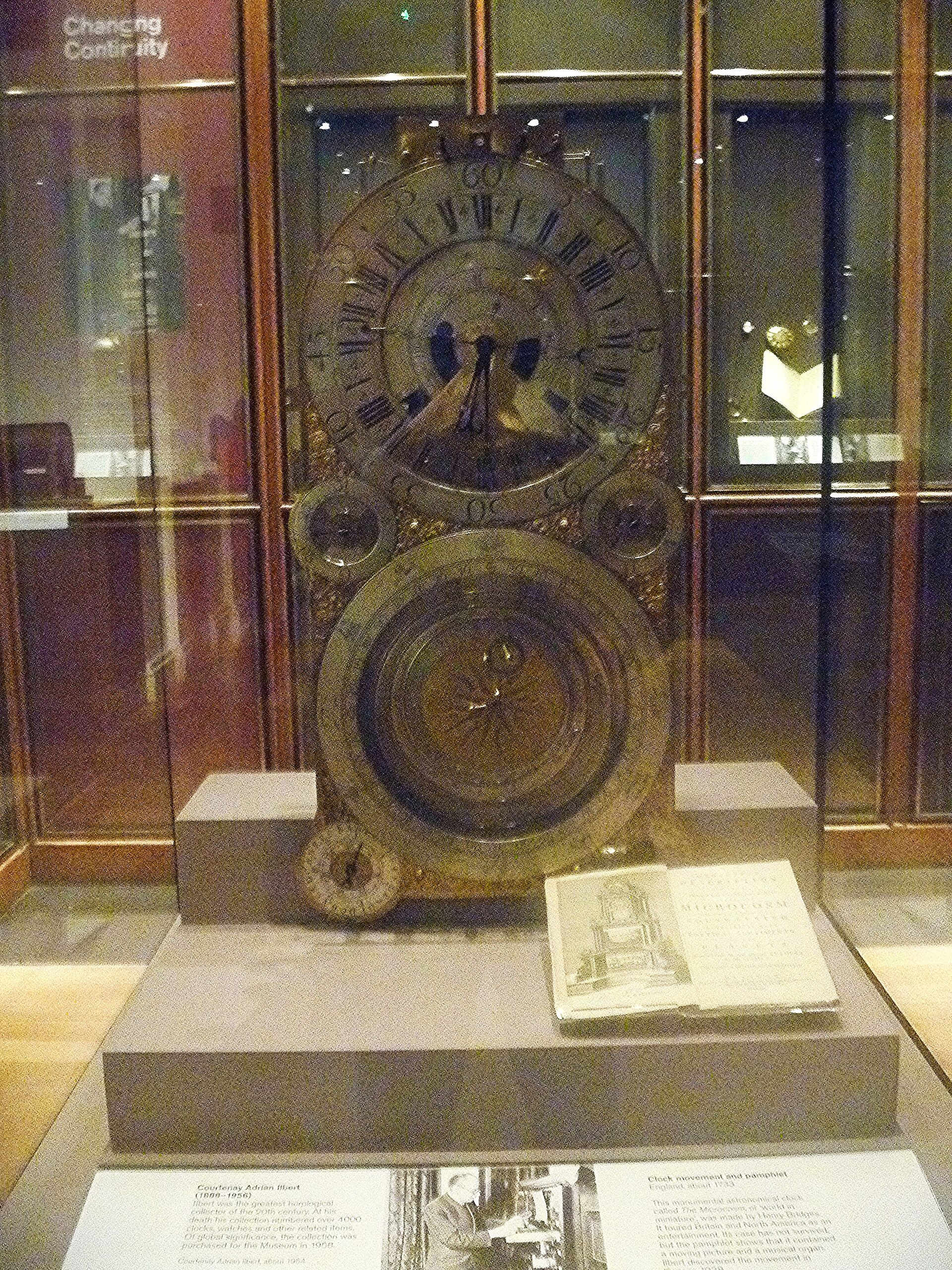
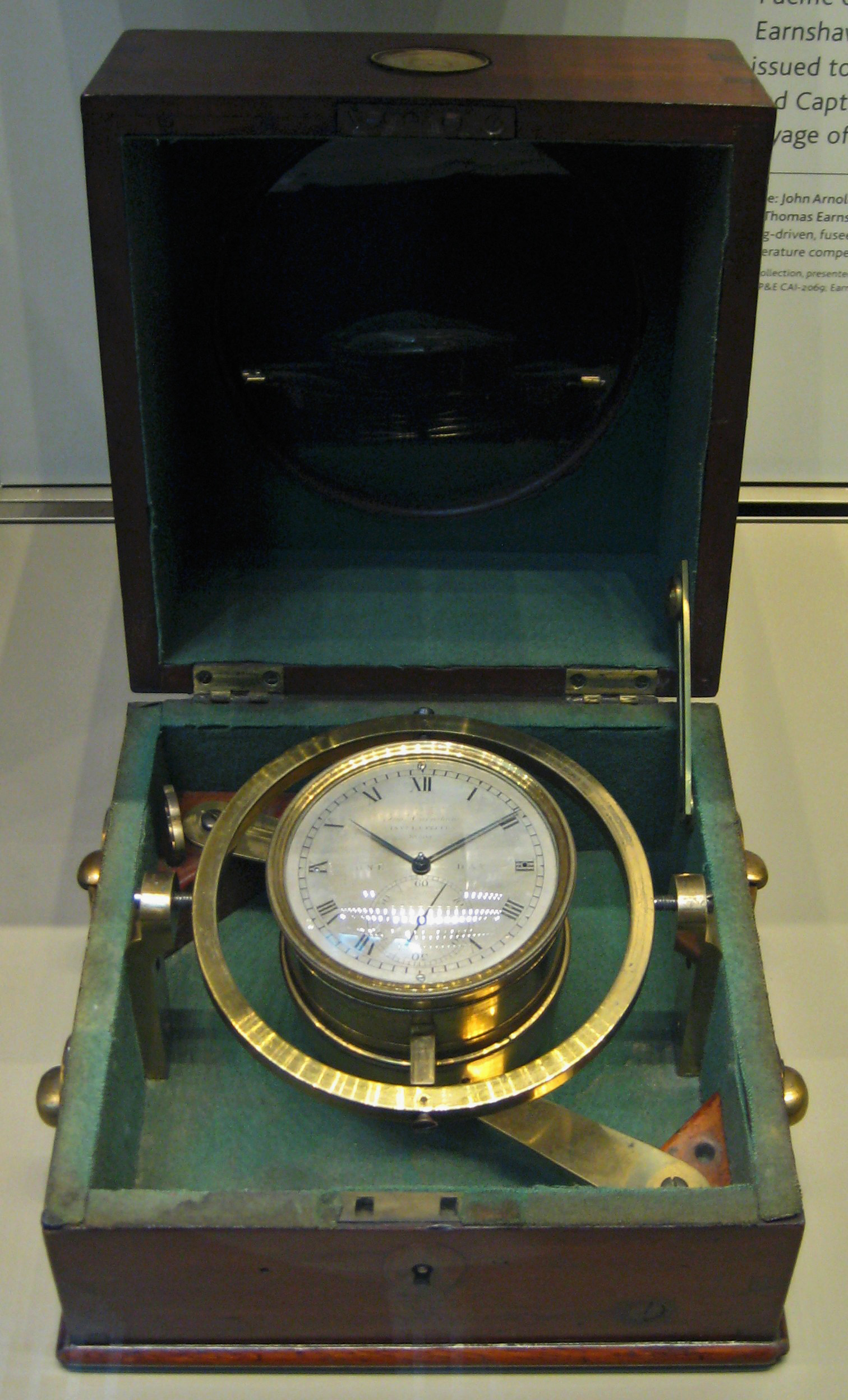
Clocks and Watches, Rooms 38 and 39
Glazed mahogany cases of horology, built substantially on the collection of Courtenay Adrian Ilbert, which ran to more than 4,000 clocks and watches and was bought for the museum in 1958. Astronomical movements, table clocks and pocket watches are shown alongside the mechanisms opened out, so the gallery reads as a history of precision rather than a cabinet of objects.
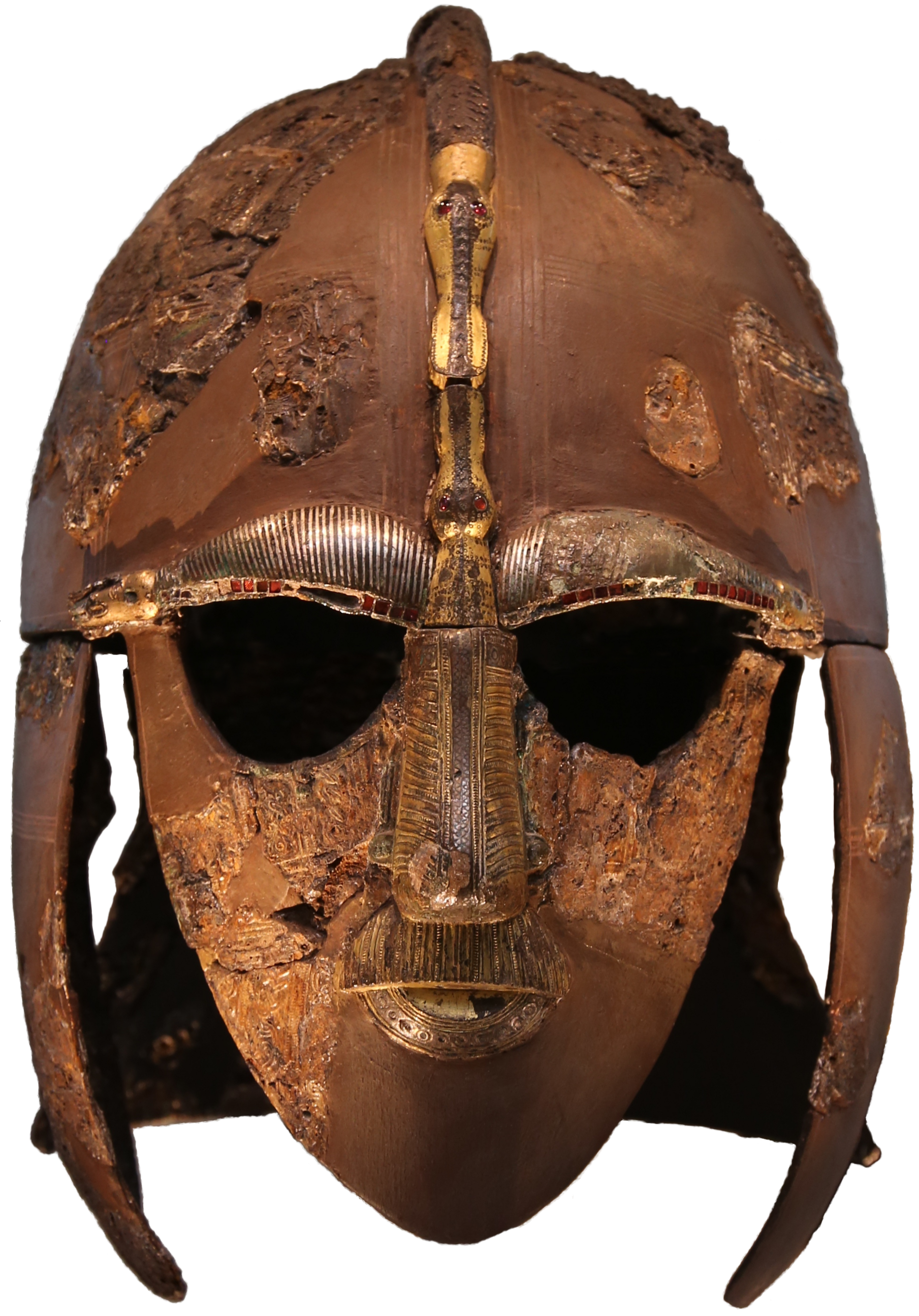
Sutton Hoo and Europe, Room 41
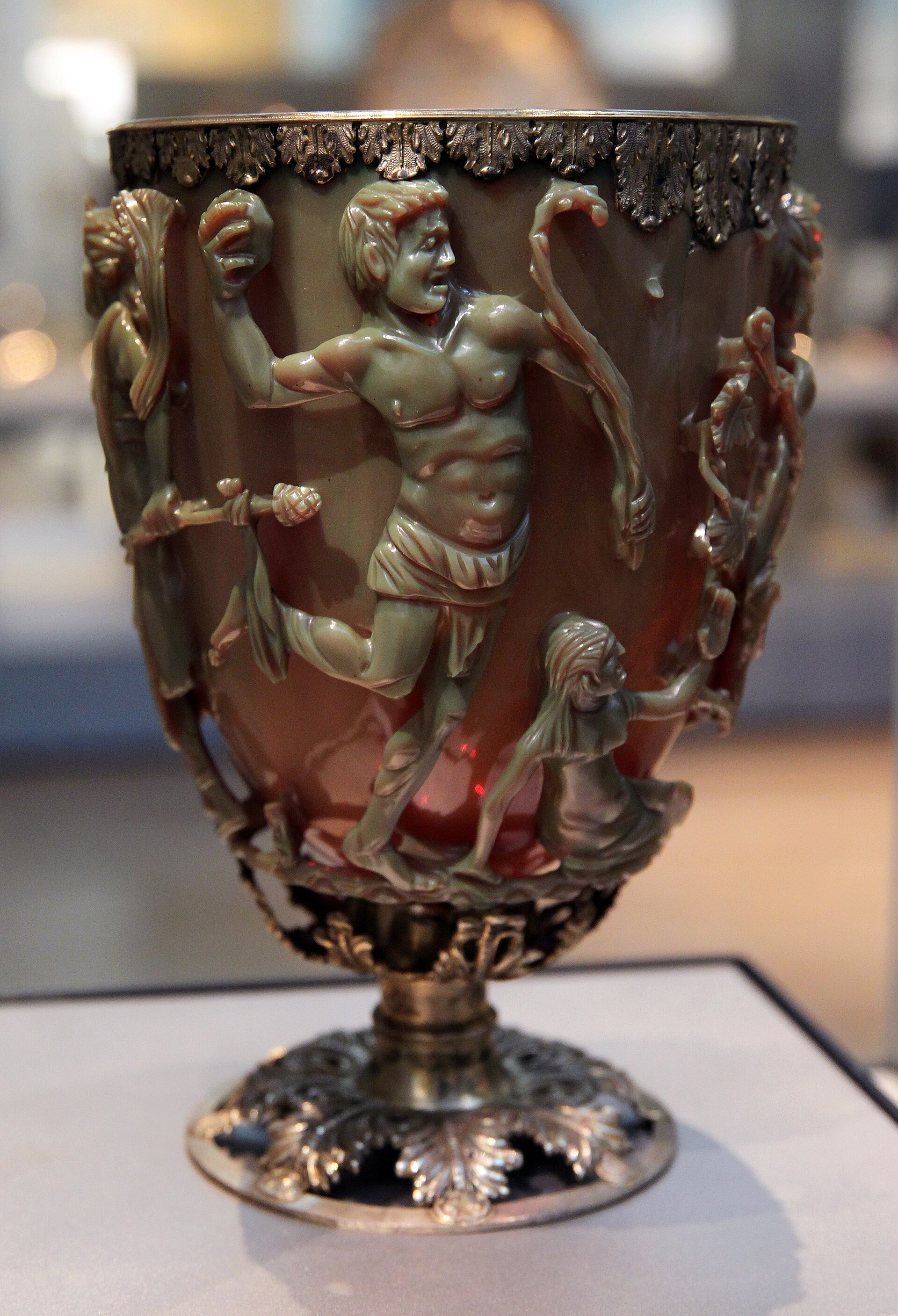
Europe from AD 300 to 1100, and the room the museum puts first in its own list of what to see: the Sutton Hoo ship burial, with the helmet, the shoulder clasps and the purse lid. The same room holds the Lycurgus Cup, the one complete surviving vessel in Roman dichroic glass, of which this archive holds a record. No free-licence photograph of this gallery as a space was located, so none is shown.
Roman Empire, Room 70
The Roman imperial gallery, and the room that holds the Portland Vase, the Roman cameo glass vessel smashed by a visitor in 1845 and reassembled three times since. This archive holds a record of it. No free-licence photograph of the gallery as a space was located, so none is shown.
Africa, Room 25, the Sainsbury Galleries
Below the Great Court, in space the 2000 redesign created, the Africa galleries show more than 100 of the museum's Benin objects on rotating display, together with the wider African collections. The museum states that it cares for over 900 objects from the historic Kingdom of Benin.
What to see first
The Rosetta Stone
Ptolemaic Egypt, 196 BC
Inscribed with one decree in hieroglyphic, demotic and Greek, which is what let scholars read ancient Egyptian again. The museum calls it its most important single object and displays it in Room 4.6
The Parthenon Sculptures
Athens, 447 to 432 BC
Fifteen metopes, seventeen pedimental figures and 75 metres of frieze in one purpose-built hall. Nothing else in any museum carries this weight of unresolved argument, and the museum publishes its own case for keeping them.8
The Amaravati Collection
Great Shrine of Amaravati, Andhra Pradesh, about 200 BC to AD 300
Over 120 carved limestone pieces from one of the oldest Buddhist monuments in India, in a gallery paid for by a Japanese newspaper. This archive holds a record of the collection and of how it reached London.11
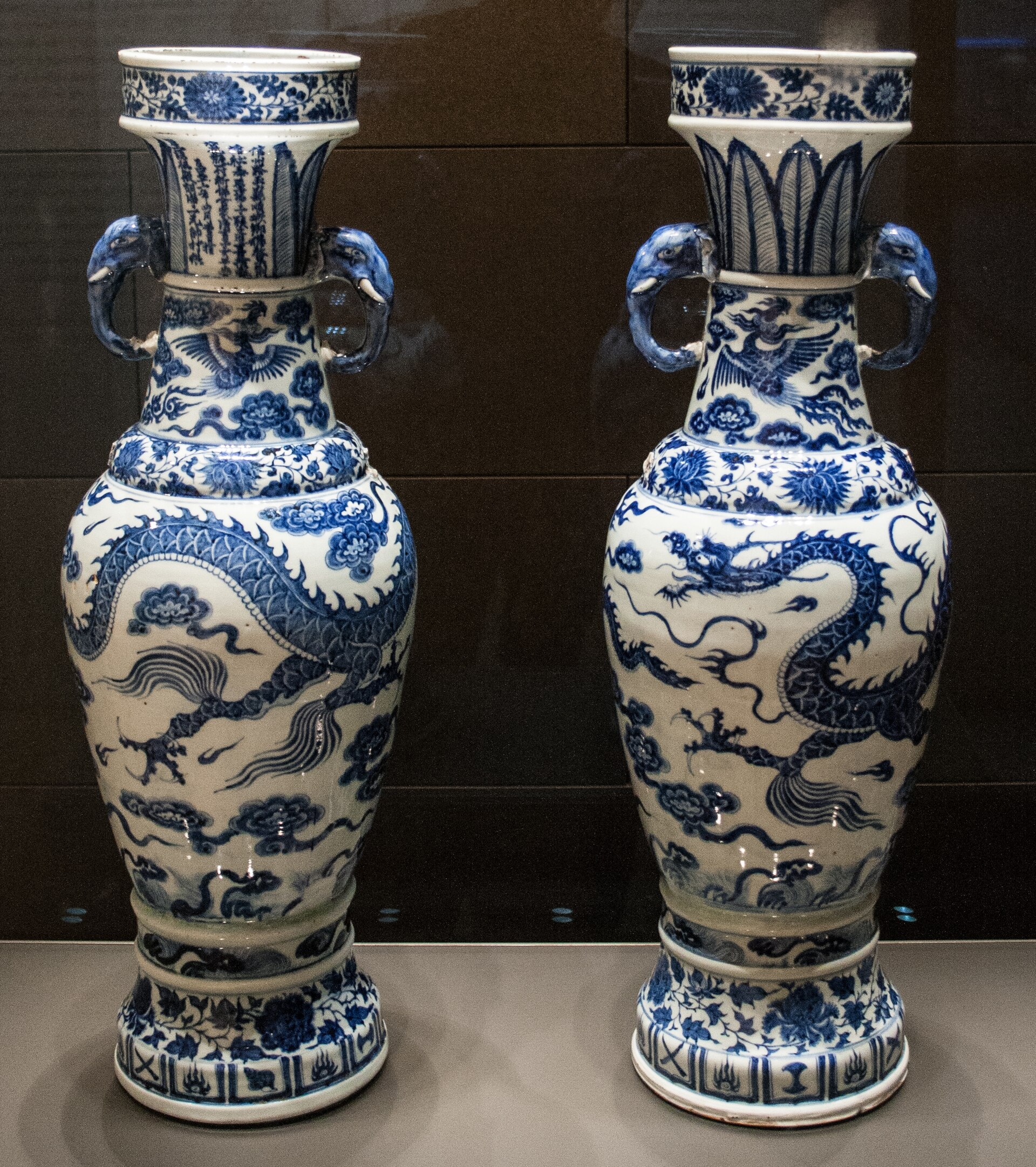
The only complete surviving object in Roman dichroic glass: jade green lit from the front, wine red lit from behind, because of gold and silver particles suspended in the glass. This archive holds a record of it.1
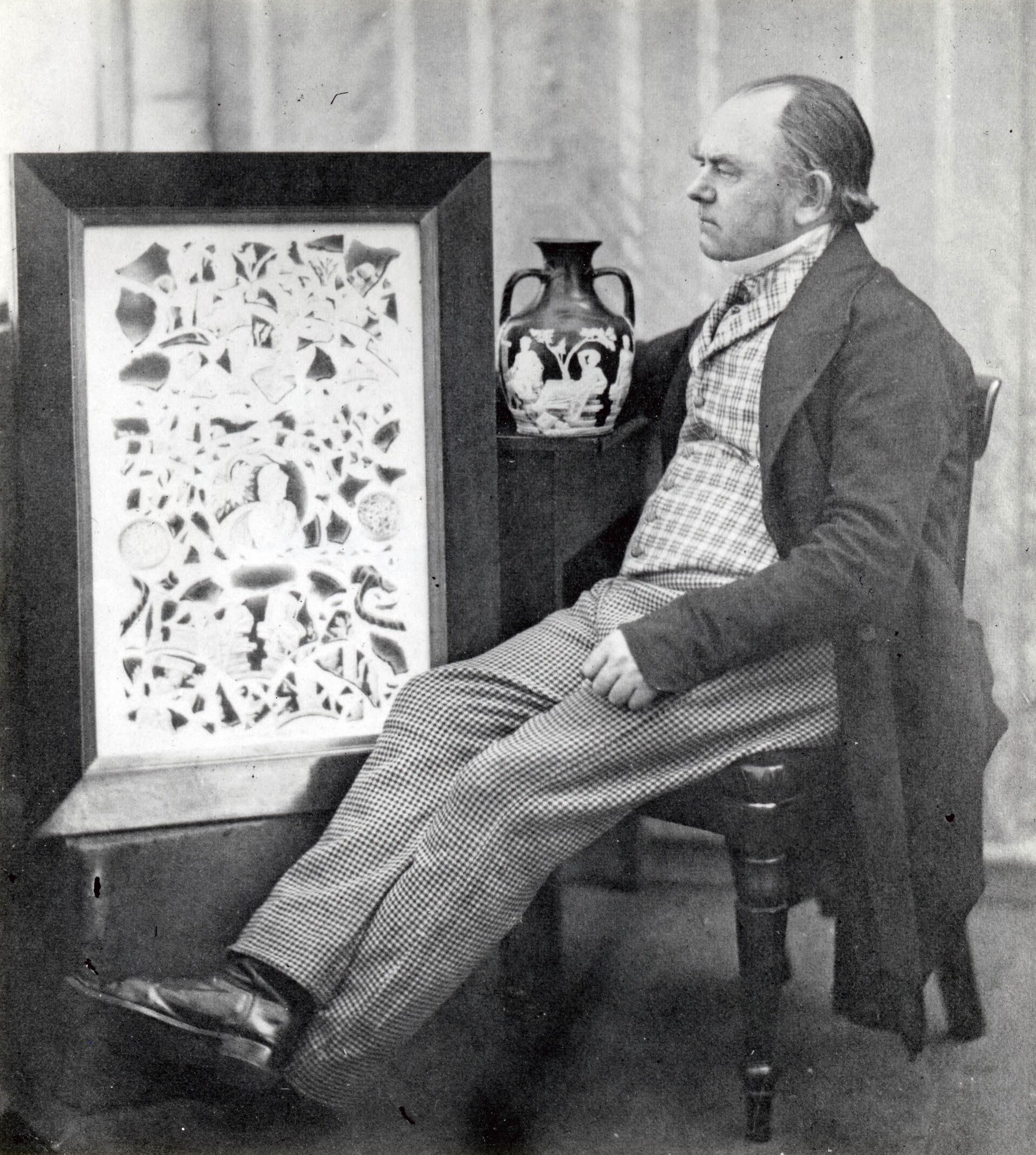
Roman cameo glass, cobalt blue under cut-back white, and the object a visitor destroyed in 1845. It has been reassembled three times. This archive holds a record of it.1
The helmet, shoulder clasps and purse lid from the richest early medieval grave found in Britain. The museum names this room first when it tells visitors what to come for.1
The Benin Bronzes
Kingdom of Benin, from at least the 1500s
Cast brass plaques and commemorative heads from the Benin royal palace, looted by British forces in 1897. More than 100 are on rotating display out of over 900 the museum holds, and the museum's own account uses the word looted.9
The centrepiece of the Assyrian transept, standing free on its plinth among colossal winged lions and palace reliefs from Nimrud, Nineveh and Balawat.1
The tabots from Maqdala
Ethiopia, before 1868
Eleven consecrated altar tablets taken after the 1868 storming of Maqdala. They are deliberately not on display, kept in a place set aside in consultation with the Ethiopian Orthodox Church. The most significant thing in this building that no visitor will see.10
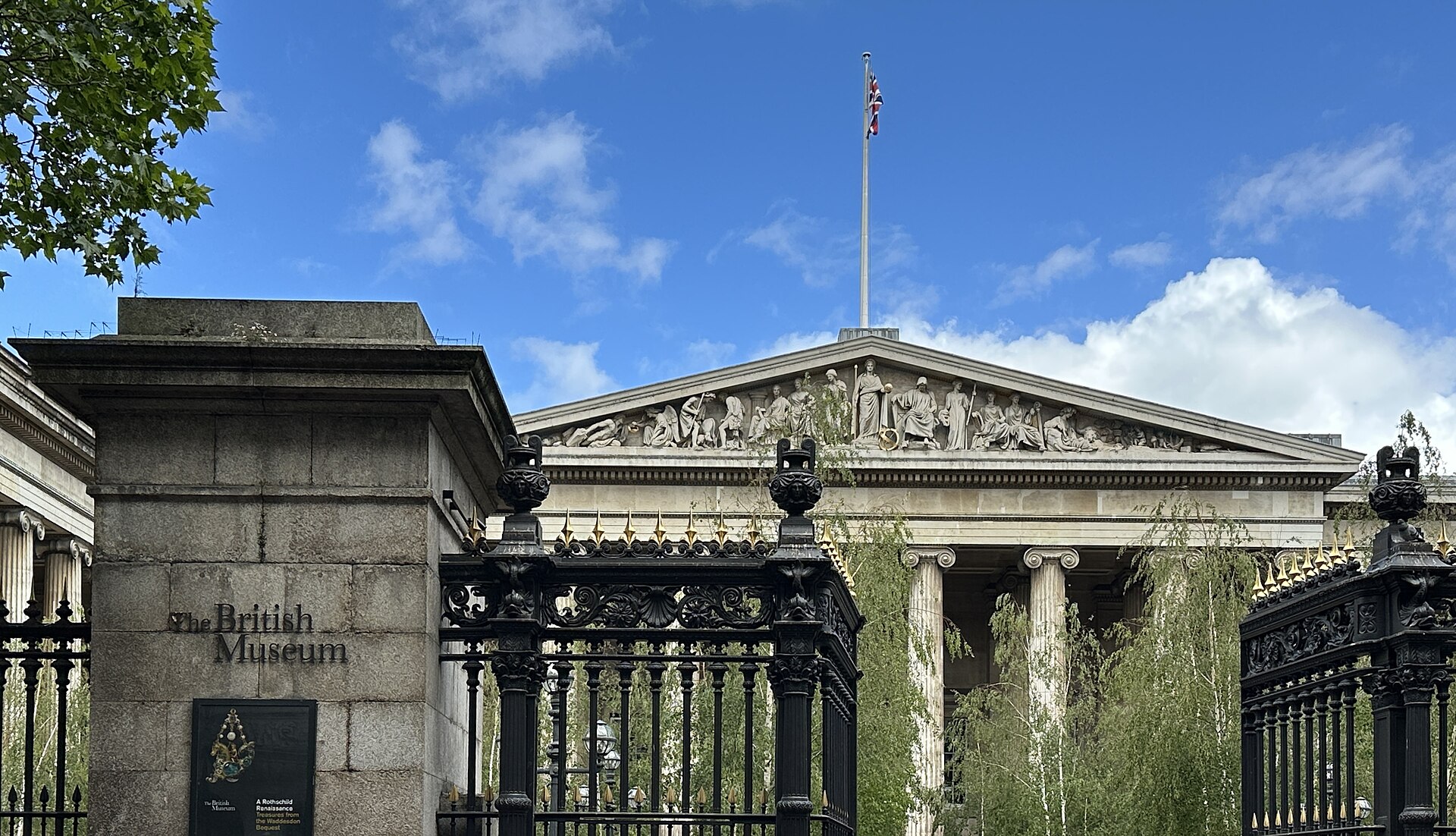
The pediment, Progress of Civilisation
Sir Richard Westmacott, completed 1852
Eight stages of mankind carved into the tympanum above the entrance, originally painted against a blue ground. The museum's own history page reads it as Victorian confidence at the height of imperial expansion.3
The Great Departure of Prince Siddhartha
Amaravati, about 200 BC to AD 300
The single carving the museum picks out of the whole Amaravati gallery, showing the prince leaving the palace to begin the life that made him the Buddha.11
In 1753 an Act of Parliament created what the museum describes as the world's first free national public museum, and it opened its doors in 1759 to all studious and curious persons. Free did not mean open. Visitors had to apply for tickets within limited hours, which in practice meant well-connected people being walked round by trustees and curators. Only from the 1830s were the regulations loosened and the hours extended. The founding purchase was the collection of Sir Hans Sloane, physician and President of the Royal Society, who had amassed more than 80,000 natural and artificial rarities alongside a library of over 40,000 books and manuscripts and 32,000 coins and medals; the 1753 Act bought it for the public together with the Cotton, Harley and Royal Libraries. The museum states plainly on its own history page that Sloane collected through the networks European imperial expansion had created, and financed his purchases with income partly derived from enslaved labour on Jamaican sugar plantations. That sentence is the museum's, not ours, and it is the right place to start.
Smirke's quadrangle, and the room that came first
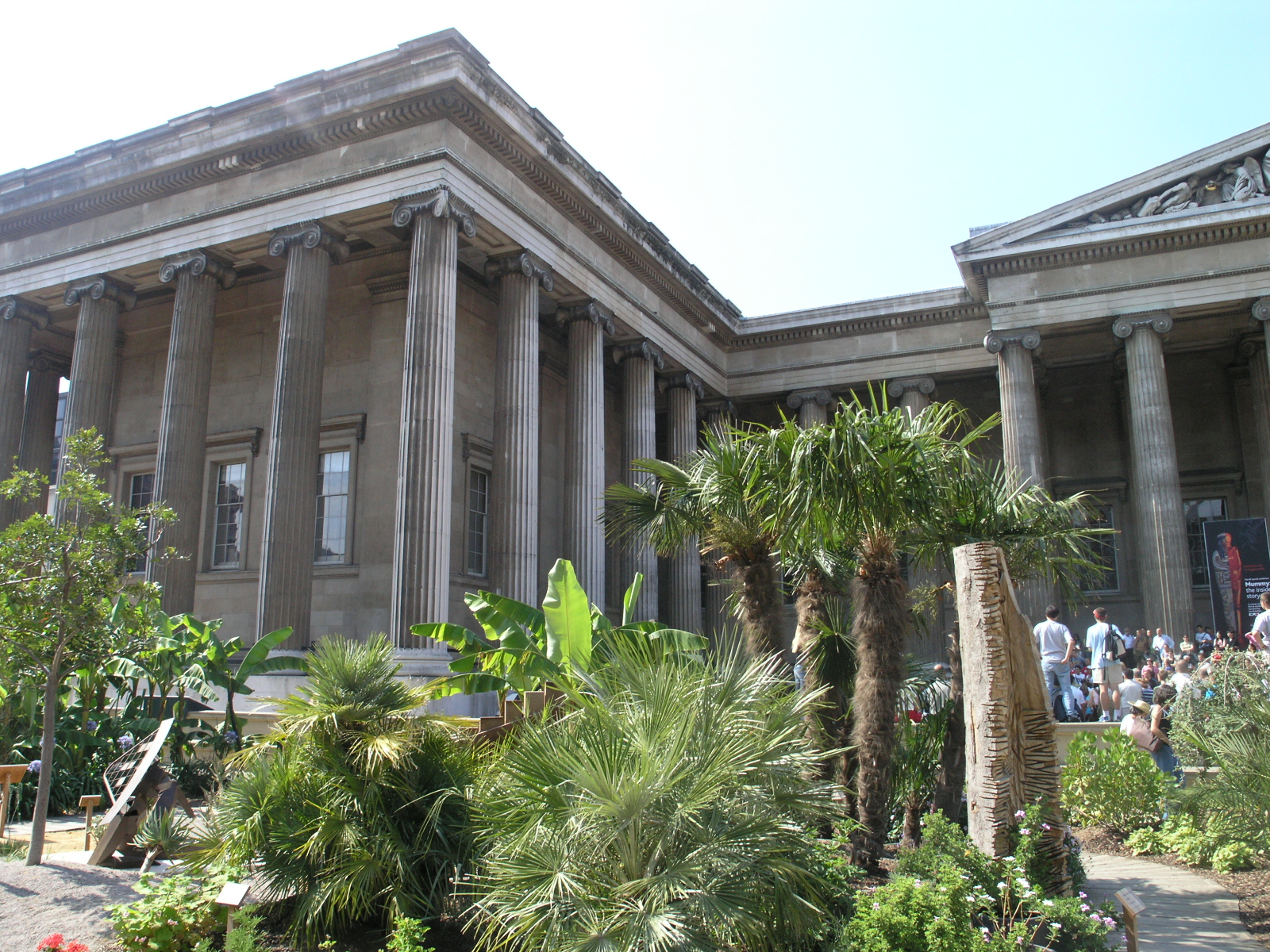
The building is Greek Revival, four wings around a courtyard, 43 columns and a pedimented portico, and it took thirty years. Sir Robert Smirke began in 1823 and the quadrangle was completed in 1852, using what was then advanced construction: concrete floors, a cast-iron frame filled in with London stock brick, and Portland stone on the show face. In 1853 it won the Royal Institute of British Architects' Gold Medal. The south front measures 112.7 metres and the columns stand 13.7 metres high. The main entrance was the last wing built, because Montagu House, the seventeenth-century mansion that had held the collection since 1759, had to come down first. Sir Richard Westmacott carved the tympanum as the Progress of Civilisation, eight stages of mankind rising from ignorance to learning, originally painted against a blue ground. The first wing to go up was the King's Library, now the Enlightenment Gallery, built for George III's collection of more than 65,000 books which his son gave to the nation in 1823. It is 91 metres long and 12 metres high, and its ceiling needed cast-iron beams to carry it. It was finished in 1831, shown to a privileged few by ticket, and not fully opened to all visitors until 1857.
The Reading Room, and the library that left
By the early 1850s the library needed more space, and Antonio Panizzi, Keeper of Printed Books, had the idea of filling the empty central courtyard with a round room. Sydney Smirke, who had taken over from his brother Robert in 1845, designed it; work began in 1854 and finished three years later. The dome is 42.6 metres across and was inspired by the Pantheon, but it is not a free-standing dome at all: it is built in segments on a cast-iron framework, and the ceiling hangs from iron struts and is made of papier-mache. Around it went iron bookstacks holding three miles of bookcases and 25 miles of shelves. The Reading Room opened on 2 May 1857, and in a one-off public viewing that month more than 62,000 people came to look at it. Readers applied in writing for a ticket from the Principal Librarian; Karl Marx, Bram Stoker and Arthur Conan Doyle held them, and Lenin signed in under the name Jacob Richter. In 1997 the books went to the new British Library at St Pancras and the bookstacks came down. This matters for anyone reading about this building: the British Library has been a separate institution since 1973, and the volumes now on the Enlightenment Gallery shelves are on loan from the House of Commons library. The Reading Room today holds the museum's archive, open by appointment, not a public reading room.
Foster's Great Court, and the forty per cent
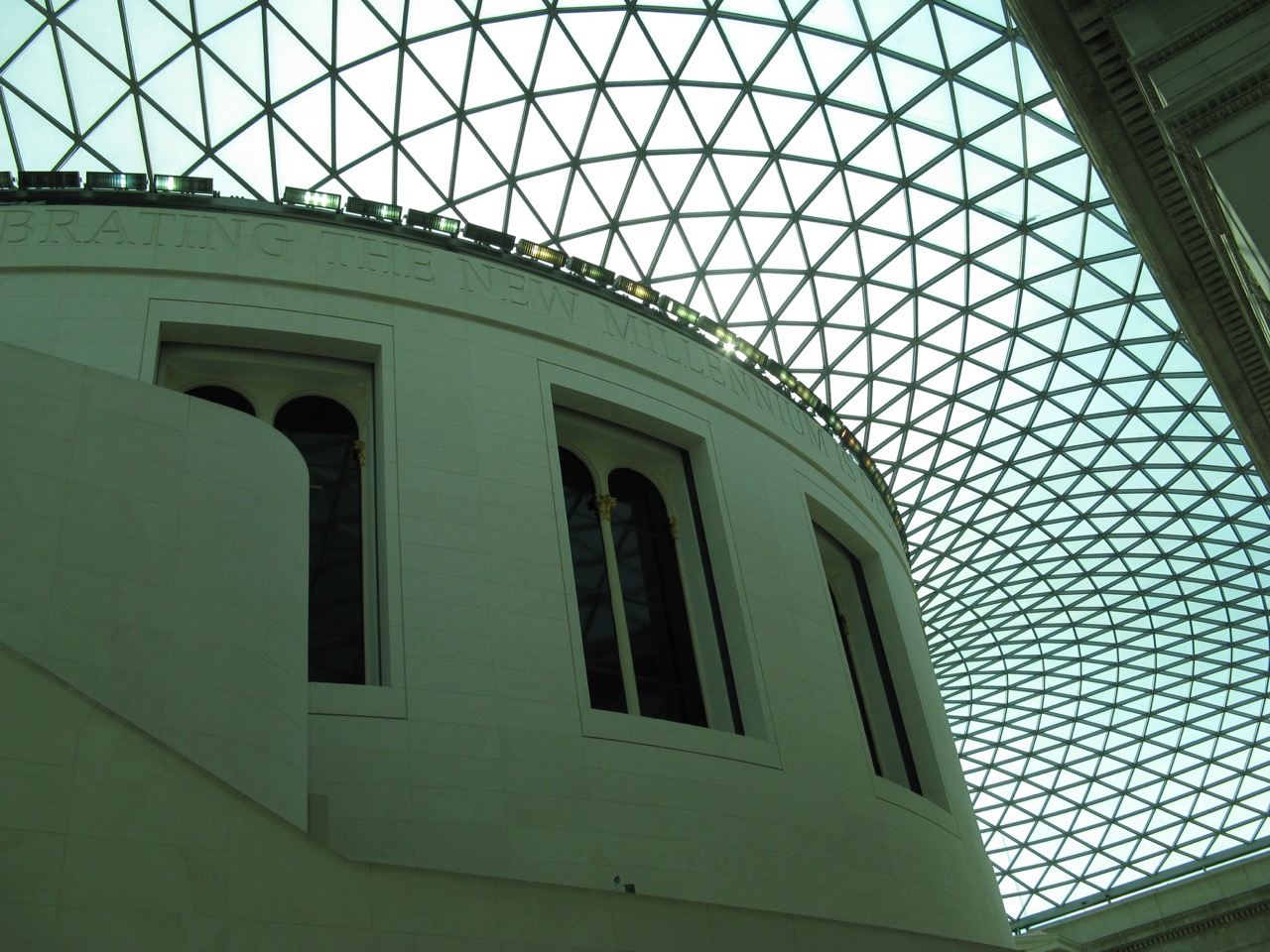
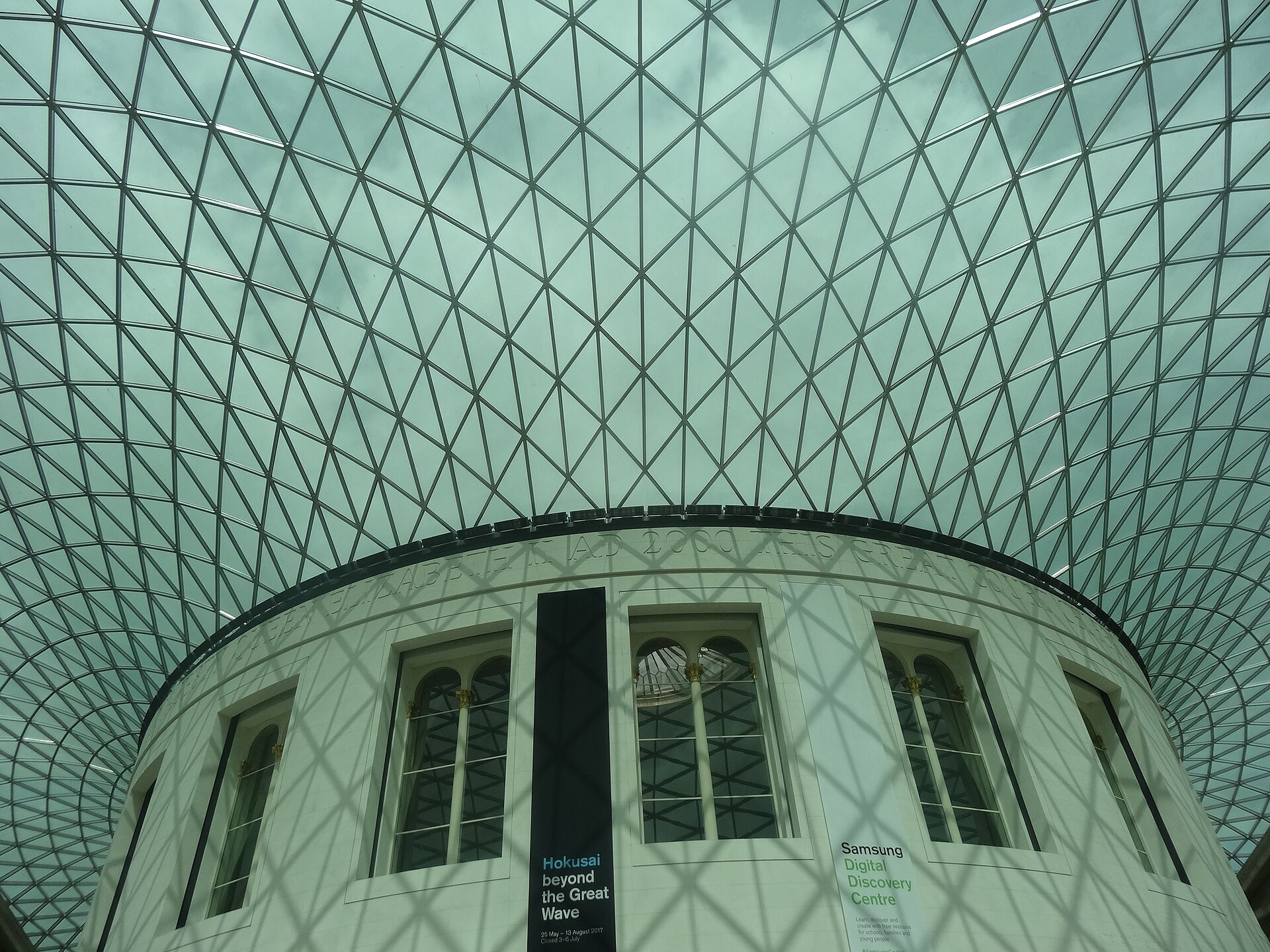
Smirke had meant the courtyard to be a garden. From 1852 it filled with bookstacks instead, and for nearly 150 years the centre of the museum was invisible to the public. When the library left in 1997 the museum ran a competition to reopen it, drawing more than 130 entries; Foster and Partners won. The Queen Elizabeth II Great Court opened on 6 December 2000, two acres under a glass and steel roof loosely derived from Foster's Reichstag concept in Berlin, with the Reading Room standing free at its centre. The project cost 100 million pounds, supported by 30 million from the Millennium Commission and 15.75 million from the Heritage Lottery Fund, and on completion it grew the museum by forty per cent. For the first time in over 150 years visitors could walk right round the main floor. The redesign also produced the Sainsbury Galleries for the Africa collection, the Wellcome Trust Gallery, Room 35 for temporary exhibitions, and the Clore Centre for Education below. At its twentieth anniversary the museum counted 113 million people who had walked under the roof. It remains free and open every day, and it closes half an hour after the galleries do.
The most contested collection on earth
The museum publishes an index of contested objects from its own collection, and the list is the honest measure of the problem: Asante gold regalia, the Benin Bronzes, human remains, the Maqdala collection, the moai from Rapa Nui, the Parthenon Sculptures, an early Australian shield, and provenance research for 1933 to 1945. On the Parthenon it holds 15 metopes, 17 pedimental figures and 75 metres of frieze; a formal Greek request for permanent return was first made in 1983; the trustees say they will consider any loan request but that no loan request has ever been received, and that successive Greek governments have refused to acknowledge their title. On Benin the museum's own account is unsparing: a retaliatory expedition took Benin City in February 1897, the Oba's palace was burned, its shrines were looted, and thousands of objects left as official spoils of war or were distributed by rank. It holds over 900 Benin objects and shows more than 100 on rotation. On Maqdala it holds more than 90 objects from Emperor Tewodros II's fortress, including eleven tabots which the Ethiopian Orthodox Church understands to represent the Ark of the Covenant; these are not displayed, and the museum's stated long-term ambition is to lend them to an Ethiopian Orthodox church in Britain. The Amaravati sculptures, of which this archive holds a record, are not on that contested list at all. Neither is the Rosetta Stone.
The Act that binds the trustees
The reason so many of these arguments end in stalemate is statutory. The British Museum Act 1963 established the museum as a body corporate and set out what the trustees may do with what they hold. Section 5 lets them sell, exchange or give away an object only in narrow cases: if it is a duplicate; if it was made no earlier than 1850 and consists substantially of printed matter of which they hold a photographic copy; or if in their opinion it is unfit to be retained and can go without detriment to the interests of students. Section 5 also lets them destroy or dispose of an object that has become useless through damage, deterioration or infestation, and requires any money raised to be spent on buying more objects. Nothing in it contemplates returning an object because of how it was acquired. The same Act separated the Natural History Museum, which had been the British Museum's natural history department, into an independent institution with its own trustees; the two are routinely confused and the confusion is now sixty years out of date. Any government wanting to change what the trustees may deaccession has to change the Act, and no government has.
Two thousand objects, and the review that followed
On 1 August 2023 the museum announced that items from the collection had been found missing, stolen or damaged, that a member of staff had been dismissed and would face legal action, and that the Economic Crime Command of the Metropolitan Police was investigating. It said the majority were small pieces from a storeroom: gold jewellery and gems of semi-precious stones and glass, dating from the fifteenth century BC to the nineteenth century AD, none recently on display and kept mainly for research. It commissioned an independent review under the former trustee Sir Nigel Boardman and Lucy D'Orsi, Chief Constable of the British Transport Police, later joined by Ian Karet. What the review established, as reported by Martin Bailey in The Art Newspaper, was worse than the first announcement implied: 2,000 objects taken or damaged, and terms of reference dating the losses to the period from 1993 to 2022. Of a thirty-page report, four pages of recommendations were published. Ittai Gradel, the Danish gems specialist who had privately warned the museum in 2020, said publicly that the published report contained nothing about what the museum had specifically done wrong. The trustees accepted the recommendations, which centre on registering objects that were never properly recorded. For a provenance archive that is the lesson: the objects that went were the ones nobody had written down.
What is open now, and what the masterplan will close
As of 4 August 2026 the museum is open daily from 10:00 to 17:00, until 20:30 on Fridays, closed only from 24 to 26 December, with last entry at 16:45. Entry to the permanent collection is free. Special exhibitions are ticketed: Korea runs from 1 October 2026 to 31 January 2027 in Room 35 with adult tickets from 14 pounds on an early bird offer, and a Bayeux Tapestry experience, described as a historic loan from France, runs from 10 September 2026 to 11 July 2027. Several other exhibitions are free. The museum warns that galleries may close at short notice and that it cannot always give notice. Behind that warning sits the Masterplan, the programme to restore the mainly pre-1914 building and redisplay the whole permanent collection, whose first phase was the BM_ARC storage and research facility near Reading, opened in 2023. It was originally called the Rosetta Project; the museum dropped that name in 2023, and The Art Newspaper read the change as a response to the Rosetta Stone's contested status. The work will run for years and take the galleries in stages. Anyone travelling to see one particular object should check that its room is open on the day, and should not assume that a gallery photographed five years ago still looks that way.
What visitors say
We publish no visitor prose and cite no platform star average. What follows comes from the museum's own statements and from named journalism. ALVA recorded 6,440,120 visits in 2025, down one per cent, which made this the second most visited attraction in the United Kingdom behind the Natural History Museum. Entry is free and always has been, the collection runs to about eight million objects, and more than 50 galleries are open. Against that, the museum tells visitors to book a free timed ticket because entry otherwise depends on capacity, warns that galleries close at short notice without notice, and is entering a rebuilding programme that will take the displays apart gallery by gallery for years. The thefts disclosed in 2023 and the restitution claims the museum itself lists are not footnotes to the visit; they are the argument the building is now in.
What is praised, what is criticised
Praised: free entry to the permanent collection, every day, with no means test and no conditions, and several free exhibitions alongside it
Praised: the sheer concentration: the Rosetta Stone, the Parthenon frieze, Sutton Hoo, the Assyrian palace reliefs and the Benin plaques within one afternoon's walk
Praised: the Great Court, free and open to anyone off the street, which the museum calls the largest covered public square in Europe
Praised: that the museum publishes its own contested objects statements, naming the 1897 looting of Benin City and Sloane's income from enslaved labour on Jamaican sugar plantations in its own words
Criticised: the restitution question is unresolved and the museum's position is that it will not be resolved by transfer: a formal Greek request for the Parthenon Sculptures dates from 1983 and the trustees still hold that a loan request has never been received
Criticised: 2,000 objects were stolen or damaged over a period the museum's own review terms put at 1993 to 2022, and only four pages of the 30-page review were published
Criticised: Ittai Gradel, the gems specialist who privately warned the museum in 2020, publicly criticised the published report for saying nothing about what the museum did wrong and for the amount withheld
Criticised: the museum warns it cannot always tell visitors in advance which galleries are shut, and the masterplan will make that worse before it makes it better
Criticised: free entry is not the same as walking in: without a booked timeslot admission depends on capacity, and queues are expected
Reported that the independent review revealed serious governance problems and called on the director and trustees for fundamental management reform, following confirmation that 2,000 antiquities were stolen or damaged. Recorded that the chairman George Osborne said the account of the thefts could not be disclosed because of the police investigation, and carried Ittai Gradel's criticism that the published report said nothing about what the museum had specifically done wrong.The Art Newspaper, Martin Bailey, 13 December 2023 [18]
Reported that the review's terms of reference, published in an obscure corner of the museum's website, dated the loss or damage of the affected objects to the period from 1993 to 2022, meaning the thefts may have run for thirty years. Named the three co-chairs and noted that the accused former curator's family denied the allegations.The Art Newspaper, Martin Bailey, 7 November 2023 [19]
Reported that the museum quietly dropped the name Rosetta Project from its plan to redisplay the whole permanent collection, in favour of the plainer Masterplan, and read the change as a response to sensitivities about an object some believe should go back to Egypt. Noted unconfirmed reports of a cost reaching one billion pounds.The Art Newspaper, Martin Bailey, 18 May 2023 [20]
Questions about The British Museum
Where is The British Museum?
Great Russell Street, Bloomsbury, London WC1B 3DG, United Kingdom.
How much does it cost to visit?
Permanent collection, all visitors: free; Free exhibitions and displays: free; Members: free; Korea, special exhibition, adult: GBP 14; Around the world in 90 minutes, guided tour: GBP 15. As confirmed 30 August 2026.
When is it open?
Daily 10:00-17:00; Friday 10:00-20:30; Daily, the Great Court 10:00-17:30; Monday to Friday, Box Office 10:00-16:50; Monday to Wednesday and Friday, library and archive 10:00-17:00; Thursday, library and archive 13:00-17:00. Closed: Closed 24 to 26 December. No late night opening on Good Friday, 26 March 2027. As confirmed 30 August 2026.
How do you get there?
On foot: Main entrance on Great Russell Street; a second entrance on Montague Place, London WC1E 7JW; Public transport: The museum directs visitors to the Transport for London journey planner and publishes separate notes for tube, bus, bicycle, car and taxi; Luggage: Wheeled cases are not permitted on the premises at any size; the museum points visitors to left luggage at Euston, King's Cross and Charing Cross.
What should you see first?
The Rosetta Stone (Ptolemaic Egypt, 196 BC); The Parthenon Sculptures (Athens, 447 to 432 BC); The Amaravati Collection (Great Shrine of Amaravati, Andhra Pradesh, about 200 BC to AD 300); The Lycurgus Cup (Roman, 4th century AD); The Portland Vase (Roman, about AD 5 to 25); The Sutton Hoo ship burial (East Anglia, early 7th century).
What we could not confirm
The museum's own Great Court page gives the roof as 3,312 panels of glass in one caption and 3,212 panes in the body text. Both cannot be right and we have not resolved which is.
The museum's history page puts Sloane's founding collection at more than 80,000 rarities plus 40,000 books and 32,000 coins, while its own Sloane sub-page summarises it as 71,000 items. The basis of each count is not stated.
How many of the 2,000 objects taken or damaged between 1993 and 2022 have been recovered. The full review was withheld, so no public figure can be relied on.
The Masterplan's cost and timetable. The one billion pound figure reported by The Art Newspaper in May 2023 was expressly unconfirmed, and we have found no published museum figure.
Why the Amaravati sculptures and the Rosetta Stone carry no contested objects statement when Asante, Benin, Maqdala, the moai and the Parthenon do. The museum states there has been no formal restitution claim for the Rosetta Stone.
Whether the museum's stated ambition to lend the eleven Maqdala tabots to an Ethiopian Orthodox church in Britain has advanced since it was published.
The Bayeux Tapestry, on loan from France for the first time in nearly 1,000 years, opens at the Museum on 10 September 2026 and runs to 11 July 2027 (Room 30, Sainsbury Exhibitions Gallery). As of this confirmation ticket prices for the period after 31 March 2027 have not been released (the museum's own page states the next release is 21 October 2026); the next re-confirmation should record the ticket price once it is published.
Images
4 plates
The pediment and the gate pierWestmacott's Progress of Civilisation in the tympanum, the Union flag above it, and the museum's name cut into the gate pier on Great Russell Street. Photograph by APK, CC BY 4.0.APK, CC BY 4.0, via Wikimedia Commons
The west wing colonnadeThe colonnade of the west wing above the forecourt planting. The wings were built partly as housing for senior museum staff, which is why they read as domestic behind the columns.Public domain, via Wikimedia Commons
The Reading Room drum under the Great Court roofThe curved wall of the 1857 Reading Room inside Foster's roof, with the millennium inscription running round the top of the drum. No two panels in the roof are the same shape. Photograph by Yair Haklai, CC BY-SA 4.0.Yair Haklai, CC BY-SA 4.0, via Wikimedia Commons · Photograph by Yair-haklai
The glass and steel roofThe tessellated roof over the Great Court, looking up past the arched windows of the Reading Room drum. Photograph by Jordiferrer, CC BY-SA 4.0.Jordiferrer, CC BY-SA 4.0, via Wikimedia Commons
Sources
24
1The British Museum, Visit: opening hours for the museum, galleries, Great Court, Box Office, cloakroom, library and archive; free entry and the advice to book a timed ticket; address and both entrances; coordinates; security, bag and luggage rules; photography rules; cafes and shops; the list of open galleries; and the warning that galleries may close at short notice. Read in the in-app browser on 4 August 2026; the site returns HTTP 403 to curl and to WebFetch. britishmuseum.org/visit
2The British Museum, Contact us: the museum telephone number 020 7323 8000, the Box Office number +44 (0)20 7323 8181, and the registered addresses and company numbers of the British Museum companies. Read in the in-app browser on 4 August 2026. britishmuseum.org/contact-us
3The British Museum, Architecture: Greek Revival, 43 columns, Smirke from 1823 and completion in 1852, concrete floors and cast-iron frame with London stock brick and Portland stone, the 1853 RIBA Gold Medal, the King's Library dimensions and dates, the 1997 transfer of the books to St Pancras and the House of Commons loan, the 2000 to 2003 restoration, the 112.7 metre south front and 13.7 metre columns, the five-ton gates, Westmacott's pediment, and Sydney Smirke's Weston Hall. Read in the in-app browser on 4 August 2026. britishmuseum.org/about-us/british-museum-story/architecture
4The British Museum, The Great Court: Foster and Partners, two acres, largest covered public square in Europe, opened 6 December 2000 by Queen Elizabeth II, the 100 million pound cost with 30 million from the Millennium Commission and 15.75 million from the Heritage Lottery Fund, more than 130 competition entries, the Reichstag derivation, the forty per cent growth, 113 million visitors in twenty years, the bookstacks from 1852 to 1997, and the Sainsbury and Wellcome Trust galleries and Room 35. Read in the in-app browser on 4 August 2026. britishmuseum.org/about-us/british-museum-story/architecture/great-court
5The British Museum, The Reading Room: Panizzi's proposal, Sydney Smirke's design, 1854 to 1857 construction, the 42.6 metre dome, the cast-iron framework and papier-mache ceiling, three miles of bookcases and 25 miles of shelves, the opening on 2 May 1857 and the 62,000 visitors that month, Marx, Lenin as Jacob Richter, Stoker and Conan Doyle, the 1997 move to St Pancras, the restoration and 2000 reopening, exhibition use from 2007 to 2013, and its present use as the museum archive. Read in the in-app browser on 4 August 2026. britishmuseum.org/about-us/british-museum-story/architecture/reading-room
6The British Museum, History: the 1753 Act and the world's first free national public museum opening in 1759 to all studious and curious persons, the ticket restriction and the 1830s reforms, Sloane's collection and his income partly derived from enslaved labour on Jamaican sugar plantations, about eight million objects over two million years, Montagu House and its demolition from 1823, the Rosetta Stone in Egyptian sculpture, the World Conservation and Exhibition Centre in 2013, and the plan to restore the building and redisplay the collection beginning with BM_ARC near Reading. Read in the in-app browser on 4 August 2026. britishmuseum.org/about-us/british-museum-story/history
7The British Museum, Contested objects from the collection: the museum's own index of object statements, listing Asante Gold Regalia, Benin Bronzes, human remains, the Maqdala collection, the moai, the Parthenon Sculptures, an early Australian shield and 1933 to 1945 provenance. Used as the evidence for what is and is not on that list. Read in the in-app browser on 4 August 2026. britishmuseum.org/about-us/british-museum-story/contested-objects-collection
8The British Museum, The Parthenon Sculptures: the holding of 15 metopes, 17 pedimental figures and 75 metres of frieze, the 447 to 432 BC dating, the 1687 explosion and the loss of about half the original decoration, Elgin's firman and removals between 1801 and 1805, the 1816 Select Committee, the first formal Greek request in 1983, the trustees' statement that no loan request has been received and that Greek governments have not acknowledged their title, and the split of surviving sculpture between London and Athens. Read in the in-app browser on 4 August 2026. britishmuseum.org/about-us/british-museum-story/contested-objects-collection/parthenon-sculptures
9The British Museum, Benin Bronzes: the objects and their making from at least the 1500s, over 900 Benin objects cared for and more than 100 on rotating display in the Africa galleries, the January 1897 attack on the British mission and the deaths of seven British delegates and 230 African carriers, the February 1897 capture of Benin City, and the museum's own account of the burning of the Oba's palace, the looting of its shrines and the removal of thousands of objects as spoils of war. Read in the in-app browser on 4 August 2026. britishmuseum.org/about-us/british-museum-story/contested-objects-collection/benin-bronzes
10The British Museum, Maqdala collection: more than 90 objects from Maqdala, modern Amba Mariam, and Emperor Tewodros II who reigned 1855 to 1868; the eleven inscribed tabots understood to represent the Ark of the Covenant; the 1862 letter to Queen Victoria that the Foreign Office did not pass on; Napier's 1867 force of 13,000 British and Indian soldiers and 26,000 camp followers; the battles at Aroge on 10 April and Maqdala on 13 April 1868; Tewodros's death; the March 2019 visit by the Ethiopian Minister of Culture and Tourism; and the museum's statement that the tabots are not on public display and its ambition to lend them to an Ethiopian Orthodox church in Great Britain. Read in the in-app browser on 4 August 2026. britishmuseum.org/about-us/british-museum-story/contested-objects-collection/maqdala-collection
11The British Museum, India: Amaravati, Room 33a, the Asahi Shimbun Gallery, 300 BC to AD 300: the Great Shrine founded around 200 BC in Andhra Pradesh as one of the oldest, largest and most important Buddhist monuments in ancient India, the stupa and its railing carvings, the name Amaravati Marbles, and The Great Departure of Prince Siddhartha as the gallery highlight. Read in the in-app browser on 4 August 2026. britishmuseum.org/collection/galleries/india-amaravati
12The British Museum, Korea exhibition: 1 October 2026 to 31 January 2027, Room 35 the Joseph Hotung Great Court Gallery, adult tickets from 14 pounds on an early bird offer, Members free, and the exhibition's basis in the 2021 Lee Kun-Hee bequest to the National Museum of Korea and the MMCA. Read in the in-app browser on 4 August 2026. britishmuseum.org/exhibitions/korea
13The British Museum, Exhibitions and events: the Bayeux Tapestry experience from 10 September 2026 to 11 July 2027 described as a historic loan from France, the free exhibitions running in 2026, and the published prices for the 90-minute guided tour, the out-of-hours tour and the September 2026 lecture. Read in the in-app browser on 4 August 2026. britishmuseum.org/exhibitions
14The British Museum, 'Announcement regarding missing, stolen and damaged items', press release, London, 1 August 2023 (PDF). The dismissal of a member of staff, the intention to take legal action, the Metropolitan Police Economic Crime Command investigation, the independent review under Sir Nigel Boardman and Lucy D'Orsi, and the description of the items as small pieces of gold jewellery and gems of semi-precious stones and glass dating from the 15th century BC to the 19th century AD, none recently on display. Downloaded and text-extracted on 4 August 2026. britishmuseum.org/sites/default/files/2023-08/Announcement_regarding_missing_stolen_and_damaged_items.pdf
15legislation.gov.uk, British Museum Act 1963 c. 24, section 5, Disposal of objects. Read as raw statutory text on 4 August 2026: the three limbs of subsection (1), the gift and bequest proviso, subsection (2) on objects rendered useless by damage, deterioration or infestation, and subsection (3) requiring proceeds to be spent on acquisitions. legislation.gov.uk/ukpga/1963/24/section/5
16legislation.gov.uk, British Museum Act 1963 c. 24, contents. The structure of the Act, including section 1 establishing the museum as a body corporate, section 4 on lending, section 5 on disposal and section 8 separating the Natural History Museum. Read on 4 August 2026. legislation.gov.uk/ukpga/1963/24/contents
17Association of Leading Visitor Attractions, 2025 visitor figures: The British Museum 6,440,120 visits, ranked second and down one per cent, behind the Natural History Museum at South Kensington on 7,116,929. Read in the in-app browser on 4 August 2026; the page returns HTTP 403 to WebFetch. Labelled tertiary as an aggregate reported by a membership body. alva.org.uk/details.cfm?p=423
18Martin Bailey, 'Review into British Museum thefts calls for fundamental reforms', The Art Newspaper, 13 December 2023. Read as raw page text on 4 August 2026: 2,000 antiquities stolen or damaged over more than twenty years, George Osborne on non-disclosure during the police investigation, the publication of recommendations only, and Ittai Gradel's criticism of the report. theartnewspaper.com/2023/12/13/independent-review-into-british-museum-thefts-calls-for-fundamental-reforms
19Martin Bailey, 'British Museum releases further details of independent review into thefts', The Art Newspaper, 7 November 2023. Read as raw page text on 4 August 2026: the terms of reference dating the loss or damage of affected objects to the period from 1993 to 2022, the three co-chairs Nigel Boardman, Lucy D'Orsi and Ian Karet, and the family's denial of the allegations against the former curator. theartnewspaper.com/2023/11/07/exclusive-british-museum-admits-thefts-began-30-years-ago-independent-review-document-reveals
20Martin Bailey, 'British Museum drops reference to the Rosetta Stone from title of major refurbishment plans', The Art Newspaper, 18 May 2023. Read as raw page text on 4 August 2026: the renaming of the Rosetta Project to the Masterplan, the absence of a formal restitution claim, Zahi Hawass's calls for return, the unconfirmed figure of up to one billion pounds, and the two stated reasons for the programme. theartnewspaper.com/2023/05/18/british-museum-drops-reference-to-the-rosetta-stone-from-title-of-major-refurbishment-plans
21Wikimedia Commons API, Category:British Museum and its subcategories Exterior of the British Museum, Interior of the British Museum, Great Court, British Museum Reading Room and British Museum by room. Every plate on this page was licence-checked per file from extmetadata.LicenseShortName, had its author recovered from the file wikitext where extmetadata carried none, and was downloaded and inspected by eye before use. Queried 4 August 2026. commons.wikimedia.org/wiki/Category:Exterior_of_the_British_Museum
22Wikidata, British Museum (Q6373): machine identity, used only to fix the entity and cross-checked against the museum's own published address and coordinates. Tertiary. wikidata.org/wiki/Q6373
One artwork and its story every Tuesday, with the picture: who owned it, what it made, and what closes soon in the exhibition calendar. No promotion, and nothing we cannot cite.
We send one email to confirm the address and keep nothing else. Every letter carries a one-click unsubscribe. How we handle your data.
 London, United Kingdom