Marine Chronometer by Thomas Earnshaw
Thomas Earnshaw · c. 1800 (dated by the British Museum to the range 1795-1805)
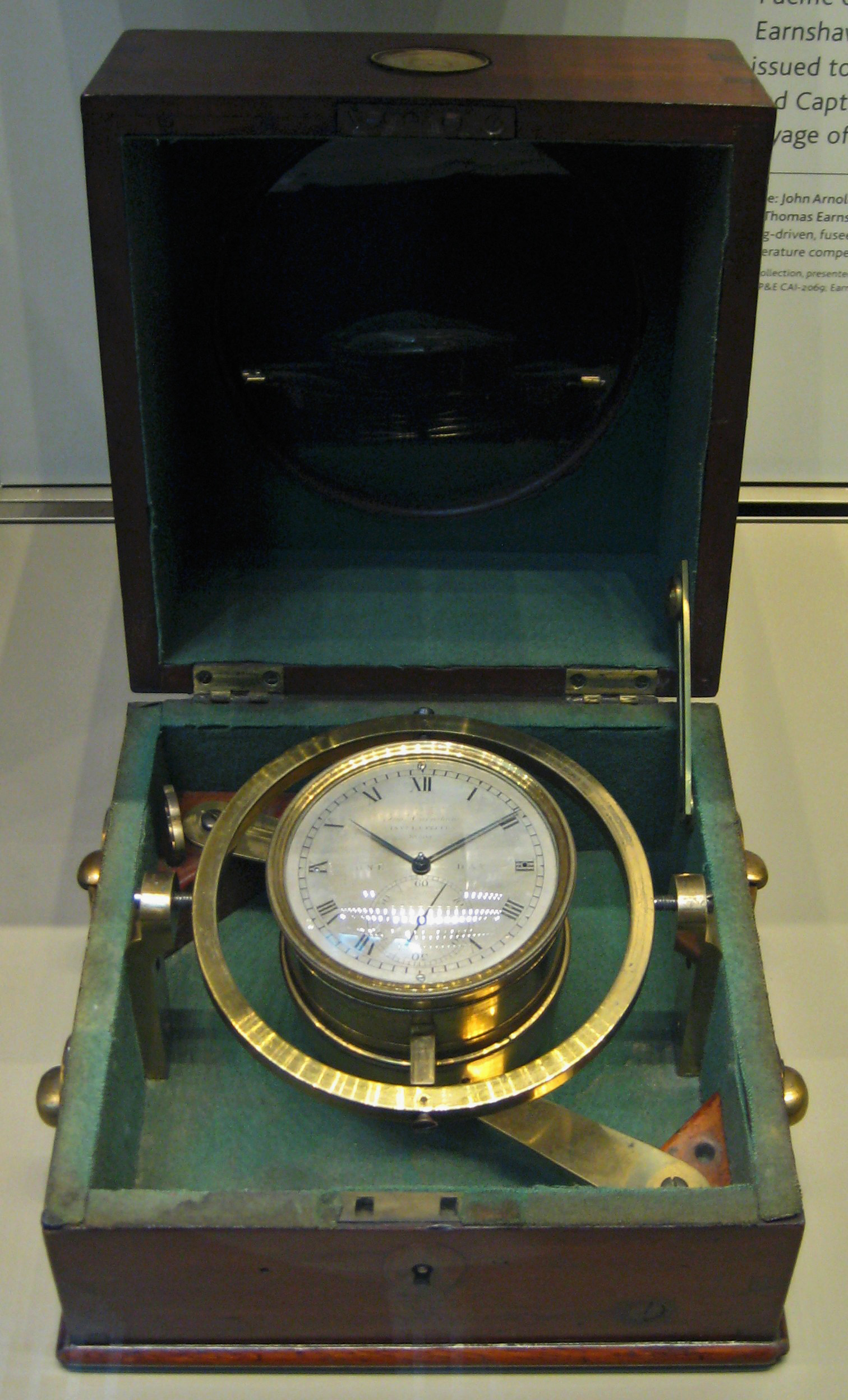
The record subject, photographed in the British Museum. Verified against the museum's own object page: dimensions (17.6 x 20.8 x 20.8 cm) and registration number (1958,1006.1957) match exactly. CC0, no attribution legally required though the photographer is credited by convention.
| Artist | Thomas Earnshaw |
|---|---|
| Date | c. 1800 (dated by the British Museum to the range 1795-1805) |
| Medium | Brass movement (bowl, plates, pillars, wheels) and steel components (spring detent escapement, balance spring, hands) in a rectangular mahogany box lined with green baize, with an ivory disc set into the lid; silvered brass dial |
| Dimensions | 17.6 x 20.8 x 20.8 cm (box, as catalogued by the British Museum) |
| Where it is now | British Museum, London (Room 39, Clocks and Watches, Case 10, on display)last confirmed |
| Inventory number | 1958,1006.1957 (Ilbert Collection no. CAI.1957, L210) |
| Attribution | AcceptedSigned twice by the maker: on the movement, 'Thomas Earnshaw, No.509 Invent. Full note |
| Object type | Clocks and instruments |
| Period | British, early nineteenth century |
| Cases | Has a provenance gap |
| Inscriptions | Movement: 'Thomas Earnshaw, No.509 Invent. et fecit' and 'LONDON No.2853'. Dial: 'Thos. Earnshaw INVT ET FECIT No.509 ONE DAY'. |
| Owners on record | 15 links13 documented, 2 unknown |
| Sources | 13 cited |
About this record Last verified · 13 sources cited · Change log
On this page 9 sections
ContentsClose
A one-day marine chronometer, serial number 509, made in London by Thomas Earnshaw around 1800 and issued by the Royal Observatory, Greenwich to a succession of Royal Navy ships over four decades, including HMS Beagle's second survey voyage of 1831 to 1836, the voyage that carried Charles Darwin. Captain Robert FitzRoy sailed with twenty-two chronometers rather than the usual three, a deliberate scientific redundancy intended to let him cross-check longitude readings against one another across a circumnavigation lasting five years.
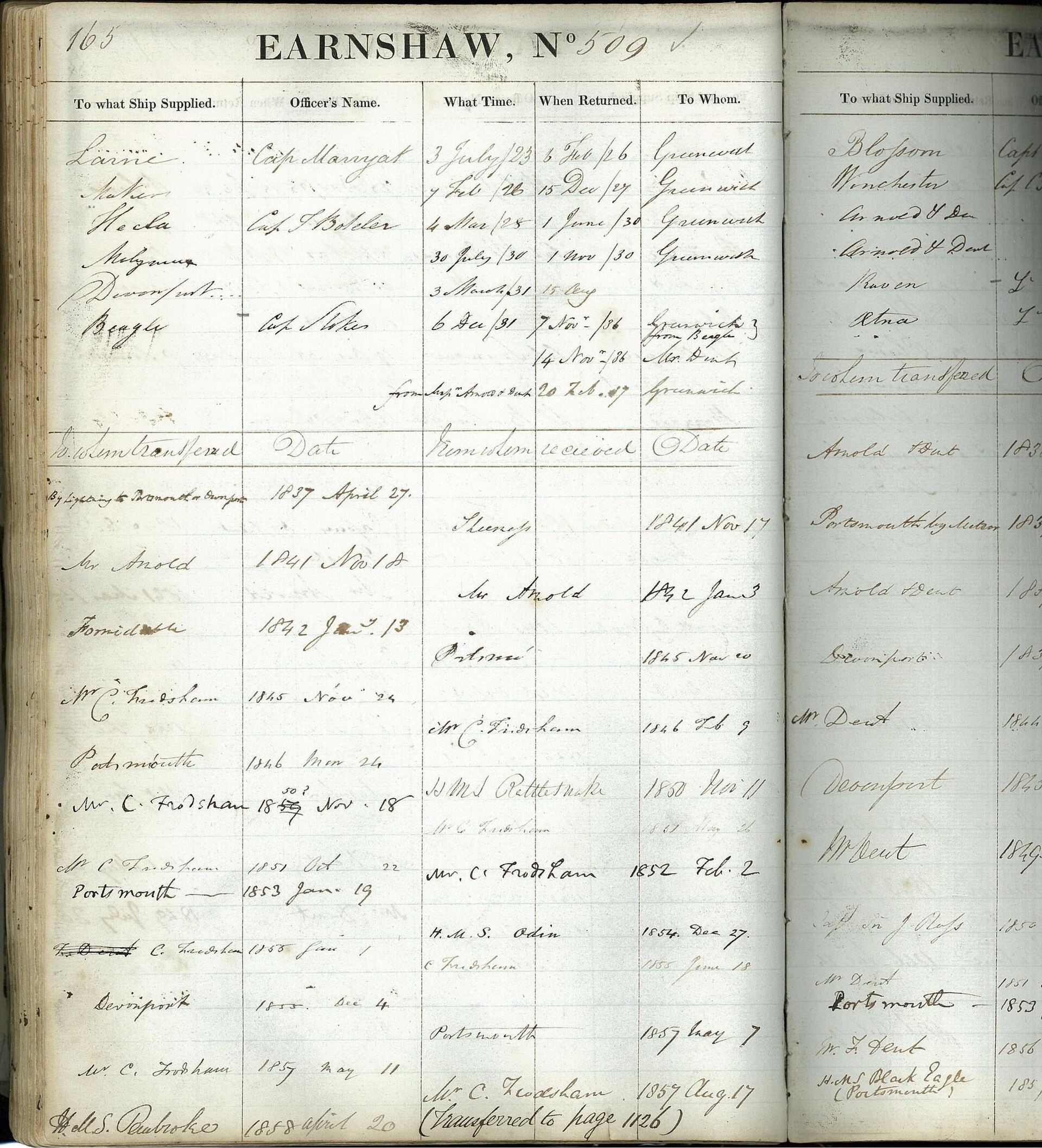
Most of the twenty-two were sold, lost or scattered after the voyage, and tracing the survivors is itself active research rather than settled fact: how many are confirmed today depends on which published count is consulted. This instrument's own service record, by contrast, is unusually complete. The Greenwich ledger of chronometer issues tracks serial 509 by name through HMS Hecla, HMS Beagle, HMS Formidable and HMS Pembroke, then to shore duty at the Royal Society's Falmouth Observatory, and finally into the private collection of the engineer and horological collector Courtenay Adrian Ilbert, whose estate reached the British Museum in 1958.
The one genuine gap in that chain is exactly where an object usually loses its history: the interval between being declared beyond economical repair by the Navy's own watchmaker in 1886 and turning up, at an unrecorded date, in Ilbert's collection.
Provenance
Each link is graded. Documented: a cited source supports it. Disputed: the identification is argued but not established. Unknown: no owner for that span, and the gap is not smoothed into a narrative. The grades in the glossary.
- c. 1795-1805 -Thomas Earnshaw, chronometer maker, 119 High Holborn, Londondocumented
Made and signed by Earnshaw at his Holborn workshop and given serial number 509, the number stamped on both the movement and the dial and used by the Royal Observatory Greenwich to identify the instrument in its issue ledger for the rest of its service life.126
- - 1826-02-06Board of Longitude / Royal Observatory, Greenwich (early Royal Navy service, ship or ships not confirmed for this serial number)unknown
The Wikipedia 'good article' on this object opens its service history with a general account of the Navy's early chronometer-issuing system: William Edward Parry's published narrative of his 1818-19 Arctic voyage mentions an Earnshaw chronometer being used near Baffin Bay, without naming the ship, and the same article separately notes that the Greenwich Observatory's first recorded issue under its formal system was in 1823, to HMS Larne. Neither anecdote is stated, by that article or by the British Museum, to be about serial 509 specifically, and this record does not assert that it is. The first entry the sources tie explicitly to this instrument is its return to Greenwich on 6 February 1826.34
- 1826-02-06 - 1828-03-04Royal Observatory, Greenwich, in for servicing at the maker'sdocumented
Returned to Greenwich 6 February 1826 and sent to Earnshaw's for servicing; it did not come back to Greenwich for nearly two years.34
- 1828-03-04 - 1830-07Royal Navy, issued to HMS Hecla under Captain J. Bolderdocumented
Issued 4 March 1828 to Captain J. Bolder in command of HMS Hecla, then engaged in a survey of the West African coast. Hecla was a well-known ship, having carried Parry's second and third Arctic expeditions before this posting. Returned from Hecla and sent for cleaning to the watchmaker Robert Molyneux, London, in July 1830.34
- 1830-07 - 1831-12-06Royal Observatory, Greenwich, via Robert Molyneux (service) and Devonport (delivery)documented
Serviced by Robert Molyneux, returned to Greenwich in November 1830 but not immediately reissued. Delivered to Devonport in March 1831, where its rate was checked and recorded.34
- 1831-12-06 - 1836-11-07Royal Navy, HMS Beagle, second survey voyagedocumented
Issued 6 December 1831 to 'Captain Stokes' in command of HMS Beagle, per the Greenwich ledger as cited by the British Museum and by the Wikipedia article compiling the museum's own database; the ship sailed under Captain Robert FitzRoy on its famous circumnavigation with Charles Darwin aboard as naturalist, and was one of twenty-two chronometers carried. Returned to Greenwich 7 November 1836.345
- 1836-11-07 - 1842-01-13Royal Observatory, Greenwich, via Arnold and Dent (service) and Devonport/Portsmouth (issue)documented
After cleaning by Arnold and Dent, transported by HMS Lightning to Devonport or Portsmouth for local issue. Returned to Greenwich 17 November 1841 and serviced again by Arnold and Dent before its next posting.34
- 1842-01-13 - 1845-11-20Royal Navy, HMS Formidabledocumented
Issued to HMS Formidable 13 January 1842 and returned to Greenwich 20 November 1845.34
- 1845-11-20 - 1858-04-20Royal Observatory, Greenwich, serviced repeatedly by Charles Frodsham and issued locally from Portsmouthdocumented
Serviced by Charles Frodsham and sent for issue to ships at Portsmouth. Returned to Greenwich for further Frodsham servicing via HMS Rattlesnake (11 March 1850) and HMS Odin (27 December 1854), and finally back from Portsmouth 7 May 1857.34
- 1858-04-20 - 1867-02-01Royal Navy, HMS Pembrokedocumented
The final ship to be issued the chronometer. Received it 20 April 1858; returned it to Greenwich 1 February 1867.34
- 1867-02-01 - 1886-11-03Royal Society, Meteorological Committee, Falmouth Observatorydocumented
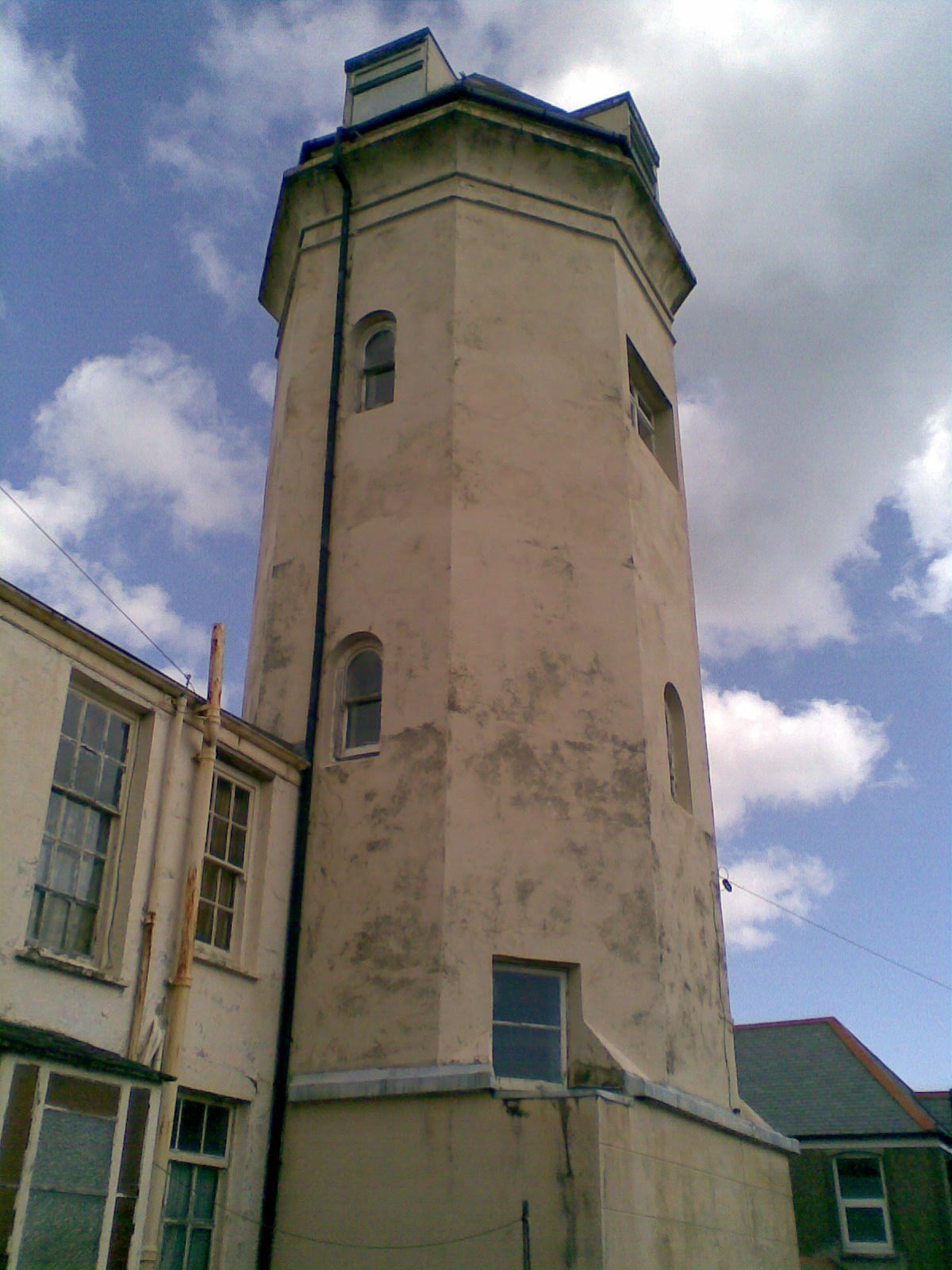
Stayed with Frodsham for servicing over six months, then issued by Greenwich to the Royal Society's Meteorological Committee 25 November 1867 for observations at Falmouth Observatory. Returned to Greenwich 3 November 1886.34
- 1886-11-22 - 1888-07-16Royal Observatory, Greenwich, then E. Dent and Co.documented
Sent to J. Poole for servicing 22 November 1886; Poole returned it 13 December 1886 declaring it beyond economic repair. Given to E. Dent and Co. on 16 July 1888 in part exchange for a different instrument, chronometer Dent 43107.34
- 1888-07-16 - 1956Unknown, then Courtenay Adrian Ilbert (civil engineer and horological collector)unknown
No source consulted for this record states when or how the chronometer passed from E. Dent and Co. into the collection of Courtenay Adrian Ilbert, who assembled what is described as the most extensive private collection of watches, clocks, marine chronometers and sundials of its time at his home in Chelsea. This is the one real gap in an otherwise unusually well-documented service record, and it is exactly the kind of gap this record will not paper over with a guess.7
- 1956 - 1958The Ilbert estate, prepared for auctiondocumented
Ilbert died in 1956. His collection, including this chronometer, was catalogued for public auction.7
- 1958 - presentBritish Museum, Londondocumented
The planned auction was cancelled and the entire Ilbert Collection was purchased instead, following a private donation of funds by Gilbert Edgar that let the museum buy the collection intact rather than see it dispersed lot by lot. Accessioned as 1958,1006.1957 (registered 6 October 1958, per the accession-number convention), retaining the Ilbert Collection reference CAI.1957, L210. On display in Room 39.27
Technical evidence
| Attribution note | Signed twice by the maker: on the movement, 'Thomas Earnshaw, No.509 Invent. et fecit' with the case number 'LONDON No.2853', and on the dial, 'Thos. Earnshaw INVT ET FECIT No.509 ONE DAY'. The serial number 509 is independently tracked through every subsequent posting in the Royal Observatory Greenwich's ledger of chronometer issues, so the maker's mark, the dial signature and the institutional paper trail all agree. Attribution is not in question. |
|---|---|
| Serial number | No. 509, stamped on the movement and the dial, and the identifier used by the Royal Observatory, Greenwich to track the instrument through its entire recorded service life.13 |
| Escapement | Earnshaw spring detent escapement.1 |
| Compensation | Earnshaw split-bimetallic temperature-compensation balance with a free-sprung helical blued-steel balance spring.1 |
| Train and power | One-day, spring-driven movement with fusee and Harrison's maintaining power; jewelled bearings for the train wheels in screwed settings.1 |
| Dial | Silvered brass, Roman numerals I-XII within a minutes circle, subsidiary seconds dial above VI, plain blued-steel hour, minute and seconds hands.1 |
| Case | Rectangular mahogany box lined with green baize, brass carrying handles, hinged lid with glazed viewing aperture and sliding mahogany cover, key-operated lock, ivory disc set into the lid front. Movement housed in a lacquered brass bowl on gimbals.1 |
| Dimensions | 17.6 (height) x 20.8 (width) x 20.8 (depth) cm.1 |
| Inscriptions | Movement: 'Thomas Earnshaw, No.509 Invent. et fecit' and 'LONDON No.2853'. Dial: 'Thos. Earnshaw INVT ET FECIT No.509 ONE DAY'.1 |
Images
The record in full
Chapter 1What it is
A one-day marine chronometer, 17.6 by 20.8 by 20.8 centimetres overall, in a rectangular mahogany box lined with green baize and fitted with brass carrying handles.
A one-day marine chronometer, 17.6 by 20.8 by 20.8 centimetres overall, in a rectangular mahogany box lined with green baize and fitted with brass carrying handles. The hinged lid has a glazed viewing aperture behind a sliding mahogany cover and a key-operated lock, with an ivory disc set into the front of the lid. The silvered brass dial carries Roman numerals I to XII around a minutes circle, a subsidiary seconds dial above VI, and plain blued-steel hands.
The movement sits in a lacquered brass bowl on gimbals, so the instrument stays level regardless of the ship's motion. It is spring-driven with a fusee and Harrison's maintaining power, jewelled bearings for the train wheels in screwed settings, and Earnshaw's own spring detent escapement with his split-bimetallic temperature-compensation balance and a free-sprung helical blued-steel balance spring. Both the movement and the dial are signed and numbered 509, the serial number by which the Royal Observatory, Greenwich tracked this specific instrument through every one of its subsequent postings.
Chapter 2Why this design mattered
A ship at sea can fix latitude from the sun or stars with comparative ease.
A ship at sea can fix latitude from the sun or stars with comparative ease. Longitude requires knowing the time at a fixed reference meridian at the same moment as local noon, which in turn requires a clock accurate enough, and stable enough through heat, cold, damp and the motion of a hull, to keep that reference time across months at sea. John Harrison had proved in the eighteenth century that such a clock could be built at all. The problem after Harrison was that his solution was a bespoke masterpiece, not a manufacturable product.
Thomas Earnshaw's contribution was to make the same order of accuracy reproducible and affordable. His spring detent escapement and his own bimetallic compensation balance became, in the judgement of specialists in the instrument's own literature, essentially the standard design used in marine chronometers from his lifetime onward. That is the difference between an invention and an industry: Earnshaw's chronometers were, for the first time, cheap enough that a ship could carry several of them, which is precisely what let a captain like FitzRoy treat a set of chronometers as a cross-checking instrument rather than a single fragile authority.
Chapter 3Earnshaw against Arnold
Earnshaw did not work in isolation, and the record of how he was rewarded shows a real professional rivalry rather than a clean succession.
Earnshaw did not work in isolation, and the record of how he was rewarded shows a real professional rivalry rather than a clean succession. He submitted chronometers to the Board of Longitude from 1791, competed again in 1793 with the support of the Astronomer Royal, Nevil Maskelyne, and in 1805 was awarded a share of the Board's prize money for improvements to timekeepers, alongside a matching award to John Arnold, the other leading maker of the period. Earnshaw considered the division unjust and said so in print, publishing a pamphlet in 1808 titled Longitude: an Appeal to the Public, stating T. E.'s Claim to the Original Invention of the Improvements in his Timekeepers, arguing that Arnold's innovations had followed rather than preceded his own.
The dispute was never definitively settled in either man's favour by the Board, and it is not settled by this record either; both makers' solutions to the spring detent escapement and temperature compensation are documented, and the priority argument between them belongs to specialist horological scholarship rather than to a single museum label. What is not in dispute is the outcome: Earnshaw's specific mechanical solutions, not a composite of the two men's work, are the ones that became standard.
Chapter 5Twenty-two chronometers for one voyage
Standard Royal Navy practice through the 1820s and 1830s issued one chronometer per ship, rising to three only if the captain personally owned an instrument, on the reasoning that two chronometers...
Standard Royal Navy practice through the 1820s and 1830s issued one chronometer per ship, rising to three only if the captain personally owned an instrument, on the reasoning that two chronometers were barely better than one: with only two, a discrepancy between them tells you that one is wrong but not which one. Three is the minimum number that lets a faulty instrument be identified by majority disagreement.
HMS Beagle's second voyage, under Captain Robert FitzRoy, departed in 1831 for a survey that would eventually take five years and circumnavigate the globe. FitzRoy carried twenty-two chronometers, a number so far outside normal practice that it required active justification, and one that historians of the voyage treat as a deliberate methodological choice rather than incidental equipment. The ship needed a running, mutually cross-checked determination of longitude that could survive years at sea, chronometers being carried ashore and up rivers in small boats to fix the coordinates of reference points as instructed by the Admiralty, with no guarantee that any single instrument would keep working, or survive the journey, at all. Six of the twenty-two were FitzRoy's own property; the rest were Admiralty-issued or on loan from their makers. Serial 509 was issued to the Beagle's book on 6 December 1831, and returned to Greenwich after the voyage on 7 November 1836.
The chronometers were kept in a dedicated cabin near the captain's own quarters, packed in sawdust for protection, with access restricted to the crew who needed to take readings or maintain the instruments, a level of physical security that itself indicates how seriously the exercise was treated. Their upkeep was the job of George James Stebbing, an instrument maker whose salary the Admiralty refused to fund; FitzRoy paid him personally, as he paid for a share of the ship's other equipment out of his own pocket. The Admiralty did concede that Stebbing could be fed from ship's rations, a concession it did not extend to the ship's naturalist: Charles Darwin paid 500 pounds for his own keep aboard the Beagle.
Chapter 6FitzRoy's own check on the result
FitzRoy had a way to test the whole exercise against itself.
FitzRoy had a way to test the whole exercise against itself. Local noon, measured by his chronometers, should shift by exactly twenty-four hours over a complete circumnavigation as the ship worked its way west around the globe. When Beagle returned to her home port after five years and tens of thousands of miles, FitzRoy's chronometers closed that circuit 33 seconds long, an error equivalent to about 8.25 nautical miles. Given the length and difficulty of the voyage, later writers have judged this an impressive result; FitzRoy himself, by his own published account, considered the discrepancy larger than he could explain. The voyage went on to establish, for the first time, a linked chain of reference points of known longitude circling the globe, a chain that subsequent expeditions could use to calibrate their own instruments rather than starting from nothing.
Chapter 7After the Beagle
Serial 509's working life continued for another three decades after it left FitzRoy's ship.
Serial 509's working life continued for another three decades after it left FitzRoy's ship. Cleaned by Arnold and Dent, it was transported by HMS Lightning to Devonport or Portsmouth for reissue, went to HMS Formidable from January 1842 to November 1845, and then cycled through repeated servicing by Charles Frodsham and local issue from Portsmouth, being carried back to Greenwich for cleaning aboard HMS Rattlesnake in 1850 and HMS Odin in 1854. Its last ship posting was to HMS Pembroke, from April 1858 to February 1867.
From the Navy it passed to scientific shore duty: issued in November 1867 to the Royal Society's Meteorological Committee for observations at Falmouth Observatory, where it worked for nearly twenty years. It was withdrawn in November 1886, sent for assessment to the watchmaker J. Poole, and in December 1886 declared beyond economic repair. In July 1888 the Royal Observatory gave it to E. Dent and Co. in part exchange for a different chronometer. That is the last point at which the sources consulted for this record can place the instrument with a date attached.
Chapter 8The gap, and how it closed
Between 1888 and Courtenay Adrian Ilbert's death in 1956, nothing in the sources fetched for this record documents where this chronometer was or who owned it.
Between 1888 and Courtenay Adrian Ilbert's death in 1956, nothing in the sources fetched for this record documents where this chronometer was or who owned it. Ilbert was a civil engineer who assembled what is described, without a stated rival candidate, as the most extensive private collection of watches, marine chronometers, clocks and sundials of its time, kept at his home in Chelsea. That serial 509 was part of it by 1956 is documented; how and when it got there is not, and this record states that plainly rather than inventing a dealer or a date to fill the space.
Ilbert's death triggered a scheduled public sale of the collection. That sale never happened. A private donation of funds, made by the businessman Gilbert Edgar, allowed the British Museum to purchase the entire Ilbert Collection outright in 1958 rather than see it broken up lot by lot at auction. The chronometer was accessioned as 1958,1006.1957, carrying forward its Ilbert Collection reference CAI.1957, L210, and has been in the museum's care since. It has been shown internationally, including venues in Shanghai, Beijing, Valenciennes and Hong Kong between 2017 and 2019, and remains on permanent display in Room 39, the museum's clocks and watches gallery.
Chapter 9Twenty-two chronometers, and how few are accounted for
What happened to the rest of FitzRoy's twenty-two is, by design, not this record's central subject, but it is the context that makes serial 509's own complete service record worth noticing.
What happened to the rest of FitzRoy's twenty-two is, by design, not this record's central subject, but it is the context that makes serial 509's own complete service record worth noticing. Most Admiralty-issued instruments of this kind were cycled indefinitely through Navy and scientific service, sold as surplus, or simply lost to time once no longer of practical use; FitzRoy's own six privately owned chronometers had a different and more exposed history, since they were his personal property rather than government stores.
Published sources do not agree on how many of the twenty-two survive today, and the number reported has grown as research and the market have turned up more of them rather than settled on a fixed figure. This is treated in this record's open questions rather than resolved by choosing whichever number is most convenient.
The artist
Thomas Earnshaw
Earnshaw did not invent the marine chronometer; John Harrison had already proved, decades earlier, that an accurate portable timekeeper was possible at all. Earnshaw's achievement was narrower and, in its consequences, larger: he worked out how to build that level of accuracy into an instrument simple and cheap enough to produce in quantity, which is the difference between a masterpiece that exists once and a technology that a navy can issue by the hundred. The instrument in this record is a working example of exactly that industrialised solution, not a one-off showpiece.
Related works
| Work | Relation | Where it is |
|---|---|---|
| Chronometer watch (repeating watch), by Robert Pennington Robert Pennington | A second, independently confirmed Beagle-associated instrument in the same museum Confirmed directly from the British Museum's own object page for this record: a Pennington pocket chronometer with an Earnshaw-type spring detent escapement, associated with the 1831 Beagle voyage. Independently verified as a distinct object; not to be confused with the unconfirmed Commons photograph of a Pennington chronometer labelled 'V' noted in this record's editor notes. | British Museum, London, registration 1958,1201.1743 |
| Pocket chronometer 'K' Parkinson and Frodsham | A third Beagle-voyage survivor, at a different institution A live, separately reported 2025-2026 acquisition, included here only as context for how Beagle chronometers continue to surface. No image or object fact from this instrument is used elsewhere in this record. | National Maritime Museum, Greenwich (acquired following a 2025 UK export bar; on public display from October 2026) |
| Chronometer 'French 4214' James Moore French | A fourth Beagle-voyage survivor, later reissued to the 1845 Franklin Arctic expedition Issued to the Beagle's second voyage in 1831, then to HMS Erebus in 1845; only the upper box half and an ivory plaque survive, recovered by the Charles Francis Hall search expedition of 1869. A genuinely distinct instrument with its own, separately documented history. | Royal Museums Greenwich |
| Chronometer 'N', by Robert Molyneux Robert Molyneux | A fifth Beagle-voyage survivor, privately owned throughout FitzRoy's own personal property, carried on both the second and third Beagle voyages, purchased by the British Government in 1837, later lost with HMS Irresistible during the 1916 Dardanelles campaign and recovered, then held aboard a Soviet Liberty ship during the Second World War before reaching the vendor. The clearest evidence in this record's sources that most of the twenty-two had eventful, undocumented middle histories before any of them became museum objects. | Private collection (sold at Bonhams, London, 10 December 2014, for GBP 100,900 including buyer's premium) |
Open questions
- How many of the Beagle's twenty-two second-voyage chronometers survive today? Sources disagree: the Wikipedia article specific to this object states two, both British Museum-owned; a separate Wikipedia survey of the ship's full chronometer complement states three; and this record's own research independently confirms at least two further survivors (pocket chronometer K, National Maritime Museum, and chronometer French 4214, Royal Museums Greenwich) plus a fifth in private hands (chronometer N, sold at Bonhams in 2014) that are not clearly folded into either published count. No single source consulted gives a total that accounts for all of these.
- When and how did this chronometer pass from E. Dent and Co., which received it in part exchange in July 1888, into the collection of Courtenay Adrian Ilbert? No source fetched for this record documents the intervening years before Ilbert's death in 1956.
- Was the Earnshaw chronometer mentioned in William Edward Parry's 1818-19 account of his search for the Northwest Passage this specific instrument, serial 509, or a different Earnshaw chronometer of the period? Parry's own account does not name the ship it was aboard, and no source consulted resolves the question either way.
- Why was this chronometer issued to the Beagle's book under the name 'Captain Stokes' in December 1831, when the ship is otherwise universally associated with Captain Robert FitzRoy? The Greenwich ledger entry as reported does not explain the discrepancy, which may reflect ordinary Navy paperwork practice (recording an officer other than the eventual commanding captain at the moment of issue) or may indicate something the sources consulted do not capture.
- What did the British Museum pay, if anything beyond Gilbert Edgar's donation, to complete the 1958 purchase of the Ilbert Collection, and what was the collection's total value at the cancelled auction? The sources consulted describe the mechanism of the purchase but not its financial terms.
- Does the Board of Longitude award to Earnshaw in 1805 reflect a figure of 2,500 pounds, as one secondary source states, or 3,000 pounds matching John Arnold's award, as the Dictionary of National Biography states? This record follows the DNB figure as the more directly sourced of the two but the discrepancy is not resolved.
Questions about this object
What is Marine Chronometer by Thomas Earnshaw?
Marine Chronometer by Thomas Earnshaw is a clocks and instruments, dated c. 1800 (dated by the British Museum to the range 1795-1805). Medium: Brass movement (bowl, plates, pillars, wheels) and steel components (spring detent escapement, balance spring, hands) in a rectangular mahogany box lined with green baize, with an ivory disc set into the lid; silvered brass dial.
Who made Marine Chronometer by Thomas Earnshaw, and is the attribution settled?
The attribution to Thomas Earnshaw is recorded here as accepted. Signed twice by the maker: on the movement, 'Thomas Earnshaw, No.509 Invent. et fecit' with the case number 'LONDON No.2853', and on the dial, 'Thos. Earnshaw INVT ET FECIT No.509 ONE DAY'. The serial number 509 is independently tracked through every subsequent posting in the Royal Observatory Greenwich's ledger of chronometer issues, so the maker's mark, the dial signature and the institutional paper trail all agree. Attribution is not in question.
Where is Marine Chronometer by Thomas Earnshaw now?
British Museum, London (Room 39, Clocks and Watches, Case 10, on display). Inventory number 1958,1006.1957 (Ilbert Collection no. CAI.1957, L210). Last confirmed 29 August 2026. Purchased by the British Museum in 1958 with the rest of the Ilbert Collection, after a scheduled sale of the collection was called off following a private donation of funds by the businessman Gilbert Edgar that allowed the museum to buy it outright.
What is still unknown about Marine Chronometer by Thomas Earnshaw?
How many of the Beagle's twenty-two second-voyage chronometers survive today? Sources disagree: the Wikipedia article specific to this object states two, both British Museum-owned; a separate Wikipedia survey of the ship's full chronometer complement states three; and this record's own research independently confirms at least two further survivors (pocket chronometer K, National Maritime Museum, and chronometer French 4214, Royal Museums Greenwich) plus a fifth in private hands (chronometer N, sold at Bonhams in 2014) that are not clearly folded into either published count. No single source consulted gives a total that accounts for all of these.
Sources
- 1British Museum, Collection Online, 'marine chronometer', museum number 1958,1006.1957 (object description, dimensions, inscriptions, materials, maker, acquisition note, exhibition history, current display location). britishmuseum.org/collection/...
- 2British Museum, Collection Online, 'chronometer watch; repeating watch' by Robert Pennington, museum number 1958,1201.1743 (the second Beagle-associated instrument in the British Museum's own collection, fetched to confirm its registration number and maker independently rather than assume it from secondary sources). britishmuseum.org/collection/...
- 3Wikipedia, 'Ship's chronometer from HMS Beagle', a Good Article compiling the British Museum's object database, the Royal Observatory Greenwich's ledger of chronometer issues, and published sources including James Taylor's 'The Voyage of the Beagle' (2008), F.W. and J.M. Nicholas's 'Charles Darwin in Australia' (2002), Philip Parker King, Charles Darwin and Robert FitzRoy's 'Narrative of the Surveying Voyages of His Majesty's Ships Adventure and Beagle' (1839), Rupert Gould's 'The Marine Chronometer' (1960), Dava Sobel and William Andrewes's 'The Illustrated Longitude' (1998), and Fiona Macdonald's 'Inside the Beagle with Charles Darwin' (2005). en.wikipedia.org/wiki/...
- 4Wikipedia, 'Ship's chronometer from HMS Beagle', full wikitext with inline citations, fetched separately to confirm the reference list and the exact wording of the disputed points (the Parry/Larne anecdotes, the FitzRoy 33-second closure error, the Darwin GBP 500 keep payment, and the bibliography). en.wikipedia.org/w/...
- 5Wikipedia, 'List of chronometers on HMS Beagle', a survey of the ship's chronometer complement across all three of its voyages, including a differing survivor count from the object-specific article. en.wikipedia.org/wiki/...
- 6Wikipedia, 'Thomas Earnshaw', for the maker's biography, his invention of the spring detent escapement and bimetallic compensation balance, and the 1805 Board of Longitude award. Cross-checked against the Dictionary of National Biography entry (source 9) for the award figure, where the two disagree. en.wikipedia.org/wiki/...
- 7Wikipedia, 'Courtenay Adrian Ilbert', for the collector's career, the scale of his horological collection, his death in 1956, and the cancelled 1958 auction and museum purchase. en.wikipedia.org/wiki/...
- 8Wikimedia Commons, file description and for 'File:British Museum Marine Chronometer.jpg' (license CC0, photographer BabelStone, description confirming the object as the Earnshaw Beagle chronometer) and for 'File:EARNSHAW 509 165.jpg' and 'File:FalmouthObservatory2.jpg' (both public domain), fetched via the Commons API to verify licensing and description before use. commons.wikimedia.org/wiki/...
- 9Dictionary of National Biography, 1885-1900, 'Earnshaw, Thomas', via Wikisource: birth at Ashton-under-Lyne 4 February 1749, apprenticeship, the 119 High Holborn workshop, the 1793 Board of Longitude submission backed by Nevil Maskelyne, the 1805 award of GBP 3,000 to both Earnshaw and John Arnold, the 1808 pamphlet 'Longitude: an Appeal to the Public', and death 1 March 1829 at Chenies Street, Bedford Square. en.wikisource.org/wiki/...
- 10All At Sea, 'Pocket Chronometer Used On Charles Darwin's Beagle Voyage Acquired By The National Maritime Museum, Greenwich' (2025-2026), on Beagle pocket chronometer 'K', saved from export in 2025 and acquired by the National Maritime Museum, Greenwich, for display from October 2026. Cited only as context for a different object at a different institution; no image or fact from this object is used for the present record. allatsea.co.uk/news/...
- 11ianvisits, 'Darwin's HMS Beagle chronometer blocked from export to keep it in the UK' and 'One of HMS Beagle's last surviving chronometers is coming to Greenwich', on the 2025 export bar and 2026 display of chronometer K at the National Maritime Museum, Greenwich. Context only, different object and institution. ianvisits.co.uk/articles/...
- 12Royal Museums Greenwich, 'The lost chronometer: the timepiece that sailed with Charles Darwin and Sir John Franklin', on chronometer 'French 4214', issued to the Beagle's second voyage in 1831 and later to HMS Erebus for the 1845 Franklin expedition, recovered in fragments by the Charles Francis Hall search expedition of 1869 and now in the Royal Museums Greenwich collection. A different, distinct instrument, cited only for the survivor count discussed in this record's open questions. rmg.co.uk/stories/...
- 13Bonhams, sale 21931, lot 26, 'The property of Captain Robert FitzRoy, an historically important... two day marine chronometer present on the second and third voyages of HMS Beagle', by Robert Molyneux, London, no. 1175 (Beagle designation 'N'). FitzRoy's personal property, purchased by the British Government in 1837, later lost with HMS Irresistible in the 1916 Dardanelles campaign, recovered and resurfaced aboard a Soviet Liberty ship in the Second World War, sold at Bonhams London 10 December 2014 for GBP 100,900 including premium. A different, distinct instrument, in private hands, cited only for the survivor count and as a market comparandum. bonhams.com/auction/...

Last verified · Published
Change log
29 August 2026 - Record created at the house standard: researched narrative, technical evidence, maker dossier, graded provenance chain, prices with hammer and premium separated, related works, open questions and sources.