The Bayeux Tapestry
The British Museum ·  London, United Kingdom · 10 Sep 2026 to 11 Jul 2027
The 70-metre embroidery on loan from France, in England for the first time since it was made. Room 30. Tickets for 10 September to 31 December 2026 have already sold out.
Images
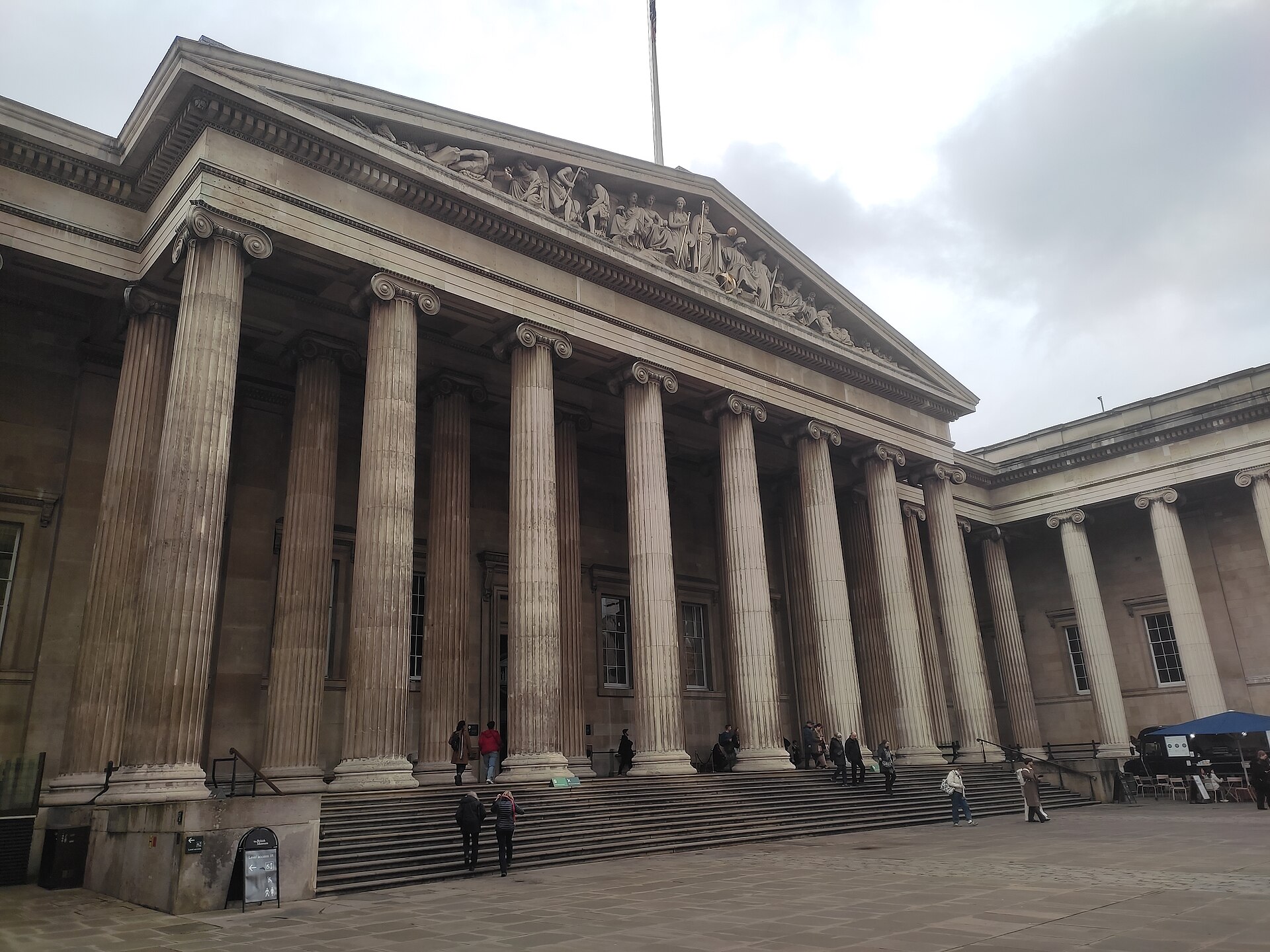 Shown: The British Museum - not the exhibition
The first return in a thousand years
The Bayeux Tapestry has never been in England since it was made, nearly a thousand years ago. Under an agreement between the British and French governments it comes to the British Museum from September 2026 to July 2027, hung in Room 30, the Sainsbury Exhibitions Gallery. It is seventy metres long, which is the first practical problem any host has to solve and the reason the loan needed a gallery of that size rather than a standard exhibition suite.
The object is not a tapestry in the technical sense at all - it is embroidery, worked in wool on linen, and the name is a historical accident that has stuck. It depicts the events leading to the Battle of Hastings and the Norman Conquest of 1066: the last time England was successfully invaded, and the year from which the present monarchy dates itself.
Norman patron, English hands
The most interesting thing the museum says about it is a fact of authorship that cuts against how the object is usually described. It was likely commissioned by a Norman patron but made by English embroiderers, working from manuscript drawings produced in Canterbury.
That matters for how the thing is read. A triumphal account of a conquest, made by the conquered, from designs drawn in an English monastic centre, is not a straightforward piece of propaganda even if it was commissioned as one - and the long argument among historians about whose sympathies show through the needlework rests on exactly this. Whatever position a visitor takes, the object is simultaneously a historical record and a work of art made under occupation.
It is also an unusually good record of ordinary things. Beyond the warfare and the ships, it documents eleventh-century castles, clothing, food and furniture at a level of detail almost nothing else from the period supplies. Over 600 figures appear in the main body of the work; only three of them are women, a disproportion the museum has built a public lecture around rather than passed over.
Getting in will be the hard part
This is the practical warning that matters more than anything else on this page. **Tickets for the whole of the first period, 10 September to 31 December 2026, had already sold out** when we checked on 7 August 2026, before the exhibition had opened. Further releases are promised later in the year, with member priority booking reopening in October.
Pricing runs on three bands. Standard adult admission is GBP 33, or GBP 36.50 with the museum's optional donation. Off-peak is GBP 27, and a super off-peak rate of GBP 25 applies on term-time weekdays between 15.30 and 16.20 - a forty-minute window each day that is the cheapest legitimate way in. Under-16s are free but must be booked alongside a paying adult, at most four per adult. Students, 16 to 18 year olds and jobseekers pay GBP 25, as do disabled visitors, whose assistant is admitted free with a booking. National Art Pass holders pay GBP 16.50, GBP 13.50 or GBP 12.50 depending on band, which is the largest single discount available. Members get two visits at no extra cost and 10 per cent off after that.
The gallery keeps longer hours than the museum's norm for this: Sunday to Wednesday 10.00 to 18.00, and Thursday to Saturday 10.00 to 21.00.
A programme built around it
The museum has put a full events programme around the loan rather than treating it as a hang. An opening festival begins on 9 October 2026 with Bayeux Late: medieval making, a free evening of workshops, followed by the Big Bayeux bash family weekend, and a second Bayeux Late on 4 December on digital and experimental work made in response.
The talks are led by the museum's own curator of the tapestry, Michael Lewis. Bayeux Tapestry 101, with the medieval archaeologist David Musgrove, runs online on 14 August 2026 at GBP 17. The real world of the Bayeux Tapestry, with the medievalist Leonie Hicks, is on 25 September at GBP 50, and The women of the Bayeux Tapestry - built on that count of three women among six hundred figures - is on 20 November at GBP 50. A Royal School of Needlework weekend course with the textile archaeologist Alexandra Makin, at GBP 300, had already sold out.
What is in the show
The embroidery itself
English embroiderers, for a probable Norman patronSeventy metres of wool embroidery on linen, depicting the events leading to the Battle of Hastings and the Norman Conquest of 1066. Despite the name it is not a woven tapestry. Shown in Room 30, the Sainsbury Exhibitions Gallery, the only space at the museum that can take its length.1
The Canterbury drawings behind it
The museum states the embroiderers worked from manuscript drawings made in Canterbury, which places the design work in an English monastic centre even though the commission is thought to be Norman. That split between patron and maker is the central interpretive problem the object presents.1
Eleventh-century daily life, incidentally recorded
Beyond the battle narrative the work documents castles, ships, warfare, clothing, food and furniture of eleventh-century England before and after the Conquest, at a level of detail that survives in almost no other single source from the period.1
Six hundred figures, three women
Over 600 figures appear in the main body of the embroidery and only three are women. The museum has made this the subject of a public discussion in its programme rather than leaving it as a footnote, which is the clearest signal of how it intends the object to be read.1
Who made it
- Curated by Michael Lewis, British Museum curator for the Bayeux Tapestry; leads the exhibition's public lecture programme
- Organised by The British Museum
Tickets for this show
- Tickets
- Adult, standardGBP 33GBP 36.50 including the museum's optional 3.50 donation
- Adult, off-peakGBP 27GBP 30.50 with the donation
- Adult, super off-peakGBP 25term-time weekdays only, 15.30 to 16.20 - the cheapest adult entry
- Under 16Freefree, but must be booked with a paying adult; maximum four per adult
- Students, 16 to 18, jobseekersGBP 25same in every band
- Disabled visitorsGBP 25an assistant is admitted free; booking required
- National Art PassGBP 16.50GBP 13.50 off-peak and GBP 12.50 super off-peak
- MembersFreetwo visits at no additional cost, then 10 per cent off
- Timed entry
- Booked by timed slot. Tickets covering 10 September to 31 December 2026 had SOLD OUT as at 7 August 2026, before the exhibition opened. Further releases were promised later in 2026, with member priority booking reopening in October. Anyone planning a journey should assume they are booking for 2027 unless they catch a release.
- Hours
- Sunday to Wednesday 10.00 to 18.00, Thursday to Saturday 10.00 to 21.00 - longer than the museum's usual hours, extended for this loan. Room 30, the Sainsbury Exhibitions Gallery. The British Museum's permanent collection remains free; this exhibition is separately ticketed.
Prices and timing change. We take them from the page we used and print the day we read it: the source we used. Confirm before you travel.
What critics said
The loan was treated across the British and French press as a diplomatic and cultural event in its own right well before anything was hung, and the museum's own director has called it hard to overstate; no assessment of the display itself is possible yet because it has not opened.
What is praised, what is criticised
- Praised: the fact of the loan at all, the first time the embroidery has been in England since it was made almost a thousand years ago
- Praised: the decision to give it Room 30, the only gallery able to take seventy metres, rather than sectioning it
- Praised: a programme that engages directly with the awkward parts of the object, including a public discussion of why only three of its six hundred figures are women
No published criticism found
Searched the British and French press and the museum trade press for a published objection to the loan or to the museum's handling of it - the Guardian, The Times, the Telegraph, the Financial Times, Le Monde, The Art Newspaper, Apollo and Hyperallergic were searched by name, along with coverage of the conservation debate about moving a thousand-year-old textile. As at 7 August 2026 the exhibition had not opened and we found no published criticism of it. This entry should be re-checked after 10 September 2026, when reviewers see it.
Recorded as a gap rather than left blank: an absence of criticism is itself a fact about how a show was received, and it is only worth reading if we say where we looked.
No published review found
No review of this exhibition exists yet and none can: it opens on 10 September 2026, more than a month after this page was written, and we searched the British national press, the art press and the medieval-studies press to confirm that nothing beyond announcement coverage has been published. Everything on this page is drawn from the museum's own exhibition and ticketing pages. Re-check after the opening.
Everything on this page is our own research from the sources listed below, not a summary of anybody else's verdict.
Sources
- 1The British Museum, exhibition page for The Bayeux Tapestry: the run dates, Room 30 and the Sainsbury Exhibitions Gallery, the seventy-metre length, the loan agreement with France, the statement that it was likely commissioned by a Norman patron and made by English embroiderers from Canterbury manuscript drawings, the record of eleventh-century daily life, the count of over 600 figures of whom three are women, the extended opening hours, the full three-band ticket price table, the sold-out status of tickets to 31 December 2026, and the events programme with its prices. Read 7 August 2026. britishmuseum.org/exhibitions/bayeux-tapestry
- 2The British Museum, exhibitions and events index: confirms the run as 10 September 2026 to 11 July 2027 and lists it as an Experience rather than a standard exhibition. Read 7 August 2026. britishmuseum.org/exhibitions
- 3The British Museum, Visit: the standing policy that the permanent collection is free while special exhibitions are ticketed, and the museum's booking advice. Confirmed against this archive's own venue record for the British Museum, admission last confirmed 7 August 2026. britishmuseum.org/visit