The First Number in a Hoard Is a Counting Rule
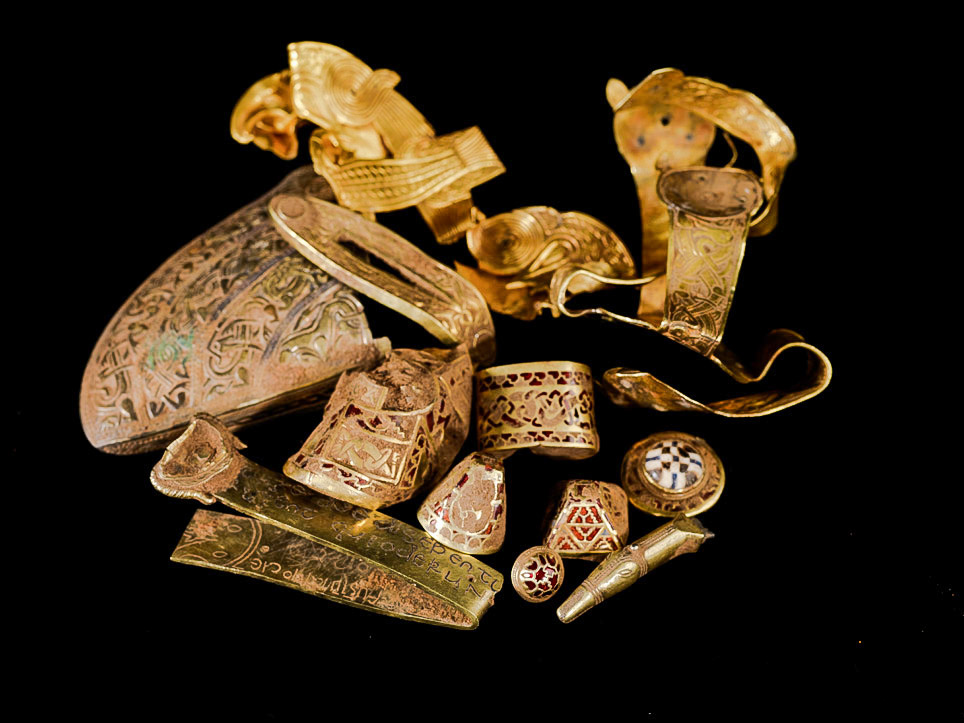
The Staffordshire Hoard is 4,600 pieces, or just under 4,000, or around 700, or more than 600, depending on which official page you read. Fourteen group records in this archive show the count is the figure most likely to change, and why.
Records in this piece: The Staffordshire Hoard, The Cheapside Hoard, The Lydian Hoard, The Morgantina Treasure, The Great Dish from the Mildenhall Treasure, The Amphilochios Paten, Priam's Treasure, The Unicorn Tapestries, The Beauvais Missal, The Aldobrandini Tazze, Plate from the Swan Service, The Parthenon Sculptures in the British Museum, The Amaravati Collection, The Devonshire Hunting Tapestries
On this page 8 sections
ContentsClose
In short
- Fourteen records in this archive describe a group rather than a single object: hoards, sets, series, a dispersed manuscript. In every one the count of pieces is the figure that has moved most since the find, and it moved because the counting rule changed, not because the material did.
- The Staffordshire Hoard carries four official figures at once: 4,600 fragments, just under 4,000 objects and fragments, more than 4,000 fragments making around 700 items, and more than 600 significant objects. The first two count what came out of the ground, the last two count what the pieces belong to. The published gold weight moves with the rule, from about 5.1 kilograms in the figures that circulated from the find to nearly 4 in the 2019 catalogue announcement.
- A set can lose its count in the other direction. The Unicorn Tapestries are seven hangings on eight accession numbers, because one survives as two strips. The Beauvais Missal is 309 leaves, of which 122 have been located. The Aldobrandini Tazze are twelve cups whose emperors were unscrewed and put back on the wrong dishes.
- The number a museum quotes is usually the number it holds, not the number that was found. The Walters holds 23 vessels of the Kaper Koraon treasure and does not claim that was all of it. The Cheapside Hoard's own holders give 25 pieces at the British Museum in one account and 20 in another, and both are published.
- Priam's Treasure has two figures that are routinely confused: Schliemann's own itemised count of roughly 8,750 small gold pieces for Treasure A, and the 259 to 260 catalogued items of the whole Trojan collection at the Pushkin. They count different things.
A hoard record begins with a number that is not a fact
Every record of a group of objects opens with a count, and the count is a rule applied to a pile rather than a property of the pile. Fourteen records in this archive describe a group: eight hoards and treasures from the ground, three sets made as sets, a dispersed manuscript, a temple's sculpture and a monument's carved facing. We read their counts together because the same thing happens in all of them. The number announced at the find is revised, usually more than once, and every revision comes from a decision about what to count as one, whether to count what was found or what survives or what one museum holds, and whether a fragment is an object.
None of that is carelessness. A helmet broken into a thousand pieces is a thousand finds and one object, and both counts are true. What the record has to do is say which rule produced which figure, because a reader comparing two hoards by their headline numbers is almost always comparing two rules. This piece sets the fourteen side by side, gives the rule behind each figure and shows where the same institution publishes two counts of the same material without saying so.
Four official counts of one hoard
The Staffordshire Hoard is the clearest case because its holders have published four figures and all of them are right. Birmingham Museums' own resources page says the hoard contains just under 4,000 objects and broken fragments, and its conservation page calls the work a giant jigsaw puzzle with 4,000 fragments. Historic England says the hoard is composed of more than 4,000 fragments, which together make up around 700 individual items. The announcement of the Society of Antiquaries' 2019 catalogue puts it as more than 600 significant objects found in 4,600 fragments. Our own record carries approximately 4,600 individual pieces and fragments across the 2009 and 2012 finds, and notes that the press figures of autumn 2009 ran from about 1,500 pieces to 3,500 to 3,940 as recovery went on.
The rule behind each number is visible once you look for it. The 4,000 and 4,600 figures count what came out of the field, and they differ by whether the 81 Treasure-declared pieces of the November 2012 return to the same field, and the smallest fragments, are in. The 600 and 700 figures count what the fragments belong to, after a decade of conservation joined some objects from as many as 27 pieces. The gold weight moves with the rule too. Our record carries about 5.1 kilograms of gold and 1.4 of silver, the figures that circulated from the find onward, and the 2019 announcement gives nearly 4 kilograms of gold and 1.7 of silver. The two sets of figures have not been reconciled in anything we read. A reader who quotes 4,600 objects has counted fragments as objects; a reader who quotes 700 objects has counted a dismantled helmet, which is about a third of all the fragments, as one. Both are honest, and neither is the other.
The count as found and the count a museum holds
The second thing a hoard count hides is whether it describes the find or the holding. The Kaper Koraon treasure is the clean example. The Walters Art Museum holds twenty-three vessels from the find, by its own repeated description across the object records, and our record says plainly that this is not, on the evidence available, the whole of what was found. Dumbarton Oaks holds a paten, a chalice and a fan from a nearby village that its own catalogue describes on their own terms, and the scholarly title that covers the material, the Kaper Koraon and Related Treasures, groups several find-labels under one name precisely because the original division into market lots cannot be undone from the museum side.
The Cheapside Hoard shows what happens when the holders count each other. The London Museum's published account says five pieces are at the Victoria and Albert Museum and twenty-five at the British Museum. Hazel Forsyth, the curator who reassembled the hoard for its 2013 exhibition, gave twenty to the British Museum in 1914 and did not mention the V and A in that context. Our record carries both figures and does not average them. The bulk was divided in 1916 between the London Museum and the Guildhall Museum, which merged in 1976, so the Cheapside count is a sum across three institutions and two eras of the same one, and the roughly five hundred pieces in every summary is a total nobody has published a working for.
Sets that were made as a number and lost it
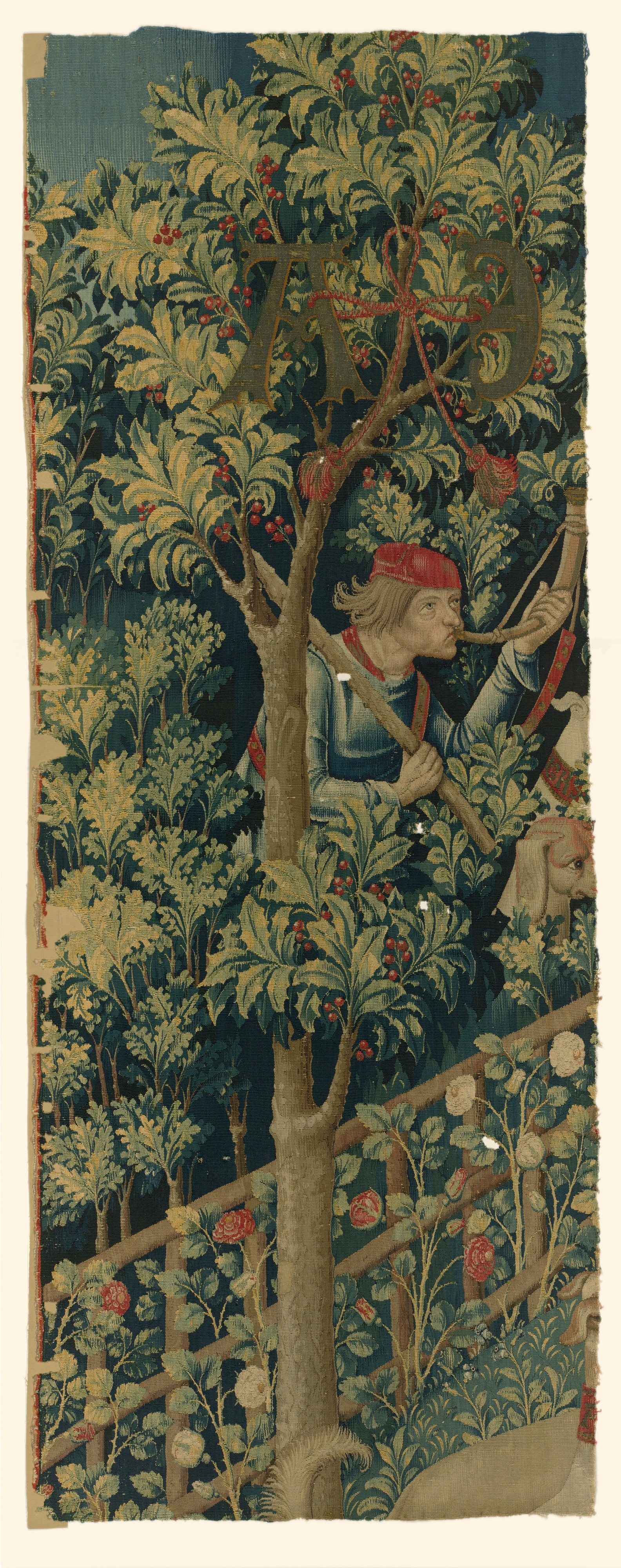
A set made to a number can lose the number after the fact, and three records here show three ways. The Unicorn Tapestries were seven hangings woven around 1500. They are eight objects at the Metropolitan Museum, accessioned as 37.80.1 to 37.80.6 for the six intact hangings and 38.51.1 and 38.51.2 for the two narrow strips that are all that survives of the fifth, given a year later than the rest. Seven is the set, eight is the inventory, six is what a visitor who counts the big ones sees. Our record uses all three and says which is which.
The Aldobrandini Tazze were twelve silver standing cups, each with a statuette of one of the Twelve Caesars above a dish chased with four scenes from that emperor's life, forty-eight scenes in all. Because the emperors unscrew, the set was broken up in the nineteenth century and the figures went back onto the wrong dishes, so that for more than a century a count of twelve tazze was correct and a count of twelve matched emperor-and-dish pairs was not. The Beauvais Missal was a book of 309 leaves for about 450 years. It has been 309 separate objects since 1942, when a dealer bought it for a thousand dollars and sold the leaves at 25 to 40 dollars each; 122 have been located in more than a hundred collections. The count went from one to 309 by a sale and is coming back to one, leaf by leaf, through a virtual reconstruction that will not be finished.
Two figures that count different things
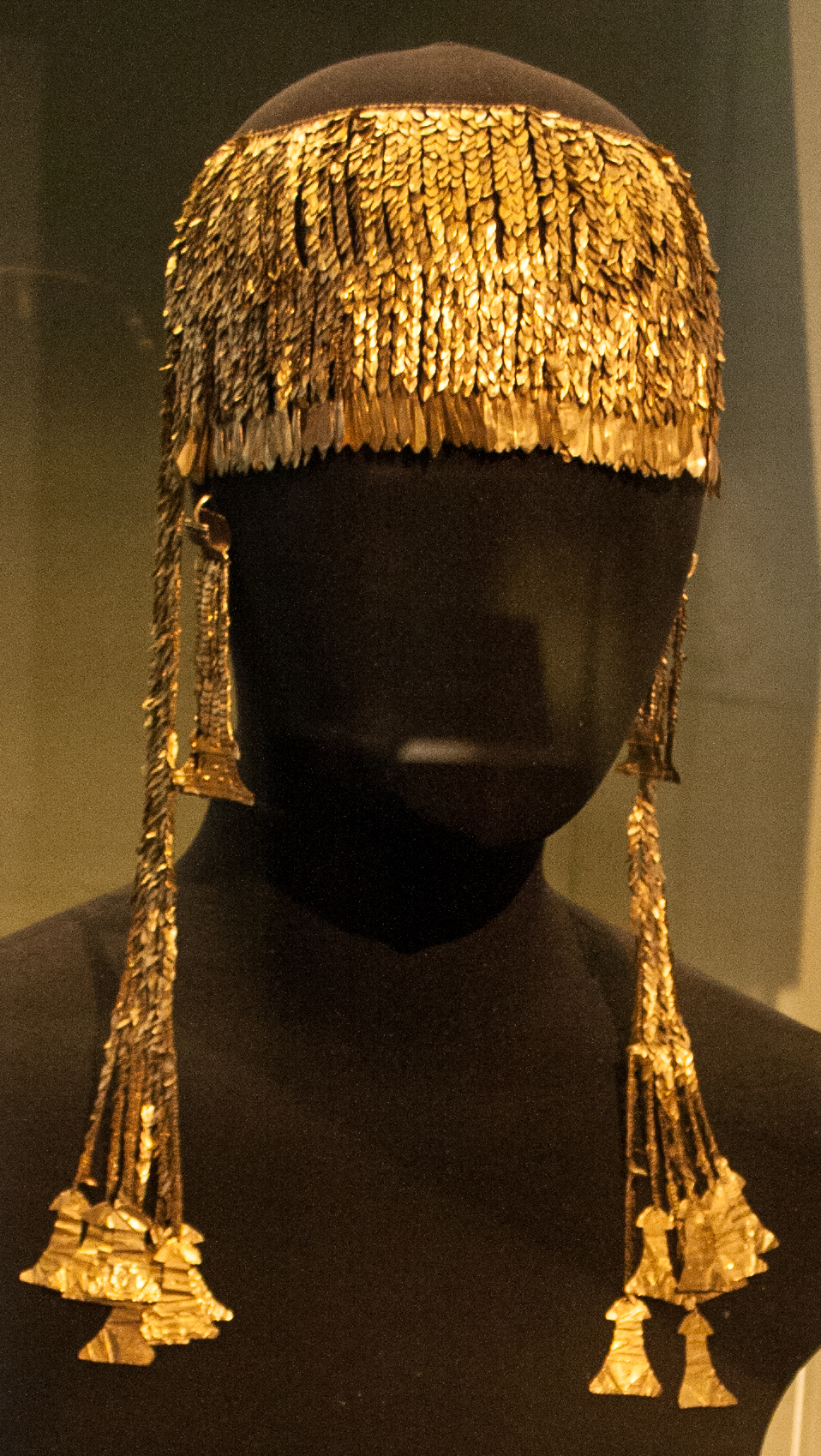
Priam's Treasure carries two numbers that reporting routinely swaps, and they are not two estimates of one thing. Schliemann's own itemised list for Treasure A, the hoard he announced in 1873, comes to roughly 8,750 small gold rings, buttons and other small objects on top of the named larger pieces. A separate figure of about 259 to 260 catalogued items describes the entire Schliemann Trojan collection at the Pushkin Museum, drawn from several find-groups across his campaigns at Hisarlik between 1871 and 1890. The first counts beads; the second counts catalogue entries for a collection of which Treasure A is one part. Our record keeps them apart and says they are not interchangeable.
The Morgantina Treasure has a smaller version of the same problem. It is sixteen pieces by the Metropolitan Museum's own published count, and fifteen in a 2003 letter from the museum's director and in at least one later account. The material reached the Met in two purchases, in 1981 and 1982, and whether a lid and its box are one piece or two is the kind of question that produces exactly that discrepancy. The record says it cannot resolve it, which is the right thing to say about a count that depends on a rule nobody wrote down.
A monument's count is a fraction, and the denominator moves
The count of a monument's sculpture is a fraction, and the record has to give both halves. The British Museum's Parthenon holdings are seventeen figures from the two pediments, fifteen of the temple's 92 carved metopes and 56 blocks of the frieze, about 75 metres of an original 160. Each of those is a count of what survives in one building against what the temple carried in 432 BC, and the denominator is itself an estimate for the parts that were lost in antiquity, in the explosion of 1687 and in the years between. The Amaravati collection is over 120 carved limestone pieces from the great stupa, about 70 on display, out of a monument whose facing slabs were turned round and recarved on their plain backs in the late building phase, so that one slab can carry reliefs of two dates on its two faces.
The Devonshire Hunting Tapestries are four hangings, and the museum's own catalogue cautions that the group may be the remains of three or four separate weaving campaigns rather than one commission. Four is the count of objects in the room. The count of sets they came from is unknown, and it matters, because a set of four and four survivors of four sets are different provenance problems with the same number on the label.
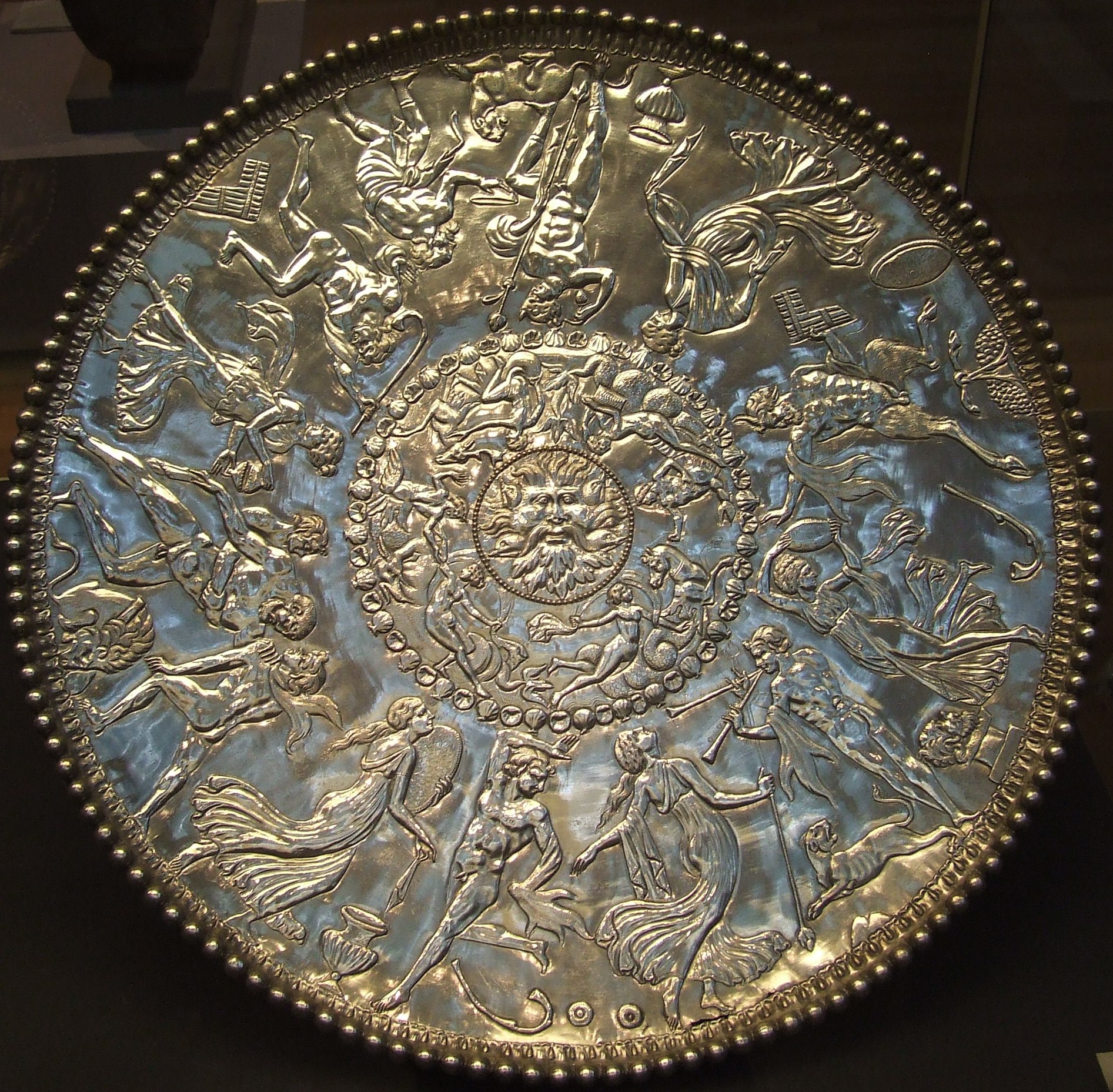
The fourteen group records and the rule behind each count
Set side by side, the fourteen counts are fourteen rules, and the column that matters is the last one.
| Record | Count in the record | Other published counts | What is being counted |
|---|---|---|---|
| Staffordshire Hoard | About 4,600 pieces and fragments | Just under 4,000; around 700 items; more than 600 objects | Fragments as found, or objects after joining |
| Cheapside Hoard | Roughly 500 pieces | 25 or 20 at the British Museum; 5 at the V and A | A sum across three holders with two accounts |
| Lydian Hoard | 363 objects | None competing | The group returned to Turkey in 1993, fixed by a lawsuit |
| Morgantina Treasure | 16 pieces | 15 | Whether a lid and box are one or two |
| Mildenhall Treasure | 34 pieces | None competing | Declared together in 1946 |
| Kaper Koraon treasure | 23 vessels at the Walters | A wider find of unknown size | One museum's holding, not the find |
| Priam's Treasure | About 8,750 small gold pieces plus larger objects | 259 to 260 catalogued items | Beads in one hoard, or entries for a whole collection |
| Unicorn Tapestries | 7 hangings | 8 accession numbers; 6 intact | The set, the inventory, or what hangs whole |
| Beauvais Missal | 309 leaves | 122 located | The book as made, or the leaves found so far |
| Aldobrandini Tazze | 12 tazze, 48 scenes | 12 figures on the wrong dishes for a century | Cups, or correctly matched cups |
| Swan Service plate | 1 plate of more than 2,200 pieces | None competing | A service counted at manufacture |
| Parthenon sculptures | 17 figures, 15 of 92 metopes, 56 frieze blocks | About 75 of 160 metres of frieze | Survivals in one building against the original |
| Amaravati collection | Over 120 pieces, about 70 on display | Slabs recarved on both faces | Pieces, some of which are two reliefs |
| Devonshire Hunting Tapestries | 4 hangings | Possibly 3 or 4 weaving campaigns | Objects in the room, not sets they came from |
Two of fourteen have no competing count, and both are hoards that were declared whole to one authority at one time, Mildenhall in 1946 and the Lydian group by a court in 1993. Every group that went through a market, a division between museums, a conservation campaign or a sale by the leaf has more than one number, and the numbers are not errors. They are the history of the group written as arithmetic.
How to read the first number in a group record
The first number in a group record should be read with three questions beside it. Is this a count of what was found, of what survives, or of what one institution holds; is a fragment an object under this rule; and has anyone published the working. A count with the working published, like the Bodleian's lot price or the Met's eight accession numbers for seven tapestries, is a fact about the record. A count without it, like the five hundred pieces of the Cheapside Hoard, is a tradition, and the record should say so.
What we have changed in our own practice as a result of reading these fourteen together is small and specific. Where a record describes a group, the count now carries its rule in the same sentence, and where two official figures exist we print both with their sources rather than choosing. A hoard's number is the first thing a reader remembers and the last thing anyone checks, and the fourteen records here show that it is the figure most likely to be wrong by a factor of six, and most likely to be wrong because two true things were counted as one.
Questions
It depends on the counting rule. Birmingham Museums' resources page says just under 4,000 objects and broken fragments, Historic England says more than 4,000 fragments making around 700 individual items, and the Society of Antiquaries' 2019 catalogue announcement gives more than 600 significant objects in 4,600 fragments. The first counts what came out of the ground and the last counts what the pieces belong to after a decade of conservation.
Because the fifth hanging survives only as two narrow strips, accessioned at the Metropolitan Museum as 38.51.1 and 38.51.2 and given in 1938, a year after the six intact hangings, 37.80.1 to 37.80.6. Seven is the set, eight is the inventory.
Schliemann's own itemised list for Treasure A comes to roughly 8,750 small gold rings, buttons and other pieces plus the named larger objects. The figure of 259 to 260 catalogued items describes the whole Schliemann Trojan collection at the Pushkin Museum, from several find-groups excavated between 1871 and 1890. They count different things and are not interchangeable.
The London Museum's published account says five at the Victoria and Albert Museum and twenty-five at the British Museum. The curator Hazel Forsyth gave twenty to the British Museum in 1914. The archive's record carries both figures rather than averaging them.
122 of the original 309, located in more than a hundred institutional and private collections since the book was broken up and sold leaf by leaf from 1942. The virtual reconstruction is ongoing.
The Mildenhall Treasure, thirty-four pieces declared together in 1946, and the Lydian Hoard, 363 objects fixed by the 1993 return to Turkey. Both were declared whole to one authority at one time, and neither went through a market or a division between museums.
Sources
- 1Birmingham Museums, Discovering the Staffordshire Hoard, resources page. Read in full 17 September 2026. Source for the statement that the hoard contains just under 4,000 objects and broken fragments, most of which are war-gear, and the burial date of AD 650 to 675. birminghammuseums.org.uk/resources/...
- 2Birmingham Museums, The Staffordshire Hoard research and conservation, resources page. Read in full 17 September 2026. Source for the description of conservation as a giant jigsaw puzzle with 4,000 fragments and the re-joining of objects from as many as 27 fragments. birminghammuseums.org.uk/resources/...
- 3Historic England, Understanding the Staffordshire Hoard, research back issue. Read 17 September 2026 in the in-app browser after a 403 on the plain fetch. Source for the statement that the hoard is composed of more than 4,000 fragments, which together make up around 700 individual items. historicengland.org.uk/whats-new/...
- 4Medievalists.net, Staffordshire Hoard secrets revealed in new book, October 2019, reporting the Society of Antiquaries of London's announcement of The Staffordshire Hoard: An Anglo-Saxon Treasure, edited by Chris Fern, Tania Dickinson and Leslie Webster. Read in full 17 September 2026. Source for more than 600 significant objects found in 4,600 fragments, nearly 4 kilos of gold and 1.7 kilos of silver. medievalists.net/2019/...
- 5Birmingham Museums, Staffordshire Hoard, Birmingham Museum and Art Gallery highlights page. Read in full 17 September 2026. Source for the finding that approximately a third of the fragments come from a single high-status helmet. birminghammuseums.org.uk/birmingham-museum-and-art-galler...
- 6The Metropolitan Museum of Art, collection records for The Unicorn Tapestries, accessions 37.80.1 to 37.80.6 and 38.51.1 and 38.51.2, gift of John D. Rockefeller Jr., 1937 and 1938. Cited from the archive's record, which was built against the museum's own object pages. metmuseum.org/art/...
- 7Lisa Fagin Davis, the Broken Books platform at Saint Louis University and the Fragmentarium reconstruction of the Beauvais Missal, F-4ihz, the platform on which 122 of 309 leaves have been located. Cited from the archive's Beauvais Missal record. fragmentarium.ms/overview/...
More in Research and Method
The partThe First Link Is in the Maker's Own Hand
A maker's bill, workbook or memoir is the only provenance document that fixes date, cost and first owner at once.
The date on the object dates one layer of it
Seven dated objects in this archive show that a date belongs to one layer of the thing: the parchment, the copying, the printing, the compilation.
Every Record Here Ends in Questions It Could Not Answer
The 257 published records in this archive carry 1,795 open questions between them, a median of seven each, and not one record carries none.