The Object on Display Is the Last Restorer's Reading of It
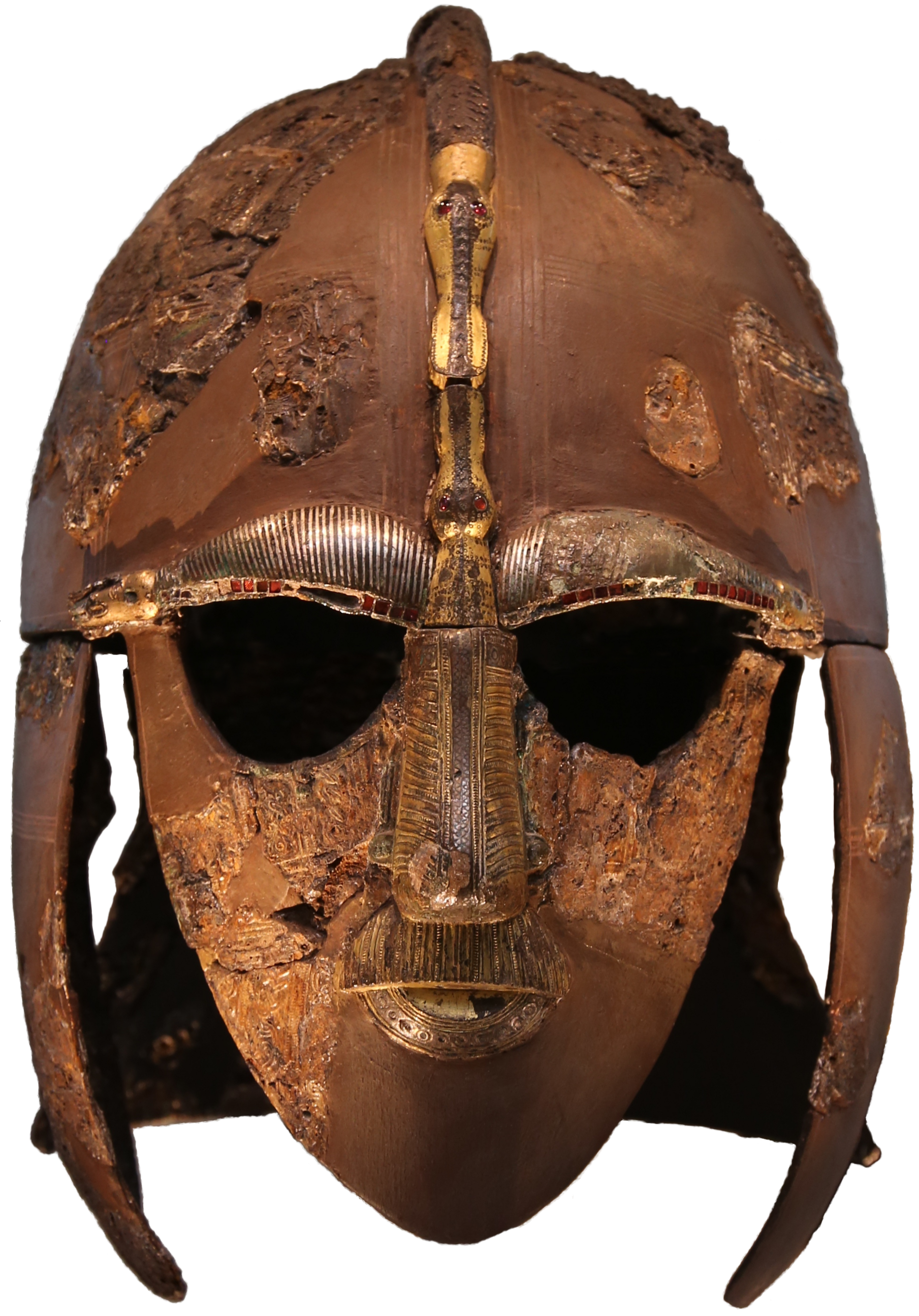
The British Museum gives the Sutton Hoo helmet two production dates: late 6th to early 7th century for the components, and 1971 for the reconstruction. This archive grades every owner and grades no restorer.
Records in this piece: The Sutton Hoo Helmet, Adam and Eve, Bull-Headed Lyre of Ur, The Crosby Garrett Helmet
On this page 11 sections
ContentsClose
In short
- The British Museum's own catalogue gives the Sutton Hoo helmet two production dates in the same field: late 6th to early 7th century for the original components, and 1971 for the current reconstruction. Its materials list includes jute and plaster, each flagged as modern and part of the reconstruction structure.
- Every published dimension of that helmet is qualified as restored, and the only weight given is for the original and is an estimate. The circumference of 74.60 cm at eyebrow level is a measurement of a 1971 argument.
- The Walters Art Museum publishes an intervention table on the public page of its Adam and Eve relief: seventeen rows, of which seven carry no date at all, and none carries a conservator's name or a grade. The label still reads about 1515.
- This archive grades all 2,105 ownership links in its 299 published records as documented, disputed or unknown. It grades not one of the interventions, although a restorer changes the object and an owner usually does not.
- The lyre from the Royal Cemetery of Ur was displayed for roughly fifty years on a soundbox whose proportions did not match the excavator's own published measurements. The replacement, built to those measurements in 1976 to 1980, came out about a third larger.
- A restoration can be commissioned by the seller, on the seller's timetable. The Crosby Garrett helmet was restored over about 240 hours ahead of its sale after the British Museum asked that full scientific conservation and recording come first, and that request was not acted on.
A record grades its owners and says nothing about its restorers
Every ownership link in this archive carries a grade. There are 2,105 of them across 299 published records, marked documented, disputed or unknown, and the grade is the first thing a careful reader looks at, because it says how much weight the link can take. Nothing in the schema does the same job for an intervention.
That gap is the wrong way round. An owner normally holds an object and hands it on unchanged, so the consequence of a badly evidenced ownership link is a hole in a history. A restorer decides what the object looks like, and the consequence of a badly evidenced intervention is that the thing in the case is partly somebody's opinion, presented without attribution. We built the maps for the owners first because ownership is what the field has always argued about. On the evidence below that was the easier problem, not the more important one.
The British Museum dates the Sutton Hoo helmet twice, and means it
The catalogue entry for object 1939,1010.93 gives the production date as two separate lines: late 6th century to early 7th century for the original components, and 1971 for the current reconstruction. That is not a hedge. It is an accurate statement that the object in Room 41 is a seventh-century helmet and a twentieth-century argument about how a seventh-century helmet went together, and that the two cannot be separated because the fragments are held in the argument.
The rest of the record keeps the same discipline. The description opens by saying the helmet consists of many individual fragments now built into a reconstruction made using jute textile and plaster. The materials list runs iron, copper alloy, gold, tin, garnet and silver, then leather, with original presence indicated by black staining, then jute, flagged as modern and part of the reconstruction structure, then plaster, flagged the same way. Every dimension is qualified: circumference 74.60 cm as restored at eyebrow level, height 31.80 cm as restored, length 25.50 cm as restored at rim level, width 21.50 cm as restored at rim level. The only weight offered, 2.50 kg, is of the original and is an estimate.
| Field | What is published | What it is a fact about |
|---|---|---|
| Production date | Late 6thC to early 7thC; and 1971 | The components, and then the reconstruction |
| Materials | Iron, copper alloy, gold, tin, garnet, silver; jute and plaster, both marked modern | The object, and then the support built for it |
| Height | 31.80 cm, as restored | The 1971 reading |
| Weight | 2.50 kg, of original, estimated | An inference, not a measurement |
The first reconstruction was taken apart because it was thought to be wrong
The museum's curator's comments put the history in three sentences: the current reconstruction is the second in the helmet's history, the first, completed by Herbert Maryon in 1946, was felt to be inaccurate, and the second and current reconstruction was completed by Nigel Williams in 1971. Maryon, a conservator then in his seventies who had trained as a sculptor and metalworker, spent roughly six months on it and published his account in 1947. He filled gaps with plaster and secured decorative elements, garnets among them, with wax. His version established the silhouette everybody now recognises, and it drew criticism from Swedish scholars who knew the related helmet graves at Vendel and Valsgarde.
What made the rebuild possible was new evidence rather than new taste. Excavation at Sutton Hoo between 1965 and 1970 recovered further fragments, including cheek-piece material in 1967, and Rupert Bruce-Mitford had meanwhile made a fresh comparative study of the Valsgarde 7 helmet. Williams, then in his mid-twenties, spent four months taking Maryon's helmet apart, which a colleague likened to opening a box of horrors, because plaster and wax fills that were never designed to come out again had to come out without taking the fragments with them. He then spent five months studying several hundred fragments individually by profile, colour and surface, and nine months reassembling them onto heavy-duty textile stiffened with adhesive and covered in plaster, a support that holds the fragments in shape without pretending to replace what is missing.
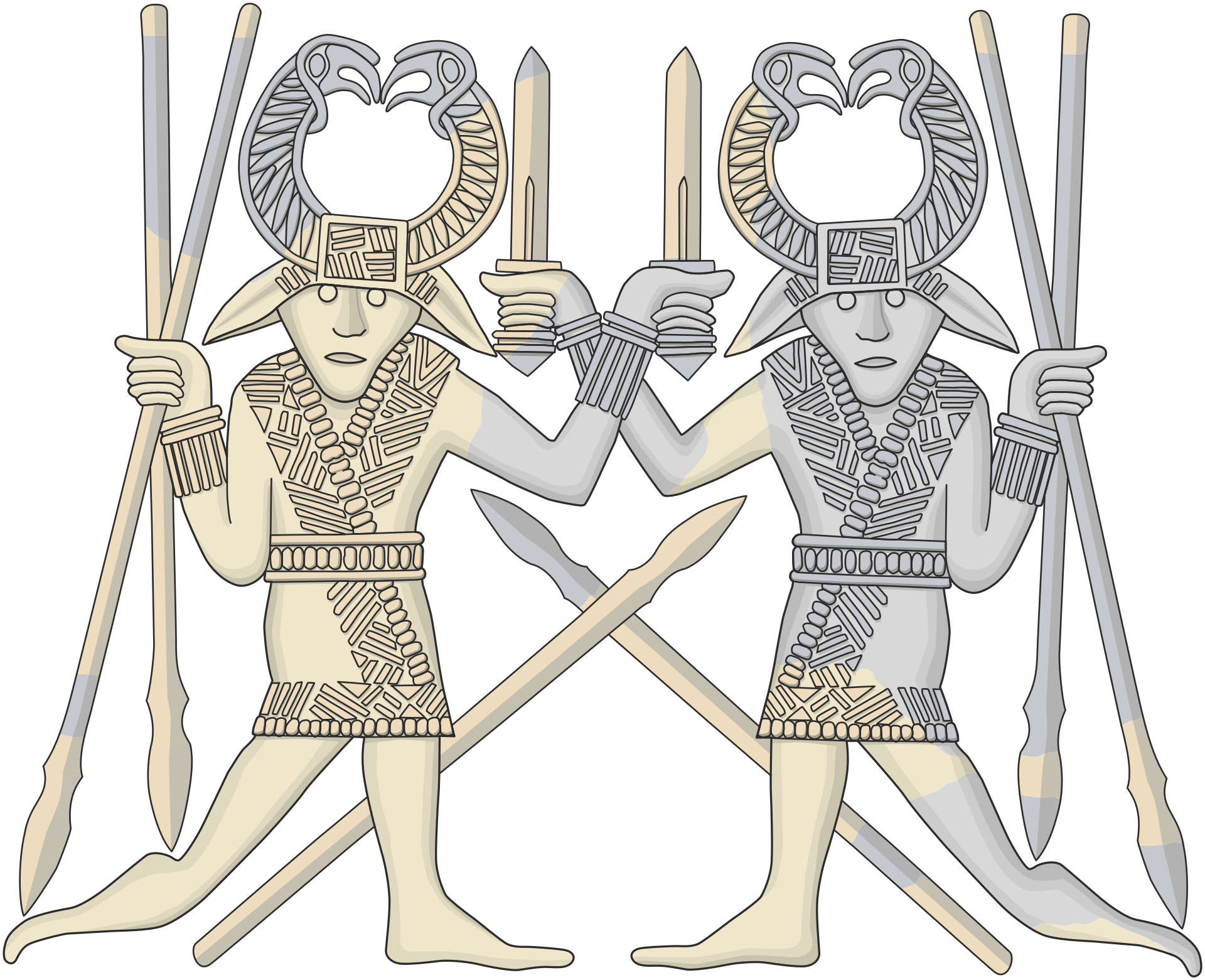
The rebuild changed the evidence, not the look. Disassembly exposed leather-lining stains and internal iron reinforcement bands that the 1940s work had not properly recorded. And the 1971 version is still an argument: Design 3 is known from only seven small ambiguous fragments and has never been confidently identified, and may be a repair using an unrelated design rather than part of the original scheme. No third physical reconstruction has been attempted. The recent work has been analytical and digital instead.
A museum published its own intervention log, and seven of the rows have no date
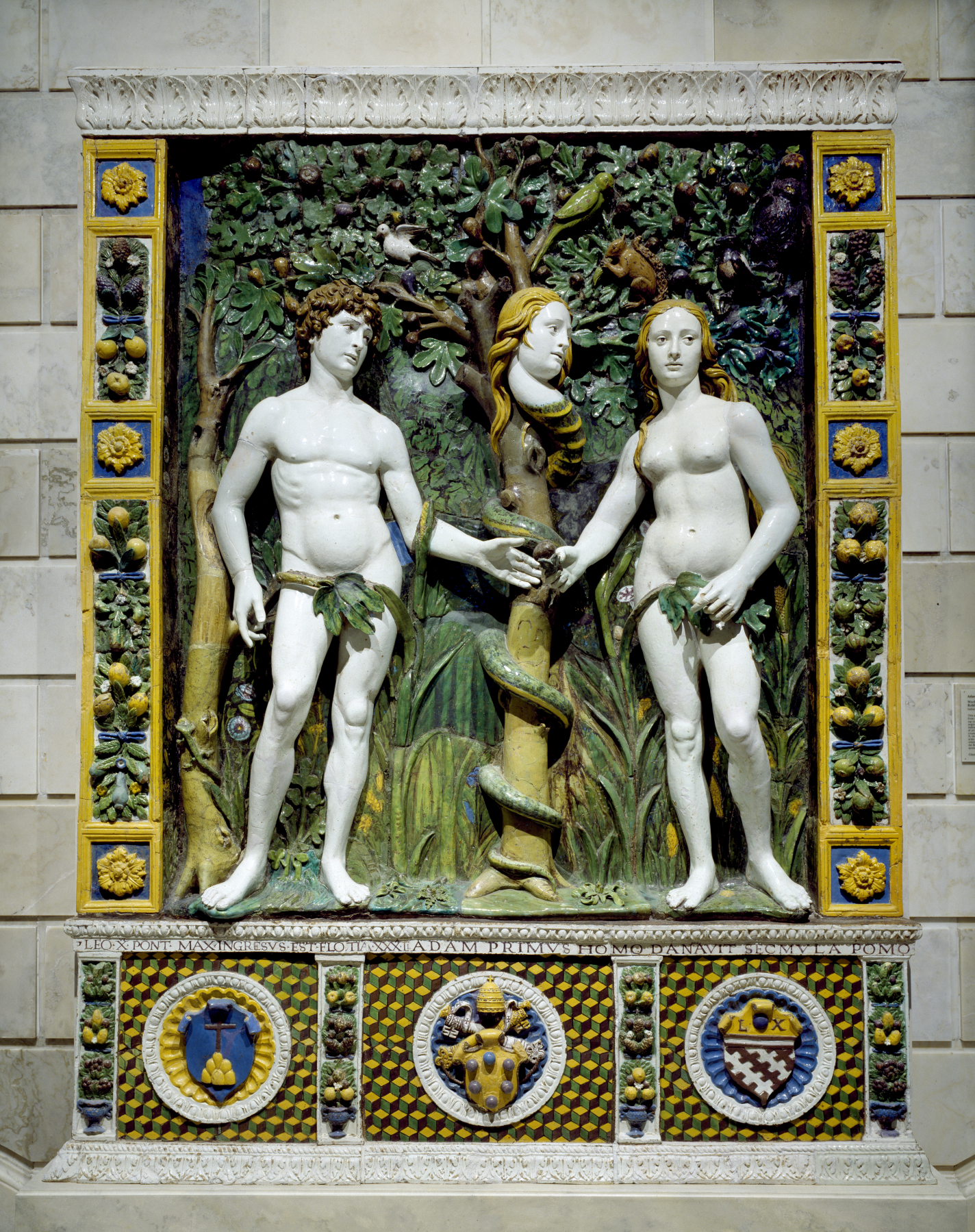
The Walters Art Museum puts a conservation table on the public catalogue page of its glazed terracotta Adam and Eve, accession 27.219, which is more than almost any institution does. There are seventeen rows. Seven of them carry no date in the date column at all. The dated ones run 12 October 1958, 14 August 1959, 21 April 1960, 1 November 1972, 1 October 1973, 1 April 1974, 1 March 1988, 16 March 1988, 6 July 1998 and 1 January 2003, and the descriptions are one or two words each: repaired, cleaned, and in one case cleaned, coated, loss compensation, other.
Compare that with how the same page handles ownership. The provenance line is a proper chain: Mme Camille Lelong, Paris, then the Lelong Collection Sale, Paris, 1902, lot 98, then purchased by Henry Walters, Baltimore, 1902, then by bequest to the museum in 1931. Four links, each with a date, a place and a named party. The interventions get seventeen rows, ten dates and no names.
The names exist. Gregory Bailey, who did the 2013 to 2014 work, went into the museum's own conservation files and found the relief had been treated at least eight times between the 1950s and the 2000s, by Elizabeth Packard in 1958, Peter Michael in 1959 and 1960, Carol Aiken and Terry Weisser in 1974, Carol Snow in 1988, Donna Strahan in 1998 and Meg Craft in 2001 and 2003. The written accounts were detailed. The photographic and diagrammatic records were thin, which left real ambiguity about where the underlying damage and restoration actually were, and that ambiguity is what turned a routine repair into a year of documentation.
The label date and the object's actual date are not the same number here
The Walters relief is catalogued as about 1515 and much of what a visitor sees was made around 1870. Bailey's x-ray fluorescence analysis of the glazes established that many sections of the glazed terracotta are nineteenth century, and provenance research suggests they were made in Italy in 1870 or before, possibly with the intention of selling the piece to the South Kensington Museum in London. The museum's own catalogue text discloses part of this in the place it matters most, noting that the passage where the disputed maize motif appears clearest is in fact a replacement from the 1800s.
The treatment decision that followed is the most interesting thing in the whole case, because there was no clean answer available. Taking the nineteenth-century additions out was never seriously pursued: the terracotta sections are embedded in concrete, plaster, wooden beams and iron rebar, and freeing them would produce authentic but disarticulated rubble rather than a purer object. Re-disguising the difference, which is what every previous campaign had done, would have kept the relief looking whole at the cost of continuing to misrepresent it. Bailey took the middle path and toned the losses with reversible acrylics so the piece reads as unified from a normal viewing distance on a stair landing, while leaving the breaks, the fills and the join between the two bodies of terracotta deliberately legible up close.
One compensation is flagged in the published account as speculative rather than recovered, and it deserves the flag. Cleaning revealed a broken ridge with traces of glaze on Eve's proper right arm, suggesting a further lock of hair had been modelled there and lost. It was recreated in epoxy putty over a removable barrier layer, and described as a plausible reconstruction and not a return to a known original form. That is an intervention with an author, a date, a reason and a stated confidence level, which is precisely what the other sixteen rows in the table lack.
A lyre stood on the wrong body for about fifty years
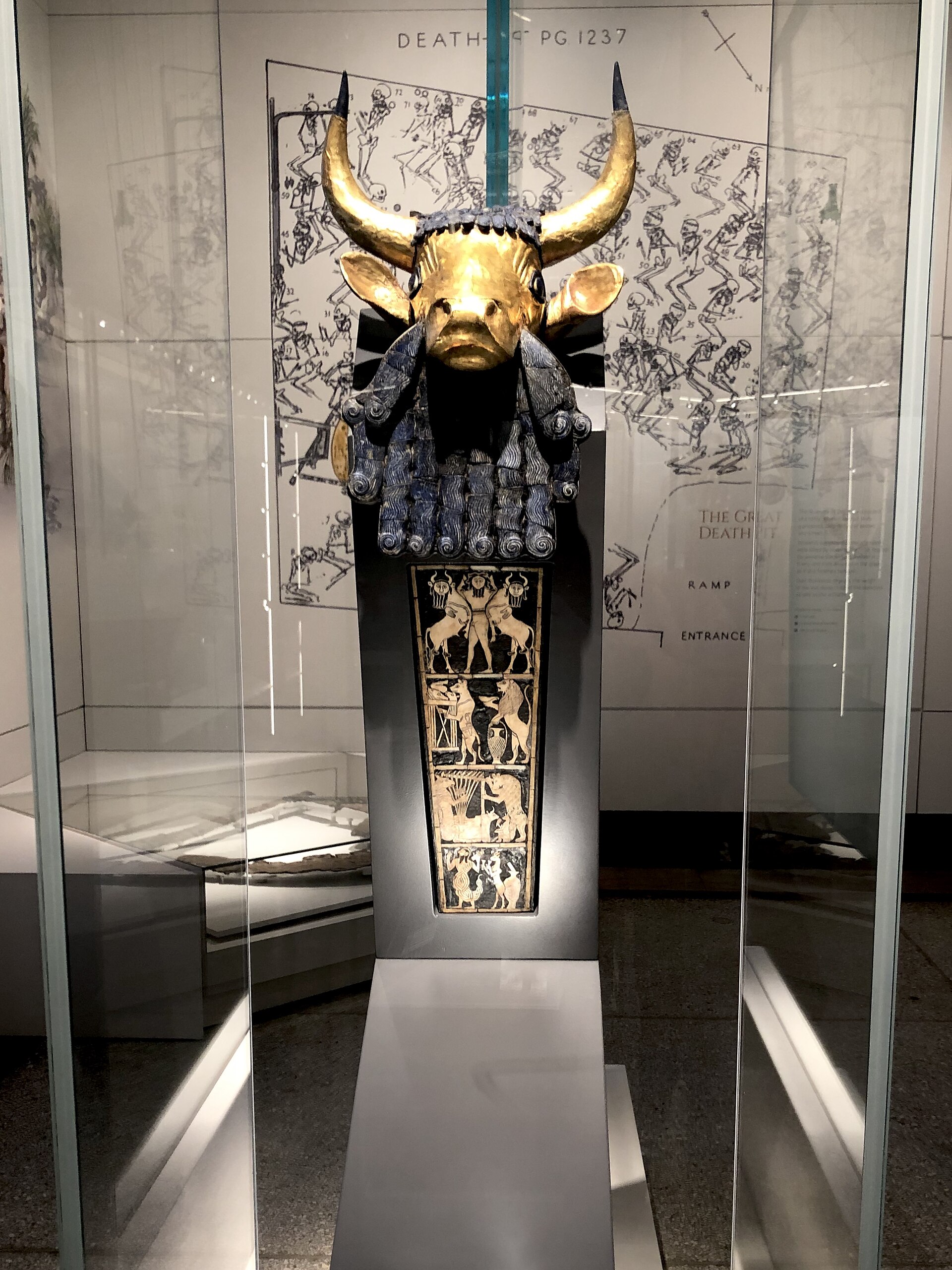
The bull-headed lyre from the Royal Cemetery of Ur reached Philadelphia as a head, a beard and a plaque, with no soundbox, because the original wood had not survived. Museum conservators therefore built one. The watercolourist and museum artist M. Louise Baker finished and painted its surface, including inlay patterned after the genuine decoration of a different lyre from the same cemetery, since the plaque belonging to this one did not cover the whole box. A photograph in the museum's archive, captioned to around 1930, shows her adding the final touches. That object went on exhibition and was what the public, and Woolley himself, knew for decades.
Woolley had published the soundbox dimensions in his 1934 excavation report, measured from the plaster cast taken in the ground in 1926 to 1927. When conservators eventually compared the reconstructed box against those figures, they did not match. The museum's own conservation literature is candid that it is not even certain when the first restoration was carried out, where, or by whom, and Woolley's report gives only the briefest account of the procedure with no dimensions for the reconstruction itself. Somebody built a soundbox without correctly applying measurements the excavation had already produced, and nobody checked for a generation.
The correction, from 1976 into 1980, is the best-documented episode in the object's life, and it happened by accident. Virginia Greene intended a clean, a small repair and a remount. X-radiography at the Hospital of the University of Pennsylvania instead found a large iron armature buried in the old plaster fill, and when the plaster neck came off the beard broke away between two sets of modern wooden dowels, forcing a full disassembly nobody had planned. What came out of it was the original silver beard backing, mostly invisible in the first restoration and partly discovered afterwards misfiled under a different catalogue number, and the biconical wire-holes in the lapis beard tiles, never previously recorded. The refill was a reversible wax core of polyethylene glycol 6000 thickened with silica and loaded with styrene pellets, chosen because water dissolves it out again without touching the ancient gold. The new box, built to Woolley's own numbers, came out roughly a third larger than the one it replaced.
A restoration can be commissioned by whoever is selling the object
Christie's commissioned an independent conservator, Darren Bradbury, to restore the Crosby Garrett helmet ahead of its sale, and the work took around 240 hours. Cracks and holes were repaired with cyanoacrylate adhesive and resin fills, retouched to match the surrounding metal's colour and texture, and the fragments were rejoined into the substantially complete object now known. Ralph Jackson, then senior curator of Romano-British collections at the British Museum, examined the piece during this period and asked that full scientific conservation and recording precede the cosmetic restoration. That request was not acted on, and the work went ahead on the saleroom's timetable.
Sally Worrell, who with Ruth Fillery-Travis ran x-ray fluorescence analysis on the object at Christie's, noted afterwards what had probably been lost. Formal conservation might have identified impressions of textile or other organic material preserved in the metal's corrosion products, which would have shown how the helmet was wrapped, packed or dressed before burial. Any such evidence is gone. The restoration did exactly what it was commissioned to do, which was to produce an object fit to be sold at its best, and that is a different objective from producing a documented one.
The helmet made a hammer price of two million pounds on 7 October 2010 against an estimate of 200,000 to 300,000, and the Tullie House Museum consortium dropped out at 1.7 million. So the two possible futures for the object were decided in the same few weeks, and the restoration came first. Whoever pays for an intervention sets its purpose, and the purpose determines what evidence survives it.
Four objects, four different relationships between what you see and what survives
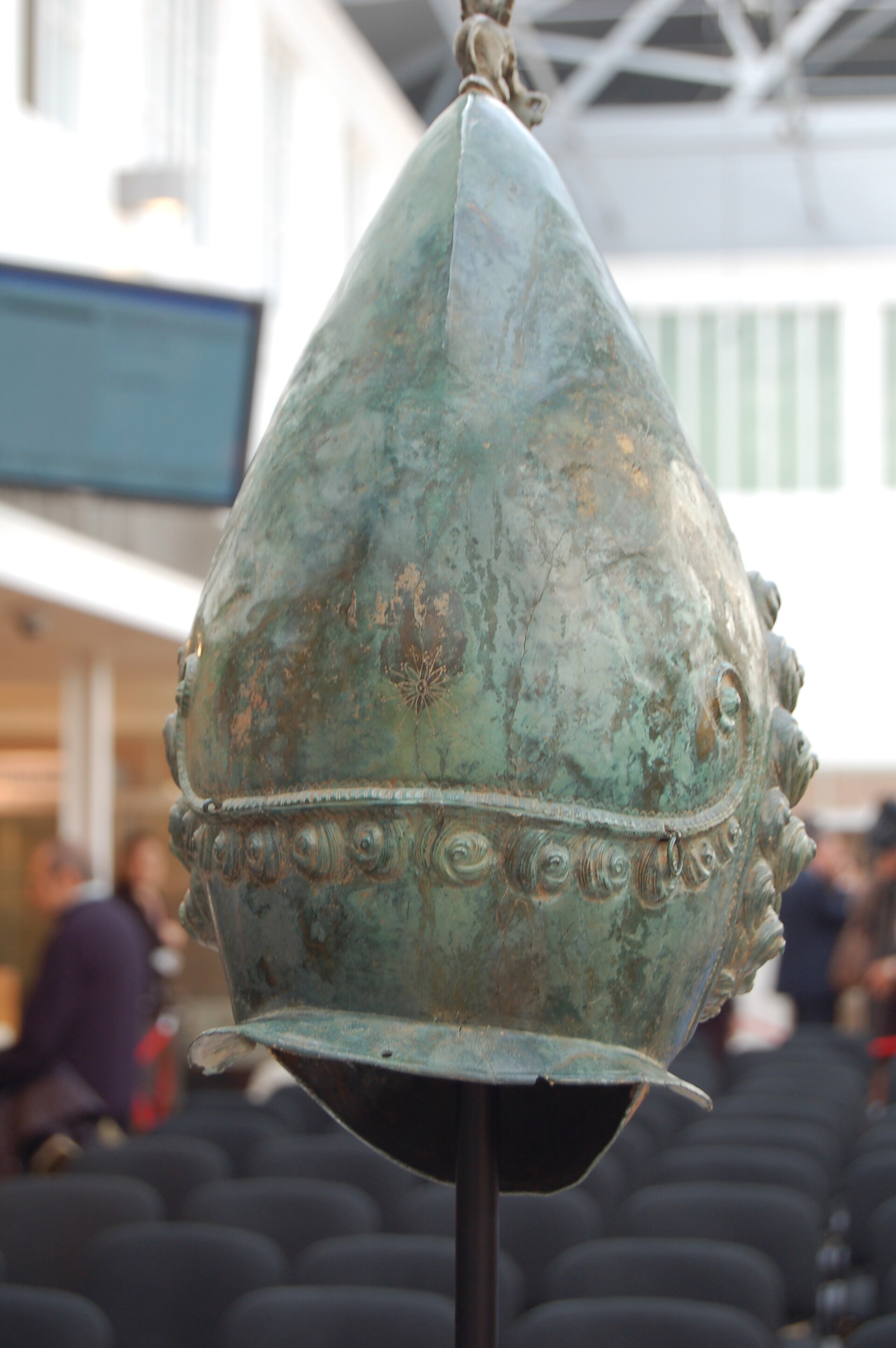
Put the cases side by side and the interventions sort into kinds rather than degrees. One holds fragments in a shape argued from comparanda. One replaces missing material in the same medium as the original, well enough to pass as original for a century. One rebuilds a structural element that never survived at all. One prepares an object for a saleroom.
| Object | Intervention that made the current appearance | Published by the holder? | What it changed |
|---|---|---|---|
| Sutton Hoo helmet | Nigel Williams, 1970-71, replacing Herbert Maryon, 1945-46 | Yes, as a second production date of 1971 | The shape, the panel positions and the recorded internal evidence |
| Adam and Eve, Walters 27.219 | Nineteenth-century additions in glazed terracotta, then at least ten campaigns from 1958 | Partly: a conservation table and a note on the maize passage | Large areas of the visible surface, and the object's apparent date |
| Bull-headed lyre of Ur | New soundbox about 1929-30, replaced 1976-80 | Yes, in the museum's conservation literature | The instrument's scale, by roughly a third |
| Crosby Garrett helmet | About 240 hours by Darren Bradbury for Christie's, 2010 | Reported at the time, not by a holding museum | Made the object substantially complete, and lost the burial evidence |
Notice which column is thinnest. Three of the four are published somewhere by somebody, and none of the four is graded. Nowhere does a reader get told, in the way a provenance link tells them, how confident anybody is that the current arrangement is right.
How to read an object that has been restored
Start by asking what the published date is a date for. A museum that gives one date is usually dating the original components and leaving the reconstruction undated, which is not dishonest but does hand the reader an object whose appearance has no date at all. Where two dates are given, as the British Museum gives them, take the second one as seriously as the first, because it is the date of what you are looking at.
Then read the dimensions and the materials for the same split. As restored is a real qualification and it means the number describes a decision. A materials list that includes plaster, jute, resin, wax or epoxy is telling you where the modern object is, if it is honest enough to say so, and a materials list that includes none of them on a badly damaged excavated object is telling you the list is incomplete. Finally, ask who paid for the last intervention and what they wanted from it, because that answer predicts what evidence was kept and what was cleaned away.
What we are going to change here
We are going to start grading interventions the way we grade owners, and we are saying so in public because it is a change to the schema and not a resolution. An intervention line needs a date, an author where one is recorded, a statement of what was added or removed, and a grade that says how well any of that is evidenced. On the della Robbia relief three of those four already exist in somebody's published account. On the lyre the museum itself cannot supply the first two for the 1929-30 work, and that is exactly the case a grade of unknown exists to describe.
We do not yet know how many of the 299 records can carry such a line, and we are not going to guess at one to fill a field. Where the only honest entry is that an object was restored at an unrecorded date by an unrecorded hand, that is the entry, and it is worth more than a smooth sentence about sympathetic conservation.
Why this archive is free to read
We do this for everyone who loves art. The people who have studied it for years, and the people who just stopped to look. Iconotheca exists so that what we learn belongs to all of them.
Nobody pays us for this. No ads, no sponsors, no commercial interest. These works belong to all of us, and we would rather share them with as many people as we can than keep them to ourselves.
If it gave you something today, tell us to keep going. Follow us, leave a like, or write a positive comment. We read every one, and they are what keeps us going.
Questions
Because the object is both a seventh-century helmet and a twentieth-century reconstruction, and the fragments are physically held in the reconstruction. The catalogue records late 6th to early 7th century for the original components and 1971 for the current reconstruction, and it lists the modern jute and plaster among the object's materials.
The museum's public catalogue page lists seventeen conservation rows, of which ten carry a date, running from 1958 to 2003, plus the 2013 to 2014 campaign that produced the published account. Seven rows carry no date at all and none of the rows names a conservator.
The head, beard and plaque are ancient and the soundbox is modern, because the original wood did not survive. The current box was built between 1976 and 1980 to the dimensions Woolley published in 1934, and it is roughly a third larger than the box that was on display from about 1930.
There is no general rule, and practice varies widely. The British Museum records the 1971 reconstruction in its catalogue date field, the Walters publishes a conservation table and a note about a nineteenth-century replacement on its object page, and whether the physical gallery label carries the same disclosure is a separate question that neither case settles.
Because the purpose determines what survives it. The Crosby Garrett helmet was restored for a saleroom on a saleroom's timetable after the British Museum asked for scientific conservation and recording first, and the analysts involved noted afterwards that organic impressions in the corrosion products, which would have shown how the helmet was buried, were probably lost.
Sources
- 1The British Museum, online collection record for object 1939,1010.93, The Sutton Hoo Helmet, Britain, Europe and Prehistory. Read 26 September 2026 in the in-app browser after plain HTTP requests with and without a browser user agent both returned 403. Primary source for the two production dates of late 6thC to early 7thC (original components) and 1971 (current reconstruction), for the materials list including jute and plaster each marked modern and part of the reconstruction structure, for every dimension being qualified as restored (circumference 74.60 cm at eyebrow level, height 31.80 cm, length 25.50 cm at rim, width 21.50 cm at rim) and the weight of 2.50 kg given as of original, estimated, for the donation by Mrs Edith M Pretty, the display in Room 41, and for the curator's comment that the first reconstruction by Herbert Maryon in 1946 was felt to be inaccurate and the second and current one was completed by Nigel Williams in 1971. britishmuseum.org/collection/...
- 2The Walters Art Museum, online collection entry for Adam and Eve, Giovanni della Robbia, accession 27.219. Read 26 September 2026 in the in-app browser after a plain request returned 403. Primary source for the conservation table of seventeen rows with the dates 12 October 1958, 14 August 1959, 21 April 1960, 1 November 1972, 1 October 1973, 1 April 1974, 1 March 1988, 16 March 1988, 6 July 1998 and 1 January 2003 and seven rows with no date, for the date of about 1515, the dimensions of 279.5 by 212 cm, the location on the Charles Street stairway to the Sculpture Court, the provenance from Mme Camille Lelong through the Lelong Collection Sale of 1902 lot 98 to Henry Walters and by bequest in 1931, and for the museum's statement that the passage where the maize motif appears clearest is in fact a replacement from the 1800s. art.thewalters.org/object/...
- 3Gregory Bailey, Tempting fate: treatment of Giovanni della Robbia's Adam and Eve, Objects Specialty Group Postprints, volume 24, 2017, American Institute for Conservation. Read 26 September 2026. Source for the 2013 damage to the fig leaf as the start of a year-long campaign, for the x-ray fluorescence glaze analysis establishing that many sections of glazed terracotta were manufactured in the nineteenth century, for the provenance inference that they were made in Italy in 1870 or before possibly with the intent of sale to the South Kensington Museum, and for the treatment decision that losses and prior restorations were inpainted with only minimal additional filling or resurfacing so that the appearance is unified at a distance while damages, restorations and the differences between the two types of terracotta remain visible on close inspection. resources.culturalheritage.org/osg-postprints/...
More in Research and Method
The partThe Fields This Archive Cannot Count, and What That Costs
2,592 technical facts wear 1,598 different labels and 1,754 ticket prices wear 1,355.
The First Number in a Hoard Is a Counting Rule
The Staffordshire Hoard is 4,600 pieces, or just under 4,000, or around 700, or more than 600, depending on which official page you read.
The First Link Is in the Maker's Own Hand
A maker's bill, workbook or memoir is the only provenance document that fixes date, cost and first owner at once.