The First Link Is in the Maker's Own Hand
A maker's bill, workbook or memoir is the only provenance document that fixes date, cost and first owner at once. Where it survives in this archive, and what the record has to do where it does not.
Records in this piece: The Diana and Minerva Commode, Breguet No. 160, the Marie-Antoinette, Third Imperial Easter Egg, Saliera (Salt Cellar of Francis I), The Sons of Liberty Bowl, Longcase clock with calendrical, lunar, and tidal indications, also known as the Graves Tompion, The Berlin Secretary Cabinet, Sofa, Sofa, Coppa Barovier
On this page 10 sections
In short
- A maker's own document, a bill, a workbook, a ledger or a memoir, is the only kind of provenance evidence that fixes the date of making, the cost and the first owner in a single line. Six records here rest on one. Four more record its loss and show what the loss costs.
- Chippendale's bill for the Harewood commode gives 86 pounds in 1773. Harewood's own record prints that figure as a cost. It is a maker's charge to a first owner, not a market price, and our record keeps it out of the auction table for that reason.
- George Daniels read Breguet's workbook and found No. 160 finished in 1820 at a cost of 16,864 francs, with Michel Weber paid 7,250 francs for 725 hours between 1812 and 1815. The house's own account gives 1827. Both come from the same firm's books.
- The 2,160 roubles for the Third Imperial egg is in the buyer's ledger, not the maker's: a payment to Faberge noted in the Imperial Cabinet's account books on 18 May 1887 and repeated in a Cabinet list of February 1889.
- Paul Revere's wastebook for 1768 survives at the Massachusetts Historical Society and runs through the year, and the Sons of Liberty Bowl is not in it. The Society's own guide says his early daily records were inconsistent, which is the honest explanation and not a mystery.
The maker's own paperwork is the one link that fixes date, cost and first owner at once
A provenance chain usually begins with an inference. The first link is the maker, the date is argued from style or a signature, the first owner is the earliest person a later document happens to name, and the cost is unknown. A maker's own paperwork changes all three at once. A bill names the object, the customer and the sum on the day the object left the shop. A workbook names who did the work and what they were paid. A memoir, if the maker wrote one, names the patron and the terms, in the maker's version. No later document does as much, and none is as often lost, because bills were working papers and working papers were thrown away.
This piece reads the maker's documents that survive behind our records, and the records where they are known to be lost, and asks in each case what the document fixed and what it did not. The first finding is the one Harewood's own record states without comment: a figure on a bill is a cost, not a price, and it must never be allowed to drift into a table of auction results.
Where the paper survives in this archive, and where it does not
Six records here rest in some part on a document in the maker's hand or from the maker's shop, and four record the absence of one and the work that absence forces. The table gives the document, what it fixes and whether it can still be read.
| Object | Document | What it fixes | Survives |
|---|---|---|---|
| Harewood commode | Chippendale's bill, 1773 | Maker, first owner, cost of 86 pounds, description of the marquetry | Yes, at Harewood |
| Breguet No. 160 | Breguet production registers and workbook | Named outworkers, 725 hours by Weber, 7,250 francs, cost to 1820 of 16,864 francs | Partly; 1775-1787 destroyed in 1794 |
| Third Imperial egg | Imperial Cabinet account books, 18 May 1887 | Payment of 2,160 roubles to Faberge; first owner | Yes, the buyer's book, not the maker's |
| Cellini's Saliera | Cellini's own memoir | Patron, 1,000 crowns of gold for material, delivery by 1543 | Yes, written decades later |
| Roentgen secretary cabinet | Roentgen's invoice to Frederick William II, 1786 | Balance with interest of 8,100 taler | Reported in the literature |
| Barovier cup | Barovier workshop inventory, 1496 | Proposed identification only | Yes, Archivio di Stato di Venezia |
| Sons of Liberty Bowl | Revere's wastebook, 1768 | Nothing: the bowl is not entered | Yes, and silent |
| Graves Tompion | Tompion's ledgers | Would fix the date; the clock predates numbering | Lost |
| Belter sofa | Any shop ledger or client list | Would fix the attribution | None known |
| Phyfe sofa | Phyfe's 1834 invoice to Benjamin Clark | Fixes other objects; this sofa is attributed from them | Yes, for the Clark pieces |
The pattern in the last column is the pattern of the whole decorative arts market. Where the book survives, the object is documented. Where it is lost, the object is attributed, and the attribution is built outward from the few objects whose paper did survive.
Chippendale's bill gives 86 pounds, and that is a cost and not a price
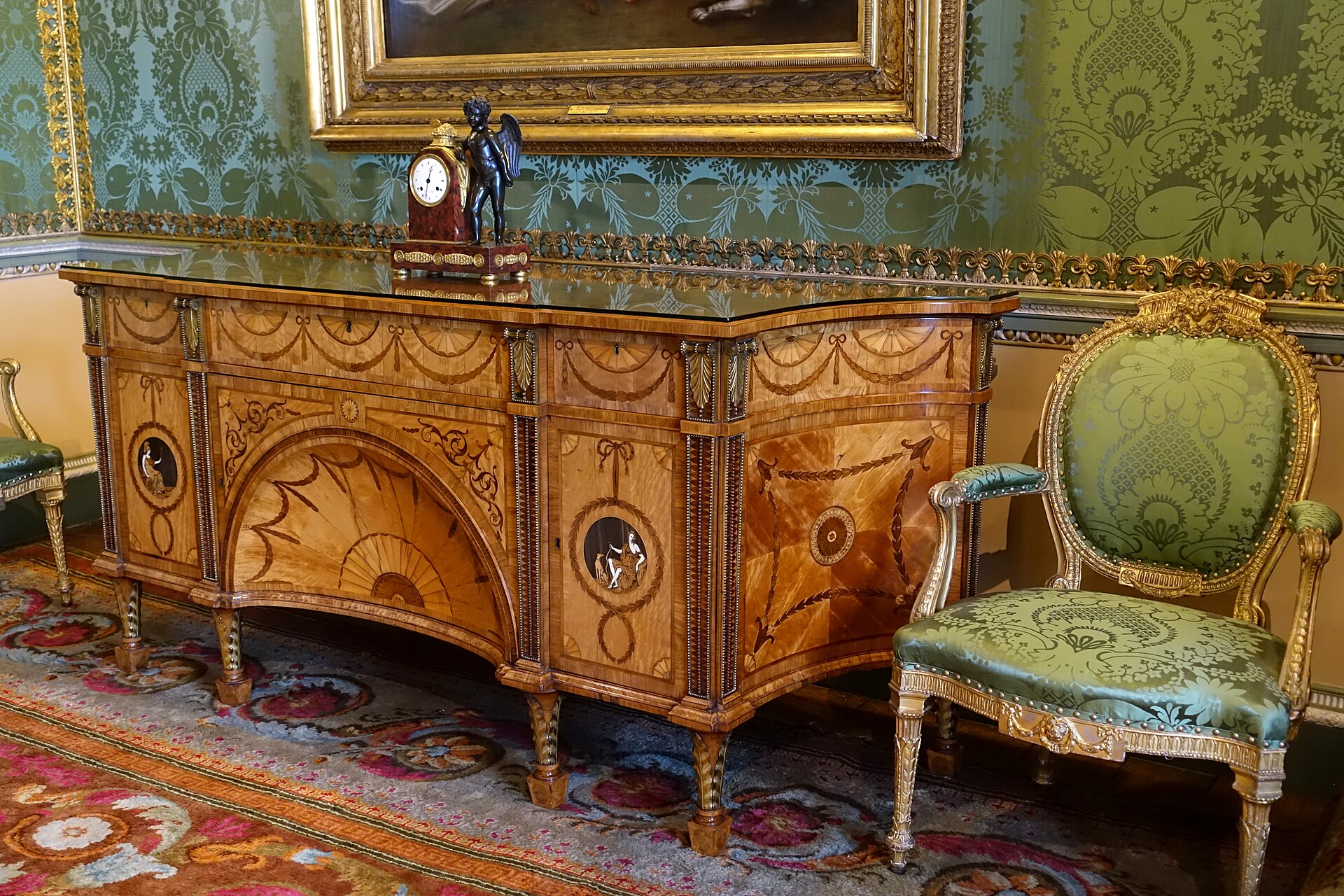
The Diana and Minerva commode was delivered to Harewood House in 1773 and Chippendale invoiced it. Harewood's own object record says so in one line: made for the State Dressing Room and delivered in 1773 at a cost of 86 pounds. The bill describes what was delivered, a very large rich commode with exceeding fine antique ornaments curiously inlaid with various fine woods, with Diana and Minerva and their emblems, and that description is the reason the attribution has never been argued. Almost every other important piece of English furniture of the period is attributed from construction, timber or a pattern book. This one is documented because a bill was kept, and Harewood's account of the wider commission shows why: the house steward Samuel Popplewell kept a day book from 1769 to 1776 recording the arrival of Chippendale's men and what they did.
The 86 pounds is the figure that has to be handled with care. It is what the craftsman charged the first owner. It is not a hammer, not an estimate, not a valuation and not a price the market has ever tested, because the commode has never been sold; it has passed by inheritance since 1773 and stands in the room it was made for. Our record puts the figure in the technical data and keeps it out of the auction block, because an invoice figure sitting in a table of results is exactly how an invoice becomes a hammer price in the third source that copies it.
Breguet's workbook gives one date for No. 160 and the house gives another
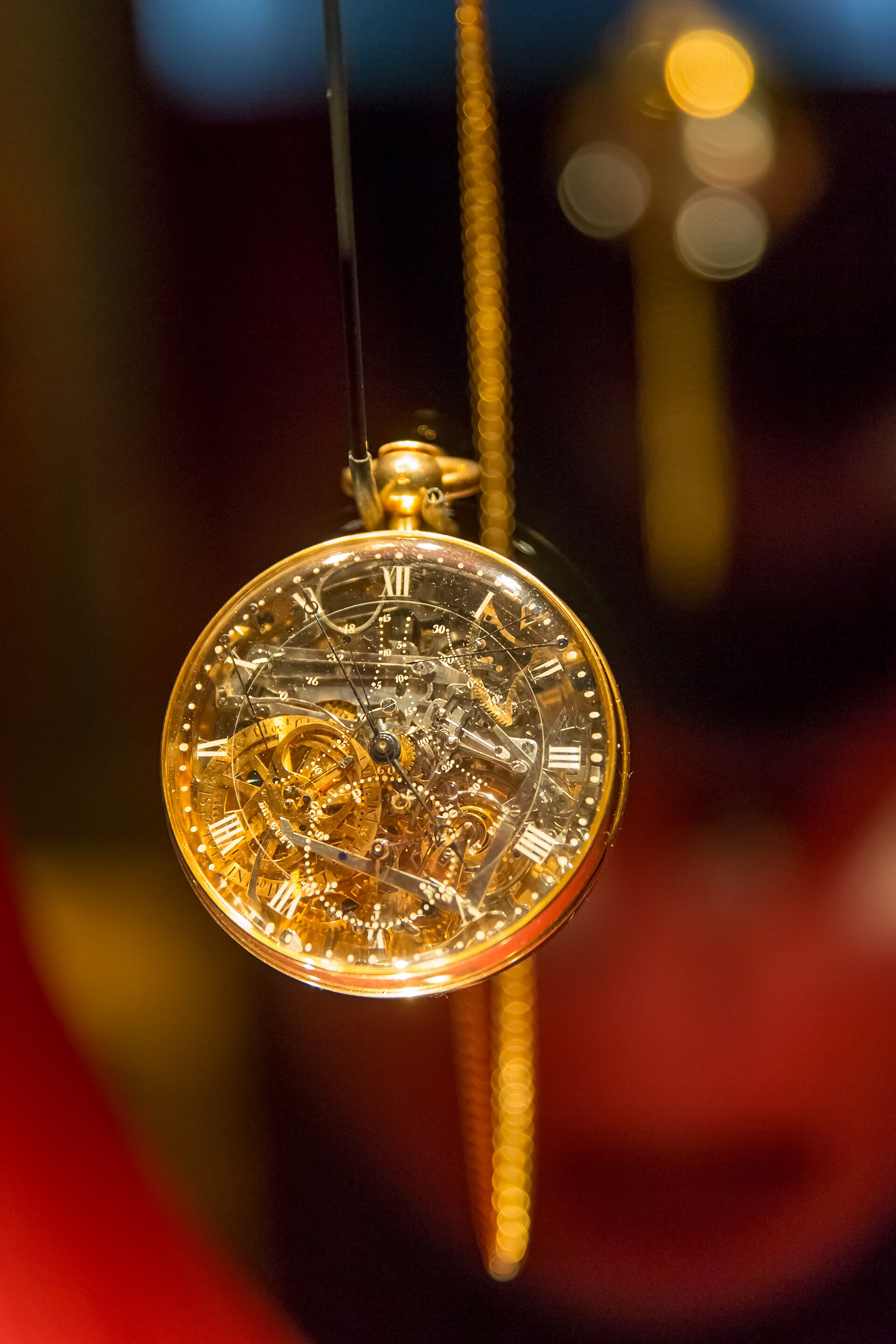
Breguet ran a house, not a bench, and the house kept registers naming the outworkers to whom each job was sent. On No. 160 the register credits the base movement to a maker recorded as Prudhomme and 725 hours of work between 1812 and 1815 to Michel Weber, at a cost of 7,250 francs. George Daniels, who studied the workbook for The Art of Breguet, wrote that the watch was not finished until 1820, by which time it had cost 16,864 francs. The house's own account, which our record follows, has the watch completed in 1827 under Antoine-Louis Breguet, four years after his father's death. They are two readings of the same firm's books, and a reader has to carry both.
The registers also have a hole in them, and the hole is dated. The workshop's records for 1775 to 1787 were destroyed in 1794, which is why the order of 1783 and the officer of the Queen's Guard who placed it cannot be documented from the firm's own books at all; the client's name was never entered. A maker's register is a business book with business errors, and our record cites the clearest published case, an entry that appears to book the watch under an owner's name five months after that owner had died.
The 2,160 roubles for the Third Imperial egg is in the buyer's book, not the maker's
The Third Imperial egg is the record here most often described as documented by a Faberge invoice, and the document is more precisely a client's ledger. Wartski's own account, read for this piece, gives the two entries: a note in the Imperial Cabinet's account books on 18 May 1887 of a payment of 2,160 roubles to Faberge for an egg with clock, and a Cabinet list of 8 February 1889 of the eggs supplied to Alexander III, which enters the same object as the 1887 Easter egg with clock, decorated with diamonds, sapphires and rose cut diamonds, at 2,160 roubles. Both are the buyer writing down what was paid. Neither is Faberge's own order book.
The distinction did real work in this object's history. In November 2008 the researcher Annemiek Wintraecken argued that the egg long assigned to 1887, the Blue Serpent Clock Egg in Monaco, answered instead to a Faberge invoice of 1895. That reading emptied the 1887 slot and created a missing egg described in the Cabinet's papers and never pictured. The egg was then found by matching a 1902 exhibition photograph to an object that had passed through a 1964 sale and a scrap-metal dealer. The ledger entry fixed the cost, the buyer and the year. It did not fix which egg, and it took a century of reading it to notice.
Cellini wrote the document himself, and wrote it long afterwards
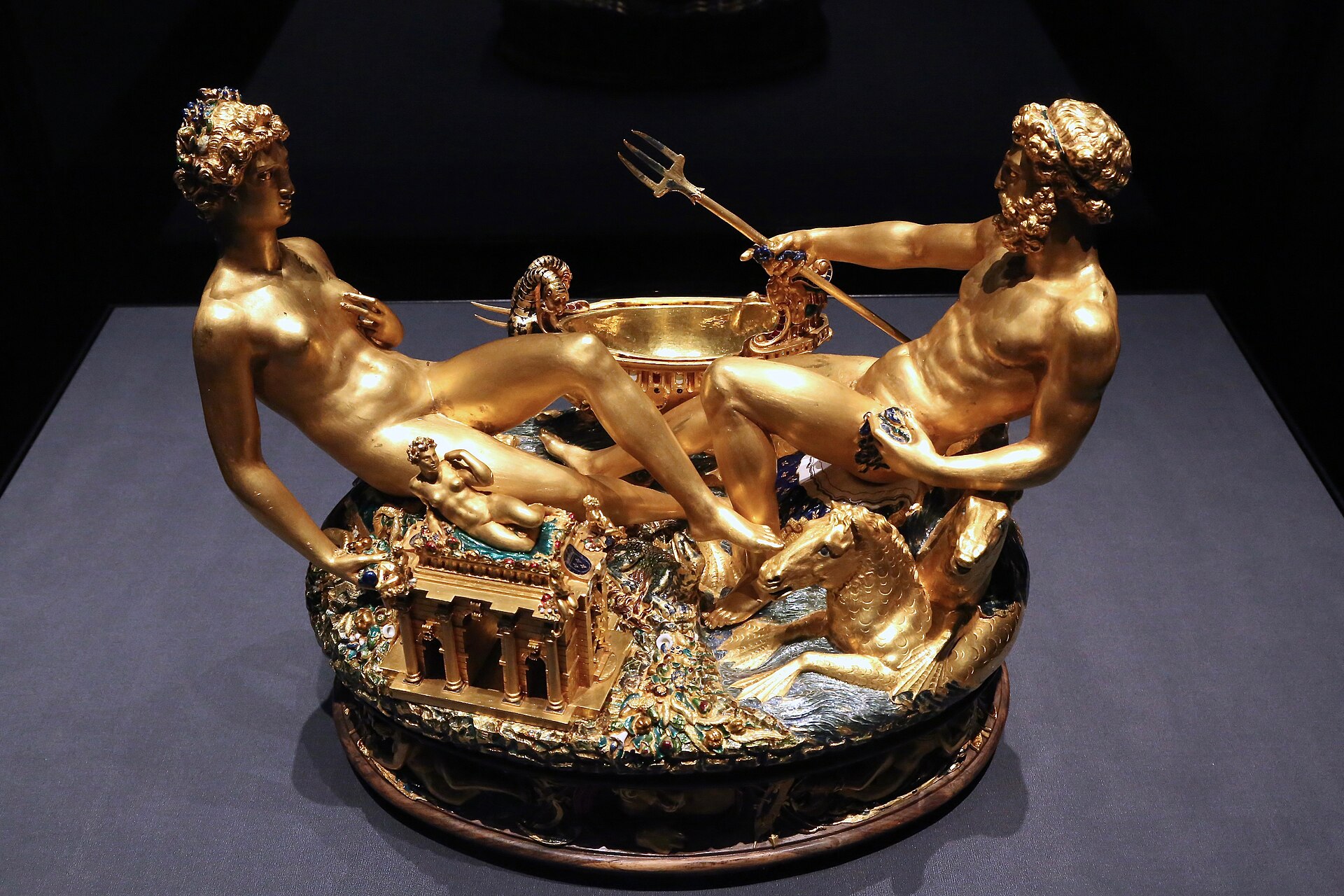
The Saliera is documented by its maker in the fullest sense and in the least reliable one. Cellini's memoir gives the patron, Francis I, the material, a thousand crowns of gold provided by the king on seeing the wax model, the delivery by 1543 and the working method, and it records that Cellini dined off the piece once on the day he delivered it before the king took formal possession. It was written from memory, decades after the events, by a man whose book is famous for the part he gives himself.
The memoir did something for the object that a bill could not have done. Our record notes that the attribution had drifted, that the piece was for a period catalogued in Vienna without a secure name, and that renewed interest in Cellini, driven in part by Goethe's German translation of the autobiography, reconnected the object with the salt cellar Cellini describes. A maker's document does not have to be contemporary to fix an attribution. It has to describe the object well enough that a later reader can recognise it in a case.
Revere's wastebook for 1768 survives, and the bowl is not in it
Paul Revere's shop books are at the Massachusetts Historical Society, digitised, and volume one is a wastebook and memoranda for Boston running from 3 January 1761 to 10 October 1783 with only one recorded break, between April 1775 and December 1778. So the summer of 1768 is covered, and the Sons of Liberty Bowl, made within five weeks of the vote of 30 June 1768, does not appear. A reader could build a story on that silence. The Society's own collection guide supplies the plainer answer: in the early years of his business Revere kept inconsistent daily records in wastebooks, the entries were then transferred into ledgers, and it is often impossible to match one form of record to another. The bowl's absence is evidence of how the books were kept, not of how the bowl was made.
That is the lesson of a surviving maker's book that stays silent. Its silence has to be read against the book's own habits before it is read against the object. Here the maker's document fixes nothing, the fifteen subscribers are fixed by the engraving on the rim, and the record says exactly that.
Tompion, Belter and Phyfe: when the book is lost, the object is dated by its absence from it
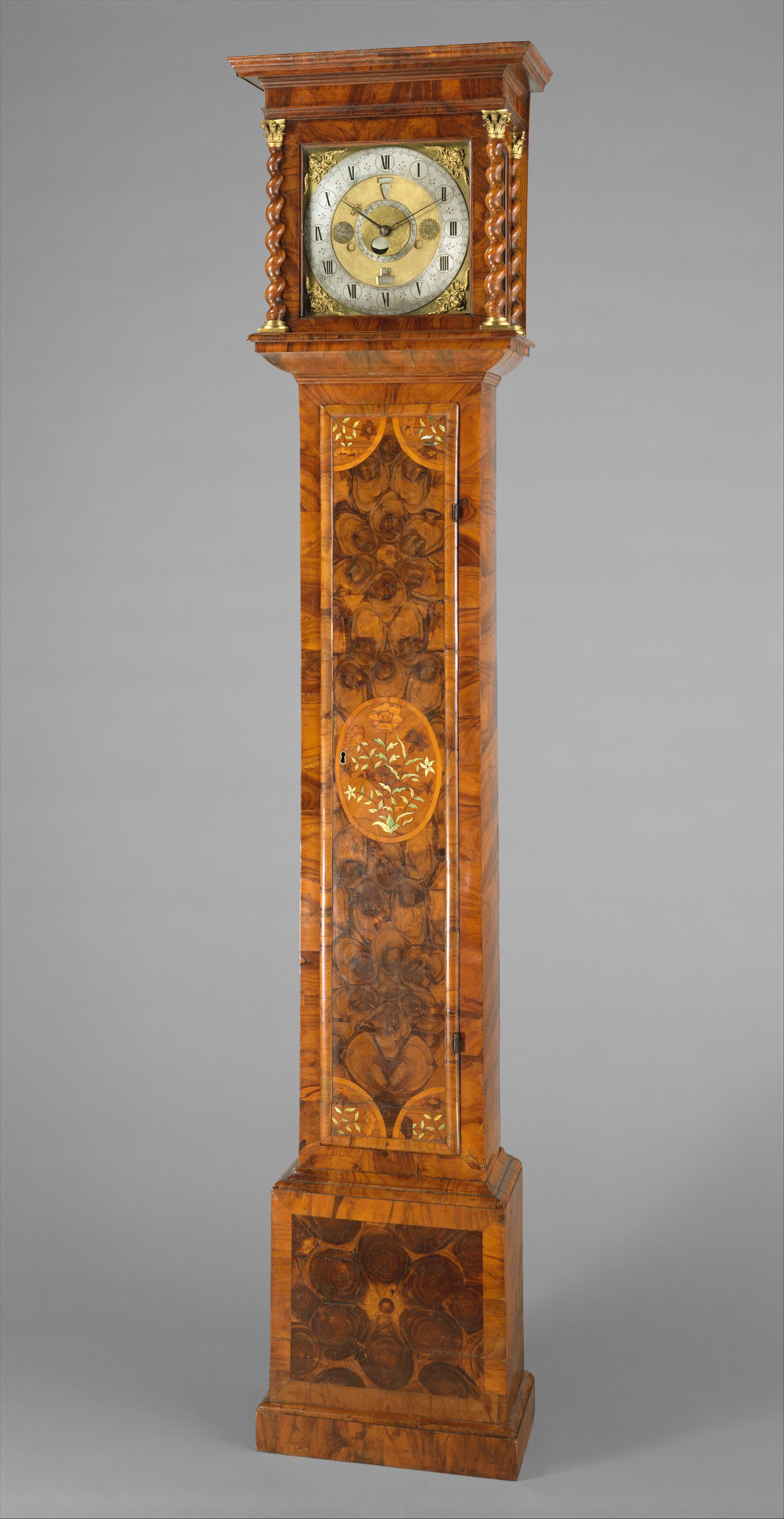
The Graves Tompion carries no serial number, and its absence is the evidence. Tompion began numbering his clocks and watches to correspond to entries in his ledgers, a practice the Metropolitan Museum's 2015 catalogue dates to about 1682 and its 1999 Bulletin to after 1685, so an unnumbered clock that can be tied to his tenant Braem from 1677 is dated between 1677 and 1682 by not being in a book. The book itself, which would have settled the question outright, is lost.
John Henry Belter's firm failed by about 1867 and no sales ledger, workshop day book or client list is known to survive from the whole run of the business; our record names that absence, more than any question of carving style, as the reason his name causes so much trouble in the market. Duncan Phyfe is the opposite case, and it shows the method. The Metropolitan Museum's 2011-12 retrospective built its attributions outward from a small core of documented objects, among them furniture in an 1834 invoice to Benjamin Clark of which nearly half the billed pieces survive. The Met's own Phyfe sofa here is not one of them. It is attributed, from the objects whose paper was kept, and the record says attributed.
How to read a maker's document in a provenance
Ask first whose book it is. A bill is the maker's claim on a customer; a client's ledger is the customer's record of paying it; a memoir is the maker's claim on posterity. All three fix a first owner. Only the first two fix a sum, and only the maker's own workbook fixes who did the work. Then ask whether the figure is a cost or a price, and keep a cost out of any table that carries prices; Harewood's 86 pounds and Faberge's 2,160 roubles belong beside the technical data, not the auction results.
Where the book survives and is silent, as Revere's is, read the book's habits before reading the silence. Where the book is lost, as Tompion's and Belter's are, say so, and expect the attribution to rest on other objects whose books were kept. In our records a maker's document is cited as a document, with its date and its holder, its figure is labelled for what it is, and its absence is recorded as a fact about the archive and not as a gap in the object.
Why this archive is free to read
We do this for everyone who loves art. The people who have studied it for years, and the people who just stopped to look. Iconotheca exists so that what we learn belongs to all of them.
Nobody pays us for this. No ads, no sponsors, no commercial interest. These works belong to all of us, and we would rather share them with as many people as we can than keep them to ourselves.
If it gave you something today, tell us to keep going. Follow us, leave a like, or write a positive comment. We read every one, and they are what keeps us going.
Questions
Chippendale's bill gives 86 pounds for the commode delivered to Harewood House in 1773, and Harewood's own object record prints that figure. It is a maker's cost to the first owner, not a market price; the commode has never been sold.
The documents Wartski cites are the buyer's: a note in the Imperial Cabinet's account books of a payment of 2,160 roubles to Faberge on 18 May 1887 for an egg with clock, and a Cabinet list of 8 February 1889 entering the same object at the same sum.
It depends who reads them. George Daniels, working from the workbook, wrote that the watch was not finished until 1820 at a cost of 16,864 francs. The house's own account gives 1827, under Antoine-Louis Breguet. Both readings come from the same firm's records, which were destroyed for 1775 to 1787.
No. Revere's wastebook for 1768 survives at the Massachusetts Historical Society and runs through the year, and the bowl is not entered. The Society's guide notes that his early daily records were inconsistent, so the silence is a fact about the bookkeeping rather than about the bowl.
Because it was made before Tompion began numbering his output to match entries in his ledgers, a practice the Metropolitan Museum dates to about 1682 or after 1685. The clock is dated to 1677-82 partly by that absence. The ledgers themselves are lost.
Sources
- 1Harewood House Trust, object page, Diana and Minerva Commode. Read 15 September 2026. Source for the delivery to the State Dressing Room in 1773 at a cost of 86 pounds. harewood.org/object/...
- 2Harewood House Trust, Thomas Chippendale's Tercentenary. Read 15 September 2026. Source for Chippendale's surviving bills and the house steward Samuel Popplewell's day book of 1769 to 1776. harewood.org/stories/...
- 3Wartski, London, The Third Imperial Easter Egg. Read in a browser 15 September 2026. Source for the Imperial Cabinet account book note of 18 May 1887 recording 2,160 roubles paid to Faberge for an egg with clock, and the Cabinet list of 8 February 1889. wartski.com/the-lost-third-imperial-easter-egg
- 4Quill and Pad, Let Them Eat Cake: The Intriguing Story of Marie Antoinette and Her Legendary Breguet Pocket Watch No. 160, 13 June 2020. Read 15 September 2026. Source for George Daniels' reading of the workbook in The Art of Breguet: finished 1820, 16,864 francs, and Michel Weber paid 7,250 francs for 725 hours between 1812 and 1815. quillandpad.com/2020/...
- 5Massachusetts Historical Society, collection guide to the Revere Family Papers, 1746-1964. Read 15 September 2026. Source for the wastebooks, the transfer of entries into ledgers and the statement that Revere kept inconsistent daily records in his early years. masshist.org/collection-guides/...
- 6The Metropolitan Museum of Art, Open Access Collection API, object record 209296, the Graves Tompion, and object record 7595, sofa attributed to Duncan Phyfe, as cited in our records for the numbering date and the attribution. collectionapi.metmuseum.org/public/...
More in Research and Method
The partThe date on the object dates one layer of it
Seven dated objects in this archive show that a date belongs to one layer of the thing: the parchment, the copying, the printing, the compilation.
Every Record Here Ends in Questions It Could Not Answer
The 257 published records in this archive carry 1,795 open questions between them, a median of seven each, and not one record carries none.
The Weight Is Written on the Object
Two Roman silver vessels in the British Museum carry their own weights punched into the base.