What an Accession Number Records, and What It Does Not
An accession number dates a museum's custody, not the object. Five institutions in this archive use five incompatible formats, the number can contradict the credit line beside it, and a returned object loses its number altogether.
Records in this piece: Grand Piano, The Ardabil Carpet, The Blacas Ewer, The Sutton Hoo Helmet, Cup, known as the Rospigliosi Cup, Dish, The Wade Cup with Animated Script, Twelve-sided Ewer with Sphinxes and Human-Headed Inscriptions, Statue of a Victorious Youth, Gilded Coffin of Nedjemankh, Bild mit Haeusern (Painting with Houses), Chain of Lovers' Knots, Cheapside Hoard
On this page 6 sections
ContentsClose
In short
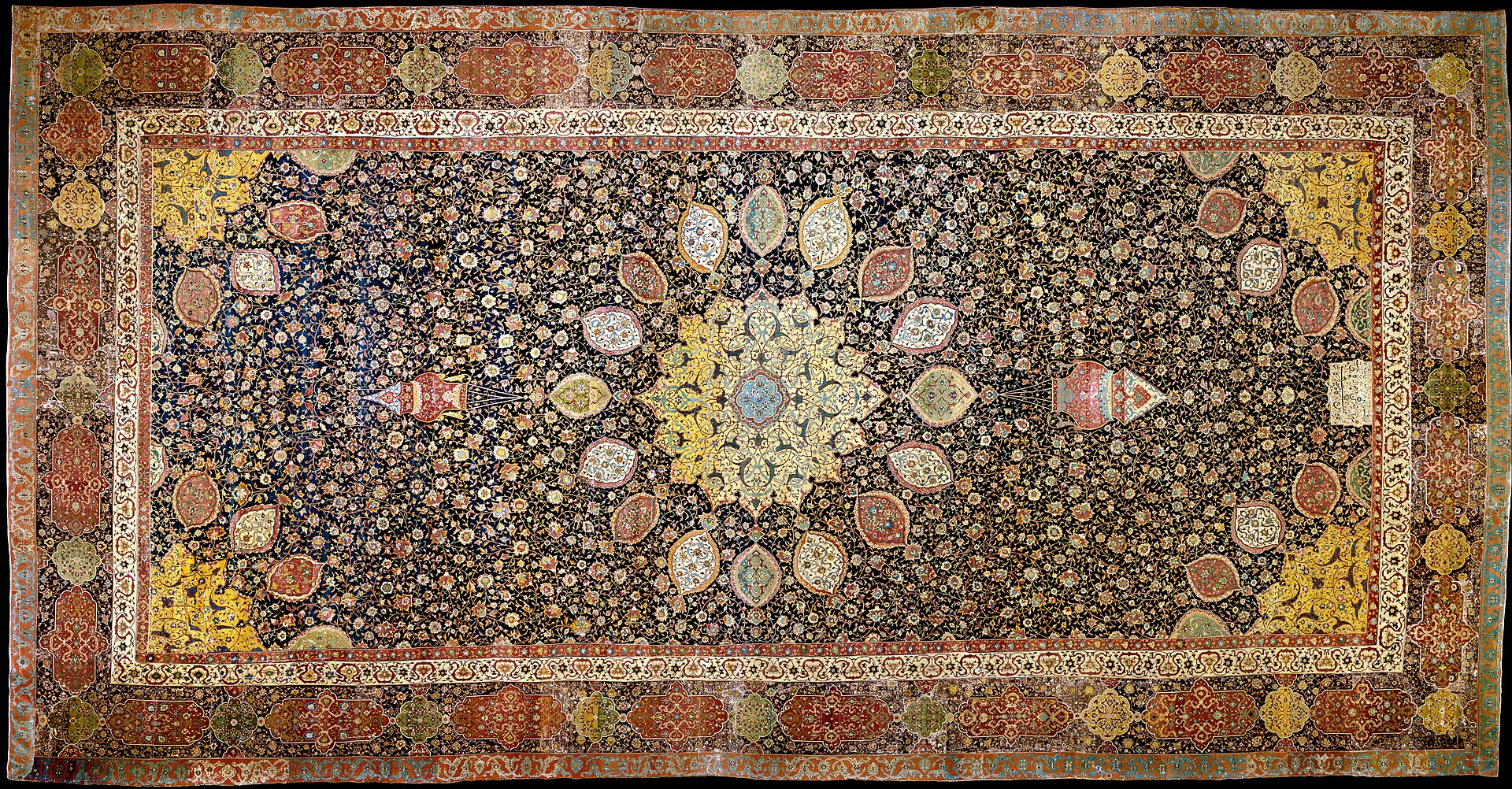
- An accession number dates a transfer of custody and nothing else. The Metropolitan Museum's Cristofori grand piano was built about 1720 and is numbered 89.4.1219a-c, accessioned in 1889; the Ardabil Carpet was finished in 1539-40 and is 272-1893, bought by the V and A in March 1893 for 2,000 pounds.
- Five institutions in this archive use five incompatible grammars. The Met puts the year first, the V and A puts it last, the British Museum encodes the full registration date to the day, Cleveland uses year-point-sequence, and the Getty inserts a departmental letter code between the two.
- The Met switched from a two-digit to a four-digit year prefix between 1969 and 1970, so 68.174 and 69.47.2 sort nowhere near 1970.301.3 in a list that a researcher reads as chronological.
- The number and the credit line printed beside it routinely name different years. Three Benjamin Altman objects here are numbered 14.40.x with an accession year of 1914 under a credit line reading Bequest of Benjamin Altman, 1913, and the same one-year split recurs with the Walter C. Baker bequest at 1972.118.56.
- A V and A number quoted without its department prefix is not unique: the museum's own search interface answers the string 272-1893 with four different objects, only one of which is the Ardabil Carpet.
- A returned object loses its identifier. The Met's search index still answers a query for Nedjemankh with object 764111, that object record now returns 404, and the museum's own repatriation page lists the coffin by name with no number at all.
An accession number dates the museum, not the object
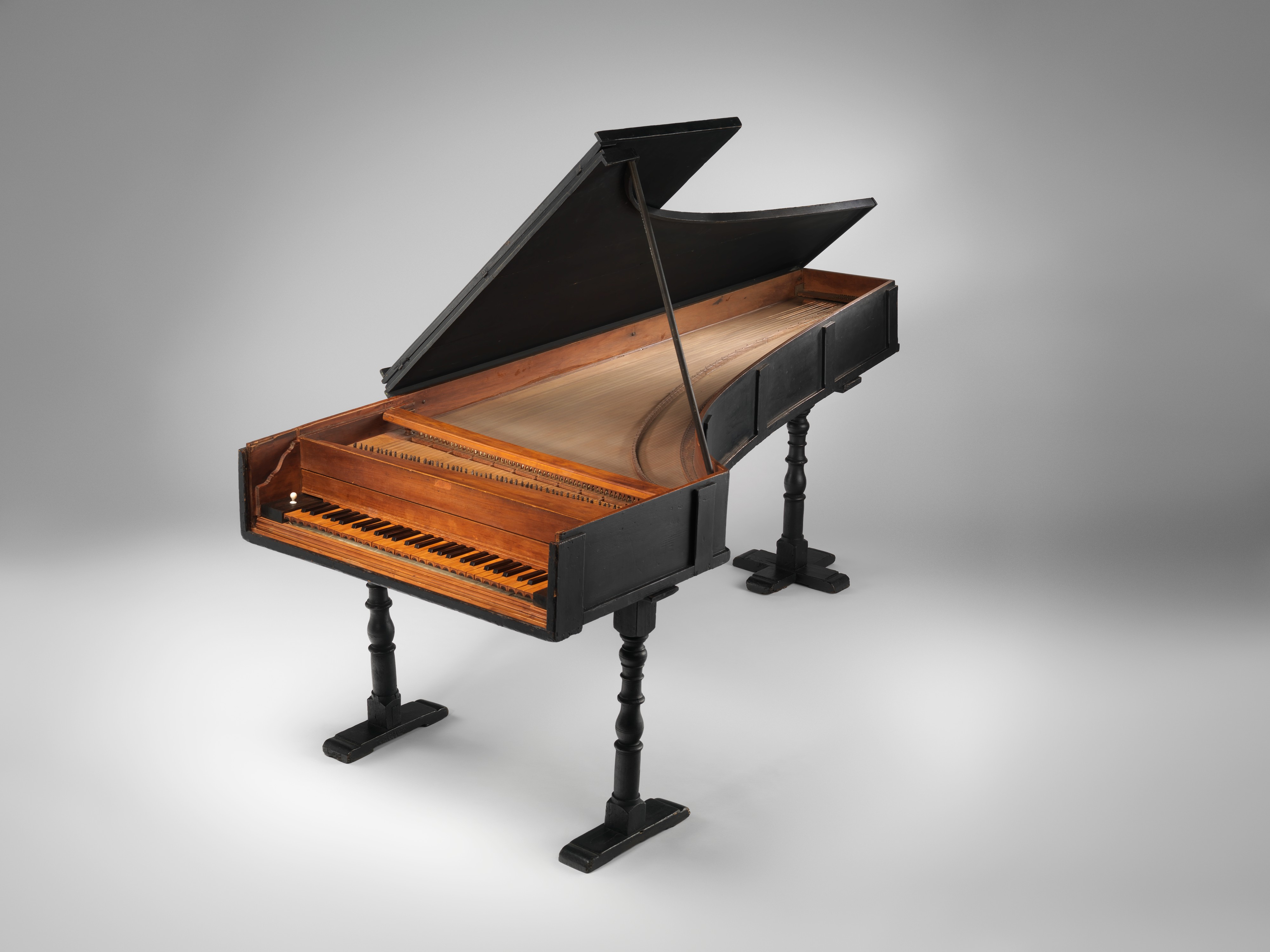
An accession number records the moment an object entered an institution, and it records nothing whatever about when the object was made. The Metropolitan Museum's grand piano by Bartolomeo Cristofori carries the number 89.4.1219a-c and was accessioned in 1889 as part of the Crosby Brown Collection of Musical Instruments; the instrument itself dates from about 1720. The gap is a hundred and sixty-nine years, and the number is silent about it.
The same split runs through every record in this archive that carries a number. The Ardabil Carpet was woven in 1539-40 and is museum number 272-1893, the V and A having bought it in March 1893 for 2,000 pounds. The Blacas Ewer was made in Mosul and dated by its own inscription to April 1232, and its British Museum registration number is 1866,1229.61. The Wade Cup was made between 1200 and 1221 and is Cleveland 1944.485.
This is obvious once stated and is misread constantly, because the number sits in the same block of catalogue text as the date of manufacture and looks like a fact of the same kind. It is not. It is a fact about the museum. Read correctly it is one of the most useful dates a researcher has, because it is the one date in the tombstone that an institution has an administrative reason to get right: it is the year the object stopped moving, and it terminates a provenance chain with a hard figure rather than an estimate.
Five institutions, five incompatible grammars
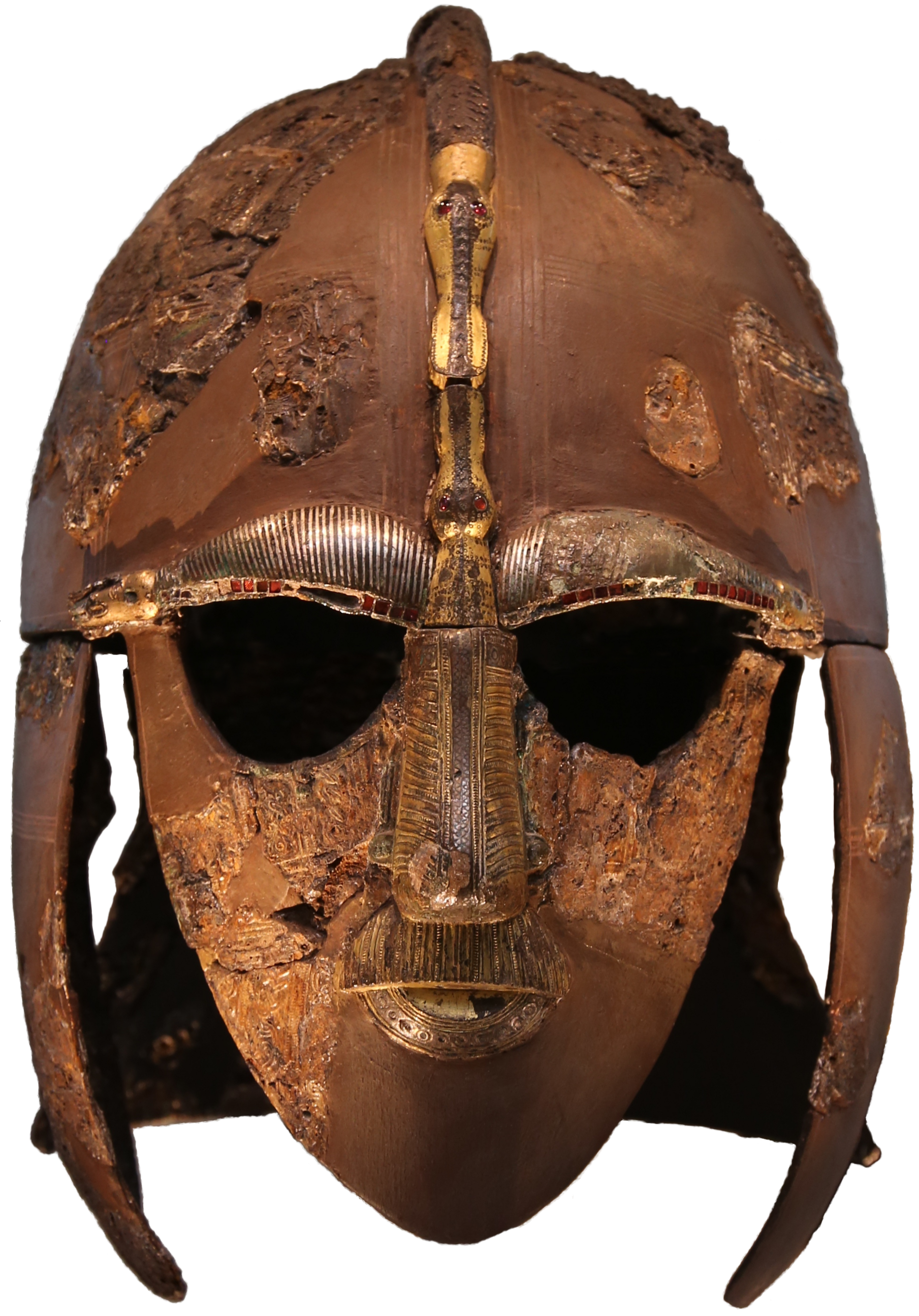
There is no shared format for an accession number, and the five conventions represented in this archive cannot be parsed by one rule. The Metropolitan Museum leads with the year: 19.164 for the Bruegel Harvesters, accessioned 1919; 23.69 for a bronze horse, accessioned 1923; 50.4 for the Antioch chalice, accessioned 1950. The V and A does the reverse and puts the year at the end after a hyphen, so 272-1893 for the Ardabil Carpet and M.1140-1926 for the Cheapside Hoard chain of lovers' knots. The British Museum encodes a full registration date: 1939,1010.93 is the Sutton Hoo helmet, registered on 10 October 1939, and 1866,1229.61 is the Blacas Ewer, registered on 29 December 1866. Cleveland uses a four-digit year, a full stop and a running sequence, giving 1944.485 for the Wade Cup and 1945.27 for the twelve-sided ewer with sphinxes. The Getty inserts a letter code between the two, so the Victorious Youth is 77.AB.30 in a record whose department reads Antiquities.
The Met's own format is not even stable across its own holdings. Two digits carry the year through 1969, giving 68.174 and 69.47.2, and four digits carry it from 1970, giving 1970.301.3 and 1971.86. A researcher sorting a column of Met numbers as strings will therefore file the whole nineteenth and twentieth century after the year 2000, and every object accessioned before 1970 will sit below every object accessioned after it.
The practical consequence is that an accession number cannot be validated by shape. There is no regular expression that accepts every real number and rejects every wrong one, which is why a number scraped out of running prose is worth nothing until it has been checked against the holding institution's own record for that object.
The number and the credit line beside it can name different years
A museum prints two dates about its own acquisition and they do not have to agree. The Metropolitan Museum's Rospigliosi Cup is accession number 14.40.667, its accession year is 1914, and the credit line reads Bequest of Benjamin Altman, 1913. The Iznik dish at 14.40.727 and Velazquez's Supper at Emmaus at 14.40.631 repeat the split exactly: number and accession year in 1914, credit line in 1913.
The mechanism is visible once the pattern repeats. The credit line dates the gift, the bequest or the purchase agreement; the number dates the accession, which is the museum's own internal act and can fall in the following year. The same one-year offset appears at 1972.118.56, accessioned in 1972 under a credit line reading Bequest of Walter C. Baker, 1971. It can also run the other way and cover more than one year at once: a crown at 66.196.13 carries the single number of 1966 above a credit line reading Gift and Bequest of Alice K. Bache, 1966, 1977.
For a provenance line this distinction decides the wording. The year in the credit line is the year the previous owner parted with the object, and it is the year that belongs in the chain of custody. The year in the number is the year the museum finished the paperwork. Citing the second as though it were the first shortens or lengthens the last link in the chain by twelve months, and does so invisibly, because both figures come from the museum and both are correct.
Without its prefix, the number is not unique
A V and A museum number quoted as a bare figure and a year does not identify one object. A search of the museum's own collections interface for the string 272-1893 returns the Ardabil Carpet and three other things: an album page numbered D.272-1893, a medal numbered REPRO.1893-272, and a page of the Louvain Album numbered E.3:272-1893. The department prefix is not decoration. It is the part of the number that makes it a key.
This is where a plausible number does more damage than a missing one. A number in the right shape for the right museum, attached to the wrong object, produces no error anywhere: the catalogue search resolves, the institutional record loads, a photograph and a credit line arrive, and everything downstream looks verified. The V and A number M.314-1962 is a real number in a real format that a reader could easily take for a piece of de Lamerie silver under discussion; it resolves to a tea caddy by Paul de Lamerie of about 1730, which may or may not be the object that was meant.
The discipline this forces is narrow and worth stating plainly. A number is not evidence until it has been put into the holding institution's own catalogue and the object that comes back has been read against the object in hand. A number copied from a secondary account, a bibliography, or the body of another entry is a lead.
When custody is unwound, the number is withdrawn
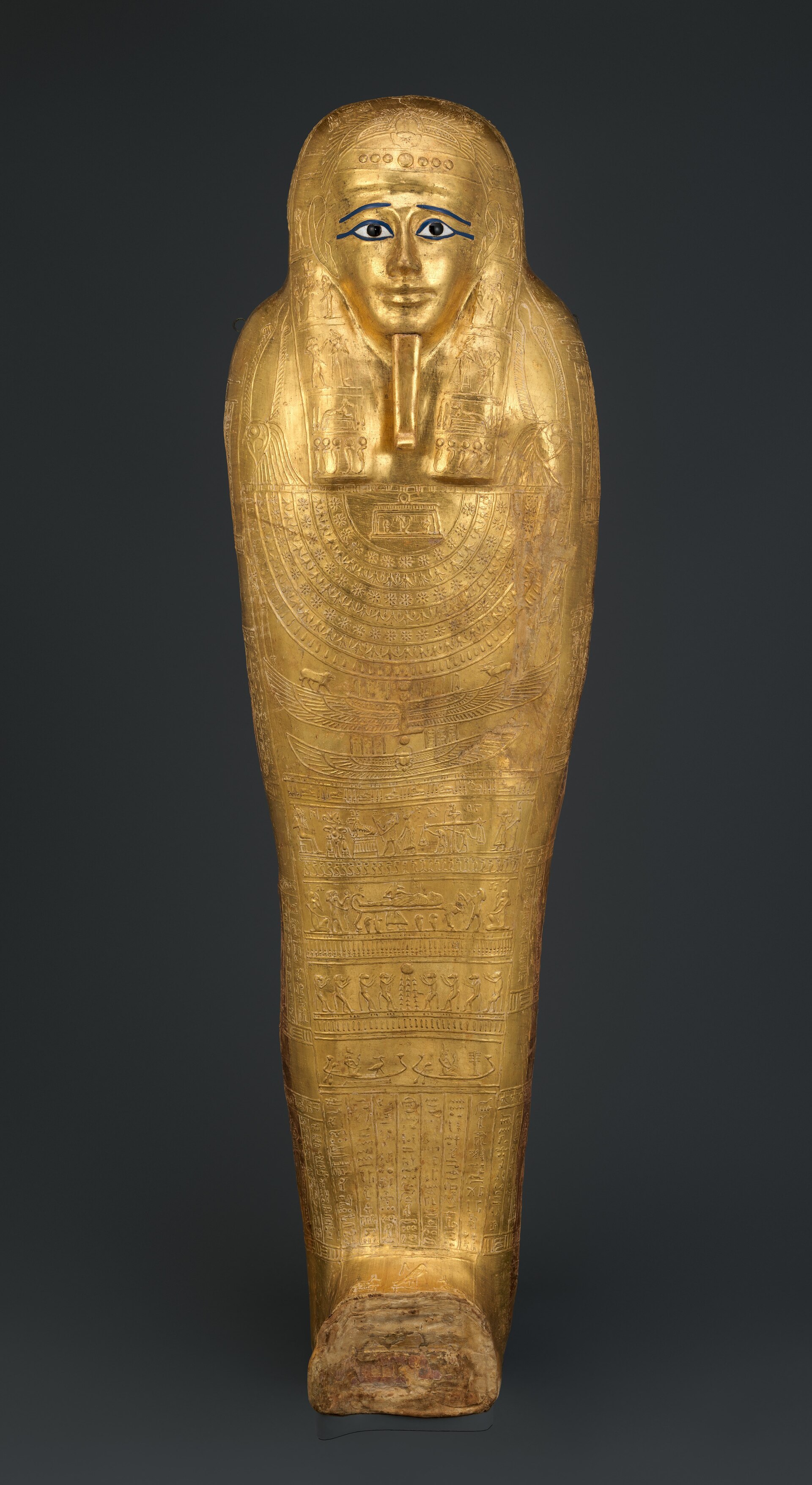
An accession number is a record of custody, so when the custody ends the number ends with it, and the object loses the only unambiguous public identifier it had. The gilded coffin of the priest Nedjemankh was bought by the Metropolitan Museum in July 2017 and announced that September in a press release whose image caption closes on the accession number 2017.255b. It was exhibited from July 2018, and on 15 February 2019 the Museum delivered it for return to Egypt, having learned that it had received a false ownership history, fraudulent statements and fake documentation including a forged 1971 Egyptian export licence.
What survives is the wrong half of the record. The number is still legible in the 2017 press release that announced the purchase, and it is gone from the collection database. The Met's public search index still answers a query for Nedjemankh with exactly one result, object 764111, and a request for that object record returns 404 while a control request for a live object returns 200. The Museum's own page listing works it has restituted names the Coffin of Nedjemankh in prose, with no number beside it.
The same erasure has a private-market form. This archive's record for Kandinsky's Bild mit Haeusern can state that the painting no longer carries a Stedelijk Museum inventory number, because it left that collection in 2022; it is now in a private collection and has no public identifier of any kind. In both cases the object is intact and the citation apparatus around it is gone.
For anyone building a durable reference this is the argument for recording the number that has lapsed as well as the one that is current. A withdrawn accession number is the only thread that connects the scholarship written while the object was in the museum to the object as it now exists, and no institution has an interest in maintaining it.
How to cite a number so that it survives
Four habits keep a number usable, and each of them answers a specific failure above. Give the institution's name in full alongside the number, because the same string means different things in different buildings and 1958,1202.1 is only a British Museum registration number when it is labelled as one. Keep the department prefix and any part-letters exactly as the institution prints them, because that is what makes the number a key rather than a coincidence.
Then record both dates. Write down the year the number encodes and the year the credit line gives, and say which is which, so a later reader can see the offset rather than inherit whichever one happened to be copied. Finally, date the check. A number verified against the holding institution's record on a stated day is a different object from a number transcribed out of a book, and only the first of those is evidence.
None of this is difficult and all of it is skipped, because an accession number looks like the one thing in a catalogue entry that could not possibly be wrong. It is a claim about an administrative event, made by an interested party, in a private format, and revocable at will.
Questions
No. It records the year the holding institution took the object into its collection. The Metropolitan Museum's Cristofori grand piano of about 1720 is numbered 89.4.1219a-c because it was accessioned in 1889, and the Ardabil Carpet of 1539-40 is 272-1893 because the V and A bought it in 1893.
The credit line dates the gift, bequest or purchase; the number dates the museum's own accession, which can fall in the following year. Three Benjamin Altman objects in this archive are numbered 14.40.x with an accession year of 1914 under a credit line reading 1913. For a provenance chain, the credit line year is the one that records when the previous owner parted with the object.
No. It lasts as long as the museum's custody. The Met's number for the coffin of Nedjemankh no longer resolves after the coffin was returned to Egypt in 2019, and the museum's own list of restituted works names the object without a number. Kandinsky's Bild mit Haeusern lost its Stedelijk inventory number when it left that collection in 2022.
Put it into the holding institution's own catalogue and read the object that comes back against the object you mean. A number in the correct format for the correct museum can still belong to something else entirely, and nothing in the search result will warn you. Searching the V and A for the bare string 272-1893 returns four different objects.
Sources
- 1Metropolitan Museum of Art, Open Access Collection API, object record 192708 (Cup, known as the Rospigliosi Cup), giving accessionNumber 14.40.667, accessionYear 1914 and creditLine Bequest of Benjamin Altman, 1913. collectionapi.metmuseum.org/public/...
- 2Metropolitan Museum of Art, Open Access Collection API, object record 446648 (Dish, Iznik), giving accessionNumber 14.40.727, accessionYear 1914 and creditLine Bequest of Benjamin Altman, 1913. collectionapi.metmuseum.org/public/...
- 3Metropolitan Museum of Art, Open Access Collection API, object record 501788 (Grand Piano, Bartolomeo Cristofori), giving accessionNumber 89.4.1219a-c, accessionYear 1889 and creditLine The Crosby Brown Collection of Musical Instruments, 1889. collectionapi.metmuseum.org/public/...
- 4Checked 20 August 2026. collectionapi.metmuseum.org/public/...
- 5Metropolitan Museum of Art, Repatriated Objects, the Museum's own page listing works it has restituted, which names the Coffin of Nedjemankh without an accession number. metmuseum.org/art/...
- 6Victoria and Albert Museum, collection record for The Ardabil Carpet, museum number 272-1893. collections.vam.ac.uk/item/...
- 7Victoria and Albert Museum, The Ardabil Carpet, museum article: The Museum acquired the carpet for 2,000 pounds in March 1893. vam.ac.uk/articles/...
- 8Victoria and Albert Museum, collections search API queried for the string 272-1893, returning 272-1893 (The Ardabil Carpet), D.272-1893 (Album page), REPRO.1893-272 (Medal) and E.3:272-1893 (The Louvain Album). Checked 20 August 2026. api.vam.ac.uk/v2/...
- 9Victoria and Albert Museum, collections search API queried for the string M.314-1962, returning a tea caddy by Paul de Lamerie, about 1730. Checked 20 August 2026. api.vam.ac.uk/v2/...
- 10British Museum, collection record for the Sutton Hoo helmet, museum and registration number 1939,1010.93, acquisition name Donated by Mrs Edith M Pretty. britishmuseum.org/collection/...
- 11British Museum, collection record for the Blacas ewer, museum and registration number 1866,1229.61, production date April 1232 (Rajab 629 AH). britishmuseum.org/collection/...
- 12The Cleveland Museum of Art, collection record 1944.485, The Wade Cup with Animated Script, credit line Purchase from the J. H. Wade Fund, dated 1200-1221. clevelandart.org/art/...
- 13J. Paul Getty Museum, collection record for Statue of a Victorious Youth, Object Number 77.AB.30, Department Antiquities. getty.edu/art/...
- 14Metropolitan Museum of Art press release, The Metropolitan Museum of Art Returns Coffin to Egypt, 15 February 2019, on the July 2017 purchase of the coffin of Nedjemankh and the false ownership history the Museum received. metmuseum.org/press-releases/...
- 15Metropolitan Museum of Art press release, Metropolitan Museum Acquires Ancient Egyptian Gilded Coffin, 12 September 2017, whose image caption gives the full credit line ending in the accession number 2017.255b. metmuseum.org/press/...
More in Museums and Exhibitions
The partThe complete object is a temporary arrangement
For a dispersed set, being complete is an event with a date and a duration. Twelve Renaissance tazze were whole and correct for two days in 2014, and...
When the Holder Is Not a Museum, the Accession Number Is Replaced by Law
Fourteen records here are held by a cathedral, a diocese, a cathedral works, a charitable trust or a monuments agency.
A Closing Date That Moves Both Ways, and Who Actually Moved It
Of 937 exhibitions tracked here, only 7 ever had a date move, and three of those flipped between the same two dates again and again.