The complete object is a temporary arrangement
For a dispersed set, being complete is an event with a date and a duration. Twelve Renaissance tazze were whole and correct for two days in 2014, and have not been since.
Records in this piece: The Aldobrandini Tazze, The Beauvais Missal, The David Vases, Plate from the Swan Service
On this page 9 sections
ContentsClose
In short
- Twelve silver tazze made in the 1590s were correctly assembled and in one room for two days, on 18 and 19 June 2014, and no reunion of the set has been found since 2018. Being complete was an event, not a state.
- By the end of the nineteenth century only two of the twelve were on the right dish. The Victoria and Albert Museum's tazza still carries the Domitian figure over a dish about Tiberius, because the statuettes are labelled and the dishes are not.
- The Beauvais Missal has 122 of its 309 leaves located across more than a hundred collections. The only version of the whole book that exists is a virtual reconstruction, assembled partly by matching the offset that gold on one leaf left on the next.
- The David vases were apart from 1351 until 1935, then on long-term loan to the British Museum from 2009, and only became the museum's property on 2 April 2025. A loan ran for sixteen years before ownership caught up with the display.
- A loan exhibition can do something no owner can do alone: assemble an object that is legally in twelve places. It cannot make the arrangement last.
A set of twelve is an argument that only works complete
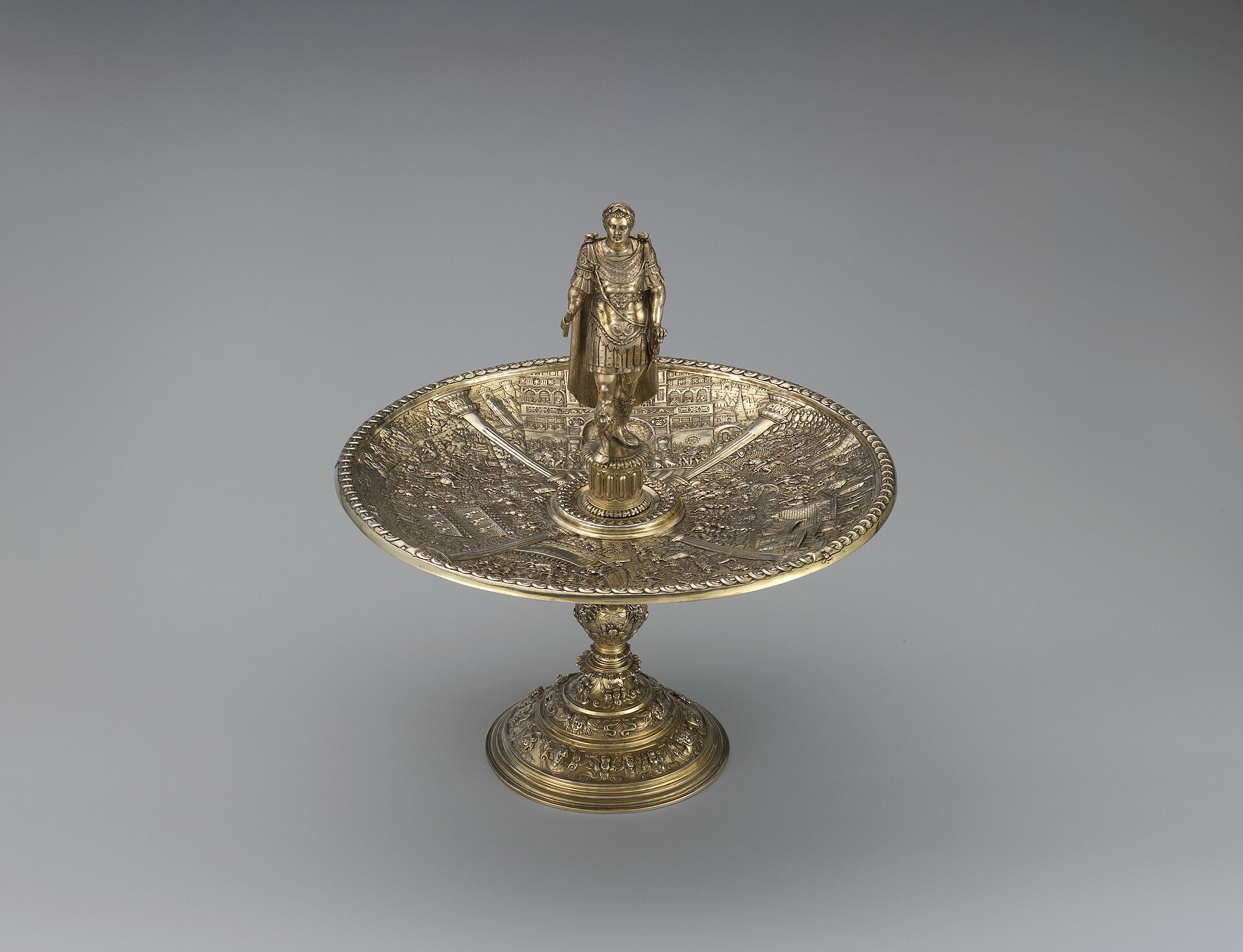
The Aldobrandini tazze are twelve silver standing cups, each between about 38 and 45 centimetres tall, each carrying a small statuette of a Roman emperor on a pedestal at the centre of a shallow dish, and each dish chased in relief with four scenes from that emperor's life. Twelve emperors, forty-eight scenes, every scene traceable to a specific passage of Suetonius. Mary Beard translated all forty-eight passages afresh for the 2017 Metropolitan Museum catalogue so that they could be printed against the images.
The set covers the Twelve Caesars from Julius Caesar to Domitian, and across the twelve dishes the scenes run through nearly a century and a half of Roman history in order. That is what makes this object a single object. Separate the pieces and you do not get twelve smaller works of art. You get a broken sentence.
They came apart because they were built to. The tazze were made to be dismantled for storage and travel, and the threads are interchangeable across the set, so any emperor will screw on to any dish.
The emperors are labelled and the dishes are not
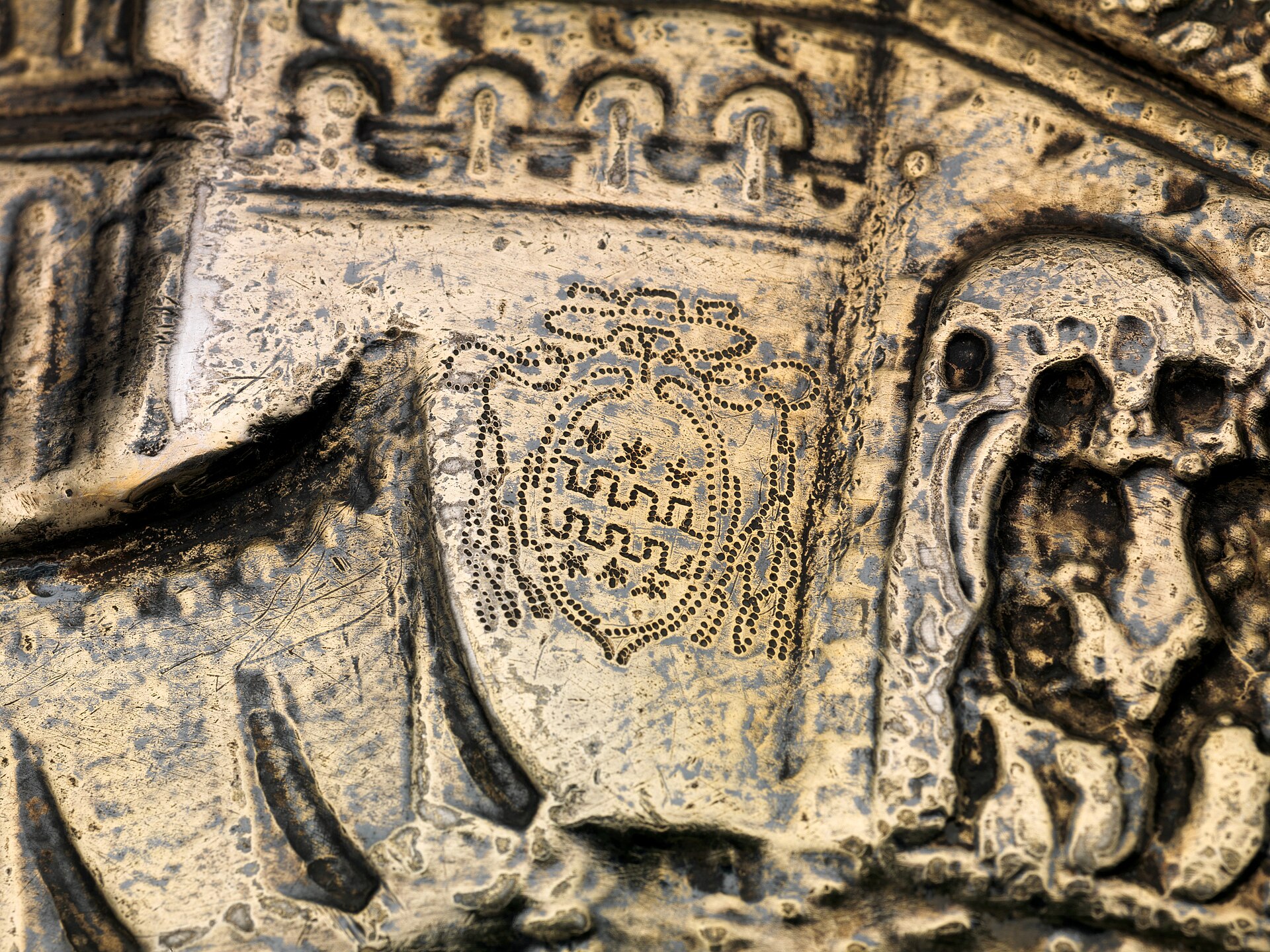
Each statuette has its emperor's name incised on the top of its pedestal cap, which means every figure can be identified at a glance. The dishes carry nothing. To know which emperor a dish belongs to you have to read its four scenes and identify the episodes in Suetonius, which is a research task and not a glance.
A labelled figure, an unlabelled dish and a standard thread are the three conditions for the disaster that followed. By the end of the nineteenth century only two of the twelve were correctly assembled, Julius Caesar and Claudius. Every other emperor was standing over somebody else's life.
Parts of the confusion are datable. A description of 1872 already shows the Augustus figure screwed into the Domitian dish. Three of the six tazze owned by the Paris dealer Frederic Spitzer were mismatched. The Victoria and Albert Museum's tazza is Domitian above Tiberius today, accessioned in 1956, and most of the set is still wrong.
June 2014: the whole set in one room, for two days
On 18 and 19 June 2014 the Metropolitan Museum of Art assembled all twelve tazze in New York, with an international group of specialists, for a symposium supported by the Schroder Foundation and Selim K. Zilkha among others. The catalogue that came out of it was edited by Julia Siemon and published by the museum in 2017.
A reader should be precise about what happened in those rooms. The twelve were together, which for a dispersed set is the whole event. They were not reunited in the sense of becoming one object with one owner, and nothing about the gathering changed the ownership of anything. When it ended they went back to seven countries. We have found no exhibition, sale process or reunion attempt since 2018 that brought the set together again, in whole or in part.
So the complete and correctly assembled Aldobrandini tazze existed, verifiably, for two days in 2014. That is the only form in which the object this record describes has been available to look at in over a century.
309 leaves, 122 located, and a reconstruction that will not finish
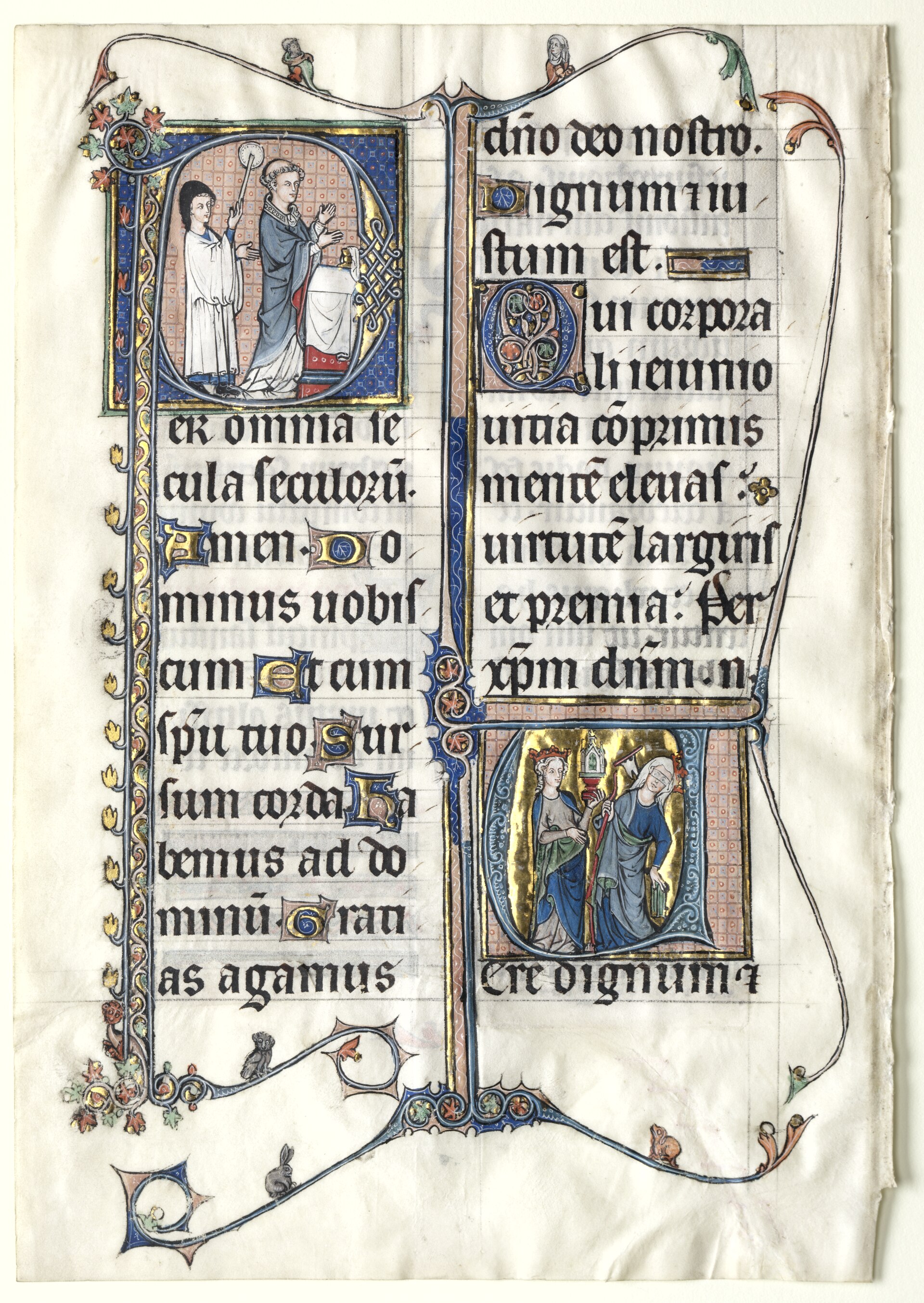
The Beauvais Missal was a single book of 309 parchment leaves, written for the use of Beauvais Cathedral late in the thirteenth century and given to the cathedral in September 1356 by a canon, Robert de Hangest, in exchange for an annual Mass. It stayed in that library for about 450 years. It no longer exists as a book.
In October 1942 the New York dealer Philip C. Duschnes bought it out of William Randolph Hearst's collection for USD 1,000, through Gimbel Brothers, and within a month was offering single leaves at USD 25 to USD 40 apiece, the price depending on how much gold was on the page. Many went to Otto F. Ege of Cleveland, a professor and dealer who had published a defence of book-breaking in 1938, and leaves of this missal are best known as number 15 in Ege's boxed sets of Fifty Original Leaves from Medieval Manuscripts.
Lisa Fagin Davis has been locating and reassembling the leaves since the mid-2010s, and the reconstruction is now hosted on Fragmentarium. There are no folio numbers to work from, so consecutive leaves are paired by matching the offset that gold on one leaf left on the face of the next. The count has moved upward as leaves surface, and it stands at 122 of 309 across more than a hundred institutional and private collections.
The David vases were apart for 584 years and on loan for sixteen
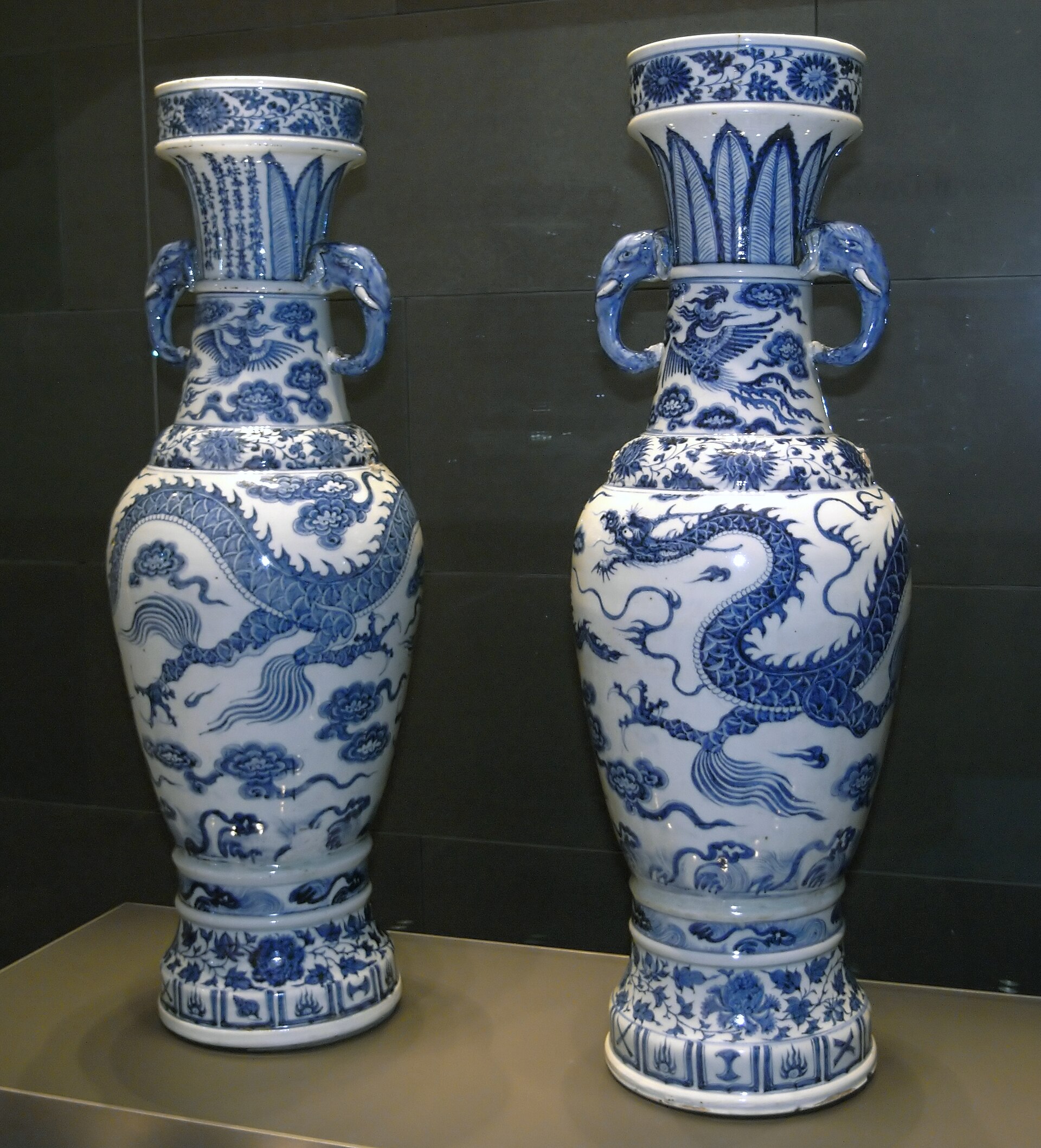
The David vases are a matched pair of blue-and-white porcelain temple vases, each about 63.5 centimetres tall, made at Jingdezhen and inscribed with a dedication naming a donor, Zhang Wenjin, and a date that converts to 1351. Sir Percival David bought them separately, from different dealers, years apart, and recognised from their inscriptions that they belonged together.
The second came from the Charles E. Russell sale at Sotheby's in London in June 1935, where David bought it for GBP 360. For the first time since 1351, both vases belonged to one owner. They then went to the University of London in 1950, and after a funding crisis closed the Gordon Square building the ceramics collection was lent to the British Museum, which opened Room 95 for it on 23 April 2009.
That move was explicitly a loan. The Percival David Foundation remained the legal owner and the British Museum was a long-term borrower. In November 2024 the Foundation's trustees announced their intention to give the whole collection outright, the Charity Commission approved the necessary change to the governing document in March 2025, and ownership transferred on 2 April 2025, in a gift reported as worth roughly GBP 1 billion. The display had been permanent for sixteen years before the ownership was.
One plate standing in for more than two thousand
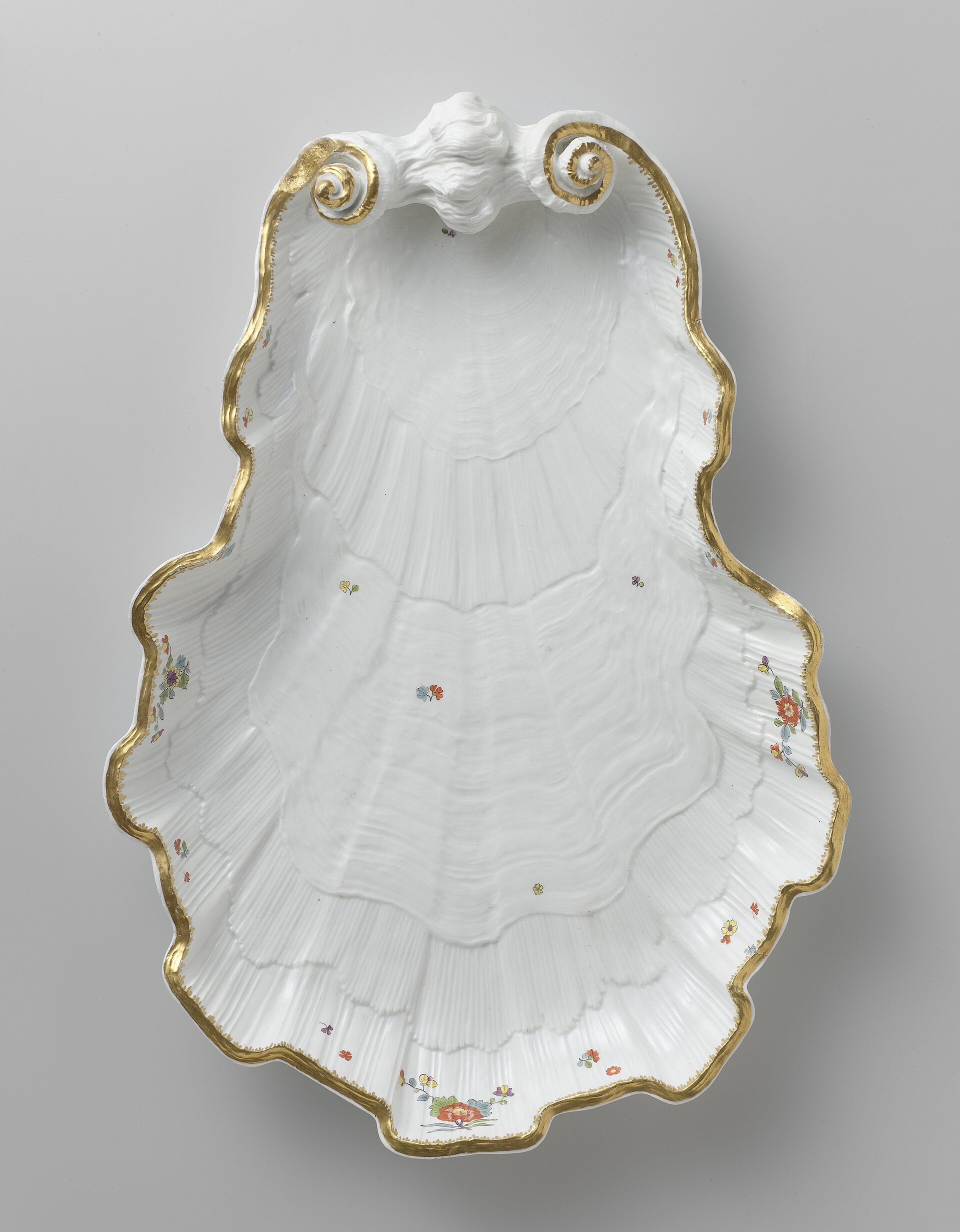
The fourth shape is the commonest and the least remarked. The Cleveland Museum of Art holds a single plate, 42 centimetres across, from the Swan Service that Meissen's chief modeller Johann Joachim Kaendler and Johann Friedrich Eberlein built for Heinrich Graf von Bruhl between about 1736 and 1741, a service of more than 2,200 pieces.
Bruhl was prime minister of Saxony and director of the Meissen manufactory at once, and by his own government's later account had diverted more than five million talers of public money into a private life that included the porcelain. He died in disgrace in October 1763 and his heirs spent years selling what he had built. Pieces of the service are now in Cleveland, Amsterdam, Warsaw and many other places.
Nothing here needs reassembling, because nobody is trying. A service of 2,200 pieces is a set in the way a library is a set, and its dispersal is not an accident to be reversed. But a reader looking at one plate is looking at 0.05 per cent of an object, and the label rarely says so.
Four kinds of completeness, and how long each one lasted
Set the four side by side and completeness stops looking like a property of an object and starts looking like an arrangement with a start date.
| Object | Complete extent | Form completeness has taken | How long it lasted |
|---|---|---|---|
| Aldobrandini tazze | 12 tazze, 48 scenes | Assembled physically, on loan, for a symposium | Two days, 18 to 19 June 2014 |
| Beauvais Missal | 309 leaves | Virtual reconstruction from 122 located leaves | Ongoing since the mid-2010s, never finished |
| David vases | A pair, plus a lost incense burner | Reunited by purchase in 1935, then owned by one museum | Continuous since 1935; owned outright since 2 April 2025 |
| Meissen Swan Service | More than 2,200 pieces | No reassembly attempted; pieces catalogued separately | Not applicable |
Only one of the four is complete today, and it is the smallest set of the four: a pair, missing the incense burner that would have made it three.
What an exhibition can do that an owner cannot
An owner can only ever assemble what they own. That is the limit the tazze ran into for a century and a half, and it is not a limit money fixes: twelve pieces in seven countries, several in private hands, would have to be bought from twelve willing sellers at once. A loan exhibition is the only instrument that assembles an object across ownership, and it does it by borrowing for a fixed term and giving everything back.
That is worth saying plainly because exhibitions are usually discussed as interpretation, as though the scholarship were the output and the gathering were logistics. For a dispersed object the gathering is the scholarship. The 2014 symposium is what produced the 2017 catalogue, and the catalogue is what made it possible to print forty-eight scenes against forty-eight passages of Suetonius. That work could not have been done from photographs of twelve objects held apart.
The digital reconstruction is the other instrument, and it is honest about being a model. Fragmentarium does not hold the Beauvais Missal and does not claim to. It holds images and metadata arranged in the order the book once had, which is a different kind of object and in one respect a better one: it can keep growing, and a leaf found next year can be added without anybody lending anything.
Why this archive is free to read
We do this for everyone who loves art. The people who have studied it for years, and the people who just stopped to look. Iconotheca exists so that what we learn belongs to all of them.
Nobody pays us for this. No ads, no sponsors, no commercial interest. These works belong to all of us, and we would rather share them with as many people as we can than keep them to ourselves.
If it gave you something today, tell us to keep going. Follow us, leave a like, or write a positive comment. We read every one, and they are what keeps us going.
Questions
Because the emperors unscrew from the dishes and the threads are interchangeable, while each statuette has its emperor's name incised on its pedestal and the dishes carry no name at all. Identifying a dish means reading its four scenes against Suetonius, so after the set was broken up in the nineteenth century the figures were reattached almost at random.
Yes, on 18 and 19 June 2014, when the Metropolitan Museum of Art assembled all twelve in New York for a symposium with an international group of specialists. They were together as loans and no ownership changed. No reunion of the set has been found since 2018.
122 of the original 309, spread across more than a hundred institutional and private collections. The count rises as leaves surface, and a virtual reconstruction hosted by Fragmentarium assembles images of the located leaves in order, partly by matching the offset that gold on one leaf left on the next.
On 2 April 2025. The vases had been on display at the museum since Room 95 opened on 23 April 2009, but that was a long-term loan from the Percival David Foundation, which remained the legal owner until the Charity Commission approved the transfer in March 2025 and the gift was completed the following month.
For a dispersed object it is a different kind of act altogether. An owner can only assemble what they own, so an object legally divided between twelve holders can only be made whole by borrowing it for a fixed period, which means completeness has a start date, an end date and no permanence.
Sources
- 1Julia Siemon (ed.), The Silver Caesars: A Renaissance Mystery, Metropolitan Museum of Art, 2017, the catalogue produced from the June 2014 gathering of all twelve tazze, with Mary Beard's translations of the forty-eight Suetonius passages. archive.org/details/...
- 2Metropolitan Museum of Art, object page for the Vitellius tazza, object 199659, bought with the Fletcher Fund in 1945. metmuseum.org/art/...
- 3Victoria and Albert Museum, catalogue record O91721, the Aldobrandini tazza carrying the Domitian figure over a dish of scenes from the life of Tiberius. collections.vam.ac.uk/item/...
- 4Fragmentarium, Beauvais Missal virtual reconstruction, F-4ihz, assembled by Lisa Fagin Davis. fragmentarium.ms/overview/...
- 5Lisa Fagin Davis, 'Manuscript Road Trip: Reconstructing the Beauvais Missal', 24 March 2015, on the method of pairing consecutive leaves by gold offset. manuscriptroadtrip.wordpress.com/2015/...
- 6Broken Books, 'The Story of the Beauvais Missal', on the October 1942 purchase from the Hearst collection through Gimbel Brothers and the dealer's commercial logic. brokenbooks2.omeka.net/exhibits/...
- 7Cleveland Museum of Art, Open Access API record for accession 1982.141, a located leaf of the Beauvais Missal. openaccess-api.clevelandart.org/api/...
- 8Boston Public Library, 'Two leaves from the Beauvais Missal', via Digital Commonwealth. digitalcommonwealth.org/search/...
- 9Antiques Trade Gazette, 'Percival David collection moves to British Museum', 2007, on the funding crisis and the long-term loan. antiquestradegazette.com/news/...
- 10Museums + Heritage Advisor, 'British Museum to receive historic 1bn collection gift', on the 2025 transfer of ownership of the Percival David collection. museumsandheritage.com/advisor/...
- 11Cleveland Museum of Art, catalogue entry for Plate from the Swan Service, accession 1951.103. clevelandart.org/art/...
- 12The Frick Collection, 'Cocktails with a Curator: Meissen Swan Service', on the scale and commission of the service for Heinrich Graf von Bruhl. frick.org/interact/...
More in Museums and Exhibitions
The partWhen the Holder Is Not a Museum, the Accession Number Is Replaced by Law
Fourteen records here are held by a cathedral, a diocese, a cathedral works, a charitable trust or a monuments agency.
A Closing Date That Moves Both Ways, and Who Actually Moved It
Of 937 exhibitions tracked here, only 7 ever had a date move, and three of those flipped between the same two dates again and again.
The Museum in the Seller's Column
Eight records in this archive carry a museum or a state as the seller. The Bodleian sold its First Folio as a duplicate and paid 3,000 pounds to get...