Bild mit Haeusern (Painting with Houses)
Wassily Kandinsky · 1909
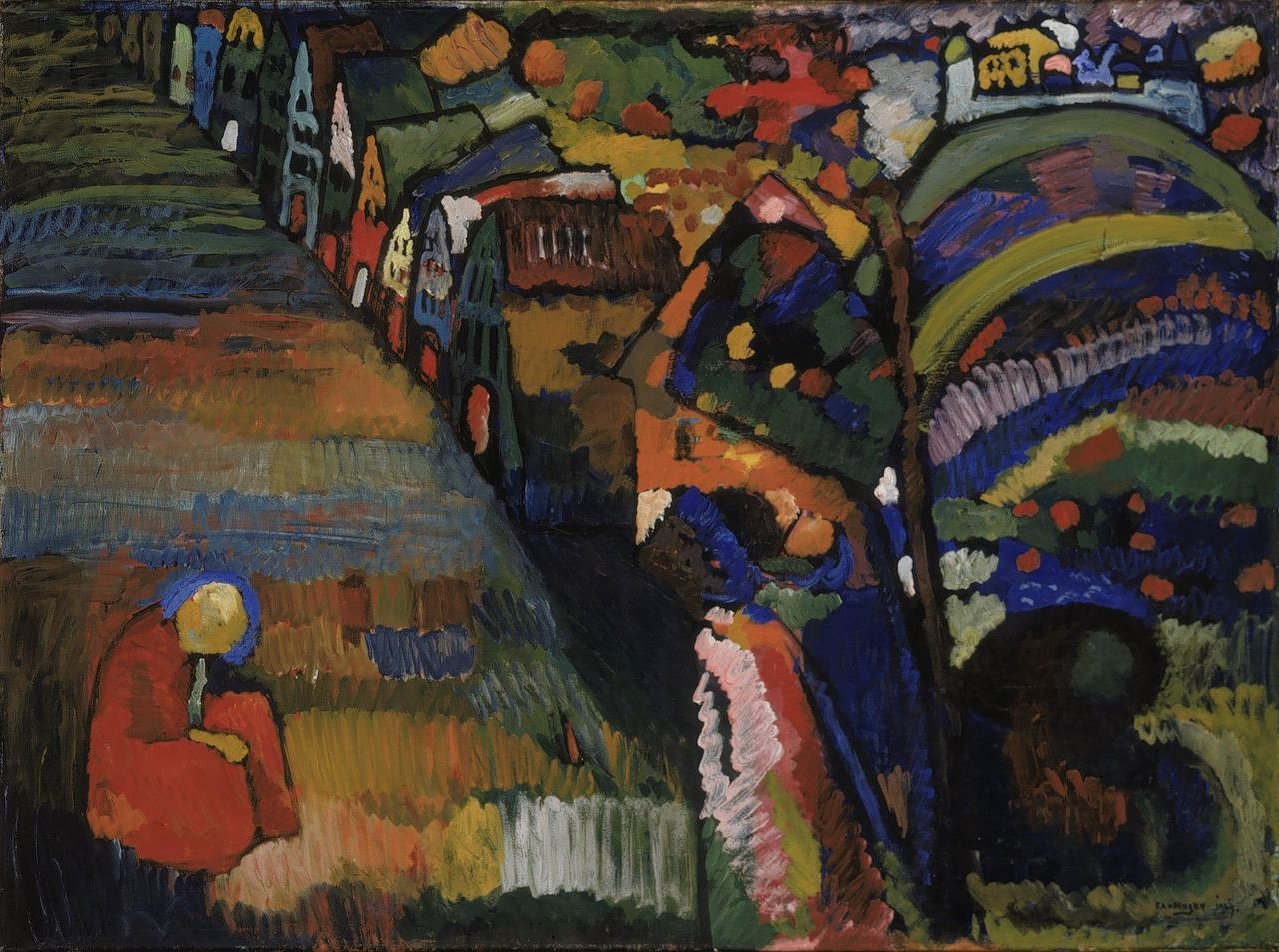
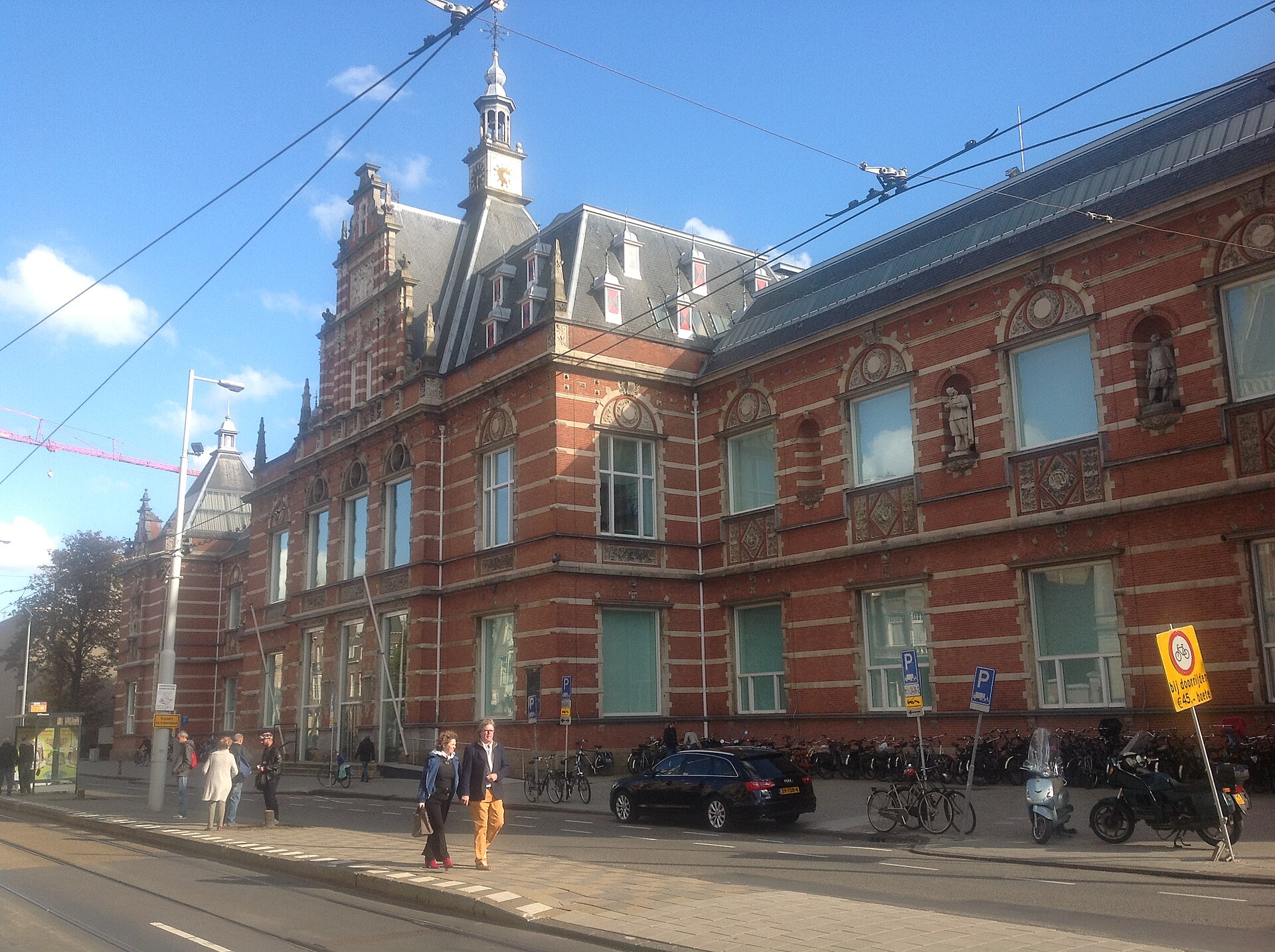
The record subject. Oil on canvas, 97 x 132 cm, 1909. Photographed while in the collection of the Stedelijk Museum Amsterdam, where it hung from 1940 until February 2022. Now in a private collection.
| Artist | Wassily Kandinsky |
|---|---|
| Date | 1909 |
| Medium | Oil on canvas |
| Dimensions | 97 x 132 cm |
| Where it is now | Private collection. Sold to a private collector in 2023 through a major auction house. Not on public view.last confirmed 4 August 2026 |
| Inventory number | No longer carries a Stedelijk Museum inventory number; the painting left the collection in 2022. |
| Attribution | AcceptedDated 1909 on the canvas and catalogued as such in the 1940 Frederik Muller sale catalogue, which described it as composed and dated 1909. Full note |
| Object type | Painting |
| Period | Russian and German, twentieth century |
| Inscriptions | Signed and dated 1909, as described in the 1940 auction catalogue. The exact form of the inscription is not reproduced in the sources consulted. |
| Owners on record | 8 links7 documented, 1 disputed |
| Sources | 8 cited |
About this record Last verified 10 September 2026 · 8 sources cited · Change log
On this page 11 sections
ContentsClose
Bought by an Amsterdam sewing-machine manufacturer in 1923 for 500 guilders, sold anonymously at a Dutch auction house five months into the German occupation, and knocked down to the director of the Stedelijk Museum for 160 guilders plus a ten per cent premium. It hung in the museum for eighty-one years. In October 2018 the Dutch Restitutions Committee issued a binding opinion refusing to return it, holding that the museum's interest in the painting outweighed the claimants', who it found had no strong personal connection to it. The opinion caused a national row, a government review and the abolition of the test it had applied.
The painting was returned anyway, in February 2022, by a vote of Amsterdam city council rather than by any panel, and without waiting for the committee to look again. In 2023 it sold privately for more than sixty million euros, the most valuable object the Netherlands has ever restituted. This is the record that shows what happens when the machinery a country builds produces an answer the country will not stand behind.
Provenance
Each link is graded. Documented: a cited source supports it. Disputed: the identification is argued but not established. Unknown: no owner for that span, and the gap is not smoothed into a narrative. The grades in the glossary.
- 1909 -Wassily Kandinskydocumented
Painted in 1909, in the Murnau years, and dated on the canvas.1
- - 1923Paul Citroen, Amsterdam dealerdocumented
Citroen was the source of much of the Lewenstein modern collection. How and when he acquired this canvas is not established in the sources consulted.5
- 1923 - 1930Emanuel Albert Lewenstein, Amsterdamdocumented
Bought from Paul Citroen in May 1923 for 500 guilders. Lewenstein, 1870 to 1930, directed the family sewing-machine business and collected modern art.15
- 1930 - 1937Hedwig Lewenstein-Weijermann, his widowdocumented
Her will of 1 February 1937 directed that the paintings and etchings be divided by an expert into two equal portions and assigned to the two children by lot. She died on 25 May 1937.1
- 1938 - 1940Robert Lewenstein, and on the committee's finding Irma Kleindocumented
By a deed of division of 24 January 1938 the movable property including the pictures went to Robert Lewenstein, offsetting a debt of 16,250 guilders owed by his sister to their mother. Because he had married Irma Klein in community of property on 11 October 1933, and by operation of a retroactive division deed of 10 June 1947, the Restitutions Committee found that Irma Klein became sole owner of this painting by the time their legal separation became final on 27 September 1940. Robert Lewenstein fled to the United States in June 1940.1
- 1940 - 2022City of Amsterdam, on display at the Stedelijk Museumdisputed
Lot 205, Frederik Muller and Company, Amsterdam, 9 October 1940, five months into the German occupation, consigned anonymously as the estate of L. Bought by the museum's director Jonkheer D. C. Roell for the City of Amsterdam at 160 guilders hammer, 176 guilders with the ten per cent premium, against the 500 guilders the collector had paid in 1923. The Restitutions Committee held in 2018 that the sale could not be considered in isolation from the Nazi regime but was also in part a consequence of financial circumstances that predated the invasion, that the owners had probably cooperated, and that no Nazi confiscation was established. The claimants contended the loss was involuntary. The disagreement was never resolved by any tribunal.15
- 2022 - 2023Heirs of Emanuel Lewenstein and of Irma Kleindocumented
Amsterdam city council and the mayor announced in the summer of 2021 that the painting would be returned without waiting for the Restitutions Committee's reconsideration under the revised 2021 framework. The transfer took place in February 2022, nine years after the claim was lodged. The binding opinion of 22 October 2018 refusing return was not annulled; it was overtaken.35
- 2023 - presentPrivate collectordocumented
Sold to a private collector for more than sixty million euros through a major auction house, in a private transaction rather than a public sale. The most valuable object the Netherlands has restituted. Proceeds divided between two American grandchildren of Emanuel Lewenstein, the three Dutch children of Elsa Guidotti, and Mondex Corporation, the Canadian recovery firm that worked the claim.3
Prices realised
The 2023 disposal was a PRIVATE SALE through a major auction house and not a public auction. The reported consideration is more than sixty million euros. No hammer, premium, estimate, lot number or buyer has been published, and none should be inferred. Reports of a single figure in a private treaty sale describe a total consideration, not a hammer price.
| Date | Sale | Estimate | Result | Note |
|---|---|---|---|---|
| 9 October 1940 | Frederik Muller and Company, Amsterdam Estate of L. (the Lewenstein collection, consigned anonymously), lot 205 | Not published in the sources consulted | Hammer NLG 160 With premium NLG 176 including the ten per cent buyer's premium NLG (Dutch guilders) | Bought by Jonkheer D. C. Roell, director of the Stedelijk Museum, on behalf of the City of Amsterdam, five months into the German occupation. The collector had paid 500 guilders for the same painting in 1923. The hammer and the premium-inclusive figure are separately recorded in the Restitutions Committee's binding opinion, which is unusually precise for a 1940 sale and is the reason this row can be split at all. |
Hammer is the price at which the bidding stopped; with premium adds the fee the house charges the buyer on top. Hammer price and buyer's premium in the glossary.
Technical evidence
| Attribution note | Dated 1909 on the canvas and catalogued as such in the 1940 Frederik Muller sale catalogue, which described it as composed and dated 1909. Authorship has never been in question in any of the proceedings; the dispute was about ownership. |
|---|---|
| Support | Canvas.1 |
| Medium | Oil.1 |
| Dimensions | 97 cm high by 132 cm wide, as given in the Restitutions Committee's binding opinion. Some published accounts give 131 cm for the width.1 |
| Date | 1909, composed and dated on the canvas according to the description in the Frederik Muller sale catalogue of October 1940.1 |
| Sale identifier | Lot 205, Frederik Muller and Company, Amsterdam, 9 October 1940, consigned as the estate of L. The surviving catalogue carries a handwritten annotation reading 160 and the buyer's name, Roell.1 |
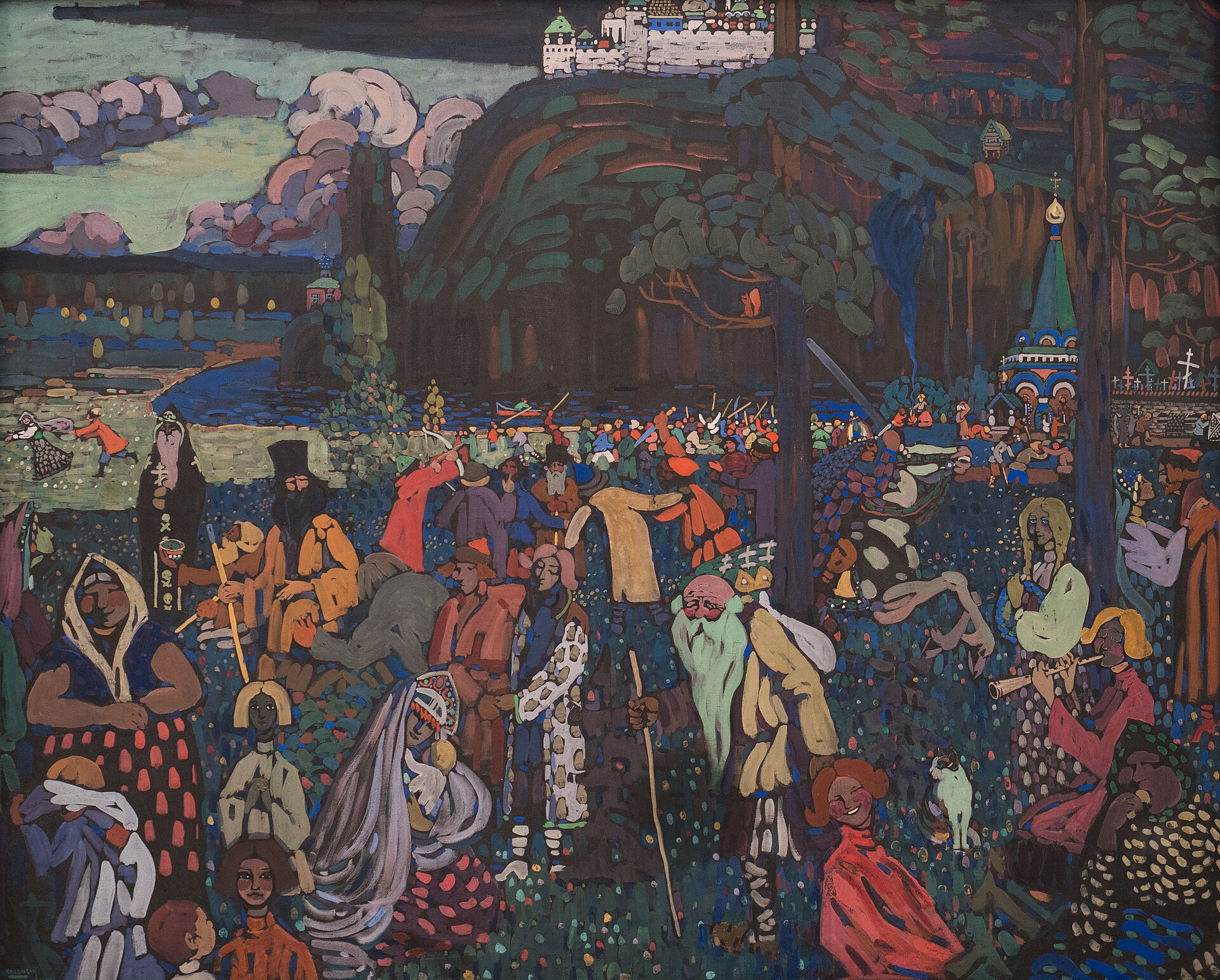
| Companion lot | Lot 204 in the same sale was Kandinsky's Das bunte Leben of 1907, tempera on canvas, 130 x 162.5 cm, from the same estate.57 |
| Former inventory | Stedelijk Museum Amsterdam, owned by the City of Amsterdam, 1940 to 2022. The painting no longer carries a museum inventory number.13 |
Images
The record in full
Chapter 1Two numbers, seventeen years apart
In May 1923 Emanuel Albert Lewenstein bought this painting from the Amsterdam dealer Paul Citroen for 500 guilders.On 9 October 1940, five months after the German army entered the Netherlands, it...
In May 1923 Emanuel Albert Lewenstein bought this painting from the Amsterdam dealer Paul Citroen for 500 guilders.
On 9 October 1940, five months after the German army entered the Netherlands, it came up as lot 205 at Frederik Muller and Company in Amsterdam, consigned anonymously as the estate of L. The director of the Stedelijk Museum, Jonkheer D. C. Roell, bought it on behalf of the City of Amsterdam. The hammer was 160 guilders. With the ten per cent buyer's premium the city paid 176 guilders.
The city acquired a major early Kandinsky for a third of what a private collector had paid for it seventeen years before, in an occupied country, from an anonymous Jewish estate. The Restitutions Committee that later refused to return it had that number in front of it; the surviving catalogue carries a handwritten annotation reading 160 and the buyer's name.
No fact in this record needs more explanation than that one, and the record exists because the machinery built to deal with facts like it produced, in 2018, the opposite answer.
Chapter 2What it is
Oil on canvas, 97 by 132 centimetres, dated 1909.
Oil on canvas, 97 by 132 centimetres, dated 1909. It belongs to the years when Kandinsky was working at Murnau in Upper Bavaria with Gabriele Muenter, when the landscape motif was still legible but the colour had stopped describing it, and it was made in the last moments before he abandoned the subject altogether.
1909 is a specific year in his life and this picture sits in the middle of it. He founded the Neue Kuenstlervereinigung Muenchen that year and became its president. Muenter bought the house at Murnau the local people called the Russenhaus. And in 1909 Kandinsky joined the Theosophical Society, the year after buying Annie Besant and Charles Leadbeater's Thought-Forms. He was already drafting Ueber das Geistige in der Kunst, which came out in Munich in 1911 and which sets out a scheme of impressions, improvisations and compositions.
All four of those are documented facts about the painter in the year of the painting. What the picture means is a separate question this record does not answer, because the evidence that would answer it does not exist. What can be said is that the man who made it had, that year, joined a society, bought a book about the visible forms of thought, taken over an artists' association and started writing a treatise, and that he did all of it within twelve months.
Chapter 3The Lewenstein collection
Emanuel Albert Lewenstein, 1870 to 1930, ran the family sewing-machine business in Amsterdam and collected modern art.
Emanuel Albert Lewenstein, 1870 to 1930, ran the family sewing-machine business in Amsterdam and collected modern art. No complete inventory of what he owned survives; the 1940 auction catalogue is the nearest thing to one. Alongside the two Kandinskys there were works by Degas and Kollwitz and by the Dutch painters Toorop and Breitner, old masters, prints and Japanese material. He bought a good deal of it from Paul Citroen.
He died in 1930. His widow Hedwig Weijermann died on 25 May 1937, leaving a will made on 1 February 1937 which directed that the paintings and etchings be divided by an expert into two portions of equal value and assigned to each of the two children by drawing lots. Under a deed of division of 24 January 1938 the movable property including the pictures went to the son, Robert Lewenstein, in a settlement that offset a debt of 16,250 guilders owed by his sister Wilhelmine to their mother.
Robert Lewenstein, born 1905, had married Irma Klein on 11 October 1933 in community of property, which is the fact on which the whole later case turned. He fled to the United States in June 1940. Wilhelmine had married a Portuguese husband in 1934 and emigrated to Mozambique in January 1938. When the collection was auctioned in October 1940, both children of the house were already out of the country.
Chapter 4Lot 204 and lot 205: the same day, two countries, two panels, two answers
Two Kandinskys came out of the Lewenstein estate at the Frederik Muller sale on 9 October 1940.
Two Kandinskys came out of the Lewenstein estate at the Frederik Muller sale on 9 October 1940. This one was lot 205. The other, Das bunte Leben of 1907, tempera on canvas and considerably larger, was lot 204.
Das bunte Leben had been on loan to the Stedelijk since 1933, put there by Hedwig Lewenstein for safe keeping. It was removed from the museum shortly before the sale and knocked down to the collector Salomon B. Slijper, who hid it through the war. His widow sold it, and it passed to the Bayerische Landesbank, which put it on show at the Lenbachhaus in Munich. The heirs asked for it back in 2015 and were refused. In March 2017 three of them sued in New York. In June 2023 the German Advisory Commission on Nazi-looted property recommended restitution, finding that Hedwig Lewenstein had remained the lawful owner and that the evidence did not support a voluntary consignment.
Two paintings, one collection, one auction, one day. One went to a Dutch panel that refused it in 2018; the other went to a German panel that recommended its return in 2023. The objects are not different in kind. The machinery is.
That is the point this archive makes about the 1998 Washington Principles in the abstract, and this pair of lots is the concrete demonstration of it.
Chapter 5The claim, and the binding opinion of 22 October 2018
The heirs asked for the painting back in 2012.
The heirs asked for the painting back in 2012. The case went to the Dutch Restitutions Committee, which issued a binding opinion, report RC 3.141, on 22 October 2018, published on 1 November. The respondent was Amsterdam city council, because the city and not the museum is the owner.
A binding opinion is not advice. The parties submit to it and are bound by the result. That is the mechanism the Netherlands built after 1998 for cases where the object is not in the national collection.
The committee worked through the family arrangements in detail and concluded that by the time the legal separation between Robert Lewenstein and Irma Klein became final on 27 September 1940, and by operation of a retroactive division deed of 10 June 1947, Irma Klein had become the sole owner of this painting. So the loss of possession was hers.
On how it was lost, the committee did not find a Nazi confiscation. It found that the sale could not be considered in isolation from the Nazi regime, but that it was also in part a consequence of financial circumstances that had been deteriorating before the invasion, and that Robert and Irma had probably cooperated in it. Coercion was not established.
Then it weighed. Irma Klein had never asked the museum for the painting back although she knew where it was and remained in touch after the war. The city had bought in good faith in 1940. The picture was, in the committee's assessment, the essential link in the museum's small holding of Kandinsky. And the claim of one applicant rested on inheritance alone with no demonstrated personal connection to the object. The committee rejected the application. Amsterdam was not obliged to return it.
Chapter 6The test that was abolished
The reasoning above contains a step that has no equivalent in most national systems and which, after this case, no longer exists in the Dutch one.
The reasoning above contains a step that has no equivalent in most national systems and which, after this case, no longer exists in the Dutch one. The committee balanced the interest of the holder against the interest of the claimant, and the holder's interest included the painting's importance to the museum's collection.
Set that against what an ownership claim normally asks. Whether the museum would miss the picture is not a question about title. The Dutch framework asked it anyway, and here it decided the case. Dutch reporting recorded the committee's finding that the heirs had no emotional or intense connection with the painting; the effect was that a family's claim failed partly because they had not known the object well enough.
The criticism was immediate and national. The government commissioned a review. In December 2020 the committee chaired by Jacob Kohnstamm reported under the title Striving for Justice and attacked the balancing exercise directly. In March 2021 the government adopted a revised assessment framework which put original ownership and the involuntary character of the loss first, made the process less formalistic and, decisively, removed the committee's power to weigh the museum's interest against the claimant's.
This archive's article on the Washington Principles names the Kohnstamm review as the correction of a national misreading. This is the object that forced it.
Chapter 7How it actually came back, which was not by restitution
Amsterdam then asked the Restitutions Committee to look at the case again under the new framework.
Amsterdam then asked the Restitutions Committee to look at the case again under the new framework. The heirs resisted that, arguing that the new framework would decide in their favour automatically.
In the summer of 2021 the mayor of Amsterdam and the city council reached the same conclusion and announced that the Stedelijk would return the painting without waiting for the committee's further opinion. The transfer to the heirs took place in February 2022, nine years after the claim was made.
Be precise about what happened, because the vocabulary is doing work. No panel ever ordered this painting returned. The only panel decision that exists on it is a binding opinion refusing return, and that opinion was never set aside by any tribunal. The object moved because the owner, a city council, decided it would not stand on a ruling it had won. A reader consulting the Dutch restitution record for this painting will find a refusal; a reader looking at the wall will find an absence.
That gap between the decided outcome and the actual outcome is the most useful thing in this file. National machinery decides claims. It does not decide what holders do.
Chapter 8Sixty million euros, and who got it
In 2023 the painting was sold to a private collector for more than sixty million euros, through a major auction house but not at public auction.
In 2023 the painting was sold to a private collector for more than sixty million euros, through a major auction house but not at public auction. It is the most valuable object the Netherlands has ever restituted.
The proceeds were divided among three sets of parties. Two American grandchildren of Emanuel Lewenstein. The three Dutch children of Elsa Guidotti, who was the last partner of a man who had lived for decades with Irma Klein, the owner the 2018 committee identified. And Mondex Corporation, a Canadian firm specialising in looted-art recovery, which worked the claim and took a share.
Every part of that distribution is worth a collector's attention. The chain of entitlement runs through a legal separation in 1940, a retroactive division deed in 1947, and a domestic relationship that produced no marriage; the beneficiaries are on two continents; and a commercial recovery firm is one of them. Claims of this age are rarely brought by a single family with a clean line of descent, and the economics of pursuing one usually require a specialist who is paid out of the object.
The sale figure is reported as more than sixty million euros and no hammer or premium split has been published, which is normal for a private treaty sale: houses report a single number or none. Do not read the sixty million as a hammer price. It is a reported consideration.
Chapter 9The market cohort: what restituted Kandinskys make
The comparison the sixty million belongs against was made the same month.
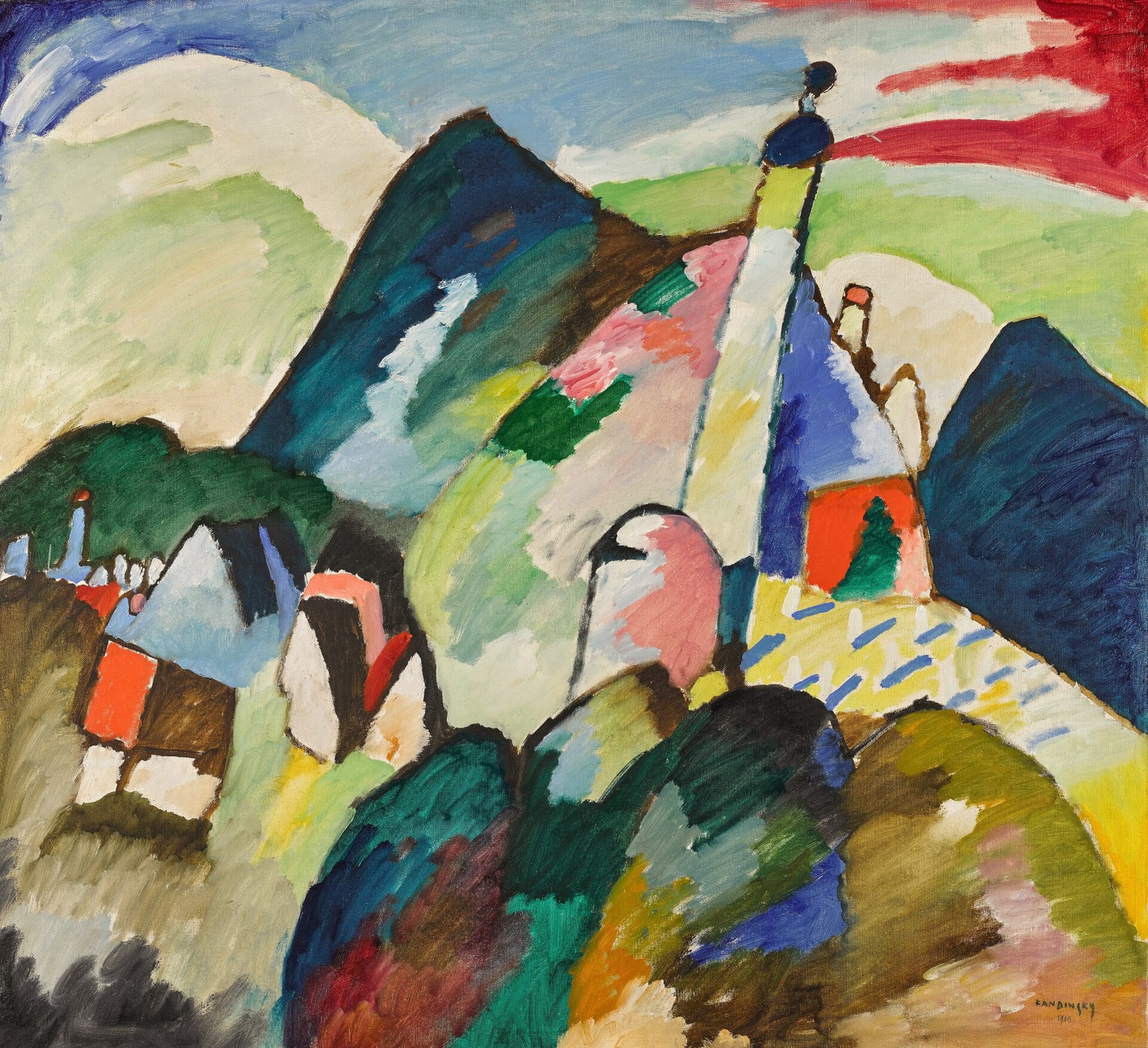
The comparison the sixty million belongs against was made the same month. In the autumn of 2022 the Van Abbemuseum in Eindhoven restituted Kandinsky's Murnau mit Kirche II of 1910 to the heirs of Johanna Margarete and Siegbert Stern. Sotheby's sold it in London on 1 March 2023 for 37,196,800 pounds, reported alongside a dollar figure of 44,766,880.
Two Kandinskys of 1909 and 1910, both returned by Dutch public museums within four months of each other, both sold within a year of coming back, one at public auction and one privately. Between them they are the clearest measure available of what the market pays for an early Kandinsky with a resolved 1940 break.
A caution on the figures. Published accounts of the Sotheby's result describe the pounds figure both as the hammer and as the price with fees, which cannot both be true, and the dollar figure is the same sum converted rather than a separate price. This record therefore states the reported total and does not assert a hammer. Where a house publishes premium-inclusive results only, a hammer quoted anywhere else is either derived or wrong.
The commercial reading of the pair is straightforward and is not usually said out loud: a resolved claim adds value. Both pictures came to market with the break in the chain closed rather than open, and buyers paid accordingly.
Chapter 10What the file is missing
The 1940 catalogue is the only near-inventory of the Lewenstein collection that exists, and it was produced by the sale that dispersed it.
The 1940 catalogue is the only near-inventory of the Lewenstein collection that exists, and it was produced by the sale that dispersed it. Whatever was in the house and not in that sale is unrecorded.
The circumstances in which the consignment was made are still not established. The committee found probable cooperation by Robert Lewenstein and Irma Klein and could not establish coercion; it also found the sale inseparable from the regime. Both children had already left the country. Who instructed Frederik Muller, and on what terms, is not in the published record.
The reason the anonymity of the consignment matters is that it worked. The catalogue said estate of L. and nothing else. The identification of the estate as Lewenstein comes from annotated copies of the catalogue, not from the catalogue itself. An Amsterdam auction house in October 1940 was able to sell a Jewish collection without naming it, and a municipal museum director was able to buy from that sale, and neither of those facts required anybody to break a law.
The artist
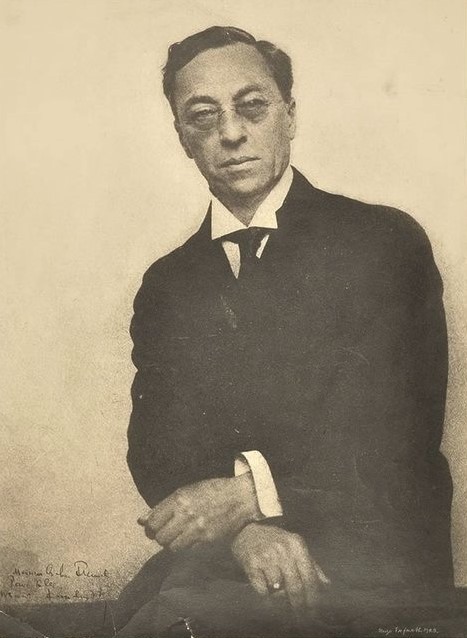
Wassily Wassilyevich Kandinsky
Kandinsky came to painting at thirty, having taught law and economics at Moscow, and spent the rest of his life arguing in print for what he was doing on canvas. He is the rare painter whose theoretical writing is as much cited as his pictures, and the rarer one whose reading list survives well enough to be checked. Both facts matter to a record about a painting of 1909, because 1909 is the year in which almost everything he is now known for was set in motion.
Exhibited
- 1940-2022Permanent collectionStedelijk Museum, Amsterdam
Related works
| Work | Relation | Where it is |
|---|---|---|
| Das bunte Leben Wassily Kandinsky | Lot 204 in the same sale, from the same estate, on the same day 1907, tempera on canvas, 130 x 162.5 cm. Bought from Paul Citroen in November 1927 for 900 guilders. Sold at the 1940 auction to Salomon B. Slijper, later with the Bayerische Landesbank and shown at the Lenbachhaus. A New York suit was filed in March 2017. | Restitution recommended to the Lewenstein heirs by the German Advisory Commission in June 2023 |
| Murnau mit Kirche II Wassily Kandinsky | The market comparison. Restituted by a Dutch museum four months later and sold at auction 1910. Restituted by the Van Abbemuseum, Eindhoven, in 2022 to the heirs of Johanna Margarete and Siegbert Stern; sold at Sotheby's London on 1 March 2023. | Private collection |
| Portrait of Wally Neuzil Egon Schiele | Contrast in disposition: the claimants took money and the object stayed Here the panel refused the claim and the object left anyway. There a court found the object stolen and it did not move. | Leopold Museum, Vienna |
| Rue Saint-Honore in the Afternoon. Effect of Rain Camille Pissarro | Contrast in machinery: no panel exists and the claim is twenty-one years old The Cassirer claim has never been before a restitution commission of any kind. | Museo Nacional Thyssen-Bornemisza, Madrid |
Open questions
- Who instructed Frederik Muller and Company to sell the Lewenstein collection in October 1940, and on what terms? Both of Emanuel Lewenstein's children had left the country before the sale, and the consignment was catalogued anonymously as the estate of L.
- What else was in the collection? The 1940 catalogue is the closest thing to an inventory that survives, and it was produced by the sale that broke the collection up.
- Who bought the painting in 2023, and was the reported figure of more than sixty million euros the whole consideration? No hammer, premium or contract terms have been published, and the sale was private.
- What share of the proceeds went to Mondex Corporation? The firm's participation is on the public record; the commercial terms of it are not.
- Was the Restitutions Committee's binding opinion of 22 October 2018 ever formally set aside, or does it stand as the only panel decision on this object? Nothing in the published record shows it annulled; the painting was returned by a decision of the owner instead.
Questions about this object
What is Bild mit Haeusern (Painting with Houses)?
Bild mit Haeusern (Painting with Houses) is a painting, dated 1909. Medium: Oil on canvas.
Who made Bild mit Haeusern (Painting with Houses), and is the attribution settled?
The attribution to Wassily Kandinsky is recorded here as accepted. Dated 1909 on the canvas and catalogued as such in the 1940 Frederik Muller sale catalogue, which described it as composed and dated 1909. Authorship has never been in question in any of the proceedings; the dispute was about ownership.
Where is Bild mit Haeusern (Painting with Houses) now?
Private collection. Sold to a private collector in 2023 through a major auction house. Not on public view. Inventory number No longer carries a Stedelijk Museum inventory number; the painting left the collection in 2022.. Last confirmed 4 August 2026. Transferred to the Lewenstein and Klein heirs by the City of Amsterdam in February 2022, and sold by them the following year.
What has Bild mit Haeusern (Painting with Houses) sold for?
Hammer NLG 160; with premium, NLG 176 including the ten per cent buyer's premium. Frederik Muller and Company, Amsterdam, 1940-10-09.
What is still unknown about Bild mit Haeusern (Painting with Houses)?
Who instructed Frederik Muller and Company to sell the Lewenstein collection in October 1940, and on what terms? Both of Emanuel Lewenstein's children had left the country before the sale, and the consignment was catalogued anonymously as the estate of L.
Sources
- 1Restitutiecommissie (Dutch Restitutions Committee), binding opinion RC 3.141, 'Painting with Houses by Wassily Kandinsky', 22 October 2018: the family history, the deeds of 1937, 1938 and 1947, the 9 October 1940 Frederik Muller sale, lot 205, the 160 and 176 guilder figures, the balance of interests and the rejection of the claim. PRIMARY. restitutiecommissie.nl/en/...
- 2Restitutiecommissie, news item announcing the binding opinion, 1 November 2018, recording that the city council is not obliged to restitute the work and the grounds relied on. PRIMARY. restitutiecommissie.nl/en/...
- 3NL Times, 'Kandinsky painting Amsterdam museum returned to Jewish family sold for EUR 60 mil.', 23 February 2023, reporting NRC: the private sale for more than sixty million euros through a large auction house, the division of proceeds between the Lewenstein grandchildren, the children of Elsa Guidotti and Mondex, the 2021 council decision and the February 2022 return, and the committee's finding that the heirs had no emotional or intense connection with the painting. nltimes.nl/2023/...
- 4Judd Tully, 'Sotheby's London Sells a $44.7 Million Restituted Kandinsky', 9 March 2023, for the sale of Murnau mit Kirche II on 1 March 2023 at GBP 37,196,800 / USD 44,766,880, the Stern heirs and the Van Abbemuseum restitution. juddtully.net/blog/...
- 5Wikipedia, 'Emanuel Lewenstein', TERTIARY, used for the 1923 purchase from Paul Citroen at 500 guilders, the scope of the collection, the 8-9 October 1940 auction as 'Estate L.', the December 2020 Striving for Justice report, the March 2021 revised assessment framework, the August 2021 council vote and the February 2022 transfer. Flagged for replacement with the Amsterdam city council resolution and the Kohnstamm report itself. en.wikipedia.org/wiki/...
- 6Wikipedia, 'Hedwig Lewenstein', TERTIARY, used for the 1933 loan of Das bunte Leben to the Stedelijk and the June 2023 German Advisory Commission recommendation. en.wikipedia.org/wiki/...
- 7Wikipedia, 'Das Bunte Leben', TERTIARY, used for that painting's dimensions, the Slijper purchase and concealment, the Bayerische Landesbank and Lenbachhaus, the March 2017 New York suit and the June 2023 German finding. en.wikipedia.org/wiki/...
- 8Wikipedia, 'Wassily Kandinsky', TERTIARY, used only for the biography: the Moscow law career, the 1896 move to Munich, the 1909 founding of the Neue Kuenstlervereinigung and the Theosophical Society membership, Ueber das Geistige in der Kunst, Der Blaue Reiter, the Russian years, the Bauhaus, the degenerate art campaign and the destruction of Composition I. Flagged for replacement with Hans Konrad Roethel and Jean K. Benjamin's catalogue raisonne. en.wikipedia.org/wiki/...
Last verified 10 September 2026 · Published 4 August 2026
Change log
4 August 2026 - Record created at the house standard: researched narrative, technical evidence, maker dossier, graded provenance chain, prices with hammer and premium separated, related works, open questions and sources.
10 September 2026 - Re-verified 2026-09-10: WebSearch for post-2023 developments found no new information beyond what this record already documents in full (the more-than-sixty-million-euro 2023 private sale, the three-way division of proceeds among the Lewenstein grandchildren, the Elsa Guidotti heirs and Mondex Corporation, and the Murnau mit Kirche II market comparison). Checked the buyer identity has still not been publicly disclosed as of this date, and confirmed via a separate direct check that the unrelated Sotheby Murnau mit Kirche II sale (Stern-Lippmann/Stern heirs, 37,196,800 GBP, 1 March 2023) is correctly kept distinct from this painting in the existing text - the two restituted 1909/1910 Kandinskys are a live conflation risk and the record already guards against it. Null result recorded as a finding.