When the Holder Is Not a Museum, the Accession Number Is Replaced by Law
Fourteen records here are held by a cathedral, a diocese, a cathedral works, a charitable trust or a monuments agency. What replaces the accession number is charity law, heritage law or a Church Measure, and in one case it is stronger.
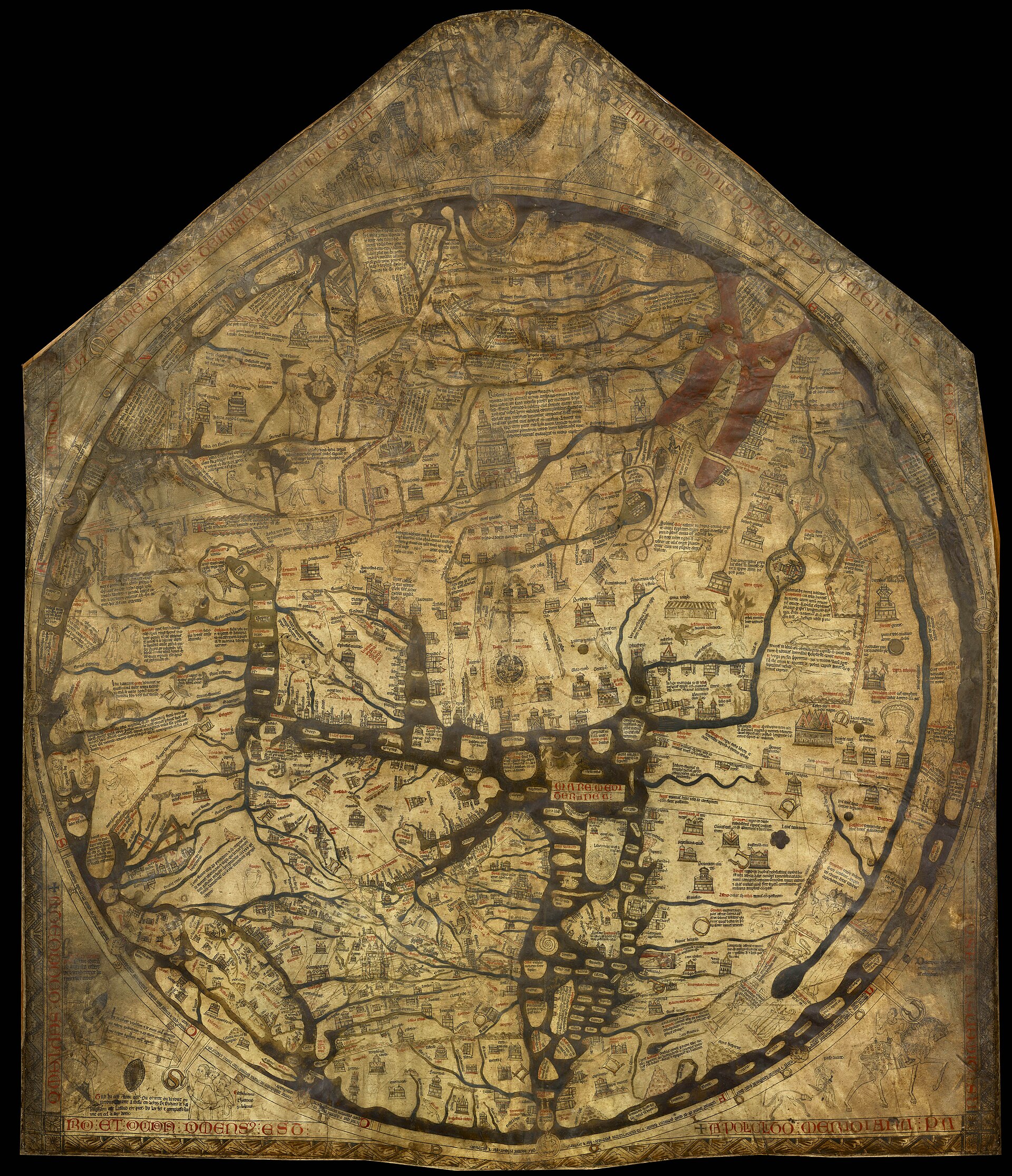
Records in this piece: Hereford Mappa Mundi, The Coronation Chair, The Pisa Griffin, The Shroud of Cadouin, The Limburg Staurotheke, The Apocalypse Tapestry
On this page 11 sections
ContentsClose
In short
- Fourteen records here are held by something other than a museum, and five of them carry no accession number at all. The absence is not a gap in the research: an accession number is an artefact of museum registration, and a cathedral never registered anything because the object was simply always there.
- What stands in for the number is a legal instrument. The Hereford Mappa Mundi has a trust deed, the Shroud of Cadouin has a Monument Historique classification of 2 December 1935, the Apocalypse Tapestry sits in a state monument collection, and English cathedral treasures have a statutory inventory.
- In England that inventory is a duty under the Care of Cathedrals Measure 2011. Section 24 requires a cathedral chapter to compile and maintain an inventory of objects of architectural, archaeological, artistic or historic interest, and to report annually to a fabric advisory committee certifying its accuracy.
- The disposal route is law rather than a professional code. Section 7 of the same Measure requires Commission approval before a chapter sells, lends or disposes of a treasure, and requires the chapter to offer the British Museum, or another registered museum the British Museum nominates, the opportunity to buy it.
- The strongest protection in this group names its own successor owner. The UNESCO nomination for the Mappa Mundi records that in the event of the trust being dissolved, ownership of the map passes to the British Library, London. No accession number does that.
Five objects here have no accession number because nobody ever accessioned them
An accession number records the moment a museum took an object onto its register, and an object that has never been on a museum register does not have one. In this archive the records with a blank inventory field cluster with striking consistency in one group of holders: a cathedral, a cathedral works, a diocese, a charitable trust and a national monuments agency.
The record for the Hereford Mappa Mundi states it plainly, that no public catalogue or accession number is published and the map is not part of a numbered museum collection. The Pisa Griffin's record reports that no public inventory or accession number was found. The Apocalypse Tapestry at Angers sits in a state-owned monument historique collection with no museum accession number identified. The Coronation Chair's inventory field holds a description of where the chair stands rather than a number.
Read as a research failure this looks bad. Read correctly it is a finding about what kind of institution is holding the thing, and the question it should prompt is not what the number is but what is doing the number's job instead.
A UNESCO nomination form asks the questions a museum register answers
The United Kingdom's 2006 Memory of the World nomination for the Hereford Mappa Mundi separates ownership from custody in two numbered fields, and the answers are different. Field 5.1, owner of the documentary heritage, gives the Hereford Mappa Mundi Trust, at the care of an accountancy firm's address in Hereford. Field 5.2, custodian, gives Hereford Cathedral Library.
Field 5.3, legal status, is the one that matters. Its first clause reads that the map is owned by a charitable trust, and that in the event of the trust being dissolved ownership of the Hereford Mappa Mundi passes to the British Library, London. Its fourth clause records that the Trust is required by the terms of its trust deed to care for and make available to the public the object it holds. Its third clause states that the map is not subject to copyright although the production of images is controlled by the Dean and Chapter of Hereford.
That form does everything an accession number does and one thing it cannot. A number records who holds an object now. The deed records who will hold it if the present holder ceases to exist, which is the question the register has no field for.
The trust exists because the cathedral tried to sell the map
The Mappa Mundi Trust was not created out of institutional tidiness. The Trust's own account states that in the late 1980s the Dean and Chapter of Hereford faced a long-term structural deficit in the cathedral's finances, that an endowment of at least GBP 6,000,000 was needed, and that the Mappa Mundi was identified as the item to sell to raise it.
What prevented the sale was money from elsewhere. The National Heritage Memorial Fund provided a substantial lump sum to endow the newly formed Trust, the project was assisted by John Paul Getty Junior, and the New Library Building was opened by Queen Elizabeth II on 5 May 1996. The object moved out of the chapter's ownership and into a trust whose deed obliges it to keep the map and to show it.
So the strongest custody arrangement in this group was manufactured in response to the weakest moment in the object's history. The instrument is the record of the crisis, and it is worth more than a number precisely because somebody once needed it to be.
English cathedral treasures have a statutory inventory, not a curatorial one
A cathedral in England keeps an inventory because an Act of the Church Assembly requires it to. Section 24 of the Care of Cathedrals Measure 2011 places a duty on the chapter of a cathedral to compile and maintain an inventory of objects in which it has a property interest, has custody or is entitled to possession, where the fabric advisory committee considers them to have architectural, archaeological, artistic or historic interest.
The Measure then adds machinery a museum register does not have. Compilation must be completed within a period the Commission determines to be reasonable. The chapter must report annually to the fabric advisory committee, certifying the inventory's accuracy and describing any alterations over the preceding twelve months. And the fabric advisory committee, after consulting the Cathedrals Fabric Commission for England, designates the objects of outstanding architectural, archaeological, artistic or historic interest.
An annual certification of accuracy to an external body is a stronger discipline than most collection registers carry. The absence of an accession number at Hereford therefore says nothing whatever about how well the object is documented.

Disposal is governed by statute rather than by a professional code
Section 7 of the same Measure, headed Treasure, sets out what a chapter must do before parting with such an object. It must seek the Commission's approval, unless approval is already required under section 6. And before selling or otherwise disposing of the object, loans excepted, it must afford the British Museum, or another registered museum nominated by the British Museum, an opportunity of purchasing it.
The section also carries a notification regime. On discovery the cathedral administrator must notify the Commission within fourteen days and ensure that the object is recorded in the inventory and designated as treasure in accordance with the Commission's directions, and the Commission reports the discovery onward to the Secretary of State.
Set that against how a museum disposes of an object. Deaccession in the museum world is governed by professional codes, which are binding on members of professional bodies and enforced by expulsion and reputational damage rather than by a court. A cathedral's route is narrower and it is law. On the specific question of whether an object can quietly leave the country, the cathedral is the better protected of the two.
A diocese, a cathedral works and a monuments agency each solve it differently
The other holders in this group are not variations on a theme, they are four separate legal shapes. The Shroud of Cadouin is owned by the Diocese of Perigueux et Sarlat, and the entry that stands where an inventory number would be is a classification as a Monument Historique dated 2 December 1935, a purely secular heritage designation unconnected to the cloth's former status as a relic. The original textile is not on public display, and a facsimile stands in its place after the regional cultural affairs directorate withdrew the original from display.
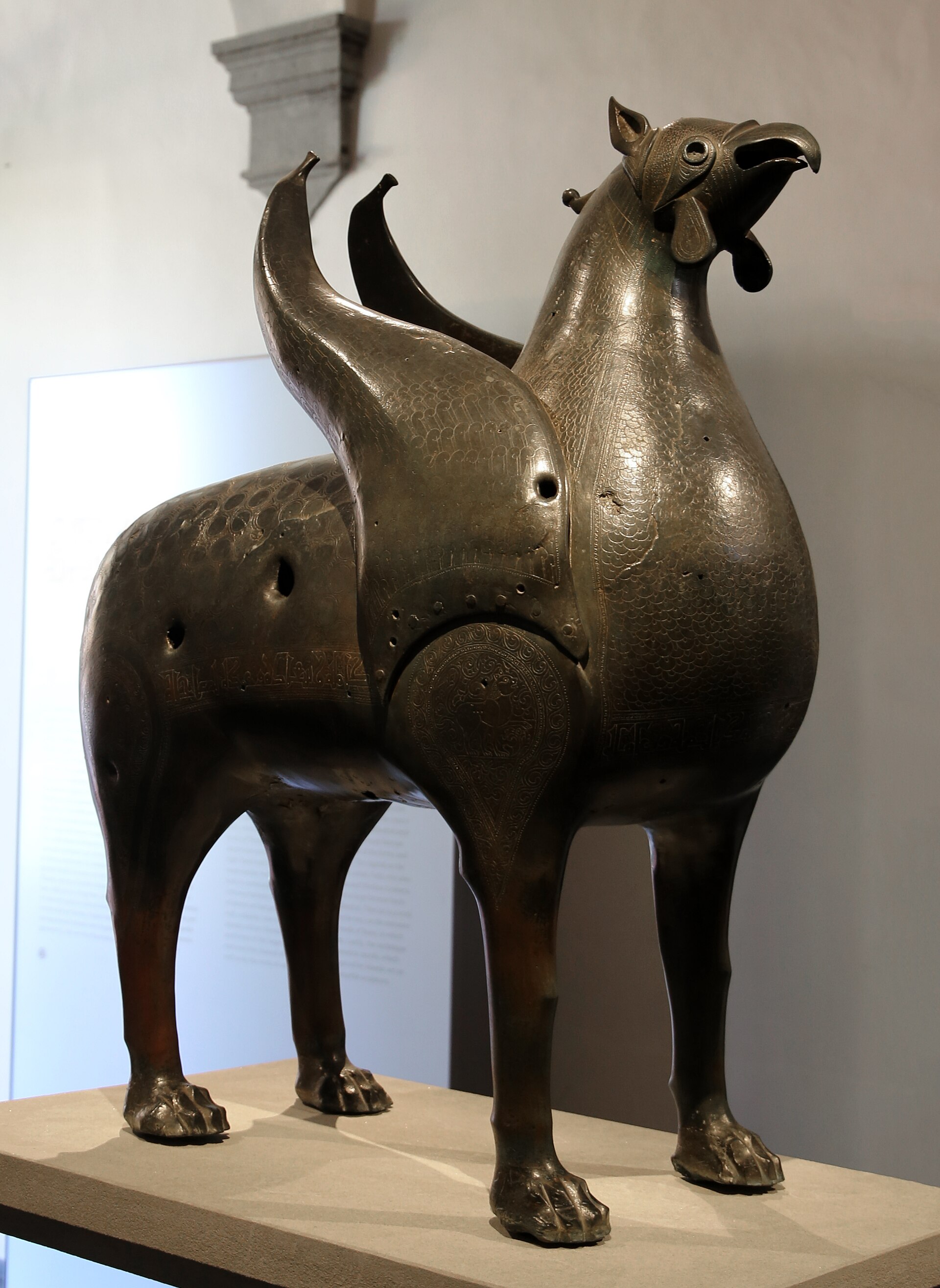
The Pisa Griffin is in the Museo dell'Opera del Duomo, the cathedral works rather than a civic museum, which has held it in its own collections since it came off the cathedral roofline in 1828 and has displayed it since the museum opened in 1986. The Apocalypse Tapestry belongs to a state monument collection under the Centre des monuments nationaux, in continuous ecclesiastical and then state custody since the gift to Angers Cathedral in 1480.
Only one of the six numbers its objects like a museum. The Limburg Staurotheke carries the inventory D 1/1-3 at the Diozesanmuseum Limburg, because a diocesan museum is a museum, founded on Napoleonic-era secularisation property given to the new diocese in 1835. The lesson is that the word museum in a holder's name predicts the presence of a number rather better than the holder's ecclesiastical character does.
Six holders, and what each one has instead of a register
Laid side by side the six show that the instrument varies with the holder, and that the instrument rather than the number is what a researcher should be citing.
| Object | Holder | Instrument of record | Names a successor owner |
|---|---|---|---|
| Hereford Mappa Mundi | Hereford Mappa Mundi Trust, at Hereford Cathedral | Trust deed, plus a UNESCO nomination | Yes, the British Library |
| Coronation Chair | Westminster Abbey | Statutory cathedral inventory | No |
| Shroud of Cadouin | Diocese of Perigueux et Sarlat | Monument Historique, 2 December 1935 | No |
| Apocalypse Tapestry | Centre des monuments nationaux | State monument historique collection | No |
| Pisa Griffin | Museo dell'Opera del Duomo | None located | No |
| Limburg Staurotheke | Diozesanmuseum Limburg | Museum inventory D 1/1-3 | No |
One of the six can say what happens to the object if its owner stops existing. It is the one that was nearly sold.
The object may also still be doing its job
A museum holds objects that have been retired from use, and several of these have not been. The Coronation Chair stands behind glass on a plinth in St George's Chapel and leaves only for the coronation itself, and the Stone of Scone is not in it except around a coronation. That is furniture with a function, in a building with a liturgy, held by an institution whose purpose is not display.
The consequence for access is different in kind from a museum's. A museum closes for refurbishment and publishes dates. A cathedral's access calendar is a calendar of services, and an object can be unreachable for reasons that have nothing to do with conservation or with staffing. The Shroud of Cadouin goes further and is simply not shown, with a facsimile in its place, after a decision taken by a state cultural body rather than by its owner.
None of this is a lesser arrangement. It is a different one, and a record that reaches for museum vocabulary to describe it will get the access question wrong in both directions.

How to cite an object that has no number
Cite the instrument, not the absence. For the Mappa Mundi the citable facts are the Trust as owner, the Cathedral Library as custodian and the trust deed's obligation to show the map, all of which are recorded in fields on a public nomination form. For the Shroud of Cadouin the citable fact is a dated classification. For an English cathedral treasure it is the statutory inventory, which exists whether or not it has been published.
Ask who the custodian is separately from who the owner is, because in this group they are routinely different bodies and the UNESCO form is right to use two fields. A record that writes Hereford Cathedral in an owner field is wrong, and it is the sort of wrong that survives for decades.
And do not read a missing number as a missing record. Five objects here have no accession number and every one of them has a documented legal status, in one case a stronger one than a register provides. The absence marks the boundary of the museum system rather than the boundary of the evidence.
Land the point
The accession number is so standard in this field that its absence reads as a hole, and in fourteen records here it is a signal instead. A cathedral, a diocese, a cathedral works, a monuments agency and a charitable trust all keep objects of the first importance, and each documents them through an instrument built for a different purpose: charity law, heritage designation or a Church Measure with an annual certification and a statutory first refusal to the British Museum.
The map at Hereford makes the case at its sharpest. It has no number, it has never been in a museum, its own chapter proposed selling it, and the deed drawn up in answer to that names the institution that inherits it if its owner dissolves. Measured by what it guarantees about the object's future, that is the best-documented thing in this article.
Why this archive is free to read
We do this for everyone who loves art. The people who have studied it for years, and the people who just stopped to look. Iconotheca exists so that what we learn belongs to all of them.
Nobody pays us for this. No ads, no sponsors, no commercial interest. These works belong to all of us, and we would rather share them with as many people as we can than keep them to ourselves.
If it gave you something today, tell us to keep going. Follow us, leave a like, or write a positive comment. We read every one, and they are what keeps us going.
Questions
Because an accession number records a museum taking an object onto its register, and these objects have never been on one. A cathedral, a diocese or a cathedral works did not acquire the object in the museum sense, so there was no accession to number.
The Hereford Mappa Mundi Trust, a charity, with Hereford Cathedral Library as custodian. The United Kingdom's UNESCO Memory of the World nomination records those as two separate entries, and records that ownership passes to the British Library in London if the trust is ever dissolved.
Only through a statutory route. Section 7 of the Care of Cathedrals Measure 2011 requires the chapter to seek the Cathedrals Fabric Commission's approval and, before selling or otherwise disposing of the object, to afford the British Museum or another registered museum nominated by the British Museum an opportunity of purchasing it.
Yes, and it is a legal duty. Section 24 of the Care of Cathedrals Measure 2011 requires a chapter to compile and maintain an inventory of objects of architectural, archaeological, artistic or historic interest and to report annually to its fabric advisory committee certifying the inventory's accuracy.
To stop a sale. The Trust's own account states that the Dean and Chapter faced a long-term structural deficit in the late 1980s, needed an endowment of at least GBP 6,000,000 and identified the Mappa Mundi as the item to sell, and that the National Heritage Memorial Fund endowed a newly formed trust instead, with assistance from John Paul Getty Junior.
Sources
- 1United Kingdom nomination to the UNESCO Memory of the World Register, 'Hereford Mappa Mundi', ref. 2006-32. PDF downloaded and read directly on 25 September 2026 rather than through a summariser, because a first automated read of it returned two statements the document does not make. Source for section 3.2 (approximately 1626mm x 1346mm, one sheet of vellum, dated c. 1290 to c. 1310), for field 5.1 owner as the Hereford Mappa Mundi Trust, field 5.2 custodian as Hereford Cathedral Library, and field 5.3 legal status including the verbatim clause that in the event of the trust being dissolved ownership passes to the British Library, London. media.unesco.org/sites/...
- 2Care of Cathedrals Measure 2011, section 7, 'Treasure'. Read 25 September 2026. Source for the requirement of Commission approval before a chapter sells, lends or disposes of such an object, for the obligation to afford the British Museum or another registered museum nominated by it an opportunity of purchasing, for the fourteen-day notification duty on the cathedral administrator and for the requirement that the object be recorded and designated as treasure in the inventory in accordance with the Commission's directions. legislation.gov.uk/ukcm/...
- 3Care of Cathedrals Measure 2011, section 24, 'Inventories'. Read 25 September 2026. Source for the chapter's duty to compile and maintain an inventory of objects of architectural, archaeological, artistic or historic interest in which it has a property interest, custody or an entitlement to possession, for the annual report to the fabric advisory committee certifying accuracy and describing alterations over the preceding twelve months, and for the designation of objects of outstanding interest by the committee after consulting the Commission. legislation.gov.uk/ukcm/...
- 4Mappa Mundi Trust, 'About the Trust'. Read 25 September 2026. Source for the late-1980s structural deficit in Hereford Cathedral's finances, the endowment requirement of at least GBP 6,000,000, the identification of the Mappa Mundi as the item to sell, the National Heritage Memorial Fund's lump sum endowing the newly formed Trust, the assistance of John Paul Getty Junior, and the opening of the New Library Building by Queen Elizabeth II on 5 May 1996. themappamundi.co.uk/about-the-trust.php
- 5Care of Cathedrals Measure 2011, table of contents. Read 25 September 2026, for the Measure's structure and the titles of sections 2, 3, 4, 6, 7 and 24 as cited here, including the establishment of the Cathedrals Fabric Commission for England and of fabric advisory committees. legislation.gov.uk/ukcm/...
More in Museums and Exhibitions
The partA Closing Date That Moves Both Ways, and Who Actually Moved It
Of 937 exhibitions tracked here, only 7 ever had a date move, and three of those flipped between the same two dates again and again.
The Museum in the Seller's Column
Eight records in this archive carry a museum or a state as the seller. The Bodleian sold its First Folio as a duplicate and paid 3,000 pounds to get...
The Buyer in the Credit Line Was Already Dead
Thirty-two objects in this archive were bought on the income of six named endowment funds, and in every case the person named had died before the...