Tea Caddy
Paul de Lamerie · 1741-42, most likely the London assay year running from late May 1741 to late May 1742
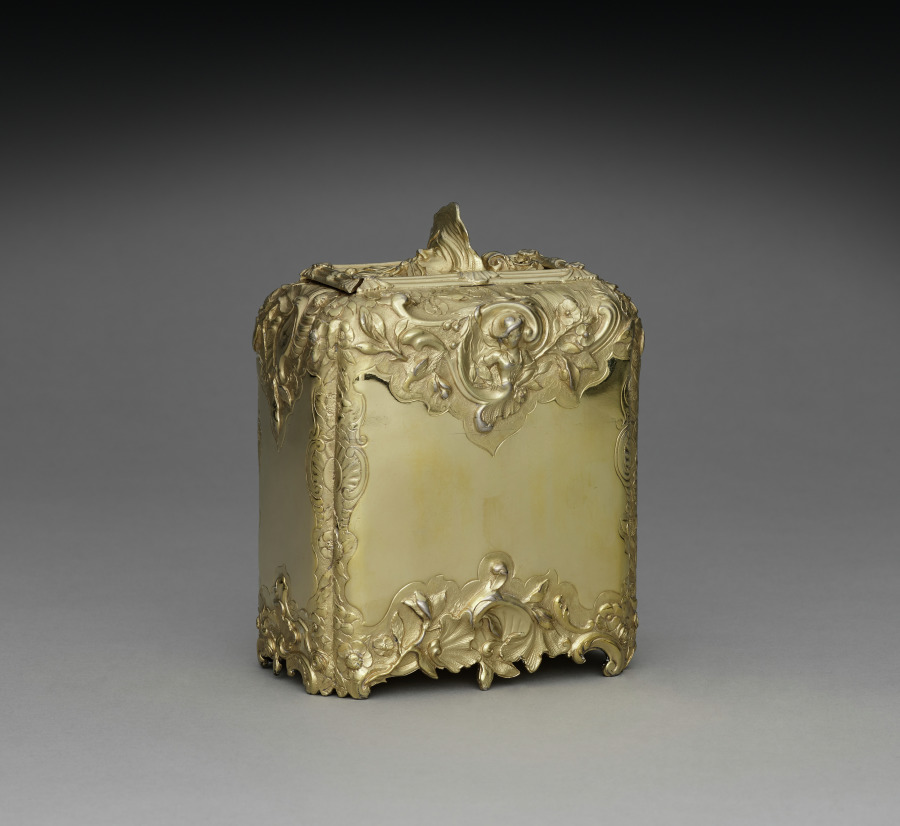
The record subject, the museum's cover image for the whole tea caddy: silver gilt, 13.4 x 9.6 x 5.8 cm, hallmarked London 1741-42, credited to Paul de Lamerie. No engraved arms or inscription of any kind survives on it.
| Artist | Paul de Lamerie |
|---|---|
| Date | 1741-42, most likely the London assay year running from late May 1741 to late May 1742 |
| Medium | Silver gilt |
| Dimensions | 13.4 x 9.6 x 5.8 cm (5 1/4 x 3 3/4 x 2 5/16 in.). Weight not published in the sources consulted. |
| Where it is now | Cleveland Museum of Art, Cleveland, Ohio, gallery 203A, British Painting and Decorative Artslast confirmed |
| Inventory number | 1943.179 (the museum's cover record for the whole caddy), with the canister body separately accessioned as 1943.179.a and the lid as 1943.179.b |
| Attribution | AcceptedThe Cleveland Museum of Art catalogues this tea caddy without qualification as the work of Paul Jacques de Lamerie, dated by assay year to 1741-42. Full note |
| Object type | Silver |
| Period | English rococo, eighteenth century |
| Cases | Has a provenance gap |
| Inscriptions | None recorded. The Cleveland Museum of Art's own catalogue data lists no engraved arms, crest, motto or initials on either the canister or the lid, an absence stated here rather than filled in. |
| Owners on record | 6 links4 documented, 2 unknown |
| Sources | 19 cited |
About this record Last verified · 19 sources cited · Change log
On this page 12 sections
ContentsClose
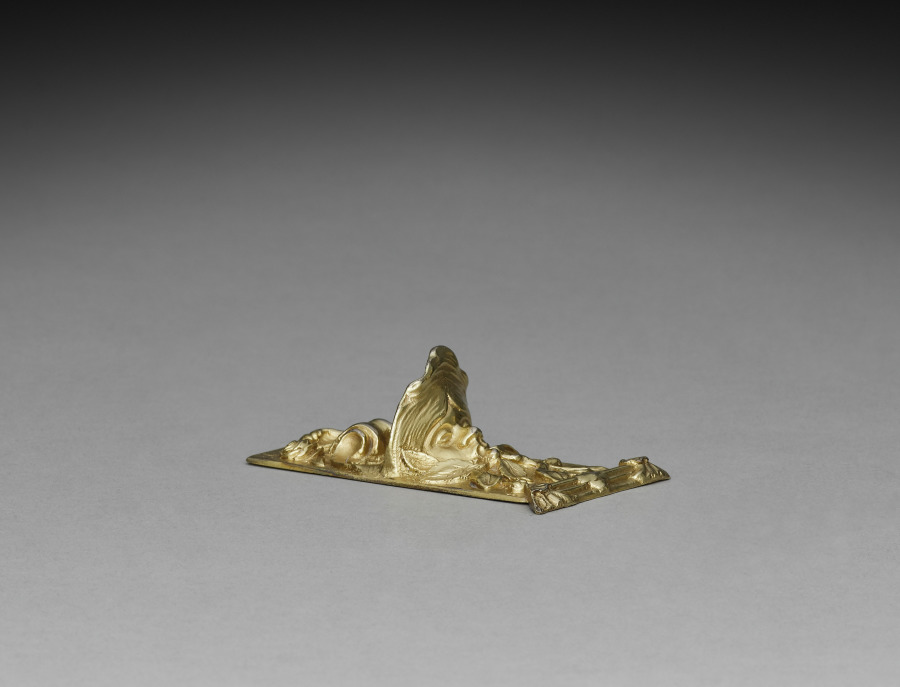
A small silver-gilt tea caddy, hallmarked in London for the assay year 1741-42 with the credit of Paul de Lamerie, held at the Cleveland Museum of Art as the Thomas S. Grasselli Memorial Collection. The museum accessions it in three parts: a cover record for the whole object, 1943.179, and separate numbers for the canister body, 1943.179.a, and the lid, 1943.179.b. It is a single caddy, not a pair and not a set with a matching sugar box, and it is a distinct object from the Hardwicke Soup Tureen and Cover already in this archive, a different form, a different institution and a different accession made under the same maker's mark six years apart.
Nothing is engraved on it. No arms, crest, motto or initials survive on either the canister or the lid, which is unusual for surviving Lamerie table silver of this class and means the object carries none of the heraldic evidence that dates or authenticates most of his documented output. Its own dating rests entirely on a hallmark the museum has not published punch by punch, set against a Victoria and Albert Museum tea caddy from the same workshop that carries no mark at all and is dated only by style and by the arms it does bear. Between the two objects sits the whole evidentiary problem this maker's silver poses in miniature.
Before 1943 nothing is known. The Cleveland Museum of Art's own provenance record gives only a name and a terminal date for the piece's ownership before it entered the collection: Mrs. Thomas S. Grasselli, to 1943. No patron, dealer or sale from the 1740s to the mid-twentieth century is documented anywhere consulted for this record, a gap of roughly two hundred years that this record states rather than bridges.
Provenance
Each link is graded. Documented: a cited source supports it. Disputed: the identification is argued but not established. Unknown: no owner for that span, and the gap is not smoothed into a narrative. The grades in the glossary.
- 1741-42 -Unknown first ownerunknown
Hallmarked in the London assay year 1741-42 and credited by the Cleveland Museum of Art to Paul de Lamerie. No engraved arms, crest, motto or initials survive on either the canister or the lid, so unlike most other Lamerie objects in this archive, this record has no heraldic evidence pointing to a first owner, and none is named in any source consulted.123
- - 1943Mrs. Thomas S. (Emilie Schmidt) Grasselli, Shaker Heights, Ohiounknown
The museum's own provenance record dates her ownership only '?-1943', meaning no start date, prior owner, dealer or sale is documented for the roughly two centuries between the caddy's manufacture and her possession of it. The gap is recorded rather than bridged.123
- 1943 - presentCleveland Museum of Art, Cleveland, Ohiodocumented
Credited as The Thomas S. Grasselli Memorial Collection, formed the year after the death of the Cleveland chemical-industry executive Thomas Saxton Grasselli (1874-1942). Whether the object was a gift or a purchase, and for what sum, is not stated in the museum's public record.12315
- 1950 - 1950Cleveland Museum of Art, lent to the Los Angeles County Museum of Artdocumented
Shown in 'Three Centuries of English Silver,' Los Angeles County Museum of Art, 29 September to 12 November 1950.1
- 1994 - 1995Cleveland Museum of Artdocumented
Shown in 'All That Glitters: Great Silver Vessels in Cleveland's Collection,' Cleveland Museum of Art, 23 November 1994 to 8 January 1995.1
- 2020 - presentCleveland Museum of Artdocumented
Reinstalled in the museum's British galleries in June 2020; on view in gallery 203A, British Painting and Decorative Arts, as of this record.1
Prices realised
No auction appearance is documented for this caddy in any source consulted for this record. It is known only through the Thomas S. Grasselli Memorial Collection credit of 1943, for which no price is published.
Technical evidence
| Attribution note | The Cleveland Museum of Art catalogues this tea caddy without qualification as the work of Paul Jacques de Lamerie, dated by assay year to 1741-42. As with every object bearing his punch, that credit records a legal sponsor's mark, the person who brought the piece to Goldsmiths' Hall and answered for its silver standard, not a signature identifying whose hand raised or chased it. The museum's own public record does not itemise the individual punches, so this record has not independently read the marks; the precise two-year assay span given for the piece is itself evidence that a date letter was read by someone, since the alternative, an unmarked object dated on style alone, is normally given only a decade-wide range, as the Victoria and Albert Museum does for its own unmarked, Lamerie-attributed tea caddy discussed below. |
|---|---|
| Object type | Tea caddy: a canister with a separate lid, accessioned by the museum in three related parts, a cover record (1943.179) plus the canister body (1943.179.a) and the lid (1943.179.b).123 |
| Medium | Silver gilt. The Cleveland Museum of Art's public record does not specify whether the gilding covers the exterior only, the interior only, or the whole object, nor whether it is the object's original eighteenth-century fire-gilt surface.1 |
| Dimensions | 13.4 x 9.6 x 5.8 cm (5 1/4 x 3 3/4 x 2 5/16 in.), given as one overall measurement for the caddy as a whole. Weight not published.1 |
| Date and hallmark | 1741-42 by assay year. The museum's public record gives this as a two-year span consistent with a London date letter having been read, but does not itemise the individual punches (sponsor's mark, lion passant, leopard's head crowned, date letter) or their position on the object. No punch-by-punch reading has been located in any source consulted.1 |
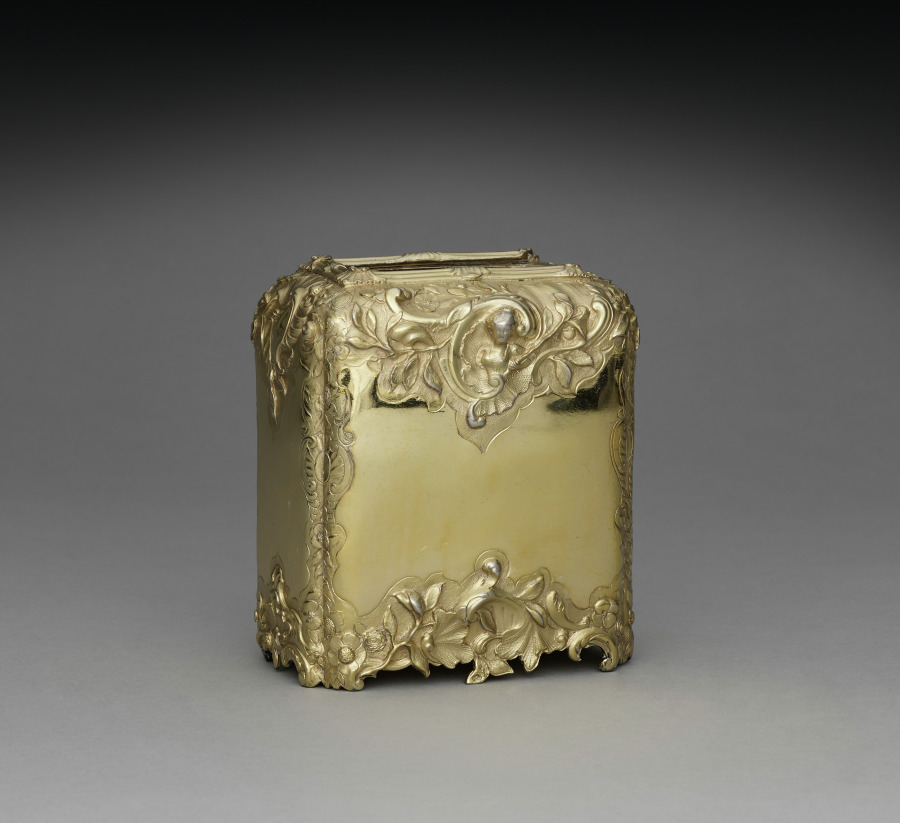
| Ornament | Sloping shoulders with scrolling lines and naturalistic ornament on all four sides, a form the museum credits to Paul de Lamerie's own design of the early 1730s, becoming standard for tea caddies by the end of that decade.12 |
| Inscriptions | None recorded. No arms, crest, motto or initials are listed on either the canister or the lid in the museum's public catalogue data, unlike most other Lamerie table silver already documented in this archive.123 |
| Credit line and accession | The Thomas S. Grasselli Memorial Collection, 1943.179 (with 1943.179.a and 1943.179.b). Prior owner given only as Mrs. Thomas S. Grasselli, Shaker Heights, Ohio, to 1943; no acquisition date, mechanism (gift or purchase) or price is published.123 |
| Current display | On view, gallery 203A, British Painting and Decorative Arts, following a British Gallery reinstallation dated by the museum to June 2020.1 |
Images
The record in full
Chapter 1What the caddy is
A single silver-gilt tea canister with a separate, hinged or lift-off lid, 13.4 by 9.6 by 5.8 centimetres, small enough to sit inside a fitted case on a tea table rather than to stand on it alone.
A single silver-gilt tea canister with a separate, hinged or lift-off lid, 13.4 by 9.6 by 5.8 centimetres, small enough to sit inside a fitted case on a tea table rather than to stand on it alone. The Cleveland Museum of Art's own description places it in the ordinary function of the form: a lockable container built to hold an expensive, taxed commodity and to display, in the process, the status of the household that owned it.
Its ornament is the museum's own reason for dating it to the maker's mature period. The curving body has, in the museum's words, sloping shoulders on which the scrolling lines and swirling naturalistic ornament on all four sides echo the caddy's own silhouette, a design the museum credits to Paul de Lamerie in the early 1730s and states became a standard form for tea caddies by the end of that decade. This object, hallmarked roughly a decade after that innovation, is squarely inside the period in which the shape it uses had already become the trade's normal answer to the problem of how to make a tea caddy look expensive.
Chapter 2A silver object with nothing written on it
Every other Lamerie object already in this archive carries an engraved clue to a first owner.
Every other Lamerie object already in this archive carries an engraved clue to a first owner. The Hardwicke Soup Tureen at the Portland Art Museum has armorial devices under barons' coronets, unread in detail but present. The Newdigate Centrepiece at the Victoria and Albert Museum carries the arms of Newdigate impaling Conyers, tied to a documented 1743 marriage. A pair of tea caddies and a sugar box made for Sir James Dashwood around 1738, now at the Metropolitan Museum of Art, carry cartouches understood to reference the tea plant and sugar cane, a commission tied to a named couple.
This caddy carries none of that. The Cleveland Museum of Art's own catalogue data lists no inscriptions on either the canister or the lid: no arms, no crest, no motto, no initials. That is not a small gap. On English silver of this period the engraved armorial is frequently the earliest surviving evidence of ownership, read years or centuries before any document turns up, and it is the check a cataloguer runs first when trying to connect an object to a family. This caddy offers no such check. Whoever first owned it left no mark on the metal that says so, and if the museum's own record is complete, none ever existed.
Chapter 3Dated by a punch this record has not read
The museum gives the object's date as 1741-42, a two-year span rather than a single year.
The museum gives the object's date as 1741-42, a two-year span rather than a single year. On London silver that precision is itself informative: a London date letter changes at the end of May, so any object dated to a specific assay year has been read against a specific hallmark cycle, not merely assigned a plausible decade by eye. The museum does not publish which of its four expected punches, the sponsor's mark, the lion passant, the leopard's head crowned, and the date letter, were actually read to reach that span, nor does it state their position on the object. This record has not examined the object directly and has not attempted to read the marks from a photograph alone, and it says so rather than supplying a false precision.
The contrast that makes this worth stating is a second Lamerie tea caddy, unmarked, in the Victoria and Albert Museum, museum number M.314-1962. It carries no hallmark of any kind and is attributed to Lamerie on style, with its engraving credited to William Hogarth working from a design by his master Ellis Gamble. Because it has no marks, the museum can only date it to about 1730, a full decade's latitude. It does, however, carry a coat of arms, Antonio Lopez Suasso impaling Da Costa, which is the evidence this Cleveland caddy lacks. Between the two objects, the workshop's output splits into two incomplete cases: one caddy with a mark precise enough to fix a two-year window and no engraved owner, and one caddy with an engraved owner and no mark at all. Neither is the complete evidentiary package a cataloguer wants, and this record has deliberately paired them rather than pretending either is.
Chapter 4Silver gilt, and what the gilding signalled
Gilding a silver object before the mid-nineteenth century meant fire-gilding: gold powder worked into a mercury amalgam, applied to the cleaned silver surface, and driven off in a furnace so that the...
Gilding a silver object before the mid-nineteenth century meant fire-gilding: gold powder worked into a mercury amalgam, applied to the cleaned silver surface, and driven off in a furnace so that the mercury vaporised, a process specialist dealers describe as having killed many gilders young, leaving a fused gold film bonded to the base metal. Vermeil of this kind, made by exactly this method, survives from Lamerie's own workshop and from his younger contemporary Paul Storr, and it reads, examined closely, with a warmer, more textured surface than the electrogilding that replaced the technique in the following century.
The choice to gild an entire tea caddy, rather than only its interior, was a choice about expense and display rather than a purely practical one. Tea itself was the more expensive half of the equation: by 1784 the duty on tea imported into Britain stood, as the standard account of English tea equipage records, at 119 percent of its value, a tax so punitive that it was one of the direct causes of large-scale smuggling before Pitt's Commutation Act cut it sharply that same year. A caddy built to hold a taxed luxury at that rate, made of a metal already worth six shillings an ounce before any labour was added, and then gilded on top of that, was not a neutral container. It was, in the museum's own phrasing for objects of this kind, a piece designed to display the social distinction of its owner, and the gilding was part of that display, not an afterthought.
Chapter 5Made to be one of a pair, apparently surviving as one
The standard mid-eighteenth-century English tea service was not a single caddy.
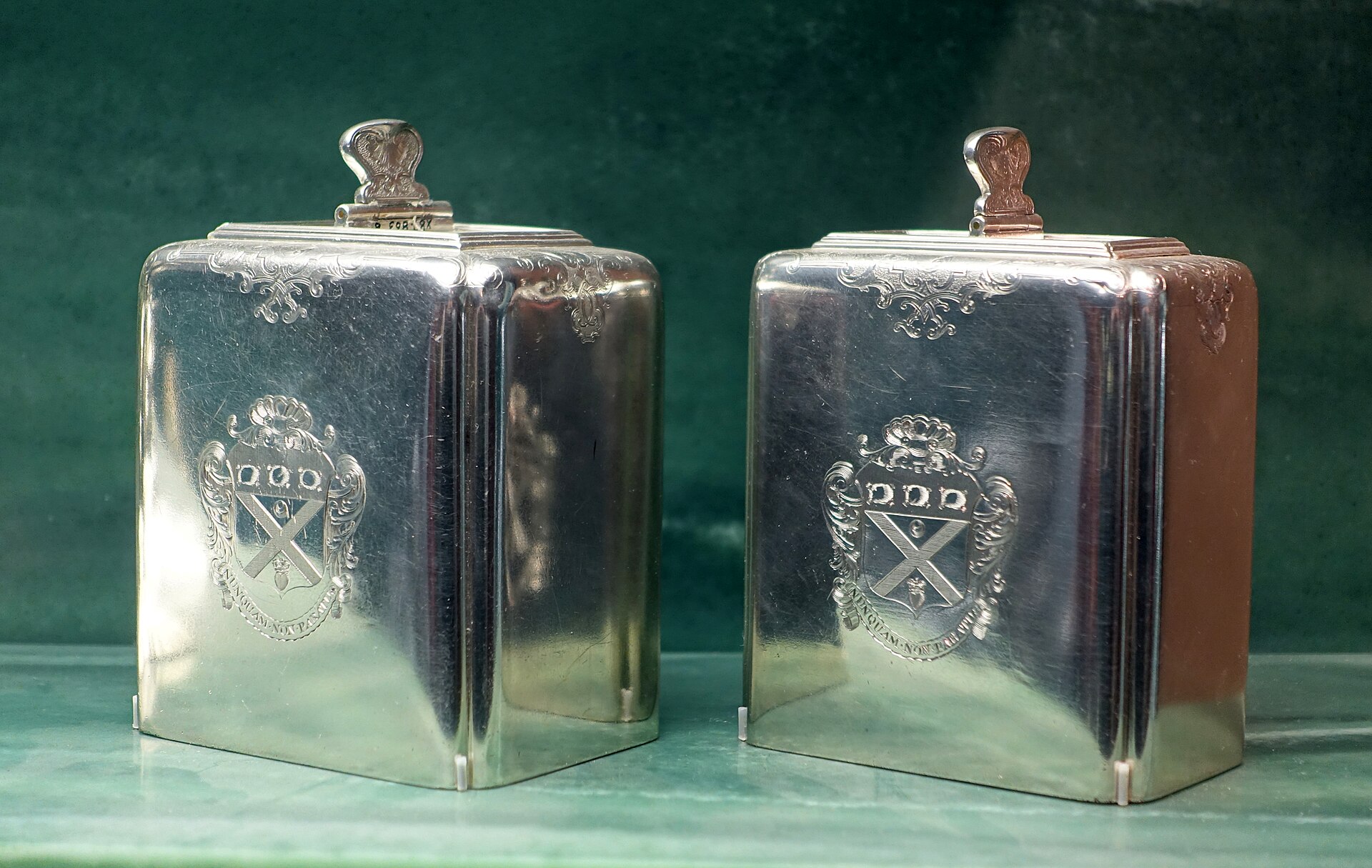
The standard mid-eighteenth-century English tea service was not a single caddy. Black and green teas were kept separately, in most surviving outfits in two matching silver canisters, packed with a third container for sugar into a lockable wooden or shagreen case built to hold all three. Lamerie's own shop supplied exactly this kind of outfit more than once. A pair of tea caddies inscribed with the motto Nunquam Non Paratus, hallmarked 1731-32 and now in the Fowler Museum at the University of California, Los Angeles, survives as a matched set. The Dashwood caddies and sugar box of about 1738, in their original fitted case, survive as a complete outfit at the Metropolitan Museum of Art. The unmarked Victoria and Albert Museum caddy discussed above was itself, by the museum's own description, one of a matching pair, its lost companion marked with a different initial for the other kind of tea.
Cleveland's caddy has no such companion in the museum's own record. It is accessioned as a single object in two parts, a canister and a lid, with no sister caddy, no sugar box and no case recorded anywhere in the sources consulted for this record. That does not prove it was always solitary. Cases were built to be opened daily for a century and more, and the parts most likely to survive an outfit's breakup are exactly the plain silver canisters, since a shagreen case rots, a lock fails, and a set can be split across an inheritance or a sale one piece at a time. Whether this caddy was made single or is a survivor of a larger outfit that came apart at an unrecorded date is left here as an open question, not resolved by a guess dressed as a fact.
Chapter 6Tea and coffee wares, the category the fraud literature already names
The Iconotheca's own maker page for Paul de Lamerie, read in full before this record was written, sets out the mechanics of the eighteenth-century duty-dodger fraud in detail: a tax of sixpence an...
The Iconotheca's own maker page for Paul de Lamerie, read in full before this record was written, sets out the mechanics of the eighteenth-century duty-dodger fraud in detail: a tax of sixpence an ounce on new silver from 1720, evaded by cutting the marks from a smaller, already-assayed object and soldering them into a larger, unassayed one. That page also records, from the Goldsmiths' Company Assay Office's own guidance to the trade, which forms of object are most often found to carry transposed marks of this kind: cups, tea and coffee wares, casters, bowls, mugs and tankards. Tea and coffee wares are named specifically, not folded into a vague category of hollowware.
This record has found no evidence, one way or the other, that this particular caddy's marks have ever been examined against that criterion. No conservation, technical-imaging or Goldsmiths' Hallmark Authentication Committee record for it turned up in any source consulted, and the museum's own public data does not address the question. That is stated as an absence, not as a suspicion. A small silver-gilt tea caddy is exactly the kind of object the trade's own literature flags as worth checking, and this one has not, so far as this record could establish, been checked in public.
Chapter 7Whose hands, on the ordinary pieces
The Iconotheca's maker page also makes the point that governs every object bearing this sponsor's mark: the range of Lamerie's business ran, in its own words, from making a fork or repairing a coffee...
The Iconotheca's maker page also makes the point that governs every object bearing this sponsor's mark: the range of Lamerie's business ran, in its own words, from making a fork or repairing a coffee pot to toilet services, wine cisterns and centrepieces, and how much of that range he personally designed or executed is not known and probably cannot be recovered from the surviving documents. The objects already in this archive under his name tend toward the grand end of that range, a fourteen-part epergne, a documented duty-dodger ewer, a soup tureen with a Lord Chancellor's arms. A plain, unarmorial tea caddy sits at the other end of it, closer to what a large, successful workshop would have turned out as ordinary stock than to a piece built around a single patron's commission.
That matters for how the mark should be read here specifically. A caddy with no engraved arms and no named patron in the record is, on the evidence available, more likely to have been a stock item sold across a counter than a bespoke commission discussed with a client, and a stock item is exactly the kind of object a large shop was most likely to have a subordinate hand finish. Nothing in the sources consulted names who in Lamerie's workshop might have raised or chased this specific caddy, and this record does not guess at one.
Chapter 8Mrs. Grasselli, and the fortune behind the gift
The credit line names the collection, not a person: The Thomas S.
The credit line names the collection, not a person: The Thomas S. Grasselli Memorial Collection. Thomas Saxton Grasselli was president of the Grasselli Chemical Company, a Cleveland firm his father Caesar Augustin Grasselli had built from a sulfuric-acid works founded in Cincinnati in 1839 into a diversified chemical manufacturer supplying acids, fertilisers, zinc products and, during the First World War, explosives. Thomas succeeded his father as president in 1916 and led the company through its 1928 consolidation into Du Pont, becoming a Du Pont vice-president and director himself. He died in 1942.
The museum's own provenance record for this caddy names the owner before 1943 as Mrs. Thomas S. Grasselli, of Shaker Heights, Ohio, with the notation ?-1943, meaning the museum records only that she owned the piece up to that year and does not state when she acquired it or from whom. A memorial collection credited in her late husband's name and formed the year after his death is consistent with a gift made in his memory, but the museum's public record does not use the word gift, does not use the word purchase, and does not publish a figure. This record states that gap rather than resolving it in either direction.
Chapter 9The two-hundred-year gap
Set beside the other Lamerie objects in this archive, this caddy's documentary record is the thinnest.
Set beside the other Lamerie objects in this archive, this caddy's documentary record is the thinnest. The Hardwicke tureen has an armorial connecting it, even if unread in detail, to a documented eighteenth-century patron. The Newdigate centrepiece has arms confirmed against a specific 1743 marriage and a named donor, the bride's grandmother. The Dashwood caddies have a named couple and a firm date. This Cleveland caddy has an assay year and, before 1943, a single American owner's surname with no start date attached to it. Between a London workshop in 1741-42 and a house in Shaker Heights, Ohio, sometime before 1943, this record has found nothing: no dealer, no sale, no second owner, no record of how or when the object crossed the Atlantic.
That is a real and stated absence, not a reason to invent a plausible middleman. Two centuries of silver plate of this class routinely changed hands without leaving a trace, particularly plain, unarmorial pieces that carried no family history worth recording in a will or a sale catalogue. This caddy's silence on that point is itself a small piece of evidence about what kind of object it was in its own century: unremarkable enough, undecorated enough, that nobody thought to write down who had it.
Chapter 10On display, and what remains open
The museum's own exhibition history shows the caddy travelling and returning across eight decades: shown at the Los Angeles County Museum of Art's Three Centuries of English Silver in the autumn of...
The museum's own exhibition history shows the caddy travelling and returning across eight decades: shown at the Los Angeles County Museum of Art's Three Centuries of English Silver in the autumn of 1950; in Cleveland's own thirty-fifth anniversary exhibition the following year; at the Baltimore Museum of Art's The Age of Excellence: Rococo and Its Effect in 1959; back at Cleveland for All That Glitters: Great Silver Vessels in Cleveland's Collection over the winter of 1994-95; and reinstalled in the museum's British galleries in June 2020, where it is on view today in gallery 203A. The plate also appears, without further commentary, in the museum's own printed handbooks of 1966, 1969 and 1978, this record having independently checked the 1966 caption and found it consistent with the current online record.
What is still owed to the object is a short, specific list: a published reading of its hallmarks, punch by punch; its weight; a statement of whether the gilding is the original eighteenth-century fire-gilt surface or a later re-gilding; and, if it is recoverable at all, any trace of who owned it before Mrs. Grasselli. None of those four questions is answered by any source consulted for this record, and none is guessed at here.
The artist
Paul Jacques Souchay de la Merie, who signed himself Paul de Lamerie
The Iconotheca house page on Paul de Lamerie, and this archive's existing record on his Hardwicke Soup Tureen, were both read before this record was written and cover his life, his workshop and the eighteenth-century duty-dodger problem at length. This dossier does not repeat that treatment. It draws instead the handful of facts most relevant to an unarmorial, undocumented piece of small silver rather than a documented, patron-named commission.
Exhibited
- 1950Three Centuries of English SilverLos Angeles County Museum of Art, Los Angeles
- 195135th Anniversary ExhibitionCleveland Museum of Art
- 1959The Age of Excellence: Rococo and Its EffectBaltimore Museum of Art
- 1994-95All That Glitters: Great Silver Vessels in Cleveland's CollectionCleveland Museum of Art
- 2020British Gallery ReinstallationCleveland Museum of Art
Literature
- The Cleveland Museum of Art, Handbook of the Cleveland Museum of Art / 1966, plate caption p. 152. Checked directly against the Internet Archive's full text of this edition, which gives the caption 'Tea Caddy. Silver gilt. 1741-42. Paul de Lamerie, English, London. 43.179' (an OCR rendering of accession 1943.179), consistent with the museum's current online record.
- The Cleveland Museum of Art, Handbook of the Cleveland Museum of Art / 1969, p. 152, and Handbook of the Cleveland Museum of Art / 1978, p. 192. Cited by the museum's own online record as reproducing the same plate. NOT independently checked for this record beyond the 1966 edition.
Related works
| Work | Relation | Where it is |
|---|---|---|
| Tea Caddy Attributed to Paul de Lamerie; engraving attributed to William Hogarth after a design by Ellis Gamble | The mirror image of this record's evidentiary problem: no hallmark at all, dated only to about 1730 on style, but carrying an engraved coat of arms this Cleveland caddy lacks Bequeathed by Claude D. Rotch. One of a matching pair for black (Bohea) and green tea; its companion, marked with a different initial, is not known to survive. Arms of Antonio Lopez Suasso impaling Da Costa. | Victoria and Albert Museum, London, museum number M.314-1962 |
| Pair of tea caddies, motto Nunquam Non Paratus Paul de Lamerie | A surviving matched PAIR from the same workshop, hallmarked a decade earlier, illustrating the standard outfit this Cleveland caddy may once have belonged to London, hallmarked 1731-32. | Fowler Museum at the University of California, Los Angeles |
| Pair of tea caddies and a sugar box in a case Paul de Lamerie | The fullest surviving Lamerie tea and sugar outfit, complete with its original fitted case, made for a named couple to mark their marriage About 1738, for Sir James Dashwood, 2nd Baronet, and Elizabeth Spencer, on their marriage. Cartouches read as referencing sugar cane and the tea plant. This record consulted a secondary account of the set; the Metropolitan Museum's own object page returned a server error on direct fetch and was not independently read. | Metropolitan Museum of Art, New York, accession search 761576 |
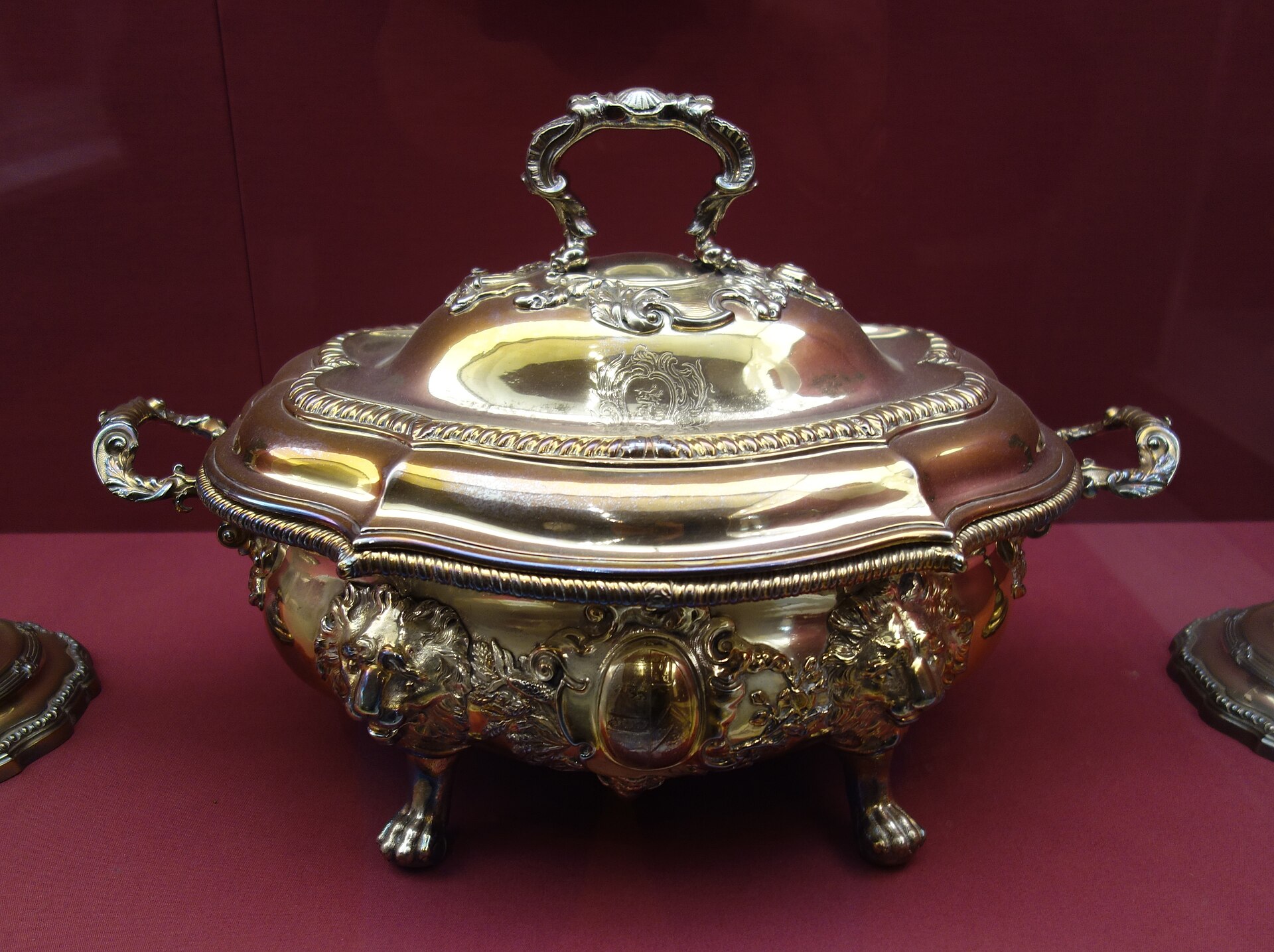
| Soup tureen with the arms and crest of the Hill family Paul de Lamerie | The same workshop's grander parallel output in the SAME assay year as this caddy London, hallmarked 1741-42, the identical assay year given for this tea caddy. | California Palace of the Legion of Honor, San Francisco |
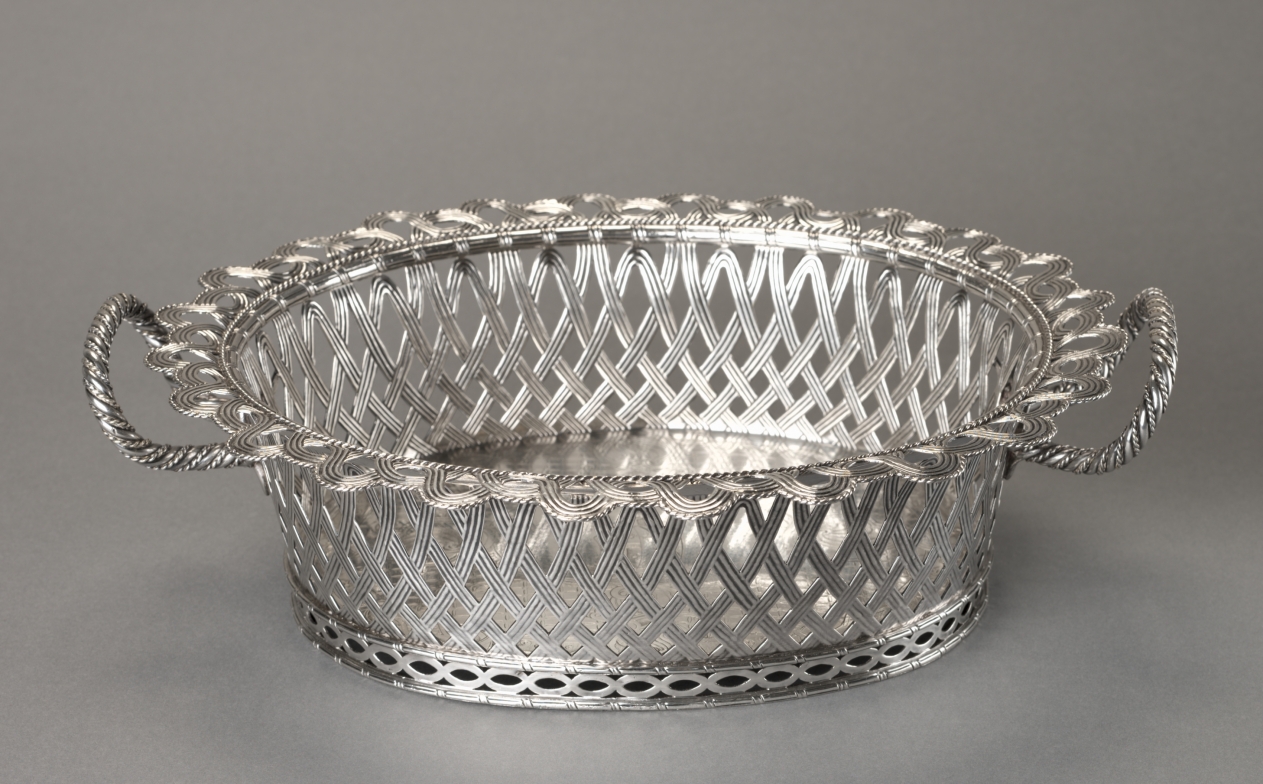
| Fruit Basket Paul de Lamerie | The same maker, the same museum, an earlier commission London, 1729. Provenance: Grace Anna Studebaker Fish (1862-1946), to the museum in 1936. | Cleveland Museum of Art, accession 1936.353 |
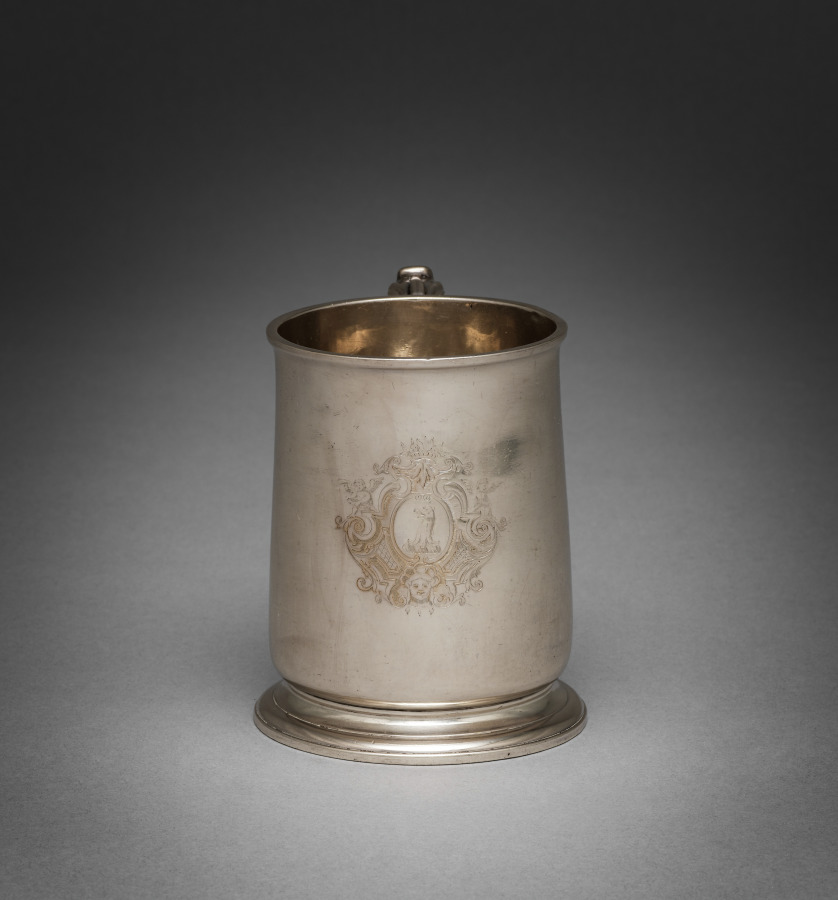
| Cann Paul de Lamerie | The same maker, the same museum, a plain drinking vessel with an engraved crest this caddy lacks London, 1727. Engraved with a griffin crest. Provenance: George H. Bowman Jr., Salem, Ohio. | Cleveland Museum of Art, accession 1986.206 |
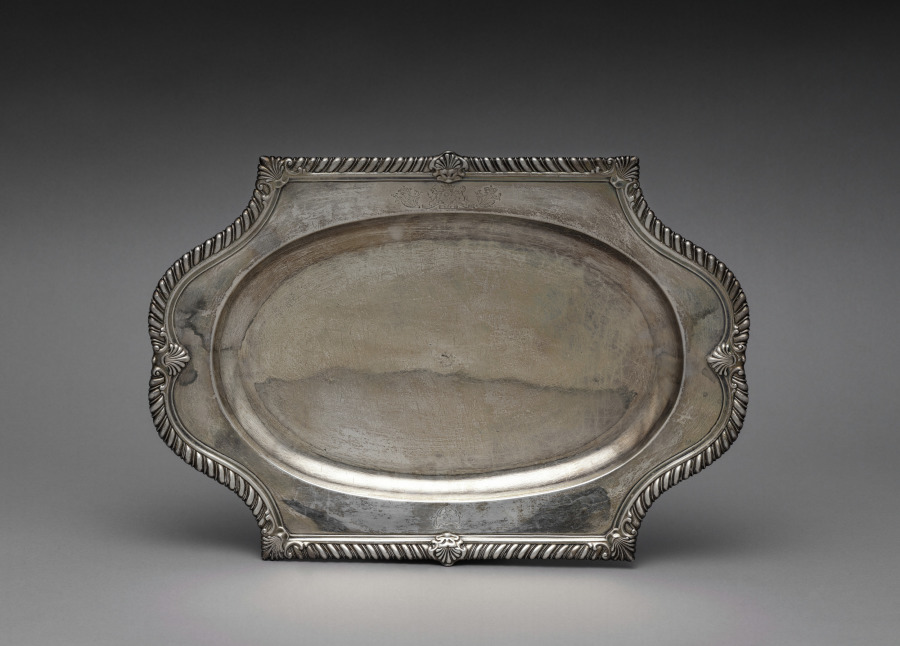
| Tray Paul de Lamerie | The same maker, the same museum, four years later London, 1745-46. Scratched marks and two crests, one with the motto Tout Est Vanite. Provenance: Mrs. Otto Miller. | Cleveland Museum of Art, accession 1941.601 |
Open questions
- Who first owned this caddy? No arms, crest, motto or initials survive on either the canister or the lid, and the museum's own record names no owner before Mrs. Thomas S. Grasselli in the twentieth century.
- Was it made as a single caddy, or is it a survivor of an original pair with a matching companion and a sugar box, the standard mid-century outfit this workshop is documented making more than once? Nothing in the sources consulted answers this.
- When did Mrs. Grasselli acquire it, and from whom? The museum's own provenance gives only '?-1943' for her ownership, with no start date, dealer or prior owner named.
- Was the 1943 acquisition a gift in Thomas S. Grasselli's memory or a purchase made to form the memorial collection named for him? Not specified in the sources consulted, and no price is published either way.
- What do the caddy's hallmarks actually read, punch by punch? The museum's public record gives only the two-year assay span; no reading of the individual marks has been located.
- What does the caddy weigh? Not published in any source consulted, though weight is a direct check on a piece of this class and period, as established for other Lamerie silver already in this archive.
- Is the gilding original eighteenth-century fire-gilding, or a later re-gilding? The museum's record states the medium as silver gilt without addressing the surface's history.
- Has the object ever been examined against the Goldsmiths' Company's own criteria for tea and coffee wares as a category prone to transposed marks? No such examination is recorded in the sources consulted.
Questions about this object
What is Tea Caddy?
Tea Caddy is a silver, dated 1741-42, most likely the London assay year running from late May 1741 to late May 1742. Medium: Silver gilt.
Who made Tea Caddy, and is the attribution settled?
The attribution to Paul de Lamerie is recorded here as accepted. The Cleveland Museum of Art catalogues this tea caddy without qualification as the work of Paul Jacques de Lamerie, dated by assay year to 1741-42. As with every object bearing his punch, that credit records a legal sponsor's mark, the person who brought the piece to Goldsmiths' Hall and answered for its silver standard, not a signature identifying whose hand raised or chased it. The museum's own public record does not itemise the individual punches, so this record has not independently read the marks; the precise two-year assay span given for the piece is itself evidence that a date letter was read by someone, since the alternative, an unmarked object dated on style alone, is normally given only a decade-wide range, as the Victoria and Albert Museum does for its own unmarked, Lamerie-attributed tea caddy discussed below.
Where is Tea Caddy now?
Cleveland Museum of Art, Cleveland, Ohio, gallery 203A, British Painting and Decorative Arts. Inventory number 1943.179 (the museum's cover record for the whole caddy), with the canister body separately accessioned as 1943.179.a and the lid as 1943.179.b. Last confirmed 15 August 2026. The Thomas S. Grasselli Memorial Collection, credited to the museum in 1943, the year after the death of the Cleveland industrialist Thomas Saxton Grasselli (1874-1942). Whether the gift was a purchase or a donation, and by whom it was given, is not specified in the museum's public record.
What is still unknown about Tea Caddy?
Who first owned this caddy? No arms, crest, motto or initials survive on either the canister or the lid, and the museum's own record names no owner before Mrs. Thomas S. Grasselli in the twentieth century.
Sources
- 1Cleveland Museum of Art, Open Access API and collection record for accession 1943.179, Tea Caddy, Paul Jacques de Lamerie, 1741-42, silver gilt, The Thomas S. Grasselli Memorial Collection. Source for the tombstone, dimensions, provenance ('?-1943' for Mrs. Thomas S. Grasselli), exhibition history, description text, the 'did you know' note on sloping shoulders, literature citations, current gallery location, and the lead and other Cleveland-held images. Fetched directly, both the API record (id 122920) and the public object page. clevelandart.org/art/...
- 2Cleveland Museum of Art, Open Access API and collection record for accession 1943.179.a, the canister body. Fetched directly. clevelandart.org/art/...
- 3Cleveland Museum of Art, Open Access API and collection record for accession 1943.179.b, the lid. Fetched directly. clevelandart.org/art/...
- 4Cleveland Museum of Art, Handbook of the Cleveland Museum of Art / 1966, full text via the Internet Archive, checked directly for the plate caption on p. 152. archive.org/details/...
- 5Cleveland Museum of Art, Handbook of the Cleveland Museum of Art / 1969, p. 152, and Handbook of the Cleveland Museum of Art / 1978, p. 192. Cited by the museum's own record as reproducing the same plate. NOT independently checked for this record. archive.org/details/...
- 6Wikidata, items Q60778610 (accession 1943.179), Q60755739 (1943.179.a) and Q60761447 (1943.179.b). Corroborates the museum, inventory numbers and public-domain determination. wikidata.org/wiki/...
- 7Checked directly: every one returns LicenseShortName 'CC0' together with a Copyrighted flag of 'True', the same contradiction already documented on this maker's Portland tureen record. Because of that contradiction, this record's lead and Cleveland-held images cite the museum's own Open Access API record directly rather than these Commons uploads, per the pre-verified image instruction for this record. commons.wikimedia.org/wiki/...
- 8Checked directly: LicenseShortName 'Public domain', Copyrighted 'False'. commons.wikimedia.org/wiki/...
- 9Checked directly: LicenseShortName 'Public domain', Copyrighted 'False'. commons.wikimedia.org/wiki/...
- 10Victoria and Albert Museum, collection record for Tea Caddy, museum number M.314-1962, attributed to Paul de Lamerie, engraving attributed to William Hogarth after a design by Ellis Gamble, bequeathed by Claude D. Rotch. Source for the unmarked, style-and-heraldry-dated comparandum discussed in this record. Fetched directly. collections.vam.ac.uk/item/...
- 11British Art Network, 'Fantasy meets whimsy'. Source for the pair of tea caddies and sugar box made for Sir James Dashwood, 2nd Bt, and Elizabeth Spencer, about 1738, now at the Metropolitan Museum of Art. Fetched directly. The Metropolitan Museum's own object page (accession search result 761576) was located but returned a server error on direct fetch and was NOT independently consulted for this record. britishartnetwork.org.uk/britishartuncanon/...
- 12Association of Small Collectors of Antique Silver (ASCAS), 'The History of Early English Silver Tea Equipage'. Source for the standard practice of paired caddies plus a sugar container in a lockable case, and the 119 percent tea duty by 1784. Fetched directly. ascasonline.org/articoloOTTO187.html
- 13Mozeris Fine Antiques, 'Silver Gilt & Vermeil - Complete Guide'. Source for the fire-gilding (mercury amalgam) process and its documented use in Paul de Lamerie's and Paul Storr's workshops. Fetched directly. mozerisfineantiques.com/silver-gilt-vermeil-guide
- 14Mozeris Fine Antiques, 'Paul de Lamerie - Complete Silversmith Guide'. Checked directly; this dealer's own enumeration of Lamerie's major forms (wine cisterns, salvers, coffee pots, chocolate pots, tea kettles, tureens, candelabra, flatware) does not include tea caddies, noted here as an honest gap in that particular source rather than evidence about the object. mozerisfineantiques.com/paul-de-lamerie-silver-guide
- 15Encyclopedia of Cleveland History, Case Western Reserve University, 'Grasselli Chemical Co.' Source for the Grasselli family chemical business, its 1866-67 move to Cleveland, its growth under Caesar Augustin Grasselli and his son Thomas S. Grasselli, and the 1928 consolidation with Du Pont. Fetched directly. case.edu/ech/...
- 16Find a Grave, memorial for Thomas Saxton Grasselli (1874-1942). This record could not load the page directly (server returned 403 Forbidden); the birth and death years used here come from the page's own indexed search snippet, not from a page this record read in full, and are used only to corroborate the timing of the museum's 1943 memorial credit. findagrave.com/memorial/...
- 17Iconotheca, maker page for Paul de Lamerie. Read in full before this record was written. Source for the sponsor's-mark point, the range of the workshop's output from forks to centrepieces, the Assay Office's naming of tea and coffee wares as a duty-dodger risk category, and the account of his 1751 death and will. iconotheca.com/artists/...
- 18Iconotheca, record for the Hardwicke Soup Tureen and Cover (slug lamerie-hardwicke-tureen). Read before this record was written to confirm this caddy is a distinct object at a different institution, and to avoid repeating its forgery-scholarship sourcing (the 2024 Goldsmiths' Company seminar and the Gilbert Collection counterfeit case) rather than finding this object's own angle. iconotheca.com/works/...
- 19Cleveland Museum of Art, Open Access API records for the museum's other three documented Lamerie holdings: accession 1936.353 (Fruit Basket, 1729), 1986.206 (Cann, 1727) and 1941.601 (Tray, 1745-46). Fetched directly, used for related_works and comparanda images. clevelandart.org/art/...


Last verified · Published
Change log
15 August 2026 - Record created at the house standard: researched narrative, technical evidence, maker dossier, graded provenance chain, prices with hammer and premium separated, related works, open questions and sources.