The Name in the Buyer's Column Is Often an Employee
Across 126 years of sales in this archive the winning bidder is repeatedly not the owner. One record still reads two initials after 133 years, and in 1970 a scholarly journal named the wrong museum as the principal.
Records in this piece: Juan de Pareja (ca. 1608-1670), The Palmer Cup, The Beauvais Missal, Codex Leicester, The Massacre of the Innocents, The Mocking of Christ, The Euphronios Krater
On this page 11 sections
ContentsClose
In short
- In seven records here the winning bidder at a public sale was acting for somebody else, and the sales run from 1893 to 2019. The practice is not a modern anonymity device and it has not changed in 126 years.
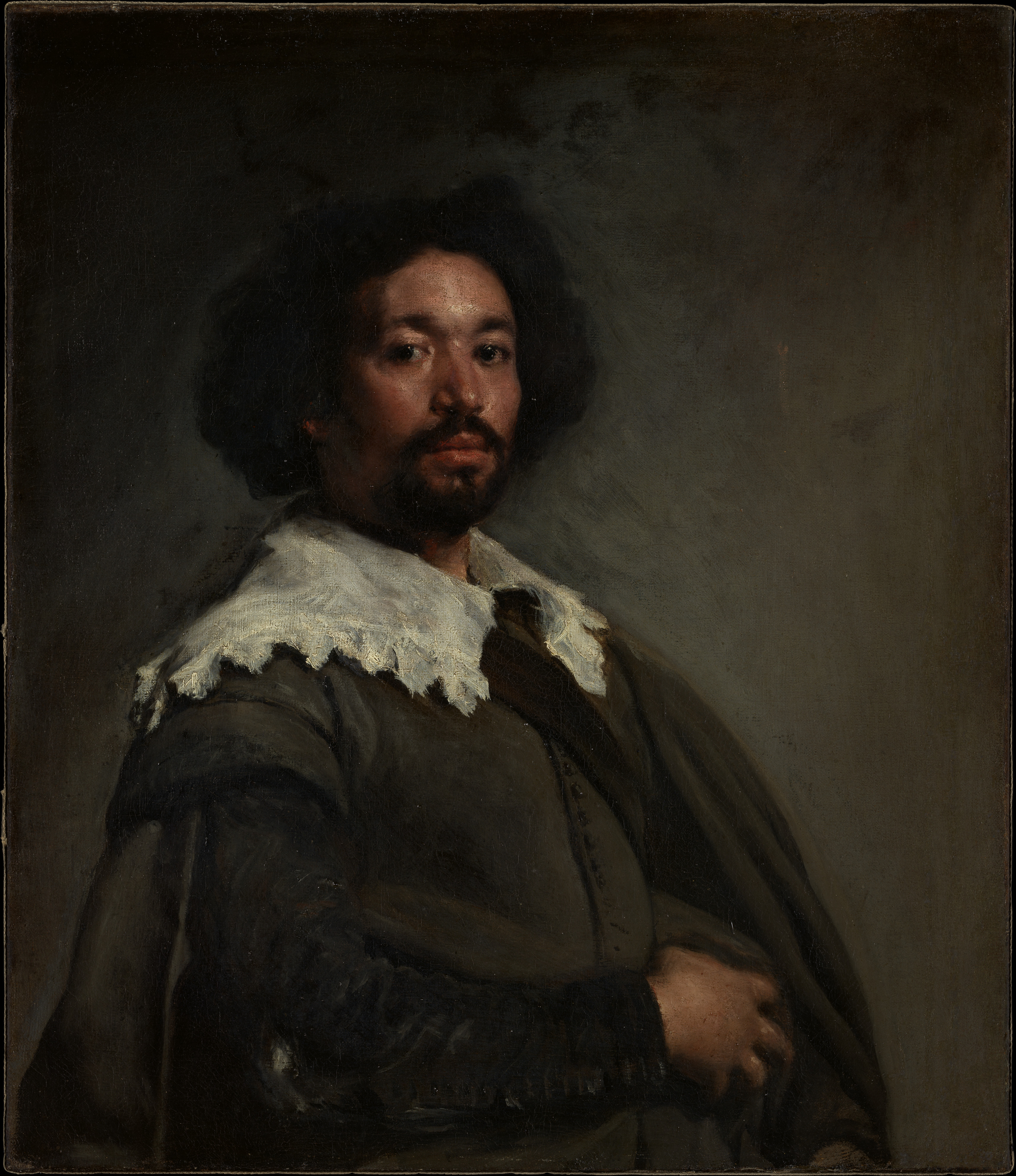
- The Metropolitan's own provenance for Juan de Pareja reads 'sale, Christie's, London, November 27, 1970, no. 110, to Wildenstein for The Met'. The buyer of record is a dealer and the Museum states the principal in the same clause, which is the best case and is rare.
- The British Museum's catalogue for the Palmer Cup still records the 1893 buyer as 'A.W.', identified as probably the dealer Asher Wertheimer. After 133 years the buyer's column is two letters and a qualifier.
- Contemporaries guess the principal and get it wrong. The Museum's own bibliography for Juan de Pareja flags a 1970 article in Antichita viva as reporting, erroneously, that Wildenstein had bought the picture for the National Gallery in Washington.
- An agency claim can also be the fiction that launders an object. Robert Hecht told the Metropolitan he was acting on ten per cent commission for the Lebanese dealer Dikran Sarrafian, and the Museum's own later investigation found 909,000 dollars paid to Sarrafian in October 1971, before the excavation the vase is said to have come from.
A saleroom records who bid, and that is not the same as who bought
An auction result names the person who made the winning bid, and a provenance wants the person who ended up owning the object. Those are often two different people, and the gap between them is one of the commonest silent faults in a chain of ownership. The saleroom is not being evasive when it records the bidder: the bidder is its counterparty, the bidder signs and the bidder pays.
Everything after that is private. A dealer bidding on commission is buying as an agent for an undisclosed principal, an arrangement that is ordinary commercial practice and creates no obligation on anybody to publish the principal's name. So the public record ends at the agent, and the ownership record starts somewhere the public record cannot see.
Seven records in this archive carry a sale where the bidder was acting for somebody else. The earliest is 1893 and the most recent is 2019, and the pattern does not change across those 126 years: the house names the bidder, and the principal emerges later, or partly, or never.
The Metropolitan states the principal in the same clause, and that is unusual
Read in the Museum's own record, the 1970 line for Juan de Pareja is a model of how this should be written: 'sale, Christie's, London, November 27, 1970, no. 110, to Wildenstein for The Met'. The dealer is named because the dealer bid, the institution is named because the institution owned it, and the preposition does the work.
The sale itself was a landmark. The picture came from the 8th Earl of Radnor at Longford Castle, where the family had held it since about 1811, and it made 2,200,000 guineas, which is GBP 2,310,000 exactly, the first painting to sell for more than a million pounds and the world record for any painting at the time. No buyer's premium existed at a London auction house in 1970, so the sum bid and the sum invoiced were the same number.
The same record also shows the earlier convention working differently. The 1801 Hamilton sale line reads 'Christie's, London, March 27-28, 1801, no. 59, for GBP 40.19.0 to Parker', and Parker is Thomas Lister Parker of Browsholme, who owned it next. There the buyer's column names the buyer, because in that transaction the bidder was the principal.
In 1970 a journal printed the wrong principal, and the Museum's own bibliography says so
The Metropolitan's list of references for the picture carries an entry that is worth more than its length: Luisa Vertova, writing in Antichita viva in September and October 1970, is recorded there as reporting the picture 'erroneously as purchased by Wildenstein for the National Gallery, Washington'. A scholarly periodical, writing within weeks of the sale, named the wrong museum.
This is what the structure does to the record. A dealer's name in the buyer's column is an invitation to infer a principal, and the inference is made by people who have no way of checking it. The error is not careless. It is the only kind of statement the available evidence supported, and it was wrong.
The correction survives because the Museum kept the reference and annotated it. Most such errors are not corrected anywhere, and there is no reason to think the 1970 case is unusual except in being caught.
One buyer's column has read two letters since 1893
The British Museum's curatorial note for the Palmer Cup records that the Palmer-Morewood family of Ladbroke in Warwickshire sold it at Christie's in London in July 1893 for GBP 1,732 10s to 'A.W.', probably the dealer and collector Asher Wertheimer, and that following the Christie's sale it entered the collection of Baron Ferdinand Rothschild. The price is also recorded in the customary unit of 1,650 guineas.
Three things in that sentence are worth separating. The buyer of record is a pair of initials. The identification of those initials is qualified with 'probably'. And the principal is not asserted at all: what the Museum states is a sequence, that the cup was bought by A.W. and that it then appears with Rothschild, from which a reader may conclude that Wertheimer was buying for him.
That is a careful piece of cataloguing and it is also a measure of how little survives. The cup came to the Museum in 1898 as part of the Waddesdon Bequest under the terms of Rothschild's will, five years after the sale, and the institution that has held it for 128 years still cannot name the man who raised his hand in the room.

One agency was reconstructed by a scholar decades later
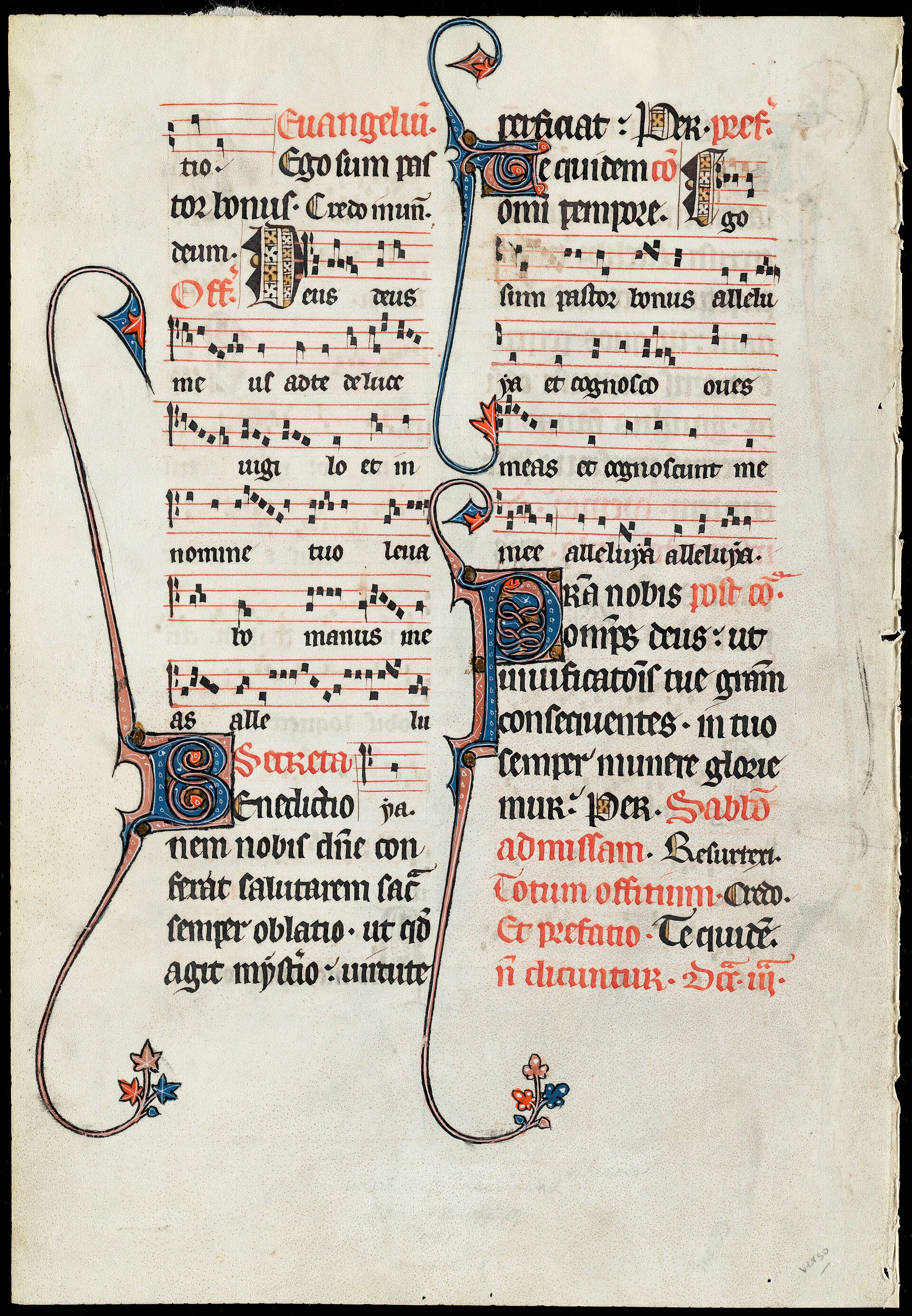
The Beauvais Missal came to auction intact exactly once, at Sotheby's in London on 4 May 1926, as lot 161, consigned by Blanche Bontoux and sold for 970. The buyer in the record is the dealer William Permain. Permain was acting as agent for William Randolph Hearst, and that was established later by the manuscripts scholar Peter Kidd rather than by anything the sale published.
This archive's record puts the consequence in one line: the auction record names the dealer, not the buyer. For the sixty years or so in which the object's history was written from the sale catalogue, the 1926 link pointed at a Bond Street firm rather than at a newspaper proprietor in California, and a whole phase of the manuscript's life sat under the wrong name.
It matters more here than it usually would, because this manuscript was subsequently broken up and sold as single leaves. Reconstructing a dismembered book depends on knowing whose hands it passed through, and an agency hidden in a buyer's column removes exactly that.
The modern cases differ only in how fast the principal is named
The mechanism is unchanged in the last fifty years and the only real variable is the delay. The Codex Leicester was bought at Christie's in New York on 11 November 1994 by a telephone bidder acting for Bill Gates, and Gates was identified publicly the following day. The figure of record is 30,802,500 dollars and it is premium-inclusive.
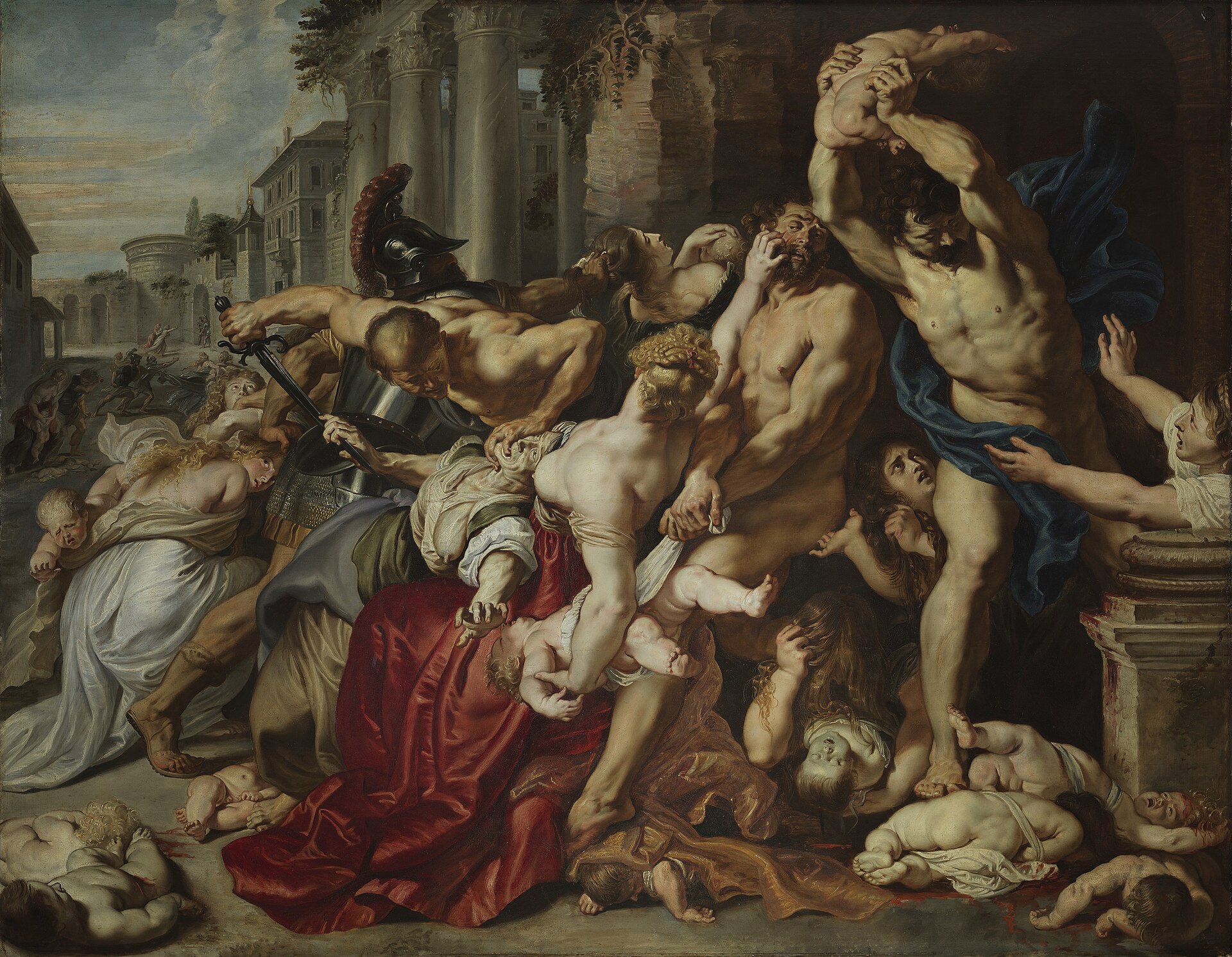
Rubens's Massacre of the Innocents was bought at Sotheby's in London on 10 July 2002, lot 6, at a hammer of GBP 45,000,000 and GBP 49,500,000 with fees, bid in the room by the Mayfair dealer Sam Fogg acting for Kenneth Thomson. Cimabue's Mocking of Christ was bought at the Acteon sale in Senlis on 27 October 2019 for EUR 19,500,000 excluding fees and EUR 24,180,000 with them, the winning bid made in the room by Francesco Ortenzi of the London gallery Moretti on behalf of a client who was anonymous at the time and is now known as the Alana Collection.
In each of these the object is a famous one and the principal wanted to be known eventually. The ones to worry about are the sales where nobody ever wanted that, and those look identical in the catalogue.
Seven sales, and how long the principal stayed hidden
Laid out together the seven cases show that the delay between the sale and the naming of the principal ranges from one day to never. The mechanism is constant; the disclosure is not.
| Object | Sale | Name in the buyer's column | The principal | Delay |
|---|---|---|---|---|
| Palmer Cup | Christie's, July 1893 | A.W. | Inferred: Baron Ferdinand Rothschild | Still qualified after 133 years |
| Beauvais Missal | Sotheby's, 4 May 1926 | William Permain, dealer | William Randolph Hearst | Established later by Peter Kidd |
| Juan de Pareja | Christie's, 27 November 1970 | Wildenstein | The Metropolitan Museum of Art | Stated by the Museum, and misreported at the time |
| Codex Leicester | Christie's, 11 November 1994 | A telephone bidder | Bill Gates | One day |
| Massacre of the Innocents | Sotheby's, 10 July 2002 | Sam Fogg, dealer | Kenneth Thomson | Named with the sale |
| The Mocking of Christ | Acteon, Senlis, 27 October 2019 | Francesco Ortenzi, Moretti | The Alana Collection | Anonymous at the time |
| Euphronios krater | Private purchase, 1972 | Robert Hecht, on commission | Claimed principal did not hold up | The agency itself was the fiction |
The last row is the one that changes the character of the list. Six of these agencies concealed a buyer, and one invented a seller.
The claimed agency can be the thing that is false
Agency cuts both ways, and the Euphronios krater is the case where it was used in the other direction. When the Metropolitan bought the vase, the provenance offered was that Robert Hecht was acting on ten per cent commission for the Lebanese dealer Dikran Sarrafian, whose father had bought it in London in 1920, and Sarrafian supplied letters dated 10 July 1971 and 9 September 1972.
The commission structure was part of the story's plausibility. A dealer taking ten per cent for a named client sounds like a man with a modest role in somebody else's transaction, and it puts the ownership question one step away from the person in the room. The Museum's own defensive investigation, mounted after the press attacks of 1973, produced a record of 909,000 dollars paid to Sarrafian in Swiss francs on 25 October 1971, before the December excavation the vase is said to have come from.
So an asserted agency is not a neutral fact in a chain. It is a claim about where the object came from before the sale, and it deserves the same grading as any other claim in the provenance.
How to read a buyer's column
Treat every named dealer in a buyer's column as an open question rather than a link. The correct entry is not 'bought by Wildenstein' but 'bought by Wildenstein, principal not established', which is a statement a later researcher can act on. The Metropolitan's 'to Wildenstein for The Met' is the form to copy.
Where the buyer is initials, say so and leave the qualifier in. The British Museum's 'probably the dealer / collector Asher Wertheimer' is better cataloguing than a clean guess, because it tells you exactly how much weight the identification carries.
Where the next recorded owner is a famous collector and the buyer was a dealer, resist collapsing the two into one link. Hearst, Rothschild and Thomson all appear in this archive downstream of a dealer's hand in a saleroom, and in one of those three the connection was proved by a scholar working long afterwards on other evidence entirely. The other two are inferences that happen to be right.
Land the point
A buyer's column is a record of who was liable for the invoice, and it has been read for two centuries as a record of who owned the thing. Seven objects here show what that costs: a principal misreported in a journal within weeks of the sale, an agency recovered by a scholar sixty years late, a buyer who is still two letters after 133 years, and one case in which the agency was the instrument of the fraud rather than its casualty.
None of this is a failure by the auction houses, which record their counterparty accurately. It is a failure of reading, and the fix is a cataloguing habit rather than a disclosure rule: name the bidder as the bidder, and leave the principal as an open field until somebody can fill it.
Why this archive is free to read
We do this for everyone who loves art. The people who have studied it for years, and the people who just stopped to look. Iconotheca exists so that what we learn belongs to all of them.
Nobody pays us for this. No ads, no sponsors, no commercial interest. These works belong to all of us, and we would rather share them with as many people as we can than keep them to ourselves.
If it gave you something today, tell us to keep going. Follow us, leave a like, or write a positive comment. We read every one, and they are what keeps us going.
Questions
Because the house records its counterparty. A dealer bidding on commission is buying as agent for an undisclosed principal, which is ordinary commercial practice and puts no obligation on anyone to publish the principal's name, so the public record stops at the agent.
Wildenstein made the winning bid at Christie's in London on 27 November 1970, lot 110, at 2,200,000 guineas, which is GBP 2,310,000, and the Metropolitan Museum of Art was the principal. The Museum's own provenance states it directly as to Wildenstein for The Met, which is why this case is unusually clean.
Not with certainty. The British Museum records the 1893 buyer as A.W., probably the dealer and collector Asher Wertheimer, and states separately that the cup then entered Baron Ferdinand Rothschild's collection. The principal is an inference from that sequence rather than a documented fact.
By later scholarship. The 1926 Sotheby's record names the dealer William Permain, and Permain's role as agent for William Randolph Hearst was established by the manuscripts scholar Peter Kidd, not by anything the sale published.
Yes, and the Euphronios krater is the case. Robert Hecht said he was acting on ten per cent commission for the Lebanese dealer Dikran Sarrafian, supported by letters of 1971 and 1972, and the Metropolitan's own later investigation produced a payment to Sarrafian dated 25 October 1971, before the excavation the vase is said to have come from.
Sources
- 1Metropolitan Museum of Art, object record for Velazquez, Juan de Pareja (ca. 1608-1670), accession 1971.86, Provenance and References panels. Source for the verbatim provenance line 'sale, Christie's, London, November 27, 1970, no. 110, to Wildenstein for The Met', for the 1801 Hamilton sale line naming Parker, for the Radnor descent, and for the bibliography entry recording Luisa Vertova, Antichita viva 9 (September-October 1970), pp. 62-63, 'erroneously as purchased by Wildenstein for the National Gallery, Washington'. metmuseum.org/art/...
- 2British Museum, Waddesdon Bequest online catalogue, the Palmer Cup, WB.53, Detailed Curatorial Notes. Read in full on 25 September 2026; the page serves over plain HTTP with a certificate chain that WebFetch refuses, and was read with curl instead. Source for the July 1893 Christie's sale at GBP 1,732 10s to 'A.W.', for the identification as probably the dealer and collector Asher Wertheimer, for the Palmer-Morewood consignment from Ladbroke in Warwickshire, and for the statement that the cup entered Baron Ferdinand Rothschild's collection after the sale. wb.britishmuseum.org/MCN854
- 3Metropolitan Museum of Art Collection API, object 437869. Read 25 September 2026. Source for the accession number 1971.86, the credit line, the dimensions of 81.3 by 69.9 cm, the date of 1650 and gallery 625, independently of the rate-limited public page. collectionapi.metmuseum.org/public/...
More in Collectors and Collections
The partThe Binding Is a Later Owner's Object
16 of the 18 manuscripts and printed books in this archive wear a binding a later owner paid for.
The Collector Became a Legal Person
Twelve records here sit in a museum that carries a collector's name. In none of them is the museum the owner.
The Buyer Who Was a Crowd
Ten objects in this archive were bought, or fought for, by public subscription between 1892 and 2025.