The credit line names the collector, and the accession number tells you what happened
Morgan died in March 1913, and the Metropolitan credits him with gifts made in 1917. The credit line names the collector. The accession number records what actually happened.
Records in this piece: Mosque Lamp Bearing the Name of the Mamluk Sultan al-Malik al-Nasir, Celestial Globe with Clockwork, Armchair (fauteuil) from Louis XVI's Salon des Jeux at Saint Cloud, Ewer
On this page 8 sections
ContentsClose
In short
- J. Pierpont Morgan died on 31 March 1913, and the Metropolitan Museum of Art credits him as the donor of objects it received in 1917. We confirmed the credit lines directly from the museum's own collection API rather than from secondary accounts.
- The 1917 gifts were made by his son, J. Pierpont Morgan Jr., who gave the largest portion of the collection. The credit line names the collector by museum convention, not the person who signed the deed.
- One object in this archive was genuinely given by Morgan himself, in 1906, while he was president of the museum. Its credit line reads 1906 and its accession number and accession year both read 1907, so even the accurate case carries two different dates.
- A fourth object sat in Morgan's estate from 1913 until the museum bought it in 1944, and its credit line reads Rogers Fund, 1944. His name is not on it at all, although he owned it longer than he owned some of the objects that carry his name.
- The accession number is the field that records the transaction. A 17.190 number means the 1917 estate transfer, a 07.225 number the 1906 gift and 44.15 a purchase, and none of that is legible from the credit lines.
Morgan died in 1913 and the museum has him giving things away in 1944
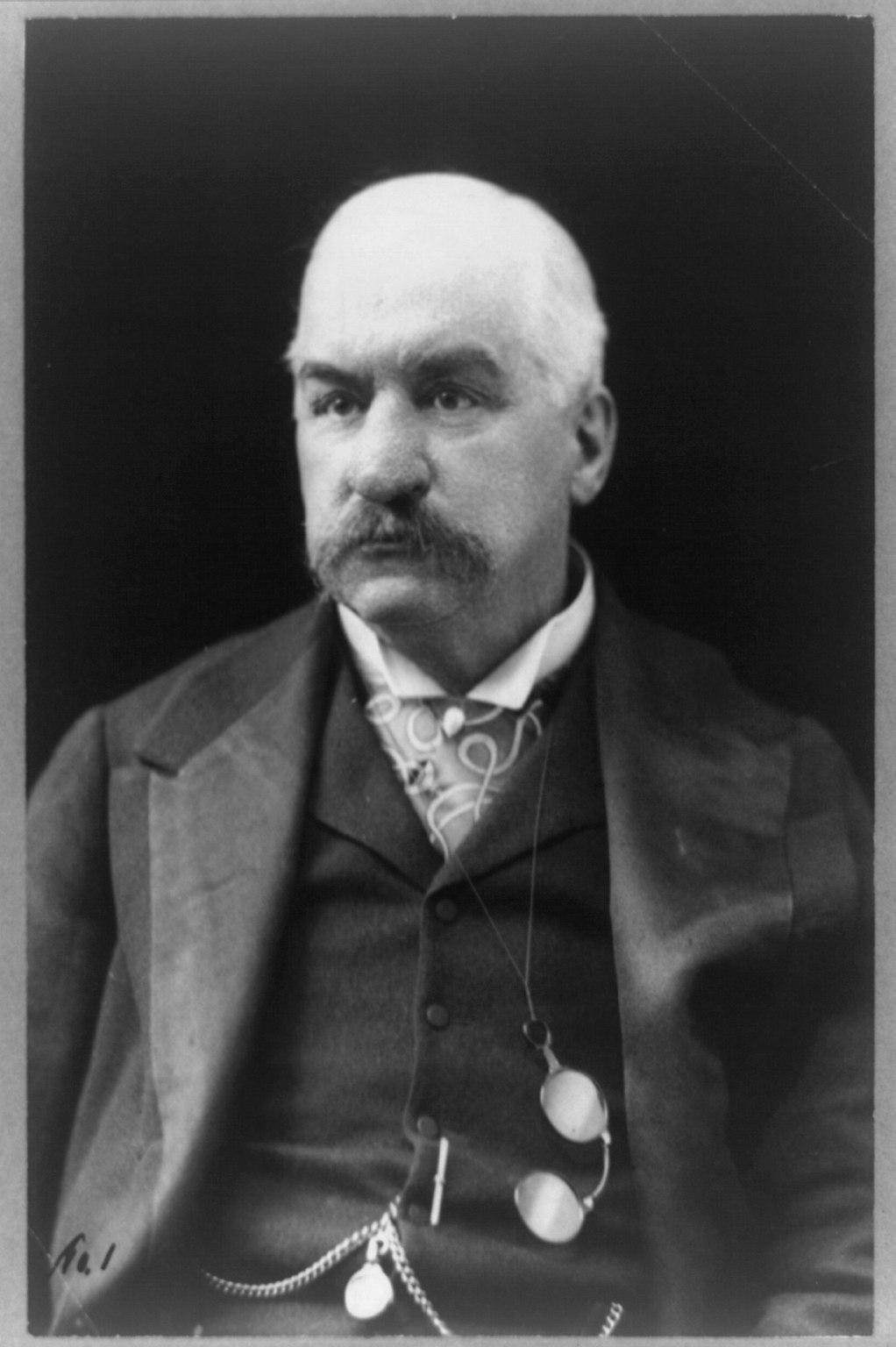
Four objects in this archive passed through the collection of J. Pierpont Morgan and ended up at the Metropolitan Museum of Art, and the museum's published credit lines describe four different events in a way that makes them look like two. Morgan died in Rome on 31 March 1913. Two of the four are credited to him as gifts of 1917.
This is not an error, and it is not hidden. It is a cataloguing convention, and once you know it is a convention the credit line stops being a record of a transaction and becomes something closer to a dedication. The question worth asking is which field does record the transaction, and the answer turns out to be the accession number, which almost nobody reads.
We checked all four against the museum's own open collection API rather than against press accounts or aggregators, because the claim in this piece is about what the museum publishes, and that has to come from the museum.
Two objects, one credit line, and a donor who was not there
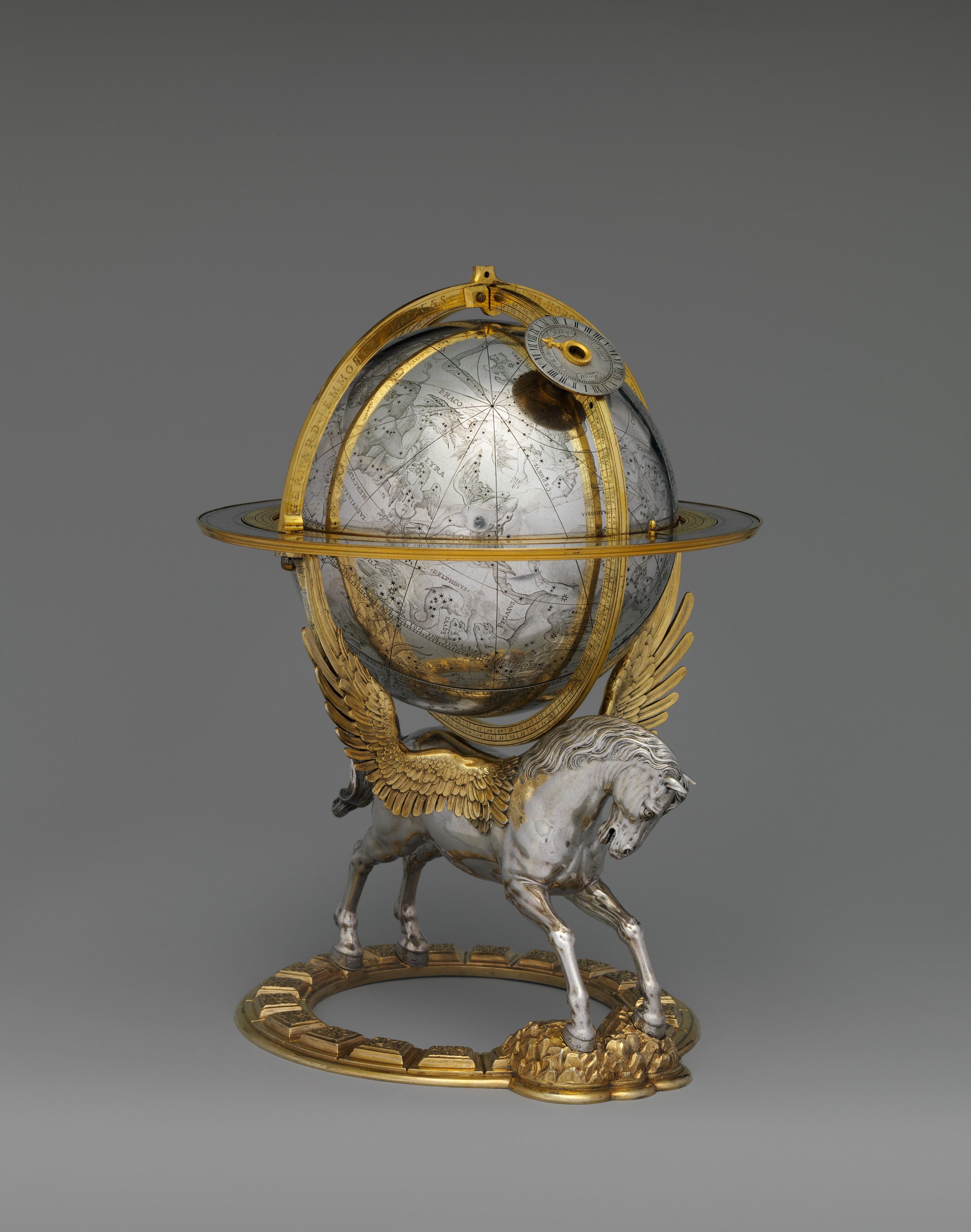
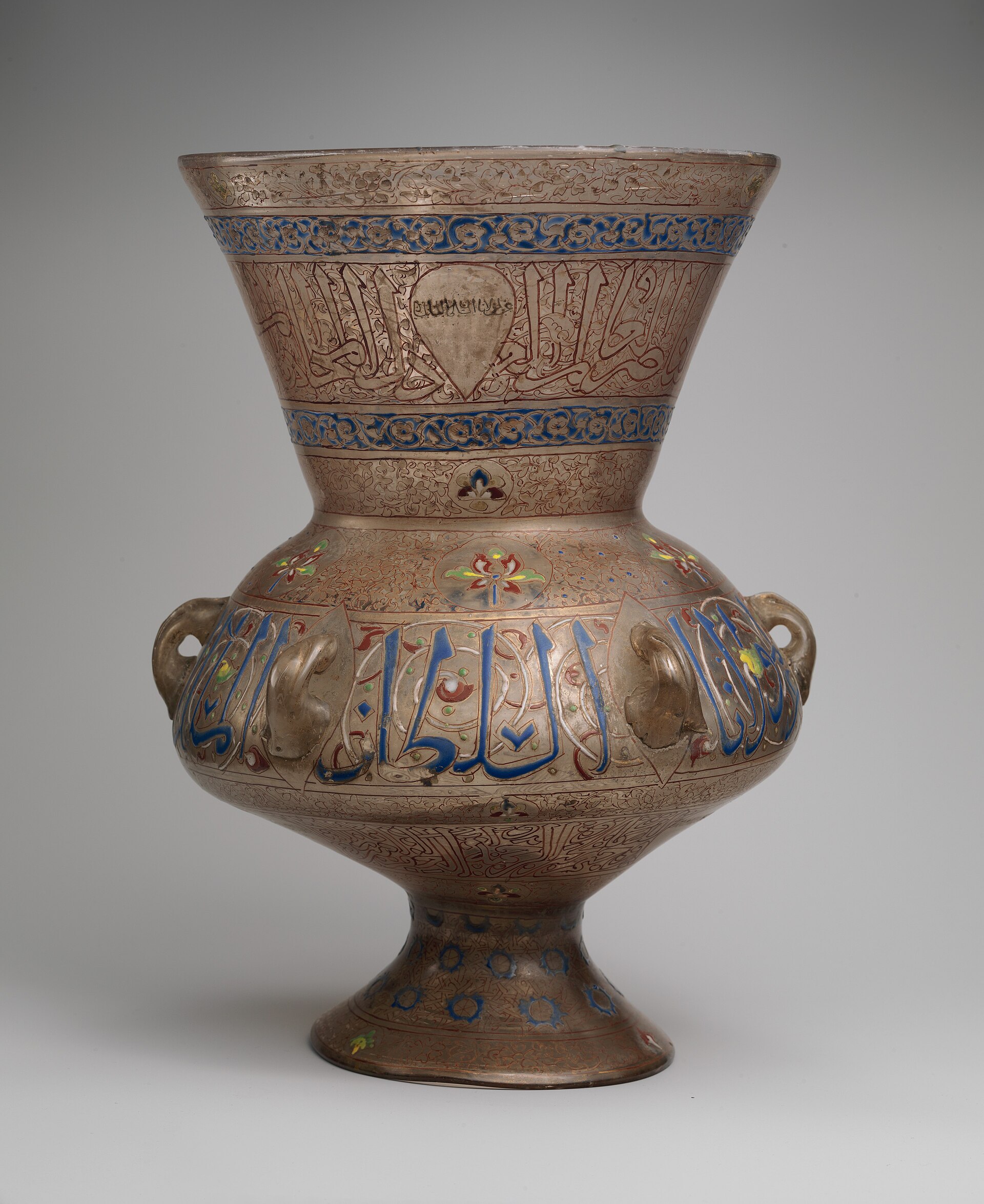
The mosque lamp bearing the name of the Mamluk sultan al-Malik al-Nasir is accession 17.190.987 in the Department of Islamic Art, and the Emmoser celestial globe is accession 17.190.636 in European Sculpture and Decorative Arts. Both carry the credit line Gift of J. Pierpont Morgan, 1917, and the museum's accession year field reads 1917 for both.
What happened is that on Morgan's death his collection passed into his estate, and his son, J. Pierpont Morgan Jr., gave the largest portion of it to the museum in 1917. Roughly forty per cent of the collection was donated by the son. The lamp came in that group, along with seven other Mamluk mosque lamps. The globe came in a large group of European clocks and watches with consecutive numbers in the same 17.190 series.
The convention is that a gift completed by an estate is credited in the original collector's name, which is why the lamp's credit line names a man who had been dead for four years when the museum received it. The lamp had belonged to Charles Mannheim in Paris until his death in 1910 and was sold at his estate sale at the Galerie Georges Petit. Whether Morgan bought it there himself or through a dealer afterwards is not stated in any source we have consulted, so the record says so rather than choosing.
The one gift Morgan actually made, and it still carries two dates
The third object is the case where the credit line is telling the truth, and it is worth reading closely because even here two fields disagree. On 27 April 1906 Morgan, by then president of the Metropolitan Museum of Art, signed a contract arranged through the London dealer George Durlacher to buy the entire collection of the Paris designer and collector Georges Hoentschel for four million French francs, a sum contemporary American newspapers reported as roughly a million dollars. The collection was shipped from Le Havre.
An armchair from Louis XVI's Salon des Jeux at Saint Cloud came in that purchase. The museum credits it as the Gift of J. Pierpont Morgan, 1906. Its accession number is 07.225.107 and the museum's accession year field reads 1907.
So the credit line dates the gift to the year Morgan made it and the accession number dates it to the year the museum took it in, and they are a year apart. Neither is wrong. They are answers to different questions, and a reader who assumes a credit line is an acquisition date will be out by a year here and by four years on the mosque lamp. The Hoentschel material, together with the medieval collection given in stages by Morgan and after his death by his son, created the museum's first curatorial department of decorative arts.
The outlier: an object the museum bought from the estate thirty-one years later
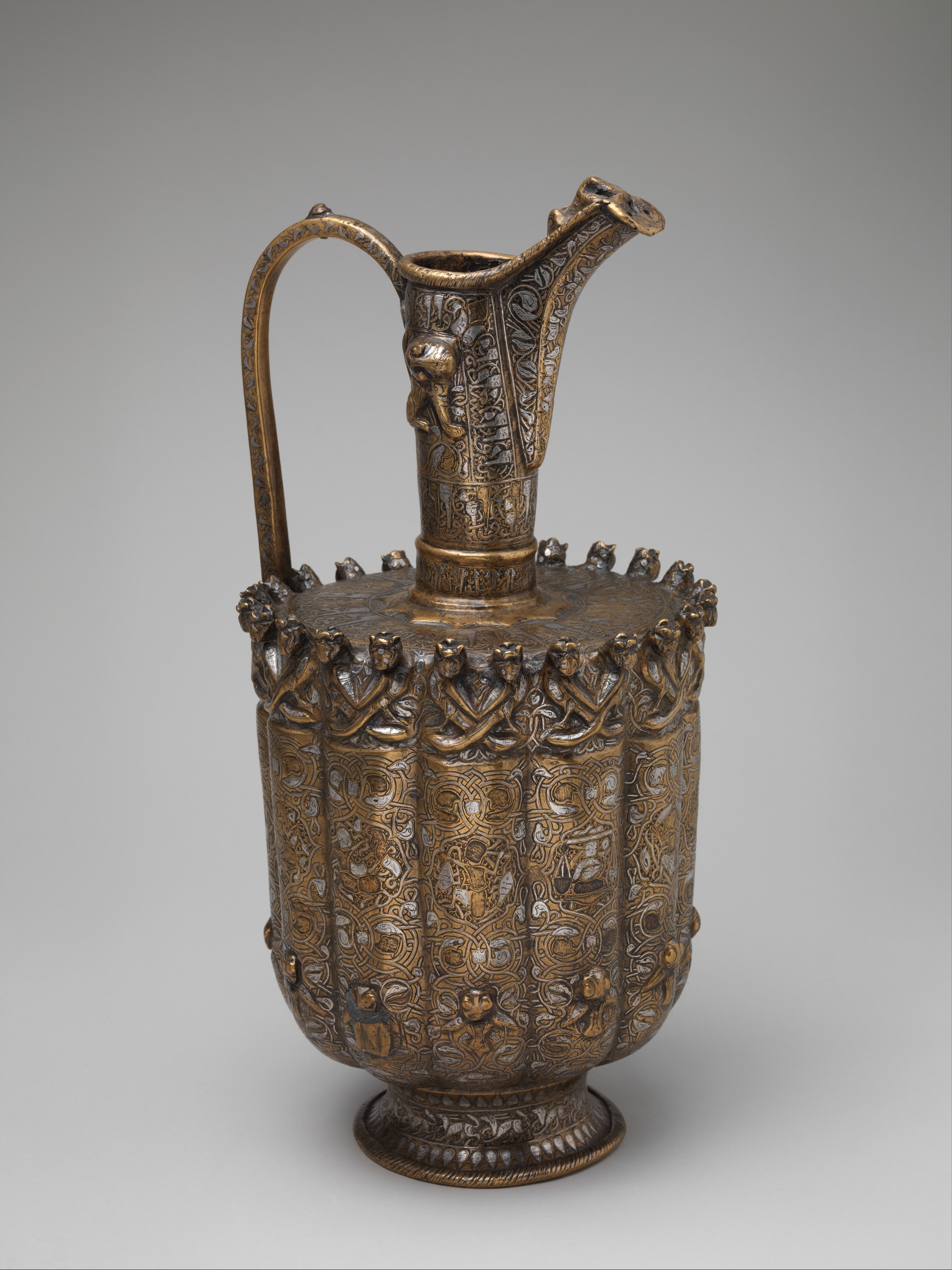
The fourth object breaks the pattern and in doing so proves it. A brass ewer from Khurasan or Herat, inlaid with silver and a black compound and dated to about 1180 to 1210, is accession 44.15 in the Department of Islamic Art. Its credit line reads Rogers Fund, 1944. Morgan's name does not appear on it.
The museum's own provenance line records the ewer in Morgan's ownership until his death in 1913 and then in his estate from 1913 until its sale to the museum in 1944, a gap of thirty-one years. It did not go with the forty per cent the son gave in 1917 and it was not sold on the open market either. It stayed in the estate and the museum eventually paid for it out of an acquisition fund.
This is the useful case, because the credit line here is accurate and complete and tells a reader nothing about Morgan at all. An object he owned for years, which sat in his estate for three decades, arrives in the collection with no trace of him in the field most people read. The Rogers Fund is the truth about the transaction and Morgan is the truth about the object's history, and the catalogue records one of those in the credit line and the other only in the provenance.
Four objects, four transactions, two credit lines that look the same
Set the four fields side by side and the pattern is immediate.
| Object | Accession | Credit line as published | What actually happened |
|---|---|---|---|
| Mosque lamp of al-Malik al-Nasir | 17.190.987 | Gift of J. Pierpont Morgan, 1917 | Given in 1917 by his son from the estate, four years after Morgan's death |
| Emmoser celestial globe with clockwork | 17.190.636 | Gift of J. Pierpont Morgan, 1917 | Given in 1917 by his son, in a group of clocks and watches with consecutive numbers |
| Armchair from Louis XVI's Salon des Jeux | 07.225.107 | Gift of J. Pierpont Morgan, 1906 | Bought by Morgan on 27 April 1906 and given by him; accessioned 1907 |
| Ewer from Khurasan or Herat | 44.15 | Rogers Fund, 1944 | Held in Morgan's estate from 1913 and bought by the museum in 1944 |
Two credit lines are identical and describe the same event. The third looks like the same kind of statement and is the only one made by the man named in it. The fourth names nobody and is the most accurate of the four.
Why the accession number is the more honest field
An accession number is assigned when a museum takes an object into its collection, and at the Metropolitan the first component is the year. That makes it a transaction record whether anyone intended it as one or not, and it is the only field in these four cases that never disagrees with what happened.
It carries grouping information too. The 17.190 prefix identifies the 1917 Morgan estate transfer, so a reader who sees 17.190 on an object anywhere in the museum knows which event brought it in, and consecutive numbers within the series mark objects that arrived together. That is information the credit line cannot express, because the credit line is the same string for every object in the group and for objects that arrived in different ways in different years.
None of this makes the credit line a bad field. It does what it was designed to do, which is to honour a benefactor permanently and in a fixed form, and a museum that renamed its credit lines to reflect the mechanics of each transfer would be breaking promises it made in order to get the objects. The mistake is only in reading it as a record.
What a reader should do with a credit line
Treat it as a claim about who is being thanked and not as evidence of who transferred what, when. If a credit line names a collector and a year, check whether the collector was alive in that year, because a gift completed by an estate is routinely credited to the collector, and the interval can be decades.
Then read the accession number, which will usually tell you the real year and often tell you the group. If the two disagree, the accession number is describing the museum's act and the credit line is describing the donor's, and the gap between them is frequently the interesting part: on the mosque lamp it is the four years an estate took to settle, and on the armchair it is the months between a contract signed in Paris in April and an object catalogued in New York the following year.
Finally, do not read the absence of a name as the absence of a history. The ewer has the cleanest credit line of these four and the longest undocumented stretch behind it: no owner, dealer or location is recorded between its manufacture in Khurasan and its appearance in Morgan's New York collection by 1913. The field that says Rogers Fund, 1944 is telling the exact truth about a purchase and nothing at all about seven centuries.
Why this archive is free to read
We do this for everyone who loves art. The people who have studied it for years, and the people who just stopped to look. Iconotheca exists so that what we learn belongs to all of them.
Nobody pays us for this. No ads, no sponsors, no commercial interest. These works belong to all of us, and we would rather share them with as many people as we can than keep them to ourselves.
If it gave you something today, tell us to keep going. Follow us, leave a like, or write a positive comment. We read every one, and they are what keeps us going.
Questions
Because a gift completed by an estate is credited in the original collector's name by museum convention. Morgan died on 31 March 1913, his collection passed into his estate, and his son J. Pierpont Morgan Jr. gave the largest portion of it to the museum in 1917. The credit line honours the collector rather than recording who signed the deed.
Who the museum is thanking, and in what year the donor's act is dated. It is a dedication with a permanent fixed form, not a transaction record, so it can name a person who was dead when the object arrived and it can differ by a year or more from the date the museum took the object in.
At the Metropolitan the first component is the accession year, so 17 is 1917. The 190 identifies the group, in this case the 1917 transfer of the Morgan collection, and the final number is the individual object. Consecutive numbers within a group mark objects that arrived together.
Yes. Morgan bought the entire Hoentschel collection under a contract dated 27 April 1906, while he was president of the museum, and gave it himself. An armchair from Louis XVI's Salon des Jeux at Saint Cloud came in that purchase, credited Gift of J. Pierpont Morgan, 1906, with the accession number 07.225.107 and an accession year of 1907.
Because the museum bought it rather than receiving it. A brass ewer from Khurasan or Herat stayed in Morgan's estate from his death in 1913 until the museum purchased it in 1944, so its credit line reads Rogers Fund, 1944. His ownership appears only in the provenance.
Sources
- 1Metropolitan Museum of Art, Open Access Collection API, object 447002, mosque lamp bearing the name of al-Malik al-Nasir: accession 17.190.987, accession year 1917, credit line 'Gift of J. Pierpont Morgan, 1917'. Read directly. collectionapi.metmuseum.org/public/...
- 2Metropolitan Museum of Art, Open Access Collection API, object 193606, Emmoser celestial globe with clockwork: accession 17.190.636, accession year 1917, credit line 'Gift of J. Pierpont Morgan, 1917'. Read directly. collectionapi.metmuseum.org/public/...
- 3Metropolitan Museum of Art, Open Access Collection API, object 189387, armchair from Louis XVI's Salon des Jeux at Saint Cloud: accession 07.225.107, accession year 1907, credit line 'Gift of J. Pierpont Morgan, 1906'. Read directly. collectionapi.metmuseum.org/public/...
- 4Metropolitan Museum of Art, Open Access Collection API, object 450513, ewer from Khurasan or Herat: accession 44.15, accession year 1944, credit line 'Rogers Fund, 1944'. Read directly. collectionapi.metmuseum.org/public/...
- 5Metropolitan Museum of Art, object page for the mosque lamp, with the museum's own provenance line recording the Mannheim estate sale of 1910 and the passage through Morgan's estate. metmuseum.org/art/...
- 6Metropolitan Museum of Art, object page for the ewer, object 450513, with the provenance line recording the estate from 1913 to the museum's purchase in 1944. metmuseum.org/art/...
- 7Metropolitan Museum of Art, 'The Museum, ca. 1913', on Morgan's role as president and the scale of the collection that reached the museum after his death. metmuseum.org/perspectives/...
- 8Bard Graduate Center, 'The Hoentschel Collection Comes to the Metropolitan', on the April 1906 purchase through George Durlacher and the founding of the museum's decorative arts department. bgc.bard.edu/research/...
- 9The Magazine Antiques, 'Georges Hoentschel and his world', on the collection Morgan bought entire in 1906. themagazineantiques.com/article/...
- 10Metropolitan Museum of Art, press release for 'The Making of a Collection: Islamic Art at the Metropolitan', on the group of Mamluk mosque lamps that entered with the 1917 Morgan material. metmuseum.org/press-releases/...
More in Collectors and Collections
The partThe Longest Ownership Links Here Belong to Owners That Were Not People
The 28 longest institutional ownership links in this archive run 7,434 years between them. Three end in a completed sale.
The Name in the Buyer's Column Is Often an Employee
Across 126 years of sales in this archive the winning bidder is repeatedly not the owner.
The Binding Is a Later Owner's Object
16 of the 18 manuscripts and printed books in this archive wear a binding a later owner paid for.