The Buyer in the Credit Line Was Already Dead
Thirty-two objects in this archive were bought on the income of six named endowment funds, and in every case the person named had died before the purchase. What a credit line records and what it hides.
Records in this piece: The Harvesters, Desk Chair, Bronze statuette of a horse, The Wade Cup with Animated Script, The Fortune-Teller, Helmet all'Antica, The Crucifixion; The Last Judgment, The Farnese Table, Field Armor in Maximilian Style, Juan de Pareja (ca. 1608-1670), Cabinet, Moulin Rouge: La Goulue
On this page 9 sections
In short
- Thirty-two of the 273 published records here were bought, in whole or in part, on the income of one of six named endowment funds at the Metropolitan Museum of Art and the Cleveland Museum of Art. In every one of the thirty-two the person named in the credit line had died before the purchase.
- The Rogers Fund bought the Negroli helmet in 1904 and a Bugatti desk chair in 1970. Jacob S. Rogers, a locomotive builder from Paterson, died in 1901 having, in the Museum's own account, cared little for art and owned no art objects of any value.
- Rogers' will forbade the Museum to touch the principal. Only the income was to be used for the purchase of rare and desirable art objects, and by 1904 that income was already over 200,000 dollars a year.
- Isaac D. Fletcher made the Museum his residuary legatee under the eighth clause of his will in 1917, an estate the Museum's Bulletin put at unquestionably over 3,000,000 dollars. The Fletcher Fund bought a bronze horse in 1923 that the Museum later condemned as a forgery and then reinstated.
- A credit line records the fund and the year. It does not record the price, the seller or who decided. The Museum's own entry for The Harvesters calls its 1919 price extraordinarily low and does not give it.
A credit line names the money and not the decision
A museum credit line names the source of the money used to buy an object and the year the object was accessioned, and nothing else. It reads as though it named a buyer: Rogers Fund, 1919, or Fletcher Fund, 1923. A reader who meets those lines on a wall label or in a provenance takes them as the name of the person who paid, and in a narrow sense that is right. In every other sense it is wrong, because the person named had usually been dead for decades and had never seen the object, and the people who did decide to buy it, a curator, a director and a purchasing committee, are not named at all.
This piece counts how often that happens in our own records and reads the six funds back to the documents that created them. The pattern decides what a credit line can be used for. It dates a transfer of custody and identifies a pool of money. It is not evidence of a price, a vendor or a judgment of quality, and the Metropolitan Museum's own records say as much on the objects where the price is missing.
Thirty-two records here were bought with a dead man's income
Thirty-two of the 273 records published in this archive carry, on the object's own acquisition, the name of one of six endowment funds: four at the Metropolitan Museum of Art in New York and two at the Cleveland Museum of Art. We counted only the fund that bought the object the record is about, and not a fund mentioned in passing for a comparison piece in the same museum. The six namesakes died between 1901 and 1936. The earliest purchase in the group is 1904 and the latest is 2012.
| Fund | Named for | Died | Earliest purchase here | Latest purchase here | Records here |
|---|---|---|---|---|---|
| Rogers Fund (Met) | Jacob S. Rogers | 1901 | 1904, the Negroli helmet | 1971, Juan de Pareja, in part | 15 |
| Fletcher Fund (Met) | Isaac D. Fletcher | 1917 | 1923, bronze horse | 1964, Kashan minai bowl | 6 |
| Harris Brisbane Dick Fund (Met) | Harris Brisbane Dick | 1916 | 1932, Moulin Rouge: La Goulue | 1958, the Farnese Table | 3 |
| Munsey Fund (Met) | Frank A. Munsey | 1925 | 1932, Clifford garniture | 1932, Nine Heroes tapestry | 2 |
| J. H. Wade Fund (Cleveland) | Jeptha H. Wade II | 1926 | 1944, the Wade Cup | 2012, Maximilian-style field armour | 4 |
| John L. Severance Fund (Cleveland) | John L. Severance | 1936 | 1948, feline incense burner head | 1985, Atget, Fountain of Enceladus | 4 |
The gap between a death and a purchase runs from six years, Munsey to the Clifford armour, to eighty-six years, Wade to a field armour bought in 2012. The Bugatti chair was bought on the Rogers Fund sixty-nine years after Rogers died. Nobody involved in the decision to buy it had been alive when the money arrived.
Jacob Rogers owned no art, and his name has bought art for a hundred and twenty years
Jacob S. Rogers, president of the Rogers Locomotive Works in Paterson, New Jersey, died on 2 July 1901 and left the Metropolitan Museum of Art the residue of his estate, roughly 5,000,000 dollars with over 1,000,000 dollars of real estate on top. The Museum's own archives piece, written for the hundred and tenth anniversary of his death, is candid about the man. He had been a member since 1883, asked detailed questions about the Museum's finances, and, in the director's recollection, cared little for art and owned no art objects of any value himself. The Museum learned of the bequest from the newspapers.
The will is the document that explains every Rogers Fund credit line since. The principal was not to be touched. Only the income of the fund was to be used, in the will's words, for the purchase of rare and desirable art objects, and in the purchase of books for the Library. By 1904, one year after the will was settled, that income was over 200,000 dollars a year. The first purchase, on 23 January 1903, was a Thomas Cole landscape.
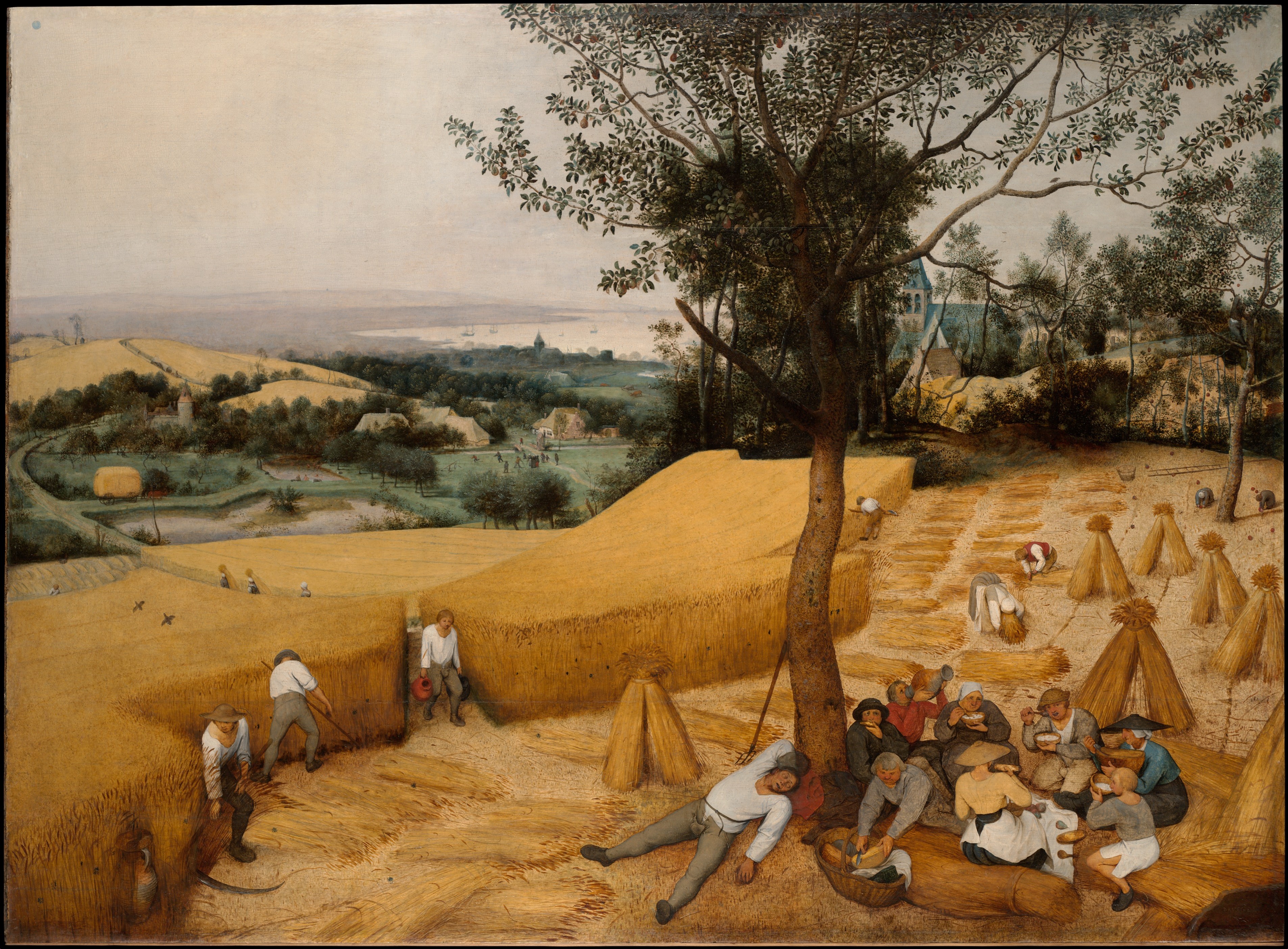
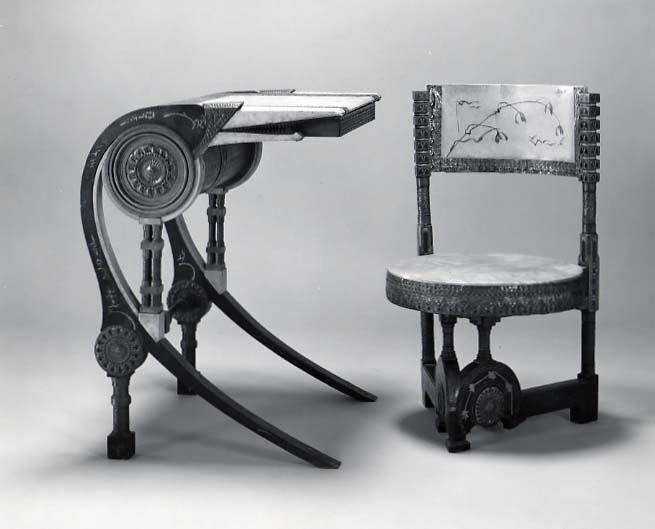
In this archive the Rogers Fund appears fifteen times. It paid for the whole Dino collection of arms and armour in 1904, which is why the Negroli helmet, the Sessa armour and the Armor for the Joust of Peace all share the accession prefix 04.3 and the same four-word credit. It paid for a Goddard-Townsend desk in 1915, a plate from Washington's Cincinnati service in 1917, The Harvesters in 1919, Caravaggio's Musicians in 1952 and La Tour's Fortune-Teller in 1960. In 1970 it paid for a Carlo Bugatti desk chair made about 1902, an object designed a year after Rogers died. In 1971 it was one of the sources pooled, with the Fletcher Fund and a deaccession by exchange, to buy Velazquez's Juan de Pareja.
Fletcher wrote his collection into a gallery and his residue into a fund
Isaac D. Fletcher died in April 1917 and left the Museum two different things, and the Museum's Bulletin of November 1917 kept them carefully apart. The first was his collection: 251 objects selected by the Museum under the terms of the will, to be shown together as the Mr. and Mrs. Isaac D. Fletcher Collection, with a group label as well as an individual label, for not less than one year. The second was the residue of his estate, under the eighth clause of the will, which the Bulletin put at unquestionably over 3,000,000 dollars and which became the Fletcher Fund. The credit lines keep the two apart too. A Raffaelli view of the Fletcher house on Fifth Avenue is credited Bequest of Isaac D. Fletcher, 1917. A bronze horse bought six years later is credited Fletcher Fund, 1923.
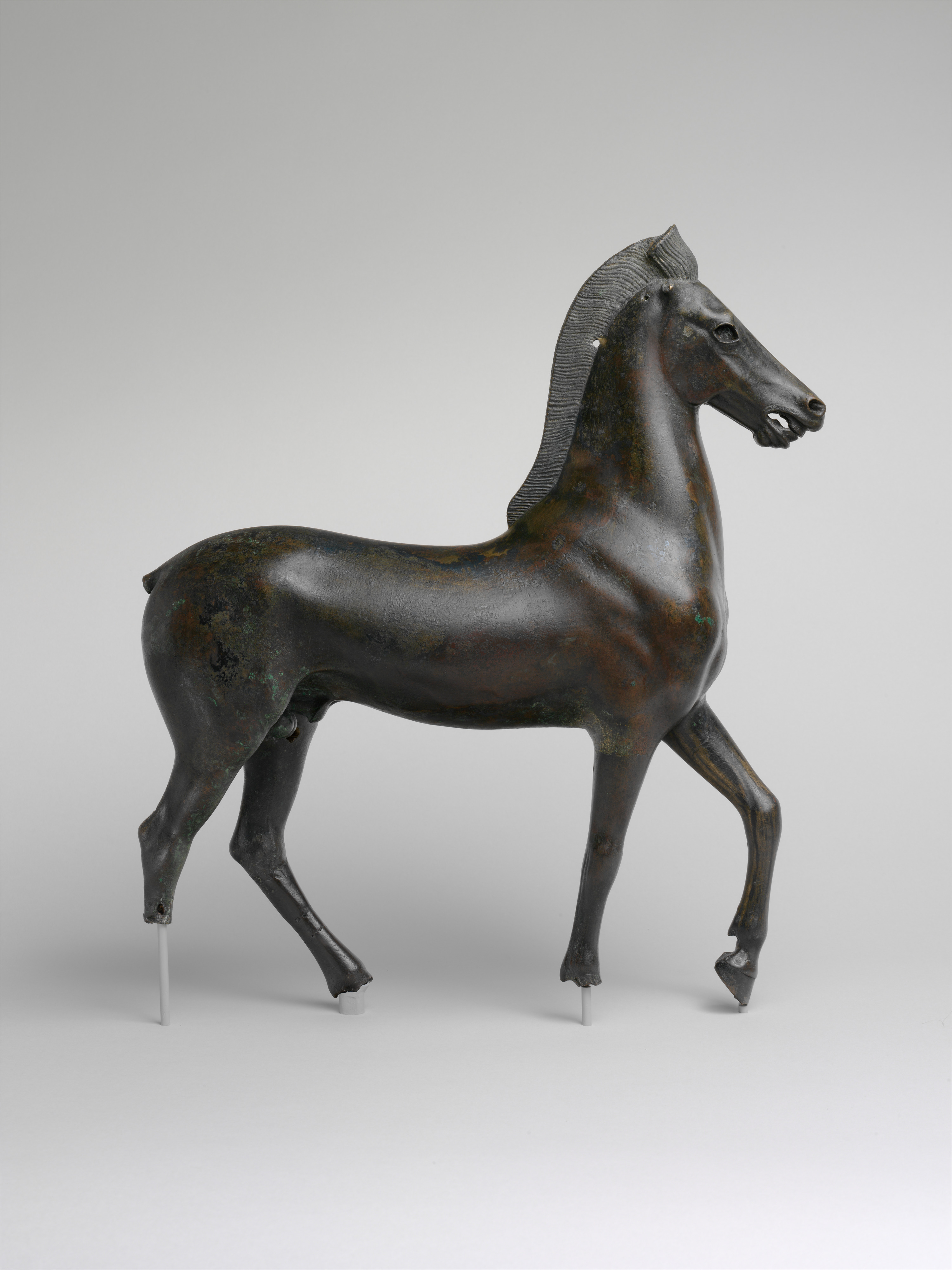
That horse is the Fletcher purchase in this archive with the most instructive afterlife. The Museum bought it on 16 February 1923 from a Paris dealer as Early Classical Greek, published it as one of the highest achievements of the period, condemned it as a modern forgery in 1967 and restored it to antiquity after thermoluminescence testing. Through all of that the credit line never changed, because the credit line was never a statement about the object. It was a statement about whose income had been spent.
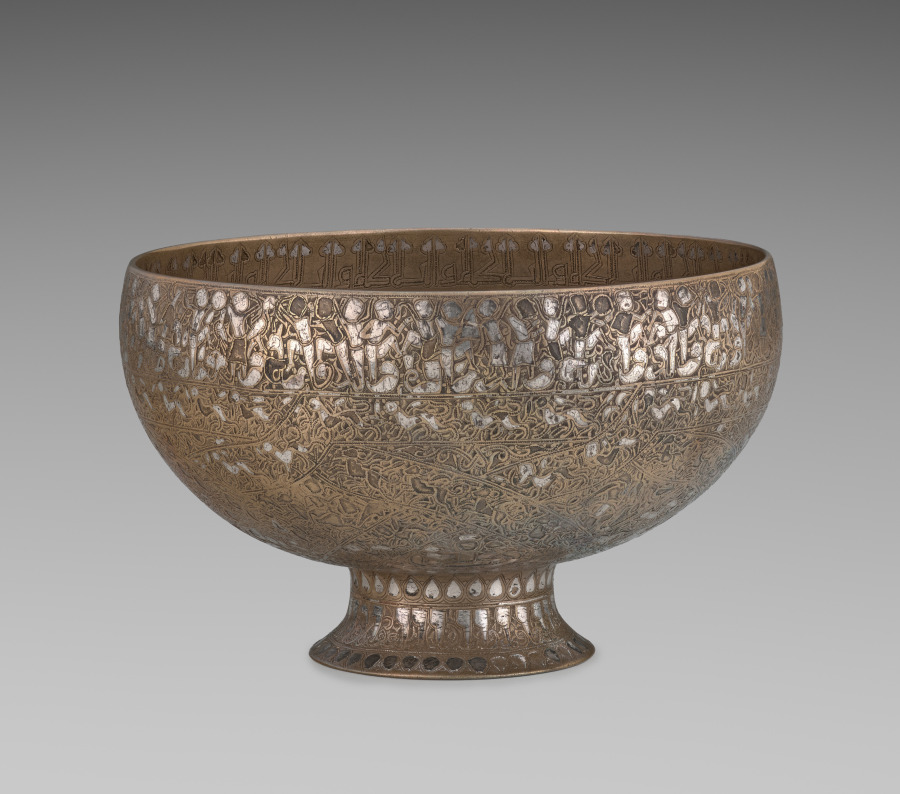
The other Fletcher purchases here are the Gennadios medallion in 1926, the van Eyck Crucifixion and Last Judgment bought out of the Hermitage sales in 1933, the Longmen emperor relief in 1935, the Vitellius tazza of the Aldobrandini set in 1945 and a Kashan minai bowl signed by Abu Zayd in 1964. The van Eyck purchase was secret until the New York Times reported it in November 1933. Fletcher had been dead for sixteen years.
Dick and Munsey show that the fund outlives the collection it arrived with
Harris Brisbane Dick, a paper manufacturer, gave the Museum more than three and a half thousand mostly nineteenth-century etchings in 1916, and with them a large fund for further purchases. The Museum's own account of its Department of Drawings and Prints treats that gift as the reason the department exists at all: it was the Dick acquisition that led to the hiring of William M. Ivins Jr. to build a print collection to rival the other curatorial departments. The etchings are what Dick collected. The fund is what has carried his name since. In this archive it bought Toulouse-Lautrec's Moulin Rouge: La Goulue and a first-state set of Hogarth's Harlot's Progress in 1932, sixteen years after the gift, and the Farnese Table in 1958, which is not a print and not on paper.
Frank A. Munsey, the newspaper publisher, died in December 1925 and made the Museum his residuary legatee. The Munsey Fund appears twice here, both times in 1932: the Clifford garniture of Greenwich armour, bought out of the Clarence Mackay collection, and the Julius Caesar panels of the Nine Heroes tapestries, now at The Cloisters. That is the general point. A fund named for a person buys what the museum's curators want in the year the income is available, and the name on the line tells you nothing about what the person liked.
Cleveland has one fund made in a donor's lifetime and one made at his death
Cleveland's two funds here were created in different ways, and the difference does not show in the credit line. Jeptha Homer Wade II, an incorporator of the Cleveland Museum of Art in 1913 and its president from 1920, established a purchasing fund during his lifetime, which the Encyclopedia of Cleveland History records as having grown to more than 1,000,000 dollars; he died on 6 March 1926. The fund's first purchase in this archive is the Wade Cup in 1944, eighteen years after his death, followed by a twelve-sided ewer with sphinxes in 1945, a Buyid-period tomb cover in 1954 and a Maximilian-style field armour in 2012, eighty-six years after Wade died. One of our own records describes the Wade Fund as established by his bequest. The Encyclopedia's account is that he established it while alive, and we record the disagreement here rather than resolve it.
John Long Severance, president of the same museum, died on 16 January 1936 and left it a collection valued at over 3,000,000 dollars. The museum's own history names the Severance Fund among the large bequests of the 1940s and 1950s that established its international reputation. Here it bought the head of a feline incense burner on 3 November 1948, the Boulle cabinet on 23 December 1949, the Krishna Lifting Mount Govardhan section from the Stoclet estate in 1973 and an Atget print of Versailles in 1985. Cleveland's accession records give the day of purchase for three of those four, which is more than the Met's credit lines give, and still none of them gives a price.
What the credit line hides is the price, the seller and the decision
A credit line that reads Rogers Fund, 1919 contains a year, a fund and nothing else, and on the objects here the missing information is exactly what a diligence reader wants. The Museum's own catalogue entry for The Harvesters describes its 1919 price as extraordinarily low and does not print it. The price of The Fortune-Teller in 1960 has not been published; contemporary reporting called it a very high sum. The Musicians was bought from a named private seller in 1952 and hung within months, and the price the Museum paid is not in the record. For the 1904 Dino purchase the Museum's total commitment is known, just over 250,000 dollars for the whole collection, and the price of any single object inside it is not.
The one credit line here that discloses more is the one that had to. Juan de Pareja is credited Purchase, Fletcher and Rogers Funds, and Bequest of Miss Adelaide Milton de Groot (1876-1967), by exchange, supplemented by gifts from friends of the Museum, 1971. The words by exchange record that objects from an earlier bequest were sold to help pay for it. A credit line is where a deaccession is most likely to leave a public trace, and it leaves it in three words.
How to read a fund in a credit line
Read the name as the name of an income stream and read the year as the accession year, and stop there. The person named is not the buyer in any sense that matters to provenance, was in most cases dead, and in Rogers' case had no recorded view about art at all. The buyer is the institution, acting through people the line does not name, on a date the accession number fixes more precisely than the credit line does.
Then go to the fund's own founding document, because it tells you what the money was allowed to buy. Rogers' will restricted the income to art objects and library books. Fletcher's will separated his collection, which the Museum had to show together, from his residue, which it could spend as it chose. Wade's was a lifetime endowment, Severance's a bequest. None of those constraints appears on the label, and all of them shaped what could be bought. In our records the credit line is copied exactly as the museum prints it, the founding document is cited where we have read it, and the price is recorded as not published where the museum has not published it. A line that reads like a buyer's name is a line that has to be read twice.
Why this archive is free to read
We do this for everyone who loves art. The people who have studied it for years, and the people who just stopped to look. Iconotheca exists so that what we learn belongs to all of them.
Nobody pays us for this. No ads, no sponsors, no commercial interest. These works belong to all of us, and we would rather share them with as many people as we can than keep them to ourselves.
If it gave you something today, tell us to keep going. Follow us, leave a like, or write a positive comment. We read every one, and they are what keeps us going.
Questions
It names the endowment fund whose income paid for the object and the year the object was accessioned. It does not name a buyer in the ordinary sense, and it does not record the price, the seller or the people who decided to buy. Jacob S. Rogers died in 1901 and The Harvesters was bought on his fund's income in 1919.
He was president of the Rogers Locomotive Works in Paterson, New Jersey, and died on 2 July 1901 leaving the Metropolitan Museum of Art the residue of his estate, roughly 5,000,000 dollars plus real estate. His will allowed only the income to be spent, on rare and desirable art objects and library books, which is why the Rogers Fund has bought objects continuously from 1903 to the present.
In this archive, never. Across thirty-two records bought on six named funds, the namesake had died between six and eighty-six years before the purchase. The Bugatti desk chair was bought on the Rogers Fund in 1970, sixty-nine years after Rogers died.
No. The Metropolitan Museum's own entry for The Harvesters calls the 1919 price extraordinarily low without giving it, and the prices of The Fortune-Teller in 1960 and The Musicians in 1952 are not published. A credit line records the source of money, not the amount.
The first is an object Fletcher owned and left to the Museum in his 1917 bequest. The second is an object the Museum bought later with income from the residue of his estate, which his will's eighth clause left to the Museum. The Bulletin of November 1917 put that residue at over 3,000,000 dollars.
Sources
- 1Jonathan Bloom, This Weekend in Met History: July 2, The Metropolitan Museum of Art, Perspectives, 1 July 2011. Read in full 15 September 2026. Source for Rogers' death on 2 July 1901, the roughly 5,000,000 dollars plus real estate, the will's income-only clause, the 200,000 dollar income by 1904 and the first purchase of 23 January 1903. metmuseum.org/perspectives/...
- 2Robert W. de Forest, The Notable Bequest of Isaac D. Fletcher: His Solution of the Museum Problem of Conditional Gifts, The Metropolitan Museum of Art Bulletin, vol. 12, no. 11, November 1917, pp. 216-218. Read on JSTOR 15 September 2026. Source for the 251 objects, the residuary estate of unquestionably over 3,000,000 dollars and the eighth clause of the will. jstor.org/stable/...
- 3The Metropolitan Museum of Art, Drawings and Prints, department history. Read 15 September 2026. Source for the 1916 acquisition of more than thirty-five hundred etchings from Harris Brisbane Dick, the fund for additional purchases and the hiring of William M. Ivins Jr. metmuseum.org/departments/...
- 4Encyclopedia of Cleveland History, Case Western Reserve University, entry Wade, Jeptha Homer II. Read 15 September 2026. Source for the dates 15 October 1857 to 6 March 1926, the presidency from 1920 and the purchasing fund of more than 1,000,000 dollars. case.edu/ech/...
- 5Encyclopedia of Cleveland History, Case Western Reserve University, entry Severance, John Long. Read 15 September 2026. Source for the dates 8 May 1863 to 16 January 1936 and the collection valued at over 3,000,000 dollars left to the museum. case.edu/ech/...
- 6The Cleveland Museum of Art, Museum History. Read 15 September 2026. Source for the Severance Fund among the bequests of the 1940s and 1950s. clevelandart.org/about-museum/...
- 7The Metropolitan Museum of Art, Open Access Collection API, object 435809 (The Harvesters, Rogers Fund, 1919), object 480706 (Bugatti desk chair, Rogers Fund, 1970), object 251268 (bronze horse, Fletcher Fund, 1923), object 436838 (The Fortune-Teller, Rogers Fund, 1960), object 437869 (Juan de Pareja). Credit lines read directly from the API 15 September 2026. collectionapi.metmuseum.org/public/...
- 9New-York Historical Society, William Thompson Dewart collection of Frank A. Munsey and New York Sun papers, biographical note, hosted by NYU Special Collections. Read 15 September 2026. Source for Munsey's death in December 1925 and the bulk of his estate passing to the Metropolitan Museum of Art. dlib.nyu.edu/findingaids/...
- 8The Metropolitan Museum of Art, collection record for Jean-Francois Raffaelli, The Fletcher Mansion, New York City, 17.120.228, credit line Mr. and Mrs. Isaac D. Fletcher Collection, Bequest of Isaac D. Fletcher, 1917. Read 15 September 2026. metmuseum.org/art/...
More in Museums and Exhibitions
The partAn Exhibition History Holds Four Different Events
One hundred and eighty-six exhibition entries across 60 records, and they are not one kind of thing.
The object the museum keeps running
Six objects in this archive are still wound, played or demonstrated by the institutions that hold them.
The only time the public saw it was a pre-sale view
For some of the best-known objects in this archive, the whole public exhibition history is a viewing arranged in order to sell them, scheduled to...