Paintings Draw the Attribution Fights, but Glass Is Disputed Far More Often
Seven of 45 paintings carry a disputed attribution and seven of 16 glasses do. No print does. A table of 330 records by object type.
Records in this piece: Under the Wave off Kanagawa (Kanagawa oki nami ura), also known as The Great Wave, from the series Thirty-Six Views of Mount Fuji, Melencolia I, The Rhinoceros, Christ Preaching, Healing the Sick, and Blessing the Children ("The Hundred Guilder Print"), The Great Dish from the Mildenhall Treasure, The Water Newton Treasure, The Luck of Edenhall, The Corning Ewer, Hedwig Beaker, The Last Judgment Triptych
On this page 4 sections
ContentsClose
In short
- In the 330 published records, 63 carry a disputed attribution. Painting has the most disputed records by count, 7 of 45 (16 per cent), but glass has the highest share, 7 of 16 (44 per cent).
- No print is disputed. All 18 are accepted as to maker, and the records grade the individual impression instead.
- Silver is the type with the most records that name no maker: 9 of 17. All nine are ancient or early medieval silver, most of it from hoards and church treasures, and none carries a surviving maker's mark.
- The disputes in glass are mostly about where and when, while the disputes in painting are about whose hand.
Seven of 45 paintings are disputed and seven of 16 glasses are
In the 330 published records, 63 carry a disputed attribution, and glass has the highest share of them, not painting. Painting has 7 disputed records of 45 (16 per cent) plus one rejected. Glass has 7 of 16 (44 per cent), Islamic metalwork 6 of 16, and textiles and arms and armour 5 of 16 each. The word disputed in these records means a named source or sources disagree with the catalogued attribution, and the record says who.
| Object type | Records | Accepted | Disputed | Disputed % | No maker known | Other |
|---|---|---|---|---|---|---|
| Glass | 16 | 6 | 7 | 44 | 3 | 0 |
| Islamic metalwork | 16 | 9 | 6 | 38 | 1 | 0 |
| Textile | 16 | 4 | 5 | 31 | 5 | 2 |
| Arms and armour | 16 | 5 | 5 | 31 | 4 | 2 |
| Manuscript | 19 | 8 | 5 | 26 | 2 | 4 |
| Map | 19 | 8 | 5 | 26 | 6 | 0 |
| Printed book | 16 | 11 | 4 | 25 | 0 | 1 |
| Antiquity | 17 | 4 | 4 | 24 | 5 | 4 |
| Clocks and instruments | 17 | 10 | 4 | 24 | 2 | 1 |
| Goldsmith's work | 17 | 8 | 3 | 18 | 6 | 0 |
| Painting | 45 | 37 | 7 | 16 | 0 | 1 |
| Musical instrument | 16 | 10 | 2 | 12 | 4 | 0 |
| Furniture | 17 | 11 | 2 | 12 | 2 | 2 |
| Photograph | 17 | 14 | 2 | 12 | 1 | 0 |
| Sculpture | 16 | 11 | 1 | 6 | 2 | 2 |
| Silver | 17 | 7 | 1 | 6 | 9 | 0 |
| 18 | 18 | 0 | 0 | 0 | 0 | |
| Ceramic | 15 | 14 | 0 | 0 | 1 | 0 |
The table counts records and the types are not equal in how they were chosen, so the shares carry some noise. A single record moves a type by six points. The size of the gap between print and glass is not noise.
A print is never disputed because the dispute moves to the sheet
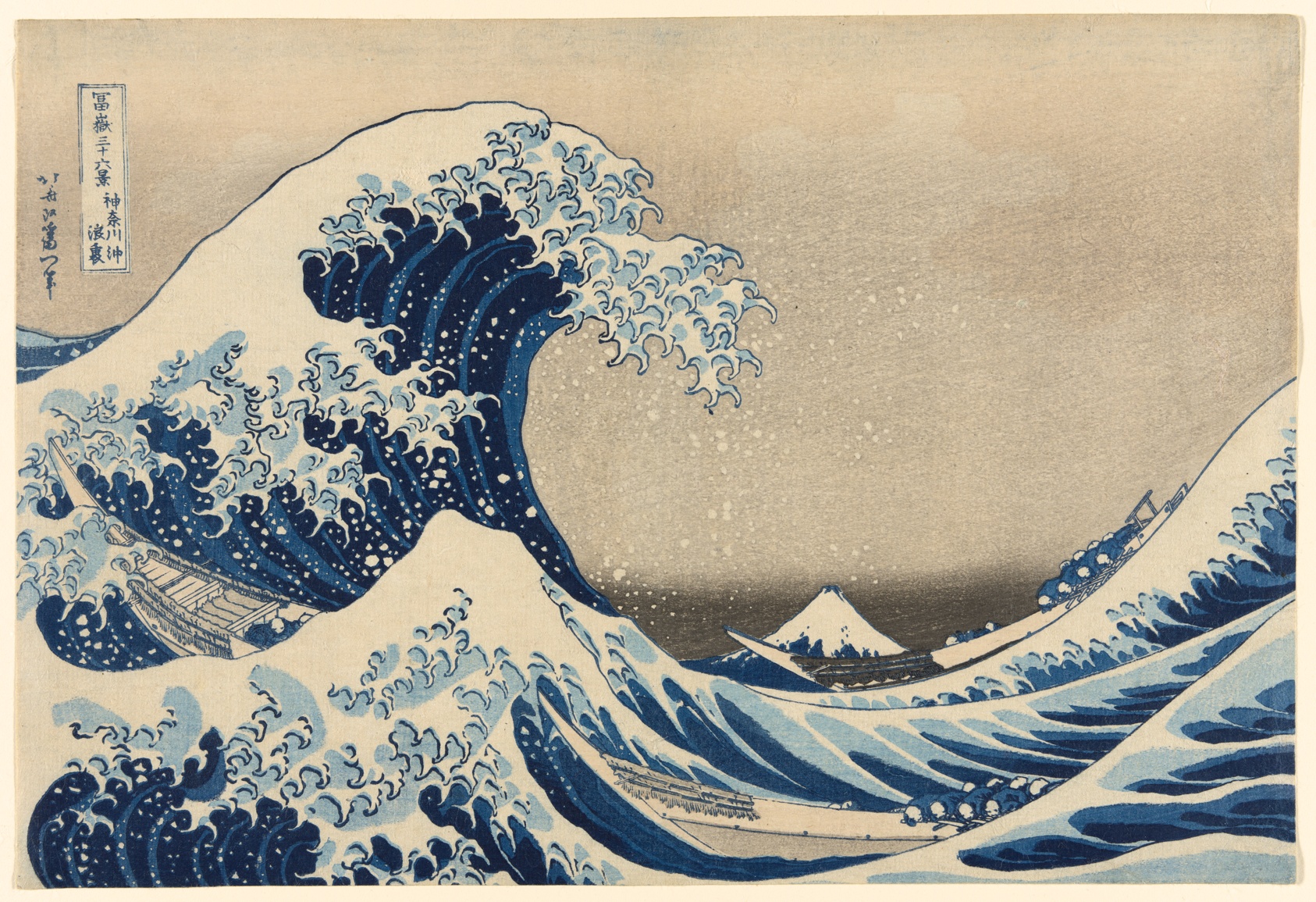
All 18 print records are accepted as to maker, because a print is a multiple, so the argument moves to the individual impression. The record for Duerer's Melencolia I says that no attribution dispute exists over the authorship of the print, and that what it grades is the individual impression. The record for the 1515 Rhinoceros says the same of the individual sheet. Rembrandt's Hundred Guilder Print is universally accepted as his own, and since he did not sign or date it, the date rests on style, technique and watermark evidence.
This is not a sign that printmaking is easier to know. It is a sign that in most of these records a signature, monogram or printed imprint fixes the maker and leaves the open questions to the state, the impression and the date.
Silver has no maker in nine of 17 records because nobody signed it
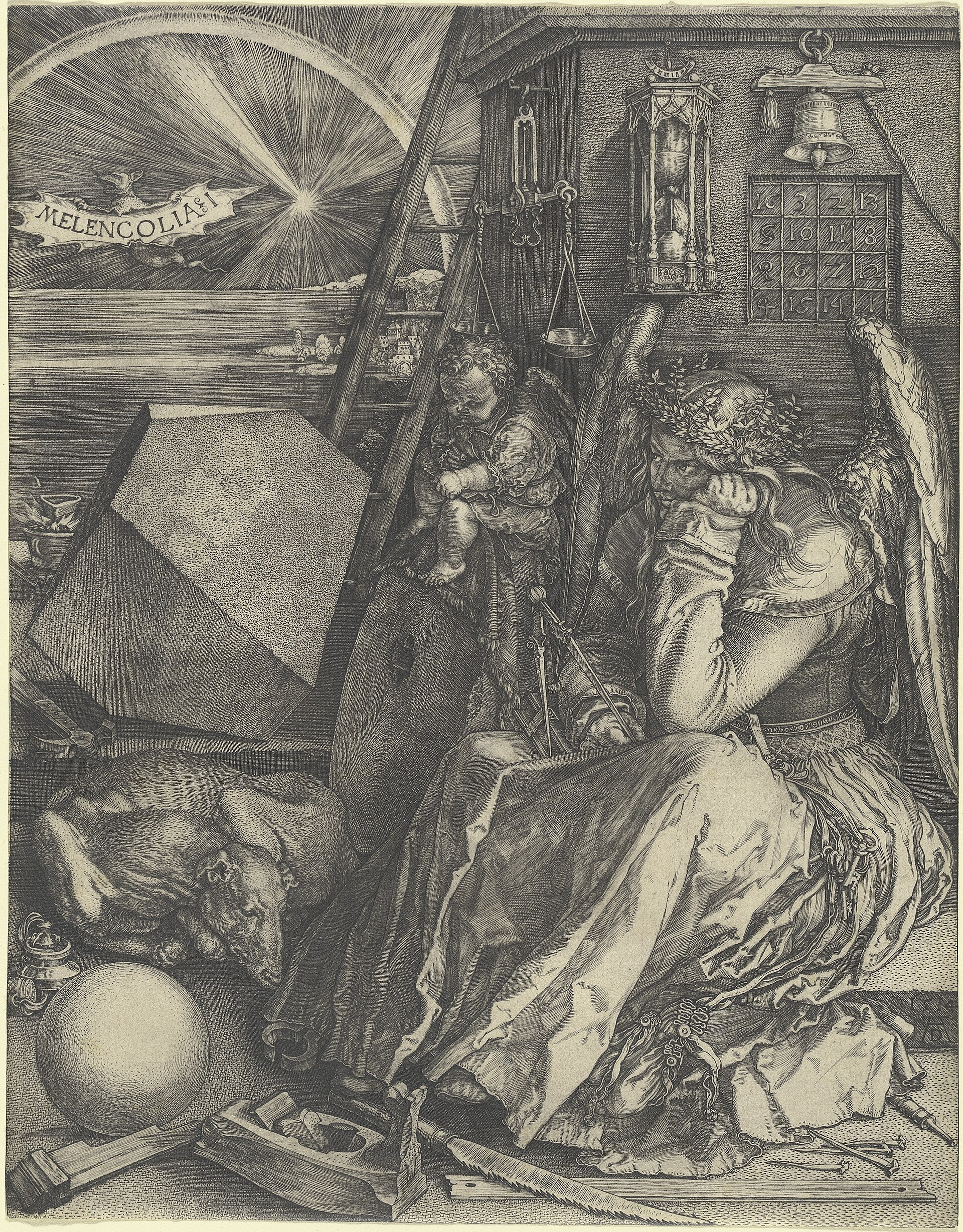
Nine of the 17 silver records name no maker, and all nine are ancient or early medieval silver, most of it from hoards and church treasures. They are the Antioch Chalice, the Morgantina silver, the Kaper Koraon treasure, the Mildenhall Great Dish, the Projecta Casket, the Corbridge Lanx, the Traprain Law treasure, the Trewhiddle hoard and the Water Newton treasure. For the Mildenhall dish the records state that no maker's mark or workshop stamp survives, and that the British Museum says only that manufacture somewhere in the general Mediterranean region is a safe surmise.
The Water Newton record puts it best. What survives is a record of donors and not of makers: four individuals are named in the votive inscriptions, and nobody who made the silver is. These are not disputed attributions. They are attributions that were never recorded, so the archive grades them unknown and not disputed.
In glass the argument is where and when, and in painting it is whose hand
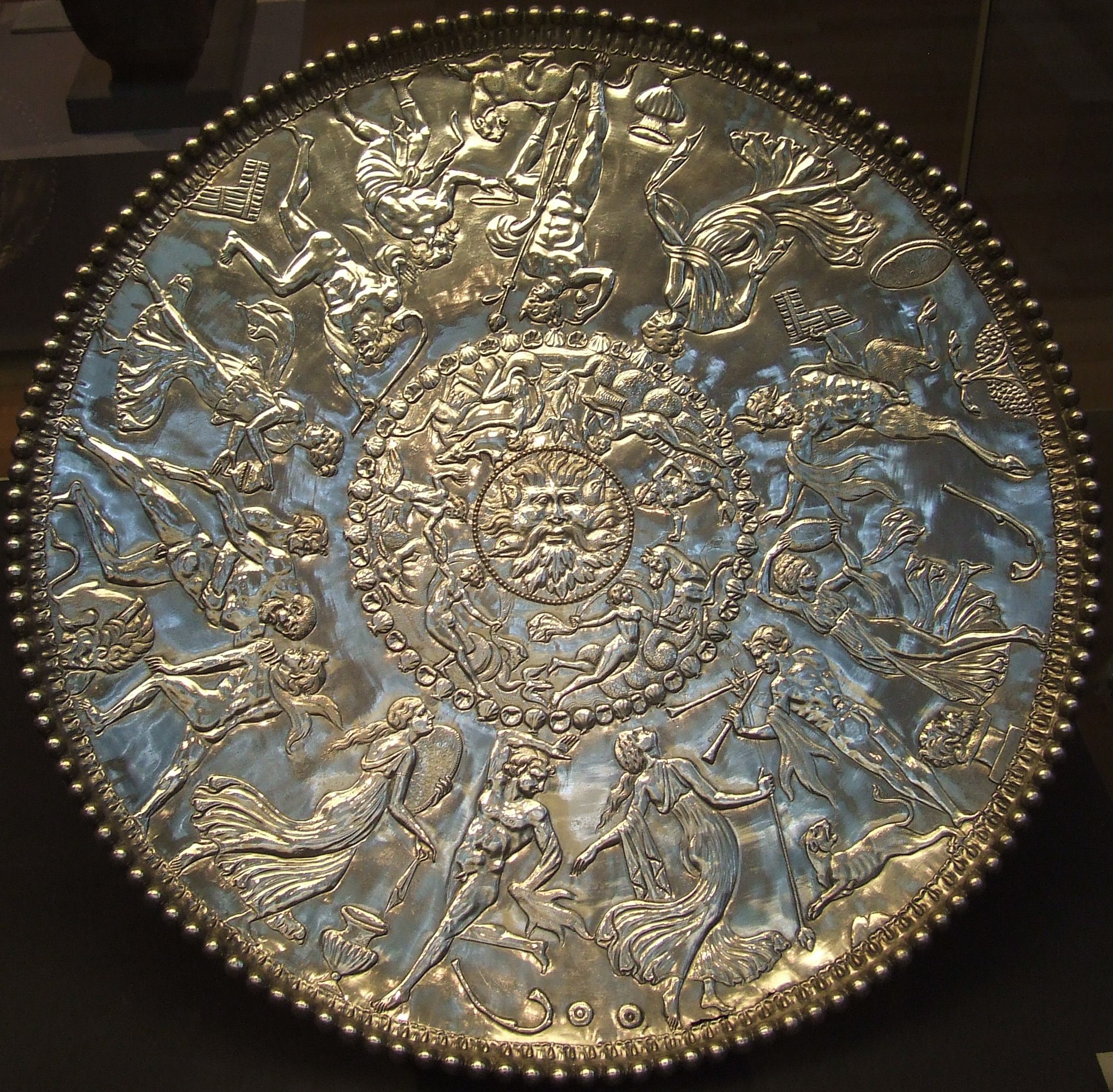
The seven disputed glass records are mostly arguments about where and when the piece was made. The Luck of Edenhall carries no maker's name or mark, scholars agree it is Near Eastern enamelled and gilt glass of the Mamluk period from about the middle of the 14th century, and they disagree on the city: Aleppo, Damascus and Cairo have all been proposed. The Corning ewer has no consensus on whether it was made in Iran or in Fatimid Egypt, and an ultraviolet test matched neither reference group. The Hedwig beaker was placed in a Byzantine or Fatimid milieu for a century, and in 2005 Rosemarie Lierke argued for Palermo.
The paintings are disputed on a different question. The Memling Last Judgment in Gdansk is unsigned, accepted as Memling's since the nineteenth century, and since 2014 a team has argued from dendrochronology, reflectography and XRF that Rogier van der Weyden made the design and underdrawing and Memling finished it. The record notes that no independent test of that proposal was found. A painting argument names a rival hand. A glass argument names a rival city.
Questions
By share, glass: 7 of 16 records (44 per cent) carry a disputed attribution. By count, painting has 7 of 45 (16 per cent), and Islamic metalwork has 6 of 16.
All 18 print records are accepted as to maker, because a signature, monogram or printed imprint fixes the author in most of the records. The records grade the individual impression or sheet instead, and the dispute moves there.
It means no maker's mark, name or workshop survives. Nine of 17 silver records are in that group, all ancient or early medieval silver, mostly from hoards and church treasures, and the archive grades them unknown, not disputed.
It is a count in a sample chosen for researchable objects, and one record moves a type by about six points. Read the gap between print and glass, which is large, and not the exact percentage.
Sources
- 1National Gallery of Art, Washington, object page for Melencolia I, accession 1943.3.3523 (Rosenwald Collection). nga.gov/artworks/...
- 2Rijksmuseum, Amsterdam, catalogue entry for Rhinocerus (Neushoorn), object number RP-P-OB-1473. rijksmuseum.nl/en/...
- 3National Gallery of Art, Washington, accession 1943.3.7173, 'Christ Preaching (The Hundred Guilder Print),' Rosenwald Collection (identified via the object's Wikimedia Commons file description and corroborating search-indexed National Gallery of Art catalogue text; the Gallery's own object page returned a server error on every direct access attempt during this research pass). nga.gov/artworks/...
- 4British Museum, object description text for the Great Dish (iconography of Oceanus and the Bacchic frieze, low relief and engraved line technique, and the statement on manufacture location), as reproduced via web search of britishmuseum.org content. britishmuseum.org/collection/...
- 5Samaretz, Nicolas. "Altar Space in Late Antiquity: The Water Newton Treasure and the Construction of the Sacred Space." Eikon Imago 15, e98767 (2026), Masaryk University / University of Fribourg. dx.doi.org/10.5209/...
- 6Victoria and Albert Museum, 'The Luck of Edenhall: history and legend of a 14th-century glass beaker.' vam.ac.uk/articles/...
- 7Victoria and Albert Museum, online collections catalogue, 'The Luck of Edenhall (beaker and case),' museum no. C.1 to B-1959. collections.vam.ac.uk/item/...
- 8British Museum, collection online, 'beaker', museum number 1959,0414.1. britishmuseum.org/collection/...
- 9Whitehouse, David. "The Corning Ewer: A Masterpiece of Islamic Cameo Glass." Journal of Glass Studies 35 (1993): 48-56. jstor.org/stable/...
- 10Hanserecesse, Zweite Abtheilung (1431-1476), Siebenter (Schluss-)Band, ed. Goswin Frhr. von der Ropp (Leipzig: Duncker & Humblot, 1892): editor's introduction on the taking of Thomas Portinari's galley, Utrecht diet of 1473, no. 41 (Portinari's specification of losses, pp. 115-117, with the editor's footnote identifying one of the two altar tables as Memling's Last Judgment), and nos. 134, 270, 272. Page images read from the Internet Archive scan. archive.org/details/...
More in Attribution and Authenticity
The partWhat the Name al-Mawsili Tells You About Where It Was Made
Two signed ewers, a pyxis and a candlestick carry or borrow the name al-Mawsili. What the name proves about Mosul, and where the museums place each...
The Name on an Instrument Covers More Than One Maker
A harpsichord with a false Ruckers rose, a Couchet rebuilt to pass, the oldest piano with a 1938 soundboard and a harp with a legend.
The Name on the Map Is an Argument: Four Early Maps
The Catalan Atlas is catalogued as 'Abraham Cresques ?'. The Carta Marina survives once, the Tabula Rogeriana only in later copies, the Paris...