The Name on an Instrument Covers More Than One Maker
A harpsichord with a false Ruckers rose, a Couchet rebuilt to pass, the oldest piano with a 1938 soundboard and a harp with a legend. What the name in the catalogue leaves out.
Records in this piece: Harpsichord, called the "Ruckers-Taskin", Harpsichord, Grand Piano, The Trinity College Harp
On this page 6 sections
ContentsClose
In short
- The Brussels harpsichord called the Ruckers-Taskin carries two makers' names, and research published in 2023 found that the Ruckers one was added about 1750 to a French instrument of about 1695, while Taskin's 1774 rebuild is the one part of the old story that holds.
- The Met's Couchet harpsichord was built as a single-manual instrument about 1650 and later lengthened, given a second keyboard and a fourth row of jacks, in a way its first technical study argued was meant to be mistaken for an original.
- The Met's Cristofori piano of 1720, the oldest surviving piano, had its soundboard replaced in 1938 and its compass shifted by about half an octave, so very little of what a visitor hears is what Cristofori built.
- The Trinity College harp is called Brian Boru's, a name that rests on a legend first printed in 1786, and the instrument has been rebuilt at least twice, most recently in 1961.
Four instruments, each catalogued under one name that covers several hands
Four instruments in this archive are each catalogued under a single name, and each of those names covers work by more than one hand. Instruments are made to be played, and a fine one was worth rebuilding when taste changed. Edwin Ripin, the Metropolitan Museum curator who first studied the Couchet harpsichord closely, argued that the finer a surviving keyboard or string instrument is, the likelier it is to have been rebuilt, and compared it to the violin family.
The table lists what the name claims and what the object holds.
| Instrument | The name it carries | Original work | Later hands | Holder |
|---|---|---|---|---|
| Harpsichord, 'Ruckers-Taskin' | Ruckers workshop, Antwerp, enlarged by Taskin | Case, soundboard and mechanism by an anonymous French workshop, about 1695 | Ruckers-style rose and signature added about 1750; Taskin rebuild 1774 | Musical Instruments Museum, Brussels (3848) |
| Harpsichord by Jan Couchet the Elder | Couchet, about 1650 | Single-manual instrument, about 1650 | Case lengthened five inches, second keyboard and fourth row of jacks added by an unidentified rebuilder | Metropolitan Museum of Art (89.4.2363) |
| Grand Piano by Bartolomeo Cristofori | Cristofori, 1720 | Case and action of 1720, inscription in ink | Soundboard replaced 1938; compass shifted; restored in Florence 1875 | Metropolitan Museum of Art (89.4.1219a-c) |
| The Trinity College Harp | Called Brian Boru's harp | Willow harp of the 14th or 15th century, maker unknown | Rebuilt at least twice, most recently 1961 | Trinity College Dublin |
The Ruckers-Taskin harpsichord in Brussels was a French instrument given a Flemish name
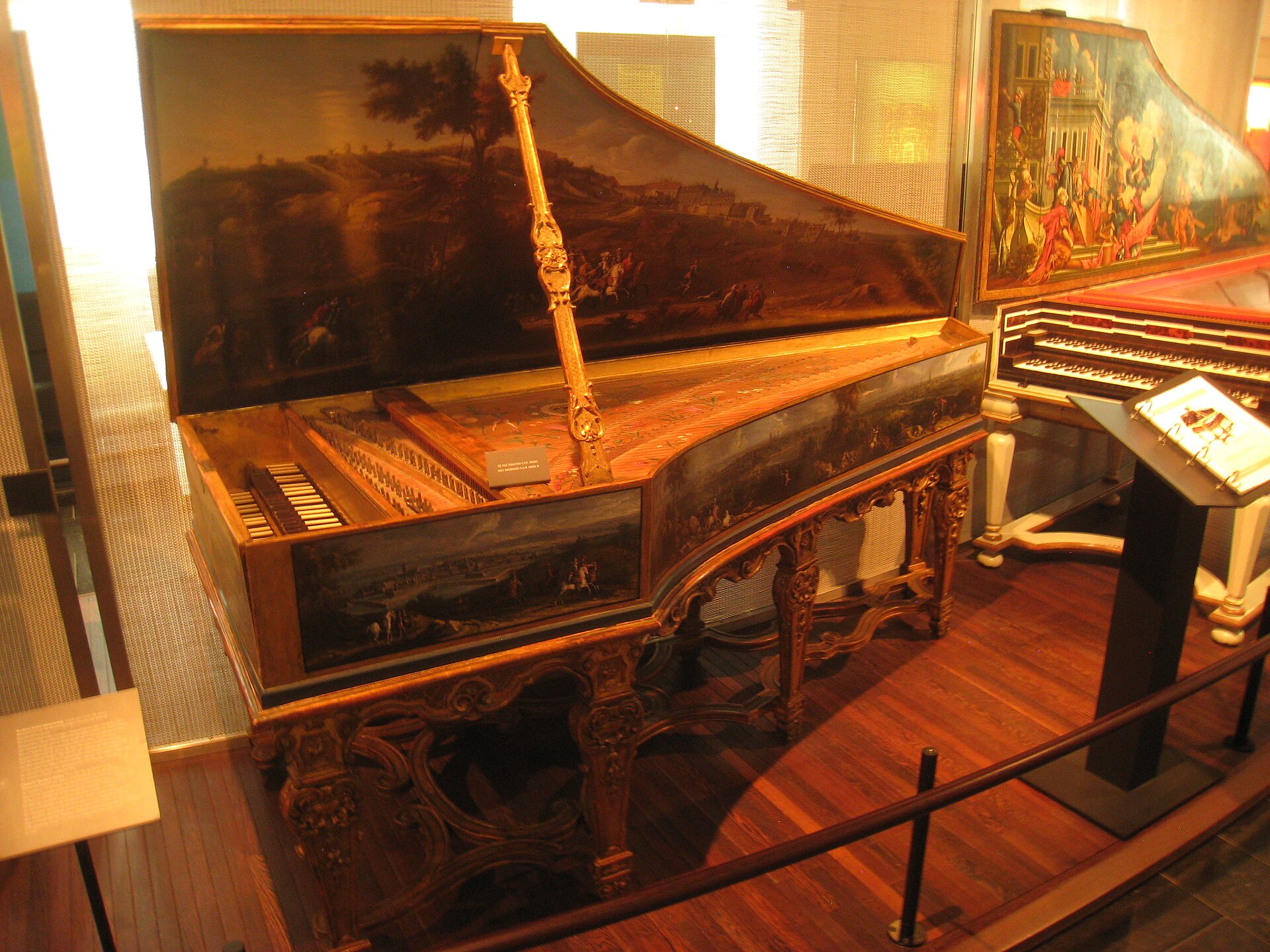
The Brussels harpsichord called the Ruckers-Taskin was catalogued for about two and a half centuries as a genuine Antwerp Ruckers instrument later enlarged by the Paris royal maker Pascal Taskin. Archaeometric research by the museum's own staff, published by Pascale Vandervellen in 2023, reversed the first half of that account. The case and soundboard are now attributed to an anonymous French workshop of about 1695, and the Ruckers-style rose and signature are dated to about 1750 and attributed to the workshop of the Paris maker Antoine Vater.
Taskin's 1774 work survives scrutiny, which means a genuine ravalement was performed on an instrument that was already a fake. The compound name is kept in the catalogue because that is how the object is searched for, and it now records a fiction. A different harpsichord by Andreas II Ruckers of 1646, reworked by Taskin in 1780, is in the Musee de la musique in Paris and is a separate, genuine object that shares the naming habit.
The museum's project involved more than thirty specialists across organology, art history, conservation and acoustics, and it still leaves two gaps. Nothing is documented about the instrument's first fifty years, or about its owners between Taskin's workshop in 1774 and the Brussels collection.
The Met's Couchet harpsichord was rebuilt so that the join would not show
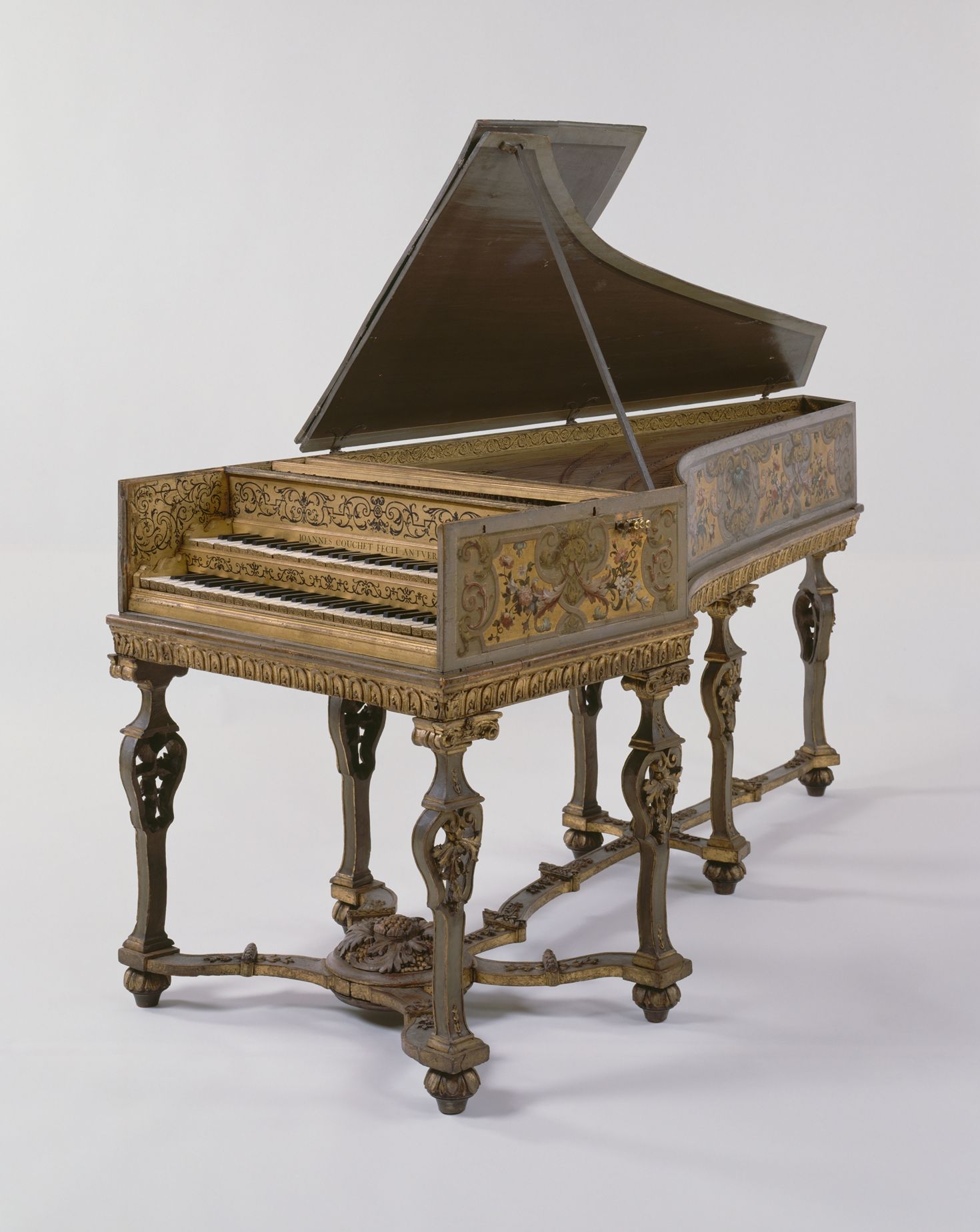
The Metropolitan Museum's Couchet harpsichord is physically two objects in one case: a single-manual instrument built by Jan Couchet the Elder about 1650 and an enlargement made later by an unidentified craftsman. The rebuilder cut the case open, lengthened it by five inches, built in a second keyboard and added a fourth row of jacks, then matched the gilt strapwork so well that the join was invisible until the keyboards were removed.
Ripin's study of 1969, published in the Museum's own journal, argued that the rebuilder wanted it that way, an enlargement built to be mistaken for an original two-manual Couchet. The instrument has been in the museum since 1889 in the Crosby Brown gift, and the headline name and date remain Couchet and about 1650. Nothing is documented about its owners between the rebuilding and the gift.
The oldest surviving piano has a soundboard from 1938
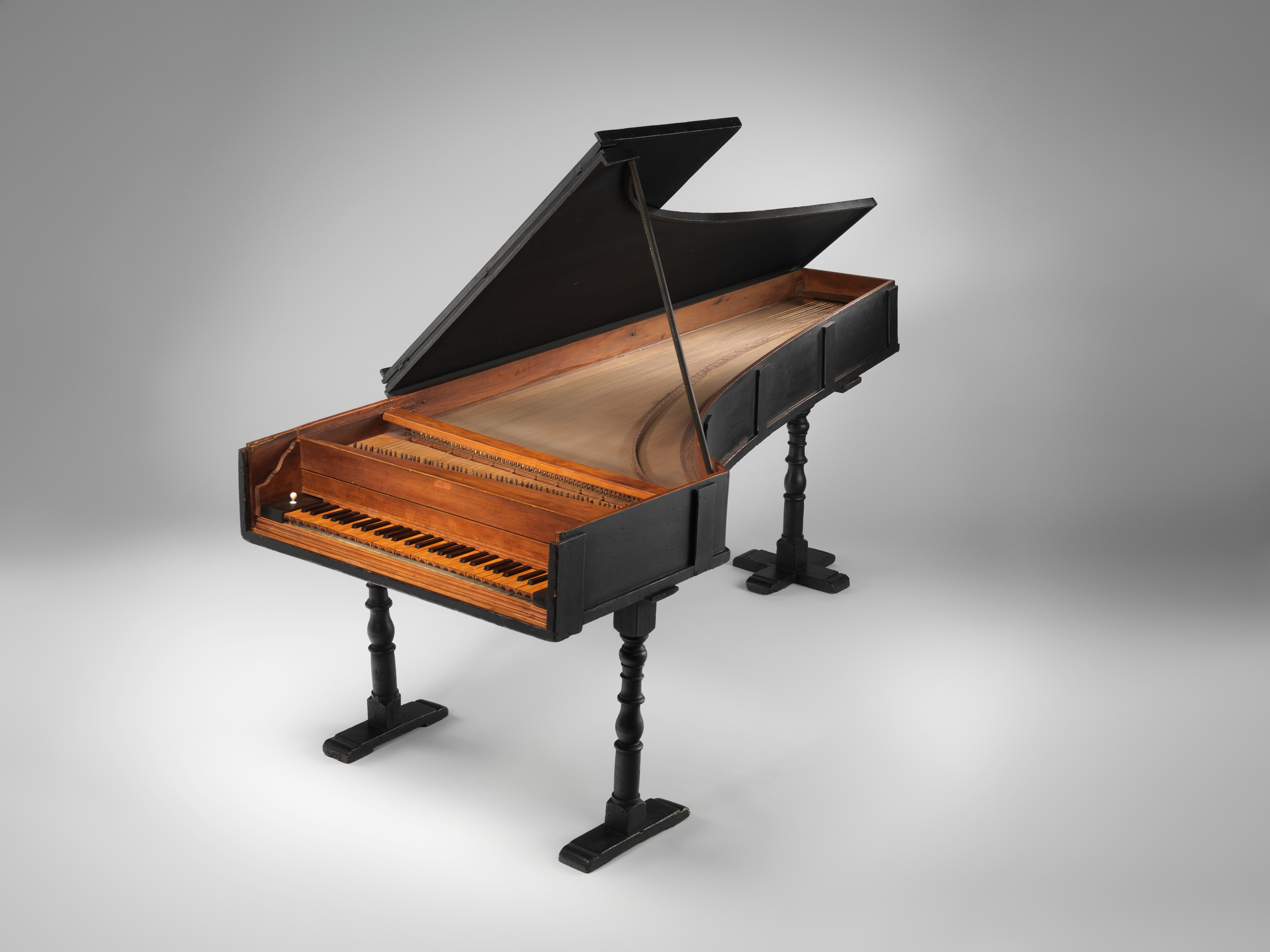
The Cristofori grand piano of 1720 at the Metropolitan Museum is the oldest surviving piano, and it is also the most altered of the three Cristofori instruments known. Its soundboard was replaced in 1938, and its compass of fifty-four notes was shifted by about half an octave. The maker's inscription is in ink on the present hammer rail, which the Museum believes may originally have been the nameboard.
The instrument-maker Denzil Wraight's judgement, reported in the archive's record, is that its original condition has been irretrievably lost. The piano can still be played and has been recorded, so the object is genuine and foundational while very little of the sound is what Cristofori built. It was restored in Florence in 1875 by Cesare Ponsicchi, who signed the rail, and it has been at the Museum since 1889.
The Trinity College harp carries a name that dates from 1786
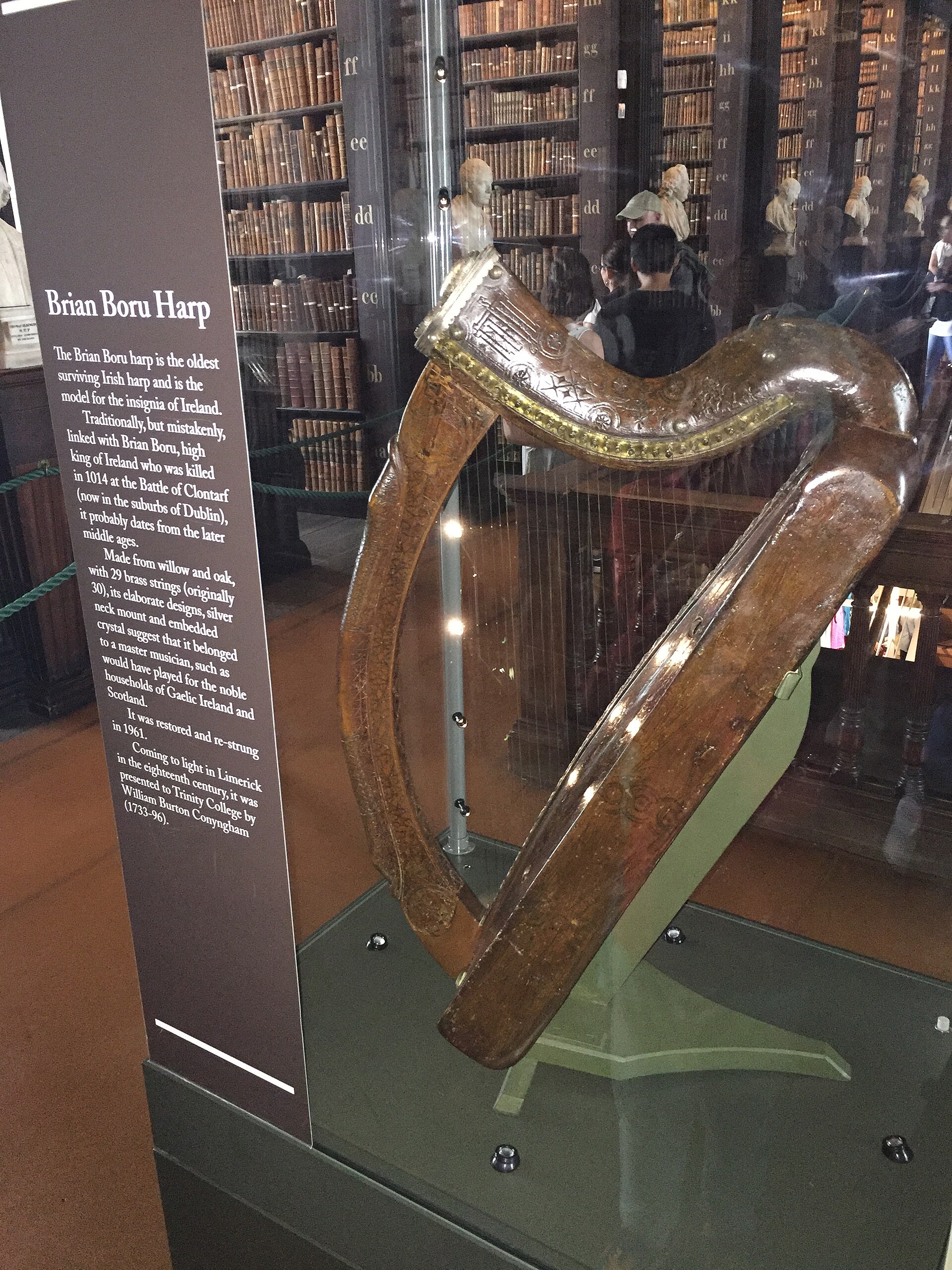
The Trinity College harp is a small wire-strung Gaelic harp of the 14th or 15th century, one of only three medieval harps of its type known to survive, and its popular name Brian Boru's harp comes from a legend first printed in 1786 by Charles Vallancey. The legend sent the harp to Rome with Brian Boru's son and on to Henry VIII and an Irish earl. George Petrie called the story a clumsy forgery in 1840, and the Tudor-era documents the legend would need were not found.
Nothing about the harp's making is documented. Keith Sanger and Alison Kinnaird proposed in 1992 that it was made in South Argyll in the 15th century, on stylistic comparison with the Queen Mary Harp in Scotland, and that remains a hypothesis. The ownership chain that can be traced begins in the eighteenth century, and the harp has been at Trinity College Dublin since 1782. It has also been substantially rebuilt at least twice, most recently in 1961, in ways researchers are still questioning. Its outline became the model for the Irish state's harp emblem and the Guinness trademark.
A catalogue name is a summary of the oldest and most famous layer
In all four cases the name in the catalogue records the oldest or most famous layer of the object and leaves out the later ones. Ruckers records a rose that was added, Couchet a date that predates the rebuild, Cristofori a year that predates the soundboard, and Brian Boru a story that predates the evidence. Each later layer is still evidence, about taste, about the market for famous makers and about what museums chose to keep.
A reader checking an instrument should look for three things before trusting the name: whether the museum's own research has revisited the attribution, whether the soundboard, case or neck is original, and who documented the rebuild and when. The Brussels project shows how much a name can move once an institution examines its own holdings.
Questions
No. Research published in 2023 attributes its case and soundboard to an anonymous French workshop of about 1695 and dates the Ruckers-style rose and signature to about 1750.
The case and the 1720 inscription belong to Cristofori's instrument, but the soundboard was replaced in 1938 and the compass was shifted by about half an octave.
No evidence supports it. The legend was first printed in 1786, and the harp dates to the 14th or 15th century, long after Brian Boru died in 1014.
Sources
- 1Pascale Vandervellen, 'Counterfeit Ruckers Instruments in the MIM Collection: A Case Study of the So-Called Ruckers-Taskin Harpsichord' (2023). researchgate.net/publication/...
- 2Musical Instruments Museum, Brussels, 'Study and conservation of the Ruckers instruments of the MIM'. mim.be/en/...
- 3Edwin M. Ripin, 'The Couchet Harpsichord in the Crosby Brown Collection', The Metropolitan Museum Journal, vol. 2 (1969). resources.metmuseum.org/resources/...
- 4Metropolitan Museum of Art, collection record for Grand Piano by Bartolomeo Cristofori, 1720, accession 89.4.1219a-c. metmuseum.org/art/...
- 5History Ireland, 'The Brian Boru harp'. historyireland.com/brian-boru-harp
- 6Simon Chadwick, Early Gaelic Harp Info, 'The Trinity College harp: dating'. earlygaelicharp.info/harps/...
More in Attribution and Authenticity
The partWhat the Name al-Mawsili Tells You About Where It Was Made
Two signed ewers, a pyxis and a candlestick carry or borrow the name al-Mawsili. What the name proves about Mosul, and where the museums place each...
Paintings Draw the Attribution Fights, but Glass Is Disputed Far More Often
Seven of 45 paintings carry a disputed attribution and seven of 16 glasses do. No print does. A table of 330 records by object type.
The Name on the Map Is an Argument: Four Early Maps
The Catalan Atlas is catalogued as 'Abraham Cresques ?'. The Carta Marina survives once, the Tabula Rogeriana only in later copies, the Paris...