The Thief Is Not a Link
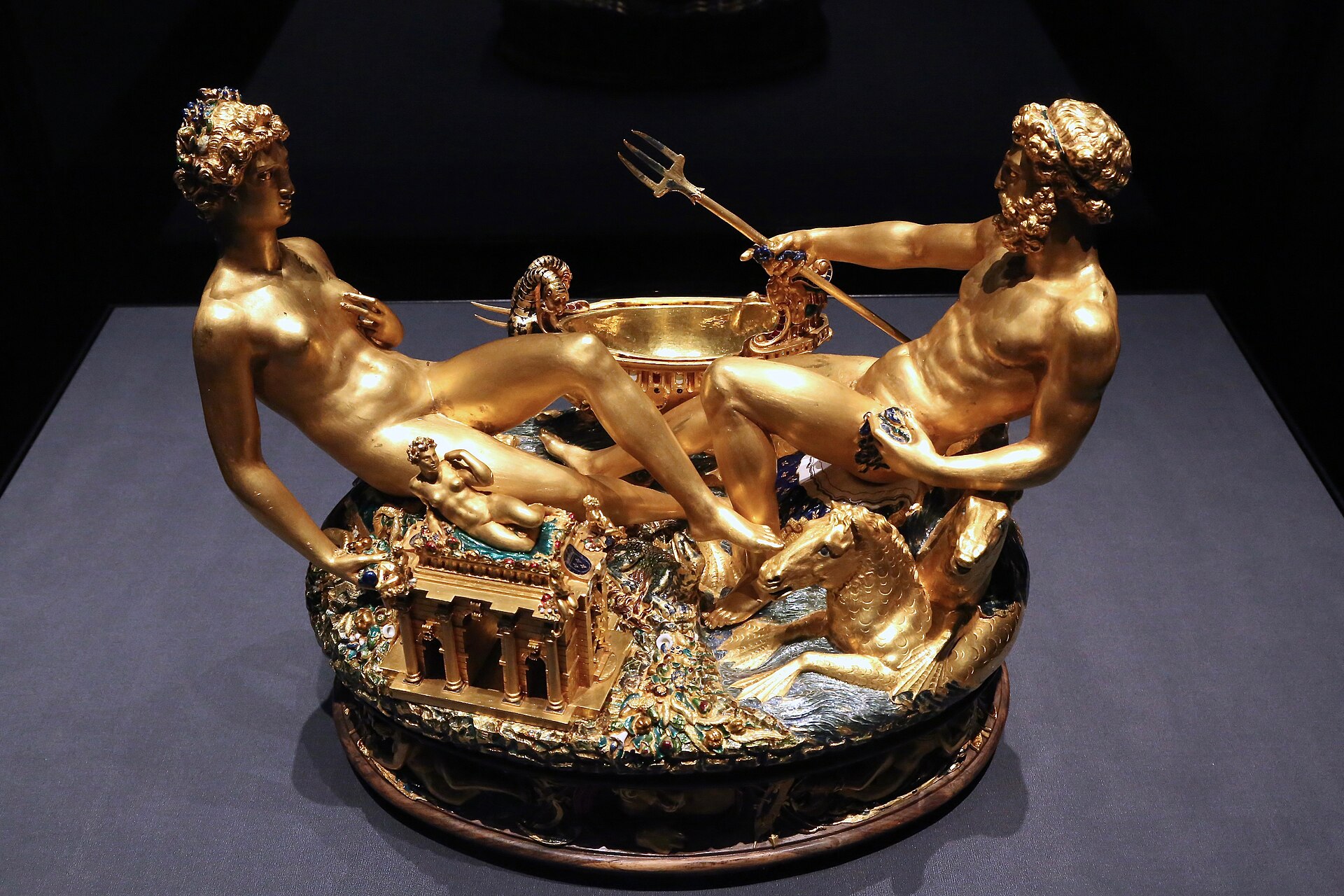
Ten objects in this archive were stolen, some twice. In no case does the thief appear as an owner. What a graded provenance does with a theft, and the five different ways the objects came back.
Records in this piece: Saliera (Salt Cellar of Francis I), Breguet No. 160, the Marie-Antoinette, The Concert, Vase with Viscaria, The Hope Diamond, The Coronation Chair, The Ashburnham Pentateuch, Violin, the 'Duke of Alcantara', Cantino planisphere, The Lydian Hoard (Karun Treasure)
On this page 9 sections
ContentsClose
In short
- Twelve theft events sit in the graded provenance chains of ten records in this archive. In every one of them the owner column for the stolen years reads Unknown, or names the last lawful owner, or names the thief with the word theft beside it. A thief is never graded as an owner, because possession is not title.
- The objects came back five different ways, and the way decided what the owner paid. The Saliera and the Stone of Scone cost their owners nothing. The Breguet No. 160 came back through a lawyer for a sum reported at 35,000 to 40,000 dollars. UCLA paid a settlement to the woman holding its Stradivari. The Cantino planisphere was bought back on the open market and re-entered its own library as a gift.
- Two objects have not come back. Vermeer's The Concert has been missing since 18 March 1990 and title never moved, because the Gardner carried no theft cover and no insurer stepped in. Van Gogh's Vase with Viscaria has been stolen twice from the same Cairo museum and is missing now.
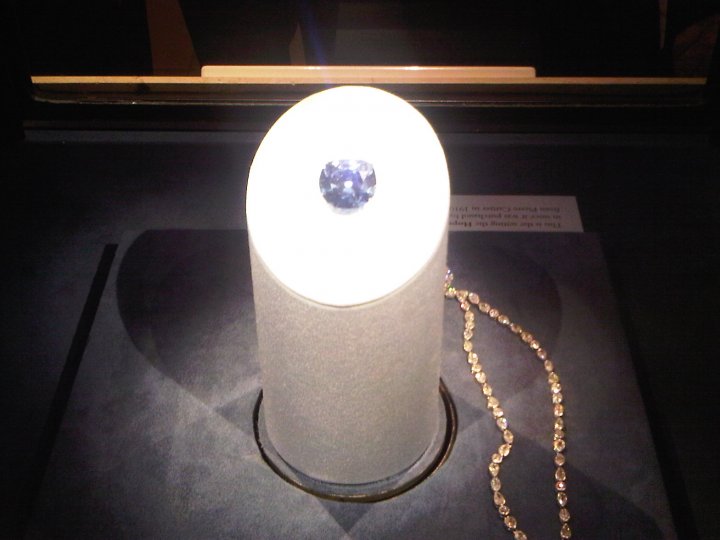
- The Hope Diamond is the case where the clock was the whole story. The first record of the recut stone in London is a memorandum dated 19 September 1812, two days after the twenty-year limitation on the 1792 theft from the Garde-Meuble had run out.
- A theft can be committed by the custodian. The hippocamp brooch of the Lydian Hoard was sold by the director of the museum holding it and replaced with a replica nine grams heavier. The theft was detected by weight, not by eye.
A stolen object keeps its owner
A theft does not create a new link in a provenance chain, and the way this archive grades ownership makes that visible. Every link carries an owner, a span of years and a grade of documented, disputed or unknown. When we pulled every theft, loss and recovery event out of the 279 published records, we found twelve theft events across ten objects, and not one of them puts the thief in the owner column as a proprietor. The Saliera's entry for 2003 to 2006 reads Robert Mang, theft and concealment. The Concert's entry for 1990 to the present reads Unknown, legal title remains with the Isabella Stewart Gardner Museum. The Hope Diamond's entry for 1792 to 1812 reads Unknown, theft and gap.
That is not squeamishness. It is the law of most jurisdictions we publish in, and it is the reason we read the twelve events together. A thief takes possession and not title, so the lawful owner's link continues underneath the theft for as long as the owner's claim survives. What varies is how long that claim survives, what it costs the owner to enforce it, and whether the object comes back at all. Those three things are the subject of this piece, and they turn out to depend far more on the jurisdiction and the finder than on the value of the object.
Five ways home, and what each one cost
The ten stolen objects in this archive came back, or did not, by five distinct mechanisms, and the mechanism decided the bill. We set them side by side because a reader who meets one restitution in isolation assumes it is typical. None of them is.
| Object | Taken | Back | How it came back | What the owner paid |
|---|---|---|---|---|
| Cellini, Saliera | 11 May 2003 | 21 January 2006 | Police recovery, thief led them to the box | Nothing recorded |
| Coronation Chair, Stone of Scone | 25 December 1950 | April 1951, returned February 1952 | Stone left at Arbroath Abbey, no prosecution | Nothing recorded |
| Breguet No. 160 | 15-16 April 1983 | August 2006, public 2007 | Negotiated return through a lawyer for the thief's widow | Reported 35,000 to 40,000 dollars for a first group of objects |
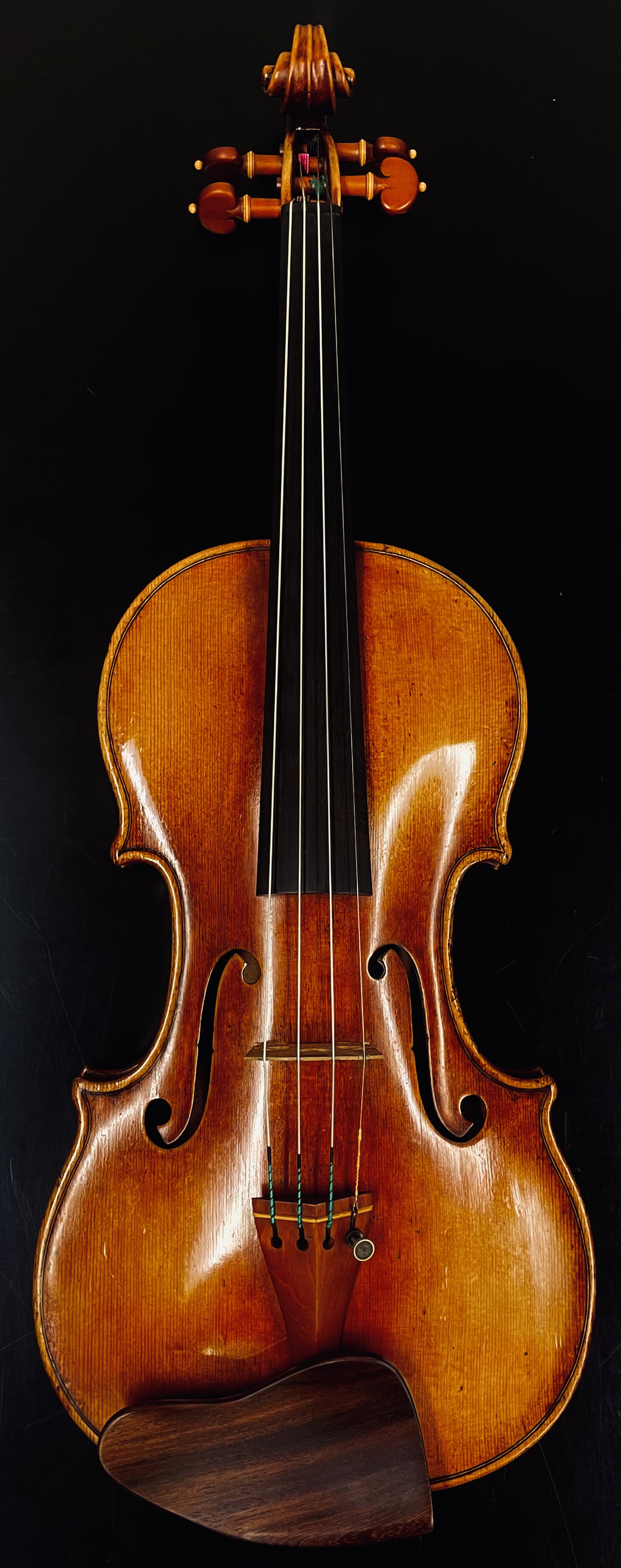
| Duke of Alcantara Stradivari | 2 August 1967 | 17 October 1994, settled 1 December 1995 | Court order, then settlement with the holder | A settlement sum, reported at 11,500 dollars |
| Cantino planisphere | 1859 | About 1868 to 1870 | Bought from a pork butcher's shop by a private buyer, given to the library | The buyer's price, not recorded |
| Ashburnham Pentateuch | 1842 | 23 February 1888 | Purchased from the London trade after a decade of proof-gathering | A purchase price, not found |
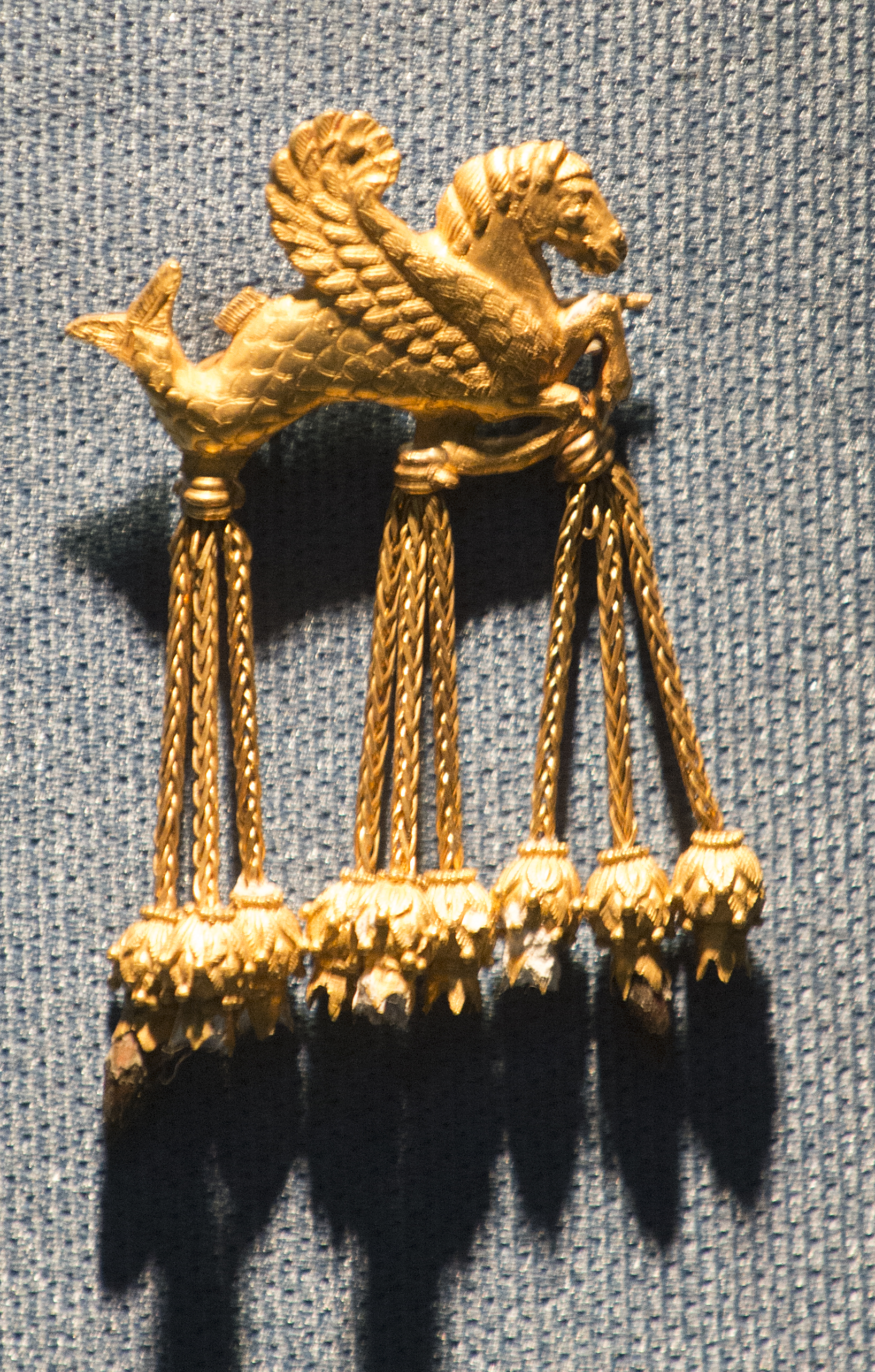
| Lydian Hoard, hippocamp brooch | March to August 2005 | November 2012 | Recovered by German authorities, means not disclosed | Nothing recorded |
| Hope Diamond | 11-17 September 1792 | Never, as French property | Limitation expired, stone reappeared recut | France lost the stone |
| Vermeer, The Concert | 18 March 1990 | Not recovered | Open investigation, reward offered | The object itself, so far |
| Van Gogh, Vase with Viscaria | 1978 and 21 August 2010 | About 1980, then not recovered | First recovery in Kuwait, second theft still open | The object itself, so far |
Read down the last column and the pattern is plain. Where the police or a finder handed the object back, the owner paid nothing. Where a third party held it and had a colourable claim, the owner paid to settle. Where the object was simply bought and sold on, the owner bought it back or lost it. The value of the object does not appear in that logic at all.
The recovery that cost nothing was the one the thief arranged
The Saliera came back because the man who took it wanted to be paid and got caught asking. Robert Mang climbed restoration scaffolding on the night of 11 May 2003, broke a window, took the Saliera from its case in well under a minute and left before anyone acted on an alarm the guards had dismissed as false. He kept it for close to three years. When an attempt to extort money from the museum led to his identification, he took the police himself, on 21 January 2006, to a patch of woodland at Brand in the Zwettl district of Lower Austria and showed them where the lead-lined box was buried. The museum's press release of 31 January 2006 announced the Saliera back on view, now behind a video-monitored, alarmed case with its own guard.
The Stone of Scone came back the same way, without the extortion. Four students removed it from under the Coronation Chair on Christmas Day 1950, breaking it in two, and it was left at Arbroath Abbey in April 1951. It went back to Westminster in February 1952 and nobody was prosecuted. In both cases the owner's title was never in question and the owner's outlay was zero, because the object was recovered as stolen property rather than bought as a chattel. The chair itself, we should say, never left the Abbey. The record grades the event as a theft from the chair, not of it.

Where a third party holds it, the owner pays to settle
A recovered object that has passed through an innocent hand costs its owner money, and two records here show the bill. The Breguet No. 160, the watch ordered in 1783 and finished in 1827, was taken from the L. A. Mayer Museum in Jerusalem on the night of 15 to 16 April 1983 with 105 other clocks and watches, through a window whose bars had been bent by hand. The thief, Naaman Diller, kept most of the haul in safe deposit boxes on three continents and died in 2004 having told his wife where it all was. In August 2006 a lawyer acting for an unnamed woman arranged the return of a first group of objects including No. 160, for a sum reported at roughly 35,000 dollars in one account and about 40,000 in another. Nobody was prosecuted for the burglary. The widow received five years' probation for receiving stolen goods, and the museum reopened its clock gallery in July 2009.
The Duke of Alcantara, the 1732 Stradivari that UCLA had owned since 1961, vanished from a graduate student's car in Pasadena on 2 August 1967. A music-store owner said she found the case beside a freeway on-ramp and kept it, unreported and unexamined, until she died in 1978. It passed by bequest to her nephew and by divorce settlement in 1993 to his former wife, who sent it for repair in January 1994 and was told what it was. She surrendered it to UCLA's Fowler Museum on 17 October 1994 under a court order that forbade either side to transfer, play or inspect it while the case ran. The settlement of 1 December 1995 gave the university sole possession and gave her a payment, reported in the wire coverage at 11,500 dollars. UCLA never lost title. It paid anyway, because the alternative was a trial over whether a finder who keeps an instrument for eleven years and never reports it can pass good title to her heirs.
Where the object was sold on, the owner bought it back or lost it
Two of the oldest thefts in the archive ended with the original owner paying full price for its own property. The Cantino planisphere, the Portuguese chart of 1502 that Ercole d'Este acquired the year it was made, was taken from the ducal palace at Modena when a crowd invaded it in 1859, at some point having been pasted onto a screen with its top margin cut off. Around 1868 Giuseppe Boni recognised it in a pork butcher's shop in the Via Farini, still serving as a screen, bought it and took the vellum off the frame. The Biblioteca Estense's own note reads: gift of Giuseppe Boni, 1870, but already in the old Este collection. The chart came home as a donation, not as a recovery, because it had been purchased on the open market rather than seized as stolen goods. The library's provenance carries a gap of about nine years with no owner at all, which is the honest way to record a theft nobody solved.
The Ashburnham Pentateuch cost the French state a decade of paperwork and a purchase price. Guglielmo Libri, Inspector-General of Libraries, stole it from Tours in 1842 with the run of the provincial collections he was meant to be cataloguing, and sold it into England. A French court convicted him in absentia on 22 June 1850 and sentenced him to ten years; he never returned to France and the conviction did not touch the manuscript's ownership in England. Leopold Delisle spent most of the 1880s proving from the manuscripts themselves that a large part of the Ashburnham collection had been taken from French public libraries, and on 23 February 1888 the Bibliotheque nationale bought this one from the London firm of Trubner. It sits today under the shelfmark Nouvelles acquisitions latines 2334, and the catalogue still records its old number: Libri 13. The thief's own inventory number is part of the accession record.

The clock is the whole story in one record
The Hope Diamond is the one object in this archive whose theft ended not with a recovery but with a date on a calendar. The French Blue was taken from the Garde-Meuble in Paris in the repeated robbery of 11 to 17 September 1792. No owner is documented for the next twenty years, and somewhere in that window the stone was recut from about 69 carats to about 45 by an unknown hand on unknown instructions. The first record of the recut stone is a memorandum by the London jeweller John Francillon describing a 45.5 carat blue diamond he examined by leave of the merchant Daniel Eliason. The Smithsonian Libraries' account of the file dates that memorandum to 19 September 1812, two days after the twenty-year limitation on crimes of the Revolutionary period had expired, at which point France could no longer prosecute for the stone even if it recognised it. Our record says whether that is coincidence or calculation is not established, and we hold to that. What is established is that the French state's claim died on a date and that the only documented reappearance of the stone falls two days after it.
Everything after that is ordinary provenance. The stone appears in Henry Philip Hope's published gem catalogue of 1839, which gives it its name; a 2009 study of a lead cast in Paris suggests Hope may have owned the French Blue itself before the recutting, which the published literature raises and does not prove. The point for a reader of chains is that a theft can be extinguished by nothing more than time, and that a chain graded honestly will show exactly where the clock ran out.
The thief can be the custodian
One theft in this archive was committed by the person paid to guard the object, and it was detected by a balance. After the Lydian Hoard's 363 pieces went home from the Metropolitan Museum to Usak in 1993, the winged hippocamp brooch was removed from its case, probably between March and August 2005, and sold by the museum's director, Kazim Akbiyikoglu, to a buyer nobody has named. In its place went a replica weighing 23.5 grams against the original's 14.3. The director admitted the sale and was convicted in 2009. The genuine brooch was recovered in Germany in November 2012, by means the sources do not disclose, and in December 2013 a visitor to Usak still found the confiscated replica in the case, the real piece being in Ankara pending transfer.
Our record grades the theft documented, the seven years between theft and recovery unknown, and the recovery itself disputed in one of the two Lydian records and documented in the other, because the accounts of how the piece was located do not agree. A custodian's theft is the hardest kind to grade, because the owner and the thief share an address for the whole of the missing period, and the chain looks continuous until somebody weighs the object.
Two chains that end in an empty frame
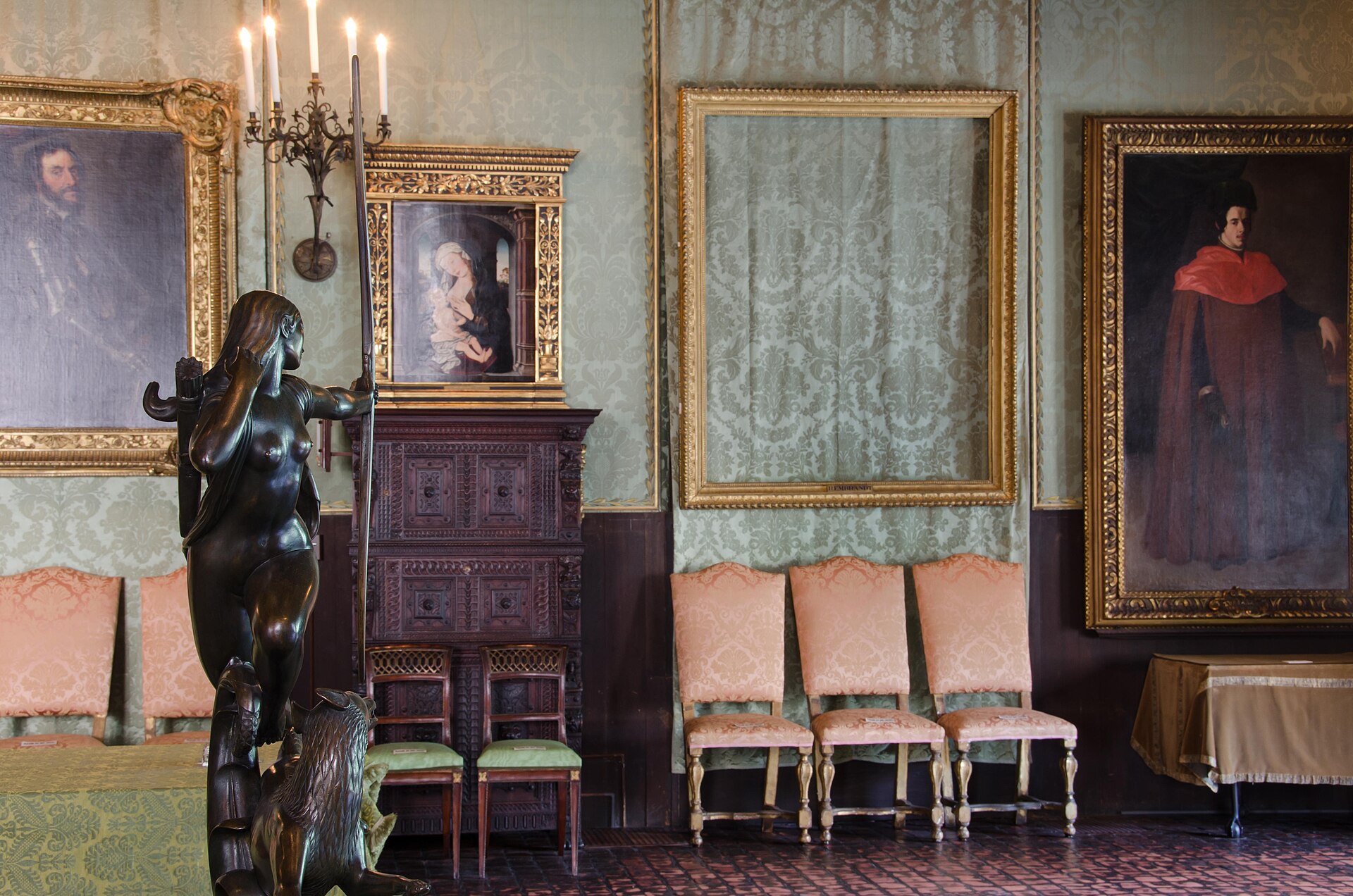
Two objects in this archive are published with a current location of nowhere, and both are stolen paintings. Vermeer's The Concert left the Dutch Room of the Isabella Stewart Gardner Museum between about half past midnight and a quarter to three on 18 March 1990, taken by two men in Boston police uniform along with twelve other objects. The museum's own account of the theft says the guard broke protocol and let them in, and that the loss remains an active investigation with a reward on offer. Title never moved. The museum carried no theft cover, so no insurer paid out and none acquired an interest, and the last link in our chain reads Unknown, legal title remains with the Isabella Stewart Gardner Museum. The frame still hangs on the wall because Gardner's will of 1924 forbids rearrangement, which means the theft is on permanent display.
Van Gogh's Vase with Viscaria has been stolen twice from the Mohamed Mahmoud Khalil Museum in Cairo. The first theft, dated 1978 in the contemporaneous accounts and disputed in others, ended about two years later with a recovery in Kuwait that nobody has fully explained and a rumour, never tested, that a copy had been handed back. The second, on 21 August 2010, was a box cutter in opening hours, with no working alarm in the building and seven of forty-three cameras running. Eleven ministry employees were convicted of negligence. The picture was still missing when the museum reopened in 2021 and is missing now. We publish both records because the objects are documented, photographed before the loss and owned. A stolen object is not an unrecorded one, and an archive that dropped every stolen thing would be recording the thief's success.
How to read a theft in a chain
A theft in a graded provenance is a span with a cause, and it should be read for three things. First, whose name is in the owner column for the missing years. If it is the thief's, the record is telling you who had possession, not who had title, and the word theft should be beside it. Second, the grade on the recovery. Documented means a court, a police file or an institutional record says how the object came back; disputed means two accounts disagree, as they do for the Lydian brooch and the first Van Gogh theft; unknown means nobody has said. Third, the mechanism, because it tells you what the owner's title was actually worth in that jurisdiction at that date. A title that costs a settlement to enforce, or a repurchase, or a decade of a librarian's proof, is a different thing from a title the police restore for free, and a chain that hides the difference is hiding the most useful fact in it.
We would add one thing we could not have said before reading these ten chains together. The recovered objects were not recovered because they were famous. They were recovered because a thief talked, a finder's heir sent an instrument for repair, a customs officer weighed a brooch, a librarian compared bindings. The famous ones that are still missing are missing because none of that has happened yet.
Questions
Not in this archive. Across twelve theft events in ten records the owner column for the stolen years reads Unknown, or keeps the last lawful owner, or names the thief with the word theft beside it. A thief takes possession, not title, and the grading reflects that.
The thief, Robert Mang, led the police on 21 January 2006 to a forest at Brand in Lower Austria where he had buried it in a lead-lined box, after an extortion attempt led to his identification. The Kunsthistorisches Museum put it back on display at the end of January 2006 and he was sentenced to five years.
The first record of the recut stone is John Francillon's memorandum in London describing a 45.5 carat blue diamond in Daniel Eliason's hands. The Smithsonian Libraries date it to 19 September 1812, two days after the twenty-year limitation on the September 1792 theft from the Garde-Meuble had expired. Whether the timing was calculated is not established.
Yes. The violin was surrendered under a court order on 17 October 1994, and the settlement of 1 December 1995 gave UCLA sole possession in exchange for a payment to the woman who had received it in a divorce settlement, reported in the press at 11,500 dollars. UCLA's title was never in doubt.
Vermeer's The Concert, taken from the Isabella Stewart Gardner Museum on 18 March 1990, and Van Gogh's Vase with Viscaria, taken from the Mohamed Mahmoud Khalil Museum in Cairo on 21 August 2010 after an earlier theft and recovery. Both are published here with title still in the museum and location unknown.
By weight. The replica put in its place at Usak weighs 23.5 grams against the original's 14.3. The museum's director admitted selling the genuine brooch in 2005 and was convicted in 2009; the original was recovered in Germany in November 2012.
Sources
- 1Isabella Stewart Gardner Museum, The Theft, museum website. Read in full 17 September 2026. Source for 18 March 1990, the two men in police uniform, the guard breaking protocol, the thirteen works and the standing reward. gardnermuseum.org/about/...
- 2Smithsonian Libraries and Biodiversity Heritage Library blog, From Jean-Baptiste Tavernier to the Smithsonian: Tracing the History of the Hope Diamond, October 2017. Read in full 17 September 2026. Source for the Francillon memorandum of 19 September 1812, the 45.5 carat description by leave of Daniel Eliason, and the two-day margin after the limitation period. blog.biodiversitylibrary.org/2017/...
- 3wien.ORF.at, Kriminalfall Saliera vor zehn Jahren geklaert, January 2016. Read 17 September 2026. Source for 21 January 2006, Robert Mang leading the police to Brand in the Zwettl district, the break-in over a building site and the five-year sentence. wien.orf.at/v2/...
- 4Kunsthistorisches Museum Wien, press release via APA-OTS, Saliera wieder im Kunsthistorischen Museum zu sehen, 31 January 2006. Read 17 September 2026. Source for the return to display and the new alarmed case with its own guard. ots.at/presseaussendung/...
- 5Deseret News, Associated Press wire, Violin Returned on a Sour Note After 27 Years, 23 October 1994. Read in full 17 September 2026. Source for the surrender to UCLA's Fowler Museum under a court order forbidding transfer, play or inspection, the divorce settlement, the aunt with a music store and the identification from a list of more than 500 missing instruments. deseret.com/1994/...
- 6Bibliotheque nationale de France, Archives et manuscrits, catalogue entry NAL 2334, Biblia. Pentateuchus, Pentateuque dit d'Ashburnham ou de Tours, with the former shelfmark Libri 13. Read 17 September 2026. archivesetmanuscrits.bnf.fr/ark:/...
- 7Francois Farges, Scott Sucher, Herbert Horovitz and Jean-Marc Fourcault, The French Blue and the Hope: New Data from the Discovery of a Historical Lead Cast, Gems and Gemology, Spring 2009, vol. 45, no. 1, abstract. Read 17 September 2026. Source for the 1792 theft, the recutting and the suggestion that Henry Philip Hope owned the French Blue before it was recut. gia.edu/gems-gemology/...
- 8Biblioteca Estense Universitaria, Modena, catalogue record for the Carta del Cantino, 1502, shelfmark C.G.A.2, carrying the library's own provenance note on the 1870 gift of Giuseppe Boni. Cited from the archive's record of the object. edl.cultura.gov.it/item/...
- 9UCLA Herb Alpert School of Music, The Allure of a Stradivarius. Read 17 September 2026. Source for the instrument's current keeping and use at the school. schoolofmusic.ucla.edu/the-allure-of-a-stradivarius
More in Provenance and Restitution
The partThe Last Link Is the Strongest One
Documentation in a provenance chain rises from 63 per cent at the earliest links to 96 per cent at the most recent.
The link that a death makes
Ninety-seven ownership links in this archive move an object because someone died. They are the longest links we hold, they carry no price, and they...
Silence and Argument Are Not the Same Gap
This archive grades 1,797 ownership links. 271 are marked unknown and 160 disputed, and the two do not fall on the same objects.