The Hope Diamond
Unrecorded Indian cutters; recut for Louis XIV by the court jeweller Sieur Pitau, and recut again by an unknown hand between 1792 and 1812 · Mined in India, probably at the Kollur workings in the Golconda field, before 1668; cut for Louis XIV in 1673; recut to its present form between 1792 and 1812
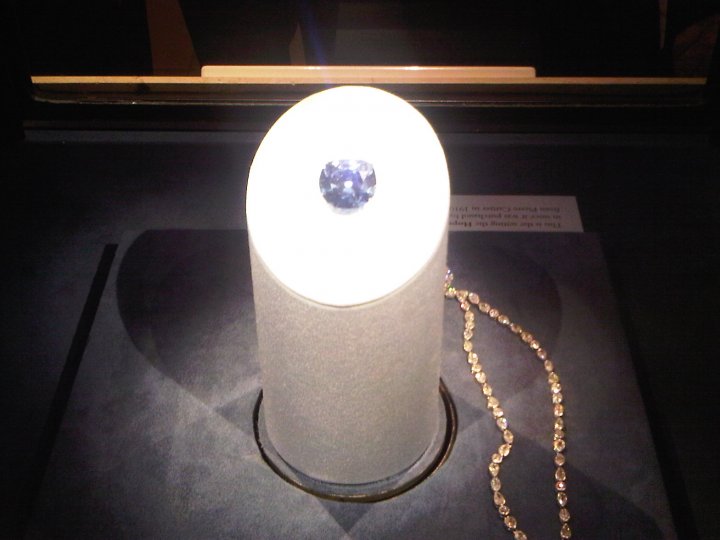
The Hope Diamond photographed in the gem hall of the National Museum of Natural History in March 2010, displayed out of its setting on a stand, with the Cartier diamond necklace laid beside it and the museum's label about the 1910 Cartier setting visible in the case. Released into the public domain by the photographer. An amateur photograph, and the only public-domain photograph of the stone located.
| Workshop | Unrecorded Indian cutters; recut for Louis XIV by the court jeweller Sieur Pitau, and recut again by an unknown hand between 1792 and 1812 |
|---|---|
| Date | Mined in India, probably at the Kollur workings in the Golconda field, before 1668; cut for Louis XIV in 1673; recut to its present form between 1792 and 1812 |
| Medium | Type IIb boron-bearing diamond, fancy deep greyish-blue, cushion antique brilliant cut, in a platinum and diamond mount |
| Dimensions | 45.52 carats; 25.60 x 21.78 x 12.00 mm (Gemological Institute of America, December 1988) |
| Where it is now | National Museum of Natural History, Smithsonian Institution, Washington DC |
| Attribution | AcceptedThe identity of the Hope Diamond as a recut of the French Blue, and of the French Blue as a recut of the stone Jean-Baptiste Tavernier sold to Louis XIV, is accepted. Full note |
| Object type | Goldsmith's work |
| Period | Indian, before 1668; European settings 1673 to 1911 |
| Cases | Has a provenance gap |
| Inscriptions | None. Smithsonian catalogue number NMNH 217868. |
| Owners on record | 9 links7 documented, 1 disputed, 1 unknown |
| Sources | 5 cited |
About this record Last verified 15 August 2026 · 5 sources cited · Change log
On this page 10 sections
ContentsClose
A 45.52 carat deep greyish-blue diamond, mined in India before 1668, sold to Louis XIV by the merchant Jean-Baptiste Tavernier, cut in 1673 into the stone the French crown called the Diamant bleu de la Couronne, stolen from the Garde-Meuble in September 1792, recut by an unknown hand, recorded in London in September 1812, named after the banker who owned it by 1839, and given to the Smithsonian by Harry Winston in 1958, who sent it through the post.
Attached to it is a curse. The curse is folklore and it is merchandising. It was assembled from newspaper stories around 1909 to 1911, deployed by Pierre Cartier as a selling device, and turned into a film serial by a former owner's wife in 1921. It has no seventeenth or eighteenth century pedigree and the Smithsonian does not repeat it. This record states its origins once and then leaves it alone, because the documented chain is more remarkable than the invented one.
The single most important thing to know about this object is that it has been three different objects. The stone Tavernier drew in 1676, the French Blue of 1673 to 1792, and the Hope as it is today are the same material in three different shapes, and images of all three circulate, along with replicas and computer reconstructions. Getting them confused is the standard error in the literature. In 2009 a lead cast of the French Blue, catalogued and forgotten in a Paris museum, made it possible to prove the relationship instead of assuming it.
Provenance
Each link is graded. Documented: a cited source supports it. Disputed: the identification is argued but not established. Unknown: no owner for that span, and the gap is not smoothed into a narrative. The grades in the glossary.
- before 1668 - 1668 or 1669Jean-Baptiste Tavernier (1605-1689), merchantdocumented
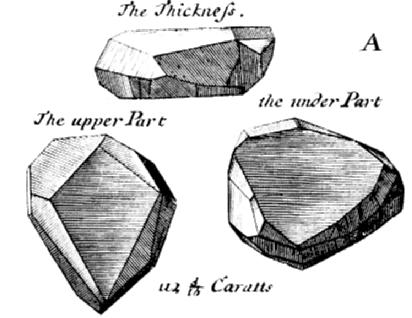
Obtained in India, conventionally at the Kollur workings in the Golconda field. Tavernier published an engraved plate of the stone in Les Six Voyages (1676), which is the earliest image of the object and records its shape before any European recutting. The precise circumstances of his acquisition are not documented in the sources consulted; the claim that it was prised from a temple idol is later folklore and appears nowhere in his own account.1112
- 1668 or 1669 - September 1792The Crown of France: Louis XIV, Louis XV, Louis XVIdocumented
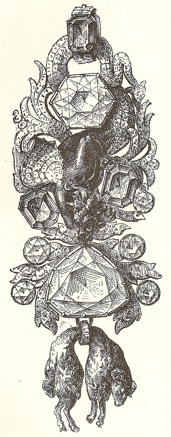
Sold to Louis XIV with other stones. Recut, generally dated 1673, by the court jeweller usually named as Sieur Pitau, producing the stone recorded in the crown inventories as the blue diamond of the Crown. Set in 1749 by Andre Jacquemin into an insignia of the Order of the Golden Fleece for Louis XV, with the Cote de Bretagne spinel. Figures for the purchase price and for the recut weight vary between sources and are not asserted here.1112
- 11-17 September 1792 - September 1812Unknownunknown
Taken in the repeated robbery of the Garde-Meuble de la Couronne in Paris over several nights in September 1792. Never recovered in its French form. At some point in this twenty-year window it was recut from about 69 carats to about 45, by an unknown hand, in an unknown place, on unknown instructions. No owner is documented for the whole period. The 2009 lead cast paper raises the possibility, from the museum catalogue entry associated with the cast, that Henry Philip Hope owned the French Blue after the theft and before the recutting; that is a suggestion in the published literature, not an established link.1112
- September 1812 - c. 1830Daniel Eliason, London diamond merchant, and subsequent English ownersdocumented
Recorded in a memorandum by the London diamond merchant John Francillon dated September 1812, describing a blue diamond of 177 grains in Eliason's possession. The date falls two days after the twentieth anniversary of the Garde-Meuble theft, the point at which the French state's claim was extinguished by limitation. Whether that is coincidence or calculation is not established. The subsequent claim that the stone passed to King George IV and was sold after his death in 1830 to meet his debts is widely repeated and is inference rather than record.12
- by 1839 - 1901Henry Philip Hope (1774-1839) and the Hope familydocumented
The stone appears in the published catalogue of Henry Philip Hope's gem collection of 1839, which is the source of its name. The inheritance was contested among his nephews. It eventually reached Lord Francis Hope, who held only a life interest and required the permission of the Court of Chancery to sell. Permission was granted and the sale followed in 1901, reported at 29,000 pounds.12
- 1901 - 1910 or 1911A succession of dealers: Adolph Weil, Simon Frankel, Salomon or Selim Habib, Simon Rosenau, Pierre Cartierdisputed
The sequence is broadly agreed but individual links and prices vary between accounts. The frequently repeated claim that the stone belonged to Sultan Abdul Hamid II of the Ottoman Empire is contradicted by the catalogue of the 1909 Paris sale of the Habib collection, which stated that the Hope was one of only two gems in that collection never owned by the Sultan. Graded disputed on that basis.12
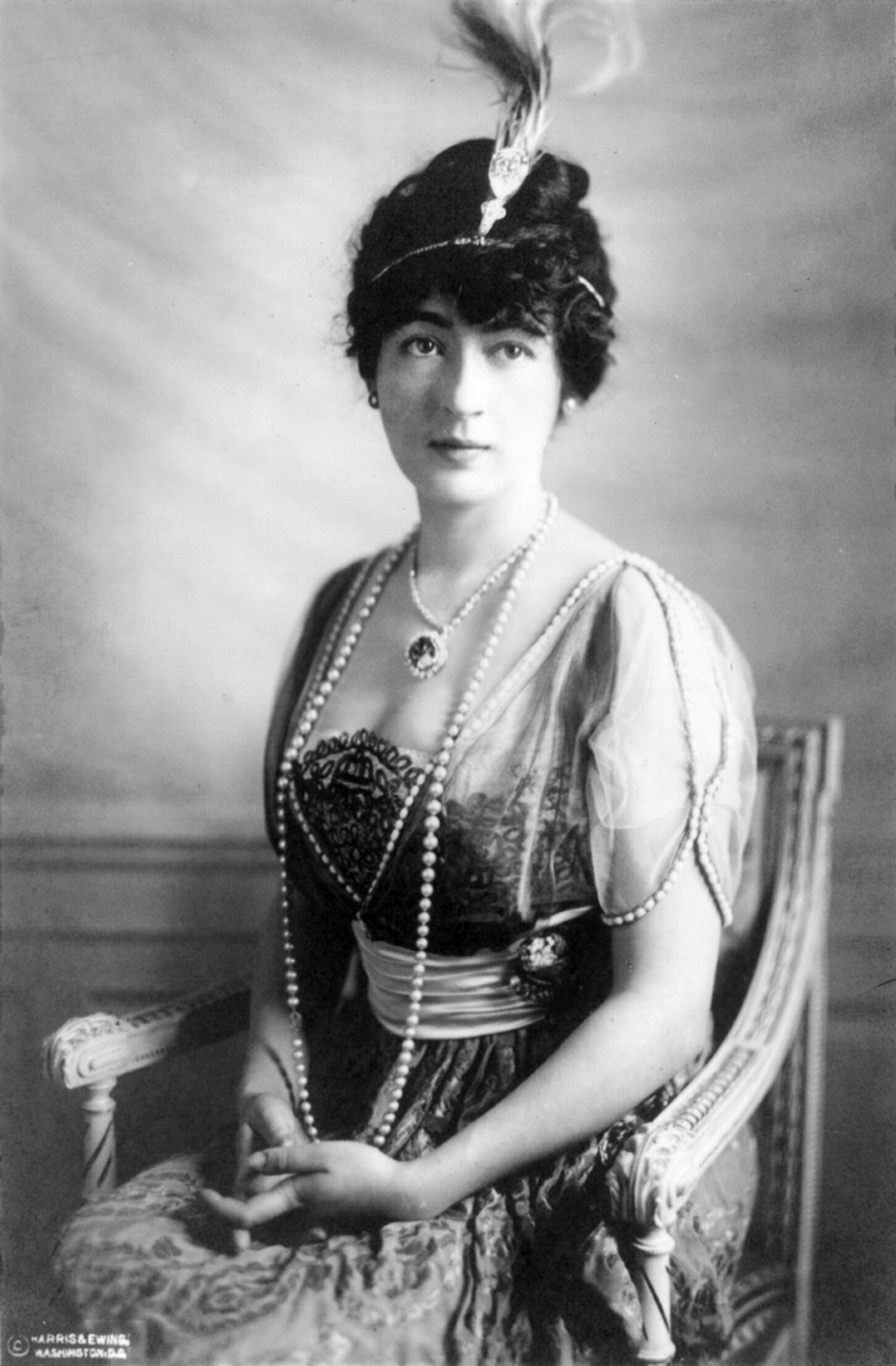
- 1910 or 1911 - 1947Evalyn Walsh McLean (1886-1947), Washington DCdocumented
Sold by Pierre Cartier in a setting Cartier made, which is substantially the present mount. McLean initially rejected the stone and Cartier reset it; when she declined to complete, Cartier sued her, and the dispute was settled. She held it until her death in 1947. Prices reported for the sale vary and are not asserted here.12
- 1949 - 10 November 1958Harry Winston Inc., New Yorkdocumented
Winston bought the McLean collection in 1949, after her death and in the course of settling her estate. Reported figures for that purchase cover the whole collection rather than the Hope alone. He exhibited the stone in his travelling Court of Jewels shows before giving it away.12
- 10 November 1958 - presentSmithsonian Institution, National Museum of Natural History, Washington DCdocumented
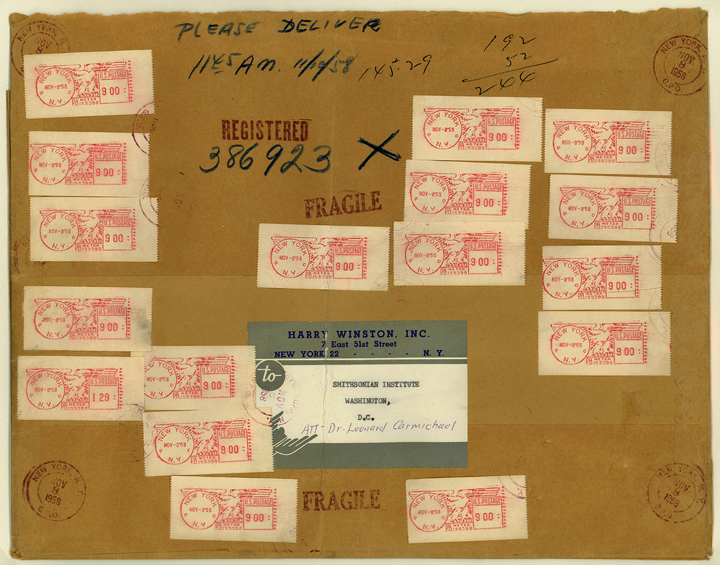
Given by Harry Winston, who sent it from New York by registered first-class mail in a plain brown paper package insured for one million dollars. The recorded cost of the mailing is 145.29 dollars, of which 2.44 dollars was postage and the balance insurance. It was delivered by a postman named James Todd. Catalogue number NMNH 217868. The wrapping survives.1213
Prices realised
The Hope Diamond has never been sold at public auction and is not for sale. It is the property of the Smithsonian Institution. Every price in this record is a private transaction reported at second hand: 29,000 pounds in 1901, and various figures for the dealer sales of 1901 to 1911 and for the Winston purchase of 1949, which covered the whole McLean collection and not the Hope alone. None of them is a hammer price and none of them was published by an auction house. Prices for other large blue diamonds sold at auction are premium-inclusive totals and are not comparable to any figure in this chain.
Technical evidence
| Attribution note | The identity of the Hope Diamond as a recut of the French Blue, and of the French Blue as a recut of the stone Jean-Baptiste Tavernier sold to Louis XIV, is accepted. It rests on physical modelling rather than on tradition. A lead cast of the French Blue was found in the mineral collection of the Museum National d'Histoire Naturelle in Paris and published in 2009; a laser scan of the cast produced a computer model of the lost stone, and the model of the Hope fits inside it. The chain from the French crown to the Hope family is documentary and has one twenty-year gap that no document crosses. |
|---|---|
| Weight | 45.52 carats, as determined by the Gemological Institute of America in December 1988. Earlier figures in the literature reflect earlier measurements and different carat standards.10 |
| Dimensions | 25.60 x 21.78 x 12.00 mm.10 |
| Type and chemistry | Type IIb: boron-bearing, effectively nitrogen-free. Type IIb diamonds are semiconducting, which no other diamond type is, and the boron is the cause of the blue colour.10 |
| Phosphorescence | Phosphoresces red after exposure to short-wave ultraviolet light, and the glow persists after the source is removed. The phosphorescence spectrum has been used as an identifying signature for blue diamonds.10 |
| Colour grade | Described as fancy deep greyish-blue. The grading history includes a Gemological Institute of America examination in December 1988.10 |
| Catalogue number | NMNH 217868, National Museum of Natural History, Smithsonian Institution.10 |
| Earlier states: the Tavernier stone | The stone as Tavernier sold it, recorded in the engraved plate in Les Six Voyages (1676), which shows it in three views labelled the thickness, the upper part and the under part. The plate is inscribed with a weight of 112 and a fraction in sixteenths, standardly read as 112 3/16 carats. Examined directly for this record, the engraved fraction is legible as sixteenths but the numerator reads ambiguously between 3 and 4 at the resolution available. The unit is the old French carat, which is heavier than the modern metric carat of exactly 0.2 g, so the figure is not directly comparable with modern weights and the difference is material at this size.111214 |
| Earlier states: the French Blue | Recut for Louis XIV, generally dated 1673, by the court jeweller usually named as Sieur Pitau, to a symmetrical stone of about 69 carats. Set into an insignia of the Order of the Golden Fleece in 1749 by Andre Jacquemin, together with the Cote de Bretagne spinel.1112 |
| The lead cast | A lead cast of the French Blue found in the mineral collection of the Museum National d'Histoire Naturelle, Paris, and published in 2009. Laser-scanned to produce a computer model of the lost stone showing facet detail that the surviving drawings do not record.11 |
| The 1812 record | A memorandum by the London diamond merchant John Francillon, dated September 1812, recording a blue diamond of 177 grains in the possession of Daniel Eliason. 177 grains is approximately 44.5 old carats.12 |
| Setting | A pendant mount in which the stone is surrounded by white diamonds and suspended from a diamond chain, made in the Cartier period around 1910 to 1911. It is not a French royal setting and no part of the 1749 Golden Fleece insignia survives with the stone.1012 |
Images
The record in full
Chapter 1What it is, physically
45.52 carats, measured by the Gemological Institute of America in December 1988 at 25.60 by 21.78 by 12.00 millimetres.
45.52 carats, measured by the Gemological Institute of America in December 1988 at 25.60 by 21.78 by 12.00 millimetres. A cushion-shaped antique brilliant with a faceted girdle and extra facets on the pavilion, described by the Smithsonian as fancy deep greyish-blue.
It is a type IIb diamond. That classification is not decorative. Type IIb diamonds contain boron and almost no nitrogen, which is why they are blue and also why they conduct electricity, a property no other diamond type shares. Under short-wave ultraviolet light the Hope phosphoresces red, and the phosphorescence persists for some seconds after the light is removed. Smithsonian research has used the phosphorescence spectrum as an identifying signature for blue diamonds, which means the stone can be recognised without reference to any document at all.
The present mount is a pendant in which the diamond is surrounded by white diamonds and hung from a chain of further diamonds. The setting is not original to any part of the stone's French history; it dates from the Cartier period around 1910 to 1911.
Chapter 2Tavernier, and what he actually recorded
Jean-Baptiste Tavernier, 1605 to 1689, was a French merchant who made six journeys to Persia and India between the 1630s and the 1660s and who dealt in gemstones at the highest level.
Jean-Baptiste Tavernier, 1605 to 1689, was a French merchant who made six journeys to Persia and India between the 1630s and the 1660s and who dealt in gemstones at the highest level. He published an account of those journeys, Les Six Voyages, in 1676, and it contains an engraved plate of the notable diamonds he handled. One of them is the blue stone.
The plate is the earliest image of this object and it is the reason the pre-1673 shape is known at all. It shows a large, roughly triangular stone of irregular Indian cutting, not the neat symmetrical jewel of later engravings. Tavernier gives its weight in the old French carat, which was slightly heavier than the modern metric carat of exactly 0.2 grams, so the recorded figure and any modern figure are not directly comparable and the difference is not trivial at this size.
He sold it, with other stones, to Louis XIV. The transaction is usually dated 1668 or 1669 and the consideration is usually given as a large sum in livres together with a patent of nobility. The figures in circulation vary widely enough that this record does not assert one.
One point about the source deserves emphasis, because it is routinely misread. The Commons file most often used to illustrate the Tavernier stone is described there as a drawing of the French Blue. It is not. It is Tavernier's own 1676 plate, and it shows the stone as he sold it, before the French court recut it. The description on the file is wrong and the error is exactly the kind that propagates.
Chapter 3The French Blue
Louis XIV had the stone recut. The court jeweller usually named as responsible is Sieur Pitau, and the recutting is generally dated to 1673, although 1678 also appears in the literature.
Louis XIV had the stone recut. The court jeweller usually named as responsible is Sieur Pitau, and the recutting is generally dated to 1673, although 1678 also appears in the literature. The result was a smaller, symmetrical, deliberately theatrical stone, recorded in the crown inventories as the blue diamond of the Crown, and it is the object modern writers call the French Blue.
In 1749 Louis XV had it set into an insignia of the Order of the Golden Fleece by the jeweller Andre Jacquemin, in company with the great red spinel known as the Cote de Bretagne, which had been carved into a dragon. That jewel was one of the most spectacular objects the French crown owned, and it is the context in which the blue diamond spent its last four decades in France.
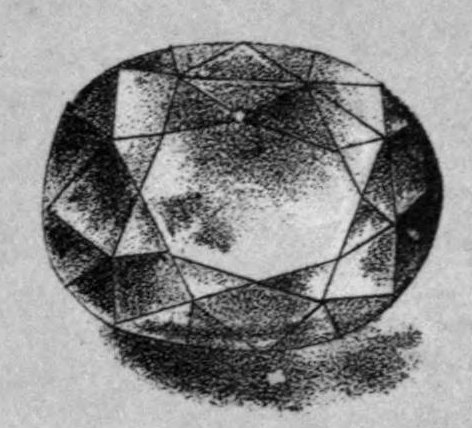
What the French Blue actually looked like was, until recently, known only from drawings: a rendering associated with the 1749 setting, and an engraving published by Germain Bapst in 1889 with the drawing executed by Lucien Hirtz. Both are interpretations. Neither is a measurement.
Chapter 4The theft, and the twenty years
Between 11 and 17 September 1792, during the collapse of the French monarchy, the Garde-Meuble de la Couronne in Paris was robbed repeatedly over several nights.
Between 11 and 17 September 1792, during the collapse of the French monarchy, the Garde-Meuble de la Couronne in Paris was robbed repeatedly over several nights. A large part of the French crown jewels was taken. Some was recovered. The French Blue was not, and it has never been recovered as the French Blue, because it no longer exists in that form.
The next documented appearance of a blue diamond of the right character is a memorandum written by the London diamond merchant John Francillon, dated September 1812, recording a blue diamond of 177 grains in the possession of Daniel Eliason. That weight converts to about 44.5 old carats, in the region of the Hope.
The date is the part that no account of this object should omit. The memorandum is dated two days after the twentieth anniversary of the theft. French law extinguished the state's claim after twenty years. Whether that timing is coincidence or calculation cannot be proved, and this record does not claim to know, but the coincidence is exact enough that it has shaped every subsequent discussion of how the stone reached England and who was waiting for the clock to run out.
Between 1792 and 1812 the stone was recut, from about 69 old carats to about 45. Nobody knows who did it, where, or on whose instructions. That recutting is the single most consequential act in the object's history, because it is what made a stolen national treasure into a saleable private jewel, and it is entirely undocumented.
Chapter 5The 2008 lead cast, and why it settled the question
For two centuries the identity of the Hope as the recut French Blue was an inference.
For two centuries the identity of the Hope as the recut French Blue was an inference. It was a strong inference, resting on colour, on approximate weight and on the timing, but it could not be demonstrated, because the French Blue's exact geometry was known only from drawings made by people who were not measuring.
Then Francois Farges, a mineralogist at the Museum National d'Histoire Naturelle in Paris, identified in the museum's own mineral collection a lead cast of the French Blue. It had been catalogued and forgotten. A lead cast is a physical negative of a real stone: unlike a drawing, it preserves the actual proportions and the actual facet arrangement.
Farges, with Scott Sucher, Herbert Horovitz and Jean-Marc Fourcault, published the work in Gems and Gemology in Spring 2009. A laser scan of the cast produced a computer model of the French Blue showing details of the cut that could not be inferred from the drawings. Models of the cast and of the Hope were then compared, and the Hope fits inside the French Blue. The paper's own conclusion is careful and this record keeps its wording: the models confirm that the Hope could have been recut from the French Blue.
There was a second finding, and it is less often reported. The catalogue entry associated with the lead cast at the museum suggests that Henry Philip Hope may have owned the French Blue after the 1792 theft and before it was recut. If that holds, the family that gave the stone its name was involved earlier and more directly than the standard account allows, and the twenty-year gap becomes a good deal less blank.
Chapter 6The Hope family, and the court that had to authorise a sale
Henry Philip Hope, a member of the Anglo-Dutch banking family, formed one of the great private gem collections of the early nineteenth century.
Henry Philip Hope, a member of the Anglo-Dutch banking family, formed one of the great private gem collections of the early nineteenth century. A catalogue of it was published in 1839, the year of his death, and it is that publication that fixed the stone's name. Everything the object has been called since is derived from a banker's collection catalogue.
The inheritance was contested among his nephews and the stone eventually reached Lord Francis Hope. He held it under a settlement that gave him only a life interest, which meant he could not sell it on his own authority. His financial collapse produced a series of applications to the Court of Chancery for permission to sell, and permission was eventually given in 1901. The sale that followed is usually reported at 29,000 pounds.
That episode is worth more attention than it usually gets, because it is the only point in the object's history at which a court of law examined the title to it and put the examination on the public record. A stone that had been stolen from a national collection was sold, a century later, under the supervision of an English court that was concerned with a family settlement and not with where it had come from.
Chapter 7Cartier, McLean and the sale of a story
The stone passed through New York and Paris dealers in the first decade of the twentieth century.
The stone passed through New York and Paris dealers in the first decade of the twentieth century. One link in that period is repeated everywhere and is weak: the claim that it was owned by Sultan Abdul Hamid II of the Ottoman Empire. The catalogue of the 1909 Paris sale at which the Habib collection was dispersed stated expressly that the Hope was one of only two gems in that collection which had never belonged to the Sultan. The claim survives anyway, which is a useful measure of how this object's literature works.
Pierre Cartier sold it to Evalyn Walsh McLean of Washington in 1910 or 1911, in a setting Cartier made, which is substantially the setting it wears now. McLean initially refused it and Cartier reset it; when she subsequently declined to complete, Cartier sued. The dispute was settled and she kept the stone until her death in 1947.
What Cartier sold her, on the evidence, was not only a diamond. The misfortune story was already circulating in the press and Cartier used it. That is the commercial origin of the curse: not a Hindu temple, but a Paris dealer with a difficult client and a stone that needed a reason to be worth the money.
Chapter 8Winston, and the parcel
Harry Winston bought the McLean jewels in 1949, after her death, and showed the Hope for years in his travelling Court of Jewels exhibitions.
Harry Winston bought the McLean jewels in 1949, after her death, and showed the Hope for years in his travelling Court of Jewels exhibitions. On 10 November 1958 he gave it to the Smithsonian Institution.
He sent it by post. The stone travelled from New York to Washington in a plain brown paper package as registered first-class mail, insured for one million dollars. The total cost of sending it is recorded at 145.29 dollars, of which 2.44 dollars was the postage and the remainder the insurance. The postman who carried it to the National Museum of Natural History was named James Todd.
The wrapping survives and is itself a photographable object, which is unusual and useful, because it is one of the very few pieces of the Hope's documentary history that can be seen rather than read.
Winston's stated purpose was to seed a national gem collection. That is exactly what happened: the Hope is the anchor of the Smithsonian's gem hall and one of the most visited objects in the United States.
Chapter 9The curse, dated and attributed
The curse is not old. Its components can be dated.The story that the stone was prised from the eye of a Hindu idol, and that a curse followed the theft, appears in Anglo-American popular writing in...
The curse is not old. Its components can be dated.
The story that the stone was prised from the eye of a Hindu idol, and that a curse followed the theft, appears in Anglo-American popular writing in the later nineteenth and early twentieth centuries. It has no seventeenth-century source and Tavernier, who bought the stone and wrote a book about his travels, records nothing of the kind.
The catalogue of misfortunes attached to successive owners was assembled in the press around 1909 to 1911, and a New York Times article of 1911 is among the pieces that set out the list. It was answered at the time: the trade editor T. Edgar Willson pointed out that no ill luck was ever recorded as befalling Eliason, or Hope, or any of their descendants, which is a difficulty the curse literature has never addressed.
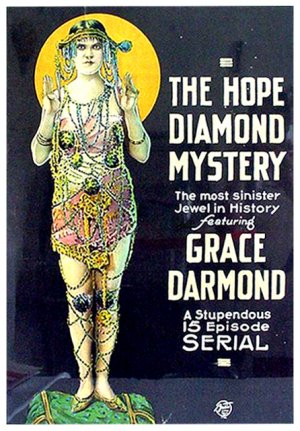
Pierre Cartier used the story in selling the stone to Evalyn Walsh McLean around 1910. May Yohe, who had been married to Lord Francis Hope, made a film serial called The Hope Diamond Mystery in 1921 and wrote about the curse thereafter. Between a dealer with an unsold stone and a former owner's wife with a film to promote, the story had two well-motivated publishers within a decade.
The Smithsonian's position is that there is no curse. This record agrees and moves on, with one observation: the curse is the only part of this object's history for which the sources are easy to find, and the documented chain, which is genuinely extraordinary, is the part that takes work.
The artist
Jean-Baptiste Tavernier, Baron d'Aubonne (1605-1689)
No cutter's name attaches to this stone at any stage that matters. The Indian workmen who first shaped it are unrecorded, the recutting of 1673 is attributed to a court jeweller whose name is given inconsistently, and the recutting that produced the object we have was done in secret by somebody nobody has identified. The one named figure in the early history who left a documentary record of his own is Tavernier, and he is the right subject for this dossier because everything known about the object before 1673 comes from a book he wrote.
Related works
| Work | Relation | Where it is |
|---|---|---|
| The Tavernier plate of 1676 Jean-Baptiste Tavernier | The earliest image of this stone, showing it before the 1673 recutting Shows the object in its first recorded state. It is not a picture of the Hope Diamond, and Commons metadata describing it as the French Blue is incorrect: the French Blue did not exist when Tavernier owned the stone. | Published in Les Six Voyages, 1676 |
| The lead cast of the French Blue Unknown, c. early 19th century | A physical negative of the lost French Blue; the object that proved the identification Found in the museum's mineral collection and published in 2009. It is a cast, not the stone, and it is not the Hope. | Museum National d'Histoire Naturelle, Paris |
| The Cote de Bretagne spinel Carved as a dragon, French crown jewels | Set with the French Blue in the 1749 Order of the Golden Fleece insignia One of the very few elements of the 1749 jewel that survives. The blue diamond that was set with it does not survive in that form. | Musee du Louvre, Paris |
| The Wittelsbach-Graff Diamond Unrecorded | The other great historic blue diamond of Indian origin, and a recutting controversy Recut in 2010 by its purchaser, which cost it weight and provoked sustained criticism. It is the direct modern comparison for what happens when an undocumented recut is done in public rather than in secret. | Private collection |
| The Blue Heart Diamond Cut by Atanik Ekyanan; mounted by Cartier and later Harry Winston | The Smithsonian's other important blue diamond 30.62 carats, in the same collection, and the obvious control when the Hope's colour and type are described. | National Museum of Natural History, Smithsonian Institution |
| Third Imperial Easter Egg House of Faberge | Iconotheca's other record in this object type Both objects were identified by matching a surviving image to a lost description. In the egg's case a photograph; in the Hope's case a lead cast. | Private collection |
Open questions
- Who recut the French Blue between 1792 and 1812, where, and on whose instructions? The single most consequential act in the object's history is entirely undocumented.
- Is the 19 September 1812 dating of the Francillon memorandum, two days after the French state's twenty-year limitation expired, coincidence or calculation? No document establishes either.
- Did Henry Philip Hope own the French Blue before it was recut? The 2009 lead cast paper raises the possibility from the museum's catalogue entry; it has not been established.
- Is the passage through King George IV documented, or is it inference? It is repeated in almost every account and this record has found no primary support for it.
- What did Tavernier actually pay, and what did Louis XIV actually pay him? Figures for the sale price vary widely between accounts and none has been verified here against a primary document.
- Has France ever asserted a claim to the stone? No claim by the French state or the Museum National d'Histoire Naturelle has been found in the sources consulted, and the absence of one for an object stolen from a national collection is itself notable.
- What is the stone insured for? No published insurance or appraisal value has been found.
Questions about this object
What is The Hope Diamond?
The Hope Diamond is a goldsmith's work, dated mined in India, probably at the Kollur workings in the Golconda field, before 1668; cut for Louis XIV in 1673; recut to its present form between 1792 and 1812. Medium: Type IIb boron-bearing diamond, fancy deep greyish-blue, cushion antique brilliant cut, in a platinum and diamond mount.
Who made The Hope Diamond, and is the attribution settled?
The attribution to Unrecorded Indian cutters; recut for Louis XIV by the court jeweller Sieur Pitau, and recut again by an unknown hand between 1792 and 1812 is recorded here as accepted. The identity of the Hope Diamond as a recut of the French Blue, and of the French Blue as a recut of the stone Jean-Baptiste Tavernier sold to Louis XIV, is accepted. It rests on physical modelling rather than on tradition. A lead cast of the French Blue was found in the mineral collection of the Museum National d'Histoire Naturelle in Paris and published in 2009; a laser scan of the cast produced a computer model of the lost stone, and the model of the Hope fits inside it. The chain from the French crown to the Hope family is documentary and has one twenty-year gap that no document crosses.
Where is The Hope Diamond now?
National Museum of Natural History, Smithsonian Institution, Washington DC.
What is still unknown about The Hope Diamond?
Who recut the French Blue between 1792 and 1812, where, and on whose instructions? The single most consequential act in the object's history is entirely undocumented.
Sources
- 10Smithsonian Institution, National Museum of Natural History, Hope Diamond collection and exhibition pages. NOTE: si.edu and naturalhistory.si.edu returned HTTP 403 to automated fetching at the time of writing (a bot block, not a dead link) and the physical data here is carried on secondary authority pending direct citation. naturalhistory.si.edu/exhibits/...
- 11Francois Farges, Scott Sucher, Herbert Horovitz and Jean-Marc Fourcault, 'The French Blue and the Hope: New Data from the Discovery of a Historical Lead Cast', Gems and Gemology, Spring 2009, Vol. 45, No. 1. gia.edu/gems-gemology/...
- 12Wikipedia, 'Hope Diamond', consolidating the ownership chain, the 1812 Francillon memorandum, the Hope family litigation, the Habib and Cartier links, the McLean lawsuit and the 1958 mailing. TERTIARY, flagged for replacement with Richard Kurin, Hope Diamond: The Legendary History of a Cursed Gem (2006), and with the Smithsonian's own published record. en.wikipedia.org/wiki/...
- 13Wikimedia Commons file record for the 1958 United States Post Office Department photograph of the package in which the Hope Diamond was mailed to the Smithsonian. commons.wikimedia.org/wiki/...
- 14Jean-Baptiste Tavernier, Les Six Voyages (1676), engraved plate of the notable diamonds, reproduced on Wikimedia Commons and examined directly for this record for the three views and the inscribed carat weight. commons.wikimedia.org/wiki/...


Last verified 15 August 2026 · Published 4 August 2026
Change log
2 August 2026 - Record deepened to the house standard: narrative sections, technical evidence, artist dossier, related works and open questions added; provenance chain and auction results replaced with the researched versions; sources rebuilt.
4 August 2026 - Record created at the house standard: researched narrative, technical evidence, maker dossier, graded provenance chain, prices with hammer and premium separated, related works, open questions and sources.
15 August 2026 - Re-verified: fresh searches for a location change, attribution change, litigation, or exhibition move found none. Current location (National Museum of Natural History, Smithsonian Institution) confirmed correct - the Hope Diamond remains on permanent display in the Harry Winston Gallery / Hall of Geology, Gems and Minerals, with no renovation closure announced for 2026 (the last such closure was 2016-2021, already reflected in the narrative, not a new event). One 2025-published claim of new psychological research reframing the 'curse' as confirmation bias was found in search results without a clearly named author or publication; not added to the record, per house rule against citing a claim that cannot be traced to a source actually fetched and read. si.edu itself returned HTTP 403 to a direct fetch (a documented bot-block pattern on this domain, not evidence of a broken page); the underlying facts were independently corroborated via other search results instead. No change to attribution, provenance chain or auction history.