Moved for Safekeeping Is a Link in the Chain
Nine evacuations in this archive: three objects never returned to the building they left, one came back unrecognised and title changed once, by a 1998 law.
Records in this piece: Bust of Nefertiti, Priam's Treasure, Coronation Mantle of Roger II, The Coronation Chair, The Devonshire Hunting Tapestries, Carta Universal de Juan de la Cosa, Waldseemuller's Globe Gores, The Corbridge Lanx, Hereford Mappa Mundi
On this page 10 sections
ContentsClose
In short
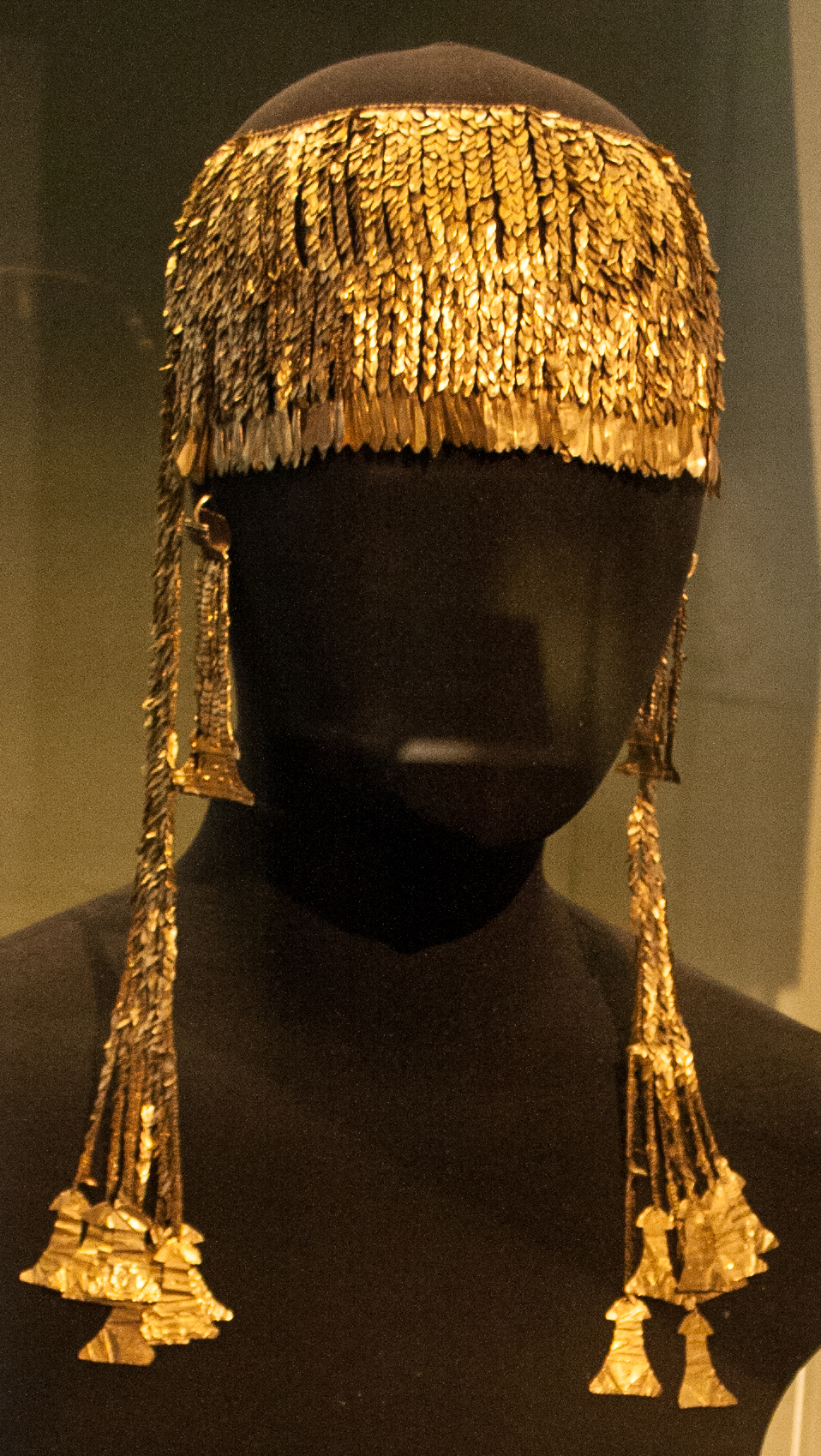
- Nine records in this archive carry an evacuation, a store or a removal for safekeeping in their provenance, covering 1796 to 1955. In eight of them the owner never changed. In the ninth, Priam's Treasure, title changed in 1998 by a Russian federal law, fifty-three years after the crates left the Berlin Zoo flak tower.
- Three of the nine objects never came back to the building they left. The imperial regalia with Roger II's mantle went from Nuremberg to Regensburg in 1796 and to the Vienna treasury in 1800, and pieces were lost on the way. Priam's Treasure went from the flak tower to Moscow on 30 June 1945. Nefertiti left the Neues Museum in 1939 and returned to it in October 2009 after Wiesbaden, Dahlem, Charlottenburg and the Altes Museum.
- The evacuations that returned are among the best-dated links in their chains. The British Museum records the Corbridge lanx on loan from July 1940 to 16 September 1949. The Munich university library records its Waldseemuller gores in air-raid crate 340, to Burghausen in November 1942, Niederviehbach in February 1944 and back in September 1955. The Museo Naval's own cartography head records the de la Cosa chart sent to Valencia in November 1936 and home on 3 June 1939.
- The Munich gores went through the whole dispersal unrecognised. The library's catalogue says its nineteenth-century librarians never saw what was bound into a volume of geometry, and the sheet was identified as a previously unrecorded edition only in 2012.
- Hereford is the weakest-documented case. The cathedral's own archived page says the map was removed to safety and returned in 1946, and names no place. The 2006 UNESCO nomination and the Trust's site say nothing about the war at all.
An evacuation is the link where custody moves and title stays put
An evacuation is a provenance event in which an object changes address and doesn't change owner, and this archive grades it as a link all the same. We went through the 285 published records for chains that carry a removal for safekeeping, a wartime store or a flight ahead of an army, and this piece is built on nine of them, covering 1796 to 1955.
The pattern isn't what the phrase suggests. Three of the nine never came back to the building they left: the regalia went to Vienna and stayed, Priam's Treasure went from a Berlin flak tower to Moscow and Nefertiti left the Neues Museum in 1939 and came back to it in October 2009. A fourth, the globe gores, went out and back in a numbered crate without anyone knowing what was inside. The other five, which returned, are among the best-dated links in their chains. Custody moved. Title, in eight of nine cases, didn't.
Berlin, 1939 to 1945: two objects left the same museums for the same tower
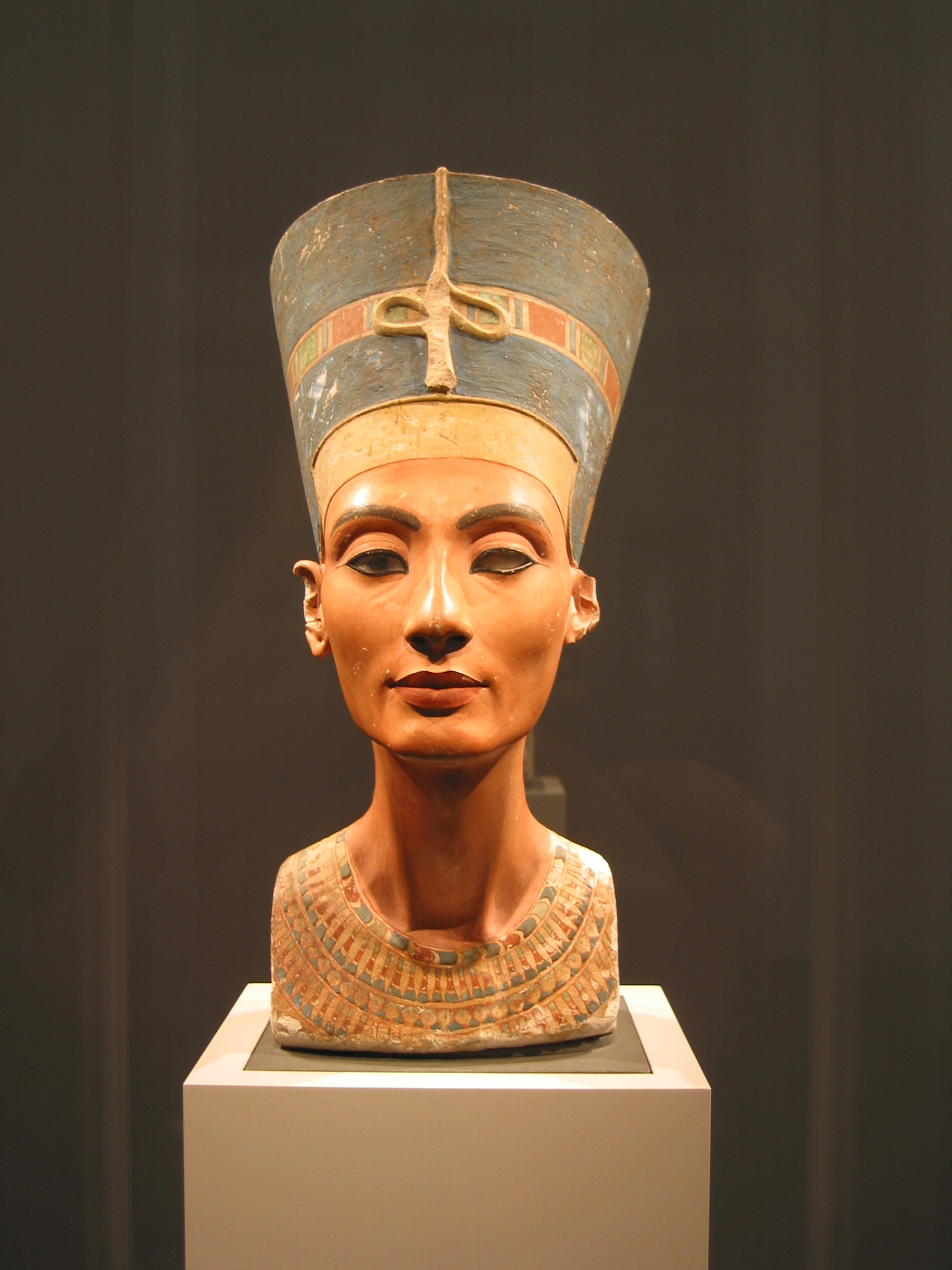
The Nefertiti bust and Priam's Treasure both belonged to the Berlin state museums in 1939, and both left their galleries for the anti-aircraft tower at the Zoo. The museum's own page on the bust says it stood in the Amarna Courtyard from 1924 until it was moved to a secure storage facility in 1939; the tower and the salt mine come from secondary accounts. For the Trojan gold the museum is more specific: Schliemann gave it in 1881, and in 1941 the most valuable pieces went to the safe of the Prussian State Bank and then to the flak bunker at the Zoologischer Garten.
There the two chains part. The bust went west in March 1945 and was recovered by American troops. The gold stayed until the Red Army reached the tower; the record's sources put the crates on a flight from Tempelhof to Vnukovo on 30 June 1945, and the museum says that until 1994 nobody outside Russia knew where they were. Did the evacuation change who owned the diadems? No. Ownership changed in 1998, when the Duma declared displaced cultural property Russian state property: the one case in these nine where the move ended in a change of title, by law and not by the move.
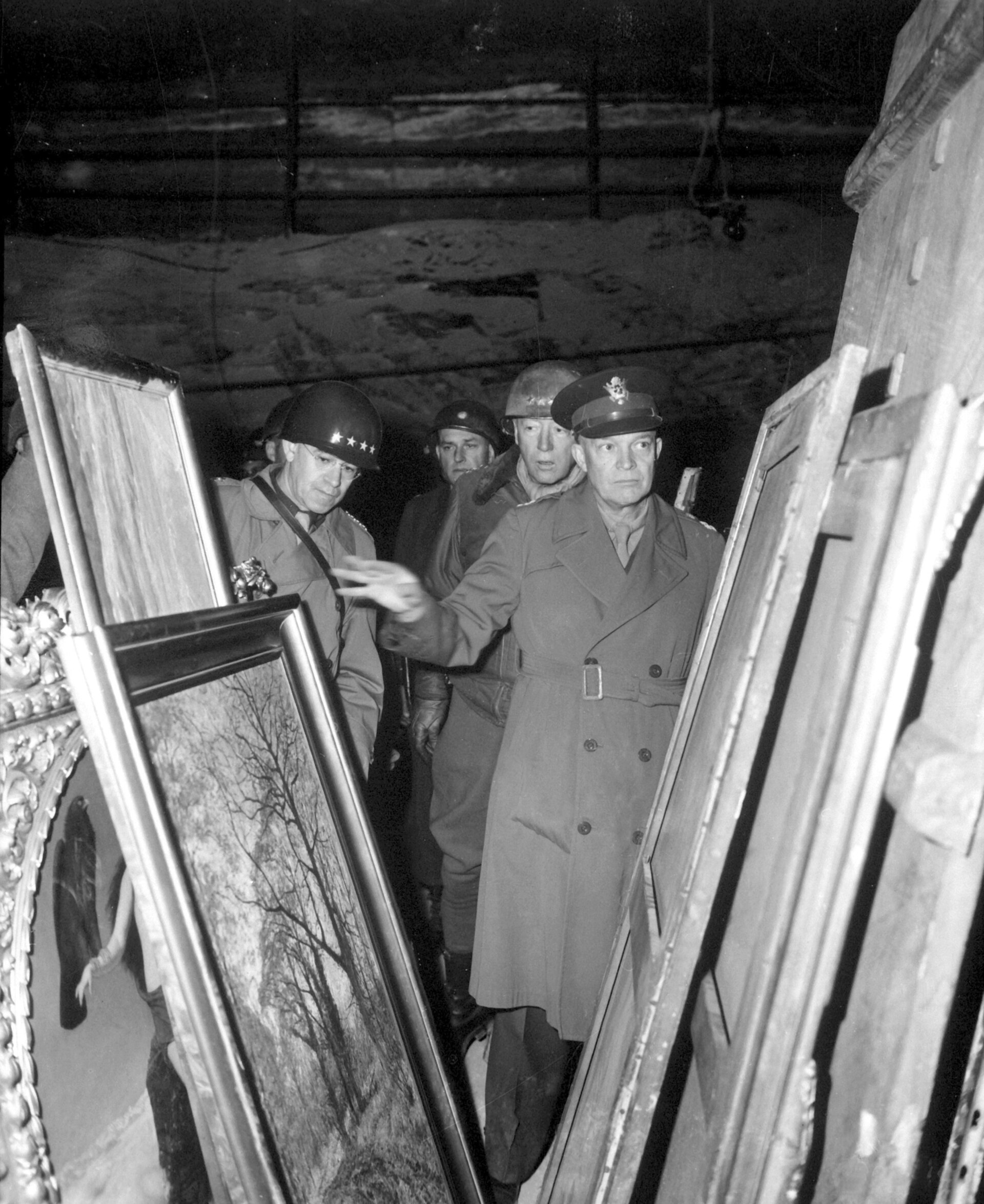
The salt mine, the collecting point and a seventy-year way home
The Nefertiti bust reached the Wiesbaden Central Collecting Point after the convoys from Frankfurt began on 20 August 1945. The United States National Archives' account says the Reichsbank material at Frankfurt, which included the Berlin museums' art recovered from the Merkers mine, was to start arriving on that date, and Museum Wiesbaden's own page names the bust among the Berlin treasures hidden in mines that came to the building. The record dates the bust's arrival at Merkers to March 1945; the generals were photographed there on 12 April.
From there the chain is the museum's own: shown in Wiesbaden from 1946, returned to West Berlin in 1956 and shown at Dahlem, moved to Charlottenburg in 1967, to the Altes Museum in 2005 and into the North Dome Room when the Neues Museum reopened in 2009. One evacuation, half a dozen addresses, one owner. It simply took seventy years for the building it left to exist again.
Nuremberg to Vienna, 1796 to 1800: the evacuation that became the address
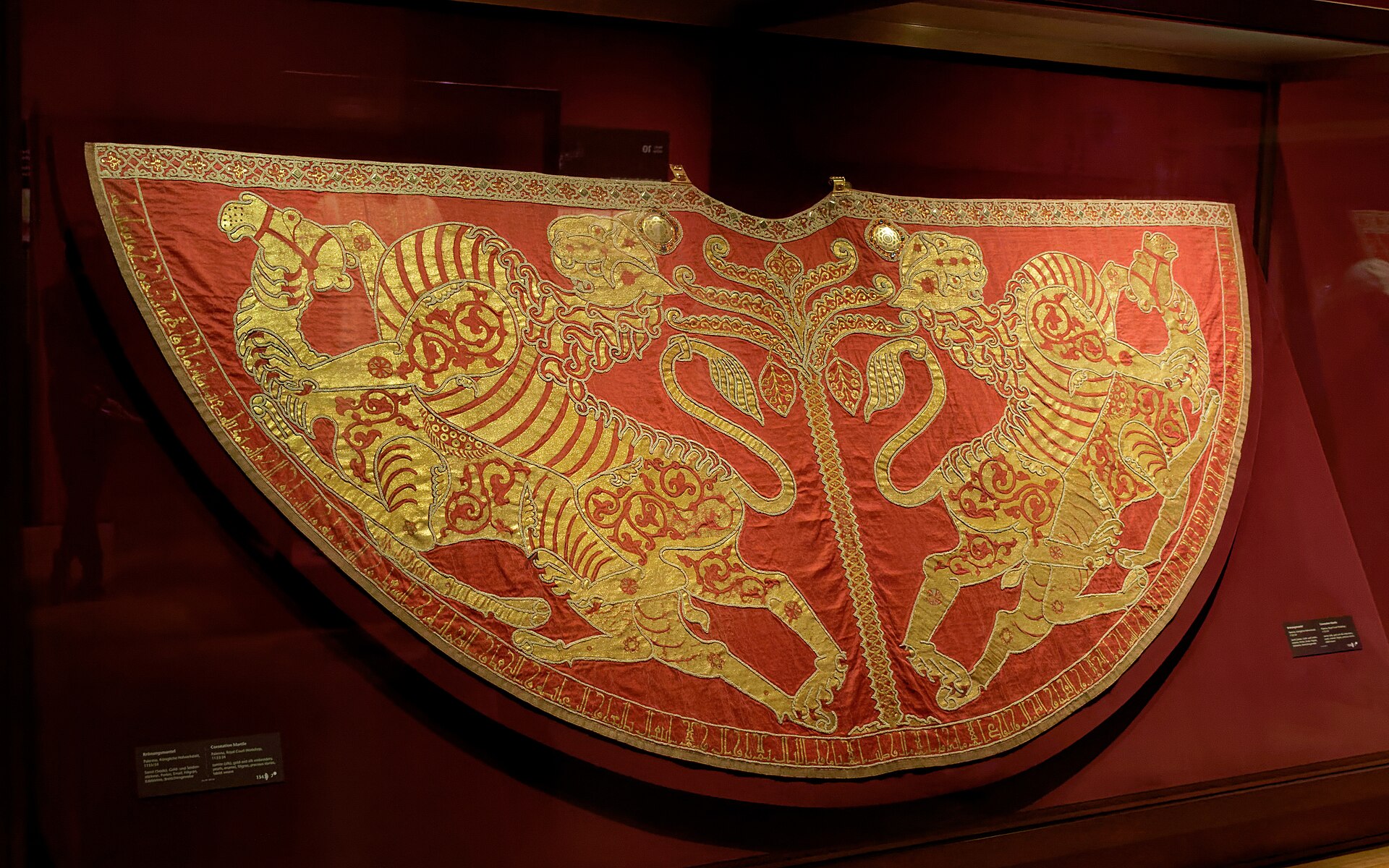
The Coronation Mantle of Roger II left Nuremberg in 1796 ahead of the French army and has been in Vienna ever since. The Historisches Lexikon Bayerns gives the outline: Nuremberg held the imperial regalia from 1424 to 1796, the city's officers took them to Regensburg and then to Vienna, where they were deposited in the imperial treasury in 1800. Some pieces were lost for good in the flight, the spurs and the armillae among them. The Empire was dissolved in 1806; the regalia stayed.
The Kunsthistorisches Museum's record for WS XIII 14 dates the mantle from its Kufic hem, the Hijra year 528, 1133 to 1134, and says nothing about 1796. In 1938 the mantle made the same journey in reverse, to Nuremberg on Hitler's order, which this archive grades as a seizure. The Lexikon says the treasure spent the war in the art bunkers under Nuremberg Castle and was handed to Austria by the Americans at the start of 1946. The mantle has been Austrian state property since the year the state that lost it ceased to exist.
Two cathedrals: a chair sent to Gloucester and a map sent somewhere
The Coronation Chair left Westminster Abbey for Gloucester Cathedral during the Second World War, and the Abbey's own history page says so in one sentence, adding that the Stone of Scone was secretly buried in the Abbey rather than sent with it. The chair had left the Abbey once before, for Cromwell's installation in 1653, so this is the second recorded absence in six centuries.
The Hereford Mappa Mundi is the weakest-documented case here, and we say so. The record flags that its wartime line rests on Wikipedia; we traced it to the cathedral's own library history page, now offline but archived in 2011, which reads: during the Second World War the medieval manuscripts and Mappa Mundi were removed to safety and returned in 1946. The removal and the year of return are the holder's own; no destination appears there, in the 2006 UNESCO nomination or on the Trust's and the cathedral's current sites. For those years the only public record of the map's custody is one sentence with no place in it.

Two private collections: a loan dated to the day and a cupboard at Chatsworth
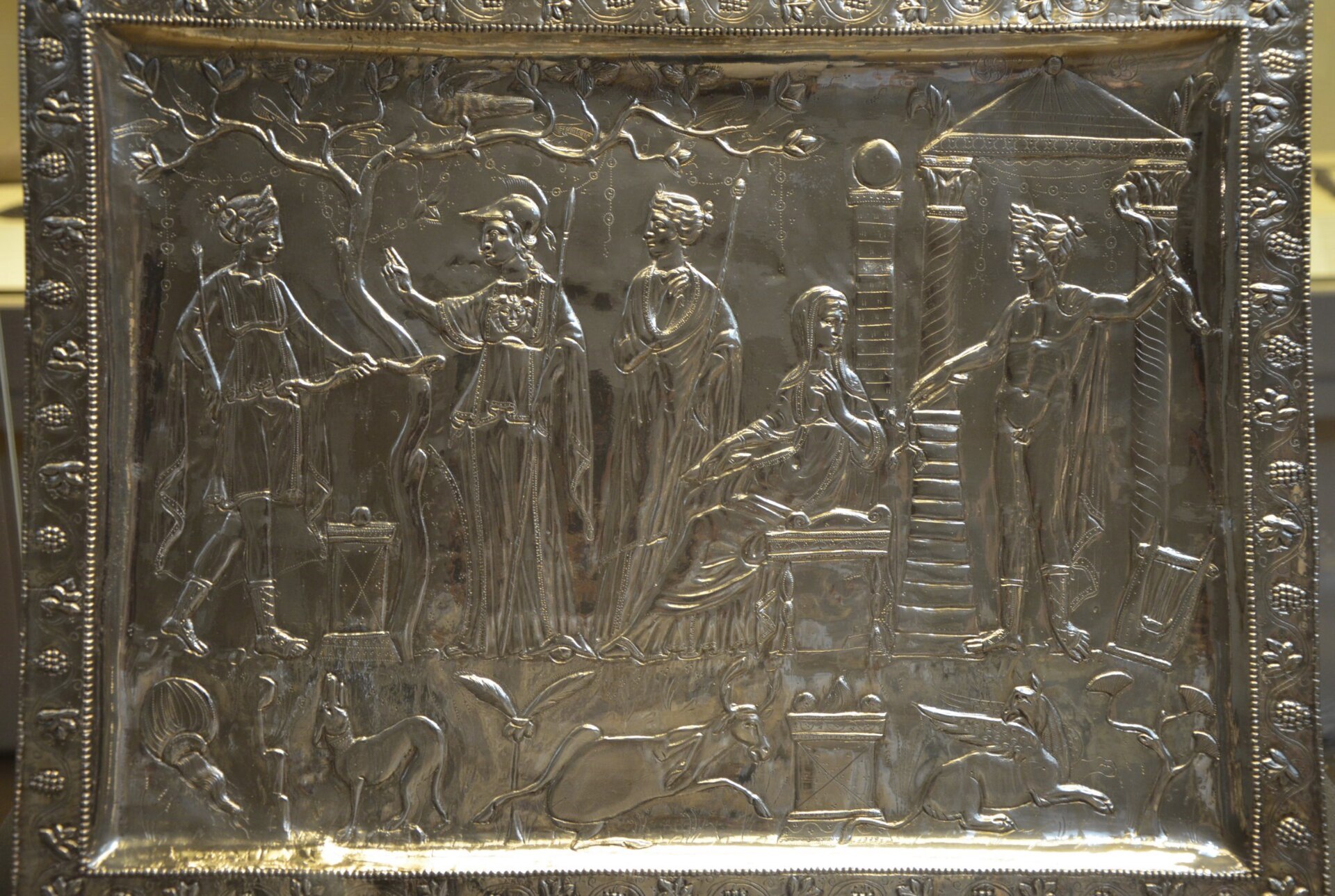
The Corbridge lanx was on loan to the British Museum from July 1940 to 16 September 1949, and the museum's collection record says so in its acquisition notes, adding that the loan resumed in 1978 and the museum bought the dish in 1993. Why a Northumberland family sent a Roman silver dish to a London museum in the summer of 1940 we don't know. What we've got is a start month and an end day for nine years in which the owner didn't change, between two centuries at Alnwick that no source dates at all.
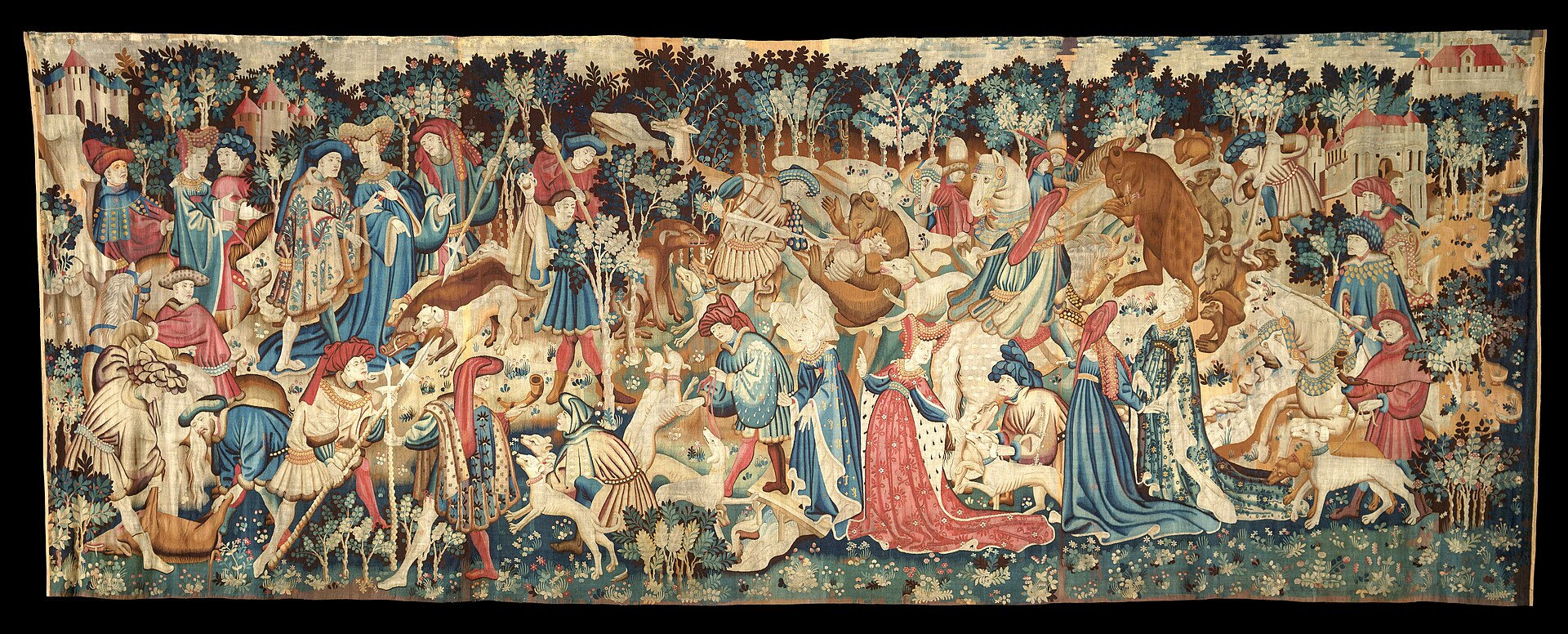
The Devonshire Hunting Tapestries never left the house. Chatsworth's own account says the hangings stayed in the Sculpture Gallery until the war brought Penrhos College, and that just before the girls arrived the librarian Francis Thompson put the tapestries into storage. It also prints the sentence that makes a store a link: Duchess Evelyn Cavendish wrote to Thompson on 25 July 1950 asking what could have happened to the Boar and Bear Hunt, which had no hole or split in it when she left in 1938, and whether it had got damp during the war. Custody stayed in one building; the condition report dates the years out of sight.
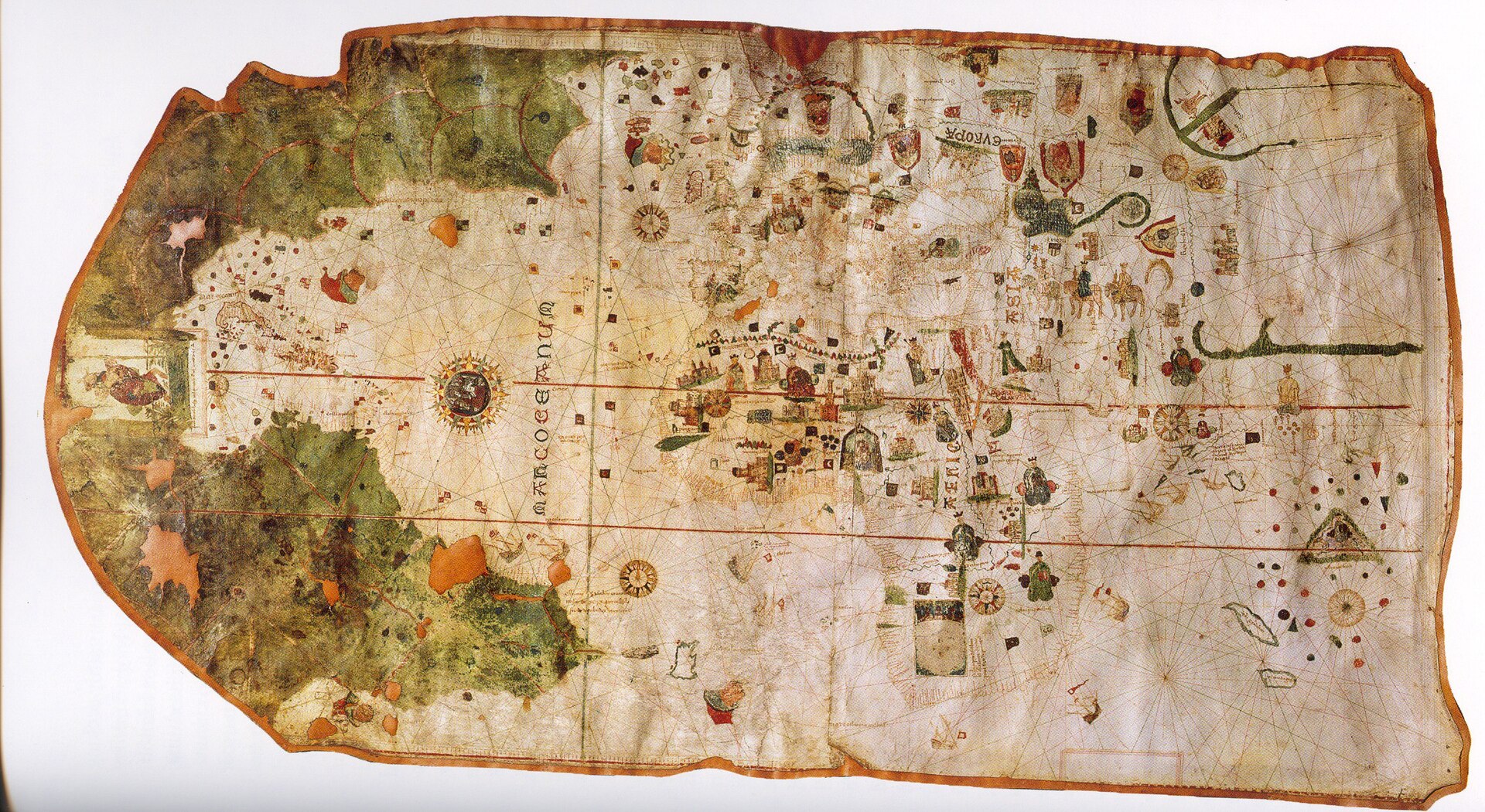
Spain, 1936 to 1939: the chart that followed a government
The Juan de la Cosa chart left the Museo Naval in Madrid in November 1936 on the order of the Republican government and came back at the end of the Civil War. Luisa Martin-Meras, then head of the museum's cartography section, set it down in a 2000 article: the under-secretary of the Navy was told to send the chart to Valencia, where it stayed until the war ended and the objects returned, as the museum's archives record. Her 2024 article, read here only in abstract, documents the second departure; the record, citing it, gives Barcelona, Girona, Geneva in February 1939 and a return on 3 June 1939.
The same 2000 article is the best source for the chain's one sale: the Walckenaer library was sold in Paris in May 1853, the chart was lot 2904, the bookseller Henry Stevens stopped at 4,000 francs and Spain paid 4,321. One sale with a lot number and one evacuation with a month and a return date, both from the museum's own staff, against three centuries between 1514 and 1832 that hold nothing. Martin-Meras is right to treat the two departures as the events that need explaining.
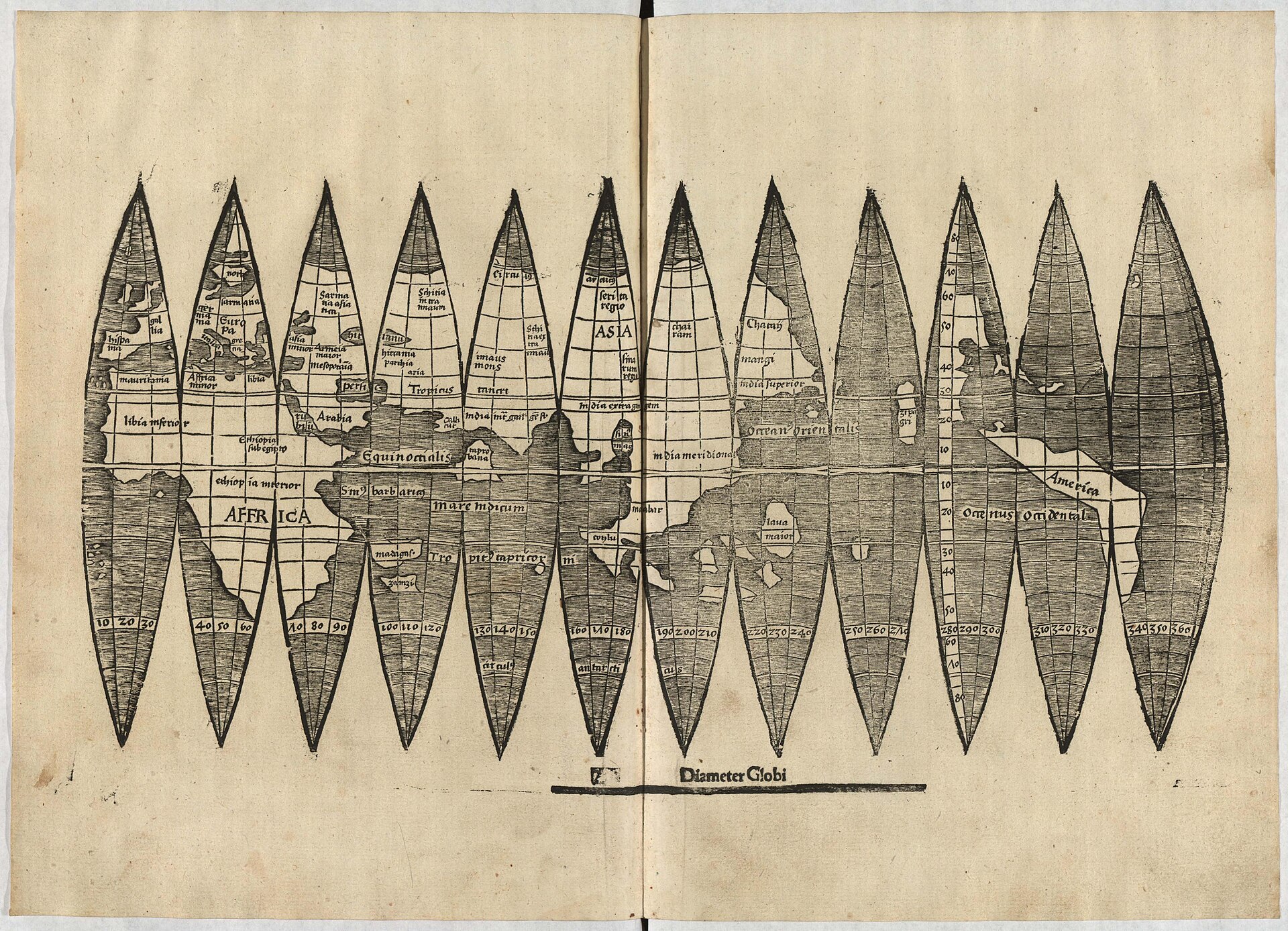
The evacuation nobody noticed: air-raid crate number 340
The Munich set of Waldseemuller's globe gores was evacuated in November 1942 and returned in September 1955 without anyone knowing it was there. The catalogue record of the Ludwig-Maximilians-Universitat's library, which holds the sheet as Cim. 107#2, says its nineteenth-century librarians didn't recognise the map when it was bound with two early geometry books, and then tracks the volume through the war: in air-raid protection crate number 340 it went to Burghausen in November 1942, to Niederviehbach in February 1944 and came back in September 1955. The gores were identified in 2012 as an edition nobody had recorded.
The crate number, two villages and two months are the only record of where the object was for thirteen years, and they were written down for an optics textbook, not for the earliest printed globe to carry the name America. Anyone asking where the gores were in 1944 has one place to look, and it's a shipping list.
What the nine evacuations prove, in one table
Nine evacuations in this archive produced three objects that never went back, one that went back unrecognised and five that returned with the best dates in their chains.
| Object | Evacuated from | Evacuated to, with dates | Returned to | Title throughout |
|---|---|---|---|---|
| Coronation Mantle | Nuremberg | Regensburg 1796, Vienna 1800 | Never; Vienna since 1800 | The Empire, then Austria from 1806 |
| Juan de la Cosa chart | Museo Naval, Madrid | Valencia November 1936, then Barcelona, Girona, Geneva | Museo Naval, 3 June 1939 | Spanish state |
| Nefertiti bust | Neues Museum, Berlin | Storage 1939, Zoo tower, Merkers March 1945, Wiesbaden August 1945 | West Berlin 1956; Neues Museum 2009 | Berlin state museums |
| Coronation Chair | Westminster Abbey | Gloucester Cathedral, 1939 to 1945 | Westminster Abbey | The Abbey |
| Hereford Mappa Mundi | Hereford Cathedral | Place not recorded; back 1946 | Hereford Cathedral | Dean and Chapter |
| Devonshire Hunting Tapestries | Sculpture Gallery, Chatsworth | Storage in the house, 1939 to 1945 | Chatsworth; V&A in lieu 1957 | Dukes of Devonshire until 1957 |
| Corbridge lanx | Alnwick Castle | Loan to the British Museum, July 1940 to 16 September 1949 | Alnwick; sold 1993 | Dukes of Northumberland until 1993 |
| Priam's Treasure | Berlin | Bank safe 1941, Zoo tower, Moscow 30 June 1945 | Never; Pushkin Museum, shown from 1996 | Berlin; Russian state by the 1998 law |
| Waldseemuller globe gores | University Library, Munich | Crate 340: Burghausen November 1942, Niederviehbach February 1944 | Munich, September 1955 | The university library |
Read down the last column and the argument is there: title changed in one row, by a Russian statute in 1998. The ones that returned are dated by the institution that packed them; the ones that ended elsewhere are dated by the people who took them.
A line that reads moved for safekeeping is a claim about custody and nothing else. Check it against the holder's loan register, store list or evacuation inventory, usually the only record of those years. Where the object didn't come back, look for the moment title changed, and expect to find it long after the crates moved.
Why this archive is free to read
We do this for everyone who loves art. The people who have studied it for years, and the people who just stopped to look. Iconotheca exists so that what we learn belongs to all of them.
Nobody pays us for this. No ads, no sponsors, no commercial interest. These works belong to all of us, and we would rather share them with as many people as we can than keep them to ourselves.
If it gave you something today, tell us to keep going. Follow us, leave a like, or write a positive comment. We read every one, and they are what keeps us going.
Questions
No. In eight of the nine cases in this archive the owner before, during and after the move was the same institution or family. The exception is Priam's Treasure, whose title passed to the Russian state by a federal law of 1998, not by the 1945 removal itself.
The Berlin museums' own page says it left the Neues Museum for secure storage in 1939 and was taken by American forces to the Wiesbaden Central Collecting Point after the war. Secondary accounts place it in the Zoo flak tower and then, from March 1945, in the Merkers salt mine, which held the Berlin museums' art alongside Reichsbank gold. It returned to West Berlin in 1956 and to the Neues Museum in October 2009.
Because the imperial regalia were evacuated from Nuremberg ahead of the French army in 1796, first to Regensburg and then to Vienna, where they were deposited in the imperial treasury in 1800. The Holy Roman Empire was dissolved in 1806 while they were there, and they passed to Austria. They went back to Nuremberg only once, from 1938 to 1946, on Hitler's order.
Westminster Abbey's own history says the chair was evacuated to Gloucester Cathedral, while the Stone of Scone was secretly buried in the Abbey. It was the chair's second recorded absence from the Abbey, after its use at Cromwell's installation in Westminster Hall in 1653.
In air-raid protection crate number 340, bound inside a volume of two early geometry books. The university library's catalogue records the volume going to Burghausen in November 1942 and Niederviehbach in February 1944 and returning in September 1955. Nobody knew the gores were in it until 2012.
Sources
- 1Staatliche Museen zu Berlin, Aegyptisches Museum und Papyrussammlung, The presentation of the bust of Nefertiti. Read in full 18 September 2026. Source for the 1924 Amarna Courtyard, the move to secure storage in 1939, the Wiesbaden Central Collecting Point, the official return to West Berlin in 1956, Dahlem, Charlottenburg in 1967, the Altes Museum in 2005 and the Neues Museum in 2009. smb.museum/en/...
- 2Staatliche Museen zu Berlin, 150 years since Heinrich Schliemann uncovered the Treasure of Priamos in Troy. Read in full 18 September 2026. Source for the 1881 gift to be preserved in its entirety, the 1941 move to the Prussian State Bank safe and the Zoo flak bunker, the Red Army's removal as spoils of war, the whereabouts unknown outside Russia until 1994 and the 1998 Duma resolution. smb.museum/en/...
- 3Historisches Lexikon Bayerns (Bayerische Staatsbibliothek), Reichskleinodien. Read in full 18 September 2026. Source for Nuremberg as the permanent home from 1424 to 1796, the 1796 flight to Regensburg and then Vienna, the deposit in the imperial treasury in 1800, the pieces lost in the flight, the 1806 dissolution, the 1938 removal to Nuremberg, the art bunkers under the castle, the handover to Austria at the start of 1946 and the 1954 redisplay. historisches-lexikon-bayerns.de/Lexikon/...
- 4Kunsthistorisches Museum Vienna, object database, Der Kroenungsmantel, Weltliche Schatzkammer WS XIII 14. Read in full 18 September 2026. Source for the inventory number, the Palermo royal court workshops, the Hijra year 528 and the date 1133/34. khm.at/en/...
- 5Westminster Abbey, The Coronation Chair. Read in full 18 September 2026. Source for the evacuation to Gloucester Cathedral in the Second World War, the Stone being secretly buried in the Abbey, the 1653 use for Cromwell and the 1727 lions. westminster-abbey.org/history/...
- 6Chatsworth House, Tracing the past lives of the Devonshire Hunting Tapestries, A Stitch in Time part II. Read in full 18 September 2026. Source for Penrhos College's arrival, Francis Thompson putting the tapestries into storage, Duchess Evelyn Cavendish's letter of 25 July 1950, George Wingfield Digby's October 1948 assessment and the 1957 transfer in lieu of death duties. chatsworth.org/news-media/...
- 7Universitaetsbibliothek der LMU Muenchen, catalogue record for [Globensegmente], Cim. 107#2 (= 2 Math. 499#2), provenance note. Read in full 18 September 2026. Source for the unrecognised binding, air-raid crate number 340, Burghausen in November 1942, Niederviehbach in February 1944, the return in September 1955 and the interim storage. epub.ub.uni-muenchen.de/13138
- 8The British Museum, Collection Online, lanx (The Corbridge Lanx), museum number 1993,0401.1. Read 18 September 2026 in the in-app browser after a 403 on the plain fetch. Source for the acquisition note (On loan to the British Museum July 1940 to 16 Sep 1949, and again since 1978), the purchase from Henry Percy, 11th Duke of Northumberland and the dimensions and weight. britishmuseum.org/collection/...
- 9Luisa Martin-Meras, La carta de Juan de la Cosa: interpretacion e historia, Monte Buciero 4 (Santona, 2000), pp. 71-85, by the then head of the cartography section of the Museo Naval. PDF read in full 18 September 2026 via Dialnet. Source for the May 1853 Walckenaer sale, lot 2904, Henry Stevens's 4,000-franc limit, the price of 4,321 francs and the November 1936 dispatch to Valencia on the Republican government's order with the return recorded in the museum's archives. dialnet.unirioja.es/descarga/...
- 10Luisa Martin-Meras Verdejo, Los dos robos de la carta de Juan de la Cosa, Revista de Historia Naval 165 (2024), pp. 87-112, Dialnet record. Abstract read 18 September 2026; the full text was not accessible, and the Barcelona, Girona, Geneva and 3 June 1939 stages are taken from the archive's record citing it. dialnet.unirioja.es/servlet/...
- 11Hereford Cathedral, History of the Chained Library, cathedral website page archived by the Internet Archive on 11 September 2011. Read in full 18 September 2026. Source for the sentence that the medieval manuscripts and Mappa Mundi were removed to safety during the Second World War and returned in 1946. web.archive.org/web/...
- 12United States National Archives, The Text Message blog, The Origins and Operations of the Wiesbaden Central Collecting Point, 18 November 2013. Read in full 18 September 2026. Source for the Merkers mine holding German-owned art from the Berlin museums, the Reichsbank Frankfurt material including the Merkers property and the convoys to Wiesbaden from 20 August 1945. text-message.blogs.archives.gov/2013/...
- 13Museum Wiesbaden, Monuments Men. Read in full 18 September 2026. Source for the building's use as the Central Collecting Point for art treasures from Berlin hidden in mines, including the bust of Nefertiti. museum-wiesbaden.de/en/...
- 14Victoria and Albert Museum, collections catalogue, The Devonshire Hunting Tapestries (Boar and Bear Hunt), T.204-1957. Read in full 18 September 2026. Source for the credit line accepted in lieu of tax on the estate of the 10th Duke of Devonshire, and the 1950 to 1966 restoration in Paris and Haarlem. collections.vam.ac.uk/item/...
- 15Wikimedia Commons, file page for Eisenhower, Bradley and Patton inspect looted art HD-SN-99-02758.JPEG, with the wikitext author Lt. Moore, U.S. Army, date 12 April 1945, National Archives 111-SC-204516 and the PD-USGov-Military-Army licence; LicenseShortName Public domain checked via the API 18 September 2026. commons.wikimedia.org/wiki/...

More in Provenance and Restitution
The partThe Thief Is Not a Link
Ten objects in this archive were stolen, some twice. In no case does the thief appear as an owner.
The Last Link Is the Strongest One
Documentation in a provenance chain rises from 63 per cent at the earliest links to 96 per cent at the most recent.
The link that a death makes
Ninety-seven ownership links in this archive move an object because someone died. They are the longest links we hold, they carry no price, and they...