A return is a new arrangement, not a conclusion
Four contested antiquities, four different things a return turned out to be: a renaming, a rotating loan, a forfeiture nobody enforced and a broken statue made whole.
Records in this piece: Cult Statue of a Goddess, The Morgantina Treasure, Statue of a Victorious Youth, The Weary Herakles
On this page 8 sections
ContentsClose
In short
- Two different American museums bought two looted objects from the same small Sicilian site, and both went back to the same town museum in Aidone: the Metropolitan's silver in 2010, the Getty's statue in 2011.
- The silver's return did not stop it travelling. The 2006 agreement provided for a loan rotation at roughly four-year intervals between Aidone and New York, so the provenance line keeps adding events after the restitution.
- The statue came back under a different name. Aphrodite was an attribution proposed by the curator who recommended the purchase, and when Sicily took the object back it dropped the name, because the name was always a claim rather than a fact.
- The Getty bronze shows a return that is legally complete and practically nothing. The statue is Italian state property as a matter of Italian law, sits in the Getty's lawful possession as a matter of fact, and no court in California has ordered anything.
- Turkey proved its claim to the Weary Herakles with a shape rather than a document. Three plaster casts were made and one of them fitted, which is the only kind of evidence available when no paperwork exists.
Two American museums, one Sicilian town
Aidone is a small town in the middle of Sicily, beside the ancient site of Morgantina, and its archaeological museum now holds two of the most heavily litigated objects of the last forty years. They arrived from two different museums on two different legal routes within about a year of each other.
The statue was dug clandestinely, by Italian accounts in 1979, in the contrada of San Francesco Bisconti, and cut into pieces to be moved. It passed through the dealer Renzo Canavesi and on 25 July 1988 the J. Paul Getty Museum bought it for USD 18 million. Canavesi later said the statue had been in his family since the 1930s. No document supporting that has ever been produced in any source we have consulted.
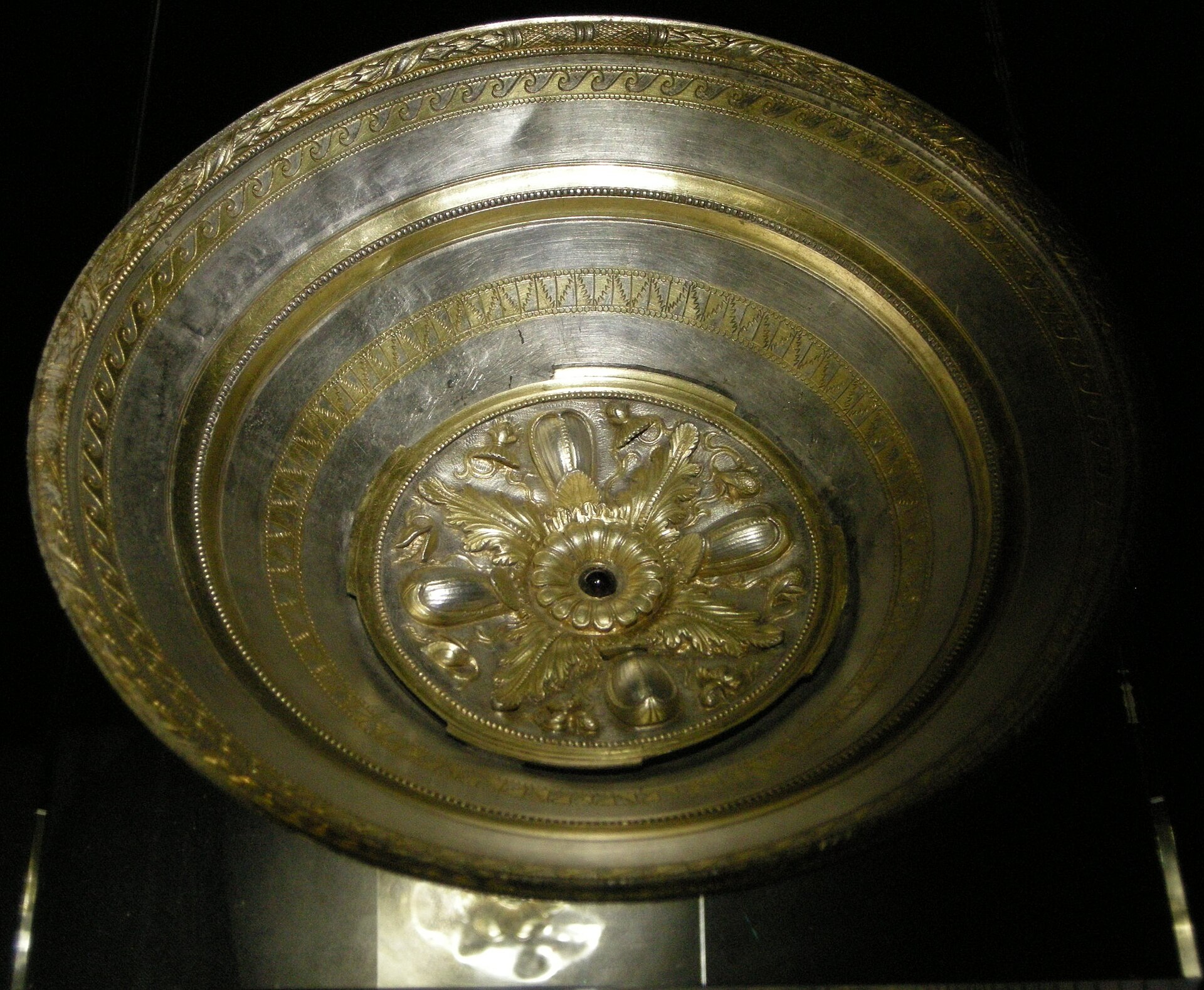
The silver was bought by the Metropolitan Museum of Art from Robert Hecht in two lots, in 1981 and 1982. The price is not agreed: an academic summary drawing on later press reporting gives a combined USD 2.7 million, while Watson and Todeschini's investigative account states USD 3 million. We carry both figures rather than choosing, because neither is a document.
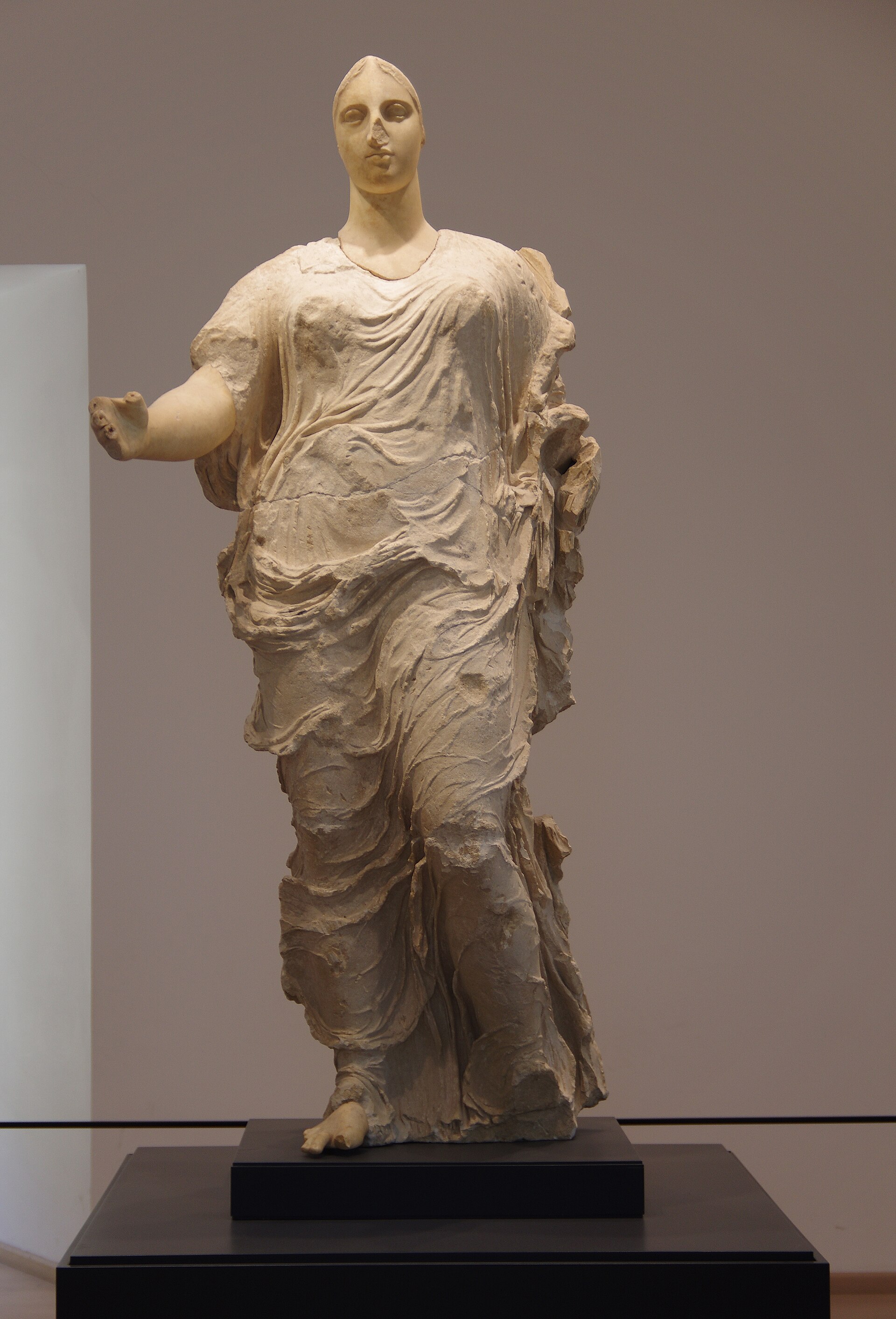
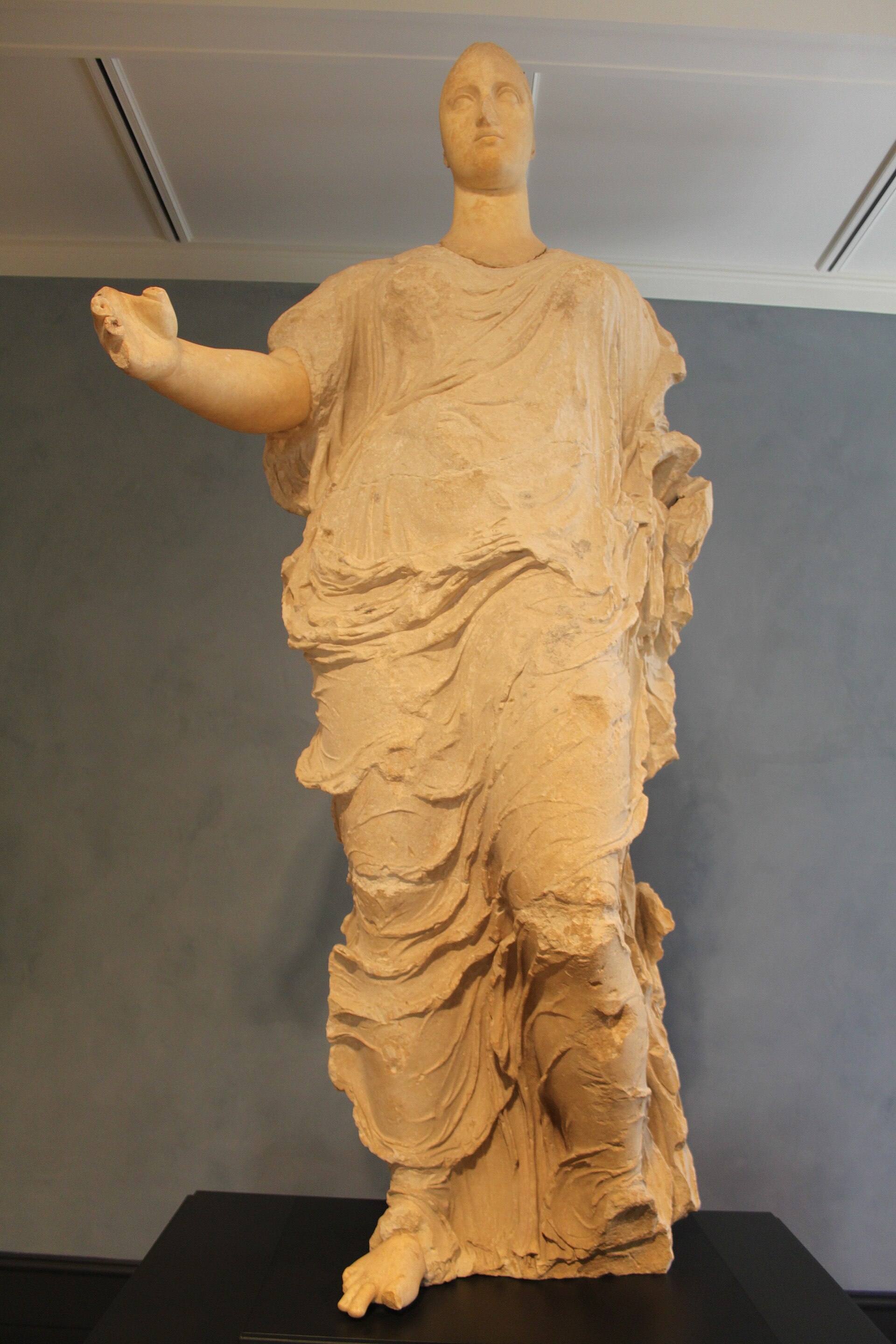
The statue came back with a different name
The Getty called her Aphrodite, and that identification was proposed by Marion True, the curator who recommended the purchase. It stuck for twenty-two years, in the museum's own labels, in the press and in the title of the book that eventually told the story.
Most specialists no longer accept it. Clemente Marconi has argued for Persephone. An Italian reading has her as Demeter holding a lost torch and searching for her daughter. Another points to features conventionally associated with older women. When the object reached Aidone, Sicilian officials rebranded it as the goddess of Morgantina and dropped Venus and Aphrodite altogether.
The reason the argument cannot be settled is the reason this object belongs in an archive about provenance. A cult statue is identified from its attributes and its findspot, and the findspot was destroyed by the people who dug it. Omerta has kept the exact location unspoken for more than forty years. Silvio Raffiotta, the local prosecutor who investigated the looting in the 1990s, said in 2011 that it was time for people to speak and that there was no longer any risk in doing so. If the spot were known, archaeologists could excavate the area properly. The loss is not sentimental, it is a specific body of evidence that would have answered the naming question.
The silver went back and kept travelling
The Metropolitan and Italy's Ministry of Culture, with Sicily's regional government, signed an agreement on 21 February 2006 covering several disputed objects at once, among them the Euphronios krater and the Morgantina silver. The silver reached Aidone in 2010.
That agreement did not end the museum's relationship with the object. Multiple accounts describe the pieces travelling on a loan rotation at roughly four-year intervals between Aidone and New York, as part of a broader cultural exchange. So the hoard has been on display in both places since the restitution, and a record of its ownership that stopped at the word returned would be missing everything that happened next.
How the silver came to be recognised at all is worth keeping. Malcolm Bell III, the excavator at Morgantina, saw the pieces and realised they matched rumours already circulating in Aidone. His first formal request to examine them, in 1993, was refused outright. He campaigned for the hoard's return through the 2000s and was made an honorary citizen of Aidone in 2008, two years before the silver itself arrived. He died on 7 January 2024. Part of the identification rested on a graffito naming a household, and Carla Antonaccio, who joined him as co-director in 1990, put the significance of the match plainly: it was not a common name.
A forfeiture that is complete in one country and nothing in the other
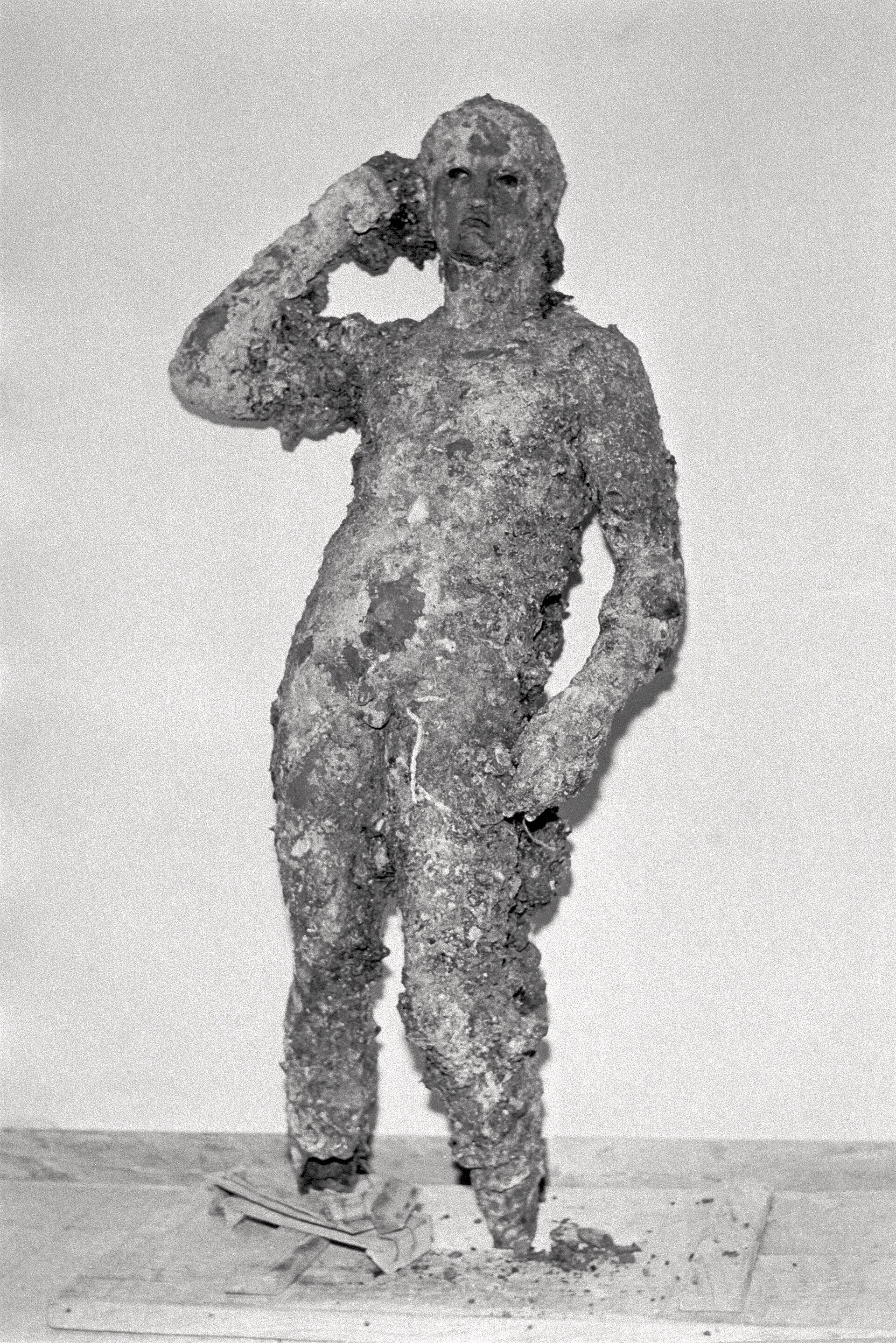
The Getty's bronze Statue of a Victorious Youth is the case where every legal step went against the museum and the object did not move. In 2009 the prosecutor at Pesaro asked for forfeiture, a remedy aimed at the object rather than at any person, and on 10 February 2010 the pre-trial judge ordered it forfeited.
What followed took most of a decade. The Court of Cassation sent the case back on 18 January 2011 on a procedural point. The pre-trial judge upheld the forfeiture on 3 May 2012. The Cassation referred constitutional questions in June 2014, the Constitutional Court held the relevant articles of the Code of Criminal Procedure unconstitutional on 15 June 2015 and sent the matter back for a public hearing, the Tribunal of Pesaro heard it publicly on 8 June 2018 and confirmed the forfeiture, and the Cassation rejected the Getty's final appeal. The date of that last decision is reported two ways, 2 January 2019 by the Geneva Art-Law Centre and November 2018 elsewhere, and we have not resolved it. The Getty Trust and fourteen American nationals then took the matter to Strasbourg, where judgment came in 2024.
So the accurate statement of the position is a three-part one: the statue is Italian state property as a matter of Italian law, it remains in the lawful physical possession of the J. Paul Getty Museum as a matter of fact, and no court in the jurisdiction where it actually sits has ordered anything at all. A judgment is not a return, and fifteen years of successful litigation has moved this object nowhere.
Turkey's evidence was a shape, not a document
The Weary Herakles from Perge spent about thirty years cut in half across two continents, and the break is the whole case. A horizontal fault line runs across the upper thighs and hips. Above it is marble that spent thirty years in Boston. Below it is marble that spent the same thirty years in Antalya.
Everything turns on when the break happened. If it is ancient, the upper half could have left the territory at any point in two thousand years, including centuries when no law prohibited it, and Turkey's claim collapses. If it is recent, made by whoever took the top of a statue out of an excavation and left the legs behind, the object was removed illegally. There is no document either way.
So the proof was physical. Three separate attempts were made to show that the two pieces were parts of one statue using plaster casts, and one of them fitted. The upper half had appeared in the United States in 1981, bought from a German dealer, and the Museum of Fine Arts in Boston acquired it in a fifty per cent partnership with the New York collectors Leon Levy and Shelby White. That partnership is why the case took so long: for nineteen of the thirty years the statue spent apart, the museum could not have returned it alone even if it had wanted to. Reporting at the time of the 2011 settlement made the point explicitly, that the negotiation became easier once a donor no longer had to be in the room. Turkey never sued, the museum never withdrew its position that the break might be ancient, and that proposition was never tested by an independent body.
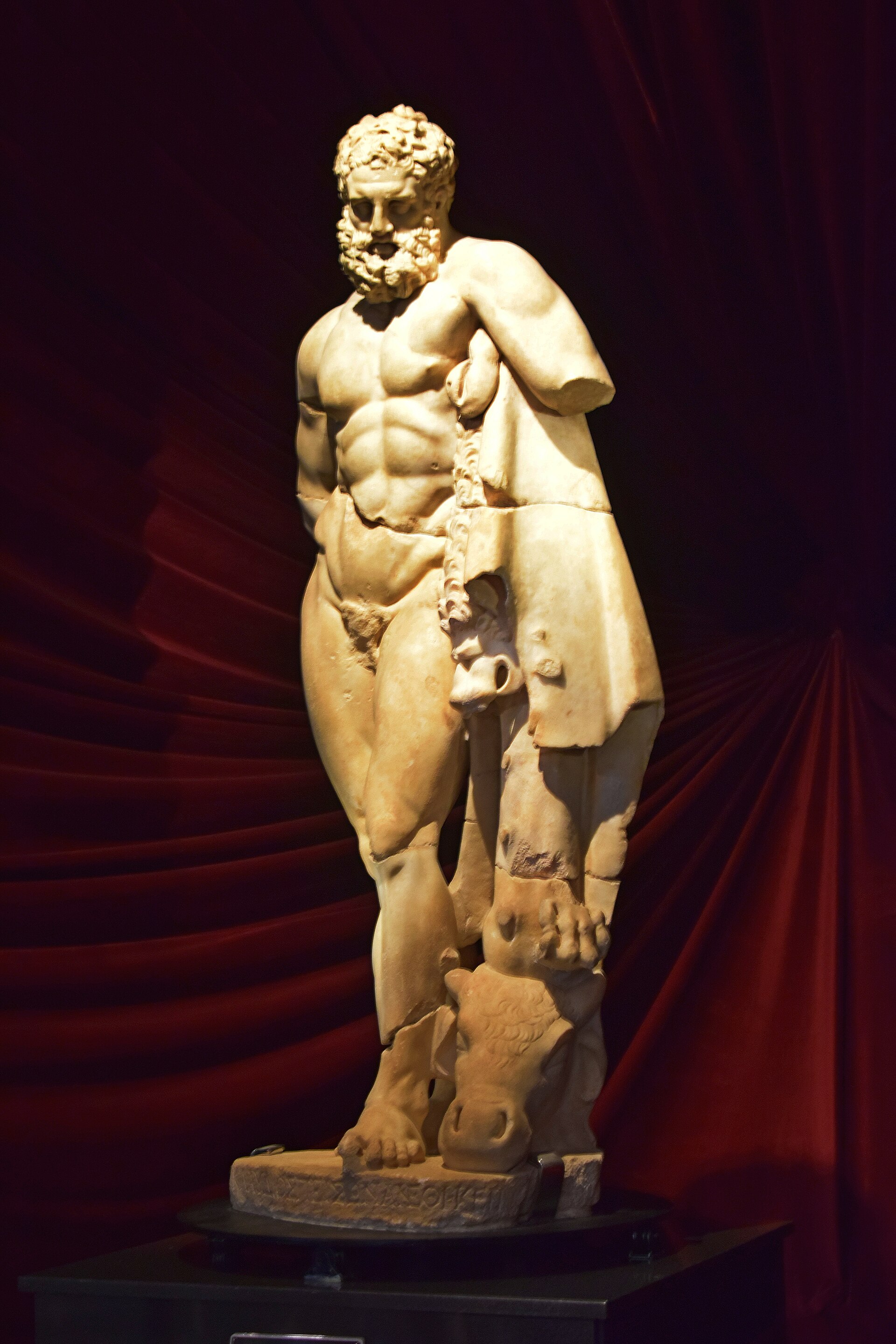
Four returns, four different things happening
Put the four together and the word return turns out to cover four unrelated outcomes.
| Object | Holder | Mechanism | What the outcome changed |
|---|---|---|---|
| Cult statue of a goddess, Morgantina | J. Paul Getty Museum, bought 1988 | Negotiated agreement, September 2007; returned 2011 | The object moved, and its name changed with it |
| Morgantina silver treasure | Metropolitan Museum of Art, bought 1981 and 1982 | Comprehensive settlement, 21 February 2006; returned 2010 | Ownership moved; the object kept travelling on a rotating loan |
| Statue of a Victorious Youth | J. Paul Getty Museum, bought 1977 | Italian forfeiture order 2010, confirmed 2018; European Court judgment 2024 | Title in Italian law; nothing in fact, the statue has not moved |
| Weary Herakles, Perge | Museum of Fine Arts, Boston, and two private collectors, from 1981 | Negotiated settlement, 2011, after a cast was shown to fit | A broken object became one object again |
Only the last of the four produced an object that is more complete than it was. Only the third produced no physical change at all.
Why the provenance line does not stop at the restitution
Restitution tends to be reported as an ending, and that is the one thing it reliably is not. In three of these four cases something kept happening afterwards. The silver went back on rotation. The statue acquired a new name and lost an old one. The bronze generated a European Court application in 2024, thirty-seven years after the purchase and fourteen after the first forfeiture order.
This has a practical consequence for how a record should be built. If the last line of a provenance chain reads returned to Italy, 2010, the chain is wrong by omission, because the object has been in New York since then and will be again. A return is a transfer of title, and a transfer of title is one event in a sequence that carries on producing events.
It also changes what a reader should ask of a museum label. Returned is not a status, it is a date. The useful questions are who holds title now, where the object physically is today, whether anything in the arrangement expires and whether any claim is still live somewhere. For the Getty bronze all four answers differ from each other, which is exactly why the single word would mislead.
Why this archive is free to read
We do this for everyone who loves art. The people who have studied it for years, and the people who just stopped to look. Iconotheca exists so that what we learn belongs to all of them.
Nobody pays us for this. No ads, no sponsors, no commercial interest. These works belong to all of us, and we would rather share them with as many people as we can than keep them to ourselves.
If it gave you something today, tell us to keep going. Follow us, leave a like, or write a positive comment. We read every one, and they are what keeps us going.
Questions
Both are in the Museo Archeologico Regionale di Aidone in Sicily, near the ancient site they came from. The silver returned from the Metropolitan Museum of Art in 2010 and the statue returned from the J. Paul Getty Museum in 2011, though the silver has since travelled back to New York on a loan rotation reported at roughly four-year intervals.
Because the name was an attribution rather than a finding. It was proposed by Marion True, the curator who recommended the 1988 purchase, and it held for twenty-two years. Most specialists now reject it, with Persephone and Demeter both argued for, and on the statue's return Sicilian officials dropped the name and called it the goddess of Morgantina.
No. Italian courts ordered the bronze forfeited in 2010 and confirmed that order in 2018, and the Court of Cassation rejected the museum's final appeal, so the statue is Italian state property as a matter of Italian law. It remains in the Getty's lawful physical possession in California, where no court has ordered anything.
With plaster casts. No document existed to show when the statue broke, so three separate attempts were made to test whether the upper half in Boston and the lower half in Antalya belonged together, and one of the casts fitted. The upper half was returned in 2011.
No. A return transfers title and it is one event among others. The Morgantina silver has travelled between Sicily and New York since its 2010 return, the Getty bronze generated a European Court application in 2024, and a chain that ends at the word returned leaves out everything that followed.
Sources
- 1Trafficking Culture, University of Glasgow, case study on the Morgantina cult statue of a goddess, on the 1979 clandestine excavation, the Canavesi sale and the 1988 Getty purchase. traffickingculture.org/encyclopedia/...
- 2Jason Felch, 'Chase Over: Aphrodite Crosses Final Finish Line', Chasing Aphrodite, 18 May 2011, on the statue's arrival in Aidone. chasingaphrodite.com/2011/...
- 3Jason Felch, 'Chasing Persephone?', Chasing Aphrodite, 28 May 2011, on the contested identification and the naming of the statue after its return. chasingaphrodite.com/2011/...
- 4Parco archeologico di Morgantina e della Villa Romana del Casale, official page for the Museo Archeologico di Aidone, the museum that now holds both objects. parchiarcheologici.regione.sicilia.it/morgantina-villa-ro...
- 5Suzie Thomas, 'Morgantina Silver', Trafficking Culture encyclopaedia, on the Hecht purchases of 1981 and 1982 and the 2006 agreement. traffickingculture.org/encyclopedia/...
- 6Finestre sull'Arte, 'The Morgantina silverware returns to Sicily after four years on display at the Archaeological Museum of Aidone', on the loan rotation that followed the restitution. finestresullarte.info/en/...
- 7Archaeological Institute of America, 'Spinning a Tale', interview with Malcolm Bell III on recognising the silver and on his 1993 request to examine it. archive.archaeology.org/online/...
- 8Art-Law Centre, University of Geneva, ArThemis case note on Victorious Youth, Italy v J. Paul Getty Museum, with the dated sequence of the Italian proceedings. plone.unige.ch/art-adr/...
- 9Center for Art Law, 'Case Review: Getty v. Italy (2024)', on the European Court of Human Rights application and the current legal position. itsartlaw.org/art-law/...
- 10Suzie Thomas, 'Weary Herakles', Trafficking Culture encyclopaedia, on the 1981 acquisition, the Levy and White partnership and the plaster casts. traffickingculture.org/encyclopedia/...
- 11BBC News, 'Weary Herakles bust to be returned by US to Turkey', 2011, on the settlement and the return of the upper half. bbc.co.uk/news/...
More in Provenance and Restitution
The partWhen the Only Proof of Where an Object Was Is a Photograph
The Third Imperial Easter Egg was photographed once, in March 1902, and that single plate is what identified it in 2014.
Moved for Safekeeping Is a Link in the Chain
Nine evacuations in this archive: three objects never returned to the building they left, one came back unrecognised and title changed once, by a...
The Thief Is Not a Link
Ten objects in this archive were stolen, some twice. In no case does the thief appear as an owner.