Violin, the 'Duke of Alcantara'
Antonio Stradivari · 1732
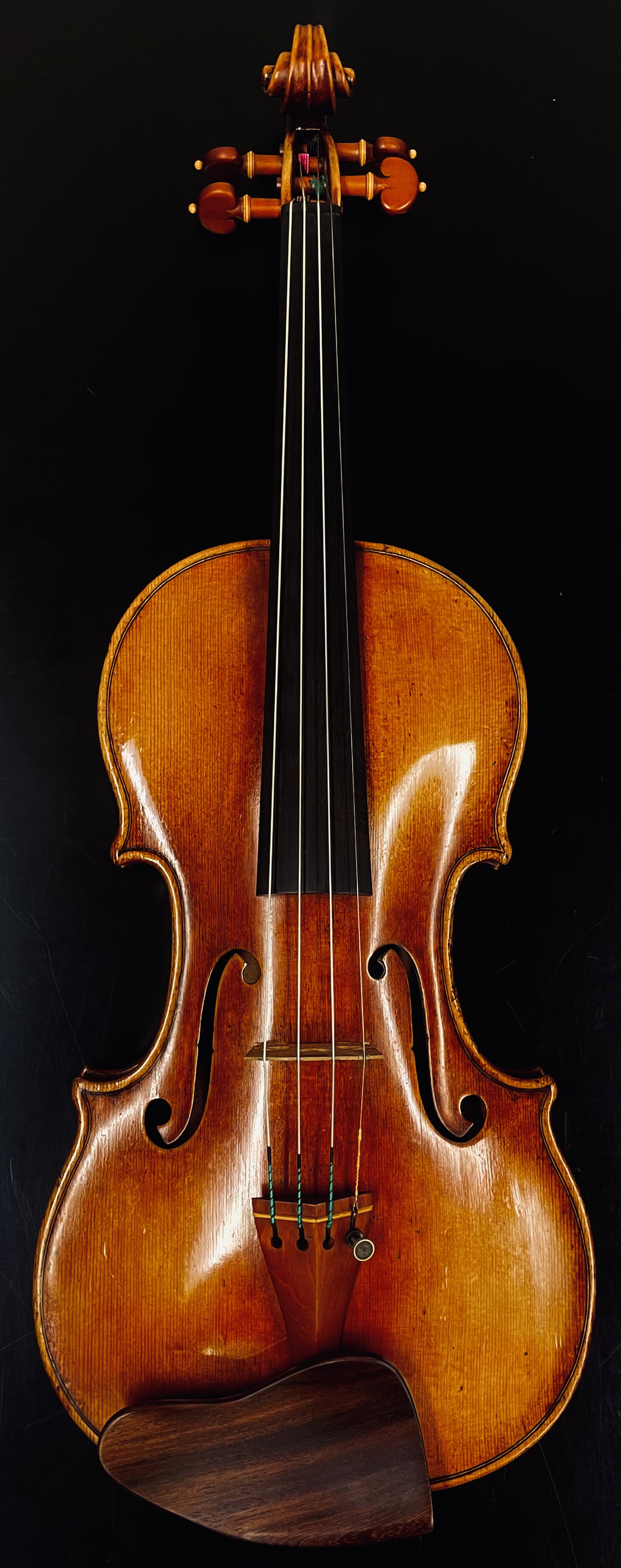
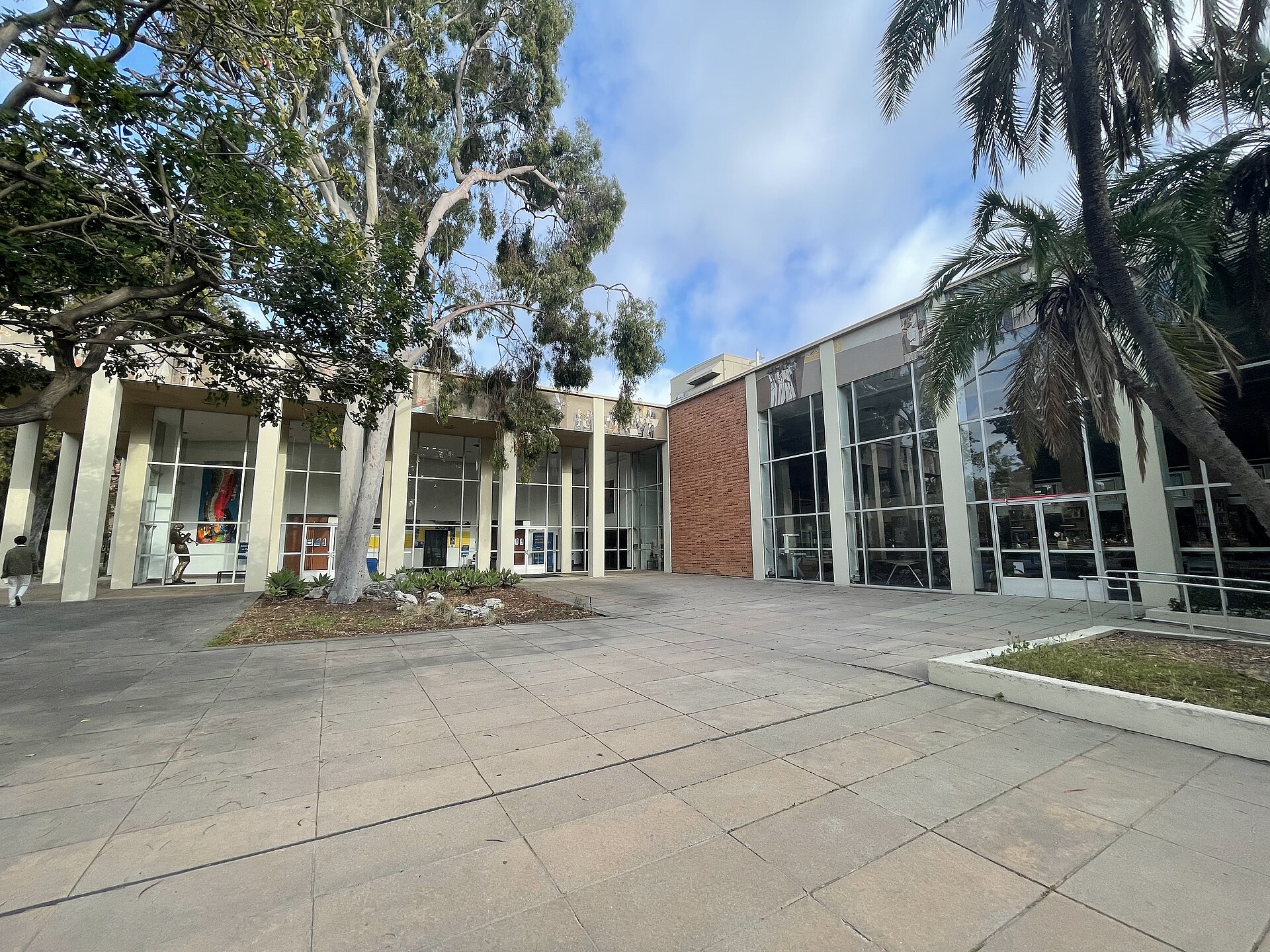
The 1732 Stradivari violin known as the Duke of Alcantara, photographed at UCLA's Herb Alpert School of Music.
Photograph by Yinglong999, via Wikimedia Commons, CC BY-SA 4.0| Artist | Antonio Stradivari |
|---|---|
| Date | 1732 |
| Medium | Carved spruce top; maple back, ribs, neck and scroll; ebony fingerboard and fittings; oil varnish |
| Dimensions | Back length 35.6 cm; upper bout 16.9 cm; middle bout 11.3 cm; lower bout 20.8 cm |
| Where it is now | University of California, Los Angeles, Herb Alpert School of Music, held in secure vault storage (reported location: the Fowler Museum at UCLA)last confirmed |
| Inventory number | No separate museum-style accession number is publicly published for this instrument; it is a university departmental holding rather than a museum-catalogued object. The nearest published catalogue reference is Tarisio's Cozio Archive, Property ID 41405. |
| Attribution | AcceptedUniversally catalogued as an autograph Stradivari violin of 1732, on the strength of certificates from Erich Lachmann of Berlin and the Rudolph Wurlitzer Co. Full note |
| Object type | Musical instrument |
| Period | Italian, Cremonese school, eighteenth century (Stradivari's late period) |
| Cases | Has a provenance gap |
| Inscriptions | Printed paper label inside the body, in the standard Stradivari formula, reading (by the most common transcription) 'Antonius Stradivarius Cremonensis Faciebat Anno 17[2]7', the final digit read variously as 7 or 1 by different observers; the instrument is nonetheless catalogued throughout the trade literature as dating from 1732, a discrepancy between label and assigned date that recurs on several instruments from Stradivari's final working decade. |
| Owners on record | 15 links11 documented, 2 disputed, 2 unknown |
| Sources | 15 cited |
About this record Last verified · 15 sources cited · Change log
On this page 9 sections
ContentsClose
A 1732 Stradivari violin, made in Cremona in the master's late eighties and named, on no documented basis, for an unidentified eighteenth-century Spanish nobleman. Donated to UCLA's Music Department in 1961 by Genevieve Vedder, widow of the oilman who had bought it, it disappeared from a graduate student's car in Pasadena on the evening of 2 August 1967 and was not seen again in public for twenty-seven years.
It resurfaced in January 1994 when its then-possessor, Teresa Salvato, sent it for repair and two Petaluma violin makers matched it, from a standard reference catalogue of Stradivari photographs, to the missing UCLA instrument. Between Salvato and the original theft lay an uncorroborated roadside discovery, a woman who kept it unreported for sixteen years, and a divorce settlement, none of it disputed as a sequence of possession, all of it thin as an account of how the object actually moved. A Los Angeles Superior Court settlement returned it to UCLA on 1 December 1995, along with the companion violin and bows stolen alongside it, for a payment to Salvato equal to roughly one seventieth of the instrument's appraised value.
UCLA still owns it. It lives in vault storage and comes out to be played by faculty and by student competition winners, a working instrument that happens to be one of 248 Stradivari violins known to survive, twice nearly sold off for budget reasons and twice kept.
Provenance
Each link is graded. Documented: a cited source supports it. Disputed: the identification is argued but not established. Unknown: no owner for that span, and the gap is not smoothed into a narrative. The grades in the glossary.
- 'Duke of Alcantara' (unidentified individual)unknown
The violin's name derives from a supposed eighteenth-century Spanish nobleman never identified by name, date or document in any source consulted. Treated here as unverified trade legend, not as an established provenance link.15
- Napoleon I of France (alleged)disputed
Reported in secondary literature as an early nineteenth-century owner, with no supporting document located.1
- - 1925Albert Caressa, dealer, Parisdocumented
First owner named with confidence in the sources consulted; sold the violin to Erich Lachmann of Berlin.1
- c. 1925 - 1925Erich Lachmann, collector, Berlindocumented
Held the violin briefly before selling to Dr. Steiner-Schweizer in Switzerland the same year; a Lachmann certificate remains on file.12
- 1925 - 1929Dr. Steiner-Schweizer, Switzerlanddocumented
Held the violin until its sale to the Rudolph Wurlitzer Co. in 1929.12
- 1929 - c. 1945Rudolph Wurlitzer Co., dealer, New York and Cincinnatidocumented
A Wurlitzer certificate (Cincinnati) remains on file; the firm sold the violin on to Ilya Schkolnik.12
- c. 1945 - late 1950sIlya Schkolnik, concertmaster, Baltimore Symphony Orchestradocumented
Schkolnik, born Odessa 1890, had earlier been concertmaster of the Detroit Symphony Orchestra from 1918 under Ossip Gabrilowitsch. Sold the violin on relocating to Los Angeles.1
- late 1950s - 1961Milton Vedder, oilmandocumented
No further biographical detail on Vedder was located. Died shortly after acquiring the instrument.1
- 1961 - 1961Genevieve Vedder, widow of Milton Vedderdocumented
Donated the violin to UCLA's Music Department in 1961.1
- 1961 - 2 August 1967University of California, Los Angeles, Music Departmentdocumented
Performed on by Professor Marrocco Thomas during this period. Loaned to graduate student David Margetts, second violinist of the Feri Roth String Quartet, at the time of the theft.1
- 2 August 1967 - 1967Unknownunknown
Disappeared from Margetts's car in Pasadena on the evening of 2 August 1967 while he shopped for groceries after a rehearsal. Margetts himself was reportedly unsure whether it was stolen from the car or lost from its roof. No thief was ever identified.13
- 1967 - 1978Nadia Tupica, music store owner and retired teacherdisputed
Claimed to have found the double case beside a freeway on-ramp shortly after the theft; the claim is uncorroborated. Kept the instrument, reportedly under her bed, without reporting it or having it examined, until her death in 1978.13
- 1978 - 1993Jefferson Demarco, nephew of Nadia Tupicadocumented
Inherited the instrument on his aunt's death; held it through his marriage to Teresa Salvato.13
- 1993 - 1995Teresa Salvato, amateur violinist, Riverside, Californiadocumented
Awarded the violin in her divorce from Jefferson Demarco in late 1993, apparently without either party knowing what it was. Identified as the missing UCLA Stradivari in January 1994 when she sent it for repair. Surrendered it to UCLA's Fowler Museum on 17 October 1994 under court pressure; received a $11,500 payment in the 1 December 1995 settlement.13
- 1 December 1995 - presentUniversity of California, Los Angeles, Herb Alpert School of Musicdocumented
Regained sole possession by settlement in Regents of the University of California v. Teresa Salvato et al. (with related cross-action Margaret Coppin v. Teresa Salvato et al.), Los Angeles Superior Court, Docket No. BC 114151. Kept in vault storage, played by faculty and student competition winners; joined by a second Stradivari violin donated by the Twiford Foundation in 2020.147
Technical evidence
| Attribution note | Universally catalogued as an autograph Stradivari violin of 1732, on the strength of certificates from Erich Lachmann of Berlin and the Rudolph Wurlitzer Co. of Cincinnati and New York, and its listing in Herbert K. Goodkind's photographic Iconography of Antonio Stradivari (1961), the reference catalogue whose photographs and measurements are what made the 1994 identification of the stolen instrument possible in the first place. The interior label is read by some as dated 1727 (or, by other readings, 1721) rather than 1732, a printed-label discrepancy that is common on late Stradivari instruments and is not treated by any source consulted as a challenge to the attribution itself. |
|---|---|
| Back | One-piece maple back, length 35.6 cm.2 |
| Upper bout | 16.9 cm.2 |
| Middle bout | 11.3 cm.2 |
| Lower bout | 20.8 cm.2 |
| Materials | Carved spruce top; maple back, ribs, neck and scroll; ebony fingerboard and fittings; oil varnish over ground. No published dendrochronological, varnish or X-radiographic study of this specific instrument was located.12 |
| Label | Printed interior label in the standard Stradivari formula, most commonly transcribed 'Antonius Stradivarius Cremonensis Faciebat Anno 17[2]7'; the final digit has been read by different observers as both 7 and 1. The instrument is nonetheless catalogued throughout as 1732, a date-versus-label discrepancy not treated by any source as grounds to question the attribution.12 |
| Construction assessment | Some specialists who have examined the instrument describe the f-hole cutting and varnish handling as comparatively less refined than Stradivari's golden-period work, consistent with a maker in his late eighties; workshop assistance from his sons Francesco and Omobono has been suggested but is argued, not documented by any surviving contract or signature.1 |
| Case contents at time of theft, 1967 | Travelled in a double case together with a 1950s violin by Ansaldo Poggi of Bologna, a bow by Francois Tourte and a bow by Markus Fischer; all four objects were stolen together in 1967 and recovered together in the 1995 settlement.1 |
| Certificates on file | Rudolph Wurlitzer Co., Cincinnati, Ohio; Erich Lachmann, Berlin.2 |
| Published literature | Listed in Herbert K. Goodkind, Violin Iconography of Antonio Stradivari, 1644-1737 (1961); Doring, Bein and Fushi, How Many Strads? (1999 edition); Carla Shapreau, 'The Adventures of the Duke of Alcantara', The Strad, May 1996, pp. 466-468 (not independently retrieved for this record; cited via Tarisio's Cozio Archive and Wikipedia's bibliography and flagged for direct verification).12 |
Images
The record in full
Chapter 1A working violin, not a museum piece
The 'Duke of Alcantara' is a full-size violin, its one-piece maple back measuring 35.6 centimetres, its outline narrowing from a 20.8-centimetre lower bout through an 11.3-centimetre waist to a...
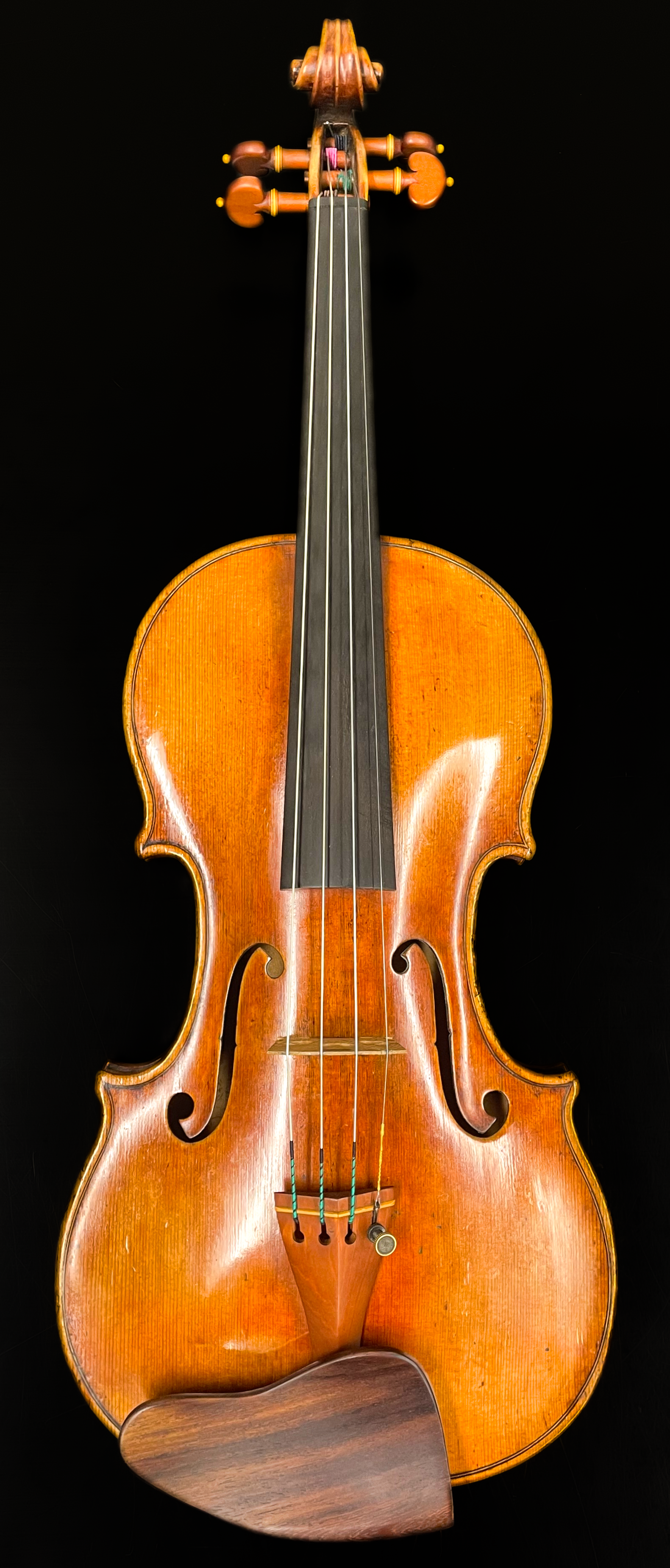
The 'Duke of Alcantara' is a full-size violin, its one-piece maple back measuring 35.6 centimetres, its outline narrowing from a 20.8-centimetre lower bout through an 11.3-centimetre waist to a 16.9-centimetre upper bout. The top is carved spruce, the back and ribs are maple, the fingerboard and fittings are ebony, and the whole is finished in oil varnish over a ground, the standard Cremonese construction of Antonio Stradivari's workshop across five decades of instrument-making.
What separates it from most objects catalogued in this publication is that it is still, deliberately, a tool. It is not framed, glazed or displayed behind rope. UCLA keeps it in vault storage at the Fowler Museum and brings it out to be played, by faculty and by the winners of specific student competitions, several times a year. Any record of this instrument has to hold two facts at once: it is one of a documented population of Stradivari violins now numbering 248 worldwide by UCLA's own 2020 count, and it is also, day to day, a university's working teaching instrument that happens to be worth more than the building it is kept in.
Chapter 2A name with no name behind it
The violin is known by the nickname of a supposed former owner, an eighteenth-century Spanish nobleman referred to as the Duke of Alcantara.
The violin is known by the nickname of a supposed former owner, an eighteenth-century Spanish nobleman referred to as the Duke of Alcantara. No source consulted names this individual, dates his ownership, or documents how the instrument came to be associated with him. The claim that it was later owned by Napoleon I of France in the early nineteenth century is reported in the same secondary literature with the same absence of documentation. Both attachments should be read as trade legend rather than established provenance, and this record grades them accordingly: unknown, not documented.
This is not a special defect of this instrument. Naming surviving Stradivari violins after a past owner, real or supposed, royal, noble or virtuoso, was and remains an ordinary practice of the violin trade: it gives dealers, insurers and scholars a stable handle for an otherwise anonymous object, and it does useful marketing work besides, lending an instrument a pedigree that is easier to remember and to sell than a serial number would be. The Duke of Alcantara is one particularly well-worn example of that practice. Where this record can verify an owner by name, from Albert Caressa onward, it says so and grades the claim documented; where it cannot, as with the Duke himself and with Napoleon, it says that plainly instead of repeating the legend as fact.
Chapter 3Stradivari at eighty-eight
Antonio Stradivari made this violin in 1732, by which point he was, by the most commonly used birth year of around 1644, approximately eighty-eight years old.
Antonio Stradivari made this violin in 1732, by which point he was, by the most commonly used birth year of around 1644, approximately eighty-eight years old. That places it well outside the twelve years, roughly 1700 to 1720, that dealers and scholars have long singled out as his golden period, the run of instruments, including the 'Messiah' of 1716 and the 'Lady Blunt' of 1721, prized above all others for their broader plates, flatter arching and a particular translucent red-orange varnish. A 1732 instrument is, by definition, a late one.
Specialist assessment of the instrument itself reflects that. Some observers who have examined it describe the cutting of the f-holes and the handling of the varnish as comparatively clumsy set against Stradivari's earlier work, and there is speculation, argued rather than documented, that his sons Francesco (1671-1743) and Omobono (1679-1742), both long resident in his workshop, had a hand in its making. That speculation cannot be verified from any surviving contract, workshop record or signature; no source consulted claims otherwise. What can be said with more confidence is general and well established in the literature on Stradivari's late shop: from the later 1720s into the 1730s, the sons' involvement in instruments bearing their father's label becomes more visible to specialists than it is in work from two decades earlier, and a small number of instruments from this period even carry labels indicating they were made under Antonio's direction rather than solely by his own hand. Whether that is true of this particular violin has not been established by any technical study located for this record, and no dendrochronological, varnish-analysis or X-radiographic study of the Duke of Alcantara specifically appears in the sources consulted. That absence is itself worth recording, since it is exactly the kind of study that has settled comparable questions on other late Stradivari instruments.
Chapter 4Paris to Cincinnati: the documented chain before America
The first owner this record can name with confidence is Albert Caressa, a Paris dealer, who sold the violin to the Berlin collector Erich Lachmann.
The first owner this record can name with confidence is Albert Caressa, a Paris dealer, who sold the violin to the Berlin collector Erich Lachmann. In 1925 Lachmann sold it on to a Dr. Steiner-Schweizer in Switzerland. In 1929 it passed to the Rudolph Wurlitzer Co., the New York dealing house that by then also operated out of Cincinnati, and it is Wurlitzer's own certificate, alongside Lachmann's, that anchors this stretch of the chain in the trade's paper record rather than in later retelling.
From Wurlitzer the violin went, by the mid-1940s, to Ilya Schkolnik, concertmaster of the Baltimore Symphony Orchestra. Schkolnik had been a working violinist since childhood: born in Odessa in 1890 to a musician father who toured him through Europe as a boy, trained at the conservatories of Leipzig and Brussels, he had already held the concertmaster's chair of the Detroit Symphony Orchestra under its founding conductor Ossip Gabrilowitsch from 1918 before his later Baltimore appointment. This is, in other words, a professional orchestral instrument moving through a professional orchestral career, not a curiosity changing hands between collectors who never played it.
Chapter 5An oilman, his widow, and a university gift
When Schkolnik relocated to Los Angeles, the violin passed, in the late 1950s, to Milton Vedder, an oilman.
When Schkolnik relocated to Los Angeles, the violin passed, in the late 1950s, to Milton Vedder, an oilman. No source consulted gives a fuller account of Vedder's business or his reasons for buying the instrument beyond the fact of the purchase. Vedder died not long afterward, and in 1961 his widow, Genevieve Vedder, donated the Stradivari violin to UCLA's Music Department.
The gift belongs to an ordinary and well-documented mid-twentieth-century American pattern: a widow disposing of a late husband's prized, illiquid, difficult-to-sell-well possession by giving it to a public institution, in this case a university department rather than a museum, in exchange for the object's continued use and a measure of donor recognition rather than a market price. UCLA's music faculty took Genevieve Vedder at her evident intention. Professor Marrocco Thomas performed on the violin as a working teaching and performance instrument through the six years the university held it before it disappeared, which is exactly the kind of active institutional use, rather than vault storage, that the object still returns to today whenever it is not locked away for security.
Chapter 6The evening of 2 August 1967
In 1967 the violin was on loan to David Margetts, a UCLA graduate student and the second violinist of the Feri Roth String Quartet, the string quartet in residence at UCLA.
In 1967 the violin was on loan to David Margetts, a UCLA graduate student and the second violinist of the Feri Roth String Quartet, the string quartet in residence at UCLA. It travelled in a double case that also held a violin by the Bolognese maker Ansaldo Poggi, made in the 1950s, and two bows, one by Francois Tourte and one by Markus Fischer.
On the evening of 2 August 1967, after a rehearsal in Hollywood, Margetts stopped to buy groceries in Pasadena. When he returned to his car, the case was gone. By his own later account, repeated in press coverage of the case, he was never certain which of two things had happened: that the case had been stolen from inside the vehicle, or that he himself had set it on the car's roof, forgotten it, and driven off, letting it fall or be taken from there. Margetts is reported to have made diligent, repeated efforts afterward to locate the instrument. Police reports were filed and pawn shops were circulated with notices; none of it produced a lead. No source consulted describes a public reward, an insurance payout, or any specific police theory of the theft beyond the bare fact that it went unsolved. Whatever happened on that street in Pasadena, it left no trail for twenty-seven years, and the uncertainty over theft versus accident was never resolved, then or since.
Chapter 7Under a bed for sixteen years
Nadia Tupica, the owner of a local music store and a retired Spanish teacher, said afterward that she had found the double case on the shoulder of a Los Angeles freeway on-ramp later that month...
Nadia Tupica, the owner of a local music store and a retired Spanish teacher, said afterward that she had found the double case on the shoulder of a Los Angeles freeway on-ramp later that month, having stopped believing she saw an abandoned infant only to find a violin case instead. That is her account, and it is the only account: no source consulted corroborates it independently, no witness or police report confirms it, and nothing explains why a music store proprietor, of all people, would hold on to an unidentified violin in a double case for a decade and a half without having it examined by a colleague in her own trade or reported to any authority. This record grades the finding story as an unverified claim by the person who benefited from it, not as documented fact, while treating her actual, sustained possession of the instrument from sometime in 1967 until her death in 1978 as established.
Under California law, failing to make reasonable efforts to identify or return a valuable found item, rather than simply keeping it, exposes a finder to the same legal consequences as a thief; this is the backdrop against which UCLA later pursued its claim, since Tupica's estate and heirs stood in no better legal position than she would have. She kept the case, reportedly under her bed, until her death in 1978, when it passed to her nephew, Jefferson Demarco.
Chapter 8A divorce settlement, 1993
Demarco held the violin from 1978 until his divorce from his wife, Teresa Salvato, an amateur violinist living in Riverside, California, who had reportedly played the instrument for roughly fourteen...
Demarco held the violin from 1978 until his divorce from his wife, Teresa Salvato, an amateur violinist living in Riverside, California, who had reportedly played the instrument for roughly fourteen years during the marriage without either party learning what it actually was. In the divorce settlement of late 1993, the double case and its contents were awarded to Salvato. Nothing in the sources consulted suggests either Demarco or Salvato understood at that point that the violin was a Stradivari, let alone the specific missing UCLA instrument; the case had, by every account, been treated inside the family as an ordinary, somewhat valuable heirloom violin passed down from an aunt, not as a subject of concealment.
Chapter 9A luthier in Petaluma, January 1994
In January 1994 Salvato lent the violin to her teacher, Michael Sand, who took it north to Petaluma for maintenance work at the shop of Joseph Grubaugh and his wife Sigrun Seifert, both members of...
In January 1994 Salvato lent the violin to her teacher, Michael Sand, who took it north to Petaluma for maintenance work at the shop of Joseph Grubaugh and his wife Sigrun Seifert, both members of the American Federation of Violin and Bow Makers. It did not take them long. Cross-checking the instrument against Herbert K. Goodkind's Violin Iconography of Antonio Stradivari, 1644-1737, the standard photographic reference catalogue of documented Stradivari instruments compiled specifically so that individual violins could be identified from their photographs and measurements after loss or theft, and against the Federation's own registry of instruments reported stolen, Grubaugh and Seifert matched the violin in front of them to the missing UCLA Stradivari and telephoned the university directly.
This is worth pausing on, because it answers a question a reader would otherwise be left with: what made identification possible at all, twenty-seven years and one unremarkable-looking repair job later? The answer is that Stradivari instruments have been documented this precisely, by photograph and measurement, for exactly this reason, because theft and loss are common enough in this market that the trade built its own identification infrastructure well before this case tested it.
Chapter 10The dispute, 1994-1995
What followed was not a quiet handover. UCLA's position, as its representative Ruth Simon put it to the press at the time, was unambiguous: 'Our goal is to get the violin back, our singular goal.'...
What followed was not a quiet handover. UCLA's position, as its representative Ruth Simon put it to the press at the time, was unambiguous: 'Our goal is to get the violin back, our singular goal.' Salvato did not surrender the instrument immediately. Her attorney, Allen Hyman, argued a good-faith-purchaser theory, that a possessor who came into stolen property without knowledge of the theft could acquire ownership rights in it. Salvato herself, by press accounts, went quiet for months, ignored UCLA's calls, and at one point left home to stay in a hotel. In May 1994 campus police officers went to her home and threatened her with arrest. On 14 October 1994 UCLA's lawyers obtained a court injunction compelling disclosure of the violin's location; rather than face that order directly, Salvato agreed to surrender the instrument to UCLA's Fowler Museum, and on 17 October it was authenticated there and taken into the museum's keeping, unplayed, pending resolution.
Resolution took over a year more. On 1 December 1995 the Los Angeles Superior Court matter concluded: the Stradivari, the Poggi violin and the two bows would return outright to UCLA, and Salvato would receive a payment of $11,500. At the time of settlement the Stradivari alone was estimated to be worth at least $800,000, meaning Salvato's payment amounted to roughly one seventieth of the instrument's appraised value, a figure that reads far more like a negotiated nuisance payment to close out a claim UCLA judged it was going to win in any case than like a market price for anything. The case's full docket carries a second, related listing, a cross-action styled Margaret Coppin v. Teresa Salvato, et al., filed within the same Los Angeles Superior Court case number, BC 114151. No source consulted for this record explains who Margaret Coppin was or what she claimed, and this record does not guess.
Chapter 11What actually came back, and what did not
It is worth being exact about what the 1995 settlement returned, because the case is sometimes flattened in retelling into a story about a single violin.
It is worth being exact about what the 1995 settlement returned, because the case is sometimes flattened in retelling into a story about a single violin. Two instruments and two bows had disappeared together in 1967 and all four came back together in 1995: the Stradivari itself; the Poggi violin, a mid-twentieth-century Italian instrument built on a Stradivari pattern by Ansaldo Poggi of Bologna, an entirely different maker working two centuries later, not a second Stradivari and not the same object under another name; a bow by Francois Tourte, the most celebrated of all bow makers; and a bow by Markus Fischer. The Poggi and the two bows are part of this same theft and this same recovery, not a separate case that happened to run in parallel.
They should also not be confused with an unrelated case that involves a different Stradivari entirely: the Ex-Davidoff-Morini Stradivari of 1727, stolen from the New York apartment of the concert violinist Erica Morini in October 1995, which as of the sources consulted here has never been recovered. The two cases share only a maker, a decade of press coverage, and the general fact of Stradivari theft; they are otherwise unconnected, and this record treats them as such.
Chapter 12Back in the vault, back on the stage
Since 1995 the Duke of Alcantara has stayed UCLA property, kept locked in vault storage at the Fowler Museum and brought out under supervision.
Since 1995 the Duke of Alcantara has stayed UCLA property, kept locked in vault storage at the Fowler Museum and brought out under supervision. It is not treated as untouchable: winners of the UCLA Philharmonia's All-Star Concerto Competition and the Atwater Kent String Concerto Competition earn the right to perform on it, a small number of students each year. Tiffany Wee, a UCLA violin student in the class of 2016, described months of practising on it before her own competition performance in terms that double as the best short account available of what the instrument still does at nearly three hundred years old: 'I had to learn how the Strad wanted to be played.' Alexander Treger, concertmaster of the Los Angeles Philharmonic and a UCLA professor, gave what appears to be its first public performance after the settlement, at a private recital at the UCLA chancellor's residence later in December 1995.
The university has twice come close to losing it since. One account states that UCLA put the violin up for sale during a round of budget cuts in the 1980s and, after roughly a year with no buyer, withdrew it from the market; a separate and more widely reported episode describes a 2006 proposal to sell the instrument for budget reasons, defeated after advocacy led by the UCLA cellist and faculty member Antonio Lysy, who argued for keeping it as a teaching resource rather than converting it to cash. The sources consulted do not make clear whether these are two distinct episodes eighteen years apart or a single episode reported with inconsistent dates; this record treats them as separate until a source resolves the discrepancy. In 2020 the university's holdings of historic instruments doubled in another respect when the Twiford Foundation, a foundation established by the family of the collector Lavern Twiford, donated a second Stradivari violin, a Sanctus Seraphin violin, and several historic bows, including work by Francois Tourte, Nikolai Kittel and W.E. Hill & Sons, to the Herb Alpert School of Music, giving UCLA two of the 248 Stradivari violins then known to survive.
Chapter 13A dukedom, a dictatorship, and the trade in reputation
There is no evidence in any source consulted for this record of a hidden iconographic or devotional programme behind this object, and none should be invented.
There is no evidence in any source consulted for this record of a hidden iconographic or devotional programme behind this object, and none should be invented. A violin is a working tool built to a functional acoustic design, and the honest finding here is an absence: nothing about its form, its wood or its varnish encodes a belief system, and no contract, inventory or correspondence attaches a doctrinal or symbolic intention to its making. What the object does carry, well documented rather than invented, is a history of being used as a vessel for reputation, first the trade's own, then a nation's.
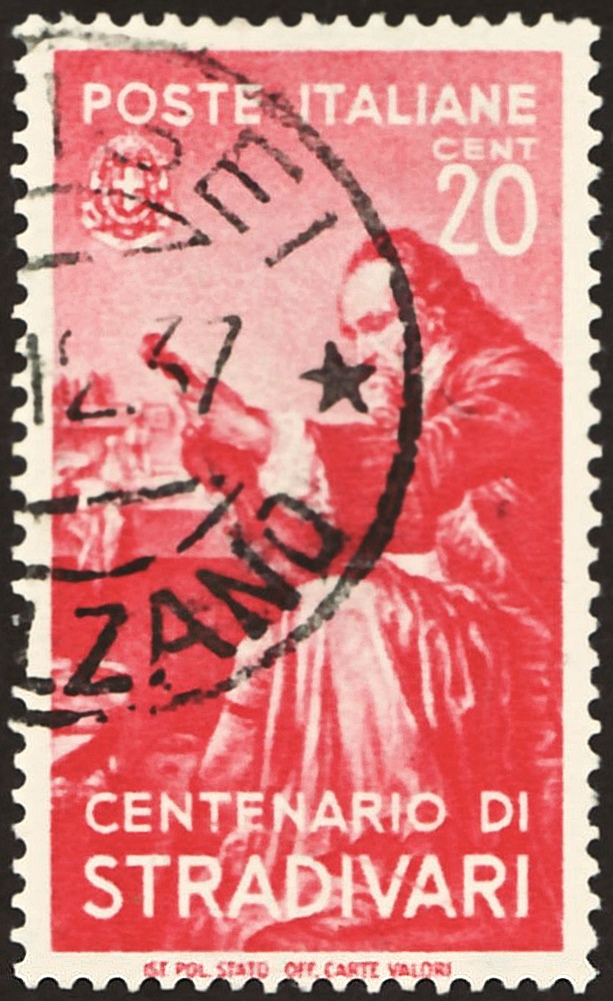
The naming convention itself, an invented or unverifiable noble owner standing in for a serial number, is a documented feature of how the violin trade has marketed and organised its most valuable stock since at least the nineteenth century; a Stradivari with a duke's name attached to it is easier to insure, catalogue, write about and sell than one with none. Separately, and on a larger stage, Stradivari's reputation was itself put to explicit state use in 1937, when the Kingdom of Italy, under the Fascist government, issued a 20-centesimo commemorative postage stamp bearing a framed portrait of Stradivari as part of a series honouring 'Uomini Illustri', famous Italians, holding him up as a national genius in the same register as the regime's other commemorated historical figures. No confirmed portrait of Stradivari made from life survives; the stamp's image, like other later 'possible' portraits circulating in archives today, is a retrospective invention rather than a documented likeness, which makes the stamp itself a small, clean case study in how a maker's fame is manufactured well after the fact rather than transmitted from any authentic image of the man.
The artist
Antonio Stradivari
Antonio Stradivari worked in Cremona for roughly seven decades, from an apprenticeship in the 1660s to his death in 1737, and by most estimates made well over a thousand instruments across that span. Of these, 248 violins were known to survive as of a 2020 count cited by UCLA, along with a smaller number of violas, cellos and other instruments, making him at once the best-documented and the most mythologised figure in the history of instrument-making. This record's object is a late one, from his final working decade, which puts it deliberately outside the twelve-year 'golden period' that dominates most popular writing about him, and is precisely why it is a useful record for showing what the rest of his output actually looks like.
Related works
| Work | Relation | Where it is |
|---|---|---|
| Violin, the 'Messiah' Antonio Stradivari | Same maker, golden-period comparison (1716) A genuinely golden-period Stradivari, kept in near-mint condition and almost never played, the opposite extreme from the Duke of Alcantara's working, late-period, actively-performed existence. A separate record on this site. | Ashmolean Museum, Oxford |
| Violin, the 'Lady Blunt' Antonio Stradivari | Same maker, made at the tail end of the golden period (1721) Eleven years earlier than this record's violin; useful for comparing an instrument still inside the golden-period window against one just outside it. A separate record on this site. | Private collection (sold at auction 2011) |
| Viola, the 'Tuscan, Medici' Antonio Stradivari | Same maker, much earlier instrument (1690), different voice type Held elsewhere on this site as a thin record pending a verified photograph; included here for comparison across Stradivari's career rather than as a matched pair. | Library of Congress, Washington DC |
| Violoncello, the 'Marylebone' Antonio Stradivari | Same maker, different instrument type Included for institutional and typological comparison, not because the two instruments share any provenance link. | National Museum of American History, Smithsonian |
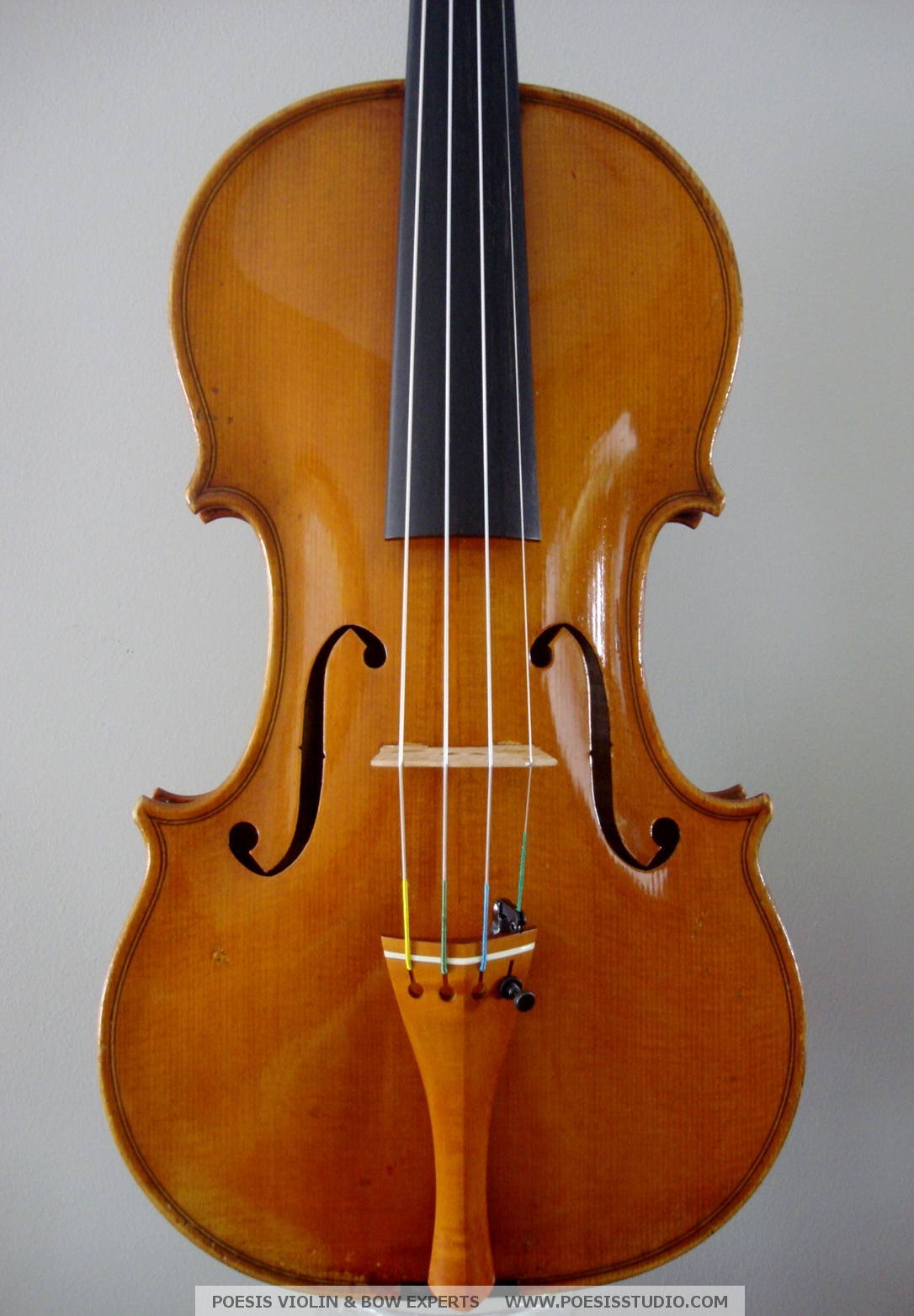
| Violin by Ansaldo Poggi Ansaldo Poggi | The actual companion instrument stolen with the Duke of Alcantara in 1967 and recovered with it in the 1995 settlement A different maker entirely, working in Bologna two centuries after Stradivari, on a Stradivari-derived model. Not a second Stradivari, and not to be confused with the instrument this record describes. No verified photograph of this specific example was located; the gallery below uses a different, clearly-labelled Poggi violin only to illustrate the maker's work. | UCLA Herb Alpert School of Music |
| Ex-Davidoff-Morini Stradivarius (1727) Antonio Stradivari | NOT related; listed only to prevent confusion with an unconnected theft case Stolen from violinist Erica Morini's New York apartment in October 1995 and never recovered. Shares a maker and a decade of press coverage with the Duke of Alcantara case, nothing else. The two thefts are unrelated and this record treats them as such. | Unrecovered, whereabouts unknown |
| Second Stradivari violin, UCLA (Twiford Foundation gift) Antonio Stradivari | Institutional companion, same current holder Donated with a Sanctus Seraphin violin and historic bows in 2020, making UCLA the holder of two of the world's 248 known Stradivari violins. No individual name for this second violin was found in the sources consulted. | UCLA Herb Alpert School of Music |
Open questions
- Who was the 'Duke of Alcantara' the instrument is named for? No source consulted identifies a specific historical individual, a date of ownership, or any document connecting a real Spanish nobleman of that title to this violin.
- Is the claim that the violin was once owned by Napoleon I documented anywhere, or is it an undocumented legend repeated from one secondary source to the next? No primary source for it was located.
- What exactly happened on the evening of 2 August 1967? Margetts himself was reportedly unsure whether the case was stolen from inside his car or left on its roof and lost. No surviving police report or insurance file was located to settle the question.
- Is Nadia Tupica's account of finding the case on a freeway on-ramp true, or simply the story she told? It is uncorroborated, and no source explains why a music store owner would keep an unidentified violin for sixteen years without having it examined.
- Who was Margaret Coppin, named in the related cross-action Margaret Coppin v. Teresa Salvato, et al. within the same Los Angeles Superior Court docket, BC 114151? No source consulted explains her identity or claim.
- Did the 1994-95 dispute end in a reasoned judicial ruling on title, or purely in a negotiated settlement before any ruling? Press accounts describe an injunction and a payment, not a published opinion on ownership.
- Was there a genuine, separate attempt to sell the violin during 1980s budget cuts, in addition to the 2006 episode, or have two retellings of a single episode been dated inconsistently across sources?
- Has any technical study (dendrochronology, varnish analysis, X-radiography) of this specific instrument ever been published? None was located, despite this being exactly the kind of study that has resolved comparable authorship and dating questions on other late Stradivari instruments.
Questions about this object
What is Violin, the 'Duke of Alcantara'?
Violin, the 'Duke of Alcantara' is a musical instrument, dated 1732. Medium: Carved spruce top; maple back, ribs, neck and scroll; ebony fingerboard and fittings; oil varnish.
Who made Violin, the 'Duke of Alcantara', and is the attribution settled?
The attribution to Antonio Stradivari is recorded here as accepted. Universally catalogued as an autograph Stradivari violin of 1732, on the strength of certificates from Erich Lachmann of Berlin and the Rudolph Wurlitzer Co. of Cincinnati and New York, and its listing in Herbert K. Goodkind's photographic Iconography of Antonio Stradivari (1961), the reference catalogue whose photographs and measurements are what made the 1994 identification of the stolen instrument possible in the first place. The interior label is read by some as dated 1727 (or, by other readings, 1721) rather than 1732, a printed-label discrepancy that is common on late Stradivari instruments and is not treated by any source consulted as a challenge to the attribution itself.
Where is Violin, the 'Duke of Alcantara' now?
University of California, Los Angeles, Herb Alpert School of Music, held in secure vault storage (reported location: the Fowler Museum at UCLA). Inventory number No separate museum-style accession number is publicly published for this instrument; it is a university departmental holding rather than a museum-catalogued object. The nearest published catalogue reference is Tarisio's Cozio Archive, Property ID 41405.. Last confirmed 3 September 2026. UCLA-owned by outright gift from 1961; stolen 1967; regained sole possession by a Los Angeles Superior Court settlement (Regents of the University of California v. Teresa Salvato et al., and the related cross-action Margaret Coppin v. Teresa Salvato et al., Docket No. BC 114151) entered 1 December 1995.
What is still unknown about Violin, the 'Duke of Alcantara'?
Who was the 'Duke of Alcantara' the instrument is named for? No source consulted identifies a specific historical individual, a date of ownership, or any document connecting a real Spanish nobleman of that title to this violin.
Sources
- 1Wikipedia, 'Duke of Alcantara Stradivarius'. en.wikipedia.org/wiki/...
- 2Tarisio, Cozio Archive, 'Antonio Stradivari, Violin, Cremona, 1732, the Duke of Alcantara', Property ID 41405. tarisio.com/cozio-archive/...
- 3Deseret News (Associated Press wire), 'Violin Returned on a Sour Note After 27 Years', 23 October 1994. deseret.com/1994/...
- 4UCLA Herb Alpert School of Music, 'The Allure of a Stradivarius'. schoolofmusic.ucla.edu/the-allure-of-a-stradivarius
- 5Stradivarius.org, 'The Duke of Alcantara'. stradivarius.org/duke-alcantara-stradivarius-violin
- 6Interlude.hk, 'The Shocking Stories of Three Missing Stradivarius Violins'. Used only to confirm that the Ex-Davidoff-Morini Stradivarius case is unrelated to the Duke of Alcantara. interlude.hk/the-shocking-stories-of-three-missing-stradi...
- 7UCLA Newsroom, 'UCLA receives Stradivarius, Seraphin violins from Twiford Foundation', 10 February 2020. newsroom.ucla.edu/releases/...
- 8The Daily Beast, 'Who Stole Erica Morini's $3.5 Million Stradivarius Violin?'. Used only to confirm the Morini theft as a separate, unrelated case. thedailybeast.com/who-stole-erica-morinis-dollar35-millio...
- 9Wikimedia Commons, File:Duke of Alcantara Stradivarius.jpg, photograph by Yinglong999, CC BY-SA 4.0. commons.wikimedia.org/wiki/...
- 10Wikimedia Commons, File:Duke of Alcantara 2.png, photograph by Yinglong999, CC BY-SA 4.0. commons.wikimedia.org/wiki/...
- 11Wikimedia Commons, File:UCLA Herb Alpert School of Music 1.jpg, photograph by Yinglong999, CC BY-SA 4.0. commons.wikimedia.org/wiki/...
- 12Wikimedia Commons, File:Violin by Ansaldo Poggi, Bologna.jpg, photograph by Pssviolin, CC BY-SA 3.0. commons.wikimedia.org/wiki/...
- 13Wikimedia Commons, File:ITA 1937 MiNr0592 pm B002.jpg, 1937 Kingdom of Italy commemorative postage stamp, public domain. commons.wikimedia.org/wiki/...
- 14Wikipedia, 'Ansaldo Poggi'. Used for the biography of the companion instrument's maker. en.wikipedia.org/wiki/...
- 15Slippedisc, 'I left my Stradivarius on top of the car while I went shopping', December 2018, discussing David Margetts's account and citing attorney and violin maker Carla Shapreau on his efforts to locate the instrument. slippedisc.com/2018/...


Last verified · Published
Change log
3 September 2026 - Record created at the house standard: researched narrative, technical evidence, maker dossier, graded provenance chain, prices with hammer and premium separated, related works, open questions and sources.