Breguet No. 160, the Marie-Antoinette
Begun by Abraham-Louis Breguet, completed by the successor house under Antoine-Louis Breguet · Ordered 1783; completed 1827 on the modern firm's account. The holding museum gives 1820; the Breguet house Notice of 1887 gives 1802.
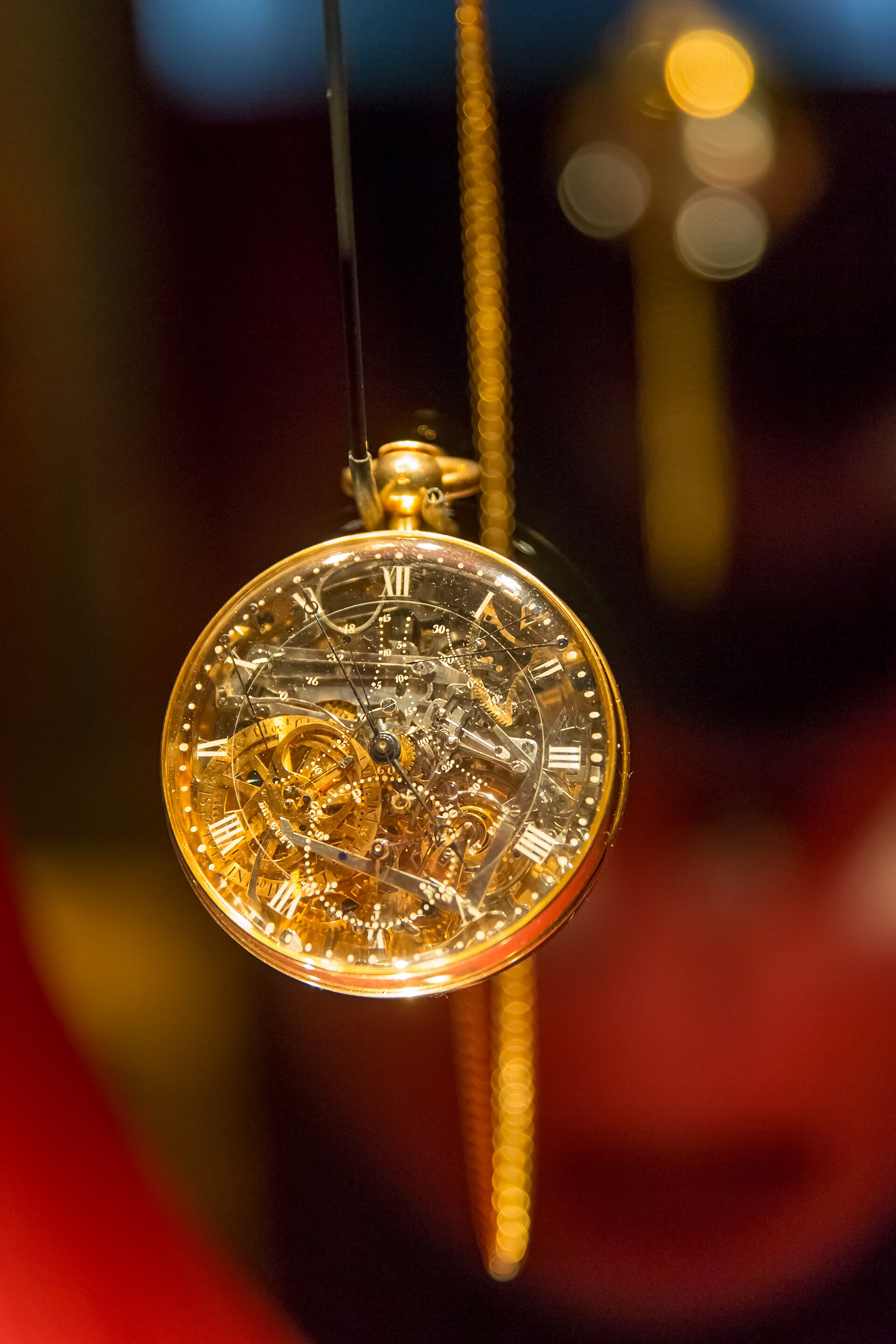
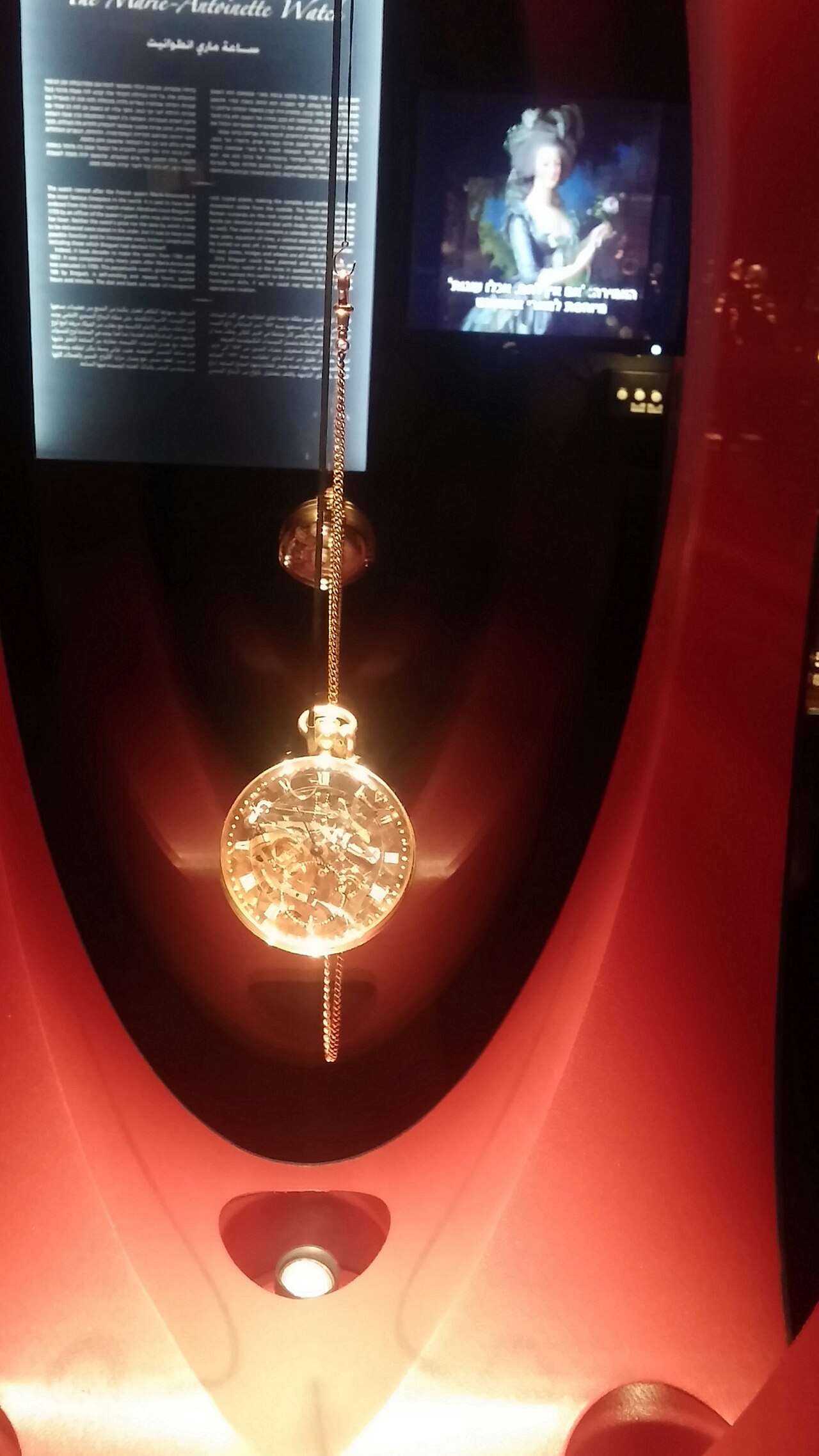
The watch itself, hanging on its chain in the L. A. Mayer Museum for Islamic Art in Jerusalem, photographed in September 2018. The rock crystal dial shows the whole going train through it: the perpetual calendar work, the equation of time, the independent seconds and the minute repeating mechanism, in the gold case Breguet's workshop finished in 1827, thirty-four years after the queen who gave her name to it had been executed. This is No. 160 and not the 2008 re-edition No. 1160, which was made by Breguet in Switzerland and has never been in this building.
L. A. Mayer Museum for Islamic Art, Jerusalem; photograph by Michael.vainshtein, CC BY-SA 4.0 via Wikimedia Commons| Artist | Begun by Abraham-Louis Breguet, completed by the successor house under Antoine-Louis Breguet |
|---|---|
| Date | Ordered 1783; completed 1827 on the modern firm's account. The holding museum gives 1820; the Breguet house Notice of 1887 gives 1802. |
| Medium | Gold, rock crystal, white enamel and sapphire. Gold plates, bridges, wheels and balance spring; sapphire bearings; front and back crystals of rock crystal rather than glass. |
| Dimensions | Not published in the sources consulted for this record. Figures in circulation are frequently the dimensions of the 2008 re-edition No. 1160 and are not adopted here. |
| Where it is now | L. A. Mayer Museum for Islamic Art, Jerusalemlast confirmed 3 August 2026 |
| Attribution | WorkshopThe commission, the design and the specification are Abraham-Louis Breguet's. Full note |
| Object type | Clocks and instruments |
| Period | French, ordered 1783, completed 1827 |
| Cases | Has a provenance gap |
| Inscriptions | Signed for the house of Breguet and numbered 160. The secret signature, applied by pantograph with diamond powder and visible only in raking light, is the house's own anti-counterfeiting mark; its presence or absence on this object is not stated in the sources consulted. |
| Owners on record | 11 links8 documented, 2 disputed, 1 unknown |
| Sources | 9 cited |
About this record Last verified 13 August 2026 · 9 sources cited · Change log
On this page 12 sections
ContentsClose
The most famous watch in the world was ordered in 1783 by an officer of the Queen's Guards whose name was never entered in the register, with instructions to build in every complication then known, to substitute gold for other metals wherever it could be done, and to observe no limit on either the time taken or the price. It was finished forty-four years later, in 1827, four years after Abraham-Louis Breguet's death and thirty-four years after the execution of the queen it is named for. It is his commission and his design. It is not his completed work, and no honest description of it can call it his masterpiece.
On the night of 15 to 16 April 1983 a single burglar took it from the L. A. Mayer Museum for Islamic Art in Jerusalem along with 105 other clocks and watches, past an inoperative alarm and through a window whose bars he bent by hand. It came back twenty-three years later not through police work but through a deathbed confession, a lawyer acting for an anonymous woman, and a payment made by the museum to recover its own property.
It has never been sold at auction. Every figure quoted for its value, including the thirty million dollars that appears in almost every article written about it, is journalism rather than a price.
Provenance
Each link is graded. Documented: a cited source supports it. Disputed: the identification is argued but not established. Unknown: no owner for that span, and the gap is not smoothed into a narrative. The grades in the glossary.
- 1783 -An unnamed officer of the Queen's Guard, who commissioned it and never received itdocumented
The order is recorded by the house: every known complication, gold substituted for other metals wherever possible, no limit on time or price. The client's name was withheld from the records at the time and is not established. Count Hans Axel von Fersen the Younger, an anonymous admirer and the naval minister de Castries are all in circulation as candidates; the holding museum and the firm's own 1887 Notice both give only an officer of the queen's guard. A specialist publication issued a formal correction in December 2024 clarifying that the Marie-Antoinette connection is legend rather than period documentation.123
- 1783 - 1827The house of Breguet, Quai de l'Horloge, Parisdocumented
Work interrupted by the Revolution and by Breguet's flight from Paris on 3 June 1793; the Breguet Notice of 1887 records the work as stopped from 1789 to 1795. The workshop records for 1775 to 1787 were destroyed in the Terror in 1794. Michel Weber recorded working 725 hours between 1812 and 1815 at 7,250 francs; the base movement credited to a maker recorded as Prudhomme. Abraham-Louis Breguet died on 17 September 1823 and the watch was completed in 1827 under his son Antoine-Louis Breguet. The holding museum gives 1820 and the firm's own 1887 Notice gives 1802.134
- - 1838The Marquis de La Groye of Provinsdisputed
The Breguet repair books record that on 11 March 1838 the Marquis de La Groye of Provins brought in his perpetuelle repeating watch No. 160. The Marquis had died without issue on 4 October 1837, five months earlier. Either the house booked the piece under its known owner's name after his death or a date in the books is wrong. How and when he acquired it is not recorded.1
- 1838 - 1887Unknown; the watch is in the possession of the house of Breguet again by 1887unknown
No owner is documented between the repair-book entry of 1838 and the sale of 1887. How the watch passed from the Marquis de La Groye, or from whoever held it in 1838, back to the firm is not established in any source consulted.
- 1887 -Sir Spencer Brunton, then his brotherdocumented
Madame Breguet sold No. 160 to Sir Spencer Brunton for 600 pounds in 1887, sixty years after the watch was completed. The Breguet house Notice of 24 October 1887 belongs to this transaction and is the document from which the 1802 completion date and the 30,000 franc factory cost descend. The watch afterwards passed to Brunton's brother.134
- Murray Marks, dealer and collectordisputed
Marks held the watch between the Brunton family and Salomons. The date on which it left him is contradictory in the source that reports it: the narrative gives a Christie's sale of 22 June 1896 and the same source's own ownership table gives 1918. The two are incompatible and neither is adopted here.1
- 1896 or 1918 - 1925Sir David Lionel Goldsmid-Stern-Salomons, second baronetdocumented
An electrical engineer and motoring pioneer who assembled roughly 124 Breguet pieces and published his own catalogue of them in 1921. It is because a single private collector concentrated the corpus that the largest holding of Breguet outside Paris is in Jerusalem, and it is why one burglary in 1983 could take 106 objects from one building.14
- 1925 - 1974Vera Bryce Salomonsdocumented
The collection passed to Salomons' daughter on his death in 1925. She founded the L. A. Mayer Museum for Islamic Art in Jerusalem in memory of the orientalist Leo Ary Mayer and left the collection to it.1
- 1974 - 1983L. A. Mayer Museum for Islamic Art, Jerusalemdocumented
The watches arrived at the museum in 1974.1
- 1983 - 2006Naaman Diller, by theft; then his widow Nili Shamratdocumented
Taken with 105 other clocks and watches on the night of 15 to 16 April 1983 through a small window whose bars were bent by hand, past an inoperative alarm and a predictable guard round. Reported dates range from 15 to 17 April. Diller sold three of the 106 pieces and kept the rest in safe deposit boxes in Israel, Europe and the United States, several with his own handwritten servicing notes. He died of cancer in 2004 having told his wife what he had taken and where it was.15
- 2006 - presentL. A. Mayer Museum for Islamic Art, Jerusalemdocumented
In August 2006 a lawyer acting for an unnamed woman arranged the return of a first group of objects including No. 160, for a sum reported as roughly 35,000 dollars in one account and about 40,000 in another; the reference literature gives 39 objects in that tranche. The recovery became public in late 2007 and a further 43 pieces were located in France and returned afterwards. The commonly cited total recovered is 96 of 106. Nobody was prosecuted for the burglary; Shamrat was given five years probation for receiving stolen goods. The museum reopened its Salomons clock gallery in July 2009. The watch was lent to the Science Museum, London, for Versailles: Science and Splendour, which ran to 21 April 2025.256
Prices realised
No. 160 has never been offered at auction. It has never been sold on the open market at all. The only price in its recorded history is a private sale by the house in 1887. Every figure quoted as its value, including the thirty million dollars that appears in most coverage of the 1983 theft and the recovery, is an estimate produced by writers and not a transaction. It is recorded below as journalism and is deliberately absent from every price field in this record.
The thirty million dollar figure. Wired used it in 2013 and the theft coverage uses it throughout. It rests on no auction result, insurance schedule, probate valuation, customs declaration or export valuation that appears in any source consulted here. The watch is in a museum that is not a seller and has never been offered. Treat it as journalism.
| Date | Sale | Estimate | Result | Note |
|---|---|---|---|---|
| 1887 | Private sale by the house of Breguet, not an auction | Not applicable | Hammer GBP 600, a private sale price and not a hammer price With premium Not applicable; no buyer's premium arises in a private sale GBP | Madame Breguet sold No. 160 to Sir Spencer Brunton for 600 pounds, sixty years after the watch was finished. The house had held it since 1827. This is the only documented price ever paid for the object. |
Hammer is the price at which the bidding stopped; with premium adds the fee the house charges the buyer on top. Hammer price and buyer's premium in the glossary.
Technical evidence
| Attribution note | The commission, the design and the specification are Abraham-Louis Breguet's. The finished object is not his completed work. Breguet died on 17 September 1823 and the watch was completed in 1827 under his son Antoine-Louis Breguet, on the account given by the modern firm and by the horological trade. Two other completion dates are on the record and both come from parties with standing: the holding museum gives 1820, and the Breguet house's own Notice of 24 October 1887, printed by Sir David Salomons in 1921, gives 1802. On two of the three dates the watch was finished by somebody other than the man whose name it carries. The production registers also name the hands: a base movement credited to a maker recorded as Prudhomme, and 725 hours of work by Michel Weber between 1812 and 1815. |
|---|---|
| Complications | Minute repeater; perpetual calendar giving day, date, month and the leap-year cycle; equation of time; power reserve indication; metallic thermometer; independent centre seconds usable as a stopwatch, without reset; small seconds; self-winding by oscillating weight.12 |
| Movement materials | Gold plates, gold bridges and gold wheels, on the client's instruction of 1783 that gold replace other metals wherever it could be substituted.1 |
| Balance spring | Gold. The balance spring governs the rate of the watch, so specifying its material is a client dictating a functional choice rather than a decorative one.1 |
| Bearings | Sapphire.1 |
| Dial and crystals | White enamel dial with a second dial in transparent rock crystal; front and back crystals of rock crystal rather than glass.1 |
| Shock protection | Double pare-chute, the shock-absorbing suspension for the balance staff invented by Breguet.1 |
| Recorded labour | Base movement credited in the production registers to a maker recorded as Prudhomme. Michel Weber recorded as working 725 hours between 1812 and 1815 at a cost of 7,250 francs, which is ten francs an hour.1 |
| Build cost | 16,864 francs in one account; 17,070 francs reported as the ledger total; 17,000 francs given by the firm as labour alone; 30,000 francs given as factory costs by the Breguet house Notice of 24 October 1887. The four cannot be reconciled and all four are printed.134 |
| Dimensions | Not published in the sources consulted. Dimensions quoted in circulation frequently belong to the 2008 re-edition No. 1160 and are not adopted here.2 |
| Numbering | Movement number 160. The number records the position of the order in the queue, not the date of manufacture: it was taken in 1783 and the object was completed decades later. Whether the Breguet series is strictly chronological is not established.1 |
Images
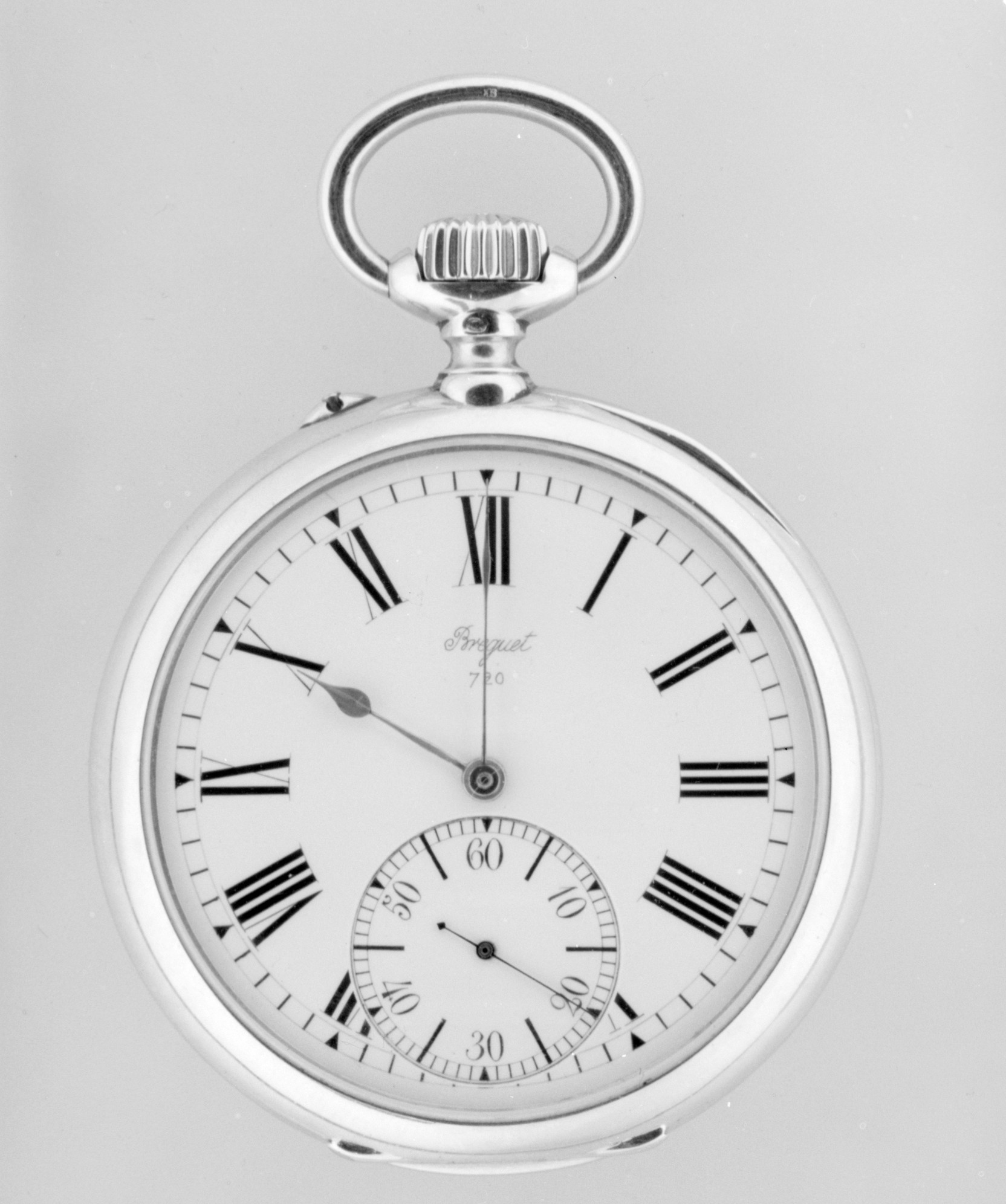
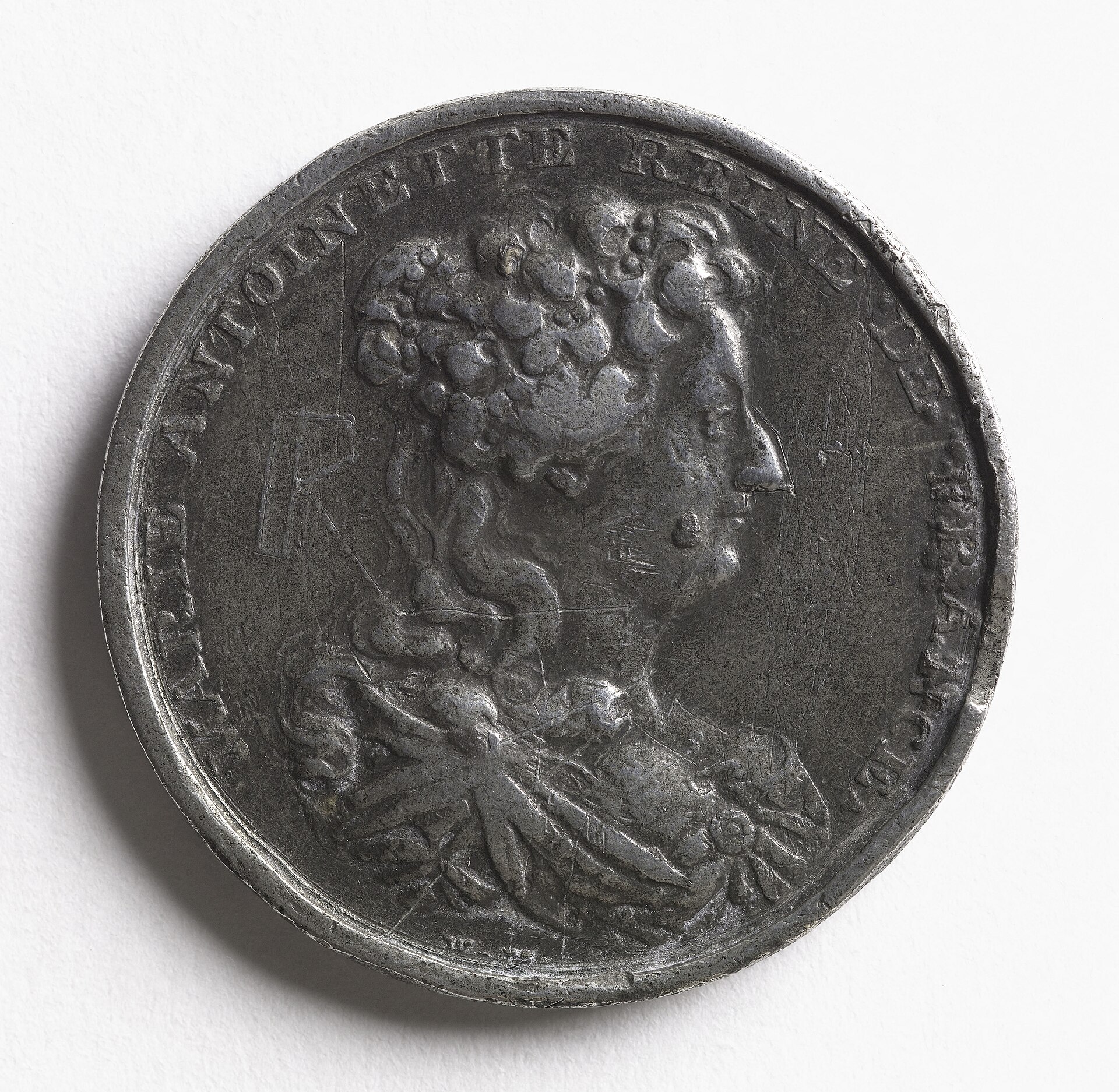
The record in full
Chapter 1The object is posthumous, and that is the first thing to say about it
Abraham-Louis Breguet died in Paris on 17 September 1823.
Abraham-Louis Breguet died in Paris on 17 September 1823. Watch No. 160 was completed in 1827. Everything that follows in this record is written from that fact outwards, because almost nothing written about this object anywhere else begins there.
The distinction is not pedantry and it is not a technicality about signatures. Breguet ran a house that outlived him by nearly two centuries and every stage of it signed objects Breguet: Breguet et Fils in his lifetime and after it, then Breguet Neveu et Compagnie, then Maison Breguet under Edward Brown from 1870, then the modern company under Chaumet, Investcorp and the Swatch Group. All of them are genuinely Breguet. Only the first is Breguet's own work, and the test is a date, not a name on a dial.
No. 160 sits on the wrong side of that date. The order is his, taken in his workshop on the Quai de l'Horloge in 1783. The design is his, and so is the decision to accept a commission with no ceiling on cost or time. The finished object was assembled and delivered by his son. A record that calls this watch Breguet's masterpiece has quietly moved four years of somebody else's work onto a dead man's account.
Chapter 2What was ordered, and on what terms
The order was placed in 1783. The house record identifies the client only as an officer of the Queen's Guard and no source consulted here supplies a name from the register.
The order was placed in 1783. The house record identifies the client only as an officer of the Queen's Guard and no source consulted here supplies a name from the register. The instruction was threefold: build into one watch every complication then known; substitute gold for other metals throughout wherever substitution was possible; and accept no limit on the time taken or the price charged.
Quill and Pad puts the last clause plainly: neither a delivery date nor a price was fixed, meaning that the watchmaker was basically granted carte blanche. That sentence is the whole explanation of the object. A commission with no ceiling on either axis is the only kind that can run for forty-four years without being cancelled, and it is also the only kind that can outlive both the client's cause and the maker.
The watch is called the Marie-Antoinette on the strength of that intention. She did not order it, did not pay for it, never saw it and had been dead for thirty-four years when it was finished.
Chapter 3Who placed the order is not established, and the famous answer is a shop-window label
The version repeated in almost every account is that the officer was Count Hans Axel von Fersen the Younger, the Swedish soldier attached to the Queen and the subject of a long-running attachment...
The version repeated in almost every account is that the officer was Count Hans Axel von Fersen the Younger, the Swedish soldier attached to the Queen and the subject of a long-running attachment story. Quill and Pad names him. It is not the same thing as an archival identification, and the sources that name Fersen and the sources that say the name is unknown are both in wide circulation.
The candidates on the record are four: an unnamed officer of the Queen's Guard, which is the holding museum's own position and the wording used by the Breguet house's own Notice of 1887; Fersen; an anonymous admirer, which is the formulation used by The Naked Watchmaker; and the naval minister the Marechal de Castries. The name was withheld from the records at the time, which is itself a fact about the commission rather than a gap in the paperwork.
Two further pieces of evidence bear on it. A specialist publication issued a formal correction in December 2024 clarifying that the Marie-Antoinette connection is legend rather than period documentation. And a researcher has traced the Marie-Antoinette attribution itself back to Sir David Salomons, whose own source appears to have been a dealer's shop-window label of about 1920 to 1921. If that chain holds, the name by which the most famous watch in the world is known was attached to it by a shopkeeper a hundred and forty years after the order was placed.
Chapter 4What the watch actually is
As built it is the most complicated watch of its century.
As built it is the most complicated watch of its century. It carries a minute repeater; a perpetual calendar giving the day of the week, the date, the month and the leap-year cycle; equation of time; a power reserve indication; a metallic thermometer; an independent centre seconds usable as a stopwatch, with no reset; a small seconds; and self-winding by an oscillating weight, which is what the word perpetuelle means in this house's vocabulary and what English-language descriptions almost invariably confuse with the perpetual calendar.
The materials are the second half of the specification. Plates, bridges and wheels are gold. The balance spring is gold. The bearings are sapphire. The dial is white enamel with a second dial in transparent rock crystal, and the front and back crystals are rock crystal rather than glass. It carries a double pare-chute, the shock-absorbing suspension for the balance staff that was Breguet's own invention.
Every one of those decisions is expensive and only some of them are improvements.
Chapter 5Gold in the balance spring is an instruction, not an ornament
The 1783 order specified that gold should replace other metals throughout wherever it could be substituted, and the watch as built obeys it into places a client would never see.
The 1783 order specified that gold should replace other metals throughout wherever it could be substituted, and the watch as built obeys it into places a client would never see. Gold plates and bridges are display. A gold balance spring is not.
The balance spring governs the rate of the watch. Its elasticity is the property the whole instrument depends on, and it is the one component in a timekeeper where the choice of material is a decision about accuracy rather than about appearance. Specifying gold there is a patron dictating a functional choice for reasons that have nothing to do with function, and it is the clearest surviving instance in the Breguet corpus of a client overriding a maker on a technical question.
Structural gold of this kind is otherwise rare in the corpus. Where it appears it should be read as evidence of a specific instruction rather than as house practice.
Chapter 6Forty-four years, four regimes, and two dead principals
The build ran from the last years of the Bourbon monarchy to the reign of Charles X.
The build ran from the last years of the Bourbon monarchy to the reign of Charles X. Work is recorded as having been interrupted by the Revolution and by Breguet's own flight from Paris: he left on 3 June 1793 for Switzerland, going by way of Geneva to Neuchatel and Le Locle, and returned in 1795 to recover the workshop. The Breguet house's own Notice of 1887 records the work as stopped from 1789 to 1795.
Marie-Antoinette was executed on 16 October 1793, four months after Breguet left Paris. The records of the workshop for 1775 to 1787 were destroyed in the Terror in 1794, which is why the earliest years of this commission cannot be documented from the firm's own books at all.
The registers pick the object up again decades later. Michel Weber is recorded working 725 hours on No. 160 between 1812 and 1815, at a cost of 7,250 francs. Breguet died in 1823. The watch was completed in 1827 under the direction of his eldest son Antoine-Louis Breguet, forty-four years after the order was taken.
Chapter 7The hands that made it are named, which is almost unheard of
Breguet ran a house, not a bench. Work was subcontracted to named outworkers under a system the trade calls etablissage, and the Breguet production registers record who those workers were, which is...
Breguet ran a house, not a bench. Work was subcontracted to named outworkers under a system the trade calls etablissage, and the Breguet production registers record who those workers were, which is more than almost any comparable maker of the period offers.
On No. 160 the register credits the base movement to a maker recorded as Prudhomme, and 725 hours of work between 1812 and 1815 to Michel Weber at a cost of 7,250 francs. That is ten francs an hour, and it is the rarest kind of figure in decorative arts research: a labour cost attached to a named hand on a surviving object.
It also creates a conflict that no source consulted resolves. Salomons reports Breguet saying that he could find only fifteen to twenty workmen in Paris capable of carrying out his work properly, and that no man received less than twenty francs a day. Ten francs an hour is far more than twenty francs a day at any ordinary working day. One figure may be a day rate for employed hands and the other a piece price including materials or overhead. Neither is adjusted here.
Nothing further is established about Prudhomme. Who he was, and what else he supplied to the house, is an open question on the most-described watch in the world.
Chapter 8Three completion dates, and the firm disagrees with itself across 134 years
The date this watch was finished is not settled, and the disagreement is not between a good source and a bad one.
The date this watch was finished is not settled, and the disagreement is not between a good source and a bad one. It is between three parties who all have standing.
The modern firm and the horological trade give 1827, under Antoine-Louis Breguet. The holding museum gives 1820, which is inside Abraham-Louis Breguet's lifetime. The Breguet house's own Notice dated 24 October 1887, printed by Sir David Salomons in his 1921 catalogue, gives 1802, with the work stopped from 1789 to 1795 and the factory costs at 30,000 francs.
This record adopts 1827, because it is the date given by the party that holds the archive today and it is the date the trade uses, and it prints the other two rather than suppressing them. Two points follow. The 1802 date is not an encyclopaedia error to be swept away: it descends from a Breguet document, and any correction that dismisses it as a Wikipedia mistake has itself made a mistake. And on two of the three dates the object was finished by somebody other than Abraham-Louis Breguet, so the posthumous reading of this watch does not depend on choosing 1827.
Chapter 9What it cost to build, in four incompatible figures
Four numbers are in circulation for the cost of building No.
Four numbers are in circulation for the cost of building No. 160 and they cannot be reconciled from the material consulted here. Quill and Pad gives 16,864 francs as the total. A figure of 17,070 francs is reported as the ledger total. The firm gives 17,000 francs as labour alone. The Breguet house Notice of 24 October 1887 calls the factory costs 30,000 francs.
All four are printed here and none is averaged. What can be said with confidence is the shape: this was an object whose build cost ran to five figures in francs at a time when the same house was selling its standardised souscription watch by subscription at 600 livres with a quarter paid in advance, and when the watch Marie-Antoinette actually bought from Breguet in 1792 cost 960 francs. The commission cost between seventeen and thirty times what the queen herself spent on a Breguet.
A reader should treat any modern currency equivalent for these figures with suspicion. The methods used to convert an early nineteenth-century franc differ by an order of magnitude between a retail price index, an average earnings measure and a share of national income, and no source consulted here states which method it used.
Chapter 10The ownership chain, and the hole in the middle of it
The house kept the watch. There is no delivery to the client of 1783, for the obvious reason that a commission taken in the last years of the ancien regime and finished under the Restoration had no...
The house kept the watch. There is no delivery to the client of 1783, for the obvious reason that a commission taken in the last years of the ancien regime and finished under the Restoration had no client left to deliver it to.
The first owner in the record appears in the repair books. On 11 March 1838 the Marquis de La Groye of Provins is recorded bringing in his perpetuelle repeating watch No. 160 for servicing. The Marquis had died without issue on 4 October 1837, five months earlier. Either the house booked the piece under its known owner's name after his death or a date in the books is wrong, and either way it is the clearest published demonstration that the Breguet registers are working business books that carry business errors.
How the watch passed from the Marquis, or from whoever held it in 1838, back into the possession of the house is not established. By 1887 the firm had it: in that year Madame Breguet sold No. 160 to Sir Spencer Brunton for 600 pounds, sixty years after it was finished. It passed to Brunton's brother, then to the dealer and collector Murray Marks, and from Marks to Sir David Lionel Salomons, second baronet, in a chain that includes a Christie's sale of 22 June 1896. The same source gives 1896 in its narrative and 1918 in its own ownership table, and the two are incompatible.
Salomons assembled roughly 124 Breguet pieces. On his death in 1925 the collection passed to his daughter Vera Bryce Salomons, who left it to the museum she founded in Jerusalem in memory of the orientalist Leo Ary Mayer. The watches arrived there in 1974.
Chapter 11The largest theft of horology on record
On the night of 15 to 16 April 1983 a single burglar entered the L.
On the night of 15 to 16 April 1983 a single burglar entered the L. A. Mayer Museum for Islamic Art and removed 106 clocks and watches, No. 160 among them. It remains the largest theft of horology on record.
The method depended entirely on institutional failure. The museum's alarm was inoperative. The guard's round was predictable. The thief bent the metal bars of a small window with hand tools, dismantled the larger pieces so that they would pass through the opening, and loaded them into a waiting vehicle. There was no forced main entry, no confrontation and no witness.
The date is reported inconsistently and the inconsistency is worth carrying rather than smoothing. The night of 15 to 16 April 1983 is the form given by the reference literature; 17 April 1983 is the date given in the English Wikipedia entry on the watch; 16 April also appears. A burglary that begins on one night and is discovered the next morning generates exactly this spread.
The thief was Naaman Diller, an Israeli burglar and former air force pilot with a long record, including a Tel Aviv bank robbery in 1967 carried out with an improvised oxygen pipeline for a cutting torch. He was not identified as the culprit for twenty-three years. He sold three of the 106 pieces and kept the rest, distributed among safe deposit boxes in Israel, Europe and the United States. Several were later found with his own handwritten notes and diagrams explaining how to dismantle, wind, oil and set them. Whatever the motive was, it was not liquidity.
Chapter 12The recovery was a negotiation, and the museum paid
Diller died of cancer in 2004. Before his death he told his wife, Nili Shamrat, an Israeli living in Los Angeles, what he had done and where the objects were.In August 2006 a lawyer acting for an...
Diller died of cancer in 2004. Before his death he told his wife, Nili Shamrat, an Israeli living in Los Angeles, what he had done and where the objects were.
In August 2006 a lawyer acting for an unnamed woman approached the museum and arranged the return of a first group of pieces, No. 160 among them. The sum paid is reported as roughly 35,000 dollars in one account and about 40,000 in another. The size of that first tranche is given as 39 objects in the reference literature. The transaction was framed as a recovery rather than a ransom, and the anonymity was part of the arrangement. The recovery became public in late 2007; The Naked Watchmaker gives December 2007, and Quill and Pad places the return to the museum in 2008. A further group of 43 watches and clocks was located in France and returned afterwards. The commonly cited total is 96 of the 106 stolen objects, which leaves ten still missing.
Three things about this case are usually softened and should not be. The watch came back intact and in running order, not as parts. Nobody was prosecuted for the burglary: the thief was dead, and the investigation that identified his widow did so after the objects had already been returned by agreement; Shamrat was subsequently given five years probation for receiving stolen goods. And the recovery was not a police triumph. It was the consequence of a deathbed confession and a negotiated handover through a lawyer, and a museum paid money to get its own property back. That is the central fact of the case and it is uncomfortable.
The museum reopened its Salomons clock gallery in July 2009.
Chapter 13The thirty million dollars is journalism, not a price
Figures of 30 million dollars are quoted for No.
Figures of 30 million dollars are quoted for No. 160 in almost everything written about it. Wired used the figure in 2013; the coverage of the theft used it throughout.
The watch has never been offered at auction. It has never been sold on the open market at all: the only recorded transactions in its history are a private sale by the house at 600 pounds in 1887, an inheritance, a bequest, a theft and a negotiated return. The museum is not a seller. No auction result, insurance schedule, probate valuation, customs declaration or export valuation supporting the thirty million figure appears in any source consulted for this record.
It is an estimate of what an unsellable object might make, produced by writers rather than by valuers, and it should be labelled as that every time it is repeated. This record does not carry it in any price field.
Chapter 14160 is the watch. 1160 is not, and the photographs are almost all of 1160
In 2004 Nicolas G. Hayek, then head of the Swatch Group, which had bought Breguet in 1999, commissioned the modern firm to build a replica of No.
In 2004 Nicolas G. Hayek, then head of the Swatch Group, which had bought Breguet in 1999, commissioned the modern firm to build a replica of No. 160. The original was still missing at the time. The replica was completed and presented in April 2008, after the original had been recovered, and it carries the number 1160.
It has 823 components. It reproduces the complication set, the gold plates and bridges, the gold balance spring and the rock crystal dials, and it carries a 48-hour power reserve indication. Its presentation case is made from the wood of an oak from the grounds of the Petit Trianon at Versailles. It is not for sale.
It is also, by a wide margin, the more photographed of the two objects. It has been exhibited and marketed since 2008 by the company that made it, while the original sits in a museum in Jerusalem, and the consequence is that a large proportion of the images captioned as the Marie-Antoinette watch are pictures of a watch made in the twenty-first century. For a few months in 2008 both objects existed and only one of them was old. Any catalogue entry, insurance schedule, news report or caption that says the Marie-Antoinette without a number has not identified an object.
Chapter 15Where it is now, and where it has been lately
No. 160 is at the L. A. Mayer Museum for Islamic Art in Jerusalem, in the Salomons collection galleries.It travels rarely.
No. 160 is at the L. A. Mayer Museum for Islamic Art in Jerusalem, in the Salomons collection galleries.
It travels rarely. It was shown in London in the Science Museum's exhibition Versailles: Science and Splendour, which ran to 21 April 2025, where the museum's own text described it as the world's most famous watch, designed for Marie Antoinette. That description is the naming problem this record exists to correct, reproduced by a national museum in an exhibition label, which is a measure of how firmly the legend has set.
The holding museum's own count of its Breguet material is itself unsettled: its Hebrew-language pages state 55 pieces and the reference literature has 57, against roughly 124 recorded in Salomons' hands. Around seventy objects are unaccounted for between the collector and the museum, before the ten never recovered from the 1983 theft are counted.
The artist
Abraham-Louis Breguet, and the successor house that finished this watch
Abraham-Louis Breguet was born at Neuchatel in 1747, when it was a principality held by the King of Prussia rather than part of Switzerland, and opened his own workshop on the Quai de l'Horloge on the Ile de la Cite in Paris in 1775. He died there on 17 September 1823. That date is the single most useful fact for reading any object signed Breguet, and it is the fact this record is built around, because No. 160 was finished four years after it.
Five different businesses have signed objects Breguet across two and a half centuries: Breguet, Breguet et Fils, Breguet Neveu et Compagnie, Maison Breguet under Edward Brown from 1870, and Breguet as a modern brand under Chaumet, Investcorp and the Swatch Group. The signature is a company name. The date, taken from the registers, is the attribution.
Exhibited
- 2024-2025Versailles: Science and SplendourScience Museum, London · Ran to 21 April 2025. The museum's own text describes the watch as the world's most famous watch, designed for Marie Antoinette, which is the naming error this record documents, reproduced on a national museum's exhibition page.
- 2009Reopening of the Salomons clock gallery after the recoveryL. A. Mayer Museum for Islamic Art, Jerusalem · July 2009, following the return of the objects recovered from 2006.
Literature
- Sir David Salomons, Breguet (1747-1823), London, printed for the author. The collector's own catalogue of his Breguet holdings, written by the man who then owned No. 160. It prints the Breguet house Notice of 24 October 1887 from which the 1802 completion date and the 30,000 franc factory cost descend. (1921)
- Breguet house Notice dated 24 October 1887, printed by Salomons in 1921. The firm's own description of the commission: ordered in 1783 by an officer in the Marie-Antoinette Guards, completed 1802, work stopped 1789 to 1795, factory costs 30,000 francs.
Related works
| Work | Relation | Where it is |
|---|---|---|
| Breguet No. 1160, the re-edition Montres Breguet SA | A modern watch, not this one Commissioned in 2004 by Nicolas G. Hayek while the original was still missing, completed and presented in April 2008 after it had been recovered. 823 components, gold plates and bridges, gold balance spring, rock crystal dials, 48-hour power reserve, presentation case carved from a Versailles oak from the grounds of the Petit Trianon. Not for sale. It is more photographed than the original and its pictures are routinely captioned as No. 160. | Montres Breguet, Switzerland; exhibited by the company |
| Breguet No. 179 Abraham-Louis Breguet | The watch Marie-Antoinette actually owned Sold to the Queen on 4 September 1792 for 960 francs: a plain gold savonette case with no glass over the dial, quarter repeater, uncompensated, verge escapement, enamelled dial, steel hands, fusee. She gave it to her brother-in-law the Comte d'Artois, afterwards Charles X, who wore it until his death. It is the object the name should properly attach to and it is nothing like the watch that carries it. | Not established in the sources consulted |
| The Duc d'Orleans Sympathique, Breguet Nos. 128 and 5009 The successor house of Breguet | The market comparandum, and posthumous in the same way Dated 1835 by Sotheby's with the register sale recorded as 16 July 1836, twelve or thirteen years after Breguet's death. It made USD 5,777,500 in 1999 and USD 6,802,500 in 2012, both premium-inclusive totals, and holds the two highest prices ever paid for a clock. The most valuable objects in the Breguet market are consistently not Breguet's own work. | Private collection |
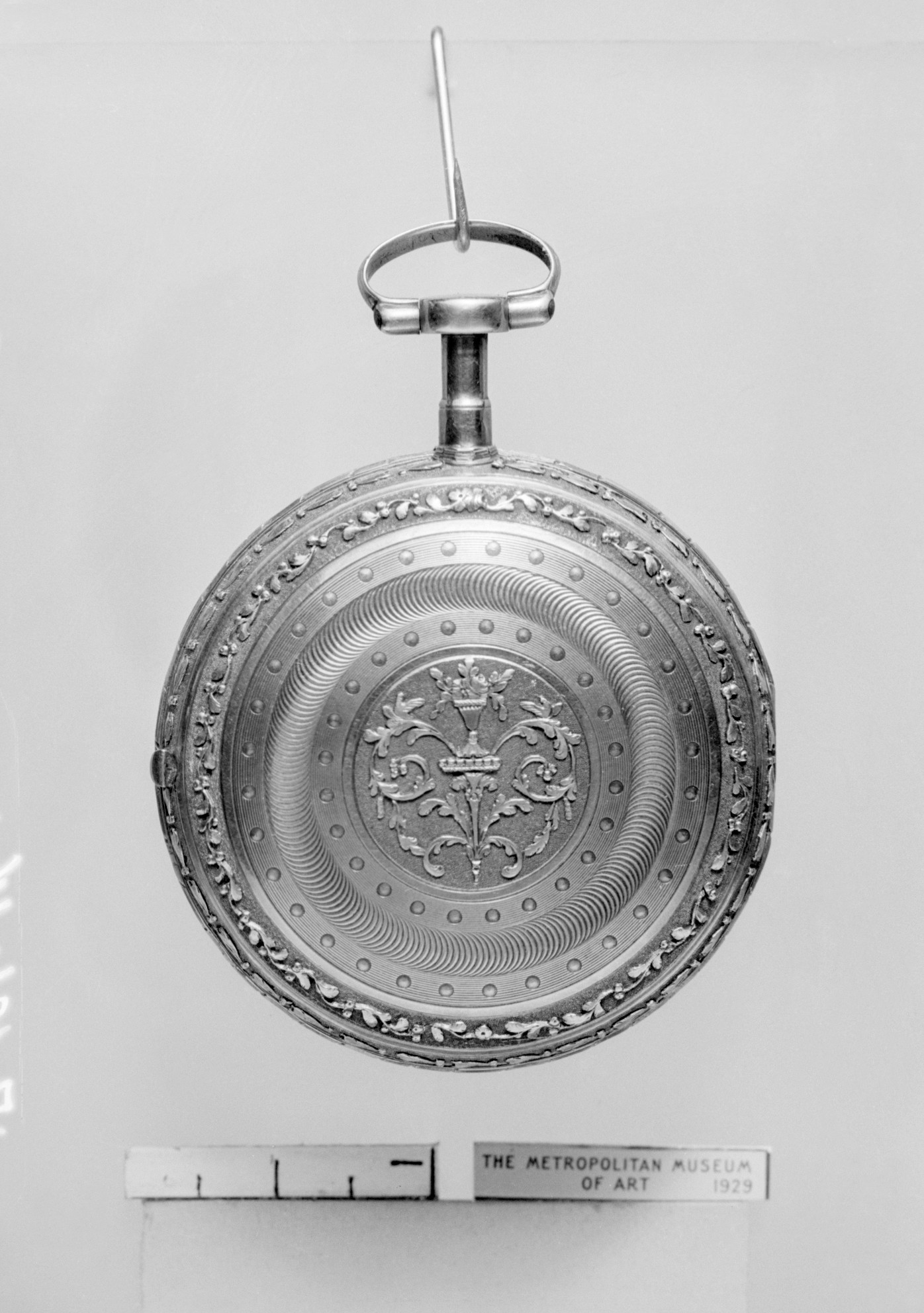
| Watch, Metropolitan Museum of Art 17.101.14, and Watch 17.101.20 Catalogued by the Metropolitan Museum as probably by an imitator of Abraham-Louis Breguet | Documented Breguet forgeries in a great collection Both bequeathed by Laura Frances Hearn in 1917. The Met's own artist field carries the prefix probably by an imitator of. A third, 17.190.1007, given by J. Pierpont Morgan in 1917, is catalogued as by an imitator of Breguet and localised to La Chaux-de-Fonds rather than Paris. Breguet was the most forged name in horology in his own lifetime and the forgeries are in the museums. | Metropolitan Museum of Art, New York |
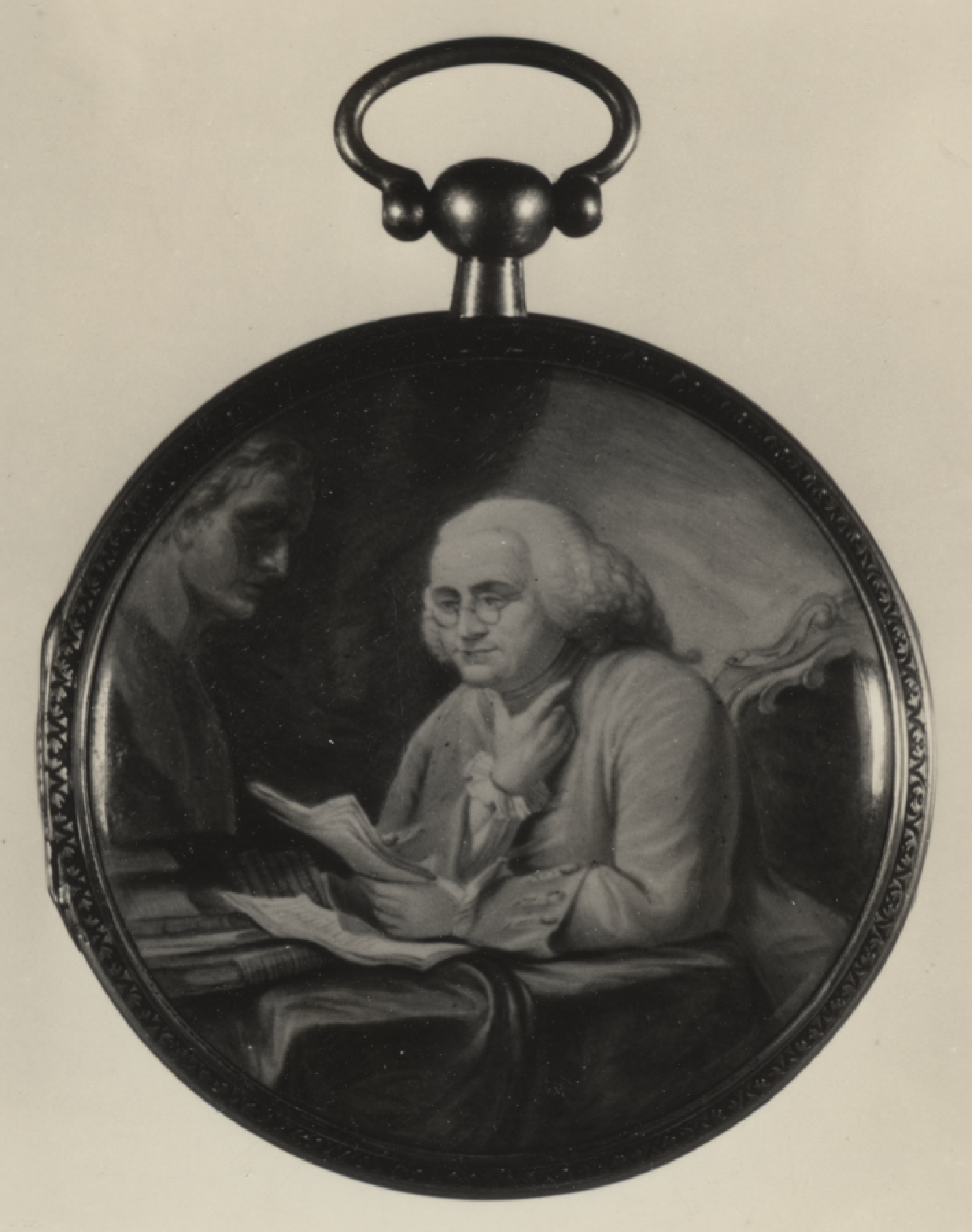
| Watch with a portrait of Benjamin Franklin, Walters 58.147 Breguet et Fils | A genuine Breguet-signed watch of about 1830, and therefore posthumous Signed Breguet et Fils and made about seven years after Abraham-Louis Breguet's death. It is exactly what a posthumous Breguet looks like: entirely genuine, entirely not his. | Walters Art Museum, Baltimore |
| Pocket watch, Metropolitan Museum of Art 1979.498.1 Firm of Breguet et Fils | A Breguet made three quarters of a century after the man died Dated by the Met to about 1900, with a date range of 1895 to 1905, and attributed to the firm of Breguet et Fils. Gift of Mr and Mrs Georges E. Seligmann in memory of Simon Seligmann, 1979. The Met's own biographical dates for the firm, 1816 to 1833, contradict its own dating of the object, which is a catalogue inconsistency worth knowing about before citing either. | Metropolitan Museum of Art, New York |
Open questions
- Who placed the order in 1783. The house record gives only an officer of the Queen's Guard and withheld the name at the time. Fersen, an anonymous admirer and the Marechal de Castries are all in circulation and none is archivally established.
- When the watch was actually completed. The modern firm gives 1827, the holding museum gives 1820, and the Breguet house's own Notice of 24 October 1887 gives 1802. Three parties with standing, and the firm disagrees with itself across 134 years.
- What it cost to build. 16,864 francs, 17,070 francs, 17,000 francs for labour alone and 30,000 francs as factory costs are all on the record and cannot be reconciled from the sources consulted.
- Who the maker recorded as Prudhomme was, and what else he supplied to the house. The register credits him with the base movement of the most famous watch in the world and nothing further about him is established.
- How No. 160 passed from the Marquis de La Groye, or from whoever held it in 1838, back into the possession of the house by 1887. The chain between the repair-book entry and the Brunton sale is empty.
- Whether Murray Marks sold the watch to Salomons in 1896 or held it until 1918. The same source gives both, in its narrative and in its own table.
- The physical dimensions of No. 160. No source consulted publishes them, and figures in circulation are frequently those of the 2008 re-edition.
- Where the ten objects still missing from the 1983 theft are. Ninety-six of 106 are the commonly cited recovery figure.
- Whether the secret signature is present on this object, and where. Salomons describes the technique in detail but the sources consulted do not state its presence on No. 160.
- Whether the 39 objects reported in the first 2006 tranche and the 43 later returned from France are cumulative or overlapping. The published numbers do not add cleanly to 96.
Questions about this object
What is Breguet No. 160, the Marie-Antoinette?
Breguet No. 160, the Marie-Antoinette is a clocks and instruments, dated ordered 1783; completed 1827 on the modern firm's account. The holding museum gives 1820; the Breguet house Notice of 1887 gives 1802.. Medium: Gold, rock crystal, white enamel and sapphire. Gold plates, bridges, wheels and balance spring; sapphire bearings; front and back crystals of rock crystal rather than glass.
Who made Breguet No. 160, the Marie-Antoinette, and is the attribution settled?
The attribution to Begun by Abraham-Louis Breguet, completed by the successor house under Antoine-Louis Breguet is recorded here as workshop. The commission, the design and the specification are Abraham-Louis Breguet's. The finished object is not his completed work. Breguet died on 17 September 1823 and the watch was completed in 1827 under his son Antoine-Louis Breguet, on the account given by the modern firm and by the horological trade. Two other completion dates are on the record and both come from parties with standing: the holding museum gives 1820, and the Breguet house's own Notice of 24 October 1887, printed by Sir David Salomons in 1921, gives 1802. On two of the three dates the watch was finished by somebody other than the man whose name it carries. The production registers also name the hands: a base movement credited to a maker recorded as Prudhomme, and 725 hours of work by Michel Weber between 1812 and 1815.
Where is Breguet No. 160, the Marie-Antoinette now?
L. A. Mayer Museum for Islamic Art, Jerusalem. Last confirmed 3 August 2026. Entered the museum in 1974 with the Salomons collection; stolen 1983; recovered by negotiated return between 2006 and 2008 and back on display in the museum's Salomons clock gallery, which reopened in July 2009.
What is still unknown about Breguet No. 160, the Marie-Antoinette?
Who placed the order in 1783. The house record gives only an officer of the Queen's Guard and withheld the name at the time. Fersen, an anonymous admirer and the Marechal de Castries are all in circulation and none is archivally established.
Sources
- 1Quill & Pad, 'Let Them Eat Cake: The Intriguing Story Of Marie Antoinette And Her Legendary Breguet Pocket Watch No. 160', reprise of 13 June 2020. Source for the 1783 order and its terms, the complication list and materials, the base movement credited to Prudhomme, Michel Weber's 725 hours at 7,250 francs between 1812 and 1815, the completion in 1827 under Antoine-Louis Breguet, the build cost of 16,864 francs with alternatives of 17,000 and 30,000, the repair-book entry of 11 March 1838 naming the Marquis de La Groye who had died on 4 October 1837, the 1887 sale to Sir Spencer Brunton for 600 pounds, the Murray Marks and Salomons ownership with the Christie's sale of 22 June 1896, the Salomons collection of about 124 pieces, the arrival at the L. A. Mayer Museum in 1974, and the replica No. 1160. NOTE: this source's narrative and its own ownership table disagree on the Marks and Salomons dates, and it names Count Axel von Fersen as the client where the house record gives an unnamed officer of the Queen's Guard. quillandpad.com/2020/...
- 2The Naked Watchmaker, 'The Marie-Antoinette N. 1160: an abbreviated story of a surreal history', 2 May 2020. Source for the commission by an unnamed admirer, the completion in 1827 thirty-four years after the Queen's death and four years after Breguet's, the complication list, the recovery in December 2007, the 2004 commission of the replica by Nicolas G. Hayek, and the April 2008 presentation in a case carved from the wood of the Versailles oak. thenakedwatchmaker.com/blog/...
- 3Wikipedia, 'Marie Antoinette (watch)'. TERTIARY and used only for the range of figures in circulation, each flagged in the text: the naming of Axel von Fersen, a completion date of 1802, a theft date of 17 April 1983, a first-tranche recovery figure of 39 of 106, a factory cost of 30,000 francs, an 823-component count for the replica, a comparison with Breguet No. 92 at 4,800 francs, and the 30 million dollar valuation attributed to Wired in 2013. To be replaced with the primary in every case. en.wikipedia.org/wiki/...
- 4Sir David Salomons, Breguet (1747-1823), London, printed for the author, 1921, 3 volumes, 662 pages. Internet Archive scan of the University of California copy, identifier breguet01salo. The catalogue of the collector who owned No. 160, and the printed source of the Breguet house Notice of 24 October 1887 giving the order in 1783 by an officer in the Marie-Antoinette Guards, completion in 1802, work stopped 1789 to 1795, and factory costs of 30,000 francs. archive.org/details/...
- 5Wikipedia, 'Naaman Diller'. TERTIARY, used for the theft and recovery narrative and flagged as such; its own claims are attributed there to Smithsonian Magazine, The Guardian, Wired and the Museum for Islamic Art. Source for the night of 15 to 16 April 1983, the 106 objects, the inoperative alarm and the bent window bars, Diller's biography including the 1967 Tel Aviv bank robbery, his death from cancer in 2004, the August 2006 return of 39 objects for roughly 35,000 or about 40,000 dollars, the identification of Nili Shamrat and her five years probation, the total of 96 of 106 recovered, and the reopening of the Salomons clock gallery in July 2009. en.wikipedia.org/wiki/...
- 6Science Museum, London, 'Versailles: Science and Splendour', exhibition page. Source for the loan display of the watch in London to 21 April 2025 and for the museum's own description of it as the world's most famous watch, designed for Marie Antoinette. sciencemuseum.org.uk/see-and-do/...
- 7Wikimedia Commons file page for File:Watch MET 73555.jpg, which reproduces the Metropolitan Museum of Art's own catalogue record for accession 17.101.14 including the artist prefix 'Probably by an imitator of'. Licence verified as CC0 from extmetadata.LicenseShortName at fetch time. commons.wikimedia.org/wiki/...
- 8Wikimedia Commons file page for File:Pocket watch MET 219745.jpg, reproducing the Metropolitan Museum of Art's catalogue record for accession 1979.498.1, Firm of Breguet et Fils, about 1900. Licence verified as CC0. commons.wikimedia.org/wiki/...
- 9Wikimedia Commons API, used to verify extmetadata.LicenseShortName per file for every plate proposed in this record. Public domain and CC0 only. commons.wikimedia.org/w/...


Last verified 13 August 2026 · Published 4 August 2026
Change log
2 August 2026 - Record deepened to the house standard: narrative sections, technical evidence, artist dossier, related works and open questions added; provenance chain and auction results replaced with the researched versions; sources rebuilt.
4 August 2026 - Withheld from publication. This archive lists an object only when a photograph OF THAT OBJECT can be reproduced under a free licence. No such photograph has been found for this one, so the record is held rather than published beside pictures of other things. It will be released if a free reproduction appears.
4 August 2026 - Record created at the house standard: researched narrative, technical evidence, maker dossier, graded provenance chain, prices with hammer and premium separated, related works, open questions and sources.
13 August 2026 - Re-verified: location and custody unchanged (L.A. Mayer Museum for Islamic Art, Jerusalem, Salomons galleries). No new theft, litigation or attribution development found. The 2006/2007/2008 discrepancy this record already carries for the recovery date was checked against a fresh search (including a 2026 law-firm press release on the Science Museum loan, which itself states 2008) and remains unresolved across sources - correctly left as a recorded inconsistency rather than smoothed. The London Science Museum loan (Versailles: Science and Splendour, closed 21 April 2025) that this record already documents as the watch's only foreign travel since 2008 is still the most recent travel; no further loan found since. All checked source URLs still resolve. No content change required.