When the Only Proof of Where an Object Was Is a Photograph
The Third Imperial Easter Egg was photographed once, in March 1902, and that single plate is what identified it in 2014. Four records here rest part of a chain on a photograph, and each photograph does a different job.
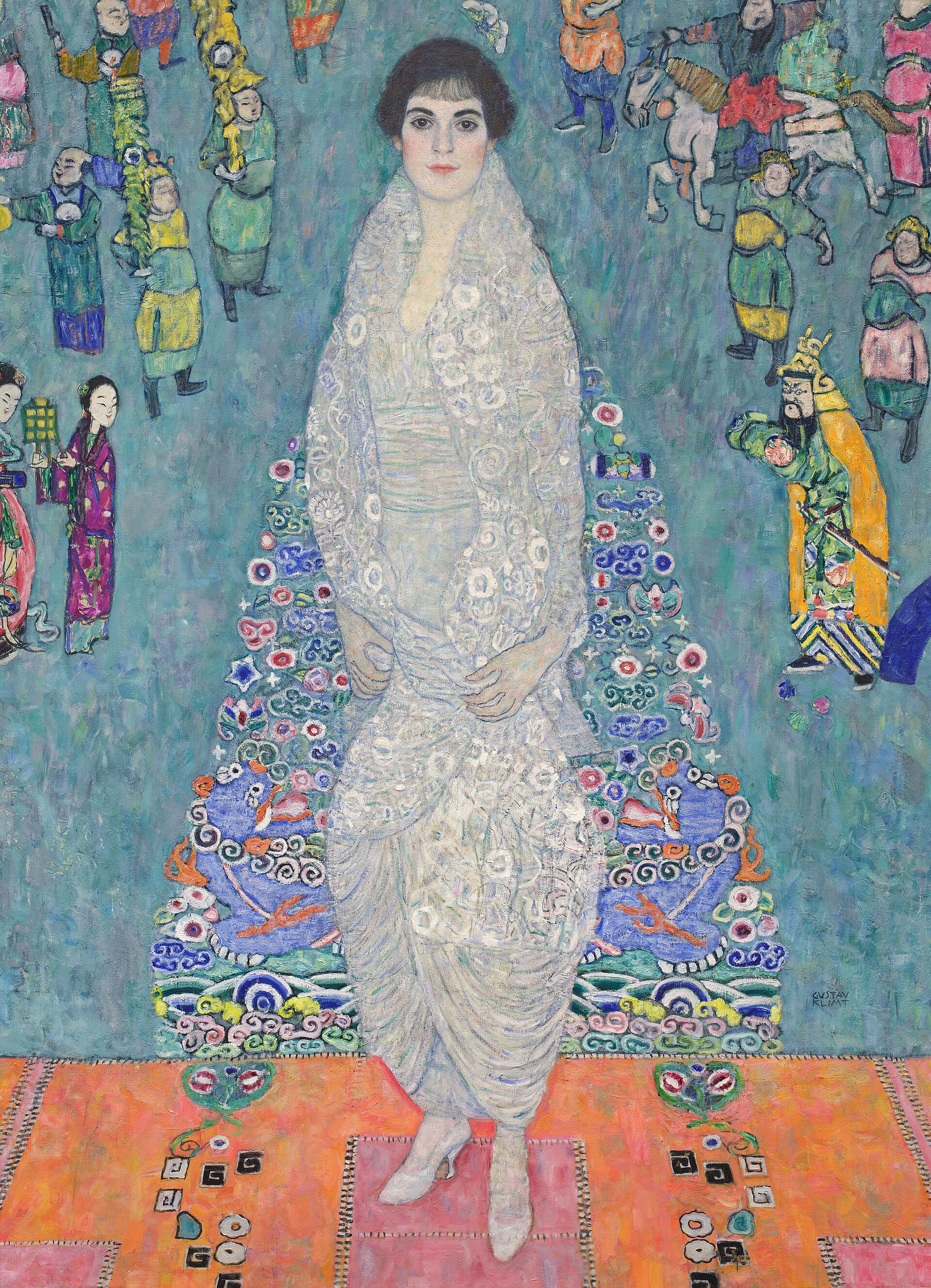
Records in this piece: Third Imperial Easter Egg, Portrait of Elisabeth Lederer, The Euphronios Krater, Vase with Viscaria
On this page 11 sections
ContentsClose
In short
- Four records in this archive carry a link in the chain of ownership that rests on a photograph rather than on a document. The Third Imperial Easter Egg was photographed once, at an exhibition in March 1902, and not photographed again for a hundred and twelve years.
- A photograph dates a location only as precisely as the photograph itself is dated. The two Martin Gerlach interiors of the Lederer apartment are given by the Klimt Foundation as 1920s to 1930s, so they place a Klimt in a named Vienna room within a span of about twenty years and not within a year.
- The largest photographic archive in the history of the antiquities trade belonged to a trafficker. The Geneva Freeport raid of 13 September 1995 took 3,800 whole or fragmentary objects, more than 4,000 photographs and 35,000 sheets of business records out of five rooms of about 200 square metres.
- What made those photographs evidence was the sequence rather than any single frame. Trafficking Culture records that the seized Polaroids showed pieces still covered with dirt after their excavation, some fragmentary and others cleaned and reassembled prior to sale.
- A catalogue written to sell an object can become the document that identifies it. Parke-Bernet described the egg accurately on 7 March 1964, named Vacheron and Constantin, named neither Faberge nor the imperial family, and sold it for 2,450 dollars.
A photograph shows the object and the room in one frame
A provenance is normally built out of documents that assert something, and a photograph is the one kind of evidence that simply shows it. A bill of sale states that an object changed hands. An inventory states that it was in a house on the day the clerk walked through. A catalogue states what a house believed it was selling. Each of those is a claim made by a person with an interest, and each can be wrong without being dishonest.
A photograph is different in kind. It records a state of affairs that happened to be in front of a lens, usually for reasons that have nothing to do with proving ownership. The picture of a drawing room was taken because the room was handsome. The Polaroid of a fragment was taken because a dealer needed to show a client. Neither was made as evidence, which is exactly what makes them useful later.
This archive grades every link in a chain as documented, disputed or unknown. In four records a photograph is what moves a link out of unknown, and in one of them a photograph is the only reason the object has a chain at all.
One photograph, taken in March 1902, identified an object in 2014
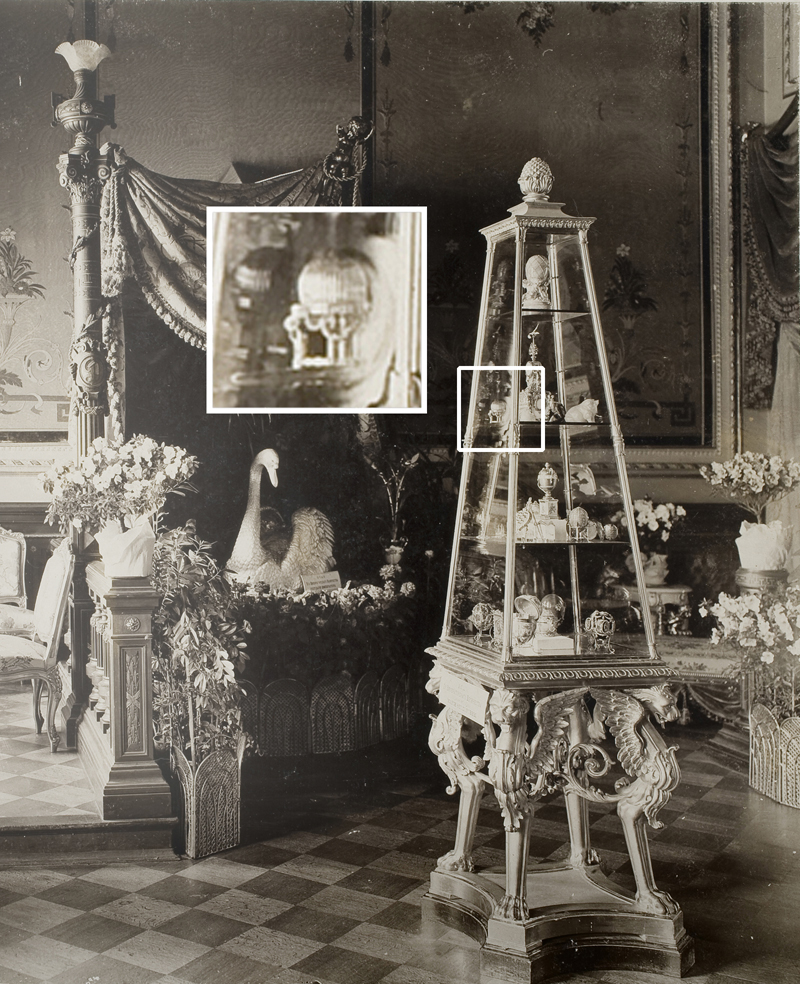
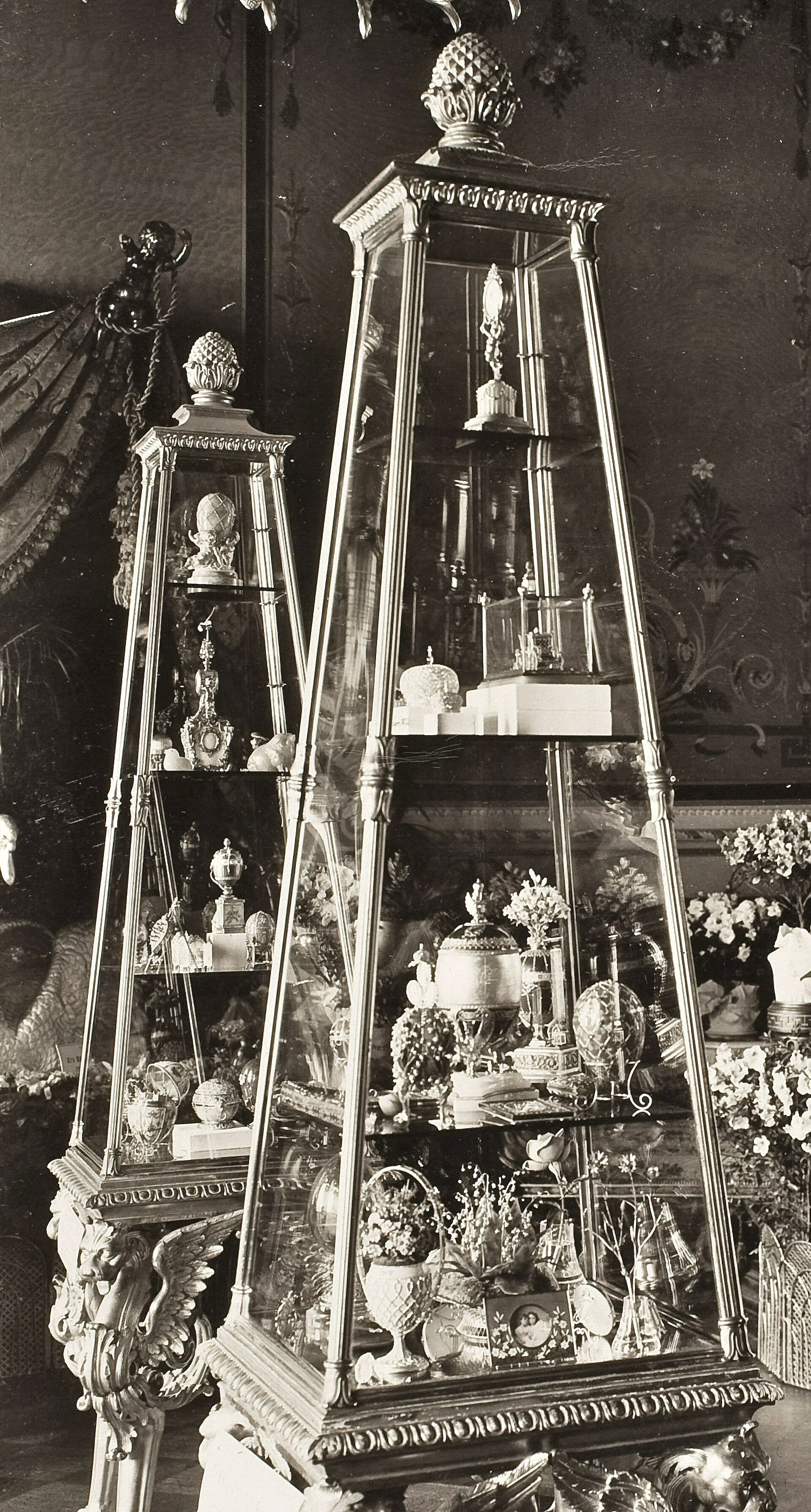
The Third Imperial Easter Egg was photographed once between its delivery in 1887 and its reappearance in 2014, at an exhibition held in the von Dervis mansion on the English Embankment in Saint Petersburg in March 1902. Wartski's own account of the object places it there in those words, among Maria Feodorovna's Faberge treasures. The egg is 8.2 centimetres high, jewelled yellow gold on a tripod pedestal with chased lion paw feet and cabochon sapphires, and it opens to a lady's watch by Vacheron Constantin. It came out of August Holmstrom's workshop and the imperial accounts record 2,160 roubles, in a payment note of May 1887 and again in a Cabinet list of February 1889.
Then it disappears. The Provisional Government or the Bolsheviks moved it to the Moscow Kremlin Armoury, a plenipotentiary signed for it in 1922 as one gold egg with watch, and in May 1924 it was among eighteen objects valued for sale. After that there is no Russian record and no owner of any kind for about forty-two years.
What survived that gap was the photograph. When a scrap metal dealer in the American Midwest searched the internet in 2012 for the two words he could read on a gold ornament he had bought for its melt value, the thing he eventually matched it against was a picture taken at an exhibition a hundred and ten years earlier.
The catalogue that lost the object described it accurately
On 7 March 1964 the egg was sold at Parke-Bernet in New York, as lot 259, for 2,450 dollars. It was catalogued as a gold watch in an egg-form case on a wrought three-tone gold stand, set with jewels, and the only maker named was Vacheron and Constantin. Faberge was not named. The Russian imperial family was not named. The property was attributed to Mrs Rena Clark of New York, and how she came by it is unrecorded.
That entry is usually told as the moment the object was lost, and it is really the second half of the identification. The description is physically exact, down to the ring stretcher and a seventy-five point old-mine diamond, and it is that accuracy which allowed a catalogue written by someone who did not know what the object was to be matched, half a century later, against a photograph taken by someone who did.
An identification wants two independent descriptions of the same thing made by people who were not talking to each other. Here one of them is a picture and the other is a saleroom entry that names the wrong maker and no provenance at all.
Two photographs of a Vienna salon place a Klimt in a named room
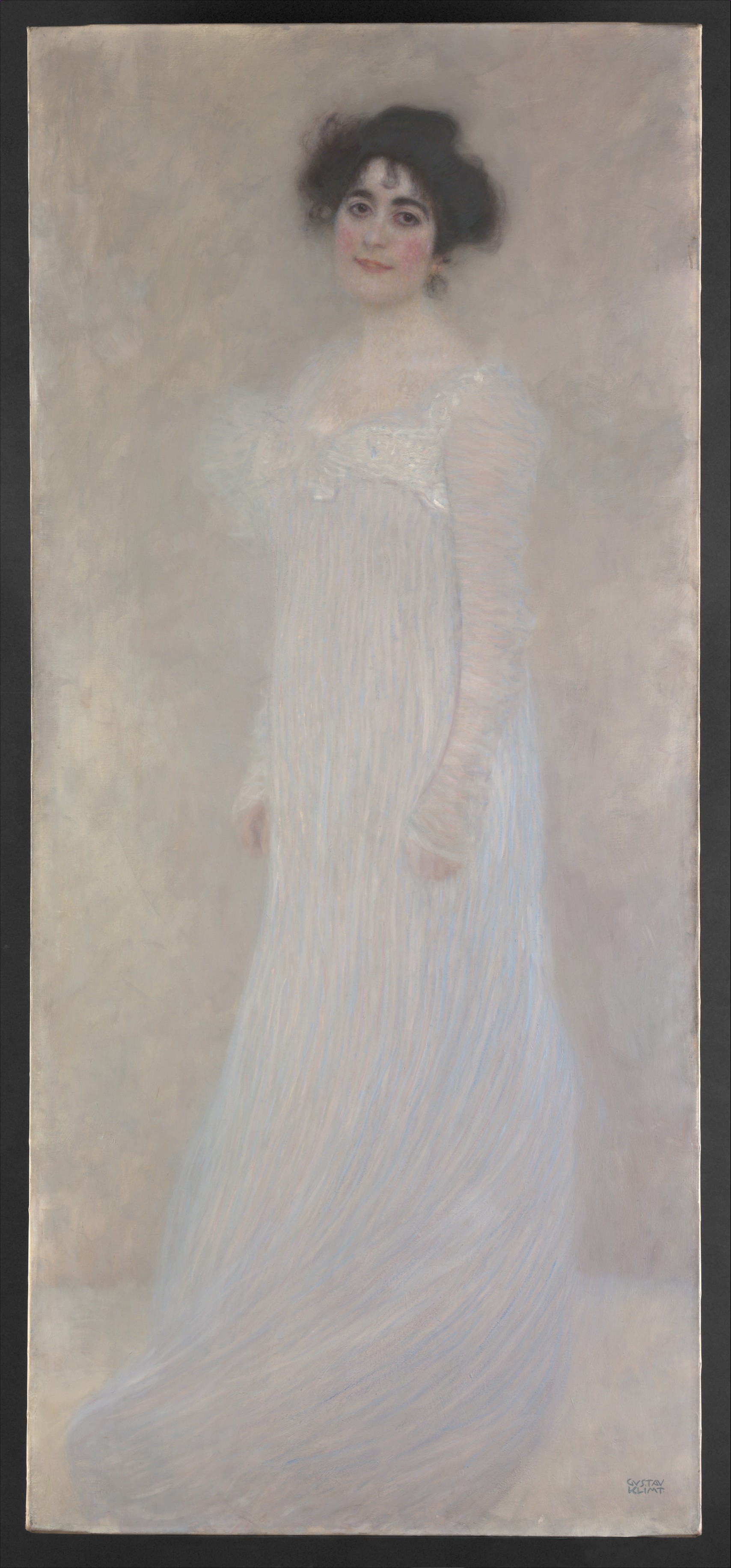
Klimt's Portrait of Elisabeth Lederer hung in the Lederer apartment at Bartensteingasse 8 in Vienna from 1916 until 1938, and the evidence for the wall it hung on is photographic. The Klimt Foundation's page on the family carries two interior views by Martin Gerlach, of the salon and of the music room, held by the Austrian National Library. The same apartment had a room designed by Josef Hoffmann, Kolo Moser and Georg Klimt for Klimt's Philosophy.
This archive's record for the painting dates the salon photograph to around 1930. The Klimt Foundation's own captions are less precise than that and give only the 1920s or the 1930s. The looser date is the one to prefer, and the correction is worth making because it is the whole methodological point: a photograph fixes a location to the date of the photograph, and if nobody wrote down when the shutter opened, the link is as wide as the uncertainty.
Even at twenty years' width it does work that no document here does. Most of the Klimts that hung in that apartment were destroyed at Immendorf in 1945. A photograph of the rooms before the war is a record of a collection that largely no longer exists, made by a photographer who was there for the furniture.
In Geneva the photographs were the case, and they showed the object dirty
On 13 September 1995 investigators raided Giacomo Medici's storage in the Geneva Freeport, five rooms of about 200 square metres, and the inventory submitted in July 1999 ran to 3,800 whole or fragmentary objects, more than 4,000 photographs and 35,000 sheets of business records. The photographs were mostly Polaroids, and they are the reason the raid mattered beyond the objects in the rooms.
Trafficking Culture's account describes what they showed: pieces in various stages of restoration, some still covered with dirt after their excavation, some fragmentary and others cleaned and reassembled prior to sale. No single frame proves anything. The sequence does. An object photographed encrusted and in pieces, and then photographed whole and clean, has been through a restoration between the two exposures, and a restoration that recent is incompatible with a chain that claims the object sat in a family collection for fifty years.
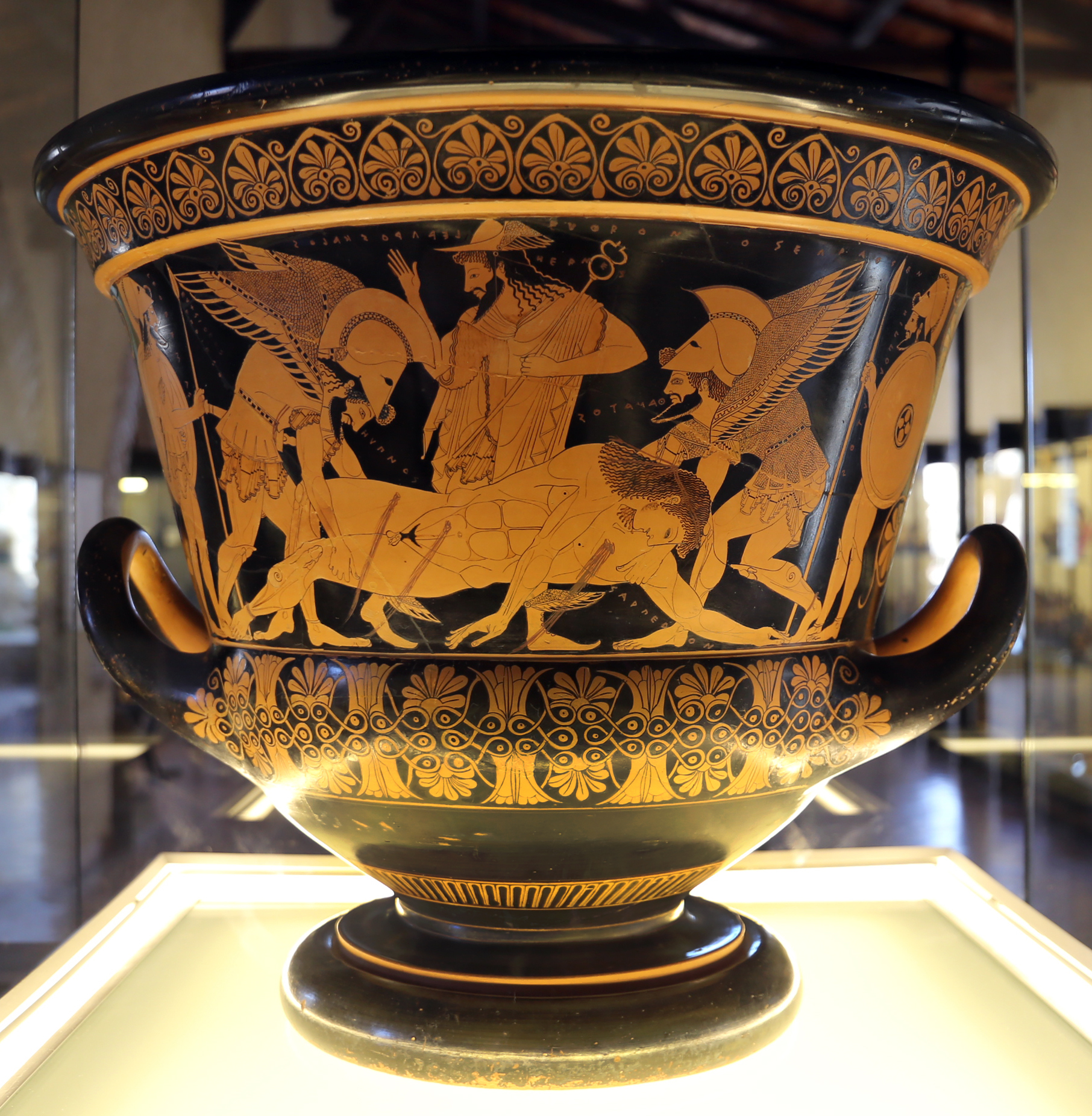
The Euphronios krater is the case that shape of evidence was built to answer. The provenance offered to the Metropolitan at purchase was that Robert Hecht was acting on ten per cent commission for the Lebanese dealer Dikran Sarrafian, whose father had bought the vase in London in 1920, supported by letters of 10 July 1971 and 9 September 1972. The Museum's own defensive investigation later produced a record of 909,000 dollars paid to Sarrafian in Swiss francs on 25 October 1971, before the excavation the vase is said to have come from. The paperwork was complete and the story failed anyway.
A picture with three names and no photograph of the canvas
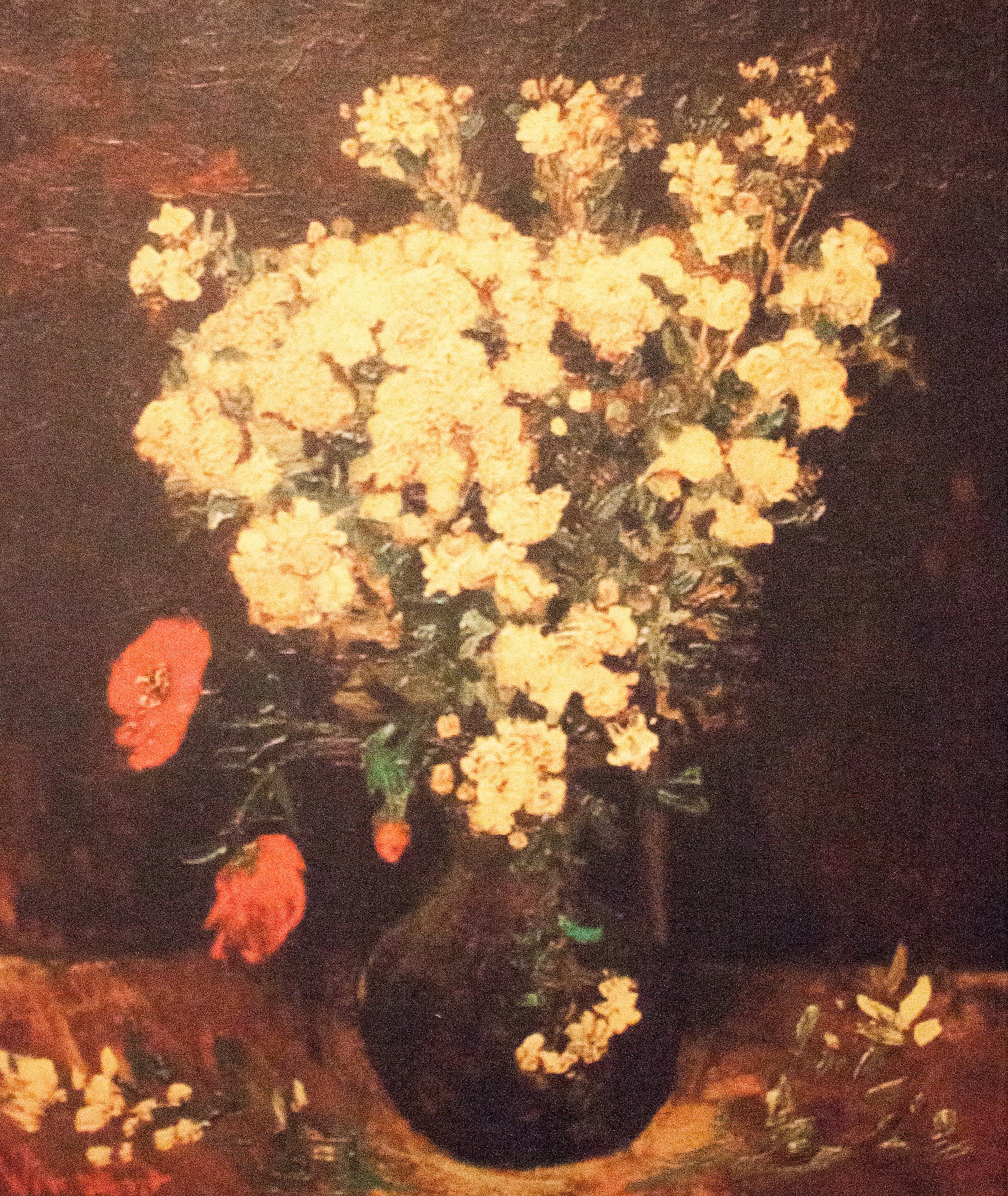
Van Gogh's flower piece of summer 1886 has been stolen twice from the same Cairo collection and the search for it is conducted on reproductions. The painting is 65 by 54 centimetres, catalogued F 324a and JH 1137, bought in Paris by Mohamed Mahmoud Khalil and state property in Egypt since the 1950s, with the museum in Giza opening on 23 July 1962. It was stolen once around 1978 and recovered in Kuwait about two years later in circumstances the sources agree were never fully explained. It was cut out of its frame during opening hours on 21 August 2010 and has not been seen since.
Egypt's prosecutor general found that not one alarm in the building was working and that seven of the forty-three cameras were. The culture minister announced a recovery at Cairo airport and withdrew the claim the next day. The figures of 55 million and 50 million dollars that appear in every report are press estimates that entered circulation within two days and were never an appraisal.
Underneath all of that sits a plainer problem. Everyone calls the picture Poppy Flowers and the standard catalogue calls it Vase with Viscaria, because most of the flowers in it are not poppies. A stolen object is found by circulating an image and a name, and this one has three names and no publicly available conservation-grade photograph of the canvas itself.
Four photographs, four different jobs
The four photographs in this article are not doing the same work, and a record that treats them as one class of evidence will over-read three of them. Set out side by side, each carries a different claim and a different weakness.
| Object | The photograph | Its own date | What it establishes |
|---|---|---|---|
| Third Imperial Easter Egg | One group view of an exhibition vitrine | March 1902 | Identity, matched a hundred and twelve years later |
| Portrait of Elisabeth Lederer | Two interior views by Martin Gerlach | 1920s or 1930s | Location in a named Vienna room before the war |
| Euphronios krater | Polaroids seized at the Geneva Freeport | Before September 1995 | Recent excavation, from the state of the object |
| Poppy Flowers | Reproductions and exhibition images | After 1962 | Almost nothing, and it is the only search image there is |
Only the first of these was ever meant to record an object. The second was meant to record a room, the third to service a trade and the fourth to sell tickets.
What a photograph cannot do
A photograph proves possession at best and never title. The Gerlach interiors show a picture on a wall in an apartment, which is consistent with ownership and equally consistent with a loan, a deposit or a dealer's stock hanging where a client could see it. Everything legal about the link has to come from somewhere else.
It also cannot identify an object unless something in the frame is unique to it. This is the reason so many objects in this archive have no lead plate at all: a photograph of a comparable thing is not a photograph of this thing, and at the resolution of a 1902 group view the identifying detail may simply not be there. The egg was matched because a three-tone gold stand, a tripod of lion paw feet and a specific arrangement of sapphires are together unrepeatable.
And a photograph is an object with a history of its own. It can be cropped, retouched or captioned to say more than it shows, which this archive has documented at length in the documentary photographs it holds as records in their own right. The correction, when it comes, is usually another frame from the same session.
How to read a photograph in a provenance
Ask first what dates the photograph, not what dates the object. A picture captioned around 1930 by a researcher and 1920s to 1930s by the holding institution is a twenty-year link, and the wider figure is the one that belongs in the chain.
Then ask who took it and why, because the purpose tells you what the frame was composed to include. A room portrait includes the furniture and clips the pictures. A dealer's Polaroid includes the object and excludes the room, deliberately.
Then ask what in the image is unique, and say so in the record. An identification that rests on a shape anyone could match is not an identification. Finally, ask where the print is now. The Gerlach interiors are in the Austrian National Library, the 1902 view comes through Wartski, and the Medici Polaroids are held as an evidential archive. A photograph with a known repository can be re-examined by the next person; one that circulates as a file cannot.
Land the point
Three of the four links here were saved by photographs that nobody took in order to save anything. A court photographer working an exhibition in 1902, a commercial photographer hired to record a Vienna apartment and a dealer building a stock file between them preserved more provenance than the bills of sale for the same four objects did. The bills are gone, the letters were forged or mislaid, and the pictures stayed.
That is worth writing into practice rather than admiring. Photographic evidence is under-catalogued precisely because it was incidental, and the archive that indexes its interiors, its vitrines and its trade files will resolve chains that no amount of returning to the paperwork will settle.
Why this archive is free to read
We do this for everyone who loves art. The people who have studied it for years, and the people who just stopped to look. Iconotheca exists so that what we learn belongs to all of them.
Nobody pays us for this. No ads, no sponsors, no commercial interest. These works belong to all of us, and we would rather share them with as many people as we can than keep them to ourselves.
If it gave you something today, tell us to keep going. Follow us, leave a like, or write a positive comment. We read every one, and they are what keeps us going.
Questions
It can prove that an object was in a place at a time, which is often the missing link in a chain, but it cannot prove title. A photograph of a picture on a wall is equally consistent with ownership, a loan or a dealer's stock, so the legal side of the link still has to come from a document.
The egg was photographed once, in a vitrine at the von Dervis mansion exhibition in Saint Petersburg in March 1902, and that image carries its three-tone gold stand, its tripod of lion paw feet and its arrangement of sapphires. Those features together are unrepeatable, and they could be matched against both the surviving object and the accurate but anonymous 1964 Parke-Bernet catalogue entry.
They proved recency. Trafficking Culture records that the seized images showed objects still covered with dirt after excavation, some fragmentary and others cleaned and reassembled before sale, so the same object appears at two stages of restoration. A chain claiming the piece had sat in a collection for decades cannot survive that sequence.
Because the link is only as narrow as the caption. The Gerlach interiors of the Lederer apartment are dated by the Klimt Foundation to the 1920s or the 1930s rather than to a year, so they place the Klimt in that room within about twenty years. Recording the tighter date that a secondary account offers would overstate the evidence.
A stolen object is searched for on an image and a name. Van Gogh's picture is known publicly as Poppy Flowers and catalogued as Vase with Viscaria, and no conservation-grade photograph of the canvas is in general circulation, so both halves of the search key are weak at once.
Sources
- 1Wartski, London, 'The Third Imperial Easter Egg', the dealer's own account of the object. Read 25 September 2026. Source for the March 1902 von Dervis mansion exhibition photograph in Wartski's own wording, the height of 8.2 cm, the jewelled yellow gold and tripod pedestal with chased lion paw feet, the Vacheron Constantin watch, August Holmstrom's workshop, the 1887 delivery, the 2,160 roubles recorded in a May 1887 payment note and a February 1889 Cabinet list, and the Parke-Bernet sale of 7 March 1964 at 2,450 dollars from the estate of Rena Clark. wartski.com/the-lost-third-imperial-easter-egg
- 2Neil Brodie, 'Giacomo Medici', Trafficking Culture encyclopedia, University of Glasgow. Read 25 September 2026. Source for the Geneva Freeport raid of 13 September 1995, the five rooms of about 200 square metres, the inventory submitted in July 1999 of 3,800 whole or fragmentary objects, more than 4,000 photographs and 35,000 sheets of business records, and for the description of the Polaroids showing objects still covered with dirt after excavation, some fragmentary and others cleaned and reassembled prior to sale. traffickingculture.org/encyclopedia/...
- 3Gustav Klimt-Datenbank (Klimt Foundation, Vienna), 'The Lederer Family'. Read 25 September 2026. Source for the collection at Bartensteingasse 8, the room designed by Josef Hoffmann, Kolo Moser and Georg Klimt, and for the two Martin Gerlach photographs of Serena and August Lederer's salon and music room, held by the Austrian National Library and dated by the Foundation only to the 1920s or 1930s rather than to a year. klimt-database.com/en/...
More in Provenance and Restitution
The partMoved for Safekeeping Is a Link in the Chain
Nine evacuations in this archive: three objects never returned to the building they left, one came back unrecognised and title changed once, by a...
The Thief Is Not a Link
Ten objects in this archive were stolen, some twice. In no case does the thief appear as an owner.
The Last Link Is the Strongest One
Documentation in a provenance chain rises from 63 per cent at the earliest links to 96 per cent at the most recent.