The House That Cannot Be Asked: Who Keeps the Price After the Sale
Half this archive's sale record sits with two firms you can still write to. The other half sits with houses that shut, and with bodies that were never houses at all.
Records in this piece: The Taking of Christ, Cabinet, Bild mit Haeusern (Painting with Houses), Mosque Lamp Bearing the Name of the Mamluk Sultan al-Malik al-Nasir, The Massacre of the Innocents, Third Imperial Easter Egg, John Harrison's Marine Timekeepers, H1 to H4
On this page 9 sections
ContentsClose
In short
- The 293 published records carry 217 auction rows, of which 136 name a seller, spread across 56 different names. Sotheby's and Christie's account for 65 of those 136 under their own names, just under half the record.
- The rest sits with firms that closed. Parke-Bernet holds three of the prices here and was bought by Sotheby's in 1964. Galerie Georges Petit holds two and shut in 1933, when its assets were sold. Dowell's of Edinburgh holds the two Caravaggio prices.
- A closed house does not take its catalogues with it, but it does take the ability to answer a question. Where the printed catalogue gave a lot number and no price, as at the 1890 Seilliere sale, that hammer is now permanently unrecoverable.
- Eleven of the entries in this column are not auction houses at all. Two are Acts of Parliament, one is the Commissioners of Longitude, and one is a payment of four silver ingots to the Daoist custodian of a cave at Dunhuang.
- The rule that follows is simple and it is not about price. Record who recorded the figure, because the survival of that party decides whether the figure can ever be checked again.
A price outlives its sale only if somebody keeps it
A hammer price is not a property of an object. It is a fact about an afternoon, written down by whoever ran the room, and it survives exactly as long as that party's records do. This archive has written elsewhere about how old the last price usually is and about prices denominated in money that no longer exists. The question here is narrower and more practical: is there anybody left to ask.
Across 293 published records there are 217 auction rows, and 136 of them name a seller. The remaining 81 are mostly entries recording that an object has never been to auction at all, which is a different kind of silence. Those 136 sellers carry 56 distinct names, and the shape of that distribution decides how much of this archive's price record is still checkable at source.
Two firms hold just under half the record
Sotheby's appears 37 times and Christie's 28, which is 65 of 136 rows between them under their own names. Add the variant spellings and the two entries recording a private sale arranged by Sotheby's and the pair account for 69, a little over half. Both firms still trade, both keep their historical sale archives and both answer enquiries about them, so for half this archive's prices there is an address to write to.
| Seller | Rows | Still trading |
|---|---|---|
| Sotheby's | 37 | Yes |
| Christie's | 28 | Yes |
| Hotel Drouot | 5 | Yes |
| Bonhams | 4 | Yes |
| Swann Auction Galleries | 4 | Yes |
| Parke-Bernet Galleries | 3 | No, bought by Sotheby's 1964 |
| Galerie Georges Petit | 2 | No, closed 1933 |
| Dowell's, Edinburgh | 2 | No |
| All other sellers | 51 across 48 names | Mixed |
The concentration is not surprising and it is not the finding. The finding is the tail, because that is where the prices sit that nobody can confirm.
Eight guineas, then five, for a Caravaggio
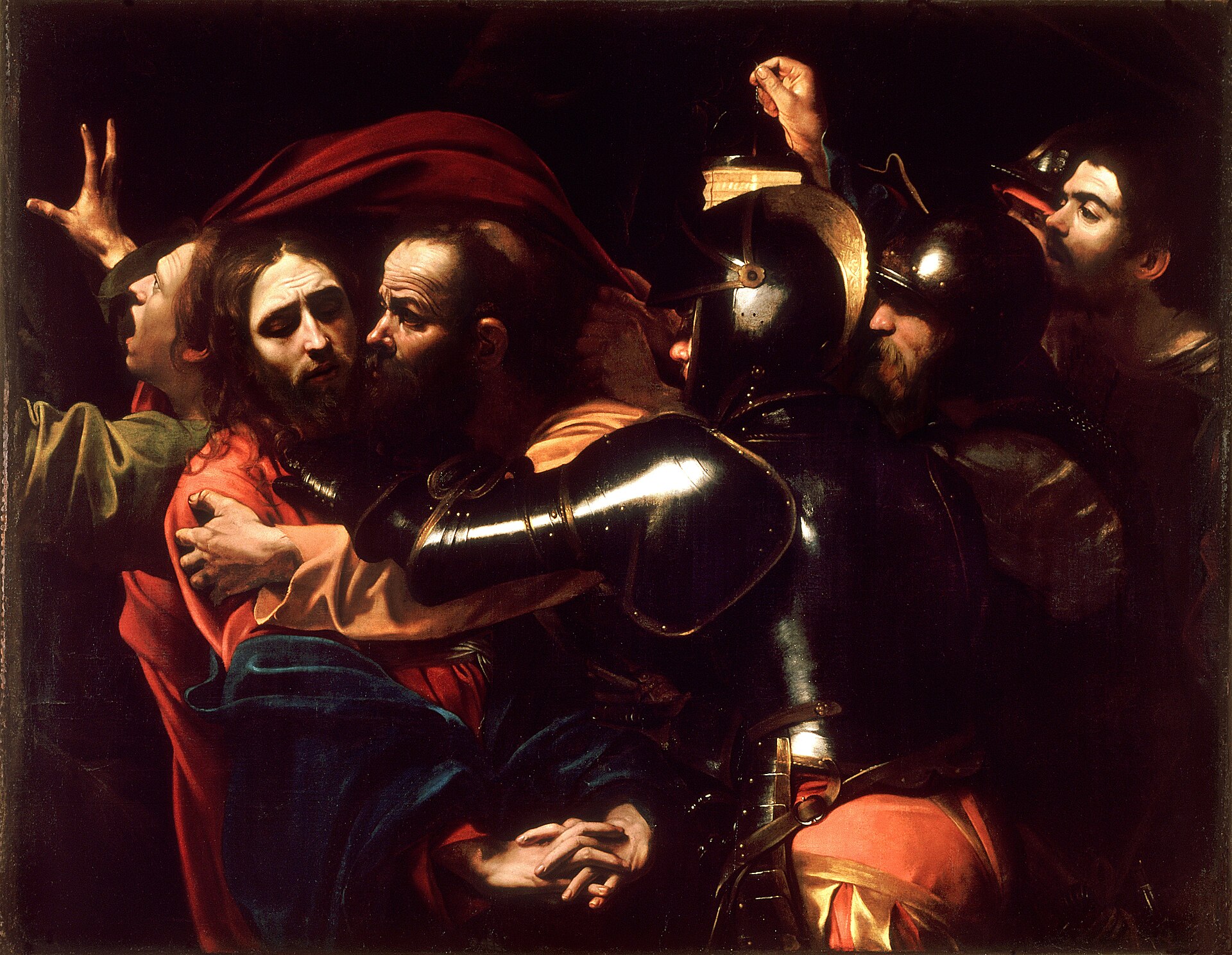
The Taking of Christ passed through Dowell's of Edinburgh twice, on 25 June 1921 at eight guineas and on 3 May 1922 at five, catalogued both times as a Honthorst. Eight guineas is eight pounds and eight shillings, five guineas is five pounds and five shillings, and the second sale was eleven months after the first at a lower figure. The picture was recognised as a Caravaggio in Dublin in the early 1990s.
Those two numbers are among the most consequential in the archive, because they are what a masterpiece fetched while wearing the wrong name. They are also the least verifiable, because Dowell's is gone. Every later account of them traces back to the same research done on the same surviving catalogues, and no living institution holds the firm's books in a form that would let a reader confirm the buyer, the lot number or whether the two lots were the same picture without that research being redone.
A lot number, and no price, from a house that closed in 1933
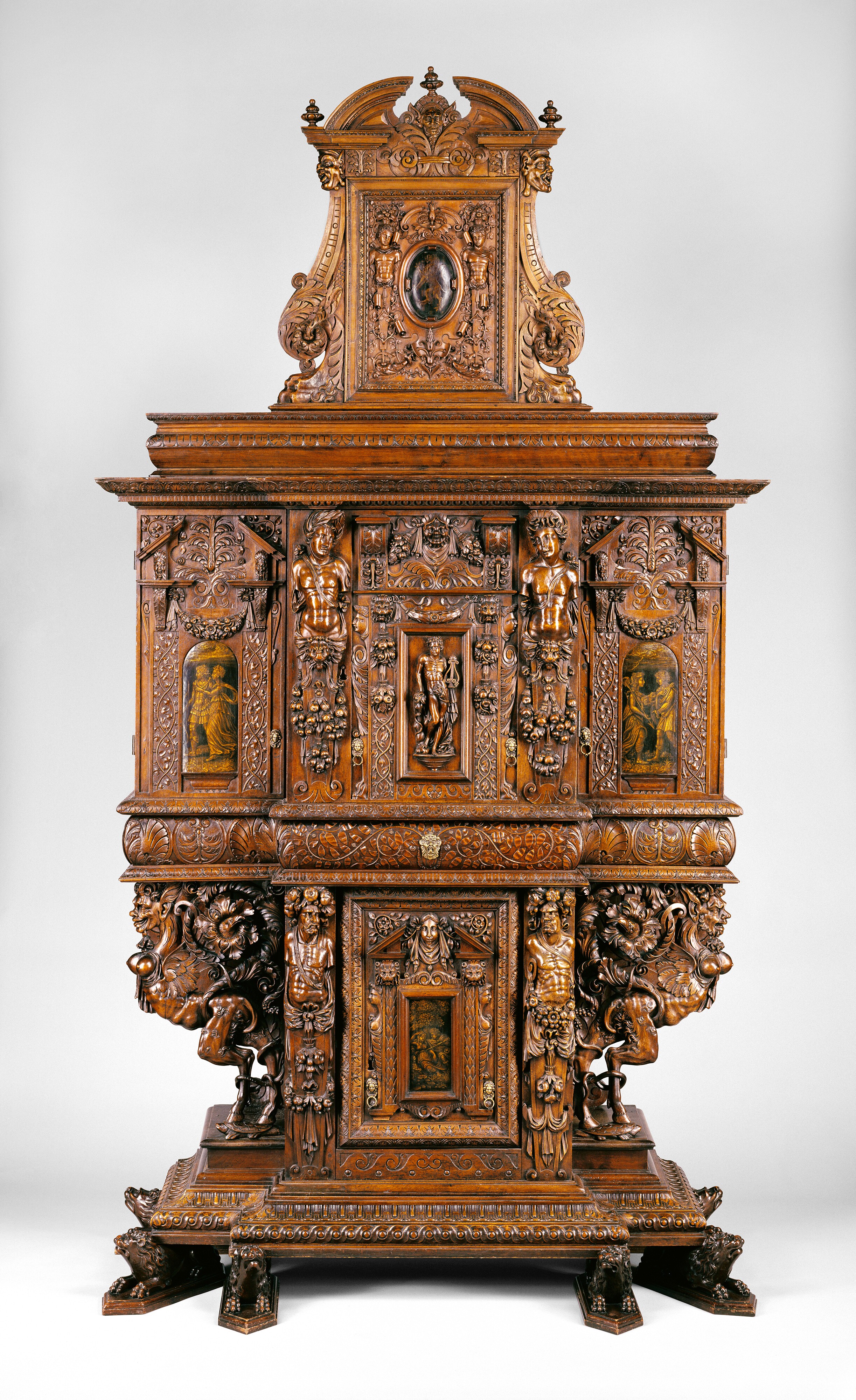
Galerie Georges Petit was among the most powerful firms in the French market: founded as Galerie Francois Petit in 1846, taken over by Georges Petit in 1877, host of the Expositions internationales from 1882, the venue for the Degas estate sale of 1918 to 1919 and for Picasso's first retrospective in June 1932. It closed in 1933 and its assets were sold.
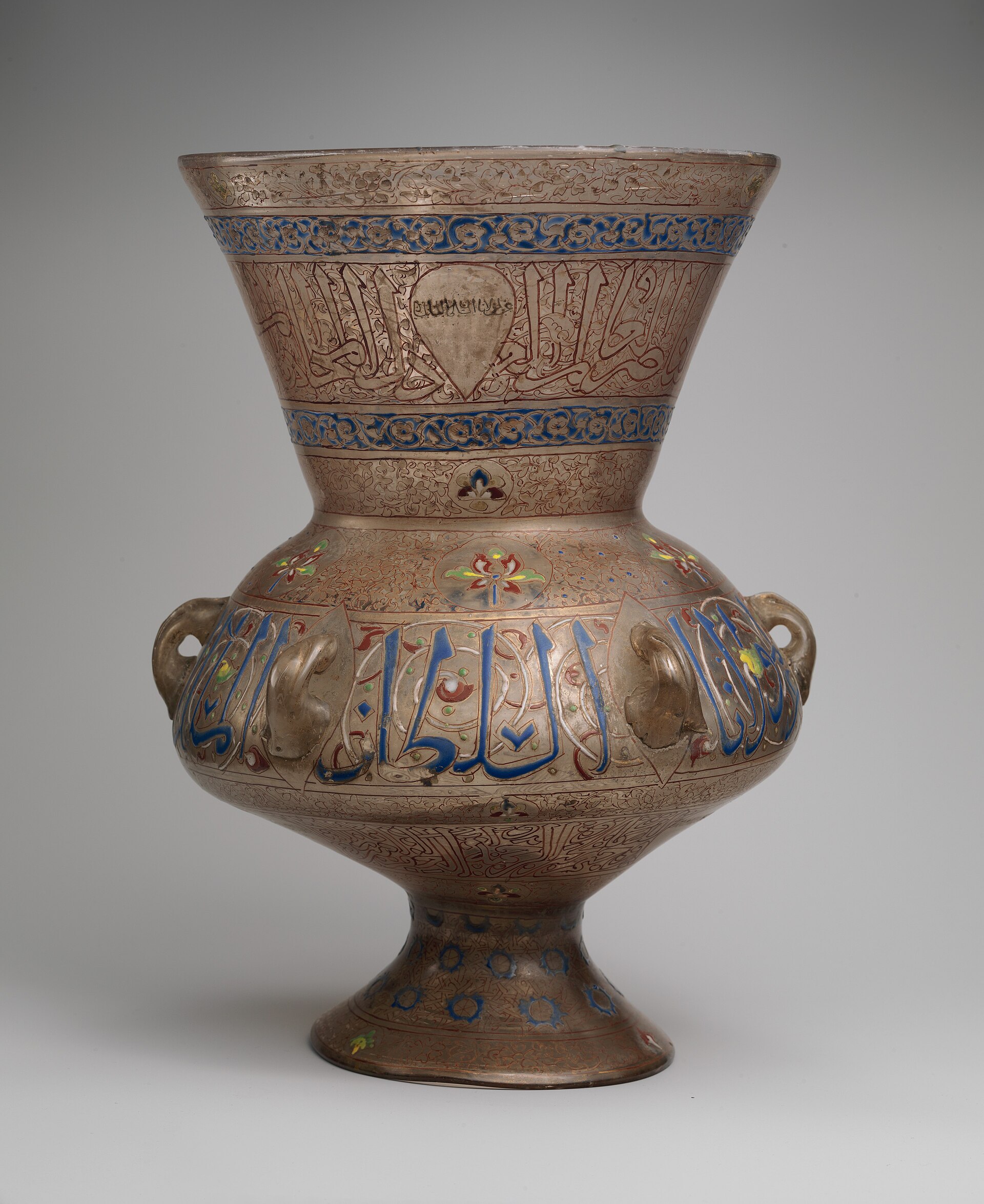
Two prices in this archive were set in that room. The Burgundian cabinet now at the Getty appears in the posthumous Seilliere sale of 5 to 10 May 1890, at pages 80 to 81, lot 540, illustrated. The catalogue survives and gives the lot and the illustration. It does not give the hammer, and there is no longer a firm whose ledgers could. The Metropolitan's mosque lamp has the same shape of record from the Mannheim estate sales of 1910: the museum's own provenance cites the house and the lot and gives no price, no premium and no buyer of record.
One hundred and sixty guilders, Amsterdam, October 1940
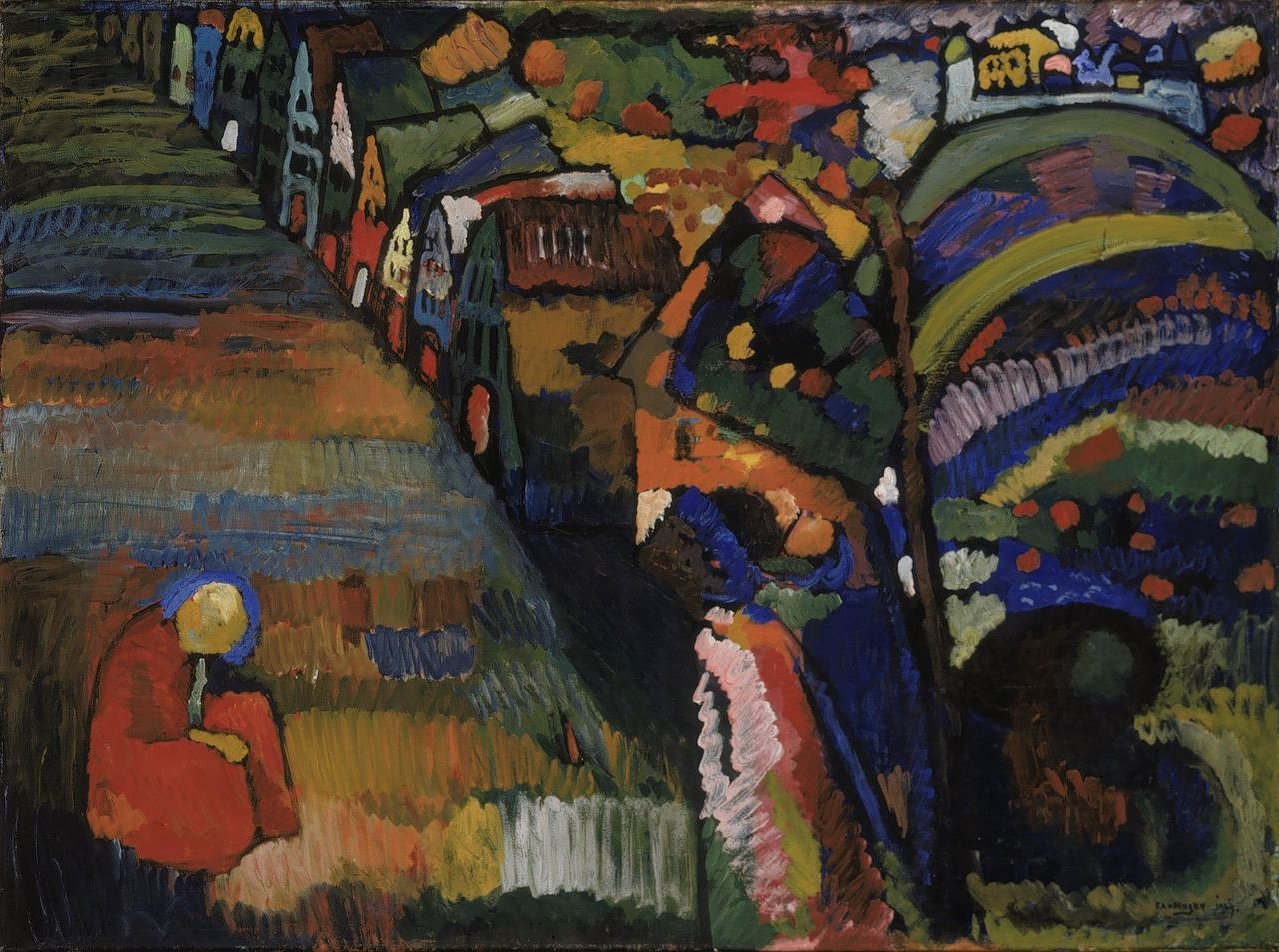
Kandinsky's Bild mit Hausern was sold at Frederik Muller and Company in Amsterdam on 9 October 1940 for 160 guilders, five months into the German occupation, and bought by the director of the Stedelijk Museum for the City of Amsterdam. The collector who consigned it had paid 500 guilders for the same painting in 1923. The gap between those two figures is the substance of the case that followed.
Frederik Muller and Company no longer trades under that name. In a restitution argument the identity of the recording house matters more than anywhere else, because the question is not only what was paid but under what conditions, and the conditions are recorded, if at all, in a firm's internal papers rather than in its printed catalogue. Where those papers went when the firm went is itself a research question, and it is one that has to be answered before the price can be interpreted rather than merely quoted.
Eleven entries in this column were never auction houses
The seller column also holds things that are not firms. John Harrison's marine timekeepers carry three entries: an award voted by the Commissioners of Longitude on 30 June 1737 after the Lisbon trial, and two Acts of Parliament, in 1765 and 1773. No sale took place in any of them, and the 1765 Act required Harrison to surrender the timekeepers, which is the opposite of a purchase. His lifetime receipts came to 23,065 pounds across about forty years, and the 20,000 pound prize of the 1714 Act was never awarded to anyone in the form the Act described.
The Dunhuang Diamond Sutra carries a payment rather than a price: four horse-shoe-shaped silver ingots handed in May 1907 to Wang Yuanlu, the Daoist priest who had appointed himself custodian of the sealed library cave, for a large body of material of which the scroll was one item. Canova's Napoleon was a direct purchase by the British government in 1816. The Royal Gold Cup went to the British Museum in 1892 by private treaty through a Bond Street dealer for 8,000 pounds, met by a Treasury grant and named subscribers.
Each of those is correctly recorded and none of them is an auction result. They are in the column because the column is where money goes, which is a field design problem rather than a market one, and the label on each entry says so in words.
What a surviving house is actually worth to a reader
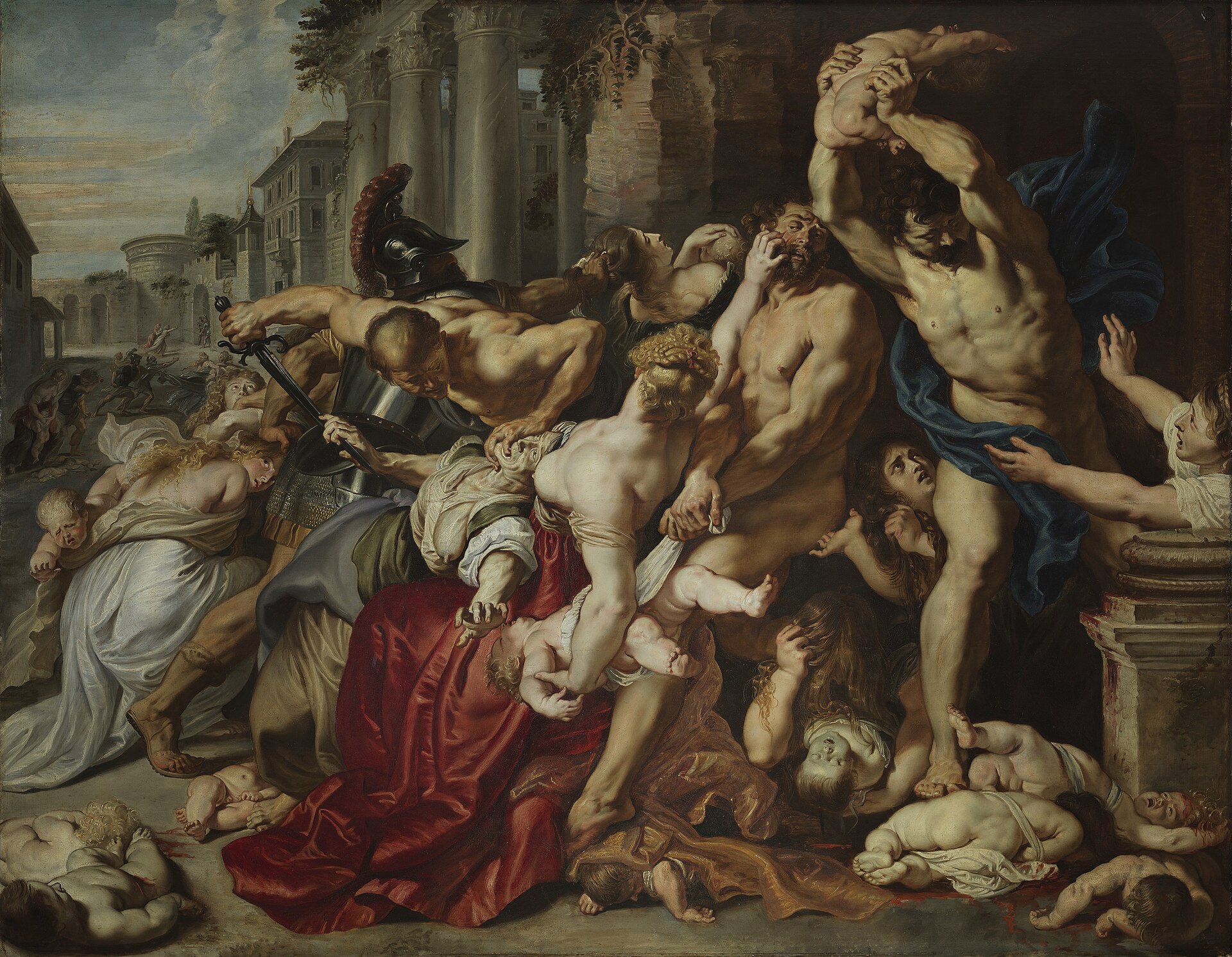
The contrast is easiest to see at the top of the market. Rubens's Massacre of the Innocents sold at Sotheby's in London on 10 July 2002, and the trade press reported the hammer on the day at 45 million pounds while the figure that travelled afterwards was the premium-inclusive total. Both numbers are recoverable a generation later because the firm is still there, the sale is still in its archive and the reporting that covered it is still indexed.
The Faberge egg found in the American midwest makes the same point from the other end. It was lot 259 at Parke-Bernet on 7 March 1964, in the sale of the property of Mrs Rena Clark, catalogued as a gold watch in an egg-form case and sold for 2,450 dollars. That lot is traceable because Sotheby's bought Parke-Bernet in the same year and the records went with the purchase. A firm that is absorbed keeps its past; a firm that is wound up usually does not.
How to read a price whose house is gone
Ask first who wrote the number down, then whether that party still exists, and only then what the number was. A figure from a surviving house is a claim you can test. A figure from a wound-up firm is a claim about a document, and the document is usually a printed catalogue that gives a lot and a description and frequently no price at all.
Where the house is gone, find out where its papers went: to a successor firm, to a national library, to a dealer's archive, or nowhere. Treat a price with no surviving custodian as provisional however often it is repeated, because repetition in that situation is not corroboration, it is one piece of research being cited by everybody. And when recording a sale, write down the house as carefully as the figure. The name of the room is the part that decides whether anyone can ever go back.
Why this archive is free to read
We do this for everyone who loves art. The people who have studied it for years, and the people who just stopped to look. Iconotheca exists so that what we learn belongs to all of them.
Nobody pays us for this. No ads, no sponsors, no commercial interest. These works belong to all of us, and we would rather share them with as many people as we can than keep them to ourselves.
If it gave you something today, tell us to keep going. Follow us, leave a like, or write a positive comment. We read every one, and they are what keeps us going.
Questions
136 of 217 auction rows name a seller, across 56 distinct names. Most of the remaining 81 rows are entries recording that the object has never been offered at auction at all, which is a deliberate note rather than a missing value.
Sotheby's bought it in 1964, when it was the largest auction house in America, and the firm became Sotheby Parke Bernet. Because it was absorbed rather than wound up, its sale records passed to the buyer, which is why a 1964 lot number from Parke-Bernet is still traceable today.
Because a printed sale catalogue is written before the sale. It carries the lot number, the description and often an illustration, and it cannot carry the hammer, which only exists afterwards in the firm's own books. When the firm goes and its books are not deposited anywhere, the description survives and the price does not.
Eleven entries, each labelled as such in words. They include two Acts of Parliament and an award by the Commissioners of Longitude for John Harrison's marine timekeepers, a payment of four silver ingots at Dunhuang in 1907, a direct purchase by the British government in 1816 and several private treaty sales.
No. It makes the price unverifiable at source, which is a different and lesser problem. The right treatment is to record the figure, record who recorded it, note that the recording party no longer exists and treat later repetitions of the figure as citations of one piece of research rather than as independent confirmation.
Sources
- 1Sotheby's, Sotheby's Crosses the Pond and Becomes the First International Auction House, by Christian House, 12 April 2019. The firm's own account of its 1964 purchase of Parke-Bernet, then America's largest auction house. Read 24 September 2026. sothebys.com/en/...
- 2The Metropolitan Museum of Art, Leonard A. Lauder Research Center, Modern Art Index Project, entry for Galerie Georges Petit, active Paris 1846-1933. Source for the foundation, the 1877 succession, the Expositions internationales from 1882, the Degas estate sale, the 1932 Picasso retrospective and the 1933 closure and sale of assets. metmuseum.org/research-centers/...
- 3Antiques Trade Gazette, Rubens masterpiece joins the world record holders at 45m, reporting the Sotheby's sale of 10 July 2002. antiquestradegazette.com/news/...
- 4HENI, The Painting That Set Rubens' Auction Record After Years in the Shadows, 7 February 2025. Carries the sale as 69.69 million dollars for 10 July 2002 at Sotheby's London, a premium-inclusive figure converted to dollars, alongside a table of earlier Rubens auction records. Read 24 September 2026. heni.com/news/...
- 5Art Gallery of Ontario, The Massacre's triumphant return, 30 November 2018. The museum's own caption for the panel, giving oil on panel and 142 x 183 x 1.9 cm. ago.ca/agoinsider/...
- 6The Metropolitan Museum of Art, object page and Open Access Collection API record for the mosque lamp of al-Malik al-Nasir, accession 17.190.987, object 447002, the gift of J. Pierpont Morgan in 1917. The API was queried directly on 24 September 2026 and returns the credit line and a date of about 1340 with no provenance field at all; the museum's published provenance cites a Galerie Georges Petit sale of the Mannheim estate in 1910 by house and lot without a price, a premium or a buyer. metmuseum.org/art/...
- 7National Gallery of Ireland, Caravaggio's The Taking of Christ, the gallery's own display history for the picture. Read 24 September 2026. Confirms that the painting remained in the Hamilton family for 119 years until it was sold at auction by Dowell's in Edinburgh in 1921 and again in 1922, that it was catalogued under Honthorst's nickname throughout, and that it then passed to the Hon. Major Charles Hubert Francis Noel and in 1924 to Dr Marie Lea-Wilson. nationalgallery.ie/art-and-artists/...
More in The Market
The partThe Underbidder Set the Price
Fourteen records show the underbidder sets the hammer price and is almost never named.
The Lot That Did Not Sell
Six objects in this archive were offered at auction and not sold. An unsold lot is a price nobody paid and a date the object went quiet, and in one...
The Estimate Is the Newest Part of an Auction Record
Of 214 auction results in this archive, 52 carry a published pre-sale estimate. None of the 29 dated before 1900 do, and the estimate began life as a...