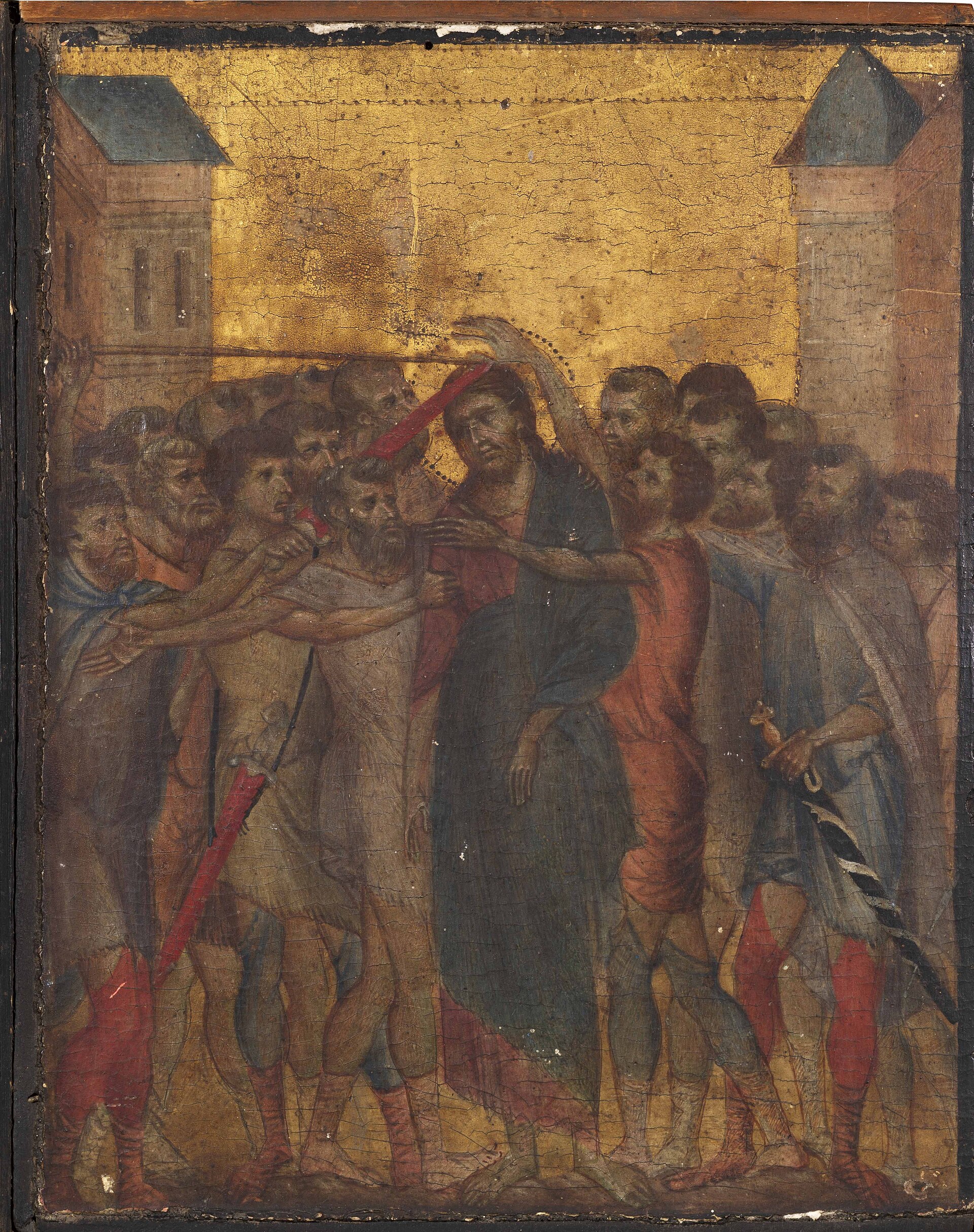
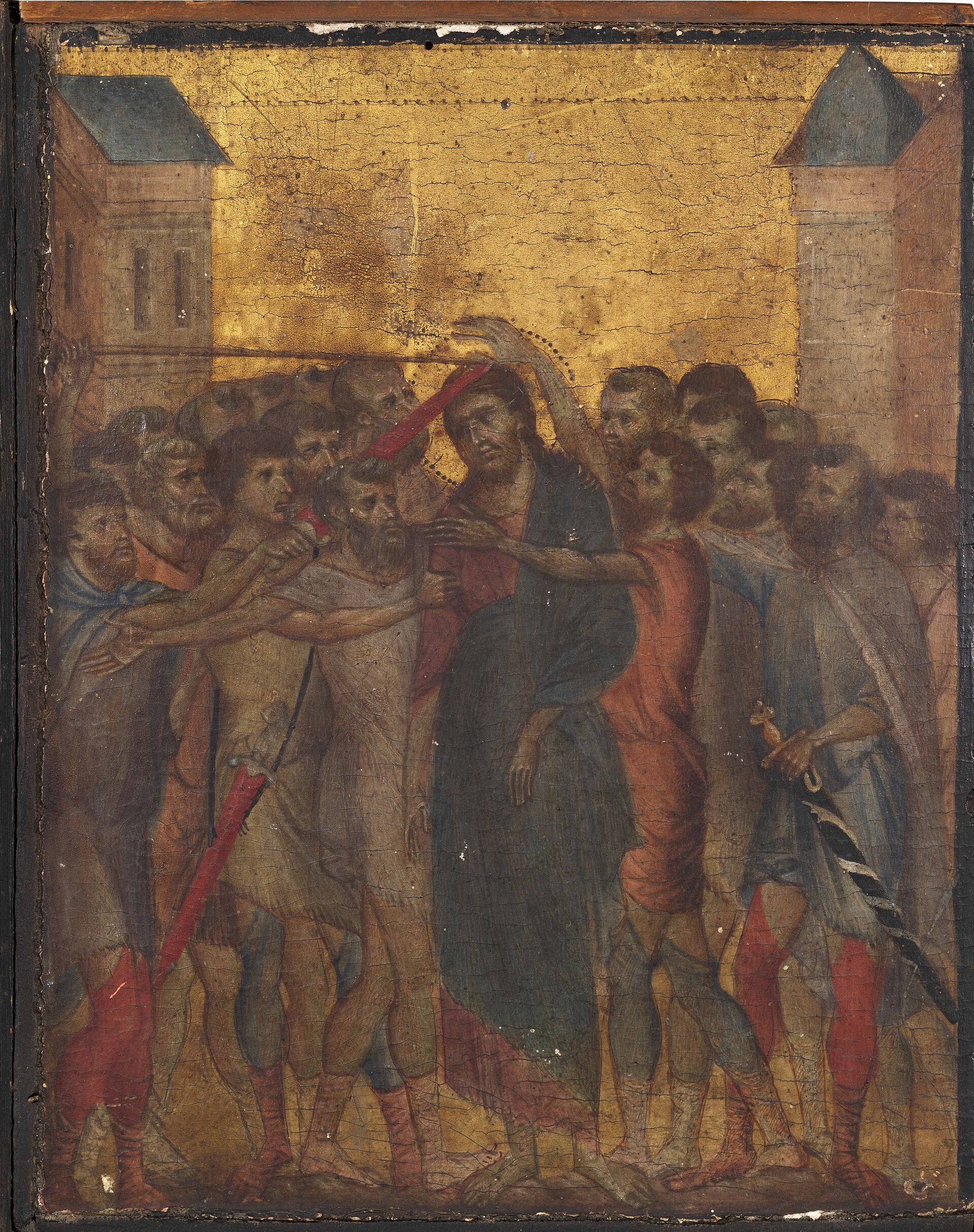
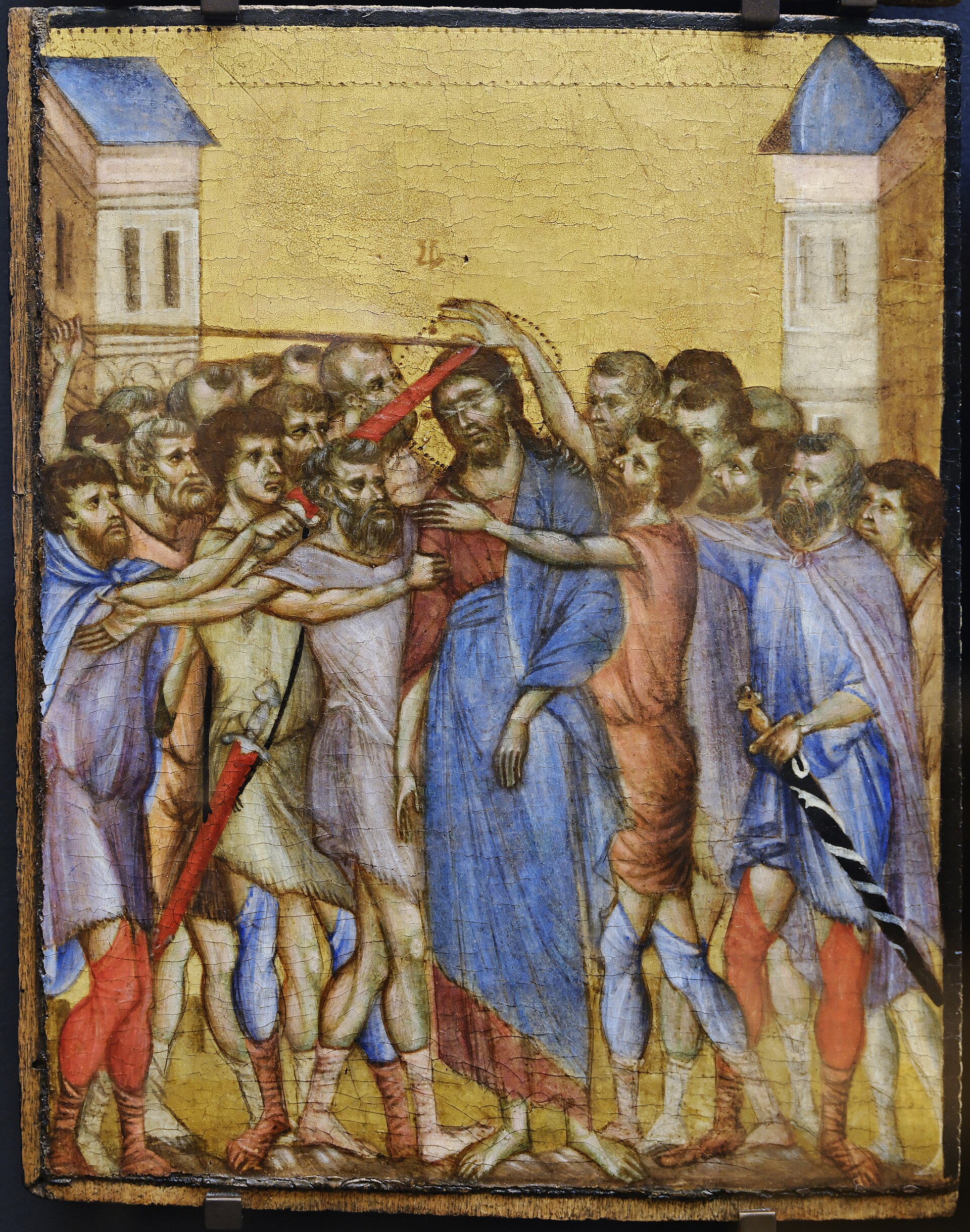
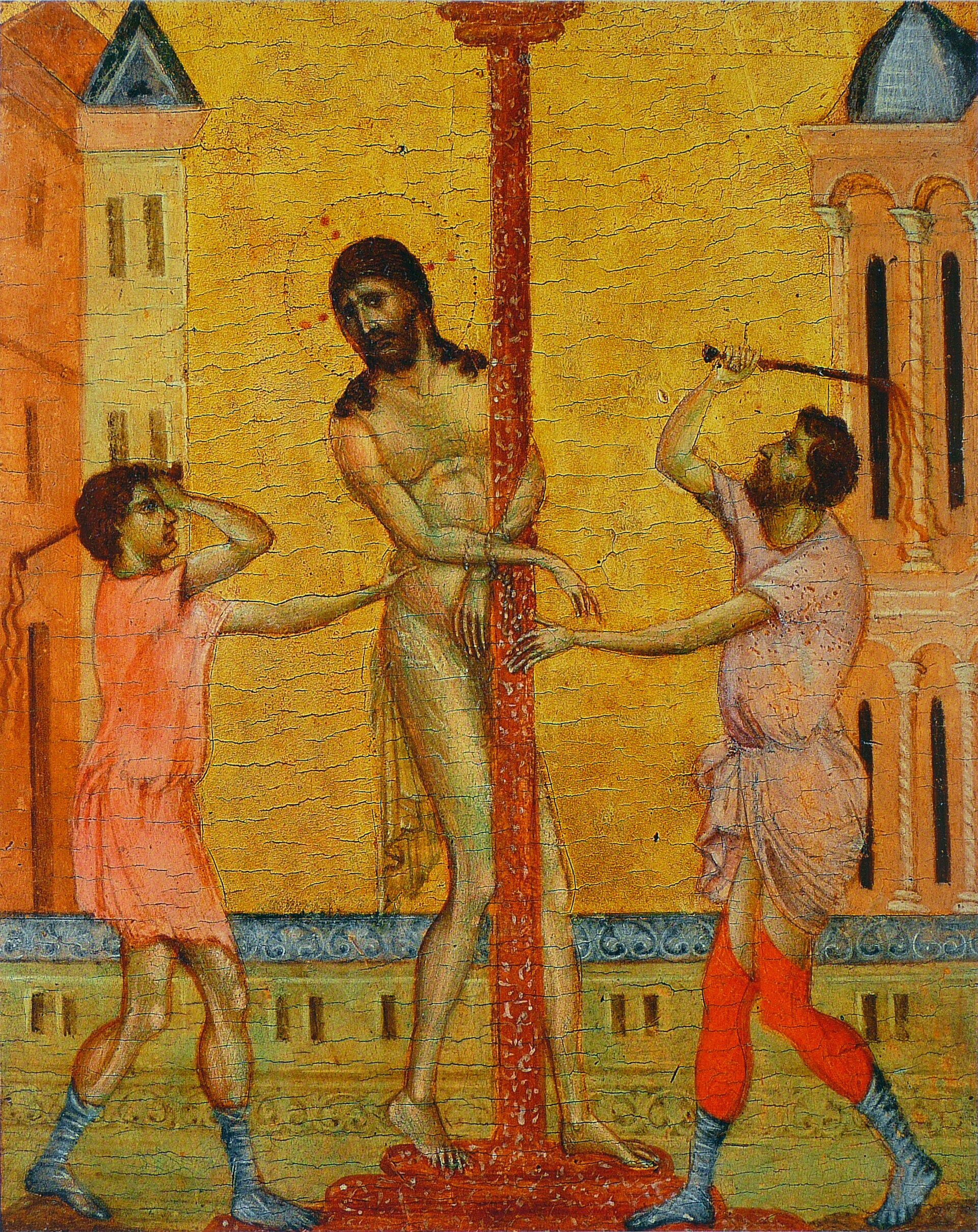
The Mocking of Christ
c. 1280 · Egg tempera and gold leaf on poplar panel
Musee du Louvre
Florentine · c. 1240 - 1302
1 record in the archive · Last verified 15 September 2026 · 34 sources cited
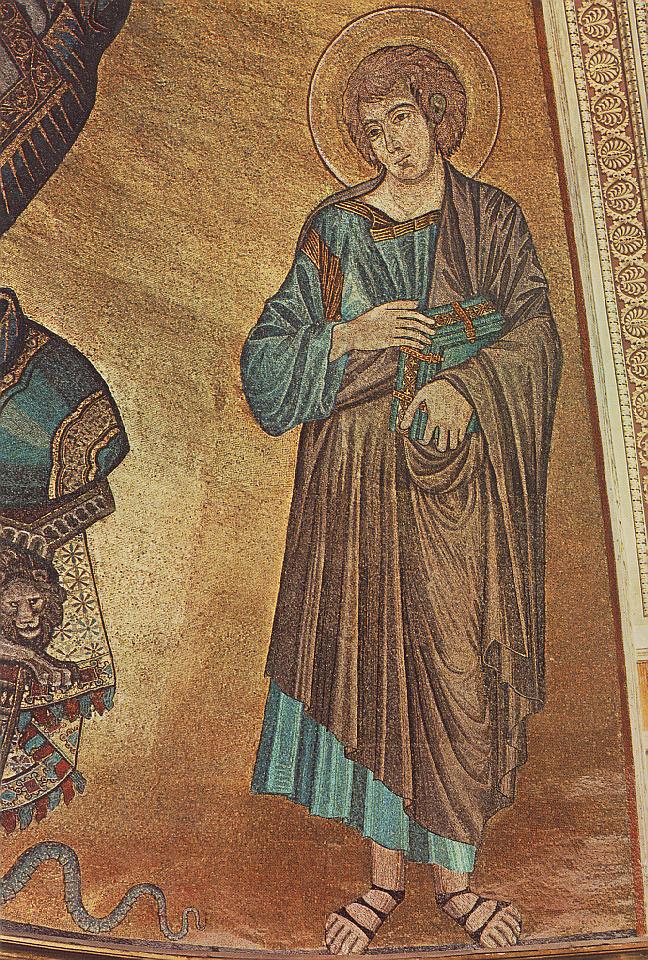
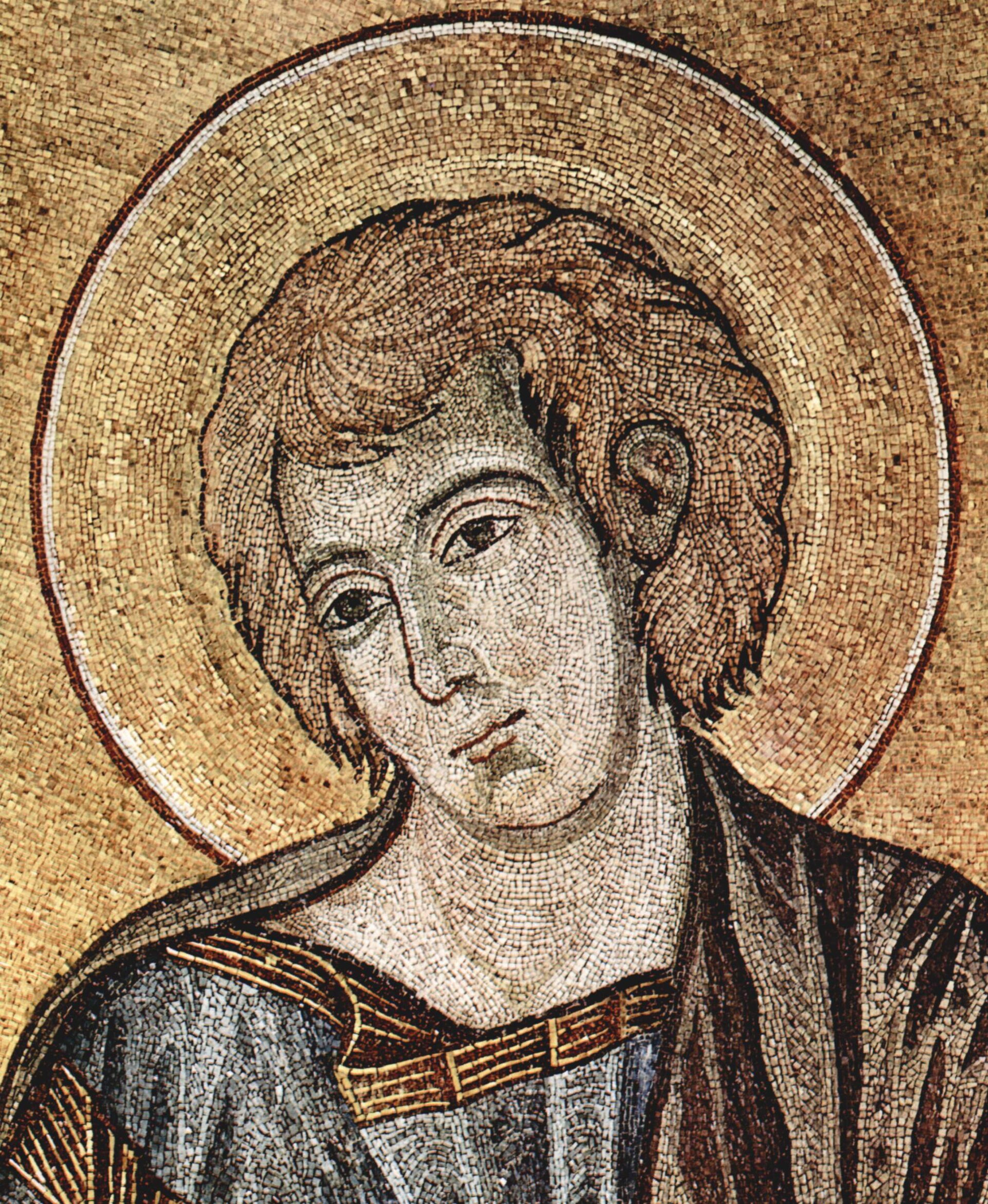
There is no portrait of Cimabue. No contemporary image of him is known and no likeness was made in his lifetime. Shown here instead is the only surviving work documented as his while he lived: the figure of Saint John the Evangelist in the apse mosaic of Pisa Cathedral, about 385 by 223 cm, set between 2 September 1301 and 19 February 1302 at ten soldi a day. This is not a self-portrait and does not depict the artist. It is the one object in the world that a document ties directly to his hands.
Duomo di Santa Maria Assunta, Pisa| Full name | Cenni di Pepo, also recorded as Cenni di Pepi; called Cimabue. Vasari names him Giovanni Cimabue and the form has stuck to the literature, but no document calls him Giovanni. |
|---|---|
| Worked as | Painter, Fresco painter, Mosaicist |
| Born | c. 1240 · Florence |
| Died | 1302, after 19 February · Pisa (presumed; he was at work there in February 1302 and is not heard of again) |
| Nationality | Florentine |
| Movement | Italian Duecento; the maniera greca and its dissolution |
| In this archive | 1 record |
| Last verified | 15 September 2026 |
Cimabue is the first name in the written history of European art and one of the least documented figures in it. Two things are recorded of him with certainty. On 18 June 1272 a notary in Rome listed a witness as Cimabove pictore de Florencia. Between 2 September 1301 and 19 February 1302 the fabric accounts of Pisa Cathedral paid him ten soldi a day to set the figure of Saint John the Evangelist into the apse mosaic. That mosaic is the only surviving work documented as his while he was alive, and it is not a painting. Everything else attributed to him is attributed by argument.
The consequence is exact and worth stating plainly: an attribution to Cimabue is an attribution to a reconstructed hand, not to a documented artist. Nothing is signed. The accepted body of work on panel runs to fewer than ten pictures. Two of those were unknown to scholarship in 1999. One of them was found in 2019 above a hotplate in a kitchen in Compiegne and sold for the highest price ever paid for a pre-1500 work of art.
The name means ox-head, or, from the verb cimare, one who crushes the views of others. Both readings are late. What survives of the man is a nickname, two documents, a wall of blackened fresco at Assisi, a crucifix that the Arno destroyed in a morning, and about a dozen panels that a century and a half of connoisseurship has agreed to call his.
Born in Florence, according to Vasari, who also names the family as Cimabue and gives the year exactly. No document supports the date.15
On 18 June a notarial act in Rome lists him as a witness, 'Cimabove pictore de Florencia'. The first documentary trace of his existence.223
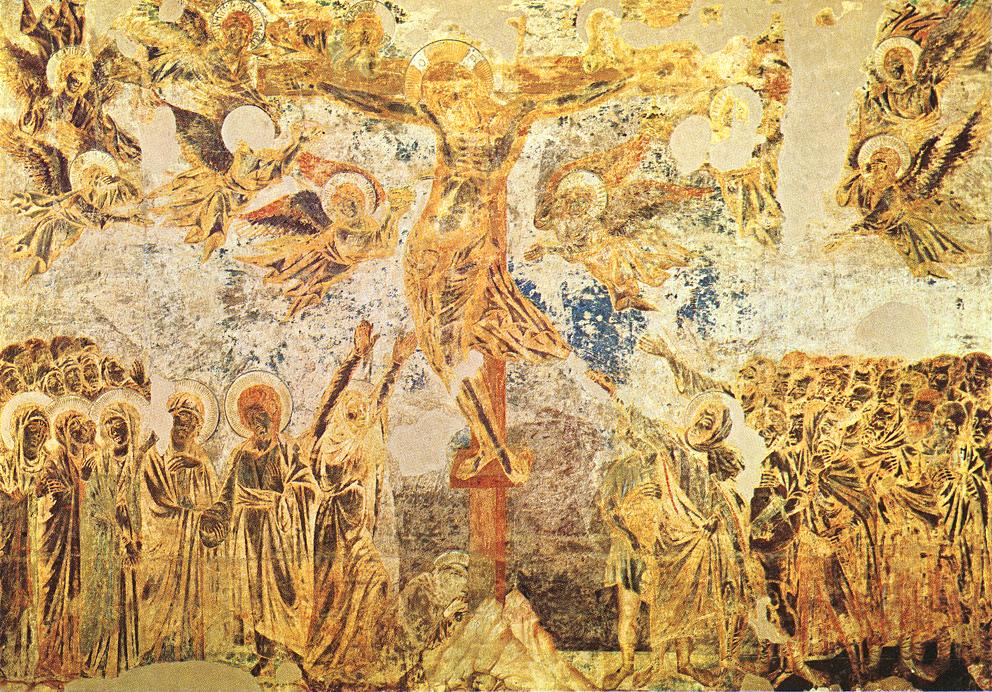
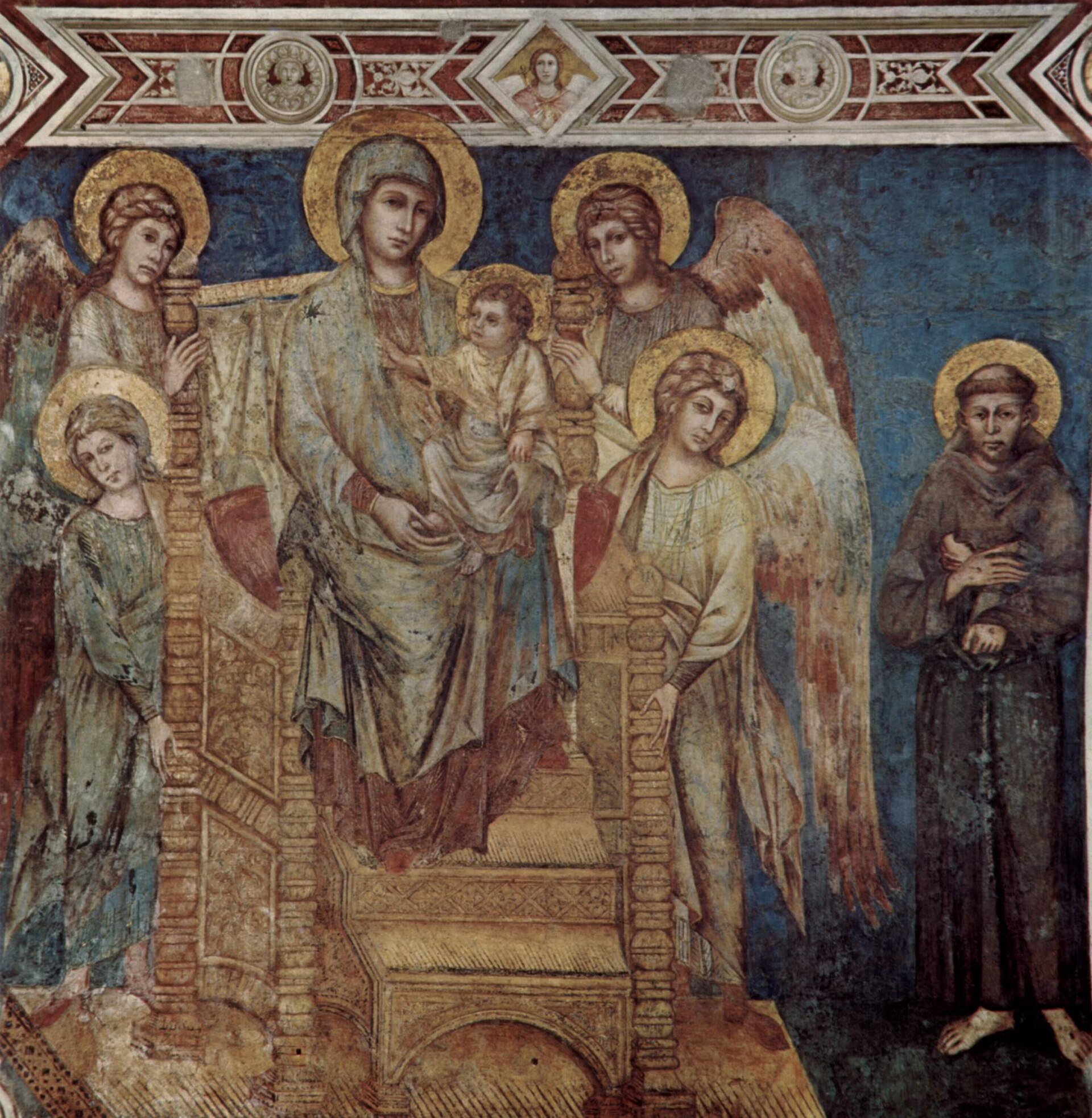
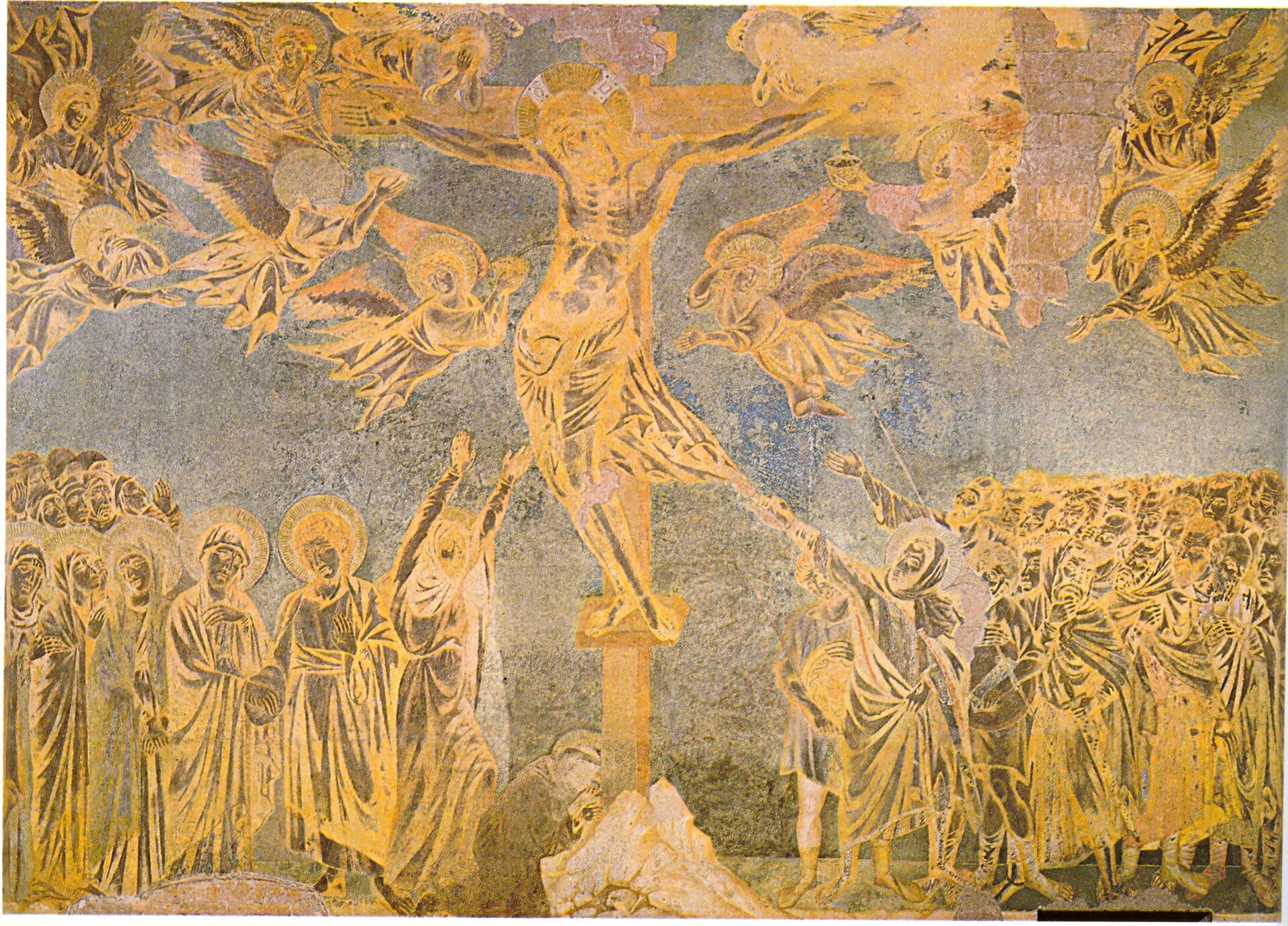
Frescoes in the transepts, apse and crossing vault of the Upper Church of San Francesco, Assisi: the four Evangelists, scenes from the life of the Virgin, the Apocalypse, and the Crucifixion of the left transept, with Saint Francis kneeling at the foot of the cross. The nave below, given to Roman and Tuscan hands, carries thirty-two Old and New Testament scenes above the life of Saint Francis.22231
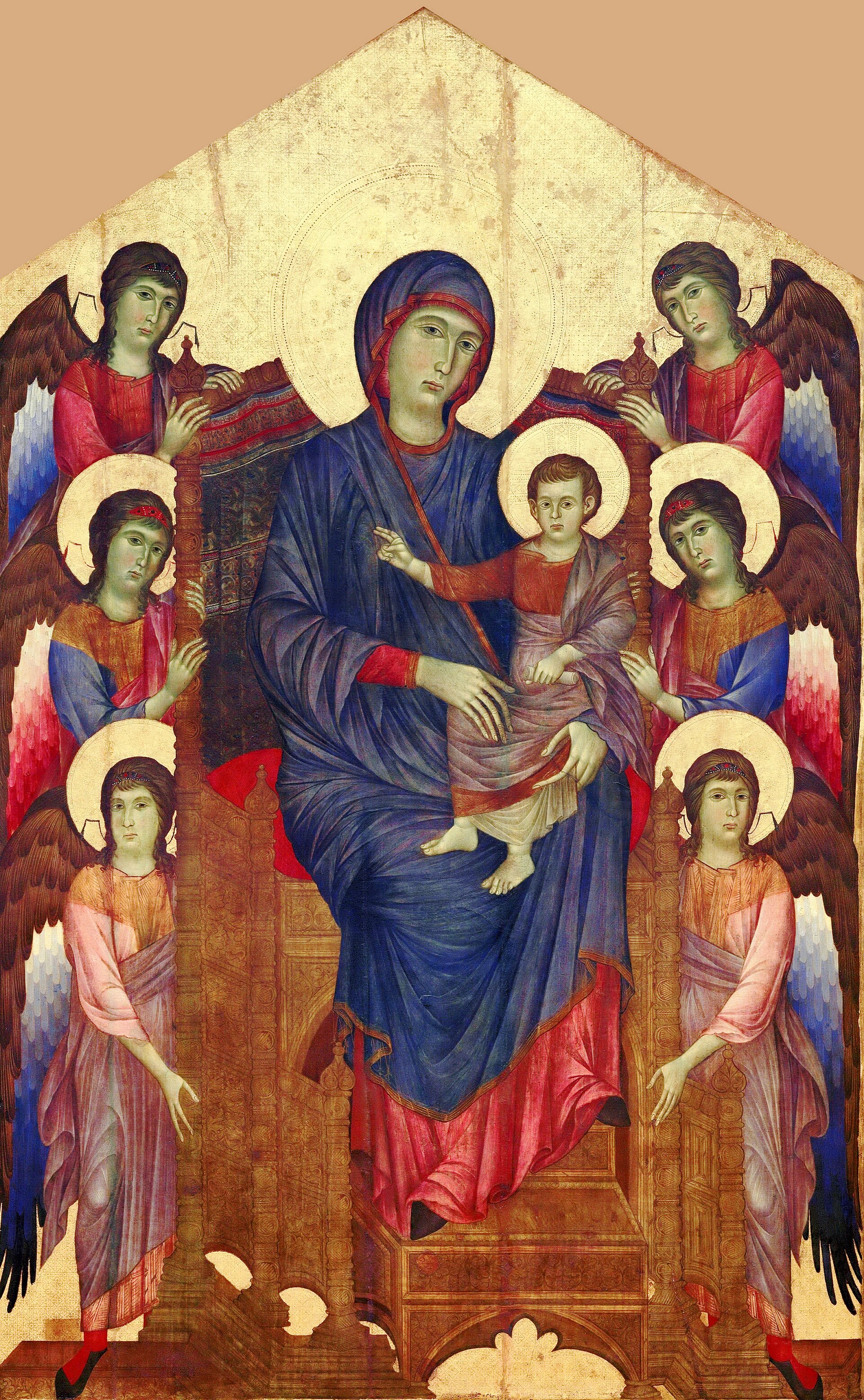
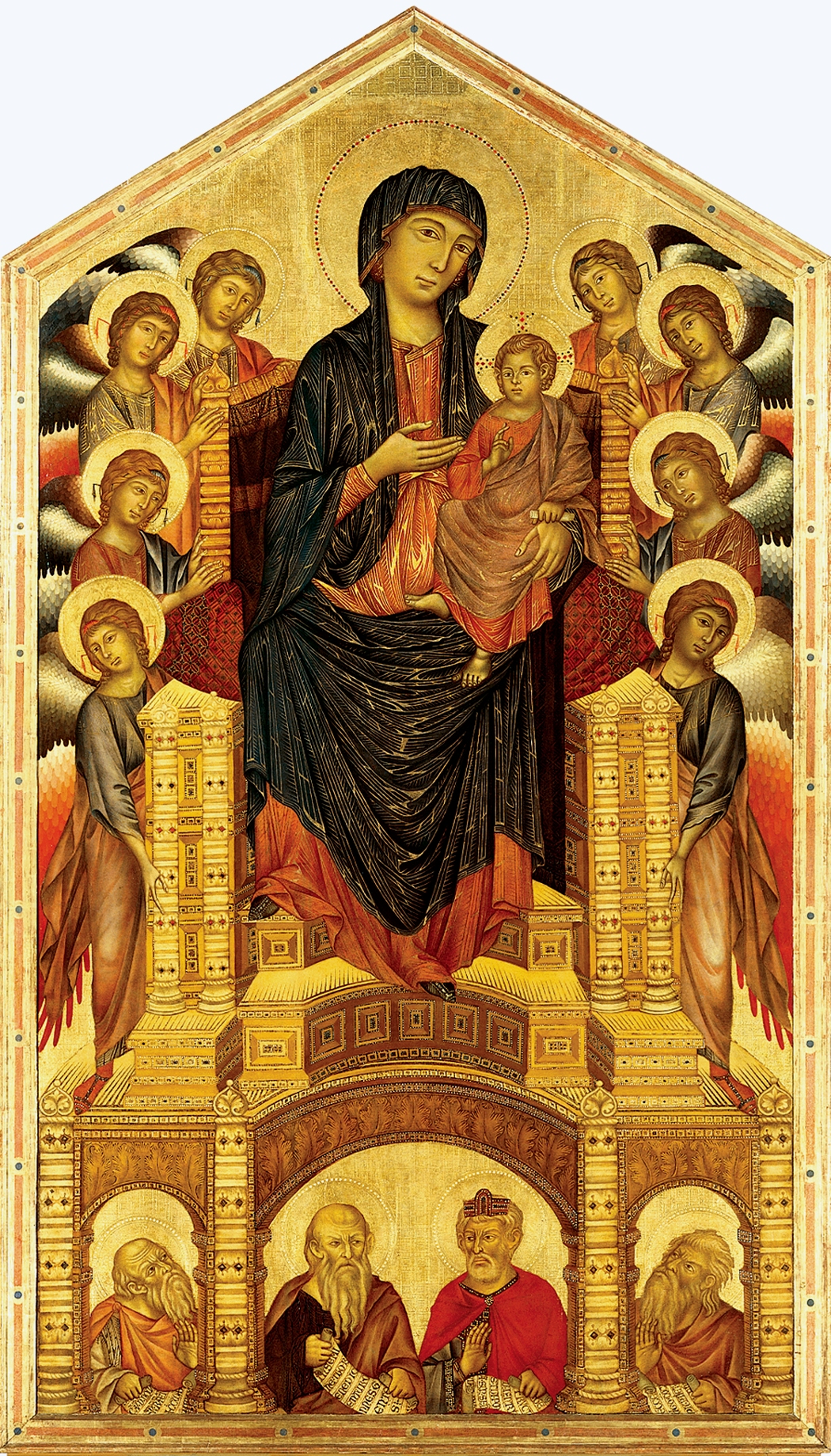
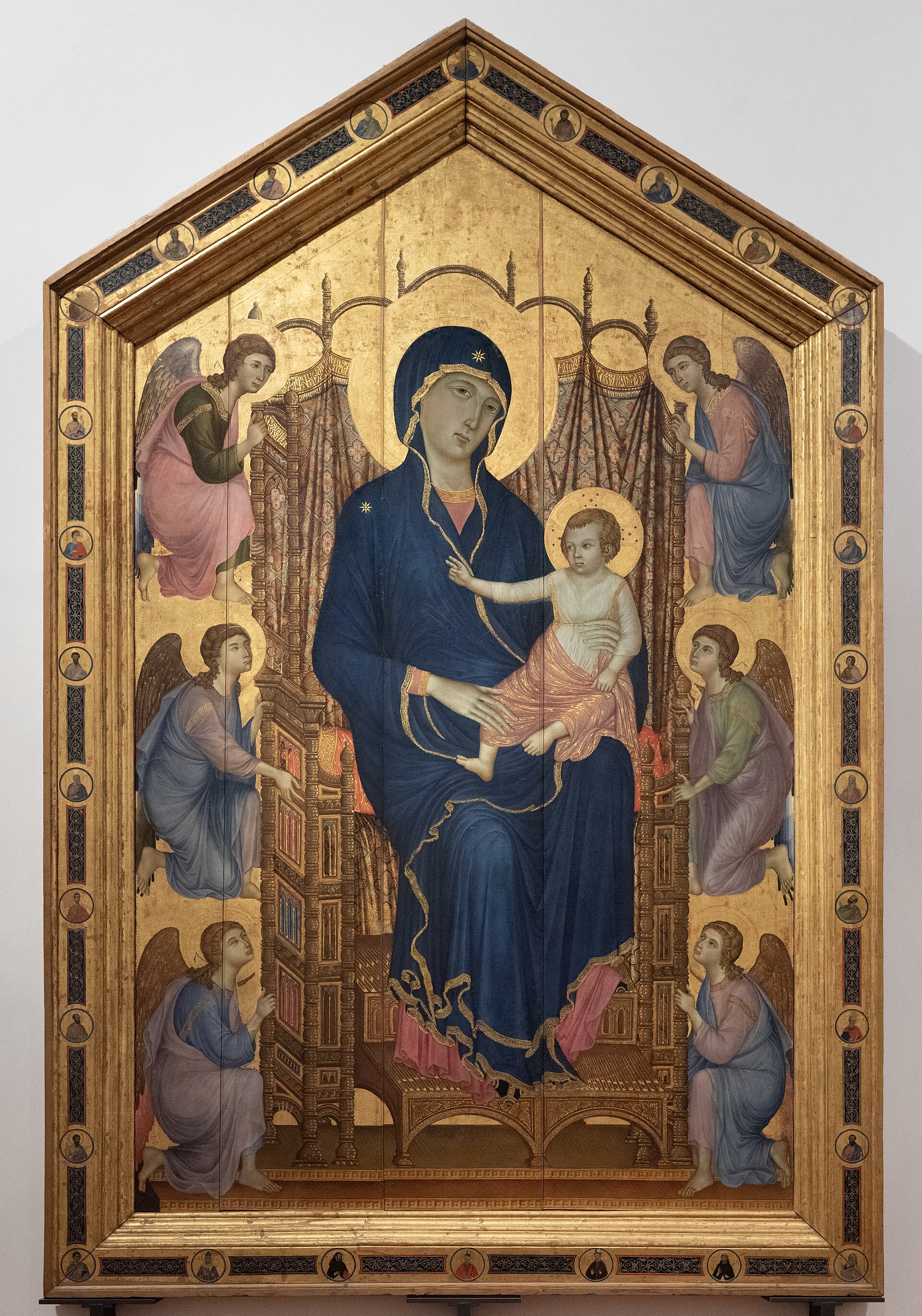
The Maesta for San Francesco, Pisa, now in the Louvre. Most scholars place it before Duccio's Rucellai Madonna of 1285; Burresi and Caleca argue for the late 1260s or 1270s.26
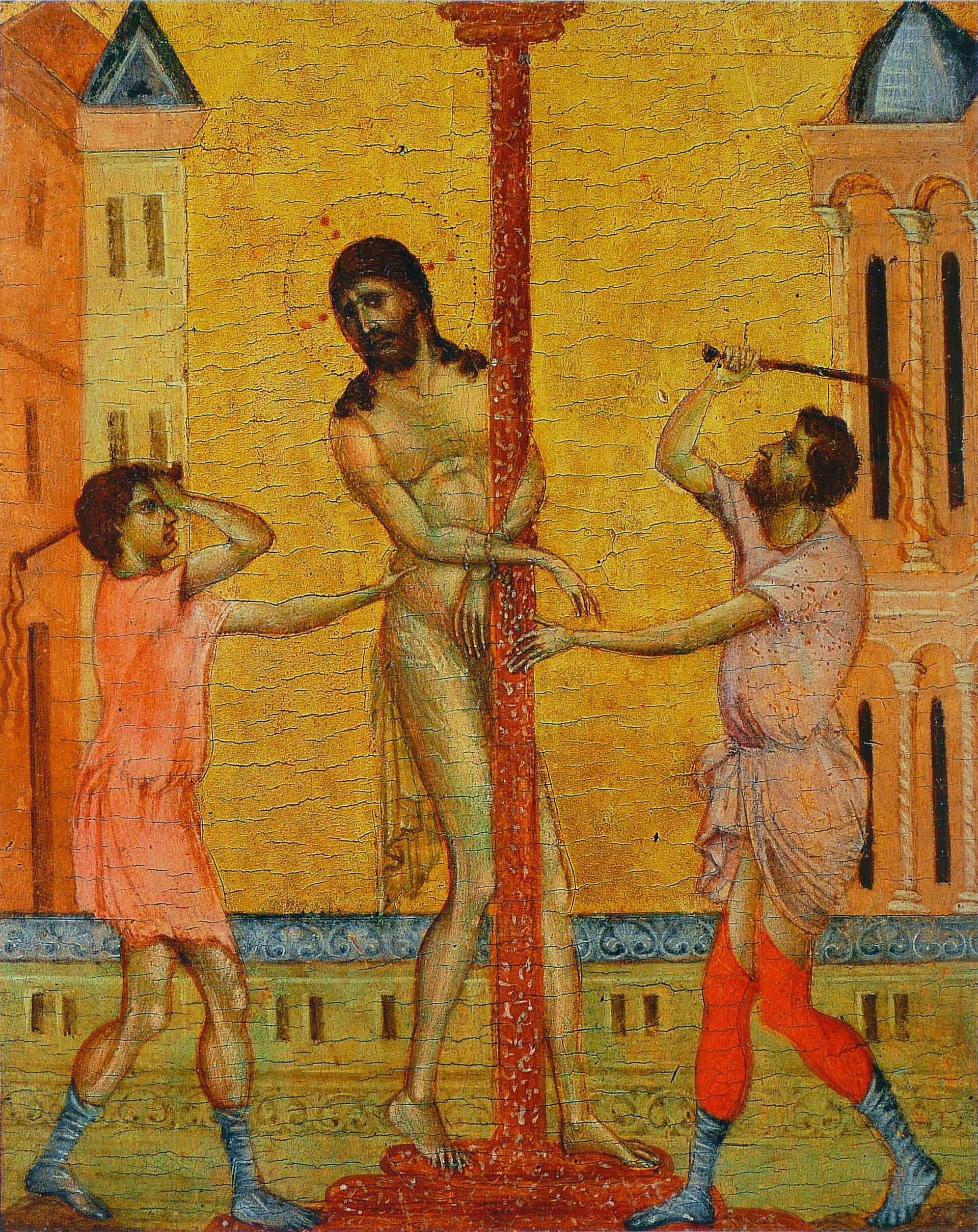
The eight-scene devotional diptych, of which the Virgin and Child (London), the Mocking of Christ (Paris) and the Flagellation (New York) survive.27
On 15 April the Laudesi of Santa Maria Novella contract Duccio, not Cimabue, for the Rucellai Madonna, at 150 lire, specifying ultramarine and gold leaf and that he paint it himself. Vasari would give the picture to Cimabue.27
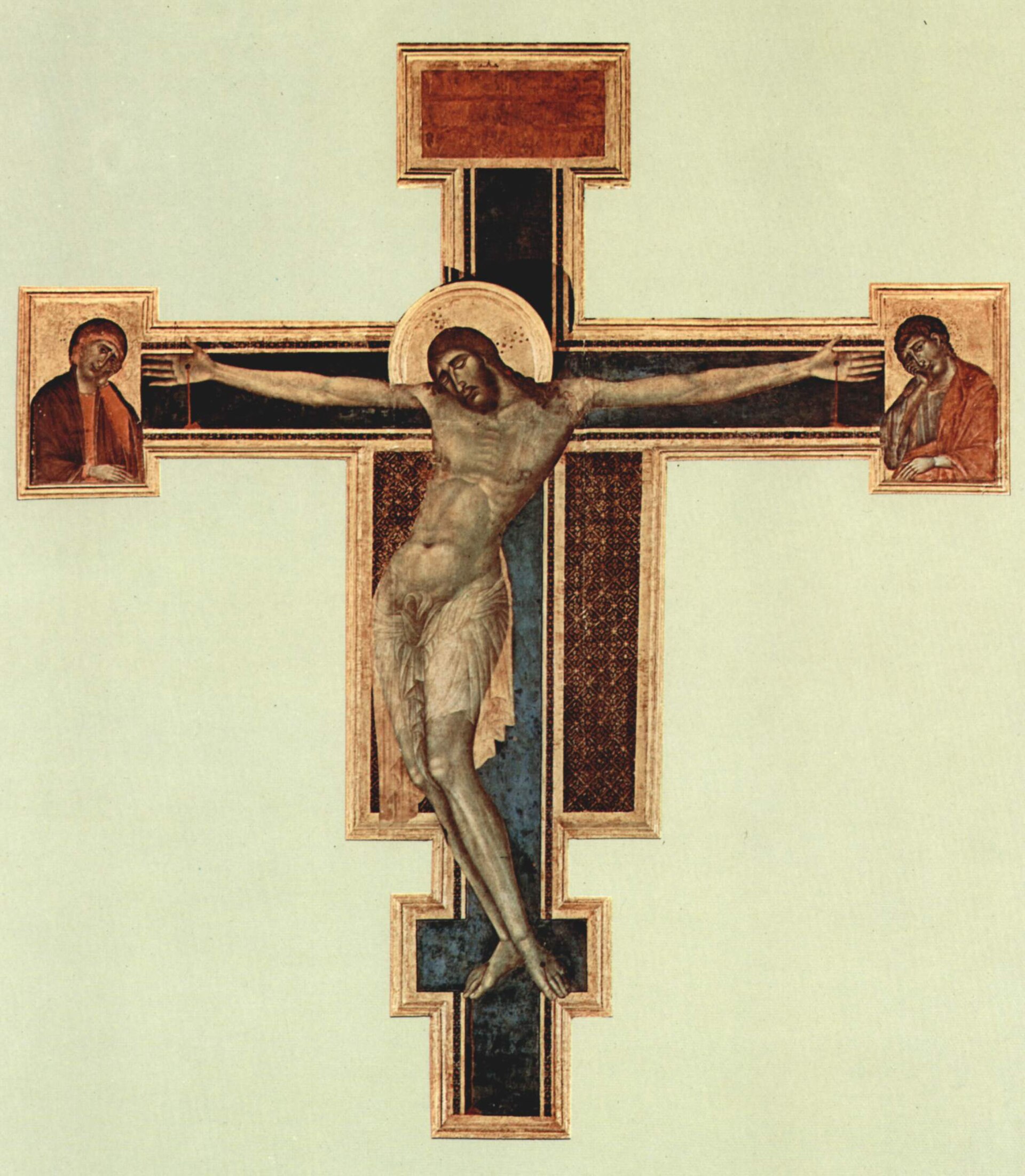
The Crucifix for Santa Croce, Florence. The date is disputed: the Opera di Santa Croce says before 1288, the Web Gallery of Art 1287-88, Wikipedia about 1265.1425
The Santa Trinita Maesta, 384 by 223 cm, for the Vallombrosan church of Santa Trinita in Florence, with four prophets beneath the throne holding Incarnation prophecies.26
Commissioned to paint an altarpiece for the Ospedale of Santa Chiara, Pisa. The work is lost and Gordon notes it may never have been executed.2
From 2 September, paid ten soldi a day by Pisa Cathedral for the apse mosaic begun by Francesco da Pisa.2421
Last paid on 19 February, after ninety-four days' work, having completed the figure of Saint John the Evangelist. Nothing further is recorded of him.2421
Vincino da Pistoia completes the Pisa apse mosaic, nineteen years after Cimabue stopped work on it.24
The Santa Trinita Maesta is displaced from the high altar of Santa Trinita.26
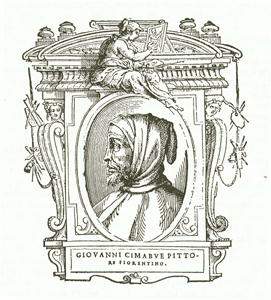
The second edition of Vasari's Lives opens with the Life of Cimabue and carries a woodcut portrait of him. Vasari gives the death as 1300 and the burial as Santa Maria del Fiore.15
The Pisa apse mosaic survives the cathedral fire.24
The Pisan Maesta leaves San Francesco for the Camposanto in 1810 and is taken to the Louvre in October 1812. The Louvre records the mode of acquisition as military conquest. It was never returned.6
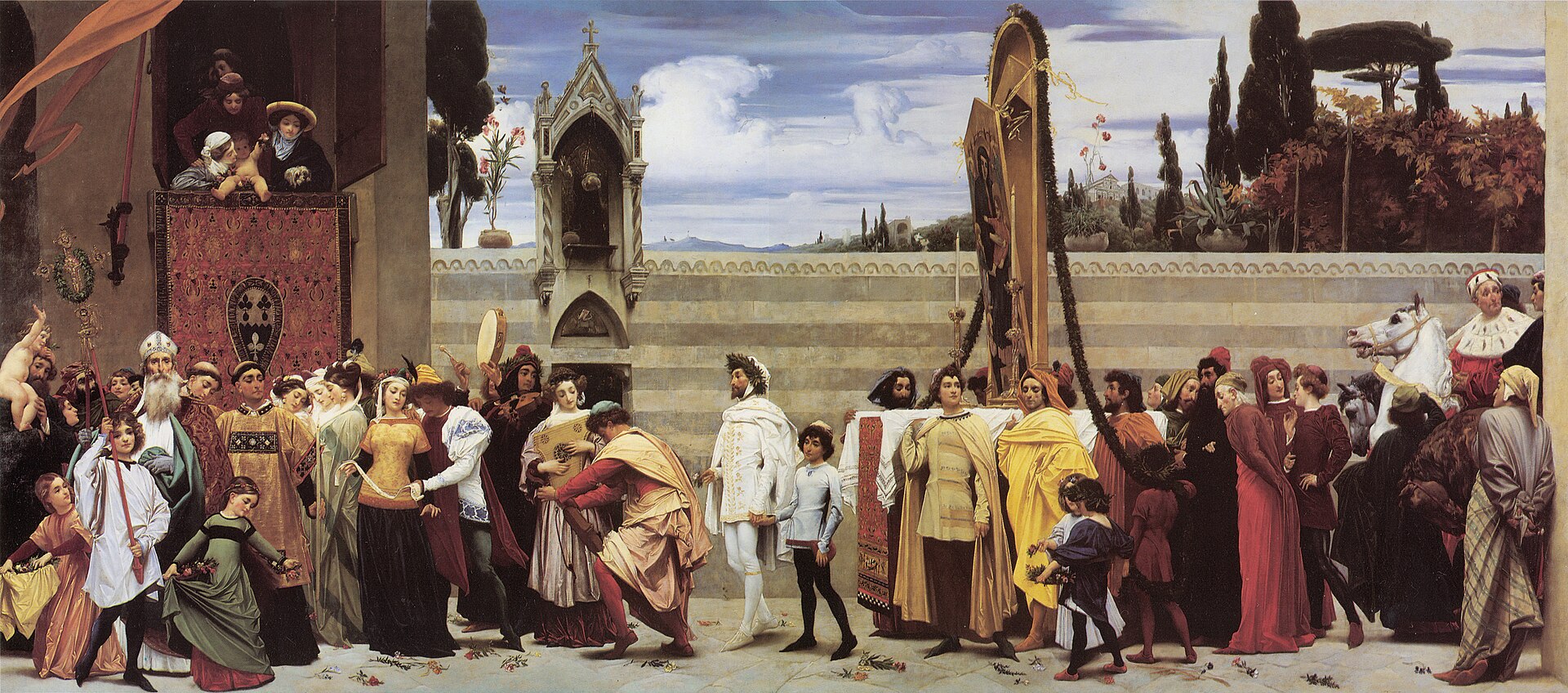
Frederic Leighton exhibits Cimabue's Celebrated Madonna is carried in Procession through the Streets of Florence. Queen Victoria buys it on the opening day for 600 guineas. The picture in the procession is a Duccio.28
Franz Wickhoff reattributes the Rucellai Madonna to Duccio, removing the best-known work from Cimabue's corpus after three centuries.2728
The Frick Collection buys the Flagellation from Knoedler, Paris, accession 1950.1.159. Its authorship is disputed for the next fifty years.1213
On 4 November the Arno floods Santa Croce. The Crucifix loses about sixty per cent of its painted surface.1425
The Crucifix returns to public display after a ten-year restoration by Umberto Baldini and Ornella Casazza, the first application of astrazione cromatica.2517
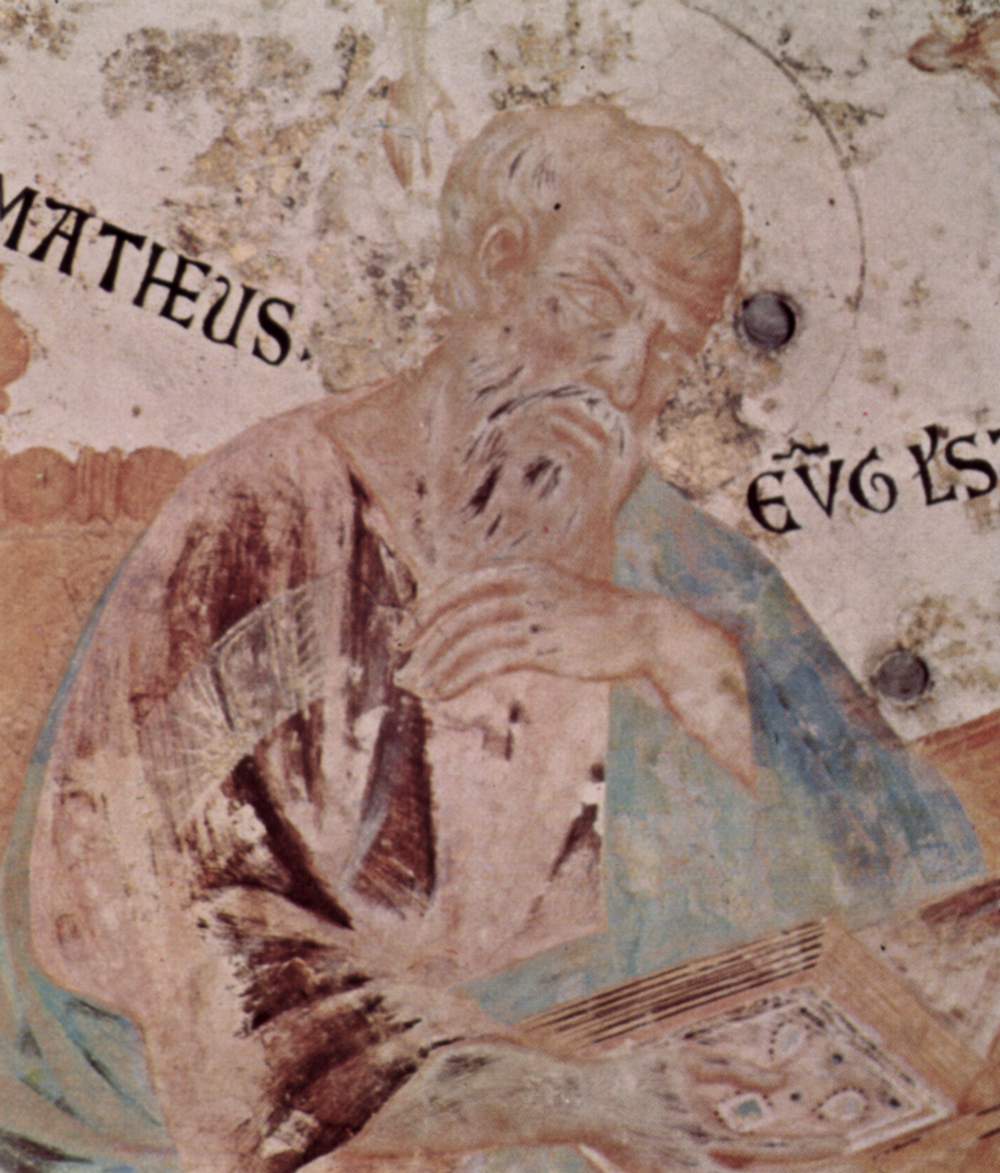
On 26 September two earthquakes bring down two sections of vault in the Upper Church at Assisi, killing four people. Cimabue's Saint Matthew disintegrates into some 120,000 fragments.10
Luciano Bellosi's Cimabue, with the catalogue by Giovanna Ragionieri, is published by Abbeville. It remains the reference work.182
The Virgin and Child with Two Angels surfaces from Benacre Hall, Suffolk, withdrawn from a Sotheby's sale on 6 July, and is accepted in lieu of inheritance tax for the National Gallery as NG6583. Bellosi confirms the attribution by letter on 26 May.24
The Frick reunites the London and New York panels for the first time in America, in an exhibition organised by Holly Flora with Denise Allen.13
Dillian Gordon publishes the National Gallery catalogue of the Italian paintings before 1400, with the full technical and attribution record for NG6583.2
The Santa Croce Crucifix is hung in the sacristy, above the reach of another flood.14
Vagnini and colleagues publish the Raman and XRD analysis of the Assisi fragments, establishing complete oxidation of lead white to plattnerite through a layer 20 to 30 microns thick and ruling out the fresco mortar as the cause.16
In June the Mocking of Christ is found above a hotplate in a kitchen at Compiegne. On 27 October it takes 19.5 million euros at hammer, about 24.1 million with fees, at Acteon in Senlis. It is classified a national treasure and refused an export licence.159
The Louvre completes the purchase at about 24.1 million euros and enters the panel on 25 October as RFML.PE.2023.33.1, the oldest painting in the department.59
Restoration of the Louvre Maesta and the Derision du Christ completed. In February the frescoed Maesta in the Lower Church at Assisi is cleaned by Sergio Fusetti and Tecnireco for 300,000 euros paid by Ferrari.811
Revoir Cimabue, the Louvre's first exhibition devoted to him, 22 January to 12 May, about forty works, with the three surviving diptych panels shown together for the first time. Curated by Thomas Bohl.78
In December the Galleria Nazionale dell'Umbria, Perugia University and the Soprintendenza begin a six-month feasibility study into using artificial intelligence to reassemble the shattered Saint Matthew.10
There is no Cimabue market. There is one sale. So far as is known, the Mocking of Christ at Acteon in Senlis on 27 October 2019 was the first work by Cimabue ever offered at public auction, and every other accepted picture is in an institution or a church, most of them immovable. The Louvre panel arrived in Paris in 1812 as spoil of war; the National Gallery panel arrived in 2000 as a tax settlement rather than a purchase; the Frick panel was bought from a dealer in 1950 for a sum the Frick does not publish.
The single result is therefore both a record and a sample of one. It set the highest price ever paid for a work of art made before 1500, and it did so on an object that had been estimated at 300,000 to 400,000 euros before anyone had looked at it properly. The lesson a collector should take from it is not about Cimabue's price level, which does not exist, but about the gap between a regional estimate and a technically examined attribution: the multiple was more than sixty.
The second lesson is that a record price does not confer title. The French state classified the panel a national treasure within weeks and refused it an export licence, and the buyers never took possession.
| Date | Sale | Work | Result | Note |
|---|---|---|---|---|
| 27 October 2019 | Acteon | The Mocking of Christ, tempera and gold on poplar, 25.8 x 20.3 cm, c. 1280 | Hammer 19,500,000 With premium c. 24,100,000 total with fees EUR | Sold at the Hotel des Ventes, Senlis. Estimated at 300,000 to 400,000 euros before attribution, revised to 4 to 6 million once Eric Turquin and colleagues had examined it. Bought for the Alana Collection of Alvaro Saieh and Ana Guzman through the London dealer Fabrizio Moretti. Record for any work of art made before 1500 and, so far as is known, the first Cimabue ever offered at public auction. Dollar conversions of 26, 26.8 and 27 million circulated depending on the date of conversion; the euro figures are the real ones and there are two of them. The Louvre subsequently acquired the panel at about 24.1 million euros. |
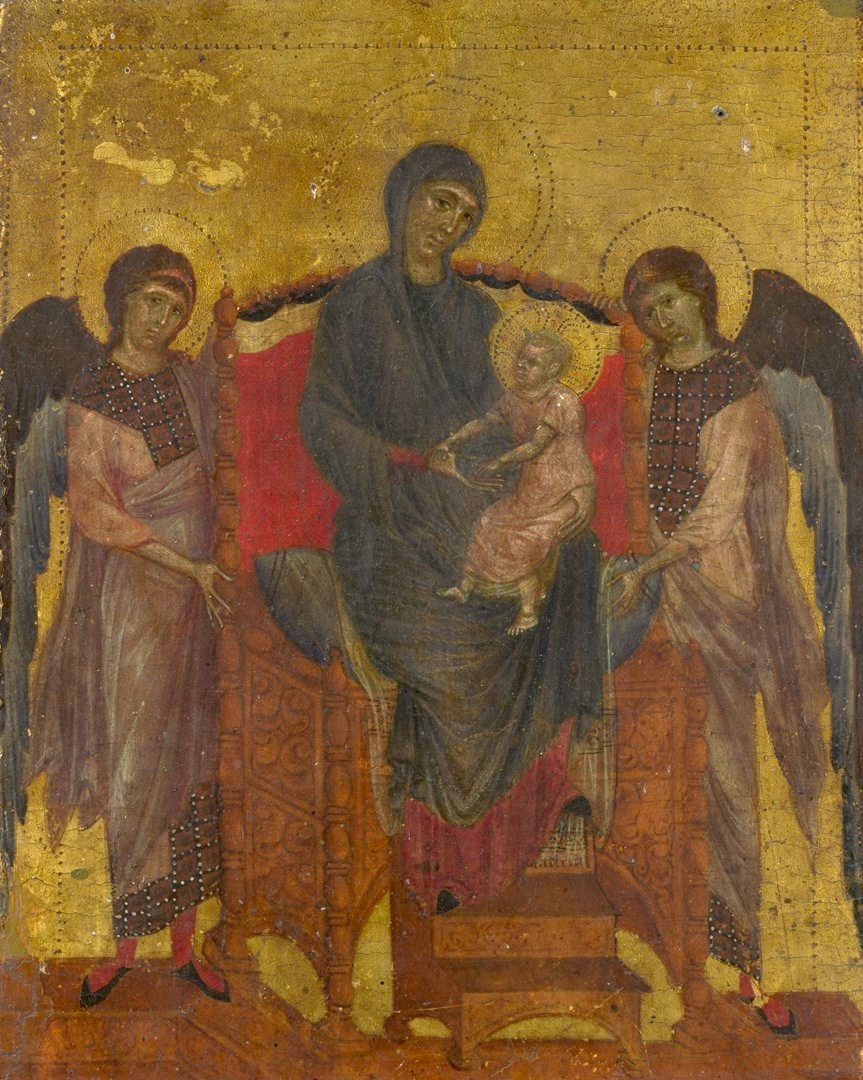
| 6 July 2000 | Sotheby's, London | The Virgin and Child with Two Angels, egg tempera on poplar, 25.6 x 20.8 cm, c. 1280-5 | Hammer not sold With premium not sold GBP | Old Master Paintings, lot 76, withdrawn from sale. The panel was instead accepted by HM Government in lieu of inheritance tax and allocated to the National Gallery as NG6583. No price is published for an acceptance in lieu, which is why the second small Cimabue to reach a public collection has no market figure attached to it at all. |
Hammer is the price at which the bidding stopped; with premium adds the fee the house charges the buyer on top. Hammer price and buyer's premium in the glossary.
| Institution | City | Holdings | Note |
|---|---|---|---|
| Musee du Louvre | Paris | Two: the Maesta from San Francesco, Pisa (INV 254 / MR 159, 427 x 280 cm, with its original gabled frame and twenty-six medallions), and La Derision du Christ (RFML.PE.2023.33.1, 25.8 x 20.3 cm). | The Maesta hangs in the Salon Carre, Denon wing, room 708. It was taken from Pisa in October 1812; the Louvre records the mode of acquisition as military conquest. The Derision was not on permanent display at the last check of the collections record and was lent to the Petit Palais, Avignon, from 6 June to 19 October 2025. Check the record before travelling. |
| Galleria degli Uffizi | Florence | The Santa Trinita Maesta, 384 x 223 cm, c. 1290-1300. | Painted for the Vallombrosan church of Santa Trinita, displaced from the high altar in 1471, to the Accademia in 1810 and the Uffizi in 1919. Duccio's Rucellai Madonna, the picture Vasari called a Cimabue, hangs in the same museum: the two together are the best available lesson in how the attribution went wrong. |
| Museo dell'Opera di Santa Croce | Florence | The Crucifix, tempera and gold on wood, 433 or 448 x 390 cm depending on the source. | Hung in the sacristy since 2013 to put it above the reach of another flood. About sixty per cent of the paint was lost in 1966; what you are looking at includes Baldini and Casazza's chromatic abstraction, which is deliberately visible and is part of the object's history rather than a disguise of it. |
| Basilica di San Francesco, Upper Church | Assisi | Transepts, apse and crossing vault: the Evangelists, the life of the Virgin, the Apocalypse, and the Crucifixion of the left transept. | Expect a negative image. The lead white has blackened, so the highlights read dark. The Saint Matthew section of the vault is a blank neutral panel with about thirty original fragments reattached, and a projection of the lost fresco is shown in the right transept. |
| Basilica di San Francesco, Lower Church | Assisi | The frescoed Maesta: Virgin and Child enthroned with four angels and Saint Francis, about 320 x 340 cm. | Cleaned in February 2024 by Sergio Fusetti and Tecnireco of Spoleto for 300,000 euros funded by Ferrari, which removed visitor grime and a yellowed 1970s coating. Gordon notes the Virgin's face is heavily overpainted from earlier interventions, though the composition is unaltered. |
| Duomo di Santa Maria Assunta | Pisa | The figure of Saint John the Evangelist in the apse mosaic of Christ Enthroned with the Virgin and Saint John, about 385 x 223 cm. | The only surviving work documented as his in his lifetime, and the reason the rest of the corpus is an argument rather than a list. Christ is by Francesco da Pisa and the Virgin was finished by Vincino da Pistoia in 1321. |
| The National Gallery | London | The Virgin and Child with Two Angels, NG6583, egg tempera on poplar, 25.6 x 20.8 cm, about 1280-5. | Room 65. The full catalogue entry by Dillian Gordon, including the technical notes and the infrared reflectogram, is published free on the Gallery's site, which makes this the easiest Cimabue in the world to check for yourself. Leighton's Cimabue's Celebrated Madonna is also here, on long loan from the Royal Collection, but was not on display as of 2025. |
| The Frick Collection | New York | The Flagellation of Christ, 1950.1.159, tempera on panel, 24.8 x 20 cm, about 1280. | The earliest painting in the collection. Bought from Knoedler, Paris, in 1950 as a disputed picture and confirmed as Cimabue only in 2000, when the London panel appeared. |
| Chiesa di San Domenico | Arezzo | The painted Crucifix, attributed, usually dated to the 1260s. | The earliest of the crucifixes given to him and the one against which the Santa Croce Crucifix is measured: more idealised in the facial types, more lavishly ornamented, less convincing in the anatomy. Painted for the Dominicans, not the Franciscans. |
| Santa Maria dei Servi | Bologna | A Maesta, attributed and heavily repainted. | Included in the discussion of the corpus rather than in the accepted core. Gordon lists it with the Assisi Lower Church Maesta as a repainted work, which is why counts of the corpus differ. |
| Battistero di San Giovanni | Florence | Mosaics, attributed in part. | The attribution of any part of the Baptistery vault to Cimabue is traditional and contested; treat it as a stop for context rather than as a work to be counted. Verify against a current scholarly source before citing. |
The documentary base is this. In 1272 Cimabue appears in Rome as a witness to a notarial act, described as a painter from Florence: the National Gallery in London therefore gives his dates as documented 1272, died 1302, which is the honest formula. In 1301 he was commissioned to supply an altarpiece for the Ospedale of Santa Chiara in Pisa; the picture is lost, and Dillian Gordon notes it may never have been painted at all. From 2 September 1301 to 19 February 1302 the Pisa Cathedral accounts record daily payments of ten soldi for work on the apse mosaic, ninety-four days in all, and specify that he finished the figure of Saint John.
He did not finish the mosaic. Francesco da Pisa had already set the Christ; the Virgin was completed by Vincino da Pistoia only in 1321, nineteen years after Cimabue was last paid. The mosaic survived the cathedral fire of 1595 and four subsequent campaigns of renovation.
That is the whole of it. There is no will, no inventory, no letter, no drawing that anyone accepts, no record of a workshop, no list of pupils that is not Vasari's. The training is a blank: Vasari's story that he learned from Greek painters brought to Florence is not credited by modern scholars, and the alternatives offered - an apprenticeship under Coppo di Marcovaldo, the influence of Giunta Pisano - rest on style alone.
Writing in Apollo a fortnight before the 2019 sale, Donal Cooper of the University of Cambridge placed the new panel precisely: it joins fewer than ten accepted works on panel by the artist. That is the figure to quote, and it is the reason a Cimabue coming to market is not a rare event but a first one.
Count every medium and the number rises. Reporting on the Louvre's 2025 exhibition put it at twelve works securely attributed, which takes in the Assisi frescoes and the Pisa mosaic alongside the panels. A stricter reckoning goes the other way: of the fourteen paintings Vasari listed as Cimabue's, five are lost and five are now given to other hands, leaving four that are generally accepted without argument - the Santa Trinita Maesta in the Uffizi, the Santa Croce Crucifix, the frescoed Maesta in the Lower Church at Assisi and the Maesta in the Louvre.
The figure that is not a corpus is forty. The Louvre's 2025 show, Revoir Cimabue. Aux origines de la peinture italienne, assembled une quarantaine d'oeuvres, and the number has been repeated as though it were a count of his work. It is not. The checklist includes Duccio, whose Maesta was shown as a precedent, and closes with Giotto's Saint Francis Receiving the Stigmata, painted for the same church in Pisa as the Louvre Maesta. It is an exhibition about where Cimabue sits, built from comparanda. Anyone citing forty as the size of the corpus has counted the room, not the artist.
Vasari opens the Lives with Cimabue, and the whole shape of Western art history follows from that choice. He also gets a great deal wrong, and because he is first, the errors propagate.
He gives the birth as Florence, 1240, and the death as 1300 at the age of sixty. The Pisa accounts show him alive and working in February 1302. He says Cimabue was buried in Santa Maria del Fiore under an epitaph by one of the Nini: Credidit ut Cimabos picturae castra tenere, sic tenuit, vivens: nunc tenet astra poli. He then says that Dante, in Purgatorio XI, was alluding to that inscription. The dependency runs the other way if it runs at all: Dante was writing within a decade of Cimabue's death, and the Latin couplet reads like a translation of Dante rather than a source for him.
The largest error has a name. Vasari describes a great panel of the Virgin made for Santa Maria Novella, set high between the Rucellai and Bardi chapels, larger than any figure painted up to that time, carried to the church in solemn procession with trumpets. That picture is the Rucellai Madonna, and a contract of 15 April 1285 commissions it from Duccio di Buoninsegna for the Laudesi confraternity, for 150 lire, with the stipulation that he paint it himself and use ultramarine and gold leaf. Vasari's attribution stood until 1889, when Franz Wickhoff argued it back to Duccio on the evidence of Duccio's own Maesta.
The anecdotes have had the longest life and the least support. Cimabue finding the boy Giotto drawing a sheep on a slab of rock at Vespignano; Giotto painting a fly on the nose of a figure of his master's so convincingly that Cimabue tried more than once to brush it off; the painter so proud that he would destroy a finished work rather than let a fault stand in it. The last of these Vasari takes not from life but from a commentator on Dante writing around 1334, whose subject was the vice of pride, not the workshop.
The three lines of Purgatorio XI are the most quoted sentence about any medieval painter and are almost always quoted for the wrong reason. They are not Dante's verdict on painting. They are spoken by Oderisi da Gubbio, a manuscript illuminator, on the terrace of the proud, where the penitents walk bent double under stones. Oderisi's whole speech is an argument that earthly fame is a breath of wind that changes direction: Cimabue eclipsed by Giotto is his first example, and Guido Guinizelli eclipsed by Guido Cavalcanti is his second, and both are there to tell the pilgrim that his own name will not last either.
Read as a moral illustration, the passage says that Cimabue was famous enough by around 1310 that a Florentine reader would recognise the point without a gloss. Read as art history, which is how Vasari read it and how it has been read since, it becomes a league table with two entries. The first reading is what the poem is doing. The second is what the discipline made of it.
A Duecento panel is not a picture in the modern sense. It is a cult object with a function, and its licence to exist at all had been settled by argument three centuries before Cimabue was born. The Second Council of Nicaea in 787 permitted images of Christ, the Virgin, the angels and the saints, and drew the distinction the whole tradition rests on: images receive the veneration of honour, not the worship owed to the divine nature alone, and the honour paid to an image passes to the person it represents rather than staying in the wood and pigment. After a second iconoclast period the decision was made final in 843 and is commemorated in the Byzantine rite as the Triumph of Orthodoxy.
That settlement is what a Florentine painter in the 1270s inherited along with the Byzantine formulas themselves. It explains why the compositions are so stable: a panel that works is a panel that carries the honour correctly, and there is no premium on originality of type. Cimabue's Virgin and Child with Two Angels in London depends on a Byzantine prototype of a kind still preserved at Saint Catherine's on Sinai and in the Archaeological Museum at Veroia in northern Greece, down to the angels' fingertips curling over the back of the throne. The angels wear the loros, the pearl-studded ceremonial band of Byzantine emperors and empresses. The court dress is not decoration; it is the argument, made in the visual language of earthly power, that the two figures on the throne are the King and Queen of heaven.
Function is equally concrete on the large panels. The Louvre Maesta, four and a quarter metres high, stood on an altar in the Franciscan church at Pisa. Its original gabled frame carries twenty-six painted medallions: the Redeemer and four archangels at the apex, prophets at the corners, the twelve apostles down the sides, and along the lower crossbar Clare, Francis of Assisi, Elizabeth of Hungary and Anthony of Padua. That lower register is a roll-call of the Order that paid for it, placed where a friar kneeling at the altar would meet it at eye level.
The departure is easiest to see in the smallest works. In the London panel the throne is set at an oblique angle rather than flat to the picture plane; the cushion curls at its edges under the Virgin's weight; and the Child, seated on her raised left knee and turned away from the viewer, steadies himself by grabbing her wrist and finger. Nothing in the Byzantine model does that. The National Gallery's own reading of the change is that Cimabue was adapting formal images for Western Christians for whom a personal relation to God was the point of the exercise, and that his experiments with three-dimensional settings and with gesture were what the next generation took up.
The same movement runs through the large panels in sequence. Most scholars place the Pisan Maesta now in the Louvre before Duccio's Rucellai Madonna of 1285, and before Cimabue's own Santa Trinita Maesta; Hayden Maginnis dissents, and Mariagiulia Burresi and Antonino Caleca have argued the Pisan panel back into the late 1260s or 1270s with a terminus ante quem of 1284. Gordon places the London panel stylistically between the two large Maestas, which is one reason the small pictures matter out of all proportion to their size.
The Santa Trinita panel makes the doctrinal claim explicit in its architecture. Under the throne, in four arched niches, sit four half-length prophets holding inscribed scrolls: Jeremiah, Abraham, David and Isaiah, each carrying an Old Testament verse read as a prophecy of the Incarnation. The Virgin enthroned above them is being presented as the fulfilment of what the four men below are holding in their hands. The panel is an argument with a foundation course.
The technical facts are known in unusual detail for the London panel because the National Gallery examined it after acquisition. The gold is water gilding laid over red bole - the clay underlay that both deepens the colour and stops gold leaf on a white ground reading green. There is no mordant gilding anywhere. The gold was then worked with tools: a single dot punch round the border and the haloes, a finer instrument punching rather than incising a foliate pattern into the border and a pseudo-kufic design into the haloes. Pseudo-kufic is Arabic script copied as ornament by a painter who could not read it, and its appearance in a halo is a straightforward index of how far Mediterranean goods and Byzantine models had travelled.
What gold ground was understood to mean is a separate question from what it cost, and the two are usually run together. Otto Pacht's formulation, that medieval gold ground was always interpreted as a symbol of transcendental light, is the standard statement of the first. The second is counterintuitive: gold leaf is beaten so thin that the bullion in a panel is not the expensive part, and lapis lazuli blue was at least as costly to use. Duccio's 1285 contract is the check on this. It stipulates ultramarine and gold by name, which tells you what a confraternity thought worth writing into a legal instrument.
The palette Cimabue used on the London panel is narrow and deliberate. Flesh is laid over an underlayer of green earth, in the Byzantine manner, and modelled with white, red lake, vermilion and a little black. The only blue found anywhere in the picture is ultramarine, used with varying white for the Virgin's cloak, her cushion and parts of the angels' wings. The cloth of honour is vermilion glazed with red lake. Red lake has faded unevenly across the panel, so the pinks are now paler than he left them.
Cimabue's largest surviving undertaking is the decoration of the transepts and apse of the Upper Church of San Francesco at Assisi, datable to about 1277-80. He had the crossing vault with the four Evangelists, each set against a cityscape labelled for the region he was held to have evangelised - Asia, Greece, Judea and Italy, the last inscribed in the archaic form Ytalia. He had the apse with the death, assumption and coronation of the Virgin, the right transept with scenes from the Apocalypse and the left with a vast Crucifixion, in which Saint Francis kneels at the foot of the cross.
The nave below was given to other hands, Roman and Tuscan, and its programme is typological: thirty-two scenes in two registers, the Old Testament above and the New below, with the life of Saint Francis running beneath them at eye level. The arrangement makes the argument that the Order existed to make. Francis is not illustrated after scripture; he is set in the same column as it, so that the reader of the wall moves from type to fulfilment to friar without a break. Cimabue's Crucifixion, with the founder at the foot of the cross among the eyewitnesses, does the same work in one image.
The Franciscan reading extends into the smallest details, and here the evidence is argued rather than documented. Anne Derbes has argued that the transparent loincloth worn by Christ in Cimabue's Santa Croce Crucifix, which has Byzantine antecedents, emphasises his nakedness and therefore his poverty, a reading with particular weight for an order founded on it. Holly Flora's monograph, which took the 2020 Premio San Francesco, makes the broader case that Cimabue worked with his Franciscan patrons on ideas about materials, memory and beauty, and that the results were designed to enable new kinds of devotion rather than merely to look new. He was not exclusively a Franciscan painter: the Arezzo crucifix was made for the Dominicans at San Domenico.
The Assisi frescoes are ruins, and they are ruins for a chemical reason that is now precisely characterised. Cimabue used lead white heavily in his highlights, in preference to bianco di San Giovanni, which covers less well. The lead white has blackened. Where he laid his lights the wall now reads dark and where he laid his darks it reads pale, so that the Crucifixion in the left transept has the appearance of a photographic negative of the picture he painted.
A team led by Manuela Vagnini published the analysis in Vibrational Spectroscopy in 2018, using Raman spectroscopy and X-ray diffraction on fragments of the work. They found complete oxidation of lead white to lead dioxide, the mineral plattnerite, throughout an external layer twenty to thirty microns thick, both where the pigment was used alone and where it was mixed with azurite - the azurite itself partly converted to copper chlorine compounds. The finding that matters is negative: the samples are painted a secco, which rules out the standard explanation that the alkaline fresco mortar drove the oxidation. The authors point instead to a possible role for chlorine compounds. In old master drawings the same pigment blackens by a different route, forming lead sulphide from hydrogen sulphide in the air; the mural mechanism is not that one, and is still not fully explained.
The frescoed Maesta in the Lower Church, showing the Virgin and Child with four angels and Saint Francis, was cleaned in a campaign completed in February 2024 by Sergio Fusetti, the basilica's chief restorer, with a team from Tecnireco of Spoleto, at a cost of 300,000 euros paid by Ferrari. The findings there were mundane and instructive: the surface had been dulled by dirt deposited by millions of visitors and by a protective coating applied in the 1970s that had gone reflective and yellow.
Two earthquakes of magnitude 5.7 and 6.0 struck Umbria in quick succession on 26 September 1997. Four people inside the Upper Church were killed by falling masonry. Two sections of vault came down. One of them was Cimabue's.
Of the four Evangelists in the crossing vault, the sections showing John, Luke and Mark broke into relatively large pieces and were reassembled. The Saint Matthew section collapsed completely into roughly 120,000 fragments, which were collected, scanned and catalogued into more than a thousand labelled drawers. A neutral curved panel now fills the hole in the ceiling. About thirty fragments have been put back.
The fragments have had one scientific use already: the samples in the 2018 lead white study came from the Saint Matthew scene, taken from material that could not be replaced on the wall. In December 2025 the Galleria Nazionale dell'Umbria in Perugia, the engineering department of Perugia University and the culture ministry's conservation office began a feasibility study, running at least six months, into whether artificial intelligence can match the fragments by shape and colour against a high-resolution photograph of the vault taken shortly before the earthquake. In the meantime a projection made by the Florence imaging firm Ikare, at a cost of 5,000 euros, throws a digital reconstruction of the missing section onto the blank panel.
The Crucifix from Santa Croce is the single most consequential loss in Cimabue's corpus and the reason his name is known to people who could not name a picture by him. When the Arno came into the refectory on 4 November 1966 the water rose above the height of Christ's halo, and took the paint with it when it went down. Roughly sixty per cent of the painted surface was destroyed. Oil, mud and naphtha soaked the panel, which swelled, expanded and cracked what was left. Volunteers recovered specks of pigment from the water by hand.
The restoration ran for ten years under Umberto Baldini and Ornella Casazza at the Florence restoration laboratory, and it is a landmark in conservation quite apart from the object. Baldini rejected Brandi's tratteggio as it was then being applied and developed two alternatives, selezione cromatica for losses that can be reintegrated without invention and astrazione cromatica for losses that cannot. The Cimabue Crucifix is where the second was first used. Because the gaps interrupt the face and the body of Christ, reconstructing them was judged unjustifiable; instead the hatched retouching does not reconstruct any form at all, its colour derived from the overall chromatic character of the picture, to make what Baldini called a neutral link between the surviving passages. His stated aim was to give the object back as a work of art while ensuring that the restoration itself had, in his phrase, no independent action on it.
Whether it succeeded is disputed in print. Kim Muir's survey of the field records that Alessandro Conti, Roger Marijnissen and Leon Kockaert, M. Kirby Talley and Sarah Walden have all questioned whether the treatment met its aims. The crucifix went back on public display in 1976, travelled in Europe and America, and in 2013 was hung in the sacristy at Santa Croce, high enough to survive the next flood.
Even its basic data are contested. The Opera di Santa Croce gives 433 by 390 cm and dates it before 1288; the Web Gallery of Art and Wikipedia give 448 by 390 cm, the first dating it 1287-88 and the second about 1265. A twenty-year spread on the date of the largest surviving object in the corpus is the kind of thing that does not appear in general accounts of him.
The most important development in Cimabue studies in a century has been the recovery of the small devotional work he made around 1280, and it happened in two instalments nineteen years apart.
The Frick Collection bought a panel of the Flagellation from Knoedler in Paris in 1950. Its authorship was argued over for fifty years: Roberto Longhi proposed Cimabue, Millard Meiss insisted on Duccio, Meyer Schapiro read it as evidence of a flagellant confraternity, and Meiss eventually conceded he might have been wrong. Neither John White nor James Stubblebine would put it in Duccio's work; White called the Duccio attribution a flight of scholarly fancy.
In 2000 a small panel of the Virgin and Child with Two Angels emerged from the Gooch collection at Benacre Hall near Lowestoft in Suffolk, where it had been catalogued since at least 1933 as Old Italian School. It was entered for sale at Sotheby's on 6 July 2000 as lot 76, withdrawn, and accepted by the British government in lieu of inheritance tax and allocated to the National Gallery. Its attribution to Cimabue, endorsed by Miklos Boskovits and by Luciano Bellosi in a letter of 26 May 2000 now in the Gallery archive, settled the Frick panel too: the two are the same poplar, the same thickness, the same underdrawing, the same craquelure, the same punched border.
In 2019 the third panel appeared and fixed the geometry. Acteon in Senlis established that the wood grain of the Mocking of Christ ran continuously into that of the London panel, and that its barbs - the torn edges left where an engaged frame was prised off - matched. The Virgin and Child was the top left scene, the Mocking directly beneath it, the Flagellation to its right. That in turn confirmed Boskovits's reconstruction of a diptych by the Master of San Martino alla Palma of about 1320, eight scenes across two wings, which Dillian Gordon had already argued was copied from a Cimabue. Five scenes of Cimabue's are therefore missing and can be named: a Betrayal from the left wing, and an Ascent to Calvary, Crucifixion, Entombment and Last Judgement from the right.
None of that is stylistic. Grain, barbs, worm channels and craquelure are carpentry and physics, and they are the strongest evidence in the whole Cimabue file.
A folding object twenty-five centimetres high, showing the Passion scene by scene in gold-ground compartments divided by painted red bands, is not an altarpiece and not a picture to be looked at across a room. It is an instrument for a practice, and the practice is documented.
In the copy made a generation later by the Master of San Martino alla Palma, Saints Clare and Francis kneel at the foot of the cross. Boskovits and Gordon read that as evidence of a Franciscan and probably Clarissan patron, and Gordon takes the correspondence as strengthening the case for a Clarissan patron for the Cimabue original. Holly Flora had already proposed, on the strength of the Frick and London panels alone, that Cimabue's series is the earliest identifiable example of a tradition of Clarissan devotional image; Cooper judges that the third panel significantly strengthens her reading. The literature these communities used runs in parallel: the Meditations on the Life of Christ, which Cooper describes as composed for a Clarissan nun in Tuscany around 1300, instructs the reader to place herself inside each episode of Christ's life and dwell there. Its authorship is disputed - pseudo-Bonaventure, John of Caulibus, and a Poor Clare have all been proposed - but its method is not in doubt, and the panel is built for it. Cooper's collaborators describe exactly what such an object gives a reader: Andrea De Marchi points to choral narration, the crowding of figures known from the Assisi frescoes brought down to the scale of the hand; Joanna Cannon to interweaving gestures and exchanged looks offering multiple points of focus that converge on the standing Christ.
One detail in the London panel has been read further, and should be labelled as argument rather than fact. Gordon suggests that the transparent cloth with black embroidered borders draped over the Virgin's cushion is not a piece of dress but an altar cloth of the kind seen in Simone Martini's Mass of Saint Martin in the Lower Church at Assisi, and that its presence underlines a reading of the Virgin as an altar holding the body of Christ. That reading is hers, made in a catalogue, and stated here as hers.
In June 2019 an auctioneer clearing a house at Compiegne, north of Paris, found a small gold-ground panel hanging on the kitchen wall above the hotplate. The owner, a woman in her nineties, believed it a Greek icon. The Louvre's own record dates the family's possession of it to at least 1871, which is a longer and better-documented tenure than the coverage of the find suggested.
Acteon's first estimate, before attribution work, was 300,000 to 400,000 euros. After Eric Turquin and his colleagues in Paris had examined it and the infrared reflectogram had shown an underdrawing consistent with Cimabue's, the estimate was raised to four to six million. It sold at Senlis on 27 October 2019. The hammer was 19.5 million euros; with fees the total was about 24.1 million. Both numbers are real and almost every account carries only one of them without saying which. It was, so far as is known, the first work by Cimabue ever offered at public auction, and it set the record for any work of art made before 1500.
The buyers were the Alana Collection, formed by Alvaro Saieh and Ana Guzman, bidding through the London dealer Fabrizio Moretti. They did not get to take it home. The French state classified the panel a national treasure - the Louvre records the classification on 20 November 2019, the press on 23 December - and refused an export licence, freezing it in France for thirty months while the money was raised. The Louvre completed the purchase at about 24.1 million euros, funded partly from the Louvre Abu Dhabi brand licence, with a final million from the Societe des Amis du Louvre and a contribution from Harry and Linda Fath. It entered the inventory on 25 October 2023 as RFML.PE.2023.33.1.
Anyone working from the 2019 reporting alone would conclude the panel is in a private American collection. It has been French state property since 2023.
Cimabue's posthumous career is a study in what happens when a name gets attached to the wrong object. Vasari gave the Rucellai Madonna to him; the picture is enormous, famous and in Florence; and for three centuries the most celebrated Cimabue in the world was a Duccio.
The Victorian consolidation of the error is a painting in itself. Frederic Leighton exhibited Cimabue's Celebrated Madonna is carried in Procession through the Streets of Florence at the Royal Academy in 1855, two hundred and twenty by five hundred and twenty-one centimetres, with Giotto, Dante, Arnolfo di Cambio and Charles of Anjou on horseback in the crowd. Queen Victoria bought it on the opening day for 600 guineas. The picture being carried through the streets is Duccio's. Leighton's canvas is now in the National Gallery on long loan from the Royal Collection and is not on display.
Wickhoff's correction in 1889 subtracted the most famous work from the corpus. The twentieth century added almost nothing until 2000, and the National Gallery states the position bluntly: until the London panel surfaced, Cimabue was known only for large-scale works - frescoes, painted crucifixes and monumental enthroned Virgins. Two small pictures and a kitchen in Compiegne have changed what the name means in twenty-five years.
There is no authentication board and there never has been. Attribution to Cimabue is settled, so far as it is settled, in three places, and all three are consultable.
The first is the catalogue literature: Luciano Bellosi's Cimabue of 1998, with the critical apparatus and catalogue by Giovanna Ragionieri, which is the reference work and includes the rejected attributions alongside the accepted ones; and Dillian Gordon's The Italian Paintings before 1400 of 2011 for the National Gallery, whose entry on NG6583 is published free online with the technical notes, the full attribution history and a curator's update of 10 April 2024 that takes account of the Compiegne panel. Holly Flora's Cimabue and the Franciscans of 2019 is the standing monograph on the patronage.
The second is the conservation record: the National Gallery's examination of NG6583, the Turquin firm's infrared work on the Louvre panel, the 2018 Vibrational Spectroscopy study of the Assisi fragments, the Louvre's restorations of the Maesta and the Derision completed in 2024.
The third is the wood. Grain continuity, barbs, worm channels and craquelure decided the diptych, and they are the only part of the Cimabue argument that does not depend on anyone's eye.
Painter; Fresco painter; Mosaicist. c. 1240 - 1302.
Born c. 1240, Florence; died 1302, after 19 February, Pisa (presumed; he was at work there in February 1302 and is not heard of again).
No recorded forgery. None of the sources consulted records a forgery of Cimabue. The absence is itself a finding, and it follows from the economics: the corpus is tiny, unsigned, almost entirely institutional, and until 2019 had never been tested at auction, so there was no price to forge towards.
Musee du Louvre (Paris); Galleria degli Uffizi (Florence); Museo dell'Opera di Santa Croce (Florence); Basilica di San Francesco, Upper Church (Assisi); Basilica di San Francesco, Lower Church (Assisi); Duomo di Santa Maria Assunta (Pisa).
There is no Cimabue market. There is one sale. So far as is known, the Mocking of Christ at Acteon in Senlis on 27 October 2019 was the first work by Cimabue ever offered at public auction, and every other accepted picture is in an institution or a church, most of them immovable.
Where are the five missing scenes of the diptych? Gordon can name them - a Betrayal from the left wing, and an Ascent to Calvary, Crucifixion, Entombment and Last Judgement from the right - but none has been located.
Britain defers, France refuses for thirty months and may decline to buy, Italy prohibits outright.
7 min read
The estimate is the only part of a catalogue the house has to defend in the room.
6 min read
The artist Vasari placed first in the history of Western painting left no signature and one documented work.
7 min read
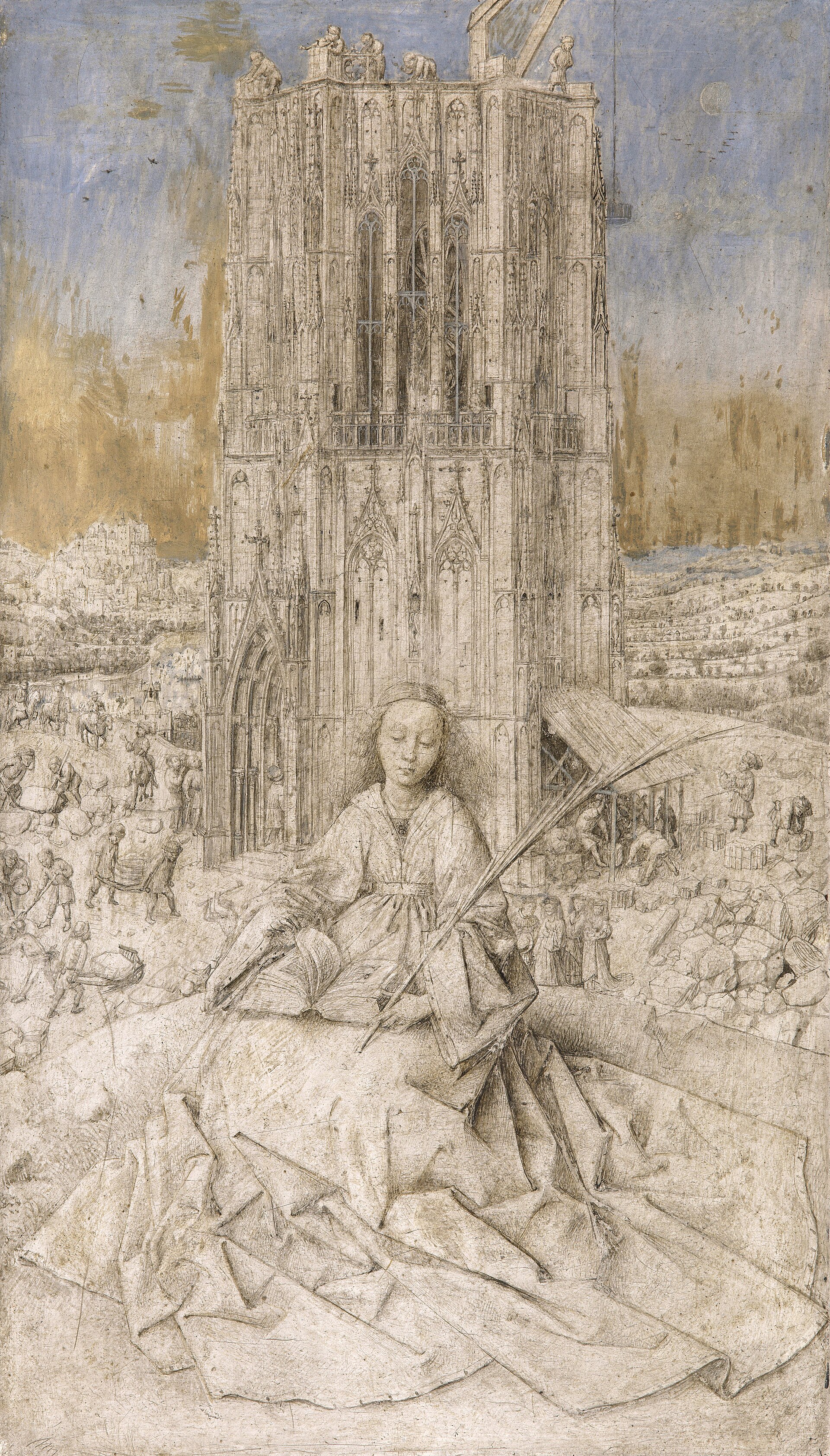
A panel painting is a joinery problem and a glue problem before it is an image.
8 min read
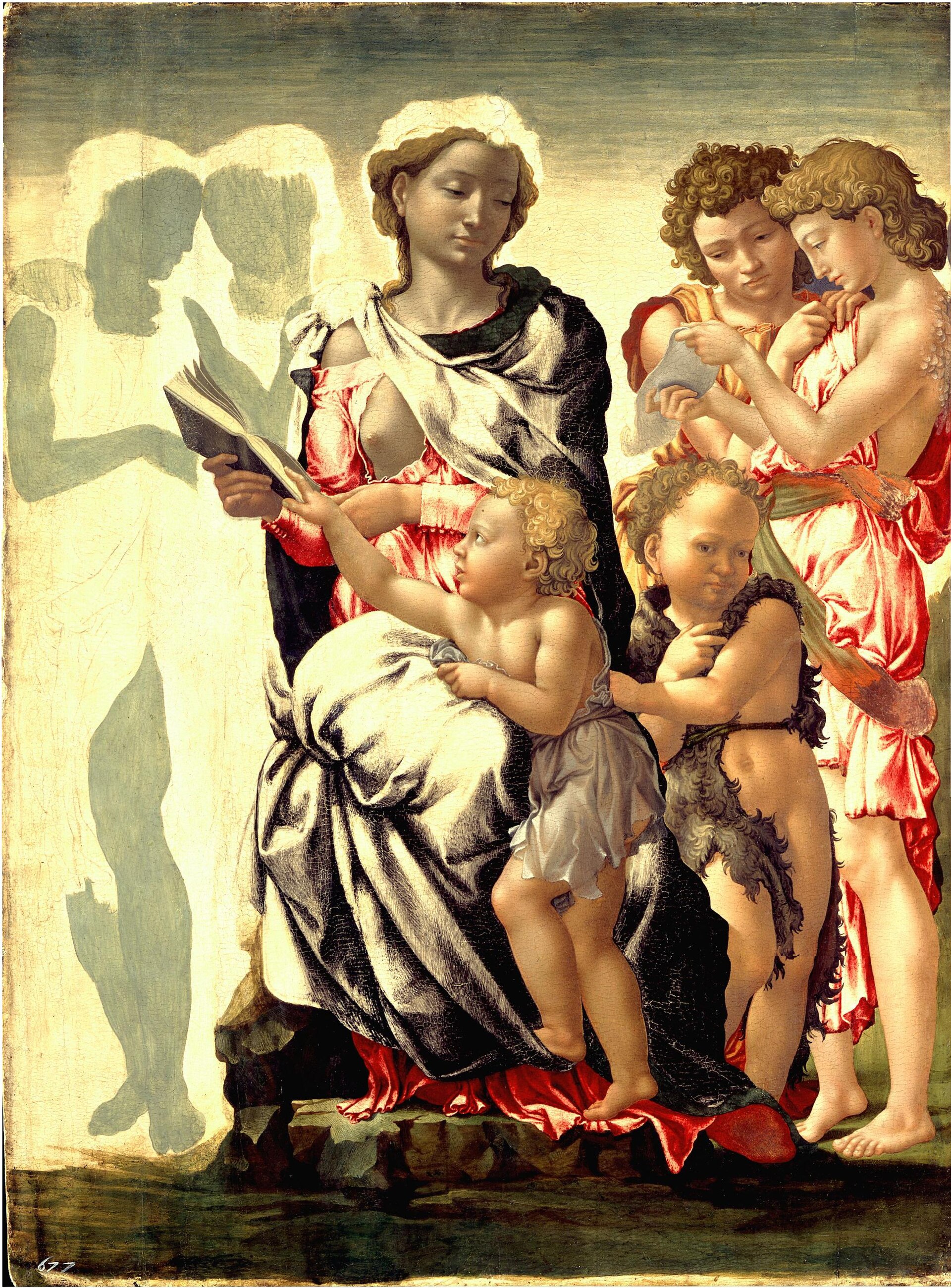
Oil did not replace tempera because anyone invented it. Each medium sets a hard limit on what a painter can do, and both limits...
8 min read
Buon fresco sets pigment into the wall in one chemical reaction on a seven-hour deadline.
8 min read
The export bar gets the headlines. The acquisition is a four-stage machine: curatorial case, provenance check, trustee vote...
8 min read
 Shown: The Mocking of Christ, Cenni di Pepo, called Cimabue
Highland Council bought a Bouchardon for GBP 5 and is selling it privately.
8 min read
Last verified 15 September 2026
One letter a week, on a Tuesday. What was researched, what a chain turned out to say, and what is closing in the exhibition calendar. No promotion, and nothing we cannot cite.
We send one email to confirm the address and keep nothing else. Every letter carries a one-click unsubscribe. How we handle your data.