The Measurement That Does Not Identify the Object
The Metropolitan's own record gives one of its helmets as 11 1/4 inches and 85 centimetres in the same line. Two Bernini busts of one sitter stand eight millimetres apart in one room. Dimensions are the field researchers match on, and they are the least stable field on the page.
Records in this piece: The Mocking of Christ, Helmet all'Antica, Bust of Cardinal Scipione Borghese, first version, Portrait of a Girl, Under the Wave off Kanagawa (Kanagawa oki nami ura), also known as The Great Wave, from the series Thirty-Six Views of Mount Fuji
On this page 8 sections
ContentsClose
In short
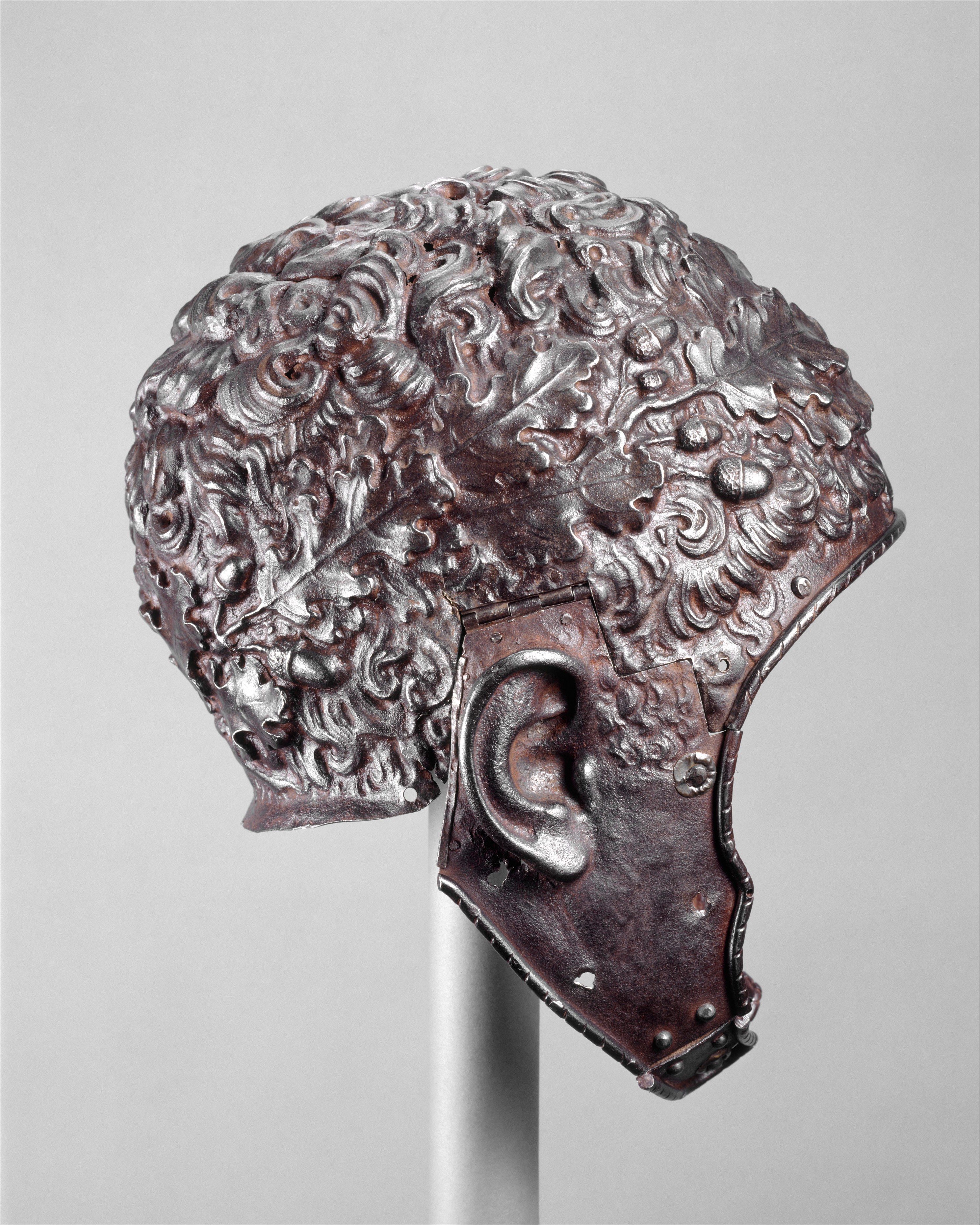
- The Metropolitan Museum's own collection record for the Helmet all'Antica attributed to Filippo Negroli, accession 04.3.202, gives the height as 11 1/4 in. (85 cm). Eleven and a quarter inches is 28.6 cm. The width and depth conversions in the same field are correct, which is what makes the error hard to see: the field looks internally consistent because most of it is.
- Two autograph Bernini busts of the same sitter, carved in the same year and standing in the same room of the Galleria Borghese, are given by the museum at 77.2 cm and 78 cm. Eight millimetres cannot be measured off a photograph, so the height is useless for telling them apart and something else has to do the work.
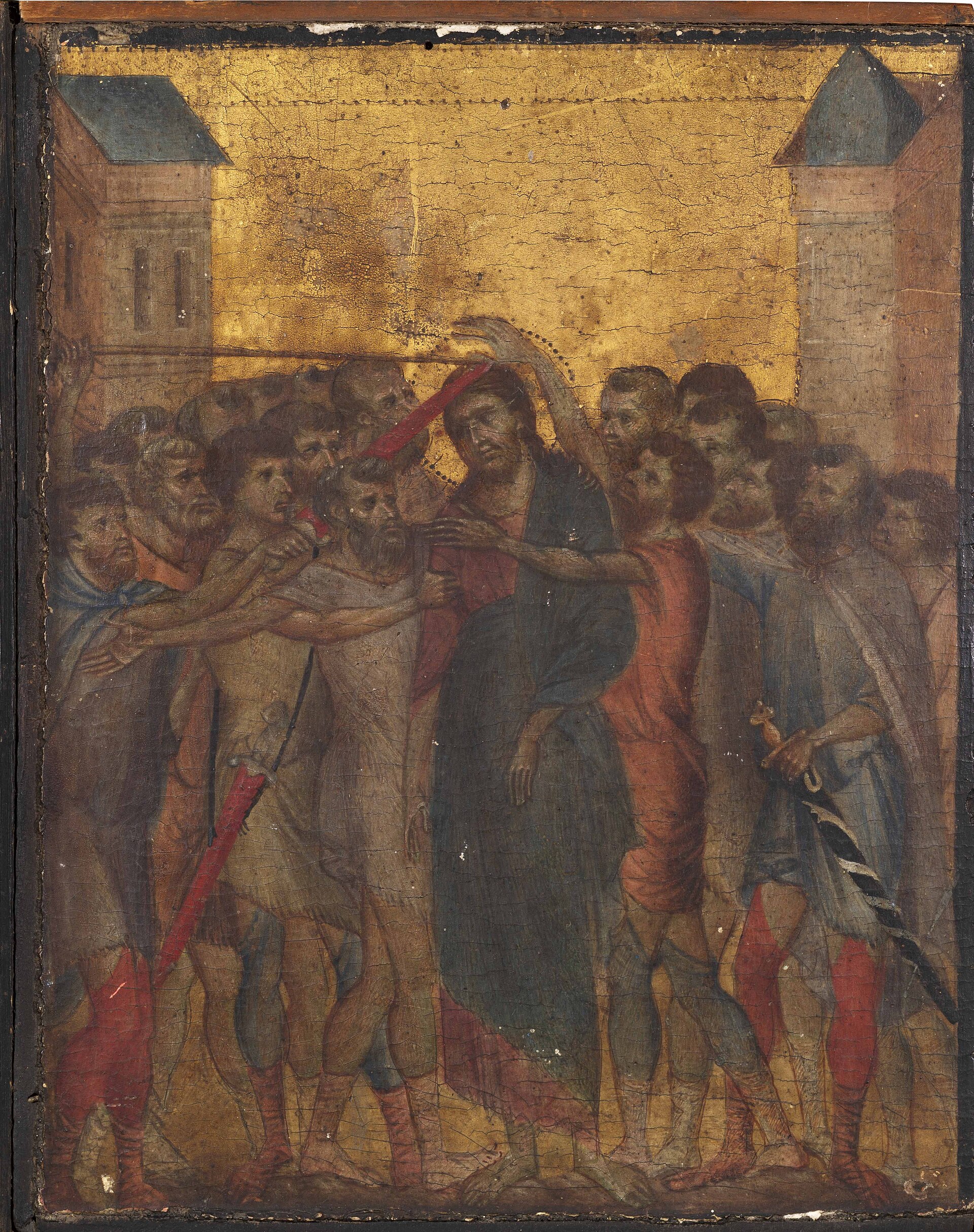
- One object can carry two different and equally correct measurements. The Louvre gives its Cimabue as 0.258 by 0.203 m, which is the panel; the painted surface inside the frame edge is 24.6 by 19.6 cm.
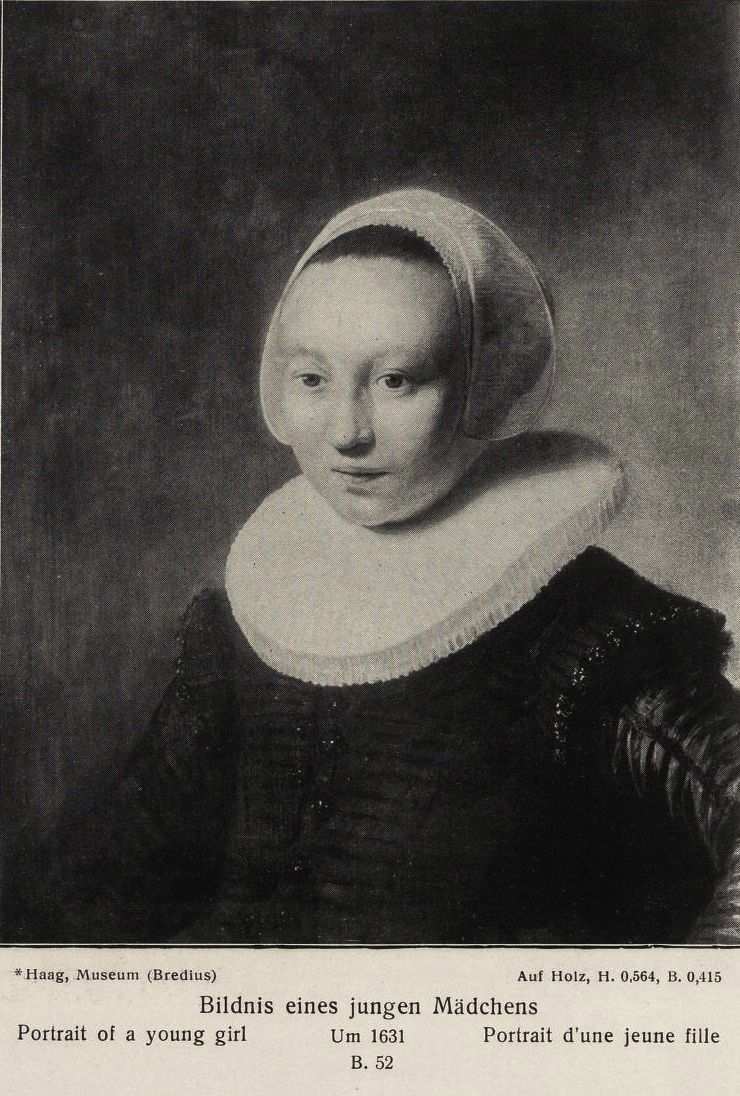
- A misprint propagates. The 1908 Klassiker der Kunst plate of a Rembrandt-circle panel prints its width as 0.415 m; the Mauritshuis catalogue of 1910 gives 0.445 m and Hofstede de Groot in 1914 gives a figure that also converts to 44.5 cm. The 1908 figure is three centimetres out and has reached modern databases.
- For a multiple the measurement belongs to the design, not to the object. The Art Institute of Chicago catalogues three separate impressions of Hokusai's Great Wave at 25.4 by 37.6 cm each, so matching a lot to a catalogue entry on size matches it to all three.
Dimensions are the field people match on, and they are not a stable identifier
When a researcher tries to establish that the object in front of them is the object described in an old catalogue entry, the first thing they compare is usually the measurements. Titles change, attributions move, owners are recorded under married names and misspellings, but a panel is a panel and 56 by 44 centimetres ought to be 56 by 44 centimetres in any language and any century. That assumption is doing an enormous amount of work in provenance research and it is weaker than it looks.
There are four separate ways a dimension goes wrong, and only one of them is carelessness. A measurement can be taken from a different part of the object; it can be converted incorrectly between systems; it can change because the object itself was altered; and it can be a property of a design rather than of a thing. All four appear in this archive, and in three of the four cases every figure in circulation is correct.
What follows are the specific cases, because the general claim is not interesting on its own. A field that is wrong at random is a nuisance. A field that is wrong in patterns is a research method, once you know the patterns.
A single museum field can contradict itself and stay in place
The Metropolitan Museum of Art's public record for the Helmet all'Antica attributed to Filippo Negroli, accession 04.3.202, gives its dimensions as height 11 1/4 in. (85 cm), width 8 1/4 in. (20.9 cm) and depth 9 in. (22.7 cm), with a weight of 2 lb. 2 oz. (964 g). We read that from the Museum's own collection API on 1 September 2026.
Eleven and a quarter inches is 28.6 cm. The metric height is out by a factor of about three, and the object is an embossed steel helmet worked as a head of curled hair, so 85 cm would make it nearly a metre tall. The width and the depth convert correctly, and so does the weight. A field that were wrong throughout would be caught in a morning. A field in which three values out of four are right reads as reliable.
This is not offered as a criticism of a great museum, which publishes more of its collection data more openly than almost anyone and is the reason the error is visible at all. It is offered as a warning about method. A researcher matching an old inventory entry against this record and finding a height of about 28 cm would conclude the two objects are different things.
Eight millimetres cannot separate two objects that are otherwise identical
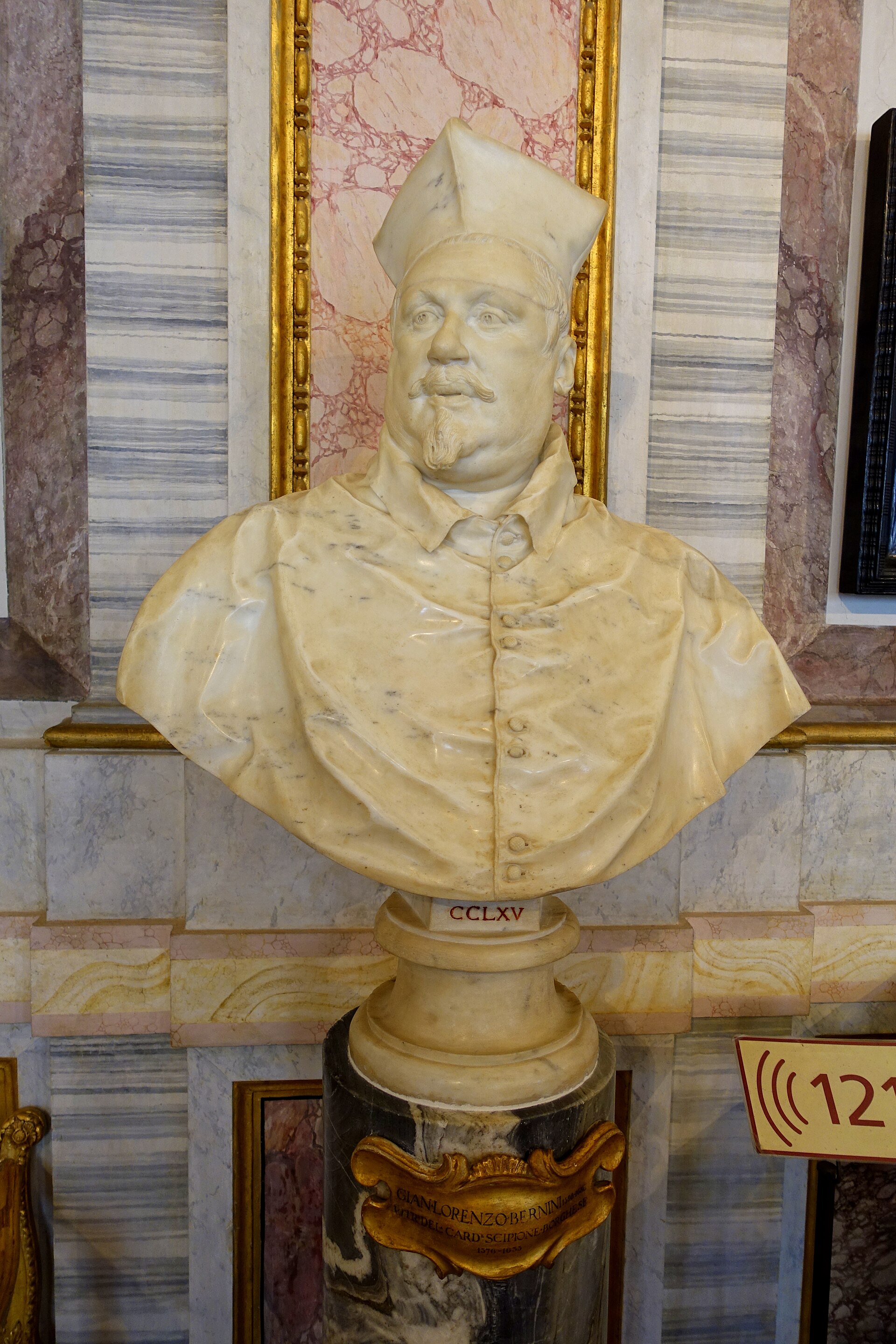
Bernini carved two marble busts of Cardinal Scipione Borghese in 1632, the second from a fresh block after a fault opened across the forehead of the first, and both are now in Room 14 of the Galleria Borghese. The museum's catalogue gives inventory CCLXV as 77.2 cm high and inventory CCLXVI as 78 cm.
Eight millimetres over a metre-scale object is inside the difference between one curator's measuring point and another's, and it is entirely unmeasurable in a photograph. Two autograph works by the greatest portrait sculptor of the century, of the same man, in the same year, in the same room, cannot be told apart by the field that is supposed to identify objects.
What does separate them is not a measurement at all. The socle of the first is painted CCLXV in red, a Borghese collection number, and that number is legible in a good photograph. The fault runs across the forehead on the first bust and diagonally across the mozzetta on the second, because the replacement block was flawed as well, in a place that does not cross a face. And the museum's own exhibition lists differ sharply: four shows against the first, all in Rome, against seven for the second, including Paris in 1935 and the J. Paul Getty Museum in 2008. A number, a crack and a travel record beat the ruler.
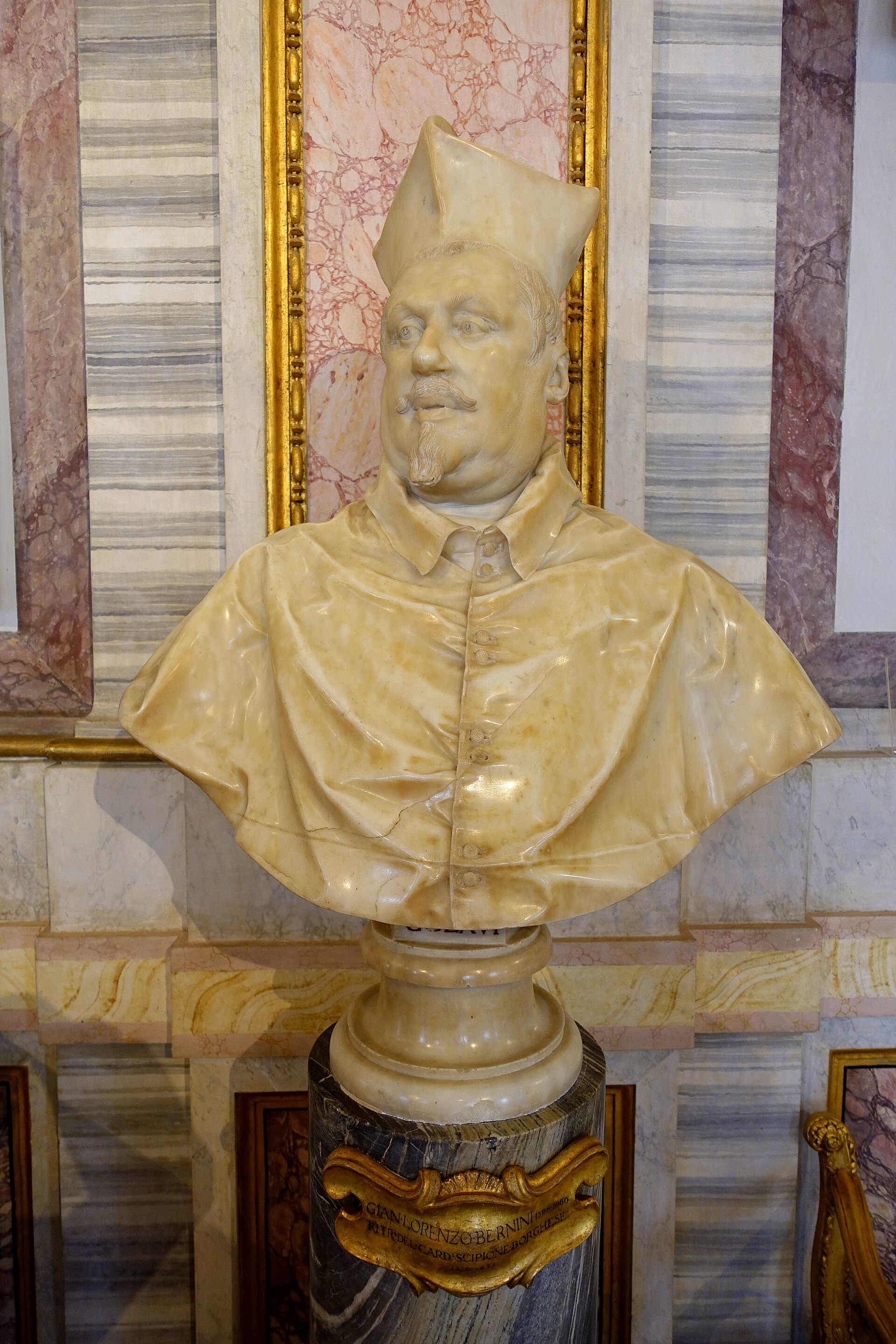
The second bust is 78 cm, and the difference is not what tells you which is which
Inventory CCLXVI is the replacement, carved from a new block in the same year, and the Galleria Borghese gives it as 78 cm. Set the two photographs side by side and the height difference is invisible, but the second bust carries its own flaw: a fissure that begins in the lower right of the mozzetta, crosses the centre and reaches the upper left.
That is the general lesson of the pair. Where two versions exist, the useful identifier is almost never a dimension and almost always a defect, a mark or a number, because those are unique to one block of stone and a measurement is a property both objects share. The record for these busts also notes a caution worth repeating: the description attached to the photograph of the second bust on Wikimedia Commons gives the wrong inventory number in its text while the filename gives the right one. The identification in our record was made from the object.
A misprinted width from 1908 is still in circulation
The panel found in a Maine attic and sold at Thomaston Place in August 2024 has been published at three different widths across four sources, and one of those widths is a printer's error that has outlived every person involved. The plate of the picture in Rosenberg and Valentiner's Klassiker der Kunst volume of 1908 prints the caption Auf Holz, H. 0,564, B. 0,415. We read that caption on the plate itself.
The Mauritshuis abridged catalogue of 1910 gives 0.564 by 0.445 m. Hofstede de Groot's catalogue raisonne of 1914 gives 22 1/2 by 17 1/2 inches, which converts to 57.2 by 44.5 cm, and his height therefore disagrees with everyone else's by eight millimetres while his width agrees with the museum. The 2024 lot record gives about 56.4 by 44.5 cm.
| Source | Height | Width |
|---|---|---|
| Klassiker der Kunst plate, 1908 | 56.4 cm | 41.5 cm |
| Mauritshuis abridged catalogue, 1910 | 56.4 cm | 44.5 cm |
| Hofstede de Groot, 1914 (22 1/2 by 17 1/2 in.) | 57.2 cm | 44.5 cm |
| Thomaston Place lot record, 2024 | 56.4 cm | 44.5 cm |
Three of the four agree on the width and the odd one out is the earliest and the most reproduced, because a printed plate in a standard reference is exactly the thing later compilers copy. A three-centimetre discrepancy is large enough to make a researcher reject a correct identification, and small enough that nobody stops to check it.
For a multiple, the measurement describes the design and not the object
The Art Institute of Chicago holds three separate impressions of Hokusai's Under the Wave off Kanagawa, accessions 1925.3245, 1928.1086 and 1952.343, and gives all three as 25.4 by 37.6 cm. The measurement is a fact about the block and the standard oban sheet, and it is true of every untrimmed impression of the design anywhere in the world.
So when a lot record for a print, an etching, a photograph or a printed book gives dimensions, those dimensions have almost no power to identify the individual object. What varies between impressions is precisely what a catalogue rounds away: the trimming of the margins, the platemark, the paper, the state of the block. A sheet cut down by a nineteenth-century collector will differ from its siblings by centimetres, and that difference is far better evidence than the nominal size ever was.
The same logic applies wherever an object exists in a family. Bronzes cast from one model, glass blown into one mould, silver raised over one form: the nominal dimension identifies the family. It is the departure from the nominal dimension that identifies the thing.
How to use a dimension without being misled by it
Treat a single dimension as a filter and never as a proof. It is very good at excluding: an object half the size of the one in the catalogue entry is a different object, and that is worth knowing quickly. It is weak at confirming, because agreement to within a centimetre is common among things that have nothing to do with each other.
Then ask four questions of every figure before trusting it. What part of the object was measured, panel or painted surface, sheet or image, with the mount or without. Which unit was original and which is a conversion, because a conversion error is invisible unless you do the arithmetic. Has the object been altered since, by lining, cradling, trimming or reframing. And is this a unique object or a member of a family, because for a family the figure is a specification rather than an identifier.
Where sources disagree, we record every figure and say who gives which, rather than choosing one and presenting it as the fact. That is more cluttered on the page and it is the only honest thing to do, because a reader checking us against a 1914 catalogue needs to know that we saw the 1914 catalogue and why we did not follow it.
Why this archive is free to read
We do this for everyone who loves art. The people who have studied it for years, and the people who just stopped to look. Iconotheca exists so that what we learn belongs to all of them.
Nobody pays us for this. No ads, no sponsors, no commercial interest. These works belong to all of us, and we would rather share them with as many people as we can than keep them to ourselves.
If it gave you something today, tell us to keep going. Follow us, leave a like, or write a positive comment. We read every one, and they are what keeps us going.
Questions
Most often because they are measuring different things. A painting can be measured as the panel or as the painted surface, a print as the sheet or as the image, and a sculpture with or without its socle. Conversions between inches and centimetres introduce a second class of error, and alterations such as lining, cradling or trimming change the object itself.
You can use dimensions to exclude candidates quickly, but not to confirm one. Agreement within a centimetre is common between unrelated objects, and this archive holds two Bernini busts of the same sitter that differ by eight millimetres.
The nominal dimensions of a print identify the design rather than the sheet. The Art Institute of Chicago gives three separate impressions of Hokusai's Great Wave as 25.4 by 37.6 cm each. What identifies an individual impression is its trimming, its paper, its collector's marks and its accession number.
The panel is the whole piece of wood, including any unpainted margin under a frame rebate. The painted surface is only the area carrying paint. The Louvre gives the Cimabue panel as 0.258 by 0.203 m while the painted surface is 24.6 by 19.6 cm, and both figures are correct.
By printing all of them with attribution, rather than choosing one. A reader who has the 1914 catalogue in front of them needs to know that the compiler saw it, what it says and why the record does not follow it.
Sources
- 1Metropolitan Museum of Art, collection API record for Helmet all'Antica, attributed to Filippo Negroli, object 21974, accession 04.3.202, Rogers Fund, 1904. Read 1 September 2026 for the dimensions field: H. 11 1/4 in. (85 cm); W. 8 1/4 in. (20.9 cm); D. 9 in. (22.7 cm); Wt. 2 lb. 2 oz. (964 g). collectionapi.metmuseum.org/public/...
- 2Metropolitan Museum of Art, public object page for the same helmet, accession 04.3.202, Arms and Armor, Gallery 374. metmuseum.org/art/...
- 3Galleria Borghese, online collection catalogue, entry for the Bust of Scipione Borghese, inventory CCLXV. Read 1 September 2026 for the height of 77.2 cm, the Carrara marble and the four listed exhibitions. collezionegalleriaborghese.it/en/...
- 4Galleria Borghese, online collection catalogue, entry for the Bust of Scipione Borghese, inventory CCLXVI. Read 1 September 2026 for the height of 78 cm and the exhibition list. collezionegalleriaborghese.it/en/...
- 5Musee du Louvre, collections online, La Derision du Christ, Cimabue, inventory RFML.PE.2023.33.1, Departement des Peintures. Read 1 September 2026 for Hauteur 0,258 m; Largeur 0,203 m and the medium, detrempe sur fond d'or sur bois (peuplier). collections.louvre.fr/en/...
- 6Adolf Rosenberg and Wilhelm Reinhold Valentiner (eds), Rembrandt: des Meisters Gemaelde in 643 Abbildungen, Klassiker der Kunst, Stuttgart and Leipzig, 1908. The plate caption reproduced in this article was read from the digitised copy: Haag, Museum (Bredius), Auf Holz, H. 0,564, B. 0,415, Bildnis eines jungen Maedchens, Um 1631, B. 52. archive.org/details/...
- 7Royal Picture Gallery (Mauritshuis), The Hague, abridged catalogue of the pictures and sculpture, 1910, page 71, giving the panel as 0.564 by 0.445 m. archive.org/details/...
- 8Cornelis Hofstede de Groot, Beschreibendes und kritisches Verzeichnis der Werke der hervorragendsten hollaendischen Maler des XVII. Jahrhunderts, volume 6, Rembrandt, 1914, page 390, number 853, giving 22 1/2 by 17 1/2 inches. commons.wikimedia.org/w/...
- 9Art Institute of Chicago, public collection API. Queried 1 September 2026 for Under the Wave off Kanagawa, returning three impressions in the Clarence Buckingham Collection, accessions 1925.3245, 1928.1086 and 1952.343, each given as 25.4 by 37.6 cm. api.artic.edu/api/...
More in Research and Method
The partThe Object on Display Is the Last Restorer's Reading of It
The British Museum gives the Sutton Hoo helmet two production dates: late 6th to early 7th century for the components, and 1971 for the...
The Fields This Archive Cannot Count, and What That Costs
2,592 technical facts wear 1,598 different labels and 1,754 ticket prices wear 1,355.
The First Number in a Hoard Is a Counting Rule
The Staffordshire Hoard is 4,600 pieces, or just under 4,000, or around 700, or more than 600, depending on which official page you read.