Fifteen of the 24 Cleveland Objects Here Came Through a Dealer
Fifteen of the 24 Cleveland Museum of Art objects in the archive reached it from a dealer between 1931 and 2019. Rosenberg and Stiebel did it three times.
Records in this piece: Portable Altar of Countess Gertrude, The Wade Cup with Animated Script, Twelve-sided Ewer with Sphinxes and Human-Headed Inscriptions, Head for a Feline Incense Burner, Cabinet, Plate from the Swan Service, Tomb Cover, Luxury Ewer Extending Good Fortune to the Owner, Vase
On this page 4 sections
ContentsClose
In short
- Fifteen of the 24 Cleveland Museum of Art objects in this archive reached the museum from a named dealer or gallery, in accession years from 1931 to 2019. Six came from private owners or estates, one from another museum, one from an auction house and one has no seller recorded.
- Rosenberg and Stiebel of New York appear three times: seller of the Boulle cabinet in 1949, donor of a Swan Service plate in 1951 as a thirty-fifth anniversary gift, and donor of a bath pail in 1969.
- Five Islamic-world objects came from four firms in the twelve years from 1944 to 1956. Heeramaneck Galleries supplied two of them, Kevorkian, Loewi and Stora one each.
- Eight of the fifteen dealer acquisitions fall in the 25 years from 1931 to 1956. The other seven are spread over the 54 years from 1965 to 2019.
Fifteen of 24 Cleveland objects reached the museum through a dealer between 1931 and 2019
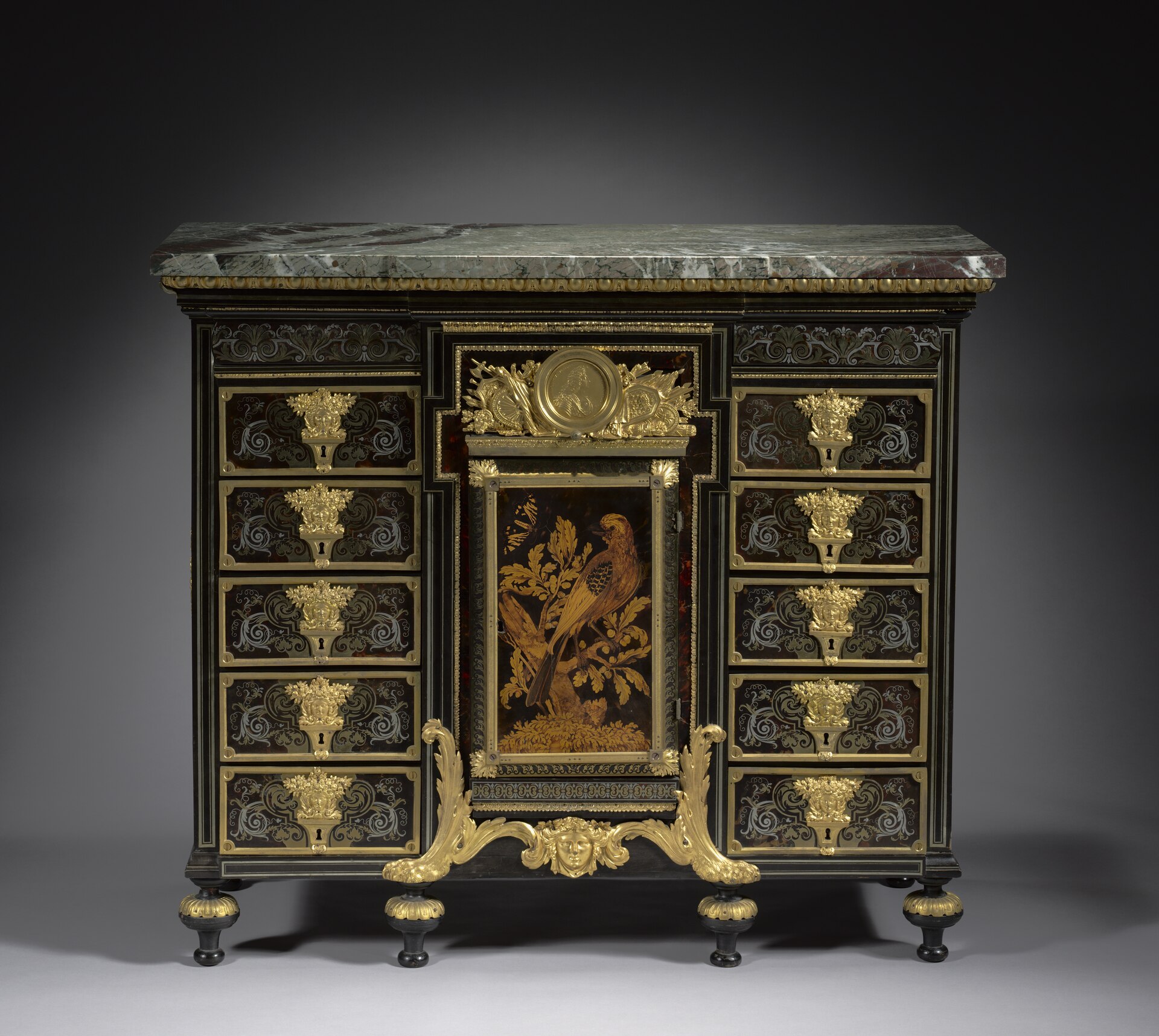
Fifteen of the 24 Cleveland Museum of Art objects in this archive reached the museum from a named dealer or gallery, as seller or as donor, between 1931 and 2019. The table gives each object, the firm Cleveland's own provenance names and the credit line as the museum prints it, with ampersands written as and.
| Accession year | Object | Dealer or gallery | Credit line |
|---|---|---|---|
| 1931 | Portable altar of Countess Gertrude | Goldschmidt Galleries, New York, for a consortium of Frankfurt dealers | Gift of the John Huntington Art and Polytechnic Trust |
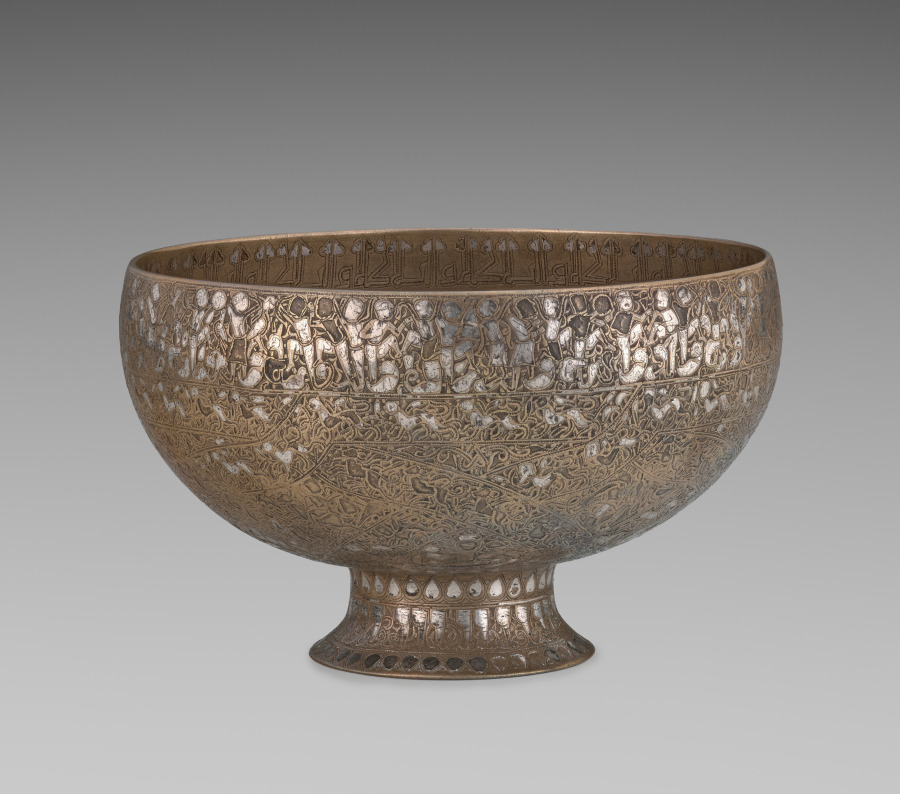
| 1944 | The Wade Cup | Heeramaneck Galleries, New York | Purchase from the J. H. Wade Fund |
| 1945 | Twelve-sided ewer with sphinxes | Hagop Kevorkian, New York | Purchase from the J. H. Wade Fund |
| 1948 | Head of a feline incense burner | Heeramaneck Galleries, New York | John L. Severance Fund |
| 1949 | Boulle cabinet | Rosenberg and Stiebel, New York | John L. Severance Fund |
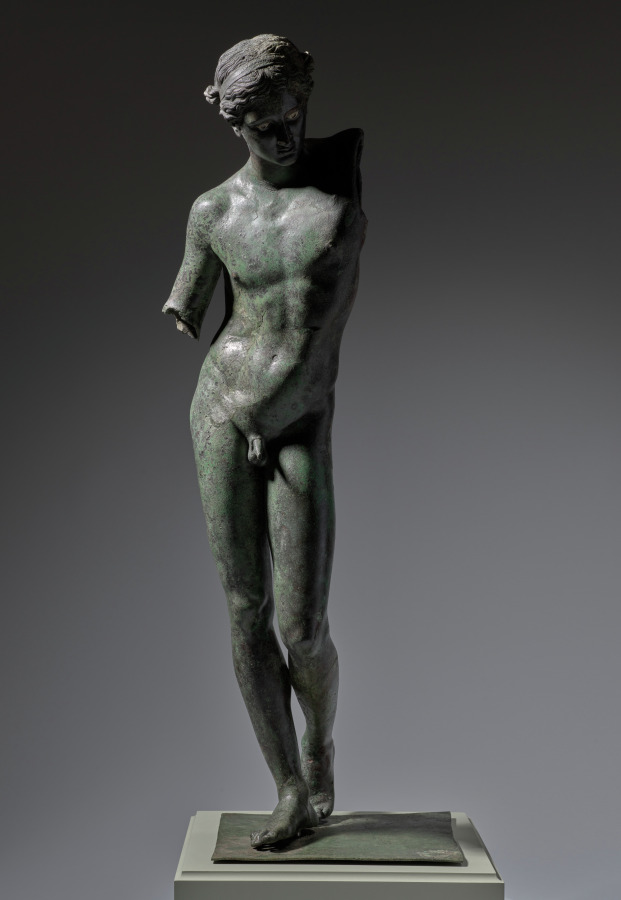
| 1951 | Plate from the Swan Service | Rosenberg and Stiebel, New York | Thirty-fifth anniversary gift from Rosenberg and Stiebel, Inc. |
| 1954 | Buyid tomb cover | Adolph Loewi, Los Angeles | Purchase from the J. H. Wade Fund |
| 1956 | Ahmad al-Dhaki ewer | Raphael Stora, New York | John L. Severance Fund |
| 1965 | Cameo head of Diana | J. J. Klejman, New York | Gift of Mr. and Mrs. J. J. Klejman |
| 1969 | Bath pail | Rosenberg and Stiebel, New York | Gift of Rosenberg and Stiebel, Inc. |
| 1979 | Galle vase | Macklowe Gallery, New York | Andrew R. and Martha Holden Jennings Fund |
| 1981 | Brocard mosque lamp | Spink and Son, London | John L. Severance Fund |
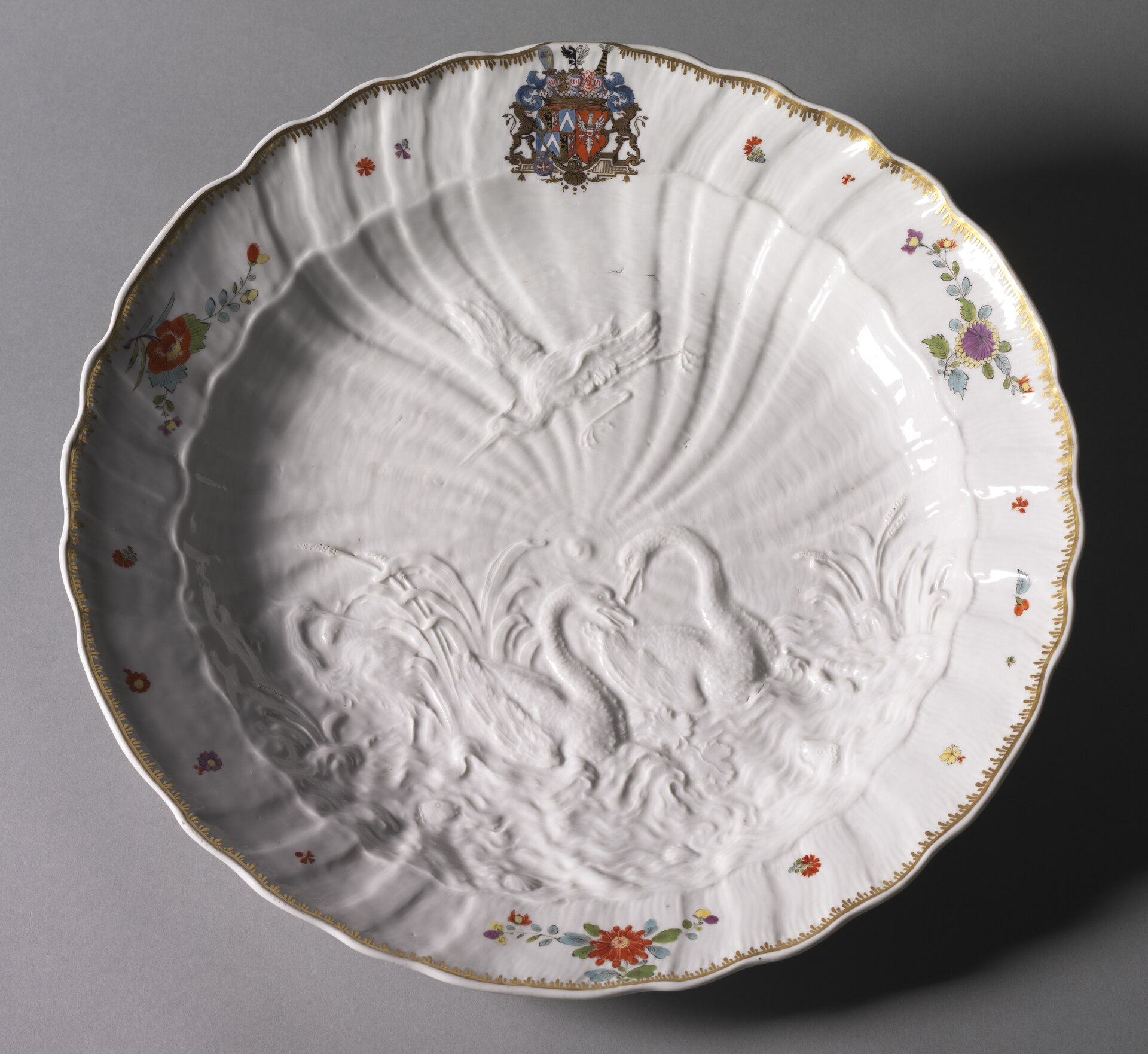
| 2004 | The Cleveland Apollo | Phoenix Ancient Art, Geneva | Severance and Greta Millikin Purchase Fund |
| 2014 | Royal round tent of Muhammad Shah Qajar | Francesca Galloway, London | Purchase from the J. H. Wade Fund |
| 2019 | Beato, Secundra Bagh after the slaughter | Prahlad Bubbar, London | Severance and Greta Millikin Purchase Fund |
Rosenberg and Stiebel sold Cleveland one object and gave it two more
The New York dealers Rosenberg and Stiebel appear in three Cleveland records here, as the seller of the Boulle cabinet in 1949, the donor of a Swan Service plate in 1951 and the donor of a bath pail in 1969. The cabinet was bought with the Severance Fund and Cleveland's provenance runs from Baron Alphonse de Rothschild in Vienna to the firm. The 1951 credit line calls the plate a thirty-fifth anniversary gift from the firm and the 1969 line a plain gift from it.
Cleveland's provenance for the plate names Count Szembek of Warsaw, a direct descendant of the Bruhl family, before the firm, and for the bath pail a de Rothschild collection in Paris. So a dealer that sold the museum a major piece later gave it two more, each with a Rothschild or aristocratic chain behind it. The records do not say what the firm gained by the gifts and this desk will not guess.
Five Islamic-world objects came from four firms in twelve years
Between 1944 and 1956 Cleveland bought five objects from the Islamic world in this archive from four New York and Los Angeles firms, and two more arrived later. Heeramaneck Galleries sold the Wade Cup in 1944 and a feline incense-burner head in 1948. Hagop Kevorkian sold the twelve-sided ewer with sphinxes in 1945, Adolph Loewi the Buyid tomb cover in 1954 and Raphael Stora the Ahmad al-Dhaki ewer in 1956.
The two later arrivals are the bath pail from Rosenberg and Stiebel in 1969 and a Brocard mosque lamp bought in 1981 from Spink and Son of London. That is seven objects from six firms. For four of the first five, Cleveland's provenance list names the dealer and nothing before it, and the tomb cover adds only a reported findspot near Rayy in Iran.
The other nine came from owners, an estate, a museum or an auction house
Nine of the 24 Cleveland objects reached the museum without a dealer as the last named link: six from private owners or estates, one from another museum, one from an auction house and one with no seller recorded. The Krishna lifting Mount Govardhan came in 1973 from the Stoclet estate in Brussels. The Voels-Colonna armour was bought in 1964 from the Metropolitan Museum, which had held it since William H. Riggs gave it in 1913.
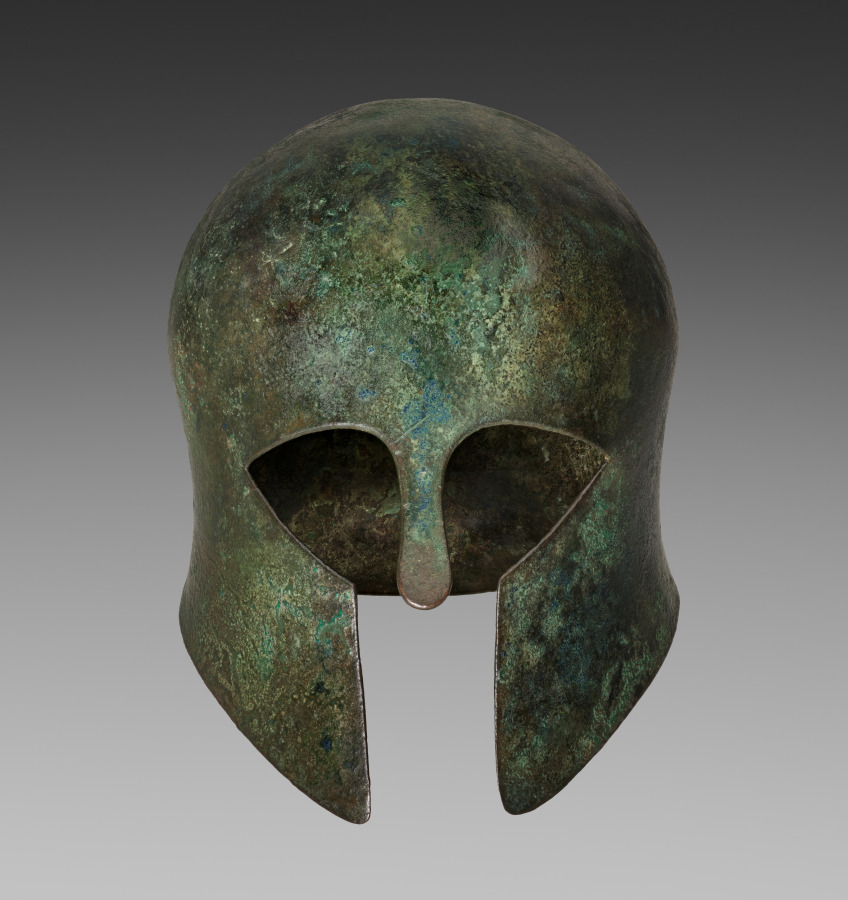
The Corinthian helmet shows why the count needs care. Cleveland's provenance names the London dealer Rupert Wace twice earlier in its chain, but the last owner before the museum in 2024 is the Barrington heirs, so it falls among the nine. The 1919 millefiori bowl was sold to the museum by Anderson Galleries in New York, an auction house, with Azeez Khayat the owner before it. The Atget photograph of 1985 has no provenance in Cleveland's data at all.
Questions
Fifteen of 24. In each, a dealer or gallery is the last named link before the museum, as seller or as donor, according to Cleveland's open-access provenance or credit line and the archive's record.
Rosenberg and Stiebel of New York, three times: a sale in 1949 and gifts in 1951 and 1969. Heeramaneck Galleries appears twice, in 1944 and 1948.
Not always. The provenance says the dealer sold or gave it. A dealer can have held an object on consignment, and the record does not usually say which.
Sources
- 1Cleveland Museum of Art Open Access API, read 23 November 2026 for all 24 Cleveland objects in this archive: credit lines, accession dates and provenance lists. Documentation. openaccess-api.clevelandart.org
- 2Cleveland Museum of Art Open Access API, accession 1949.539, Boulle cabinet: John L. Severance Fund, accessioned 23 December 1949; provenance ends with Baron Alphonse de Rothschild, Vienna, then Rosenberg and Stiebel, New York. openaccess-api.clevelandart.org/api/...
- 3Cleveland Museum of Art Open Access API, accession 1951.103, Swan Service plate: "Thirty-fifth anniversary gift from Rosenberg & Stiebel, Inc.", accessioned 21 March 1951. openaccess-api.clevelandart.org/api/...
- 4Cleveland Museum of Art Open Access API, accession 1969.291, bath pail: "Gift of Rosenberg & Stiebel, Inc.", accessioned 13 December 1969. openaccess-api.clevelandart.org/api/...
- 5Cleveland Museum of Art Open Access API, accession 1944.485, the Wade Cup: Purchase from the J. H. Wade Fund; provenance names Heeramaneck Galleries, New York, as seller. openaccess-api.clevelandart.org/api/...
More in Collectors and Collections
The partThree Objects the Freer Name Covers, and the One Freer Owned
Three objects in this archive carry the Freer name in three ways. One he bought and bequeathed, two were bought with his endowment 22 and 36 years...
The credit line names the collector, and the accession number tells you what happened
Morgan died in March 1913, and the Metropolitan credits him with gifts made in 1917. The credit line names the collector.
The Longest Ownership Links Here Belong to Owners That Were Not People
The 28 longest institutional ownership links in this archive run 7,434 years between them. Three end in a completed sale.