Three Objects the Freer Name Covers, and the One Freer Owned
Three objects in this archive carry the Freer name in three ways. One he bought and bequeathed, two were bought with his endowment 22 and 36 years after he died. A credit line is not a provenance.
Records in this piece: Canteen, D'Arenberg Basin, La Princesse du pays de la porcelaine, Twelve-sided Ewer with Sphinxes and Human-Headed Inscriptions
On this page 5 sections
ContentsClose
In short
- A Freer Gallery credit line can mean the collector owned the object or that a fund he left behind bought it. In this archive only one of three Freer objects was ever Freer's.
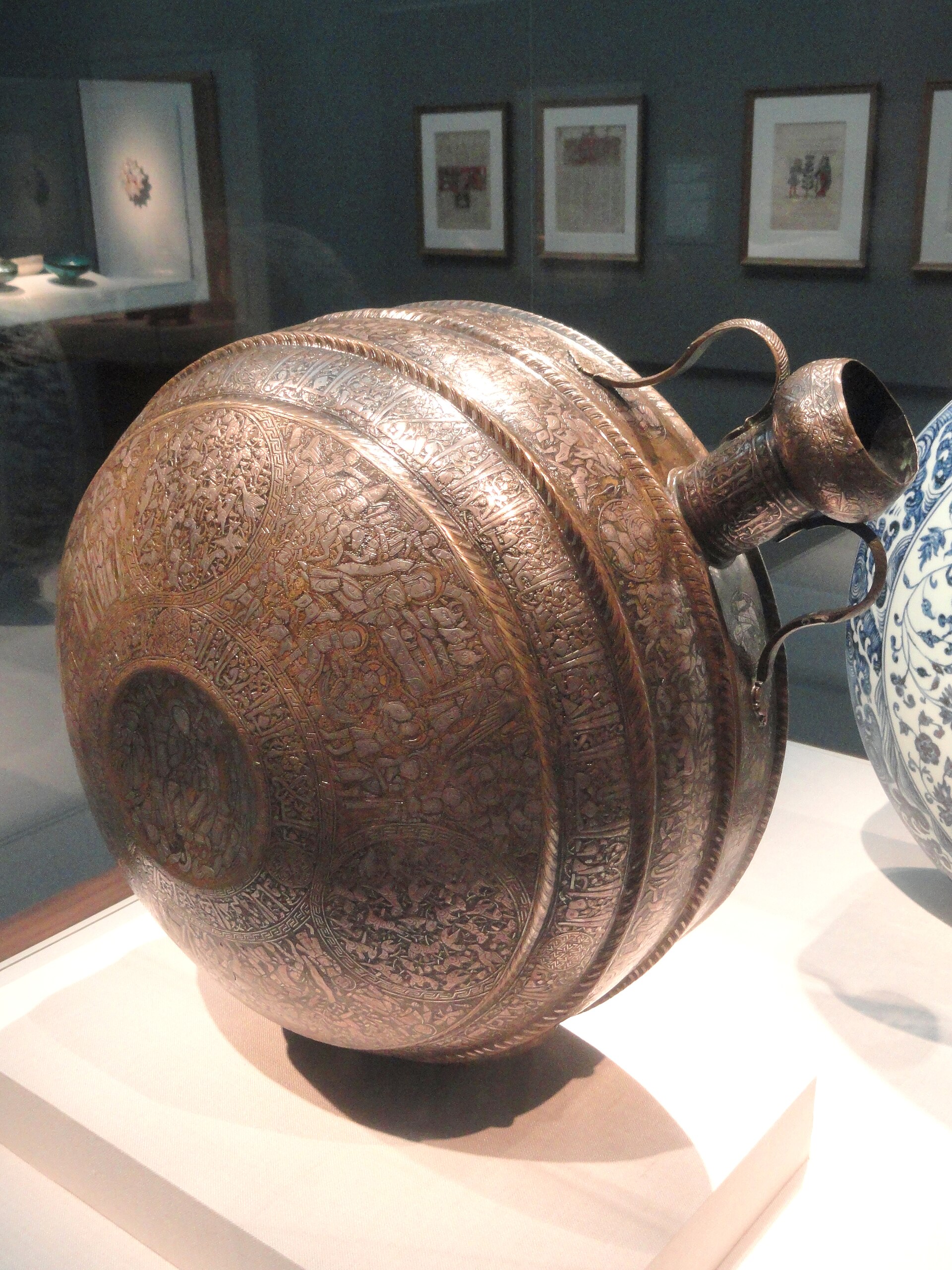
- The Freer Canteen was bought in 1941 and the d'Arenberg Basin in 1955, both with the Charles Lang Freer Endowment, 22 and 36 years after his death in 1919.
- The one object Freer did own, Whistler's La Princesse du pays de la porcelaine, cannot be lent, because the terms of his bequest keep the collection in the Gallery.
- The dealer Hagop Kevorkian sold the Freer its canteen in 1941 and sold the Cleveland Museum of Art its twelve-sided ewer in 1945, so the same hand sits behind two collections that look unrelated.
The Freer name appears on three objects in this archive and means three things
A museum credit line naming a collector tells the reader which fund or gift brought an object in, and it does not always tell them who owned it. Three records in this archive show the difference at the Freer Gallery of Art in Washington.
| Object | Reached the Gallery | Route | Years after Freer's death in 1919 |
|---|---|---|---|
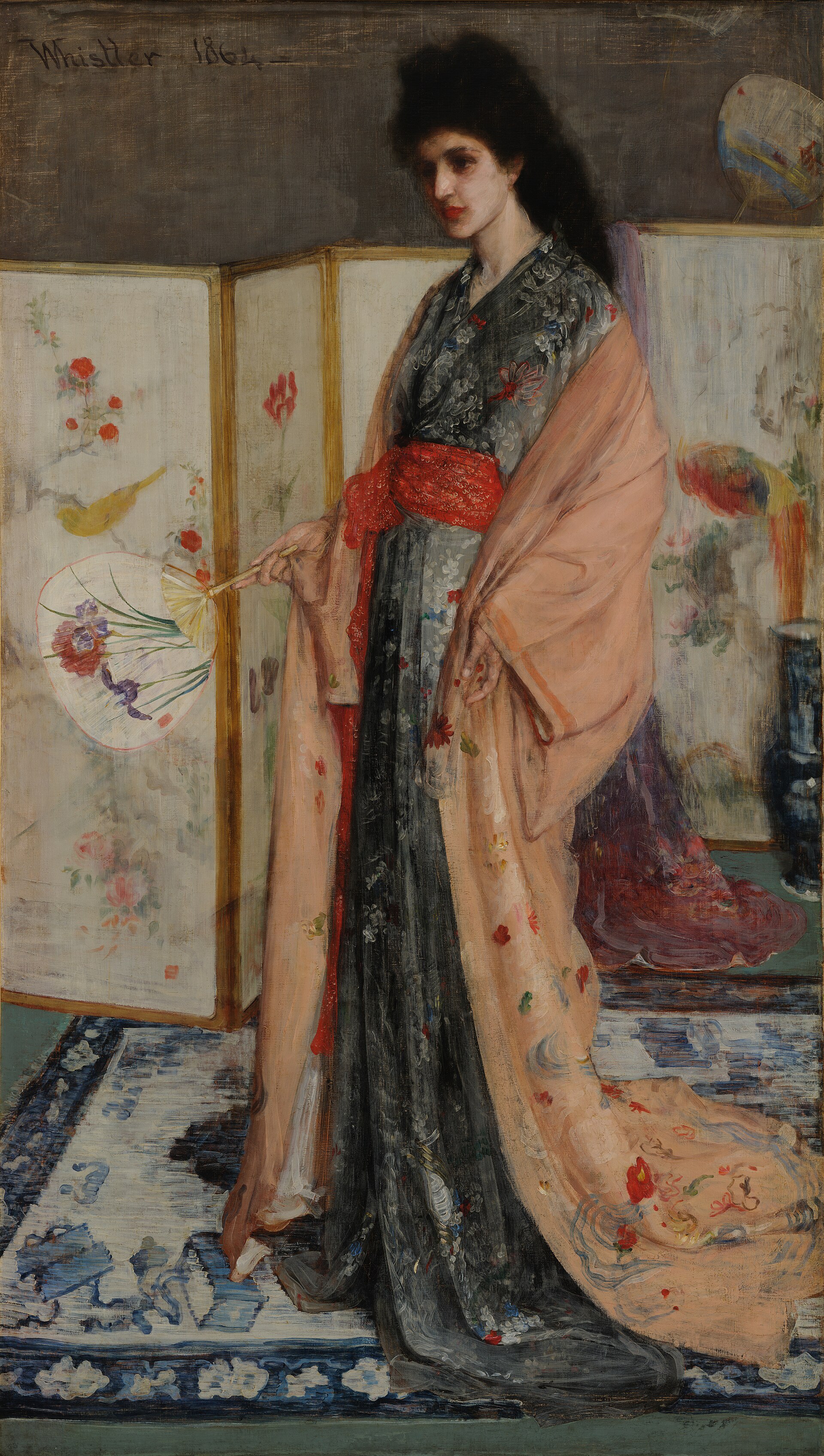
| La Princesse du pays de la porcelaine (Whistler) | 1920, received | Bought by Freer in 1903 and bequeathed | 1 |
| Canteen, Ayyubid, F1941.10 | 1941 | Bought from Hagop Kevorkian with the Freer Endowment | 22 |
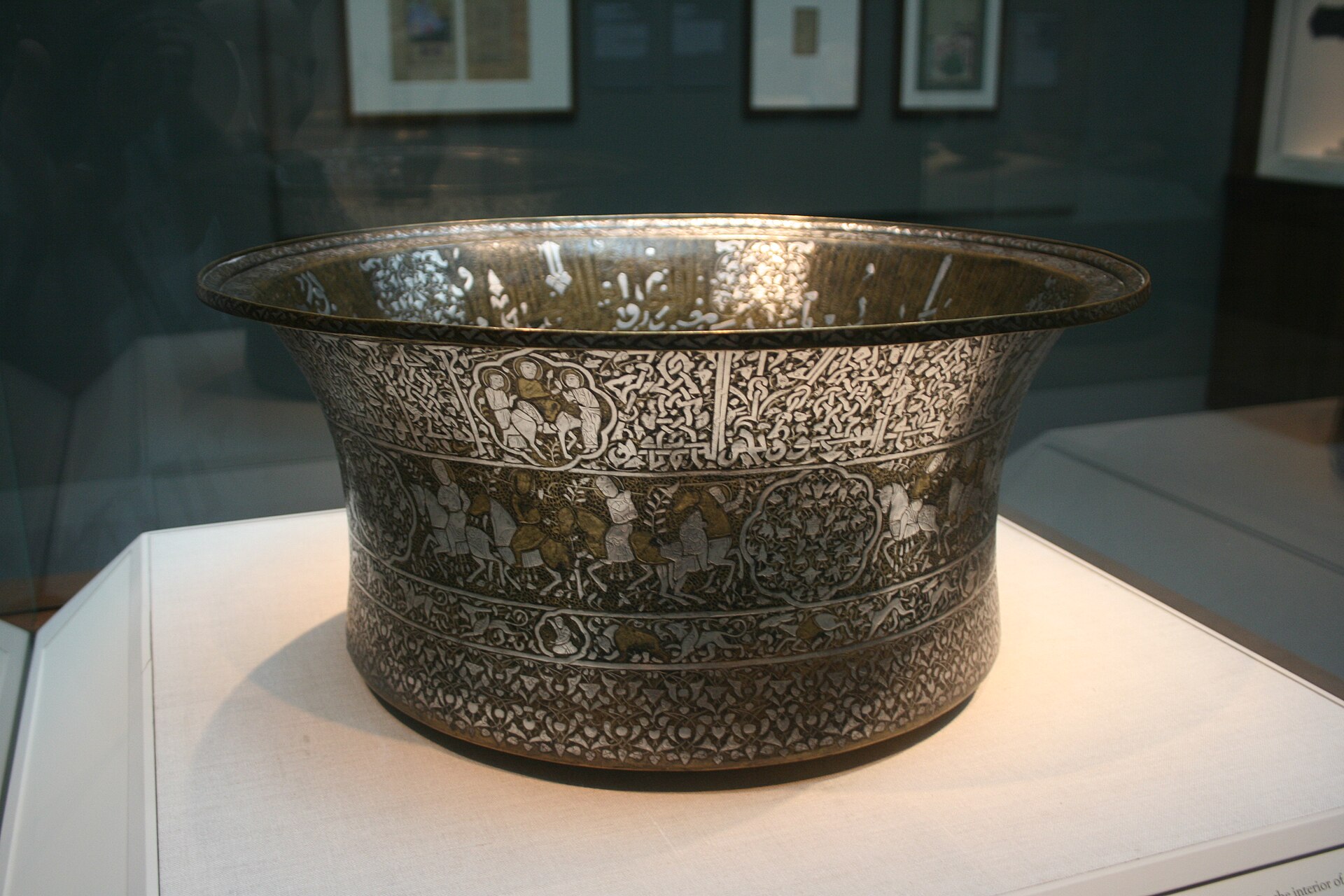
| D'Arenberg Basin, F1955.10 | 1955 | Bought with the Freer Endowment | 36 |
Whistler's Princess is the object Freer chose and owned
Freer bought Whistler's La Princesse du pays de la porcelaine on 20 August 1903 for 3,750 pounds sterling, a few weeks after the painter's death on 17 July 1903. The record gives the contemporary report as 18,240 US dollars.
He signed the deed of gift to the Smithsonian in 1906 and died in 1919, and the bequest was received in 1920. The Gallery opened in 1923 and the painting hangs above the fireplace of the Peacock Room. The record states that the terms of the bequest prohibit the painting from being lent outside the Gallery.
The canteen came from a dealer 22 years after Freer died
The Freer Canteen was bought from the New York dealer Hagop Kevorkian in 1941, and the Smithsonian's record gives the credit line as a purchase from the Charles Lang Freer Endowment. Its earlier chain is thin: the Gallery's provenance names Prince Filippo Andrea Doria of Genoa to 1845, then the London collector George Eumorfopoulos, who died in 1939, then Kevorkian. The record states plainly that no owner is documented between Doria and Eumorfopoulos and that no purchase price has been found.
Nothing in the sources consulted suggests Freer ever saw it. He had died twenty-two years earlier.
The d'Arenberg Basin was bought 36 years after the bequest and tells a thinner story still
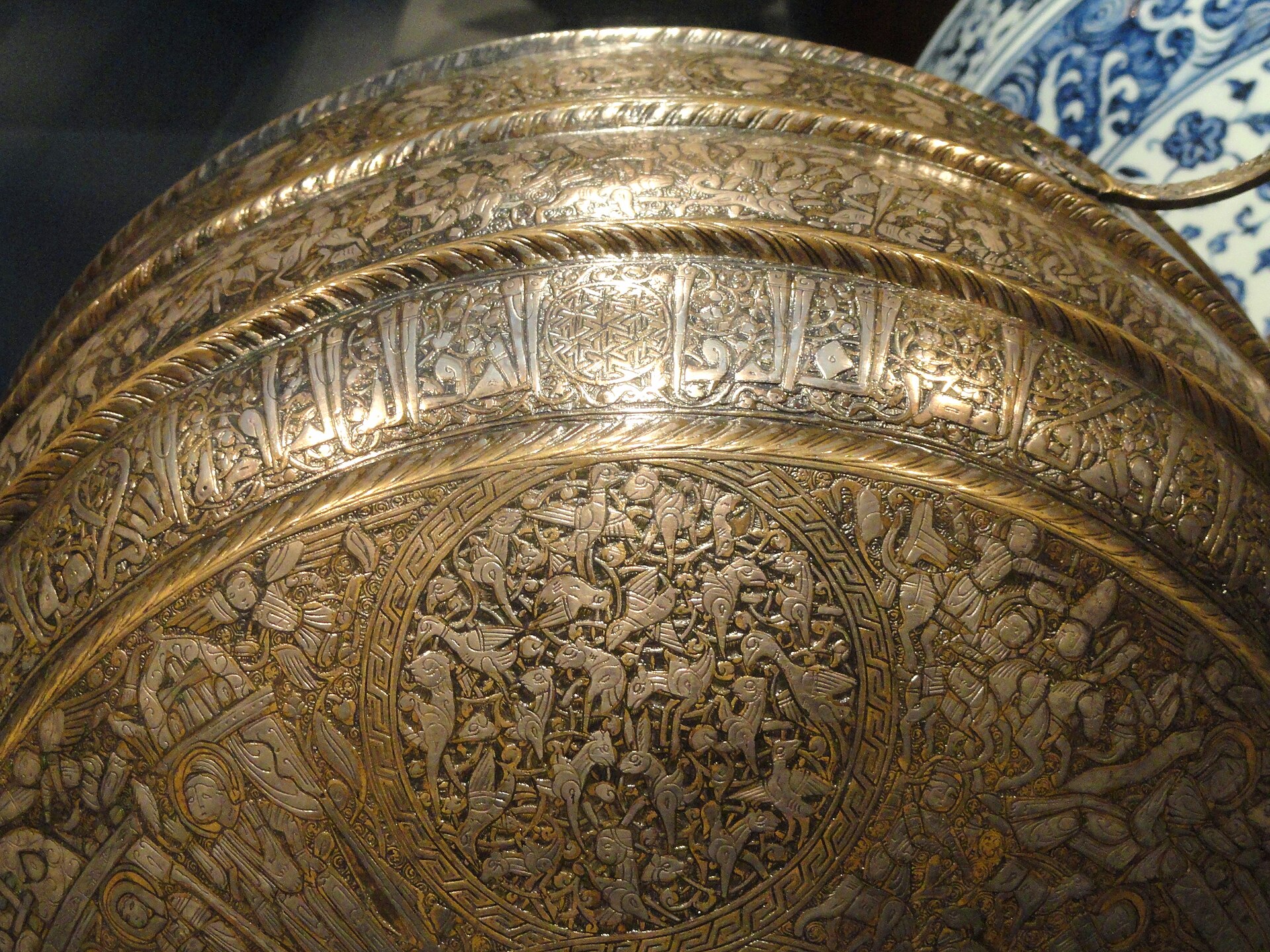
The d'Arenberg Basin was acquired in 1955 as F1955.10 using the Charles Lang Freer Endowment, the fund set up by his own bequest. It was made for the Ayyubid sultan al-Salih Najm al-Din Ayyub between 1247 and 1249, and later stood in the Brussels collection of the Dukes of Arenberg, who lent it to exhibitions in Paris in 1903 and Munich in 1910.
From the Munich show to the Gallery's purchase the record documents no owner and no dealer for 45 years. A European coat of arms engraved on the base is probably eighteenth century, and the Gallery's own 1975 catalogue says it is not the Arenberg arms.
Why an endowment bought what the collector could not have
Freer proposed to President Theodore Roosevelt that he give the nation his collection, a building and an endowment for acquiring fine examples of Oriental, Egyptian and Near Eastern art, according to Wikipedia's account of the founding. That endowment is the reason the Gallery could buy in 1941 and 1955 under his name.
The same account says the terms of the gift allow only the permanent collection to be shown in the Gallery and none of it to be exhibited elsewhere. The consequence for research is concrete: the exhibition history of a Freer object is a history of Washington only, and the loan registers that help date other objects' movements are silent on these.
The Kevorkian link runs outside Washington. Cleveland's twelve-sided ewer with sphinxes was bought from Kevorkian in 1945 on the J. H. Wade Fund, four years after the Freer's canteen.
Questions
No source consulted suggests he did. It was bought from the dealer Hagop Kevorkian in 1941 with the Charles Lang Freer Endowment, 22 years after Freer died in 1919.
The record for Whistler's Princess states that the terms of Freer's bequest prohibit it from being lent outside the Gallery. Wikipedia reports the same condition for the Gallery as a whole, so the Freer neither borrows nor lends.
It was in the Brussels collection of the Dukes of Arenberg by 1903, when it was shown in Paris. The record documents no owner between the 1910 Munich exhibition and the Gallery's 1955 purchase.
It is the fund created by Freer's bequest to buy further fine works of Oriental, Egyptian and Near Eastern art for the Gallery after his death. The canteen and the basin were both bought from it.
Sources
- 1Smithsonian National Museum of Asian Art, object record F1941.10, Canteen: credit line Purchase, Charles Lang Freer Endowment; provenance to Hagop Kevorkian, New York, purchased 1941 asia-archive.si.edu/object/...
- 2Smithsonian National Museum of Asian Art, object record F1955.10, D'Arenberg Basin, acquisition by purchase with the Freer Endowment in 1955 asia.si.edu/object/...
- 3Wikipedia, 'Freer Gallery of Art': the 1906 gift, the endowment, and the conditions on exhibiting and lending en.wikipedia.org/wiki/...
More in Collectors and Collections
The partThe credit line names the collector, and the accession number tells you what happened
Morgan died in March 1913, and the Metropolitan credits him with gifts made in 1917. The credit line names the collector.
The Longest Ownership Links Here Belong to Owners That Were Not People
The 28 longest institutional ownership links in this archive run 7,434 years between them. Three end in a completed sale.
The Name in the Buyer's Column Is Often an Employee
Across 126 years of sales in this archive the winning bidder is repeatedly not the owner.