The Weight Is Written on the Object
Two Roman silver vessels in the British Museum carry their own weights punched into the base. One agrees with the scales to within 68 grammes and the other is out by 900. For metal, weight is the identifier that was recorded first and is checked least.
Records in this piece: The Corbridge Lanx, The Projecta Casket, The Sons of Liberty Bowl, The Bryant Vase, The Lydian Hoard (Karun Treasure), The Great Dish from the Mildenhall Treasure, Coronation Mantle of Roger II, The Hardwicke Soup Tureen and Cover
On this page 10 sections
ContentsClose
In short
- The Corbridge Lanx carries its ancient weight punched into the base in dots: fourteen Roman pounds, three ounces and two scruples. The British Museum converts that to 4,668.5 grammes and weighs the dish at 4,600, so the object and its own label agree to within one and a half per cent after sixteen centuries.
- The Projecta Casket carries the same kind of inscription and does not agree at all. Twenty-two Roman pounds and three and a half ounces converts to about 7,299 grammes on the museum's own constants, and the casket weighs 8,200. The gap is roughly 900 grammes, it is not explained on the object's record, and it survives any plausible value for the Roman pound.
- Weight is the one physical measurement that was recorded because the metal was money, so it exists for silver and gold at dates when nobody was writing down dimensions.
- A falling weight is a record of use. Paul Revere's Sons of Liberty bowl was announced in 1768 as weighing forty-five ounces and now weighs 43 ounces 16 and a half pennyweight, a loss of about 36 grammes to finishing and to two and a half centuries of polishing.
- A rising weight caught a theft. The hippocamp brooch on display at the Usak Museum weighed 23.5 grammes and the brooch it had replaced weighed 14.3, and the difference is how the substitution was proved.
- The unit itself is a historical document. The Metropolitan still gives the Bryant Vase as 452 ounces 16 pennyweight in the same field as its inches, because troy weight is what a silversmith worked in and what a purchaser paid by.
Weight is the measurement a metal object was made to carry
For silver and gold the weight is not a description of the object, it is the terms of the transaction. Bullion was the raw material and also the money, so a plate, a ewer or a bowl was commissioned by mass, charged by mass, inventoried by mass and, when the family needed coin instead, melted by mass. That is why weights survive for metalwork at dates when nobody thought to record a height, and why they were sometimes cut into the object so that the figure travelled with the thing it described.
We have argued elsewhere in this archive that dimensions are the least stable field on a museum page, because they are re-measured, converted, rounded and mistranscribed by everyone who handles them. Weight behaves differently. It is measured once, on a scale, in units that were legally defined, and where it changes the change is usually evidence of something that happened to the object.
That does not make it a magic identifier, and this piece ends with the cases where it fails. But it is the field on a metal object most likely to be old, precise and checkable, and it is the field nobody searches.
The Corbridge Lanx records its own weight, and the scales nearly agree
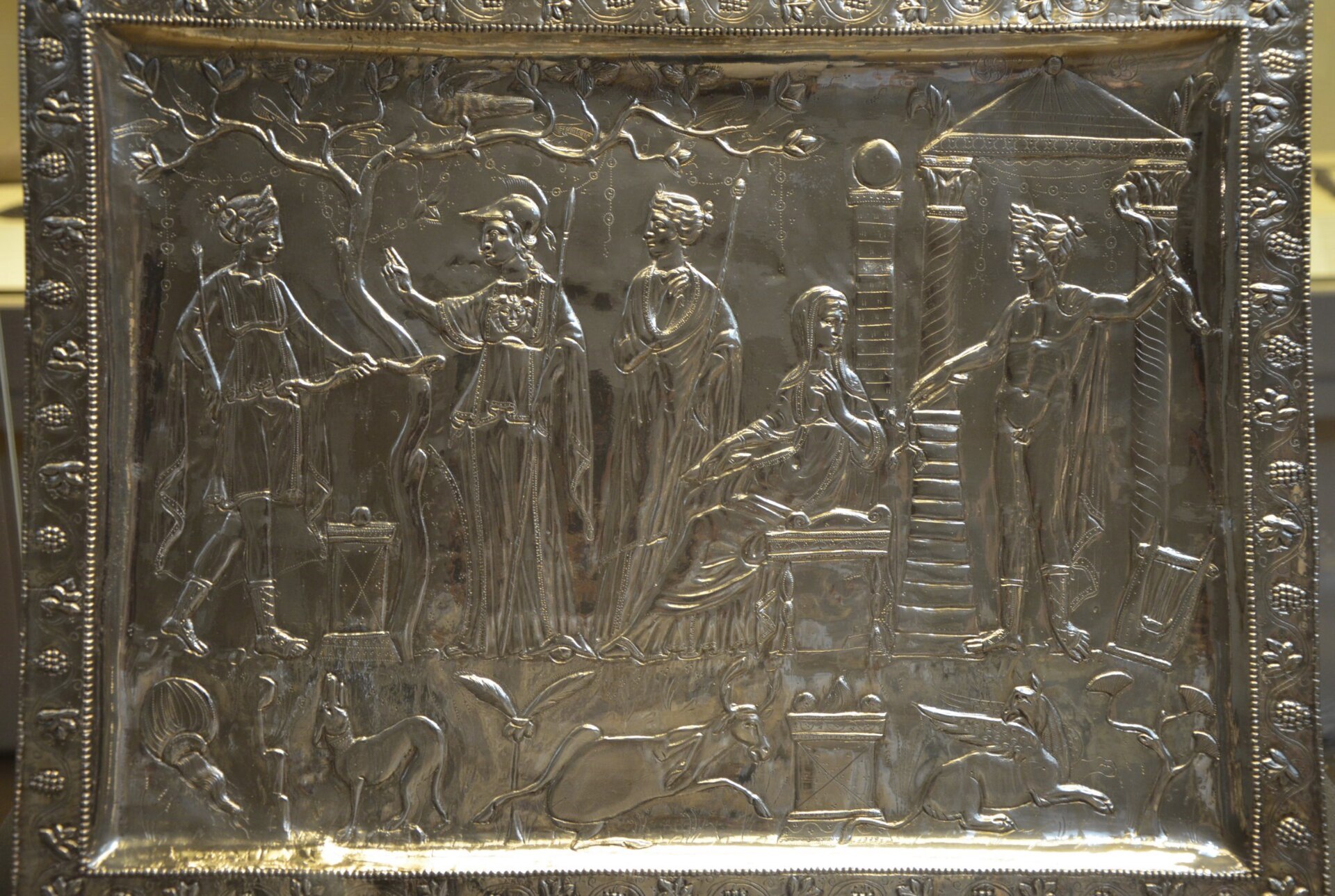
The Corbridge Lanx carries a weight inscription on the base, punched in dots near the corner of the footstand. The British Museum reads it as p(ondo) (librae) XIIII (unciae) III (scripula) II and translates it as weight fourteen pounds, three ounces and two scruples. The Roman Inscriptions of Britain catalogues the same graffito as RIB 2414.38 and reads it identically.
Both then do the arithmetic, and the arithmetic is where this gets useful. The Museum's own note multiplies out at 327.45 grammes to the Roman pound, 27.3 to the ounce and 1.14 to the scruple, which gives 4,668.5 grammes, and remarks that the figure is remarkably close to the actual weight of the vessel. RIB reaches 4,668 and says the same thing in fewer words: 65 grammes more than the present weight.
The two sources do not quite agree on what the present weight is. The British Museum's dimensions field says 4,600 grammes. RIB gives 4,603.32. That is a three-gramme disagreement about a four-and-a-half-kilogramme object and it changes nothing, but it is a fair illustration of how much precision a published weight actually carries.
The near-agreement establishes something plain: a late Roman workshop weighed this dish, cut the figure into the metal, and the figure is still right to within about one and a half per cent. The small shortfall is what you would expect from sixteen centuries of cleaning, burial and the loss of a fragment or two.
The Projecta Casket records its own weight, and the scales do not agree
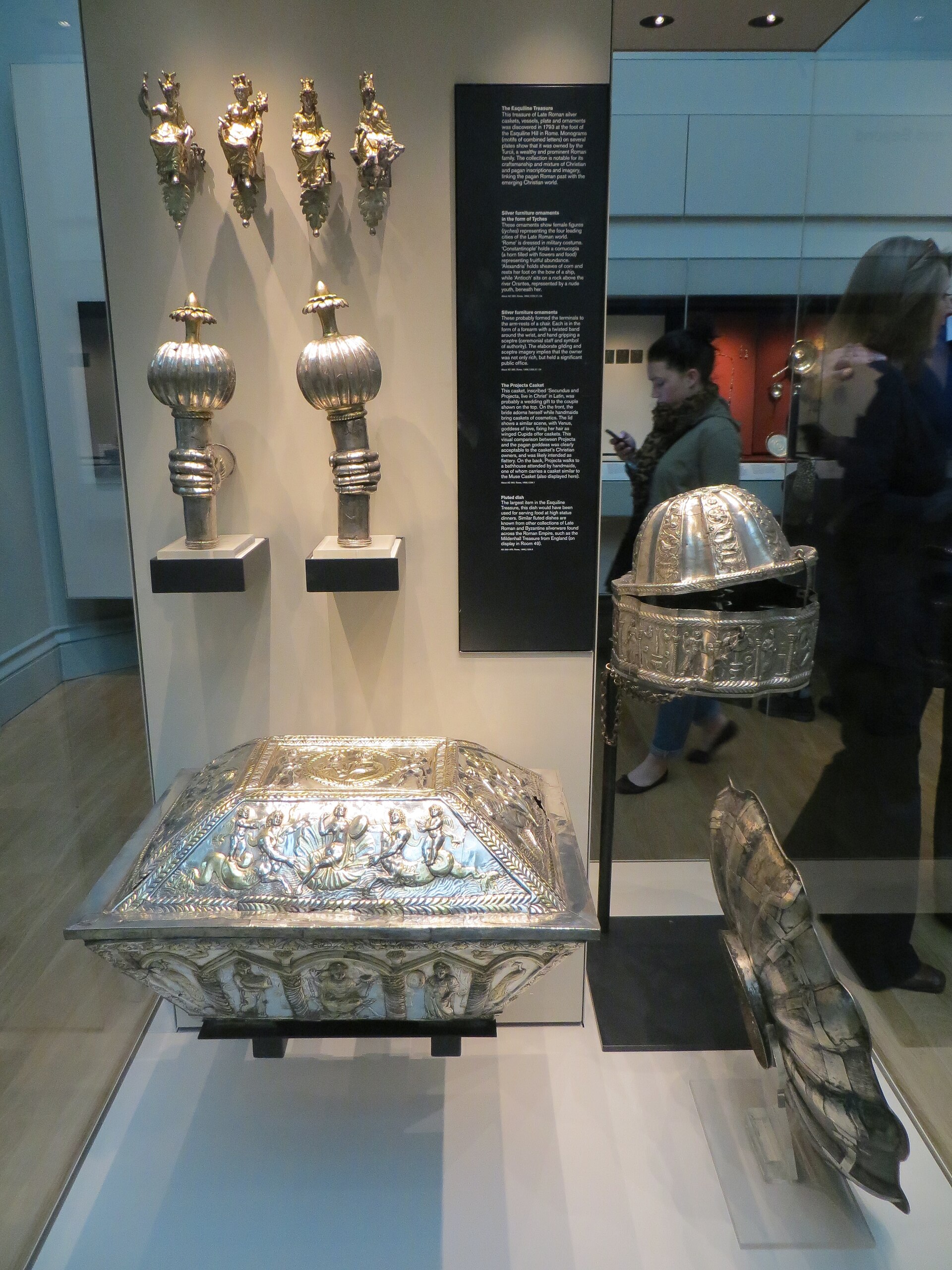
The Projecta Casket carries a weight inscription of exactly the same kind and it does not reconcile. The British Museum records two inscriptions on the lid rim: the famous dedication, SECVNDE ET PROIECTA VIVATIS IN CHRISTO, and, in pointille capitals, a weight given as XXII-III and expanded by the Museum as twenty-two Roman pounds, three and one-half Roman ounces.
Apply the Museum's own Corbridge constants and that is about 7,299 grammes. The Museum's dimensions field for the same casket gives the weight as 8,200 grammes. The object is roughly 900 grammes heavier than the figure cut into it, a discrepancy of about twelve per cent, and neither the object record nor anything we could find in the published literature explains it.
The obvious escape route does not work. The Roman pound is not a settled number and estimates run from about 322 to about 329 grammes, but the gap survives the whole range: at 329 grammes to the pound the inscription still converts to about 7,334, which is 866 short. A lighter pound only makes it worse.
So we are left with a real question rather than a finding, and it belongs in the record as a question. The inscription may have been cut for the casket in a different state, before or after a component was added. It may cover the casket together with something that no longer travels with it. It may have been struck for a different object entirely and reused, which happens with silver. Or the modern figure may include a mount. We do not know, we could not find anyone who says they do, and an archive that publishes the arithmetic is more use here than one that picks an explanation.
Three objects, three recorded weights, and what the scales say now
Set the two Roman vessels beside an eighteenth-century American bowl and the pattern is legible. In each case somebody recorded a weight at or near the moment of making, and in each case the object can be put on a scale today.
| Object | Weight as recorded | Recorded weight in grammes | Weight measured today |
|---|---|---|---|
| Corbridge Lanx, 4th century, British Museum 1993,0401.1 | 14 Roman pounds, 3 ounces, 2 scruples, punched on the base | 4,668.5 | 4,600 (British Museum); 4,603.32 (RIB) |
| Projecta Casket, about 380, British Museum 1866,1229.1 | 22 Roman pounds, 3.5 ounces, on the lid rim | about 7,299 | 8,200 (British Museum) |
| Sons of Liberty Bowl, 1768, Museum of Fine Arts, Boston 49.45 | 45 ounces, announced in the Boston press of 1768 | about 1,400 | about 1,363 (43 oz 16.5 dwt) |
Two of the three agree with their own record to within a few per cent, and the disagreements run in opposite directions. That is the useful part. A weight that has fallen and a weight that has risen are evidence about two completely different histories.
A weight that has fallen is a record of polishing
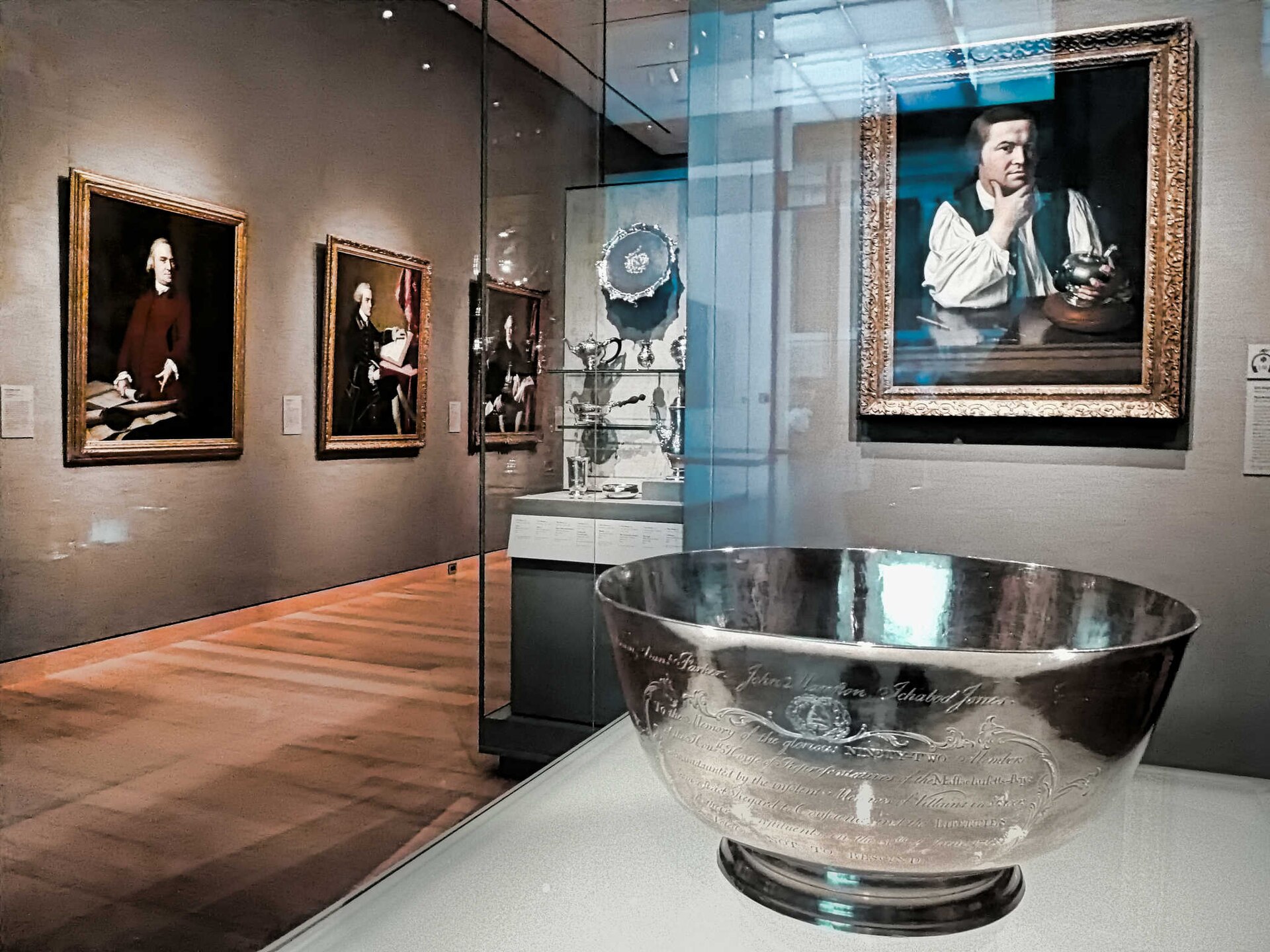
Paul Revere's bowl was announced in 1768 with its weight in the sentence. The Boston notice quoted by Jonathan Fairbanks describes an elegant silver bowl, weighing forty-five Ounces and holding forty-five Jills, and the number is doing symbolic work: the object commemorates the ninety-two members who voted not to rescind, and it is soaked in the number forty-five for John Wilkes and issue No. 45 of the North Briton. Forty-five ounces, forty-five gills, forty-five toasts.
Fairbanks then gives the modern figure, and it is not forty-five. It weighs 43 ounces, 16 and a half pennyweight, which is 43.825 troy ounces, about 1,363 grammes. The same essay elsewhere describes the bowl as just under forty-five ounces, which is loose rather than wrong, and it is the loose form that keeps the symbolism intact.
The explanation offered is the ordinary one and it is almost certainly right. Some of the silver delivered to Revere, probably in coin, was lost in the working, and the rest has gone in two and a half centuries of polishing. About 36 grammes of an American national object have been rubbed off it and are somewhere in the cloths. That is a real fact about the thing, and the only reason anybody can state it is that a newspaper printed the starting weight.
One more detail from the same essay belongs here. Revere's most famous object does not appear in his daybooks or anywhere in the family papers. The weight in the newspaper is a better record of the commission than the silversmith's own ledger.
The unit survives in the museum field, and the unit is a document
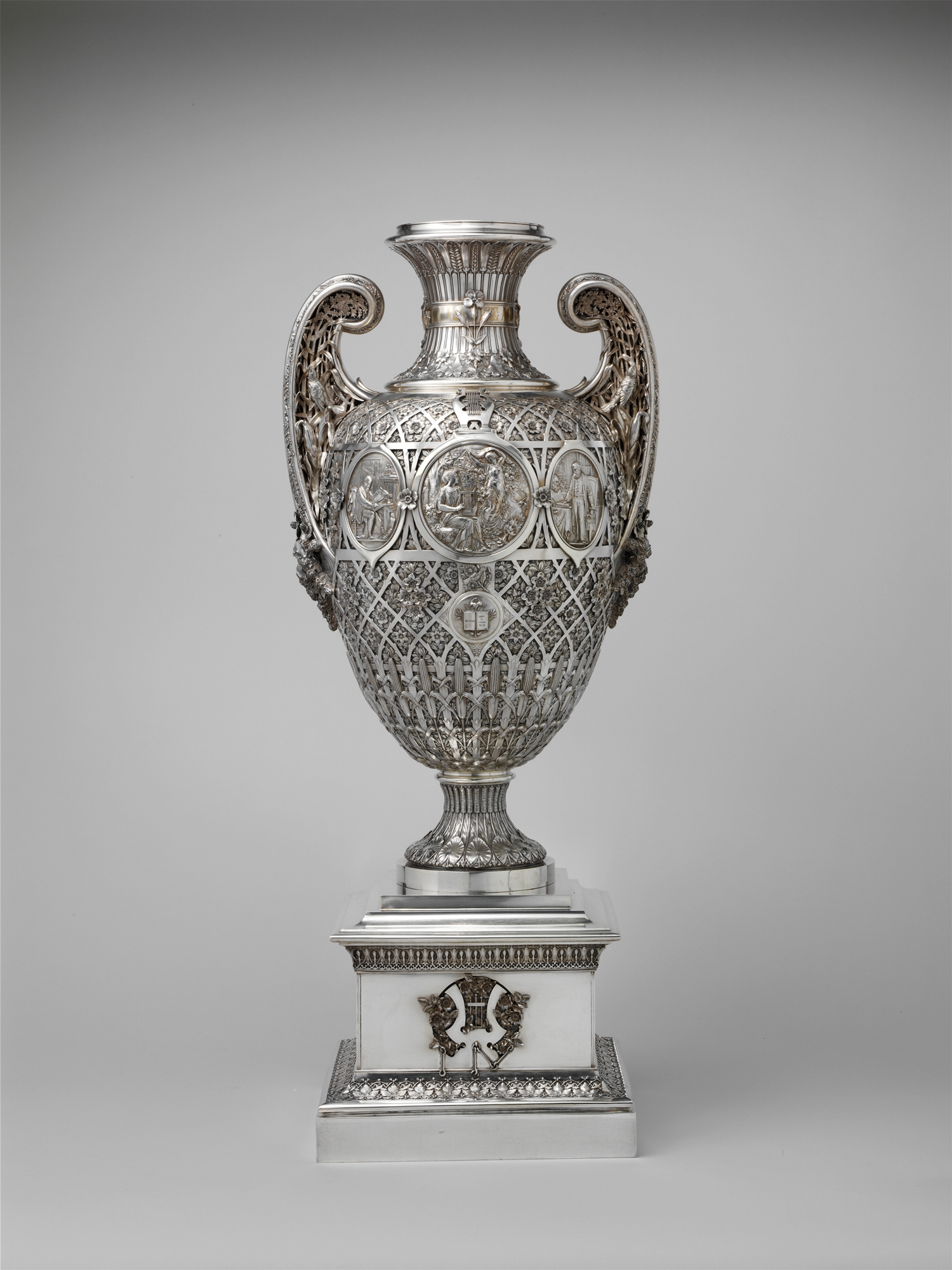
The Metropolitan records the Bryant Vase as 452 ounces 16 pennyweight, and prints that in the same field as the inches. Read the abbreviation carefully: dwt is the pennyweight, one twentieth of a troy ounce, a unit that takes its name and its symbol from the medieval silver penny. At 31.1035 grammes to the troy ounce, 452 ounces 16 pennyweight is 14,083.7 grammes, and the Museum's own conversion gives 14,084.2.
That half-gramme is nothing. The point is that a New York museum in 2026 is still describing a Tiffany vase in the units of the assay office, because those are the units the object was made and paid for in, and translating them into grammes alone would quietly delete the evidence of that.
It is also the reason weights turn up in places dimensions never do. A probate inventory values plate by the ounce because plate is a cash asset. A dealer's book records ounces because the metal sets the floor under the price. When you are working backwards through a provenance and the descriptions are too thin to identify anything, the ounces in an old inventory are frequently the only number specific enough to test.
A weight that has risen is a record of a substitution
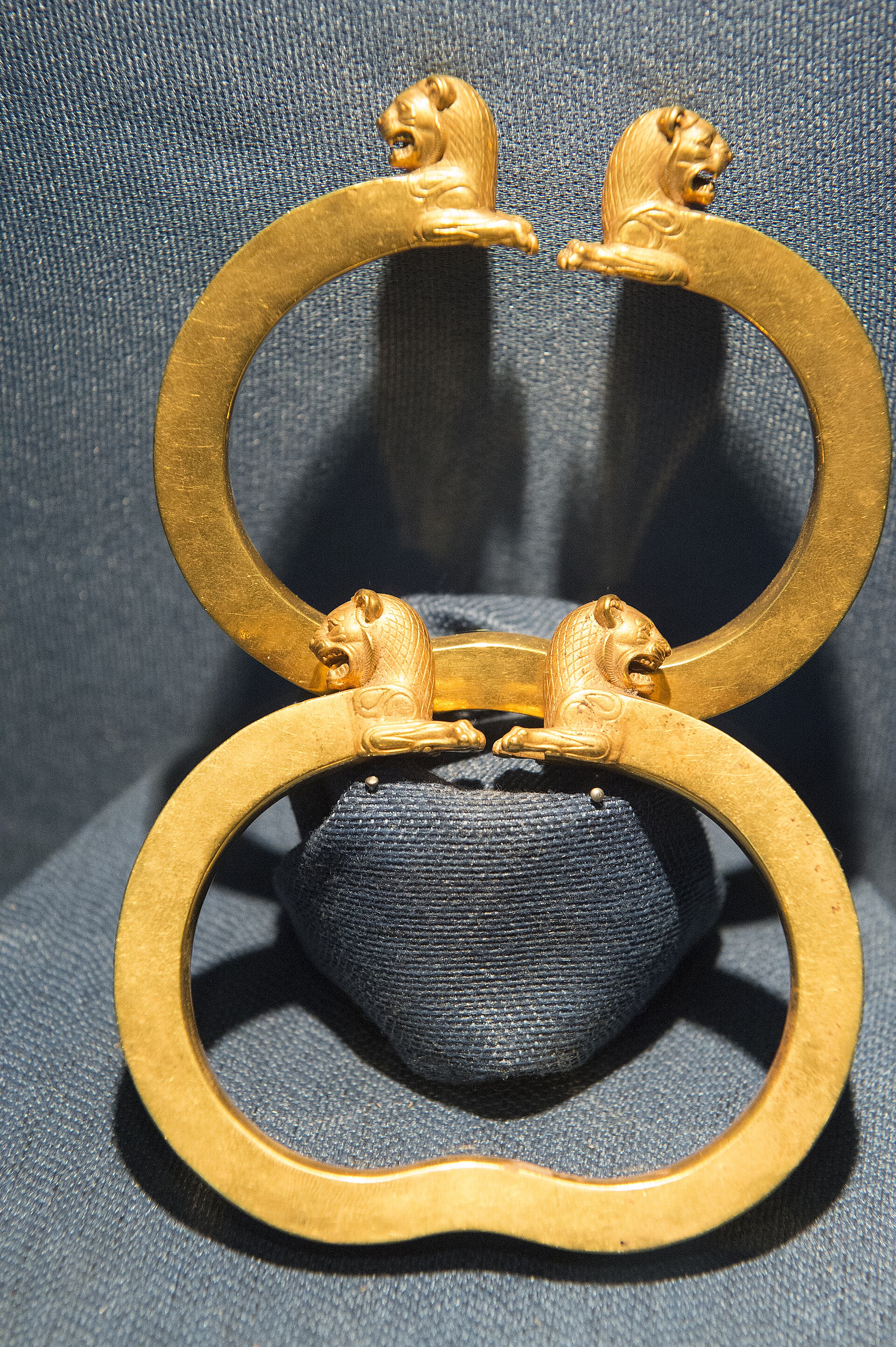
In April 2006 the Turkish newspaper Milliyet reported that the masterpiece of the Lydian Hoard, the golden hippocamp that had become the emblem of Usak, was a fake. Sharon Waxman's account for Smithsonian Magazine gives the sentence that settled it: the police examined the hippocampus on display, it was indeed a fake, the original weighed 14.3 grammes and the one in the museum was 23.5.
Note which way the discrepancy runs. A copy is usually lighter than a gold original, because the substitute metal is less dense, and a forger who has seen the object can match its dimensions far more easily than its mass. This one was heavier by 9.2 grammes, about sixty-four per cent, which suggests a solid replica of a piece that was worked thin. Either way the maker of the replica evidently did not have the weight, and the museum did.
The bigger announcement came weeks later, when the Culture Ministry named the museum's own director as a suspect. We are not in a position to add anything to the criminal history and this record does not try. What the case establishes for our purposes is narrower and more useful: an inventory weight, recorded once and never looked at, was the field that failed the object under examination when nothing about its appearance did.
Where weight fails, and it does fail
A weight is only as good as the state of the object when somebody put it on a scale. Composite objects are the obvious problem: the recorded figure may cover a body without its mounts, a vessel without its cover, or a set without one of its members, and unless the record says so the number is untethered. This is the most likely reading of the Projecta gap and we still cannot prove it.
Published weights also disagree with each other more often than their apparent precision suggests. Our own record for the coronation mantle of Roger II in Vienna carries three figures from three sources, about 11 kilogrammes, about 50 and about 54, and does not resolve them, because we could not establish which of them was measured and which was estimated. That is not a small spread. It is a fivefold one, on an object in a national collection.
And for a great many objects there is simply no figure at all. Our record for the Lamerie tureen made for the Hardwicke family says only that the weight is not published in the sources consulted, which is the honest entry and also a slightly startling one for a piece of eighteenth-century English silver, since weight is the thing that firm's own workshop would have written down first.
So the rule is not that weight is reliable. It is that weight, when it exists, is old, specific and rarely checked, which is exactly the profile of a field that repays checking.
How to use a weight
Start by asking whether the object states its own weight, because for Roman and late antique silver the answer is often yes and almost nobody looks. The figure is usually on the underside or a rim, punched or scratched, and it is catalogued in the inscriptions field rather than the dimensions field, which is why it goes unnoticed by anybody reading the physical description.
Then convert it yourself and write down the constant you used. Roman metrology is not fixed, the pound sits somewhere near 322 to 329 grammes, and a conversion quoted without its constant cannot be checked or corrected later. The British Museum publishes its arithmetic on the Corbridge Lanx and that is why we could apply the same arithmetic to the Projecta Casket and see the problem.
Treat any difference as a question about the object's history rather than an error to be smoothed. Lost weight points at cleaning, wear, loss and repair. Gained weight points at addition, replacement or a different object. An unexplained gap of twelve per cent is a research lead, and the worst thing to do with it is to average the two figures.
Finally, record the units as they were written. Troy ounces and pennyweight, Roman pounds and scruples, are not clumsy old forms of the gramme. They tell you who did the weighing and why, and a record that silently converts them has thrown away the part that was evidence.
Why this archive is free to read
We do this for everyone who loves art. The people who have studied it for years, and the people who just stopped to look. Iconotheca exists so that what we learn belongs to all of them.
Nobody pays us for this. No ads, no sponsors, no commercial interest. These works belong to all of us, and we would rather share them with as many people as we can than keep them to ourselves.
If it gave you something today, tell us to keep going. Follow us, leave a like, or write a positive comment. We read every one, and they are what keeps us going.
Questions
Some do. The British Museum records a graffito punched in dots on the base of the Corbridge Lanx reading fourteen Roman pounds, three ounces and two scruples, and a weight inscription in pointille capitals on the lid rim of the Projecta Casket reading twenty-two Roman pounds and three and a half ounces. Late Roman silver was a bullion asset and weighing it was routine.
On the Corbridge Lanx, very. The British Museum converts the inscription to 4,668.5 grammes and weighs the dish at 4,600, a shortfall of about 68 grammes or one and a half per cent after roughly sixteen centuries. The Projecta Casket is a different story: the inscription converts to about 7,299 grammes and the casket weighs 8,200, and we could find no published explanation for the difference.
A pennyweight, abbreviated dwt, is one twentieth of a troy ounce, about 1.555 grammes, named after the medieval silver penny. Museums keep it for silver because it is the unit the trade worked in: the Metropolitan gives the Bryant Vase as 452 ounces 16 pennyweight, which is 14,084.2 grammes, in the same field as the inches.
It did at least once. When the hippocamp brooch from the Lydian Hoard on display at the Usak Museum was examined in 2006 it weighed 23.5 grammes against the original's 14.3, and that difference is what established that the piece on display was a replica.
Mostly cleaning. Paul Revere's Sons of Liberty bowl was described in 1768 as weighing forty-five ounces and now weighs 43 ounces 16 and a half pennyweight, roughly 36 grammes less, which Jonathan Fairbanks attributes to metal lost in the original working and to two and a half centuries of polishing and wear.
Sources
- 1British Museum, Collection Online, lanx (The Corbridge Lanx), museum number 1993,0401.1. Read for the dimensions field (Weight: 4600 grammes), the inscription transliteration and translation, the curator's arithmetic converting the inscription to 4,668.5 grammes, and the note that the graffito is punched in dots on the base near the corner of the footstand. britishmuseum.org/collection/...
- 2Roman Inscriptions of Britain, RIB 2414.38, Corbridge Lanx. Independent epigraphic corpus giving the same reading, a present weight of 4,603.32 grammes, and the comment that the inscribed figures amount to 4,668 grammes, 65 grammes more than the present weight. romaninscriptionsofbritain.org/inscriptions/...
- 3British Museum, Collection Online, casket (The Projecta Casket), museum number 1866,1229.1. Read for the dimensions field (Weight: 8200 grammes) and for both lid-rim inscriptions, including the weight inscription XXII-III expanded as twenty-two Roman pounds, three and one-half Roman ounces. britishmuseum.org/collection/...
- 4Jonathan L. Fairbanks, Paul Revere's Sons of Liberty Bowl, Colonial Society of Massachusetts. Read in the raw page for the present weight of 43 ounces 16 and a half pennyweight, the forty-five ounces of silver, the 1768 Boston notice quoting the weight and capacity, the statement that the bowl does not appear in Revere's daybooks or the family papers, and the explanation of the loss. colonialsociety.org/node/...
- 5Museum of Fine Arts, Boston, collection record for the Sons of Liberty bowl, accession 49.45. Read for the public record's dimensions, inscriptions and provenance; the published record gives no weight. collections.mfa.org/objects/...
- 6Metropolitan Museum of Art Collection API, object record 1029, The Bryant Vase, accession 77.9a, b. Read for the dimensions field giving 452 oz. 16 dwt. (14084.2 g) alongside the inches and centimetres. collectionapi.metmuseum.org/public/...
- 7Sharon Waxman, Chasing the Lydian Hoard, Smithsonian Magazine. Read in the raw page for the April 2006 Milliyet report, the police examination, and the sentence giving the original hippocampus at 14.3 grammes against 23.5 for the piece on display. smithsonianmag.com/history/...
More in Research and Method
The partThe Object on Display Is the Last Restorer's Reading of It
The British Museum gives the Sutton Hoo helmet two production dates: late 6th to early 7th century for the components, and 1971 for the...
The Fields This Archive Cannot Count, and What That Costs
2,592 technical facts wear 1,598 different labels and 1,754 ticket prices wear 1,355.
The First Number in a Hoard Is a Counting Rule
The Staffordshire Hoard is 4,600 pieces, or just under 4,000, or around 700, or more than 600, depending on which official page you read.