The Taking Clustered in Two Decades and the Returning Has Not Finished
Half of the 46 takings in the archive start in the 1930s and 1940s. Only 8 of the 37 returns do. A decade table built from the records.
Records in this piece: The Astronomer, Lady with an Ermine (Portrait of Cecilia Gallerani), Portrait of Elisabeth Lederer, Adam and Eve, Coronation Mantle of Roger II, Priam's Treasure, The Great Dish from the Mildenhall Treasure
On this page 4 sections
ContentsClose
In short
- Of the 46 provenance events in the archive labelled as seizure, confiscation, looting, theft, loss, concealment or forced sale, 23 start in the 1930s or the 1940s: 10 and 13.
- Of the 37 events labelled restitution, recovery or return, only 8 start in the 1940s. The other 25 start after 1949, and the 1990s hold as many as the 1940s do.
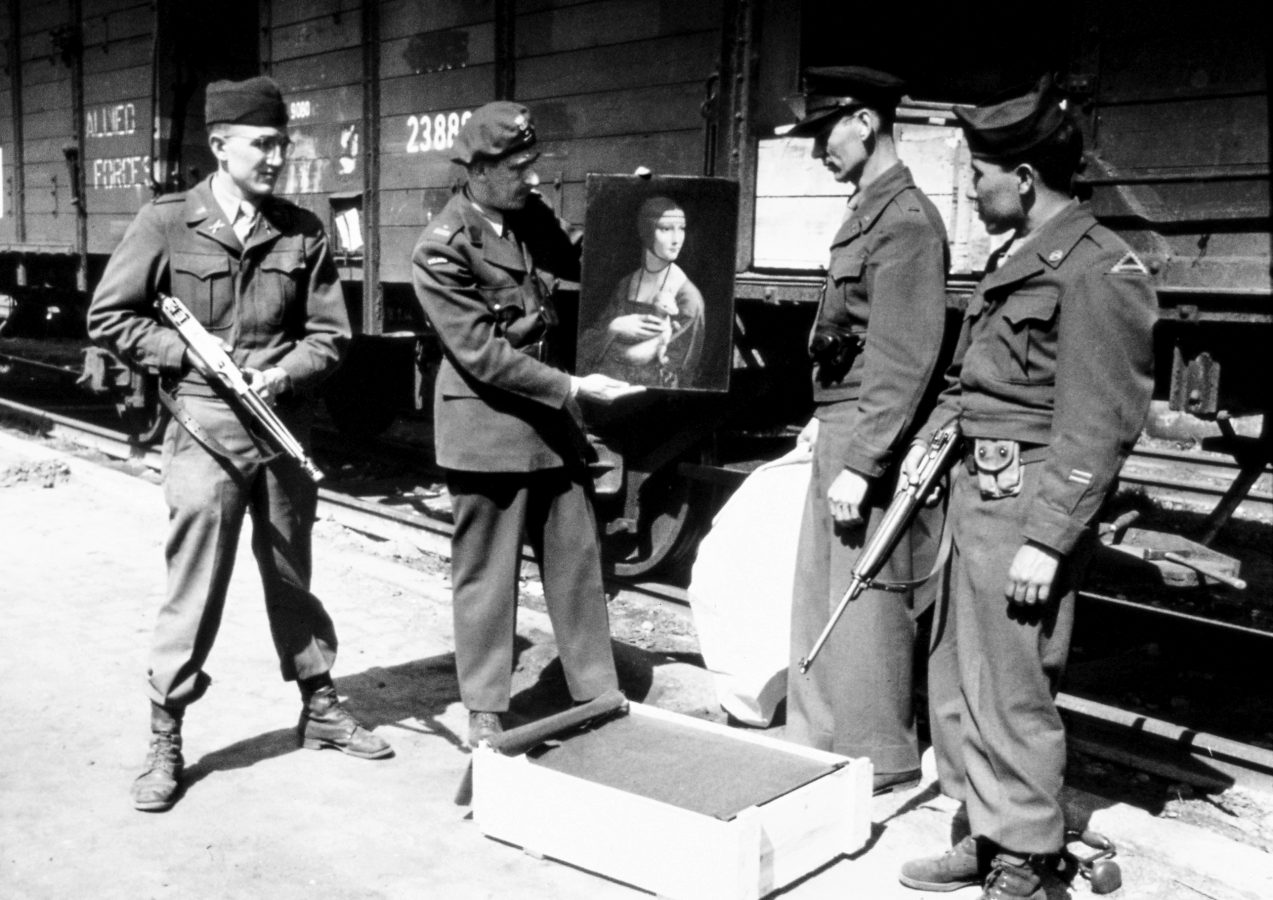
- Where an Allied unit held the object in 1945 the return was quick: The Astronomer was recovered in 1945 and restituted in 1946, and the Lady with an Ermine was back in Krakow in April 1946.
- Priam's Treasure has a taking in 1945 and no return event, and the Pushkin Museum's holding of it was not publicly acknowledged until 1993. A chain with a taking and no return is still open.
Two decades hold half of the recorded takings
Of the 46 events in this archive's provenance chains that are labelled as a taking, 23 start in the 1930s or the 1940s. We counted events, not objects, across the 330 published records. An event counts as a taking when its label names a seizure, confiscation, looting, theft, loss, concealment or forced sale, and as a return when it names a restitution, recovery or return. Each event is placed in the decade in which it starts, and one object can contribute several events.
The table is a picture of our chains and not of the world's losses. The records were chosen for the research they allow, and the counts move whenever a record is added. What the table can say is where the archive's own evidence piles up, and it piles up at 1938 to 1948.
| Decade | Taking events | Return events |
|---|---|---|
| 1900s | 0 | 2 |
| 1910s | 1 | 1 |
| 1920s | 0 | 1 |
| 1930s | 10 | 0 |
| 1940s | 13 | 8 |
| 1950s | 1 | 2 |
| 1960s | 6 | 0 |
| 1970s | 1 | 1 |
| 1980s | 3 | 3 |
| 1990s | 5 | 8 |
| 2000s | 2 | 5 |
| 2010s | 4 | 5 |
| 2020s | 0 | 1 |
| Total | 46 | 37 |
In 1940 the takings were organised, and the records name the machinery
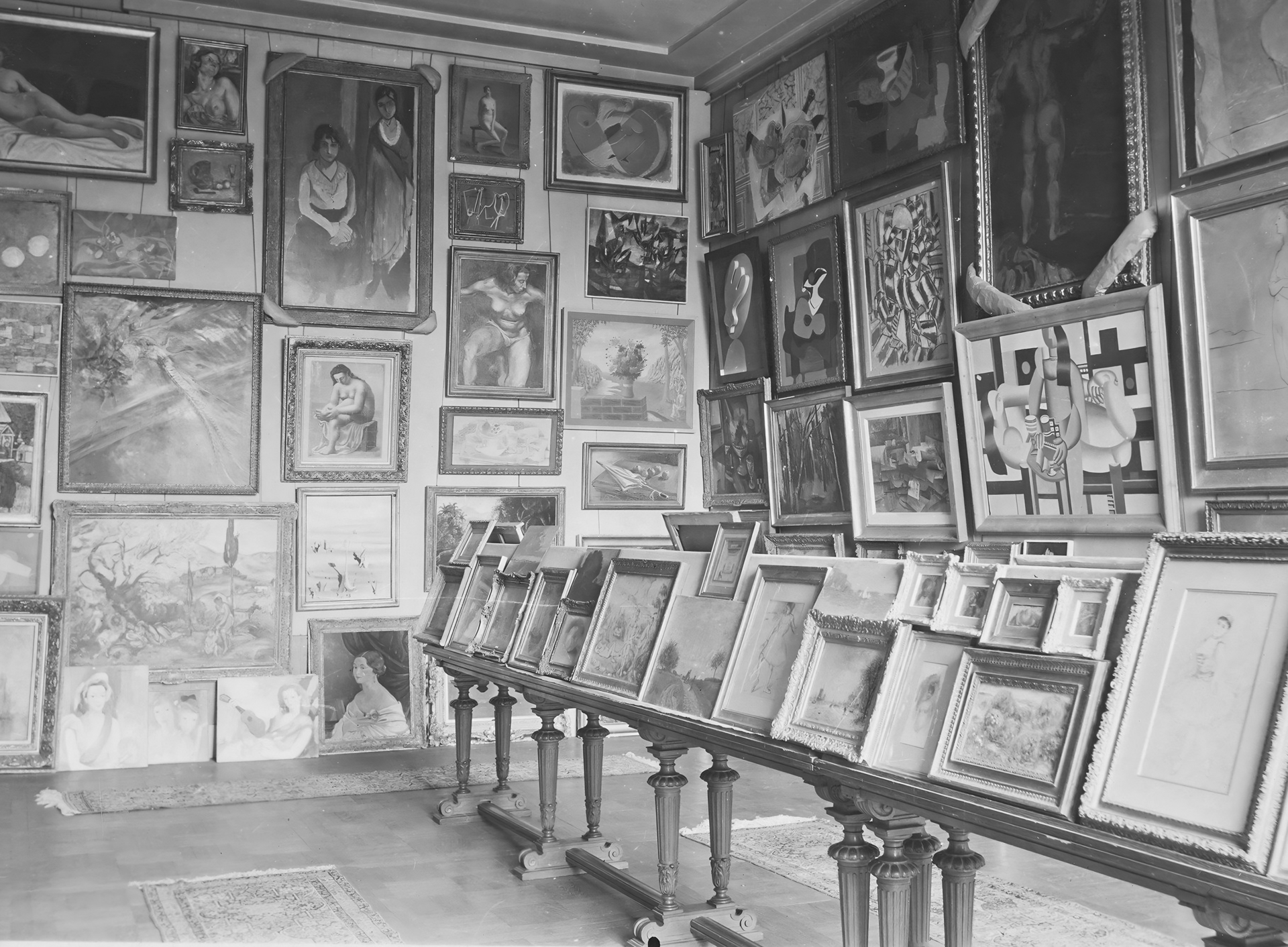
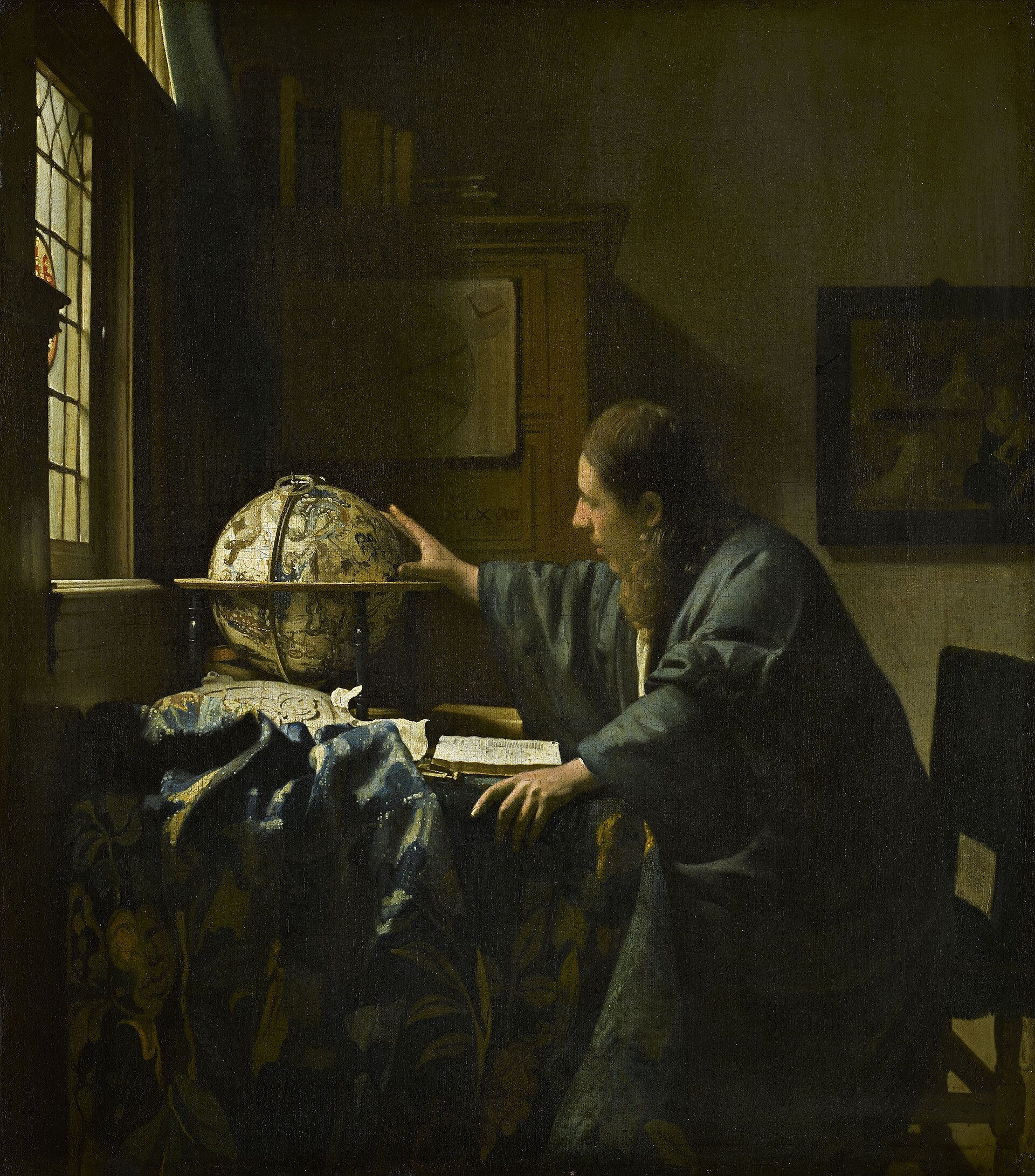
The Louvre's own record says that Vermeer's The Astronomer was seized in Paris in 1940 for the museum Hitler intended at Linz. The Rothschild collections were among the first taken by the Einsatzstab Reichsleiter Rosenberg, which processed looted French collections through the Jeu de Paume from 1940 to 1944. A small swastika was stamped in black ink on the back of the canvas.
Not every taking looked like a raid. The Cranach pair of Adam and Eve was taken with other works for two million guilders under written agreements signed after the dealer Jacques Goudstikker died on 16 May 1940, and the record notes that every party to the later litigation, the museum included, accepts that the transaction was forced. The Princes Czartoryski Museum states that the Lady with an Ermine was seized in a pre-planned looting in 1939, and the record has it in the hands of Hans Frank, the Governor General of occupied Poland, in 1940.
The count also holds events that are not wartime plunder. The Mildenhall Great Dish was reported to the police and seized on 21 June 1946, and declared treasure trove by a coroner's jury on 1 July 1946. That is a legal taking of a different kind, and the archive grades it as documented like the others.
The returns of 1945 and 1946 went through an army
The returns recorded in the 1940s are the ones where an Allied unit was already holding the object. The Lady with an Ermine was recovered by US forces in Frank's Bavarian villa, went by train from Nuremberg on 26 April 1946 and was at the Wawel in Krakow on 30 April. The Astronomer was recovered by the Allies in 1945 and restituted in 1946 to Baron Edouard de Rothschild, the man it had been taken from and not his heirs. He died in 1949.
The coronation mantle of Roger II was taken from Vienna to Nuremberg in August 1938 and returned to Vienna by the American military government in 1946. The Klimt portrait of Elisabeth Lederer was impounded on 26 November 1938 and seized by the Vienna regional court on 10 December 1939. The seizure was terminated on 30 September 1948 and the painting went to her brother Erich Lederer in Geneva. No lawsuit and no adversary museum were involved, and the court was simply ending its own seizure.
Most returns came after 1949, and one chain has none
Of the 37 return events in the archive, 25 start after 1949, and the 1990s hold 8, as many as the 1940s. The quick returns of 1945 and 1946 were the exception and the later ones are the rule. They follow courts, commissions and negotiations, and they arrive decades after the taking.
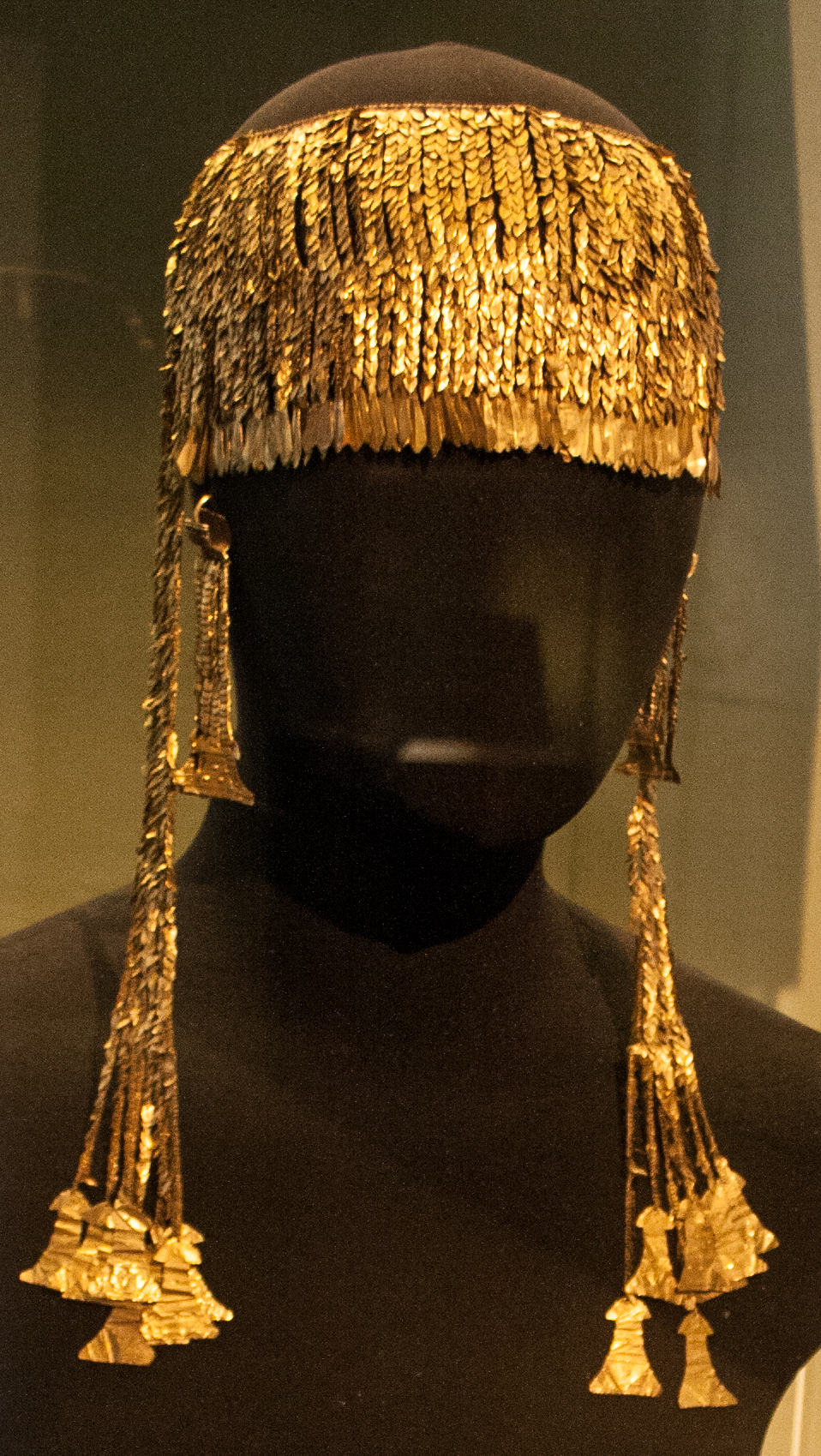
Priam's Treasure shows the other end. Berlin's museum moved it into a Reichsbank vault in 1939 and by 1941 into a flak tower at the Berlin Zoo. Its director surrendered the inventory to Soviet forces around 1 May 1945, and a special flight carried the crates from Tempelhof to Vnukovo on 30 June 1945. From 1949 it sat in a restricted Special Collection, Soviet authorities denied knowing of its survival throughout the Cold War, and the Pushkin Museum's holding was not publicly acknowledged until 1993. The record carries a taking in 1945 and no return event, and the treasure is still in Moscow.
A chain like that is not a closed case, and it is not a settled one either. It is a chain whose last link is a seizure, and the archive records it that way.
Questions
Of 46 events labelled as takings, 23 start in the 1930s or the 1940s: 10 in the 1930s and 13 in the 1940s. The next busiest decade is the 1960s with 6.
Only 8 of the 37 return events start in the 1940s. The other 25 start after 1949, and the 1990s hold 8, the same number as the 1940s.
No. It counts labelled events in the 330 published records, which were chosen for the research they allow. It shows where this archive's evidence falls and says nothing about the total.
Its record carries the 1945 seizure by Soviet forces and the 1993 acknowledgement of its holding in the Pushkin Museum, and nothing that returns it. The record grades the taking as documented.
Sources
- 1Musee du Louvre, collections database, entry for L'Astronome, RF 1983 28, Departement des Peintures, permalink ark:/53355/cl010064324, last updated 2 December 2025. The museum's own record: signature and its retouching, dimensions with and without frame, the 1983 De Boer frame, the identification of the Hondius globe and the Metius manual, the Lely Moses on the rear wall, the Leeuwenhoek identification and its lack of proof, the complete provenance from the Rotterdam sale of 27 April 1713 to the dation of 1982-1983, the mode of acquisition, the exhibition history and the bibliography. PRIMARY. collections.louvre.fr/en/...
- 2Sotheby's, lot 8, Gustav Klimt, Bildnis Elisabeth Lederer (Portrait of Elisabeth Lederer), Leonard A. Lauder, Collector, Evening Auction, New York, 18 November 2025. Published provenance, exhibition history, selected literature, catalogue essay, estimate wording and the guaranteed property and irrevocable bid symbols. sothebys.com/buy/...
- 3Sarah Cascone, Artnet News, 'This Fabulous Gustav Klimt Portrait Is Set to Smash Auction Records. Here's the Incredible Story Behind It', 19 September 2025. The paternity petition, Serena's sworn affidavit, the Reich department for genealogical research, the abandoned 1948 Dorotheum sale, and Kirsten Appleyard of the National Gallery of Canada on the emperor's cloak. Its statement that Serena purchased the entirety of Klimt's estate is not supported by the Klimt Foundation's account (source 24). news.artnet.com/art-world/...
- 4National Museum in Krakow, digital collection catalogue entry 157417, 'Lady with an Ermine - Portrait of Cecilia Gallerani': measurements, inscriptions, history, bibliography and exhibition events. Read through the in-app browser because the catalogue is a script-driven page. zbiory.mnk.pl/en/...
- 5Janusz Czop, Piotr Fraczek, Julio M. del Hoyo-Melendez and eleven co-authors, 'Leonardo da Vinci Lady with an Ermine - the latest research into the artist's painting technique and the state of preservation of the painting', Rozprawy Muzeum Narodowego w Krakowie, Nowa Seria 8 (2015), pp. 229-250. Same volume and route as source 3. digi.ub.uni-heidelberg.de/diglit/...
- 6Restitutiecommissie (Dutch Restitutions Committee), recommendation RC 1.15, 19 December 2005, on the trading stock of Kunsthandel J. Goudstikker NV: 267 works claimed, 202 recommended for return, the Goering works returned and the Miedl works excluded as settled by the 1952 agreement. PRIMARY. restitutiecommissie.nl/en/...
- 7Kunsthistorisches Museum Vienna, official object database, 'Der Kroenungsmantel', inventory WS XIII 14. khm.at/en/...
- 8Staatliche Museen zu Berlin, '150 Jahre Auffindung des "Schatzes des Priamos" in Troja durch Schliemann'. smb.museum/en/...
- 9Apollo Magazine, 'Haul of shame - the "trophy art" taken from Germany by the Red Army'. Source for the 1996 Turkish request for return and historian Frank Grelka's assessment, and the 1998 Yeltsin legislation. apollo-magazine.com/red-army-trophy-art-germany
- 10Richard Hobbs, 'The Secret History of the Mildenhall Treasure', The Antiquaries Journal, vol. 88 (2008), pp. 376-420. The primary source for this record's account of the discovery, the four-year concealment, the 1946 inquest testimony, the reward correspondence and figures, the failed searches for the findspot, the conspiracy theories, and Roald Dahl's 1977 letter on the accuracy of his story. suffolkher.esdm.co.uk/media/...
More in Provenance and Restitution
The partA Loan Is Not a Return
Three manuscripts went back to the places their stories point at, or were refused to them. What each loan did, and what it left alone.
A Textile's Provenance Begins on the Day Someone Wrote It Down
The Lady and the Unicorn, the Overhogdal hangings, the Syon Cope and the Emperor's Carpet each have centuries before the first document.
What Came Back in 1815, and What Did Not
Four objects in this archive were taken, held or borrowed in the Napoleonic wars. One was returned, one was swapped, one was ceded by treaty and one...