What Came Back in 1815, and What Did Not
Four objects in this archive were taken, held or borrowed in the Napoleonic wars. One was returned, one was swapped, one was ceded by treaty and one was sent back by order. The instrument decided each outcome.
Records in this piece: The Wedding Feast at Cana (Les Noces de Cana), The Last Judgment Triptych, The Rosetta Stone, The Bayeux Tapestry
On this page 6 sections
ContentsClose
In short
- The 1815 returns were not one rule applied to every object. In this archive the outcome turned on the instrument that moved the object: a treaty clause, a military capitulation, a loan or a plain requisition.
- Memling's Last Judgment went back to Danzig because its owners refused every substitute. Veronese's Wedding Feast at Cana stayed in Paris because a substitute was accepted.
- The Rosetta Stone is the opposite case. It was French-found and British-held from 1801 under a capitulation article, and no 1815 settlement touched it.
- Two of the three objects that did come home have since been moved by other wars. Memling's triptych was taken again in 1945 or 1946 and returned only in the 1950s.
Four Napoleonic takings in this archive had four different endings
The records in this archive that pass through the Napoleonic wars do not end the same way. A Netherlandish triptych went home in 1816 or 1817, a giant Venetian canvas never did, a stele found by French engineers hangs in London, and a Norman embroidery was returned to its town by the man who borrowed it.
Treating these as one story called 'Napoleonic looting' hides the point. Each object moved on a different instrument, and the instrument is what a later claim had to answer. The table sets the four side by side.
| Object | Taken | Instrument | Outcome |
|---|---|---|---|
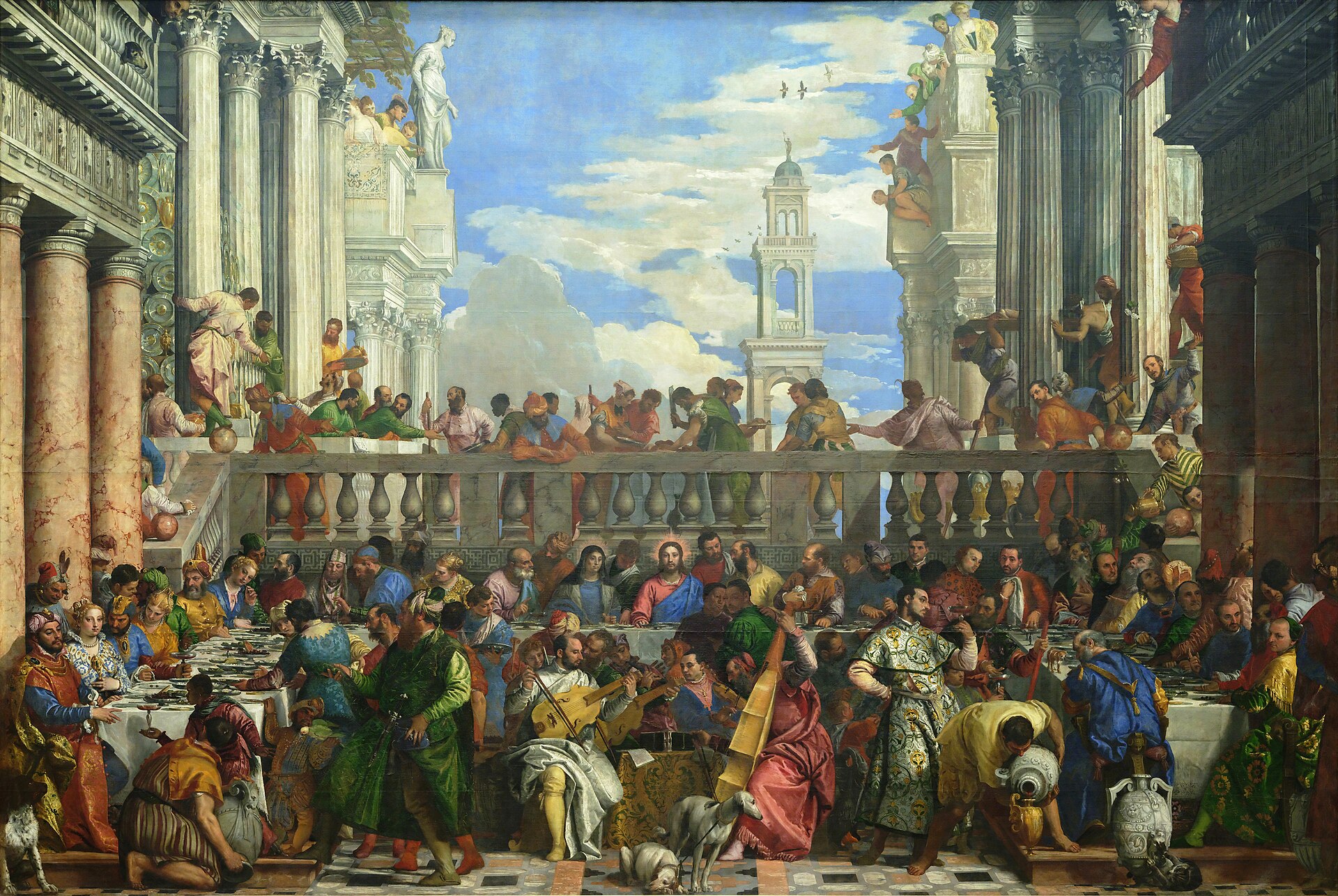
| Veronese, Wedding Feast at Cana | 1797, from Venice | Treaty clause demanding paintings and manuscripts | Stayed in Paris; Le Brun sent to Venice in 1815 |
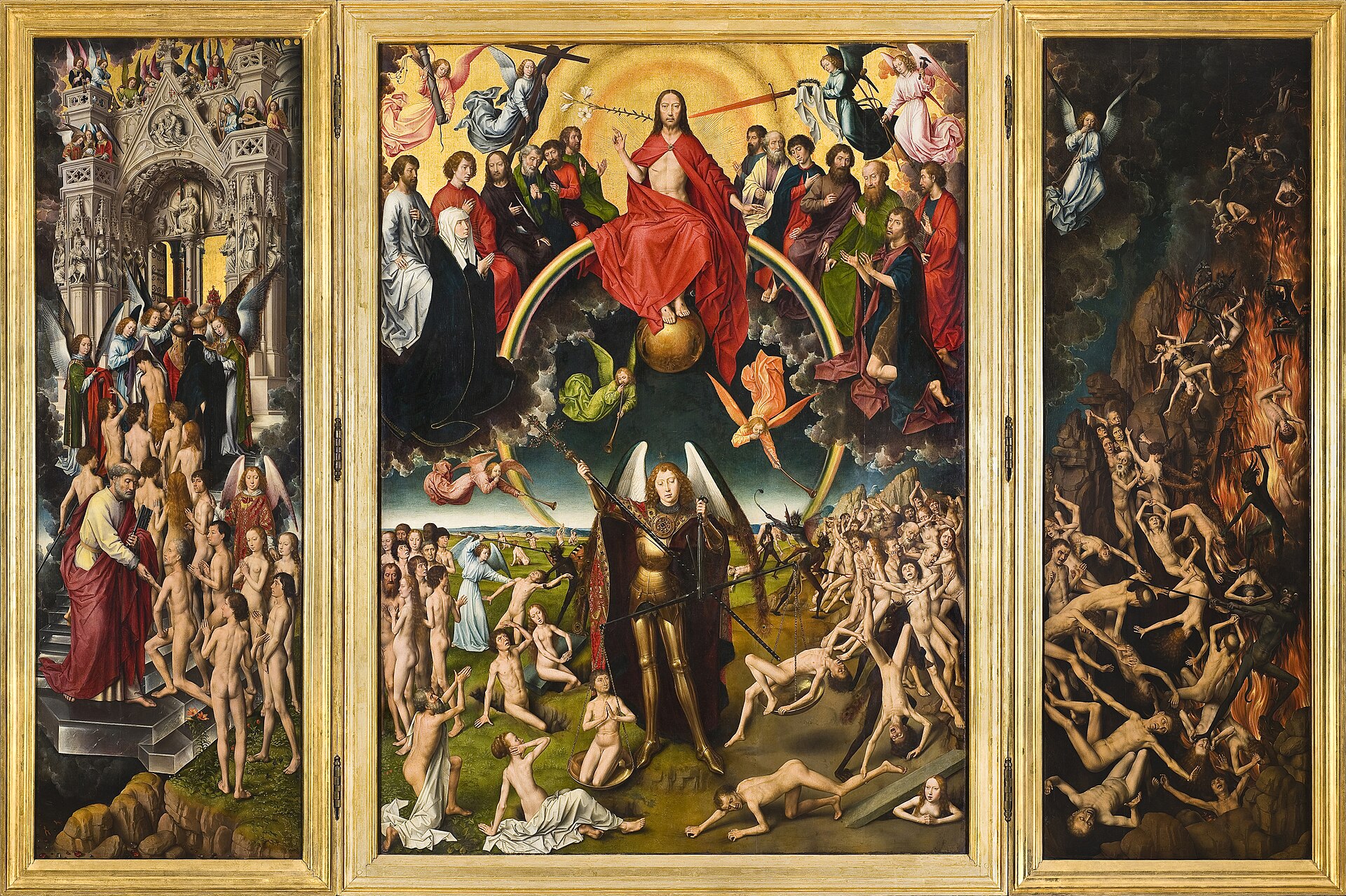
| Memling, Last Judgment triptych | 1807, from Danzig | Handed over on the commandant's request after the occupation | Returned; back in St Mary's in January 1817 |
| Rosetta Stone | 1801, from the French army in Egypt | Capitulation of Alexandria | Kept in Britain; on display since June 1802 |
| Bayeux Tapestry | 1803, from Bayeux | Order of Napoleon, a display loan | Returned by his order on 23 February 1804 |
The Wedding Feast at Cana stayed because the Louvre offered a substitute
Veronese's Wedding Feast at Cana has hung in the Louvre since 1798 and was not returned in 1815, because a substitute was sent to Venice in its place. The Louvre record lists it as number 7 on a list drawn up under a treaty clause requiring twenty paintings and five hundred manuscripts, and the canvas was cut and rolled for the journey to Paris.
Accounts of 1815 differ on who sat across the table from the Louvre. This archive's record, following the sources it cites, names the Austrian commissioner and says Vivant Denon persuaded him not to take the painting because it was hard to move. The English Wikipedia article instead says the Pope's agent, the sculptor Antonio Canova, excluded it. Both agree on the result: Charles Le Brun's Le Repas chez Simon went to Venice instead.
The record adds that whether the exchange is legally sound has been argued since, and notes that a full-size facsimile has hung in the original refectory since 11 September 2007, the 210th anniversary of the taking.
Memling's triptych returned because Danzig would not accept a substitute
Memling's Last Judgment triptych went back to Danzig because the city's council and preachers refused every substitute offered for it. The National Museum in Gdansk says Danzig was occupied by Napoleon's army in 1807 and that the triptych left the city for the first time in 330 years, to be taken to Paris. This archive's record has the French commandant asking the church wardens to hand it over on 3 June 1807, and it was inventoried in the Musee Napoleon as no. 563 under the name of Jan van Eyck.
After Napoleon's fall it was, according to the museum, the first work taken out of the Louvre. It was held in Berlin on Prussian authority while Berlin artists argued for keeping it. The museum states that it was displayed again in St Mary's in January 1817. Other sources give the date of arrival as 17 December 1816, so this archive records the return date as disputed.
That the same painting then had a second war is the sharper point. The museum says the Red Army found it in 1946 and sent it to the Hermitage, and that it came back to Poland about ten years later. Sources disagree on 1945 against 1946 and on 1956 against 1958, and no source consulted gives the legal basis for the Soviet custody.
The Rosetta Stone never entered the 1815 argument because a capitulation had already moved it
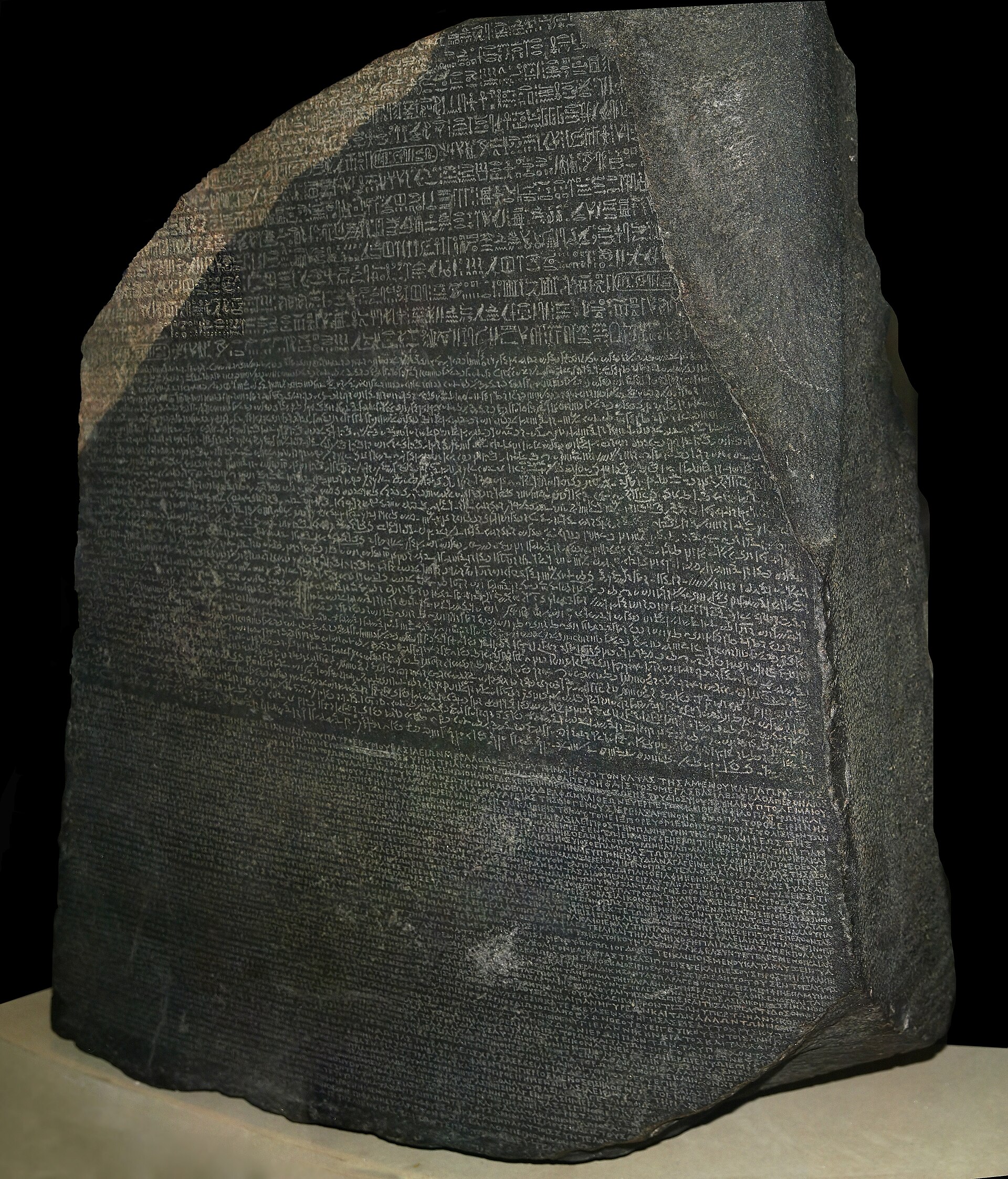
The Rosetta Stone is in the British Museum because of a military capitulation in 1801, not because of a seizure that a later peace could reverse. French engineers uncovered it in July 1799, and when General Menou surrendered Alexandria on 30 August 1801 the antiquities assembled by the French scientific commission were declared public property under the capitulation, subject to the allied generals.
Colonel Tomkyns Hilgrove Turner brought it to England aboard the captured French frigate HMS Egyptienne, landing at Portsmouth in February 1802, and it has been on display in London almost continuously since June 1802. Apart from wartime storage it left once, for one month in October 1972, to be shown at the Louvre.
Of the four objects here it is the only one whose transfer was agreed in writing between armies, and it is also the only one whose present holder has never had to answer an 1815 argument.
The Bayeux Tapestry went to Paris as a loan that Napoleon himself ended
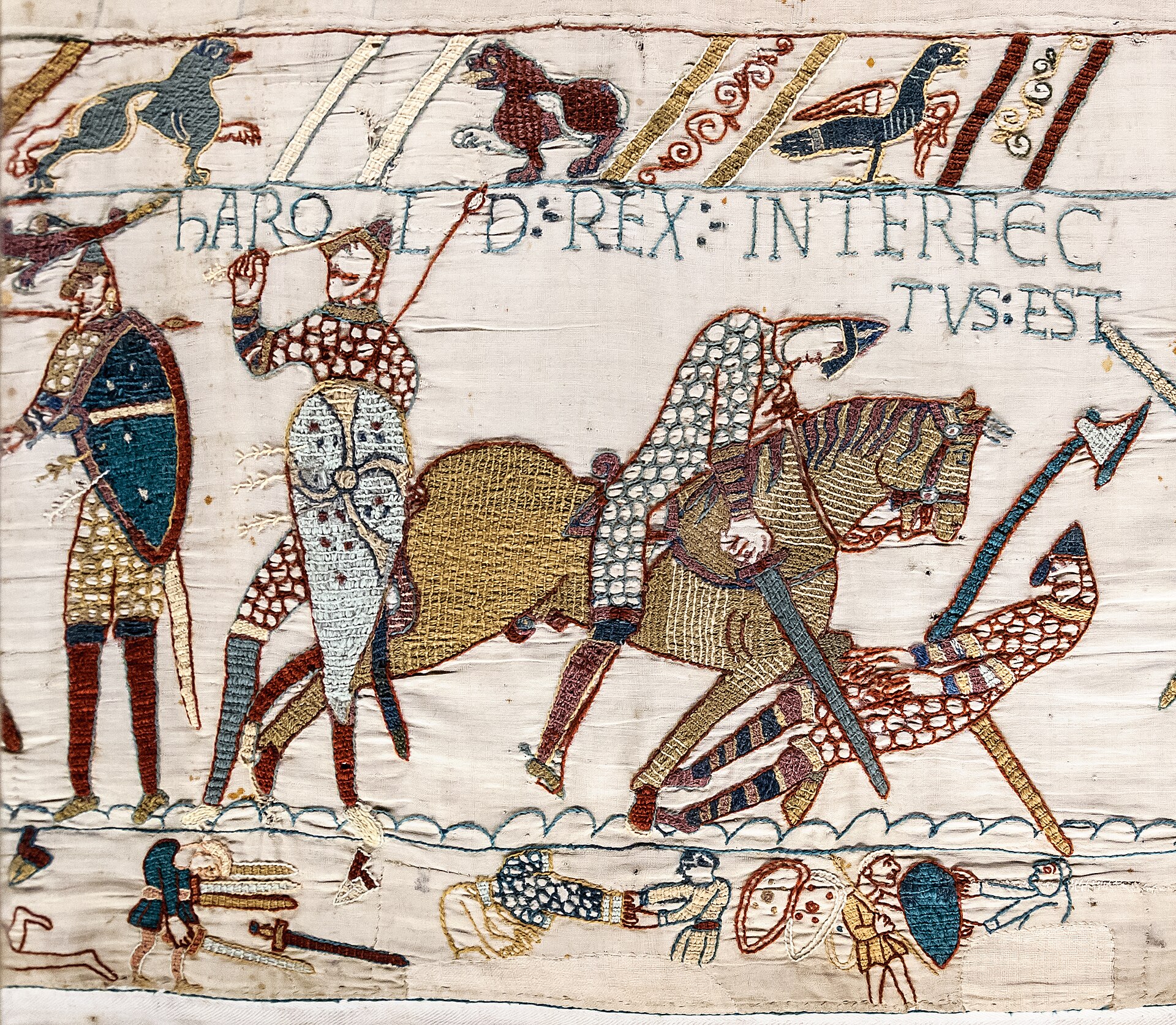
The Bayeux Tapestry was taken to Paris in 1803 for a display, not for the Louvre's collection, and Napoleon ordered it returned on 23 February 1804. This archive's record has it shown in the Apollo Gallery from 6 December 1803 to 18 February 1804, as propaganda linking his planned invasion of England to William the Conqueror's. It was sent back to Bayeux, on what he called a loan for a thousand years.
The tapestry was already state property by then, seized for the French nation in 1794, so the move was an internal transfer and no foreign claim was ever involved. Its record shows a later and longer absence: the embroidery is on loan to the British Museum from September 2026 to July 2027, the first time it has travelled to Britain.
What the four endings say about restitution after a war
The four endings show that restitution after the Napoleonic wars was settled object by object, by whoever was in the room. A city that would not accept a substitute got its painting. A treaty partner that accepted one lost its painting for good, and the Louvre still catalogues the Veronese with the acquisition mode 'military conquest'.
This is a different problem from the 1933 to 1945 gap, which has its own principles and its own claimants. For the Napoleonic cases the records here contain no live claim, which is why the argument stays in the history of each object and not in a court.
Questions
It was not returned in 1815 because a substitute was accepted: Charles Le Brun's Le Repas chez Simon went to Venice instead. Sources differ on whether the Austrian commissioner or Antonio Canova made the decision, and both versions say the painting was thought too fragile to move.
Yes. It was taken from Danzig in 1807 and returned after Napoleon's fall, and the National Museum in Gdansk says it was displayed again in St Mary's Church in January 1817. It was taken again after 1945 and came back to Poland about ten years later.
It passed to British hands under the Capitulation of Alexandria in 1801 after the French army in Egypt surrendered. It reached Portsmouth in February 1802 and has been on display in London since June 1802.
No. It was shown in the Apollo Gallery in Paris from 6 December 1803 to 18 February 1804 and sent back to Bayeux by Napoleon's order of 23 February 1804.
Sources
- 1National Museum in Gdansk, 'The history of the painting', Last Judgment triptych (1807 occupation, Paris, return in January 1817, Red Army 1946, return after ten years) sadostateczny.mng.gda.pl/en/...
- 2Wikipedia, 'The Wedding at Cana (Veronese)' (11 September 1797 taking, 1815 non-return, Le Brun exchange, 2007 facsimile) en.wikipedia.org/wiki/...
- 3Wikipedia, 'Rosetta Stone' (Capitulation of Alexandria, HMS Egyptienne, Portsmouth in February 1802, display from June 1802, October 1972 Louvre loan) en.wikipedia.org/wiki/...
- 4Wikipedia, 'Bayeux Tapestry' (display in Paris under Napoleon, British Museum loan September 2026 to July 2027) en.wikipedia.org/wiki/...
- 5Iconotheca record, Veronese, The Wedding Feast at Cana (Louvre INV 142; treaty clause, Berthollet's list, 1815 exchange), citing the Louvre catalogue and Hanson, Uglow and Chalton iconotheca.com/artworks
- 6Iconotheca record, The Bayeux Tapestry (1794 seizure, Apollo Gallery 6 December 1803 to 18 February 1804, return order of 23 February 1804) iconotheca.com/artworks
More in Provenance and Restitution
The partA return is a new arrangement, not a conclusion
Four contested antiquities, four different things a return turned out to be: a renaming, a rotating loan, a forfeiture nobody enforced and a broken...
When the Only Proof of Where an Object Was Is a Photograph
The Third Imperial Easter Egg was photographed once, in March 1902, and that single plate is what identified it in 2014.
Moved for Safekeeping Is a Link in the Chain
Nine evacuations in this archive: three objects never returned to the building they left, one came back unrecognised and title changed once, by a...