The Object the Museum Does Not Own
One object in this archive was displayed under a British Museum number for 135 years before the Museum bought it, and the Museum's own record flags that first number as registered in error.
Records in this piece: The Taking of Christ, The Portland Vase, The David Vases, The Archimedes Palimpsest, Magna Carta, 1297 (the Perot-Rubenstein copy), The Euphronios Krater, Kouros, The Morgantina Treasure
On this page 8 sections
ContentsClose
In short
- The British Museum's own record for the Portland Vase carries two numbers. The registration number is 1945,0927.1, the year it bought the vase. A second number, 1810,0609.1, is listed under additional identifiers with the parenthesis registered in error, because in 1810 the object was a deposit and not an acquisition.
- That vase was on public display in the British Museum for 135 years before the Museum owned it, and for three of those years, between 1929 and 1932, it was withdrawn by its owner and offered at Christie's, where it failed to reach its reserve.
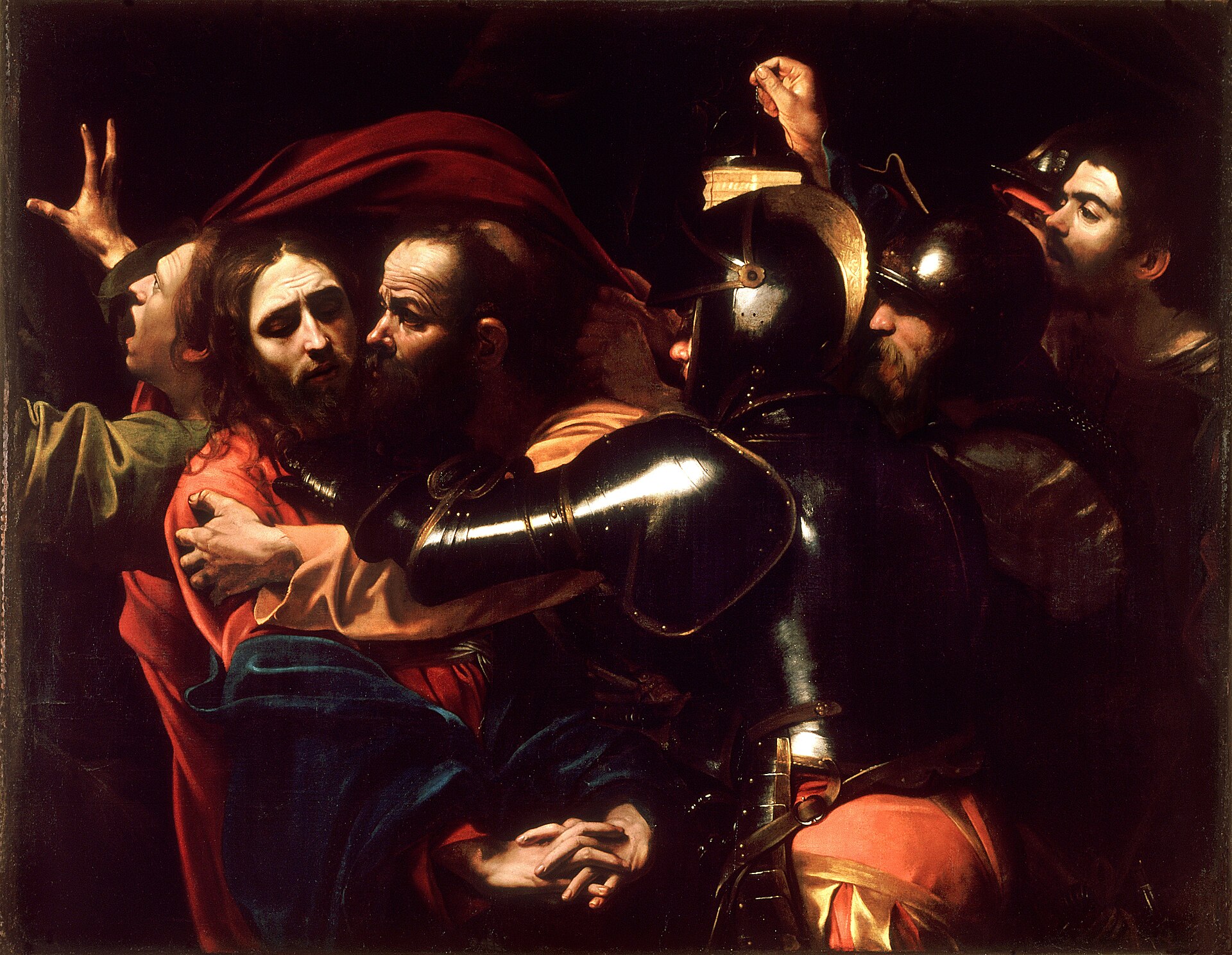
- A loan number is visible on the label if you know to look for it. The National Gallery of Ireland catalogues Caravaggio's Taking of Christ as L.14702 and states in its credit line that the picture is on indefinite loan from the Jesuit Community at Leeson Street, an arrangement now in its thirty-third year.
- A loan can end in a gift and the numbering does not change. The David Vases still carry the Percival David Foundation's own numbers, PDF,B.613 and PDF,B.614, although the British Museum's acquisition note records that the collection was on loan from 2009 and was gifted permanently by the Foundation's trustees in 2024.
- The owner sometimes pays the running costs. The Archimedes Palimpsest was bought by an anonymous collector at Christie's on 29 October 1998 for two million dollars and deposited at the Walters Art Museum the following January, and the project that conserved and imaged it states that the work was funded by the owner.
A number on a label is not a title deed
A museum number tells you when an institution took an object into its records and says nothing about who owns it. Across the published records of this archive the two come apart often enough that reading a credit line as a statement of ownership is a research error rather than a nicety.
The distinction matters for three reasons and none of them is pedantic. A loan can be withdrawn, which changes where an object is and sometimes whether it survives as a public work at all. A loan is not a link in an ownership chain, so a provenance that treats a museum's custody as ownership has invented a transfer. And the money follows title, so the party paying for conservation, imaging and insurance is not always the party whose name is on the gallery.
What follows are five arrangements in this archive, all of them currently or recently on public display, none of which is a straightforward accession, and all of which the holding institutions describe accurately in their own published records if you read past the label.
The Portland Vase carried a British Museum number for 135 years before the Museum owned it
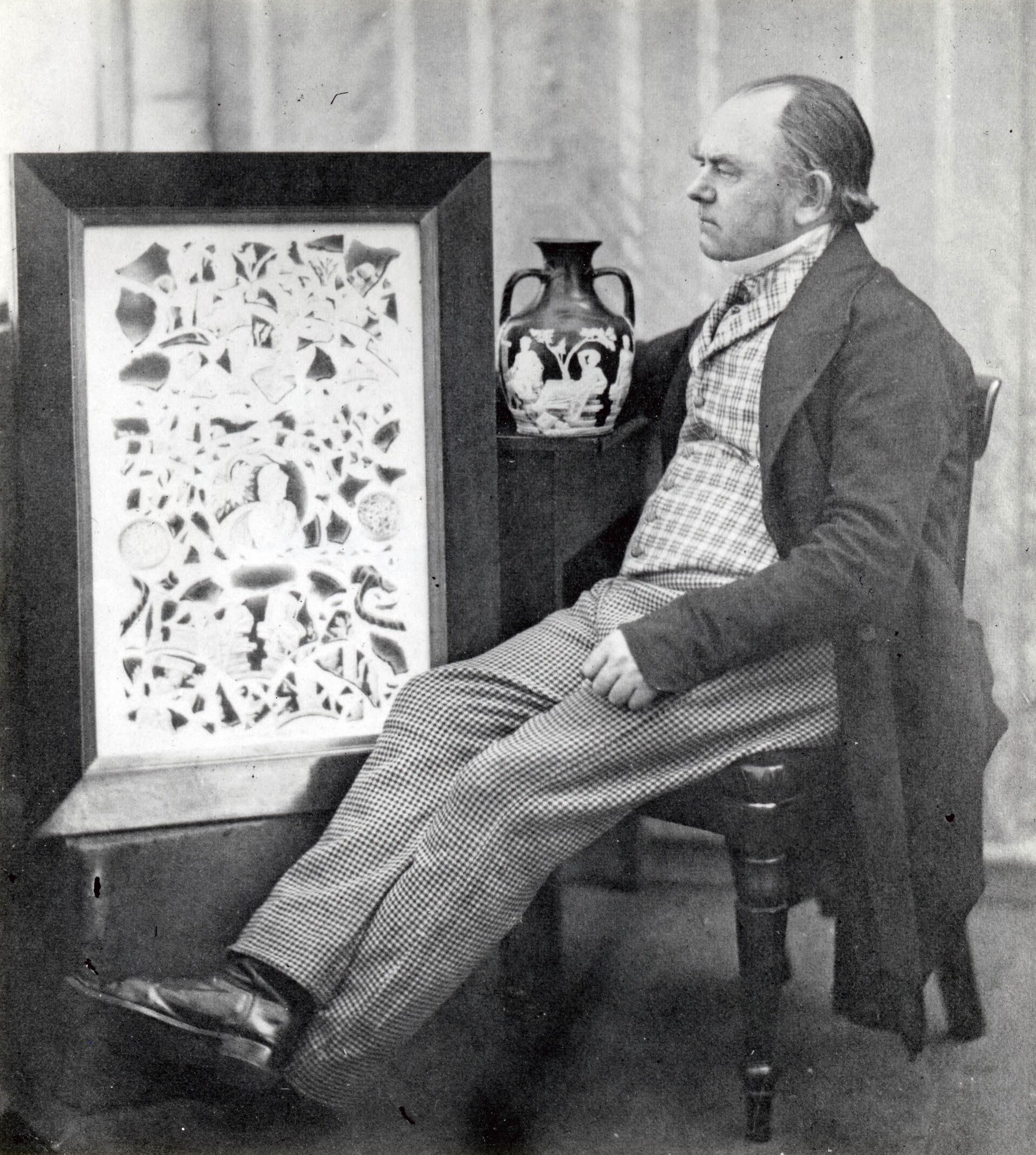
The Portland Vase entered the British Museum in 1810 and the British Museum bought it in 1945. The Museum's own collection record states the position in one sentence under acquisition notes: the vase was deposited on loan in the museum in 1810, but was only bought by the museum in 1945.
The record carries the consequence in its numbering. The registration number is 1945,0927.1, and the acquisition name is a purchase from William Arthur Henry Cavendish Bentinck, seventh Duke of Portland, funded by James Rose Vallentin. Under additional identifiers the record lists a second, earlier number, 1810,0609.1, followed by the parenthesis registered in error. The Museum gave a loan a registration number in the year it arrived, in the form it used for objects it had acquired, and later marked that number as a mistake.
The intervening 135 years were not uneventful. It was in that period that a visitor smashed the vase in February 1845 and Doubleday reassembled it by September, and it was in that period that the sixth Duke withdrew it and offered it at Christie's between 1929 and 1932, where it failed to reach its reserve and came back. Everything that is famous about the vase's modern history happened while the institution displaying it had no title to it at all.
An L, not an accession year
The National Gallery of Ireland's catalogue makes the arrangement visible in the number itself. Caravaggio's Taking of Christ is object number L.14702, where the L stands for loan, against a numbering system in which the Gallery's own pictures carry a plain sequence such as 2882.
The credit line is equally explicit: on indefinite loan to the National Gallery of Ireland from the Jesuit Community, Leeson St., Dublin, who acknowledge the kind generosity of the late Dr Marie Lea-Wilson, 1992. The picture had hung unrecognised in the Jesuit house of study since about 1930, was identified in the early 1990s and published by Sergio Benedetti in The Burlington Magazine in November 1993, and went on loan the same year.
Indefinite is not permanent and the Gallery does not say that it is. The arrangement has run for thirty-three years and could be ended by the owner. A gallery's single most famous picture can be the one thing in the building that the trustees have no power to keep.
A loan that ended in a gift, and a number that never changed
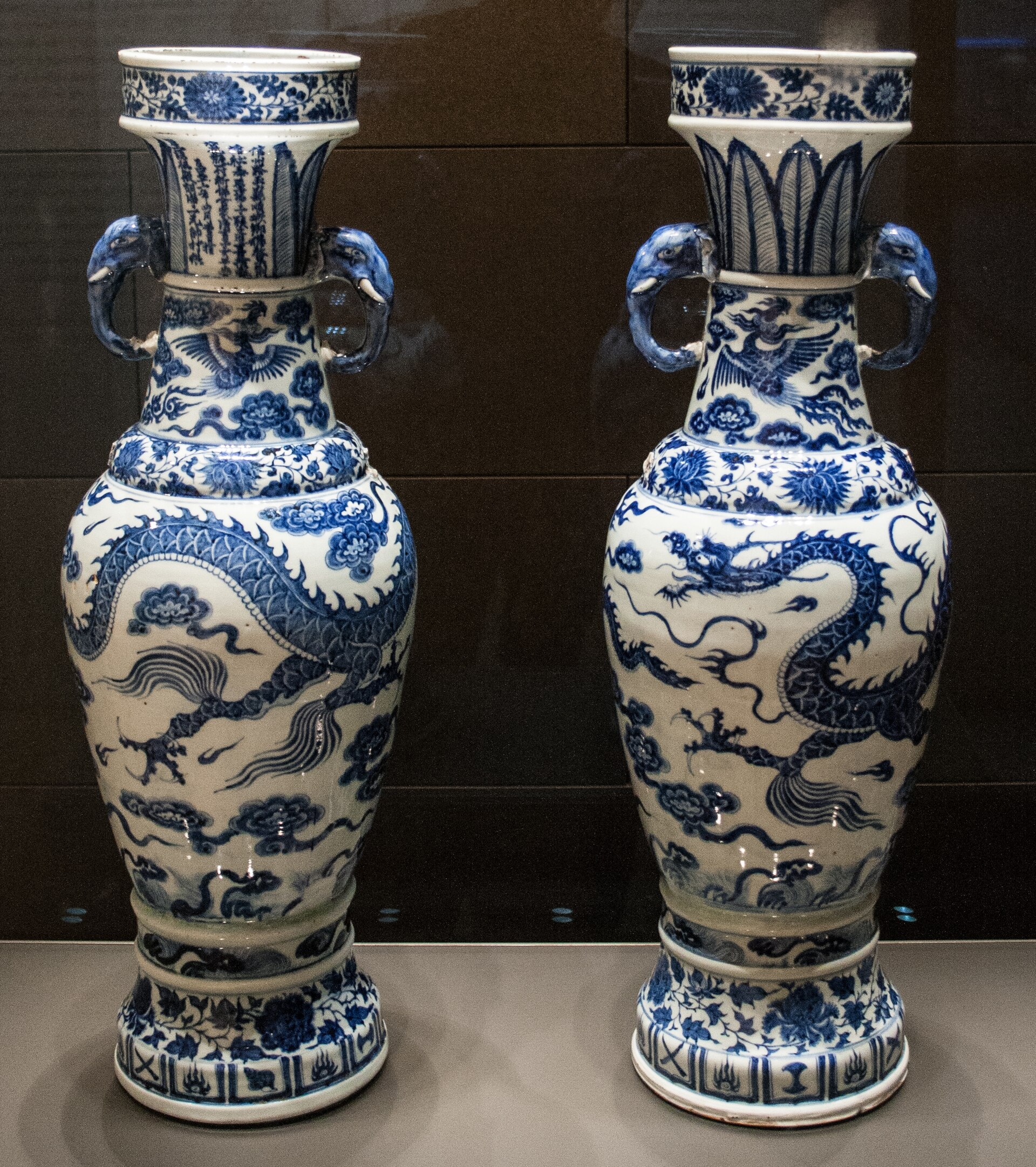
The David Vases show what happens to the paperwork when a loan converts into ownership, which is very little. The British Museum's record for the first of the pair gives the museum number as PDF,B.613 and the registration number as PDF,B.613, which is the Percival David Foundation's own catalogue number and not a British Museum registration in the usual form.
The acquisition note explains why: this object is part of the Sir Percival David Collection, previously on loan to the British Museum since 2009, and in 2024 the trustees of the Sir Percival David Foundation of Chinese Art gifted this private collection of Chinese ceramics to the Museum permanently. The acquisition name accordingly reads donated by the Sir Percival David Foundation of Chinese Art.
Fifteen years of display preceded the gift, and the record of the vases' own market history sits in the same note: from the Charles Russell collection through Sotheby's in 1935, via Sparks, for 360 pounds. A reader in Room 95 at any point between 2009 and 2024 was looking at objects the Museum did not own, in a gallery named for the collection, under numbers that told them so.
The owner pays for the conservation
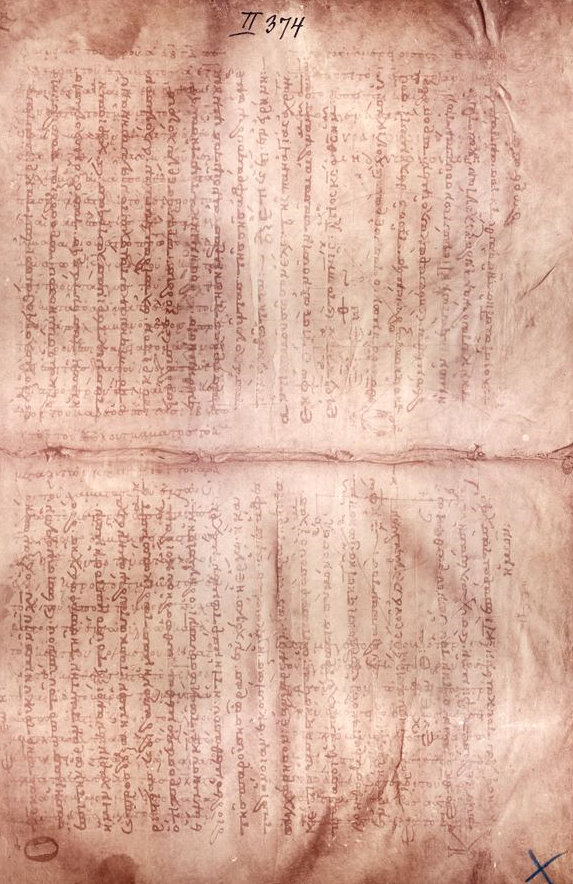
The Archimedes Palimpsest has been housed, conserved, imaged and published by a public museum that has never owned it. The project's own account of the manuscript's history gives the transaction plainly: at two in the afternoon on 29 October 1998, at Christie's in New York, the book was sold to an anonymous collector for two million dollars.
The purchaser then deposited the manuscript at the Walters Art Museum in Baltimore in order to conserve it, image it and study it. The project's statement on the funding is one clause long and it settles the question of who was carrying the work: work on the palimpsest, funded by the owner, has been ongoing ever since.
The result of that arrangement is that a privately owned object produced a public data set, released in 2008 under terms that allow reuse, and that the museum's role was custody and expertise rather than ownership. The credit line on every processed image of this manuscript names the Walters, and the party that paid for the image is not named on it.
A loan described as a gift to the American people
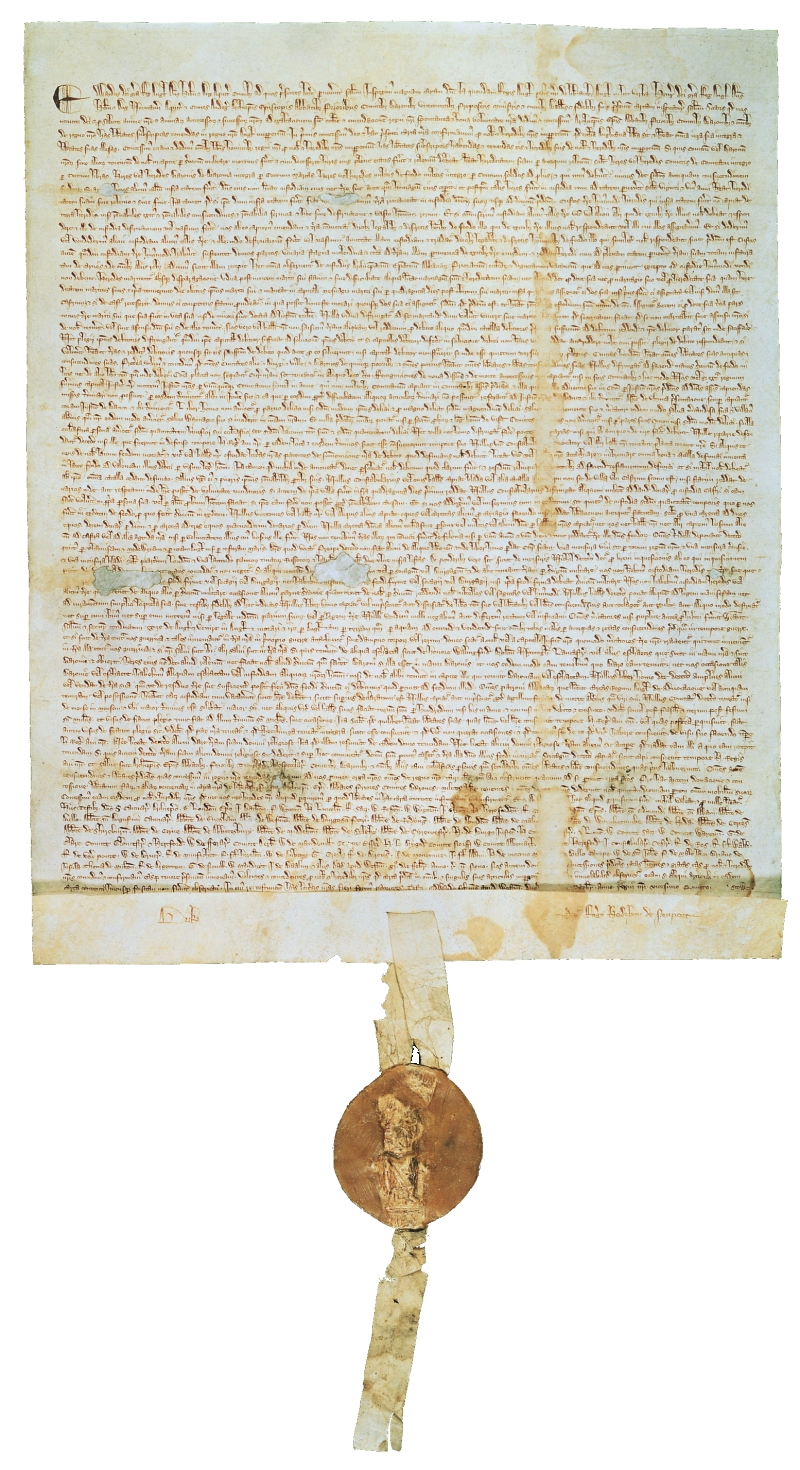
The National Archives of the United States displays a 1297 Magna Carta that it does not own, and says so in its own press release. The Archives records that the document was purchased by David M. Rubenstein in 2007 and that Rubenstein has placed Magna Carta on loan to the National Archives as a gift to the American people, returning to public view on 12 March 2008 in the West Rotunda Gallery.
The phrasing is worth sitting with, because it does two things at once. It states accurately that the arrangement is a loan, and it uses the word gift for the public benefit rather than for the transfer of title. Both halves are true and a visitor could be forgiven for reading only the second.
The subsequent history is a joint one. The Archives announced in 2010 that the document would be re-encased, work carried out jointly by the institution and the owner, and the owner has separately funded gallery construction at the Archives. The public sees a national institution and a founding document, and the ownership sits with a private individual who bought it at auction.
Five arrangements, side by side
Setting the five together shows how long custody can run ahead of title. Every row below is taken from the holding institution's own published record, and in each case the institution states the position accurately.
| Object | Holder | Owner during the arrangement | Arrangement began | Title moved |
|---|---|---|---|---|
| The Portland Vase | British Museum | The Dukes of Portland | 1810, deposit | 1945, purchase from the seventh Duke |
| Caravaggio, The Taking of Christ | National Gallery of Ireland | Jesuit Community, Leeson Street, Dublin | 1993, indefinite loan | Has not moved |
| The David Vases | British Museum | Sir Percival David Foundation of Chinese Art | 2009, loan | 2024, gift by the Foundation's trustees |
| The Archimedes Palimpsest | Walters Art Museum | Anonymous private collector | January 1999, deposit | Has not moved |
| Magna Carta, 1297 exemplification | National Archives, Washington | David M. Rubenstein | 2007, loan | Has not moved |
Three of the five arrangements are open, and the two that closed took 135 years and fifteen. The median case in this group is not a museum acquiring an object but a museum holding one indefinitely on somebody else's terms.
How to read a credit line
A credit line answers a question about acknowledgement and a museum number answers a question about registration, and neither answers the question a provenance researcher is asking. Four checks separate custody from title without leaving the institution's own record.
Look at the shape of the number first. A prefix that is not a year, such as an L for loan or a collection code like PDF, is the institution telling you the object is catalogued outside its accession sequence. Read the acquisition or credit field for a preposition: from names a lender, purchased from and donated by name a transfer. Check the additional identifiers, because the British Museum's flagging of 1810,0609.1 as registered in error is the whole story of the Portland Vase compressed into one line. And look for who funded the conservation, since in the Archimedes case that is the only place in the public record where the owner appears at all.
The corresponding rule for writing a record is not to promote custody into ownership. This archive records a loan as a loan with the lender named, and does not close a provenance chain at the museum door. A chain that ends with the name of the gallery has stopped one transfer short of the truth in at least three of the five cases above.
Questions
No. Objects can be on loan, on deposit or on indefinite loan, and the arrangement is usually stated in the institution's own catalogue rather than on the wall. Caravaggio's Taking of Christ has hung in the National Gallery of Ireland since 1993 under the number L.14702 and is owned by the Jesuit Community at Leeson Street, Dublin.
It marks a loan rather than an accession. Accession numbers normally begin with the year the object entered the collection, so a number whose prefix is a letter, or a collection code such as PDF for the Percival David Foundation, indicates that the object is catalogued outside the institution's own acquisition sequence.
A hundred and thirty-five years. The Museum's own acquisition note states that the vase was deposited on loan in 1810 and only bought in 1945, from the seventh Duke of Portland with funding from James Rose Vallentin. Its record also lists a number 1810,0609.1 under additional identifiers, marked registered in error.
An anonymous private collector who bought it at Christie's in New York on 29 October 1998 for two million dollars and deposited it at the Walters Art Museum in Baltimore in January 1999 for conservation, imaging and study. The Archimedes Palimpsest Project states that the work on it has been funded by the owner.
Only where title actually moved to that museum. Where the arrangement is a loan or a deposit, the last owner in the chain is the lender, and recording the holding institution as the terminal owner invents a transfer that did not happen. Check the credit field for a preposition: from names a lender, while purchased from and donated by record a change of title.
Sources
- 1British Museum, collection record for the Portland Vase, registration number 1945,0927.1. Read directly in the Museum's own collection interface. Source for the acquisition date of 1945, the acquisition name naming the seventh Duke of Portland, the funder James Rose Vallentin, the acquisition note stating that the vase was deposited on loan in 1810 and only bought in 1945, and the additional identifier 1810,0609.1 marked registered in error. britishmuseum.org/collection/...
- 2British Museum, collection record for one of the David Vases, museum and registration number PDF,B.613. Read directly. Source for the acquisition name donated by Sir Percival David Foundation of Chinese Art, the acquisition note recording the loan from 2009 and the permanent gift by the Foundation's trustees in 2024, the 1935 Sotheby's purchase for 360 pounds via Sparks, and the Room 95 display. britishmuseum.org/collection/...
- 3National Gallery of Ireland, online collection, The Taking of Christ, object number L.14702. Read directly. Source for the credit line stating indefinite loan from the Jesuit Community, Leeson St., Dublin, acknowledging the generosity of the late Dr Marie Lea-Wilson, and for the 1993 date of the loan. onlinecollection.nationalgallery.ie/objects/...
- 4The Archimedes Palimpsest Project, The History of the Archimedes Manuscript. Read directly. Source for the sale at Christie's New York at two in the afternoon on 29 October 1998 to an anonymous collector for two million dollars, for the deposit at the Walters Art Museum for conservation, imaging and study, and for the statement that the work has been funded by the owner. archimedespalimpsest.org/about/...
- 5United States National Archives, press release nr08-71, Magna Carta Returns to Display at the National Archives, 2008. Read directly. Source for the purchase by David M. Rubenstein in 2007, for the statement that he has placed Magna Carta on loan to the National Archives as a gift to the American people, and for the return to display on 12 March 2008 in the West Rotunda Gallery. archives.gov/press/...
- 6United States National Archives, press release nr10-112, 1297 Magna Carta on Loan to NARA to be Re-encased, 30 June 2010. Used for the joint re-encasement of the document by the Archives and its owner. archives.gov/press/...
- 7Wikipedia, Portland Vase. The British Museum's own record does not mention this episode. en.wikipedia.org/wiki/...
- 8Iconotheca, records for caravaggio-the-taking-of-christ, the-portland-vase, david-vases-british-museum, archimedes-palimpsest and magna-carta-1297-perot-copy, read in full before this article was written. iconotheca.com/artworks
More in Museums and Exhibitions
The partThe complete object is a temporary arrangement
For a dispersed set, being complete is an event with a date and a duration. Twelve Renaissance tazze were whole and correct for two days in 2014, and...
When the Holder Is Not a Museum, the Accession Number Is Replaced by Law
Fourteen records here are held by a cathedral, a diocese, a cathedral works, a charitable trust or a monuments agency.
A Closing Date That Moves Both Ways, and Who Actually Moved It
Of 937 exhibitions tracked here, only 7 ever had a date move, and three of those flipped between the same two dates again and again.