The Mark the Collector Left on the Object
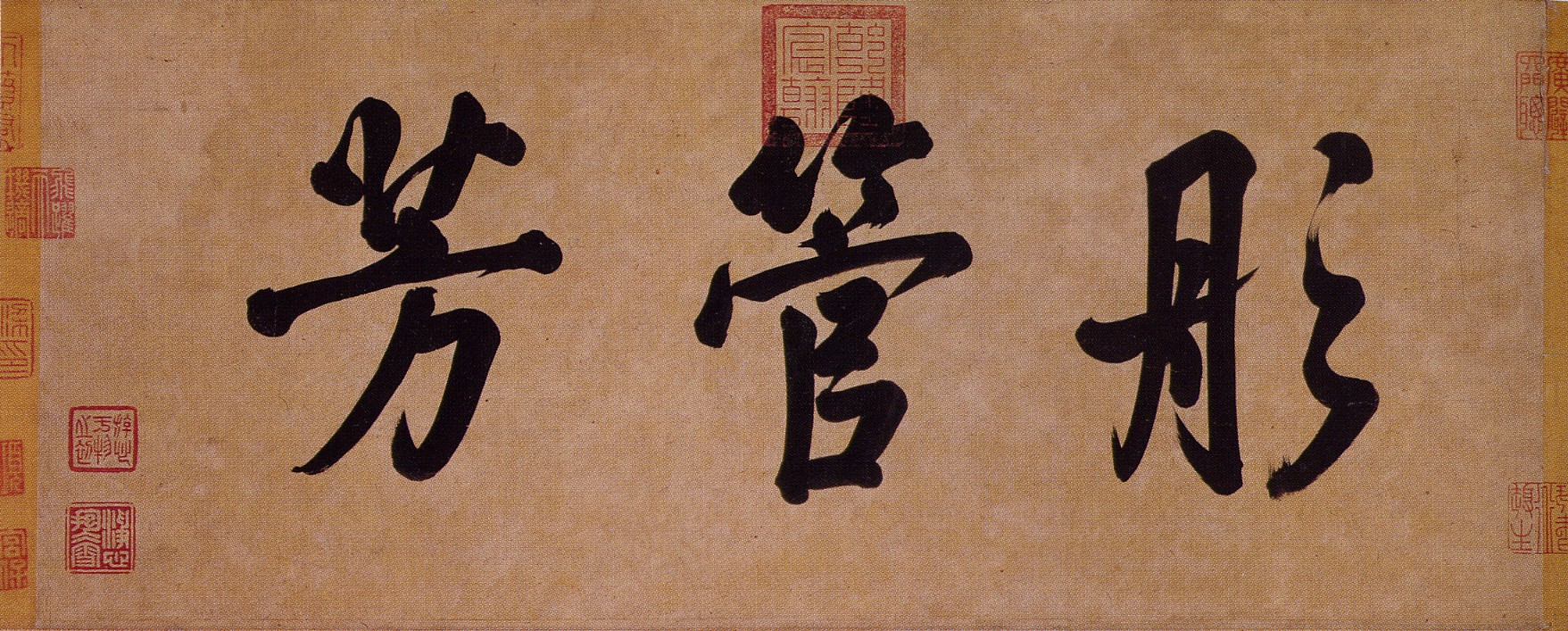
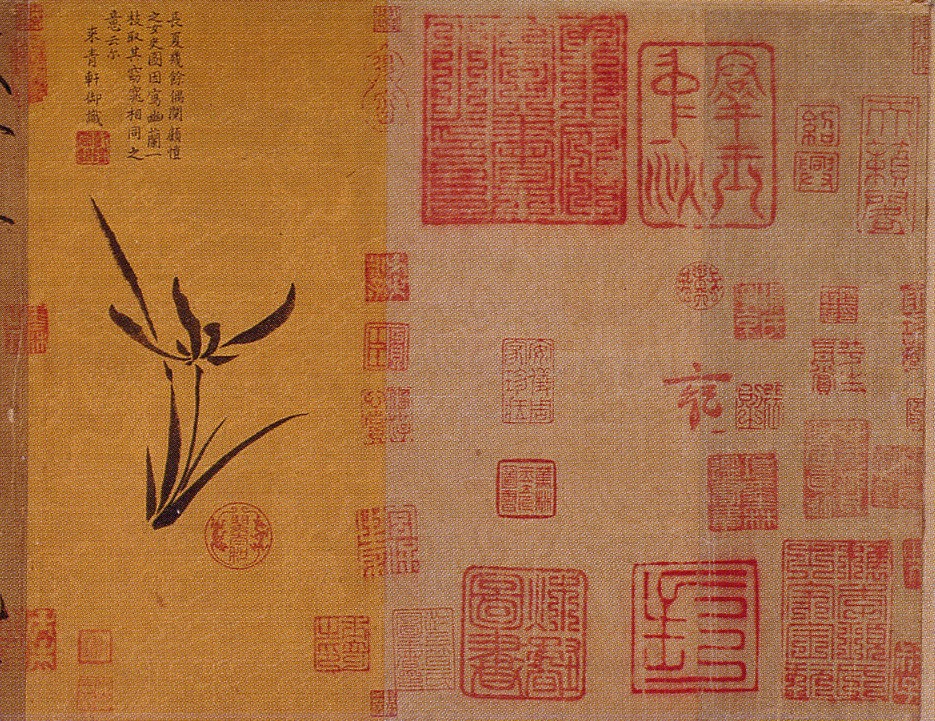
The British Museum catalogues the Qianlong Emperor as an inscriber of the Admonitions Scroll. An ownership mark is evidence and alteration at the same time.
Records in this piece: Admonitions of the Instructress to the Court Ladies, Twin Pines, Level Distance, Bust of Cardinal Scipione Borghese, first version, Christ Crucified between the Two Thieves ("The Three Crosses"), Melencolia I, Christ Preaching, Healing the Sick, and Blessing the Children ("The Hundred Guilder Print"), The Rhinoceros
On this page 8 sections
ContentsClose
In short
- An ownership mark is the only class of provenance evidence that lives on the object rather than in a document elsewhere. It cannot be separated from the thing it describes, which makes it unusually durable and unusually destructive.
- The British Museum's catalogue record for the Admonitions Scroll names the Qianlong Emperor, Xiang Yuanbian and the Jin emperor Zhangzong as inscribers of the object, in the same field that credits Gu Kaizhi as its maker. Later owners are catalogued as contributors to the work.
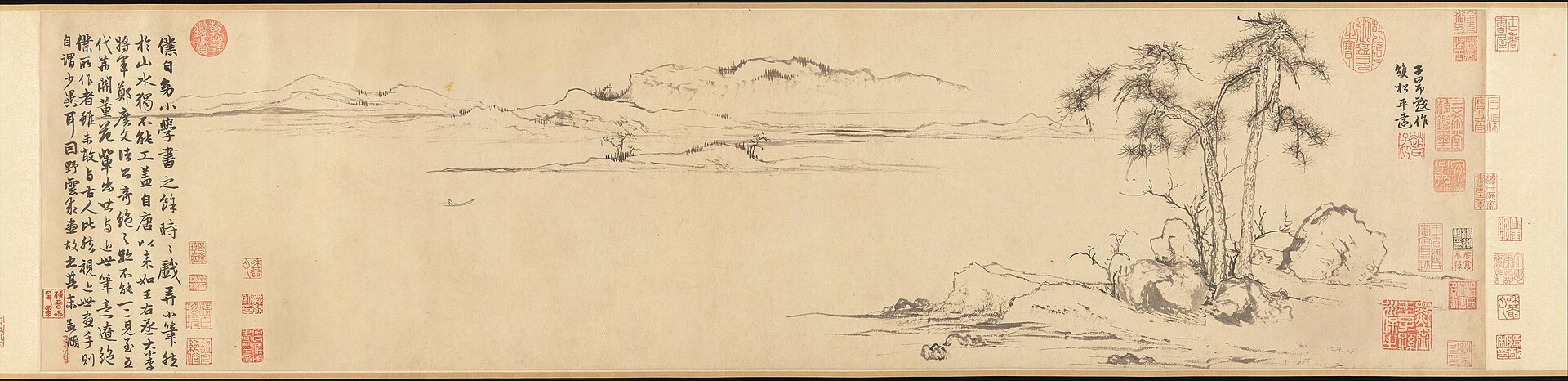
- Zhao Mengfu's Twin Pines, Level Distance carries twenty-three collectors' seals, running from a Ming general through the Qing imperial collection to the twentieth-century connoisseur C. C. Wang, alongside colophons by named contemporaries of the artist.
- A mark can outlive the identity behind it. Lugt 240 appears on three separate sheets in this archive, by two artists and across three centuries of manufacture, all in the same print room at the Rijksmuseum, and none of the museum's own catalogue entries consulted identifies whose mark it is.
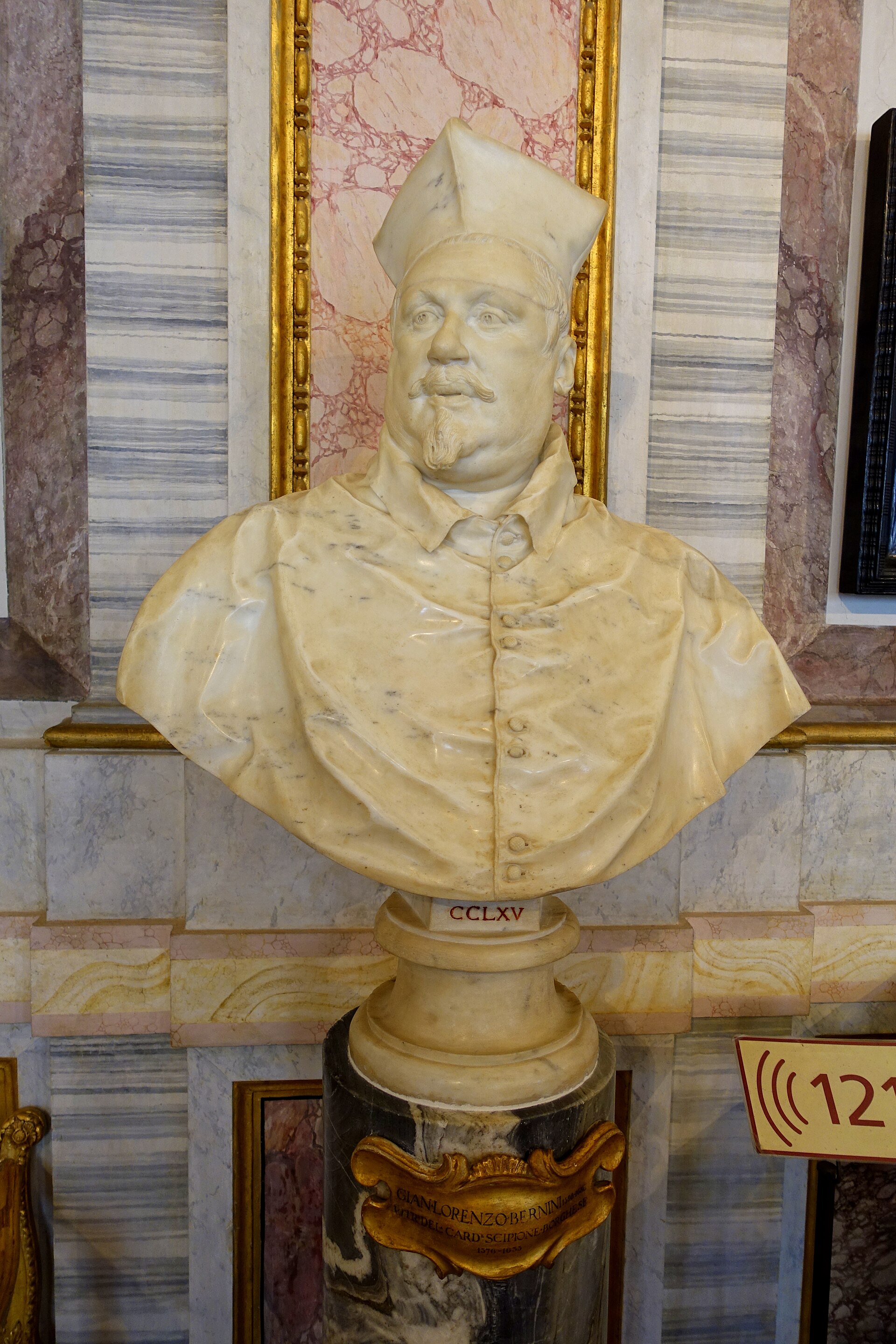
- On the Bernini bust of Scipione Borghese the Borghese inventory number CCLXV, painted in red on the socle, is one of only two features that distinguish the first version from the second. A photograph of either bust is worthless as evidence unless it shows the number or the crack across the forehead.
An ownership mark is provenance that cannot be separated from the object
A collector's mark is the only kind of provenance evidence that travels with the object by force. An invoice can be lost, a stockbook can burn and an inventory can be superseded, but a seal stamped into a scroll or a number painted on a socle goes wherever the thing goes.
That durability is why marks matter so much to this kind of research, and it comes at a price that is rarely stated plainly: every one of them is an alteration. Somebody applied ink, or paint, or a stamp, or an engraving tool to an object they did not make, in order to say that it was theirs. In most other contexts we would call that damage. In provenance work we call it evidence, and both descriptions are accurate at once.
The interesting question is what happens when the two functions come apart, which they do in three distinct ways: when the mark is so extensive it becomes part of the work, when the mark is the only thing identifying the object, and when the mark survives but the name behind it does not.
The British Museum credits three later owners as inscribers
The British Museum's catalogue record for the Admonitions Scroll, museum number 1903,0408,0.1, lists its contributors in a way that is worth reading carefully. Gu Kaizhi appears as the artist the painting is after. Zou Yigui appears as a maker. And then, in the same field, three more names appear as inscribers: the Qianlong Emperor, Xiang Yuanbian and Zhangzong.
Two of those three are collectors, and the third was an emperor who owned it. The Museum's description says the scroll bears many seals and long colophons in the hands of the Huizong and Qianlong emperors, and records a separate inscription entry whose position is given simply as throughout the work, for the seals. Four colophons are transcribed in the record. The first is Qianlong's, written above an orchid he painted onto the mount himself. The fourth is also his, dated to 1746, describing how he brought the scroll together with three other paintings and named the group.
So the institutional catalogue has stopped drawing a line between the object and the ownership marks on it. It treats them as part of the work, because after fourteen centuries and an imperial remounting there is no coherent way to treat them as anything else. That is the far end of what a collector's mark can become.
Twenty-three seals on a handscroll a metre long
Twin Pines, Level Distance carries twenty-three collectors' seals in addition to everything the artist put there himself. The sequence runs from a Ming general, through the Qing imperial collection, to the twentieth-century connoisseur C. C. Wang, from whose family the Metropolitan acquired it in 1973.
Zhao Mengfu inscribed the scroll himself, naming his courtesy name Zi'ang and stating that he painted it at the request of an official called Dong Yeyun, and he applied two of his own seals. A colophon by Yang Zai, who died within a year of Zhao, confirms the commission in an eight-line poem followed by prose, and carries three more seals. A fifteenth-century colophon engages directly with Zhao's position as a descendant of the Song imperial house who served the conquering Yuan court, and carries three more again.
In this tradition the marks are not an accident of custody, they are the practice. Owning a scroll of this standing carried an expectation that you would look at it seriously, record that you had, and stamp it. The result is a provenance chain written on the object in the hands of the people who formed it, which is exactly what Western provenance research spends its time trying to reconstruct from paper.
A number in red paint decides which bust you are looking at
Bernini carved the bust of Scipione Borghese twice, and the two marbles are close enough that identifying which is which from a photograph is a real problem. There are exactly two reliable tests, and one of them is an ownership mark.
The socle of the first version carries the Borghese fideicommissary inventory number CCLXV, painted in red. The other test is physical: a fault runs across the forehead of the first version rather than across the mozzetta. Any photograph that shows neither is useless for telling the two apart, and a good deal of published reproduction shows neither.
A fideicommissary inventory is an entail document, drawn up to record what could not be sold out of the family. The number on this socle exists because Roman law was being used to stop the collection being broken up, and three hundred years later it is the fastest way to identify a specific marble. Nobody painting it intended that, which is a fair summary of how most provenance evidence comes into being.
The mark that outlived the name
Frits Lugt published Les marques de collections de dessins et d'estampes in 1921, with a supplement in 1956, and the Fondation Custodia has maintained a revised and enlarged version online since 2010. It records marks of public and private collections, of print publishers, dealers and mounters, and artists' succession stamps, and it is the standard apparatus for tracing works on paper. A mark gets a Lugt number whether or not anyone knows who applied it.
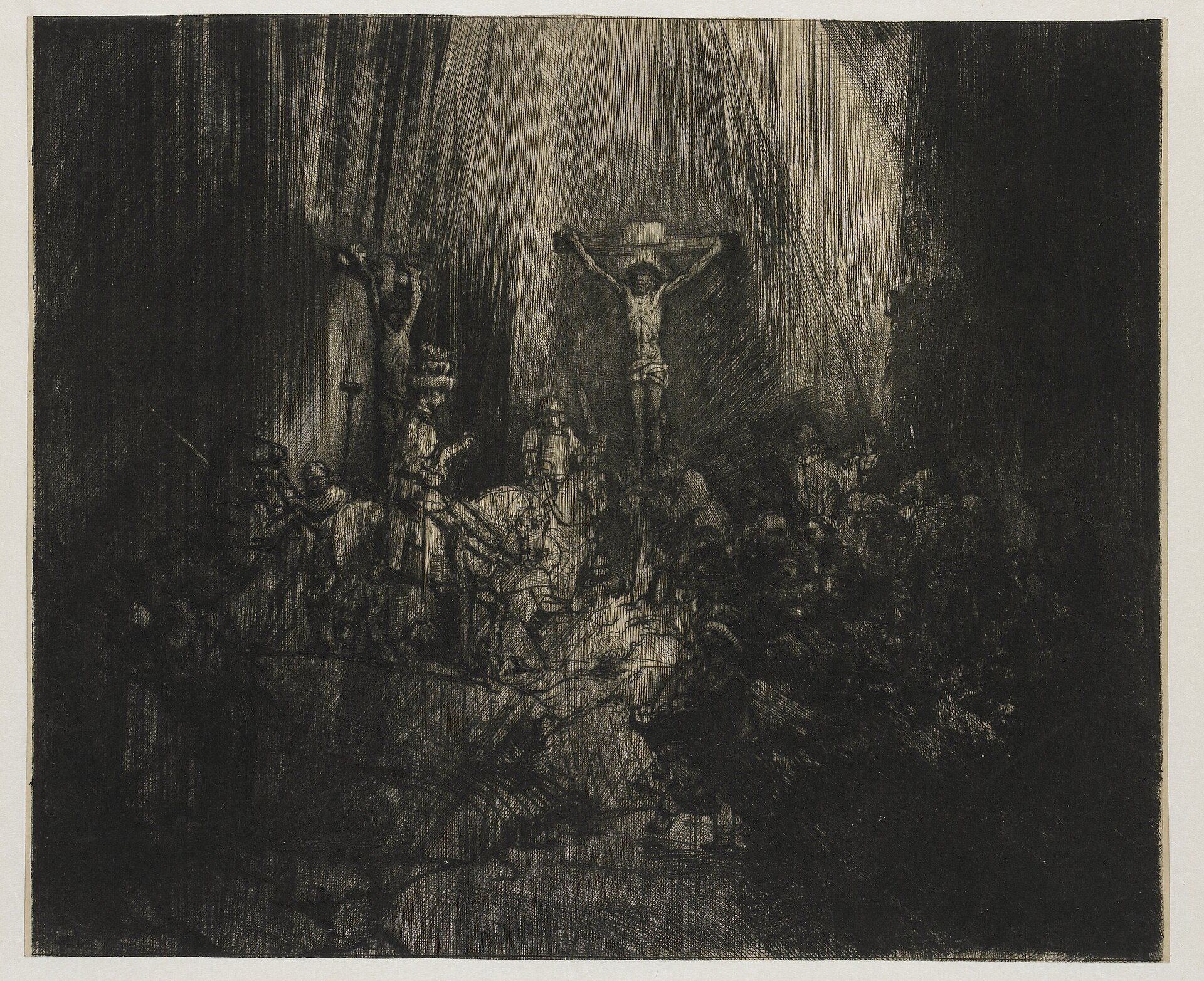
That last point produces the sharpest case in this archive. Lugt 240 appears on three separate sheets we have catalogued: Rembrandt's Three Crosses, Rembrandt's Hundred Guilder Print and Duerer's Rhinoceros. Two artists, three centuries of manufacture apart, and all three impressions sit in the same print room at the Rijksmuseum. None of the museum's own online catalogue entries consulted for those records identifies the collector behind the mark.
| Lugt number | Collector | Records carrying it |
|---|---|---|
| 240 | Unidentified | Three: The Three Crosses, the Hundred Guilder Print, Duerer's Rhinoceros |
| 228 | Unidentified | One: The Three Crosses |
| 1164 | Jean-Francois Gigoux | One: Melencolia I |
| 1760b | Lessing J. Rosenwald | One: Melencolia I |
| 2773 | Adalbert von Lanna, Prague | One: The Three Crosses |
| 12 | Not named in our record | One: Canova, Napoleon as Mars |
Two of those six are recorded as unidentified, and a third we have simply not named. The mark is real, its recurrence is real, and Lugt 240 establishes that three sheets passed through one pair of hands, but the hands have no name attached to them. That is a genuinely odd piece of evidence: it proves a relationship without identifying either party to it.
The cost side of the ledger
Set against all that, the marks have done harm, and the harm is not evenly distributed. A seal is applied with pressure and ink to a paper or silk surface. A stamp on a print occupies part of the sheet permanently. Paint on a marble socle is paint on a marble socle.
The Admonitions Scroll is the clearest case of the trade. Qianlong's additions include a title inscription, a colophon and an orchid painting placed ahead of the surviving scenes, on an object that had already lost three of its twelve registers. He also had it remounted. The Museum flat-mounted the scroll on panels in 1914 and 15, a decision that has itself been the subject of conservation literature. What we have now is a sixth or seventh century painting inside an eighteenth century imperial presentation of it, and the two are not separable.
Would the object be better without the marks? For a conservator, probably. For anyone trying to establish where it has been for fourteen hundred years, plainly not, and I do not think it is possible to have the second without accepting the first. The marks are the reason we can say anything at all about the custody of these objects before the era of the invoice.
How to read a mark
Treat the mark as a claim rather than a fact. Somebody asserted ownership by applying it, and assertion is not title. Marks are forged, added later to raise a price, and applied by people who held an object without owning it, so a mark is the beginning of a question about custody, not the answer to one.
Check whether the mark is catalogued and whether the catalogue names anybody. A Lugt number tells you the mark has been recorded and compared against others; it does not tell you the collector has been identified. Two of the six numbers in this archive stand for an unknown person, and a record that says so is being accurate rather than incomplete.
Finally, ask what the mark is doing to the object, and say it in the record. A photograph that cannot show a seal, a number or a stamp cannot be used to identify the object it depicts, which is why the Bernini test matters. The mark is simultaneously the strongest identification tool a record has and a permanent change somebody made to a thing that was not theirs to change. Both belong in the entry.
Why this archive is free to read
We do this for everyone who loves art. The people who have studied it for years, and the people who just stopped to look. Iconotheca exists so that what we learn belongs to all of them.
Nobody pays us for this. No ads, nothing for sale. These works belong to all of us, and we would rather share them with as many people as we can than keep them to ourselves.
If it gave you something today, tell us to keep going. Follow us, leave a like, or write a positive comment. We read every one, and they are what keeps us going.
Questions
A mark applied to an object by an owner to record their ownership: a stamped or written mark on a print or drawing, a seal impressed on a Chinese scroll, an inventory number painted on a sculpture, or arms engraved on silver. It is the only form of provenance evidence carried on the object itself rather than in a separate document.
A reference number in Frits Lugt's Les marques de collections de dessins et d'estampes, published in 1921 with a supplement in 1956 and maintained online by the Fondation Custodia since 2010. It records marks of collections, publishers, dealers and mounters, and artists' succession stamps. A mark can carry a Lugt number without anyone knowing who applied it.
They alter it permanently, and in the Chinese connoisseurial tradition that was the point rather than a side effect. Owning a work of high standing carried an expectation of examining it, recording the examination in a colophon and applying a seal. The British Museum's record for the Admonitions Scroll lists later owners as inscribers of the object, which is how far that integration goes.
Yes, and it has commercial motive behind it, since a mark implying a distinguished former owner can raise a price. That is why a mark should be treated as a claim of ownership rather than proof of it, and checked against the catalogued impressions of the same mark elsewhere.
Because Bernini carved the bust of Scipione Borghese twice and the two marbles are hard to tell apart in reproduction. Only two features distinguish them reliably: the Borghese inventory number CCLXV painted in red on the socle of the first version, and a fault running across its forehead rather than across the mozzetta. A photograph showing neither cannot be used to identify which bust it is.
Sources
- 1British Museum, collection online, object record 1903,0408,0.1, the Admonitions Scroll. Read for the contributor field naming the Qianlong Emperor, Xiang Yuanbian and Zhangzong as inscribers alongside Gu Kaizhi and Zou Yigui, the description recording many seals and long colophons, the four transcribed colophons including the Qianlong inscription above his orchid painting, the seal inscription entry positioned throughout the work, and the flat mounting on panels in 1914 to 1915. britishmuseum.org/collection/...
- 2Fondation Custodia, 'Collectors' Marks', on Frits Lugt's Les marques de collections de dessins et d'estampes: publication in 1921, the supplement of 1956, the revised and enlarged edition available online since 2010 and regularly updated, and the categories of mark recorded, being marks of public and private collections, print publishers, print dealers and mounters, and artists' succession stamps. fondationcustodia.fr/Collectors-Marks-273
- 3Metropolitan Museum of Art, collection API record for Zhao Mengfu, Twin Pines, Level Distance, accession 1973.120.5, object 40508, for the handscroll's dimensions, medium, date and the C. C. Wang family provenance through the Dillon Fund gift of 1973. collectionapi.metmuseum.org/public/...
- 4Rijksmuseum, object record RP-P-1962-40, Rembrandt, The Three Crosses, state IV, drypoint on Japanese paper, De Bruijn-van der Leeuw Bequest 1962, for the impression illustrated and its recorded collector's stamp. rijksmuseum.nl/en/...
- 5National Gallery of Art, Washington, object page for Albrecht Duerer, Melencolia I, accession 1943.3.3523, for the impression carrying the collectors' stamps recorded in this archive as Lugt 1164 and Lugt 1760b. nga.gov/artworks/...
More in Collectors and Collections
The partThe credit line names the collector, and the accession number tells you what happened
Morgan died in March 1913, and the Metropolitan credits him with gifts made in 1917. The credit line names the collector.
The Longest Ownership Links Here Belong to Owners That Were Not People
The 28 longest institutional ownership links in this archive run 7,434 years between them. Three end in a completed sale.
The Name in the Buyer's Column Is Often an Employee
Across 126 years of sales in this archive the winning bidder is repeatedly not the owner.