The Expert Who Owned It
In this archive the person who authenticated, acquired or won back an object is repeatedly the person who owned it, named it or stole it. The provenance line records the fact and never calls it a conflict.
Records in this piece: Portrait of a Girl, The Assumption of the Virgin (The Marquand Altarpiece), Armor Garniture, Probably of King Henry VIII of England, Armor for the Joust of Peace, Helmet all'Antica, The Euphronios Krater, The Vinland Map
On this page 9 sections
ContentsClose
In short
- A museum director owned the Rembrandt he lent to his own museum, where it hung for at least twenty-one years catalogued as a Rembrandt on his authority. The 2024 sale catalogue described it as after Rembrandt and unsigned.
- The Metropolitan's own object title for its della Robbia altarpiece is The Marquand Altarpiece. Henry G. Marquand gave it in 1882 and was president of the museum's board of trustees, so the donor's name became the object's name inside the institution he governed.
- The Met's Department of Arms and Armor was started in 1904 by a private collector of armour who was then made its founding curator in 1912. The department took the shape of one man's collecting field.
- A provenance line records these facts accurately and never labels any of them. There is no field in any standard record format for the interest a person had in the object they were judging.
The same name appears on both sides of the transaction
Provenance research assumes that the person who judges an object and the person who owns it are two different people. In this archive they are frequently one person. The expert who attributes a picture has often bought it, the curator who acquires a collection has often collected in the same field, the trustee who gives an object also votes on the museum's acquisitions, and in one case the archaeologist who won an object back for his country was later convicted of stealing it.
None of that is hidden. Every one of these facts sits in plain sight in a credit line, a catalogue entry or a court record, and this archive reproduces them because the institutions themselves publish them. What is missing is any place to write down what the relationship means. A provenance line has fields for a date, an owner and an event. It has no field for the interest the owner had in the judgement being made about the object at the time.
So the reader has to supply it. What follows are five cases from the records this archive holds, arranged from the mildest to the worst, with what each one actually cost.
The museum director owned the picture he hung
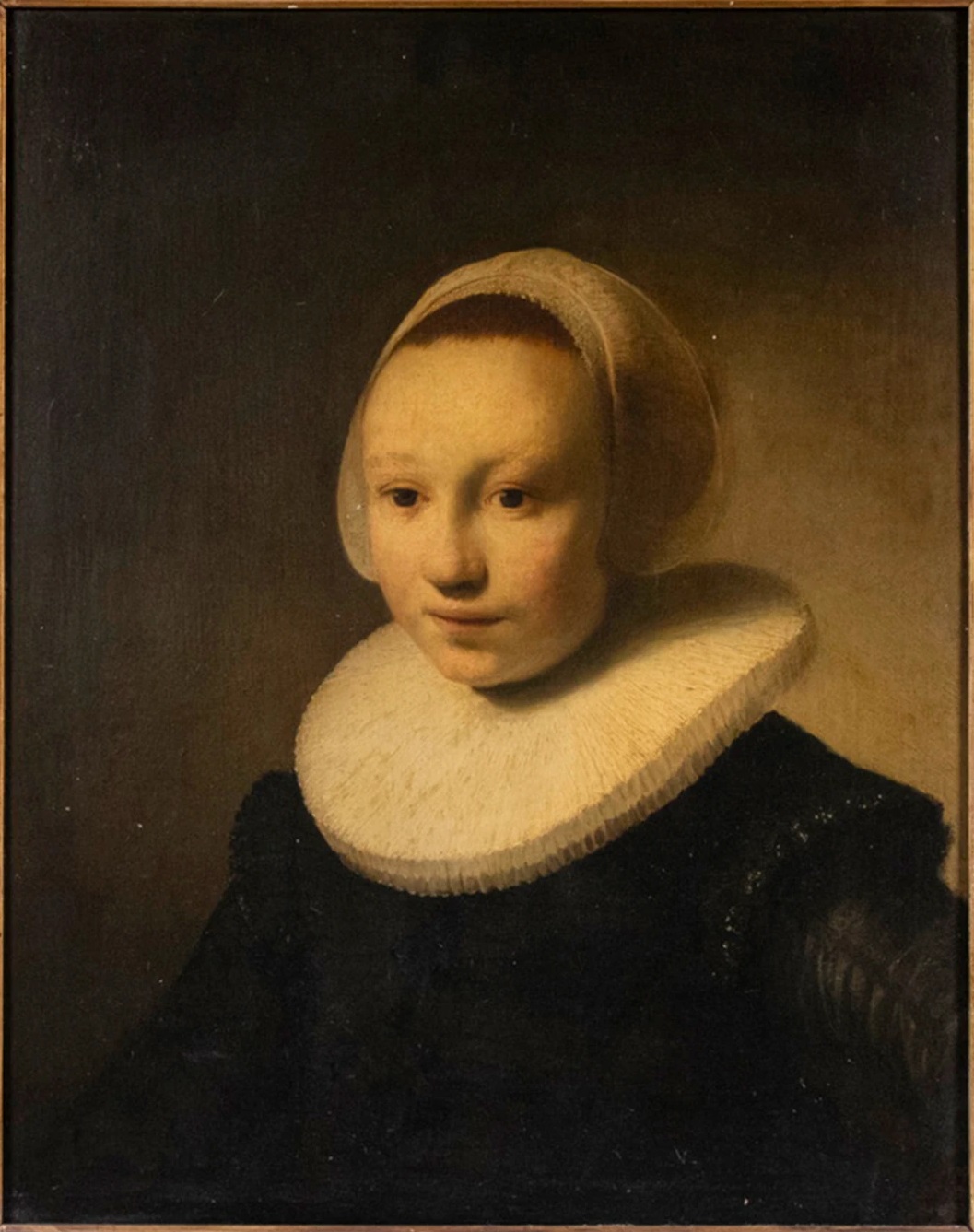
Abraham Bredius was director of the Mauritshuis from 1889 to 1909 and the foremost Rembrandt authority of his generation, and he personally owned the panel this archive records as the Camden attic portrait. He acquired it in 1893 from the London dealer Martin Henry Colnaghi, at a moment when London dealers regarded it as an Aelbert Cuyp, and lent it to the Royal Picture Gallery in The Hague, the museum he was then running. It appears there as entry 577 in the abridged catalogue of 1910: on oak, signed with the monogram RHL, painted about 1630. Hofstede de Groot still recorded it as on loan there in 1914.
Every link in that is defensible on its own. A director may collect, a loan is a public good, and Bredius was right about a great many pictures. The difficulty is only visible when the whole line is read at once: the man whose opinion made the attribution owned the object the attribution was about, and the institution that ratified the attribution by hanging it was the institution he directed. There was no second opinion in the chain anywhere.
The consequence arrived a century later. When the panel surfaced in a Maine attic and sold in August 2024 for a hammer of 1,175,000 US dollars, it was catalogued as after Rembrandt and described as unsigned, though the Mauritshuis catalogue had recorded a monogram. No published argument for the demotion has been found. An attribution that rests on one man who owned the picture is an attribution with nothing underneath it once he is gone.
The trustee's gift carries the trustee's name as the object's title
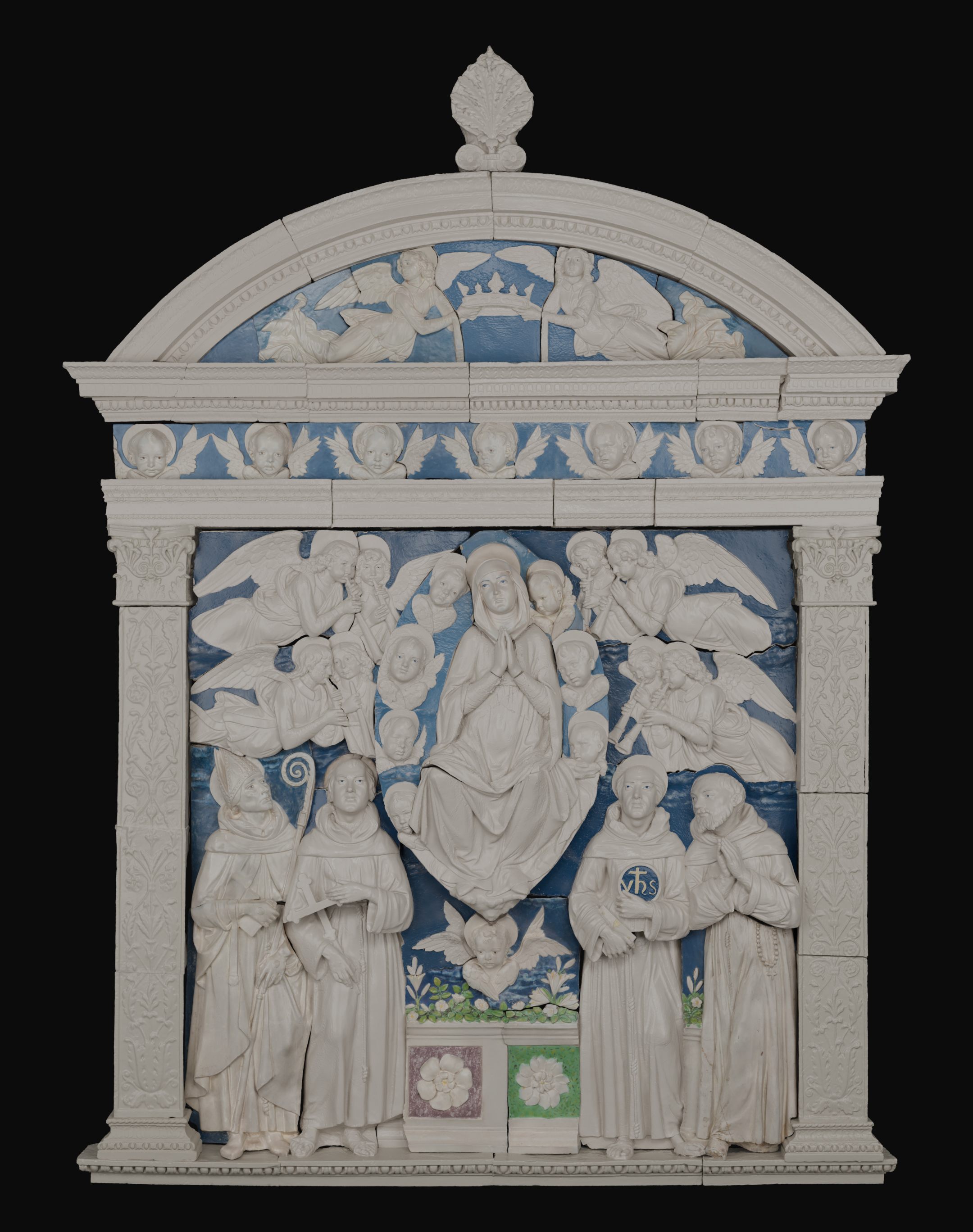
The Metropolitan Museum's own catalogue title for its large glazed terracotta altarpiece by Andrea della Robbia is The Assumption of the Virgin (The Marquand Altarpiece). Its credit line reads Gift of Henry G. Marquand, 1882, and its accession number is 82.4. Marquand was one of the founding group that established the museum in 1869, sat on its building committee, and served as president of its board of trustees until his death in 1902.
So the donor governed the institution that received the gift, and the institution then attached the donor's name to the object permanently, inside its own catalogue, ahead of any of the object's other names. Four generations of scholarship on Andrea della Robbia now cite the piece by a nineteenth-century New York financier. That is not a scandal. It is a small, permanent editorial act, performed by a museum on an object it had just been given by its own president, and it is recorded nowhere as a decision.
Naming is the quietest form this pattern takes, and the most durable. A price is forgotten and an attribution is revised. A name in the title field outlives both.
A department was built around one man's collecting field
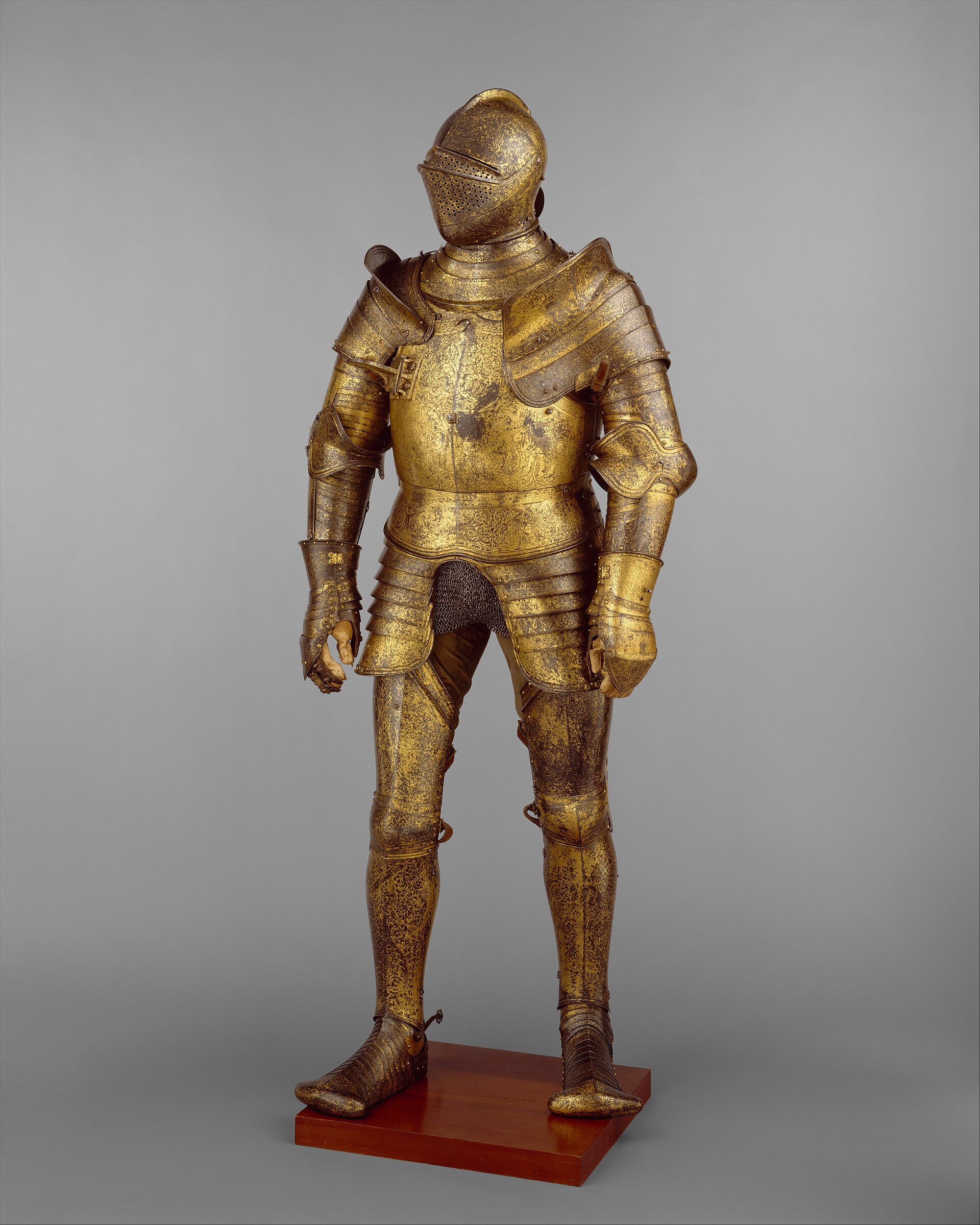
Bashford Dean had assembled a private collection of about 125 pieces of armour by 1900, before he held any post in an art museum at all. In 1904 he was brought into the Metropolitan as a guest curator to organise the Duc de Dino collection the museum had just bought whole, became honorary curator in 1906, and on 28 October 1912 was made the founding curator of its Department of Arms and Armor, at which point he began working for the museum full time. He was a professor of zoology by training, and he kept collecting.
The department this archive draws four objects from therefore exists because a private collector of armour was in the room. Its early holdings arrived by the routes a collector knows: the Dino purchase of 1904, which supplied the joust of peace armour under accession 04.3.291a-q on the Rogers Fund, and the gift of William H. Riggs, whose name is in the credit line of the Greenwich garniture of Henry VIII, accession 19.131.1, alongside the Rogers Fund in 1919.
Read the credit lines alone and you see funds and donors, which is what a credit line is for. Read them with the department's founding date beside them and you see something else: a body of scholarship whose boundaries were set by what one collector found interesting, and which has organised the field ever since.
The curator who bought it sent the provenance question to the dealer
Dietrich von Bothmer, the Metropolitan's curator of Greek and Roman Art, recommended the purchase of the Lydian material in three batches between 1966 and 1970, and the acquisitions committee of the board approved them. When rumours surfaced in 1973 and the New York Times asked where the treasures had come from, the museum's curator of Greek and Roman Art referred the question to the dealer who had sold them.
That is the whole mechanism in one sentence. The person best placed to know was the person with the most to lose from the answer, and the institution's response was to point at the counterparty. Discovery in the litigation that followed produced internal correspondence indicating that staff were likely aware the provenance was controversial when the objects were bought. The museum settled out of court in September 1993, and the material went back to Turkey the following month.
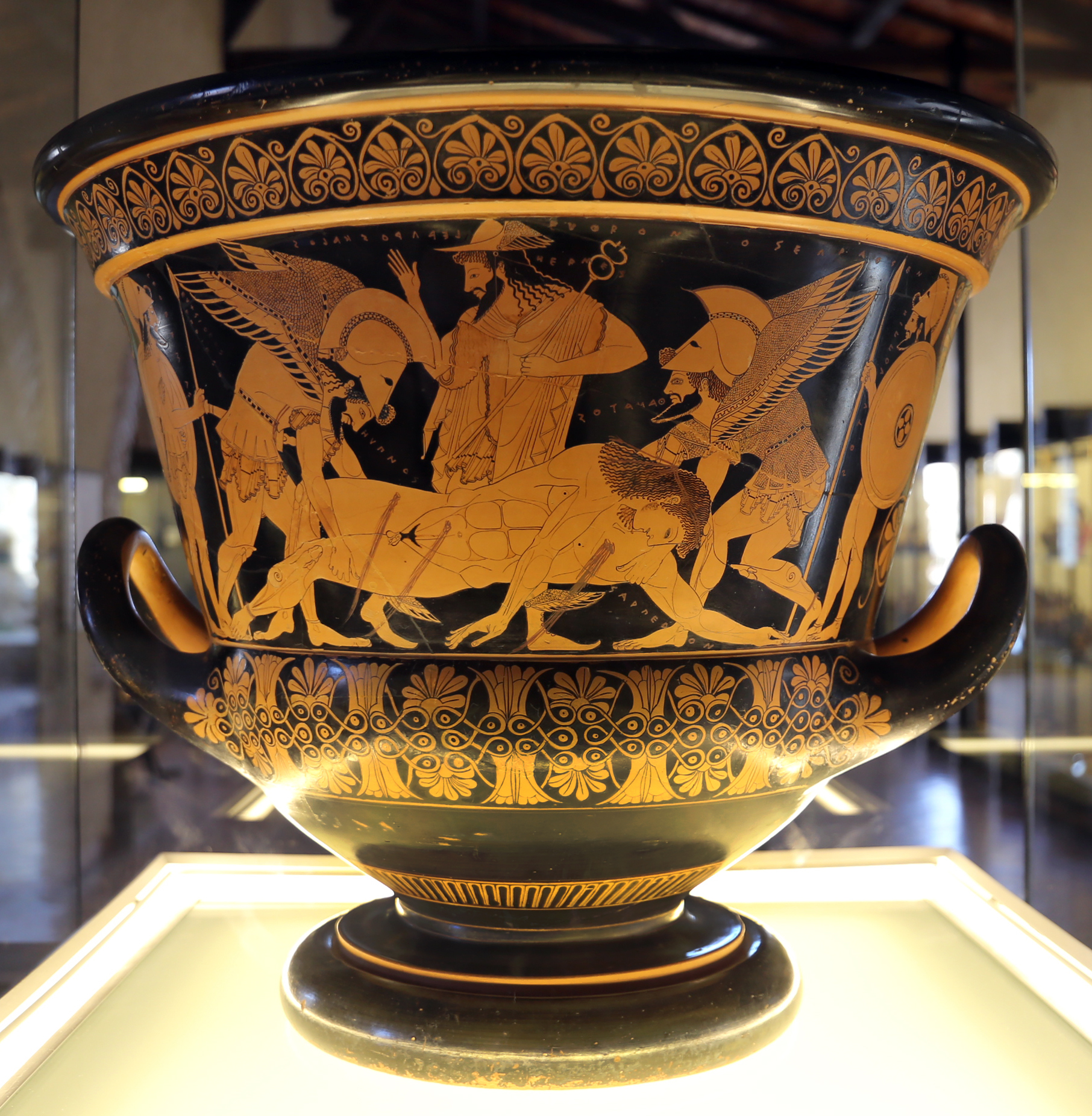
The Euphronios krater ran on the same fault. Robert Hecht notified von Bothmer of the vase in February 1972, and the acquisition went through the curator, the director and the trustees. It is now in Cerveteri, a few miles from the tomb it came out of.
The curator who bought the companion volume, and the map that was a fake
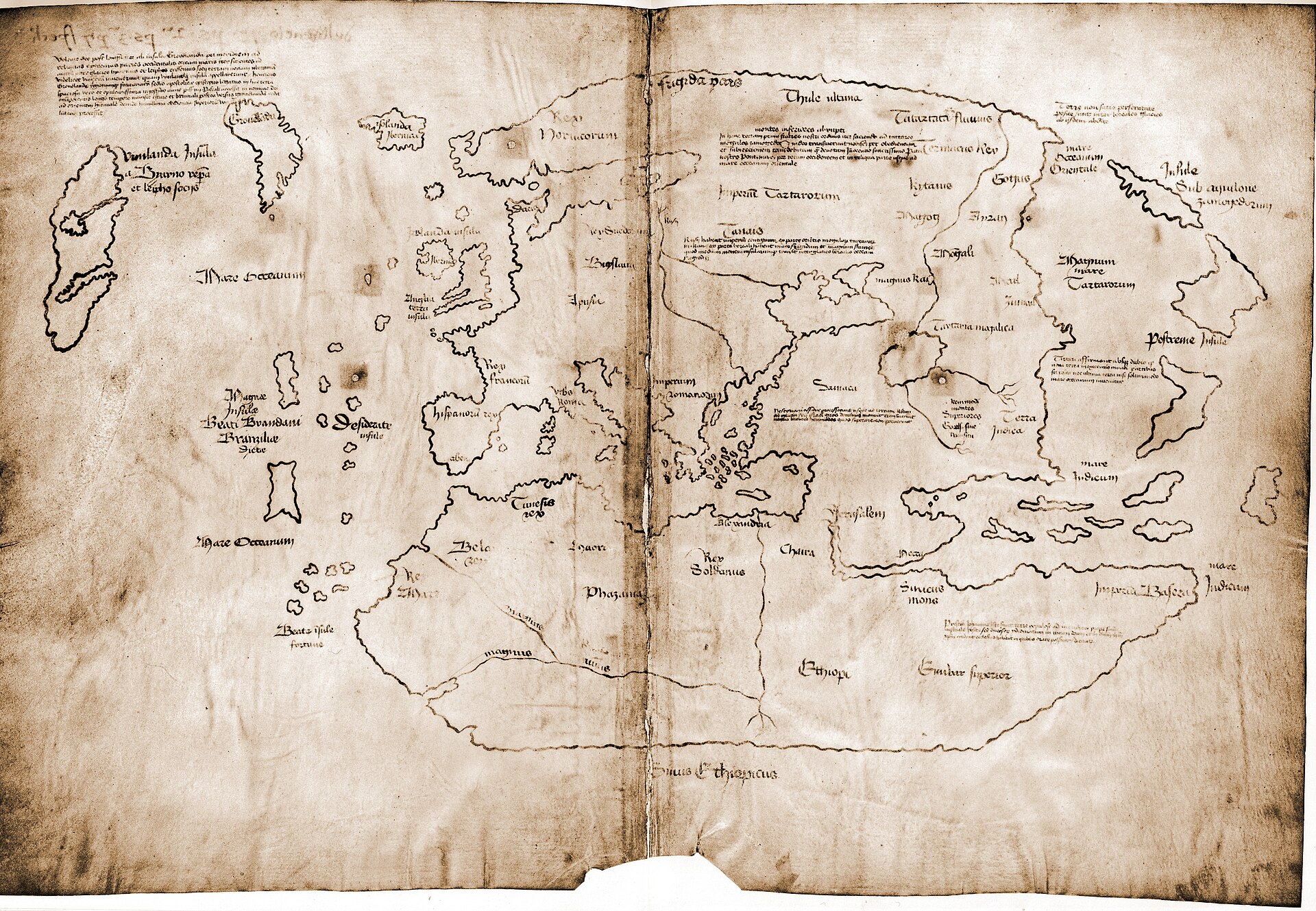
Thomas E. Marston, a curator at Yale, separately acquired the Speculum Historiale volume from the London dealer Irving Davis, and that volume supplied the wormhole and binding evidence used to argue that the Vinland Map was genuine. The map and the Speculum were thus tied together by a purchase made by a member of the institution that would go on to publish and defend the map. Yale announced in 2021, after an in-house analytical study, that the map is a fake.
The technical case had been building since 1973, when McCrone Associates found that the map's ink contains anatase, a form of titanium dioxide first produced commercially in the 1920s. What kept the argument alive for decades was the codicological evidence, and part of that evidence entered the collection through a curator's own acquisition rather than through an independent hand.
The last case in this archive is the hardest. Kazim Akbiyikoglu was the archaeologist and museum official who gathered the evidence for Turkey's claim to the Lydian Hoard, travelled to the United States and examined the objects, and helped win them back to a museum in the province where they were dug up. In February 2009 a court in Usak sentenced him to nearly thirteen years for theft and embezzlement, after the masterpiece of the hoard was removed from its case in his museum and replaced with a counterfeit.
Five cases, and what each one cost
Set the five side by side and the damage rises with how much the expert's own interest was allowed to stand in for a second opinion. The mildest case cost a name in a title field. The worst cost the object itself.
| Person | Institutional role | Interest in the object | What it cost |
|---|---|---|---|
| Henry G. Marquand | President of the Metropolitan's board of trustees | Donor of the altarpiece, 1882 | The object carries his name in the museum's own title |
| Abraham Bredius | Director of the Mauritshuis, 1889 to 1909 | Owner of the panel he lent and attributed | An attribution with no second opinion under it |
| Bashford Dean | Founding curator, Arms and Armor, from 1912 | Private collector in the same field since the 1890s | A department shaped by one collector's interests |
| Dietrich von Bothmer | Curator of Greek and Roman Art, the Metropolitan | Recommended the purchases he was later asked about | Two collections returned, one lawsuit, one settlement |
| Kazim Akbiyikoglu | Director, Usak Museum of Archaeology | Expert witness for the claim, then custodian | The hoard's masterpiece stolen; nearly thirteen years |
The column that does not exist in any record format is the third one. Everything in it had to be assembled here from separate documents that each tell the truth on their own.
How to read a name that appears twice
When the same name turns up in a provenance line and in the institution's own staff or governance history, stop and work out which role came first. A collector who later becomes a curator, a curator who later becomes an owner and a trustee who is also a donor are three different situations, and only the sequence tells you whether the object was judged before or after the interest existed.
Then ask who else looked. The question is not whether the expert was honest, because most of them were, and Bredius in particular was a serious scholar who happened to be right about a great deal. The question is whether the record contains an opinion from anybody without a stake. Where it does not, the attribution or the acquisition is resting on a single point, and single points fail quietly.
I do not think any of this is an argument for keeping collectors out of museums, and I am not sure what the alternative to expert curators would even be. It is an argument for writing the interest down. A credit line that says Gift of Henry G. Marquand is complete as accounting and incomplete as history, and the missing half is usually one sentence long.
Why this archive is free to read
We do this for everyone who loves art. The people who have studied it for years, and the people who just stopped to look. Iconotheca exists so that what we learn belongs to all of them.
Nobody pays us for this. No ads, no sponsors, no commercial interest. These works belong to all of us, and we would rather share them with as many people as we can than keep them to ourselves.
If it gave you something today, tell us to keep going. Follow us, leave a like, or write a positive comment. We read every one, and they are what keeps us going.
Questions
Most museum codes now restrict or require disclosure of collecting in a curator's own field, but that is a recent position. The Metropolitan's Department of Arms and Armor was founded in 1912 under Bashford Dean, who had built a private armour collection of about 125 pieces before 1900 and continued collecting, and the arrangement was regarded at the time as an obvious qualification rather than a problem.
Because Henry G. Marquand gave it to the museum in 1882, and the museum attached his name to the object in its own catalogue title. Marquand was also president of the museum's board of trustees, so the naming was done by an institution he governed.
Director of the Mauritshuis from 1889 to 1909 and the leading Rembrandt authority of his generation. He owned the panel this archive records as the Camden attic portrait, lent it to the museum he directed from 1893, and it appears in the museum's 1910 abridged catalogue as entry 577, signed with the monogram RHL.
The interest a person had in the object at the moment they judged it. Standard provenance fields carry a date, an owner and an event. Whether that owner was also the attributing scholar, the acquiring curator or the governing trustee has to be reconstructed from separate documents.
It was published by Yale in 1965 and defended for decades. McCrone Associates found anatase, a titanium dioxide first made commercially in the 1920s, in its ink in 1973, and Yale announced after an in-house study in 2021 that the map is a fake.
Sources
- 1Metropolitan Museum of Art, Open Access Collection API, object 186236, Andrea della Robbia, The Assumption of the Virgin (The Marquand Altarpiece), accession 82.4, credit line Gift of Henry G. Marquand, 1882. Read as raw JSON, 5 September 2026. collectionapi.metmuseum.org/public/...
- 2Metropolitan Museum of Art, Open Access Collection API, object 22741, armour garniture probably of Henry VIII, accession 19.131.1, credit line Purchase, William H. Riggs Gift and Rogers Fund, 1919; department Arms and Armor. collectionapi.metmuseum.org/public/...
- 3Metropolitan Museum of Art, Open Access Collection API, object 35928, Armor for the Joust of Peace, accession 04.3.291a-q, credit line Rogers Fund, 1904, from the Duc de Dino collection. collectionapi.metmuseum.org/public/...
- 4Metropolitan Museum of Art, online catalogue entry for The Assumption of the Virgin (The Marquand Altarpiece). metmuseum.org/art/...
- 5Wikipedia, 'Bashford Dean', for the private armour collection of about 125 pieces by 1900, the 1904 guest curatorship organising the Duc de Dino collection, the honorary curatorship of 1906 and the founding curatorship dated 28 October 1912. en.wikipedia.org/wiki/...
- 6Wikipedia, 'Henry Gurdon Marquand', for the 1869 founding committee, the building committee and the presidency of the Metropolitan's board of trustees to his death in 1902. en.wikipedia.org/wiki/...
- 7Wikipedia, 'Abraham Bredius', for the directorship of the Mauritshuis from 1889 to 1909 and for Bredius's own collecting. en.wikipedia.org/wiki/...
- 8Sharon Waxman, 'Chasing the Lydian Hoard', Smithsonian Magazine, 14 November 2008, an excerpt from LOOT: The Battle over the Stolen Treasures of the Ancient World, for the 1973 New York Times enquiry and for Kazim Akbiyikoglu's role in the recovery. smithsonianmag.com/history/...
- 9David Gill, 'Lydian Hoard Conviction', Looting Matters, 13 February 2009, reporting the Usak court's sentence of nearly thirteen years for theft and embezzlement on the museum's director, with nine others receiving lesser terms. lootingmatters.blogspot.com/2009/...
- 10Alessandro Chechi, Anne Laure Bandle and Marc-Andre Renold, 'Case Lydian Hoard, Turkey and Metropolitan Museum of Art', ArThemis, Art-Law Centre, University of Geneva, for the out-of-court settlement and the 1.7 million dollar acquisition figure. plone.unige.ch/art-adr/...
- 11Yale News, 'Analysis unlocks secret of the Vinland Map, it's a fake', 1 September 2021, for the in-house study and for the 1973 McCrone Associates finding of anatase in the ink. news.yale.edu/2021/...
More in Collectors and Collections
The partThe credit line names the collector, and the accession number tells you what happened
Morgan died in March 1913, and the Metropolitan credits him with gifts made in 1917. The credit line names the collector.
The Longest Ownership Links Here Belong to Owners That Were Not People
The 28 longest institutional ownership links in this archive run 7,434 years between them. Three end in a completed sale.
The Name in the Buyer's Column Is Often an Employee
Across 126 years of sales in this archive the winning bidder is repeatedly not the owner.