Bought En Bloc, and What the Record Loses
The Metropolitan bought nearly 500 pieces of arms and armour sight unseen in April 1904 for just over $250,000. No dealers' invoices came with them, and fewer than half the catalogue entries cite a provenance.
Records in this piece: Helmet all'Antica, Half Armor attributed to Don Gonzalo Fernandez de Cordoba y Fernandez de Cordoba, Duke of Sessa (1520/1524-1578), Armor for the Joust of Peace, The Holy Thorn Reliquary, Potpourri Vase (Vase potpourri a vaisseau), Ewer signed by Yunus ibn Yusuf al-Mawsili, The Hope Diamond
On this page 8 sections
ContentsClose
In short
- In April 1904 the Metropolitan Museum bought the Duc de Dino collection en bloc: almost five hundred pieces, for just over $250,000, the largest sum the Museum had then paid for a single acquisition.
- The Museum bought it sight unseen. Its curator of arms and armour records that the purchase rested solely on the enthusiastic recommendation of one trustee, and was made without reference to Dino's own privately printed catalogue.
- The paperwork did not come with the objects. Dino left no written account of his collecting, no dealers' invoices or receipts were preserved with the collection, and of the three hundred entries in the printed catalogue fewer than half cite any provenance.
- An en bloc purchase buys the attributions along with the objects. Modern scholarship has since found that some of the best-known and most-published Dino pieces are composites or outright fakes.
- The armourer who completed and mounted armours for the nineteenth-century trade, Daniel Tachaux, was hired by the Metropolitan itself in 1909 and stayed until 1919. The hand that made some of the composites later worked on the collection that contained them.
- A bequest can be worse than a purchase for this. The Waddesdon Bequest arrived at the British Museum in 1898 as nearly 300 objects including a number of nineteenth-century fakes, and the museum took the collection as it stood.
Buying a collection whole buys the objects and leaves their histories behind
A collection sold as one lot transfers ownership of every object in it and, almost always, none of the evidence about where those objects came from. The invoices, receipts, dealer correspondence and annotated catalogues that document individual acquisitions belong to the collector, not to the collection, and they stay with the estate, get dispersed, or are simply thrown away.
What the buyer receives instead is a single transaction: one date, one price, one counterparty, covering hundreds of objects. For the institution this is efficient. For the record it is a compression from which most of the information never recovers, because each object's own history has been replaced by the collection's history.
The effect shows up years later, when someone tries to write a provenance for one piece. The chain runs back to the collector and stops. Everything before that has to be reconstructed from outside the object: from sale catalogues, from other collectors' correspondence, from the annotations strangers made in their own copies of the catalogue. It is archaeology performed on the art market, and it is slow.
Seven objects in this archive entered public collections this way, through three transactions. One is the clearest case in the literature, and the Museum that made it has published the evidence against itself.
In April 1904 the Metropolitan bought a collection it had not seen
The Metropolitan Museum of Art acquired its founding collection of arms and armour in a single purchase in April 1904, and it did so without examining what it was buying. Stuart W. Pyhrr, then the Museum's curator in charge of arms and armour, set out the transaction in the Metropolitan Museum Journal in 2012 and used the phrase in his opening sentence: the Museum made its first important acquisition of arms and armour by purchasing en bloc the collection of Charles Maurice Camille de Talleyrand-Perigord, duc de Dino.
The collection comprised almost five hundred pieces, assembled in France over the last two decades of the nineteenth century, and was then considered the finest private collection of arms and armour in Europe. The Museum committed just over $250,000, the largest sum it had paid to that date for a single acquisition. The New York press announced it with considerable fanfare on 15 May 1904.
What the press did not report, and what Pyhrr states plainly, is that the Museum had purchased the collection sight unseen, based solely on the enthusiastic recommendation of one of its trustees, and without reference to Dino's privately published catalogue. The trustee was Rutherfurd Stuyvesant. The catalogue in question had been written by Baron de Cosson, a respected English authority who had been Dino's paid adviser on the collection since about 1896, and published in 1901. It existed, it was authoritative, and nobody at the Museum consulted it before committing the money.
The purchase worked, on its own terms. It gave the Metropolitan a collection of international repute, prompted the appointment of Bashford Dean as guest curator in 1904, and led to the establishment of the Department of Arms and Armor on 28 October 1912. The objects were the right objects. It is the record that came off worst.
The accession numbers are the surviving trace of the transaction
Every object from the Dino purchase carries an accession number beginning 04.3, and that prefix is the most reliable provenance evidence any of them has. The Metropolitan's own collection data gives all of them the same credit line, Rogers Fund, 1904, and the same accession year.
| Object | Accession number | Attributed to | Date given | Credit line |
|---|---|---|---|---|
| Helmet all'antica | 04.3.202 | Filippo Negroli | about 1532 to 1535 | Rogers Fund, 1904 |
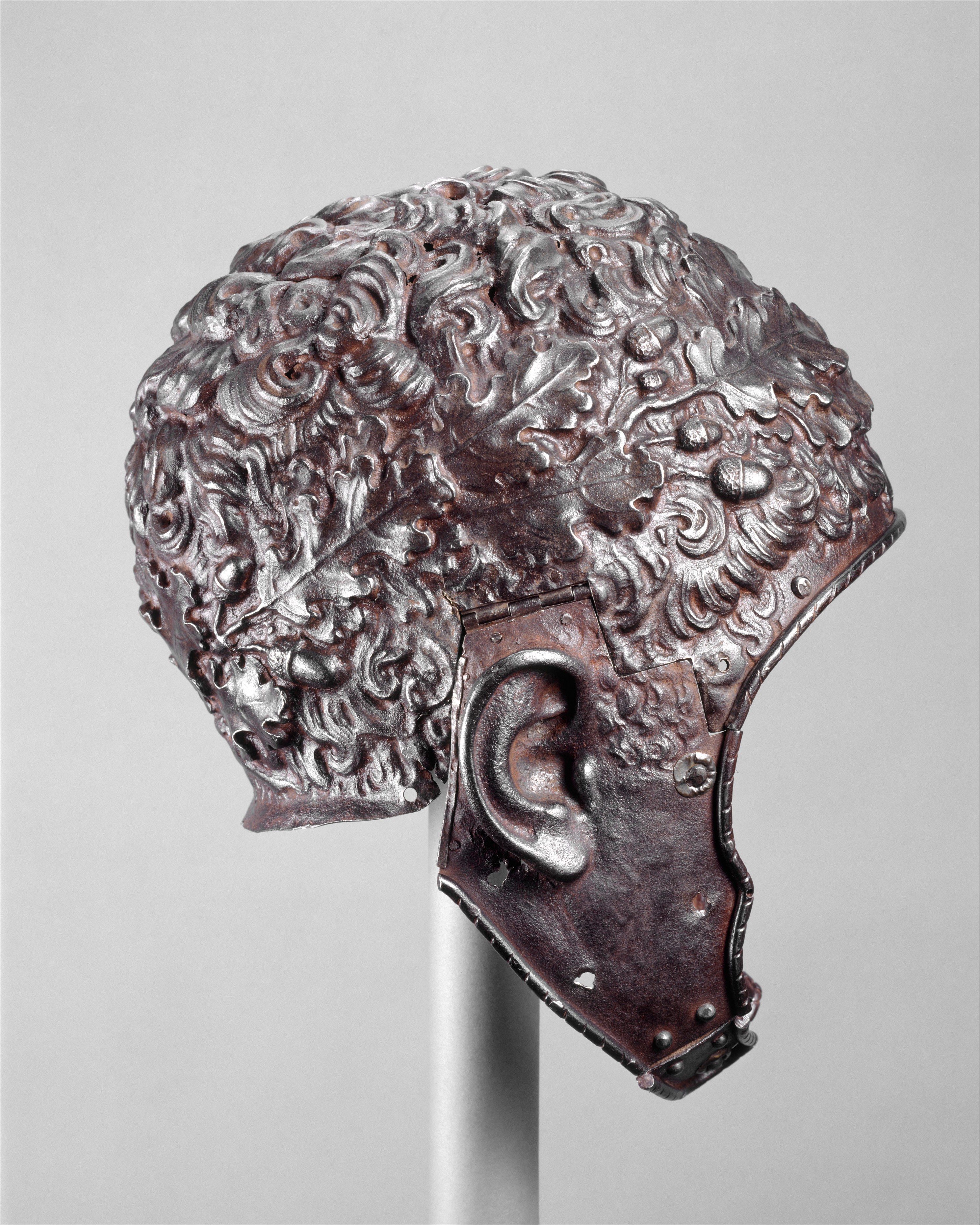
| Half armor attributed to the Duke of Sessa | 04.3.270a-o | Lucio Piccinino | partly mid-16th century, comprehensively reworked in the 19th | Rogers Fund, 1904 |
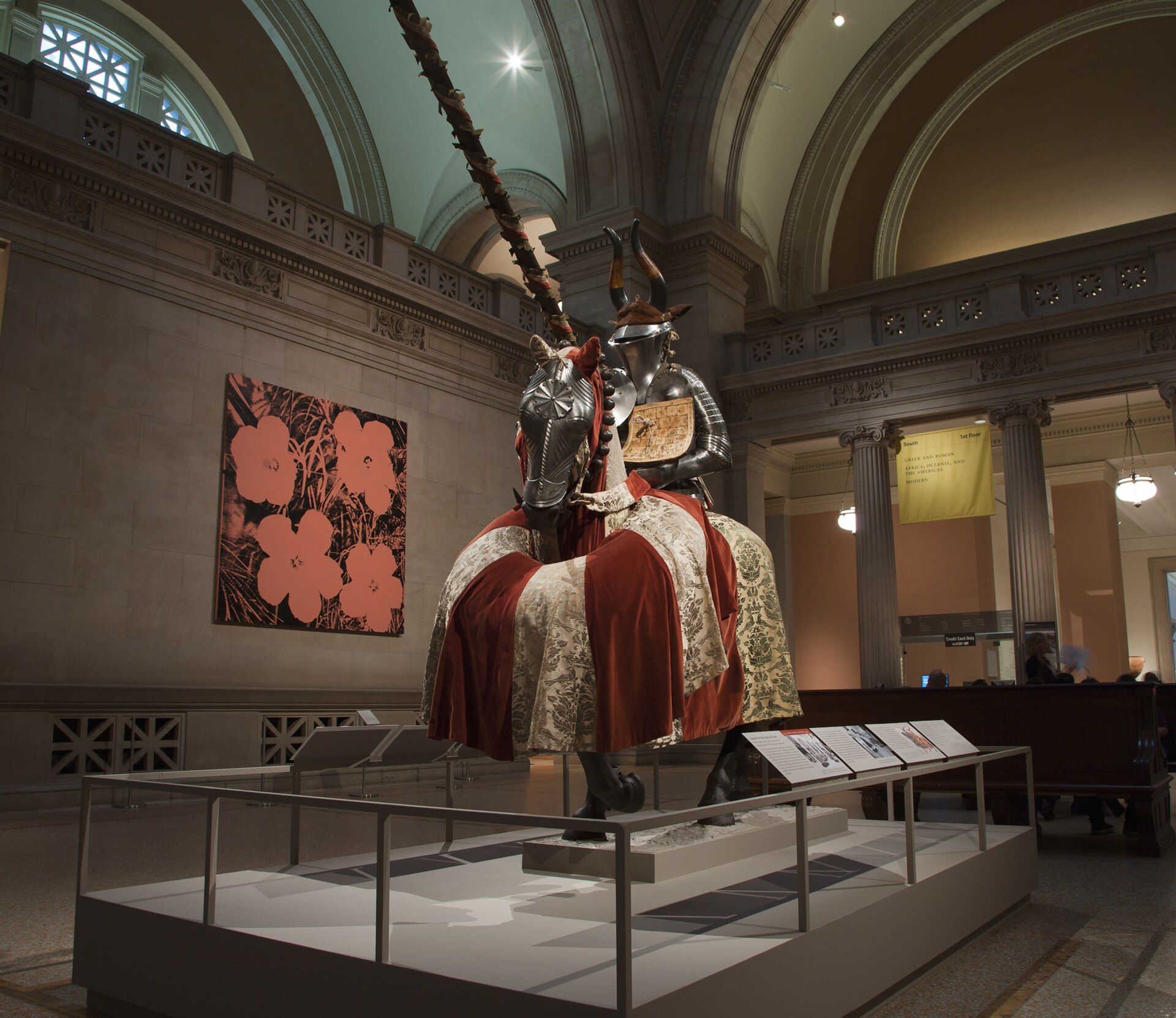
| Armor for the Joust of Peace | 04.3.291a-q | composite; mounted by Daniel Tachaux | 15th century elements | Rogers Fund, 1904 |
| Composite armor with Philip II garniture elements | 04.3.278 | Wolfgang Grosschedel, Landshut | 1554, with later restorations | Rogers Fund, 1904 |
Read the middle two columns together and the difficulty is visible in the Museum's own cataloguing. Two of these four are described by the Museum as composite or comprehensively reworked, and the dates it gives are ranges spanning three centuries. Those descriptions are the product of a century of subsequent research, not of anything that arrived in 1904.
The prefix is doing work no prefix should have to do. It is standing in for the provenance of each object, and it says only that the object was in one Frenchman's house before April 1904.
Fewer than half the catalogue entries carried a provenance
The single most damaging fact about the Dino collection's paperwork is that there was almost none. Pyhrr states it directly: the duc de Dino appears to have left no written account of his activity as a collector, nor were any dealers' invoices or receipts preserved with the collection.
The printed catalogue, which the Museum did not read before buying, turns out to be only marginally helpful in this regard. Of its three hundred entries, fewer than half cite a provenance. That is the ceiling on what the Museum could have learned even if it had done the reading, and it means that for more than half of the collection's catalogued objects, the trail begins with Dino and there is nothing behind him.
What has since been recovered came from outside the collection entirely. Pyhrr reconstructs the sources from the surviving correspondence of Dino's friends and fellow collectors, notably de Cosson himself, Costantino Ressman, William Henry Riggs and the Parisian amateur Jean-Jacques Reubell, together with annotations that Riggs made in his own copy of a sale catalogue. The de Cosson papers are in the Library of the Royal Armouries at Leeds. A hundred years of scholarship has been spent rebuilding, from other people's letters, the information that would have fitted in a box of receipts.
Some of what has been rebuilt is uncomfortable. Dino's most important armour, a composite harness incorporating pieces from the Cloud Bands garniture made in 1554 for the future Philip II of Spain, came from the Fountaine collection, and many of the Fountaine arms had been among elements of armour stolen from the Real Armeria in Madrid and brought to London for sale at Christie's in 1839 and 1840. That is a fact about title, and it surfaced only because someone went looking in the sale catalogues.
The restorer who built the composites later joined the museum
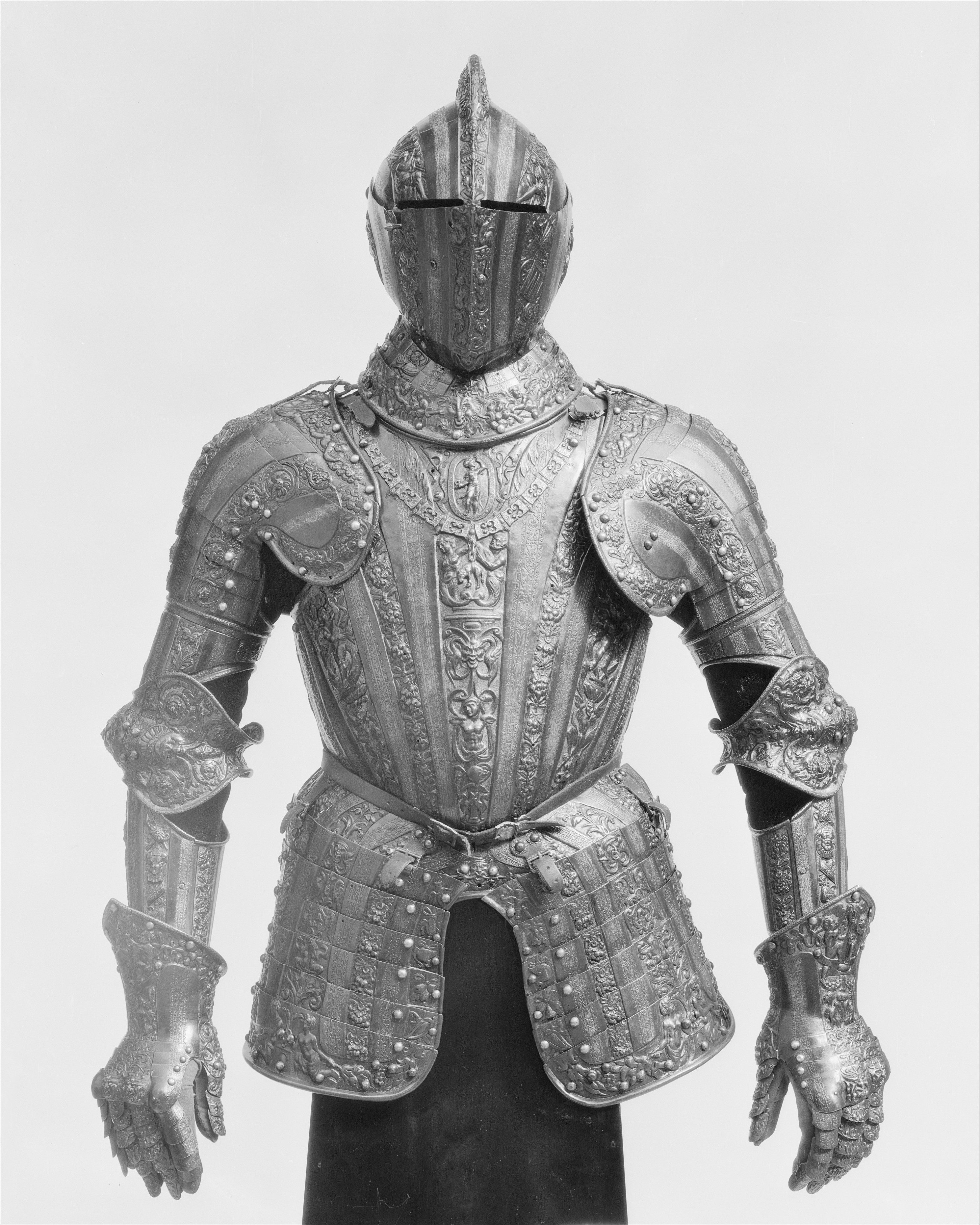
Daniel Tachaux completed and mounted armours for the nineteenth-century Paris trade and then spent a decade on the Metropolitan Museum's staff. His work appears in the Dino collection before the sale: when Costantino Ressman commissioned the Paris armourer Alexandre Lebon in October 1891 to complete the missing parts of an armour and fabricate a helm of appropriate type, Lebon employed Tachaux for the job.
The economics of that transaction are worth stating exactly, because they explain the whole practice. The restored and completed armour cost Ressman a total of 7,950 francs. His price to Dino was 30,000 francs. Completion was not conservation; it was value creation, and everybody in the chain understood that.
Tachaux's work impressed Bashford Dean enough that Dean hired him as the Metropolitan Museum's armourer in 1909. He stayed until 1919, when he left to work for the collector Clarence Mackay. The Museum's photographs of the Armor for the Joust of Peace credit him, and the record in this archive names him as the maker of the armour's most visible element.
There is nothing furtive in this. Tachaux was a highly skilled craftsman doing what the market and then the museum asked of him, and the Metropolitan has published the connection itself. The consequence for the record is nonetheless real: some of the same hands that assembled the objects were later employed to look after them, and the boundary between an object's manufacture, its restoration and its curation is not where a reader assumes it is.
The wider verdict is the Museum's own. Modern scholarship, Pyhrr writes, has revealed that some of the better-known and most frequently published Dino objects are composites or outright fakes. Dino himself was not immune to it either: his relationship with the dealer Bachereau ended in 1899 in a dispute over a fake weapon sold to him as genuine.
A bequest can force a museum to take the fakes with the masterpieces
The Waddesdon Bequest reached the British Museum in 1898 as a single collection of nearly 300 objects, and the museum received the whole of it. Baron Ferdinand Rothschild left it on his death, and it consists, in the British Museum's own description, of exceptionally important medieval and Renaissance pieces as well as a number of nineteenth-century fakes.
That combination is not an embarrassment the museum hides. It presents the two together as a picture of the late nineteenth-century art market, which is the honest and the more interesting reading: what a great collector bought tells you what was on offer and what was believable, and the fakes are evidence of the same market that produced the masterpieces.
It is also the clearest illustration of what arriving whole means. A curator selecting object by object declines the doubtful ones. A collection arriving under a will does not offer that choice, and the receiving institution acquires the collector's judgment along with the collector's things, including the occasions on which that judgment failed.
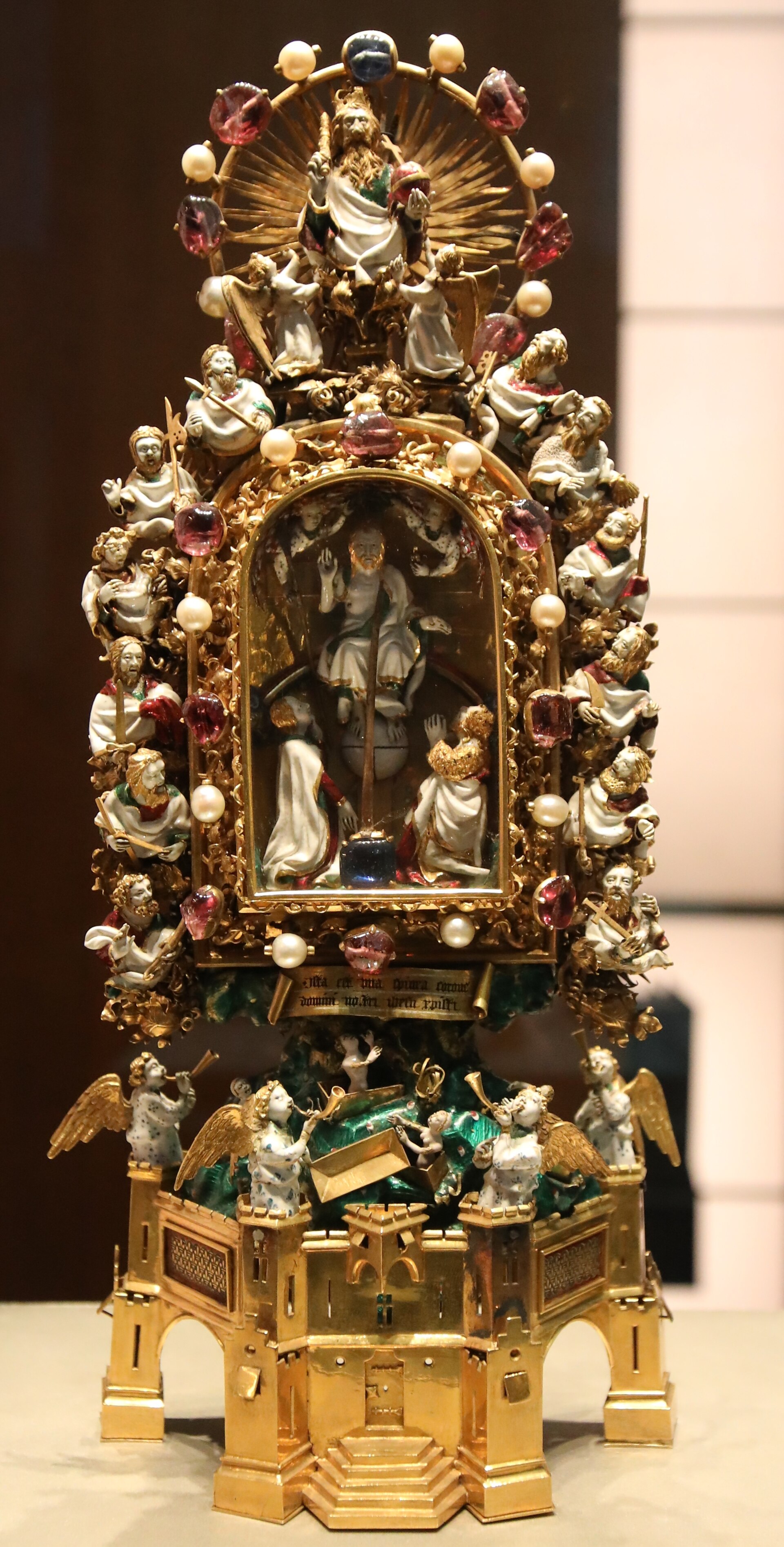
The Holy Thorn Reliquary is in that bequest, and it is among the finest surviving pieces of Parisian court goldsmiths' work of about 1400. At the time it was accessioned its origins were, in the museum's phrase, completely lost, and it was catalogued as Spanish, sixteenth century. The object that is now the centrepiece of its own gallery entered the collection under a wrong attribution, inside a group that also contained forgeries, because the whole group came at once.
When the lot is the collection, the object has no price
An en bloc transaction publishes one figure for many objects, and no arithmetic recovers the price of any single piece. The Metropolitan paid just over $250,000 for almost five hundred pieces, which yields an average and nothing else; the Negroli helmet and a plain munition breastplate did not cost the same, and the transaction does not say what either cost.
The Hope Diamond shows the same effect in a purchase of two objects or two hundred. Harry Winston bought the McLean jewels in 1949 while the estate was being settled, and the reported figures for that purchase cover the whole collection rather than the stone alone. There is consequently no purchase price for the most famous diamond in the world at the most recent moment it was sold, only a price for a group of which it was part.
Henry Walters took it furthest. On his death on 30 November 1931 he bequeathed to the City of Baltimore an extensive art collection begun by his father William T. Walters, together with two buildings and an endowment, and the museum opened to the public in 1934. Some 36,000 objects transferred in one instrument. Every one of them has the same acquisition event in its provenance, and none of them has a price.
None of this is a defect in the institutions. It is a structural property of the transaction, and the honest response is to record it rather than to paper it over with an estimate. Where a record in this archive carries no figure for an object bought inside a larger lot, that absence is deliberate and it is the accurate statement of what is known.
How to read a collection name in a provenance
Treat the collection as one link, not as a proof of everything behind it. Duc de Dino collection establishes that the object was in France in the 1880s or 1890s and nothing further, and for more than half the collection the catalogue itself offers nothing further either.
Ask whether the archive travelled with the objects. This is the question that separates a rich collection provenance from a poor one, and the answer is usually recoverable: the de Cosson papers at the Royal Armouries survive and have been worked, while Dino's own receipts do not exist. Where the archive is elsewhere, say where.
Expect the attributions to have moved. An en bloc purchase imports a collector's catalogue wholesale, and the corrections arrive over the following century one object at a time. A date range in a museum record that spans three hundred years is not vagueness; it is the visible scar of that process.
And do not read an accession prefix as provenance. 04.3 tells you which transaction brought an object into the Metropolitan. It tells you nothing whatever about the four hundred years before it, which is precisely the information the transaction destroyed.
Questions
It means purchasing the whole collection in one transaction at one price, rather than selecting objects individually. The Metropolitan Museum bought the Duc de Dino collection of almost five hundred pieces of arms and armour that way in April 1904 for just over $250,000.
Yes. Stuart W. Pyhrr, the Museum's curator in charge of arms and armour, wrote in the Metropolitan Museum Journal in 2012 that the Museum purchased the collection sight unseen, on the recommendation of a single trustee, and without reference to the privately printed catalogue Baron de Cosson had written about it in 1901.
Because the documentation belongs to the collector rather than to the objects. In the Dino case no dealers' invoices or receipts were preserved with the collection, Dino left no account of his collecting, and fewer than half of the three hundred catalogue entries cite a provenance, so each object's chain stops at the collector.
A Paris armourer who completed and mounted antique armours for the nineteenth-century trade, including work within the Dino collection, and who was then hired as the Metropolitan Museum's own armourer by Bashford Dean in 1909. He left the Museum in 1919 to work for the collector Clarence Mackay.
Generally not, when the collection is left as a whole. The Waddesdon Bequest came to the British Museum in 1898 as nearly 300 objects that include both exceptionally important medieval and Renaissance work and a number of nineteenth-century fakes, and the museum holds and displays them together.
No. A single price for hundreds of objects supports an average and nothing more. The same problem attaches to the Hope Diamond, bought by Harry Winston in 1949 as part of the McLean jewels, where the reported figures cover the whole collection rather than the stone.
Sources
- 1Stuart W. Pyhrr, 'Armor for America: The Duc de Dino Collection', Metropolitan Museum Journal 47 (2012), pp. 183 onward. The April 1904 en bloc purchase of almost five hundred pieces for just over $250,000; the purchase made sight unseen on one trustee's recommendation and without reference to de Cosson's 1901 catalogue; the absence of invoices and receipts; fewer than half of three hundred catalogue entries citing provenance; composites and outright fakes among the best-known objects; Daniel Tachaux's work for Ressman and his employment by the Museum from 1909 to 1919; the Fountaine armour and the Real Armeria thefts sold at Christie's in 1839 and 1840. resources.metmuseum.org/resources/...
- 2The Metropolitan Museum of Art, collection record for the Helmet all'antica, accession 04.3.202, attributed to Filippo Negroli, about 1532 to 1535, credit line Rogers Fund, 1904. Accession numbers, credit lines and dating for the Dino objects cited in the table were read from the Museum's own collection data. metmuseum.org/art/...
- 3The British Museum, 'The Waddesdon Bequest', Room 2a gallery page. Describes the bequest as a collection of nearly 300 objects left to the Museum in 1898 by Baron Ferdinand Rothschild, consisting of exceptionally important medieval and Renaissance pieces as well as a number of nineteenth-century fakes. britishmuseum.org/collection/...
- 4The Walters Art Museum, 'About the Walters Art Museum'. Records that Henry Walters (1848-1931) bequeathed to the City of Baltimore an extensive art collection begun by his father William T. Walters, two buildings and an endowment, and that the museum was established in 1934; the campus holds 36,000 art objects. thewalters.org/about
More in Collectors and Collections
The partThe credit line names the collector, and the accession number tells you what happened
Morgan died in March 1913, and the Metropolitan credits him with gifts made in 1917. The credit line names the collector.
The Longest Ownership Links Here Belong to Owners That Were Not People
The 28 longest institutional ownership links in this archive run 7,434 years between them. Three end in a completed sale.
The Name in the Buyer's Column Is Often an Employee
Across 126 years of sales in this archive the winning bidder is repeatedly not the owner.