Why Some Objects Cannot Be Illustrated
Of 35 objects this archive has researched but does not publish, 27 already carry licensed photographs. The binding constraint is proving that a photograph shows that object, not clearing the rights to it.
Records in this piece: The Hours of Jeanne d'Evreux, Queen of France, Melencolia I, The Farnese Table, Platter, The Lycurgus Cup, Universalis Cosmographia secundum Ptholomaei Traditionem et Americi Vespucii aliorumque Lustrationes, Boulevard du Temple
On this page 7 sections
ContentsClose
In short
- Of the 35 objects this archive has researched and does not publish, 27 already carry between one and eleven licensed photographs. They are held because no plate among them has been proved to show that object, not because the rights are unavailable.
- European law settled the flat case and deliberately left the three-dimensional one open. Article 14 of Directive 2019/790 strips protection from reproductions of public-domain visual works unless the reproduction is original in the sense that it is the author's own intellectual creation, and a staged photograph of a cabinet can meet that test where a faithful shot of a painting cannot.
- The proportion of records held back tracks the object's dimensions. Two of 28 paintings are held, and none of the nine maps, eight photographs or eight textiles, against six of twelve ceramics and six of twelve pieces of furniture.
- For an object that exists in multiple copies, the copy is the object. Five of the eight printed books here are held, every one of them a named copy, and each already carries three to seven correctly licensed plates of some other copy.
- The scale of an institution's open access programme does not settle identity. The Metropolitan Museum publishes more than 492,000 public-domain images under CC0, and four of the objects this archive cannot illustrate are in that museum.
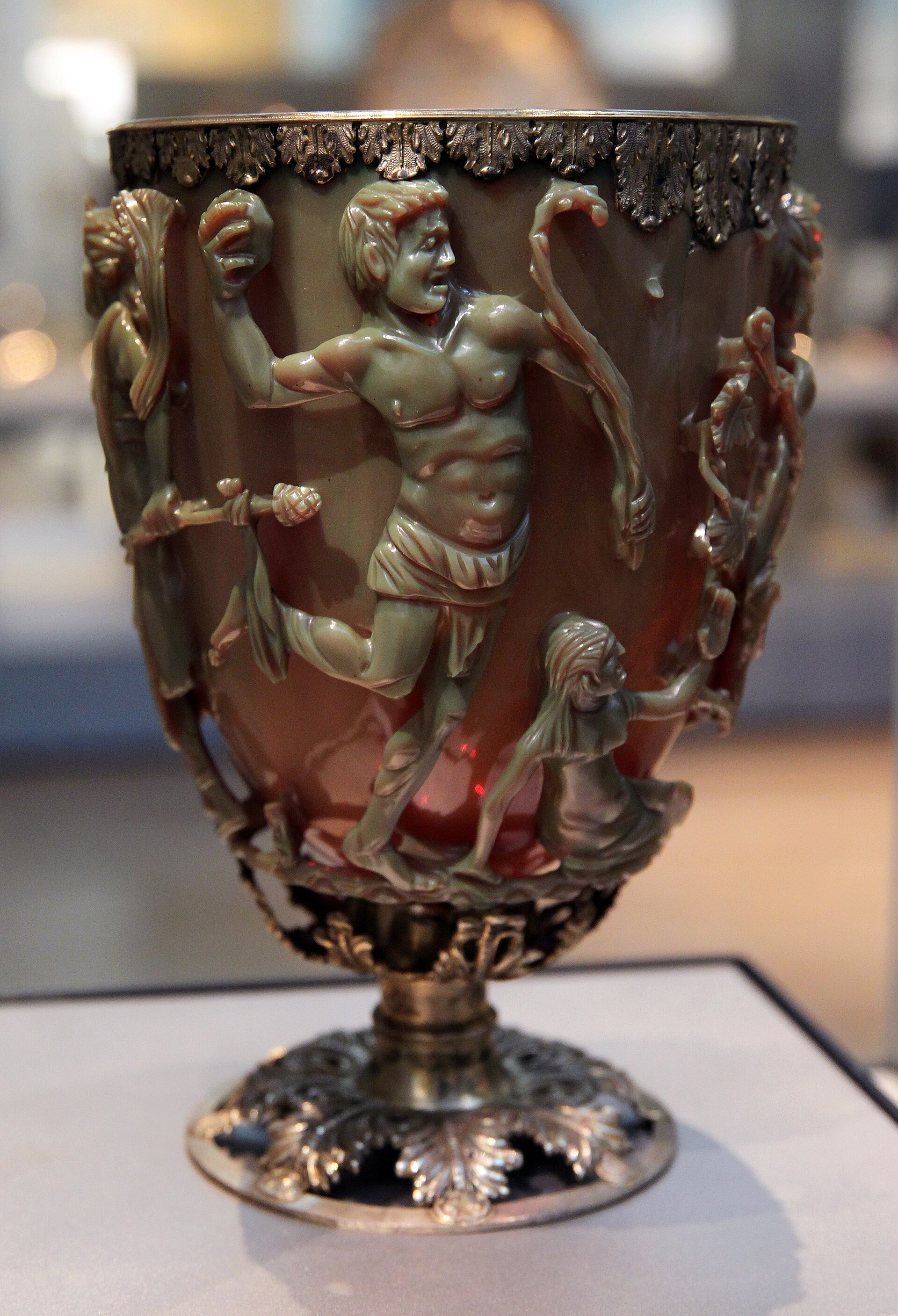
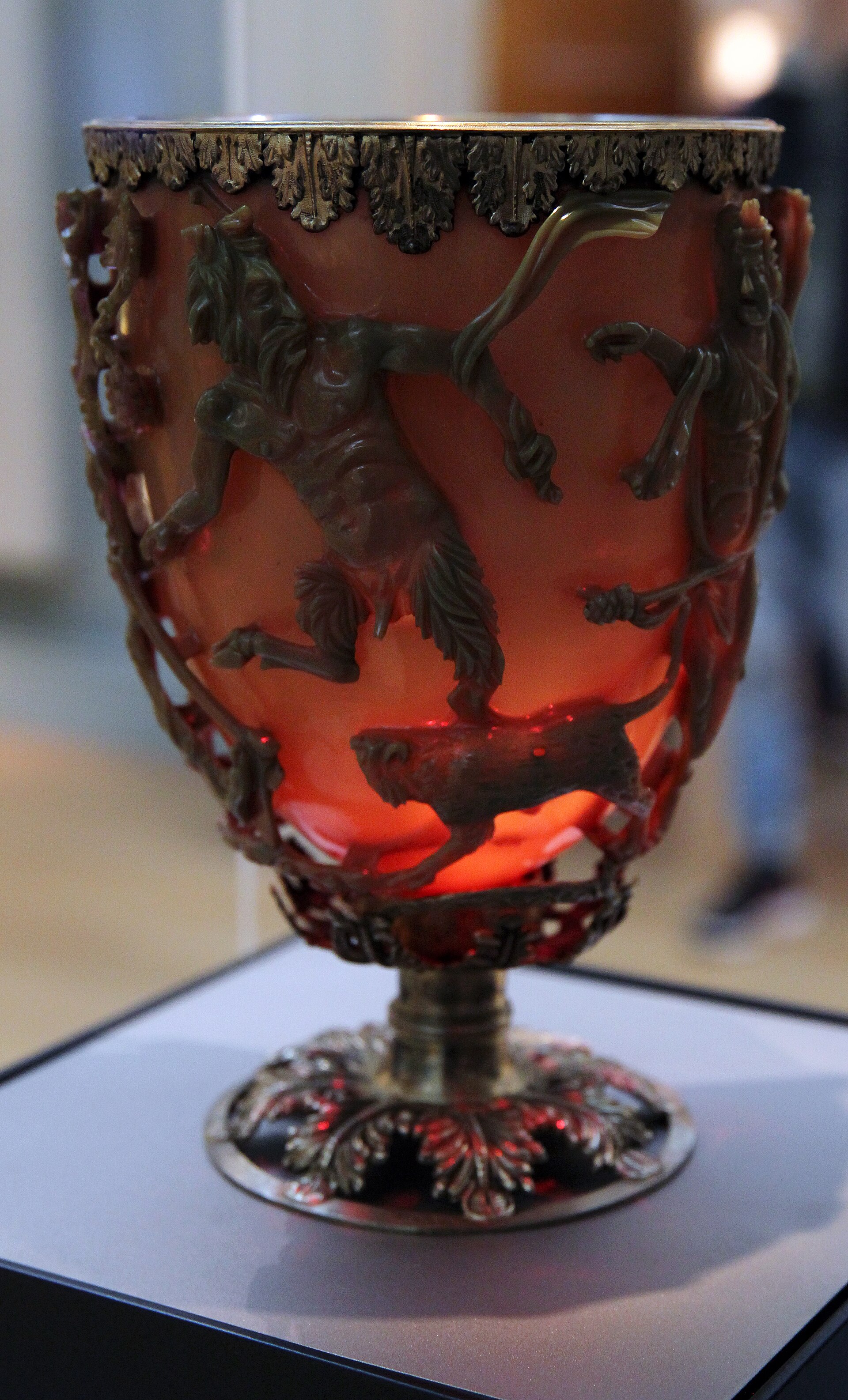
- Two late Roman cage cups in this archive show what the deciding factor usually is. The Lycurgus Cup is published from nine CC0 photographs taken in a British Museum gallery; the Constable-Maxwell cage cup, sold at Bonhams in 2004, is held, and its five plates all show other cups.
The obstacle is almost never the licence
Of the 35 objects this archive has researched to publication standard and still does not publish, 27 already carry licensed photographs. Each of those 27 records has between one and eleven plates attached to it, every plate cleared under a free licence and hosted here rather than linked, and not one of the 27 is published. They are held because no plate among them has been proved to show that particular object.
Only eight of the 35 are held for the reason most readers would assume, which is that no acceptable photograph could be found at all. The ratio between 27 and eight is the argument of this piece. Rights clearance dominates every published discussion of museum imaging, and it accounts for under a quarter of the objects this archive is unable to show.
The distinction matters because the two problems are solved by different means. A licence problem is solved by legislation, by an institutional policy change, or by finding a different photograph. An identity problem is solved only by research, one object at a time, and no change in the law will touch it. Eleven of the 35 held objects are in private or unlocated hands, which compounds the difficulty in a specific way: there is no institution to ask, no accession number to anchor to, and often no published photograph taken since the last sale.
What European law settled, and what it left open
Article 14 of the European Union's 2019 copyright directive removed protection from faithful reproductions of public-domain visual works, and its own wording left three-dimensional objects outside that settlement. The article requires that when the term of protection of a work of visual art has expired, any material resulting from an act of reproduction of that work is not subject to copyright or related rights, unless the material resulting from that act of reproduction is original in the sense that it is the author's own intellectual creation. That final clause is not a drafting afterthought. It is the whole of the difficulty for an archive of objects.
The reasoning is set out in recital 53, which states that protecting such reproductions through copyright is inconsistent with the expiry of protection on the work itself, and that differences between national laws on the point create legal uncertainty and impede the cross-border circulation of public-domain art. The same recital is careful to add that none of this should prevent cultural heritage institutions from selling reproductions such as postcards. Member States had until 7 June 2021 to bring the directive into force.
Germany's implementation is a single sentence. Section 68 of the Copyright Act provides that reproductions of public-domain visual works are not protected by the related rights in Parts 2 and 3 of that Act, which ended the domestic practice of treating a museum's photograph of an out-of-copyright painting as a protected photographic work in its own right.
For a flat work the effect is clean. A faithful, straight-on photograph of a painting, a print, a map or a manuscript leaf adds no authorship and attracts no new right, whatever notice the holding institution prints beside it. For a cup, a cabinet, a suit of armour or a violin the position is genuinely unsettled, because the photographer's choices of angle, lighting and staging are exactly the kind of thing the directive's carve-out preserves. The law's dividing line is dimensional, which means an archive of objects rather than of pictures feels it very unevenly.
The held rate follows the object's dimensions
Across the 201 records in this archive, the proportion held back from publication runs from nothing at all to nearly two-thirds, and it sorts almost exactly by whether the object is flat.
| Object class | Records | Held | Held rate |
|---|---|---|---|
| Printed book | 8 | 5 | 62 per cent |
| Ceramic | 12 | 6 | 50 per cent |
| Furniture | 12 | 6 | 50 per cent |
| Glass | 8 | 2 | 25 per cent |
| Clocks and instruments | 9 | 2 | 22 per cent |
| Silver | 10 | 2 | 20 per cent |
| Sculpture | 18 | 2 | 11 per cent |
| Painting | 28 | 2 | 7 per cent |
| Map | 9 | 0 | none |
| Photograph | 8 | 0 | none |
| Textile | 8 | 0 | none |
Maps, photographs and textiles are published without exception. Paintings fail at seven per cent. Ceramics and furniture, the two classes where a photograph is unavoidably a staged three-dimensional shot, fail at half. That gradient is what the directive's carve-out looks like when it is measured on real objects rather than argued in the abstract.
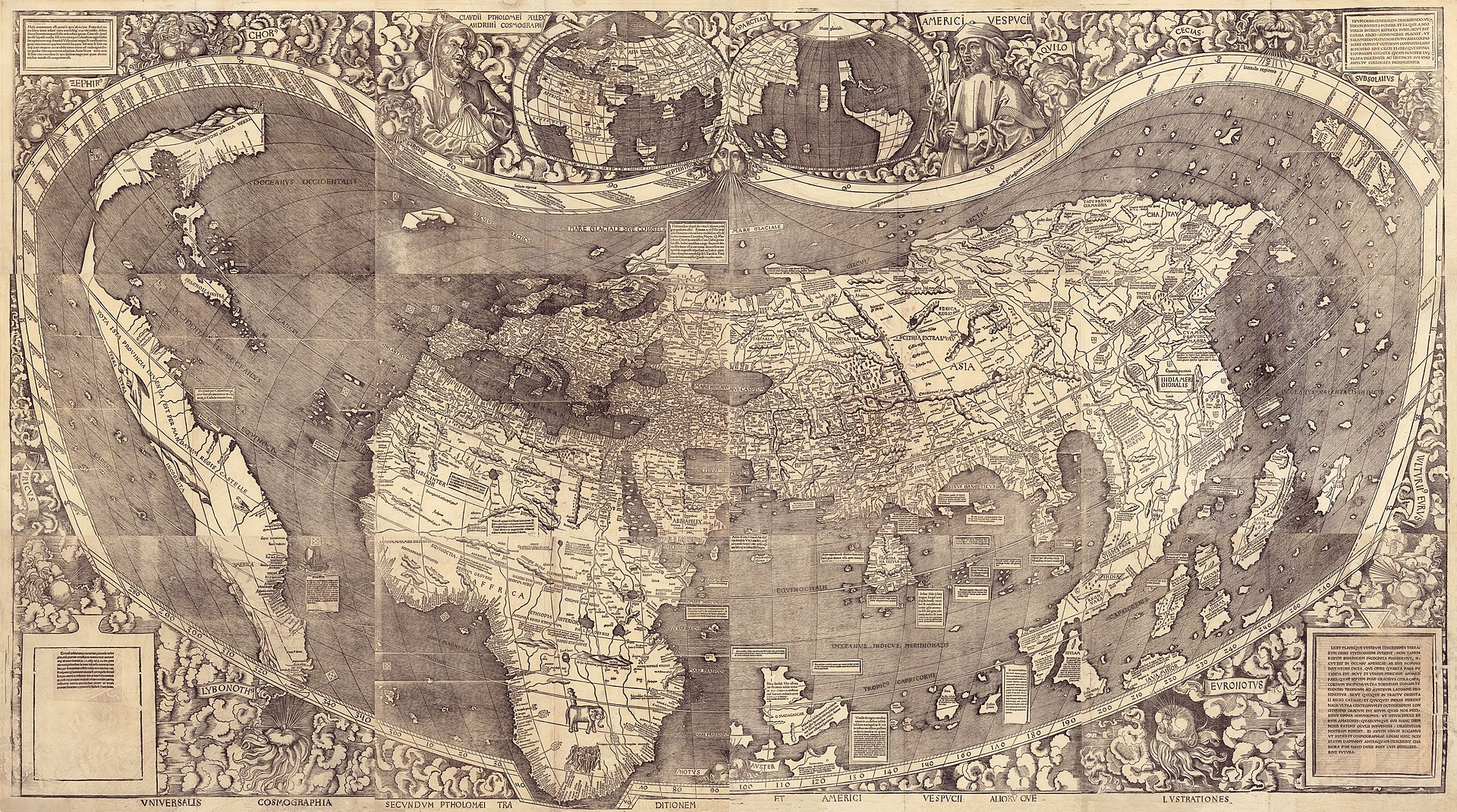
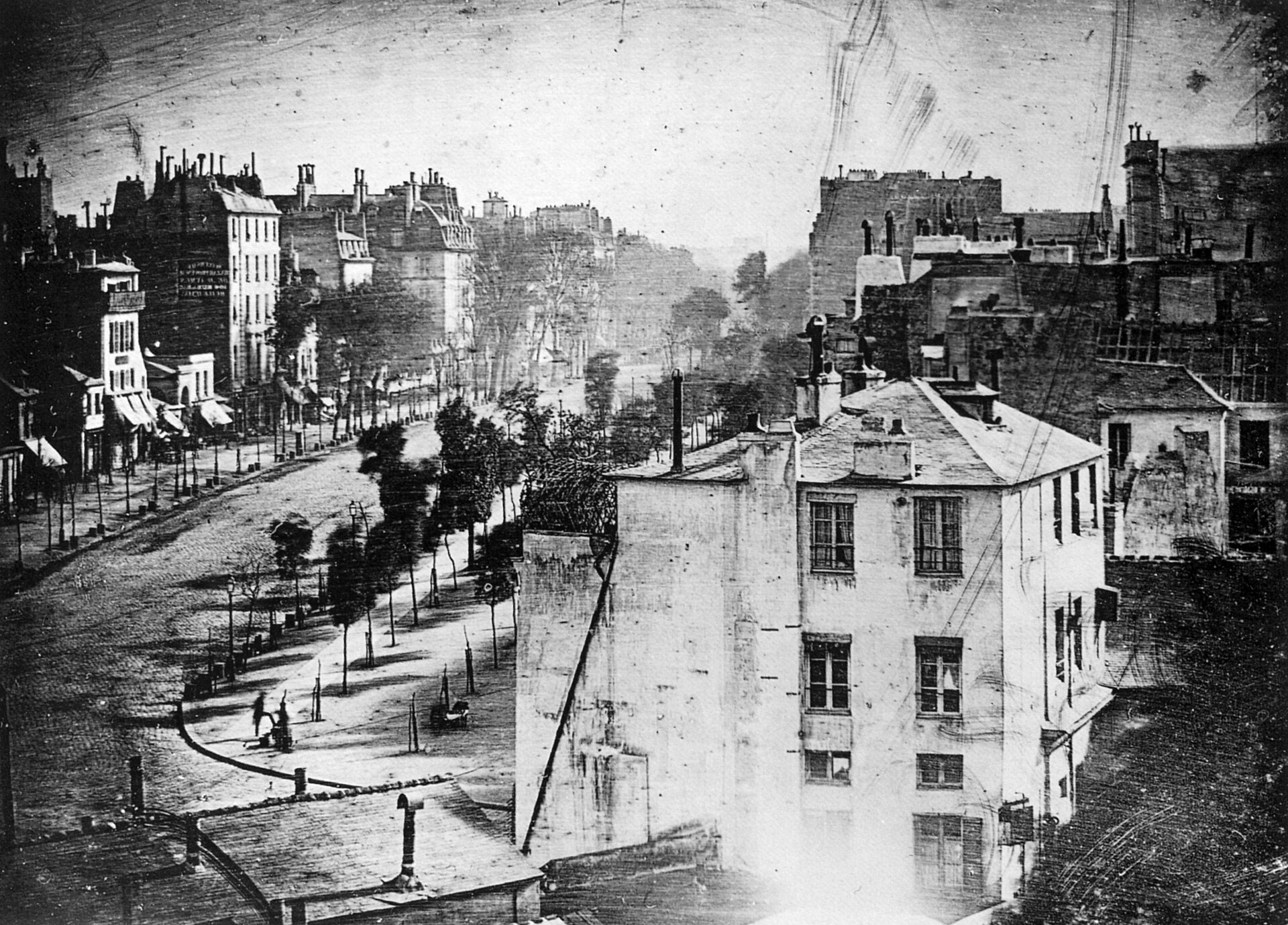
In the flat classes a single reproduction can settle the rights question and the identity question together, which is why they clear so easily. The 1507 Waldseemuller world map is illustrated here from the Library of Congress composite scan of its own twelve sheets under call number G3200 1507 .W3, and Daguerre's Boulevard du Temple from reproductions of the 1838 plate in Munich. In both cases the plate is a flat copy of the one object the record describes, and nothing further needs to be proved.
One entry in the table breaks the pattern, and it is at the top. A printed book is flat in every sense the law cares about, and it is the most-held class in the archive.
For a multiple, the copy is the object
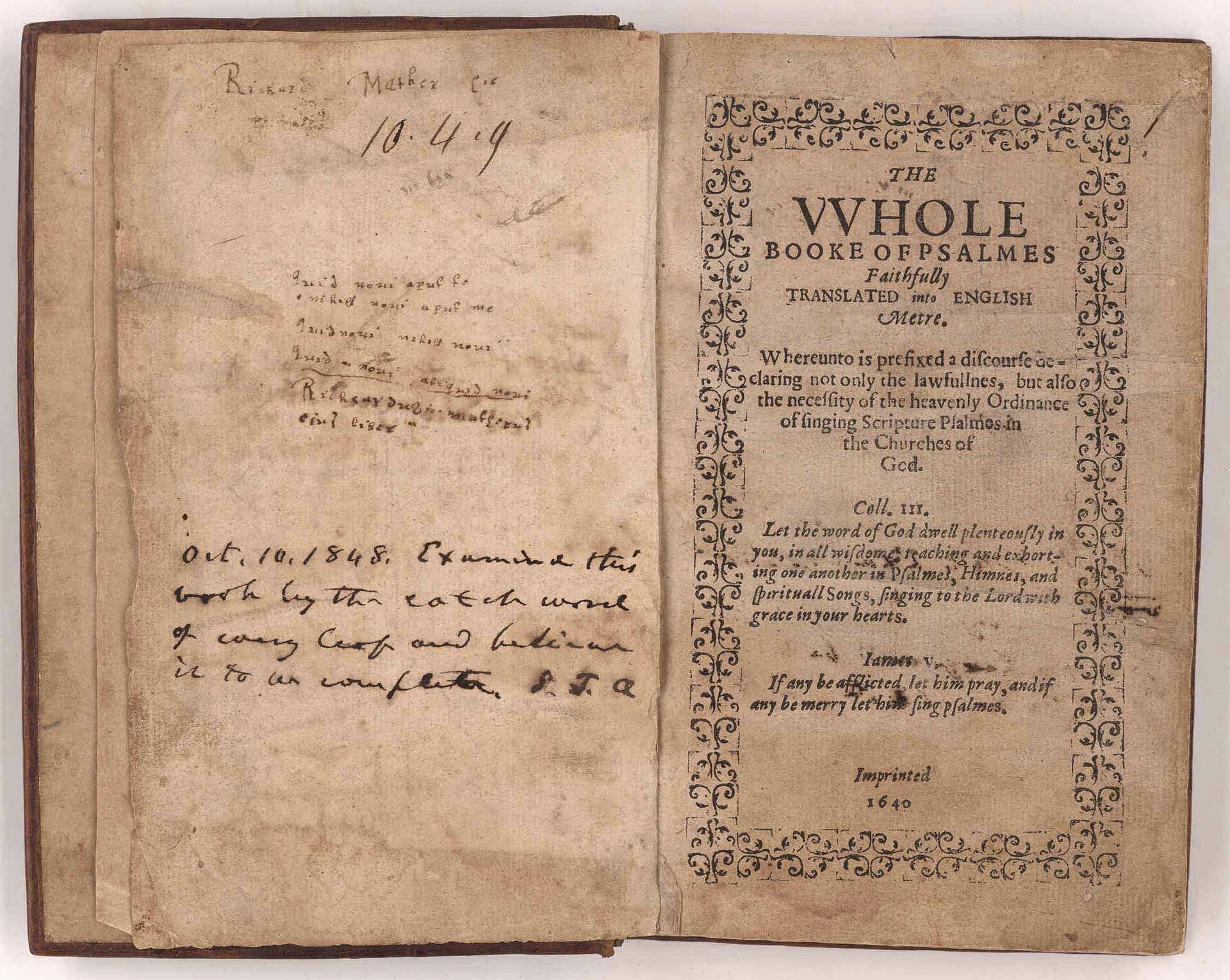
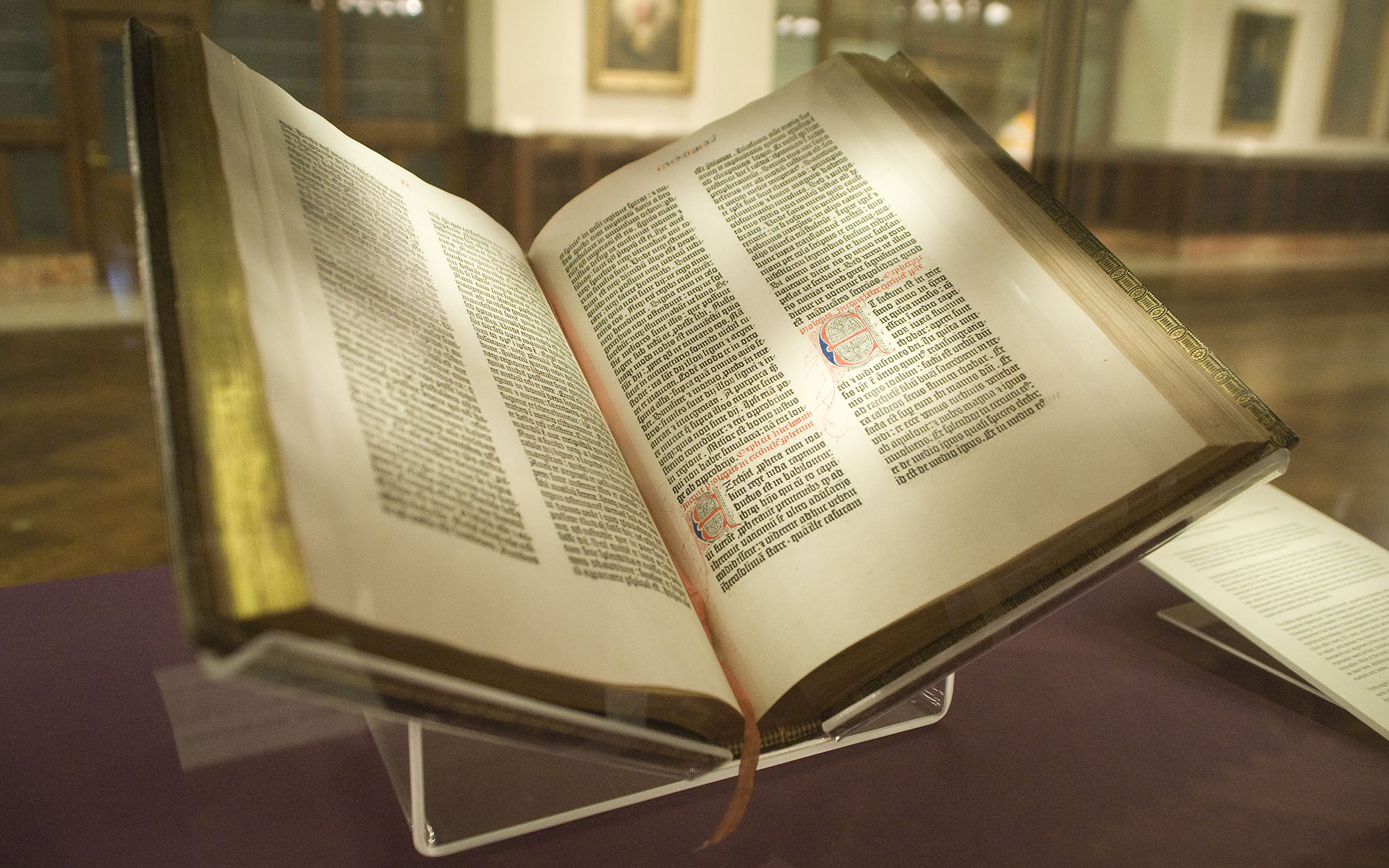
A printed book is the one class where a photograph can be entirely genuine, correctly licensed, of the right edition, and still useless. It shows a different copy. Every one of the five held printed books here is a named copy rather than an edition: the Old South Church copy of the Bay Psalm Book, the Doheny copy of the Gutenberg Bible, the Durham University First Folio, a specific Copernicus at Edinburgh, and the Audubon at Transylvania University.
The Bay Psalm Book states the problem at its sharpest. An edition estimated at 1,700 copies was printed at Cambridge in Massachusetts in 1640; eleven copies survive and five of those are complete. With eleven copies extant, the identity of the individual copy is the entire provenance question, and almost every photograph of a Bay Psalm Book in circulation shows a different one. This archive holds three plates for that record, and the caption on each of them begins with the words This is NOT the copy described in this record, naming instead the John Carter Brown, Harvard and Library of Congress copies.
The same logic applies to an etching, an engraving and a photographic print, where impressions and prints differ in state, paper, inking and condition, and where the object described is one of them rather than the image they share. A researcher who takes a page scan as a picture of a particular volume has quietly substituted the text for the artefact, and the artefact is what a provenance line, a theft, an export licence or an auction result actually attaches to.
Two paintings prove it is not the law
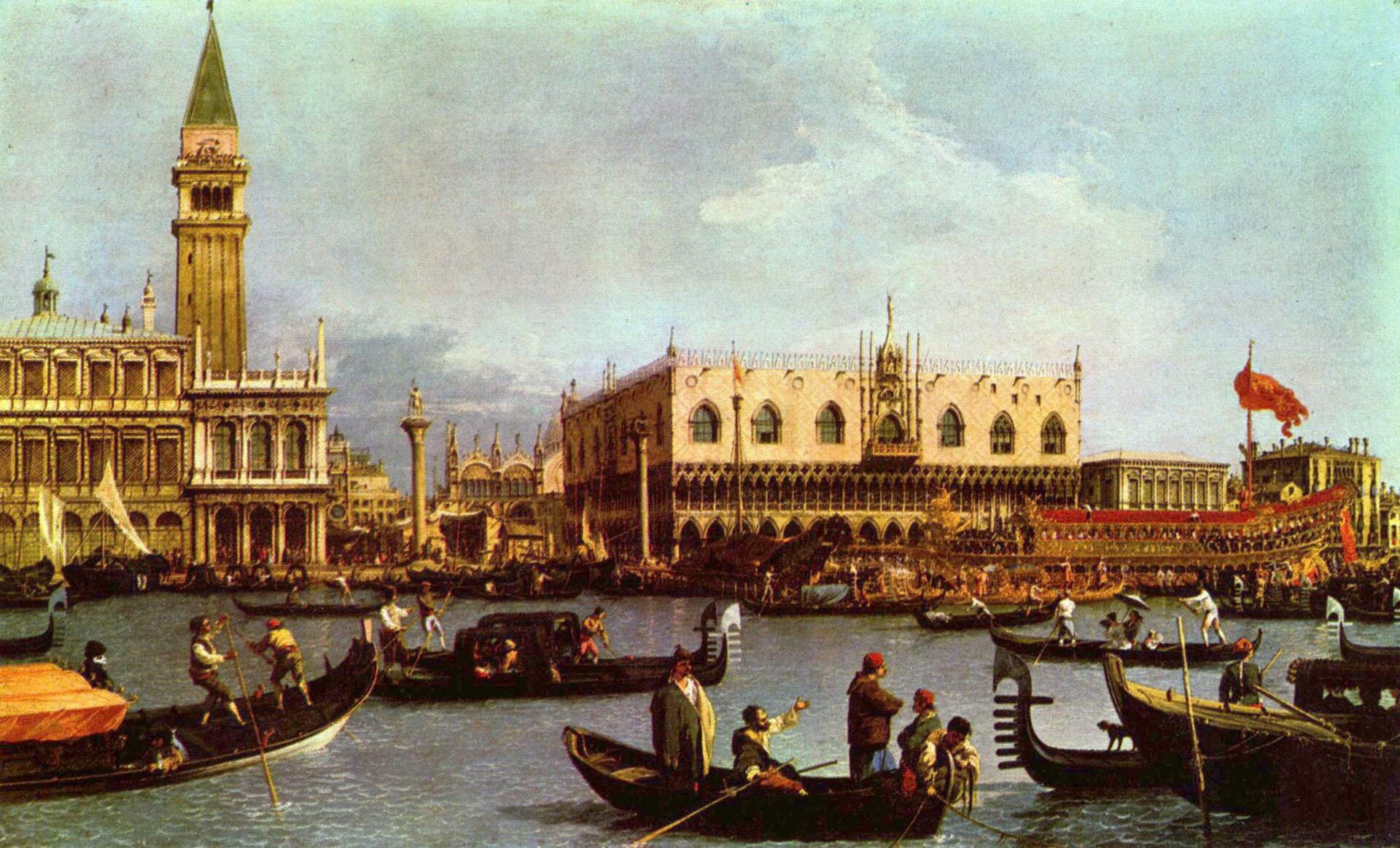
Two paintings in this archive are held back, and both of them belong to the class where European law is now clearest. A Canaletto of the return of the Bucintoro on Ascension Day and a Frans Post view of Olinda are flat, long out of copyright, and freely reproducible under Article 14 by any reading of it. The Canaletto record carries nine licensed plates and the Frans Post carries eight, and both remain unpublished.
The reason is that both artists painted their subject repeatedly, and neither record can prove which of the surviving versions its documents describe. The Canaletto record catalogues twelve related works and the Frans Post fourteen. Publishing any of those seventeen plates as the object would assert an identification the evidence does not support, and it would do so on precisely the records whose versions are most easily confused.
These two cases are the control on the whole argument. Where the rights question is fully resolved and the identification question is not, the object still cannot be shown. Whatever the law does next, that is the residue it leaves behind.
Two cage cups, and the thing that separated them
Two late Roman cage cups in this archive received opposite outcomes, and neither the law nor the licence explains it. Both are three-dimensional glass, both are the hardest case the directive leaves open, and the plates available for both are CC0 or public domain. One is published and one is held.
The Lycurgus Cup is on display at the British Museum in Room 41, and it is published here from nine CC0 photographs taken in that gallery, several of them on the same day in the same case, one under oblique light and one partly back-lit to show the dichroic colour change. The captions record that these are photographs of the object described. Nobody needed a licence reform to make that possible; somebody needed to be able to stand in front of the cup with a camera.
The Constable-Maxwell cage cup was sold as lot 18 at Bonhams in London on 14 July 2004 for GBP 2,646,650 including premium, the house not publishing a separate hammer figure, and it went into a private collection. Its record carries five correctly licensed plates and every one of their captions opens with the words This is NOT the cup described in this record, naming the Munich, Autun and Cologne cups instead. The object is not in a gallery, so no photograph of it exists to be licensed on any terms.
That is the third lever, and it is the one least discussed. Eleven of the 35 held objects are in private or unlocated hands, and for those the rights debate is beside the point and better cataloguing changes nothing. Access to the object is the precondition for both.
What would actually change the number
Open access at scale has already done most of what it can do for the licence half of the problem. The Metropolitan Museum of Art has released data on its whole collection and more than 492,000 images of public-domain works under CC0 since it introduced the policy in February 2017. The Cleveland Museum of Art's own open access interface reports 42,260 works released under CC0 out of 68,770 catalogued, which is a little over three-fifths of the collection.
That scale does not settle identity, and the evidence for it is uncomfortable. Four of the objects this archive cannot illustrate are at the Metropolitan Museum, an institution with nearly half a million CC0 images. In at least one of those four cases the images are demonstrably there: the museum's collection interface returns 210 public-domain images for the Hours of Jeanne d'Evreux, accession 54.1.2, so the record is held by unfinished work rather than by rights or by genuine doubt.
What closes the remaining gap is not more images but better statements about them. An image record that names the accession number of the object photographed, distinguishes a shot of the object from a shot of a comparable piece, and identifies which copy or which impression is in frame, converts an identification problem into a lookup. Cleveland, the Walters and the British Museum all publish provenance and acquisition detail at that level of specificity for their objects. Very few institutions publish it for their photographs.
Questions
No. The research stays on the record and is often complete, and the object keeps its status until a reproduction of it can be shown. Twenty-seven of the 35 held objects already have licensed photographs attached; what is missing is proof that one of those photographs is of that object.
Because a heading naming one object above a photograph of another reads as an illustrated entry to anyone not parsing the caption. This publication carries labelled comparison plates inside a record, where the caption states that the picture is not the object; it does not use them as the record's own image.
For a faithful flat reproduction of a work whose protection has expired, Article 14 of Directive 2019/790 says the reproduction attracts no copyright or related right, and Germany's Section 68 puts that in one sentence of national law. A photograph of a three-dimensional object is a different question, because the directive preserves protection where the reproduction is the photographer's own intellectual creation, and staging, lighting and angle are the choices that can make it so.
Sources
- 1Directive (EU) 2019/790 of the European Parliament and of the Council of 17 April 2019 on copyright and related rights in the Digital Single Market and amending Directives 96/9/EC and 2001/29/EC. Article 14 (Works of visual art in the public domain), recital 53, and Article 29 (transposition by 7 June 2021). Read from the consolidated EUR-Lex text. eur-lex.europa.eu/legal-content/...
- 2Gesetz ueber Urheberrecht und verwandte Schutzrechte (German Copyright Act), Section 68, on reproductions of public-domain visual works. Official consolidated text published by the Federal Ministry of Justice. gesetze-im-internet.de/urhg/...
- 3The Metropolitan Museum of Art, 'Open Access at The Met', stating that data on the collection and more than 492,000 images of public-domain artworks are available for free and unrestricted use, and that the Open Access Initiative was introduced in February 2017 under Creative Commons Zero. metmuseum.org/about-the-met/...
- 4The Cleveland Museum of Art, Open Access API, artworks endpoint. Queried 22 August 2026: 42,260 works with share_license_status CC0, against 68,770 works in the collection with no licence filter applied. openaccess-api.clevelandart.org/api/...
- 5The Metropolitan Museum of Art, Collection API, object record 470309, The Hours of Jeanne d'Evreux, Queen of France, accession 54.1.2, The Cloisters. Queried 22 August 2026: isPublicDomain true, one primary image and 209 additional images. collectionapi.metmuseum.org/public/...
- 6Bonhams, lot record for lot 18, The Constable-Maxwell Cage-Cup, Antiquities, 14 July 2004, 18:00 BST, London, New Bond Street. Sold for GBP 2,646,650 including premium; no separate hammer figure is published on the lot page. bonhams.com/auction/...
- 7The British Museum, collection record for the Lycurgus Cup, drinking-cup, registration 1958,1202.1, recording its display location in Room 41, Europe AD 300-1100, the Byzantine Empire case. britishmuseum.org/collection/...
More in Museums and Exhibitions
The partThe complete object is a temporary arrangement
For a dispersed set, being complete is an event with a date and a duration. Twelve Renaissance tazze were whole and correct for two days in 2014, and...
When the Holder Is Not a Museum, the Accession Number Is Replaced by Law
Fourteen records here are held by a cathedral, a diocese, a cathedral works, a charitable trust or a monuments agency.
A Closing Date That Moves Both Ways, and Who Actually Moved It
Of 937 exhibitions tracked here, only 7 ever had a date move, and three of those flipped between the same two dates again and again.