Who Owns a Thing Nobody Owned
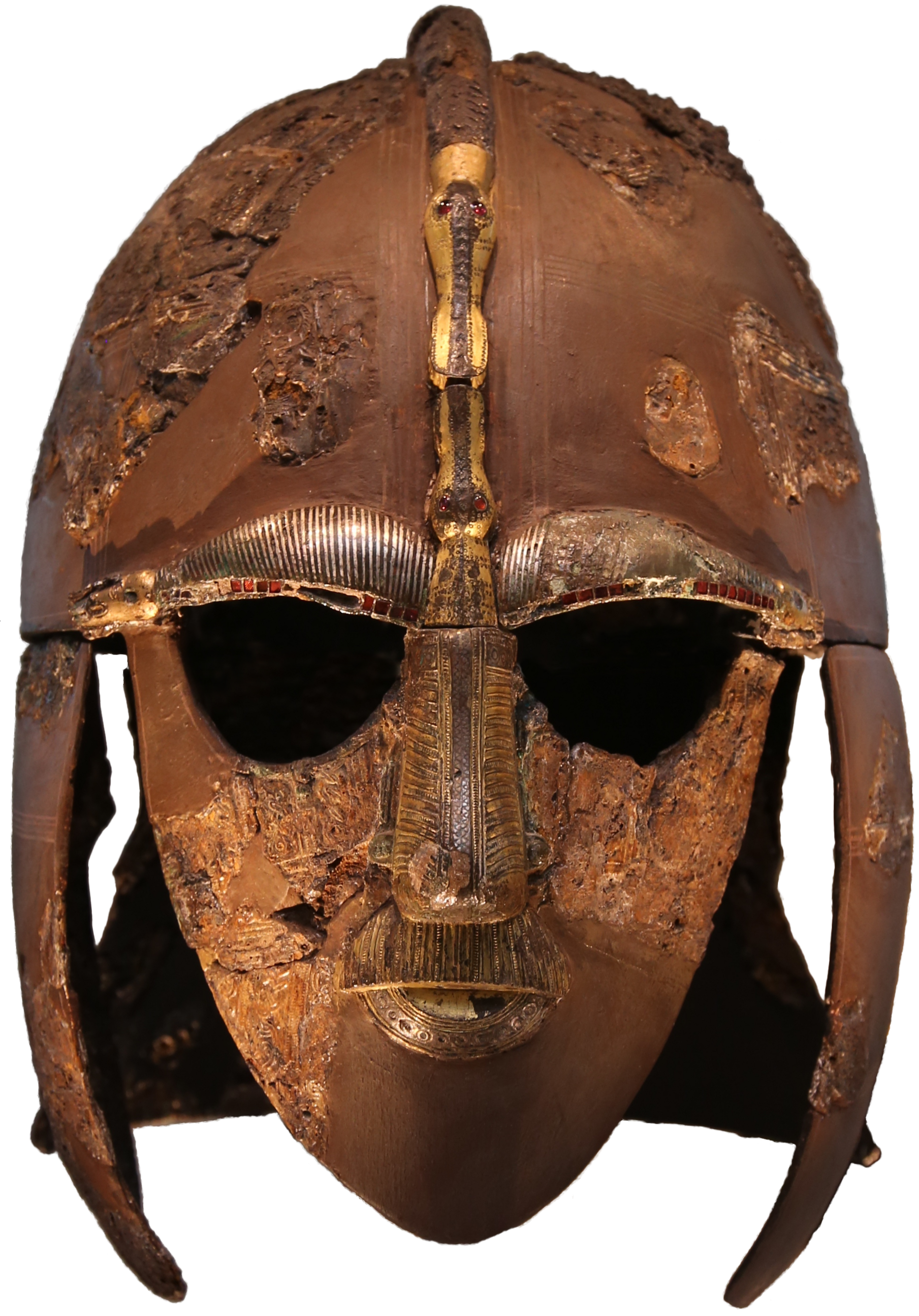
In 1939 a jury decided the Sutton Hoo burial was not treasure trove, so it belonged to the landowner. The same ground would answer differently today.
Records in this piece: The Sutton Hoo Helmet, The Staffordshire Hoard, Statue of a Victorious Youth, The Riace Bronzes, The Antikythera Mechanism, Chain of Lovers' Knots, Cheapside Hoard
On this page 8 sections
ContentsClose
In short
- A find that nobody owns is allocated by the law of the place it was found and the date it was found, not by anything about the object. Two comparable Anglo-Saxon burials from the same country, seventy years apart, produced opposite outcomes.
- The Sutton Hoo inquest of 14 August 1939 turned on intention. The coroner directed the jury that treasure trove required the goods to have been hidden with a view to recovering them later, and a grave deposit is not hidden in that sense. The jury found on all five points that the find was not treasure trove, and it passed to the landowner, Edith Pretty, who gave it to the British Museum within the week.
- The Treasure Act 1996 removed the intention test. Under section 4 treasure now vests in the Crown, or in a franchisee where one exists, subject to prior interests and rights held when the treasure was left where it was found.
- The Staffordshire Hoard, found in 2009, ran through that newer machinery: declared treasure at inquest, valued by the Treasure Valuation Committee at 3.285 million pounds, and the sum split equally between the finder Terry Herbert and the landowner Fred Johnson.
- Italy does not run a rewards system for this at all. Archaeological finds vest in the State automatically, which is why the Getty bronze was forfeited by order of the Tribunale di Pesaro in 2011, confirmed by the Court of Cassation in 2019, and why the European Court of Human Rights found no violation on 2 May 2024.
The question a find asks is not who found it
When an object comes out of the ground or the seabed with no living owner, the law has to invent one, and different jurisdictions invent differently. That is the whole subject. The object contributes almost nothing to the answer; the findspot and the calendar contribute nearly all of it.
This matters to a buyer for a blunt reason. An antiquity with an unrecorded findspot cannot be shown to have cleared whatever rule applied where it came out, and a great many national rules vest ownership in the state at the moment of discovery rather than at the moment of export. A clean-looking chain of dealers that begins after the object was already above ground does not cure that, because if title never passed at the start, nothing downstream can manufacture it.
Three regimes cover most of what this archive holds, and they answer the question in three incompatible ways.
In 1939 a jury decided the Sutton Hoo burial was not treasure trove
The treasure trove inquest into the Sutton Hoo find sat on 14 August 1939 under the coroner L. H. Vulliamy, and it turned on a point of intention rather than on value. The old common law of treasure trove asked whether the goods had been hidden by someone who meant to come back for them. Concealment gave the Crown its claim; abandonment did not.
The coroner directed the jury that to return a verdict of treasure trove they would have to be satisfied the articles had been concealed some thirteen centuries earlier by an owner who intended, at some convenient time, to resume possession. A ship burial is the opposite of that. Nobody buries a king's grave goods meaning to dig them up again. The jury found on all five points that the find was not treasure trove, and prior authority put the owner of the soil ahead of the workman who found the objects.
So the entire Sutton Hoo assemblage became the personal property of Edith Pretty, who owned the field. A week later the Trustees of the British Museum announced that she had given the whole of it to the nation, described at the time as the largest single donation by an individual the Museum had received. She died in 1942 and never saw it on display.

The 1996 Act deleted the test the 1939 jury applied
The Treasure Act 1996 replaced treasure trove in England, Wales and Northern Ireland with a statutory definition that does not ask what anyone intended. Section 1 sets out what qualifies by age, material and composition; section 4 says where it goes.
Under section 4, treasure vests in the franchisee where a franchise exists and otherwise in the Crown, subject to prior interests and rights. The Act is precise about which prior interests count: those held when the treasure was left where it was found, or, if it had been moved before discovery, those held when it was left where it was before being moved. Section 8 puts a duty on the finder to notify the coroner, and section 10 provides for rewards.
Strip out the intention test and the Sutton Hoo result reverses. The same objects, found in 2009 instead of 1939, would have vested in the Crown, and Edith Pretty would have had a share of a reward rather than a title to give away.
The same soil, seventy years apart
The Staffordshire Hoard is the closest comparison this archive holds: Anglo-Saxon precious metal, from English ground, found by a private individual. Terry Herbert located it in July 2009 in a field owned by Fred Johnson near Lichfield, and it went through the 1996 machinery from end to end.
| Sutton Hoo, 1939 | Staffordshire Hoard, 2009 | |
|---|---|---|
| Governing law | Common law treasure trove | Treasure Act 1996 |
| Test applied | Was it hidden with intent to recover it | Age, material and composition under section 1 |
| Verdict | Not treasure trove | Declared treasure at inquest |
| Owner | Edith Pretty, the landowner | The Crown, under section 4 |
| Payment | None. The find was hers outright | 3,285,000 pounds, set by the Treasure Valuation Committee |
| Who was paid | Nobody | Split equally between finder and landowner |
| Where it went | Gift to the British Museum | Bought for Birmingham and Stoke-on-Trent by public appeal |
Both objects ended in public collections, which is the outcome everyone says they want. They got there by completely different routes, and only one of the two routes depended on the goodwill of a private owner.
Italy does not ask the question at all
Italian cultural heritage law vests archaeological finds in the State automatically, at the moment of discovery, whether the finder is a private party or a public one. There is no inquest, no valuation committee and no reward split, because there is nothing to divide. The object was the State's from the second it came up.
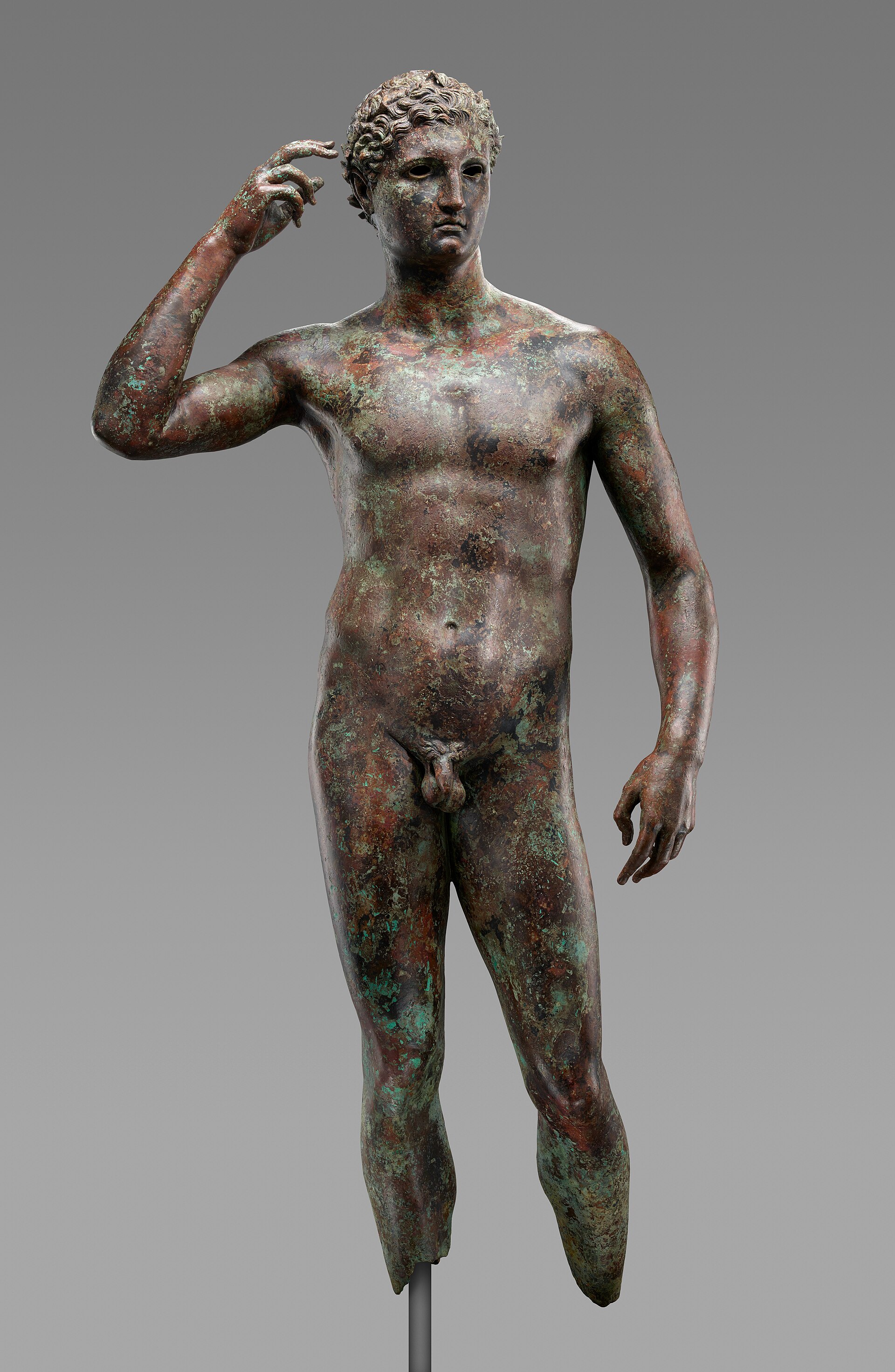
That is the whole of the Getty bronze case. The statue was brought up in a trawl in 1964, sold on, and bought by the Getty in 1977. The Tribunale di Pesaro ordered its confiscation on 10 February 2011, and the Court of Cassation made that final on 2 January 2019. The Getty took the matter to Strasbourg, and on 2 May 2024 the European Court of Human Rights, in application number 35271/19, held that the confiscation interfered with the right to peaceful enjoyment of possessions but was justified, weighing the museum's interest against Italy's interest in recovering unlawfully exported cultural property.
Note what the ruling does not resolve. The statue is still in Los Angeles. A forfeiture order upheld by the highest court of the source state and blessed at Strasbourg has not physically moved the object, which is a useful corrective to the idea that a favourable judgment is the same thing as a return.
Greece kept the paperwork from the first day
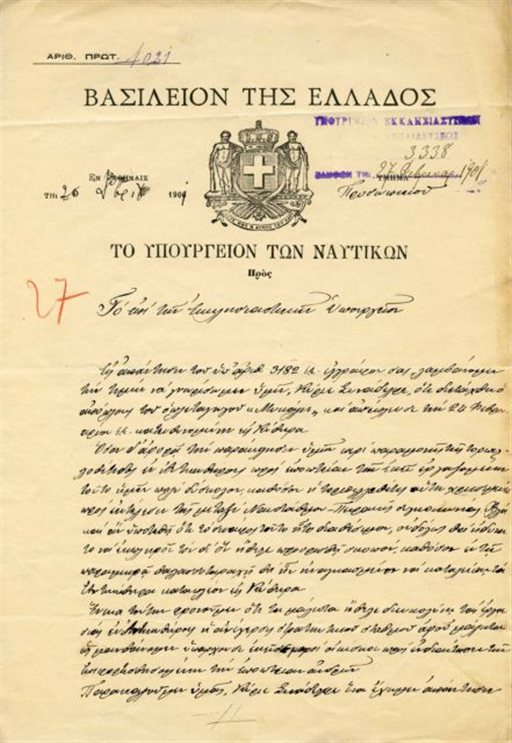
The Antikythera mechanism has the cleanest chain of custody in this archive, and it is clean because the state did the recovering. Sponge divers found the wreck in 1900, and the material was raised in 1900 and 1901 under Hellenic Navy supervision, with the Ministry of Naval Affairs generating correspondence at the time.
The result is an object that has never been on the market, never been privately owned, never required an export licence and is the subject of no restitution claim. There is no dealer anywhere in the chain, and consequently there is no price of any kind in its history.
It is worth being clear about why this is the exception. The Antikythera chain is not clean because Greek law is stricter than Italian law; the two are broadly comparable. It is clean because the discovery and the recovery happened inside the same state operation, so the moment of vesting and the moment of documentation coincided. Almost nothing else in the archive was that lucky.
What a buyer should actually check
Ask for the findspot and the date, in that order, and be suspicious of a chain that starts with a dealer. The rule that decided ownership applied where and when the object left the ground, and a provenance line whose first entry is a 1970s European collection is not evidence about that moment. It is evidence that nobody recorded it.
Then ask which regime the findspot sat under. In England after 1996 there should be an inquest and a Treasure Valuation Committee number, and both are public. In Italy, Greece and much of the Mediterranean there is no reward paperwork to find, because the state's title was automatic, and the absence of a receipt is not reassuring. It is the expected condition of an object that should never have been sold.
And do not treat a favourable judgment as delivery. Italy won at Pesaro, at the Court of Cassation and at Strasbourg, and the bronze is on view in Los Angeles. Title and possession are separate questions, and the gap between them is where most of the argument in this field actually lives.
Why this archive is free to read
We do this for everyone who loves art. The people who have studied it for years, and the people who just stopped to look. Iconotheca exists so that what we learn belongs to all of them.
Nobody pays us for this. No ads, nothing for sale. These works belong to all of us, and we would rather share them with as many people as we can than keep them to ourselves.
If it gave you something today, tell us to keep going. Follow us, leave a like, or write a positive comment. We read every one, and they are what keeps us going.
Questions
Treasure trove was the common law rule under which gold and silver hidden by an owner who intended to recover it belonged to the Crown. Concealment was the trigger, so grave goods and abandoned objects fell outside it. The Treasure Act 1996 replaced that with a statutory definition based on age, material and composition, and dropped the question of intention entirely.
Because the inquest of 14 August 1939 found it was not treasure trove. The coroner directed the jury that they would need to be satisfied the objects had been concealed by someone intending to recover them later, and a ship burial is not concealment in that sense. With treasure trove ruled out, the owner of the land took the find, and prior authority preferred the landowner to the finder.
The Italian State. Italian cultural heritage law vests archaeological objects found underground or on the seabed in the State automatically at the point of discovery, whether the finder is private or public. There is no reward split comparable to the English system, because ownership never passed to the finder in the first place.
On 2 May 2024, in application number 35271/19, the Court held that Italy's confiscation order engaged the right to peaceful enjoyment of possessions but was justified by the interest in recovering unlawfully exported cultural property. The Italian confiscation, ordered at Pesaro in 2011 and made final by the Court of Cassation in 2019, therefore stood. The statue nevertheless remains at the Getty.
The Treasure Valuation Committee valued it at 3,285,000 pounds in November 2009. The sum was divided equally between the finder, Terry Herbert, and the landowner, Fred Johnson. Birmingham and Stoke-on-Trent raised the money by public appeal to acquire the hoard for their museums.
Sources
- 1Treasure Act 1996, section 4, Ownership of treasure which is found, on legislation.gov.uk. Read for the vesting of treasure in the franchisee or the Crown subject to prior interests and rights, and for the definition in subsection 2 of the prior interests that count. legislation.gov.uk/ukpga/...
- 2Treasure Act 1996, table of contents, on legislation.gov.uk, for the structure of the Act: meaning of treasure at sections 1 to 3, ownership at 4 to 6, coroners' jurisdiction at 7 to 9A, and rewards, codes of practice and report at 10 to 12. legislation.gov.uk/ukpga/...
- 3The Sutton Hoo Ship's Company, 'The Sutton Hoo Inquest, Part 1', for the date of 14 August 1939, the coroner L. H. Vulliamy, and the coroner's statement of the treasure trove test as turning on hiding rather than abandonment. saxonship.org/the-basil-brown-diaries/...
- 4The Sutton Hoo Ship's Company, 'The Sutton Hoo Inquest, Part 2', for the jury's verdict of not treasure trove on all five points, the direction on intention to resume possession, the preference for the owner of the soil over the finder, Edith Pretty's title, and her gift to the British Museum announced a week later. saxonship.org/the-basil-brown-diaries/...
- 5Rescue, The British Archaeological Trust, 'Staffordshire hoard worth 3.285 million', for the Treasure Valuation Committee's figure set at the British Museum in November 2009, the equal split between finder Terry Herbert and landowner Fred Johnson, and the Birmingham and Stoke-on-Trent acquisition appeal. rescue-archaeology.org.uk/2010/...
- 6Center for Art Law, 'Case Review: Getty v. Italy (2024)', for the European Court of Human Rights judgment of 2 May 2024 in application 35271/19, the Tribunale di Pesaro confiscation order of 10 February 2011, the Court of Cassation's confirmation of 2 January 2019, and the automatic vesting of finds in the Italian State. itsartlaw.org/art-law/...
- 7Art-Law Centre, University of Geneva, ArThemis platform, case note on Victorious Youth, Italy v. J. Paul Getty Museum, for the procedural history of the Italian proceedings. plone.unige.ch/art-adr/...
More in Provenance and Restitution
The partA return is a new arrangement, not a conclusion
Four contested antiquities, four different things a return turned out to be: a renaming, a rotating loan, a forfeiture nobody enforced and a broken...
When the Only Proof of Where an Object Was Is a Photograph
The Third Imperial Easter Egg was photographed once, in March 1902, and that single plate is what identified it in 2014.
Moved for Safekeeping Is a Link in the Chain
Nine evacuations in this archive: three objects never returned to the building they left, one came back unrecognised and title changed once, by a...