The Lot That Did Not Sell
Six objects in this archive were offered at auction and not sold. An unsold lot is a price nobody paid and a date the object went quiet, and in one case the museum that now owns it has left the sale out of its own provenance.
Records in this piece: The Rising Squall, Hot Wells, from St Vincent's Rock, Bristol, The Portland Vase, The Concert, The Astronomer, Crown of the Virgin of the Immaculate Conception, known as the Crown of the Andes, Bust of Cardinal Scipione Borghese, first version
On this page 10 sections
In short
- Six records in this archive carry an auction at which the object was offered and not sold: two Vermeers in 1804 and 1820, a Turner in 1864, the Portland Vase between 1929 and 1932, the Crown of the Andes in 1995 and a Bernini bust in 2013. In four of the six the unsold lot was followed by a silence of between eleven and a hundred and sixty years.
- The Louvre's own provenance for The Astronomer writes the 1820 Gibbons sale as non vendu ou rachete, unsold or bought back, and gives as its evidence that Gibbons was still able to lend the picture to an exhibition in 1828.
- Turner's Rising Squall was lot 152 at Christie's on 9 July 1864 and did not sell. It next appeared in public in April 2024, at Dreweatts, as a follower of Ibbetson, for 524.80 pounds with fees.
- The Metropolitan Museum's published provenance for the Crown of the Andes runs from Alice Heyman, 1973 to 2015, straight to the Museum. The failed Christie's sale of 1995, with a reserve reported at about 3,000,000 dollars, is not in it.
- The bust of Paul V failed to sell in Bratislava in 2013 against an estimate of 47,000 euros, sold the next year at 24,000, and was reported in 2015 as bought by the Getty for 33,000,000 dollars. The unsold lot was the cheapest moment in the object's recorded life.
An unsold lot is a price nobody paid and a date the object went quiet
An auction lot that fails to sell produces two facts and a trap. The facts are a date on which the object was in public and a figure, the reserve or the highest bid, that the market declined to pay. The trap is that the figure looks like a price. It is entered in annotated catalogues, copied into price databases and sometimes written up as bought in, which in the trade means the object went back to its owner under a fictitious buyer's name. A reader who meets the number later cannot always tell that nobody paid it.
The other thing an unsold lot does is end a sequence. In this archive the objects that failed to sell mostly went quiet afterwards, for eleven years, for sixteen, for a hundred and sixty. The owner who could not sell kept the object and stopped showing it, and the next document is a long way off. That makes an unsold lot one of the more useful dates in a chain, provided it is written as what it is. This piece reads the six in our records and one case where the museum that now owns the object has left the sale out.
Six objects here were offered and not sold
Six records in this archive record a public sale at which the object did not find a buyer, and in five of them our record can name the next public appearance. The table gives the sale, what is known of the figure and the gap that followed.
| Object | Sale | Lot | Figure declined | Next public appearance | Gap |
|---|---|---|---|---|---|
| Vermeer, The Concert | Van Leyden sale, Paillet, Paris, 5 November 1804 | 62 | Not recorded; bought in by Paillet | Foster's, London, 1835 | 31 years |
| Vermeer, The Astronomer | Gibbons sale, probably Bristol, 7 October 1820 | 31 | Not recorded | Lent to Birmingham, 1828; sold London 1857 | 8 years to a loan, 37 to a sale |
| Turner, The Rising Squall | Christie's, London, 9 July 1864 | 152 | Not recorded | Dreweatts, Newbury, 4 April 2024 | 160 years |
| Portland Vase | Christie's, London, between 1929 and 1932 | Not recorded | Reserve and highest bid not published | Sold to the British Museum, 1945 | 13 to 16 years |
| Crown of the Andes | Christie's, New York, 1995 | Not recorded | Reserve reported at about 3,000,000 dollars | Sold privately to the Metropolitan Museum, December 2015 | 20 years |
| Bernini, Bust of Paul V | Bratislava, 2013 | Not recorded | Estimate of 47,000 euros | Same rooms, September 2014, 24,000 euros | 1 year |
Read the fourth column. In four of six sales no figure survives at all, and in the two where one does it is a reserve or an estimate, which is a seller's number and not a buyer's. An unsold lot is the one kind of auction record that never produces a price, and it is routinely quoted as if it had.
The Louvre writes the 1820 sale as unsold or bought back, and gives its evidence
The Astronomer's provenance is published by the Louvre with a precision that most museums do not attempt, and its treatment of 1820 is the model. J. Gibbons offered the picture, probably at Bristol, on 7 October 1820 as lot 31. The Louvre's line reads that it was non vendu ou rachete, unsold or bought back, and the reason it can say so is stated in the same line: Gibbons lent the picture to an exhibition at Birmingham in 1828 as an Astrologue, so it had not left him. A second Gibbons sale, after the death of a younger brother, followed in London on 18 June 1857. The unsold lot is inferred from the object's continued presence with the same owner, which is the only way an unsold lot from 1820 can usually be proved.
The Concert is the earlier case and the darker one. Diederik van Leyden's collection was sold in Paris on 5 November 1804 in a sale run by the expert Paillet, and the standard catalogue records lot 62 as going to Paillet. Our record reads that as bought in, the sale's own expert taking the lot back for the vendor, and the picture next appears at Foster's in London in 1835 in an anonymous sale. Not one of the six salerooms the picture passed through between 1696 and 1869 has a recorded price in the sources we consulted, and the 1804 sale, having produced no buyer, is the least likely of them ever to yield one.
Lot 152 in 1864, and then nothing for a hundred and sixty years
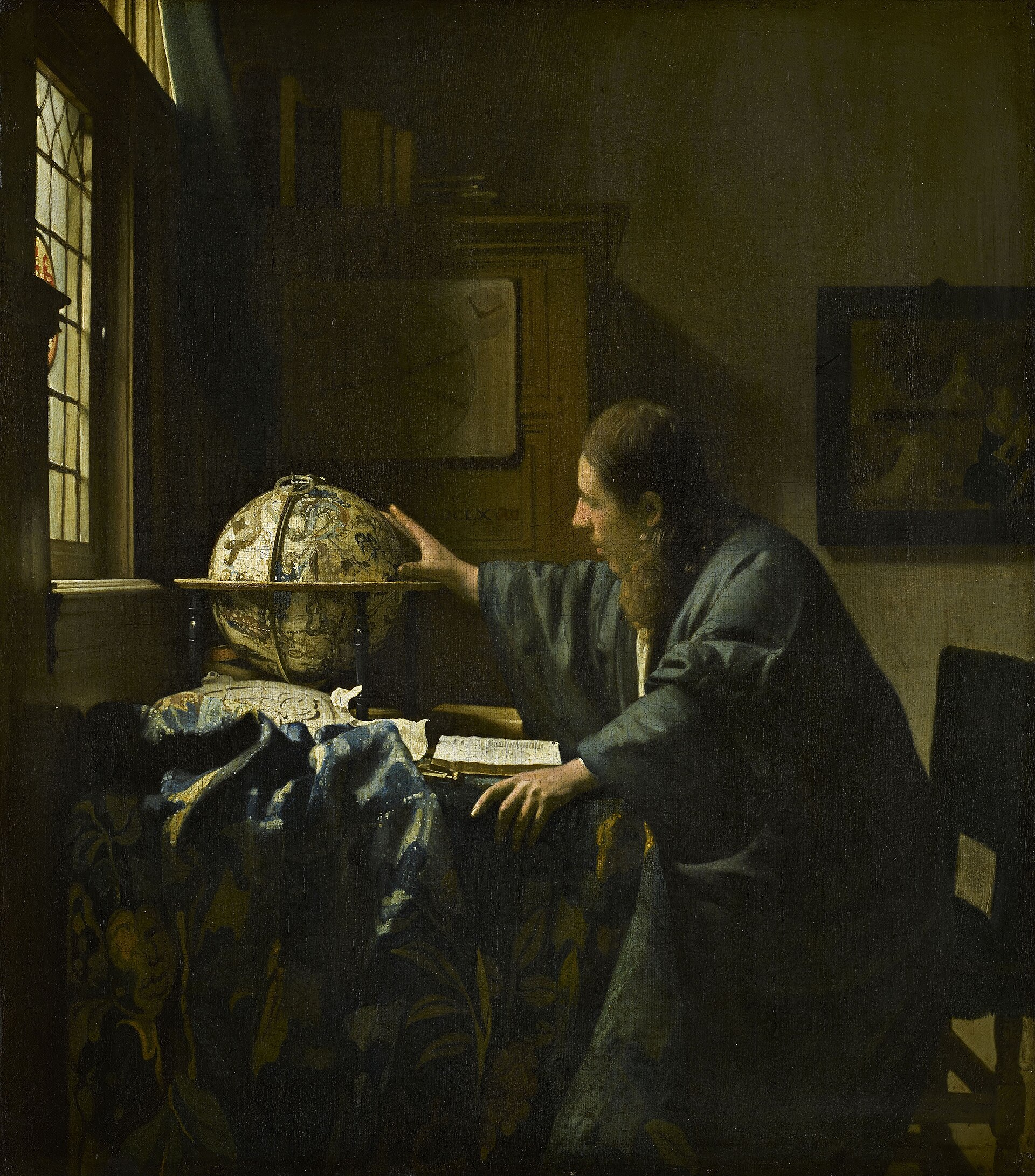
Turner's first exhibited oil painting was offered at Christie's in London on 9 July 1864 as lot 152 by the dealer Joseph Hogarth, who had acquired it around 1862 to 1864, and it did not sell. Sotheby's 2025 provenance carries that entry and then traces the picture only to a private collection in Northamptonshire and thence by descent, with no names and no dates. The next time the canvas was in public was 4 April 2024, at Dreweatts in Newbury, catalogued as a follower of Julius Caesar Ibbetson under the title House by the Water in a Stormy Sky, where it made 524.80 pounds including fees. Cleaning found the signature. On 2 July 2025 it made 1,500,000 pounds under the hammer at Sotheby's against an estimate of 200,000 to 300,000.
The 1864 failure is the hinge of the whole chain. It is the last public sighting for 160 years, the reason the standard reference work could file the picture under the wrong medium, and the reason a family in Northamptonshire could own a Turner without anyone, including perhaps the family, knowing it. Our record writes the 1864 hammer field as Unsold, in a word, with the note bought in beside it. A price database that carried a figure for that lot would be carrying a fiction.
The only time the market was asked to price the Portland Vase, the number was not kept
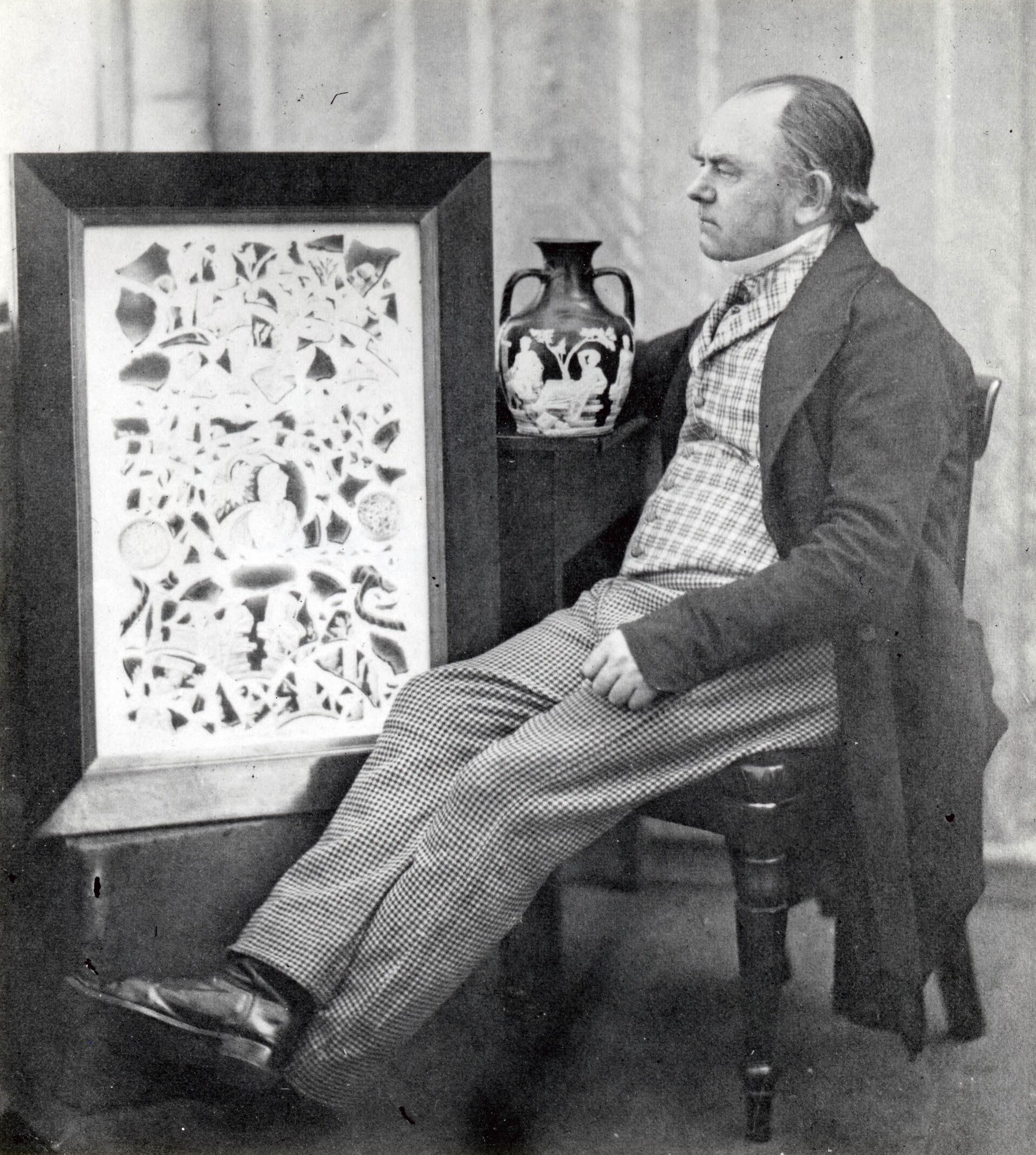
The Portland Vase had been on deposit at the British Museum since 1810 without belonging to it, and between 1929 and 1932 the sixth Duke of Portland withdrew it and offered it at Christie's. It failed to reach its reserve and went back to Bloomsbury. Neither the reserve nor the highest bid appears in the sources we consulted, and our record calls that a real gap, because it is the only occasion on which the open market was ever asked to price the object. The one earlier auction, the Portland Museum sale of 7 June 1786, produced a figure, 980 guineas as lot 4155, and a buyer, a Mr Tomlinson bidding for the third Duke, so the vase was bought back into the family at the first sale and could not be sold out of it at the second.
In 1945 the British Museum bought the vase outright from the seventh Duke with the aid of a bequest from James Rose Vallentin, and that price is not published either. So the most famous piece of Roman glass in the world carries, across two and a half centuries, one hammer price from 1786, one unsold lot with no figure and one private purchase with no figure. The unsold lot is the middle term, and the most often quoted as if it had a number.
The failed sale that is missing from the museum's own provenance
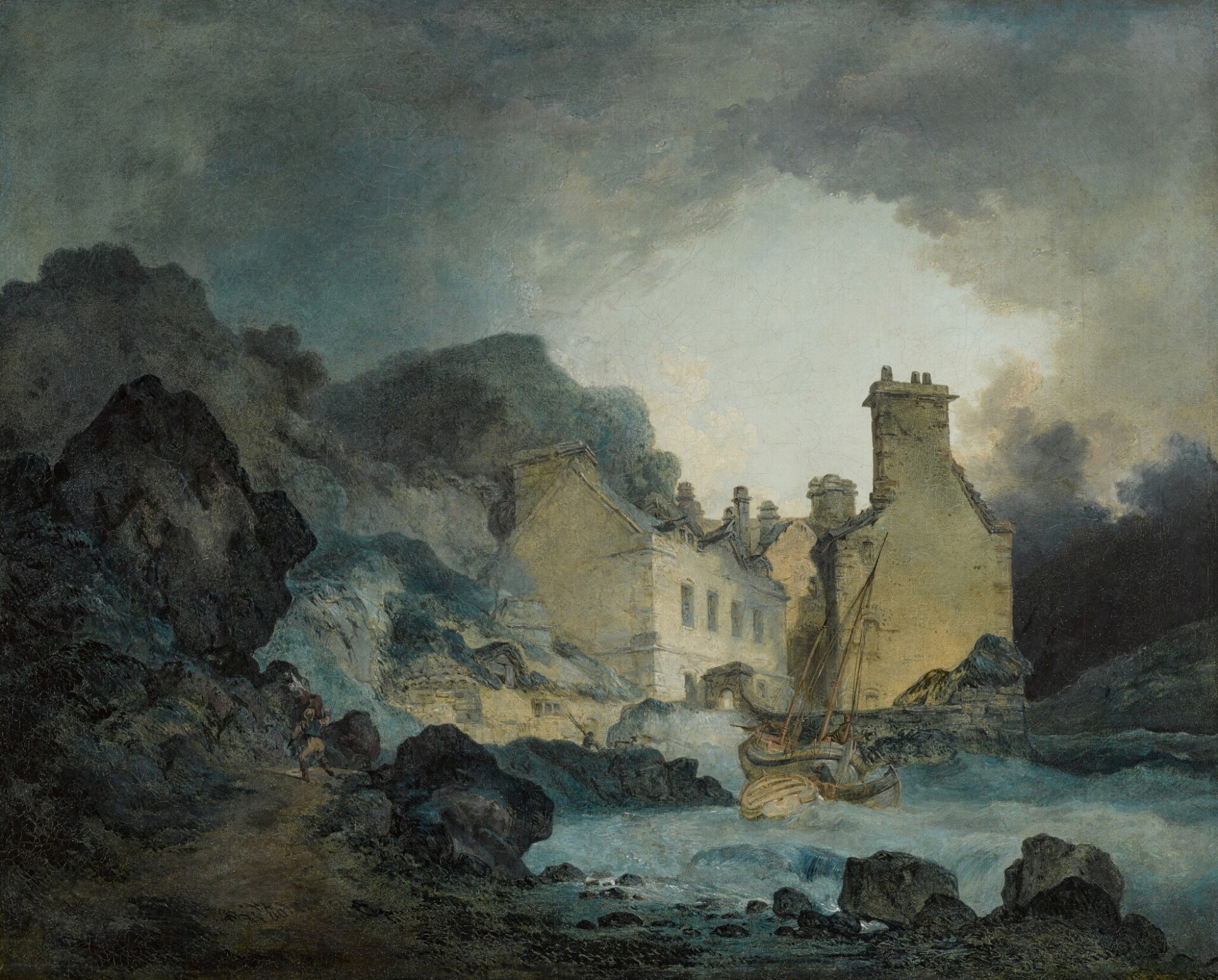
The Crown of the Andes was consigned to Christie's in New York in 1995 with a reserve reported at around 3,000,000 dollars and did not sell. It stayed with the family of the jeweller Oscar Heyman until the Metropolitan Museum bought it in December 2015. The Museum's published provenance, read for this piece, runs: Sotheby and Co., London, 21 November 1963, sold to Asscher Diamond Company on behalf of Oscar Heyman; his daughter Alice Heyman, New York, 1973 to 2015; sold to MMA. The 1995 consignment is not in it. Nothing in that line is wrong. Ownership did not change in 1995, so a provenance built strictly from changes of ownership has no place to put the sale.
What the omission loses is the scholarship the sale produced. It was during the 1995 consignment that Christopher Hartop examined the crown and concluded it was a composite assembled from parts of differing date, a cross he placed in the sixteenth century, a body complete by the seventeenth and arches of the eighteenth. The Museum's own dating, about 1660 for the diadem and about 1770 for the arches, is the same two-campaign structure. The technical history of the object was written because a sale failed, and the sale is invisible in the provenance of the museum that relies on the finding.
Unsold at 47,000 euros, sold at 24,000, then thirty-three million dollars
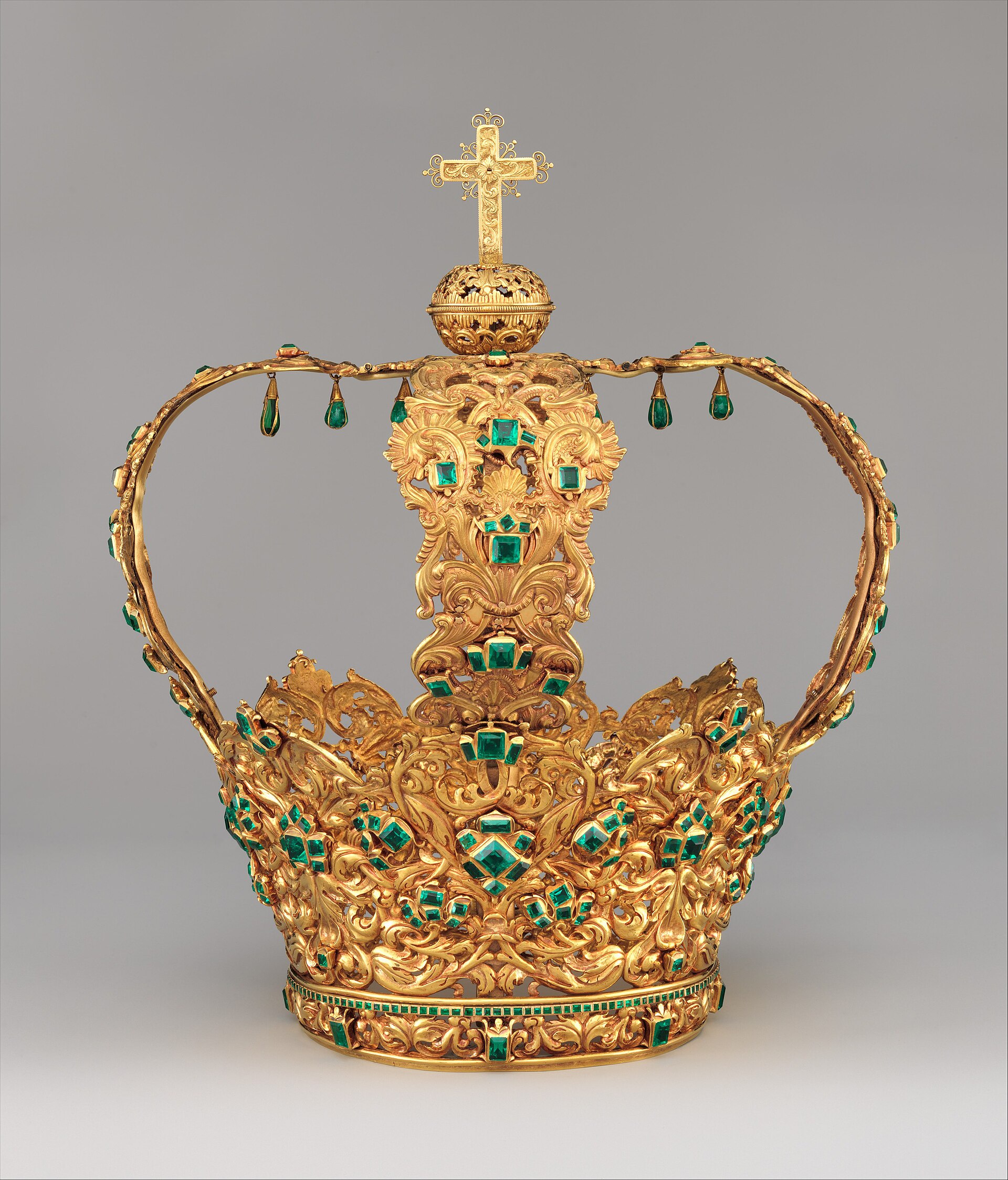
Our record on Bernini's bust of Scipione Borghese carries, as a comparandum, the one autograph Bernini portrait bust that has come loose in living memory, and its recent history is an unsold lot followed by the largest multiple in this archive. Bernini's marble bust of Pope Paul V, carved in 1621, was bought by a Viennese collector at auction in 1893, disappeared and was presumed destroyed. It resurfaced in Bratislava, consigned by the heirs of the painter Ernest Zmetak, misattributed, to auction in 2013 with an estimate of 47,000 euros. It failed to sell. In September 2014 it was offered again and bought by an unnamed Slovak dealer at its pre-sale estimate of 24,000 euros. In July 2015 it was reported that the J. Paul Getty Museum had paid 33,000,000 dollars for it.
The failed lot is the cheapest point in the object's recorded life, and the point at which it was worth the least to the people who owned it. An unsold lot at a low estimate is not evidence that an object is worth little. It is evidence that on one day, under one catalogue description, nobody in the room believed the description was wrong.
What a bought-in lot does to the next price
A lot that fails carries its failure into the next sale, which is why sellers and houses have so many ways of not saying so. The annotated catalogue enters a buyer's name that belongs to the house. The trade says bought in. The price database, if it is careless, carries the reserve as a result. The next catalogue entry, if the object comes back within a few years, will usually not mention the earlier offering at all, and the Met's crown shows that a museum's own provenance can leave it out for a perfectly defensible reason. A reader trying to establish whether a price is real has to look for the word in the hammer field, and it is rarely there.
The other effect is the silence. Of the six cases here, four were followed by long gaps: 31 years for The Concert, 37 for The Astronomer to a sale, 160 for the Turner, 20 for the crown. An owner who has tried to sell and failed has learned the object's price is lower than hoped, and the usual response is to keep it and stop showing it. That makes the unsold lot the last dated document before a gap, and the first thing to look for when a chain goes dark.
How to record a lot that did not sell
Write the word Unsold in the hammer field and nothing else in it, as our Turner record does, and put the reserve or the highest bid, if either is known, in the note with its source, labelled as a seller's figure. Never carry an estimate or a reserve forward as a result. Record the lot number and the sale date, because those are real and are often the only fix on the object for decades. Then look for the evidence the Louvre used: an exhibition loan, a later sale from the same family, a photograph in the same house, anything that proves the object stayed where it was.
Where the holding institution's provenance omits the sale, record it anyway and say that the institution's line does not carry it. A provenance built only from changes of ownership is not wrong to leave out a sale that changed nothing, and a diligence reader still needs to know that on one day the object was on the market at a price the market refused. Those two facts, the day and the refusal, are worth more to the next buyer than most of the prices that were paid.
Why this archive is free to read
We do this for everyone who loves art. The people who have studied it for years, and the people who just stopped to look. Iconotheca exists so that what we learn belongs to all of them.
Nobody pays us for this. No ads, no sponsors, no commercial interest. These works belong to all of us, and we would rather share them with as many people as we can than keep them to ourselves.
If it gave you something today, tell us to keep going. Follow us, leave a like, or write a positive comment. We read every one, and they are what keeps us going.
Questions
It means the lot failed to reach its reserve and went back to the seller, usually recorded in the catalogue under a fictitious buyer's name or the name of the auctioneer. No sale took place and no price was paid. The Concert is recorded as bought in by Paillet, the expert who ran the 1804 sale.
Once, on 7 June 1786, as lot 4155 in the Portland Museum sale, for 980 guineas to a Mr Tomlinson bidding for the third Duke. When the sixth Duke offered it at Christie's between 1929 and 1932 it failed to reach its reserve, and the reserve is not published. The British Museum bought it privately in 1945.
At Christie's in London on 9 July 1864, as lot 152 in the property of Joseph Hogarth, where it did not sell. It next appeared at Dreweatts in Newbury on 4 April 2024, catalogued as a follower of Ibbetson and sold for 524.80 pounds with fees.
No. The Museum's published provenance runs from Alice Heyman, New York, 1973 to 2015, directly to the Museum. The 1995 consignment, at which the crown failed to sell against a reserve reported at about 3,000,000 dollars, is not recorded because ownership did not change.
Only of what the room would not pay under that catalogue description on that day. Bernini's bust of Paul V failed at 47,000 euros in 2013 as a misattributed lot, sold for 24,000 euros in 2014, and was reported bought by the Getty for 33,000,000 dollars in 2015.
Sources
- 1Musee du Louvre, collections database, L'Astronome, RF 1983 28, historique. Read 15 September 2026. Source for the Gibbons sale of 7 October 1820, lot 31, recorded as non vendu ou rachete because the picture was lent to Birmingham in 1828, and the W. Gibbons sale of 18 June 1857, lot 52. collections.louvre.fr/en/...
- 2Essential Vermeer, The Concert by Johannes Vermeer, provenance. Read 15 September 2026. Source for the Diederik van Leyden sale, Paris, Paillet, 5 November 1804, lot 62, to Paillet, and the Foster's sale of 26 February 1835, lot 127. essentialvermeer.com/catalogue/...
- 3The Metropolitan Museum of Art, collection record for the Crown of the Virgin of the Immaculate Conception, known as the Crown of the Andes, 2015.437, provenance section. Read in a browser 15 September 2026. Source for the published provenance from Alice Heyman, 1973-2015, to the Museum, with no entry for 1995 and for the dating of about 1660 and about 1770. metmuseum.org/art/...
- 4Sotheby's, Old Master and 19th Century Paintings Evening Auction, London, 2 July 2025, lot 28, J. M. W. Turner, The Rising Squall, Hot Wells, from St Vincent's Rock, Bristol, provenance, as cited in our Turner record for the Christie's sale of 9 July 1864, lot 152, unsold. sothebys.com/en/...
- 5Milo Keynes, The Portland Vase: Sir William Hamilton, Josiah Wedgwood and the Darwins, Notes and Records of the Royal Society, 1998, as cited in our Portland Vase record for the 1786 sale, the 1929-32 Christie's offering and the 1945 purchase. darwin-online.org.uk/converted/...
- 6Wikipedia, Crown of the Andes, tertiary, consolidating press coverage of Christopher Hartop's 1995 examination during the Christie's consignment and the reported reserve; cited by our record pending the contemporary press reports. en.wikipedia.org/wiki/...
More in The Market
The partThe Estimate Is the Newest Part of an Auction Record
Of 214 auction results in this archive, 52 carry a published pre-sale estimate. None of the 29 dated before 1900 do, and the estimate began life as a...
The record price is usually the last price
Four auction records in this archive were set by a buyer who took the object into a museum within seven years.
Estimate upon request
When a catalogue prints no estimate, a number still reaches the press before the sale.